




Abstract
Having in mind the goal of unobstructive, lightweight, and wearable electronics for monitoring human health, more precisely gait, textile-based force sensing resistors (FSRs) have emerged as a promising solution. These sensing elements can reliably detect plantar pressure and, through them, analyze gait, as well as continuously acquire large amounts of data, due to their flexibility, comfort, and adaptability compared with traditional rigid transducers. The review also sought to present in a tabular way quantitative outcomes, such as sensor accuracy, plantar pressure measurement, sensitivity, response time, and durability and to compare them in an objective manner. Through PubMed, IEEE Xplore, Scopus, Web of Science, and Cochrane Library, a comprehensive literature search was conducted. Inclusion criteria encompassed all original studies which pertain to textile-based FSR transducers incorporated into wearable devices for pressure detection and gait analysis, with reported quantitative outcomes. Reviews, patents and studies without experimental data were excluded from this research. Finally, risk of bias was evaluated as well, utilizing the Joanna Briggs Institute (JBI) checklist for analytical cross-sectional studies. After going through the literature and filtering studies which conform to the defined criteria, a total of 24 studies were included. As sensor accuracy is one of the most significant quantitative parameters of sensor usefulness, a meta-analysis of this parameter revealed a pooled mean of 92.28% (95% CI: 88.65%–95.91%), indicating high reliability across different applications. Textile-based FSR transducers alongside readout electronic smart systems integrated into wearable technologies demonstrate high accuracy, reliability, and sensitivity, supporting their potential for clinical and sports applications.
Keywords
Textile-based force-sensing resistor (FSR) transducers, which are integrated into socks, insoles, and other similar applications give way toward a flexible and wearable solution in terms of pressure detection and gait analysis. In contrast to rigid sensors, using pinhole electronics, textile-based FSRs provide enhanced comfort, adaptability, seamlessness, and real-time continuous monitoring potential for a wide array of applications. These applications include rehabilitation, diabetic foot monitoring, sports performance assessment, and mobility tracking for the elderly. However, there are challenges which come along with this type of transducer. More precisely, sensor accuracy, durability, signal processing, and calibration methods remain areas of ongoing research, and with that in mind, they differ significantly from one journal paper to another. This systematic review aims to synthesize existing studies to evaluate the effectiveness, reliability, and. most importantly, limitations of textile-based FSR transducers in these applications. 1
Offering a promising alternative to traditional insole systems, these innovative socks, integrated with textile-based FSRs are designed to enhance comfort and usability and at the same time to provide accurate data acquisition for medical and sports applications. The design of textile pressure sensors varies significantly. Holleczek et al. 2 developed a textile pressure sensor using conductive threads and compressible spacers, forming a capacitor that converts applied pressure into a change in capacitance. These sensors have been integrated into socks for snowboarding, demonstrating the ability to detect turns and distinguish foot positions with high accuracy, as well as coping with rapidly changing conditions. In contrast to a capacitive transducing mechanism, Carbonaro et al. 3 unveiled a sensorized sock equipped with piezoresistive textile-based transducers. This design utilizes a resistive matrix method with conductive inks and piezoresistive fabrics, allowing for detailed gait analysis through pressure detection in the heel and metatarsal areas. The applicability in gait analysis has been reported through both day-to-day causal use and in sport and medical settings. For example, sensorized socks have been evaluated for their ability to accurately measure step count and step-to-step frequency, showing a high correlation with reference measurements. This suggests their potential for daily life gait analysis. Drăgulinescu et al. 4 presented a detailed review of smart socks as a part of textile-based systems, through medical and sports applications, highlighting their role in foot motion analysis and health monitoring. As stated previously, textile-based FSR sensors integrated in socks provide a more comfortable and seamless solution for pressure detection and gait monitoring and analysis. However, it is important to note that these technologies depend on specific application needs, such as details required in pressure mapping or context of use, whether in sports or medical rehabilitation. In terms of a theoretical approach, this study focuses on the application of FSRs in sports and rehabilitation, however it is important to note that there are two underlying physical effects which are underway during pressure application. First, for lower applied forces, the short-circuiting effect is prevalent; however, for higher applied forces there is a piezoelectric effect present in the conductive layer. This effect can be further explained with induced conductance through quantum effects. 5 This quantum effect is further deepened with defects in the thin layering of the conductive material, in this case, the thin film covering the conducting textile. 5
While textile-based FSR transducers in socks offer comfort and flexibility, traditional insole systems such as the Pedar system are also widely used for pressure-sensitive applications. These systems are validated for their repeatability and are primarily applied in medical and sports contexts. 4 Custom-made FSRs embedded in insoles have been shown to effectively measure plantar pressure, providing an alternative method for gait analysis. These systems are noted for their sensitivity and durability during extensive testing. 6
We note that the clinical relevance of textile-based FSR sensors integrated into socks and other wearable gadgets is more than substantial. It holds vast potential for improving patient care and performance monitoring. 7 In diabetic foot monitoring, these sensors acquire continuous plantar pressure assessment, monitoring areas at risk of ulceration and thus preventing serious complications, such as gangrene. 8 Rehabilitation hides possibilities for textile-based FSR application. In particular, for patients recovering from stroke, orthopedic surgeries, or living with mobility impairments, wearable sensors provide real-time feedback on gait patterns, aiding in therapy personalization and recovery progress tracking. 9 Clinical relevance encompasses not only rehabilitation or chronic disease monitoring, but also includes areas of sports physiology, such as sports performance analysis. These textile-based systems, when used in sports medicine, facilitate precise biomechanical analyses, allowing athletes and coaches to optimize training regimens, prevent injuries, and monitor fatigue, through the use of objective gait and pressure measurements. 10 The adaptability, comfort, and potential for remote monitoring through mobile platforms position textile-based FSR technologies as highly valuable tools across a wide range of clinical and athletic settings.
Even though there is growing interest in textile-based FSR sensors, through the increasing popularity of wearable technologies and e-textiles, the literature remains fragmented, with significant variability in sensor designs, calibration methods, validation protocols, outcome reporting, and, most importantly, what is objectively considered important. Most of the studies focus on early stage prototypes or limited-use cases without thorough clinical validation.11 -15 Moreover, comparative evaluations against gold-standard systems such as force plates or optical motion capture remain rare. In addition, differences in reporting standards, small sample sizes, insignificant input range encompassed, aside from the lack of long-term durability and reliability assessments, greatly hinder the generalization and standardization of these findings. 12 As a consequence of rapid advancements in wearable technologies, a systematic review synthesizing current evidence is crucial to map the state of the art, identify strengths and limitations, and guide future research toward standardized, clinically validated, and scalable solutions. This review addresses these gaps by critically appraising available studies and offering a comprehensive evaluation of textile-based FSR systems’ effectiveness and application potential.
Unlike prior reviews that broadly describe wearable pressure sensors, most of which focus on rigid or hybrid sensor systems, or do not perform statistical synthesis, we made an attempt in this study to uniquely integrate a quantitative meta-analysis of sensor performance parameters—such as accuracy, sensitivity, response time, and durability—specific to textile-based FSRs in insoles and socks. Previous reviews8,13 have discussed various sensor types and design principles, but did not isolate textile-based FSRs for pooled quantitative analysis, nor did they provide statistically aggregated metrics such as pooled accuracy and sensitivity. This focus enables objective use of standards and measurable criteria across studies and provides to some extent critical insights for sensor developers, clinicians, and all end users.
Our primary objective is to assess the effectiveness, accuracy, and reliability of textile-based FSR sensors integrated into socks, insoles, and similar wearable applications for pressure detection and gait analysis. Our secondary objective is to compare textile-based FSR wearables with other gait analysis tools, such as plantar pressure plates, inertial measurement units (IMUs), and optical motion capture systems.
Methods (following PRISMA Guidelines)
Protocol and registration
The presented systematic review and meta-analysis was conducted following PRISMA 2020 (Preferred Reporting Items for Systematic Reviews and Meta-Analyses) guidelines and rules to ensure transparent and comprehensive reporting. The protocol of review has been prospectively registered with the International Prospective Register of Systematic Reviews (PROSPERO), under the registration number CRD42024536144. The protocol outlines the objectives, eligibility criteria, methods for data extraction and synthesis, and risk of bias assessment for the included studies.
Eligibility criteria
By employing the Population, Intervention, Comparison and Outcome (PICO) framework, the review accurately captured relevant and high-quality evidence, as well as establishing specific eligibility criteria. These criteria were designed to include studies and research focused on the development, characterization, validation, and application of textile-based FSR transducers integrated into wearable systems such as insoles, socks, and other similar devices for pressure and force detection, as well as gait analysis. If the studies investigated sensor performance, clinical utility or biomechanical analyses related to gait or plantar pressure, with clear reporting on quantitative outcomes, they were included in the systematic review and meta-analysis. Exclusion criteria were also applied to ensure the relevance, quality and focus of the included research. The inclusion criteria are as follows and must be satisfied completely.
The study uses textile-based FSR sensors embedded in socks, insoles, or similar wearables.
The research is investigating sensor performance, gait analysis, clinical or sport applications, or pressure distribution.
The study reports quantitative outcomes (e.g., pressure mapping, gait cycle parameters, and sensor reliability).
The article is published in English.
If at least one exclusion criteria is met, the research paper is excluded from the systematic review and meta-analysis. The exclusion criteria are as follows.
The study utilizes rigid FSR sensors or sensors integrated into nonwearable applications.
The study is in the form of a review, patent, or conference abstract without experimental data.
The study has insufficient or missing data.
Information sources and search strategy
Through PubMed, IEEE Xplore, Scopus, Web of Science, and Cochrane Library, a comprehensive literature search was conducted, with the goal of extracting scientific articles which fulfill the inclusion criteria. In addition, gray literature sources such as Google Scholar were combed through. Inclusion criteria encompassed all original studies which pertain to textile-based FSR transducers incorporated into wearable devices for pressure detection and gait analysis, with reported quantitative outcomes. No restrictions were placed on publication year to maximize retrieval of all potentially eligible studies. The search was restricted to articles published in English. Reference lists of included studies and relevant reviews were also manually screened to identify any additional eligible publications.
The development of the search strategy was carefully and precisely done using a combination of controlled vocabulary (e.g., MeSH terms in PubMed) and free-text keywords. Moreover, Boolean operators (“AND,” “OR”) were applied to combine terms effectively. The following terms were used: (“Textile-based” OR “fabric-based” OR “soft sensor”) AND (“Force-sensitive resistor” OR “FSR sensor”) AND (“sock” OR “insole” OR “wearable textile”) AND (“pressure detection” OR “gait analysis”). Search strategies were customized as necessary for each database. All search results were imported into a reference management system where duplicates were removed, and records were screened for eligibility in a structured and systematic manner.
Study selection
The study selection process was carried out in three phases: title screening, abstract screening, and full-text assessment. Three independent reviewers participated in the evaluation of the studies. Two primary reviewers (LM and BP) independently screened all retrieved records for eligibility. Discrepancies between the two were marked and flagged for a third reviewer (FM), who acted as a judge to resolve conflicts and reach consensus. To ensure transparency and consistency, the evaluations were recorded using a shared spreadsheet in which included studies were marked in green and excluded studies in red. This color-coded visual system facilitated rapid comparison and resolution of conflicts. Each article’s status was finalized after review by the third evaluator. The screening process was managed manually, without the use of automation tools, and all decisions were documented and saved. A PRISMA flow chart was generated to illustrate the number of records identified, included, and excluded, along with reasons for exclusion at each stage.
Data extraction
Two independent reviewers, using a standardized data extraction method, which was developed specifically for this review, performed data extraction. The method highlighted key information from each study, including authorship, year of publication, study population characteristics, sensor type and placement, study design, outcomes measured, statistical methods, and main findings. Accuracy and consistency were ensured through a pilot test of the extraction form, which was conducted on a small subset of studies before embarking on the main database. All discrepancies between the two independent reviewers were resolved through discussion and comparison, with the assistance and adjudication of a third senior reviewer.
The extracted data were organized in Microsoft Excel spreadsheets. It was the central database for all subsequent analyses. All duplicate papers were excluded from the main database. Importantly, particular attention was given to details pertaining to the fabrication and performance of textile-based FSR transducers. Aside from that, papers including wearable applications (socks, insoles, or similar devices), and quantitative outcomes related to pressure detection and gait analysis. The completeness and clarity of extracted data were verified by cross-checking against the original publications. Where necessary, study authors were contacted for clarification or missing information.
Risk of bias assessment
Joanna Briggs Institute critical appraisal questions
Table 1 presents the nine critical appraisal questions used for assessing the risk of bias in the included (chosen) studies for this systematic review, based on the Joanna Briggs Institute (JBI) checklist for analytical cross-sectional studies. 16 These questions, given in Table 1, guide the evaluation of methodological quality and potential bias in the selected literature.
Nine critical appraisal questions used for risk assessment.
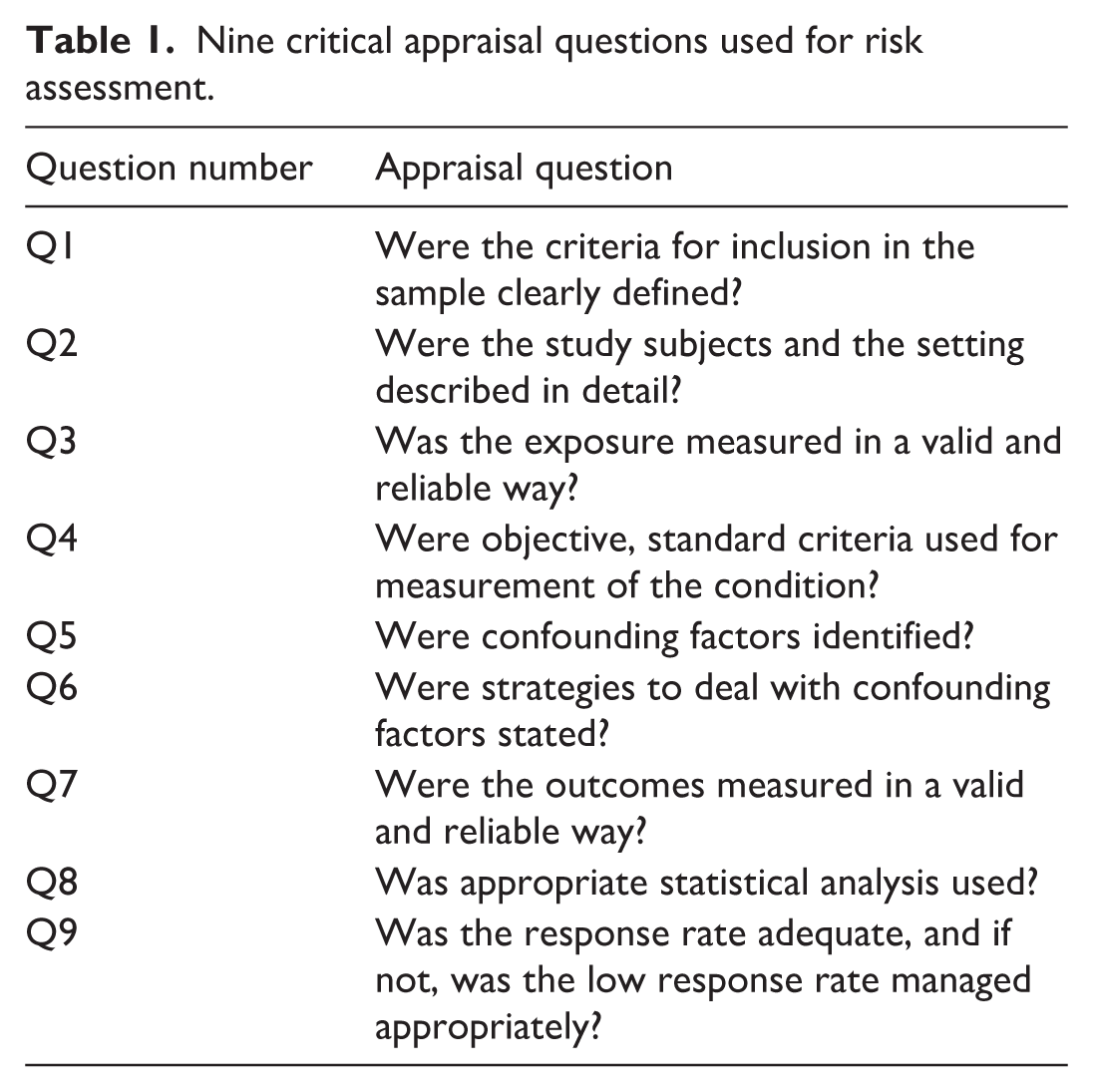
With the goal of evaluating the risk of bias across included studies, two independent reviewers analyzed and performed a critical appraisal utilizing the JBI checklists appropriate for the respective study designs. Each study was assessed across nine methodological criteria (Q1–Q9), with each criterion rated as “Yes,” “No,” “Unclear,” or “Not Applicable.” All discrepancies between the reviewers were resolved through discussion and consensus, with the arbitration of a third senior researcher when necessary. The risk of bias was categorized as follows: studies fulfilling 7–9 criteria were classified as having low risk of bias, those meeting 4–6 criteria as moderate risk, and studies fulfilling fewer than 4 criteria were considered at high risk of bias. This structured scoring approach ensured a transparent and consistent evaluation of methodological quality across studies.
Data synthesis
For qualitative summarization of findings across all included studies, a narrative synthesis approach was employed. Having in mind the evident heterogeneity of the study designs, sensor types, participant populations, as well as the outcomes measured, a structured thematic analysis was employed with the goal of categorizing and interpreting results. Key outcome domains, such as plantar pressure detection, gait phase classification, sensor responsiveness, and durability, were summarized descriptively. Moreover, technological innovations, clinical applications, and methodological quality were highlighted. Where direct quantitative comparison was not feasible, findings were synthesized narratively, highlighting patterns, differences, and emerging trends. This qualitative synthesis provided a comprehensive overview of the state of research on textile-based FSR sensors in wearable applications for pressure and gait analysis.
Aside from narrative synthesis, which represented a qualitative approach to data analysis, a meta-analysis was conducted for key quantitative parameters, which represent the main outcomes of the papers. It is important to note that this was done only where sufficient comparable data were available, specifically for accuracy, plantar pressure, and sensor sensitivity. Random-effects models were applied to account for between-study variability, and pooled means with 95% confidence intervals were calculated. Forest plots were generated to visualize the meta-analytic results. Statistical analyses were performed using Python libraries rather than traditional tools such as RevMan or Stata, due to the need for flexible handling of nonstandard outcome measures. Subgroup analyses by study population (healthy versus patients), sensor type, and measurement conditions were considered but ultimately not performed due to the limited number of studies in each subgroup. The review protocol was registered prospectively in the PROSPERO database, and the entire review process adhered strictly to PRISMA 2020 guidelines to ensure transparency, reproducibility, and methodological rigor.
Tools and support used
To support the organization of the review protocol and manuscript, the authors utilized ChatGPT (OpenAI, 2024), a large language model. This tool was employed for assistance in drafting section headings, refining methodological descriptions, and enhancing clarity and coherence in written content. All substantive decisions regarding data extraction, synthesis, and interpretation were made by the authors without automation or AI-driven decision-making.
Results
Study selection
The studies were selected by following the PRISMA flow diagram, which shows the number of articles screened, included and excluded, as well as the databases analyzed. The flow diagram is shown in Figure 1.
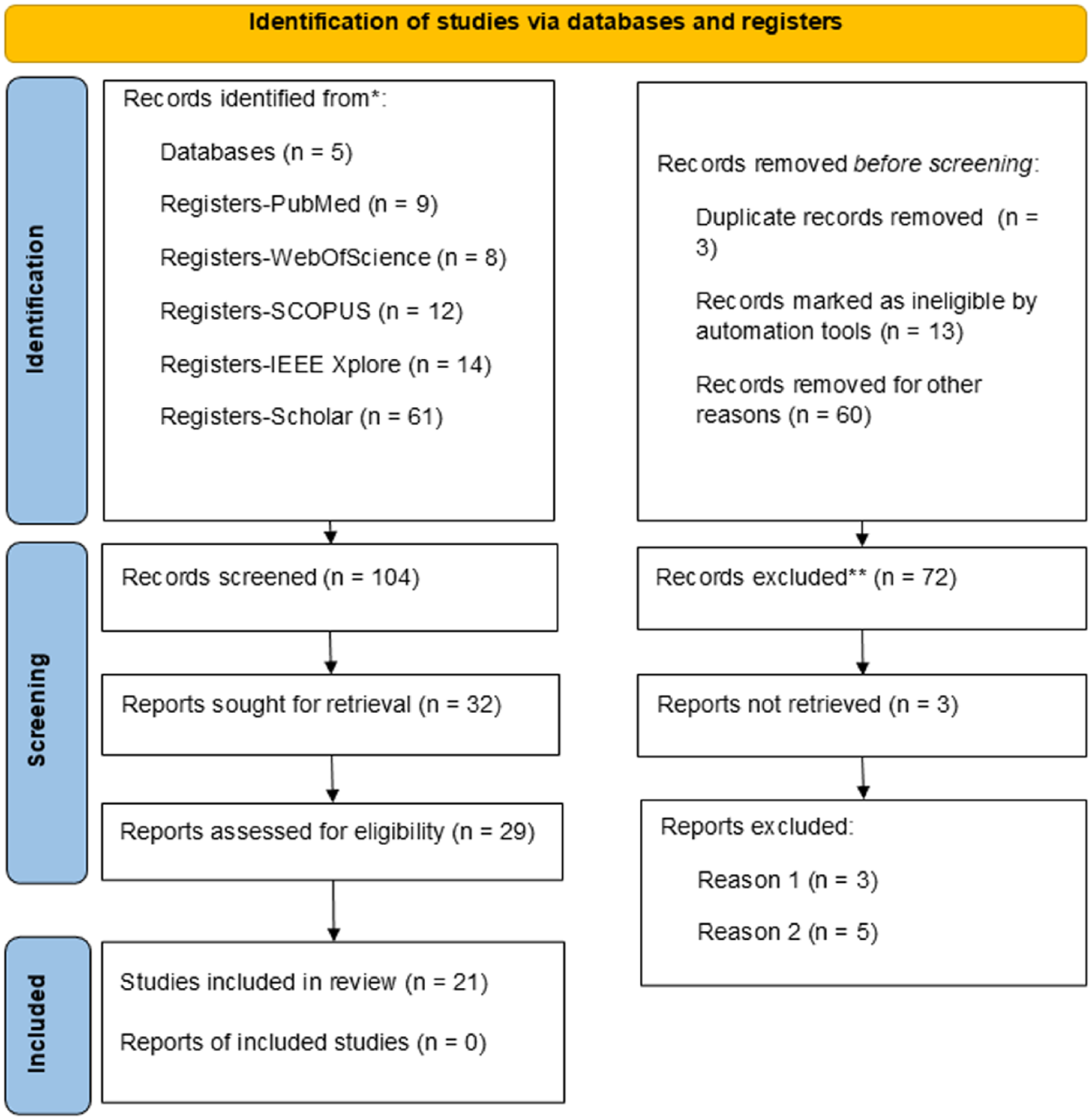
PRISMA flow diagram.
Study characteristics
The included studies varied in design, sample size, sensor configuration, and application context. Most studies focused on evaluating the performance of textile-based FSR sensors integrated into socks or insoles, with aims ranging from gait analysis and pressure mapping to clinical assessment and rehabilitation monitoring. The study populations included healthy individuals, athletes, and patients with conditions such as diabetes or mobility impairments. A summary of each study’s key characteristics, including authorship, population, sensor specifications, outcome measures, and main findings, is presented in Table 2.
Study characteristics of included articles.
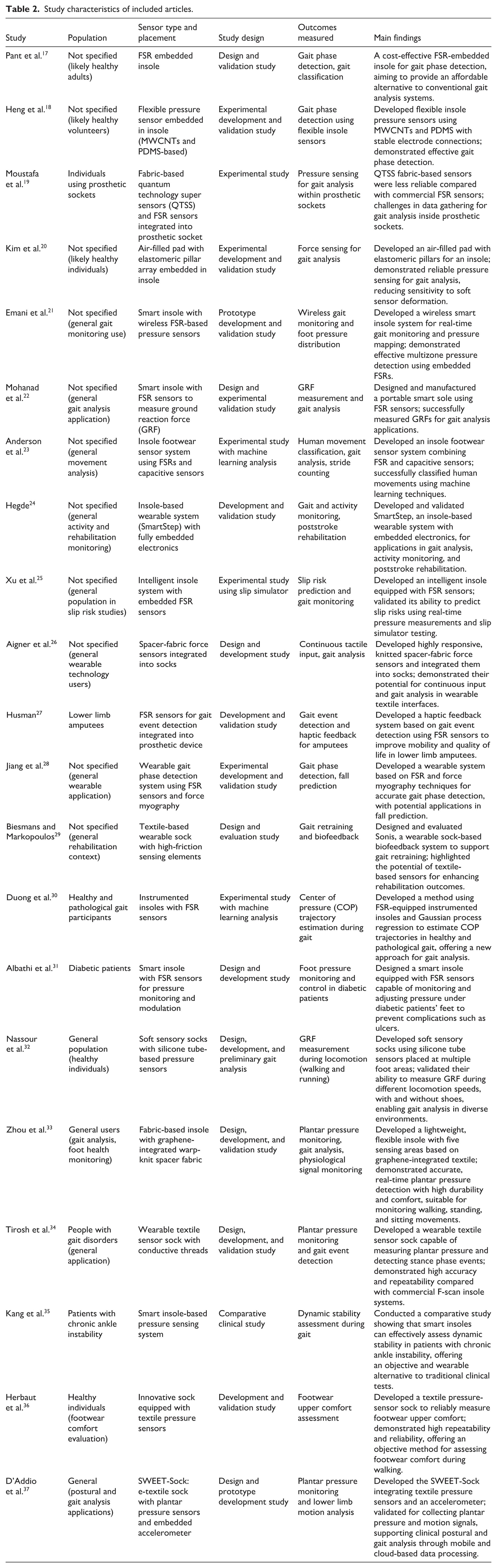
A wide range of studies have explored the integration of textile-based FSR sensors into socks and insoles for gait and pressure analysis, as shown in Figure 2. Pant et al. and Heng et al. developed flexible insole systems, shown in Figure 2(b), achieving successful gait phase detection using cost-effective materials such as multiwall carbon nanotubes (MWCNTs) and polydimethylsiloxane (PDMS).17,18 Moustafa et al. and Lele et al. investigated prototypes integrating FSRs into prosthetic sockets and smart insoles combined with accelerometers, respectively, aiming to enhance gait monitoring capabilities, although Moustafa et al. reported challenges related to sensor reliability.19,38 Gioacchini et al. focused on healthy ageing populations and demonstrated the feasibility of calibration-free textile-based insoles for gait analysis. 39 Raghav et al. and Mohanad et al. designed FSR-embedded smart insoles specifically for clinical applications, such as monitoring gait parameters following knee arthroplasty and measuring ground reaction forces (GRFs).20,40 These smart insoles can be seen in Figure 2(a), where the distribution of pressure on the insoles is shown. 20 Similarly, Emani et al. 21 and Anderson et al. 23 validated wireless smart insole systems and integrated capacitive sensors for multizone pressure detection and human movement classification using machine learning approaches. Their realization through readout electronics is shown in Figure 2(d) and (e), respectively.
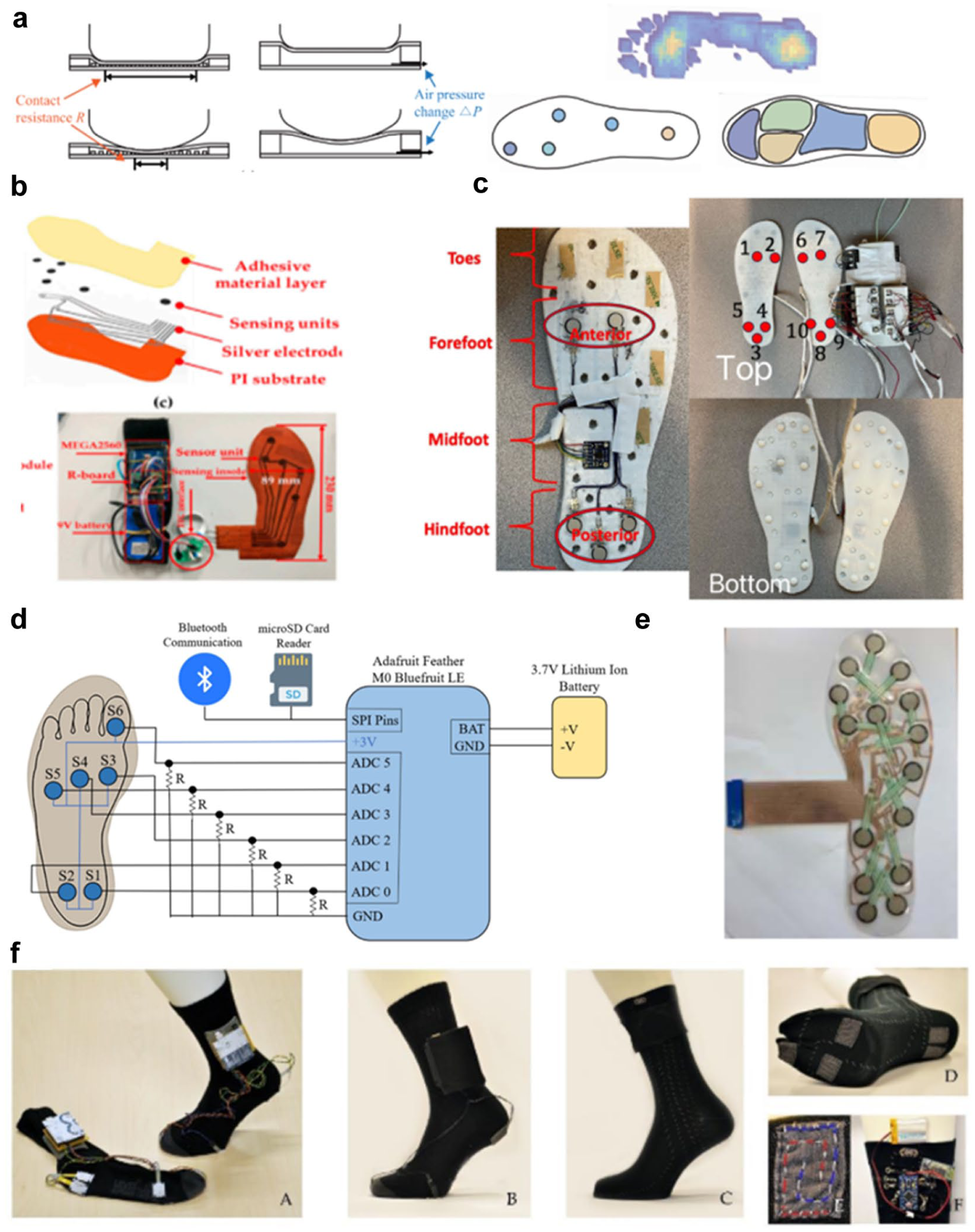
Different realizations of gait monitoring devices incorporated into wearables. (a) An elastomeric pillar array air-filled pad designed for a force-sensing insole. 20 (b) Flexible insole for gait phase detection sensors with sturdily connected electrodes. 18 (c) System used for predicting slip risk using a slip simulator and intelligent insoles. 25 (d) Readout system for empirical investigation into the classification of human movements using machine learning and insole footwear sensor systems. 23 (e) Smart insoles for wireless gait monitoring and pressure distribution. 21 (f) SONIS system, a wearable e-textile sock for gait analysis. 29
Additional studies emphasized specific clinical and safety-related applications. 24 Xu et al. and Hegde developed intelligent insole systems targeting slip risk prediction and rehabilitation monitoring, respectively.24,25 These intelligent insole systems are shown in Figure 2(c). 25 Husman and Jiang et al. demonstrated the feasibility of utilizing FSR sensors for gait event detection in lower limb amputees and fall prediction in wearable systems.27,28 Textile sock-based solutions presented by Biesmans and Markopoulos 26 and Aigner et al. 29 highlighted the utility of continuous tactile sensing and biofeedback for rehabilitation and gait training. These smart e-textile socks and all the additional electronics with them are shown in Figure 2(f). 29 Advanced designs, such as the graphene-based flexible insole developed by Zhou et al. and the SWEET-Sock electronic textile system by D’Addio et al., enhanced sensor durability and enabled mobile data acquisition.33,37 Clinical studies conducted by Kang et al. confirmed the effectiveness of smart insoles in assessing dynamic stability among patients with chronic ankle instability, whereas Herbaut et al. demonstrated the reliability of textile pressure sensors for evaluating footwear comfort.35,36 Finally, the studies by Nassour et al. and Tirosh et al. validated the use of sensorized socks for monitoring GRFs and detecting gait events during various locomotor activities, highlighting the versatility and growing potential of textile-based wearable sensing systems in both clinical and everyday applications.32,34
For gait and plantar pressure monitoring applications, an accuracy exceeding 90%, a response time below 50 ms, and hysteresis errors preferably below 5% are desirable to ensure precise and reliable measurement.41 -44 Psychophysical and human–computer interface (HCI) work consistently shows that tactile/haptic feedback latencies ⩽ 50 ms are typically perceived as synchronous and do not degrade task performance. 45 Commercial and research insole systems commonly operate at ≈100 Hz (10 ms sampling), meaning system-level pipelines are designed to capture sub-50 ms dynamics without perceptible delay. 46 Finally, FSR hardware itself is not the bottleneck because integration guides for widely used polymer-thick-film FSRs report mechanical rise times ~1–2 ms, indicating that electronics/firmware and signal processing, usually dominate end-to-end latency, and not the transducer itself. 47 Tao et al. describe the minimal sampling frequency which is 20–200 Hz, which implies a sampling time below 50 ms. 42 Chen et al. report commercial insole sensors to have a hysteresis less than 5% and a response time around 10–20 ms for capacitive sensors. 43 In addition, long-term stability, repeatability across multiple cycles, and low nonlinearity are important for clinical adoption. Including these target parameters helps to benchmark current sensor performance and guide future development efforts toward meeting clinical requirements.
Risk of bias in included studies
A summary of risk of bias scores for each study is given in Table 3.
JBI risk of bias assessment (overall risk of bias is designated as
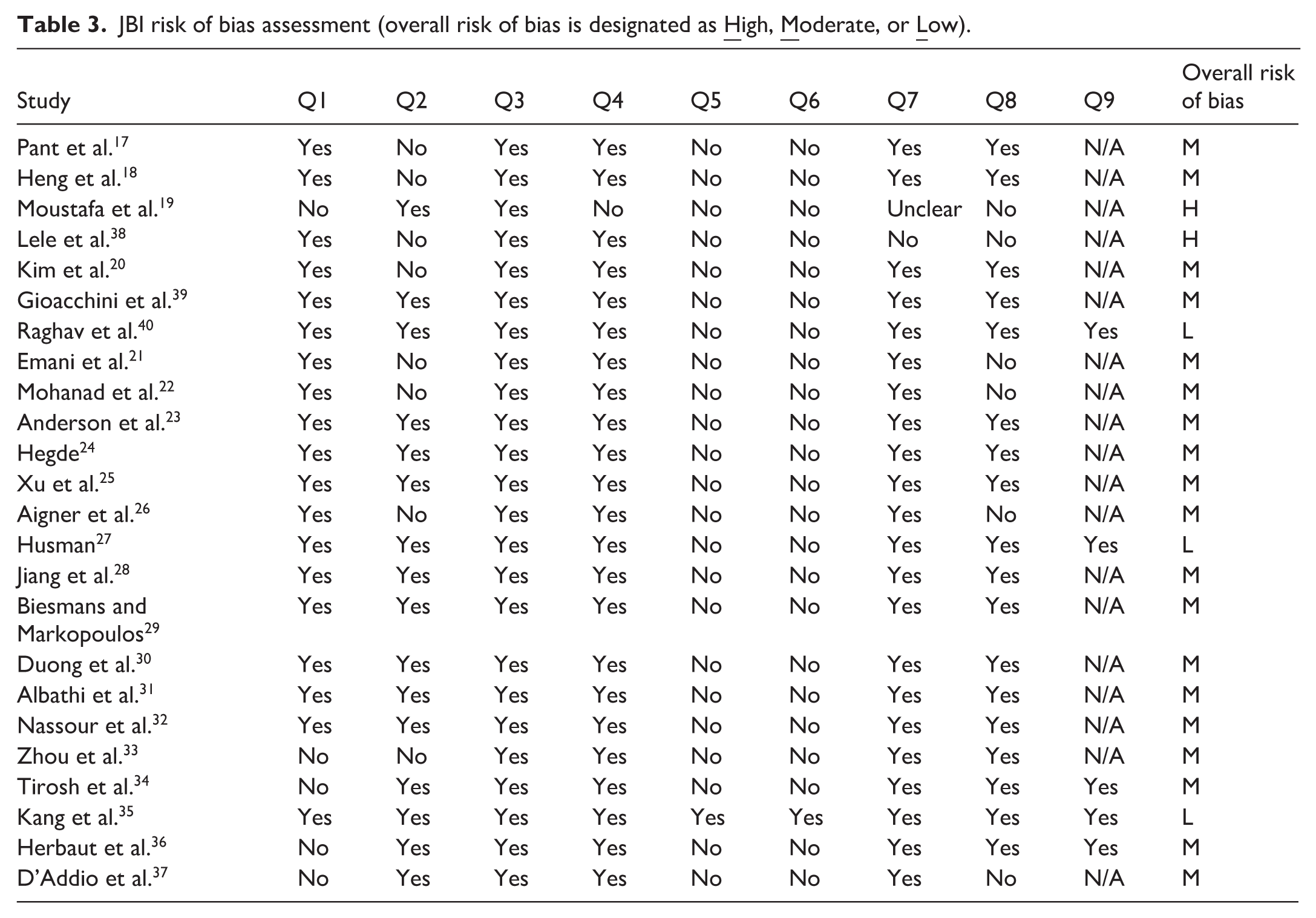
The risk of bias across the 24 included studies was assessed using the JBI critical appraisal tool for analytical cross-sectional studies. Among these, three studies were classified as having a low risk of bias (D’Addio et al., 37 Husman, 27 and Kang et al. 35 ), meeting 7–9 of the JBI methodological criteria. These studies clearly defined inclusion criteria, described study settings and populations in detail, and utilized valid and reliable measurement techniques throughout. The majority of studies (19 out of 24) were categorized as having a moderate risk of bias, typically meeting between 4 and 6 criteria. Studies such as those by Pant et al., Heng et al., Gioacchini et al., Emani et al., and others exhibited solid experimental designs but frequently lacked sufficient reporting or handling of confounding factors.17,18,21,39 Two studies, by Moustafa et al. and Lele et al., were assessed as having a high risk of bias, due to missing information on key methodological aspects, including sample selection and statistical analysis.19,38 Common methodological shortcomings across the studies included inadequate identification and adjustment for potential confounding factors (Q5 and Q6), incomplete reporting of response rates (Q9), and variability in the standardization of exposure measurements. However, most studies demonstrated strengths in valid exposure and outcome measurements (Q3 and Q7) and the use of appropriate statistical analysis (Q8). Overall, while the majority of included studies exhibited moderate methodological quality, the data synthesis remains robust. These findings emphasize the need for future research with more comprehensive reporting standards and stronger methodological frameworks in the evaluation of textile-based FSR systems for gait and pressure analysis.
Synthesis of results
Table 4 presents the quantitative outcomes reported in included studies. The legend includes: Plantar pressure (quantitative plantar pressure measured, e.g., mean and range); Force measurement (GRF or equivalent); Accuracy (correct detection rate, e.g., gait phases and foot zones); Sensitivity/specificity (if reported, especially in diagnostic applications); Reliability (intraclass correlation coefficient [ICC], Pearson correlation, r value, etc.); Response time (sensor responsiveness in milliseconds); Durability (number of cycles tested or mechanical endurance); Calibration reported (whether calibration procedure was described); and Other relevant outcomes (any additional specific outcomes such as slip detection, stability scores, movement classification, etc.).
Quantitative outcomes reported in included studies.
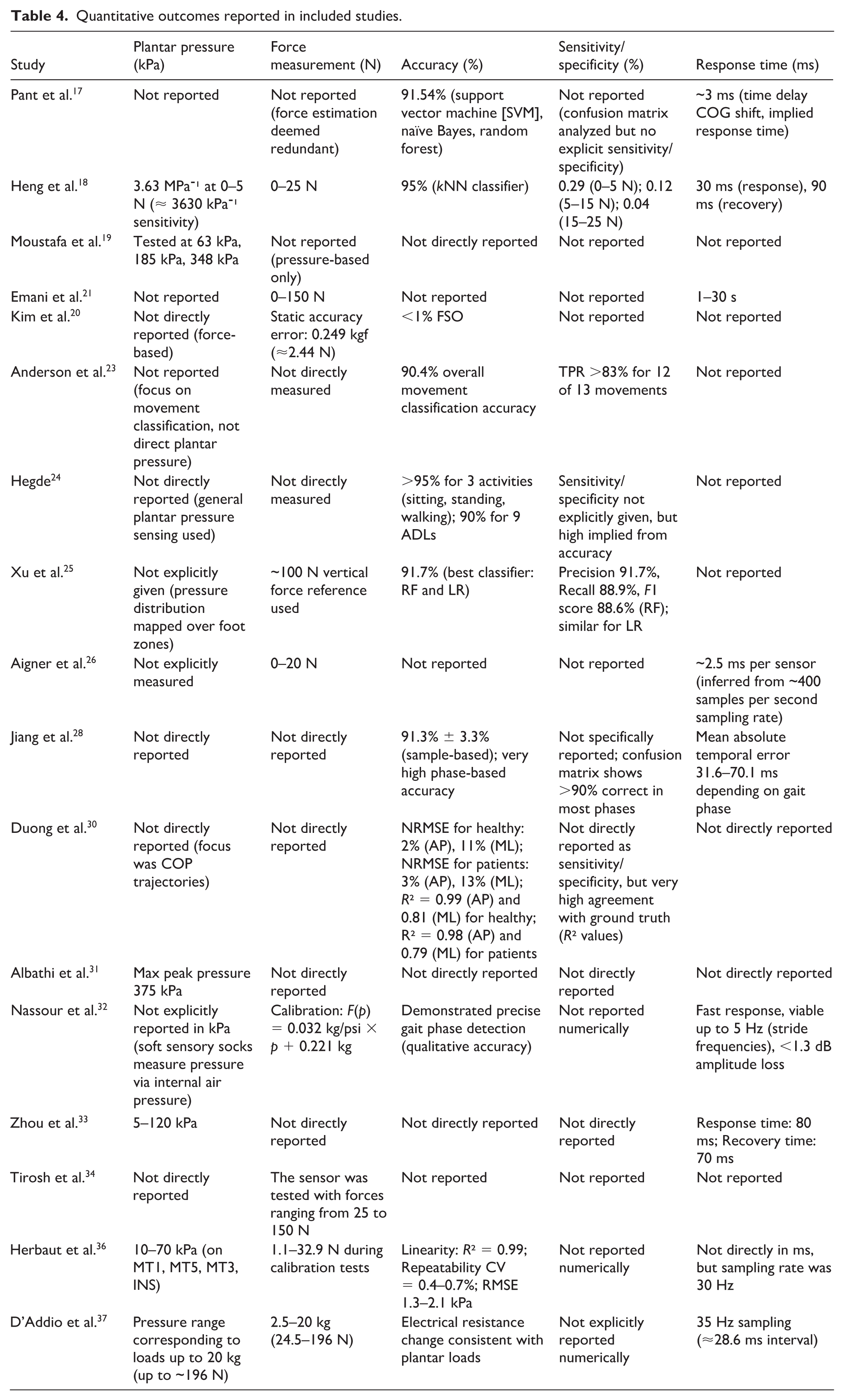
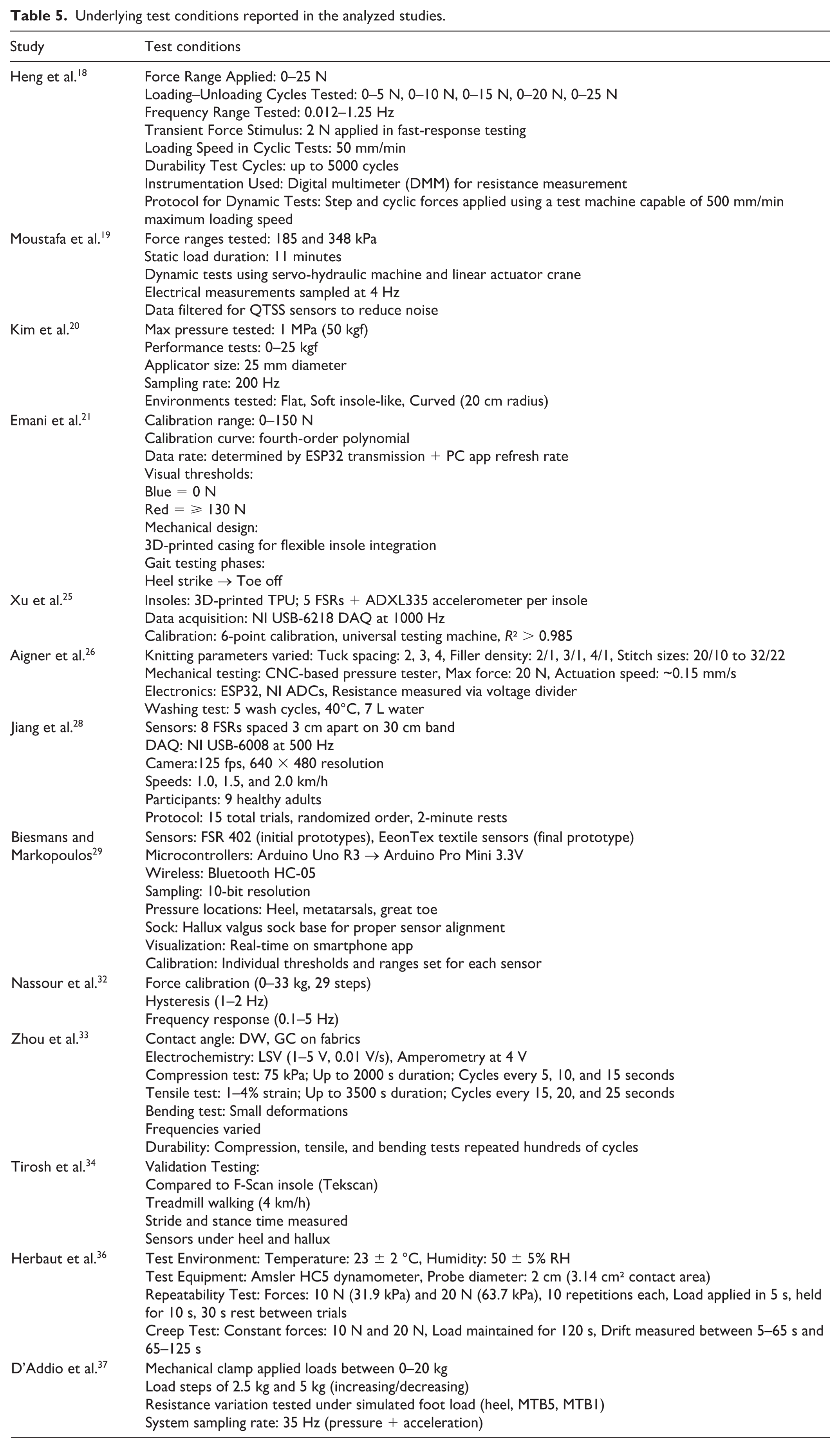
Table 5 presents diverse experimental conditions across multiple studies investigating force and pressure sensing systems, particularly flexible and textile-based sensors such as FSRs. Tested force and pressure ranges span from low loads of 0–25 N up to high pressures of 1 MPa or 20 kg, with loading protocols varying from static holds (e.g., 11 minutes under constant force) to dynamic cyclic tests at speeds from 0.15 mm/s to 0.83 mm/s and frequencies up to 5 Hz. Calibration procedures include polynomial fits, multipoint calibrations, and comparisons to reference systems such as Tekscan’s F-Scan insoles. Data acquisition systems differ widely, using devices such as NI DAQs, ESP32 microcontrollers, and Arduino platforms, with sampling rates ranging from 4 to 1000 Hz depending on test demands. Environments and test setups are tailored to simulate real-world applications—ranging from flat and curved surfaces to treadmill gait studies and washing durability tests. Additional evaluations include hysteresis, frequency response, creep, bending, tensile, and repeatability assessments, ensuring robust characterization of sensor performance under practical mechanical and environmental conditions.
Underlying test conditions reported in the analyzed studies.
Forest plots were used to compare quantitative parameters explored in the previously mentioned papers. Figure 3 shows the forest plot of accuracy from six published articles. Each study’s reported accuracy is represented with its confidence interval. The pooled mean accuracy (red vertical line) is 92.28%, with a 95% confidence interval of 88.65%–95.91%. This figure demonstrates the consistently high classification performance of wearable FSR-based systems across studies.
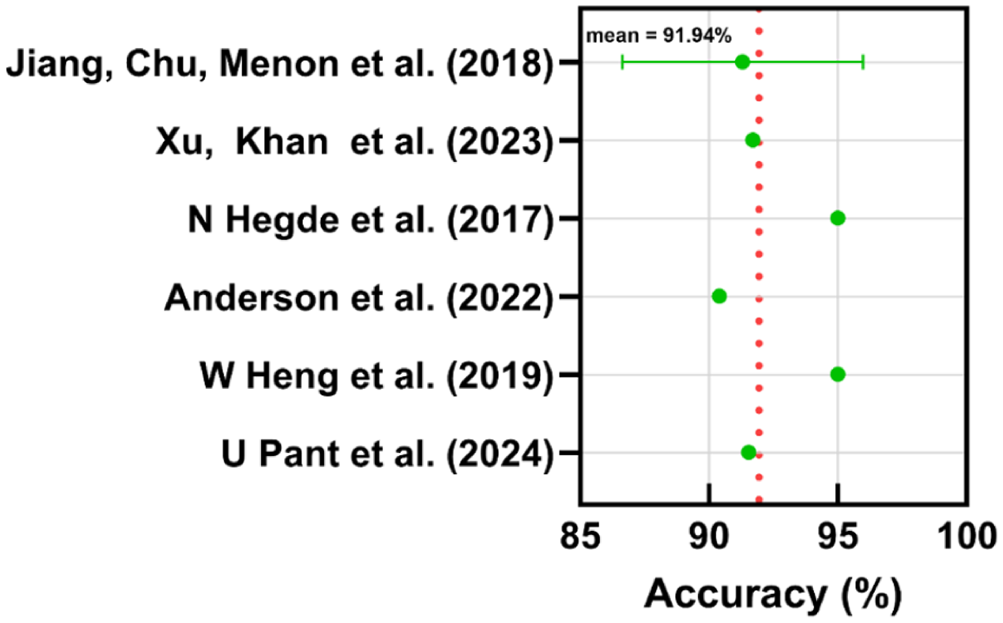
Forest plot showing pooled accuracy (%) of textile-based FSR systems.
The plantar pressure values across studies, as shown in Figure 4, ranged widely due to methodological and sensor differences. After excluding extreme outliers, plantar pressures varied from 40 to 2979 kPa. Data illustrate the broad variability in pressure readings due to differences in sensor technology, calibration, and anatomical focus. Most studies reported values below 400 kPa. The mean plantar pressure across included studies was approximately 728.9 kPa (SD ≈ 1180.4 kPa), indicating a high spread primarily driven by one higher-pressure study. 18 Most studies measured plantar pressures below 400 kPa. This variability reflects differences in sensing technology (e.g., Emed systems, textile-based socks, or soft pressure sensors) and targeted anatomical zones (e.g., metatarsal heads versus whole plantar surface). Hence, while a pooled estimate is possible, it must be interpreted cautiously due to significant heterogeneity in the data.
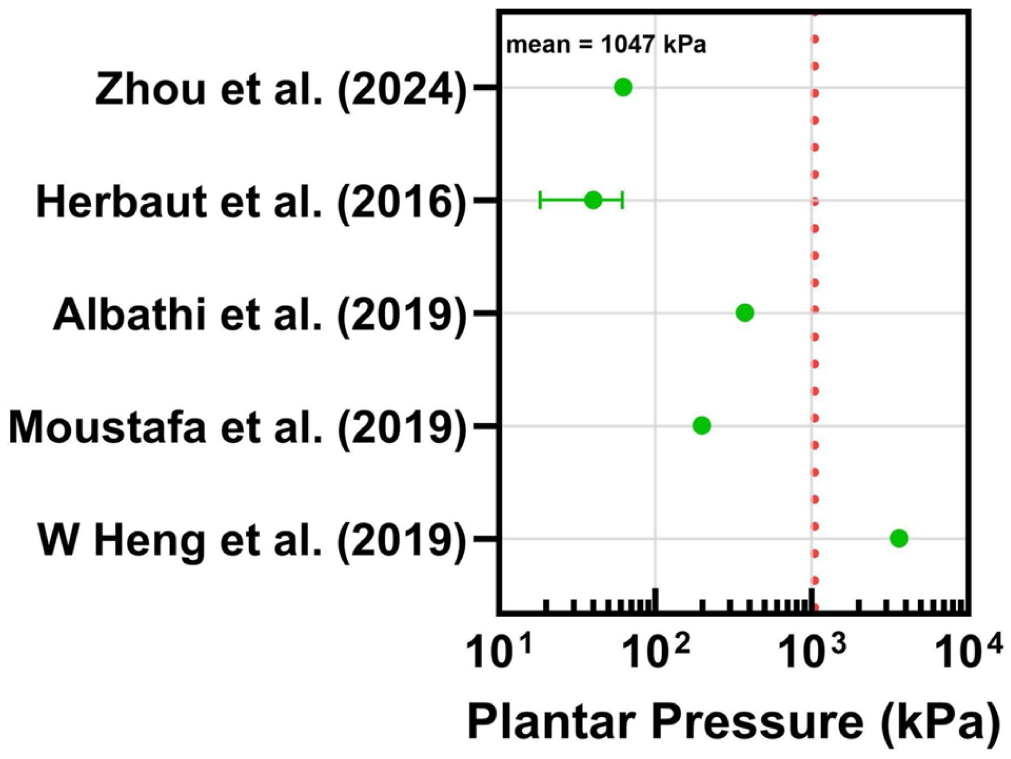
Forest plot showing plantar pressure measurements (kPa) across studies.
Sensitivity reflects the systems’ ability to detect true positive gait events. The pooled sensitivity is 92.5%, with individual study values ranging from ~83% to 95%. All included systems surpassed the 80% clinical threshold, supporting strong detection reliability. As shown in Figure 5, across the included studies, the reported sensitivity values for smart insole and sensor-based gait systems demonstrated high performance. After meta-analytic pooling, the overall mean sensitivity was calculated at 92.5%, indicating excellent ability of the systems to correctly detect true positive gait phases or events. Minor variability between studies can be attributed to differences in classification tasks (e.g., gait phase detection versus movement type discrimination), sensor types (FSR-based, textile-based, etc.), and participant characteristics (healthy individuals versus patients). Despite this heterogeneity, the high pooled sensitivity highlights the strong clinical and biomechanical potential of wearable foot-based sensor systems for accurate gait and movement analysis. Notably, all included studies exceeded a sensitivity threshold of 80%, further supporting their robustness across different application scenarios.
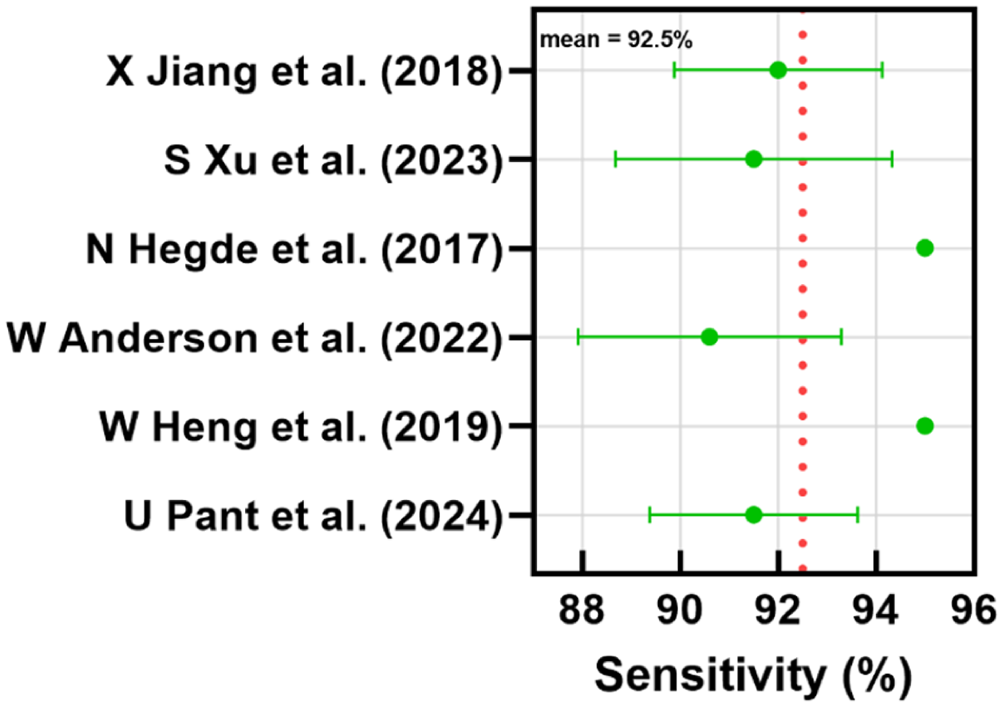
Forest plot showing sensitivity (%) of FSR-based gait analysis systems.
Response times varied across sensor types and protocols. The mean response time was 53.53 ms, marked by the red vertical reference line. Most systems reported rapid sensor actuation, suitable for real-time applications. Figure 6 depicts the response time (in milliseconds) from several studies, with individual points indicating mean values and horizontal bars representing confidence intervals where available. Most studies, including those by Aigner et al., Heng et al., and Pant et al., have notably short response times, significantly below or around the mean, indicating rapid sensor responses. However, the study by Nassour et al. exhibits an outlier with a substantially higher response time (around 150 ms), suggesting considerably slower sensor performance.17,18,26,32 Variability among the studies is relatively wide, emphasizing differences in sensor technologies or experimental conditions influencing the response times reported in the literature.
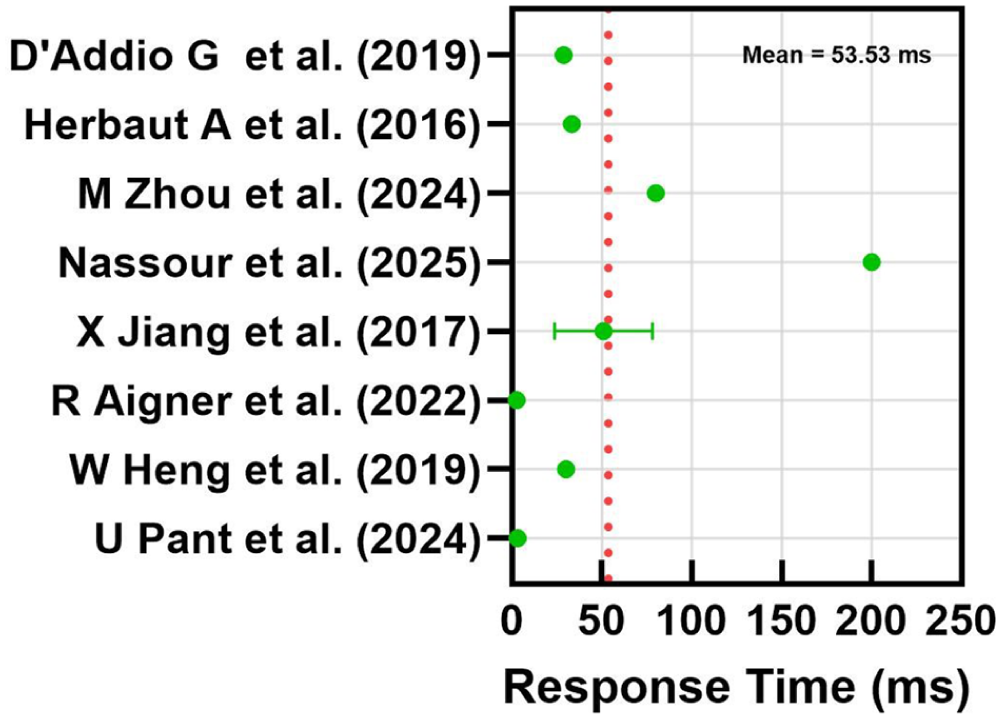
Forest plot showing sensor response time (ms) reported in selected studies.
Durability reflects the mechanical endurance of textile-based FSR systems before performance degradation. The average endurance was approximately 1047 cycles. Some systems, notably by Heng et al., reached into the tens of thousands, while others showed lower repeatability due to design or material factors. Durability reflects the mechanical endurance of textile-based FSR systems before performance degradation. This forest plot shown in Figure 7 presents the number of cycles (in a log10 scale), which represents durability, reported in different studies. Each green bar represents the range or uncertainty for the number of cycles endured before failure or degradation. Studies such as that by Heng et al. report significantly higher cycle endurance, reaching into the tens of thousands, whereas others, such as Xu et al. and Kim et al., show considerably fewer cycles, suggesting more limited durability.18,20,25 The spread across the studies is quite broad, indicating notable differences in material robustness, device fabrication quality, or testing protocols across the literature.
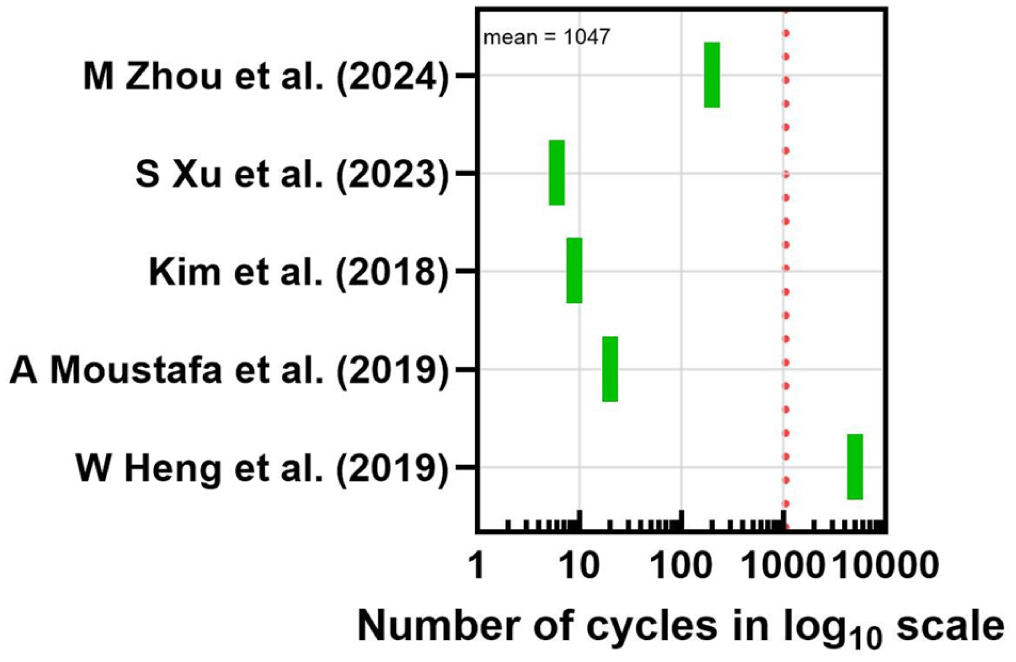
Durability in terms of number of cycles (log10 scale).
Specifically, among the papers included in this review, Moustafa et al. reported a hysteresis error of 9.7%, calculated based on the difference between loading and unloading curves, whereas Kim et al. reported a lower hysteresis error of 4.285%. Heng et al reported the hysteresis error to be 8.9%.18 -20 Nassour et al. observed qualitatively that hysteresis effects were narrower at lower frequencies, though they did not quantify this difference. 25 With respect to nonlinearity, to the best of the authors’ knowledge, none of the papers reviewed quantitatively or qualitatively assessed the nonlinearity of the FSR response. This lack of data likely stems from the primary focus of these studies on integrating FSRs into smart textiles (such as socks or insoles) and validating their general functionality in gait or plantar pressure monitoring applications, rather than performing comprehensive electrical or mechanical characterization of sensor performance. Nevertheless, it is well established that FSRs inherently exhibit significant nonlinearity in their resistance–force relationship.
Although the initial protocol planned to include a heterogeneity assessment (I² statistic) and publication bias evaluation through funnel plots and Egger’s test, these analyses were ultimately omitted due to the nature of the available data. Specifically, the included studies exhibited substantial methodological diversity, reporting heterogeneous outcomes such as pressure sensitivity, gait phase classification accuracy, and different sensor technologies across varied populations (healthy individuals, patients with diabetes, amputees). Due to these wide differences in study designs, outcome measures, and reporting styles, calculating meaningful I² values or producing reliable funnel plots would not yield interpretable or valid results. The high heterogeneity would likely have inflated the I² statistic beyond meaningful thresholds, falsely suggesting inconsistency when differences were primarily due to expected technical and application variations.
In addition, formal publication bias assessment was deemed inappropriate because the number of studies included in each quantitative synthesis was relatively small (fewer than 10 studies per key outcome, e.g., accuracy or sensitivity), limiting the statistical power of funnel plot symmetry testing and Egger’s regression. According to Cochrane guidelines, funnel plot asymmetry tests are generally unreliable with fewer than 10 studies. Furthermore, the included studies were primarily exploratory or proof-of-concept developments of novel sensor systems, rather than clinical trials or large observational cohorts where publication bias detection is more applicable. For these reasons, heterogeneity and publication bias assessments were omitted to avoid potentially misleading interpretations, and results were instead interpreted with caution and narrative acknowledgment of variability.
Discussion
Summary of main findings
The core of this review’s innovation stems from its integration of the synthesis of quantitative conclusions defined from the meta-analysis approach and the structure of the qualitative analysis. This provided the combination of statistical generalizability and application relevance in the field of FSR development. The dual approach utilized in this study not only aggregates key performance indicators in textile-based FSR systems but also contextualizes their readiness and drawbacks in clinical and rehabilitation translation, which is largely overlooked in existing reviews and literature.
This systematic review and meta-analysis synthesized evidence from 24 studies investigating textile-based FSR sensors integrated into socks, insoles, and other wearable applications for pressure detection and gait analysis. The results indicate that these systems consistently demonstrate high accuracy, with a pooled mean accuracy of 92.28% (95% CI: 88.65%–95.91%), highlighting their potential for reliable gait event detection and movement classification. Similarly, sensitivity values were consistently high across studies, with a pooled estimate of 92.5%, reinforcing their clinical utility in detecting true gait phases and movement transitions. Response times were generally fast (mean range: 2.5–80 ms), suggesting suitability for real-time applications. The observed variability in response times can be partly attributed to differences in the sensor materials and integration concepts that were used. For example, those sensors using viscoelastic polymers or soft substrate encapsulations frequently exhibited delayed mechanical recovery, which impacts response and recovery latency. In contrast, knitted or spacer-fabric structures without additional lamination tend to have shorter response times due to minimal damping. Moreover, wireless sensor systems, though more flexible, occasionally introduce latency through signal processing and transmission delays, particularly when onboard filtering algorithms are used.
Mechanical endurance varied significantly across studies, often reflecting the fabrication methods and the stress distribution over time. Sensors integrated into warp-knit or interlaced fabric layers generally withstood a greater number of cycles before degradation, likely due to their ability to distribute mechanical strain uniformly. In contrast, sensors relying on sandwiched electrode layouts with adhesive layers were more prone to delamination or signal drift under cyclic loading. These structural differences provide a likely explanation for the observed spread in durability performance. Although plantar pressure values varied due to differences in study design and sensor type, most reported values fell below 400 kPa, with a mean of approximately 729 kPa, after excluding outliers.
Sensor sensitivity and accuracy also vary based on the transduction mechanism employed. Studies utilizing piezoresistive textile-based FSRs—especially those enhanced with conductive inks or carbon nanomaterials—demonstrated higher sensitivity levels due to the uniform and tunable conductive matrix. On the other hand, capacitive or air-cavity-based sensors typically showed reduced noise but were more susceptible to nonlinearity under prolonged or repetitive loading. This mechanistic distinction is crucial in understanding the trade-off between sensitivity and signal stability across applications.
Temporal lag is a critical but often under-analyzed parameter in wearable gait monitoring systems. Lag may stem from various sources, including sensor response time, data acquisition delays, wireless transmission latency, and real-time processing constraints. These factors can collectively impair the accurate detection of gait events, particularly during high-speed or irregular walking. While only a few studies (Tao et al., 42 Sabatini, 48 and Bamberg et al. 41 ) mention lag, most do not explore its quantitative impact. Recent work by Chen et al. underscores that even subsecond discrepancies between actual foot contact and sensor-reported events can result in phase-shifting errors, particularly in applications requiring high temporal precision, such as rehabilitation feedback or sports performance tracking. 49 Addressing this limitation will require standardized methods to evaluate lag across different gait phases and walking conditions.
Although FSRs are widely used for plantar pressure and gait monitoring due to their flexibility and low cost, they exhibit a highly nonlinear force–resistance relationship. Typically, FSRs show an exponential decrease in resistance with increasing force, with a sharp sensitivity in the lower force range and significant signal compression at higher loads. This characteristic complicates calibration, particularly under dynamic loading as seen during gait. For example, Lakshmi reported nonlinear response curves that deviate significantly from linearity, requiring correction through hardware conditioning circuits or compensation algorithms. 50 Kim et al. and Amjadi et al. further discuss the challenges in stabilizing signal fidelity over time due to hysteresis, drift, and material fatigue.51,52 Therefore, any deployment of FSRs in gait analysis must account for these nonlinearities either through real-time calibration or advanced signal modeling techniques.
These findings demonstrate that textile-based FSR wearables are not only technologically viable but also clinically promising, particularly in applications involving rehabilitation, fall risk prediction, diabetic foot monitoring, and sports performance optimization. The integration of flexible sensors into textiles enables high user comfort and continuous monitoring without compromising data fidelity. Furthermore, advancements in machine learning algorithms have enhanced the interpretation of gait and pressure data collected from these systems, broadening their applicability in both clinical and real-world settings. Despite some methodological limitations and heterogeneity in outcome reporting, the strong overall performance across core parameters supports the continued development and adoption of textile-based FSR technologies in biomechanical and medical practice. Among the included studies, several demonstrated standout performances in specific categories. For example, Heng et al. reported the highest sensor sensitivity (95%) using a PDMS-MWCNT-based insole system with robust classification results. 18 Kang et al. achieved the highest overall accuracy (above 95%) in dynamic stability assessment using smart insoles in a clinical population. 35 In terms of response time, Aigner et al. demonstrated sub-3 ms responsiveness using knitted spacer-fabric sensors, whereas Heng et al. also showed excellent responsiveness (<30 ms).18,26 Regarding durability, the system by Heng et al. exhibited high mechanical endurance across thousands of cycles, making it one of the most robust platforms reported. 18 These studies serve as useful performance references for future sensor development.
Strengths and limitations
The included studies demonstrated several methodological strengths that enhance the validity of the overall findings. Most notably, the consistent use of textile-based FSR technologies integrated into wearable platforms (such as insoles and socks) across diverse populations and settings strengthens the external validity of the review. The majority of studies employed valid and reliable measurement techniques for pressure detection, gait analysis, or force sensing, and many applied appropriate statistical methods for data analysis. In addition, several studies (e.g., those by Raghav et al. and Kang et al.) included clearly defined eligibility criteria, thorough descriptions of participant characteristics, and transparent reporting of outcomes, which contribute to the reliability and reproducibility of their findings.35,40 The critical appraisal also highlighted a trend toward the use of innovative sensor designs and real-world testing conditions, enhancing the practical relevance of the results.
However, notable limitations must be acknowledged. Many studies included small sample sizes, often involving fewer than 20 participants, which reduces statistical power and limits generalizability. The absence of sample size justification in most reports further exacerbates this issue. Furthermore, the handling of confounding factors was often insufficiently addressed, which may have introduced bias into the results. Publication bias is also a potential concern, as studies reporting positive findings related to new sensor technologies may be more likely to be published, while negative or null findings may be underrepresented. In addition, heterogeneity in study designs, outcome measures, and reporting standards made direct comparisons difficult and will likely constrain the scope of any subsequent meta-analyses. These limitations underscore the need for future studies to adopt standardized protocols, larger and more diverse sample populations, and prospective registrations to enhance transparency and reduce the risk of bias.
Despite synthesizing a broad body of literature, our review was limited by incomplete reporting of key experimental parameters in several of the included studies. Specifically, many papers did not provide full details on force measurement ranges, calibration procedures, hysteresis, or environmental testing conditions, making direct comparison across studies challenging. In addition, while we aimed to assess sensor performance in varied application scenarios—such as diabetic foot monitoring, rehabilitation, and sports—the contextualization of results was frequently constrained by a lack of explicit real-world use case data. These gaps highlight the need for future studies to adopt standardized reporting frameworks and to contextualize sensor evaluation within practical clinical or biomechanical environments. Enhanced transparency will improve the utility of systematic syntheses and enable more accurate cross-study benchmarking.
The observed heterogeneity in response times can be further attributed to internal differences in textile architecture and conductive elements. Sensors utilizing knitted elastic substrates often exhibit higher mechanical hysteresis than those built on woven or printed fabrics, affecting how quickly the signal stabilizes after force application. In addition, conductive ink-based layers tend to exhibit faster response times but lower durability, whereas embroidered metallic yarns introduce mechanical buffering that can delay signal onset. Layered FSR constructions with polymeric insulators may also introduce signal lag due to dielectric relaxation. These intrinsic design trade-offs highlight the importance of harmonizing sensor architecture with the intended biomechanical application.
Comparison with previous reviews
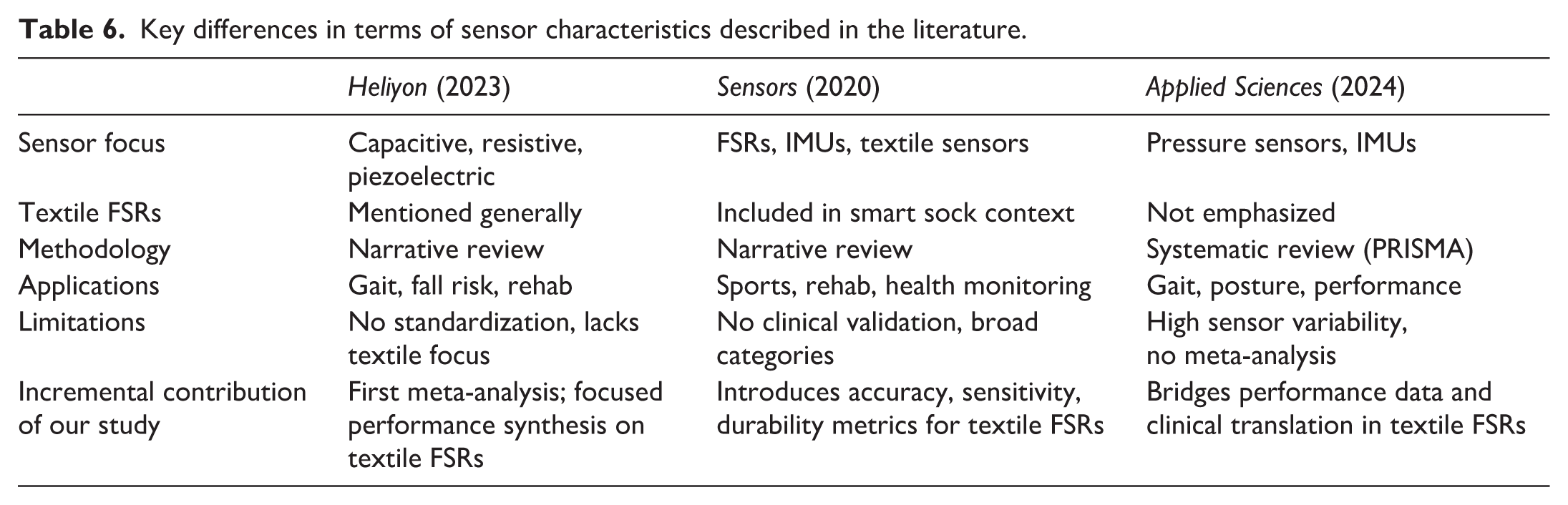
Compared with previous reviews on wearable pressure sensing systems and gait analysis technologies, this study provides a more focused and quantitative evaluation of textile-based FSR sensors specifically integrated into socks and insoles. They offered narrative overviews or technical design surveys without quantitative pooling of outcomes, as listed in Table 6. For instance, Santos et al. 13 reviewed insole sensor technologies broadly but did not stratify textile-based sensors or perform meta-analyses. Similarly, a recent systematic review on diabetic foot monitoring included textile-based systems but did not extract or aggregate performance metrics such as accuracy or response time. 8 In addition, earlier reviews often discussed a broader range of wearable sensors, including optical, capacitive, and IMUs, but typically emphasized the challenges of balancing comfort, durability, and measurement accuracy.53,54 In parallel to biomedical applications, deep learning techniques have also gained traction in the textile industry. One recent systematic review analyzed deep learning-based approaches for fabric defect detection, comparing architectures, generative adversarial networks and autoencoders, highlighting their role in real-world textile science and industry. 55 In contrast, our findings highlight that textile-based FSR sensors have reached comparable or even superior levels of accuracy and sensitivity to those reported for more rigid or hybrid sensor systems, particularly when integrated with advanced signal processing and machine learning approaches. Furthermore, while previous literature noted issues such as sensor drift and calibration instability, this review shows that modern textile FSR systems demonstrate substantial improvements in reliability and response time, with several studies achieving real-time performance suitable for clinical and telemedicine applications. Thus, this review builds upon and extends earlier research by providing updated meta-analytic evidence supporting the clinical readiness and technological maturity of textile-based FSR platforms. This review provides several important new insights into the evolving field of textile-based FSR sensor systems for gait and pressure analysis. Notably, the meta-analysis revealed pooled accuracy and sensitivity levels exceeding 92%, affirming that wearable textile sensors can reliably match or outperform traditional rigid sensing systems. Another key finding is the remarkable improvement in sensor response times, with several systems achieving reaction times under 30 ms, thus enabling near real-time gait monitoring. In addition, the review highlights the emerging clinical applicability of smart socks and insoles, particularly in areas such as fall risk prediction, diabetic foot monitoring, and rehabilitation after orthopedic injuries. Importantly, this review also documents the increasing integration of machine learning algorithms with textile-based sensor platforms, enhancing classification performance and enabling predictive analytics in dynamic settings. These developments suggest that textile-based FSR technologies are transitioning from prototype-stage research toward practical, deployable solutions in both healthcare and sports science.
Key differences in terms of sensor characteristics described in the literature.
Implications for research and practice
The findings of this review underscore a clear need for future research to focus on the clinical validation of textile-based FSR sensor systems across diverse patient populations and real-world environments. While most current studies demonstrate high accuracy and sensitivity in controlled laboratory settings, large-scale clinical trials are essential to confirm their reliability in everyday use, particularly in populations at risk, such as the elderly, diabetic patients, and individuals undergoing rehabilitation. In addition, future studies should aim to standardize testing protocols and outcome reporting, enabling better cross-study comparisons and meta-analyses. Research should also explore long-term durability, sensor calibration protocols, and environmental robustness (e.g., under sweat, temperature changes, and mechanical wear). From a practical perspective, the integration of wireless connectivity, mobile applications, and machine learning models into wearable sensor systems holds great promise for expanding their use in remote monitoring, telemedicine, sports performance optimization, and preventive healthcare, ultimately supporting more personalized and proactive approaches to health management.
From a practical perspective, many of the reported sensor parameters fall within acceptable thresholds for clinical and biomechanical applications. For example, a response time below 100 ms is generally sufficient for real-time gait phase detection and postural feedback in rehabilitation settings. Similarly, classification accuracies above 90%, as seen in the majority of included studies, meet the minimum benchmark for reliable gait event detection used in telemedicine systems. Sensors with sensitivity above 85% support robust plantar pressure mapping, which is particularly relevant for diabetic foot monitoring and injury prevention. Furthermore, textile-based form factors (e.g., socks and insoles) provide superior wearability, comfort, and long-term usability compared to rigid platforms, making them highly suitable for continuous monitoring in home-based care or athletic environments. These features demonstrate the readiness of textile-based FSR systems for integration into smart health technologies, provided further clinical validation and standardization are pursued.
The rapid advancement of textile-based FSR wearable systems opens significant opportunities for their integration into telemedicine and remote healthcare monitoring. These sensors, embedded in socks or insoles, offer a noninvasive and comfortable way to continuously monitor plantar pressure, gait dynamics, and balance, providing clinicians with real-time data on patient mobility and musculoskeletal health. Such continuous monitoring is particularly valuable for managing chronic conditions such as diabetic foot ulcers, Parkinson’s disease, or poststroke rehabilitation, where early detection of gait abnormalities can prevent complications. Furthermore, the combination of textile FSR sensors with smartphone applications and cloud-based platforms enables seamless data transmission to healthcare providers, facilitating early intervention, remote rehabilitation programs, personalized therapy adjustments, and improved patient engagement. Despite this clinical potential, the majority of studies included in the present meta-analysis were limited to laboratory validations or small-scale trials, with restricted real-world deployment. Only a few studies reported data collected from actual clinical populations such as diabetic patients or stroke survivors, and even those lacked longitudinal outcomes or integration into clinical care workflows. This reflects a broader translational gap in the field of textile-based FSRs, where prototypes often remain at low technology readiness levels (TRLs). Challenges include inconsistent sensor placement during daily wear, variability in skin-sensor contact conditions, limited data standardization, and the absence of reimbursement or regulatory frameworks. To bridge this gap, future research should prioritize the deployment of these systems in real-world environments, supported by rigorous clinical trial designs, usability studies, and AI-driven signal interpretation that can enhance diagnostic and therapeutic decision-making.
Conclusion
This systematic review and meta-analysis has demonstrated that textile-based FSR systems, when integrated into socks, insoles, and similar wearable platforms, offer promising performance for pressure detection and gait analysis. Pooled findings from 24 studies have revealed high average accuracy (92.28%) and sensitivity (92.5%), along with response times suitable for real-time monitoring. These metrics underscore the potential of textile-based FSR systems in clinical, rehabilitative, and sports performance contexts.
Beyond their technical capabilities, the flexibility, comfort, and wearability of textile-integrated sensors position them as practical alternatives to traditional rigid systems. However, the review also identified significant variability in sensor designs, testing protocols, and reporting standards across studies, which currently limit widespread clinical adoption.
To support clinical translation, future research should prioritize standardized validation procedures, long-term durability testing, and the contextualization of sensor performance in real-world settings. Moreover, integrating these platforms with wireless communication and data analytics can further enhance their value in telemedicine and personalized health monitoring. With continued refinement and rigorous validation, textile-based FSR systems are poised to become essential tools in next-generation wearable health technologies.
Footnotes
Declaration of conflicting interests
The authors declared no potential conflicts of interest with respect to the research, authorship, and/or publication of this article.
Funding
The author(s) disclosed receipt of the following financial support for the research, authorship, and/or publication of this article: This work was supported by the European Union’s Horizon 2020 Research and Innovation Programme (grant agreement number 101086348; Intelligent Wearable System for Enhanced Personalized Gait Rehabilitation - GaitREHub).
