




Abstract
Military combat uniforms must ensure thermal comfort to maintain soldier readiness, particularly in tropical climates where heat and humidity present significant physiological challenges. This study is the first to evaluate the suitability of the Royal Brunei Armed Forces disruptive digital pattern uniforms for use in tropical climate conditions. Unlike previous research, it combines objective textile data with subjective user perceptions to assess the thermal comfort properties of three types of operational combat uniforms in a Southeast Asian tropical setting. Results reaffirm that uniforms made up of pure cotton may not provide optimal thermal comfort in tropical environments, whereas increasing the polyester content in uniforms may enhance thermal comfort performance. However, the study also highlights that fabric material alone does not fully account for differences in thermal comfort. Structural textile properties such as fabric porosity, yarn structure, fiber morphology, and finishing treatments also play a critical role in influencing thermophysiological comfort. For instance, more tightly twisted yarns may facilitate moisture transfer more efficiently and promote faster drying. Overall, the findings suggest the need for a more comprehensive approach in uniform design, from fabric material selection to fiber structural arrangement, to ensure soldier comfort and operational readiness in increasingly warmer climates. Further research is recommended to determine the optimal polyester–cotton blend, as well as the ideal fiber structural configurations that balance wicking, drying, and comfort performance.
With the rising global mean temperatures driven by climate change, scientists predict that the increasing intensity and duration of extreme heat events will push the limits of human ability to regulate body temperature effectively. This can be felt as of recently in Brunei due to the El Niño phenomenon. 1 Considering Brunei Darussalam’s geographical location, the combination effects of high air temperature and high humidity may pose a serious hazard to human health. 2 Even though locals are somewhat believed to have adapted to the local climate, where the mean maximum temperature is 32°C with a mean relative humidity (RH) of 83%, if the wet bulb globe temperature exceeds the body’s skin temperature of roughly 35°C, the body will not be able to efficiently dissipate heat and cool down. If the core body temperature limit is exceeded, then heat stress may be induced and could even lead to heat stroke.
Although a majority of the population may not be vulnerable if a heatwave was to occur as we can easily just stay indoors and use central cooling systems to cool down, this may not be the case for soldiers who have to carry out high-intensity duties in the heat. Without proper mitigation measures, occupational heat stress may be prevalent. Although it is often underestimated as a serious injury, occupational heat stress is a widely felt phenomenon that is known to reduce cognitive ability, 3 labor capacity,4,5 productivity, 6 and overall performance. Besides that, heat stress has also been linked to a higher risk of occupational accidents, hence militaries, especially those that conduct trainings and operate in extremely hot weather conditions, cannot completely avoid it.
Heat-related illness is a common occupational hazard in militaries all over the world, where the prevalence rate ranges from 0.6% to 9.3%. 7 In a survey conducted in 2021 among the Royal Brunei Armed Forces (RBAF), it was found that about 21% of respondents have experienced symptoms of heat-related illnesses during operations and/or during training. Additionally, between 2012 and 2018, the Singaporean Armed Forces reported a total of 187 cases of heat exhaustion and heat stroke, 8 and between 2004 and 2014, the Royal Thai Army Medical Department even reported 22 deaths from heat stroke, due to outdoor military training. 9 Although numerically these figures may be relatively small, it is still unfortunate that lives have been lost because of heat stroke, when it can be prevented by implementing preventive measures. Therefore, this highlights the need for an intervention to take place to reduce the incidence of heat injury among RBAF soldiers, as one way to increase force readiness.
To ensure that RBAF performs at an optimum level in a warmer future climate, the factors that influence soldier performance such as heat stress need to be evaluated. There are several methods of intervention to mitigate heat stress, such as heat adaptation or acclimatization training, 10 hydration, 11 work–rest cycle,12,13 and clothing. 14
These strategies, among others, are common approaches to managing occupational heat stress on an individual level. 15 However, this study focuses specifically on clothing as an intervention strategy to alleviate the effects of heat stress. In a military context, this clothing refers to combat uniforms, which soldiers are required to wear in the field. Modern military combat uniforms are designed not only to protect against environmental and human hazards but also to provide comfort and sustain operational performance over extended periods of time.
As the days are becoming warmer, combat uniforms should employ clothing technological innovations that assist in thermoregulation. Clothing to be worn in hot environments and during high physical activity should be made of fabrics that not only have the ability to remove excess moisture or sweat efficiently but also enhance heat dissipation, allowing the body to cool more effectively.
Textile manufacturers typically use cotton fibers to provide comfort to wearers as they are soft, lightweight, breathable, and absorbent. However, they typically have poor tearing strength, and they shrink and wrinkle easily. Meanwhile, polyester fibers have poor absorption properties, and they are typically heavier and less breathable than cotton fibers. However, they are known to be more durable in terms of strength and resistant to abrasion, do not shrink easily, and are more moisture wicking compared with cotton fibers, and have lower moisture regain.
Most military combat uniforms today are made up of a blend of man-made hydrophobic fibers such as polyester and natural hydrophilic fibers such as cotton. By combining the characteristics of different fiber types, the respective weaknesses of each fiber material can be diminished, thereby desired end characteristics of the fabric can be obtained. The textile industry usually blends fibers such as cotton and polyester fibers to strengthen the fabric, and to retain the shape as well as reduce manufacturing cost. Cotton/polyester blended fabrics are known to provide a combination of comfort and strength qualities; therefore, in theory this provides wearers a balance of comfort and durability.
Additionally, fabric blends can be designed to be moisture wicking. For example, brands such as Adidas and Under Armour have AEROREADY and HeatGear, respectively, which utilize polyester/cotton and polyester/elastane blends as their equivalent moisture-wicking apparel technology. Meanwhile, Nike Dri-FIT utilizes microfiber polyester as its equivalent moisture-wicking technology clothing line.
In the design and development phase of clothing production, material selection is critical as it directly influences the fabric’s feel, durability, flexibility, and moisture-absorption properties, which contribute to the garment’s overall functionality. For military uniforms, achieving a balance of comfort, durability, and tactical suitability often requires a combination of fabric materials.
Thermal comfort is determined by three main factors: clothing, physical activity, and climate. Although climate is largely uncontrollable and military tasks often necessitate specific physical activities regardless of environmental conditions, clothing can be modified to enhance thermal comfort. An appropriate balance between heat production and heat loss is essential, and this is influenced by the thermophysiological properties of fabrics, including breathability, sweat-wicking ability, absorption or water repellency, drying rate, and thermal resistance. 17
Several studies have explored the thermal properties of clothing in relation to perceived thermal comfort. One study utilized (1) objective manikin testing to study hygro-thermal properties of sportswear as well as (2) subjective thermal comfort sensation evaluation. The findings revealed that overall comfort during physical activities was linked to moisture-related comfort sensations and fabric properties. 18
In such studies, two types of clothing and fabric comfort measurements are usually employed: laboratory and wear trial testing. Wear trial testing involves human subjects in the field or under controlled conditions and can be time consuming and expensive. Therefore, laboratory tests are most commonly used to determine different aspects of comfort with high reproducibility and less variability than those measured on humans, 19 but they may not faithfully represent real-life conditions.
This study aims to evaluate thermal comfort of RBAF combat uniforms, focusing on the heat and moisture-transfer properties of the fabrics and to offer recommendations for improvement. Optimizing combat uniforms for tropical hot and humid environments is expected to reduce thermal strain, thereby preserving soldiers’ mental and psychomotor performance. As a result, it is hoped that this study will provide valuable insights into the fabric thermal comfort properties and user experiences of RBAF combat uniforms, which could inform the development of functional requirements and procurement decisions in the future.
Materials and methods
Survey
An online self-administered survey was distributed to RBAF personnel in April 2022. The survey was able to collect soldiers’ perceptions on their disruptive digital pattern (D2P) uniforms and included questions related to thermal comfort aspects of the D2P uniform.
The respondents were made up of military personnel that have experience wearing their service-specific issued D2P uniforms to perform their daily duties, operations, exercises, and trainings. There were three types of uniforms used by participants. Two uniform types were made from a polyester/cotton blend, whereas the third was made from pure cotton fabric. Survey responses were based on the D2P uniform issued to participants. A pilot test was conducted to assess the questionnaire’s validity and minimize response bias before the final survey was disseminated widely.
The sample size to ensure representation across different military branches was estimated via a standard sample size calculator for estimating mean. 20 The survey questions were made available in both Malay and English Languages.
Data and statistical analyses
Data were collected using Google Forms, and IBM Statistical Package for Social Science (SPSS) version 25 (SPSS Inc., IL, US) was used to analyze the survey responses. Descriptive statistics were applied to the survey data to analyze and present end-user perceptions on four thermal comfort factors associated with the RBAF D2P uniforms.
A one-way ANOVA test was conducted to compare soldiers’ perceptions of the thermal comfort factors across different D2P uniforms. Data are presented as mean ± standard deviation (SD), and an F-statistic with a p-value less than 0.001 was considered as highly significant.
Textile analysis
Textile testing was conducted on fabric materials of the three RBAF military service branches. The fabrics were tested for their material composition and fabric parameters such as thermal resistance, water vapor resistance, spray rating, dry rate, and overall moisture-management properties. Each fabric was given a code: F01, F02, and F03, each corresponding to the three main RBAF service branches. Testing was conducted by the Science & Technology Research Institute for Defence (STRIDE), Ministry of Defence, Malaysia. The tests were conducted according to International Organization for Standardization (ISO) standards, Association of Textile Chemists and Colorists (AATCC) standards, and STRIDE’s own standard test methods, which have been verified and audited in accordance with Malaysia’s Laboratory Accreditation Body, MS ISO/IEC 17025:2017.
Environmental conditions
Laboratory testing
The environmental conditions for all the laboratory tests were set at a temperature of 20
Operational (in-use)
The environmental conditions for the operational use of D2P uniforms range between mean temperatures of 24°C to 32°C with mean RH between 78% and 91%.
Results and discussion
Survey results
In this study, the total number of responses collected from the survey was 3169. The number of survey responses collected exceeded the required sample size, ensuring robust and reliable findings. Table 1 shows survey respondents’ perception on thermal comfort factors of their D2P uniform, and Table 2 shows the associations found between thermal comfort factors and different types of D2P uniforms.
Survey respondents’ perception on thermal comfort factors of their disruptive digital pattern uniform (N = 3169)

Associations between thermal comfort factors and different types of disruptive digital pattern uniforms (N = 3169).
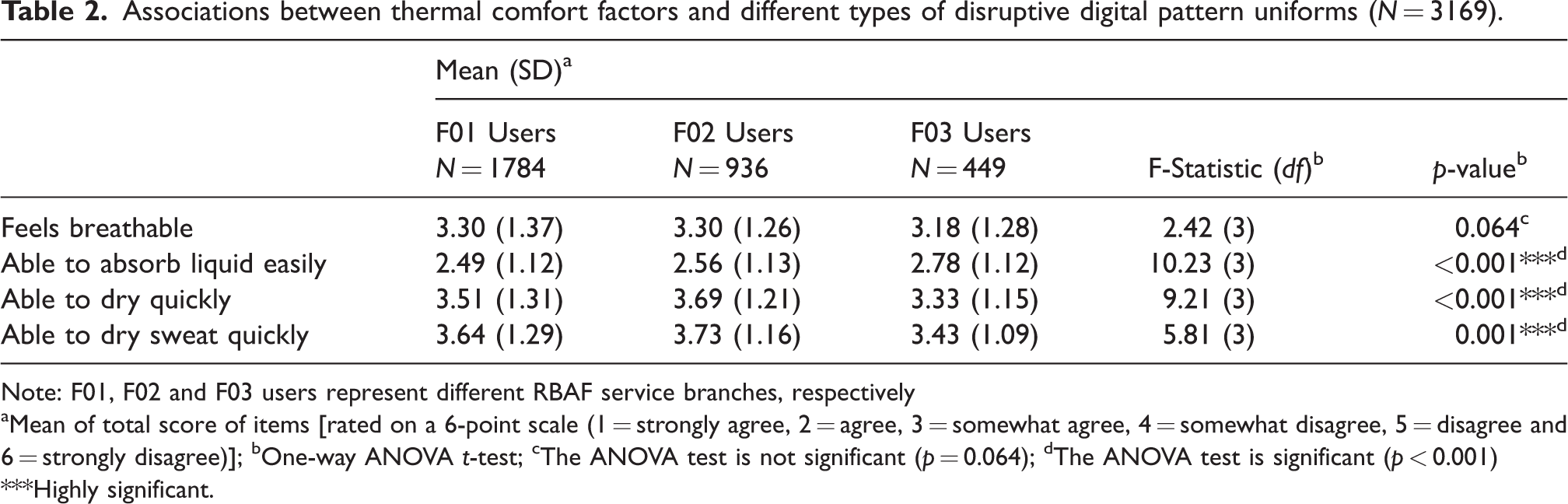
Note: F01, F02 and F03 users represent different RBAF service branches, respectively
Mean of total score of items [rated on a 6-point scale (1 = strongly agree, 2 = agree, 3 = somewhat agree, 4 = somewhat disagree, 5 = disagree and 6 = strongly disagree)]; bOne-way ANOVA t-test; cThe ANOVA test is not significant (p = 0.064); dThe ANOVA test is significant (p < 0.001)
***Highly significant.
Textile analysis results
Table 3 shows the results of the textile analysis.
Textile analysis results of RBAF disruptive digital pattern fabrics
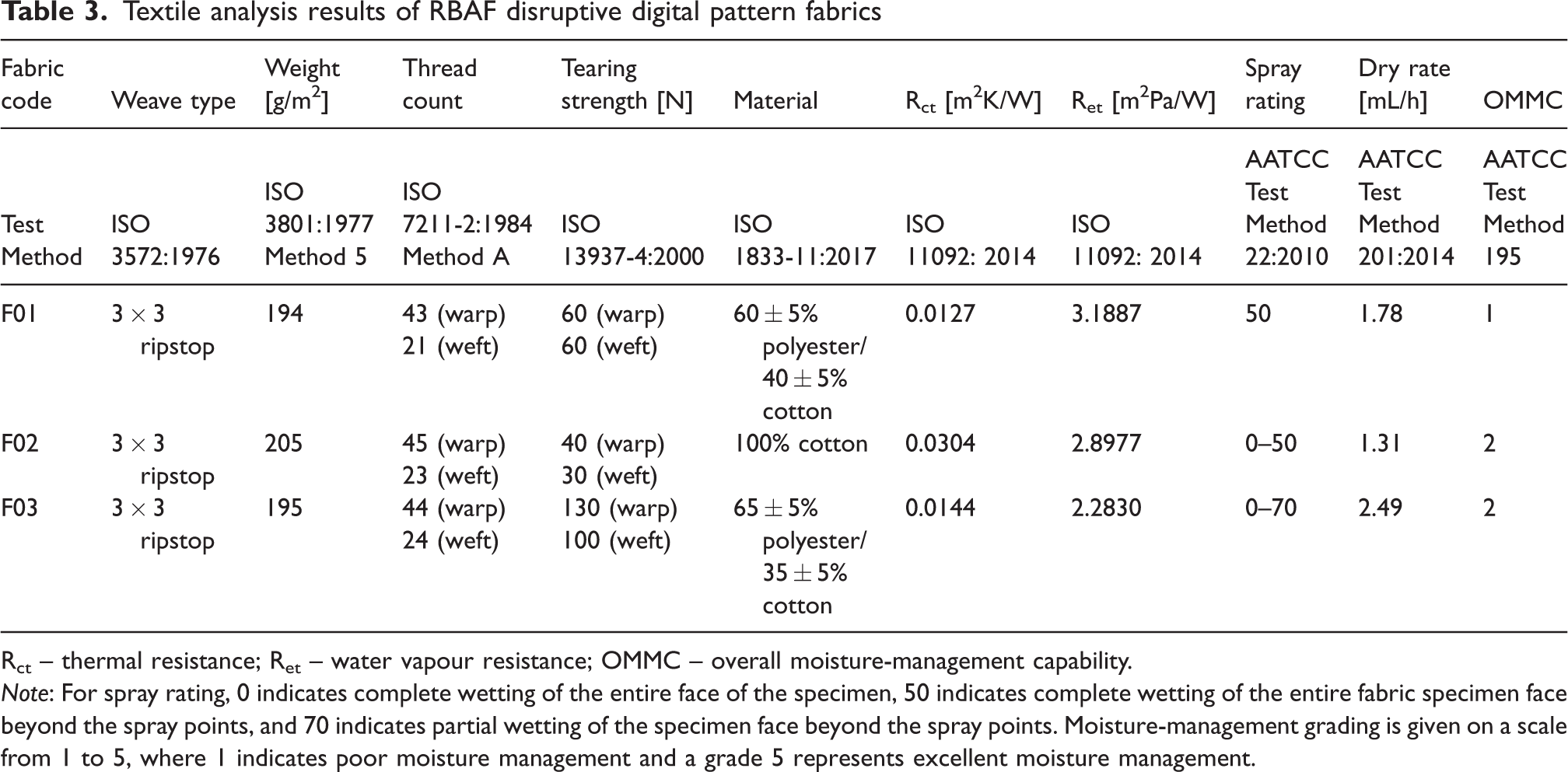
Rct – thermal resistance; Ret – water vapour resistance; OMMC – overall moisture-management capability.
Note: For spray rating, 0 indicates complete wetting of the entire face of the specimen, 50 indicates complete wetting of the entire fabric specimen face beyond the spray points, and 70 indicates partial wetting of the specimen face beyond the spray points. Moisture-management grading is given on a scale from 1 to 5, where 1 indicates poor moisture management and a grade 5 represents excellent moisture management.
Breathability
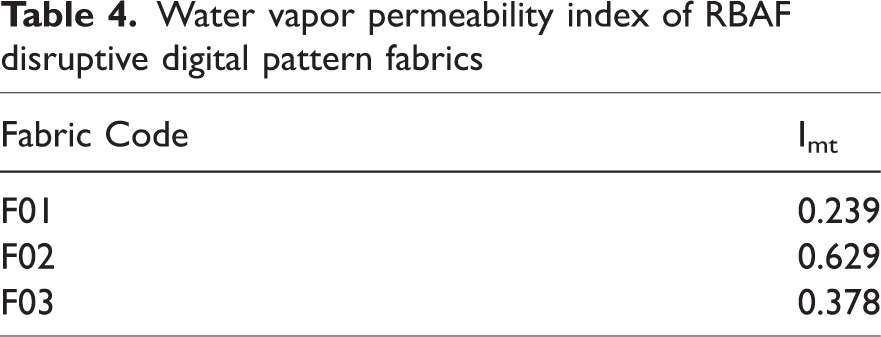
Table 4 shows the water vapor permeability index of RBAF D2P fabrics.
Water vapor permeability index of RBAF disruptive digital pattern fabrics
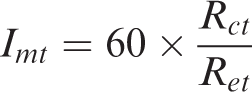
Breathability was assessed using two complementary approaches: (1) direct measurement of water vapor resistance (Ret) and (2) the water vapor permeability index (Imt), calculated as
21
All three fabrics exhibited low Ret, indicating excellent breathability under ISO 11092:2014 laboratory conditions. Among them, F03 showed the lowest Ret, followed by F02 and F01, suggesting that F03 offers the highest evaporative performance. Although Imt was calculated to provide a supplementary perspective by considering both thermal (Rct) and vapor resistance (Ret), its interpretation is limited when Ret values are already low. Thus, Ret remains the primary and most reliable indicator of moisture vapor transfer in this context. The inclusion of Imt serves primarily to explore potential effects related to thermal burden and comfort. As Imt is influenced by both thermal resistance and water vapor resistance, it can offer additional insight into how fabric thermal insulation may affect wearers’ overall comfort, particularly in hot environments where both heat and moisture dissipation are critical.
Notably, F02—made of 100% cotton—recorded a higher Imt than F01 and F03, which both contain a higher percentage of polyester fibers in ratio to cotton fibers. Cotton, being a hydrophilic natural fiber, is generally considered more breathable than polyester. 22 However, despite these measurable laboratory differences, a one-way ANOVA test revealed no statistically significant difference in breathability perceptions among respondents wearing the different D2P uniforms (F(3) = 2.42, p = 0.064). One possible explanation is that participants may not clearly distinguish between sensations caused by thermal resistance and water vapor resistance. For example, a fabric that retains heat but allows moisture to escape may still be perceived as unbreathable. This perceptual overlap could obscure objective differences in laboratory results.
Overall, results suggest that real-world conditions may influence breathability differently than controlled laboratory settings. Several factors could contribute to this discrepancy. Firstly, cotton fibers, being hydrophilic, tend to swell in high-humidity environments, reducing pore size and, consequently, air permeability.23,24 Secondly, when the D2P garment becomes wet, water retained within the fabric’s pores may obstruct airflow, further limiting breathability.23–25 These factors could counteract the inherent breathability advantage of cotton observed in dry laboratory conditions.
Although F01 and F03 share polyester–cotton blends (60/40 and 65/35, respectively), F03 exhibited noticeably lower Ret. This suggests that factors beyond fiber composition may play a larger role in influencing breathability. Other textile parameters such as fabric construction, fiber morphology, and finishing treatments are likely responsible for the observed performance gap.26–28
Future research should consider employing alternative breathability assessment methods, such as dynamic testing under controlled humidity conditions or wear trials in operational environments, to better capture breathability performance.
Water repellency or absorbency
The results indicate that most respondents find that their uniform is absorbent and not highly water repellent. These data are supported by the laboratory results, where all fabrics tested had low water-repellency ratings (spray rating), as indicated in Table 3 above.
There was a highly significant difference between the different D2P types as determined by one-way ANOVA (F(3) = 10.23, p < 0.001). Subsequent Scheffé post-hoc test suggests that two pairs of mean scores are significantly different, indicating that F01 and F02 users are more likely to claim that their D2P uniform is absorbent in contrast to F03 users. This may be due to the higher percentage of polyester fibers present in F03 (65%) compared with F01 (60%) and F02 (100% cotton). As polyester has a low moisture regain (∼0.4%) and is hydrophobic, it does not absorb liquid easily. In contrast, cotton fibers, present in F01, F02, and F03 in varying amounts, have a high moisture regain (∼7–8%), making them more absorbent and capable of holding moisture longer. 22 However, the difference in liquid absorption between F01 and F03 may not be solely explained by fiber material alone. While both fabrics contain almost similar proportions of polyester and cotton, other unmeasured factors such as fabric construction (e.g. density) or the physical characteristics of the fibers themselves could contribute to the observed differences in liquid absorption.26,29,30 Additionally, other factors that were not controlled such as the presence of finishing treatments may also play a part in influencing liquid absorption properties. 27
Dry rate
Respondents were asked whether they found the D2P uniforms to dry quickly after becoming wet. Responses were evenly divided between agreement and disagreement. This variability may be attributed to differences among the D2P uniform variants, with some drying more quickly than others. However, laboratory results indicate that all D2P fabrics meet the ≥0.6 mL/h threshold for quick-drying fabrics under controlled laboratory conditions. 31 It is important to note, however, that this cut-off value was developed for standardized testing environments and may not fully reflect drying performance in real-world settings, particularly in high-humidity environments such as Brunei Darussalam, where drying rates may be significantly lower.
A one-way ANOVA revealed a highly significant difference in drying rates between the different D2P fabric types (F(3) = 9.21, p < 0.001). A subsequent Scheffé post-hoc test indicated that F02 users were significantly more likely to report that their uniforms did not dry quickly compared with F01 and F03 users. This finding aligns with the laboratory drying rate measurements, which showed that F02 had the slowest drying rate (1.31 mL/h), followed by F01 (1.78 mL/h), while F03 exhibited the fastest drying rate (2.49 mL/h). The differences in drying times could be attributed to fiber composition. F01 (60/40 polyester–cotton) and F03 (65/35 polyester–cotton) dried significantly faster than F02 (100% cotton), which aligns with known fiber properties. Polyester’s hydrophobic nature (moisture regain ∼0.4%) allows it to shed water more efficiently, whereas cotton’s hydrophilic nature (moisture regain ∼7–8%) causes it to absorb and retain moisture, leading to slower drying time. 22 This effect is further amplified in high humidity, where cotton fibers tend to swell and retain water, reducing air permeability and evaporation rates as explained through Morton and Hearle’s analysis of moisture regain versus RH, where they found that cotton absorbs much more moisture as humidity rises, whereas polyester remains largely unchanged. 32
Sweat wicking
In this study, the sweat-wicking ability of a fabric is measured by the overall moisture-management properties of fabrics. The survey results showed that most respondents do not find that their uniforms are able to wick their sweat efficiently. Additionally, textile analysis results show that all fabrics had fair to poor moisture management (Table 3).
There was a highly significant difference between the different D2P types as determined by one-way ANOVA (F(3) = 5.81, p < 0.001). A subsequent Scheffé post-hoc test revealed significant differences in perceived sweat-wicking effectiveness between uniform types, indicating that F03 users are more likely to claim that their uniform is sweat wicking compared with F01 and F02 users. This may be attributed to F03’s higher polyester content, which enhances its ability to wick moisture due to polyester’s well-known moisture-wicking properties. 22 Additionally, research also suggest that the shape and fineness of polyester fibers also play a very important role in influencing moisture-management properties.33,34
Despite F01 and F03 having similar weight, weave type, and thread count, F03 demonstrated superior performance, exhibiting a lower Ret, a faster drying rate, and a higher overall moisture-management capability (OMMC = 2) compared with F01 (OMMC = 1). This suggests that factors such as yarn structure, porosity, thickness, and potential finishing treatments may also play a role in influencing moisture behavior, in addition to fiber composition.24,26–28,35 The higher polyester ratio in F03 (65% vs. 60% in F01) may contribute to improved moisture wicking and faster water evaporation. 36
Additionally, the lower Ret of F03 (Ret = 2.2830 vs. Ret = 3.1887 in F01) indicates greater air permeability, which would further enhance drying efficiency by allowing moisture-laden air to escape more easily. 37 Given that F01 and F03 have similar thread counts and fabric weight, but significantly different tearing strengths (60N vs. 130N warp, 60N vs. 100N weft, respectively), it is likely that F03’s stronger yarn construction or fiber arrangement influences its drying and wicking properties as well.30,38,39 Stronger, more tightly twisted yarns in F03 may provide greater capillary action, facilitating moisture transfer across the fabric surface and promoting faster drying.
Overall, these findings suggest that drying performance in real-world conditions is influenced not only by fiber composition but may also be influenced by fabric porosity, fiber interaction, and potential finishing treatments. Future research should consider evaluating capillary wicking behavior and moisture-distribution properties under dynamic conditions to further understand how these factors contribute to perceived comfort and drying efficiency in high-humidity tropical climates.
Implications
Overall, the study’s findings could imply that thermal comfort may be compromised during hot and wet seasons especially for F02 (pure cotton) users, as their uniforms are absorbent, takes longer time to dry, and does not wick their sweat efficiently. Their D2P uniforms may hinder them from cooling down on extremely hot days, or during intense physical activities in hot and humid conditions, which could then lead to development of heat rashes, thermal strain, overheating, and even heat stress, if no safety measures are taken.
Additionally, during long periods of deployment in hot and wet environments where maintenance of hygiene poses a challenge, military personnel could develop heat rashes as a result of wearing restricted clothing, blocked sweat ducts, bacteria, and friction. 40 This could affect their mental and psychomotor performance during operations.41,42
Besides polyester/cotton blends, nylon/cotton blends are also another common fabric used for combat uniforms. However, research indicates that polyester/cotton blends, particularly in ratios such as 65/35, are likely to be more suitable for tropical climate conditions due to their moisture-wicking properties and breathability, which enhance thermal comfort compared with nylon/cotton blends.43–46
Limitations
This study provides valuable insights into the thermal comfort performance of the D2P uniform fabrics; however, several limitations must be acknowledged. Firstly, all textile tests were conducted under controlled laboratory conditions, which may not fully replicate real-world wear scenarios. Factors such as elevated temperatures, high humidity, perspiration, and airflow dynamics were not explicitly accounted for, which could influence fabric performance in operational environments. Future studies should consider employing instrumented sweating manikins in a controlled environment chamber to evaluate moisture-management properties under conditions that more closely simulate real-life usage.
Additionally, while this study examined key fabric parameters such as material fiber composition, weight, weave type, and thread count, it did not analyze more detailed structural parameters, including yarn count, yarn twist, fabric openness, porosity, and finishing treatments, all of which could impact moisture-management properties, drying rates, and air permeability. The observed differences in performance between F01 and F03, despite their similar weight and weave type, suggest that these additional fabric characteristics warrant further investigation.
Additionally, wearer perception data were self-reported and may have been influenced by subjective factors such as individual comfort preferences and varying ambient wear conditions. Future research could incorporate objective in-use testing, such as real-time monitoring of moisture accumulation and thermal comfort, to complement laboratory-based assessments and subjective user feedback.
Finally, as this is a cross sectional study, this study recognizes the many different variants and quality of the D2P uniforms worn by respondents, as well as the wide range of demographics of respondents, where they span from personnel holding different types of duties and responsibilities such as administration, maintenance, operations, and training. However, efforts have been made to ensure that the sample population is of personnel who have experience in field operations, training, and exercises. Considering all these limitations, the subjective perceived thermal comfort of the D2P uniforms may not be the most accurate form of comfort measurement. However, the objective laboratory results are still valid to be used as an assessment tool to indicate which fabric properties require improvement in terms of thermophysiological comfort.
Conclusion
This study is the first to evaluate the thermal comfort properties of three variants of the RBAF combat uniforms, focusing on breathability, drying rate, liquid absorption, and moisture-management properties in both laboratory and in-use conditions. The findings reaffirm that pure cotton fabrics (F02) may not provide optimal thermal comfort for personnel operating in tropical climates, whereas increasing the polyester content in uniforms may enhance thermal comfort. The divergence observed between subjective survey responses and objective laboratory testing suggests that real-world factors such as temperature, humidity, perspiration, and airflow dynamics may influence fabric performance beyond controlled lab conditions. To address these differences, future studies should integrate dynamic testing under controlled temperature and humidity conditions that mimic real-life conditions or wear trials in operational settings to validate lab findings. Additionally, although the two fabrics F01 and F03 contained similar fiber composition, results indicate that F03 performed better than F01, highlighting that fabric material content alone does not fully account for the differences in performance. Hence, further exploration is needed to determine the optimal polyester–cotton ratio as well as the optimal fabric construction and morphology that balances moisture-wicking, drying, and comfort. Given that the uniforms are frequently used in jungle and maritime operations, where exposure to high temperature, high humidity, water, and rain is common, it is crucial for combat uniforms to ensure soldiers remain dry and comfortable under both hot and wet conditions. To address these issues, future development of combat uniforms should take a more comprehensive approach to improving fabric thermal comfort properties, from material selection to structural fiber design. Considering these factors can help create uniforms that are better suited for soldiers operating in hot and humid environments, ultimately reducing thermal strain and enhancing their overall performance.
Ethical considerations
Proper approvals were obtained from the Defence Executive Committee (DEC) of the Ministry of Defence Brunei Darussalam and respective Service Commanders of the different branches of the Royal Brunei Armed Forces, prior to the commencement of each research activity conducted in this study. The ethical considerations that were considered for this study included informed consent, anonymity and confidentiality, safety and access of information, and the right to withdraw from the study.
Consent to participate
Participants were given a brief description about the study in the questionnaire before they started administering the survey. Contact details of the researcher were provided, in case participants had any questions regarding the study. Completing the survey meant that participants provided consent for survey participation.
In order to protect participants’ identities and responses, all information provided throughout the study were not disclosed to nor shared with unauthorized parties. All responses were kept confidential and no identifying information such as name or telephone number was collected. Public disclosure of findings in the form of presentations or written reports provided only aggregated or de-identified information.
Safety of information was ensured as all completed survey forms were stored on a password-protected computer and hard drive with restricted access. With regards to participant’s right to withdraw, prior to starting the survey questionnaire, they were informed that participation is on a voluntary basis and that they have the right to withdraw at any time during the study without explanation
Footnotes
Acknowledgments
This author would like to express her deepest gratitude to the Science & Technology Research Institute for Defence (STRIDE), Ministry of Defence, Malaysia, for their providing their testing services and technical support, which played an instrumental part in this study.
Declaration of conflicting interests
The author(s) declares that she has no known competing financial interests or personal relationships that could have appeared to influence the work reported in this paper.
Funding
The author(s) received no financial support for the research, authorship, and/or publication of this article.
