




Abstract
Textile materials for protection against electromagnetic radiation are used now not only for special purposes but in everyday clothing too. In this regard, the thermo-physical properties of such materials are very important. In this study, the hybrid knitted fabrics with electromagnetic shielding properties manufactured on 8E flat-bed machine from 0.12 mm stainless steel wire and 30 × 2 tex cotton yarn have been tested. Fabric samples differ by variant of stainless steel wire incorporation (separately or along with cotton yarn) and their positioning in the structures (loop and/or tuck). Hybrid fabric formed by the alternation of two courses of rib 1 × 1 from cotton yarn and two courses from steel wire has higher porosity and therefore higher relative water vapor permeability and lower thermal conductivity compared with fabric formed from cotton yarn and a steel wire simultaneously. The research results showed that the introduction of stainless steel wire along with cotton yarn into the knitted structure leads to changes in stitch density and therefore in the area of porosity compared with cotton fabric. The thermal conductivity coefficient and evaporative resistance of these fabrics are similar to cotton 1 + 1 rib fabric. Thus, the studied hybrid knitted fabrics with shielding properties against electromagnetic radiation can be recommended for clothing manufacturing. The half-Milano rib fabric knitted from cotton yarn and a steel wire with the greatest electromagnetic interference shielding effectiveness has a good level of comfort similar to cotton fabric.
Keywords
The number of electronics we use in everyday life and cannot do without is increasing extensively. Therefore, protection from the ever-increasing electromagnetic radiation (EMR) around us is becoming a general task not only for a limited number of people working at the risk of electromagnetic exposure in industrial volumes but also in the daily life of each of us who constantly use smartphones, computers, and various gadgets both at work and at home. Thus, textiles for electromagnetic shielding are moving from the area of industrial textiles 1 and special apparel to casual wear 2 and household materials. 3
The main publications on EMR shielding concern new textile materials4 –6 and production methods7,8 as well as their functional properties.9,10 Some publications cover the mechanical,11,12 antibacterial, 13 and antimicrobial 14 properties of such fabrics. 15
Ali et al. 16 focused on the development of electrically conductive fabrics without sacrificing their comfort and mechanical properties. The sequential dipping of cotton fabrics in silver nitrate and then glucose stock solutions were used as production methods. The samples produced from a higher number of dips provided higher electromagnetic interference (EMI) shielding without any significant decrease in air permeability and water vapor permeability. This was due to only partial coverage of fabric pores by a coating of silver particles without significant loss of fabric porosity. Moreover, they found that the coated fabrics showed promising behavior towards antimicrobial properties.
Palanisamy et al. 17 studied the textile comfort properties of woven fabric with different proportions of conductive components blended with polypropylene yarn. The breathability of structures was considered as one of the important parameters for designing EMR protective fabrics for certain applications. The air permeability of the samples increased by increasing the metal fiber content, which was confirmed by the linear regression model. At the same time, the bending moment value M0 of fabric decreased by increasing the metal fiber content. Image analysis of fabric samples confirmed that the decrease in the M0 value is mainly based on yarn bulkiness.
Gray clustering analysis was used by Song et al. 18 for the analysis of the comprehensive properties of several radiation protection fabrics. Chemical plating fabrics, fabrics with silver fiber, and fabrics with stainless steel fiber were selected as the research objects. The wearing comfort, including tensile and bending properties, air transmission and abrasive resistance, was investigated. The air transmission of silver fabrics was remarkably higher than those of other fabrics. However, the abrasion resistance, dry weight, and thickness were obviously better for stainless steel fabrics. The authors concluded that it is difficult to evaluate the comprehensive property of the fabrics according to electromagnetic shielding efficiency (EMSE) and wearing comfort properties.
Scientists from the College of Textile and Clothing (Southwest University, Chongqing, China) 19 designed electromagnetic shielding fabrics that consisted of composite yarn containing stainless steel fibers. Experimental results show that the EMSE was improved and fabric wearability (air permeability, moisture permeability, wrinkle recovery property, bending property, and dimensional stability) was worsened when the metal fiber content increased and metal grid size decreased. Moreover, fuzzy matter element evaluation findings suggested that the best comprehensive performance was observed in the composite fabric containing 11.71% metal and whose metal mesh measured 1.41 mm2.
However, with the increasing use of EMI screens in casual wear, it is of particular interest to study the comfort characteristics. Knitted fabric has an advantage compared with woven fabrics, namely more open structure, flexibility, and formability. As a result of studying the mechanical properties of metal composite knitted materials, it was established 12 that the use of metal wire in the 1 + 1 rib knitted structure significantly increased the rigidity of the fabric by more than two times. In another study 20 it was concluded that the softness of stainless steel/rayon/bamboo charcoal functional composite knits depends on the number of twists of wrapped yarn. Regarding the comfort of knitted goods, the main attention has been paid to the study of the factors that determine the comfort of clothes and medical textiles,21 –24 but not the fabric for protection or metal contained knitted fabrics.
Wetting, wicking, and moisture management are critical characteristics of the thermo-physiological comfort of a garment.25,26 Mansor et al. 27 investigated the effect of knitted fabric parameters on the clothing comfort properties of knitted fabrics such as air and water permeability, and also moisture management properties. It was found that fabric thickness has an impact on accumulative one-way transport resulting in the wickability of fabric. At the same time, overall moisture management capacity and water vapor permeability are influenced more by the fiber content and fabric structure. Other factors affecting thermo-physiological comfort include fabric air permeability and water vapor permeability.28,29 Knitted fabrics are best suitable for moisture management properties, especially in terms of moisture transfer from the body to the environment. 30
The thermal properties31,32 along with air permeability and the drying ability of textiles are equally important in determining the overall wearer comfort. Many of the thermophysical characteristics of fabric (especially thermal insulation and permeability properties) are closely associated with the changes in their structural parameters.33,34 Such important features on physical properties as air and water permeability depend on the textile porosity. Knitted fabric has a more open character when compared with woven fabrics. The porosity of a knitted structure affects its bulk density, the moisture absorbency, the mass transfer, and the thermal conductivity.35 –38 The increase in fabric porosity consequently results in an increase in fabric air permeability and wetting time, with a decrease in the liquid moisture absorption rate, spreading speed, and the maximum wetted radius of the fabric.39,40 The number of courses and wales in the knitted fabric cannot be used as the only characteristic of the degree of filling the knitted fabric with fibrous material. A more porous knitted structure is considered to be fabric with the maximum free gaps between the loops, and not one with more loops per unit area. The use of both the tuck and float stitches in the knitted structure affects fabric performance properties41 –43 because of different yarn dispositioning. From the other side the loop shape greatly depends on the yarn’s physical properties (linear density, twist, and nature). It can be assumed that the use of a steel wire in the knitted structure will affect the structure and comfort of hybrid knitted fabrics.
The porosity of the knitted material also depends on the raw material: using yarn of the same linear density but different stiffness leads to the formation of loops of different configurations and therefore different porosity. It is obvious that the introduction of wire into the knitted structure will change the shape and size of the loop, and thus affect the porosity and, accordingly, the permeability.
From the above analysis it is clear that the main research in the field of textiles for electromagnetic shielding focused on developing new structures and manufacturing methods as well as shielding effectiveness and mostly antistatic properties. The knitted materials are not widespread structures for textile screening from EMR, but they have great potential for application in everyday clothes with EMR protection. The main target of this research is an investigation of comfort, namely its thermo-physical aspect of hybrid knitted fabric with EMR shielding properties. The research results are going to be a basis for future garment design.
Materials and methods
Manufacturing of knitted fabric
In order to study comfort properties associated with thermo-physiological comfort, two sets of hybrid knitted fabric for EMR shielding were produced on 8 gauge flat knitting machines. The 30 × 2 (tex) cotton yarn as a conventional element and 0.12 (mm) diameter stainless steel wire as a conductive element were used for their manufacture. Calculated from equation (3) the diameter of cotton yarn was 0.31 (mm).
For the first set the stainless steel wire and cotton yarn have fed separately and feeders change after every two courses. As a result, two courses of rib 1 × 1 were formed from cotton yarn and two from a steel wire according to the interlooping repeat. The control samples of rib 1 × 1 (Figure 1) were knitted from only cotton yarn (# 1.1) and only of metal threads (# 1.2). In order to study the effect of interlooping and the type of loop structure elements on the properties of knitted materials 1 + 1 rib (# 1.3), half-Milano rib (# 1.4), half cardigan (# 1.5) and a complex structure with tuck stitches (# 1.6) were used for the stainless-steel wire. Photos of both sides of the fabric, yarn path representation and schematic structures (cotton is blue, stainless steel is red) of hybrid knitted fabric for the first set are presented in Figure 2. It could be seen that the stainless steel wire is introduced into the knitted structure in the form of loops Figures 1(b), 2(a) and 2(b)) and tucks (Figures 2(c) and 2(d)). The stainless steel loops are formed at all needles (Figures 1(b), 2(a) and 2(c)), or according to the repeat (Figures 2(b) and 2(d)).
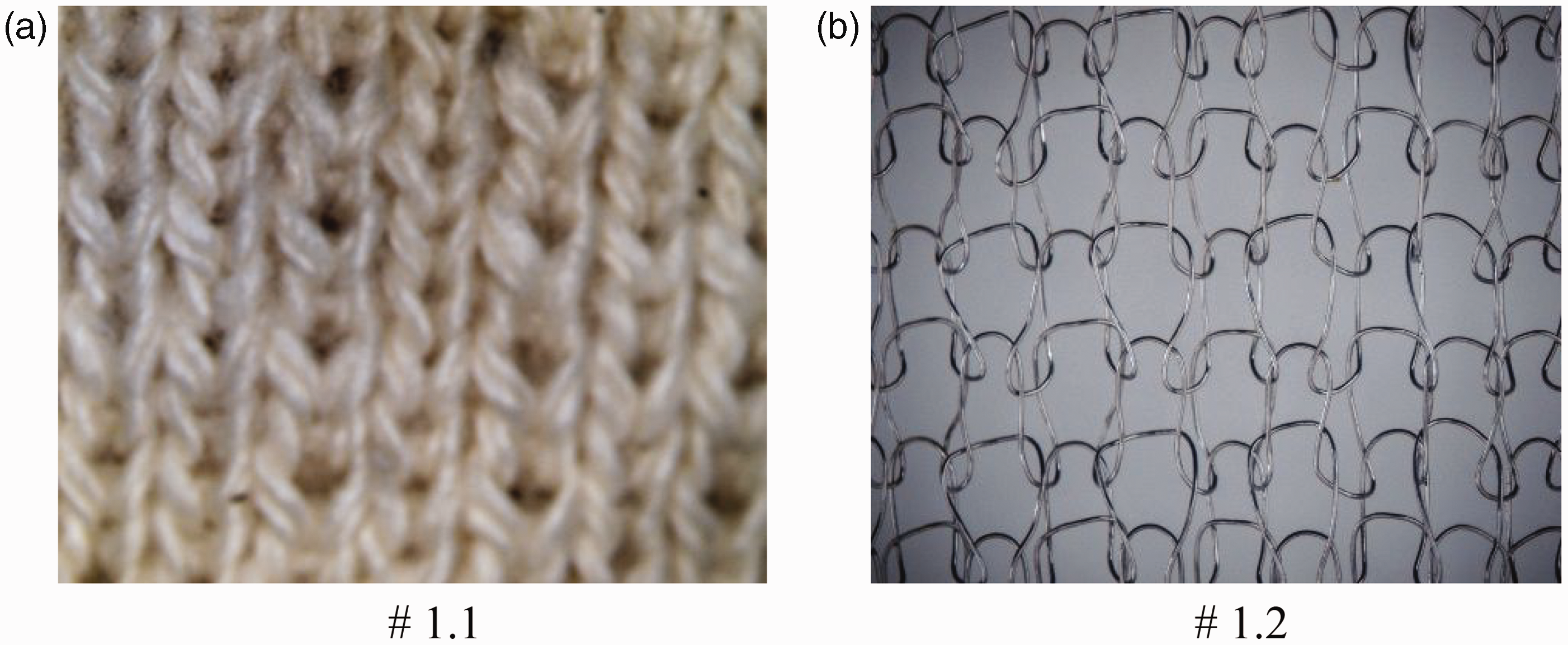
Photos of control 1 + 1 rib knitted fabrics: (a) # 1.1 from cotton yarn; (b) # 1.2 from stainless steel (SS) wire.
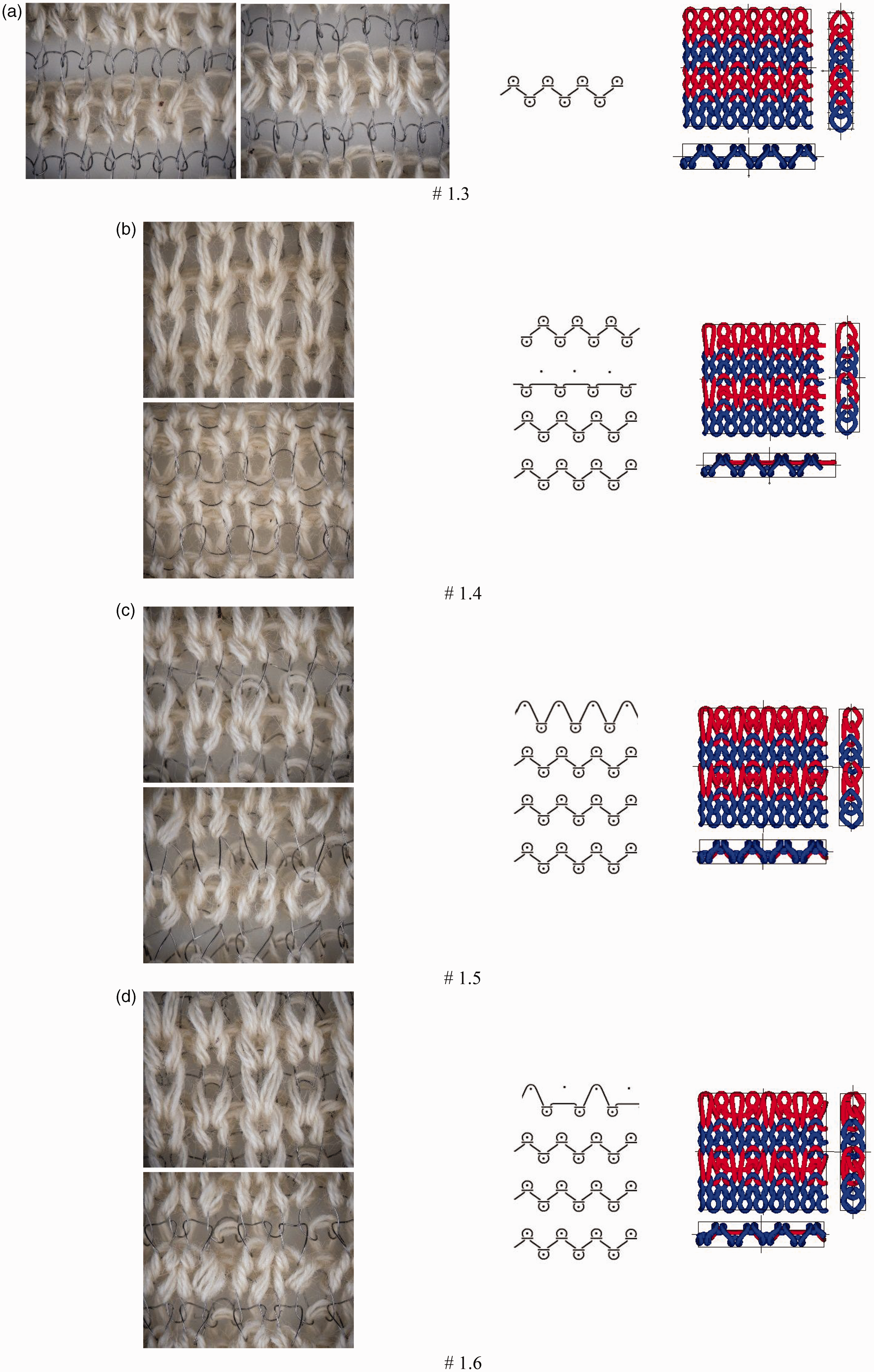
Photos, yarn path representation and schematic structures (cotton is blue, stainless steel (SS) is red) of the first set of hybrid knitted fabrics: (a) # 1.3; (b) # 1.4; (c) # 1.5; (d) # 1.6.
For the second set of hybrid knitted fabrics, the stainless steel wire is fed to the knitting area along with the cotton yarn. In order to provide the different positions of the conductive element in the structure, four types of interlooping are chosen: rib 1 + 1 (# 2.1), half-Milano rib (# 2.2), half-cardigan (# 2.3), and cardigan (# 2.4). Photos, yarn path representation and schematic structures of hybrid knitted fabric for the second set are presented in Figure 3. It could be seen that the stainless steel wire is introduced into the knitted structure in the form of loops (Figures 3(a) and 3(b)) and tucks (Figures 3(c) and 3(d)).
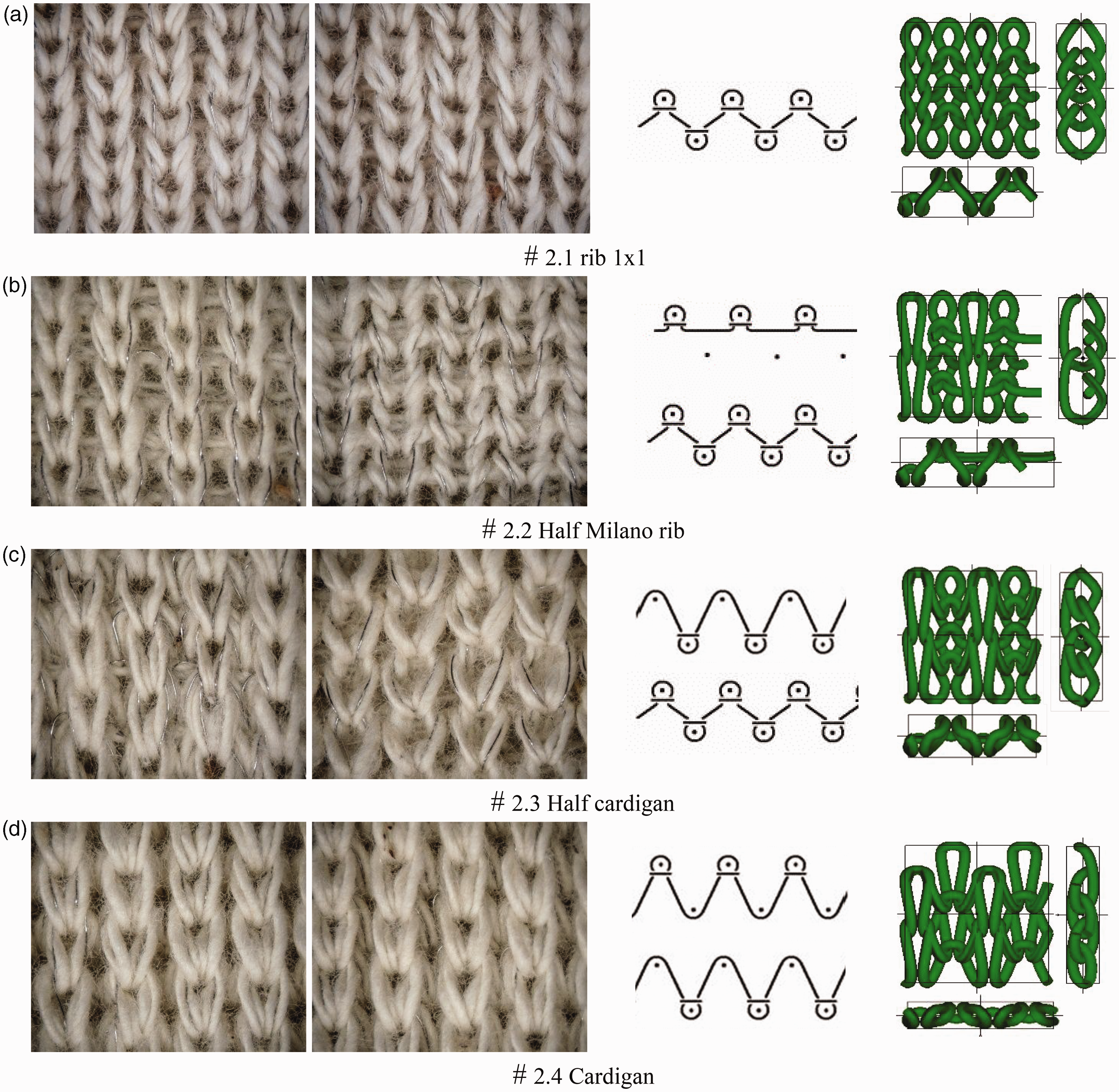
Photos, yarn path representation and schematic structures of the second set of hybrid knitted fabrics: (a) # 2.1 rib 1 × 1; (b) # 2.2 half-Milano rib; (c) # 2.3 half-cardigan; (d) # 2.4 cardigan.
Before testing all fabrics were subjects for dry relaxation after knitting within 24 h at standard atmospheres according to ISO 139:2005 followed by a washing and drying cycle according to ISO 6330:2021
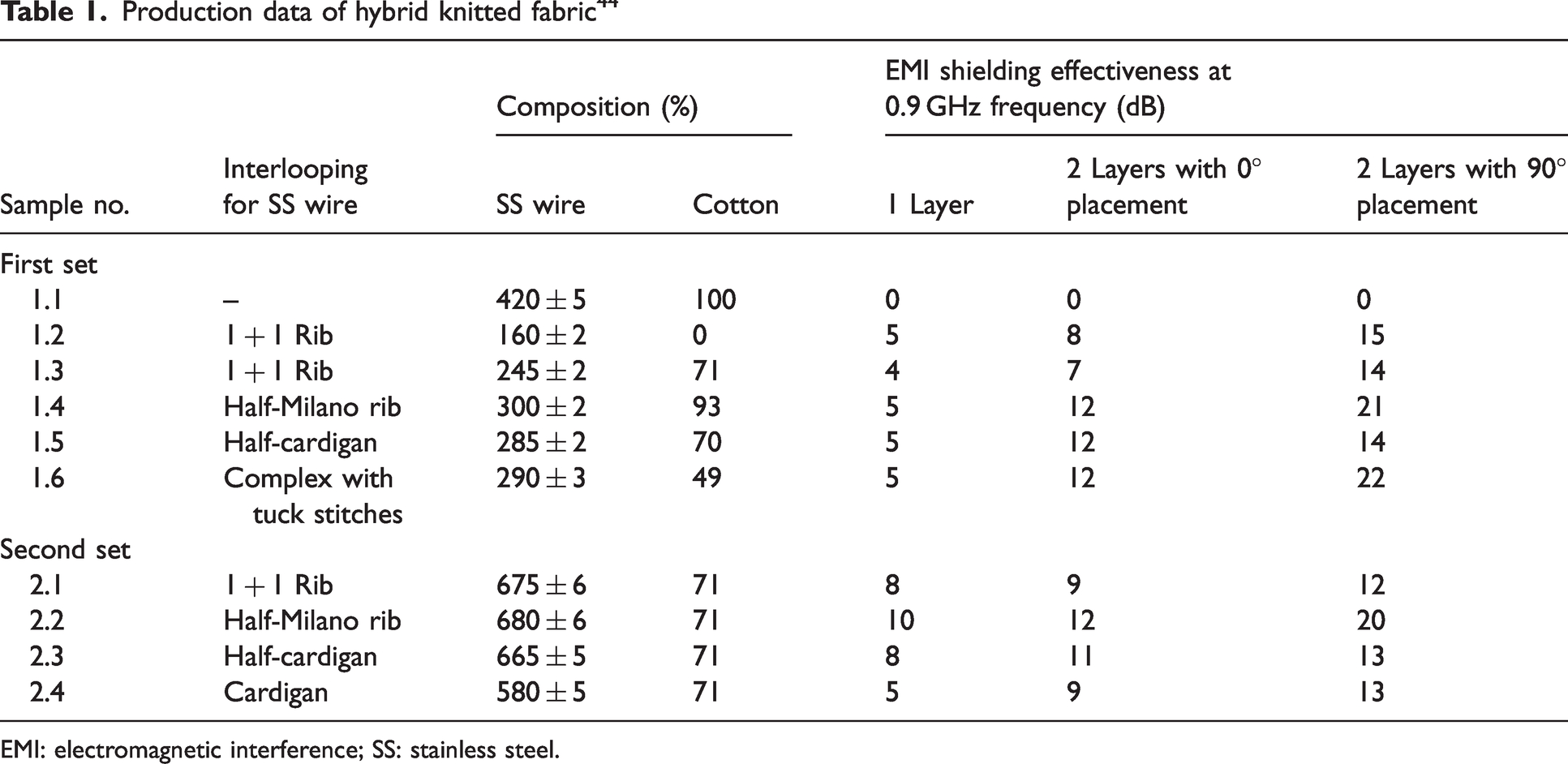
Table 1 gives an overview of the different types of developed hybrid knitted fabrics. The produced hybrid knitted fabrics have the ability for EMR shielding, which was measured according to ASTM 4935-10 in the previous study. 44 The shielding efficiency at low frequencies (up to 0.3 GHz) was higher than 10 dB and depends on the arrangement of stainless steel filaments in the knitted structure. The half-Milano rib knitted structure (# 1.4 and # 2.2) demonstrated the highest shielding efficiency in the full frequency range due to the arrangement of the structural elements.
Table 1 shows the value of shielding efficiency at 0.9 GHz frequency, which is mostly used by 4G mobile operators in Ukraine. It is obvious that the highest protection in this range will be provided by the second set of fabrics, which are formed by knitting cotton yarn and steel wire simultaneously.
It was found 44 that two-layer sandwiches (with 0° orientation of layers) provided higher shielding efficiency by about 3–5 dB compared with the single layer. The double-layered sandwiches with 90° orientation to each other had the highest shielding efficiency. In this case, shielding efficiency was higher by about 10–15 dB compared with the single-layer knitted structure. The shielding efficiency of double-layered sandwich fabrics # 1.4, # 1.6 and # 2.2 with 90° orientation reached 20 dB.
Measurement methods
Standard test methods are used for the study structure parameters of hybrid knitted fabrics. Loop length was determined according to ISO 23606: 2009. Mass per square meter was studied according to ISO 3801: 1977. Thickness was tested according to ISO 5084: 1996. Each fabric was tested 10 times and a mean value of parameter is used for analysis.
The method of geometrical modeling was used for determination of the fabric porosity because it is appropriate to any structure’s conformation. 38 There exist two filling-based characteristics of idealized fabric porosity: area porosity and volumetric porosity.
Area porosity is a two-dimensional interpretation of porosity Ps, from the pure geometry of yarn projection:
45

Volume porosity is a three-dimensional interpretation of porosity Pv that shows the ratio of the pore volume to the volume of fabric. There are few geometrical models and corresponding equations to determine volume porosity of knitted fabrics46,47 but the most useful formula is
38


The mean value of existing parameters (course and wale spacing, loop lengths, thickness, yarn diameter) was used for calculating fabric porosity according to equations (1) and (2).
Specially developed methods are used for the investigation of fabric properties associated with the thermo-physiological comfort of hybrid knitted fabrics for EMR shielding.
The instrument ALAMBETA 49 was used for the thermo-physical property testing. This device is based on the principle of stationary heat flow from a plate with a constant temperature field through the textile to a plate with a temperature equal to the ambient temperature (24°C). The measurement was carried out at a 10°C temperature difference and pressure on the sample of P = 200 Pa. The temperature of the upper heated plate was 34°C. As a result, a temperature difference was created in the textile specimen, which was brought to constancy, and the following thermo-physical characteristics were displayed on the device at the end of the measurement: thickness, h (mm); thermal conductivity coefficient λ 10−3 (W m- 1 К−1); thermal diffusivity coefficient, a 10−6 (m2 с−1); thermal absorptivity coefficient, b (W s1/2 m−2 К−1); thermal resistivity coefficient, R 10−3 (К m 2 W−1); moistening heat flow, q 10- 3 (W/m2). Five parallel measurements were performed for each fabric and the mean values of parameters were used for analysis.
The relative water vapor permeability (RWVP) (%) of hybrid knitted fabrics was investigated on a Permetest device, 50 which is one of the smallest skin models. The Permetest skin model works on the principle of heat power sensing by maintaining a constant heat supply to the measuring head is measured with and without a fabric sample. For this method, the indicator ‘relative water vapor permeability’ is used as a vapor permeability characteristic. It is the ratio of heat loss (H), which is generated with a fabric sample, to heat loss (H2), which is generated without a fabric sample: Ó = 100 H/H2 During the study on Permetest, a 90 mm diameter specimen of textile was placed at a distance of 1.0–1.5 mm from the previous dampish porous surface. The measuring head where the supplied water gets evaporated was measured; the partial saturated pressure of the measuring head with and without a sample, and the partial pressure of the ambient atmosphere were also measured under the isothermal condition. The test time was 2–8 min. The experiments were performed at a temperature t = 22°C, relative humidity φ = 60% and air velocity υ = 1.5 m/s. Five parallel measurements were conducted for each fabric and the mean value of a parameter was used for analysis.
Results and discussion
Structure parameters
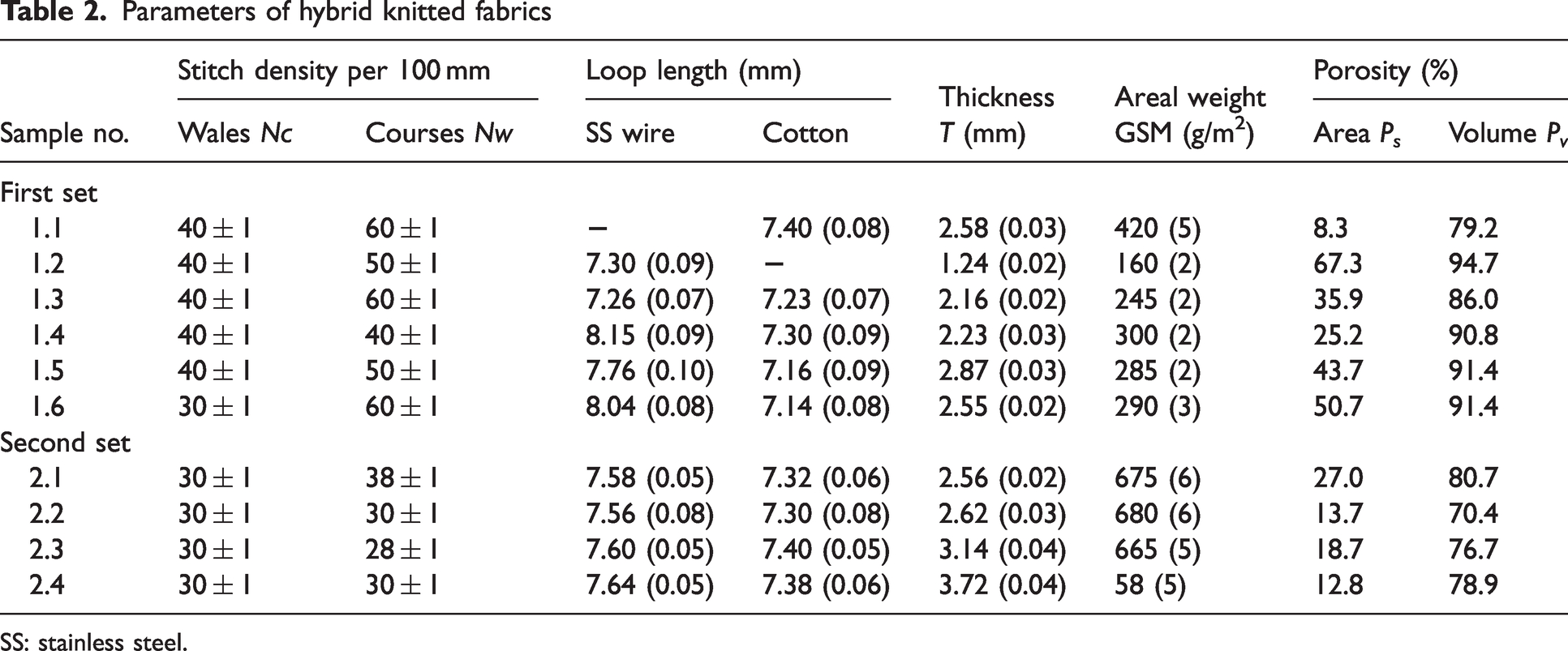
The parameters of knitted fabric are summarized in Table 2. All measurements were realized 10 times. The arithmetic means and standard deviations (in parentheses) are presented. The numbers after ± mean absolute differences. The influence of observed structure parameters was tested using the analysis of variance (ANOVA) and confidence intervals on the significance level α=0.05 were added to Figures 5, 6, 8, and 9.
The steel wire in the knit structure has a significant impact on the shape and configuration of the loop due to the rigidity of the wire and its flexural resistance. The loop skeletons are more stretched longwise and there is a certain distance between wales that is well demonstrated in the corresponding photos (Figures 1 –3). Consequently, knitted fabric with steel wire (the second set) has a lower stitch density both vertically and horizontally compared with the knitted fabric from cotton yarn only (# 1.1). There is not a big difference in stitch density (especially horizontally) for the first set of hybrid knitted fabrics.
The loop length is the main characteristic that determined the density of the knitted fabric and its main properties. All fabric samples were produced on the same knitting machine with constant technological parameters (thread tension and fabric draw-off force), so the difference in loop lengths is due to different properties of cotton threads and steel wire, as well as the used interlooping. It is obvious that the mean length of the wire is much longer than the length of cotton yarn in the loop of samples # 1.4, # 1.5 and # 1.6 (first set of fabrics). This is due to the different interlooping: the cotton yarn forms loops of 1 + 1 rib and steel wire forms loops of half-Milano rib (# 1.4), half cardigan (# 1.5) and tuck stitch (# 1.6). In addition, the difference increases due to the different properties of the cotton yarn and steel wire. The wire is stiff and its length is determined during the sinking, and cotton has got a certain elasticity and its length decreases slightly after the sinking process. This is illustrated by a small difference in loop lengths from cotton yarn and steel wire in knitted sample # 1.3, in which both threads formed 1 + 1 rib. It should be noted that for the second set of the hybrid knitted fabrics the wire length in the loop is also greater than the length of the cotton yarn, which is a consequence of their different properties as for sample # 1.3.
The differences in the interlooping, the loop lengths and stitch density for the first set of fabrics leads to diversity in stainless steel content that can affect the properties of hybrid knitted fabric.
Obviously, the obtained cloths differ in the basic weight. The weight of the full cotton knitted fabric (# 1.1) is almost 2.5 times higher than the corresponding fabric from the steel wire (# 1.2). The difference in the basic weight of hybrid knitted fabric is due to the different interlooping. It was found that there is correlation between the weight and stainless steel content for the first set of samples: increasing the wire content leads to a decrease in the gram per square meter.
Porosity of knitted fabric
It was observed that stainless steel wire positioning in the structure affects the fabric porosity, especially the area porosity (Figure 4) of hybrid knitted fabrics. The area porosity of the full cotton knitted fabric (# 1.1) is almost eight times smaller than the corresponding fabric from the steel wire (# 1.2) due to the yarn diameter difference and bending of wire resulting in the openness of the knitted fabric structure. The volume porosity of the knitted fabric from steel wire (# 1.2) is up to 15% higher than for the corresponding full cotton knitted fabric (# 1.1).
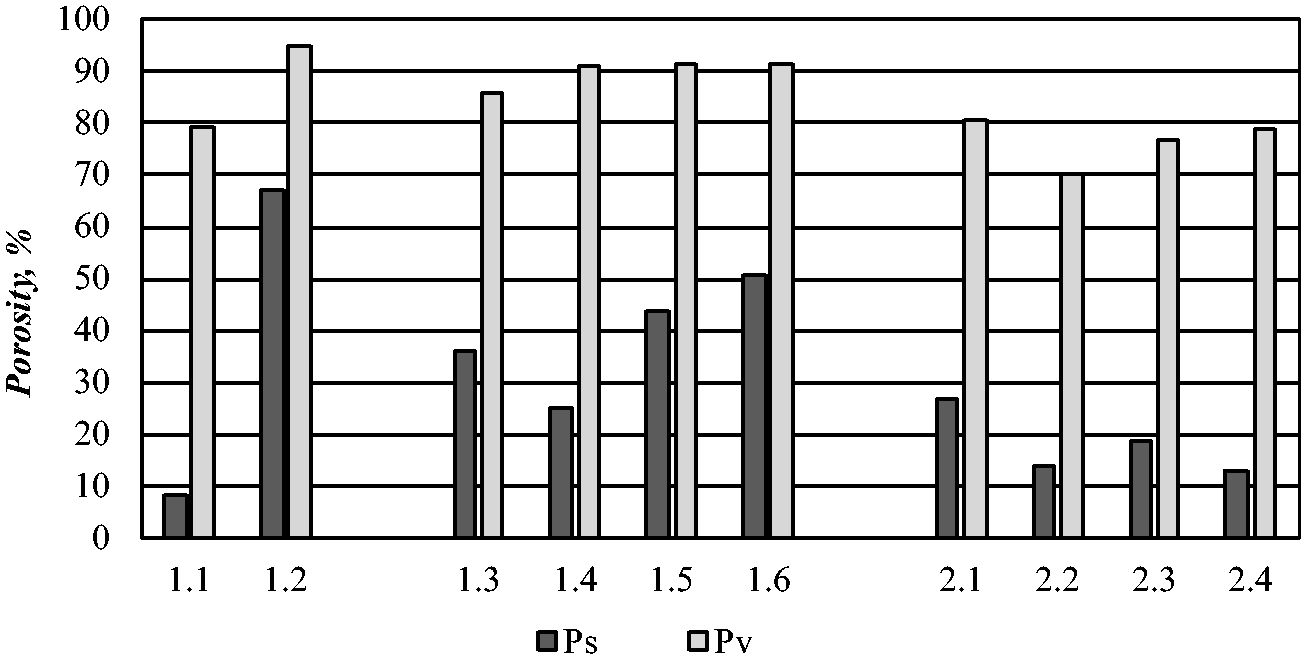
The porosity of hybrid knitted fabrics.
The study results show a dependence of the porosity of knitted fabrics on the interlooping and method of introduction (separately or along with cotton). It is obvious that the fabric porosity (both area and volume) of the second set is much smaller than the first set, which is a consequence of the formation of the loops from both threads simultaneously. The tuck stitches changed the fabric performance, especially area porosity, due to changes in the shape and size of the loops, as well as the tuck presence. The half-Milano rib fabrics # 1.4 (Figure 2(b)) and # 2.2 (Figure 3(b)) are the densest in each set. It could be the reason for the highest shielding effectiveness.
Thermo-physical properties
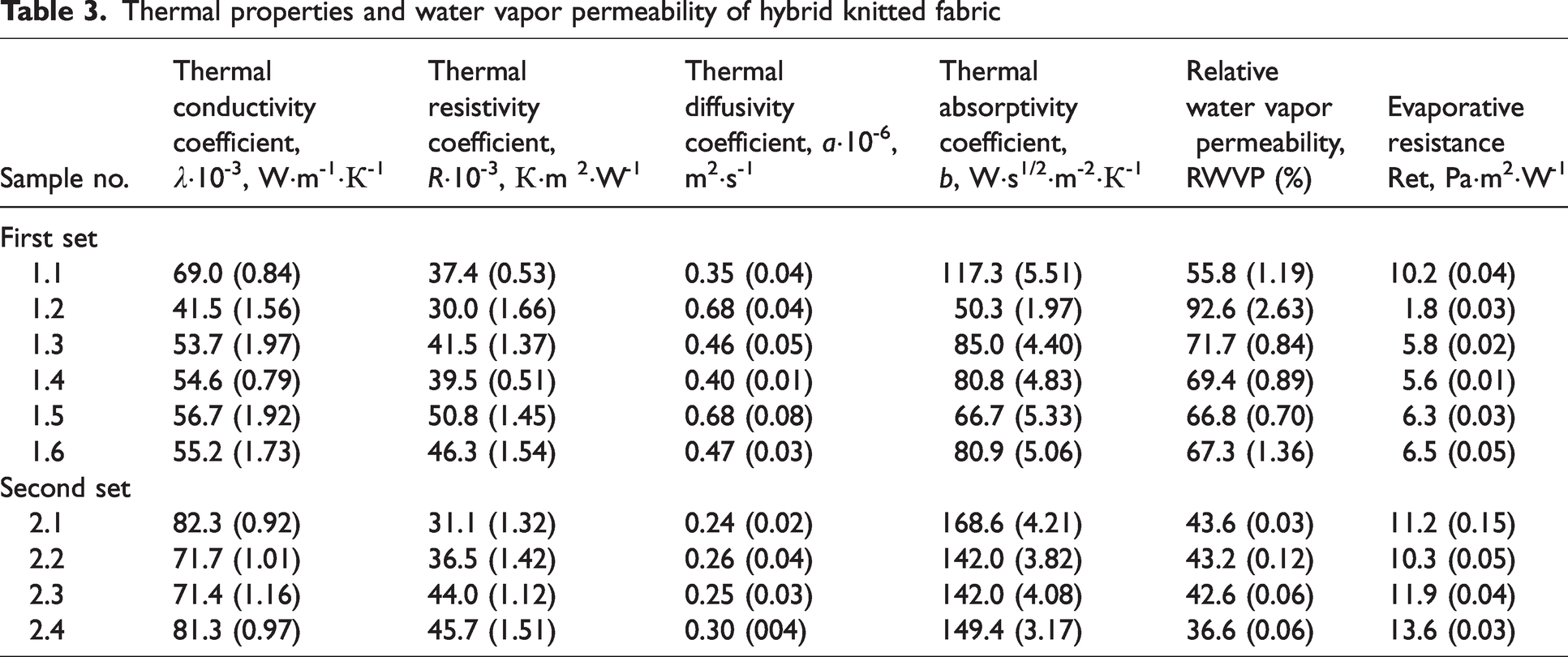
Usually, the ability of textile materials to conduct and absorb heat is characterized by thermal conductivity, thermal resistivity, thermal absorptivity, and thermal diffusivity. The studied textile materials are characterized by a wide range of values of thermo-physical properties (Table 3). The measurements were realized three times. The arithmetic means and standard deviations (in parentheses) are presented. Figures 5, 6, 8 and 9 show confidence intervals for the significance level α=0.05.
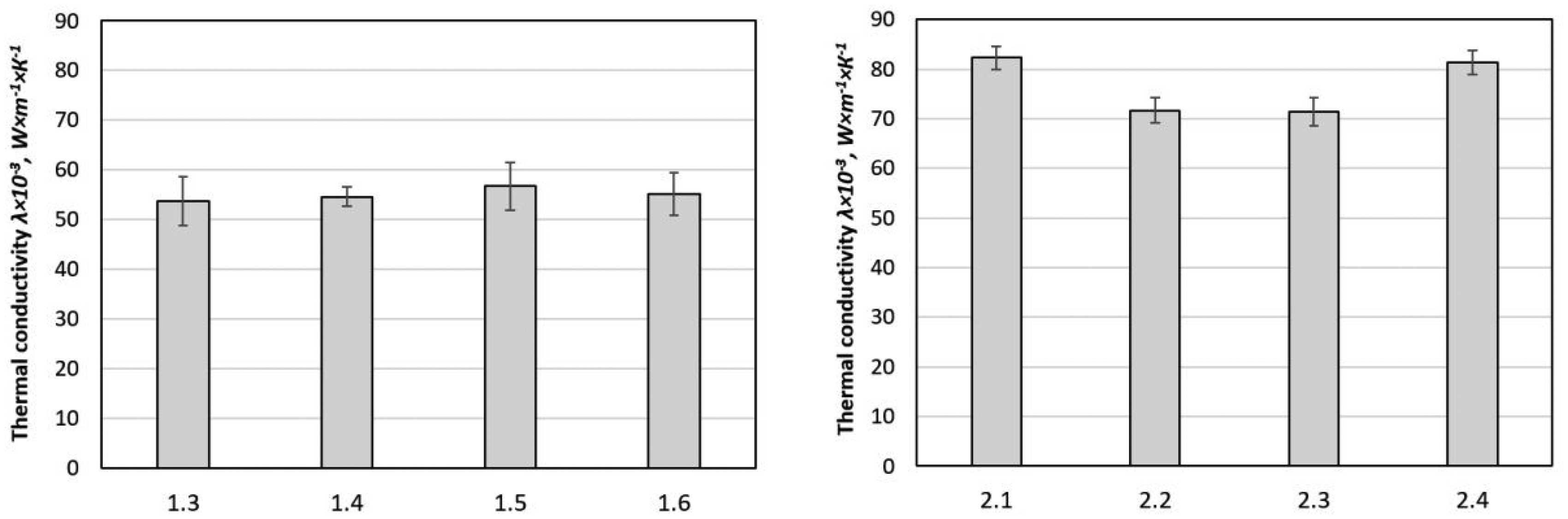
Dependence of thermal conductivity coefficient on interlooping of hybrid knitted fabric: (a) for the first set; (b) for the second set.
Thermal conductivity
The thermal conductivity λ coefficient characterizes the intensity degree of heat transfer through the textile material. The greater the coefficient value is the lower the thermal insulation properties.
It should be noted that the thermal conductivity coefficient (Table 3) of the rib 1 + 1 knitted fabric from cotton yarn only (# 1.1) is more than 1.5 times higher the coefficient of knitted fabric with the same interlooping from steel wire only (# 1.2). This is due to the significant difference in the thermal conductivity of cotton (λ = 69.0·10−3 [W⋅m−1⋅K−1]) and steel (λ = 45.5·10−3 [W⋅m−1⋅K−1]). In addition, heat transfer in textile materials is due to both the thermal conductivity of the fiber and the air contained in the closed pores, as well as convection through the pores and heat radiation by the pores. Thus, with increasing porosity to a certain level, the thermal conductivity of textile materials decreases, as the thermal conductivity of air is lower than the thermal conductivity of textile fibers.
The thermal conductivity of the first set of fabrics produced by alternating two courses from cotton yarn and two courses from steel wire is in the range of 54 ÷ 57 10−3, (W m−1 K-1) and does not depend on the interlooping (Figure 5(a)).
The thermal conductivity of the second set of fabrics (Table 3) is much higher than the first set. The influence of interlooping was observed (Figure 5(b)). The coefficient for rib 1 + 1 (# 2.1) and cardigan (# 2.4) knitted fabrics is higher than others and exceeds 80 10−3, (W m−1 K−1) and these differences are statistically significant. It can be explained by their higher volume porosity and the presence of convection through the pores.
Thermal resistivity
The thermal resistivity of the material R determines its heat-protective properties and depends on the material composition, thickness and porosity as well as its humidity and temperature. Analysis of the study results (Table 3) shows that the thermal resistivity coefficient value for the knitted fabric from cotton yarn (# 1.1) is higher than the related value for knitted fabric made from steel wire only (# 1.2). This is a consequence of a significant (almost 50%) reduction in the fabric thickness, because it is the thickness that is recognized as the dominant factor affecting the thermal resistance of materials. On the other hand, rib 1 + 1 fabric from steel wire (# 1.2) has the highest surface porosity, and rib 1 + 1 fabric from cotton yarn (# 1.1) has the lowest, which also affects the performance. It should be noted that the thermal resistivity of hybrid knitted fabrics made by alternating courses from steel wire and courses from cotton yarn is higher than those from cotton or from steel only.
The research results allow establishing the effect of the interlooping on the thermal resistivity of the hybrid knitted fabrics (Figure 6). For both steel wire insertion options: separately from cotton yarn (first set) and together with cotton yarn (second set), structures with tuck stitches have got the higher thermal resistivity (# 1.5, # 1.6, # 2.3, # 2.4). The increase in the number of tuck stitches in the repeat leads to an increase in thermal resistivity: fabric # 1.5 with half-cardigan courses (Figure 2(c)) has got a higher R coefficient than fabric # 1.6 with tuck stitches (Figure 2(d)) in the first set; cardigan fabric # 2.4 (Figure 3(d)) has got a higher R coefficient than half-cardigan fabric # 2.3 (Figure 3(c)) in the second set.
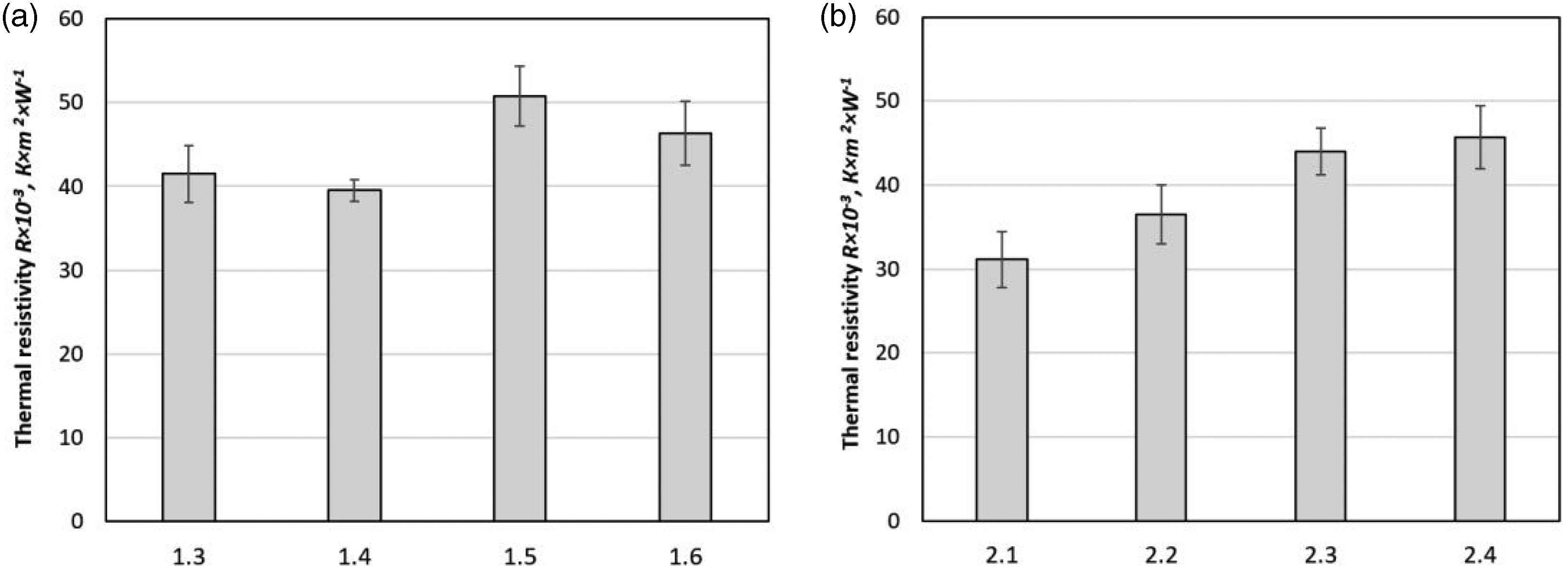
Dependence of thermal resistivity coefficient on interlooping of hybrid knitted fabric: (a) for the first set; (b) for the second set.
It should be noted that the half-Milano rib knitted fabric (# 2.2) with the greatest EMI shielding effectiveness has got thermal resistivity coefficient (R = 36.5 10−3 K m2 W−1) similar to the cotton rib 1 + 1 (# 1.1) knitted fabric (R = 37.4 10−3 K m2 W−1).
Analysis of the study results reveals that within the experiment the highest correlation of thermal resistivity coefficient is with the fabric thickness T (Figure 7). It could be presented by the following dependencies:
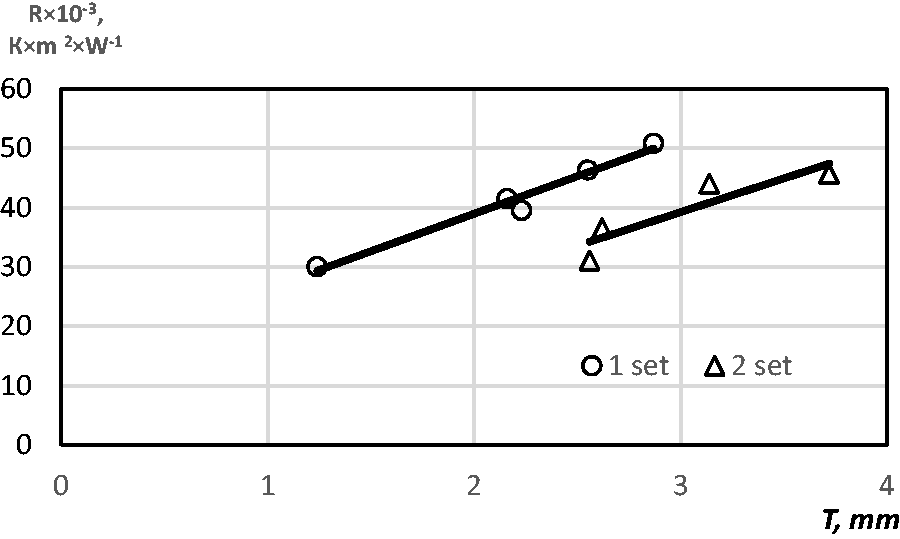
Dependence of thermal resistivity coefficient on thickness of hybrid knitted fabric.
for the first set of hybrid knitted fabric (coefficient of determination R2 = 0.971)

for the second set of hybrid knitted fabric (R2 = 0.816)

Thermal diffusivity
The thermal diffusivity coefficient a characterizes the rate of temperature equalization at different points of the textile material. A high value of the coefficient indicates a high rate of achieving the same temperature throughout the material when heated or cooled. It was found (Table 3) that the thermal diffusivity coefficient of knitted fabric from steel wire (# 1.2) is almost twice as high as cotton knitted fabric (# 1.1). The decrease in the coefficient was observed for knitted fabrics of the second set in which loops formed simultaneously from cotton yarn and steel wire (Figure 8).
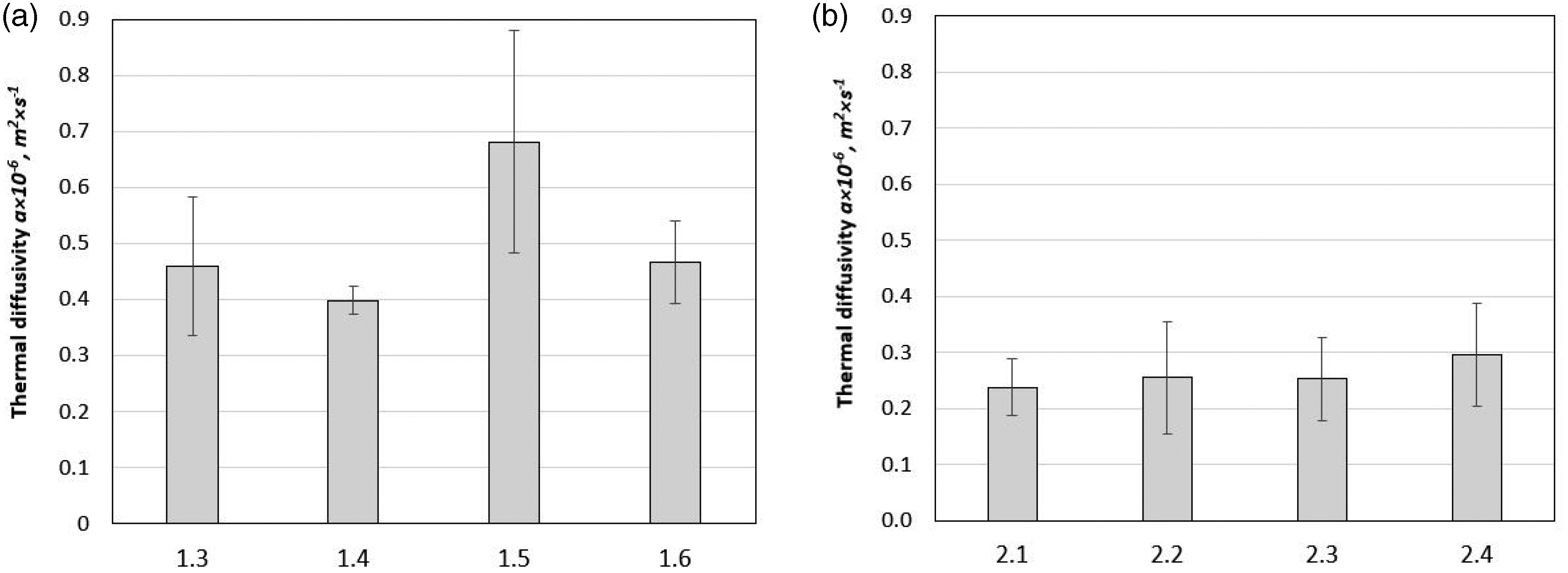
Dependence of thermal diffusivity on interlooping of hybrid knitted fabric: (a) for the first set; (b) for the second set.
Obviously, the interlooping is the main influencing factor. The highest thermal diffusivity coefficient is observed for knitted fabrics with more tuck stitches in the repeat: half-cardigan (# 1.5) in the first set and cardigan (# 2.4) in the second set. However, in these cases it cannot be said that the differences are statistically significant.
Thermal absorptivity
Recently, with the increase in the comfort value for consumers, the commonly used thermo-physical characteristics should be extended with a new indicator that would characterize the person’s thermal sensation when touching a textile material. According to Hes and colleagues,51,52 the assessment of this feeling can be made by the thermal absorptivity coefficient b [W⋅s1/2⋅m−2⋅K−1], which is determined as follows
As a result of the analysis of experimental data (Table 3) it was found that the thermal absorptivity coefficient for 100% cotton knitted fabric is almost 2.5 times higher than for 100% metal-knitted fabric. That means that rib 1 + 1 fabric from 100% cotton yarn (# 1.1) is colder to the touch in comparison with metal-containing knitted fabrics. The content value of steel wire in the structure of hybrid knitted fabric for the first set does not lead to statistically significant differences of the thermal absorptivity coefficient (Table 3). It is obvious that the coefficients for the second set of knitted fabrics significantly exceed the coefficients for the first set (Figure 9). A statistically significant difference can be seen only in the sample (# 2.1).
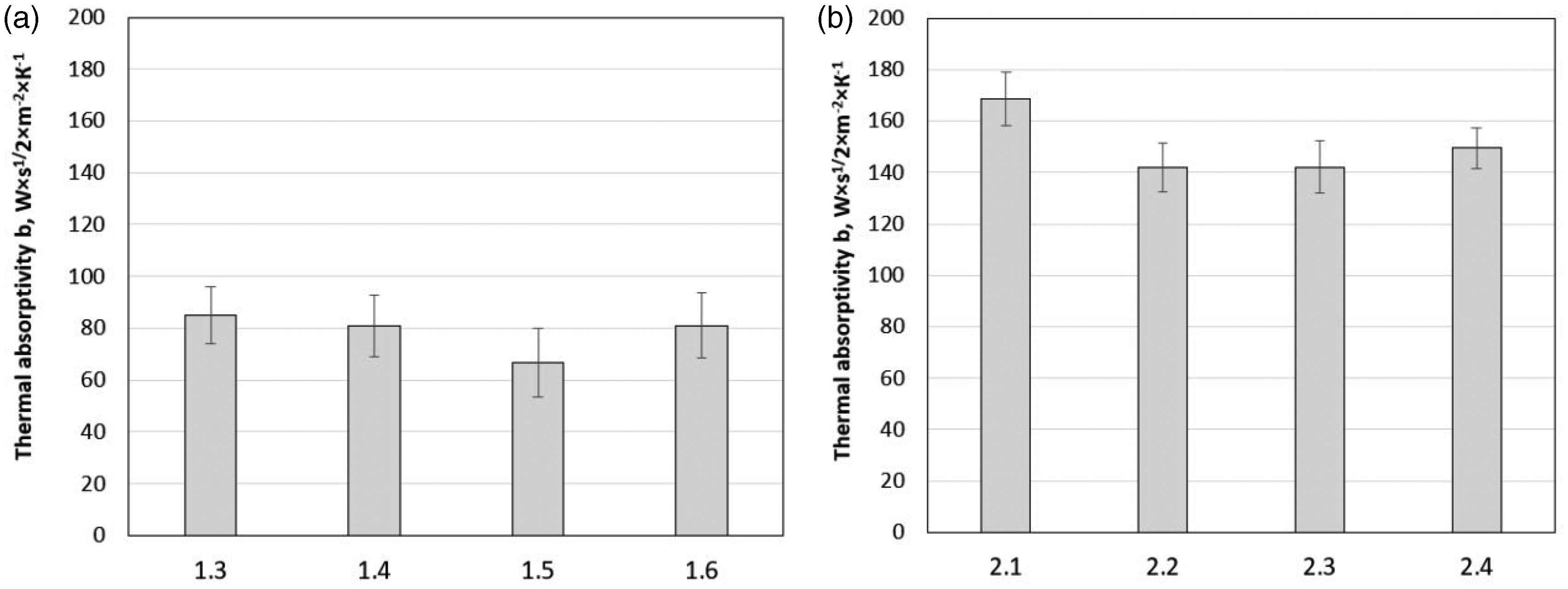
Dependence of thermal absorbtivity coefficient on interlooping of hybrid knitted fabric: (a) for the first set; (b) for the second set.
The results of the studies made it possible to establish the dependence of the thermal absorptivity coefficient b on the area (Figure 10(a)) and volume (Figure 10(b)) porosities of the knitted fabric.
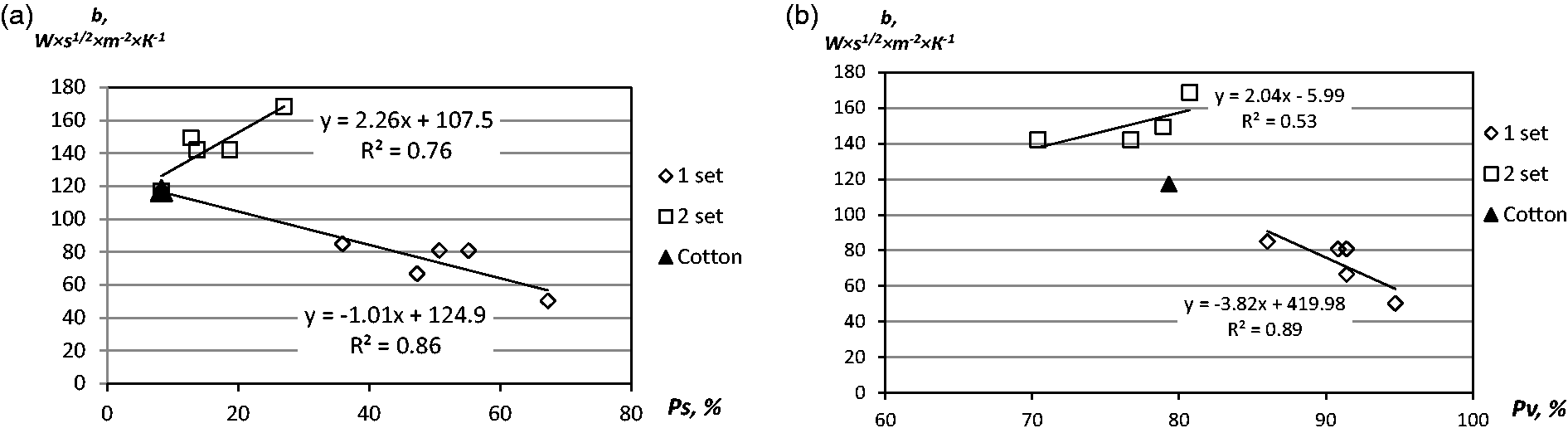
Dependence of thermal absorptivity on area (a) and volume porosity (b).
Therefore, the research results of the thermo-physical properties of hybrid knitted fabrics showed that the introduction of stainless steel wire into the cotton fabrics structure leads to significant changes of their thermo-physical properties. There are several factors:
the difference in mechanical properties of raw materials, resulting in the shape and size of the loops – a unit of knit structure; the significant difference in the thermal conductivity of cotton and steel; the influence of interlooping, in particular the presence of tuck stitches in the structure; the difference in the thickness and porosity of the studied materials.
Vapor permeability
The capillarity and hygroscopicity of textiles are important, but insufficient properties to characterize the clothing comfort. In this case the air and vapor permeability are determinants. Two indicators: RWVP and evaporation resistance (Ret) (Table 3) were researched in this work. The rib 1 + 1 fabric made from 100% stainless steel wire (# 1.2) has the highest RWVP value and the lowest Ret value. The indicator values for this fabric variant are very different from others and are associated with its high porosity (area 67.3%, volume 94.7%).
Cotton fabric has a high Ret, which leads to low vapor conductivity and vapor permeability. Thus, clothing made of such fabrics prevents the passage of moisture vapor from the human body into the environment. It leads to the accumulation of vapor in the inner layer and causes wetting of the adjacent layer followed by discomfort and impairing the thermal properties of the product.
Analysis of the study results (Table 3) shows that the relative water vapor permeability as well as evaporation resistance of hybrid knitted fabrics depend on the porosity of the hybrid knitted fabrics. The relative water vapor permeability increases (Figure 11) and evaporation resistance (Figure 12) decreases with increasing both area (Ps) and volume (Pv) porosity.
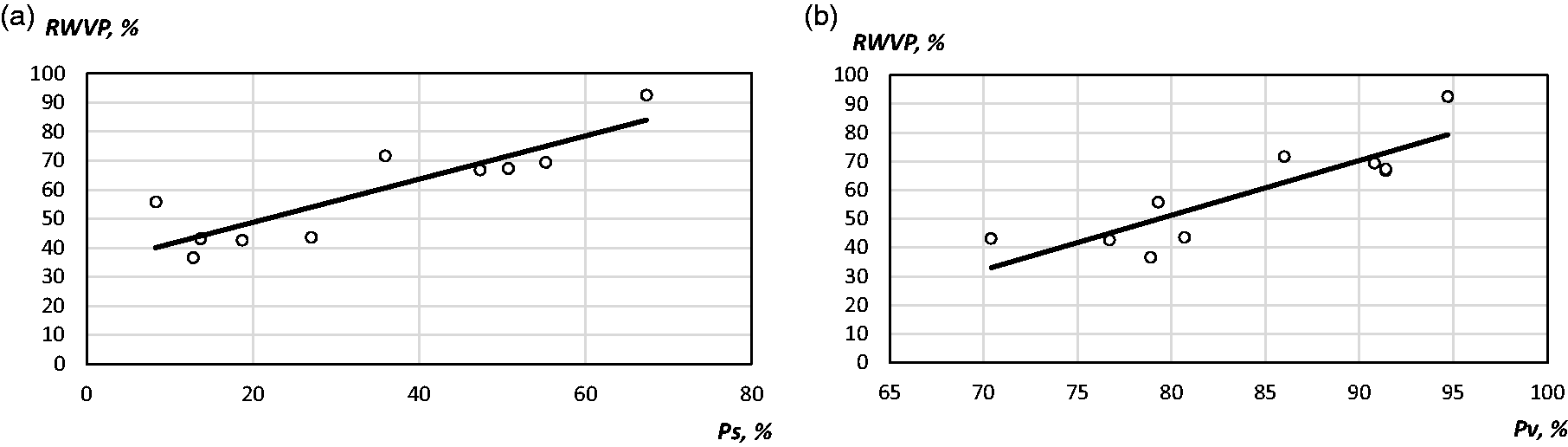
Dependence of relative water vapor permeability on area (a) and volume (b) porosity.
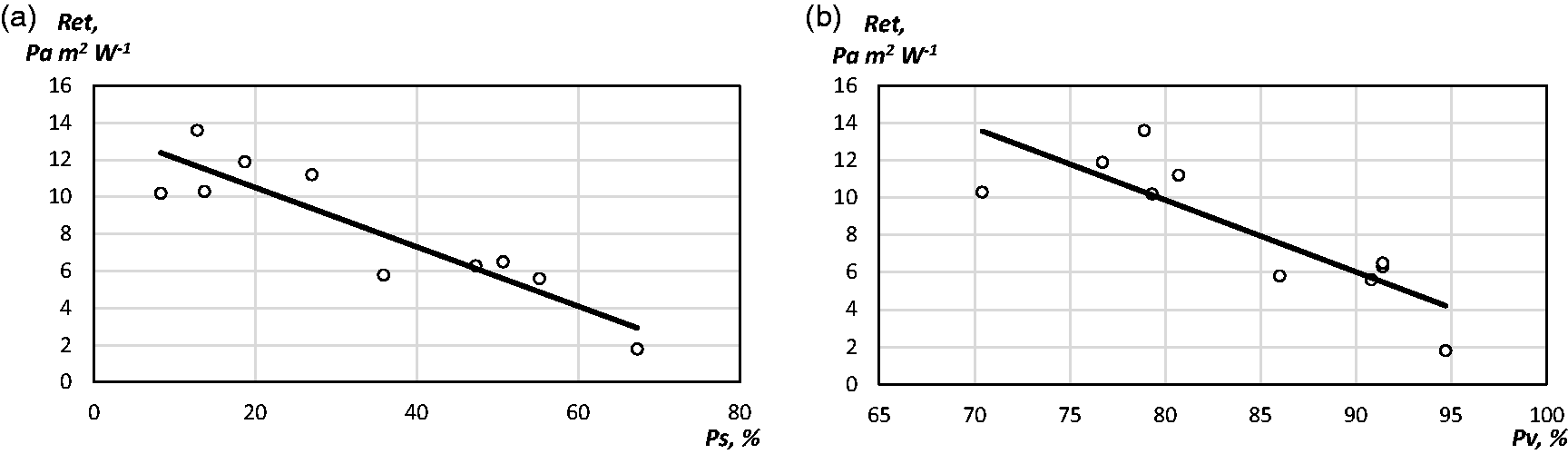
Dependence of evaporative resistance on area (a) and volume (b) porosity.
The established equations describe the dependencies with high accuracy:
for the relative water vapor permeability


for the evaporation resistance


In our opinion, this is a consequence of the influence of the mutual arrangement of the loops (Figures 2 and 3) in the hybrid knitted structure of different interlooping.
Thus, the developed hybrid knitted fabrics are characterized by a wide range of values of vapor permeability properties. The research results show that with the introduction of steel wire into the fabric structure the vapor permeability properties change significantly.
Conclusions
The research results show that the comfort of hybrid knitted fabrics with electromagnetic shielding properties depend on variants of stainless steel wire incorporation into the structure. It is the result of different fabric porosity: the values for fabrics formed from cotton yarn and steel wire simultaneously are smaller than for those formed by the alternation of two courses of rib 1 x 1 from cotton yarn and two courses from steel wire.
The thermal conductivity coefficient λ is near 55⋅10−3 [W⋅m−1⋅К−1] for the fabrics with separate yarn feeding and the value does not depend on interlooping used for stainless steel wire. However, for the fabrics with simultaneous yarn feeding the value depends on interlooping; the 1 + 1 rib structure has the lowest thermal insulation properties; the half-cardigan has the highest.
The thermal resistivity coefficient and thermal diffusivity coefficient for both types of stainless steel incorporation depend on interlooping: knitted structures with tuck stitches have a higher value of coefficients. Thus, the use of tuck stitches in the structure leads to improving heat-protective properties.
The thermal absorptivity coefficient depends on both a variant of stainless steel wire incorporation and the interlooping used for stainless steel incorporating reflected in fabric porosity. The value is two times higher for fabrics formed from cotton yarn and steel wire simultaneously. The increasing in both area and volume porosity leads to increasing coefficient.
The research results of the vapor permeability of hybrid knitted fabrics show dependences on fabric porosity: the relative water vapor permeability increases and evaporation resistance decreases with increasing both area and volume porosities of fabrics.
The research results stated that the developed hybrid knitted fabrics with shielding properties against EMR can be used in clothing manufacture due to their thermo-physical properties. The half-Milano rib knitted fabric with the greatest electromagnetic shielding effectiveness has got physiological properties similar to the cotton rib 1 + 1 knitted fabric.
ORCID iDs
Vladimir Bajzik https://orcid.org/0000-0002-0390-0755
Olena Kyzymchuk https://orcid.org/0000-0002-8874-8931
Maros Tunak https://orcid.org/0000-0003-1481-4518
Production data of hybrid knitted fabric 44
EMI: electromagnetic interference; SS: stainless steel.
Parameters of hybrid knitted fabrics
SS: stainless steel.
Thermal properties and water vapor permeability of hybrid knitted fabric
Footnotes
Acknowledgements
The research was carried out under the joint Ukraine–Czech Republic R&D project Development and investigation of nanomodified textiles for human-being and electronic equipment’s protection (2019–2020). The number of the project of the Czech partner is 8J19UA011. Part of this work was supported by the International Visegrad Fund (project #52210227).
Declaration of conflicting interests
The author(s) declared no potential conflicts of interest with respect to the research, authorship, and/or publication of this article.
Funding
The author(s) received no financial support for the research, authorship, and/or publication of this article.