




Abstract
The development of electronic textiles used for wearable devices and systems for healthcare monitoring applications has experienced rapid growth in the last decade. Knowledge and understanding of the textile structural hierarchy, as well as the ability to define properties from the fiber and yarn to the fabric level are crucial to the selection of materials and design and performance of wearable systems. However, few studies have approached the selection of optimal e-textile structures with respect to material, electrical, and signal performance properties of sensors used for long-term biological signal monitoring. In this work, a review of e-textile structural properties (fiber, yarn, and fabric) for electrocardiogram (ECG) electrodes is presented, along with their relationship to performance properties including electrical, material, ECG signal quality, fabric hand (sensory perception and quality), and physiological comfort. Considerations and insights into the textile fiber and yarn morphology, electrode structure, design, and construction are outlined. In addition, relevant and upcoming standards for e-textile testing and performance evaluation are summarized. This work serves to organize requirements for ECG textile electrodes into a general reference framework from a bottom-up approach, which can better guide the material selection and design of ECG textile electrodes for wearable applications.
Smart wearable systems have been developed for a variety of functions including sensing and monitoring of physiological signals, user activity, and environment, reacting to stimuli, or providing useful feedback from collected signals and data. It is expected that the wearable electronics market will reach $459 billion (USD) by 2030, with an estimated compound annual growth rate (CAGR) of approximately 20% from 2021 to 2030. 1 These systems have various applications in areas including healthcare (clinical rehabilitation), fitness and sport, security, military, and lifestyle monitoring.2,3 Recent progress in the development of these systems has included continuous miniaturization, advances in sensor and interconnect materials, communication technologies, data analysis, and classification.4,5
Electronic textiles (e-textiles) are a category of materials in smart wearable systems that are of great interest to the healthcare industry, with developments applied to physiological signal monitoring. The global market for e-textiles is expected to reach $5.55 billion (USD) by 2025 (CAGR: 30.4%), 1 with medicine and healthcare representing one of the largest investment sectors. E-textiles are advanced conductive fiber-based materials with either embedded or integrated electronic functionality that includes passive sensing to actuating sensors, communications, and data processing. 6 The development of textile-based sensors integrated into flexible wearable systems is significant in providing continuous and long-term monitoring of patients, which can guide treatment and enable earlier diagnostics by practitioners, thereby reducing costs for both the industry and patients. This could also revolutionize the mode of treatment via telemedicine platforms. In their form, the textile sensors may be imparted with a wide range of functions conventionally employed for rigid electronic products.6,7 Developments in textile sensors as part of smart wearable systems for healthcare applications present vast opportunities for non-invasive, continuous, and long-term monitoring in daily life, or rehabilitation purposes outside clinical environments, which can improve patient care, support disease detection and diagnosis, and overall advance the healthcare industry.
E-textiles are advantageous owing to their inherent flexibility, breathability, and conformability to the human body. As such, they can be integrated as a combined network of sensors for multimodal monitoring. Smart textile systems refer to textile-based systems that exhibit an intended or exploitable response to changes in the surroundings/environment, or external signal/input. 8 Textile-based sensors within a smart textile system may take the form of fibers, filaments, or yarns assembled into woven, knitted, or non-woven structures with functionalized capabilities.
E-textile-based systems for health monitoring have focused on sensor materials embedded in clothing to record biological signals or vital signs (electrocardiogram (ECG), electromyogram, heart rate, body temperature, breathing, etc.), interconnected to other electronic components (cables/connectors, control board, power supply) within the system for data transmission to be observed or analyzed.
The unique characteristics derived from the hierarchical structure of textiles and the properties of silicon/metal-based electronic materials present both challenges and opportunities for e-textile development. 9 Fundamental challenges relating to e-textile developments include mechanical compatibility between rigid semi-conductor/metal-based electronic components and soft compliant textiles, especially in terms of routing circuitry with compatible interconnections to system components 9 and material property considerations (mechanical, chemical, thermal, electrical properties) 10 with respect to the geometry, flexibility, and durability of the overall system assembly. The combination of functional textile sensor material requirements with anthropometric considerations influences performance and compatibility of the materials during use 11 ; as such, the interplay of bio-mechanical and -chemical surface properties next to human skin is another significant challenge.12,13 Ideally, an e-textile-based wearable system should consist of a flexible and durable form factor that can interface well next to the human body, while also integrating optimal textile structures for the intended sensor material to provide reliable and continuous monitoring of biological signals.
Few studies have been performed to evaluate and select ideal materials and structures for e-textile sensors applied to biological signal applications, specifically in considering a combination of material and electrical properties, signal fidelity, and long-term durability and comfort. There is still a need to optimize e-textile sensor assemblies through detailed understanding of textile engineering to uncover the underlying relationship between structure parameters, material behavior, and the electrical properties and signals collected. This review focuses on research into textile structural properties (fiber and yarn to fabric) for the design of textile electrodes used in health monitoring, specifically in ECG applications. From the understanding of the textile structural hierarchy, material performance properties and assessment methods were reviewed to offer a more complete understanding of appropriate considerations for the material selection for ECG textile electrodes used in smart apparel systems.
Textile sensors for electrocardiogram monitoring
Electrocardiography is a widely studied bioelectric signal in which the electrical activity of the heart muscle, or myocardium, is recorded. It is the electrical potential (differential measurement) across the skin surface of the human body. The flow of electric current associated with contractions of the heart muscle produces voltages (millivolts) detectable on the skin surface, which reflects the depolarization and repolarization of cardiac cells. 14 The ECG provides information and assessment of normal cardiac (or “sinus”) rhythm, heart health, arrythmias, other cardiovascular diseases, and information relevant for the prediction and treatment of coronary events. 14 Electrical currents associated with the contractions produced by the heart muscle can be detected on the skin surface (millivolt scale) by electrodes, 7 and the signal measured is represented as the ECG waveform, comprising four main segments (Figure 1).
While a clinical 12-lead ECG system offers advantages in providing a full picture of the heart condition and function, single-lead ECG measurement has become more widely employed in the development of portable and wearable biopotential monitoring systems. The single-lead measurement system requires the application of three electrodes, usually with two active and one reference/ground electrode; however, it is also possible to gather six leads of ECG with these three electrodes, by alternating the active and passive electrode positions.
Electrodes are used to measure surface potentials from the body when placed at specific locations on the surface of the body (skin), thereby serving as signal acquisition apparatus. Contact-based or resistive electrodes, which are the focus of this review, require direct and stable electrical contact with the skin, and can be categorized as wet and dry. Ionic current from the body can be transduced into electron current, from the electrode to wires, respectively. 15 Disposable silver/silver chloride (Ag/AgCl) gel electrodes are the gold standard material for the collection of biopotential signals from the body as a result of the high conductivity of silver and the weakly polarizing nature of Ag/AgCl, which enables low and stable skin–electrode contact impedance, translating to high-quality signals.14,16 However, Ag/AgCl gel electrodes are not ideal for long-term monitoring since the gel electrolyte dries out over time, and can cause discomfort from the wet gel, adhesive, and rigid supporting structure. Alternatives to wet gel electrodes for long-term monitoring have been explored, which have largely included dry electrodes that can be either rigid metal plates such as stainless steel discs, microfabricated silicon structures, and flexible materials (polymer films or textile and foam based) that can better conform with the skin and provide more comfort and contact area. 17 The drawbacks of dry electrodes include higher sensitivity to motion artifacts, due to increased skin impedance in the absence of an electrolyte component; however, sweat and moisture on the skin surface over time is thought to act as an electrolyte layer. Marquez et al. 18 prepared textile-based electrodes and humidified the surfaces with water prior to testing to improve electrical interface, and compared their performance with wet electrodes, observing no significant differences in the collected signals. The development of textile structured materials as dry electrodes has been explored and applied to practical applications in the last decade.
Textile structural properties – fibers to fabrics
E-textiles represent a promising platform for the development of flexible and unobtrusive multifunctional electronic systems for health monitoring applications. The inherent properties of textile structures allow for stretch, breathability, and the ability to conform and contour well next to the human body, when integrated as electrode sensors. These characteristics of textiles are derived from their hierarchical structure, which is a primary aspect to be considered in designing textile electrodes.9,14 The textile structural hierarchy encompasses the fiber, yarn and fabric levels (Figure 2).
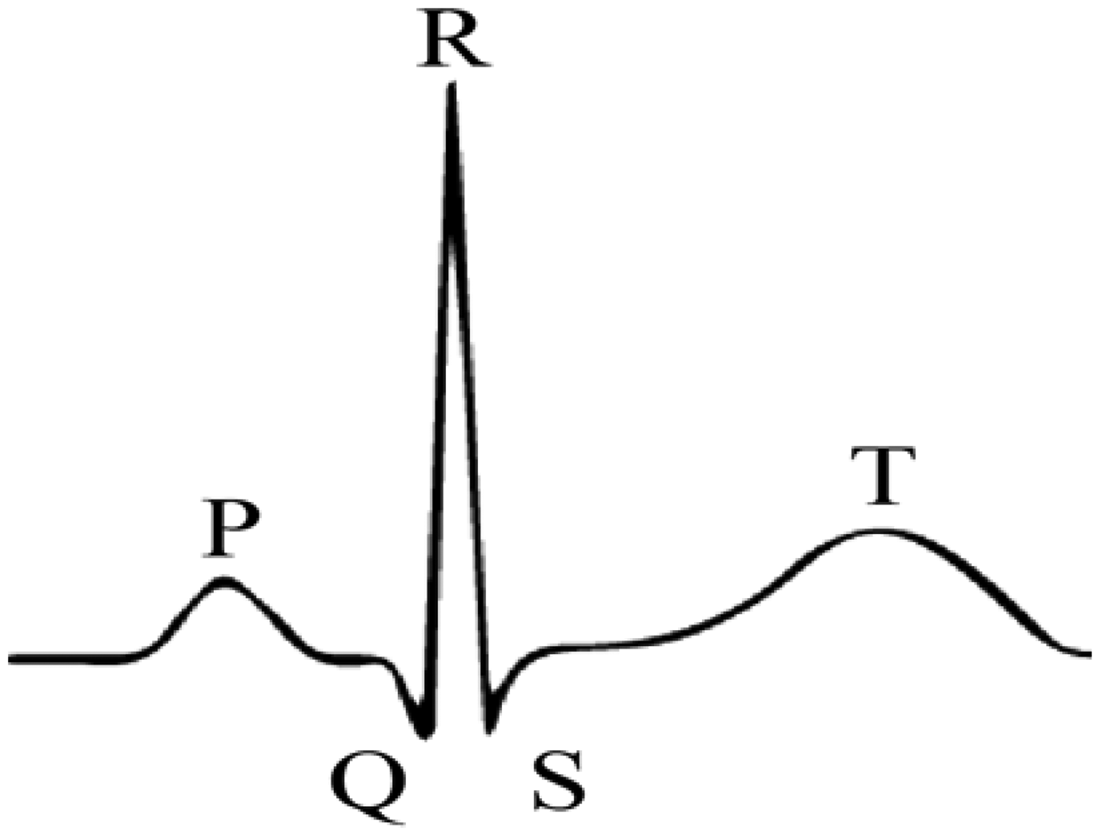
P wave, QRS complex, and T wave. The waveform reflects the depolarization and repolarization of the atria and ventricles of the heart.
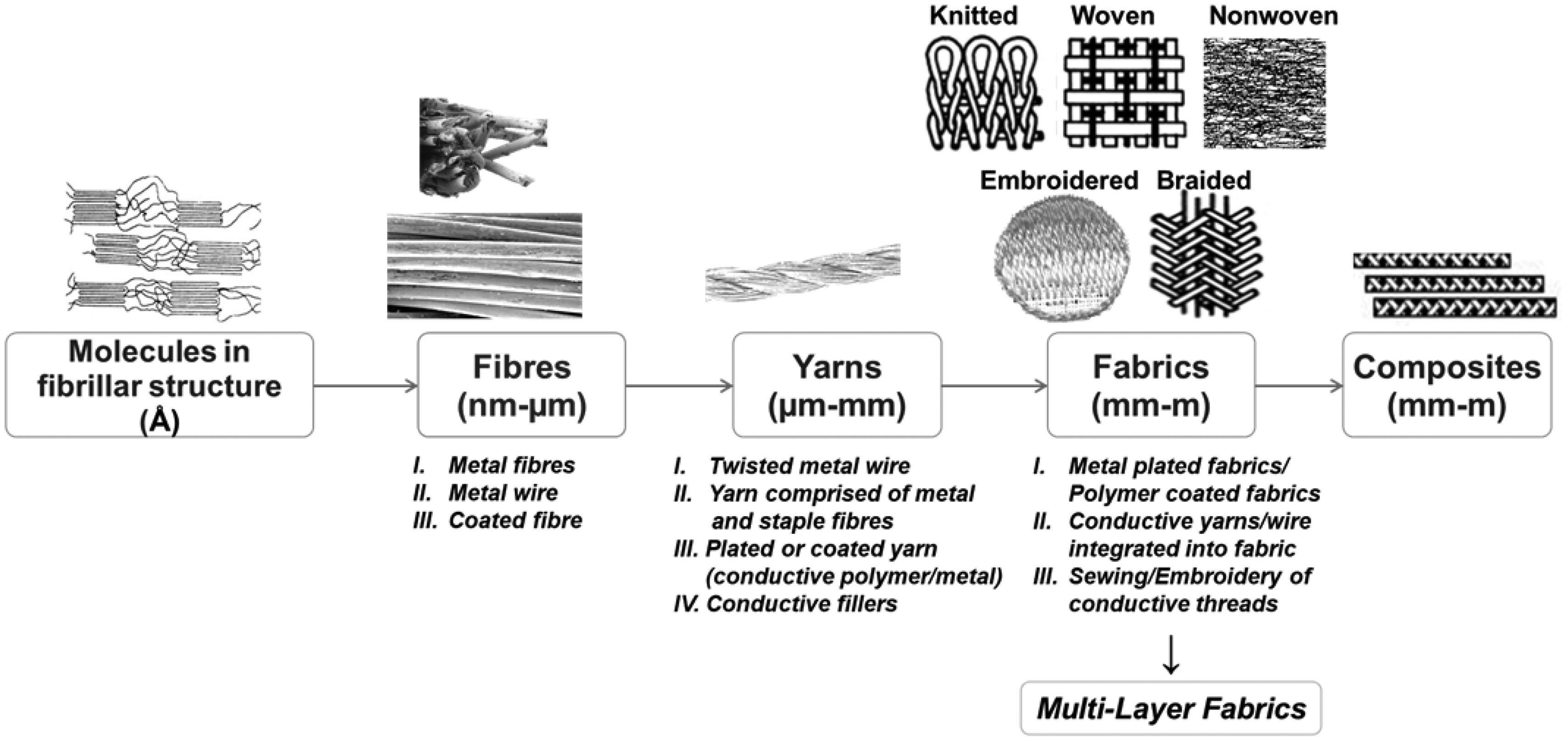
Textile construction platform and structural hierarchy – fiber and yarn to fabric structures (woven, knitted, non-woven, embroidered, braided) and their assembly into multi-layers, to composite structures. Also described are possible e-textile formations from the structures.
The chemical and morphological characteristic of fibers, as well as the geometric structure of the fibrous assemblies in the fabric structure, influence textile properties. 9 Fibers are the basic level of the textile structure, characterized by assemblies of highly oriented molecular chains. Fibers can be continuous or discrete (staple) lengths and can be assembled into yarns by a twisting mechanism. Subsequently, yarns can be interlaced into fabric structures by weaving, knitting, or braiding. Key requirements in textile electrode development include (i) the unobtrusive integration of electronic functionalities into textile form required for a given electrode material and (ii) preserving the desirable characteristics of textiles.9,14 Textile structure properties include sufficient mechanical strength, durability, and flexibility to stresses, such as stretching, bending, twisting, and abrasion during fabrication and end-use. 14 Textile electrode fabrication involves the integration of conductive materials at any level of the material structural hierarchy. Electrical conductivity can be imparted through various means through the use of metals (thin twisted wires, plating), conducting particle/polymer nanocomposite dispersions, through conductive coatings of yarn and fabric electroplating, electroless plating, physical vapor deposition, dip coating, chemical polymerization, and patterning/printed layers on the fabric surface (outside the scope of this review).19–24 Tables 1–4 list various conductive fibers/yarns and fabrics (knits, wovens, non-wovens, embroidery, and stitching) used in e-textile development.
Conductive fibers/filaments and yarns used for e-textile applications
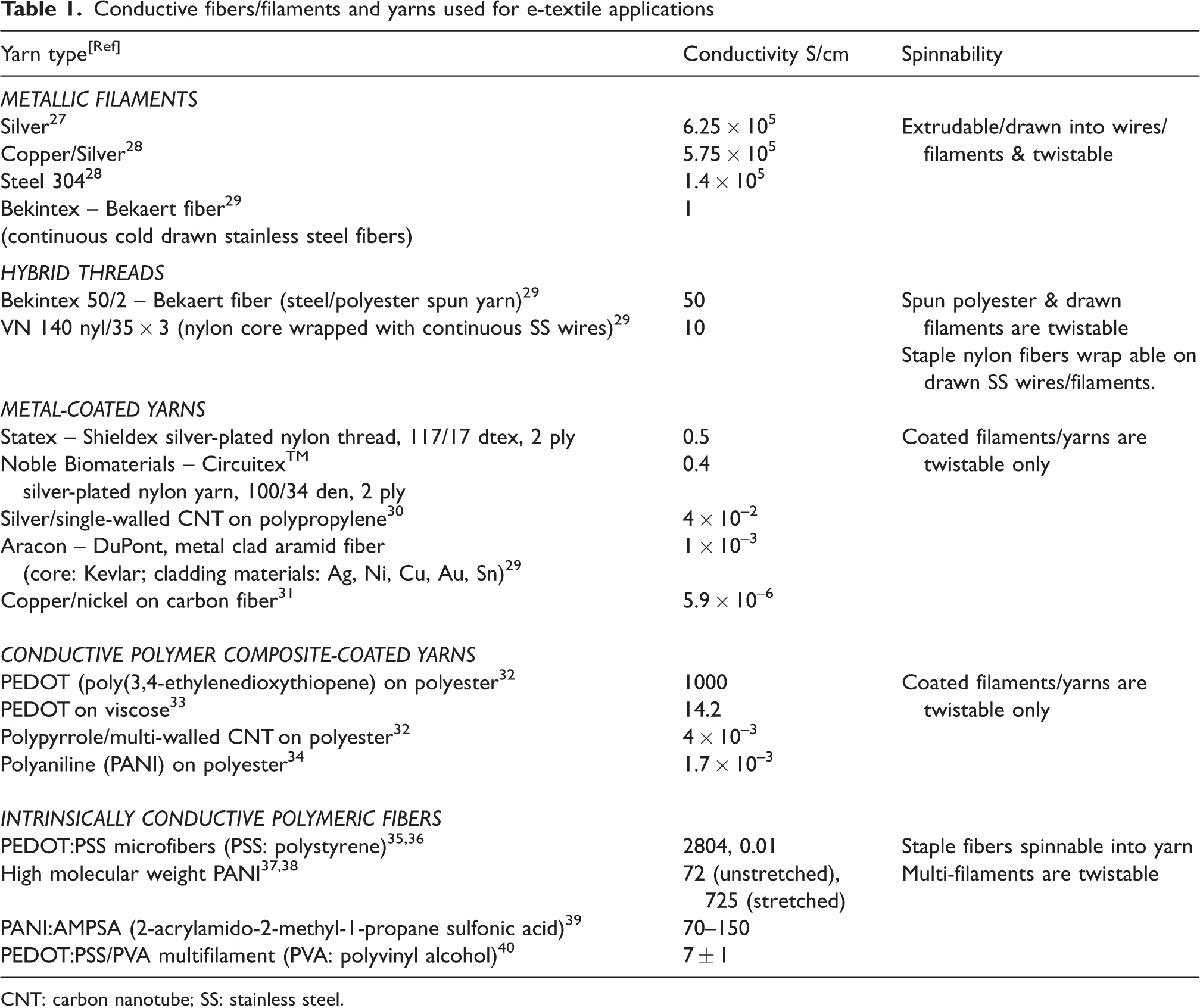
CNT: carbon nanotube; SS: stainless steel.
Knit textile electrodes for electrocardiogram monitoring
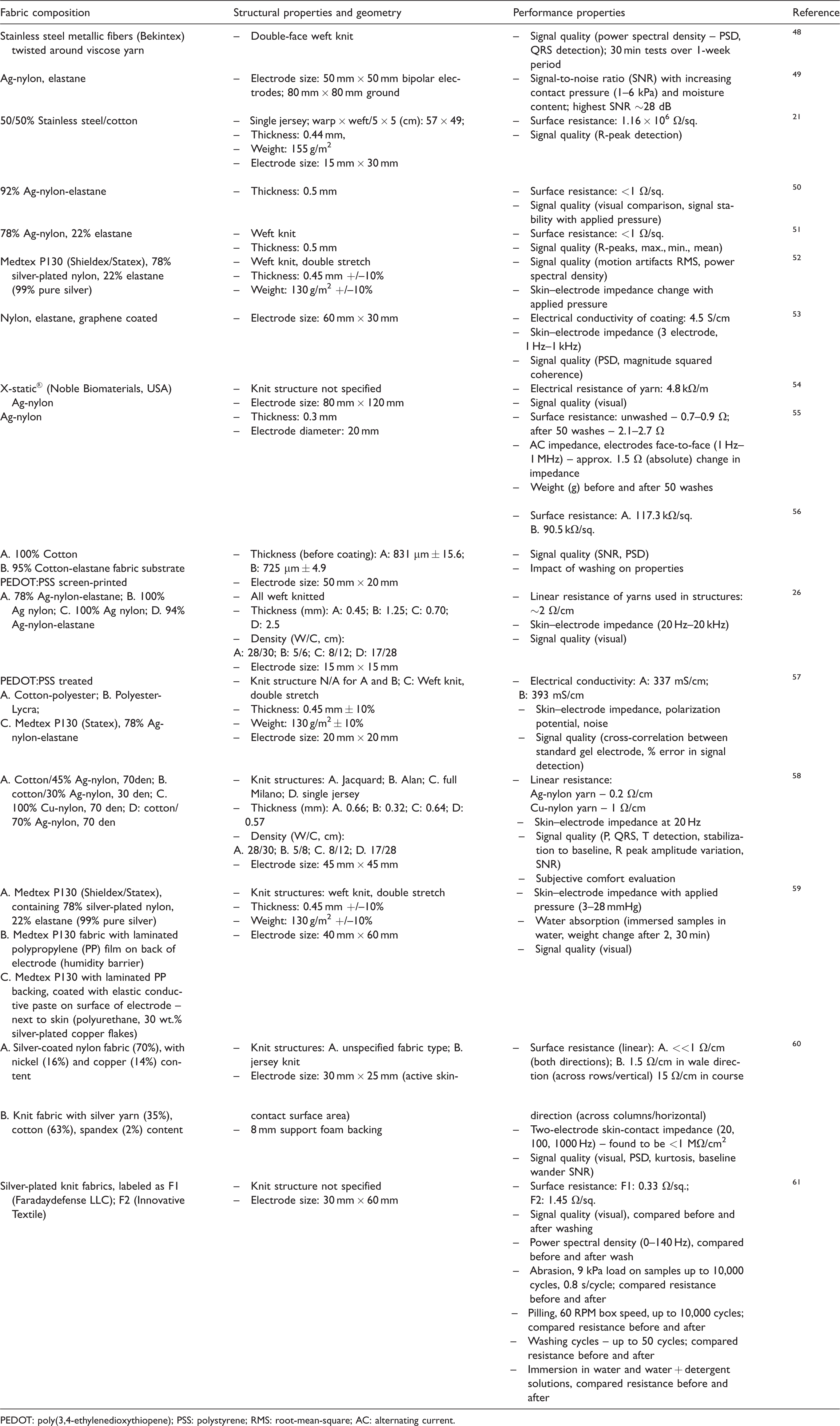
PEDOT: poly(3,4-ethylenedioxythiopene); PSS: polystyrene; RMS: root-mean-square; AC: alternating current.
Woven textile electrodes for electrocardiogram (ECG) monitoring

PEDOT: poly(3,4-ethylenedioxythiopene); PSS: polystyrene; SNR: signal-to-noise ratio; PET: polyester; PSD: power spectral density; AC: alternating current; DC: direct current.
Non-woven textile electrodes for electrocardiogram (ECG) monitoring
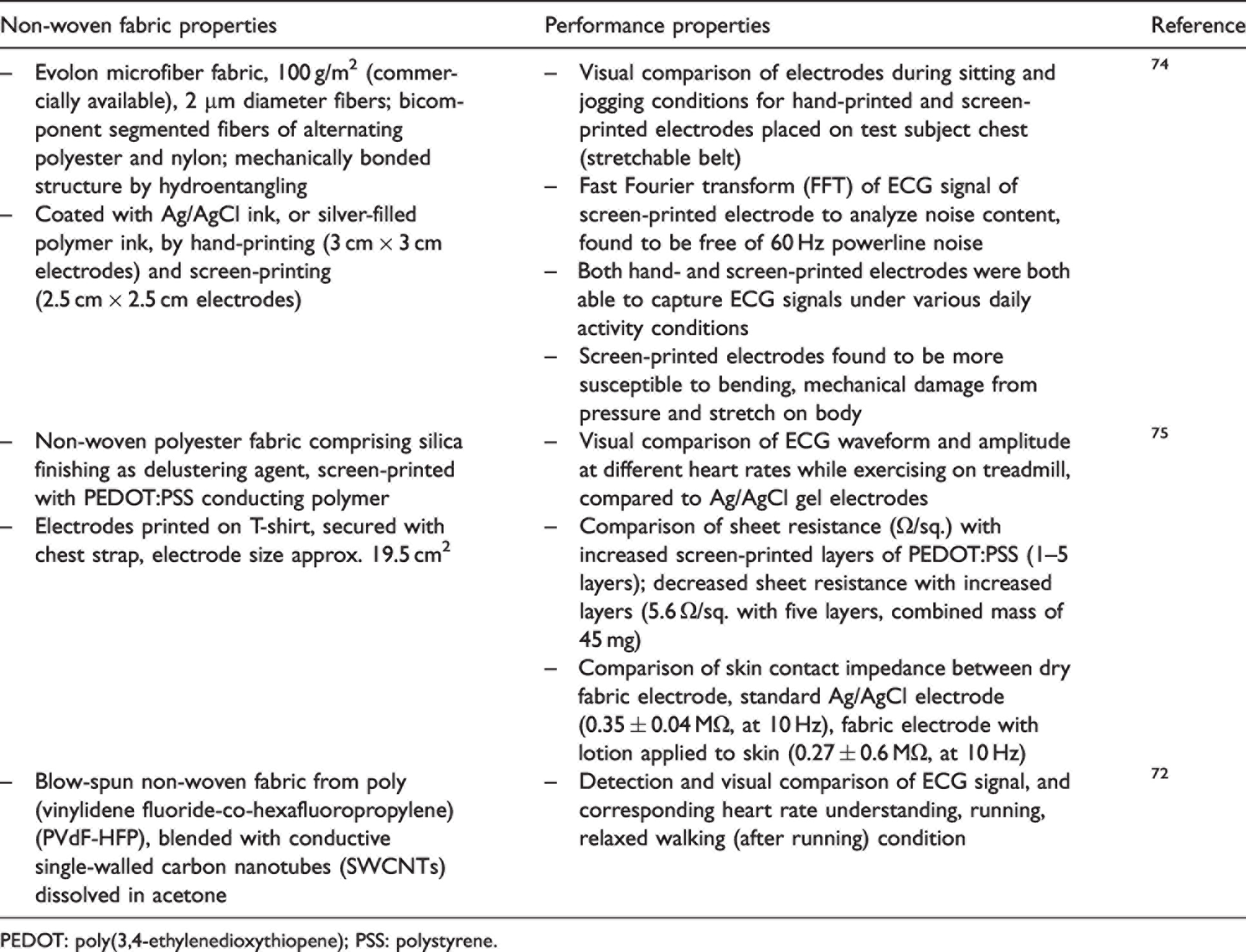
PEDOT: poly(3,4-ethylenedioxythiopene); PSS: polystyrene.
Embroidered textile electrodes for electrocardiogram (ECG) monitoring
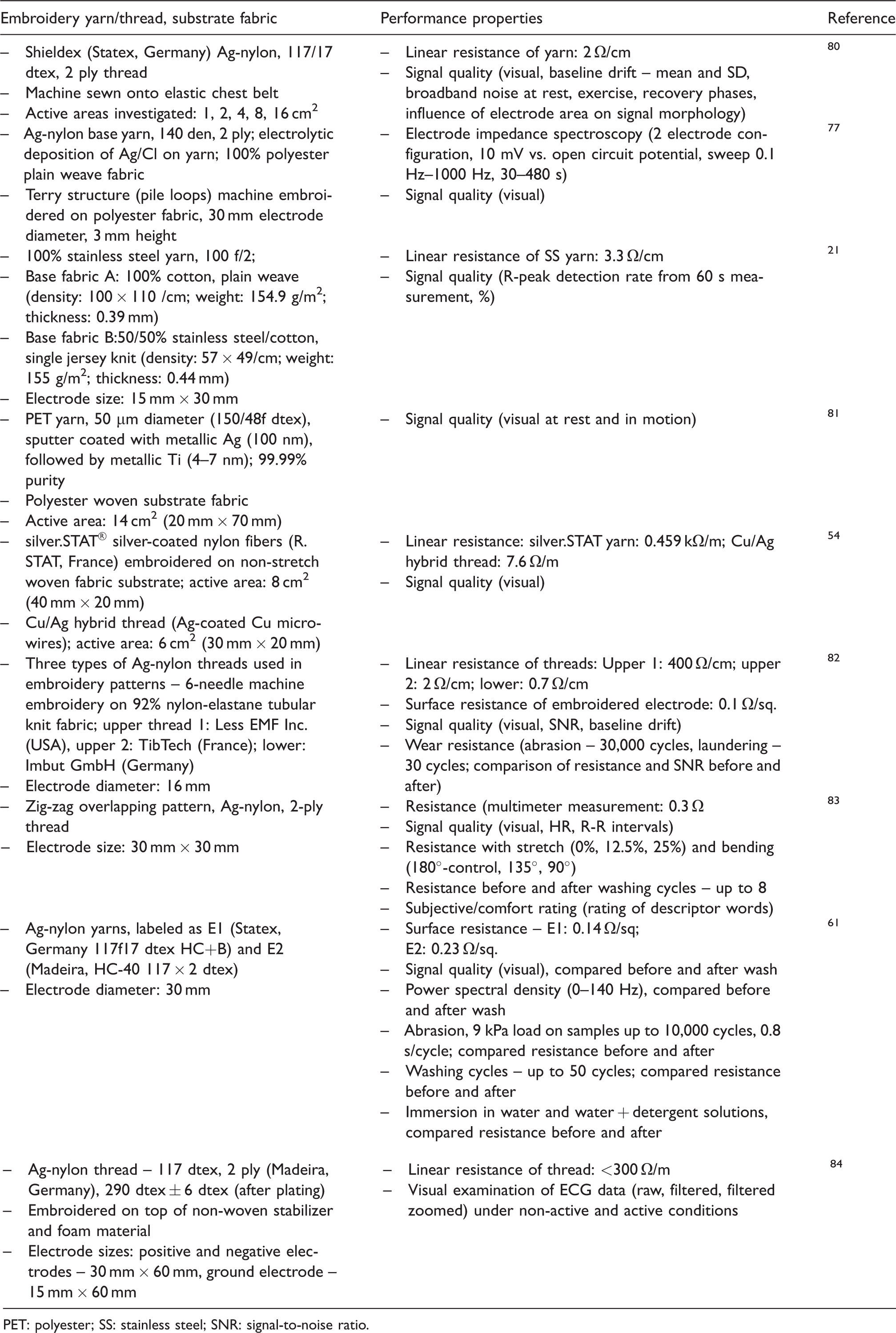
PET: polyester; SS: stainless steel; SNR: signal-to-noise ratio.
Fibers and yarns
Conductive fibers and yarns can be fabricated in several ways, using metals and conductive polymers (Figure 3). Metallic monofilament fibers possess high conductivities (upwards of 105 S/cm), but their mechanical properties present challenges for integration into mass production and conventional textile manufacturing processes, due to their stiffness and low extension properties. Consequently, metal fibers may be blended or twisted with non-conductive fibers as hybrid threads, which exhibit better mechanical properties closer to conventional yarns. 25 Metallized yarns are produced by applying thin metal coatings to non-conductive filaments (cotton, nylon, polyester). They are generally suitable for textile fabrication processes such as twisting, knitting, weaving, and embroidery owing to their good mechanical properties. However, they are often unreliable under long-term use and washing, owing to degradation and damage of the metallic coating. 25 Conductive polymers may be drawn into filaments (intrinsically conductive polymers, ICPs), blending insulated polymers with conductive fillers (extrinsically conductive polymers, ECPs) to form fibers, electrospun into nanofiber mats, or applied as a conductive paste/coating for fabrics. 9 While they have been shown to exhibit good mechanical performance, with demonstrated capacity to be processed into woven, knit, and embroidered structures, they often have lower electrical properties than their metallic yarn counterparts. Table 1 lists examples of various conductive fibers and yarns and corresponding conductivities, commercially available and developed on the research scale used in e-textile development.

Schematic of cross-sections of various conductive fiber and yarn structures. Reproduced with permission. 25 Copyright 2018, John Wiley and Sons.
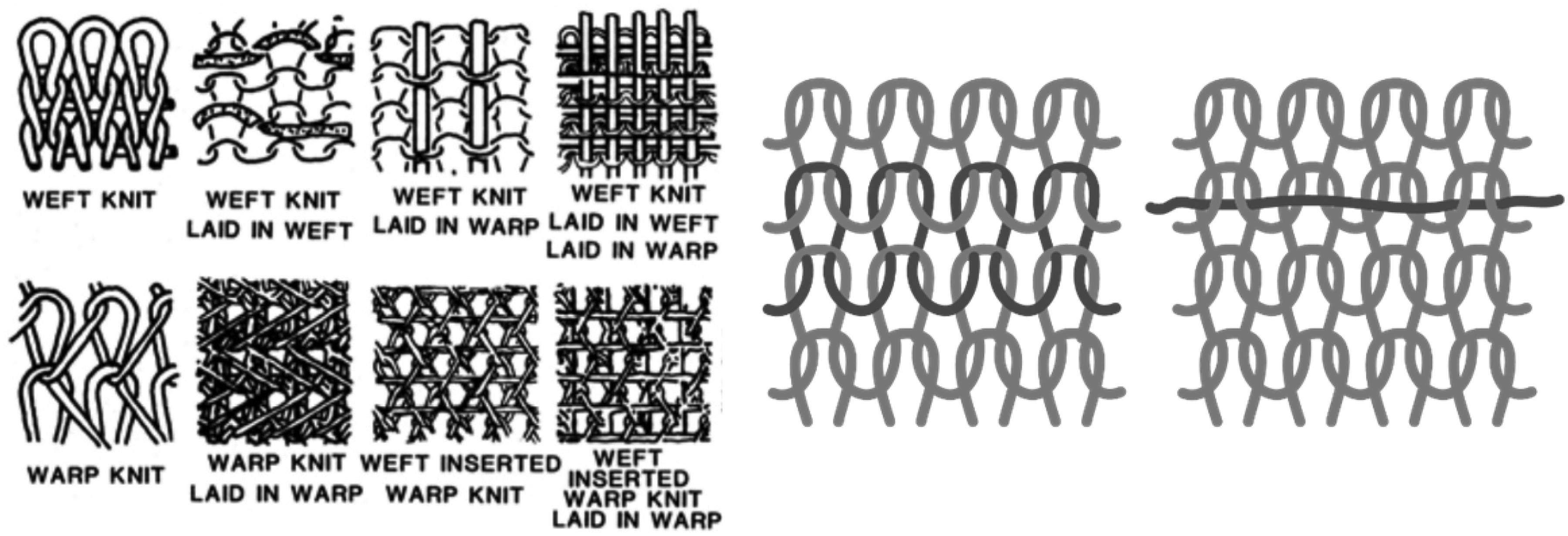
Schematics of types of (a) warp and weft knitted textile structures, 42 and (b) examples of possible integration of e-textiles/conductive yarns/wires into knitted structures.
General insights and observations for fiber and yarn selection in e-textile applications have been identified as follows:
fiber should be continuous rather than staple length, to decrease signal noise and contact resistance;14 the coated layer of fiber/yarn should be thick and a good electrical conductor, with a large surface area-to-volume ratio, to decrease the resistive effects of the core;14 yarn should be compacted instead of textured to provide more conductive fibers for a given diameter;14 yarn should be elliptical or flat (cross-section) instead of round, to increase capacitance;14 a higher yarn filament number and stitch density can result in slightly higher conductivity and lower skin–electrode impedance, and an increase in effective skin–electrode contact.26
Fabric structures
Knitted fabric structure
Knitting is a textile construction method in which yarns are interlooped using a basic assembly of knitting needles, stitch cams, and sinkers. An assembly of interconnected loops is referred to as courses or wales, where courses consist of loops that run horizontally (across the length of the fabric) and wales/warp are columns of loops that run vertically across the fabric (along/down the length of the fabric). 41
Knitted fabrics can be constructed from a single yarn/thread, 25 which is ideal for stretchable conductive electrode fabrication. 25 Circuit tracks or structures of conductive blocks can be integrated into knitted structures by utilizing different stitch types, such as an intarsia stitch/structure. An additional mode of conductive fiber integration into knit structures is the weaving of conductive threads into a knit structure. In conductive knit structures, current passes through yarn–yarn contact to reach the electrode sink. The conductive yarns that form part of the knitted structures must thereby be deformable in order to perform reliably. 25 The inherent stretchability of the structure allows for greater comfort next to the body/skin when worn.
Insights into the structure–property relationships of knitted fabrics used in e-textile applications are listed as follows:
the stitch density should be large enough to provide large current transfer through yarn–yarn contact, as increased stitch density can reduce electrode–skin impedance;43–45 stretching may result in better contact between stitch points and increased contact conductivity, but may increase motion artifacts and noise in the signal, and cause variations in contact impedance due to loop deformation during use/wear;43–45 float stitches can decrease the overall resistance of the conductive knitted fabric structure compared to fabrics where only knit stitches (the number of wales is fixed) are used due to the reduced yarn length per course;
46
full Milan double, Intarsia, jersey, and tubular stitches were found to reduce the electrical resistance of knitted fabrics for a given length of yarn (160 mm).
47
Table 2 summarizes knit structures employed as textile electrodes, with a focus on ECG sensing applications.
Woven fabric structure
Woven fabrics are constructed on the loom of a weaving machine by interlacing two orthogonal sets of yarns (warp and weft directions) in a repeating pattern. The plain weave is the simplest possible woven structure, which consists of the highest interlacing density among woven structures. Conductive yarns may be integrated as a regular grid pattern, integrated in one direction (warp or weft), or in localized positions. 25 While woven fabric structures are not inherently stretchable, some weaving patterns may allow for some tensile strain from yarns within the structure. 25 Some woven structures can be stretchable to some degree by altering the weave pattern, such as by employing a twill weave and using elastane yarns. Cherenack and Van Pieterson 62 reported up to 11.1% tensile strain in an atlas pattern (one weft fiber under one and over seven warp fibers), while the plain weave fabric experienced only 2.2% maximum strain. The addition of stretchable yarns (elastomer) within woven structures can impart some stretch to the fabric. The conductive pathway in woven structures consists of current flow through both conductive yarns and cross-over points between conductive yarns to reach the electrode sink. In e-textile applications, woven structures have demonstrated improved contact impedance (lower) owing to direct current transfer to reach the electrode sink. 57 Owing to fewer strain properties than knitted structures, woven fabrics have more uniform and consistent electrical properties. 63 Higher conductive yarn densities used in the structure in both warp and weft directions result in improved electrical properties. 64 Table 3 summarizes woven structures employed as textile electrodes, with a focus on ECG sensing applications.
Non-woven fabric structure
Non-woven structures may comprise discrete fibers, continuous filaments, or nanofibers (Figure 6) that are randomly distributed, preferentially oriented, or deposited into a mat, and interlocked by mechanical means (i.e., dynamic combing or hydrodynamic methods).71–73 Non-woven fabrics can be produced by melt-blowing, melt spinning, electrospinning, or solution spinning. 72 Non-woven fabrics have been used for textile electrode applications due to their ease of production, lightweight properties, strength, stability, and high surface area for functionalization, either by integration of functional fibers or coated particles. However, a drawback of this structure in e-textile applications is the fact that their electrical properties may be unstable or variable due to the random distribution of fiber–fiber contacts. 14 Table 4 summarizes non-woven textile electrodes that have been used for ECG applications.
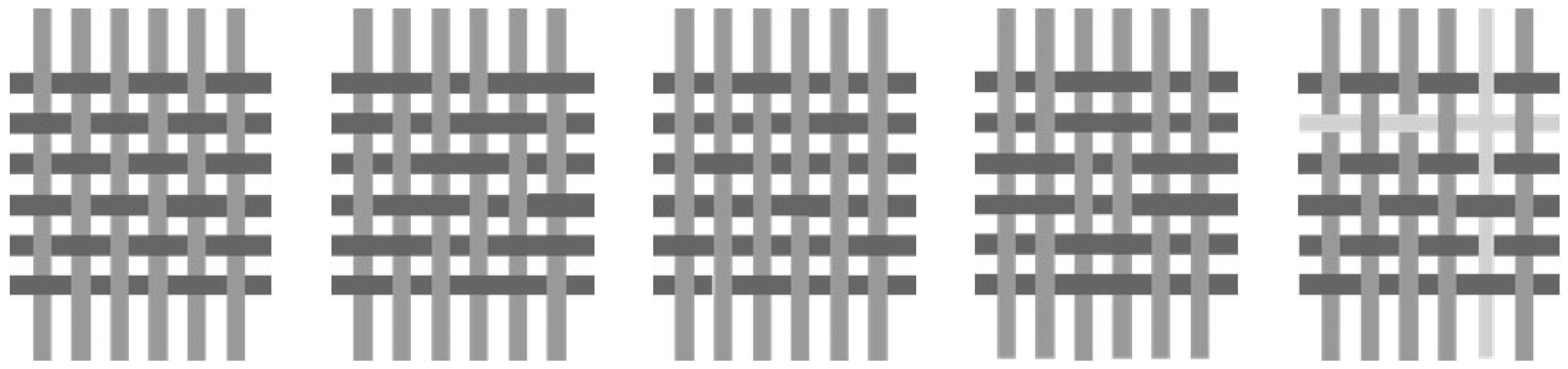
Schematic of possible single-layer woven structures for e-textile assemblies (left to right): (a) plain; (b) twill; (c) satin; (d) basket and (e) An example of possible integration of e-textiles/conductive yarns/wires into woven fabric structures.
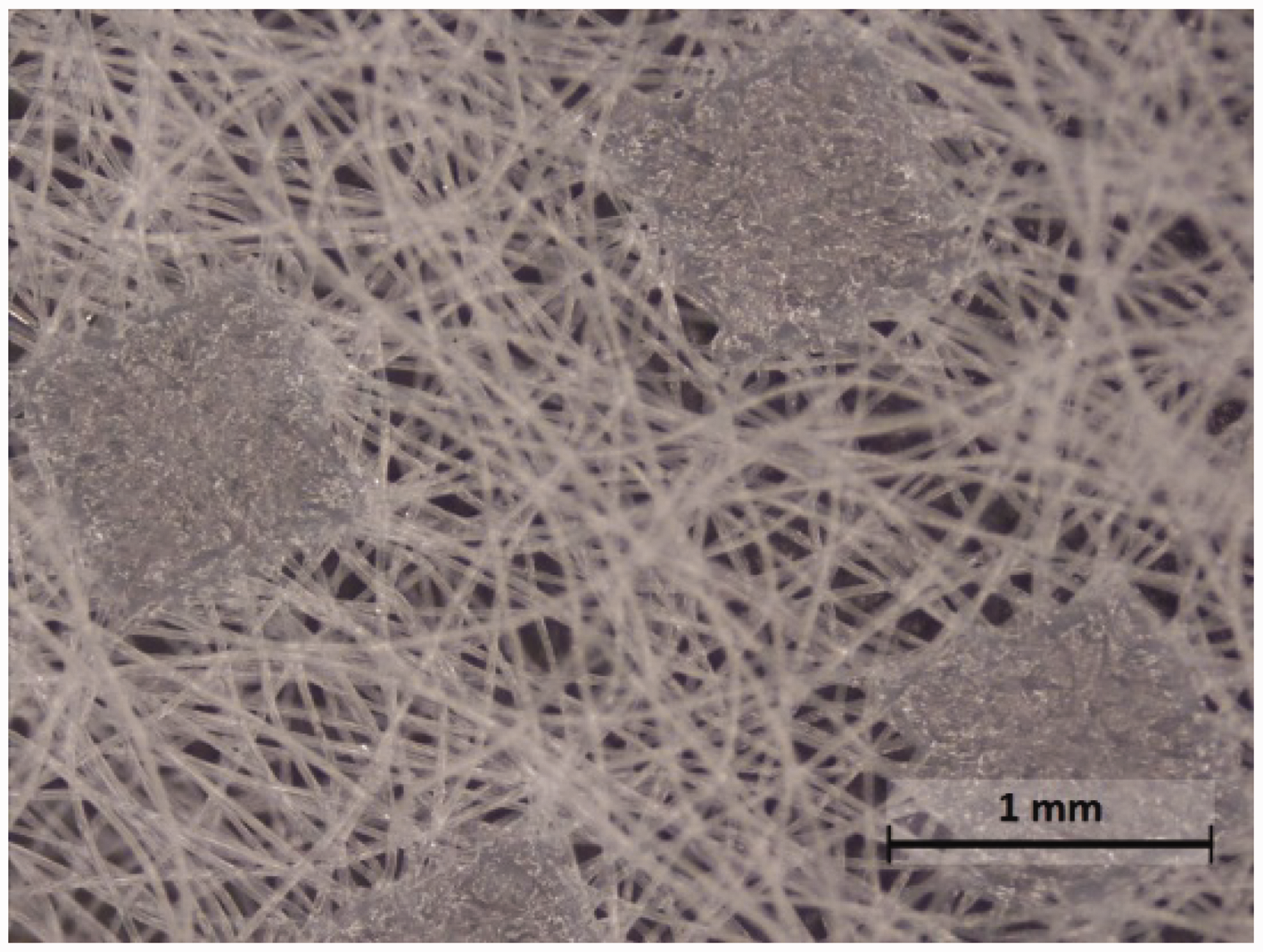
Example of non-woven fabric.
Embroidery
Embroidery is a patterning method by which a series of overlapping stitches is formed from a single continuous thread, or multiple threads, on a finished fabric substrate (Figure 7). It is one of the earliest methods employed for circuit routing and interconnections in e-textile fabric systems, and in more recent times for electrode structures.9,25 By creating several intersections of a continuous thread, this can enable greater conductivity for the embroidered structure compared to a single conductive thread. 9 Embroidery can be performed by hand, using a sewing machine, or using a commercial embroidery machine in combination with computer-aided design (CAD). While embroidered structures enable the creation of custom designs, the flexibility or stretch of the pattern/structure is dependent on whether the conductive thread is stretchable. In addition, strains that the conductive thread is subjected to during machine embroidery processes must be considered.
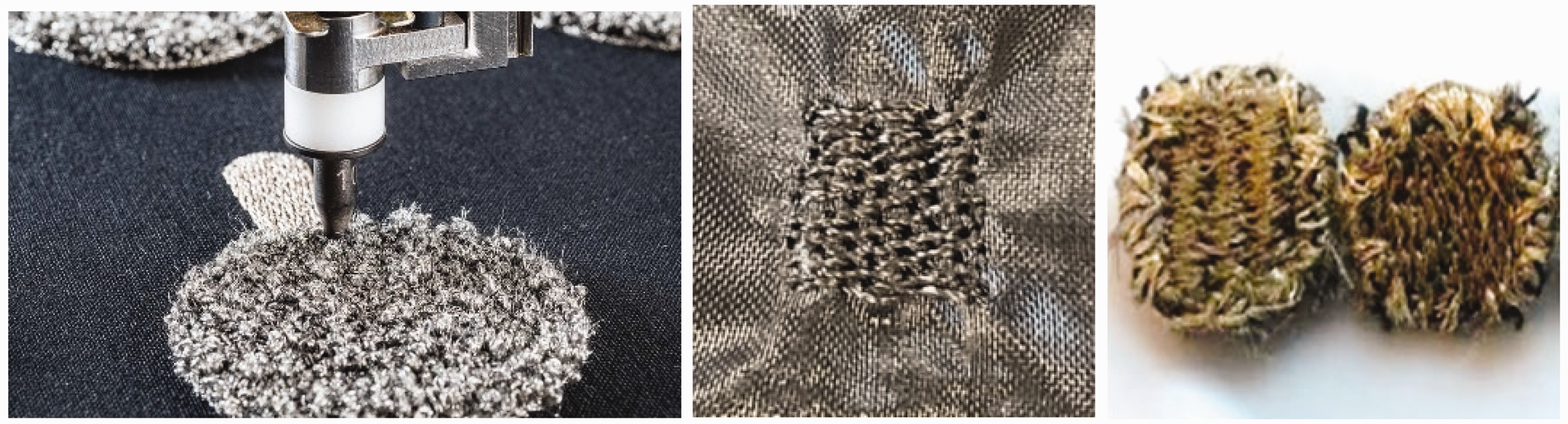
Examples of embroidered structures: (a) moss embroidered electrodes (embroidery machine). Reproduced under terms of the CC-BY license. 79 Copyright 2020, ZSK Stickmaschinen GmbH. (b) Silver–nylon and (c) silver–silver chloride–nylon yarns embroidered by a sewing machine.
General design parameters and structures for stitched and embroidered e-textiles identified by researchers are listed as follows.
Lock and zig-zag stitches (sewn on both sides, bobbin and spool) and chain stitch (more contact points) decrease the resistance of the base yarn value.
76
Sewing conductive yarns into structures decreases resistance due to increased contact points from sustained tension, but may also be dependent on the stitch class.
76
An embroidered terry structure can offer a good quality signal (i.e., ECG) and contact by easily penetrating hair.
77
Embroidered structures can provide better signal quality due to yarn being on the surface of the electrode (raised structure), thereby providing good skin surface contact. They are also found to be more resistant to motion artifacts by being less prone to slipping on the skin surface.54,78
Table 5 summarizes applications in which embroidery was employed for ECG textile electrodes.84
Performance properties of textile electrocardiogram electrodes
The understanding of performance properties of textile electrodes is necessary to facilitate appropriate material selection and development, and to gauge accurate and reliable biopotential signal recording and monitoring. In addition, material durability and signal quality over time with washing and use must also be considered for the development of e-textile sensors for long-term health monitoring. 85 The focus of this work is on the performance of ECG sensing electrodes. At present there is no standardized evaluation method for the performance assessment of textile-based ECG electrodes. Most developments for textile electrodes have referred to performance limits reported by ANSI/AAMI EC12:2000/(R)201586 for disposable ECG electrodes, which cover electrical performance (Table 6), safety requirements, and adhesive performance.
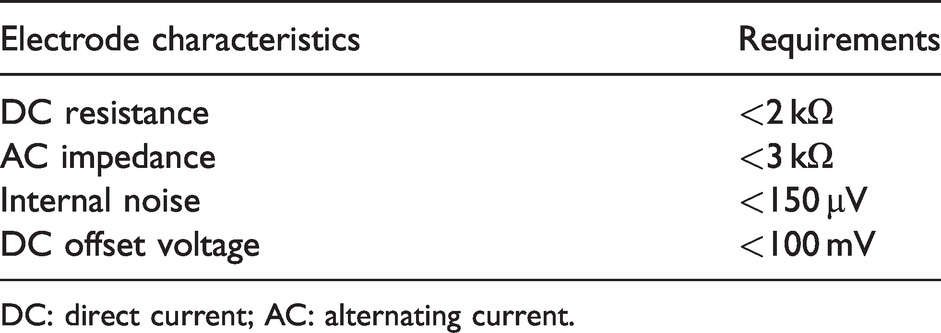
DC: direct current; AC: alternating current.
Based on the understanding gathered for commercially used electrodes and textile electrode development on the research scale, performance characterization for electrode materials includes two categories of metrics: (i) electrical and material properties and (ii) signal quality analysis. Specific to textile electrodes, other factors relating to structural design, such as fabric structure, applied pressure, construction, and electrode geometry, and impacts on material properties and signal quality, must also be considered. The assessment of physiological comfort and subjective evaluation of e-textiles to quantify fabric handle must also be considered, as these properties impact long-term comfort and wearability of e-textiles integrated into apparel products.
Electrical properties
Conductivity and contact impedance
Conductivity-related properties of textile electrode materials are largely influenced by the fibrous structure. Surface resistance is associated with the contact resistance between neighboring yarns through contact points as crossovers. 87 Castrillón et al. 57 found that the impact of anisotropy in the fabric structure, resulting from the different number of warp and weft yarns per unit length, caused a nonuniform spread of current on the electrode surface, thereby resulting in lower electroconductive performance.
Since biopotential signals exhibit a frequency range, contact impedance properties, which depend on the frequency of signal, must be characterized to provide a more complete understanding of electrical properties at the skin–electrode interface. Electrode contact impedance must be minimized to acquire a high-quality signal with low noise levels.19,88 Li et al. 47 outlined several factors influencing the electrode–skin impedance, including electrode type (wet, semi-dry, dry), location on body/skin (differences in thickness, sweat glands, etc.), individual skin types, applied pressure, and contact area. In addition, the moisture content of the stratum corneum is dependent on the humidity of the surrounding air/environment. Skin is a solid-state electrolyte in which the impedance can decrease with increasing hydration (dry human skin: 10−7 S/m; wet human skin: 10−5 S/m; 1 Hz–10 kHz). 89 Skin impedance ranges between 1 kΩ (normal skin) and 1000 kΩ (dry skin) and depends on both the skin condition and location on the body. 90 Conventional methods of minimizing skin impedance include skin preparation procedures (depending on the type of biological signal being collected), such as abrading the outer dead layer of skin, removing hair, or applying electrolytic gel on the skin surface, prior to applying electrodes. 88
Advances in electrode materials have sought to replace the need for conventional skin preparation through novel structures such as hydrogel electrodes, 91 micromachined spiked electrodes,92,93 or micro- and nano-patterned surfaces 94 to increase the surface topography and effective surface area in contact with the skin. Several researchers have explored the impact of increasing the applied pressure of the electrode next to the skin to minimize contact impedance due to the increased coupling and contact area between the electrode and the skin and reduced interface capacitance.44,50
Textile electrodes generally show much higher impedance than conventional wet/gel electrodes when first applied to the skin, owing to the strong capacitive behavior of dry textile electrodes from the absence of an electrolyte. Over time, impedance may decrease due to skin moisture and perspiration accumulating under the electrode. 95
Research has been carried out to compare the influence of the textile electrode structure on contact impedance, however, results have varied due to different measurement methods and fabric properties. Impedance spectrum measurements applied to evaluate dry electrodes have been performed in various ways:
measurements on the skin of human test subjects (generally performed on the forearm);96,97 simulated human skin, such as an electrolyte cell containing 0.9% NaCl solution;43,77 skin dummies made from agar-agar (a gelatinous substance derived from seaweed), distilled water, salt, and disinfectant agents;44,98,99 alternating current (AC) impedance measurements as specified in the ANSI/AAMI standard for commercial medical disposable electrodes, where electrodes are connected face-to-face.86
The reported AC impedance values for different textile electrodes reported in the literature have ranged from less than 10 Ω up to 150 kΩ across frequency bands of 1 Hz–1 MHz.14,55 Ask et al. 100 determined that an electrode impedance of up to 50 kΩ at 50 Hz was acceptable for ECG signal acquisition.
Priniotakis et al. 101 demonstrated that the textile electrode structure may influence charge transfer, with many variables inherent to textile materials contributing to variability in contact impedance, such as the stitch density, fiber properties, fiber density, and hairiness. Castrillón et al. 57 demonstrated that textile electrode structures with fibers tightly arranged resulted in lower contact impedance values, possibly due to a better contact area available. Wu et al. 58 found that plain knit fabric structures (1.1–1.27 MΩ) resulted in lower contact impedance than honeycomb stitch knitted structures (>1.4 MΩ) due to the higher presence of non-contact areas in the structure. Ruffini et al. 102 cited that the preferred value for contact impedance should be less than 20 kΩ. Several researchers have reported the dry skin–electrode impedance of textile electrodes to be in the range of 10 kΩ to 5 MΩ in the 5–100 Hz frequency range, compared to less than 10 kΩ for commercial/gel electrodes.58,78,103,104
Polarization potential
Electrode polarization refers to the resistance or barrier that develops at the interface between an electrode and electrolyte, referred to as a galvanic cell. This results in resistance to current flow in one direction versus the other, causing variations in the half cell polarization potential, which deviates from the standard value. It is desirable for electrodes/electrolyte materials to be electrochemically reversible and stable, with minimal fluctuation in the potential over time. 105 Electrode polarization is associated with electric instability, giving rise to noise and signal distortion, high resistance, offset potentials between electrodes, and changes in the power spectral density curves of long-term signal recording over time.48,106 Cooper et al. 107 examined the pick-up voltage from metal electrodes and found the silver–chloride electrode pair to be the best performing, while silver, gold, and stainless steel demonstrated distorted waveforms, indicating high polarizability. While these distortions in signal quality can be corrected with filters, care must be taken in appropriate filter selection that will not distort the signal.
Electrodes made from conductive metals, that is, pure Ag, Cu, Sn, and Al, are not electrochemically reversible, as they eventually corrode. Metals in combination with metallic salts (usually chlorides) are ideal bioelectric interfaces. The metallic salt coating acts as an intermediate bridge between the electrode and the electrolyte. Silver–silver chloride is deemed to be the electrode material of choice and is the gold standard material for electrodes used for biopotential monitoring in clinical settings, namely the adhesive gel-type form. 106 Tallgren et al. 108 evaluated the polarization drift for metal electroencephalogram (EEG) electrodes (silver, gold-plated silver, platinum, stainless steel) and found that appropriate stability could only be achieved when using Ag/AgCl electrodes, or if the metal electrodes were coupled with a chloride-containing gel.
For newly developed electrodes for ECG monitoring (or other biopotential signals), it is necessary to characterize the polarization potential stability over time in order to ensure that the fluctuations do not interfere with the signal. 45 Polarization potential measurement examined in the literature has demonstrated that while textile electrodes (∼15.3 mV) may show stable potentials, their performance is still lower and they show significant differences from standard reference (Ag/AgCl gel) electrodes (∼2.67 mV).45,57 General observations in tests conducted demonstrate the need to study a means of reducing high-amplitude transient polarization artifacts generated by movement of electrodes next to the skin, and muscle activity. 57
Textile material properties – stability and durability of sensors
Electrode stability and durability encompass stress tolerance (mechanical properties/deformation), water tolerance, and impact of washing cycles, as well as chemical and electrochemical stability of the textile electrode during repeated wear and usage, which can result in changes in electrical properties and signal quality over time. Common failure modes for e-textiles subjected to mechanical stresses (i.e., stretching and bending from use, abrasion, and washing) include the formation of cracks and micro-cracks in the conductive coating of the fiber/yarn, surface coating, or connection failure between textile interconnections.109,110 Future studies into the long-term effects of stretching and bending cycles/holding times on resistance change, combined with signal quality, material structure, and recovery, would provide a better understanding of the durability of textile electrodes for biological signal monitoring.
Mechanical properties
E-textile sensors worn on the body are subjected to stretching and bending in different directions. Important mechanical properties include tensile, tearing strength, bending, and friction resistance of the conductive coating layer. Xu et al. 14 recommended that electrode impedance before and after subjecting the material to mechanical stresses should be measured and compared with acceptable ranges specified by the electrode performance standard (ANSI/AAMI limit 86 ). These properties are dependent on materials and processing properties from the molecular structure, fiber-to-fabric levels, and integration in the apparel system. The changes in electrical properties, such as surface resistance or impedance with respect to stretching and bending cycles, have been used to characterize stability and durability of e-textile materials. Much of this work has been carried out for strain sensing and e-textile interconnecting materials, while few studies have directly characterized these properties for textile sensing electrodes for biological signal monitoring. Insights have included the impact of stretch/extension on subsequent recovery (material may not recover fully, 100%) and micro- or nano-crack formation (Figure 8),111,112 especially prevalent for e-textile materials with conductive surface coatings, which thereby reduce electrical conductance properties and ultimately lower the signal quality from the sensors. Table 7 summarizes studies that have examined the impact of stretch and/or bending on electrode sensor performance properties, namely surface resistance and impedance change.
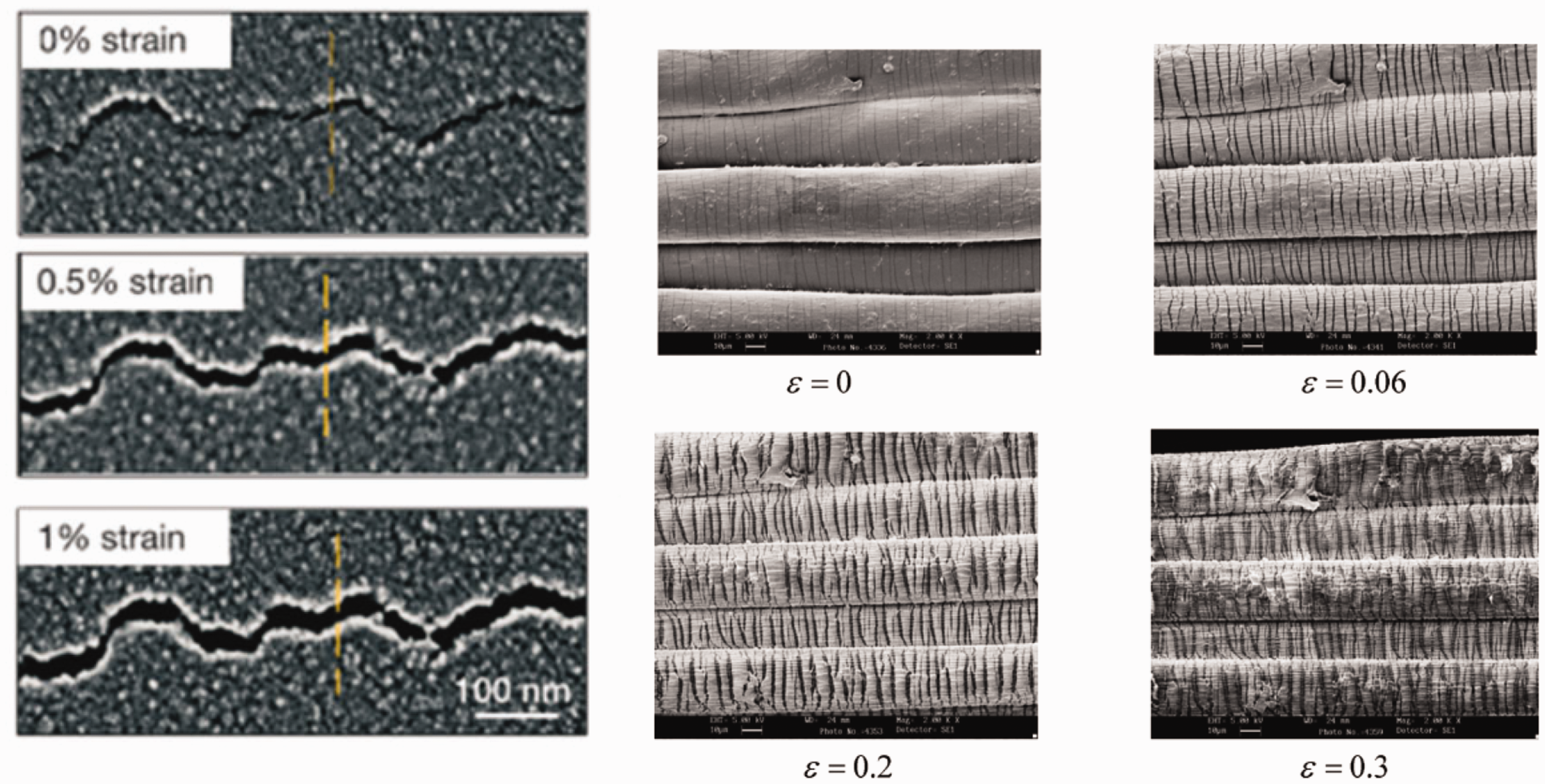
(a) Scanning electron microscopy (SEM) of platinum thin film strain sensor with micro-crack junctions at different strains. Reproduced under terms of the CC-BY license. 113 Copyright 2018, J. Heikenfeld et al., Royal Society of Chemistry and (b) SEM of polypyrrole-coated elastane fibers at different strain levels. Reproduced with permission. 112 Copyright 2011, Elsevier.
Studies investigating effects of mechanical deformation of textile electrodes on electrical performance properties
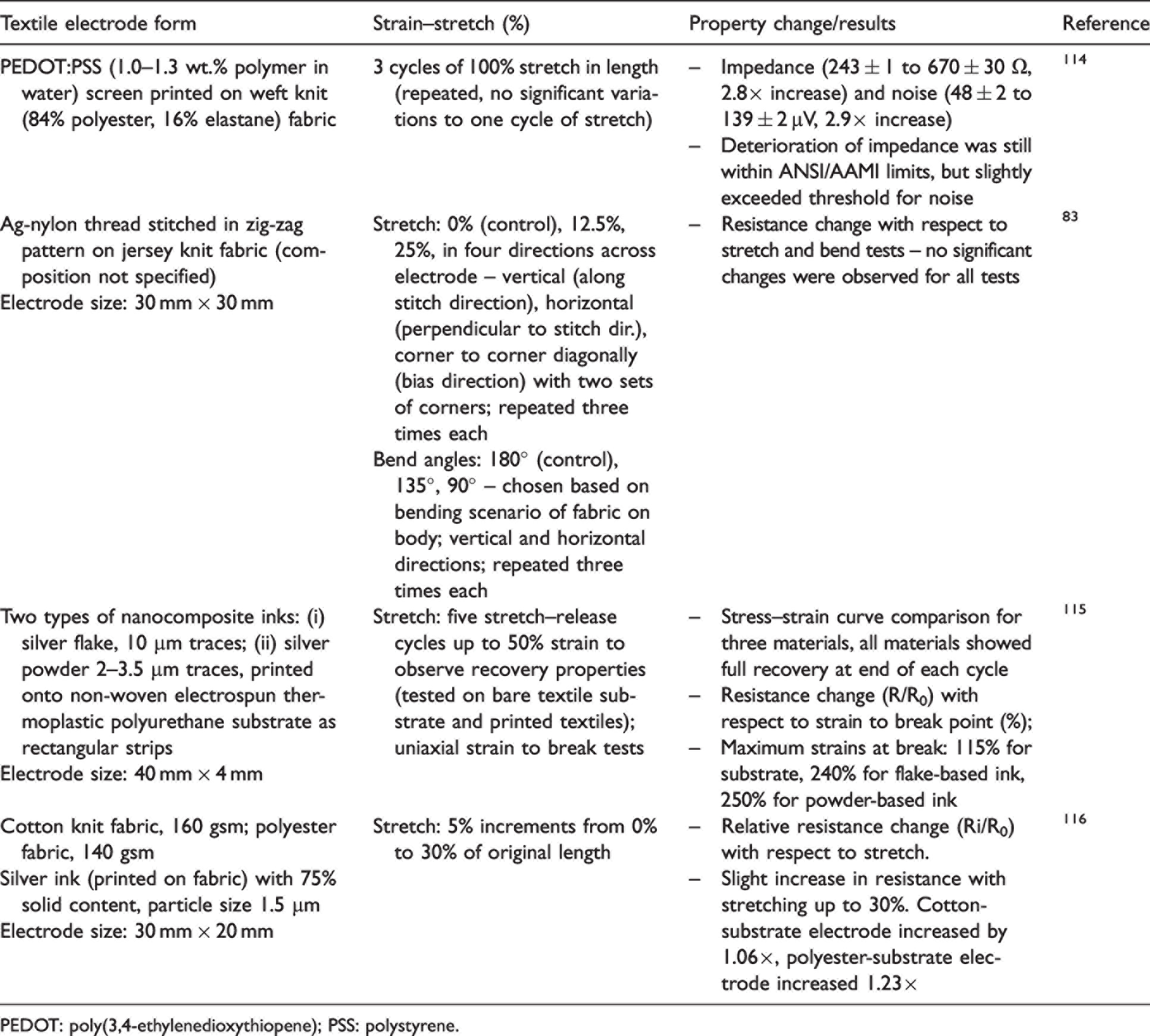
PEDOT: poly(3,4-ethylenedioxythiopene); PSS: polystyrene.
Effects of cleaning and washing
Washability of e-textile materials is an important consideration for long-term performance, stability, and durability. In general, deterioration of properties from cleaning and washing may be a result of mechanical stresses (i.e., bending, stretch, friction, etc.) during the process, as well as changes in the chemical or electrochemical stability on the conductive surface coating due to thermal (temperature) stress, water stress, and chemical influence (detergent).117,118 The evaluation of e-textile performance after multiple wash cycles has varied in terms of the methods selected and modified owing to the lack of e-textile specific standards, which have only recently been finalized and developed in the last few years. Table 8 lists some existing standards for textile washing that have been utilized or modified for use in many e-textile studies, as well as newly developed standards that have yet to be widely implemented in new material developments and studies.
Washing-laundering standards used or modified for e-textiles.

Standard washing tests reported for e-textiles in the literature have generally followed ISO 6330:2012, “Textiles –domestic washing and drying procedures for textile testing.”
119
The standard covers procedures for household washing and drying machines. Within the standard, testing procedures cover the following parameters:
washing device; load (generally 2 kg); washing temperature; program and duration; detergent; drying.
Studies that have utilized ISO 6330 for textile electrodes have generally applied their own modified methods, reporting results for up to 50 wash cycles at 40°C for 30 min, with variable rotation speeds (30–1200 rpm reported55,120), and a 2 kg standard load. Before and after the 50 wash cycles, or increments of 5–10 cycles, material and electrical properties such as weight, surface resistance, ratio before and after washing (Ri/R0, where i refers to the ith wash cycle and R0 is resistance before washing), and impedance have been measured. 120 Signal quality has also been examined and characterized through visual observation of the signal in the time domain and the presence of noise.120,121 Varied performance properties have been reported for the impact of washing on textile electrodes, summarized in Table 9. Variations across wash programs/methods, as well as detergents and cleaning chemicals used, contribute to the differences in overall performance properties among the reported studies. In general, all types of washing, from gentle to more regular/normal duty wash cycles, were found to deteriorate the electrical properties of e-textiles to varying extents. In the studies reviewed, it was found that a slight deterioration of properties, namely surface resistance, signal quality, or weight change, was observed as early as 8–10 was cycles, and upwards of 30–50 cycles. A maximum of 150 wash cycles was reported by Tsukada et al., 122 with textile conductive properties maintained for up to 100 cycles under gentle machine-washing conditions. Gaubert et al. 118 found that the combination of mechanical action from machine washing and bleaching chemicals had the highest impact on yarn conductivity (decrease). Based on the studies reviewed, washing conditions that utilized gentle wash cycles/stirring and mild detergent concentrations were better in retaining e-textile material properties.
Studies investigating textile electrode property evaluation before and after launder/wash cycles
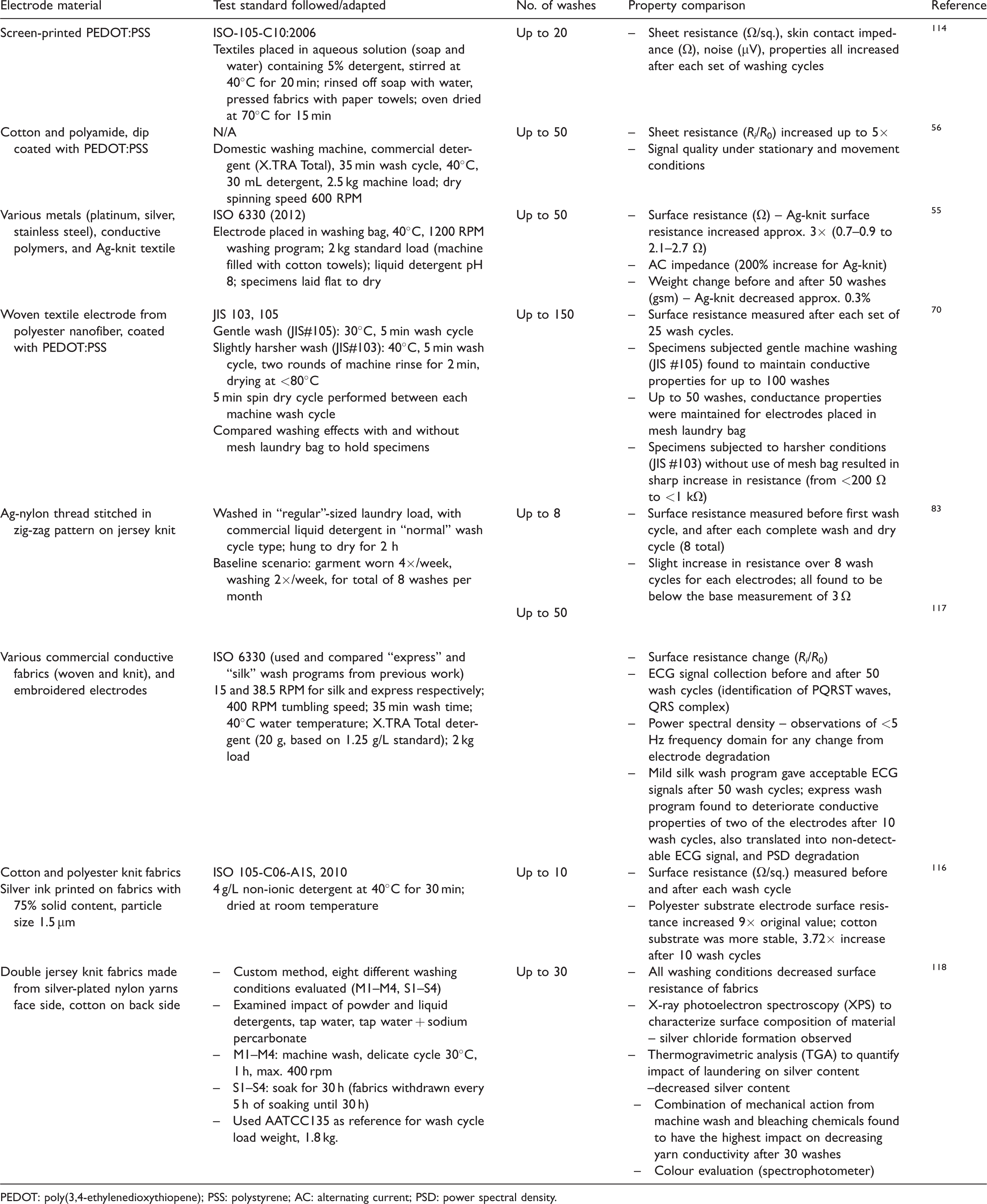
PEDOT: poly(3,4-ethylenedioxythiopene); PSS: polystyrene; AC: alternating current; PSD: power spectral density.
Signal quality analysis
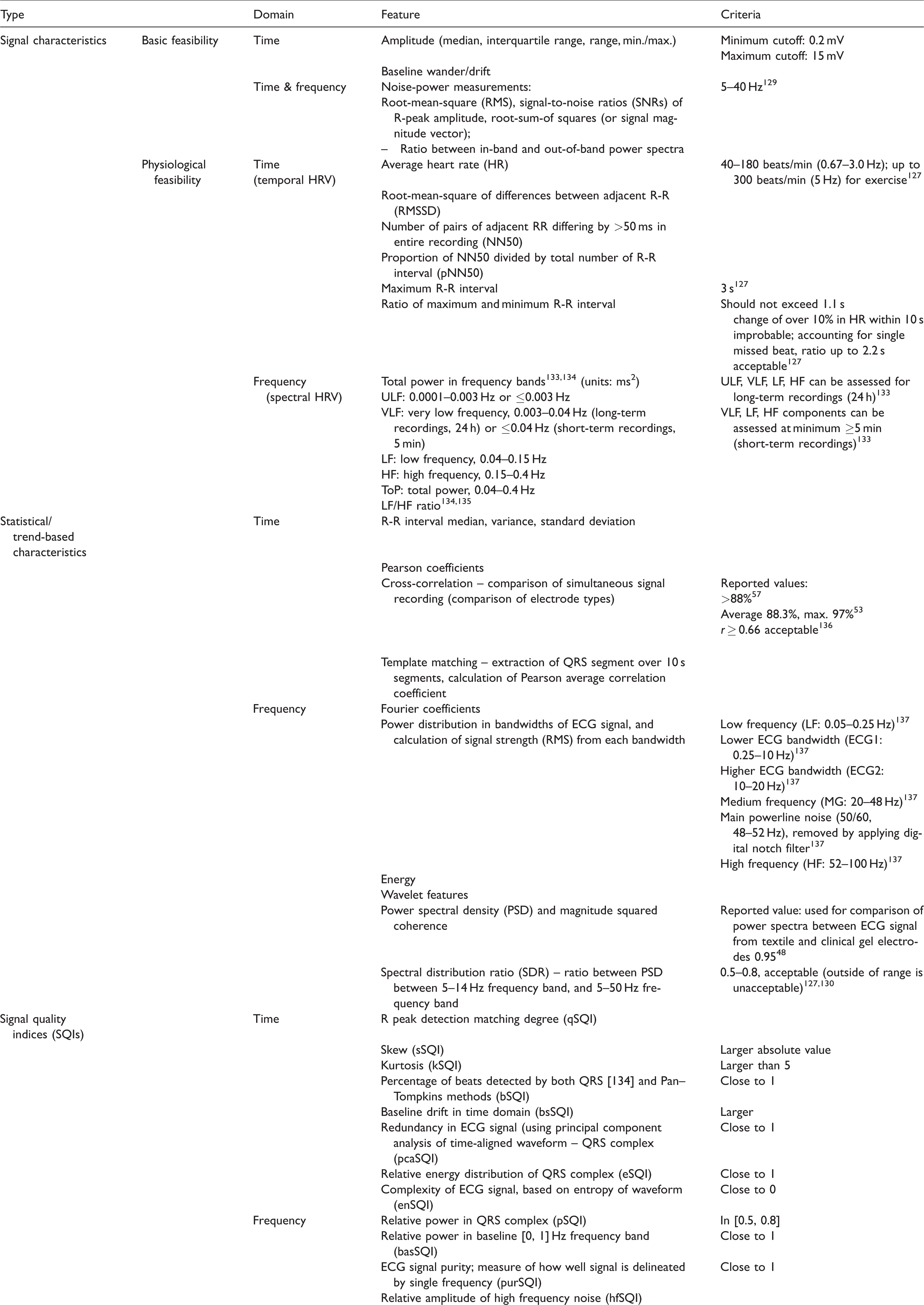
In biopotential measurements, signal quality refers to the preservation of morphological features associated with the given biosignal acquired. 123 In the development of new electrode materials for biosignal monitoring, the quality of the signal acquired is an important measure of electrode accuracy and is also largely influenced by material and electrical properties. The ECG is one of the most studied and recorded biosignals, and its distinctive morphology can provide a vast amount of information about the condition and function of the heart to a clinically trained observer or cardiologist. Given the large body of work in e-textiles for health monitoring focusing on electrode development for the ECG, this section outlines techniques proposed and applied in the literature for the assessment of ECG signal quality. Most approaches have relied on the visual (subjective) comparison of recorded ECG signals from investigated electrode developments with standard reference electrodes,124–126 which limits the reliability and robustness of the results. 123 There is a need to standardize the framework for ECG signal quality evaluation, along with recommended limits for analysis applied to e-textile or wearable applications. Signal quality assessment approaches examined from the literature include morphological feature extraction and correlation (time domain), signal quality indices (SQIs), and spectral characteristics (power spectral density, cross-correlation, coherence), and are summarized in this section.
ECG signal quality considerations are dependent on the intended application.
127
Point-scale weighting criteria and weighting coefficients
Pola and Vanhala 78 introduced a point-based (out of 2 points) weighting criterion for the identification of the ECG wave form components (QRS complex, P-, T-waves, R peaks) and extraction of amplitude and baseline levels in the signal in order to compare between developed textile electrodes. Based on the point-scale evaluation, weighting coefficients (out of 100%) were applied to each parameter, from which a score was calculated for each material category (knit, woven, embroidered textile electrodes, and disposable gel electrodes) and condition (dry, moist, skin prepared). The final score calculated determined the embroidered electrode to be the best textile structure for measuring the ECG (average: 1.54, SD: 0.39), while disposable gel electrodes still showed the highest performance, with an average of 1.65 (SD: 0.08). However, since the weighting criteria in this method can be modified based on the selected material, electrical, and comfort properties within individual investigations, results are not comparable across studies and, therefore, are not suitable for benchmarking performance. Other researchers have also applied variations of this analysis technique in electrode material comparison.
Kannaian et al. 128 applied some parameters in the point-scale evaluation to compare the signal quality of embroidered electrodes with different proportions of conductive threads against standard Ag/AgCl gel electrodes and evaluated the signal performance before and after laundering (15 washes). Calculated results were 12 and 11 for the commercial and embroidered textile electrodes, respectively, thereby demonstrating similar performance.
Wu et al. 58 applied the point-scale evaluation to some parameters in the evaluation method to compare different textile electrodes of various knitted structures with standard gel electrodes. Similar scores (11–12) were obtained for the material groups. Other signal quality parameters, such as material, electrical, and comfort properties, were compared alongside the evaluation method.
ECG signal identification and comparison – general approaches
Several researchers have proposed identification methods, quality evaluation algorithms, training, validation, and assessment for the classification of ECG signals.127,129–132 The methods are summarized in Table 10. The assessment methods and features listed serve as a guideline for reference, as signal features and comparison of signal quality is dependent on the data sampling rate, collection location on the body, and collection system used. The data sampling rate is dependent on the application area and the desired level of accuracy of the ECG signal collected. Therefore, not all features listed can be extracted from the signals collected. Where applicable, performance criteria for signal features are provided.
Assessment methods applied to electrocardiogram (ECG) signals from textile electrodes and electrodes integrated in wearable devices/systems
Influence of e-textile design on performance properties
Through a literature examination of the influence of e-textile design on performance properties, various qualitative and quantitative insights have been reported and are deemed to be beneficial to guiding the design and development of wearable e-textile systems.
Electrode size, geometry, and construction
Several researchers have investigated the impact of the textile electrode position, size, geometry, and construction on signal quality and electrical properties. Electrode distance and positioning on the body have been observed to affect signal features and quality due to differences in the distribution of body surface potentials during each cardiac cycle. 64 Yokus and Jur 64 studied the influence of electrode pair distance (2–12 cm, increasing increments of 2 cm) for Lead I placements between the left and right arm, and signal features including the R-wave peak amplitude, signal and noise power, and signal-to-noise ratio (SNR). They found that an electrode pair distance of 8 cm yielded a higher R-peak amplitude and SNR value. Skin–electrode impedance is also influenced by electrode size and position, with better signal quality observed for larger electrodes; however, an optimum size must be specified given restrictions in the available skin area.
Table 11 summarizes some studies that have investigated the influence of textile electrode size on signal quality. From the studies examined, it was found that using a larger electrode area corresponded to better signal quality and less noise – with a maximum area of 16 cm2 used. The minimum electrode size of 4 cm2 was specified by Marozas et al., 80 with electrodes smaller than this area found to distort the lower frequency (0–0.67Hz) components of the ECG signal spectrum. In general, irrespective of the geometry of fabric electrodes, in circular or rectangular forms, the level of signal quality depends on the actual surface or contact area next-to-skin. This is thought to be correlated to the number of conductive points or yarn junctions per unit area in a textile electrode.
Studies investigating effect of electrode size on performance and signal quality.
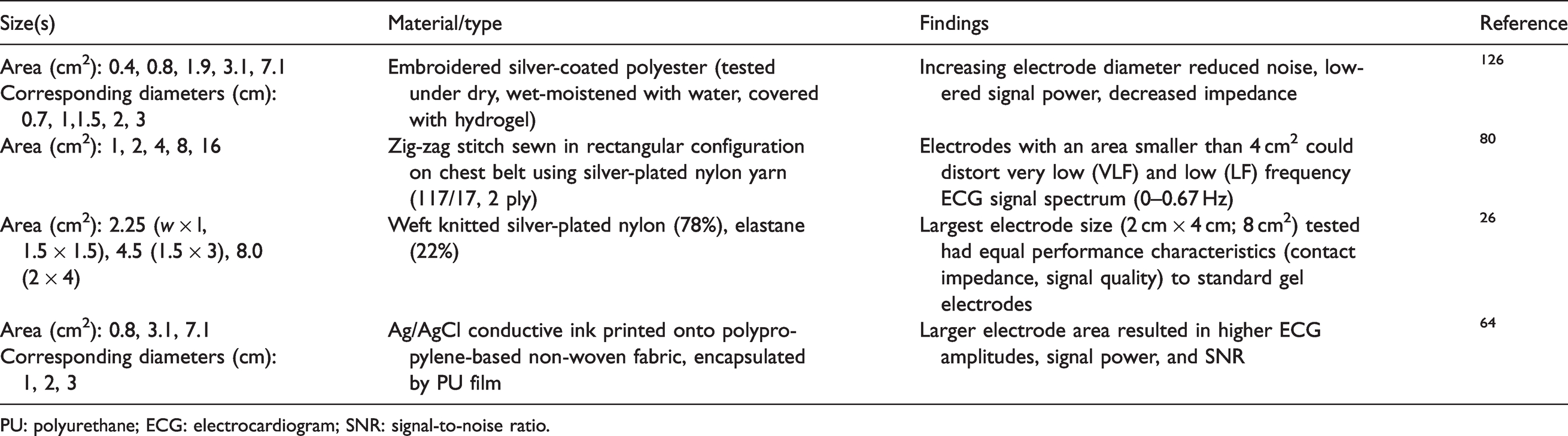
PU: polyurethane; ECG: electrocardiogram; SNR: signal-to-noise ratio.
Cömert et al. 138 examined the effect of electrode construction on signal quality, identifying that the stabilization of skin around the electrode can distribute force and movement to an area beyond the electrical contact area, which can reduce motion artifacts; a similar phenomenon to standard gel electrodes, which comprise a surrounding adhesive structure. A support structure to stabilize the area around the electrode can restrict epidermis deformation and relocate or extend the movement applied to the skin beyond the electrode surface. For dry electrodes, soft foam padding behind the electrode is thought to reduce changes in pressure under the electrode caused by movement or muscular contraction. Several researchers have cited the benefits of integrating foam backings or conductive foams into textile electrode structures and observed improvements in signal quality and lower contact impedance.65,66,68,123,139,140 Electrode integration into clothing systems can further reduce instances of motion artifacts by providing a support structure around the electrodes.
Applied pressure
According to Li et al., 47 in apparel design, desirable pressure ranges to consider for comfortable and uncomfortable fitted clothes are 1.96–3.92 and 5.88–9.80 kPa, respectively. Various studies have examined the impact of applied external pressure to ECG textile electrodes for minimizing contact impedance and improving signal quality, with some elucidation into the impact on apparent contact area at the skin–electrode interface. According to Taji et al., 50 applied pressure (0–4 kPa, or 0–12 mmHg) increases the skin–electrode contact area and minimizes interfacial impedance, which impacts the ECG signal quality. Ottenbacher et al. 141 observed that baseline drift and noise could be reduced by applying a stabilizing contact pressure (such as foam beneath the electrode), which could thereby increase the contact area. Soroudi et al. 142 found that at lower pressure, 3 mmHg, the electrode–skin contact impedance was not measurable when the textile electrode was first placed on the skin, whereas impedance for the reference Ag/AgCl electrode was measurable. However, after a 5-min resting period at the same applied pressure, the impedance could be detected and measured for a textile electrode that was coated with an additional elastic conductive coating layer. This was thought to be due to the better contact and humidity barrier properties of the electrode coating and skin. Several studies that have investigated the impact of applied pressure on contact impedance and signal quality are summarized in Table 12. In general, the average optimum pressure for textile electrodes investigated has been identified to range from 1 to 3 kPa.
Studies investigating the effect of applied pressure on electrode performance/comfort
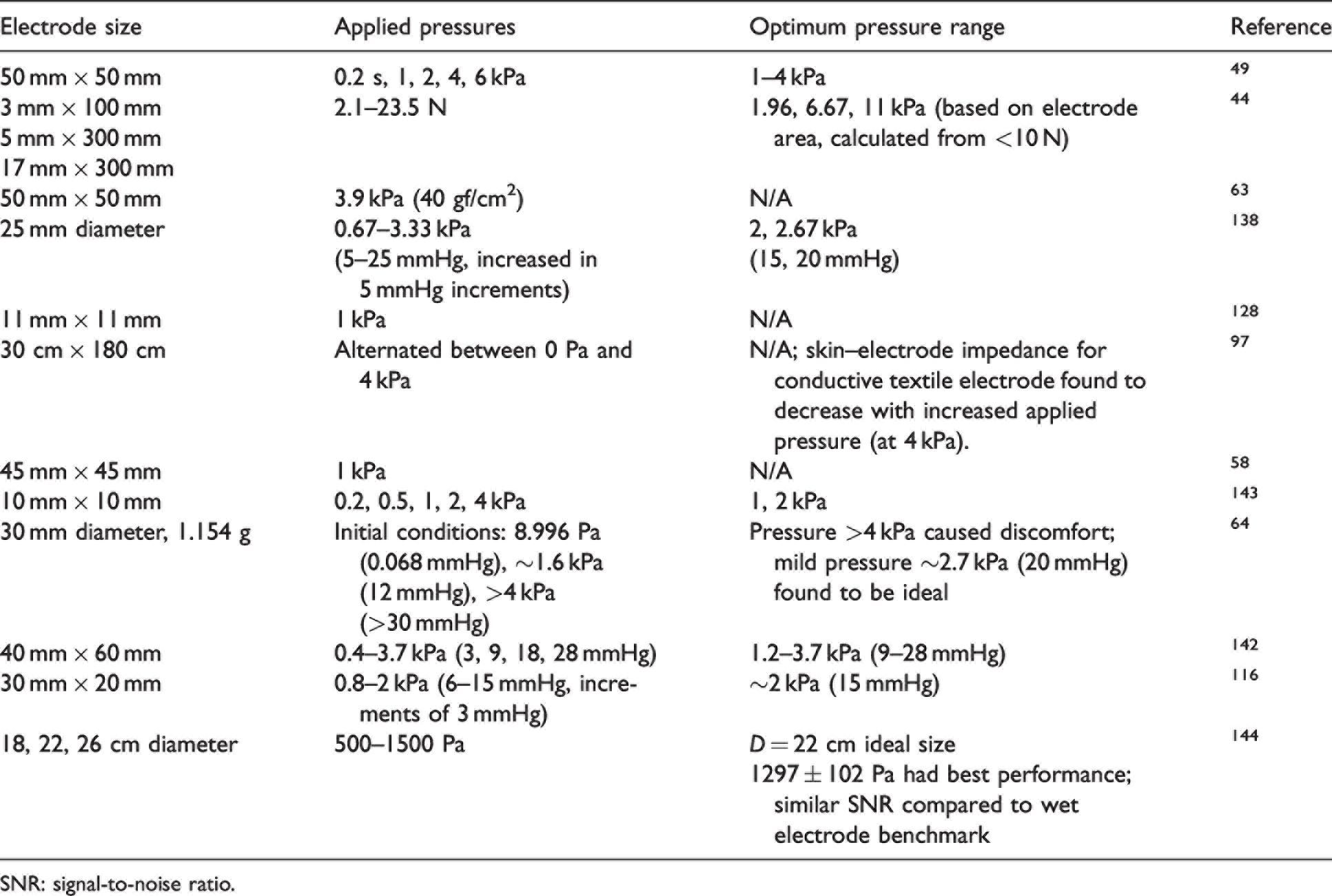
SNR: signal-to-noise ratio.
Fabric Handle and physiological comfort evaluation of e-textiles
Fabric handle and clothing comfort are concepts introduced from the apparel and textile industry to measure the total sensation experience when a fabric is touched, and physiological responses of the human body to combinations of clothing and environment.
145
According to Kawabata and Niwa,
146
the performance of textile and clothing should be evaluated in terms of three categories:
utility performance (i.e., strength); comfort performance (fitting to the human body, mechanical comfort, thermal comfort); mechanical properties and fabric performance for the engineering of clothing manufacture.
By considering the three categories, the fabric performance, which relates to its mechanical properties and comfort, can be applied for a subjective method known as fabric handle judgment. The method was developed as the Kawabata Evaluation System (KES) and has been applied in both industry and research to assess manufactured fabrics used in a variety of applications, which includes objective fabric property measures, that can be related to subjective ratings, including an evaluation by a human panel.
With one of the main influences for textile electrode developments applied to long-term health monitoring being greater comfort and flexibility than conventional rigid electrodes, few studies have investigated the physiological comfort and subjective evaluation of e-textile materials. This is largely due to the subjective and qualitative nature of most comfort measurement indices, and difficulties in quantifying comfort, which may vary among individuals. Reliable and reproducible comfort measures of textile electrodes developed for next-to-skin applications are beneficial to the overall assessment of whether the electrode can be used for long-term monitoring. Some work has sought to identify important and measurable factors that can be utilized to determine clothing comfort levels, such as thermal and moisture comfort, tactile comfort, and pressure comfort – with pressure dominating overall clothing comfort. 147 Most studies have applied physiological measures alongside tactile comfort assessments and fabric hand sensory properties (evaluation panel American Association of Textile Chemists and Colorists (AATCC) 5-2011) to evaluate comfort of e-textiles and smart materials. Commonly applied physiological measures include air permeability,58,68,148 water/moisture vapor management properties, 148 and thermal resistance. 149
Ali et al. 148 assessed the physiological comfort properties of silver-coated cotton fabrics and observed no significant decrease in air permeability or water vapor permeability but noted the partial coverage of fabric pores during the coating process, which could be attributed to small losses in fabric porosity.
Xiao et al. 149 compared electrical, signal, and comfort properties of woven e-textiles for ECG monitoring. They observed that a honeycomb weave structure (highly air permeable, while exhibiting lower heat conduction and convection) provided acceptable signal quality and higher comfort levels from subjective and objective evaluation, compared to plain weave structures (tighter construction, lower air permeability).
Wu et al. 58 assessed signal quality, utilizing the signal weighing criteria and weighting coefficients developed by Pola and Vanhala, 78 and comfort properties for various knitted textile electrodes. The signal quality analysis for the different electrode materials showed similar performance, while the comfort assessment, which included air resistance, thermal conductivity, and tactile comfort (subjective, panel evaluation), enabled a better understanding of the influence of fabric structure on comfort properties. The conductive plain knitted structure was selected due to its combined comfort and electrical characteristics for signal monitoring.
Tadesse et al. 150 assessed the mechanical properties of conductive knitted fabrics using the KES, calculating a reduction in tactile comfort by 69% due to the incorporation of a conductive copper yarn in the structure. They identified that low-stress properties such as surface friction and compression could provide better distinction of tactile properties of e-textile materials with different structures than tensile, bending, and shearing properties. In another study performed, they assessed the effectiveness of the subjective evaluation method (AATCC 5-2011) applied it to various functional fabrics (e-textiles, inkjet printed, screen printed, coated). 151 Visual subjective evaluation provided better results in terms of consistency compared to blind evaluation. It was also found that for the bipolar fabric hand parameters assessed, the most easily identifiable properties were noncompressible/compressible, non-stretchable/stretchable, stiff/flexible, and hard/soft attributes, while heavy/light and thick/thin were most difficult.
Arquilla et al. 83 utilized a comfort survey of their stitched ECG electrodes before and after each test was performed on human subjects. The survey developed by Hollies et al. 152 consists of 15 words that describe sensations that the person may feel, which are rated (4 – partially, 3 – mildly, 2 – definitely, 1 – totally, unmarked if no sensation is felt; + and – for each word based on desirable qualities) and ranked to a combined comfort score. It was found that there was no significant difference in comfort between the standard gel electrode and sewn textile electrode.
While physiological measures can provide a baseline understanding of fabric properties under static conditions, when correlated with objective measures, the performance and comfort properties on body, under various microclimates, applied pressures, and dynamic conditions experienced by the person, may be a vastly different experience. Therefore, it is necessary to utilize a combination of the aforementioned approaches, which include sensory perception evaluation, objective fabric properties, and physiological measures. Where possible, the development of on-body measurement, such as temperature/humidity comparison between the body and the environment, during biological signal collection could greatly complement these methods.
Relevant and upcoming standards for e-textile testing and performance
The rapid growth of e-textiles over the past decade is expected to continue in the coming years, and this warrants the need for more standards to be developed and adopted from the combined textiles and electronics industries. The wide utilization and development of standards specific to e-textiles will enable product safety, better understanding and comparison of product quality reliability, durability, and long-term performance. Currently, there are several standards organizations working on the development of new standards for the e-textiles industry, with new standards that have been recently published. The organizations include the AATCC, ASTM International, the International Electrotechnical Commission (IEC), the IPC (Association Connecting Electronics Industries), and the International Organization for Standardization (ISO). The associated organization committees and method developments are listed in Table 13.
Standards development technical committees/working groups for e-textiles, and existing and upcoming standards for e-textiles

Conclusions
The review presented organizes the understanding of e-textile structure–properties applied to sensing electrodes for ECGs. The influence of specific textile properties at the different levels of the textile structural hierarchy (fiber to fabric) and design (electrode geometry, size, and construction), to performance properties (material and electrical properties, signal quality, durability, and comfort) must be considered prior to integration into smart apparel systems. Several methods to characterize the aforementioned properties have been described and quantified in this work. In conjunction with newly developed test standards for e-textiles as well as forthcoming ones, this will allow for a greater understanding of the considerations required for appropriate comparison and materials selection of e-textile materials in smart apparel. This review is aimed to serve as a basic reference standard that could help e-textile design and innovation be developed from concept inception to product.
Looking to the future, several challenges that exist in the development of smart apparel sensing systems for physiological monitoring must be addressed to enable commercialization and widescale adoption, as follows.
Better understanding of structure–property parameters relating fiber/fabric morphology/composition to parameters such as signal quality and performance. Long-term durability (i.e., sweat, moisture, temperature, mechanical deformation) and washability of wearable e-textiles for a greater number of cycles. Maintained stability and accuracy of wearable e-textiles under long-term monitoring conditions. Considerations of comfort, flexibility, and biocompatibility of the sensor materials selected. The apparel system must have good fit on the body, with electrodes having good contact with the skin/body; therefore, appropriate sizing is required. Power supply/source and storage capacity must be reliable for long-term measurement, and miniaturization of hardware should be considered to reduce the bulkiness/rigidity of such components. Control, privacy, and security of data collected from smart apparel systems must be addressed.
153
Smart garments/apparel systems must reach a higher technology readiness level (TRL).
154
Footnotes
Declaration of conflicting interests
The author(s) declared no potential conflicts of interest with respect to the research, authorship, and/or publication of this article.
Funding
The author(s) disclosed receipt of the following financial support for the research, authorship, and/or publication of this article: This work was supported by the Natural Sciences and Engineering Research Council of Canada (NSERC) Discovery and Alliance Grants and the Canada Foundation for Innovation (CFI).
