Abstract
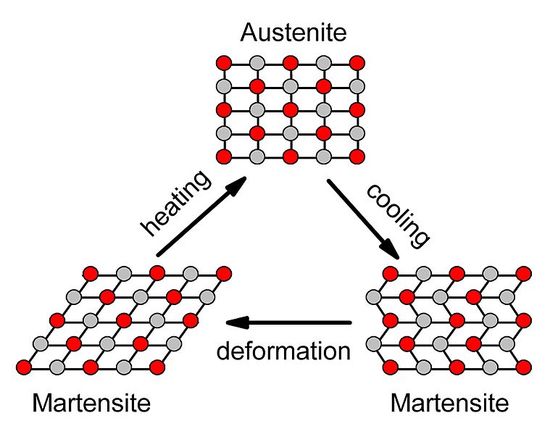
A new textile fabric prototype providing more heat insulation composed of shape-memory elements was investigated. The shape-memory elements in the form of spirals characterized by two-way action were made of nitinol (NiTi) one-way wires with the inner state transition temperature of 35℃. The fabric prototype developed was made of three layers of nonwovens manufactured from the blends of flax and steel fibers and the two interlayers included spirals, made from NiTi or a reference copper (Cu) wire. The inner layer (heater) was heated by electrical current. The external prototype layers imitated the fabric. Mirrors and an infrared camera were used to measure the thermal properties. The temperature of the external surfaces was analyzed as a function of heating time. At approximately 35℃, a change in the curve of the dependence of temperature on the heating time of the prototype with NiTi elements could be observed; the rate of the temperature increase began to decrease. The width of the interlayer with air and NiTi elements increases by approximately 2.5 mm during heating. The observed phenomenon is caused by the expansion of the NiTi spirals and did not occur with the prototype composed of non-active reference Cu elements. In the final second of heating, the temperature on the external surface of the prototype with NiTi elements was lower by 2–3℃ than that on the prototype with Cu elements. A theoretical model of the system was developed and a satisfactory agreement between the experimental and theoretical results was obtained.
Get full access to this article
View all access options for this article.