




Abstract
This study draws on complete friendship network data on two first-year biological sciences cohorts at a selective university in the United States to investigate how and to what extent allocating students to curricular groups and grading their performance in class shape (1) processes of friend selection at the dyadic level and (2) friendship clustering at the network level. Through a set of stochastic actor-oriented models, results show that students tend to befriend peers from the same curricular group versus a different one (i.e., curricular group homophily) and befriend higher-performing peers (i.e., performance-based status). Follow-up analyses reveal that friendship clustering by curricular group placement is largely due to course co-enrollment (i.e., proximity), whereas academic-performance-based clustering is primarily the result of students aligning their own performance to match the average performance of their friends (i.e., influence). I discuss implications of these findings for helping to promote learning in higher education.
Since the pioneering work of Coleman’s (1961)The Adolescent Society, sociologists of education have recognized the importance of studying the friendships that develop among students in school settings. Friends represent a source of peer social capital available to students—they provide access to information and help cultivate norms and practices related to success in school (Coleman 1988; Hallinan 1982; Hasan and Bagde 2013; McCabe 2016). Friends also impact and reinforce one’s identity and can support a sense of belonging in school (Nunn 2021).
Sociologists have a long-standing interest in the relationships that form among students (Epstein and Karweit 1983), but we know relatively less about how curricular practices may structure the friendships that emerge. Related studies tend to focus on primary and secondary school (Hallinan and Sørensen 1985; Kubitschek and Hallinan 1998), with fewer analyses at the postsecondary level. For example, recent research has drawn attention to the link between secondary school tracking systems and academically based sorting in schools (Engzell and Raabe 2023). However, it remains unclear how and to what extent routine curricular practices at the organizational level may shape the friendships that develop among college students.
In this study, I build on the concept of curricular differentiation to analyze the link between formal curricular practices and the informal networks that arise among college students. Specifically, I refer to curricular differentiation as routine curricular practices that formally stratify students. In this way, curricular differentiation is organizational differentiation specific to the curricular domain (Sørensen 1970; Tyson and Roksa 2016). Two forms of curricular differentiation especially relevant in U.S. colleges and majors are (1) allocating students to curricular groups (e.g., developmental, honors) and (2) grading student performance in class (Sørensen 1970). Through such forms of differentiation, students are placed into closer proximity with certain peers (Feld 1981; Frank, Muller, and Mueller 2013) and formally ranked relative to one another (Domina, Penner, and Penner 2017; Jeffrey 2020).
Forms of differentiation, such as those based on curricular practices, can shape friend selection through homophily or status mechanisms. Academic homophily would occur if students disproportionally developed friendships with peers from the same curricular group or with similar levels of academic performance (McPherson, Smith-Lovin, and Cook 2001). With respect to academic status, if curricular group membership or academic performance represent status markers, then there are reasons to suspect students will have a heightened propensity to befriend higher-ranked peers (Jasso 2001; Kubitschek and Hallinan 1998). It is important to note that forms of differentiation are more likely to shape interpersonal dynamics when students are aware of each other’s classifications. Ultimately, the strength of homophily effects relative to status effects will shape how segregated or integrated students are across curricular groups and performance levels in the network (i.e., level of clustering along these dimensions).
This analysis has the following three aims: (1) to examine how formal curricular practices shape processes of friend selection among students in college, (2) to estimate the relative importance of academically based effects on friend selection at the dyadic level compared to other well-known effects, and (3) to quantify how much academically based friendship clustering is due to forms of curricular differentiation versus alternative mechanisms. I draw on complete friendship network data on two first-year biological sciences cohorts at a large, selective, public university in the western United States. Through a set of stochastic actor-oriented models (SAOMs), I first estimate the effects of curricular group placement and academic performance on friend selection and then perform two follow-up analyses to gauge the magnitude of these effects.
As such, this study extends the existing literature in three important ways. First, compared to previous research, the current study represents a clearer investigation of how curricular differentiation shapes friend selection with fewer concerns regarding unobserved academic heterogeneity among students. Specifically, not only does sorting into a STEM major at a selective college lead to a relatively more academically homogenous group of students compared to the K–12 context, but I am also able to control for precollege factors that have been largely missing in prior work (i.e., high school GPA and standardized test scores). Second, past work on friend selection among college students has generally focused on only one aspect of differentiation (i.e., either grouping or performance; Boda et al. 2020; Dokuka, Valeeva, and Yudkevich 2020; Smirnov and Thurner 2017). Consequently, this is the first study, of which I am aware, to test for homophily and status in terms of both curricular grouping and academic performance simultaneously. Finally, I build on prior studies (Engzell and Raabe 2023; Flashman 2012; Kubitschek and Hallinan 1998) by not only investigating the presence of specific effects but also estimating their size.
Background
Curricular Differentiation within Colleges
Colleges are organizations structured to categorize, rank, sort, and select students (Domina et al. 2017; Jeffrey 2020; Mullen 2011; Stevens, Armstrong, and Arum 2008). As such, colleges enact many forms of organizational differentiation that likely affect student friendships, such as through housing restrictions and the provision of co-curricular activities (Armstrong and Hamilton 2013; Espenshade and Radford 2009; Lee 2016; Stearns, Buchmann, and Bonneau 2009). In this study, I focus on formal practices in the curricular domain—what I refer to as curricular differentiation. Two forms of curricular differentiation common at U.S. colleges include (1) curricular grouping of students into separate and tiered levels (e.g., honors, remedial) and (2) the implicit ranking of students that occurs through grading practices (Sørensen 1970).
First, colleges determine how to assign students to classes for instructional purposes. Because students enter postsecondary schooling with varying levels of familiarity with college-level work, many U.S. institutions adopt forms of curricular grouping akin to tracking in the K–12 context (Sørensen 1970; Tyson and Roksa 2016). For example, postsecondary institutions may utilize some type of remedial or developmental education to help address gaps in understanding for students entering college “academically underprepared” (Long and Boatman 2013). Similarly, colleges may attempt to provide broader and deeper learning opportunities for “academically talented” undergraduates through honors programs (Rinn and Plucker 2019). Despite mixed findings on the educational effectiveness of these programs (Sanabria, Penner, and Domina 2020), the intended goal of these classes and curricular groups is to match instructional resources to meet the differential needs of entering students (Bowman and Culver 2018).
Second, colleges are expected to allocate grades to students based on their academic performance in the classroom. This organizational task largely represents a routine, taken-for-granted practice (Meyer and Rowan 1977; Schneider and Hutt 2014), yet with the expansion of higher education in the United States over time, disparate college performance is becoming an important sorting mechanism linking educational and occupational stratification more broadly. Indeed, within the structure of contest mobility apparent in the U.S. educational system (Turner 1960), unequal academic performance among undergraduates can be viewed as a form of horizontal stratification (Gerber and Cheung 2008) that selects some students for competition at the next higher level (i.e., graduate school).
Curricular Differentiation and Friend Selection: Academic Homophily and Academic Status
Curricular differentiation in U.S. higher education may thus shape friendships that emerge through (1) academic homophily and (2) academic status.
Homophily refers to the commonly observed tendency for people with greater similarity on some characteristic to be connected (McPherson et al. 2001). Patterns of homophily can arise due to spatial proximity (i.e., foci effects; Feld 1981) or from choices to befriend individuals who share membership in a socially relevant category (Wimmer and Lewis 2010). First, students in the same curricular group are more likely to share classes than are students in different curricular groups. As a result, curricular group homophily may emerge from course overlap because this increases opportunities to interact and the chance of forming a friendship (Feld 1981; Jeffrey et al. 2022; Kossinets and Watts 2009; Weber, Schwenzer, and Hillmert 2020). Second, schooling-based forms of distinction created through curricular groups (Domina et al. 2016) or differential academic performance could lead to academic homophily by serving as a basis of trust or commonality among students (Kossinets and Watts 2009; Wimmer and Lewis 2010). For instance, students may perceive co-enrollment in honors as a signal of shared commitment to following institutional norms of academic excellence or pursuing high-status occupations.
Evidence at the K–12 level shows that students from the same “ability group” and academic track are more likely to form friendships (Frank et al. 2013; Hallinan and Sørensen 1985; Kubitschek and Hallinan 1998). Yet at the postsecondary level, findings are mixed. Some research shows that placement into the same academic program or learning community increases the likelihood of a friendship tie (Boda et al. 2020; Jeffrey et al. 2022; Van Duijn et al. 2003), but other studies do not find a significant effect (Brouwer et al. 2018, 2022). Missing from prior work in higher education, however, is an examination of the impact of curricular practices when the groups are ranked in some way.
In terms of academic performance, findings at the K–12 level largely confirm that greater performance similarity predicts friendship development (Flashman 2012; McFarland et al. 2014; Rambaran et al. 2017). But past work outside the United States at the college level shows more mixed results. Some evidence provides support for performance-based homophily (Brouwer et al. 2018; Smirnov and Thurner 2017), yet other studies show no significant effect (Brouwer et al. 2022; Dokuka et al. 2020).
Turning to academic status, sociologists have conceptualized status as “inequality based on differences in honor, esteem, and respect” (Ridgeway 2014:2) and have argued that processes of competition and ranking among individuals can lead to patterns of hierarchy within networks (Jasso 2001; McFarland et al. 2014). Coleman (1961) argued that in schooling settings, competition for grades and other forms of scholastic achievement is a way students pursue and gain respect and recognition from those around them. In this way, higher curricular group placement and academic performance could represent status markers. If so, then students may respond by befriending higher-ranked peers due to the perceived rewards from affiliation (Epstein and Karweit 1983; Hallinan 1982). However, there are several reasons to suspect such patterns may not emerge. For instance, students might not approach or attempt to befriend higher-ranked peers for fear of rejection or because they anticipate their efforts will not be reciprocated (Kubitschek and Hallinan 1998). Additionally, higher-ranked students may be more selective or insular about who they interact with and thus harder to access and befriend.
There are theoretical reasons to expect status-based effects due to curricular grouping, yet relatively few studies have explicitly examined how this might occur. Kubitschek and Hallinan (1998) tested for status effects based on high school track and found some supportive evidence, although this varied by school size. Specifically, they found the likelihood of naming a higher-track student as a friend was greater in smaller schools compared to larger ones, presumably due to decreased barriers to interaction in the smallest schools. At the postsecondary level, a study done in the Netherlands largely failed to find status effects due to enrollment in a short (two-year) versus regular (four-year) program (Van Duijn et al. 2003).
Past research looking at possible status effects due to academic performance also shows mixed results. Namely, work outside the United States at both the K–12 and higher-education levels provides evidence that academic performance acts as a status indicator, with higher-performing students selected more often as friends (An 2022; Brouwer et al. 2022; Dokuka et al. 2020). In contrast, studies on U.S. K–12 schooling have largely failed to find significant status effects based on GPA (Coleman 1961; Rambaran et al. 2017), although this varies by methodological approach (see Flashman 2012). Despite these largely null findings in U.S. K–12 settings, college differs from high school in fundamental ways that likely make GPA a more salient status marker. For example, sorting into higher education selects students who performed relatively better in K–12 schooling compared to those who did not enter college. Moreover, as more students expect to attend graduate school, and undergraduate grades remain a critical component of graduate admissions (Stevens 2009), high performance is likely important and recognized among students.
In summary, U.S. colleges use various forms of curricular differentiation with the intended goal of facilitating teaching and learning. These routine practices may shape friend selection through two primary mechanisms: homophily and status. Specifically, curricular group placement and academic performance may not only physically separate and differentiate students (relevant for homophily effects) but also assign students an ordinal rank (relevant for status effects). Mixed findings in prior studies could be because past work has approached the topic too narrowly, such as failing to examine both grouping and performance simultaneously. The current analysis overcomes these issues while also analyzing a much larger sample than is often used (Brouwer et al. 2022; Dokuka et al. 2020; Van Duijn et al. 2003).
The Current Study: A Longitudinal Network Approach
Recent years have seen substantial growth in studies using network analysis to answer social scientific questions (Rivera, Soderstrom, and Uzzi 2010). Advances to our understanding of network properties have led to more sophisticated strategies to unpack the underlying mechanisms that give rise to the networks we observe (Robins et al. 2007). With scholars increasingly acknowledging the importance of connections in college (Felten and Lambert 2020), social network analysis provides a rigorous and systematic way to examine friendships in higher education from a relational sociological standpoint (Tierney and Kolluri 2020).
To examine how curricular differentiation shapes friendships among college students in the U.S. context, I draw on a longitudinal network approach and estimate a set of SAOMs. SAOMs allow researchers to estimate multiple selection and influence mechanisms in one joint model (see Steglich, Snijders, and Pearson 2010). This is important here because to reduce bias in estimates of selection on academic performance, the possibility of friend influence effects on GPA needs to be accounted for. Namely, patterns of homophily on academic performance can come about through a mix of selection and influence processes.
Friend influence
Past sociological work highlights the importance of accounting for influence effects when estimating selection on a behavioral attribute (Steglich et al. 2010). For example, in the current setting, observed patterns of academic performance homophily could result from students selecting peers with similar levels of academic performance or from students influencing one another to perform similarly over time. Additionally, whereas the theory of status effects would lead one to expect higher performance to induce more friendship nominations, the reverse could also be true. Namely, receiving more friendship nominations could lead to higher performance. Previous research at the K–12 level and postsecondary work outside the United States have produced mixed results. Specifically, when modeling the joint effects of selection and influence on academic performance homophily, past studies have found evidence of selection but not influence (Flashman 2012; Smirnov and Thurner 2017), influence but not selection (Dokuka et al. 2020), both selection and influence (Rambaran et al. 2017), and neither selection nor influence (Brouwer et al. 2022). Although I cannot claim to reconcile these mixed findings here, I do build on and extend this body of work by controlling for precollege factors and accounting for relevant sociodemographic covariates when modeling behavioral dynamics.
The case of first-year students in biological sciences
In this study, I analyze two first-year biological sciences cohorts at a selective college. Studying first-year students allows for a clearer estimate of the effect of curricular practices on friend selection with fewer concerns regarding causal order (e.g., students may choose certain classes because of their friends). Whereas sociological theories of homophily predict that students will befriend peers from the same curricular group or similar performance level, theories of status and friend selection predict students will have a greater propensity to befriend higher-ranked students. Especially in the case of first-year STEM students, the transition to higher education coupled with the competitive culture of entry-level, “weed-out” courses and gatekeeping practices (Seymour, Hunter, and Harper 2019) could compel students to seek out similar peers who can provide emotional support, but it may also drive students to find higher-performing peers who can aid with academic challenges (Smith 2015).
At the research site and major, first-year students were allocated to one of three curricular groups: (1) developmental, (2) regular, or (3) honors. Developmental students are those who scored below 600 on their SAT math section. It is critical to highlight potentially unique aspects of the developmental group at this site. First, developmental students were placed into a freshman learning community where they were block-registered into the same sections for required introductory courses during their first year. Second, students in this group were provided with additional resources, primarily through a weekly seminar that entailed one-hour sessions designed to promote study skills, provide career advice, and help with navigating the new academic environment. Thus, the developmental track was designed with the intended goal to give supplementary aid to these students. Finally, it is important to point out that the university did not use formal “remedial” class designations for these students. As such, it is unclear exactly how aware students were of why individuals were placed into the developmental group or the implicit nature of their course sections. Honors students were selected by faculty in the major and invited to participate based on their high school achievements (e.g., GPA, SAT/ACT score, class rank). Students in honors were placed into the same introductory honors biology course, received priority enrollment in their other courses, and were provided opportunities to participate in undergraduate research. Regular students represent the largest of the three groups and include all students not in the developmental or honors programs.
It is also important to note the temporal context of this study. Data on the first cohort were collected prior to the start of the COVID-19 pandemic (2018–2019 academic year), but the second cohort experienced the disruption of the virus during the study period (2019–2020). The most notable change from the fall to the spring term was the transition to remote instruction. During the spring term of data collection, most students were living at home and taking classes online. However, even though the pandemic drastically altered students’ physical learning environment, preliminary analyses revealed that students’ social networks remained surprisingly resilient in the face of these challenges. As a result, I include data collected during the pandemic, but I discuss potential differences when applicable.
Data And Methods
Data
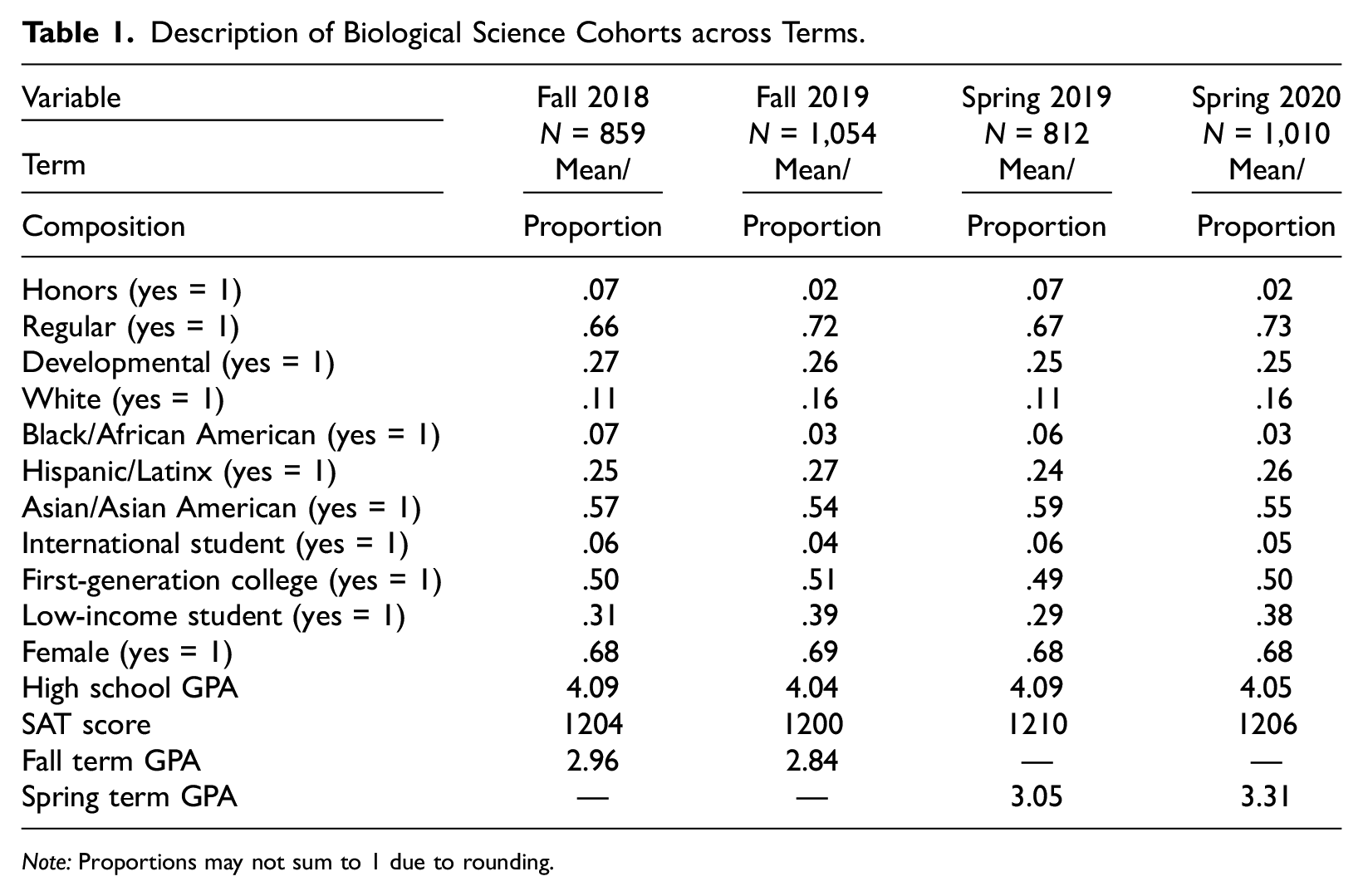
Data come from two first-time entering biological sciences cohorts at a large, selective, R1 public university in the western United States. As shown in Table 1, the research site represents a diverse context in terms of race/ethnicity, gender, and socioeconomic background. Most students are non-White, female, and a large share are from low-income or first-generation-college backgrounds. Students come from over 400 high schools, and around three-quarters of them live on campus. During the final weeks of fall term and spring term (2018–2019; 2019–2020), electronic surveys were sent to the entire first-year cohort to collect data on friendship ties and additional background information. Response rates for each wave of data collection were generally high, ranging from 88 percent to 96 percent. 1 An important feature of the present study was the ability to link survey information with administrative records (i.e., transcripts) provided by the university.
Description of Biological Science Cohorts across Terms.
Note: Proportions may not sum to 1 due to rounding.
Dependent Variable
Friendships
As part of the survey, students were asked to list the first and last names of their friends in the biological sciences major. 2 These nominations were later matched with roster data provided by the university to create the complete (or sociocentric) friendship network for each major cohort (Perry, Pescosolido, and Borgatti 2018). It is important to note that friendship for purposes of this study is meaningfully directional and does not require that both students name each other (Wasserman and Faust 1994). For example, student i may nominate student j as a friend without student j also indicating student i is a friend. Allowing for this directionality to the friendship relationship is essential for estimating status effects.
Independent Variables
Curricular group placement
Curricular group placement was coded to align with the ordinal nature of the categories, with higher numbers corresponding to a higher level. Namely, developmental was coded as 1, regular was coded as 2, and honors was coded as 3. There was some mobility from initial placements over the course of the first year: Around 11 percent to 12 percent of students changed from their initial placement from the fall to spring terms. In this analysis, I fix the curricular group measure based on fall term placement because this indicates students’ first assignment by the university and likely has enduring effects on the friendship dynamics among students. Supplementary analyses using spring term membership produced substantively similar results (see Table S1 in the online supplement).
Academic performance
I use students’ term-specific GPA as recorded by the university in administrative records to measure their academic performance. 3 As such, this measure captures the academic performance of each student across all their courses in a given term (i.e., either fall or spring). Because the analyses utilize a SAOM strategy, I recode the GPA measures into ordinal levels, as required by the SAOM approach (Ripley et al. 2024). Academic performance is thus recoded into 10 ordinal categories that correspond to roughly equal intervals 4 as follows: (1) 0 to 1.50, (2) 1.50 to 2.00, (3) 2.00 to 2.25, (4) 2.25 to 2.50, (5) 2.50 to 2.75, (6) 2.75 to 3.00, (7) 3.00 to 3.25, (8) 3.25 to 3.50, (9) 3.50 to 3.75, and (10) 3.75 to 4.00.
Individual-Level Covariates
Administrative data provided measures of gender (female = 1; male = 0), first-generation-college status (yes = 1; no = 0), low-income status (yes = 1; no = 0), international student status (yes = 1; no = 0), high school GPA, and SAT score. Race/ethnicity is measured using a set of dummy variables (reference = White). Racial/ethnic background was provided through administrative sources that classified students into one of four racial/ethnic categories (i.e., White, Black/African American, Hispanic/Latinx, Asian/Asian American). Finally, I include a measure of same-major ties, which indicates students’ self-reported share of friendships that are within the major. 5
Dyadic Covariates
I incorporate information on where students attended high school and their housing situation during their first year in college. As a dyadic measure, these variables capture the likelihood of a tie for students who attended the same high school or who share the same living situation (i.e., same on-campus dorm or live off campus).
Analytic Approach: Stochastic Actor-Oriented Model
I draw on a set of SAOMs to account for the coevolution of friendship ties and academic performance simultaneously. SAOMs accomplish this by modeling network and behavior changes as Markov processes where the network state at time t depends only on the network state at time t− 1. SAOM estimation is done through an agent-based simulation algorithm where the model conditions on the first observation and randomly selects actors to do one of the following: (1) change a tie (i.e., add or drop one outgoing tie), (2) change behavior (i.e., increase or decrease by one unit), or (3) make no change; these potential changes are known as “micro steps” (Steglich et al. 2010:348). Both the frequency of opportunities to make changes and the probability of taking these micro steps are estimated using subcomponents of the model known as rate functions and objective functions, respectively. The rate functions determine the wait time until an actor gets the opportunity to make a network (i.e., network rate function) or behavior (i.e., behavior rate function) change, and the objective functions determine the changes an actor makes to either the network (i.e., network objective function) or behavior (i.e., behavior objective function; Steglich et al. 2010).
Measuring Homophily Effects
I analyze homophily effects due to curricular group membership through a sameX curricular group term, where the sameX effect indicates if two students have the same attribute value (1 = yes; 0 = no). 6 This similarity or difference between students is then used to predict whether a friendship exists in the dyad. A significant and positive coefficient would be evidence of homophily based on common curricular group membership.
Because academic performance is an ordinal measure with 10 levels, I examine performance-based homophily effects through a simX academic performance term. In RSiena, similarity is measured by taking the difference between ego’s and alters’ academic performance and standardizing it by the range of possible values. As such, the similarity measure equals 1 if two students have the same value and 0 if they are maximally dissimilar (i.e., one has the highest value and the other the lowest possible value; Ripley et al. 2024). A significant and positive coefficient on the simX academic performance term would be evidence of performance-based homophily (i.e., similar students are more likely to be friends).
As discussed, patterns of curricular group homophily may arise in part due to shared coursework. To assess this possibility, I include a dyadic measure of course co-enrollment (specified through a coDyadCovar effect in RSiena) that estimates how each additional class shared between student i and student j in the spring term contributes to the likelihood of a friendship, conditional on the rest of the network.
Measuring Status Effects
From a network perspective, sociometric popularity is a common way to examine the effect of status among individuals (Brouwer et al. 2022; Martin and Murphy 2020; Snijders and Lomi 2019; Wasserman and Faust 1994). Specifically, popularity centers on receivers’ characteristics as a key driver of tie formation (Sauder, Lynn, and Podolny 2012). Thus, I include an altX curricular group term to examine if higher-ranked students are more likely to be named as friends. Likewise, to test for status effects based on GPA, I utilize an altX academic performance term, which captures the extent to which students with higher GPAs receive more nominations.
Alternative Mechanisms Shaping Friendships
First, to estimate homophily and status effects based on curricular group placement and academic performance, I must adjust for the possibility that these characteristics are related to how many friends students themselves nominate. Thus, to account for differences in outgoing ties, I include egoX terms for both curricular group membership and academic performance, which capture if higher-placed or higher-performing students, respectively, name more friends.
Second, because academic and sociodemographic characteristics may be correlated with one another, selection on one could give the appearance of selection on the other (Stearns et al. 2009; Weber et al. 2020). I thus account for friendship based on salient background characteristics. For instance, past research highlights the tendency to observe same-race and same-gender friendships in college (Brouwer et al. 2022; Dokuka et al. 2020; Mayer and Puller 2008). I include sameX terms to account for homophily on categorical characteristics. I also account for main covariate effects (i.e., incoming/outgoing ties) using egoX/altX terms for dichotomous (and dummy) variables.
Third, to account for the fact that some students attended the same high school and thus may have known each other prior to college, I include a sameX high school term. To adjust for unobserved characteristics that could be correlated with differential academic preparation across students (e.g., expectations, motivations), I include simX high school GPA and simX SAT score terms. To control for the known importance of residential life in shaping friendships in college (Armstrong and Hamilton 2013; Stearns et al. 2009), I include a sameX housing term. Finally, I include an egoX same-major ties term to control for the share of all of a student’s friendships that are in the biological sciences.
Finally, to account for endogenous network mechanisms that may shape friendship ties, I include several prominent structural factors identified in the social network literature (Rivera et al. 2010): density (out-degree), in-degree popularity (square root), out-degree activity (square root), in-degree activity (square root), reciprocity, transitive triplets, and transitive reciprocated triplets. In order, these effects capture the general tendency to form friendships, for actors with high in-degrees to attract extra incoming ties, for actors with high out-degrees to send out extra outgoing ties, for actors with high in-degrees to send out extra outgoing ties, to reciprocate incoming ties, and to become friends with the friends of one’s friends. Transitive reciprocated triplets account for differential reciprocity effects for open and closed groups.
Measuring Friend Influence
In terms of the behavioral part of the model, the linear and quadratic shape parameters control for the distributional features of the outcome. To account for friend influence, I include an average similarity academic performance term to examine whether college students adapt their academic performance to become (or stay) similar to the average performance of their friends. This term will assess whether there is an influence effect of friend academic performance on one’s own performance. I also include in-degree and out-degree effects to test whether receiving more incoming ties or sending more outgoing ties, respectively, affects performance. To estimate the effect of friends on academic performance, important individual covariates that may also predict GPA need to be controlled for (Flashman 2012). I include several covariates that may impact grades in college: race/ethnicity, gender, first-generation-college status, low-income status, international student status, high school GPA, and SAT score. I also account for students’ curricular group placement.
Modeling Strategy
I begin by estimating a separate SAOM for each first-year student cohort. Each SAOM includes the main academic homophily and academic status effects of interest and all covariates and endogenous network effects. The estimated effects can be interpreted as the expected contribution to the log-odds of a student creating (or maintaining) a friendship in a given dyad conditional on all other effects in the model. SAOM parameter estimates for this study are calculated using the RSiena package, version 1.4.1 (Ripley et al. 2024).
To gauge the magnitude of these effects, I perform two follow-up analyses that implement different kinds of “knockout experiments” to examine how friend selection and friendship clustering, respectively, would change if I removed certain effects from the model while holding all other factors constant (see Huang and Butts 2023). First, SAOM parameter estimates may show a significant effect on friendship, but comparing different effects in a given model and the same effects across cohorts can be difficult. For instance, the main analysis may show that being from the same high school significantly increases the likelihood of a friendship. However, if few students attended high school together, then this mechanism would not be expected to explain much of the network that emerged. Thus, to understand the impact each effect has on the network, I need an estimate of the main effect that is adjusted for opportunities for that effect to shape friendship. To accomplish this, I use the sienaRI function in RSiena to produce an estimate of the relative importance of effects on the network (Indlekofer and Brandes 2013).
Second, the SAOM and sienaRI analyses focus on the mechanisms behind friendship development, but we may also be interested in how these processes contribute to friendship clustering in the network. Namely, from both a theoretical and policy standpoint, it is important to know how much these underlying mechanisms may ultimately matter for patterns of academic clustering that arise in the network. As such, I use the MEMS function in the netmediate package in R to produce an estimate of the micro effect on the macro structure (MEMS), as discussed in Duxbury (2024). For the purposes of this article, this final analysis will look at the overall level of clustering in the network by curricular group placement and academic performance as measured by the Moran’s I statistic. Because my main estimates utilize longitudinal network models that account for selection and influence, this step will allow me to investigate how much of the observed academically based clustering in the network (i.e., network autocorrelation on these dimensions) is due to selection versus influence mechanisms. For example, the MEMS will allow me to quantify how much of the observed clustering in the network by academic performance among students is due to students selecting similar-performing peers versus being influenced to perform similarly over time (Steglich et al. 2010).
Results
Visualizing the friendship network through sociograms is one tool for understanding basic patterns in a network. For example, the fall 2019 friendship network in Figure 1 shows stark clustering of friendships along curricular group lines, where nodes of the same curricular group (color) are found closer together. Importantly, however, it shows that even though the network is segmented by curricular group, it is still essentially one component. In other words, it is not split into three distinct parts, which is what would be observed if friendships were solely among students in the same curricular group. This means most students can reach each other either directly or indirectly (e.g., through friends of their friends). I observe similar patterns across terms and cohorts (see Figures S1–S3 in the online supplement). 7 These patterns thus provide visual evidence of curricular group homophily in the friendship network.
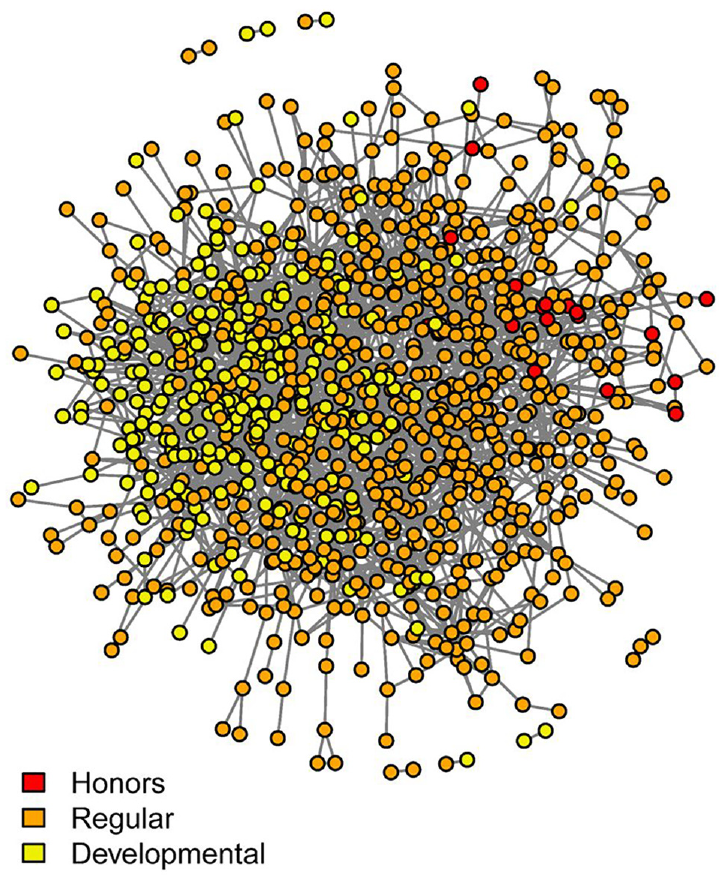
First-year biological sciences friendship network shaded by curricular group placement: Fall 2019.
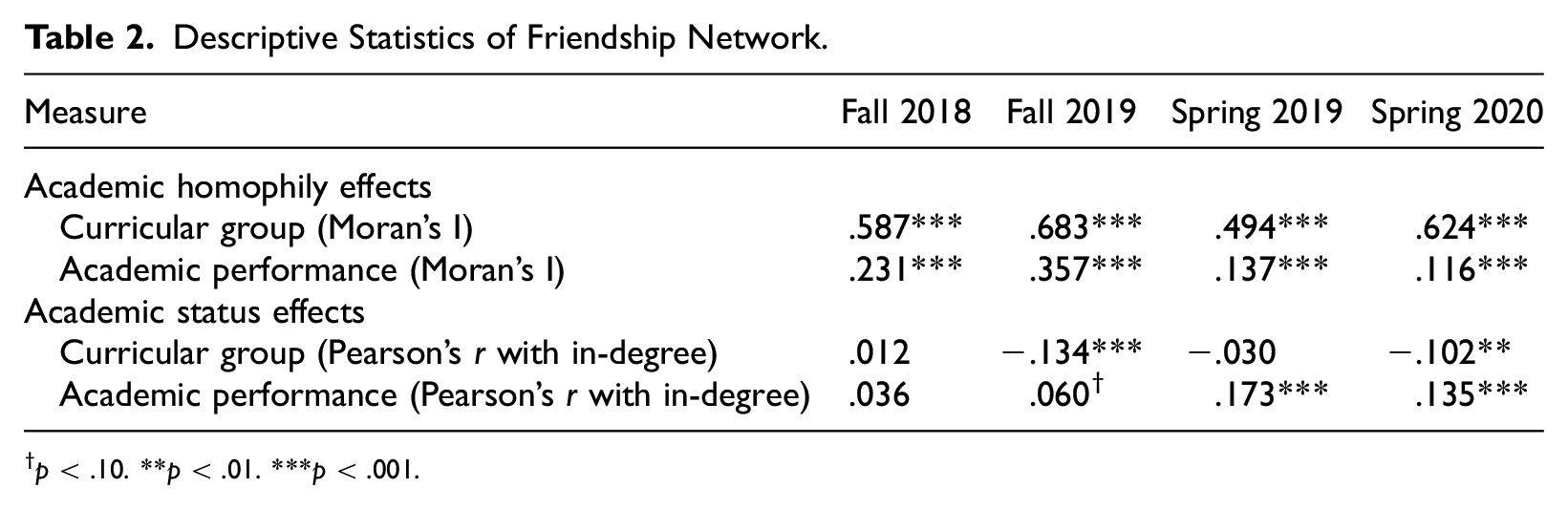
To quantify these and other network patterns, I draw on summary measures of homophily and status by forms of curricular differentiation. First, to quantify clustering by curricular group membership and GPA, I calculated the Moran’s I network autocorrelation coefficient, which ranges from −1 to 1 and measures the degree to which friends display similarity in curricular group level and academic performance. As shown in Table 2, observed values for Moran’s I range from 0.49 to 0.68 for curricular group and from 0.12 to 0.36 for GPA, indicating very strong to moderately strong levels of similarity in terms of curricular group membership and academic performance, respectively. Second, to get an overall sense of potential status effects due to curricular differentiation, I estimate Pearson’s r (i.e., correlation coefficient) between measures of formal rank and network in-degree. A positive association indicates that students with higher curricular group placement or performance level receive more incoming ties. Pearson’s r results show a negative correlation between curricular group membership and incoming ties and a positive correlation between academic performance and friendship nominations, on average. These statistics describe overall patterns on each dimension independently; I turn next to the SAOMs to test for homophily and status effects on these dimensions jointly.
Descriptive Statistics of Friendship Network.
p < .10. **p < .01. ***p < .001.
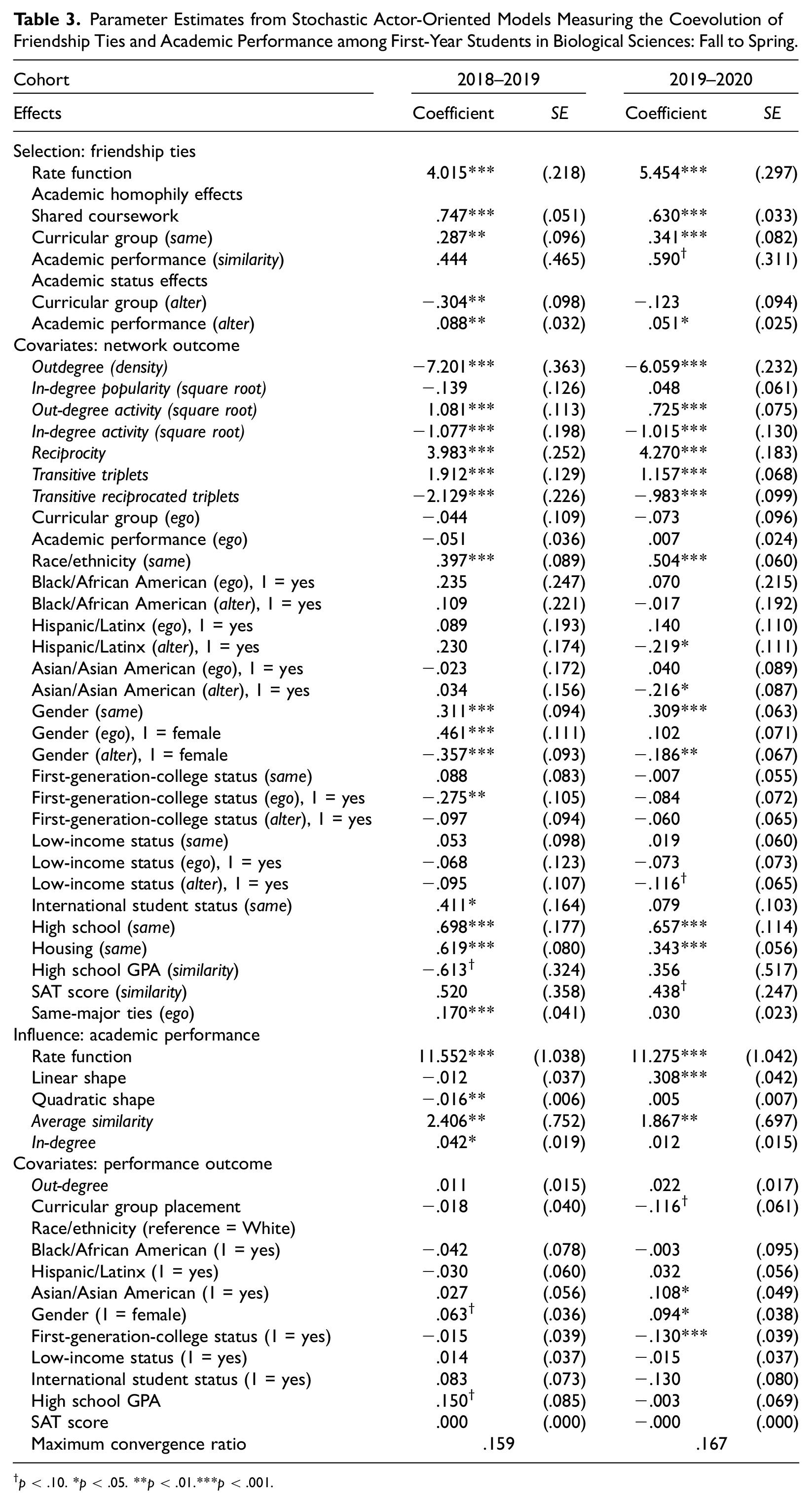
Table 3 shows the parameter estimates from the set of SAOMs measuring the coevolution of friendship ties and academic performance. First, in terms of homophily, I find a positive and significant effect of shared coursework on friendships. Namely, across cohorts, each additional class shared among students significantly increases the likelihood of a friendship developing (p < .001). In addition, the positive and significant curricular group (same) effect indicates that students are more likely to befriend a peer from the same curricular group versus a different one net of course overlap. In contrast, when looking at selection by academic performance, I find only a marginally significant effect of academic performance (similarity) in the second cohort (p < .10). Finally, when testing for friend influence, I find strong and consistent effects across both cohorts. In particular, the positive and significant average similarity effect indicates that students tend to become (or stay) the same as their friends with respect to performance (p < .01).
Parameter Estimates from Stochastic Actor-Oriented Models Measuring the Coevolution of Friendship Ties and Academic Performance among First-Year Students in Biological Sciences: Fall to Spring.
p < .10. *p < .05. **p < .01.***p < .001.
In terms of status effects, the SAOM results show that higher-performing students are more likely to receive a friendship nomination compared to lower-performing students (p < .05). In contrast, the negative curricular group (alter) effect indicates that students in a lower-tiered group are more likely to receive friendship nominations. However, it is important to note that this negative association is net of homophily and only reaches significance in the first cohort (p < .01). When looking at potential network effects on performance, I find a positive and significant in-degree effect in the first year (p < .05), where students who received more friendship nominations tended to perform better over time.
Next, looking at SAOM estimates from background characteristics and other controls, I find several significant effects. As prior research has highlighted, I find that students tend to befriend others similar to themselves in terms of race/ethnicity and gender (p < .001). I also found ego and alter effects for gender, where female students tend to send out more friendship nominations and male students tend to receive more nominations (p < .01). Additionally, as expected, Table 3 shows that students who attended the same high school or who share the same living situation are more likely to develop a friendship (p < .001).
Finally, in terms of endogenous network mechanisms, I also find several significant effects. For example, the negative outdegree (density) term (p < .001) indicates that ties are unlikely in the network unless other factors are present to increase the tendency to become friends. The positive reciprocity effect (p < .001) shows that students are more likely to reciprocate incoming friendship ties. Likewise, the positive transitive triplets term (p < .001) indicates that ties that create more transitive triads (i.e., friends of friends become friends) have greater odds of forming than not.
Figure 2 shows the relative importance of effects and groups of effects on the friendship network as estimated from the SAOMs for each cohort (for full results, see Table S2 in the online supplement). As expected, structural network effects have a strong effect on friendships (54–60 percent of the relative share of importance) and thus act as important controls for our main effects of interest. In turn, there are several key takeaways from this part of the analysis. First, the relative importance of effects related to curricular group placement are about twice as strong combined as the effects due to academic performance (11–12 percent vs. 5 percent). Second, comparing each academic-related effect, I find that shared coursework has the largest relative contribution to the friendships that emerge (7 percent of the relative share of importance). Third, Figure 2 highlights that the combined total importance of all academically based selection effects are roughly the same as all the sociodemographic effects (e.g., race/ethnicity, gender, first-generation-college status; 16–17 percent vs. 18–20 percent). Finally, except for a few effects such as housing, it is notable how consistent the measures of relative importance are across the two cohorts.
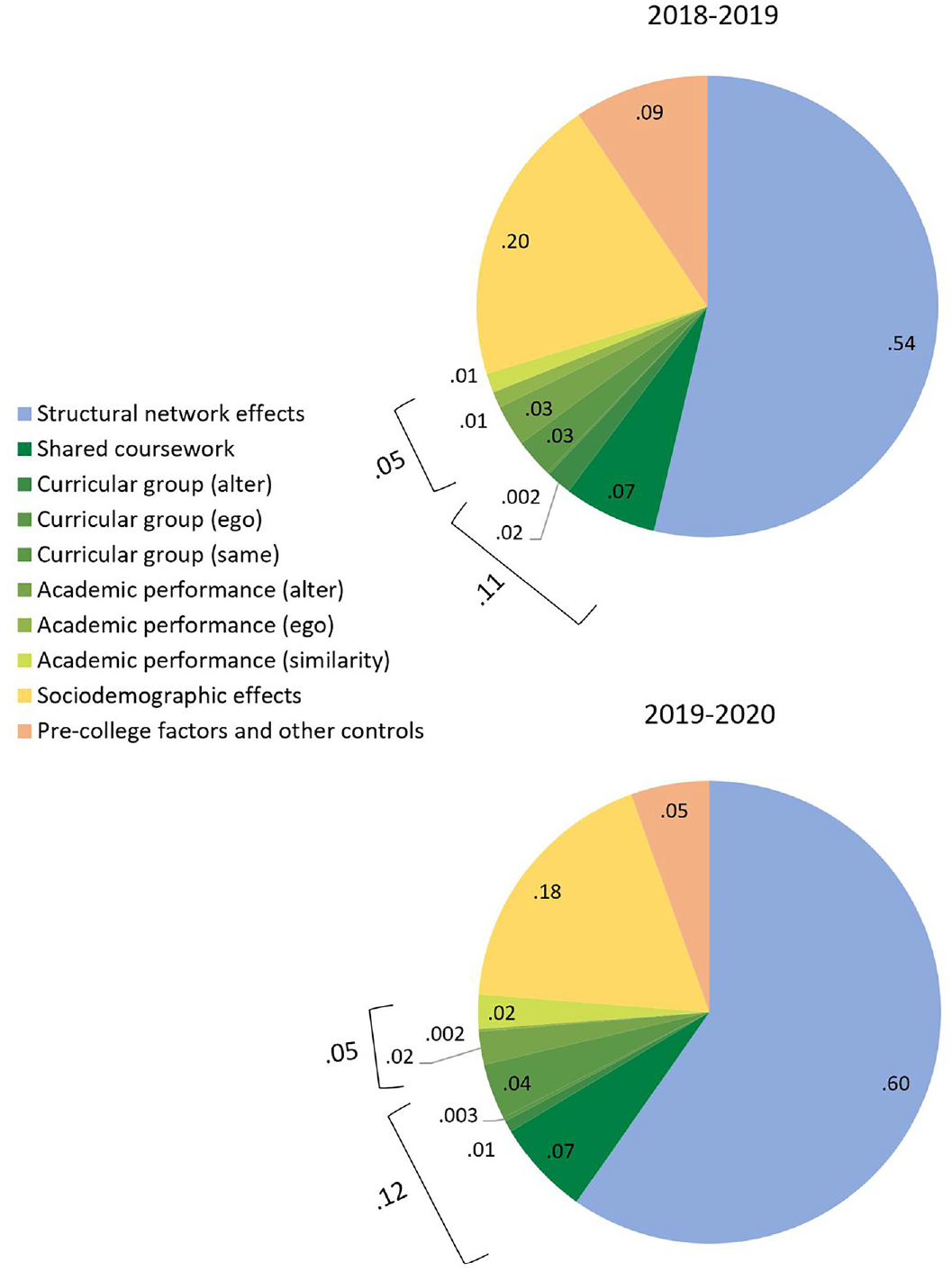
Relative importance of effects on friend selection: first-years in biological sciences (fall – spring).
Whereas Figure 2 focuses on mechanisms behind friend selection at the dyadic level, Table 4 shifts to how much the modeled effects explain network-level friendship clustering by curricular group placement and academic performance. From the MEMS analysis, I find several important insights. First, looking at how much academic mechanisms contribute to friendship clustering by curricular group placement, the effect of shared coursework stands out. Specifically, roughly 10 percent to 20 percent of the clustering by curricular groups can be explained by shared coursework (p < .05). In turn, although the SAOMs show some evidence of a tendency to befriend lower-tiered students net of homophily, the MEMS indicate that the overall joint impact of all curricular group-based selection effects leads to clustering in the network (0.174 and 0.134; p < .001). In other words, the tendencies toward curricular group homophily far outweigh the tendencies to cross curricular group boundaries and thus lead to more segregation than integration (see Table S3 in the online supplement). Second, investigating potential drivers of clustering by academic performance, the MEMS estimates highlight that this is dominated by performance-based influence effects. For example, in Cohort 1, the MEMS indicates that about 40 percent of the Moran’s I by academic performance is explained by all performance-based influence effects (p < .05). Third, Table 4 shows that both dimensions of academic clustering are driven by their own set of micro processes, where performance-based selection and influence effects are not related to curricular-group clustering and grouping-based selection effects are not related to performance clustering. Fourth, when testing the potential impact of alternative mechanisms on friendship clustering, I found that only the endogenous network effects significantly contribute. This is somewhat surprising given that I expected several of the other covariates to correlate with the academic measures; this result thus highlights the importance of running these counterfactual simulations.
Results from the Micro Effect on Macro Structure (MEMS) Estimation Using Moran’s I by Curricular Group Placement and Academic Performance as the Outcomes.
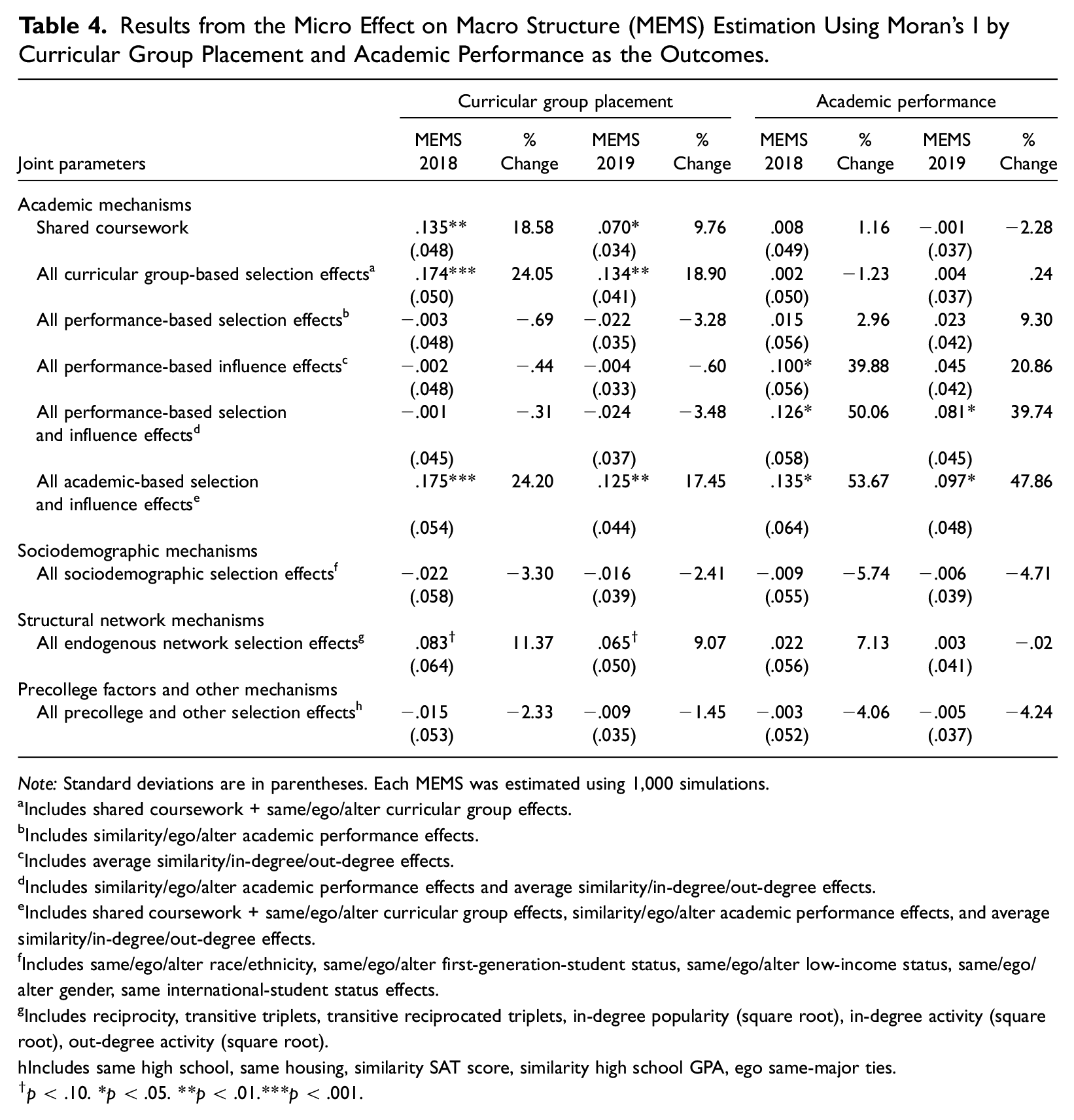
Note: Standard deviations are in parentheses. Each MEMS was estimated using 1,000 simulations.
Includes shared coursework + same/ego/alter curricular group effects.
Includes similarity/ego/alter academic performance effects.
Includes average similarity/in-degree/out-degree effects.
Includes similarity/ego/alter academic performance effects and average similarity/in-degree/out-degree effects.
Includes shared coursework + same/ego/alter curricular group effects, similarity/ego/alter academic performance effects, and average similarity/in-degree/out-degree effects.
Includes same/ego/alter race/ethnicity, same/ego/alter first-generation-student status, same/ego/alter low-income status, same/ego/alter gender, same international-student status effects.
Includes reciprocity, transitive triplets, transitive reciprocated triplets, in-degree popularity (square root), in-degree activity (square root), out-degree activity (square root).
Includes same high school, same housing, similarity SAT score, similarity high school GPA, ego same-major ties.
p < .10. *p < .05. **p < .01.***p < .001.
Discussion
Sociologists of education have a long-standing interest in the friendships that form among students in schooling settings, yet relatively little is known about the link between routine curricular practices and the informal networks that emerge. In this study, I utilize data on two first-year biological sciences cohorts at a large, selective college and a set of SAOMs and two follow-up analyses to (1) examine how formal curricular practices shape processes of friend selection among students in college, (2) estimate the relative importance of academically based effects on friend selection at the dyadic level compared to other well-known effects, and (3) quantify how much academically based clustering of friendships in the network is due to forms of curricular differentiation versus alternative mechanisms. Studying friendships among students in the same major allows me to investigate the impact of curricular practices on a subset of individuals for whom forms of distinction are more likely to be salient and known. As such, this study complements prior research focused on the friendships of a sample of college students (McCabe 2016) or friendships across majors within a given institution (Mayer and Puller 2008; Wimmer and Lewis 2010).
With respect to the first aim, results of the SAOMs provide strong evidence of curricular group homophily. Namely, students tend to befriend peers from the same curricular group versus a different one, and each additional class shared among students increases the likelihood of a friendship developing. We also find evidence in support of academic-performance-based status effects, where students exhibit a heightened tendency to befriend higher-performing peers. Although not consistent across cohorts, results provide some evidence of academic performance homophily and a tendency among students to befriend peers in a lower-tiered curricular group. Importantly, the SAOMs also reveal that students tend to align their own academic performance to the average performance of their friends.
In terms of the second aim, the estimates of relative importance highlight the magnitude of different effects related to curricular differentiation for processes of friend selection among same-major college students. For example, among academic effects, the combined relative importance of curricular grouping is about twice as large as that for academic performance. Thus, these results help quantify the strength of foci in inducing which friendships arise relative to other less direct forms of differentiation (Van Duijn et al. 2003). Notably, based on the combined standardized effects shown in Figure 2, I find that all the academic-related effects have roughly the same relative importance on the friendships that develop as all the common sociodemographic effects discussed in much prior sociological research (Armstrong and Hamilton 2013; Espenshade and Radford 2009; Lee 2016; Stearns et al. 2009).
Finally, regarding the third aim of the study, results of the MEMS shift focus to drivers of academically based clustering of friendships at the network level. The MEMS shows that patterns of clustering (as measured by Moran’s I) by curricular group placement are largely driven by shared coursework. Consequently, like research on “local positions” in high schools (Frank et al. 2013), we see from the MEMS that curricular group homophily among same-major students is primarily the result of proximity and opportunities to interact as structured by course co-enrollment (i.e., foci; Feld 1981; Jeffrey et al. 2022). By contrast, the MEMS reveals that friendship clustering by academic performance is dominated by friend influence effects. Compared to recent research (Engzell and Raabe 2023), findings here indicate that patterns of friendship sorting by performance can emerge due to influence effects rather than selection and that performance clustering need not result from similarity on other metrics such as standardized test scores (see Table S4 in the online supplement). The MEMS also reveals that proximity mechanisms behind network segmentation along curricular group lines are separate from the influence mechanisms driving observed clustering by academic performance.
Conceptually, results shown here add to the understanding of the link between forms of curricular differentiation and the informal networks that develop among students. First, I show that over time, student friendships in a major tend to become highly segregated by curricular group placement and moderately clustered by academic performance (see Table 2). In turn, I demonstrate the power of shared coursework in shaping which friendships develop. Namely, I show that allocating students to distinct classes is the main driver of clustering along curricular group lines at the network level. In other words, in the absence of this routine curricular practice, we would not expect to see the same levels of academic segregation along these lines.
Second, results presented here highlight the complexity of status effects in school settings. Namely, although I find evidence of status effects by academic performance, in terms of curricular group placement, I find that students tend to befriend lower-track peers. Although these patterns related to grouping do not follow theoretical expectations, there are possible explanations for why I do not observe status effects by curricular group placement in the current context. Most notably, as mentioned, at the current site, students in the developmental group were placed into a freshman learning community. Importantly, the university avoided using the remedial label and provided supplementary resources to these students. As a result, the negative curricular group (alter) effect may reflect students’ desire to access those additional resources provided to the developmental group. If this were the case, then the underlying instrumental drive among students to access beneficial social capital would still be in effect. Ultimately, however, to fully understand the nature of status effects in education, a better understanding of both student awareness of forms of academic differentiation among peers and their response to being ranked in these ways is needed. Additionally, my findings draw attention to the need to distinguish between measuring status itself and analyzing the consequences of status on informal relationships. In the current study, I aimed to examine the effects of status on the friendship networks that emerge. Future studies should look at how status itself is perceived among students (Vörös, Block, and Boda 2019) and who is considered high status among peers across a variety of domains in higher education.
Overall, like research on tracking at the K–12 level, one can think about the potential policy implications of these findings in terms of both learning and inequality (Gamoran 1992; Hallinan 1994). With respect to learning, akin to tracking at the K–12 level (Frank et al. 2013; Kubitschek and Hallinan 1998), I find evidence that higher-education institutions can substantially alter which friendships develop through grouping practices that restrict or constrain who attends classes together. Also, here I reveal the significant impact that the average performance of one’s friends in the major has on one’s own performance (Hasan and Bagde 2013). If one views academic performance in college—net of precollege factors—as a sign of learning, then decisions surrounding course enrollment can have indirect consequences for aggregate levels of learning among students through the friendships that develop. Thus, whereas discussions surrounding grouping practices at the K–12 level have largely focused on what takes place in the classroom (Gamoran 1992; Hallinan 1994), I add here that at the higher-education level, the field must also acknowledge the social dynamics that occur outside the classroom.
In terms of inequality, the findings presented here are less clear for three reasons. First, although student friendships do tend to sort based on background characteristics, this sorting is not related to the performance-based clustering shown in the network. Indeed, although not significant, the MEMS indicates that selection based on sociodemographic characteristics and precollege and other factors contributes to a decrease in performance-based clustering in the network (see Table 4). Second, although I document friend influence effects, to understand the total effect of grouping practices, I would also need to account for possible teacher effects and the potential impact of varying pedagogical practices. Third, in general, we still know relatively less about what predicts success in college, and thus a related issue is exactly how or why friends would matter for performance. For instance, friends’ influence may be related to study habits or other academic practices (McCabe 2020). Better understanding these dynamics is essential for thinking about potential network interventions. For example, Figure 1 highlights that most students in the major are connected to one another through some path. However, due to the fast-paced nature of many introductory courses, friendship clustering in the network could lead some students to gain access to valuable information earlier than others and thus gain a competitive advantage in the major.
Supplemental Material
sj-docx-1-soe-10.1177_00380407241300602 – Supplemental material for Curricular Differentiation and Informal Networks: How Formal Grouping and Ranking Practices Shape Friendships among Students in College
Supplemental material, sj-docx-1-soe-10.1177_00380407241300602 for Curricular Differentiation and Informal Networks: How Formal Grouping and Ranking Practices Shape Friendships among Students in College by Wesley Jeffrey in Sociology of Education
Footnotes
Research Ethics
The study design and procedures were reviewed and approved by the Institutional Review Board. All research was performed in accordance with relevant guidelines and regulations.

Supplemental Material
Supplemental material for this article is available online.
Notes
Author Biography
References
Supplementary Material
Please find the following supplemental material available below.
For Open Access articles published under a Creative Commons License, all supplemental material carries the same license as the article it is associated with.
For non-Open Access articles published, all supplemental material carries a non-exclusive license, and permission requests for re-use of supplemental material or any part of supplemental material shall be sent directly to the copyright owner as specified in the copyright notice associated with the article.
