




Abstract
This article advances sociological debates on individualisation and consumer responsibilisation by critically examining the case of digital overuse. Departing from previous sociological literature that highlights how different individuals and groups can engage with moderate, disciplined and ‘responsible’ consumption, we reveal the case of digital consumers who often fall into excessive consumption patterns. Based on 32 qualitative in-depth interviews, we explore how our informants’ aspirations for consuming responsibly are paradoxically undermined by other competing social demands within an individualised, digitally mediated environment. These include: (1) conforming to pressures of maintaining digitally mediated social bonds; (2) instrumentalising sociotechnical resources and embracing life projectisation ethos; and (3) re-embedding oneself into the sociotechnical sphere. We argue that the normative framework of consumer responsibilisation is underpinned by a persistent tension and struggle, as the very forces that impel individuals to make responsible life choices increasingly impair their capacity to moderate their digital usage and exercise agency over their consumption decisions.
Keywords
Introduction
This article advances sociological debates on individualisation and consumer responsibilisation by critically examining the case of digital overuse. While existing sociological research often highlights how individuals and groups can shift their consumption towards more moderate, disciplined and ‘responsible’ modes (Burgess et al., 2022; Hedenus, 2011; Nicholls, 2024), we focus instead on digital consumers whose everyday engagement with technology is marked by what they themselves experience as excess (Abbott, 2014) – patterns of use perceived as immoderate or difficult to control. Drawing on sociocultural rather than clinical frameworks, we understand overuse as a subjective and socially embedded condition (Gui and Büchi, 2021; Taylor, 2024), shaped by broader norms and expectations surrounding moderation, self-governance and appropriate consumption (O’Malley and Valverde, 2004; Reith, 2004; Shamir, 2008).
Situated within the broader context of individualisation, which normalises ideals of autonomy, reflexivity and self-responsibility (Bauman, 2000; Beck and Beck-Gernsheim, 2002), digital overuse reveals a fundamental tension. Individuals are increasingly tasked with managing their own digital habits: monitoring screen time, cultivating ‘mindful’ usage, setting personal limits, managing distractions and exercising self-restraint over certain online behaviours (Syvertsen, 2020; Taylor, 2024). Yet these expectations arise within constraining sociotechnical environments that are ever more pervasive, complex and difficult to navigate (Gui and Büchi, 2021; Lambert et al., 2024; Van Dijck, 2013). As digital technologies infiltrate various aspects of social life, the normative demands to ‘consume well’ become increasingly challenging. Moreover, while consumer responsibilisation has been recognised as a contested field shaped by various structural forces (Cherrier and Gurrieri, 2013; Griffin et al., 2009; Reith, 2004), relatively little sociological research has examined how these dynamics play out at the intersection of individualisation and digitalisation. This gap is particularly acute given how digital technologies increasingly blur the boundaries between leisure, work, commerce and social life, entangling users in complex sociotechnical relationships that demand continuous engagement and complicate efforts towards moderation (Alevizou et al., 2024; Couldry and Hepp, 2018; Wajcman et al., 2008).
To address this gap, we draw on empirical data from 32 qualitative in-depth interviews with self-identified digital (over)users to explore how the framework of consumer responsibilisation is navigated – and contested – in everyday digital interactions. We ask two central questions: (1) How do individuals perceive, experience and make sense of their role in managing digital usage? and (2) What sociotechnical conditions shape, complicate or constrain their efforts to regulate digital engagement?
In examining these questions, we uncover the complex and ambivalent reality in which many informants simultaneously uphold and compromise consumer responsibility in their everyday digital lives. While aspiring to take full responsibility for their consumption choices, they paradoxically find themselves struggling to reconcile these ideals with competing social demands emerging from their individualised and digitalised environment. Normative expectations around moderation and self-discipline (O’Malley and Valverde, 2004; Reith, 2004) coexist uneasily with other social imperatives – such as the pressure to stay connected, optimise the self and remain constantly productive – rendering the ideal of ‘responsible’ use elusive and, in many cases, unattainable.
The contributions of this article are threefold. First, we advance the individualisation thesis (Bauman, 2000; Beck and Beck-Gernheim, 2002) by further exploring ‘the complexity and ambivalent nature of individualization processes’ (Colombo et al., 2022: 442; Honneth, 2004). Specifically, we highlight a paradox between individuals’ yearning for agency and autonomy in their (consumption) decisions and their growing inability ‘to make the choices they truly desire’ in their everyday social reality (Bauman, 2000: 35).
Second, we contribute to the sociology of consumption by unpacking the complex relationship between (over)consumption patterns and broader societal forces (Reith, 2004; Soron, 2010; Warde, 2015; Zukin and Maguire, 2004). We particularly demonstrate how informants’ ongoing challenges in practising moderate consumption are closely shaped by the widespread normalisation of constant digital engagement. This, we argue, marks a significant departure from many consumption practices where moderation is often normalised, accepted and embraced by the majority (Hedenus, 2011; Nicholls, 2024; Vaadal and Ravn, 2021; Vicario et al., 2021).
Third, by focusing on the phenomenon of digital overuse, which remains under-examined within sociological literature, we open a new conversation on digitalisation and its ‘darker’ impacts on individuals’ everyday experiences (Gui and Büchi, 2021; cf. Alevizou et al., 2024; Zarhin, 2024). Here, we reveal how genuine self-control over digital interactions is often elusive for many individuals (cf. Wajcman et al., 2008); instead, our informants frequently find themselves succumbing to the mounting pressures, demands and allure of their highly individualised and digitalised environment.
Theoretical Background
The Individualisation Thesis
The individualisation thesis, substantively developed by Bauman (2000, 2001, 2005) and Ulrich Beck (Beck, 1992; Beck and Beck-Gernsheim, 2002), remains an influential framework in sociological studies and continues to inform research on social interactions in late modernity (Colic-Peisker and Johnson, 2012; Pickard, 2010). The thrust of the individualisation argument is that the late-modern environment impels individuals to exercise agency and choice in making their life decisions, which become increasingly unhampered by ‘traditional lifestyle constraints and conventional prescriptions’ (Colic-Peisker and Johnson, 2012: 729). As traditionally established frameworks for identity construction, such as family, religion or class, ‘weaken and are modified or abandoned’ (Zukin and Maguire, 2004: 180), individuals are inevitably compelled to reflect on and make choices about their lives and future actions (Colombo et al., 2022).
The individualisation process is underpinned by an increasing responsibilisation of the individual (Colic-Peisker and Johnson, 2012; McNulty Norton, 2021). As people are expected to exercise agency in life decisions, they are also held responsible for constructing their own biographies, avoiding failures and making ‘correct’ choices. In Bauman’s (2000: 31–32) words, the essence of individualisation ‘consists of transforming human “identity” from a “given” into a “task” and charging the actors with the responsibility for performing that task and for the consequences (also the side-effects) of their performance’. The responsibilisation perspective, therefore, recognises individuals as ‘not passive reflections of circumstances but active shapers of their own lives’ (Beck and Beck-Gernheim, 2002: 24), highlighting the shift of major social decisions from the public domain to the individual level.
Three aspects of individualisation processes are particularly relevant to our analysis. First, individualisation does not imply the disappearance or rejection of social connections, norms and obligations (see Dawson, 2012). Rather, it assumes that late-modern individuals become more autonomous and reflective in choosing the social networks and reference groups to which they ‘offer their allegiance’ (Bauman, 2008: 22). Once these groups and networks are chosen, the newly formed social ties have to be actively ‘maintained and constantly renewed. . . by individuals who regard themselves as organizers of their own circles of contacts and relationships’ (Beck and Beck-Gernsheim, 2002: 35). This gives rise to new forms of social control over individuals who would, paradoxically, aim to actualise their freedom through creating and managing ‘the bonds and networks’ of their choice (Beck and Beck-Gernsheim, 2002: 4).
Second, individualisation entails a transformation of individuals’ biographies, ‘in which [their] identity shifts from a fixed set of characteristics determined by birth and ascription to a reflexive, ongoing, individual project shaped by appearance and performance’ (Zukin and Maguire, 2004: 180). This projectisation compels individuals ‘to make themselves the center of their own planning and conduct of life’ (Beck, 1992: 88), resulting in constant attempts to deliberately organise their actions and social relationships in a way that maximises their efficiency in pursuing multiple life goals.
Third, confronted with the loss of traditional security and removal ‘from historically prescribed social forms and commitments’ (Beck, 1992: 128), late-modern individuals are supposed to try to re-embed themselves in emergent social collectives governed by new norms and values (Colombo et al., 2022; Törnqvist, 2019). Such a reintegration perspective is, however, largely rejected by Bauman and Beck who see ‘no prospect of “re-embeddedment”’ for ‘(now chronically) disembedded individuals’ living in a world of fragile, fragmented and ever-shifting social relations (Bauman, 2000: 34; Beck and Beck-Gernsheim, 2002; cf. Dawson, 2012).
Crucially, as we will demonstrate, these three key aspects of individualisation prompt individuals to constantly navigate their sociotechnical resources and relationships, ultimately hindering their ability to regulate their digital usage. Before presenting these findings, we now discuss the consumer responsibilisation framework and our examined case of digital overuse.
Consumer Responsibilisation: A Brief Overview
Among the many areas in late modernity shaped by the responsibilisation framework, consumer behaviour stands out as a key site where individuals are expected to make ‘the right choices’ (Nicholls, 2021: 770; Reith, 2004; Shamir, 2008; Warde, 2015). These choices are guided by ideals of responsibility, self-discipline and proper behaviour (Vaadal and Ravn, 2021; Vicario et al., 2021), which together form a moral framework of self-governance (O’Malley and Valverde, 2004; Shamir, 2008). Moderate, non-excessive spending is often promoted as a desirable way of life (Hedenus, 2011), while discipline in consumption is valorised as evidence of self-control and moral authority (Burgess et al., 2022).
In contrast, self-indulgence and excess are frequently framed as signs of personal failure. Such consumption is typically viewed as ‘irresponsible or undisciplined’, and is normatively interpreted as ‘a moral failure of the self’ (Griffin et al., 2009: 461). Even consumer pleasure is only sanctioned when aligned with ideals of ‘rational moderation’ (O’Malley and Valverde, 2004: 26; Reith, 2004), and should be derived from ‘the rationalised and controlled’ nature of consumption (Nicholls, 2021: 770). Within this normative framework, moderation is constructed as ‘the desirable counterbalance to ‘excess’’, and often treated as an intrinsically valued goal within consumer culture (Nicholls, 2024: 546).
This logic is especially evident in the domain of health and well-being, where individuals are encouraged to become ‘highly health conscious, self-surveillant’ subjects, with self-discipline and restraint cast as moral imperatives (Vicario et al., 2021: 1465; see also Nicholls, 2024). Excessive behaviours, such as heavy drinking, are often delegitimised and rendered incompatible with ‘pleasure or [with] subjects of moral worth’ (Griffin et al., 2009: 461). Even in contexts of sudden wealth, such as lottery wins, most recipients often do not significantly alter their lifestyles, but instead ‘spen[d] their prize money responsibly in order to project moderate, non-luxury consumption’ (Hedenus, 2011: 22). By conforming to ‘the social norms of rational consumption’ (Hedenus, 2011: 34), these individuals may gain moral validation that they are exhibiting proper conduct and, in turn, can be ‘righteously rewarded’ (Hedenus, 2011: 35).
Despite extensive evidence supporting consumer responsibilisation, we must not overlook the reality that many individuals in late modernity may struggle to consume ‘responsibly’ (Cherrier and Gurrieri, 2013; Moisander, 2007; Reith, 2004). As Bauman (2000: 34) puts it, there is a growing gap ‘between individuality as fate and individuality as the practical and realistic capacity for self-assertion’. The individualisation framework, as Beck and Beck-Gernsheim (2002) also highlight, is inherently paradoxical, transferring the burdens of responsibility on individuals who often lack the power and resources to manage them. In the consumption domain, this means that one’s presumed freedom may not always be realised; there can be, indeed, multiple sociocultural and material constraints that prevent individuals from actualising their desired freedom and responsibility. This tension has been revealed in various (material) consumption contexts, such as alcohol consumption (Cherrier and Gurrieri, 2013) and green consumerism (Moisander, 2007), where individuals are expected to make ‘free’ consumption choices, yet often find their autonomy relinquished as they succumb to ‘social and cultural pressures’ from their environment (Soron, 2010: 175). Here, consumer responsibilisation has been recognised as a continually contested field, shaped by various sociocultural and structural forces (Cherrier and Gurrieri, 2013; Griffin et al., 2009; Reith, 2004).
What remains underexplored is how these challenges unfold at the intersection of individualisation and digitalisation – a gap that is particularly important given how individualisation is intertwined with, and arguably intensified by, the ‘boundary shattering forces of market expansion. . . and technical revolution’ (Beck, 2001: 267). In this context, consumer responsibilisation takes on new complexities, as individuals strive to navigate emerging norms, expectations and sociotechnical entanglements in their digitalised lives (Gui and Büchi, 2021; Lupton, 2014). To understand how consumer responsibilisation is being reconfigured under these conditions, we turn to the case of digital overuse.
Research Context: Digital Overuse
We define digital overuse as a mode of engagement with digital technologies that routinely exceeds what individuals perceive as desirable, reasonable or within their personal control (Gui and Büchi, 2021; Lambert et al., 2024). By digital technologies, we refer to interconnected tools, devices, platforms and data-driven systems that mediate and structure everyday social practices such as communication, work, leisure, self-improvement and self-presentation (Couldry and Hepp, 2018; Lupton, 2014). Moreover, the notion of excess is understood normatively, as a condition in which digital use surpasses what is socially or personally deemed appropriate or necessary, implicating broader cultural expectations about moderation and self-governance (see Abbott, 2014). Rather than defining overuse through fixed metrics – such as screen time, usage frequency or clinical indicators (e.g. impaired self-regulation) (Kuss and Lopez-Fernandez, 2016) – we conceptualise it as a subjective and socially embedded experience shaped by individuals’ perceptions and broader sociotechnical conditions (Gui and Büchi, 2021; Syvertsen, 2020; Taylor, 2024).
Digital overuse spans multiple domains and emerges at the intersection of sociostructural imperatives and everyday practices. These include, but are not limited to: (1) the use of digital tools in professional contexts (e.g. workplace platforms, productivity trackers); (2) reliance on digital systems for routine transactions and services (e.g. online banking, e-government, e-commerce); (3) engagement with platforms for social connection, self-presentation and visibility (e.g. social media, messaging, dating apps); (4) use of digital media for entertainment (e.g. streaming, online gaming, content-sharing); and (5) interaction with digital systems for health, education and information (e.g. fitness apps, telehealth, online learning, algorithmic news feeds) (Gui and Büchi, 2021; Lambert et al., 2024; Syvertsen, 2020). These forms of digital usage are rarely discrete; rather, they are increasingly entangled and mutually reinforcing. Overuse often blurs and collapses the boundaries between work, leisure, commerce and social interaction (Alevizou et al., 2024; Couldry and Hepp, 2018; Tian, 2021; Van Dijck, 2013; Wajcman et al., 2008), producing a cumulative intensification of digital demands that, as we shall explore, increasingly undermines individuals’ capacity for sustained self-regulation.
Research on digital overuse has largely drawn on psychological and psychiatric frameworks, often using terms such as ‘Internet addiction’ or ‘problematic Internet use’ (Kuss and Lopez-Fernandez, 2016; McNicol and Thorsteinsson, 2017), the conditions that can result in mental health decline, reduced productivity and weakened social ties (Twenge and Campbell, 2018). These approaches tend to locate the problem within the area of individuals’ behavioural control and self-regulation, often overlooking structural factors that contribute to digital overuse as a pervasive social phenomenon (Taylor, 2024). In a recent commentary, Lambert et al. (2024: 359) highlight that ‘[d]igital technologies are pervasive and ensnaring, resulting in widespread dependence of their varying forms and functions’. Similarly, Gui and Büchi (2021: 4) note that digital overuse has become a ‘widespread experience among digital users, strongly connected to the features of digital devices and the social environment, social characteristics, practices and norms’. In contrast with psychological perspectives, these studies emphasise the need to explore the sociotechnical forces that promote, normalise and sustain digital overuse (see also Syvertsen, 2020; Taylor, 2024; Van Dijck, 2013).
The current study does not focus on categorising harms or coping strategies related to overuse. Instead, it shifts attention from individual responsibility and self-control to the structural pressures that both drive and disrupt the ideal of ‘responsible’ digital engagement. We argue that the cultural expectation of moderate, self-disciplined digital use – rooted in individualisation – is constantly challenged by prevailing sociotechnical forces that paradoxically demand ever-more digital involvement. The next section outlines our qualitative approach to exploring this tension.
Research Methodology
This study forms part of a broader project examining digital overuse from a sociocultural perspective. An interpretive qualitative design was adopted, with 32 in-depth interviews conducted by the lead author between November 2023 and August 2024. The study received approval from the university’s Research Ethics Committee. Participants were recruited through purposive and snowball sampling based on three criteria: (1) aged 18 or older; (2) experiencing some degree of digital overuse; and (3) having attempted to restrict or reduce it. Digital overuse was explained to participants as a mode of engagement with digital technologies that routinely exceeds what they subjectively consider desirable, reasonable or within their control. While participants self-identified as digital over-users, we do not treat this label as an objective measure of excess but as a subjective account of their experiences and challenges in managing everyday digital use (Mason, 2002). Recruitment took place through three primary channels: the lead author’s personal and professional networks; outreach supported by a research assistant; and referrals from early participants. These strategies enabled the inclusion of individuals from diverse backgrounds, professions and life contexts (Seale, 1999). While not aiming for broad generalisability, this relatively diverse sample supports a more nuanced understanding of how digital overuse and self-regulation challenges are experienced in everyday life (Mason, 2002).
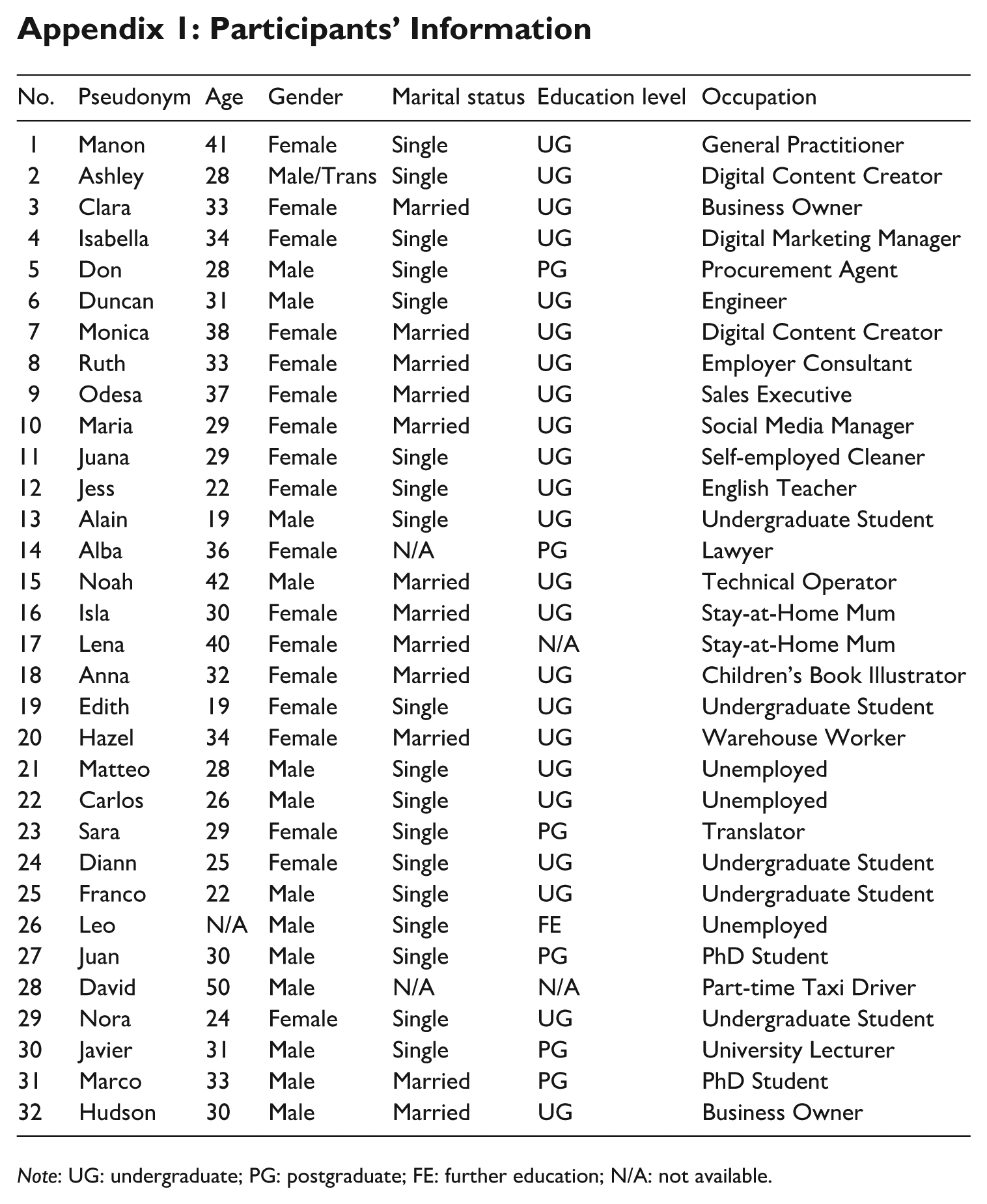
The final sample included 32 participants (13 men, 18 women, one transgender), aged 19–50 (mean age 30), with diverse marital statuses, educational backgrounds and occupations. Most were engaged in full-time work or study; three identified as unemployed, and two were stay-at-home parents (see Appendix 1). Interviews were conducted in person or digitally, audio-recorded with consent and transcribed verbatim. Pseudonyms were assigned to ensure anonymity. Interviews followed a semi-structured format guided by a flexible topic outline, allowing for interactional flow and in-depth participant narratives (Holstein and Gubrium, 1995). Conversations ranged from 45 minutes to two hours and explored participants’ digital consumption practices, their perceptions and experiences of overuse, efforts to moderate their use and the obstacles they encountered.
The lead author conducted thematic analysis, coding transcripts and identifying two primary themes: (1) participants’ internalisation of responsibility for digital overuse; and (2) ambivalence and difficulties in adopting lasting moderation strategies. Subsequent reviews of the data examined broader sociotechnical forces contributing to these tensions. Three sub-themes emerged and were then refined and updated through the theoretical lens of individualisation, illustrating how major forces stemming from individualisation hinder ‘responsible’ digital choices and generate paradoxical relationships between the normative demand for consumer responsibility and the broader sociocultural environment. The following section details these findings.
Results: The Complex and Ambivalent Field of Responsible Digital Consumption
Our data reveal the complex and ambivalent realities that emerge as individuals both uphold and compromise the responsibilisation framework in their digital lives. Many informants express aspirations towards moderated, disciplined and ‘responsible’ use. Yet, in practice, these ideals are frequently compromised in response to more immediate social demands within their individualised and digitalised environment. Two conflicting forms of social responsibility surface: one expects rational, controlled digital engagement; the other requires maintaining digitally mediated social bonds, leveraging sociotechnical resources for life projects and sustaining social embeddedness – often necessitating constant digital involvement. Here, our informants face ‘contradictory demands’ (Soron, 2010: 177) imposed by their sociotechnical milieu, which they cannot fully reconcile, resulting in persistent tension and struggle. This tension exemplifies how ‘[i]ndividualization is the paradoxical social structure. . . [a] highly ambivalent ongoing process’ (Beck, 2001: 277).
‘It Is My Own Choice’: Upholding Consumer Responsibility
The majority of our informants explicitly articulate the rhetoric of consumer responsibility where ‘correct’ consumption choices, and personal efforts to shift their digital interactions towards more ‘appropriate’ modes of conduct, are emphasised. In the context of digital ubiquity, where the risks for excessive consumption are (re)created by broader societal forces, the burden of risks is, however, ‘shifted decisively towards the self-assertion of the individual’ (Bauman, 2001: 104–105). In this framework, our participants translate their disaffection with digital overuse into a form of self-critique and self-reform (Bauman, 2005), identifying themselves as the primary agents fully responsible for the consequences of their consumption, as shared by Manon: I feel bad. I feel like someone who has been given a precious gift, with a warning: take care, this gift is precious. And I feel like I don’t respect that. I feel very bad. I mean, first, I feel responsible myself. I feel like kind of I’m a loser because would I be stronger, I could not use them [digital devices] that much. (Manon, 41)
Manon’s account exemplifies what Bauman describes as a ‘compulsive self-critique born of perpetual self-disaffection’ (Bauman, 2000: 38, emphasis in original). In the land of individualisation, as Beck and Beck-Gernsheim (2002: 146) observe, ‘anyone who did not take responsibility counted as irresponsible; any dereliction counted as “guilt”’. This internalised guilt, coupled with self-doubt and anxiety over repeated failures to exercise ‘rational moderation’ (O’Malley and Valverde, 2004: 26), emerges in many informants’ narratives, highlighting the moral burden of consumer responsibilisation and the imperative for self-governance (Nicholls, 2024; Vicario et al., 2021). Similarly, Jess, Ruth and Hudson articulate a privatised, inward-focused ethos of ‘responsible’ decision making: It’s about myself. It’s my responsibility. It’s like, do we allow them [tech companies] to make us addicted? That’s our choice. (Jess, 22) That is my life. It’s down to me how I use that technology. . . It is about me taking control of my life. My caffeine intake is down to me. Being obese is down to me. You know, it’s down to me, and not anybody else. (Ruth, 33) I guess it just comes down to willpower. . . You know, if you’re mentally strong, you should be able to stop yourself. (Hudson, 30)
Following the normative framework that equates digital discipline and self-control with psychological strength (Kuss and Lopez-Fernandez, 2016), these participants strive to actively take charge of their digital usage, aiming to become disciplined users who can effectively regulate their consumption impulses. Elsewhere, Marco and Edith similarly describe efforts to exert control, establish ‘individual boundaries’ and commit to self-management as central strategies for enacting the ideal of responsible digital engagement: At the end of the day, it’s our decision really, and I think we’ve just gotta start setting some individual boundaries to make it better. (Marco, 33) I guess it’s just on us, you know. Like, if you wanna stop scrolling so much or whatever, you’ve gotta just learn to manage it yourself. (Edith, 19)
These patterns reflect how individualisation – characterised by an ‘unprecedented emphasis on. . . freedom, autonomy, and choice’ (Reith, 2004: 283) – is deeply embedded in participants’ thinking, shaping their subjectivity as fundamentally tied to self-regulation and personal responsibility. Nevertheless, as Beck (2001: 266) observes, ‘boundaries cease to be givens and instead become choices’ – actively constructed through continual reflexivity and marked by persistent insecurity (Bauman, 2001). As our findings illustrate, individuals often struggle to translate their commitment to consumer responsibility into consistent, effective actions in their everyday digital lives. We now unpack this complex reality in greater depth.
‘But It Is So Hard to Control’: Compromising Consumer Responsibility
In the following subsections, we illustrate how the tension between desired and enacted consumer responsibility is shaped by various sociotechnical forces. These forces are organised into three interrelated sub-themes, which reveal the key ways in which individuals’ aspirations to uphold consumer responsibility are paradoxically compromised.
Conforming to Pressures of Maintaining Digitally Mediated Social Bonds
First, our data illustrate how the individualised imperative to actively manage one’s social bonds and networks (Beck and Beck-Gernsheim, 2002; Colombo et al., 2022) routinely compels many informants to sacrifice their autonomy and ‘power over their consumption choices’ (Cherrier and Gurrieri, 2013: 242), aligning their behaviour with the widespread norms of digital (over)use prevalent in their digitally connected world, as shared by Maria and Juana: Yeah, like I said it’s [digital use] been completely normalised, and you know, having the Internet is almost a basic human need like, yeah, my grandma is on Facebook now. She doesn’t need to, but she felt like she had to be on it. (Maria, 29) It has become so ingrained into how everything works. . . So yeah, I think it has become extremely normalised to the point where people don’t even question it. (Juana, 29)
A complex issue is at play, as the prevailing normative framework of ‘conscious moderation’, internalised and actualised by many individuals and groups (Burgess et al., 2022: 903; Hedenus, 2011), is largely disrupted in the digital consumption domain. As Juana and other informants note, when digital technologies become deeply ingrained in daily life, crossing the boundaries of moderate use becomes normalised and widely accepted, and no longer seen as deviant or confined to a minority (O’Malley and Valverde, 2004).
At a deeper level, we observe how the normalised tendencies of excessive consumption reflect our informants’ willingness to compromise autonomous decision making for a ‘higher-order’ social task – sustaining existing social bonds. These insights reveal ‘the complex interplay’ between ‘individuality and sociality’ under individualisation (Törnqvist, 2019: 911), which intersects with the forces of digitalisation to produce intensified digitally mediated social interactions (cf. Alevizou et al., 2024; Wajcman et al., 2008; Zarhin, 2024). As many informants note, disconnecting from the digitally interlinked world risks being ‘left out’ (Clara, 33; Don, 28; Edith, 19) of vital social relations in contemporary society. Whether exchanging advice, providing counsel or offering emotional support, digital technologies are recognised as an unavoidable platform for individuals to align themselves with the ‘normative horizon of expectations of reciprocal individuation’ in late modernity (Beck and Beck-Gernsheim, 2002: xxii). As Clara (33) explains: ‘The Internet is a key thing to connect to people. You don’t use your phone, you don’t use messaging apps, you don’t chat to people, then you’re basically out of the zone.’
For Clara and many other informants, digital consumption has become the key pathway of socialisation, which, in turn, imposes ‘constraining forces’ on their behaviour (Cherrier and Gurrieri, 2013: 241). The need ‘to belong and feel included’ (Cherrier and Gurrieri, 2013: 238) often leads individuals to sacrifice control over their digital use, in exchange for social inclusion. Social judgement of abstinence or restricted consumption (cf. Vicario et al., 2021) adds yet another level of pressure that prompts them to compromise autonomous choices, as shared by Franco (22): ‘There’s been a lot of pressure to make an Instagram account. When I tell people I don’t have an Instagram account, they lose their minds.’ Once again, we see in Franco’s narratives an underlying ‘tension between freedom and responsibility’ (Pickard, 2010: 484) – between his self-determined choices and the social responsibility towards others. Interestingly, for our informants, this tension often results not in an abandonment of social engagement, but rather in a ‘deepening of conformism’ (Honneth, 2004: 464), where one feels the need to act in conformity with others’ (excessive) consumption patterns: I think another problem is that with the smartphones and things, everyone is immediately available, and if you don’t make yourself immediately available, people are annoyed. . . So it’s sort of I feel crappy for my usage and then someone needs me to go online and it’s a bit of a vicious cycle. (Juana, 29)
In Juana’s and many other informants’ accounts, we observe a sentiment of ‘disaffected consent’ (Gilbert, 2015): a mixture of disaffection with digital overuse alongside paradoxical acquiescence. This reveals the absurdity of responsible consumption in our examined context: people are expected to consume technology constantly, staying ‘immediately available’ within their digital world. Creating personal boundaries to what, when and how to consume has become largely futile, as one’s digital consumption is deeply connected to and often intensified by others within their social circle: ‘[be]cause everyone has a phone. Everyone has this account. Everyone has this. Everyone has that. They wanna stay in the loop. . . You know, it’s like a collective addiction and if you’re not in it, you feel like an outsider’ (Jess, 22).
Here, each individual’s digital usage is linked to others’ newly formed habits of consumption within an ever-expansive web of technologically mediated social relations, which renders one’s capacity to ‘contro[l] their consumption through sovereign action’ almost obsolete (Reith, 2004: 294).
Instrumentalising Sociotechnical Resources and Embracing the Ethos of Life Projectisation
Second, our data show how the individualised ethos of relentless productivity, self-improvement and life projectisation (Bauman, 2000; Beck and Beck-Gernsheim, 2002) compels many informants to continually delay responsible consumption decisions in favour of maximising resource utilisation and extracting value from their sociotechnical environment. Whether it is engaging with social media to ‘build [one’s] personal brand’ (Maria, 29; Edith, 19), seeking a ‘vast array of money-making opportunities’ online (Monica, 38) or simply keeping oneself ‘updated about the world’ (Marco, 33) and remaining ‘productive’ (Hudson, 30), these individuals often defer the task of moderating digital consumption, and rather act in line with their ‘entrepreneurial’ spirit (Nicholls, 2021). For instance, Ashley (28) expresses hesitation about restricting digital consumption, justifying it through a personal need for ongoing projectisation: ‘At the moment it’s just not possible [. . .] Like my job is on here, so that’s difficult to not be online. I’m actively building my YouTube channel.’
Ashley’s account illustrates how continuous digital usage stems from an internalised desire to cultivate an ‘entrepreneurial’ self in late modernity, aligning with literature showing how individuals frequently pursue enterprising, productive, future-oriented aspirations under individualisation forces (Nicholls, 2024). Yet, in digital contexts, this entrepreneurial drive often leads to excessive digital engagement, rather than ‘moderation and self-control’ (Vicario et al., 2021: 1455). For many, the intention to limit digital consumption is perpetually deferred as they push their ‘capacity to the utmost’ (Bauman, 2000: 62) within their sociotechnical milieu. As Ashley (28) further explains: ‘What keeps me there? To post my own ideas, to post my YouTube videos. To receive help when I need it. To make sure all of my commissions that I’m paying for are getting done.’
What we observe here is an individualised ‘compulsion’ (Beck and Beck-Gernsheim, 2002: 4) to continually convert one’s time, energy and sociotechnical resources ‘into a productive force’ (Honneth, 2004: 473). As Bauman (2005: 1) observes, in late modernity, ‘[t]he most acute and stubborn worries that haunt [individuals]. . . are the fears. . . of being left behind’. This fear – of missing out, not being productive enough or ‘wasting time’ – is a recurring theme among informants. Yet, rather than motivating abstinence or moderation (Burgess et al., 2022), it drives them to seek out ever-newer digitalised spaces to sustain their productivity. As Noah shares: I think it’s a fear of missing something, you know, or not being engaged with the general world [. . .] It’s also a desire to keep learning, keep educating, keep trying to, you know, I keep on top of my emails, work, finance, stuff like that. (Noah, 42)
In keeping up with the ‘infinite and indefinite possibilities’ of upcoming projects, choices and performances (Bauman, 2001: 87), Noah feels compelled to channel his productive energy into an endless stream of digitalised activities. Similarly, Monica describes how her habits of digital overuse stem from a deliberate effort to maximise every opportunity for acquiring social capital through digital means – allowing her to remain ‘perpetually ahead of oneself’ (Bauman, 2001: 104): So my typical day on the Internet. I shamefully will admit I wake up, and. . . I’m immediately on the phone. I’m immediately on social media checking. Has anyone liked or responded to any of my messages, reels, posts or anything regarding my personal life or my business? . . . I wake up and take an assessment of the interactions and the outreach I’ve made while I was sleeping. . . [Then] I’m on Google or checking emails. . . I’m also always searching for new money-making opportunities. (Monica, 38)
As Beck and Beck-Gernsheim (2002: 24) note, in late modernity, ‘the life of one’s own is condemned to activity. Even in failure, it is an active life in its structuring of demands.’ For Monica, as for many informants, these constant demands manifest as a sense of compulsion, anxiety and uncertainty, rooted in ‘a heightened awareness that mastery is impossible’ (Beck, 2001: 267, emphasis in original). Her attempts to instrumentalise and derive value from her digital environment, alongside her efforts to control and plan her life more generally, evolve into an endless reflexive project, characterised by worry and calculation (Burgess et al., 2022; Vaadal and Ravn, 2021) – a continual ‘assessment’ of her (digital) successes, failures, present opportunities and the countless ones yet to come. Elsewhere, Hudson explains why regulating his digital usage is unfeasible in his circumstances: It’s more difficult to regulate than anything else. . . I hate the idea of using it too much. But I need it. I need it for my job. I check my emails, Slack, WhatsApp groups and other groups multiple times a day. . . I always responded to emails very quickly because it was always on the device anyway. The moment I had an email, I’d respond. (Hudson, 30)
A sense of ambivalence pervades Hudson’s narratives: an acute awareness of the need to regulate his digital usage, and a sense of discontent tied to overuse, cannot outweigh the stronger impulse to remain active and resourceful, and productively self-exploit his leisure (non-work) time (cf. Wajcman et al., 2008; Zarhin, 2024). At the moment that his work-related tasks arrive, Hudson’s immediate reaction is to reconnect himself to the productive flows that his job demands. In these moments, the aspiration to moderate digital consumption is eclipsed by another, perhaps stronger, desire to ‘become’ entrepreneurial subjects in late modernity.
Re-embedding Oneself into the Sociotechnical Sphere
Lastly, our data highlight how many informants’ aspirations to reduce their digital consumption are often overridden by a strong, sometimes uncontrollable urge to ‘re-embed’ themselves into the sociotechnical sphere. This desire stems from the need for social support, comfort and togetherness – elements many feel have eroded in daily life due to broader societal shifts such as changes in family, marriage, partnerships, neighbourhoods and social mobility (Franklin, 2012). Many report recurring loneliness – a ‘void’ that they view as a natural outcome of living in a society shaped by freedom, choice, fragmented social ties and the lack of physical proximity to close others (Bauman, 2001: 151). As Franklin (2012: 16, emphasis in original) contends, loneliness ‘is a dominant emotional feature that originates from the social structural nature of a radically new form of modernity which impacts upon everybody’. For these individuals, engaging digitally – whether through online communities, local groups or support networks on social media – offers a meaningful way to ‘enhance emotional and practical connectiveness’ (Colombo et al., 2022: 443) and counteract their loneliness. These digitally mediated interactions help partially fill the social gaps created by weakening everyday bonds, as shared by Hazel: I need Facebook for the local connection. Because where I live, you know, you don’t really talk to your neighbour. . . But there’re lots of Facebook groups, like we have the local Facebook group of the area where we live. . . Like I scroll [through] it to know what’s going on in my area. . . You feel some kind of connection with the local area. (Hazel, 34)
Like Hazel, many informants express a sentiment of loneliness when facing the scarcity of face-to-face social interactions in their daily lives. Disembedded from a secure web of social relations such as neighbourhoods – and the ‘practical knowledge, faith and guiding norms’ that these traditional social relations offer (Beck, 1992: 128) – they are left with a sense of loss, which, for them, can be temporarily remedied by attaching themselves to ‘flexible, alterable arrangements’ (Franklin, 2012: 16) in the digital realm: I’m part of these mummy groups. There is no judgement, so I could go in there and say, like, ‘my house is a mess, and I’m falling apart. What can I do? How can I get support?’ . . . And a lot of the mums in there are really friendly. The number of comments that I’ve read where it’s like, ‘Reach out if you need help’ . . . Yeah, complete strangers sort of supporting each other [. . .] It does almost bring about a sense of community [. . .] Especially for mums raising kids, you know, if you haven’t got the support of real-life people then on Facebook you tend to find it more. (Ruth, 33)
In our interview, Ruth shares deep frustration at routinely crossing the boundaries of ‘mindful’ digital usage. Yet, this excerpt reveals how mindful consumption is largely irrelevant for her: ‘the absence of bonds of belonging’ in her material world (Franklin, 2012: 16) prompts her to continually seek substitute sources of social help in the digital realm. Moderate digital use is thus often sacrificed for continued interaction with online strangers: I had no socialisation at school. I felt unhappy at school because I couldn’t connect with anyone. And I’d go days without speaking to anyone. The Internet. . . it’s sort of like socialisation. . . It gives me the illusion of being more personal. (Leo, N/A)
Leo, unemployed and living with his parents, reflects on how his painful childhood memories – his ‘psychic difficulties and traumas’ (Lambert et al., 2024: 359) – drove him to the Internet despite his dissatisfaction with its excess. For him, moderating digital use feels unrealistic; he willingly sacrifices it for brief moments of social connection with numerous online strangers. Extending Bauman’s and Beck’s original ideas, we identify two key trends: first, the digital realm provides a form of social re-embeddedness; second, this re-embeddedness is often experienced as ‘fragile and short-lived’ (Bauman, 2000: 37), lacking the ‘depth of qualitatively/emotionally satisfying relationship[s]’ found in the material world (Franklin, 2012: 14). Leo feels that these connections offer only ‘the illusion of being more personal’, a shallow substitute for deeper bonds. Yet, in the absence of alternatives, these illusory ties become the only viable means of togetherness, as echoed by Carlos (26): ‘Especially now that I’m alone in the middle of the day when other people are working, you know, you have a certain loneliness, and it [excessive forum engagement] gives me the illusion of at least talking to people.’
These accounts prompt us to reconsider whether digital overuse should, in practice, be framed as ‘irresponsible’. In an era where physical proximity – ‘sharing a space’, cultivating togetherness and engaging in meaningful face-to-face interactions (Bauman, 2000: 105) – has diminished, and where traditional social bonds are increasingly tenuous, sustained digital engagement with friends, family or even strangers may function as a morally significant mode of care and connection. As Bauman (2001: 152) notes, digital interaction can provide ‘a momentary respite from loneliness’ – a fleeting but meaningful form of emotional sustenance. Viewed in this light, practices commonly considered excessive or immoderate may instead reflect ongoing efforts to maintain relationality, social bonds and a sense of belonging in a disembedded and individualised social world.
Conclusion
Our study contributes to the sociological literature in three major ways. First, we extend the individualisation thesis (Bauman, 2000; Beck and Beck-Gernsheim, 2002) by exploring how the responsibilisation of individuals is perceived and experienced in everyday digital life. Drawing on narratives from 32 self-identified digital (over)users, we uncover a central paradox: while individualisation normalises expectations of ‘responsible’ consumption, the lived realities of many digital users often diverge sharply from these ideals. As Bauman (2000: 38) notes, there is a ‘yawning gap between the right of self-assertion and the capacity to control the social settings which render such self-assertion feasible’. This gap is evident in many informants’ accounts, where aspirations for moderate, self-disciplined digital use frequently fail to materialise in sustained or meaningful ways.
On one hand, individuals are expected to take responsibility for their digital practices as autonomous consumers (Syvertsen, 2020; Taylor, 2024). On the other hand, the very logic of individualisation compels them to rely on and continually manage a dense web of sociotechnical relationships and resources (Colombo et al., 2022; Törnqvist, 2019), which often undermines their capacity to moderate digital use. Confronted with ‘many levels of responsibility’ imposed by their environment (Beck and Beck-Gernsheim, 2002: 146), individuals often struggle to act in line with the freedom and agency they are presumed to possess. For many, individualisation is experienced less as autonomy and more as compulsion, conformity or resignation (Gilbert, 2015; Honneth, 2004; Vaadal and Ravn, 2021). Ultimately, the ideal of autonomous ‘choice’ is persistently eroded by the overlapping pressures of individualisation and digitalisation in an ‘irrevocably and globally networked’ world (Beck and Beck-Gernsheim, 2002: 25), characterised by ‘new demands, controls and constraints’ (Beck and Beck-Gernsheim, 2002: 2). As our findings suggest, these intersecting forces narrow the space for genuinely free decision making, rendering personal autonomy increasingly difficult to achieve in practice.
Second, our study contributes to the sociology of consumption by unpacking the complex interplay between digital (over)consumption patterns and social norms (Warde, 2015; Zukin and Maguire, 2004). Many studies of material consumption (e.g. alcohol use) have revealed that ‘responsible’ consumption is characterised by moderation and self-discipline, with many consumers internalising and enacting these norms and ideals, while excessive consumption is often framed as a personal failure or moral lapse (Griffin et al., 2009; Hedenus, 2011; Nicholls, 2024; O’Malley and Valverde, 2004; Vaadal and Ravn, 2021). In contrast, our findings reveal that in the digital realm, excessive and constant engagement is increasingly normalised and socially accepted, while moderated use – let alone abstention – is often marginalised. The disparity between consumers’ aspirations for moderating digital usage and their actual practices, then, should not be read as an individual failure of self-governance (McNulty Norton, 2021; Taylor, 2024). Rather, it reflects a broader systemic force: the naturalisation of digital (over)use under the imperatives of social embeddedness, constant productivity and entrepreneurial selfhood that define late-modern life (cf. Burgess et al., 2022; Nicholls, 2024).
Third, and relatedly, by foregrounding the under-examined phenomenon of digital overuse, we open a new conversation within sociological literature on digitalisation and its ‘darker’ impacts on everyday experiences (Alevizou et al., 2024; Taylor, 2024). While much existing research emphasises the ‘digitally enabled forms’ (Zarhin, 2024: 83) of new technologies – their productive, connective and empowering potentials – their disempowering effects receive less attention (Alevizou et al., 2024; Van Dijck, 2013). Our findings reveal one such effect: the erosion of human agency in everyday digital interactions. Across diverse life circumstances, our informants often described challenges in limiting or reducing digital use. For some, the digital realm becomes the only viable means of connection in an increasingly fragmented world (Bauman, 2000). For others, the pressure to remain visible, productive and efficient (Nicholls, 2024) drives a growing dependence on digital tools. And in most cases, the normalisation of pervasive digital usage (Gui and Büchi, 2021) leads individuals to conform to, rather than resist, the persistent demands of constant connectivity and relentless online presence. What appears as immoderate or excessive use might be better understood as a coping or adaptive strategy for navigating the constant demands of a hyper-connected, individualised world (Lambert et al., 2024; Van Dijck, 2013). These findings call for future research to further examine what ‘overuse’ and ‘responsibility’ mean in digital consumption, encouraging scholars to move beyond static or universalising definitions and instead explore them as socially constructed, shaped by ever-shifting norms, values and expectations.
We acknowledge that the relatively small, self-selecting nature of our sample limits the generalisability of our findings. While participants varied in age, occupation and life context, most reported their digital use tied to personal communication, work and entertainment (e.g. smartphones, email, social media, messaging apps). Our broad framing of digital overuse as a socially embedded and subjectively defined experience may overlook the specific dynamics of particular technologies or social groups. Digital (over)use likely takes different forms across settings such as work, education and family life – each shaped by distinct norms, institutional structures and social expectations (Lupton, 2014). Similarly, what counts as ‘responsible’ digital use is mediated by structural inequalities and shaped by intersecting positions of class, gender, age and culture (Couldry and Hepp, 2018; McNulty Norton, 2021; Tian, 2021; Vaadal and Ravn, 2021). We therefore encourage future research to investigate how digital responsibility is experienced, perceived and contested across diverse contexts and technological platforms, and how these processes intersect with broader systems of power, privilege and social differentiation.
Finally, while acknowledging the challenges of consumer responsibility in the context of digital (over)use, we caution against treating aspirations for non-excessive engagement as merely nostalgic or naively idealistic. Rather than invoking a return to a pre-digital past, calls for digital ‘moderation’ often reflect real tensions experienced by individuals navigating intensifying demands across work, social life and selfhood. However, instead of reinforcing the normative expectation that users must self-regulate, we encourage future research to examine more deeply the structural and institutional forces that make moderation so elusive – and to explore how these might be collectively negotiated and transformed. In particular, we call for robust sociological inquiry into what constitutes a healthy, equitable and supportive digital society: one in which digital engagement is not driven to excess by institutional demands, normative expectations or structurally disenfranchising life conditions.
Critical questions remain: what would it take to foster social environments where constant connectivity is no longer assumed or taken for granted? How might the normalisation of excessive digital use be denaturalised and challenged? And what forms of digital ecosystems could meaningfully support user agency, autonomy and well-being without placing the burden of moderation solely on individuals? Addressing these issues requires a shift towards alternative modes of digital consumption grounded in collective responsibility and structural reform – moving beyond the normative expectation that individuals alone can bear the burdens created by individualisation and an increasingly demanding digital landscape.
Footnotes
Appendix
Appendix 1: Participants’ Information
| No. | Pseudonym | Age | Gender | Marital status | Education level | Occupation |
|---|---|---|---|---|---|---|
| 1 | Manon | 41 | Female | Single | UG | General Practitioner |
| 2 | Ashley | 28 | Male/Trans | Single | UG | Digital Content Creator |
| 3 | Clara | 33 | Female | Married | UG | Business Owner |
| 4 | Isabella | 34 | Female | Single | UG | Digital Marketing Manager |
| 5 | Don | 28 | Male | Single | PG | Procurement Agent |
| 6 | Duncan | 31 | Male | Single | UG | Engineer |
| 7 | Monica | 38 | Female | Married | UG | Digital Content Creator |
| 8 | Ruth | 33 | Female | Married | UG | Employer Consultant |
| 9 | Odesa | 37 | Female | Married | UG | Sales Executive |
| 10 | Maria | 29 | Female | Married | UG | Social Media Manager |
| 11 | Juana | 29 | Female | Single | UG | Self-employed Cleaner |
| 12 | Jess | 22 | Female | Single | UG | English Teacher |
| 13 | Alain | 19 | Male | Single | UG | Undergraduate Student |
| 14 | Alba | 36 | Female | N/A | PG | Lawyer |
| 15 | Noah | 42 | Male | Married | UG | Technical Operator |
| 16 | Isla | 30 | Female | Married | UG | Stay-at-Home Mum |
| 17 | Lena | 40 | Female | Married | N/A | Stay-at-Home Mum |
| 18 | Anna | 32 | Female | Married | UG | Children’s Book Illustrator |
| 19 | Edith | 19 | Female | Single | UG | Undergraduate Student |
| 20 | Hazel | 34 | Female | Married | UG | Warehouse Worker |
| 21 | Matteo | 28 | Male | Single | UG | Unemployed |
| 22 | Carlos | 26 | Male | Single | UG | Unemployed |
| 23 | Sara | 29 | Female | Single | PG | Translator |
| 24 | Diann | 25 | Female | Single | UG | Undergraduate Student |
| 25 | Franco | 22 | Male | Single | UG | Undergraduate Student |
| 26 | Leo | N/A | Male | Single | FE | Unemployed |
| 27 | Juan | 30 | Male | Single | PG | PhD Student |
| 28 | David | 50 | Male | N/A | N/A | Part-time Taxi Driver |
| 29 | Nora | 24 | Female | Single | UG | Undergraduate Student |
| 30 | Javier | 31 | Male | Single | PG | University Lecturer |
| 31 | Marco | 33 | Male | Married | PG | PhD Student |
| 32 | Hudson | 30 | Male | Married | UG | Business Owner |
Note: UG: undergraduate; PG: postgraduate; FE: further education; N/A: not available.
Declaration of Conflicting Interests
The authors declared no potential conflicts of interest with respect to the research, authorship and/or publication of this article.
Funding
The authors received no financial support for the research, authorship and/or publication of this article.
