




Abstract
In the resurgence of elite sociology, formal (organizational-based network resources) and informal (non-organizational relations) social capital have garnered attention, but their mutual dynamics remain underexplored. This study addresses this gap, examining how both forms intersect among urban business elites, focusing on their roles on corporate boards, perceived as a front stage of power, and their places of residence, representing a back stage. Using multiple correspondence analysis, and thanks to social network analysis and geographic information systems, we examine the evolution of business elites (n = 2164) in Basel, Geneva and Zurich along the 20th century. Our findings identify two dominant elite fractions: the ‘heirs’ and the ‘established’. The heirs’ power is concentrated within a clearly defined spatial context especially through informal social capital, while the established derive their power from extensive possession of formal social capital. The varying presence of these two groups mirrors developments of Swiss capitalism in the 20th century.
Introduction
Throughout history, cities have been ‘sites for the location of stored and accumulated assets and resources’ (Savage, 2021: 233) and have been one of the preferred habitats of the elite. The presence of major institutions of power, alongside exclusive enclaves accessible only to a carefully chosen few, provides a favourable environment for the development of strong and durable relationships – referred to as social capital – which play a pivotal role in elite formation and reproduction (Atkinson et al., 2017; Bourdieu, 1980, 1986). With the resurgence of interest in elite studies (Korsnes et al., 2018; Savage and Williams, 2008), these relationships have been scrutinized by a growing body of literature. This literature usually distinguishes two forms of elites’ social capital. Formal social capital, understood as network resources acquired through institutionalized positions of power within organizations (Denord et al., 2011), has mainly been analysed through affiliation networks (Lunding et al., 2021; Maclean et al., 2017). This approach draws inspiration from the study of corporate interlocking networks (Larsen and Ellersgaard, 2017; Mizruchi, 1996; Useem, 1984). Informal social capital comprises inherited or acquired forms of non-organizational network resources and has been scrutinized through various means, including housing (Méndez et al., 2021; Pinçon-Charlot and Pinçon, 2018) and kinship (Toft and Vegard, 2021). Surprisingly, formal and informal social capital have rarely been analysed in conjunction.
In this article, we examine the interplay between formal and informal social capital among business elites and how their interrelationship unveils different socio-spatial configurations within the city. To this aim, we draw upon Goffman’s (1959) dramaturgical perspective, mobilizing the notions of front and back stage spaces, to understand not only how, but also where, formal and informal social capital is articulated. Informal relations take place in the back stage of elite spaces, while the more formal interactions resulting from board memberships within the same company can be considered as an elite front stage space (see also Woods, 1998). As forms of capital accumulate through historical processes that transcend the individual level (Bourdieu, 1986; Nichols and Savage, 2017), we analyse the relations between different forms of social capital and the front and back stage of elite spaces over a period of more than a century. Using multiple correspondence analysis (MCA), we analyse the interplay of elites’ endowment with formal and informal social capital. A historically informed and geographically rooted perspective allows us to shed light on the changing contexts of such associations – namely, the social and spatial conditions for articulating elite front and back stage spaces. Empirically, we rely on comprehensive prosopographical data on Swiss business elites (n = 2164) in the three largest Swiss cities – Basel, Geneva and Zurich – for six cohorts (1890, 1910, 1937, 1957, 1980 and 2000). In association with MCA, which helps us to map the structure of the objective relations among this elite, we use social network analysis (SNA) to measure affiliation networks and geographical information systems (GIS) to unveil elites’ residential patterns. Cluster analysis eventually helps us with identifying elite fractions and their evolution over time.
The article is structured as follows: first, we conceptualize social capital in relation to the front and back stage spaces occupied by business elites in cities. Then, we present our research strategy. In the empirical section, we analyse the structure of urban business elites’ endowment with formal and informal social capital, as well as their socio-occupational and companies’ characteristics, and their evolution over time. Our main results are: first, that the dominant business elites are formed by two distinct groups: the established, who mainly accumulate formal social capital, and the heirs, who hold informal social capital. Second, our study unveils a certain continuity regarding the association between formal and informal social capital: although both forms vary in proportion over time, they relativize an alleged rupture between an old and a new elite. Third, we show that both affiliation networks and elites’ residence patterns follow the historical trend from integration to fragmentation that has previously been identified for elite networks at the national level, both in Switzerland and elsewhere (Mizruchi, 2013; Rossier et al., 2022).
Formal and Informal Social Capital in the City
Major cities are crucial places for the accumulation of resources by elites and the exercise of their influence (Savage, 2021; Van Heur and Bassens, 2019). Within these urban centres, major institutions and organizations act as primary hubs for political, cultural and economic activities. Many of these institutions are durable and have historically served as the main source of power and privilege for urban elites, despite significant shifts in the urban landscape during the 20th century. Drawing on Goffman’s (1959) conceptualization of front and back stage, we conceptualize elites as wielding power not only in the front stage – a space where formal authority is performed – but also in the back stage – an exclusive space, shielded from public view, where elite relationships are nurtured and strengthened (Woods, 1998). We argue that distinct forms of social capital are developed within these two spaces.
In the front stage, business elites are primarily characterized by their endowment with formal social capital, which consists of network resources acquired through institutionalized positions within organizations (Denord et al., 2011). Studies focusing on formal social capital of business elites often explore the ‘internal’ hierarchies within professional networks. They measure the distribution of capital among these elites and identify hyper-agents that concentrate the largest volume of formal social capital (Maclean et al., 2017). Scholars have operationalized the formal social capital of business elites through their multipositionality in corporate networks (Heemskerk et al., 2016), their careers patterns and passage through key organizations (Ellersgaard et al., 2019) and the dominant features of their profiles in different historical periods (Araujo et al., 2023; Kansikas, 2015). Additionally, geometrical methods have been used to successfully analyse the changing dynamics of the field of business (Bühlmann et al., 2012) and its relation to other elite groups (Denord et al., 2018; Ellersgaard and Larsen, 2023). This body of literature succeeded in capturing the formal social capital of business elites, which allows them to exert influence and dominance through professional relationships and positions.
In the back stage, business elites acquire informal social capital, in a less publicly visible form. This form of social capital can be defined as an inherited or acquired form of non-organizational network resources resulting from the ability to accumulate ‘housing assets and other kinds of physical capital’ in prime location cities (Savage, 2021: 243), which also carry a family dimension. Indeed, the intergenerational transmission of wealth and heritage is a key feature of elite dynasties (Benz et al., 2024; Pinçon-Charlot and Pinçon, 2018). A growing interest in studying elite housing lies in the way that informal social networks of neighbours create a sense of community (Blokland and Savage, 2008) and ‘neighbourhood cohesion’ (Méndez et al., 2021), understood as residents sharing similar dispositions and forms of capital. Consequently, these areas are transformed into places of ‘privilege’ (Paulsen and Stuber, 2022) tailored to elite consumption practices and habitus. In his ethnography of Sweden’s wealthiest neighbourhood, Holmqvist (2022) demonstrates that residents actively resist ‘desecration’, which can be understood as the reduction of their social and cultural capital when residents fail to uphold the prevailing social norms within the community. This illustrates how the preservation of such enclaves is contingent upon the collective as well as familial sharing and transmission of legitimate social and cultural capital.
The interplay between these two spaces and their respective forms of social capital remains poorly understood. As cities underwent physical transformations during the 20th century, the spatial configuration of these two spaces may have also undergone changes. In their analysis of exclusive Parisian enclaves, Pinçon-Charlot and Pinçon (2018) reveal that current affluent suburban neighbourhoods or municipalities are geographic areas where front and back stages intersect. These areas offer a belle adresse for corporate headquarters as well as for the old aristocratic and bourgeois lineage. The proximity between the residences of elite dynasties and centres of economic power confers a distinct ‘label’ upon these places, which the authors term a signature (griffe), akin to the signature of an exclusive fashion designer (Pinçon-Charlot and Pinçon, 2018: 121). It remains an open question whether the business elites accumulating formal social capital through their activities in such locales are the same individuals who accumulate informal social capital by residing in these neighbourhoods, sometimes across generations. Is there, for instance, a divide between ‘old’, ‘dynastic’ business elites, who concentrate in exclusive enclaves with a particular griffe, and ‘new’ business elites endowed with significant formal social capital? How has the relationship between these two forms of capital evolved over the long run? To answer these questions, we now introduce the case of Switzerland, where business power and dynastic elite cores have been concentrated in cities for centuries (see, for example, Sarasin, 1998).
Swiss Business Elites in Basel, Geneva and Zurich (1890–2000)
The cities of Basel, Geneva and Zurich are epicentres of Switzerland’s economic, political and cultural life. Throughout the 20th century, these cities have hosted the headquarters of the largest Swiss firms. Major national business associations have their seat in Zurich, Geneva is the European hub for international organizations and Basel has long been a centre for international fairs in the art and the luxury goods segments of the economy. Parallel to Switzerland’s decentralized political structure, its economic organization is polycentric, characterized by regionally clustered economic sectors: the machine industry in Zurich, watchmaking in Geneva, pharmaceuticals in Basel and financial services in all three. The activity of companies in these sectors has a global scale and their headquarters in the three cities increasingly resemble enclaves for the companies’ top employees where local and global scales intersect. Another global domain of activity that has a long history in the three cities is ‘servicing the super-rich’ (Beaverstock et al., 2013). Notably, private banks in the three cities – particularly, in Geneva – have tailored their business to wealthy international clients since the 19th century (Guex, 2022). 1
In international comparison, Swiss cities modernized late, between the 1850s and 1920s (Walter, 1994). From then on, they gradually became more open but also more fragmented and segregated. The typical 19th-century Swiss city was a relatively small, walled and socially concentrated space. At the time, the urban elite included numerous descendants of the ancien régime elite, known as the patricians, who had retained power positions and influence in major Swiss cities (Benz et al., 2024). Whereas in many other countries urban elites had been aristocratic landowners prior to settling in the cities (Savage, 2021), most of the Swiss ruling class had been urban since early modern times. In addition to exercising political and judicial power in the cities and their surrounding subject territories, patricians developed dense family webs, coupled with the practice of co-optation and intergenerational transmission of power positions (Sarasin, 1998). Goffman’s theatre metaphor is embodied at its best by the residence of the patrician elite itself. The homes of patricians typically took the form of private mansions, with the dual function of housing their inhabitants – where the dramaturgy of power can be set ‘privately’ – and serving as a tool of pageantry, where power is performed. Another Swiss feature is that these mansions were embedded in rather mixed neighbourhoods, and therefore not completely segregated from other social groups. Of course, some streets were densely populated with patrician mansions, but these coexisted with more modest population strata until the beginning of the 20th century (Mach et al., 2024).
From the 1930s onwards and especially after the Second World War, the establishment of large factory compounds and the construction of new working-class neighbourhoods contributed to segregated population groups (Walter, 1994). The development of transportation infrastructures made longer commutes more tenable and led to suburbanization movements (Kübler, 2007). This dynamic of urban enlargement coincided with the rise of coordinated capitalism, a distinct feature of Switzerland (Hall and Soskice, 2001). This Swiss model of coordinated market economy, often termed ‘alps fortress’ (David et al., 2015), was characterized by its large and dense national elite networks across different (political and economic) sectors (Rossier et al., 2022). These elites are interlinked through their position on the boards of directors of Switzerland’s leading companies, their membership in business associations and their simultaneous involvement in the Swiss militia army, thus creating a unique fabric of social cohesion through the accumulation of formal social capital. This network became dominant before the Second World War and its core consisted of urban business elites from major Swiss cities. The functioning of these networks was relatively untouched by the ruptures of that war, given that Switzerland was not involved in combat operations, as well as the fact that the business elite at the top of Swiss companies was impenetrable and closed to elites from outside the country who had sought refuge there. 2
The density of the Swiss business elite network reached its peak in the post-war decades between 1957 and 1980, consecrating the accumulation of formal social capital as a key feature of power. However, in the course of globalization and internationalization dynamics in the Swiss economy after the cold war, this national coordination has experienced a rupture with a disintegration of national elite networks. This decline has coincided with the emergence of a new transnational business elite, who now hold top positions within Switzerland’s largest firms and share minimal formal connections with the national elites (Araujo et al., 2023; Mach et al., 2021). A transition to a more globalized form of capitalism has enabled professionals, numerous among the new transnational elites, to gain influence. One assumption is that these new economic elites are likely to set up a clear separation between the front stage space (i.e. the companies they run) and the back stage space (i.e. the wealthy and exclusive neighbourhoods or municipalities they inhabit). While the physical distance between these front and back stages might not be large in practice, the spatial ‘signature’ they have varies greatly and is a sign of the functional differentiation and segregation of contemporary urban areas.
Recent research has also suggested that since the new millennium, elites’ private worlds have changed (Cousin and Chauvin, 2021). Elites’ back stage spaces would have evolved in line with a growing preference for social activities in places that are not necessarily rooted in the cityscape, nor enhancing neighbourhood cohesion. As demonstrated by Lillie and Delval (2024), transnational elites in Switzerland have developed a whole range of social activities in specific exclusive spaces, including social clubs, holiday resorts and second homes, as well as at events such as Art Basel and the Montreux Jazz Festival. In this article, we cannot take these more ephemeral back stage spaces into account due to a lack of available data on elites’ private activities. Yet, studying the relationship between business elites’ formal and informal social capital, the latter defined in terms of their residential proximity and anchorage in city neighbourhoods and suburban municipalities over the course of the 20th century, contributes to a better understanding of how the power of the business elite has evolved against the backdrop of a transforming city landscape and a changing capitalist economy.
Data, Variables and Methods
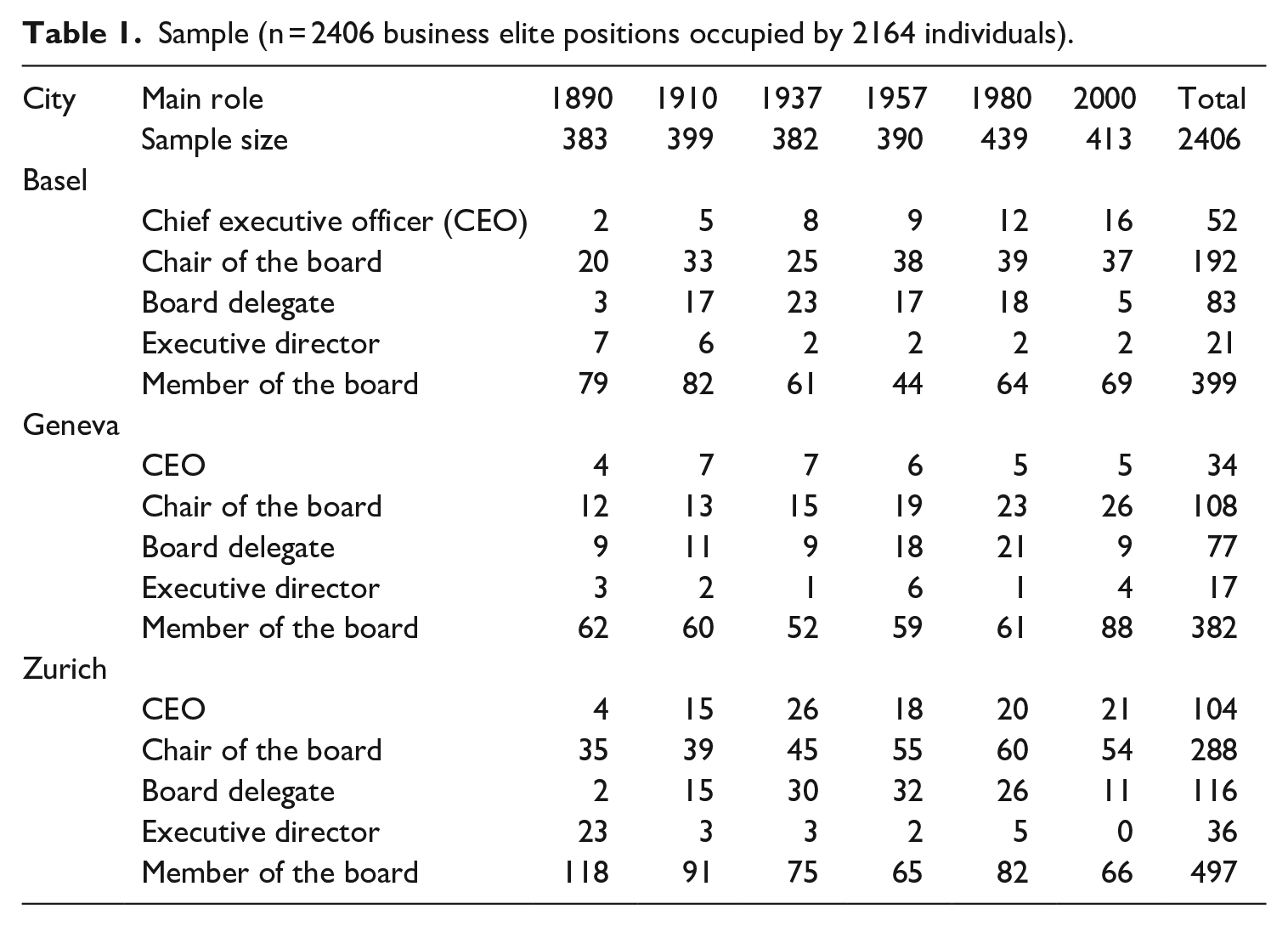
Business elites are identified based on a positional approach (Mills, 1956): our sample consists of those individuals who occupy positions of power at the top of the most important companies in the cities of Basel, Geneva and Zurich in six benchmark years (Table 1). These urban business elites’ positions typically refer to the membership on the board of directors and executive boards of the largest companies from the major economic sector in each city: financial services (all three), pharmaceutical (Basel), watchmaking (Geneva) and machine industry (Zurich). Detailed information of the sample is presented in the Online Appendix.
Sample (n = 2406 business elite positions occupied by 2164 individuals).
Having identified the individuals at the top of these major companies, we have collected information on their place of residence through archival research, mainly the inhabitant registries of the three cities and the Swiss Official Gazette of Commerce. We used the Swiss official building registry to identify the longitudes and latitudes of addresses and to make sure street and municipality names still exist, or if not, to find their present-day correspondence. In the next step, we then combined these coordinates with shapefiles on city neighbourhoods and municipalities that are available from the Federal Office of Topography Swisstopo. 3 Contextual information on the neighbourhoods and municipalities elites inhabit – again collected through archival research – then allowed us to characterize the neighbourhoods and municipalities that the elites live in.
In addition, we have also collected biographical information – for instance, on additional positions of power they held in other organizations (i.e. science, politics or interest groups) or on their family origins. A certain limitation of our data is that there is no systematic source of information on the wealth of these individuals, such as a list of the super-rich for all the periods. While some of these business elites definitely belong to this category – for example, the private banking family of the Pictet in Geneva or the pharmaceutical dynasty Hoffmann–La Roche in Basel – it is not possible to build usable indicators on wealth. However, given that our research interest lies in the relationship between formal and informal social capital and not in economic capital, this omission should not bias our results.
Multiple Correspondence Analysis
We conduct specific MCA to measure the association between formal and informal social capital. Moreover, we use other variables regarding socio-occupational and companies’ characteristics to understand business elites’ career and organizational contexts. Additionally, we use cluster analysis to delineate profiles among different fractions of urban business elites and their changing prevalence over time. More detailed information on methods, the distribution of active and supplementary variables, and the distribution of metrics can be found in the Online Appendix.
We use network measures as indicators of formal social capital. All metrics were calculated independently for each benchmark year and city for a total of 18 affiliations networks. They were transformed into quintiles in order to be comparable across cohorts, then gathered into one variable.
Simultaneous Roles captures the number of positions held simultaneously in a given benchmark year.
National Elite refers to elite positions held at the national level in companies, business associations, politics, expert committees, academia and other influential organizations.
Personal Network Size measures the total number of personal ties from the affiliation network.
Multipositionality refers to positions in the academic, cultural, political, administrative or associative sectors in addition to a position in a company in one of the three cities.
We use the information on elites’ place of residence as well as information on their family origins as measures of informal social capital. In combination, these two dimensions allow us to operationalize informal social capital in line with the idea of the spatial ‘signature’ introduced above (Pinçon-Charlot and Pinçon, 2018), thus involving a spatial and a family component. Again, all metrics were calculated independently for each benchmark year and city, then transformed into quintiles and gathered into one variable.
Top Elite Areas are, for each city and benchmark year, the three neighbourhoods/municipalities with the most business elites residing. 4
Residential Proximity is the median distance to the 20 closest business elites (in km) for each city and benchmark year, based on the coordinates of places of residence.
Economic Status of Places is approximated through a variety of indicators. Owing to the lack of long-run historical data at the neighbourhood and municipality levels, we rely on different indicators for different benchmark years and cities, such as rent prices, average incomes and fortunes of residents. We operationalize the economic status of a particular place in comparison with other places in the same city/region in a benchmark year by dividing each score into five quintiles. Missing values are divided into two modalities: No information relates to neighbourhoods or municipalities in the three city regions for which information on economic status was not available, or to residential areas in other Swiss city regions; Address missing or abroad indicates that information is not available, either because the place of residence is unknown, or because it is situated in another country.
Prestigious Patronym identifies the descendants of families with a very large number of individuals holding an elite position. The modality 1890 includes the four families with the largest number of positions in that benchmark year for each city – hence 12 families in total, almost all patricians, indeed bearers of long-lasting and prestigious family names; Global includes the four families with the largest number of positions at all benchmark years for each city, excluding the families of the previous modality, and including the most influential new elite families.
Upper Class is a binary variable referring to class origins, based on the father’s occupation at the very top of the hierarchical occupational structure – large company owner, prominent position in politics or business, liberal or intellectual professional background (e.g. lawyer, medical doctor, university professor) combined with family ties to wealthy or old patrician families.
Father Elite means that the father of an individual already held a position of power in Switzerland, as defined by our positional approach (see Online Appendix for more details), either in one of the three cities or at the national level, in the following sectors: companies, business interest organizations, politics, senior civil services, trade unions, academia or another prominent interest organization. Therefore, this variable refers to the elite origins of an individual rather than to their class.
Variables of formal and informal social capital are completed by a set of variables relating to socio-occupational characteristics, which can be important factors for generating and multiplying network resources.
Main Role is either CEO, delegate of the board, executive director, chair or non-executive board member. If several functions are to be found simultaneously, we gave priority to executive positions over non-executive ones, following this exact order.
Main Occupation is business for all CEOs, executive directors, delegates and chairs of the boards. Simple board members may be involved in other occupational activities, for example, as representatives in politics, academia, business or other associations.
Honorary Doctorate is a symbolic reward, which eventually provides the business elites with major credit from the academic sector.
Finally, a last set of variables relates to companies:
Sectors are a set of three binary variables that differentiate positions in industrial/manufacturing, commerce and financial sectors, to capture the legitimacy that comes from the status of the sector and the symbolic hierarchy between sectors.
Central National Company refers to occupying a position in one of the three most central companies at the national level and per benchmark year, according to the betweenness index of companies.
All variables and modalities are presented in Table 2.
Variables for the MCA.
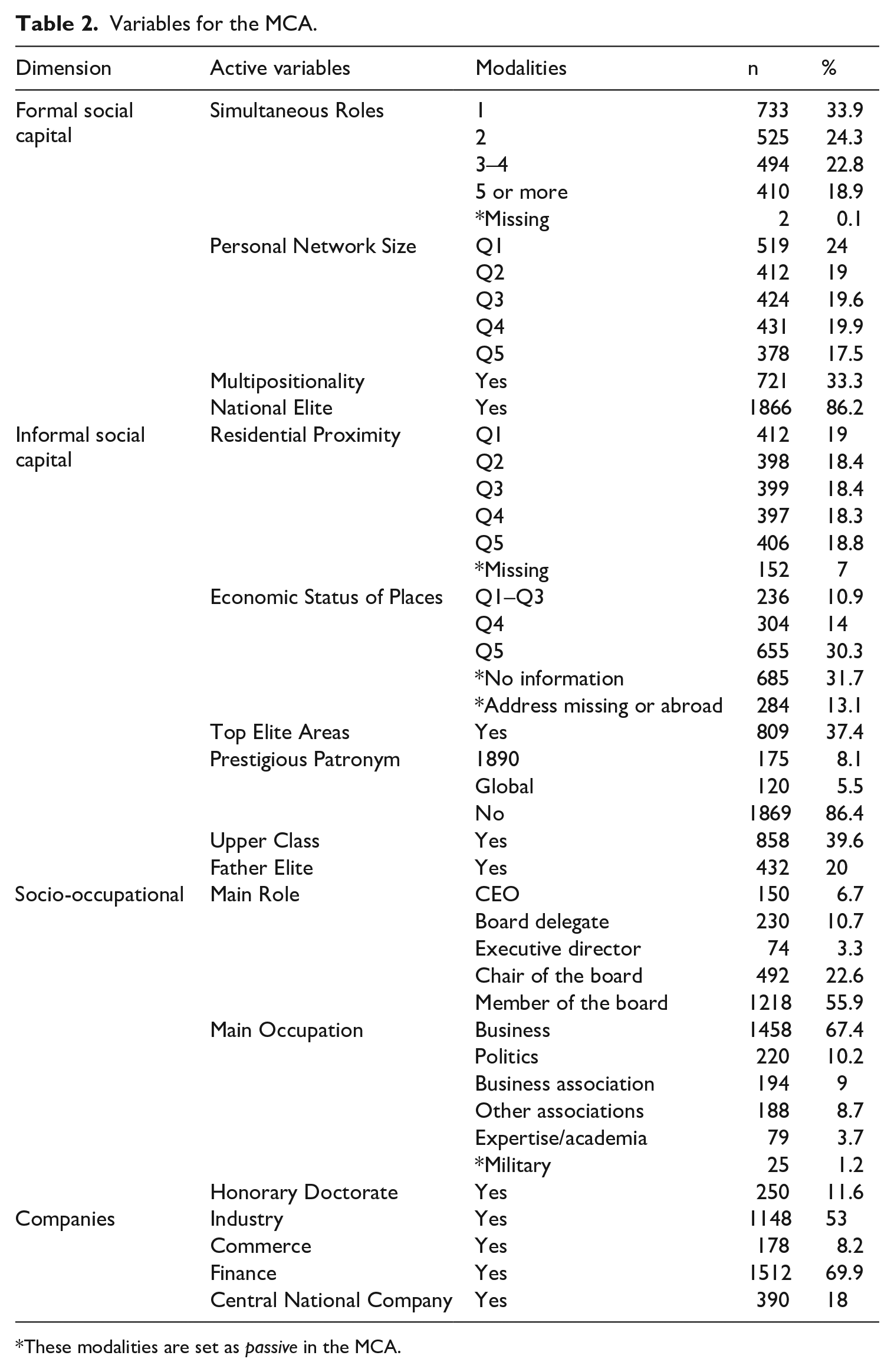
These modalities are set as passive in the MCA.
To this set of active variables we add supplementary variables, which do not contribute to the construction of the space, but are used to further qualify elite clusters: Benchmark year, City Region (Basel, Geneva, Zurich, more than one city), Nationality (Swiss and non-Swiss), Military officer and three binary variables referring to the place of birth: Born in Basel, Born in Geneva and Born in Zurich.
Changing Times, Enduring Power Structures
In this empirical section, we assess the role of formal and informal social capital in structuring the objective relations between business elites (1890–2000). To do so, we operate a specific MCA on 17 variables and 50 active modalities (resulting in a total of 18 active dimensions). The importance of each dimension (or axis) for the interpretation is expressed by Benzecri’s modified rates (Table 3).
Variance and modified rates.
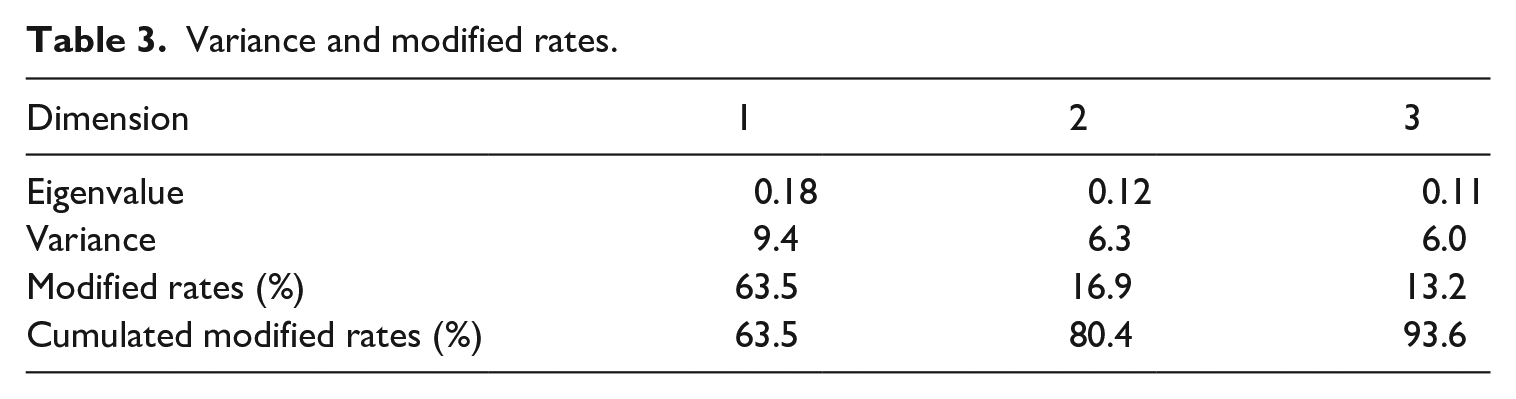
The first axis has a modified variance rate of 63.5%, the second has a rate of 16.9% and the third a rate of 13.2%. We retained the first two axes for the interpretation of the results of the MCA because the cumulative percentage of their modified rate exceeds 80% (Le Roux and Rouanet, 2010). Figure 1 displays all contributive modalities that thus form the factorial plan of axes 1 and 2. All contributions are displayed in the Online Appendix.
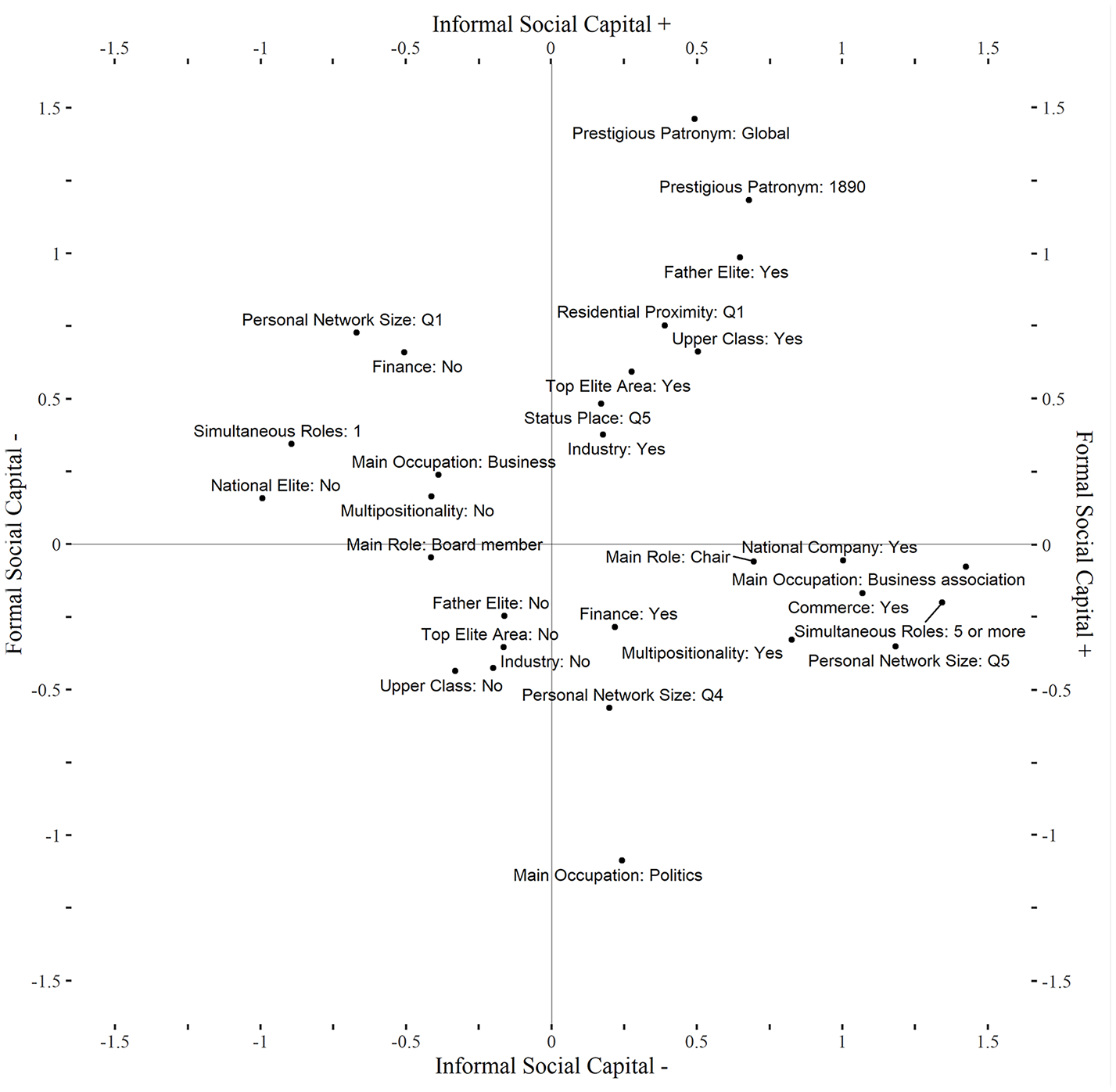
Multiple correspondence analysis: Space of contributive modalities to axes 1 and 2.
The MCA distinctly reveals that formal and informal social capital actively contribute to structuring the space of the business elites along two explanatory dimensions. The first dimension displays an opposition based on the volume of formal social capital. In line with previous studies (Lunding et al., 2021; Maclean et al., 2017), hyper-agents on the right are distinguished from dominated agents on the left. This opposition is mainly based on their very high centrality in the interlocking network (five or more simultaneous roles, largest personal network, multipositionality and a board position in the most central companies at the national level). Individuals on the right also hold roles in business interest associations more often and thus can act as ‘brokers’ between the economic and the political sectors.
The second dimension indicates an opposition between elites with low and high informal social capital endowment. At the top of the space are individuals with prestigious patronyms, who live in top elite areas, and in close proximity to one another. Furthermore, having a father already occupying an elite position or with an upper-class background are the modalities that contribute most to the formation of the second axis. This association is illustrative of the close link between physical and social stratification, which results from the tendency of a certain part of the business elite to cluster in particular places that facilitate the constitution and maintenance of informal links – for example, through neighbourhood cohesion (Méndez et al., 2021), rather than through corporate or professional links (Pinçon and Pinçon-Charlot, 2009; Toft, 2018).
Based on the coordinates of all the business elites in the factorial plan, we do a k-means clustering to identify groups of elites that are most similar to one another and most different from other groups. The Online Appendix displays the optimal number of groups, which is four. Figure 2 locates the four groups of elites in the factorial plan.
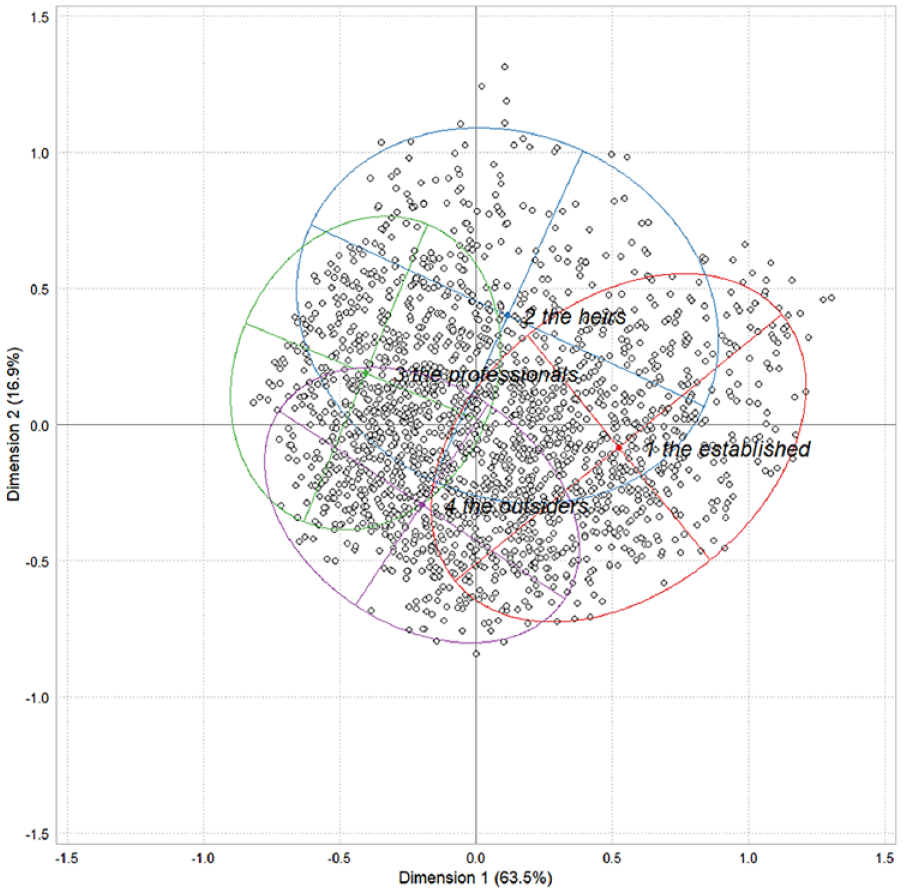
Four profiles of the business elites.
To characterize these profiles, we rely on the over-representation of active and supplementary modalities compared with the mean distribution in the overall population of business elites. All results are displayed in the Online Appendix along with the projection of supplementary modalities. On the right, the established and the heirs are two kinds of hyper-agents. On the left, the professionals and the outsiders form the dominated fraction of the space.
The established (n = 561, 26%), named after Lunding et al. (2021), are the ‘effective agents’ in the field of business. They have the highest level of formal social capital – that is, resources from affiliation networks – but they do not reside in the top elite areas nor in close proximity to other business elites. These very powerful agents make up both the local and national elite. They are over-represented among the functions of CEO, delegates and chairs of boards, as well as on the boards of the most central companies in the national company network. Simultaneously, they hold positions in other power sectors, such as in politics and academia and are also the recipients of symbolic capital from outside the field of business, for instance in the form of honorary doctorates. A substantial portion of them also have privileged social origins (a father with an elite position or an upper-class background). However, they do not come from traditional ruling dynasties and do not live in the most affluent areas. Many members of the established reside outside the regions of Basel, Geneva and Zurich, thus limiting their proximity to other elites. Thus, their power is predominantly exercised on the front stage and only intersects moderately with socialization in the historical neighbourhoods of influential families. This elite is especially representative of the 1957 and 1980 cohorts, and therefore part of the integrated corporatist elite at the national level (Rossier et al., 2022). Furthermore, this group is also over-represented among military officers, the urban business elite from Zurich and the elite who belong to more than one city region.
The heirs (n = 410, 19%) constitute the second group of hyper-agents but their properties contrast with the established. They are distinguished as the ones endowed with all the resources related to informal social capital: they reside in exclusive elite enclaves within the most affluent areas, often in close proximity to one another. Unlike the established, the heirs do not develop extensive formal networks, nor do they necessarily hold leading positions in companies. Instead, their power is deeply rooted in their social background as descendants of influential families – mostly from ancien régime dynasties. Their ascent was likely facilitated by mechanisms of cooptation, given that their fathers were very often elites themselves. The heirs are over-represented among the 1890 and 1910 cohorts, and among the business elite from Basel and Geneva. They were often born in these cities, where long-standing and influential dynasties managed to maintain their positions of power well into the 20th century, a phenomenon less pronounced in Zurich (Benz et al., 2024).
The professionals (n = 488, 23%), unlike the two types of hyper-agent, who are mostly Swiss, are over-represented among non-Swiss nationals. Thus, they can be characterized as being part of a transnational business elite, which is corroborated by their residence patterns. Their presence in the city primarily results from the career opportunities offered by key local business sectors, but their spatial anchorage is relatively weak: in the year 2000, a substantial part of them does not reside in the country at all and consequently they do not reside in the same areas as the hyper-agents. Their professional activity is largely confined to the business sector, where they often hold positions as board delegates in one given industrial company – chemical, machine or watchmaking; therefore, they do not develop extended relationships through formal networks. These professionals are over-represented among business elites in 2000 and from the cities of Basel and Geneva – which can be explained by strong internationalization dynamics in the pharmaceutical sector in Basel and the private banking sector in Geneva. In these businesses, they assume a transnational role, frequently moving from Swiss headquarters to other global locations.
The outsiders (n = 705, 33%) are Swiss and predominantly serve as board members in companies from the financial sector, although they rarely occupy the highest-ranking positions within those boards. Their primary occupation often lies in the political sector, and they are over-represented among elites from Zurich and during the beginning of the period, even though they are present throughout the century. Geographically, the outsiders reside in areas characterized by moderate economic status and are not particularly concentrated in specific municipalities or neighbourhoods. They are not strongly endowed with social capital, because they do not hold positions in other power sectors, do not originate from influential families and are never recipients of symbolic capital from sources outside the economic field.
Hyper- and dominated agents distinguish themselves through their unequal endowment in formal social capital, which is the primary factor of distinction among Swiss business elites. Hyper-agents are composed of two fractions: the established, who exhibit strong integration within formal networks but are less endowed with informal social capital; and the heirs, who cultivate their influence and cohesion through their geographical proximity, as well as their families’ prestige and intergenerational transmission of power, but are less prone to hold multiple board mandates. A first finding therefore is that each form of social capital is dominant among a specific fraction of the elite. However, the prevalence of these different groups may vary over time. To assess these changes, we focus on the evolution of the four profiles across cohorts (Figure 3).
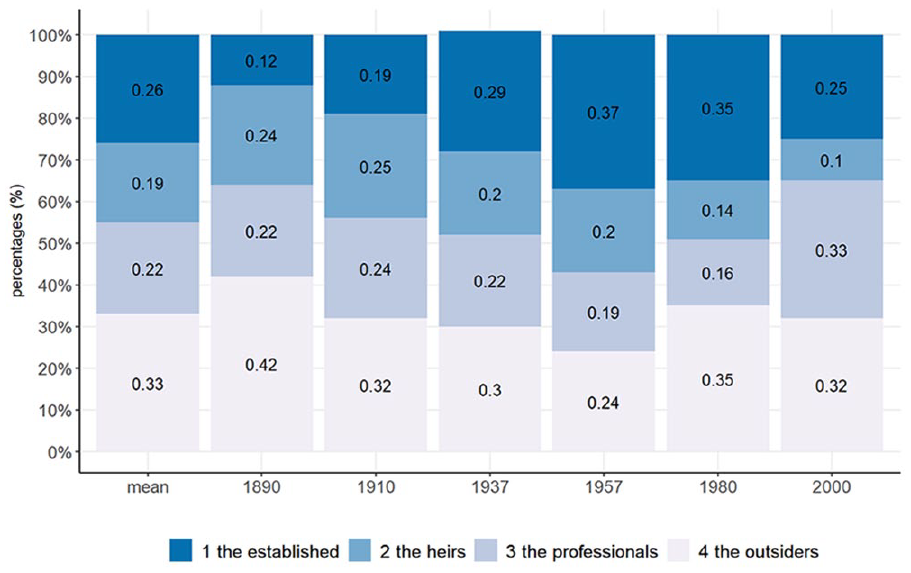
Share of the profiles per cohort.
From Figure 3, we observe that the share of both resource-dominated profiles, whose territorial anchorage in the city is also relatively weak, stays rather constant, apart from a peak at 43% in 1890 for the outsiders, and at 33% in 2000 for the professionals. In contrast, the share of the two dominant profiles clearly evolves over time: the heirs dropped from 24% in 1890 to 10% in 2000, while the established increased from 12% in 1890 to 37% in 1957.
A second finding is the variation over time of front and back stage spaces of power. The established, who possess the maximal resources from organizational networks (thus, formal social capital) are definitely not characterized by inhabiting top elite areas where many other business elites live. In the Goffmanian (Goffman, 1961) sense, they do not ‘act’ on the same part of the ‘stage’ as do the heirs, who traditionally ‘embody’ power in the historical districts. Thus, the established act mainly in the front stage during the entire period observed, but especially between 1957 and 1980, which corresponds to the period in which coordinated market economy, regulated by interlocking directorates, is the strongest in Switzerland (David et al., 2015). From the mid-20th century onwards, the heirs seem to have left their historical inner-city residences, where business and upper-class leisure intersect, to establish their main place of living in socially unmixed suburban municipalities. Consequently, as they depart from their historical spatial ‘signature’ (Pinçon-Charlot and Pinçon, 2018) in the city centre, they settle in burgeoning affluent suburban municipalities, such as Zurich’s renowned Goldküste (‘gold coast’), characterized by its even stronger social exclusivity albeit dispersed geographically. The retreat of Swiss dynastic families from positions of power within family businesses, now merely serving as shareholders, negates the historical dual function of their mansions – residential and business. The professionals, especially the recent wave of internationals, do not appear to pay as much attention to the symbolic dimension of spatiality. They may settle in the region for a period of time and then leave, hence not engaging with traditional urban elites.
A third finding is that the way that business elites articulate formal and informal social capital is embedded in their housing and territorial segregation. Historical changes in the economic structure and the socio-spatial organization of cities have influenced the relative importance played by both forms of social capital in sustaining elite power. However, both ways have endured over the period studied. Business elite factions like the heirs have progressively segregated from other population groups at a large geographical scale from the mid-20th century onwards – that is, at the level of entire neighbourhoods or suburban municipalities. In the most recent period, the rise of the professionals calls into question the primacy accorded to the accumulation of social capital. While echoing the historical fragmentation of elites’ local and national networks (Rossier et al., 2022; Strebel and Mach, 2023), this trend also unveils a change in the way power dynamics intersect with spatial organization and social relationships.
Conclusion
In this article, we argue that a focus on urban elites and their differentiated embeddedness in the urban landscape is pivotal to understanding the historical evolution of the urban business elite at large. We theoretically contribute to the literature by addressing elites’ endowment with both formal and informal social capital as a function of their spatiality. Following Woods’ (1998) invitation to draw on Goffman’s (1959) idea of contrasting front and back stage spaces, we unveil how the type and volume of elites’ endowment in social capital directly echoes their housing choices and their territorial distribution. Informal social capital seems to be accumulated by individuals who possess a highly developed sense of cohesion or entre-soi, which is facilitated by the inheritance of housing assets (Savage, 2021) and the ‘guardians’ of a spatial ‘signature’ (Pinçon-Charlot and Pinçon, 2018). Indeed, many such elites trace their lineage back to dynastic families, which were often entrenched in the cities before modernization. They typically occupy back stage elite spaces, serving as the origins of their power. Formal social capital is accumulated by highly influential company leaders, who do not necessarily inhabit top elite areas, and do not live close to other business elites. Here, front and back stages are territorially differentiated. Our results also suggest that both ways of articulating front and back stages have endured throughout the 20th century.
Empirically, and thanks to comprehensive material on 2164 business elites, we identified two dominant elite factions – namely, the established and the heirs. The former are typical of a historical period of coordinated market economy and are therefore endowed with maximal resources from affiliation networks. They correspond to the type of business elite that is traditionally identified by the literature on elite studies (Lunding et al., 2021; Maclean et al., 2017). From our analysis we identified another dominant fraction, the heirs; they typically do not actively engage in expanding their personal corporate network. Rather, these descendants of influential family dynasties focus on the accumulation of financial and symbolic resources through the establishment and maintenance of economic and cultural infrastructures – part of which is linked to particular neighbourhoods and the built-up environment (Savage, 2021). Here, spatial proximity fosters the development of professional and neighbourhood networks, promoting a certain exclusivity of informal relationships (Glückler et al., 2017; Woods, 1998).
Our study has limitations, which primarily result from our operationalization of informal social capital as the relationships developed in geographically delimited territories within the cityscape. This, obviously, has been intended to measure the varying anchorage of the 20th-century power elite at the local level. This approach to back stage elite spaces allows us to conclude that power is a matter of not only accumulation of formal relationships, as acquired through institutionalized positions of power within organizations, but also of accumulation of informal social capital within geographically delimited spaces. Yet, this operationalization ignores other forms of back stage spaces, more typical of a ‘new’ transnational or global elite (Cousin and Chauvin, 2021). We, thus, cannot assess how the sociability of this ‘new’ elite squares with the spatial ‘signature’, typical of an elite that is strongly anchored in the urban landscape. Studying socio-historical variations of elite signature would probably open promising avenues. While we focused on elite signature at the neighbourhood level, recent studies have emphasized the importance of ‘Switzerland’ as a label including safety, neutrality, cleanliness and its reputation as a ‘refuge’ (Delval, 2022; Lillie and Delval, 2024). Here, Switzerland appears as a privileged territory where elites benefit from services tailored to their lifestyle, including luxury amenities, private banking and dedicated international education institutions. For the transnational and global elite, residing in Switzerland offers an ideal environment for the accumulation of both formal and informal social capital through engagement in various activities in different places. Future research should thus study spatial ‘signatures’ not only across time but also across different scales, from local to global.
Supplemental Material
sj-docx-1-soc-10.1177_00380385241275852 – Supplemental material for The Front and the Back Stage of Power: Formal and Informal Social Capital among Business Elites in the Three Largest Swiss Cities, 1890–2000
Supplemental material, sj-docx-1-soc-10.1177_00380385241275852 for The Front and the Back Stage of Power: Formal and Informal Social Capital among Business Elites in the Three Largest Swiss Cities, 1890–2000 by Pierre Benz, Pedro Araujo, Thierry Rossier and Michael Andrea Strebel in Sociology
Footnotes
Acknowledgements
A previous version of this article was presented at the workshop ‘Homology in field analysis: Concepts, approaches, and further perspectives’ at Roskilde University, 15–16 June 2023, and at the workshop organized by Thematic Field 42 on Sociology of Elites (RT42) at the 10th Congress of the French Sociological Association in Lyon, 4–7 July 2023. We would like to express our gratitude to the participants of these two workshops for their comments on earlier versions of this article. We also extend our thanks to Maren Toft and the anonymous reviewers for their valuable comments and suggestions.
Funding
The authors disclosed receipt of the following financial support for the research, authorship and/or publication of this article: research for this article was conducted as part of the project ‘Local Power Structures and Transnational Connections. New Perspectives on Elites in Switzerland, 1890–2020’, supported by the Swiss National Science Foundation (SNSF; grant number: 183534). Pierre Benz acknowledges funding from the SNSF in the framework of its PostDoc.Mobility scheme (grant number: 210805). Michael A Strebel acknowledges funding from the SNSF in the framework of its Ambizione scheme (grant number: 208972).

Supplemental material
Supplemental material for this article is available online.
Notes
References
Supplementary Material
Please find the following supplemental material available below.
For Open Access articles published under a Creative Commons License, all supplemental material carries the same license as the article it is associated with.
For non-Open Access articles published, all supplemental material carries a non-exclusive license, and permission requests for re-use of supplemental material or any part of supplemental material shall be sent directly to the copyright owner as specified in the copyright notice associated with the article.
