




Abstract
This article investigates how the fragmentation of work time influences subjective time pressure, and how this relationship varies across gender and parenthood status. This is an important question that has been neglected by previous studies. Using the latest UK time-use data (N = 620) from 2020 to 2021 and Ordinary Least Squares regressions, the study finds that work time fragmentation generally predicts more subjective time pressure. Specifically, work time fragmentation is found to increase subjective time pressure more among women without children than mothers. However, this effect is inverted among men, as the fragmentation of work time predicts more subjective time pressure among fathers but not among men without children. These findings provide a nuanced understanding of the adverse consequences of ‘role switching’ and ‘work schedule instability’ and their interaction with gender and parenthood. Accordingly, future research should consider work time fragmentation as a vital indicator of job and life quality.
Introduction
Subjective time pressure is the degree to which individuals feel rushed and harried, generally because their duties and responsibilities exceed their capacity to accomplish them within the allotted time (Kleiner, 2014). Work time fragmentation is the state in which work activities are scattered across the hours of the day, rather than concentrated into a single block, and has been identified by previous studies as a potential indicator of subjective time pressure (Cornwell, 2013; Craig and Brown, 2017; Sullivan and Gershuny, 2018). This is because work time fragmentation can reflect instability in an individual’s work schedule, as well as frequent ‘role switching’ (Cornwell et al., 2019; Schneider and Harknett, 2019).
Work time fragmentation is the process in which the number of distinct episodes of work per day increases (Merz et al., 2009), with more episodes indicating more disruptions in the work schedule, and so a more fragmented workday. Previous studies indicate that more disruptions in a daily work schedule can lead to negative mental health status (i.e. increased stress levels, anxiety and depression) (Carrillo et al., 2017; Golden, 2015; Schneider and Harknett, 2019). In addition, work time fragmentation is equivalent to the frequency by which workers switch between work and non-work roles. Some scholars believe that frequent role switching can exacerbate role conflicts (Cornwell, 2013; Glavin and Schieman, 2012; Schieman and Young, 2010), which might increase the feeling of being rushed and harried. So far, many studies have emphasised that work time quality is crucial in the debates around the effects of working time and job quality on mental health (Wang et al., 2022a; Warren, 2022). However, the investigation of work time fragmentation is rather absent in the current literature. The lack of investigation into work time fragmentation prevents us from gaining a nuanced understanding of workers’ time-use patterns and their associations with job and life quality.
Time use is highly gendered (Fagan et al., 2012) and related to parenthood due to the persistent gender inequalities in the labour market and households (Kan et al., 2011; Oreffice and Quintana-Domeque, 2021). Although there are some other socio-demographic variations in workers’ time-use patterns and time quality (i.e. age, income group, social class and educational level) (Charmes, 2019; Jang and Tang, 2016), the persistent gender norms and institutional structures maintain gender inequality as one of the most urgent topics among the debates (Craig and Brown, 2017). The latest cross-national time-use evidence indicates that gender inequality in time use is a pressing matter that must be addressed by concerted approaches at both the policy and ideological levels (Sullivan, 2019). Thus, roles of gender and parenthood as central aspects of workers’ lives should be taken into account in the investigation of work time fragmentation and subjective time pressure (Chatzitheochari and Arber, 2012; Cornwell, 2013; Fagan, 2001). Specifically, previous studies have shown that becoming a parent can not only increase the amount of time spent on housework and caring but can also reshape their attitudes towards the division of domestic responsibilities and labour participation (Baxter et al., 2008; Grinza et al., 2022; Kalleberg, 2009; Katz-Wise et al., 2010). Such effects of being parents on workers’ behaviour and identity are also gendered (Baxter et al., 2008), with women significantly increasing their unpaid work more than men after giving birth (Abendroth, 2022; Zilanawala, 2016). Hence, the associations between work time fragmentation and subjective time pressure might be moderated by gender, parenthood or even the combination of the two. Nevertheless, until now, the roles of gender and parenthood among the associations between work time fragmentation and subjective time pressure have not been well examined and identified.
In sum, this study aims to address these gaps in the current literature. It focuses on the fragmentation of work time on a typical workday, and investigates its implications for workers’ feelings of time pressure. Following the previous studies, the fragmentation of work time is defined as the number of distinct work episodes in a typical workday (Merz et al., 2009; Sullivan and Gershuny, 2018). For the analysis, this study uses the most recent UK time-use data (2020–2021), which is drawn from the 24-hour time diaries of 620 British adult workers. These data are used to track individuals’ working episodes and their feelings of time pressure across a typical workday. The study’s first objective is to investigate whether work time fragmentation predicts more subjective time pressure. The second objective is to determine whether the associations between work time fragmentation and subjective time pressure vary across gender and parenthood status.
The Fragmentation of Work-Related Time and Subjective Time Pressure
Daily work schedules traditionally specify a single integrated work period, such as 9 a.m. to 5 p.m., which is regulated by employers to ensure productivity and predictability (Wang et al., 2022a; Wheatley, 2017). However, with the proliferation and increasing popularity of flexible working (e.g. flexplace, flextime and reduced hours) and non-standard schedules (e.g. night shifts) (Cornwell et al., 2019), workers’ schedules are becoming more fragmented (Sullivan and Gershuny, 2018). Although there is an extensive research tradition examining how different job characteristics influence employees’ mental health, most of them ignore the effects of work time fragmentation, instead focusing on other aspects of a work schedule that make it precarious or undesirable (i.e. non-standard shifts and unlimited schedule flexibility). Thus, this study focuses on the fragmentation of work time and examines its implications for workers’ subjective time pressure across the course of a weekday.
Two major theoretical frameworks suggest that the fragmentation of work time will increase workers’ subjective time pressure. The first of these is the sociological notion of ‘role switching’, which provides insights into the consequences of work time fragmentation. In particular, the sociological research suggests that frequent role switching is closely associated with role conflicts (Cornwell, 2013). For example, the work–life border theory (Clark, 2000) indicates that individuals’ work and non-work roles make competing demands for their finite resources (e.g. time and energy), resulting in individuals switching roles more frequently.
There are some potential positive effects of role switching. Moving between work and non-work domains enables workers to juggle work and life (Ashforth et al., 2000; Michel et al., 2011). For instance, the mothers who use flextime can get off work to pick up the kids during the standard working period (e.g. 3 p.m. to 5 p.m.) and then make up the working hours during the night. Such an example indicates the potential stress-reducing effects of the ability to switch between social roles (Nordenmark, 2004). However, these positive effects are lost when roles are switched too frequently. For example, rapid switching between work and non-work roles leads to momentarily increased workloads (Cornwell, 2013), which may weaken the stress-reducing effects of switching between different social roles. This is because rapid switchings between different social contexts can reduce an individual’s ability to utilise resources efficiently or deal with stress (Cornwell, 2013; Cornwell et al., 2019). Therefore, as work time fragmentation results in more frequent role switching, and as this results in more perceived stress, it is possible that frequent role switching will result in more subjective time pressure for workers.
The second theoretical framework for understanding the effects of work time fragmentation is the temporal regularity thesis (Sorokin and Merton, 1937; Zerubavel, 1979). The temporal regularity thesis sheds light on how work time fragmentation undermines the ‘rigid temporal boundary’ between work and non-work, and its associations with workers’ subjective time pressure. Some sociologists in the field of the sociology of time believe that the rigid temporal boundary between work commitments and private life is important for ensuring a relatively stable social rhythm and preventing role conflicts (Kalleberg, 2009; Zerubavel, 1979). For example, working arrangements with fixed core working periods limit workers’ schedule flexibility, which keeps their schedule predictable and prevents workers from working overtime (Carrillo et al., 2017; Schneider and Harknett, 2019; Zerubavel, 1979). However, the fragmentation of work time undermines the rigidity of the temporal boundary between work and non-work, reducing the predictability of work schedules. Once an individual’s schedule becomes fragmented, the increased disruption to work patterns will make it less predictable (Perlow and Kelly, 2014; Schneider and Harknett, 2019). There is strong evidence that this disruption of the work schedule is bad for workers’ health (Sargent et al., 2021) and can lead to more ‘role blurring’ issues (e.g. more multitasking and overtime) (Glavin and Schieman, 2012; Offer and Schneider, 2011). In addition, workers are less able to recover from work when their schedules are disrupted (Golden, 2015), thereby increasing their risks of time scarcity and subjective time pressure.
Overall, the theoretical arguments discussed above imply that the fragmentation of work time will increase workers’ subjective time pressure, and that this will happen because of an increased frequency of momentary role switching and a decrease in the predictability and stability of work schedules. Thus, the first hypothesis of this study is:
Hypothesis 1: Workers will report more subjective time pressure when their work-related time is more fragmented.
The Potential Gender Disparities
Although we have witnessed an increase in female labour participation during the last decades (Kan and Laurie, 2018), and there has been slight gender convergence in the division of labour (Craig and Brown, 2017), gender inequality still persists in the labour market and households. Men and women still have different time-use patterns, with women reporting higher levels of time fragmentation and multitasking than men (Cornwell et al., 2019). Sullivan and Gershuny (2018) found that the experience of subjective time pressure is more common among women in the UK, a conclusion that they reached by using nationally representative time-use data from 2000 and 2015. Therefore, this study assumes that the associations between work time fragmentation and subjective time pressure will vary by gender.
First, the unequal division of housework leaves women more vulnerable to the fragmentation of work time. As mentioned above, role switching between work and non-work leads to momentarily increased workloads (Cornwell, 2013; Golden, 2015), thereby increasing subjective time pressure. Such patterns are more pronounced when role switching between work and family domains. This is because work and family are two enormously different contexts (Clark, 2000), and switching between them requires more time and energy. Women are more likely to accept a fragmented schedule due to their increased household responsibilities, leading to more work–family conflicts. By contrast, men are more likely to perform their role switching outside of the family context, which gives them a lower risk of momentarily increased workloads. Therefore, female workers might suffer more from increased workloads due to work time fragmentation, and are expected to feel more subjective time pressure.
Second, women’s disadvantaged position in the labour market also places a ‘glass ceiling’ on their opportunities for promotion into higher occupational positions that offer more work schedule stability (Clawson, 2014; England et al., 2020). This means that women may suffer more subjective time pressure because they are concentrated in lower occupational positions with more fragmented work schedules and less control over work time (Wang et al., 2022b). For instance, many studies indicate that female workers are more likely to have part-time and zero hours contracts than male workers (Beham et al., 2019; Datta et al., 2019), and these arrangements typically have worse work conditions and less work autonomy. Therefore, female workers are more likely to have their work time disrupted in ways that are unexpected and ‘employer-oriented’, thereby bringing more subjective time pressure. Taken together, female workers are expected to experience more subjective time pressure as their work time grows more fragmented, due to their disadvantaged positions in both the household and labour market. Consequently, the second hypothesis of the study is:
Hypothesis 2: If work time fragmentation is associated with more subjective time pressure, this is more pronounced among women.
The Potential Intersection of Gender and Parenthood
Previous studies have shown that becoming a parent places more demands on workers to transfer time and energy to housework and caring roles (Abendroth, 2022; Chung, 2022; Yavorsky et al., 2015), which can fragment work time and increase subjective time pressure. In addition, becoming a parent makes both men and women adopt more traditional gender norms (Grinza et al., 2022; Katz-Wise et al., 2010), which can moderate the effects of increased domestic responsibilities on mental health. This study assumes that the gender difference in the way that work time fragmentation increases subjective time pressure will be less pronounced among parents.
First, both men and women spend more time on domestic work after becoming parents. And, although this is more pronounced among women than men (Baxter et al., 2008; Yavorsky et al., 2015; Zilanawala, 2016), men do also report increased work–family conflicts and pressure after becoming fathers (Kalucza et al., 2015; Kleiner, 2014; Nomaguchi, 2012). For instance, the latest research indicates that male employees have more time-based work-to-family conflicts when they become parents (Abendroth, 2022; Huss and Pollmann-Schult, 2020).
Second, according to the theories of gender structure (Risman, 2018) and ‘doing gender’ (West and Zimmerman, 1987), women with more traditional gender role attitudes are more willing to take on housework and caring roles, and reduce their participation in the labour market. By contrast, men with more traditional attitudes to gender roles are more expected to take on financial responsibilities. This is because they are restricted by gender norms to work more and do less domestic work. Therefore, as people’s attitudes to gender grow more traditional when they become parents (Grinza et al., 2022; Katz-Wise et al., 2010), parenthood is likely to correlate with a more gendered partition of labour.
Third, the role expansion theory (Nordenmark, 2004) indicates that the satisfaction gained from either work or family can offset the stress that comes from the other (Nordenmark, 2004). As a result, women will likely adapt their schedule more to reflect the traditional gender roles they have adopted since becoming a parent, as these new gender roles mean that they become less likely to derive satisfaction from paid work. For example, studies find that the adverse mental effects of unpaid work are less pronounced among mothers than women without dependent children (Wang and Lu, 2022). By contrast, men become more vulnerable to work–family conflicts after transitioning into fatherhood, since they are less likely to get satisfaction and support from family than from work (Abendroth, 2022; Nordenmark, 2004).
In sum, although both men and women increase the amount of time spent on domestic work after becoming parents, changes in gender role attitudes reduce the difference between the prevalence of work–family role conflicts in the two genders. Fathers will have more role conflicts than men without children, so any increase in subjective time pressure due to work time fragmentation will be more pronounced among them. By contrast, mothers tend to be more adaptive to the changes brought by motherhood, so the increase in subjective time pressure due to work time fragmentation might be less pronounced. Based on this, Hypothesis 3 and Hypothesis 4 are:
Hypothesis 3: If work time fragmentation is associated with more subjective time pressure, this is more pronounced among fathers than men without children.
Hypothesis 4: If work time fragmentation is associated with more subjective time pressure, this is less pronounced among mothers than women without children.
Method
Data and Sample
The data used in this study are drawn from the latest five waves of the CTUR UK Time Use Survey 6-Wave Sequence across the COVID-19 pandemic, which was collected during 2020–2021. The data were collected using the online time-use diary instrument (the CaDDI), which was more suitable for rapid deployment during the pandemic (Sullivan et al., 2021). As part of the survey, respondents were given online time-use diaries, and were asked to record what they were doing, how they were doing it, and their feelings towards their activities during 144 10-minute episodes across the day. Respondents completed the online time-use diaries for between one and three days, yielding diary data for around 5800 days across 2020–2021. This study uses the diary data for the first diary day the respondents recorded, with the largest sample size (around 50%) among the three diary days. The sample further excluded diary information for days that were untypical or not workdays (e.g. bank holidays, sick days). This is because the data about respondents’ subjective time pressure were derived from their answers to questions about their feelings on one diary day, so it might introduce bias to include days on which the respondents were not working. After excluding the cases with missing data (around 10%) or extreme values (around 5%), our sample came to include 620 adult workers’ working day diaries (each worker only has one diary). More details about the sample can be seen in Table 1.
Weighted sample descriptive statistics.
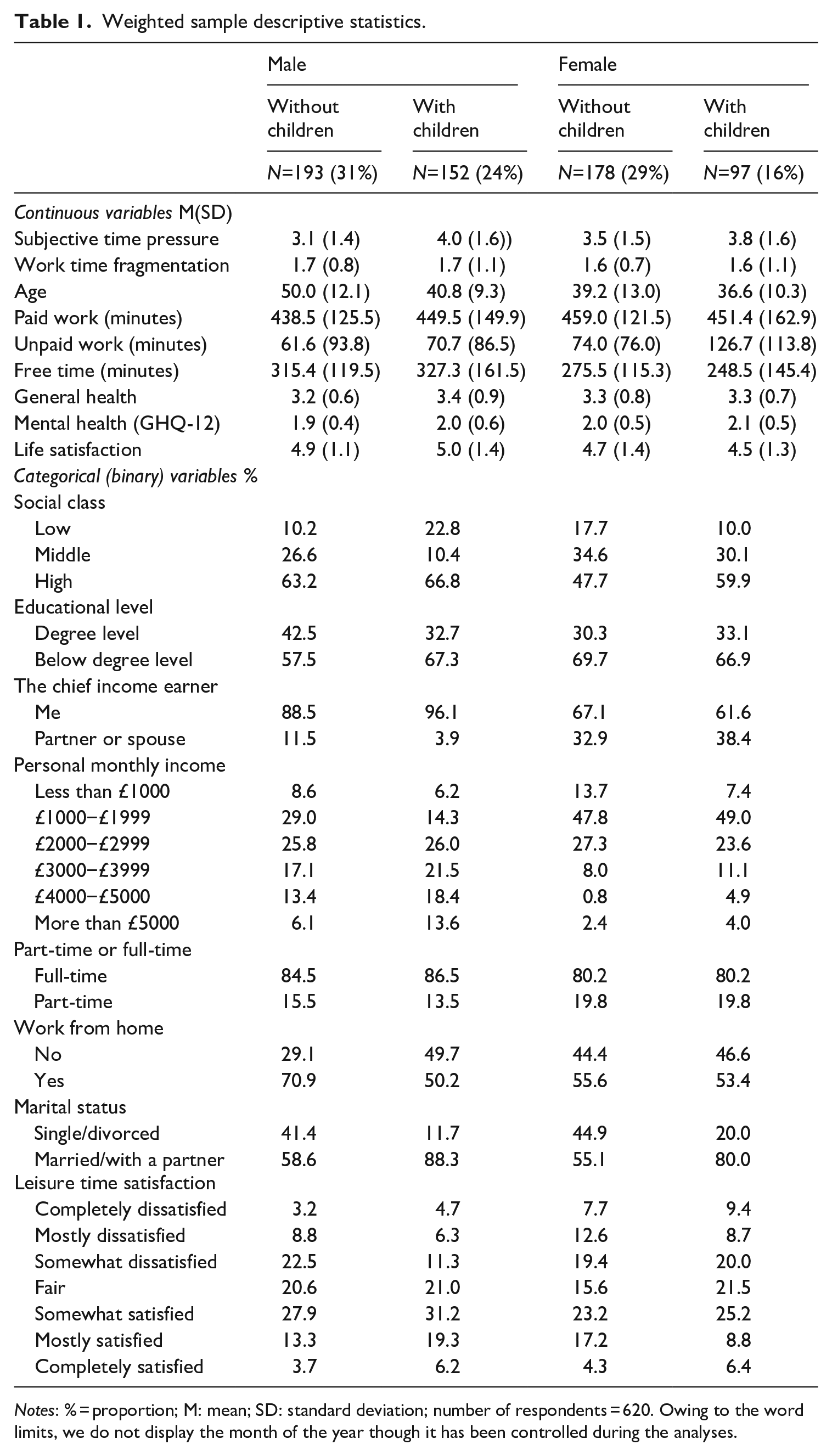
Notes: % = proportion; M: mean; SD: standard deviation; number of respondents = 620. Owing to the word limits, we do not display the month of the year though it has been controlled during the analyses.
Measurements
Dependent Variable
The study’s dependent variable is subjective time pressure, which was measured with a single survey question. Respondents were asked to rate their subjective time pressure on a seven-point scale in answer to the question ‘How are your feelings of time pressure on [this] diary day?’, ranging from 1 (Not time pressured) to 7 (Very time pressured).
Independent Variable and Moderators
The key independent variable is work time fragmentation. Following the prior literature (e.g. Merz et al., 2009), work time fragmentation is measured based on the number of distinct episodes of work in a typical workday. Specifically, we identified the number of times respondents switched in and out of paid work over the course of a day, and then calculated how many independent episodes of work this came to. A larger number of distinct work episodes indicate a higher level of work time fragmentation. The moderators in this study are gender and parenthood. Following previous time-use studies (Zhou and Kan, 2021), respondents with children aged 16 or below are considered parents. All of the respondents identified as parents in this study reported they had childcare responsibilities.
Control Variables
As with all observational data, selection effects may bias the results. For example, different employment hours and schedules are not evenly distributed regardless of gender or parenthood status (Craig and Brown, 2017). A series of control variables were included in the analyses to address such selection effects. As with previous studies (Chatzitheochari and Arber, 2012; Craig and Brown, 2017), the analyses controlled for age, respondents’ time spent on paid and unpaid work and free time, personal monthly income, marital status, social class, educational level, mental health status, life satisfaction, satisfaction with leisure time, the chief earner of the household, part-time work and working from home. Social class is measured using the three-category model of the National Statistics Socio-Economic Classification (NS-SEC) (Meier and Moy, 1999), including professional and managerial (high class), intermediate (middle class) and routine and manual (low class). Mental health status is measured using the 12-item General Health Questionnaire (GHQ-12). Each item indicates a different part of an individual’s mental well-being (e.g. being under strain, unhappy, depressed or losing sleep). The average score of respondents’ answers to the 12 items was converted to a single continuous scale ranging from 1 (the least distressed) to 4 (the most distressed). Overall life satisfaction and leisure time satisfaction were measured using respondents’ answers to the questions ‘How dissatisfied or satisfied are you with your (i) life overall and (ii) leisure time?’; both of these two scales range from 1 (Completely dissatisfied) to 7 (Completely satisfied).
Analytic Approach
This study begins with a descriptive overview of the differences in time-use patterns, mental health status and social resources by gender and parenthood. Then, in line with previous studies (Craig and Brown, 2017; Sullivan and Gershuny, 2018), this study estimates a series of Ordinary Least Squares regression models to examine the associations between work time fragmentation and subjective time pressure. It starts with a basic model that only includes work time fragmentation, gender and parenthood as predictors of subjective time pressure. Second, a series of socio-demographic characteristics and well-being factors were introduced to the models as potential confounders to be controlled. Moreover, this study expects that the associations between work time fragmentation and subjective time pressure might be moderated by gender, parenthood or the combination of the two. Thus, two-way (fragmentation × gender) and three-way (fragmentation × gender × parenthood) interaction terms are also added to the models to examine the potential moderating roles of gender and the intersection of gender and parenthood. This allows us to layer our investigation of fragmentation and subjective time pressure within both the gender and parenthood contexts, so we can examine whether specific contexts (i.e. men without children or women with children) promote or discourage work time fragmentation and its impacts on subjective time pressure. All models have passed the tests for multicollinearity. All analyses use the recommended weight to control for uneven distribution of sex and age due to the multistage sampling design, and to ensure that the time-use data reflect a balanced distribution of days of the week (more details about the weight adjusting is available from the UK Data Archive, Study number 8741) (Sullivan et al., 2021).
Results
Descriptive Statistics
Table 1 shows the results of the weighted sample descriptive statistics by gender and parenthood. Generally, respondents with children report more subjective time pressure than those without children, while fathers have the most subjective time pressure among the four groups. However, contrary to the assumptions, women do not report more work time fragmentation than men. There is only a slight gap (0.1 on average) in the number of distinct work episodes between men and women, and there is no difference between the means of work time fragmentation within gender. As for men, fathers report more paid and unpaid work than men without children. As for women, mothers report less paid work but more unpaid work than women without children. Moreover, the results of the descriptive analyses reveal women’s disadvantaged position in the household and labour market. First, women (especially those without children) spend more time on both paid work and unpaid work but have less free time than men, with lower life satisfaction and less likely to be satisfied with their leisure time. Second, over 63% of men were in the high social classes (professional and managerial), while there was a lower proportion of women (especially those without children) in high classes. Third, around 90% of men reported being the chief income earner, while fewer women reported being in this position and are more likely to do part-time jobs. In sum, the results of the descriptive analyses suggest that workers’ time-use patterns and well-being status differ systematically across gender and parenthood. Thus, it is crucial to take into account these factors in the multivariate regression analyses.
The Associations between Work Time Fragmentation and Subjective Time Pressure
Table 2 displays the results of several multivariate linear regressions predicting the associations between work time fragmentation and subjective time pressure. Model 1 in Table 2 is the basic model that only controls for gender and parenthood. The results of Model 1 in Table 2 indicate that those who had more distinct work episodes reported more subjective time pressure than their counterparts (coefficient = 0.13, SE = 0.06, p < 0.05). After introducing a series of control variables in the analyses, the positive association between work time fragmentation and subjective time pressure remains significant in Model 2 (coefficient = 0.16, SE = 0.06, p < 0.01). In addition, as shown in Table 2, Model 2 has a greater R-squared than Model 1 (0.26 versus 0.05), suggesting the importance of controlling for those socio-demographic characteristics and well-being factors in the analyses (see the online Appendix for the coefficients of the other control variables). It is also worth noting that the results of Model 1 suggest that parents have more subjective time pressure than non-parents (coefficient = 0.63, SE = 0.14, p < 0.001), while such an association is insignificant when controlling for the covariates in Model 2. Gender has no significant impact on respondents’ subjective time pressure. Moreover, the effect size of work time fragmentation is small in Model 2, while further analyses reveal more nuanced insights into the consequences of work time fragmentation by considering potential moderating roles of gender and parenthood (discussed in the next section). Overall, these findings are generally consistent with Hypothesis 1, confirming that workers tend to report more subjective time pressure when their work time becomes more fragmented.
Ordinary Least Squares regressions predicting the associations between work time fragmentation and subjective time pressure.
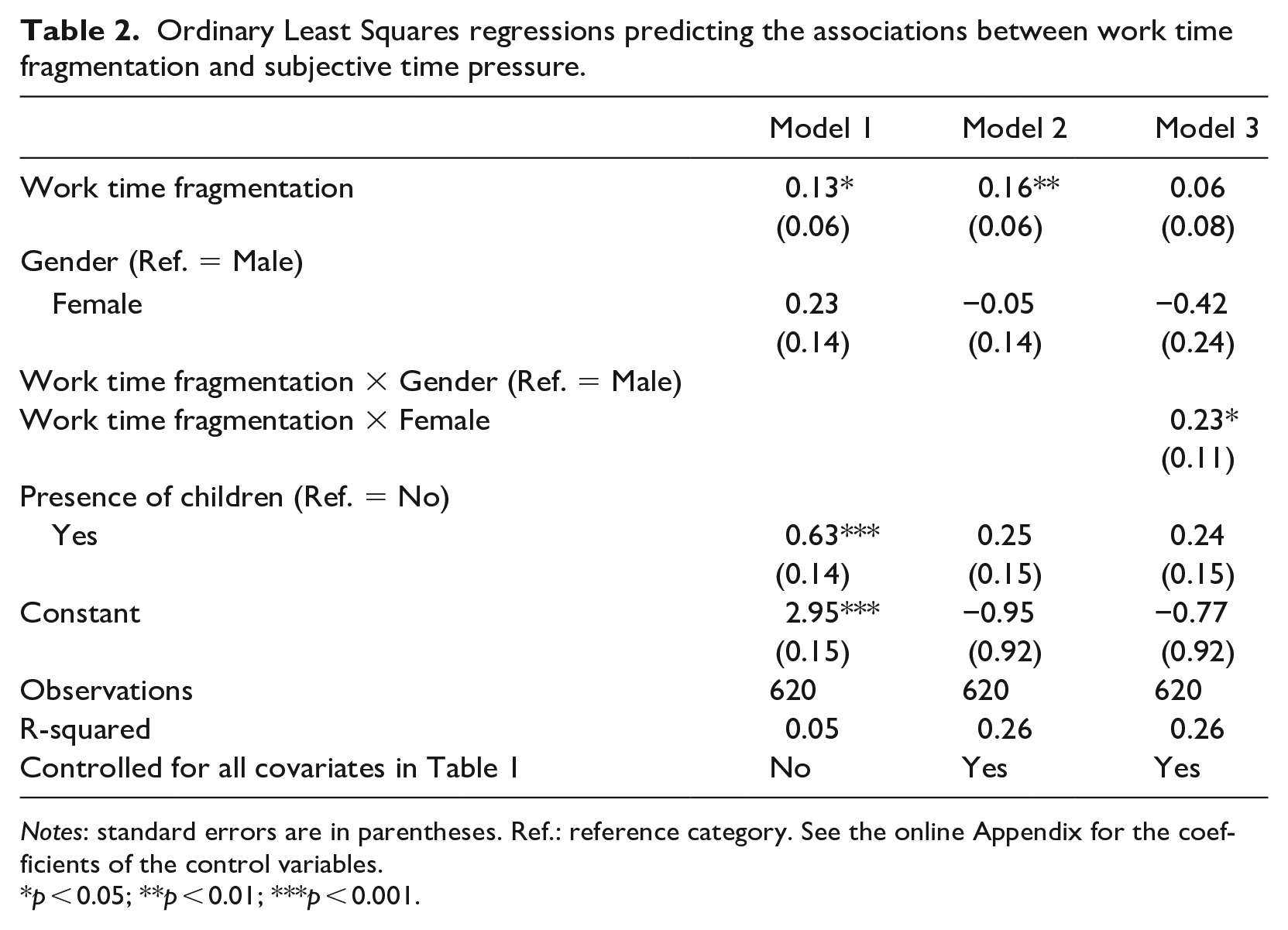
Notes: standard errors are in parentheses. Ref.: reference category. See the online Appendix for the coefficients of the control variables.
p < 0.05; **p < 0.01; ***p < 0.001.
The Roles of Gender and Parenthood
The results of Model 3 reveal the gender differences in how work time fragmentation shapes subjective time pressure. The interaction between gender and work time fragmentation is statistically significant (coefficient = 0.23, SE = 0.11, p < 0.05), which supports the moderating role of gender. Figure 1 plots the coefficients of the interaction term in Model 3. As shown in Figure 1, as the number of distinct work episodes increases, subjective time pressure increases are more pronounced among women than men. Women’s subjective time pressure increases by around one unit as the number of distinct work episodes increases from one to four, which is greater than the effect size of work time fragmentation identified in Model 2. Thus, ignoring the moderation effects of gender will conceal the actual effect size of work time fragmentation on subjective time pressure between gender. Overall, the results of Model 3 and the information in Figure 1 confirm Hypothesis 2 by showing that the positive associations between work time fragmentation and subjective time pressure are more pronounced among women than among men.
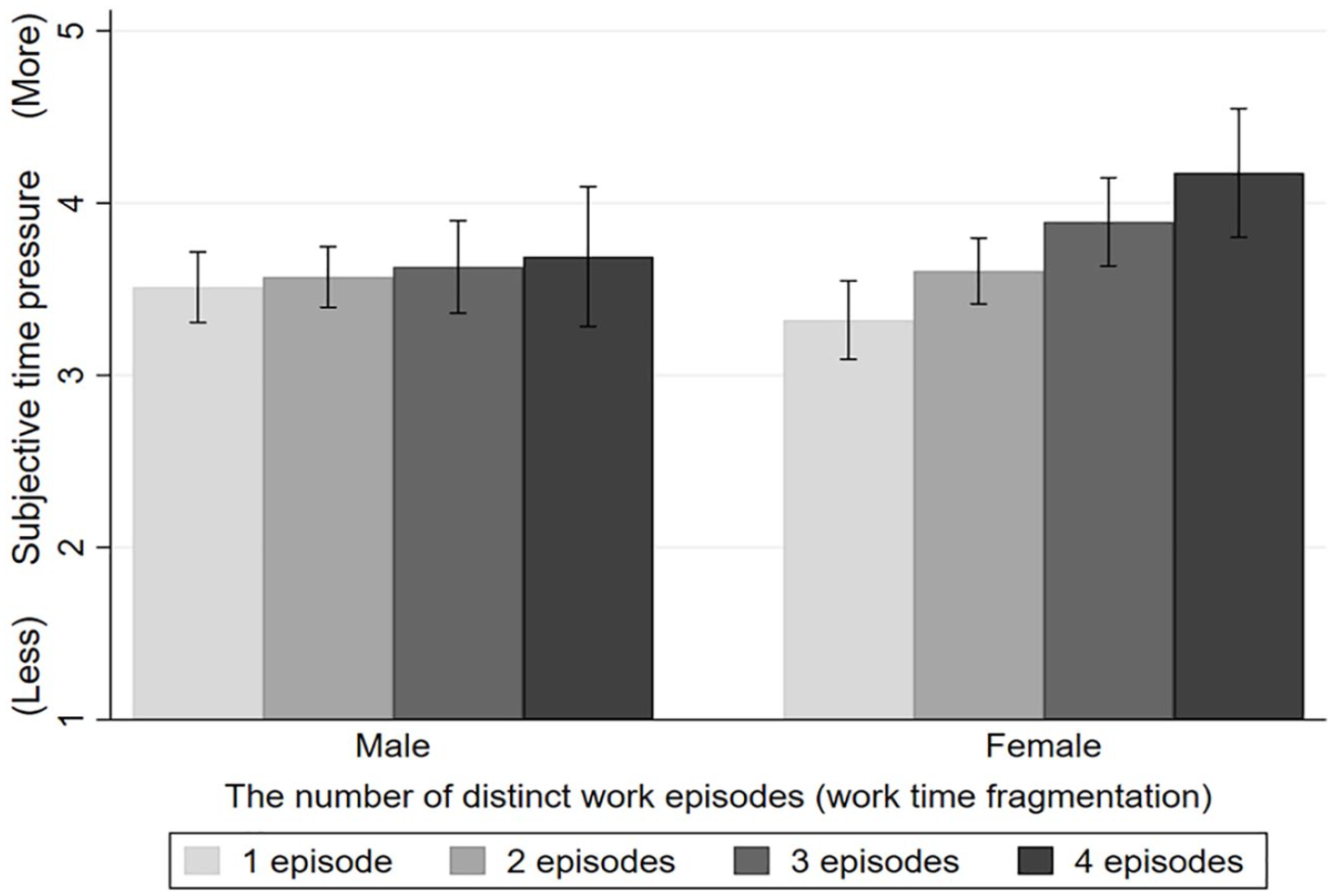
The interaction between work time fragmentation and gender.
Next, Table 3 describes the three-way interaction between work time fragmentation, gender and parenthood. Model 1 in Table 3 shows a statistically significant three-way interaction between the three factors (coefficient = −0.45, SE = 0.22, p < 0.05), with Figure 2 plotting the coefficients of the three-way interaction term. As shown in Figure 2, on the left side, the effect of work time fragmentation in increasing subjective time pressure is more pronounced among fathers. By contrast, men without children reported less subjective time pressure as their work time grew more fragmented. Work time fragmentation tends to polarise the subjective time pressure status between men without children and fathers. Thus, ignoring such significant differences between fathers and men without children also prevents us from understanding the actual effect of work time fragmentation on men’s subjective time pressure in a substantial way. In addition, as shown on the right side of Figure 2, the positive associations between work time fragmentation and subjective time pressure are less pronounced among mothers than women without children. Taken together, the results of Model 1 in Table 3 and the information in Figure 2 confirm Hypotheses 3 and 4.
Ordinary Least Squares regressions predicting the interaction between work time fragmentation, gender and parenthood.
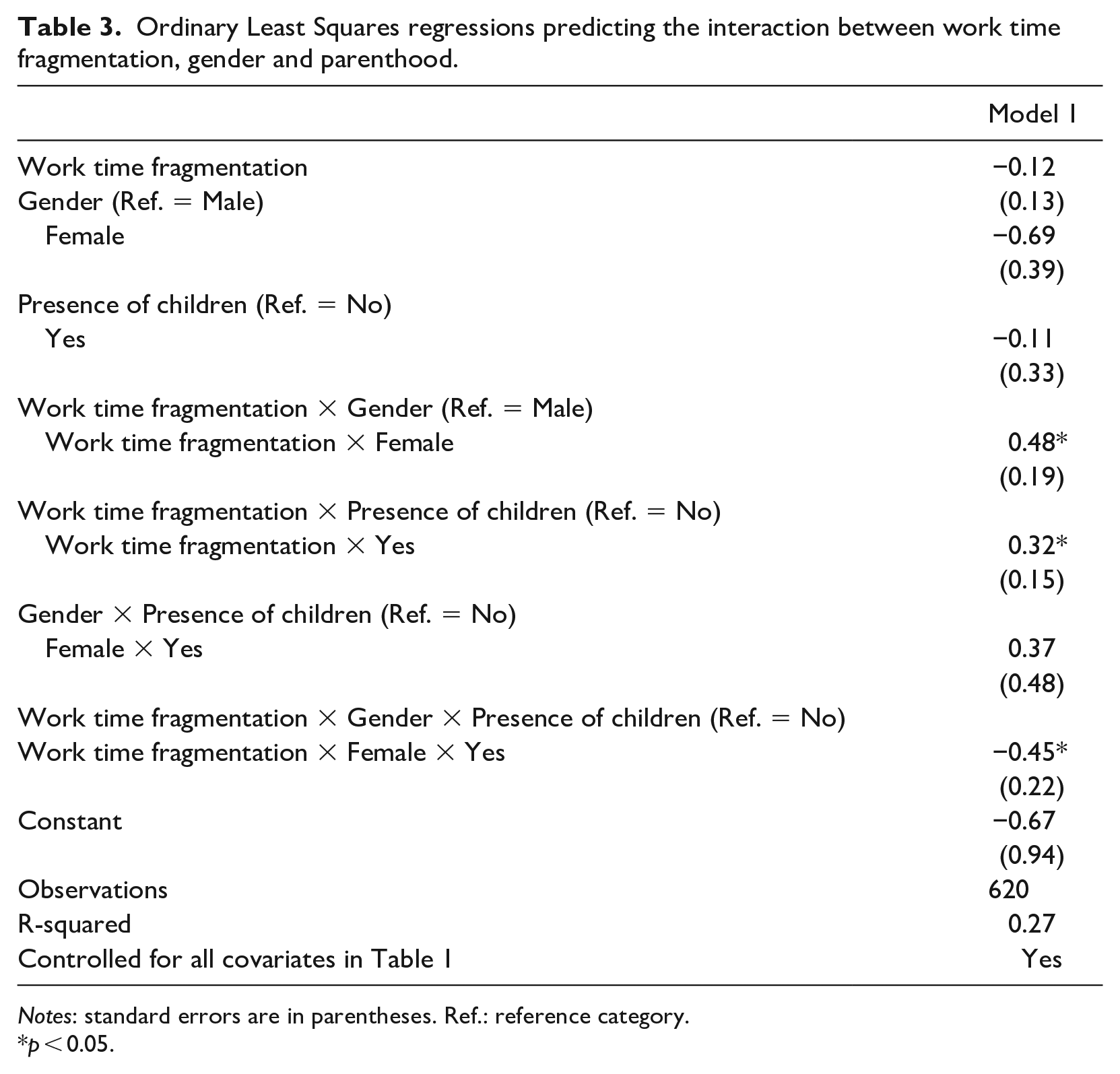
Notes: standard errors are in parentheses. Ref.: reference category.
p < 0.05.
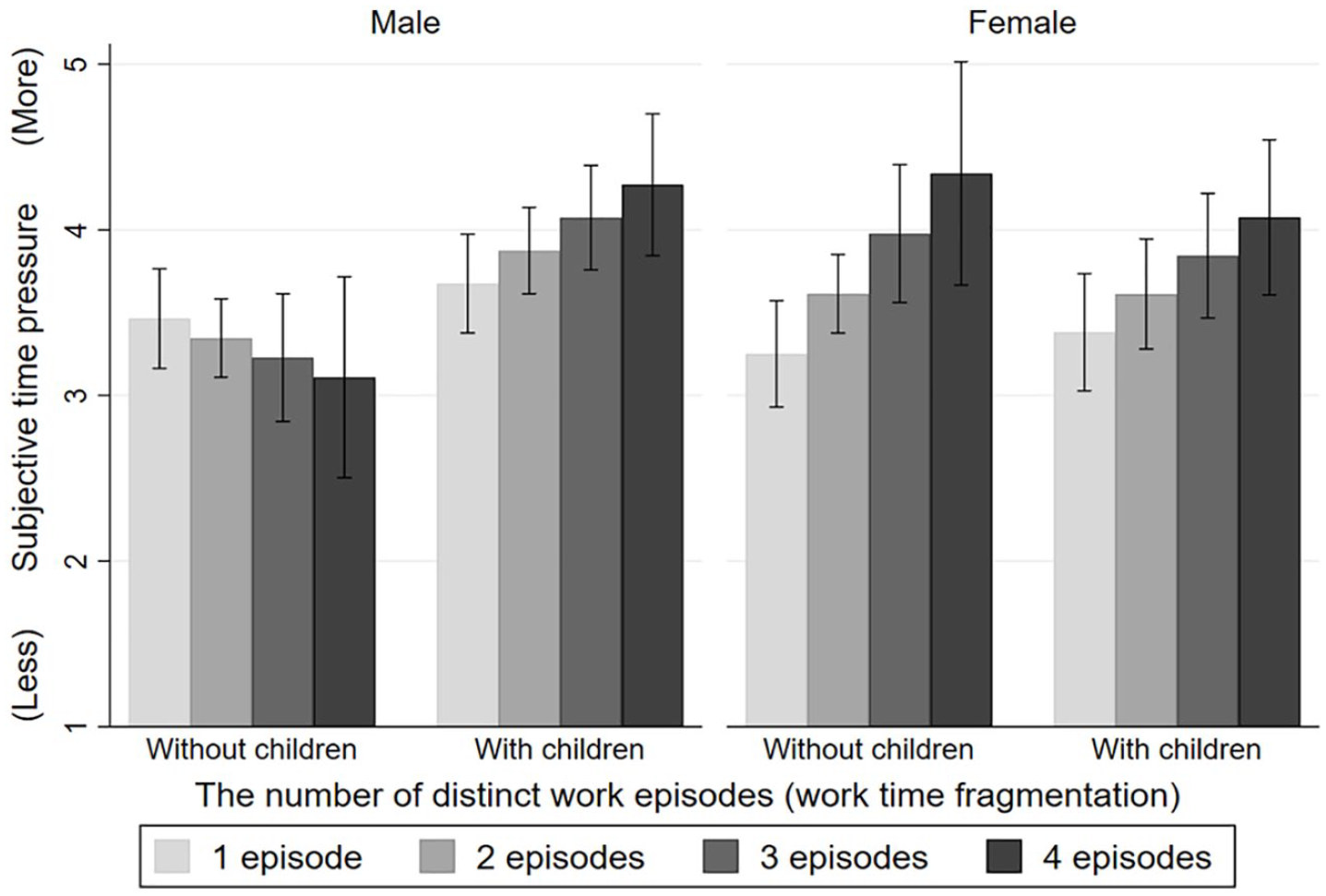
The intersection of gender and parenthood.
Discussion and Conclusions
Past studies have identified time fragmentation as a predictor of subjective time pressure (Sullivan and Gershuny, 2018), but have only investigated the effects of the fragmentation of free time (Craig and Brown, 2017; Mattingly and Bianchi, 2003), ignoring the significance of work time fragmentation. In addition, despite recent calls for time-use studies on gender inequality in workers’ time-use patterns and time quality (Sullivan, 2019), the investigation of gender and parenthood is rather absent in the current studies on work time fragmentation. Using time diary data from the latest UK Time Use Survey during 2020–2021 and Ordinary Least Squares regressions, this study contributes to the literature by investigating how work time fragmentation influences subjective time pressure, and how this relationship varies across gender and parenthood status. The findings of the study, along with their significance, are discussed below.
First, this is the first time-use study to identify work time fragmentation as an indicator of the quality of work schedules, offering an important insight into the mental consequences of the fragmentation of workers’ work time. Specifically, the study finds that workers tend to report more subjective time pressure when their work time grows more fragmented. This supports the claims of the theories of ‘role switching’ (Cornwell, 2013) and the ‘temporal regularity’ thesis (Cornwell et al., 2019; Schneider and Harknett, 2019). More frequent switching between work and non-work roles, along with work schedule instability, results in workers reporting more subjective time pressure. This means that work time fragmentation can decrease the quality of work time, which is consistent with the results of previous studies on the quality of free time (Chatzitheochari and Arber, 2012; Craig and Brown, 2017; Powell and Craig, 2015). It is worth noting that the data were collected during the COVID-19 period when many workers worked in more flexible ways than before (i.e. working from home and flextime), which might reduce gender differences or conceal the effects of role switching between work and family domains. Thus, we control for respondents’ use of flexible working arrangements, including doing part-time and working from home. In addition, the study controls for respondents’ general health status, mental health status, life satisfaction and satisfaction with leisure time and social life as the agency of the physical and mental health effects of COVID-19. The findings remain consistent after controlling for the potential effects of COVID-19.
Second, the study extends the understanding of the mental consequence of work time fragmentation by considering the moderating role of gender. The study’s regression results indicate that the positive associations between work time fragmentation and subjective time pressure vary by gender, and are more pronounced among female workers. In line with theoretical assumptions and the findings of previous studies (Clawson, 2014; Craig and Brown, 2017; Powell and Craig, 2015), the study’s findings suggest that women still hold disadvantaged positions in both the labour market and the household. As for women, they are more likely to do jobs with worse conditions and take on more domestic responsibilities. As for men, especially those without children, they are more likely to perform their role switching outside of the family context (Abendroth, 2022; Grönlund, 2007; Yucel and Chung, 2021). Thus, women are more likely to switch roles unexpectedly, thereby being more vulnerable to the adverse mental consequences of work time fragmentation than men. This finding contributes novel insights to the research on women’s job quality and mental health, revealing the gender inequalities in work-related time quality from a perspective of time fragmentation.
Third, the study also explores the intersection of gender and parenthood, revealing how work time fragmentation can influence subjective time pressure differently, even within gender. Previous studies indicate that people do more housework with becoming more traditional towards gender norms when they become parents (Kalucza et al., 2015; Singley and Hynes, 2005; Yavorsky et al., 2015). As for men, this study finds that work time fragmentation led to more subjective time pressure among fathers than among men without children. This might be because men face more inter-role conflicts after becoming fathers due to the increased financial and domestic responsibilities (Abendroth, 2022; Huss and Pollmann-Schult, 2020). The changes in gender role attitudes and domestic responsibilities brought on by fatherhood amplified the influence of work time fragmentation on subjective time pressure. Thus, fathers are more likely to perform their role switching inside of the family context than men without children. By contrast, men without children reported less subjective time pressure when their work time became more fragmented. This is consistent with the predictions that men without children face the smallest amount of conflicts between work and family (Glavin and Schieman, 2012; Grönlund, 2007), and so the role switchings that occur among men without children are more likely to be self-oriented rather than family-oriented. As for women, the influence of work time fragmentation on subjective time pressure was less pronounced among mothers than among women without children. This finding is in line with the predictions of past research (Baxter et al., 2008; Katz-Wise et al., 2010; Singley and Hynes, 2005; Wang and Lu, 2022) that mothers are more mentally adaptable to the increased domestic work after giving birth due to the changes in their gender role attitudes. The role expansion theory also indicates that motherhood can be a buffer to work-related stress and anxiety (Nordenmark, 2004). By contrast, women without children might be more vulnerable to the mental consequences of work time fragmentation due to their relatively more egalitarian gender role attitudes.
This study has some limitations. One shortcoming of this study is that it only investigates workers’ work engagement and time pressure on weekdays, while many actual workers work during weekends too. However, only a few respondents report weekend work, which limits the availability of diary data for weekend work schedules. Previous studies suggest that the mental effects of weekend work are governed by different mechanisms than weekday work (Hoang and Knabe, 2021). Therefore, future studies can further investigate this study’s assumptions by using weekend diary data. Moreover, this study cannot conclusively demonstrate the presence of a causal relationship as there may be some other unobserved confounders that influenced the associations in the study. This study does not include a longitudinal analysis because of limitations in the dataset. Future studies can use the upcoming version of the UK time-use survey to do multilevel or longitudinal analyses with a bigger sample size.
These limitations should not, however, overshadow the study’s main contributions to our understanding of the associations between work time fragmentation and subjective time pressure across socio-demographic groups. Generally, the study’s findings emphasise the existing social inequalities in work time quality from a time fragmentation perspective. In addition, a stream of the latest studies on employment indicates that it might be job quality rather than job quantity that is important for workers’ mental health (Wang et al., 2022a). The study’s findings suggest that work time fragmentation could be an important subindex of job quality due to its influence on workers’ subjective well-being, while this has been ignored by previous studies and theoretical models. In sum, researchers and policymakers should find innovative approaches to address the existing social inequalities in the fragmentation of work-related time to promote workers’ quality of job and life.
Supplemental Material
sj-docx-1-soc-10.1177_00380385231166893 – Supplemental material for Can Work Time Fragmentation Influence Workers’ Subjective Time Pressure? The Roles of Gender and Parenthood
Supplemental material, sj-docx-1-soc-10.1177_00380385231166893 for Can Work Time Fragmentation Influence Workers’ Subjective Time Pressure? The Roles of Gender and Parenthood by Zhuofei Lu in Sociology
Footnotes
Acknowledgements
The author would like to thank Professor Wendy Olsen, Professor Yoajun Li, the Sociology editorial team and two anonymous reviewers for their thoughtful reviews and suggestions on earlier versions of this article.
Funding
The author received no financial support for the research, authorship and/or publication of this article.

Supplemental material
Supplemental material for this article is available online.
References
Supplementary Material
Please find the following supplemental material available below.
For Open Access articles published under a Creative Commons License, all supplemental material carries the same license as the article it is associated with.
For non-Open Access articles published, all supplemental material carries a non-exclusive license, and permission requests for re-use of supplemental material or any part of supplemental material shall be sent directly to the copyright owner as specified in the copyright notice associated with the article.
