




Abstract
This article hypothesizes that maternal occupation-specific skills are associated with children’s cognitive development over and above parents’ other human, financial and social capital. Data from the UK Millennium Cohort Study on 13,543 children were complemented with occupation-level data (n = 79) from the British Skills Surveys on aggregate measures of mothers’ occupation-specific skills (literacy, numeracy, problem-solving, verbal and physical). We did not find any association between maternal occupation-specific skills and children’s non-verbal ability (inductive reasoning, spatial awareness) at age five when conditioning on covariates. However, mothers’ verbal skills (e.g. presentation skills) were positively associated with children’s verbal ability (Naming Vocabulary) over and above other parental resources. By contrast, mothers’ physical skills (e.g. use of physical strength) were negatively associated with children’s verbal abilities. Albeit effect sizes are small, maternal occupation-specific skills contribute to social stratification in children’s verbal development net of human, financial and social capital.
Introduction
Children from higher family socio-economic status (SES) perform better on many cognitive, socio-emotional, and health outcomes in early childhood than children from lower SES backgrounds (Bradley and Corwyn, 2002). These differences arise because children growing up in high-SES families have access to more resources deemed beneficial for children’s development than children in low-SES families (Brooks-Gunn and Duncan, 1997). Family SES can be conceptualized with the notion of capital (resources, assets), whereby differential access to financial, human and social capital is associated with varying growth in children’s development (Coleman, 1988).
Greater financial capital gives families more opportunities to invest in goods and services that foster children’s learning (Yeung et al., 2002). It is typically operationalized with household income, occupational status or occupational class. Families’ human capital (any non-material resources such as education, skills or knowledge) enables them to engage their children in interactions and activities in cognitively stimulating ways (Harding et al., 2015). Studies measuring families’ endowment with human capital commonly use parents’ education as the primary indicator. The family’s social capital captures the relations between children and all other family members. Whether children gain access to family members’ human capital depends on members’ physical presence and attention towards their children (Coleman, 1988). Although family SES dimensions are highly interrelated, they measure different resources and are uniquely associated with children’s cognitive, language and behavioural outcomes (Bradley and Corwyn, 2002; Duncan and Magnuson, 2003).
Scholars have long argued that work and occupations have ‘spillover’ and socialization effects on other life spheres such as parenting (Greenberger et al., 1994). For example, Melvin Kohn and colleagues’ seminal work showed that what people experience in their jobs translates into value orientations and behaviours that they apply outside their workplace, for example parenting (Kohn and Schooler, 1982). Occupational characteristics such as maternal occupational complexity (task complexity, authority and autonomy) influence parental skills and value orientations, affecting their parenting styles and children’s cognitive outcomes and academic achievement (Parcel and Menaghan, 1994; Yetis-Bayraktar et al., 2013). Hook et al. (2021) also found that occupational autonomy was positively associated with mothers’ time in interactive care. By contrast, mothers working in occupations with greater strain-based demands (e.g. aggression–conflict or physicality–hazards) spend less time with their children and less on physical childcare activities (Hook et al., 2021).
This article argues that the research on family SES and children’s cognitive skills could incorporate a broader definition of parental human capital (Dearden et al., 2011; Schoon et al., 2012). We propose to extend the role of occupational characteristics in child development to a range of maternal occupation-specific skills and investigate their association with children’s cognitive ability. We explore whether maternal occupation-specific skills influence children’s expressive language, inductive reasoning and spatial awareness skills over and above parents’ endowment with other forms of human, economic and social resources. Our focus lies on five-year-old children because this is when most children enter primary school in the UK. Around this age, children have usually experienced several years in which parenting is particularly influential, while schooling has not yet started to shape their development (Heckman and Mosso, 2014).
We contribute to the literature on family SES and child development in two important ways. First, studies examining socio-economic inequalities in children’s development may not have sufficiently measured all relevant forms of capital and, therefore, failed to assess the full scope of socio-economic disparities in child development. By conducting a first exploratory investigation of the impact of maternal occupation-specific skills, we provide a basis for discussing and improving parents’ human capital measurement and the assessment of socio-economic differences in children’s cognitive ability.
Second, we extend the scholarship on intergenerational transmission of skills and the impact of mothers’ occupations on child development. Research on the association between parent and child skills commonly focused on parents’ ‘general’ cognitive ability in the form of educational qualifications or cognitive test scores measured when they were children or adults (Brown et al., 2011; Crawford et al., 2011). Research studying the impact of work characteristics on children’s skill development mainly considered parents’ ‘intellectual capacities’ formed through complex work environments (Parcel and Menaghan, 1994; Schooler, 1984). However, occupations require a wide range of specific skills and values, influencing family life and parenting (Jonsson et al., 2009).
We contribute to the literature by investigating the association between maternal occupation-specific skills (e.g. literacy, numeracy and problem-solving) and children’s verbal and non-verbal development at age five net of other financial, human and social capital. For this purpose, we link data from the Millennium Cohort Study (MCS) to the British Skills Surveys (BSS) to capture mothers’ occupation-specific skills.
Maternal Occupation-Specific Skills and Children’s Cognitive Development
Human capital ‘provides the potential for a cognitive environment for the child that aids learning’ (Coleman, 1988: S109). Hence, parents’ human capital corresponds to their capacity to promote their children’s cognitive development (Harding et al., 2015). The amount of human capital in the family determines the quality and quantity of parent–child interactions and the availability of a stimulating learning environment deemed beneficial for children’s cognitive development (Shonkoff and Phillips, 2000). Parental time spent in educational activities with children is the most productive input for children’s cognitive development (Del Bono et al., 2016; Fiorini and Keane, 2014). Language acquisition and children’s vocabulary growth is significantly influenced by the quantity and quality of linguistic input directed at children in their social environment (Hurtado et al., 2008; Weisleder and Fernald, 2013).
The literature commonly measures the human capital in the family with mothers’ education because of their primary role in caring for children (Harding et al., 2015). However, focusing on mothers’ educational attainment may be too narrow because ‘human capital is created by [any] changes in persons that bring about skills and capabilities that make them able to act in new ways’ (Coleman, 1988: S100). Hence, parents may also have gained human capital before their education (e.g. through early childhood) or after their education (e.g. through their occupation). The additional human capital may help mothers foster their children’s learning and development. For instance, growing evidence shows that parents’ early cognitive skills are strongly associated with their children’s cognitive skills (Anger and Heineck, 2010; Crawford et al., 2011; Sullivan et al., 2021). Aside from early cognitive ability, human capital also entails mothers’ on-the-job training and occupational practice, which may help create a stimulating learning environment for children at home. Occupations may endow parents with different skills beneficial for children’s cognitive development net of other capitals (human, financial, social).
Occupation-specific skills can be understood as a multidimensional concept including different cognitive, social, physical, verbal and numerical skills required to perform tasks in a specific occupation (Elliott and Lindley, 2006). These specialized skills are formed in the workplace and are distinct from individuals’ pre-existing general (cognitive) abilities (Liu and Grusky, 2013). Although occupations influence wages through their task content (Williams and Thijs, 2018), skills developed through occupational task requirements may also shape the home environment, particularly maternal decisions on parenting and their interactions with their children (see Figure 1). Whereas decisions correspond to the ‘what’ of parenting, interactions are about the ‘how’. When it comes to childrearing, mothers must make a wide range of choices, including, for example, whether to breastfeed, which toys and books to buy, which play activities to engage in, how much to play and which early childcare institution or extra-curricular programmes to use. Parenting also involves much interaction, that is, mothers’ responding and communicating with their children – a concept that strongly overlaps with what is often referred to as parenting style (Chan and Koo, 2011).
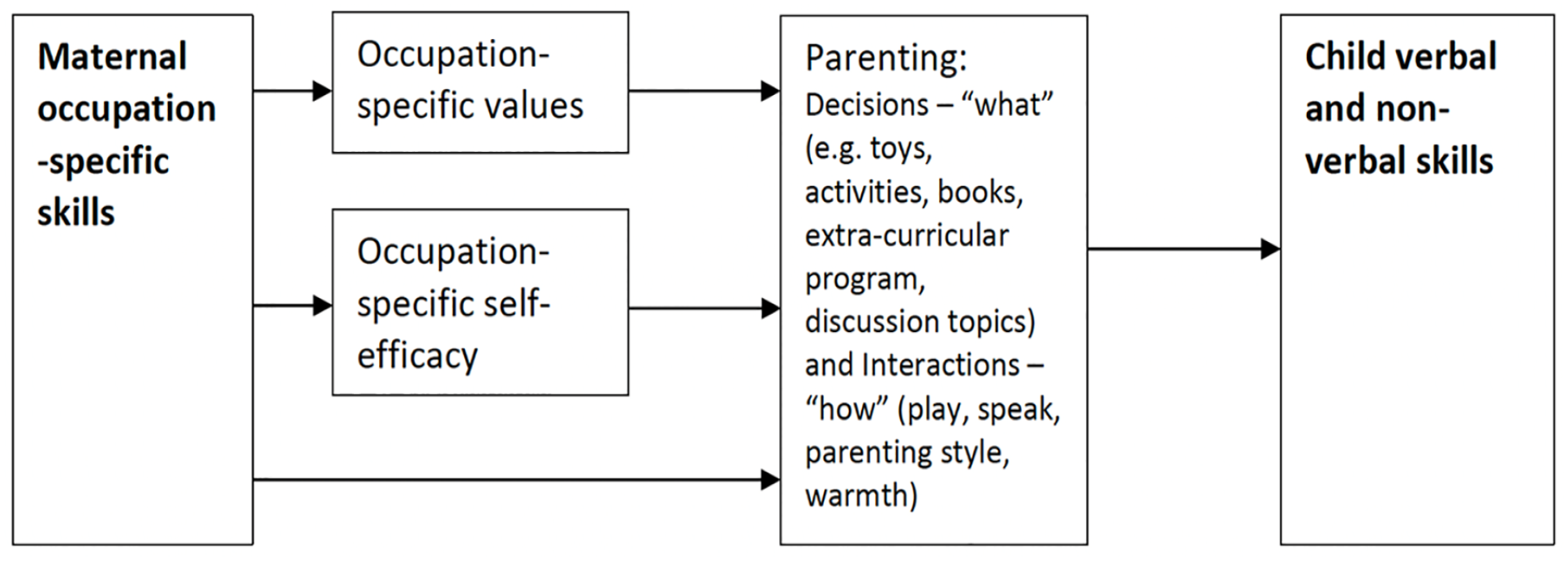
Conceptual model linking maternal occupation-specific skills with children’s verbal and non-verbal skills.
Figure 1 illustrates that maternal occupation-specific skills influence parenting decisions and interactions via three mechanisms. First, maternal occupation-specific skills have an indirect impact via maternal occupation-specific values. Our assumptions draw on Kohn’s and Schooler’s work (Kohn, 1963, 1976; Kohn and Schooler, 1969, 1973), who studied how employment conditions (e.g. occupational opportunities for self-direction, job pressure, position in an organization’s hierarchy) shape parenting values and parenting styles. They proposed that parents’ complex work environments require intellectual skills that foster self-directedness in other life domains, such as parenting (Alwin and Tufiș, 2021). We extend this argument and suggest that maternal occupation-specific skills will translate into value orientations that favour these specialized skills and shape their parenting decisions and interactions (Eccles et al., 1993; Jodl et al., 2001). If an occupation rewards a certain cognitive effort (e.g. independent judgement), it stimulates individuals’ value orientation and motivation to develop further the required cognitive abilities (Schooler, 1984).
For example, engineering occupations may promote construction skills and engineers’ appreciation of such skills. The occupation-specific value orientation is then generalized to other situations, resulting in parenting values and styles aligned with these values (Schooler, 1984). Jonsson et al. (2009: 988), who studied the intergenerational transmission of micro-classes, provided an example illustrating the role of occupation-specific values for parents’ engagement with their children: ‘The engineer [. . .] may bring home toys that involve building things, may focus conversation and inquiry on the world of things, and may impart a special interest in understanding how things work.’ Hence, occupation-specific human capital may result in preferences for parental engagement and time with children, learning strategies, play, discussion and parenting behaviour that parents are skilled in or know about through occupational socialization.
Second, maternal occupation-specific skills influence their parenting indirectly through their parental self-efficacy. Parental self-efficacy corresponds to parents’ belief in their ability ‘to influence the child and his or her environment to foster the child’s development and success’ (Ardelt and Eccles, 2001: 945). The literature suggests that parental self-efficacy determines whether and how parents engage with their children (Coleman and Karraker, 1998; Jones and Prinz, 2005) and that it is a belief that is specific to distinct situations or ‘tasks’ rather than a global, stable belief (Coleman and Karraker, 1998). For instance, parental self-efficacy is one of the key factors determining whether parents get involved in their children’s schooling (Hoover-Dempsey and Sandler, 1997). More specifically, mothers’ reading self-efficacy is associated with the barriers they perceive to reading to their child (Lin et al., 2015). Parents’ mathematic self-efficacy is linked to their own and their children’s emotions and behaviours towards mathematics (Bartley and Ingram, 2018). Mothers’ ‘task-specific’ self-efficacy may be stronger if their occupation promotes skills in the respective domain or tasks and may, in turn, influence their decisions about parenting and the way they interact with their children.
Third, maternal occupation-specific skills directly impact parenting because mothers use their skills when interacting with their children. For example, mothers with numerical skills will be better at and more engaged in playing numeracy games than mothers with no or low levels of such skills. Similarly, mothers with crafts skills are more likely to use their abilities and inspire their children in creative activities such as drawing, painting and making things with their hands than mothers with little craft skills.
Hypotheses
Mothers’ occupation-specific skills may shape their parenting decisions and interactions; they create parenting environments for their children influenced by their occupations (Jodl et al., 2001; Jonsson et al., 2009). These, in turn, shape children’s verbal and non-verbal development. From this reasoning, we deduce the first hypothesis: net of economic, social and other human capital, maternal occupation-specific skills have a positive impact on children’s verbal and non-verbal ability.
We differentiate between five specific groups of maternal occupation-specific skills: literacy, numeracy, problem-solving, verbal (e.g. teaching and presentation skills) and physical skills (e.g. use of physical strength, tools, hands and fingers). Table 1 provides an overview of these groups and their expected impact on children’s non-verbal and verbal abilities.
Maternal occupation-specific skills and their potential impact on children’s verbal and non-verbal abilities.
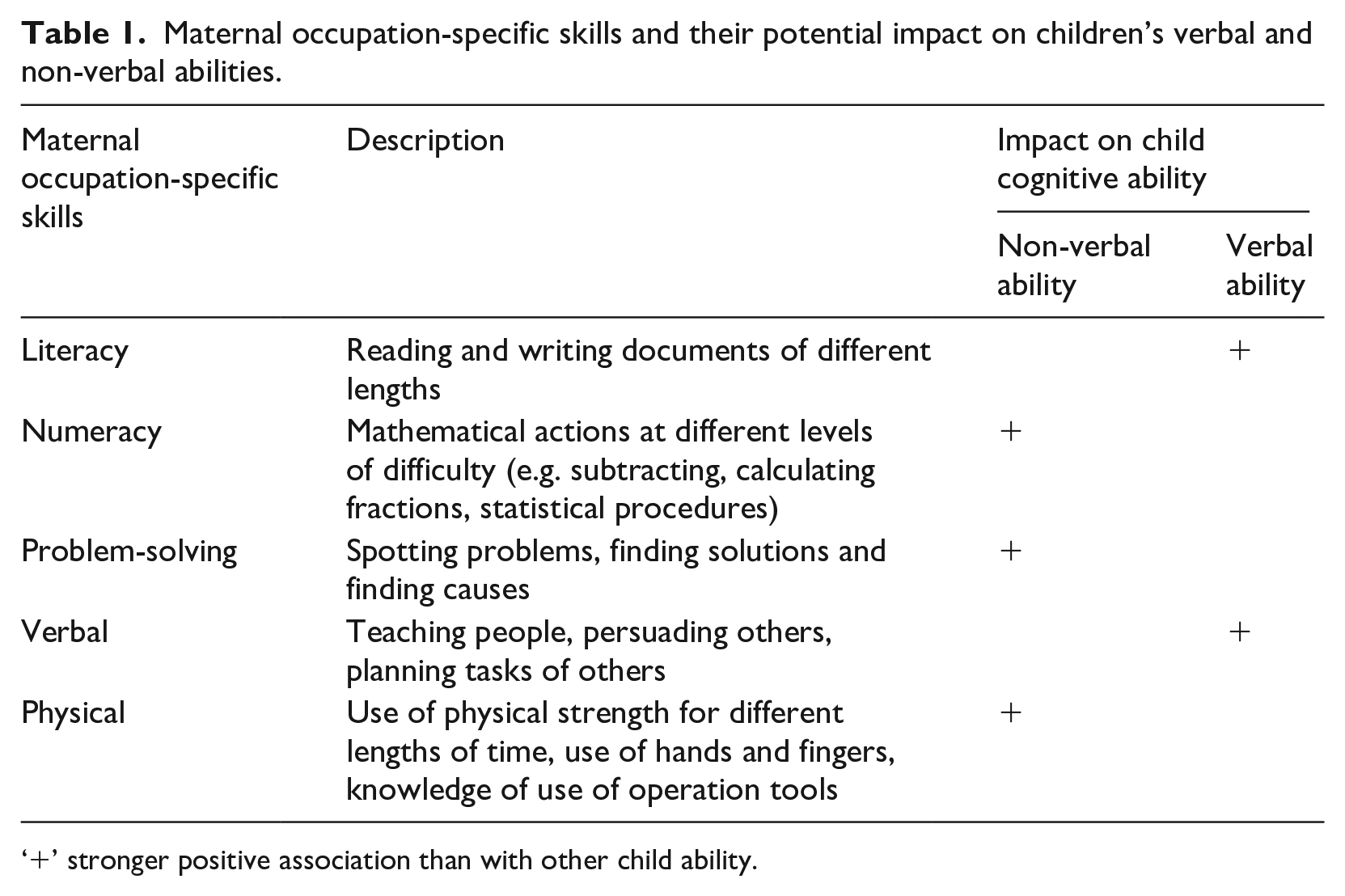
‘+’ stronger positive association than with other child ability.
We suggest that mothers’ literacy and verbal skills are more influential for children’s verbal ability than their non-verbal ability. Mothers with these skills may, for instance, promote their children’s verbal abilities by reading them plenty of books and speaking a lot with them (Demir-Lira et al., 2019; Frijters et al., 2000; Sénéchal and LeFevre, 2002; Sullivan et al., 2021). By contrast, mothers’ numeracy skills may benefit children’s non-verbal ability more than children’s verbal ability. For example, mothers with high levels of numerical skills may buy toys such as blocks and engage in construction play or puzzles, which influence children’s early numeracy skills, non-verbal problem-solving and spatial transformation skills (Levine et al., 2012; Niklas and Schneider, 2014; Segers et al., 2015; Trawick-Smith et al., 2017). Likewise, we expect that mothers’ problem-solving skills influence children’s non-verbal spatial and reasoning development more than their verbal ability because mothers can use their analytical thinking in cognitively stimulating play with their children (Mondell and Tyler, 1981). In addition, parents who require physical skills in their work may promote children’s fine motor skills, which, in turn, are associated with better visual-spatial processing (Van der Fels et al., 2015). Our second hypothesis suggests that mothers’ literacy and verbal skills are more strongly associated with children’s verbal ability; mothers’ numeracy, problem-solving and physical skills are more strongly associated with children’s non-verbal ability.
Method
Data
The study draws mainly on data from the UK Millennium Cohort Study (MCS). In addition, we use British Skills Surveys (BSS) data to generate mothers’ occupation-specific skill variables. The MCS surveyed around 19,000 children born between September 2000 and January 2002. The sample was selected from all births in a random sample of electoral wards. It was disproportionately stratified, allowing for greater representation of all UK countries, deprived areas and areas with high concentrations of Black and Asian families in England. Owing to disproportionate sampling, we used sampling weights throughout the analysis (Plewis et al., 2004).
For our analysis, we chose to sample families who responded to the third survey (n = 15,431), considering outcome measures of expressive language, inductive reasoning and spatial awareness ability at the age of five. We used information from the first three waves (University of London, Institute of Education, Centre for Longitudinal Studies, 2020a, 2020b, 2020c) to derive family financial, human and social capital measures. Our analytical sample does not contain children living only with their grandparents or living in adoptive or foster families (n = 55), that is, families in which no natural parent was present. Small case numbers prohibited the inclusion of these family structures, which may differ systematically from the majority sample in our analysis. For example, parenting influences in these situations are likely to be less consistent over time since step, or adoptive mothers may not have lived with the child long enough for parenting to impact children’s development. Our analyses are based on children and their natural mothers (or natural fathers in single-father households), for whom we have complete data on all measures, leaving us with 13,543 observations. In addition to using sampling weights, we corrected for non-selective loss to follow-up using MCS attrition/non-response weights (University of London, Institute of Education, Centre for Longitudinal Studies, 2020d).
The BSS is a nationally representative survey conducted between 1997 and 2017 to gather information on the job skills of employed adults aged 20 to 60 (some surveys also include adults aged 61 to 65). We used data from the surveys in 2001 (n = 4470), 2006 (n = 7787) and 2012 (n = 3200) to create several occupation-specific skills variables (Felstead et al., 2019), which we then assigned to mothers in the MCS using their Standard Occupational Classification-codes (SOC2000). The SOC2000 is the UK’s official occupational classification system. Jobs are classified by work content and skill level.
Measures
Child Cognitive Ability
Around their fifth birthday, MCS assessed children with the Naming Vocabulary, the Picture Similarities and Pattern Construction task, child assessments from the British Ability Scales, Second Edition (BAS II; Elliott et al., 1997). Interviewers directly administered all tasks at the child’s home. Naming Vocabulary is our verbal ability measure assessing children’s expressive language ability and knowledge of nouns by asking them to identify different objects in a coloured picture booklet. The Picture Similarities assessment captures children’s inductive reasoning ability by asking them to match a picture card (e.g. an animal) to one of four other picture cards (e.g. a house, a person, a car or another animal) based on whether they see any conceptual or elementary link. Finally, the Pattern Construction task tests children’s spatial awareness by asking them to construct a design by putting together flat squares or solid cubes with black and yellow patterns on each side. We used MCS standardized scores for all BAS II tasks, adjusted for both item difficulty and age. They are bounded between 10 and 80, have a mean of 50 and have a standard deviation of 10.
Maternal Occupation-Specific Skills
We measure occupation-specific skills with information on job tasks provided by the respondents in the BSS data. A core part of the BSS involves questions about how important a certain task is for a person’s job. The tasks include, for instance, reading short or long documents, persuading or influencing others and analysing complex problems in depth. Respondents could choose between the answering categories (1) not at all important/does not apply, (2) not very important, (3) fairly important, (4) very important and (5) essential.
We conducted a factor analysis with principal component extraction on 33 task variables, and – applying a selection rule of Eigenvalues larger than one – we found an eight-factor solution. For this analysis, the original BSS sample of 15,457 was reduced to 13,457 because of missing values on three task variables (in particular, a variable measuring the use of statistics with 1530 missing values). Further, six cases were not used as they had missing values on the occupation-code variable leading to a sample size of 13,451. After oblique promax rotation, we generated indices representing the mean values of the variables loading on these factors with loadings of more than 0.4. Two skills variables out of the 33 were excluded through this procedure as their loadings are below 0.4.
Next, we reduced the 81 three-digit SOC2000-occupation groups to 79 groups by merging two groups with similar groups because they had less than 20 cases (see Williams and Thijs, 2018 for a similar approach). We then calculated the mean of each index for respondents working in those 79 occupation groups. The case numbers across these occupation groups range from 20 to 818. The eight indices (literacy, numeracy, problem-solving, verbal, social, physical, teamwork, self-planning), the underlying items and the means of the indices at the BSS sample and occupation-group level are presented in Table 2.
Maternal skills-indices, underlying variables, Eigenvalues, Cronbach’s alphas and factor loadings.
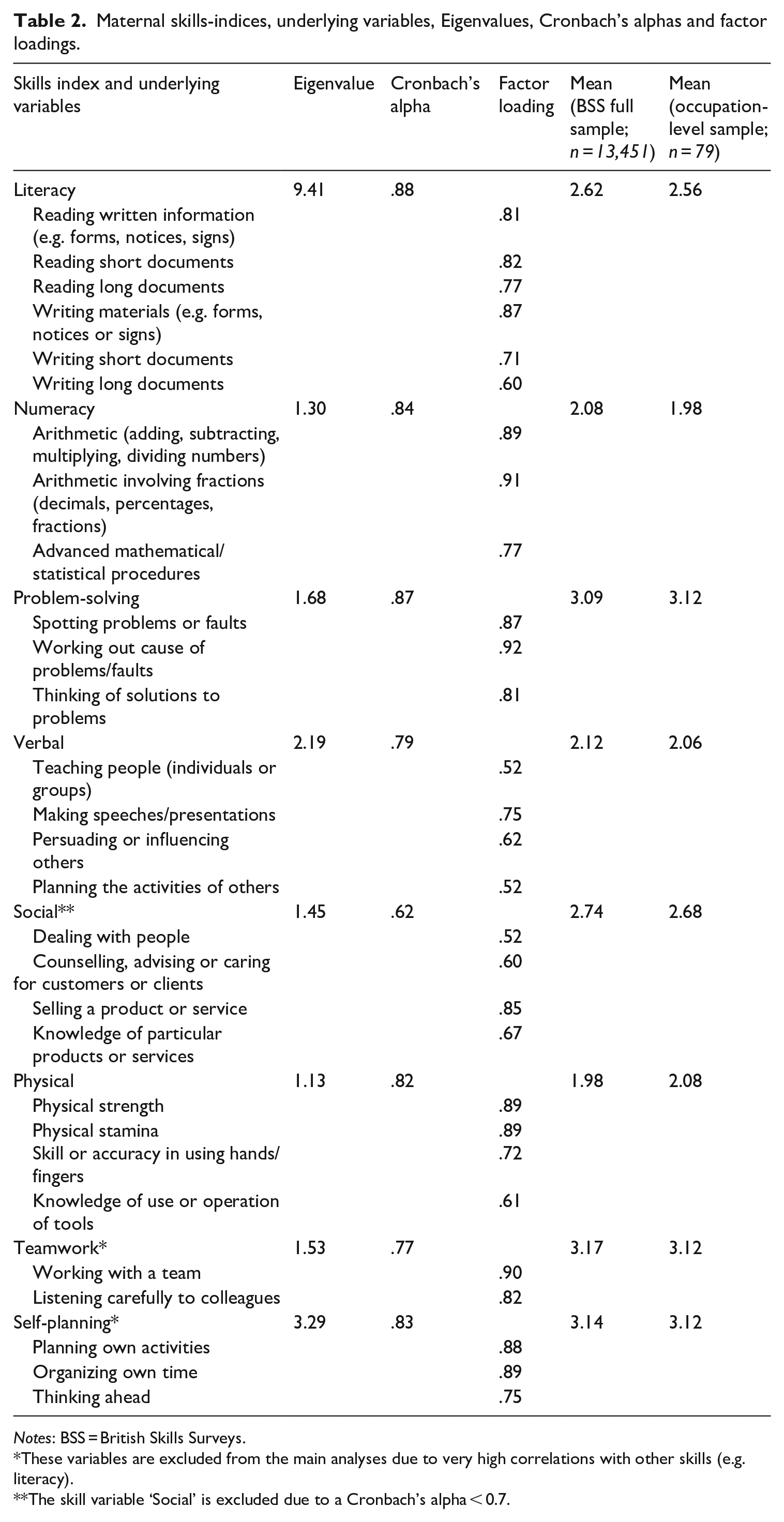
Notes: BSS = British Skills Surveys.
These variables are excluded from the main analyses due to very high correlations with other skills (e.g. literacy).
The skill variable ‘Social’ is excluded due to a Cronbach’s alpha < 0.7.
Lastly, we merged the eight occupational skills variables from the BSS with mothers’ information on their occupation in the MCS data based on three-digit SOC2000 codes. Information on mothers’ occupation from their current or last paid job was taken from the first sweep when children were nine months old and supplemented by information from the second sweep (age three) if mothers did not provide information on their paid job in the first sweep. For single-father households, we used respective occupational information from the father (n = 78).
From a theoretical point of view, it is unclear how social skills (dealing with people, selling a product), teamwork (working with a team, listening to colleagues) and self-planning skills (planning own activities, organizing own time, thinking ahead) correspond to improvements in children’s verbal and non-verbal ability. The social skills index has a Cronbach’s alpha of 0.62, suggesting an internal consistency lower than acceptable (> 0.7). Table 3 shows that self-planning and teamwork skills are strongly correlated with literacy skills (0.83 and 0.71, respectively), verbal skills (0.77 and 0.67, respectively), and problem-solving skills (0.66 for teamwork). For these reasons, we refrained from using these occupation-specific skills in our analyses. This leaves us with five skill variables in line with our theoretical considerations (see Table 1): literacy, numeracy, problem-solving, verbal and physical. These skill variables were standardized to a mean of zero and one standard deviation.
Correlation matrix for maternal occupation-specific skills (n = 13,543).
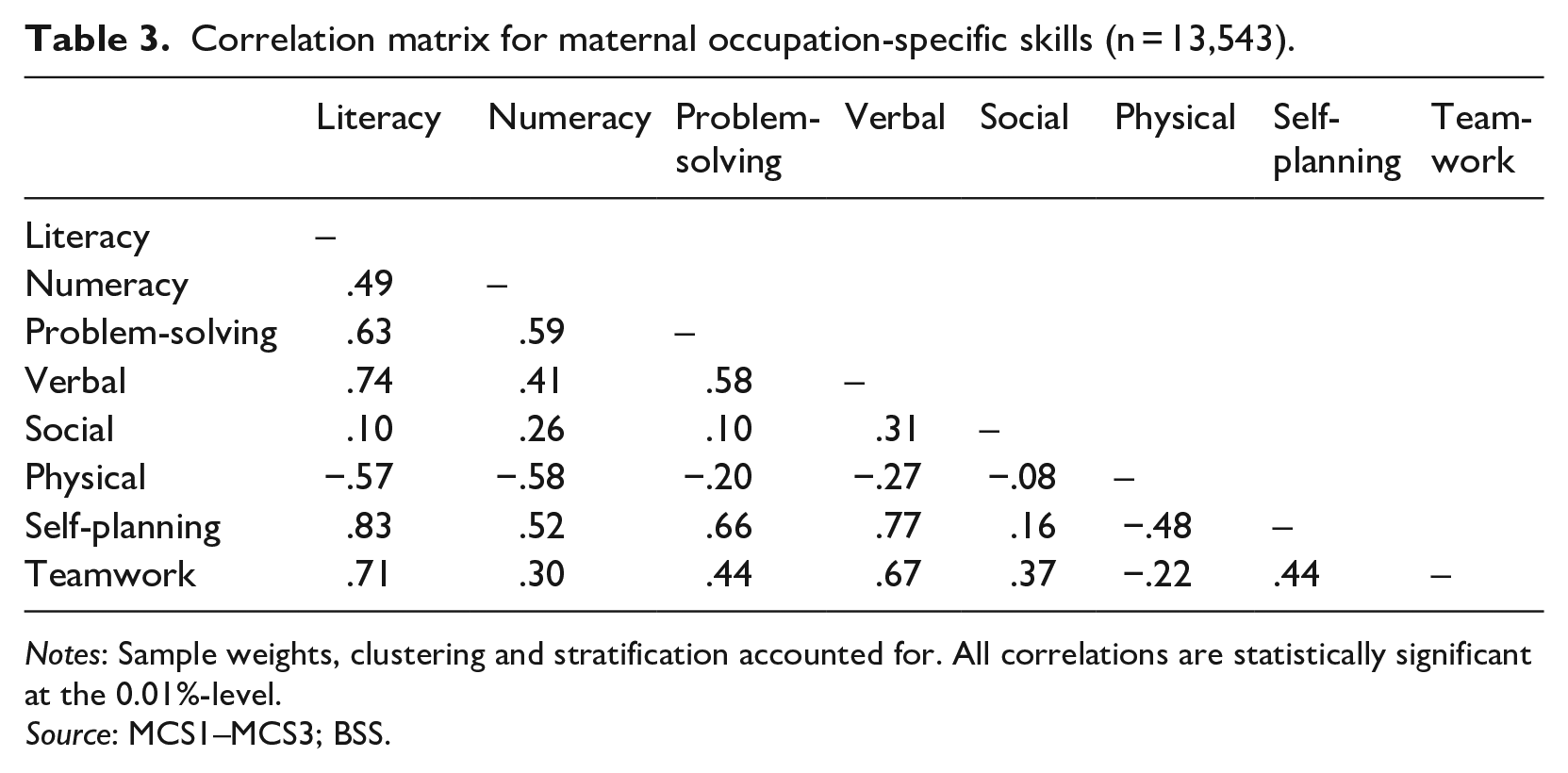
Notes: Sample weights, clustering and stratification accounted for. All correlations are statistically significant at the 0.01%-level.
Source: MCS1–MCS3; BSS.
Family Resources
We further operationalize human capital in the family with mothers’ highest educational qualification at the child’s age of five. Maternal educational qualifications were classified into seven categories, five of them equivalent to the National Vocational Qualification (NVQ) scale: (1) No qualifications; (2) NVQ level 1 (e.g. GCSE grades D, E, F, G); (3) level 2 (e.g. GCSE grades A*, A, B, C) corresponding to lower secondary attainment; (4) NVQ level 3 to upper secondary attainment (e.g. A-levels); (5) NVQ level 4 to undergraduate education (e.g. Bachelor’s degree); (6) NVQ level 5 to postgraduate education (e.g. Master’s degree); and the last category indicates (7) overseas qualifications.
We considered family income, housing tenure and parental class to operationalize families’ financial capital. We used quintiles of equivalized net household income (adjusted for household size and composition), applying modified Organization for Economic Co-operation and Development (OECD) scales for equivalization. For housing tenure, we differentiated children living in ‘publicly subsidized housing’ from those living in other housing types (own outright, own – mortgage/loan and private renting). We measured parental social class using the seven-class ‘analytical’ version of the National Statistics Socioeconomic Classification (NS-SEC): (1) Higher managerial, administrative and professional occupations; (2) Lower managerial, administrative and professional occupations; (3) Intermediate occupations; (4) Small employers and own account workers; (5) Lower supervisory and technical occupations; (6) Semi-routine occupations; and (7) Routine occupations. It captures differences in employment relations associated with advantages and disadvantages in income security, short-term income stability and longer-term income prospects. We used the highest class among parents and, in the case of single-parent households, the present parent’s class.
The social capital within the family is measured with four variables: family structure differentiating between (1) Both natural parents in the household, (2) Natural parent and another parent (e.g. step or adoptive) in the household, (3) Single-parent household; the number of siblings indicating (1) no siblings, (2) one, (3) two, (4) more than two; and whether grandparents or other adults are present in the household. Hence, these variables capture adults’ physical presence in the family and how much attention these adults can give to the child (Coleman, 1988).
We calculated correlation coefficients to assess potential collinearity between family resources and maternal occupation-specific skills. Table 4 suggests that maternal occupation-specific skills were correlated with other family resources but were far from collinear (Min = 0.00; Max = 0.61). Maternal literacy skills were most strongly correlated with other family resources. The parental class was the most substantially linked capital with all maternal occupation-specific skills. Some family resources (e.g. parental class and family income) were strongly correlated, but were not collinear (see online Appendix Table A1). The average correlation among all financial, human and social capital forms was 0.20 (Min = 0.00; Max = 0.60).
Correlations between maternal occupation-specific skills and other family resources (n = 13,543).
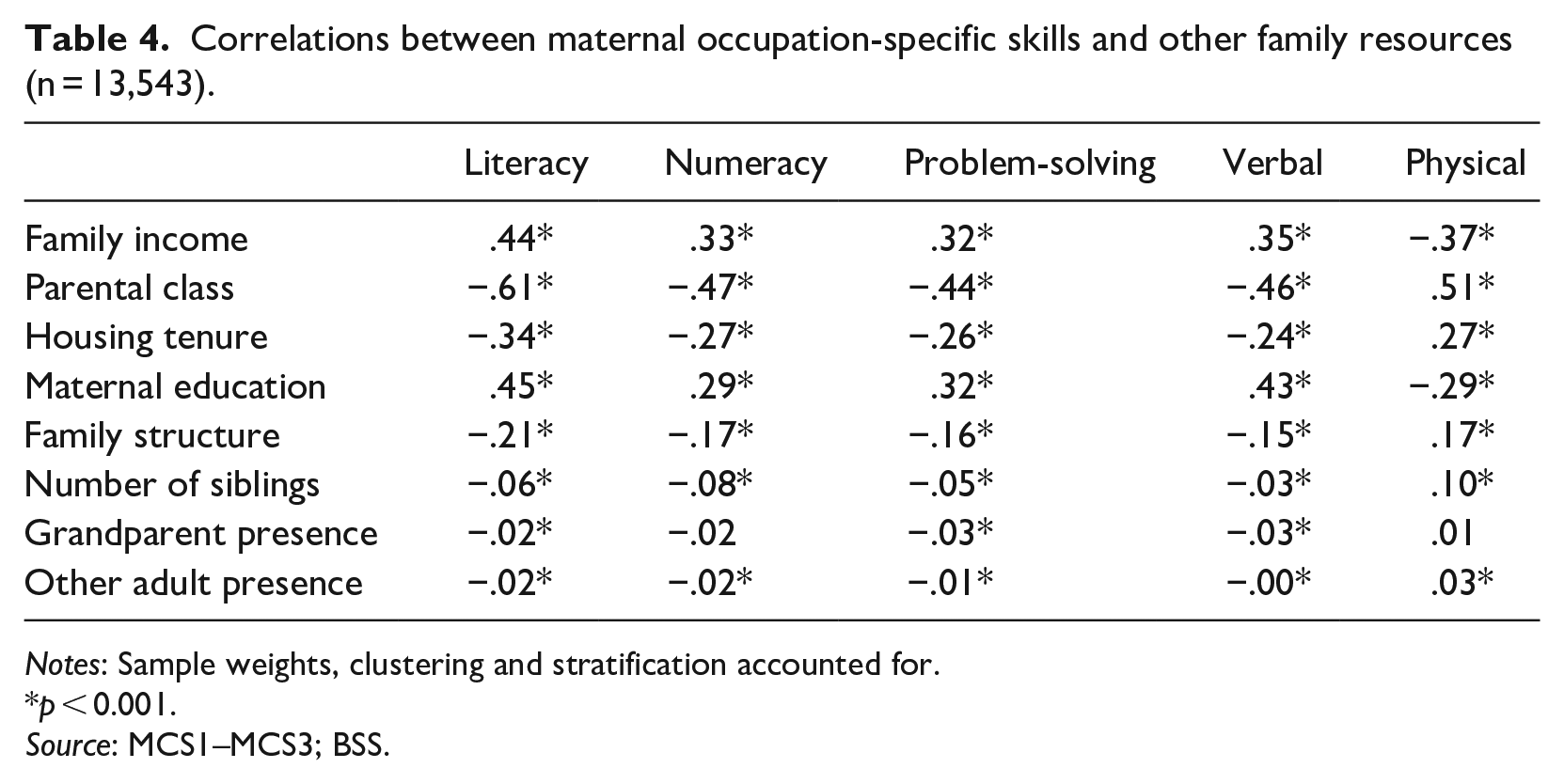
Notes: Sample weights, clustering and stratification accounted for.
p < 0.001.
Source: MCS1–MCS3; BSS.
Other Covariates
We further adjust for the following covariates in our analysis: the UK region (North-East, North-West, Yorkshire and the Humber, East Midlands, West Midlands, East of England, London, South-East, South-West, Wales, Scotland, Northern Ireland); neighbourhood deprivation deciles based on the respective index of deprivation in each UK country; the child’s sex; the child’s ethnic group: (1) White, (2) Mixed, (3) Indian, (4) Pakistani and Bangladeshi, (5) Black or Black British, (6) Other ethnic group; and the child’s age (in months). We also control for a child’s age because the age adjustment in the standardized scores is made within three-month age bands. Summary statistics for all variables can be found in Table 5.
Summary statistics (n = 13,543).
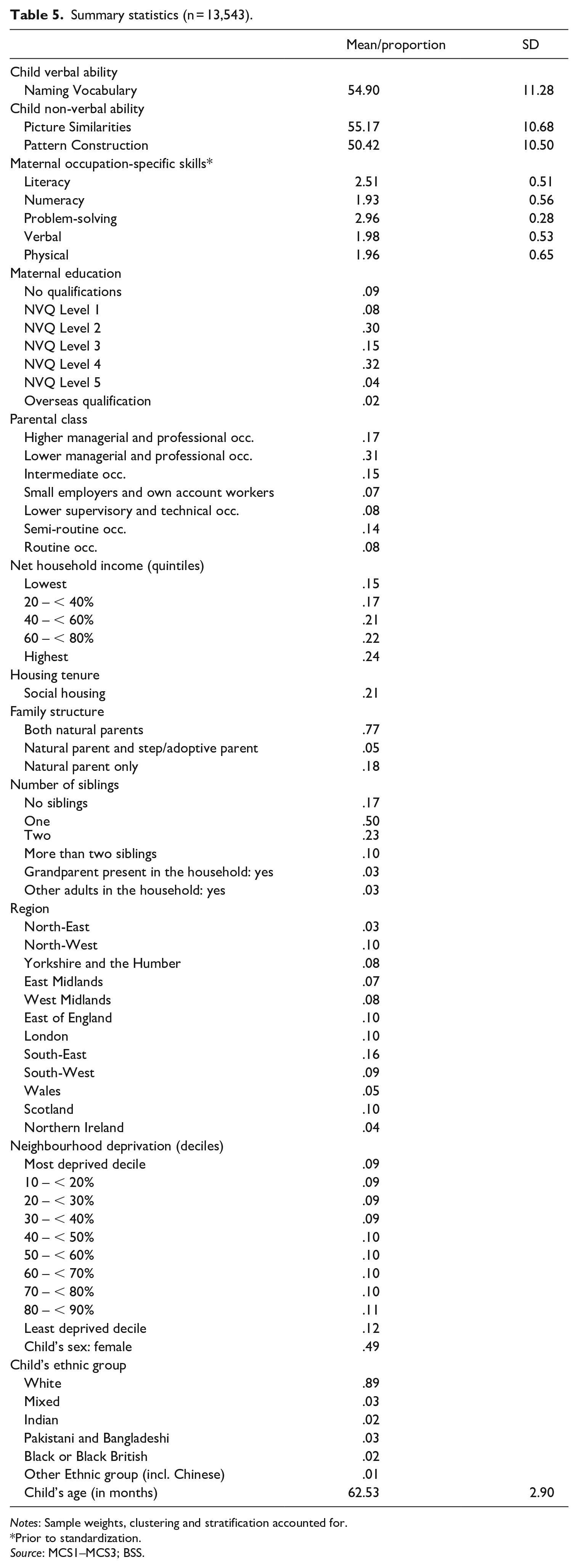
Notes: Sample weights, clustering and stratification accounted for.
Prior to standardization.
Source: MCS1–MCS3; BSS.
Findings
Table 6 shows the correlations between maternal occupation-specific skills and children’s verbal and non-verbal ability at age five. All maternal occupation-specific skills, except physical skills, were positively but weakly correlated with children’s outcomes. Correlations were somewhat stronger for children’s verbal ability (Naming Vocabulary) than for non-verbal ability (Picture Similarities, Pattern Construction). The positive correlations did not vary considerably in size when comparing maternal occupation-specific skills, with literacy and verbal skills having slightly stronger associations with child outcomes than other maternal occupation-specific skills.
Correlations (Pearson’s r) between maternal occupation-specific skills and child verbal and non-verbal ability (n = 13,543).
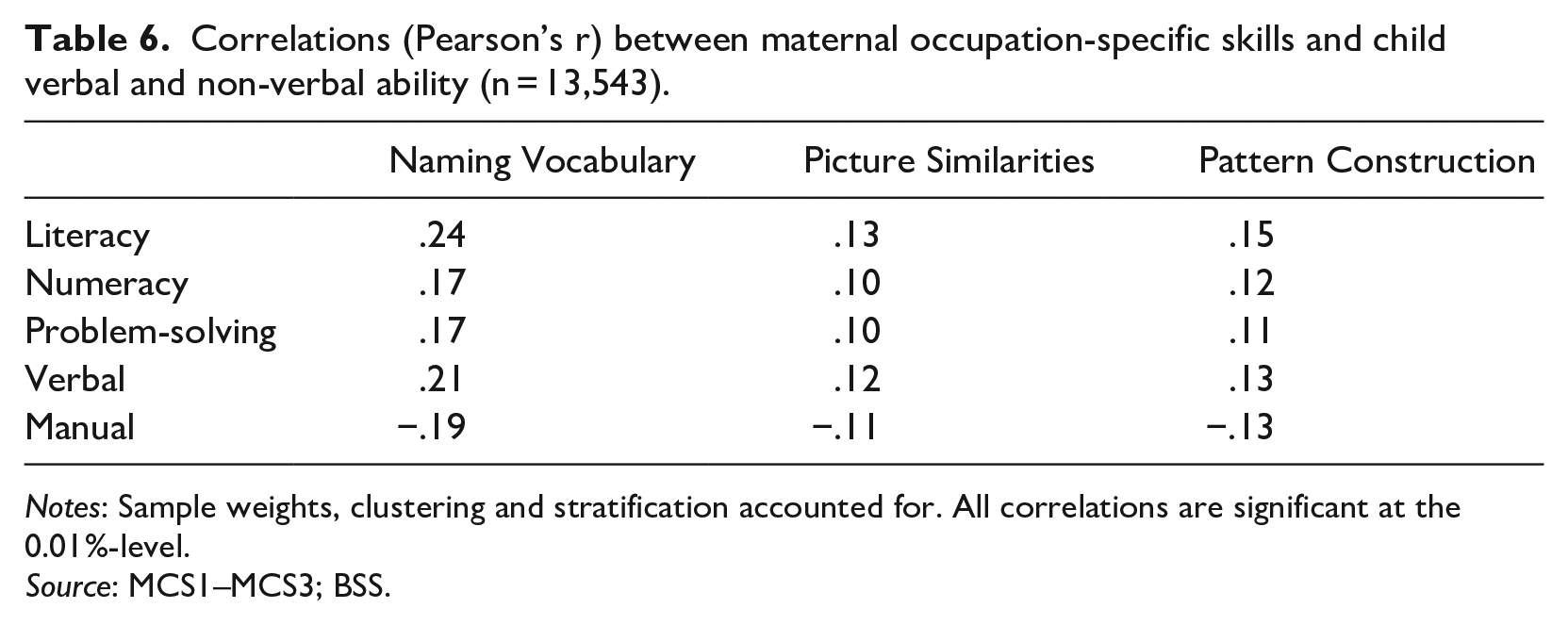
Notes: Sample weights, clustering and stratification accounted for. All correlations are significant at the 0.01%-level.
Source: MCS1–MCS3; BSS.
To test associations between maternal occupation-specific skills and children’s verbal and non-verbal skills net of other parental resources, we conducted a series of linear regression models predicting Naming Vocabulary, Picture Similarities and Pattern Construction scores (standardized to a mean of 50 and a standard deviation of 10) separately. In addition, we tested for collinearity using the variance inflation factor (VIF) and detected no VIF values (>10) that may warrant further examination (Min = 1.00; Max = 4.61; see online Appendix Table A2).
Figure 2 illustrates the associations between maternal occupation-specific skills and children’s verbal ability (Naming Vocabulary) or non-verbal ability (both Picture Similarities score and Pattern Construction score) when conditioning on the other maternal skills (M1) and when additionally adjusting for covariates, including other financial, human and social resources (M2). The full regression outputs can be found in Tables A3–A5 in the online Appendix.
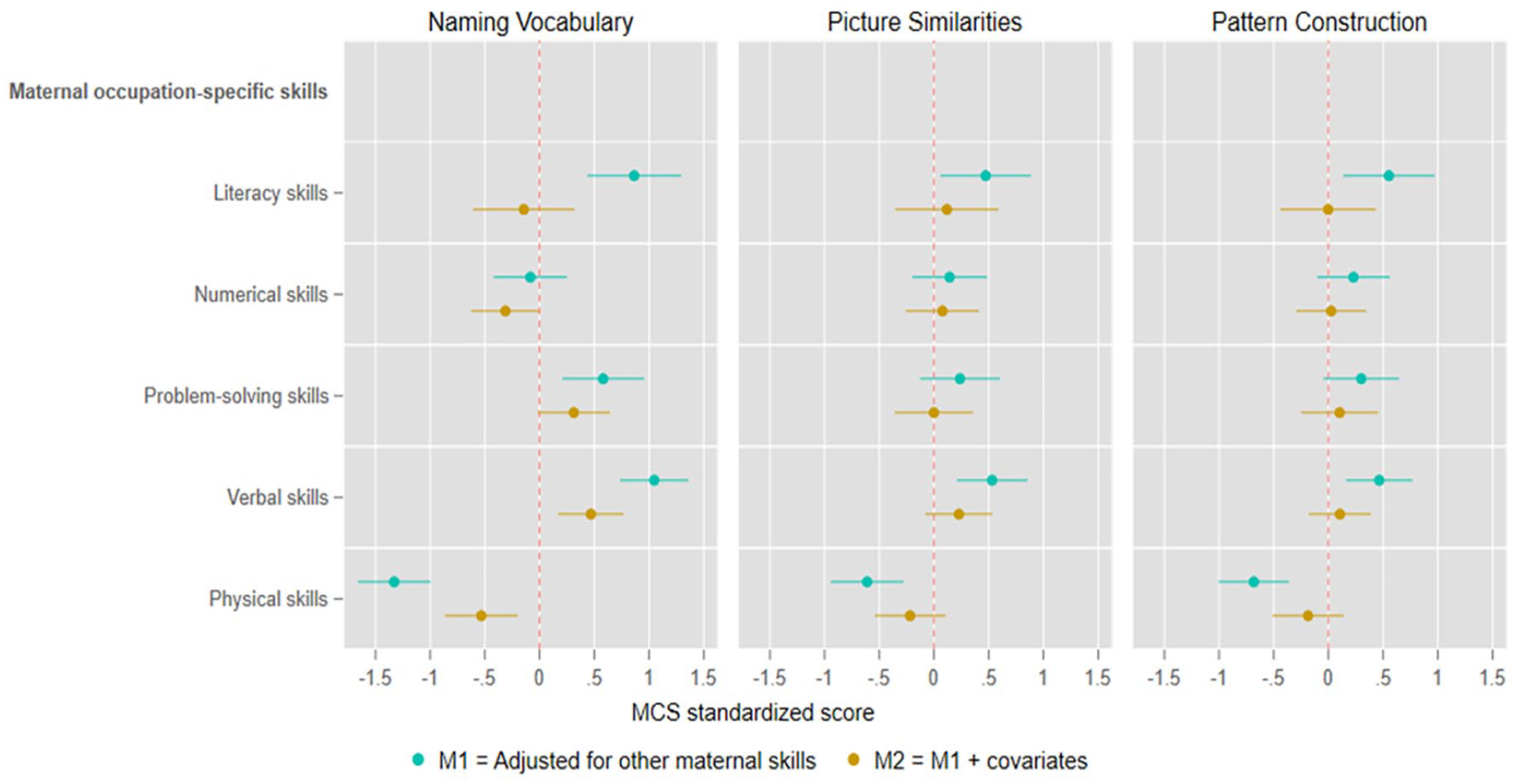
Associations between maternal occupation-specific skills and child verbal (Naming Vocabulary) and non-verbal ability (Picture Similarities and Pattern Construction) with 95%-confidence intervals.
Except for numerical skills, all maternal occupation-specific skills were significantly associated with children’s verbal ability after conditioning on other maternal occupation-specific skills. As in the bivariate case, mothers’ physical skills were negatively associated with children’s verbal ability once other occupation-specific skills were conditioned on. Mothers’ verbal skills had the strongest positive association with children’s verbal ability holding all other occupation-specific skills constant. A one standard deviation increase in maternal verbal skills was associated with more than a one-point increase in the standardized Naming Vocabulary score (i.e. more than one-tenth of a standard deviation).
When adjusting for covariates, including other capitals (human, economic and social), the association between maternal literacy skills and children’s verbal ability was statistically non-significant. Likewise, the association between maternal problem-solving skills and children’s verbal ability was statistically non-significant once adjusting for confounders. However, mothers’ verbal skills were significantly associated with children’s verbal ability after conditioning on other parental resources and covariates. An increase of one standard deviation in maternal verbal skills was associated with an increase of 0.47 points (SE = 0.15) on the MCS standardized Naming Vocabulary score (mean = 54.90; SD = 11.28). By contrast, mothers’ physical skills remained negatively associated with children’s Naming Vocabulary scores, with an increase of one standard deviation in maternal physical skills being associated with a decrease of 0.53 points (SE = 0.17) on the MCS standardized Naming Vocabulary score. Regarding non-verbal ability (Picture Similarities score and Pattern Construction score), maternal numeracy and problem-solving skills had non-significant associations when adjusting for other occupation-specific skills. Mothers’ literacy, verbal and physical skills were significantly associated with both measures of children’s non-verbal ability after adjusting for other maternal skills. However, none of these maternal skills were significantly associated with non-verbal ability scores after conditioning on other family resources. Hence, maternal occupation-specific skills were not uniquely associated with children’s ability of inductive reasoning and spatial awareness when measured at age five net of other forms of human, economic and social capital.
Discussion
This article contributes to the literature on social stratification and child development by investigating whether mothers’ tasks performed at work and the skills required may have spillover effects on parenting and influence children’s cognitive development. Analysing representative data on British mothers and their five-year-old children, we found some evidence for this hypothesis, although effect sizes were small. Mothers’ verbal skills (e.g. presentation and teaching skills) were positively associated with children’s verbal ability. By contrast, mothers’ physical skills were negatively associated with children’s verbal development. Conditioning on other family resources, we did not find any associations between maternal occupation-specific skills and children’s inductive reasoning and spatial awareness.
Our exploratory analyses only provide weak evidence for our hypotheses. However, it seems worthwhile to note that we found associations between mothers’ occupation-specific skills (verbal, physical) and children’s verbal skills holding a ‘big’ class measure and a range of other standard measures of financial, human and social capital in the family constant. Therefore, we may capture only limited variation in occupation-specific skills within layers of these bigger stratification measures. Using items on the importance of tasks for a person’s job and aggregating this information to the occupational level may also not adequately represent the skills mothers apply in their job. First, respondents may recognize that certain tasks are essential for their job but are not themselves conducting these tasks frequently. Second, our maternal skill measures do not capture individual differences but are based on average skills within occupational groups, ignoring within-group variance. Third, we are restricted to occupation-specific skills that emerged from the task questions in the BSS. Other dimensions of occupation-specific skills may be important to consider when predicting child outcomes.
Our study has further caveats. First, we do not consider mothers’ occupational or job mobility throughout children’s early years. Mothers may apply different skills when changing jobs with potential consequences for parenting and children’s outcomes. It remains descriptive as we cannot disentangle whether mothers have gained their skills through occupations or whether they self-selected into specific occupations with pre-existing skills. Finally, the remaining associations between maternal occupation-specific skills and children’s verbal development could be due to genetic confounding (Hart et al., 2021), albeit our covariates should capture this to some extent.
Leaving these limitations aside, we found that some maternal occupation-specific skills had a positive (verbal) and a negative (physical) influence on their children’s verbal skills net of other family resources. The finding on mothers’ verbal skills aligns with research suggesting that children’s vocabulary levels are strongly shaped by parents’ and other caregivers’ verbal interactions (Hurtado et al., 2008; Weisleder and Fernald, 2013). Mothers who apply physical skills may work in occupations with greater strain-based demands and thus spend less time with their children affecting their verbal development (Hook et al., 2021). Generally, children’s verbal ability appears more malleable by the immediate home environment, including differences in parental occupation-specific skills, than children’s non-verbal ability. These findings suggest socio-economic inequalities in child outcomes are amplified through differential skills that occupations demand and promote. As with increases in maternal education after childbirth (Harding et al., 2015), life-long learning and further training in mothers’ verbal skills may positively impact children’s development, particularly among mothers who apply physical skills in their jobs.
Our findings are important for the research community at a more general level. Even when effect sizes are very small or ‘null-effects’, they can be an important starting point for further research into a topic, promote scientific rigour and honesty, prevent duplication of research effort and prompt improvements in data, measures or methods. In the case of our research into the impacts of parental occupation-specific skills, future research may be concerned with improving the measurement of occupation-specific skills. Ideally, scholars have access to data from large-scale surveys on parenting and child outcomes, including questions and assessments on parents’ general and occupation-specific skills. This may further help to disentangle parents’ general ability from occupationally related skills. In addition, parents’ occupation-specific skills may become more important when children grow older because parent–child interactions become more ‘subject-specific’ in terms of conversation topics parents choose, school subjects they help with and occupation-related values and preferences they foster in their children. At older ages, parents’ occupation-specific skills likely influence their children’s interests and values in certain subjects, which, in turn, will impact their motivations to develop the relevant abilities and pursue similar occupational careers (Jonsson et al., 2009).
Supplemental Material
sj-pdf-1-soc-10.1177_00380385231159005 – Supplemental material for Maternal Occupation-Specific Skills and Children’s Cognitive Development
Supplemental material, sj-pdf-1-soc-10.1177_00380385231159005 for Maternal Occupation-Specific Skills and Children’s Cognitive Development by Katherin Barg and Markus Klein in Sociology
Footnotes
Acknowledgements
We would like to thank Thijs Bol and Mark Williams for helpful suggestions and sharing their resources on how to measure occupation-specific skills in the British Skills Surveys. We would also like to thank the participants in the Millennium Cohort Study and British Skills Surveys. We are grateful to the producers of the data and to the UK Data Service for making them accessible. Neither the producers nor the UK Data Service bear any responsibility for the analysis or interpretation of these data. Finally, we would like to thank the anonymous reviewers for their constructive feedback that helped improve this article.
Funding
The authors received no financial support for the research, authorship and/or publication of this article.
Supplemental material
Supplemental material for this article is available online.
References
Supplementary Material
Please find the following supplemental material available below.
For Open Access articles published under a Creative Commons License, all supplemental material carries the same license as the article it is associated with.
For non-Open Access articles published, all supplemental material carries a non-exclusive license, and permission requests for re-use of supplemental material or any part of supplemental material shall be sent directly to the copyright owner as specified in the copyright notice associated with the article.
