




Abstract
Amid the COVID-19 pandemic, personal protective equipment became central to daily news. Face masks may have been critical, but they were clearly not equally designed or distributed, compelling many health workers to make their own. These issues are neither new nor specific to health-oriented fields. We offer insights from another case of individuals taking personal protective equipment into their own hands. We analyse patents for women’s motoring face masks invented in the USA, Canada, England and France (1900–1925). Our findings suggest that women invented and wore face masks not only to drive safely, but to position themselves as legitimate motorists and as citizens with equal rights to technology, public space and resources at the turn of the last century. We propose that a study of historic motoring face masks might offer insights into persistent problems and inventive possibilities relating to contemporary personal protective equipment.
Introduction
On 4 February 1903, Camille and Gabrielle Nouard of 86 Rue de Maubeuge in Paris, France, filed a patent for ‘A Lady’s Head Covering and Mask for use on Motor Cars’ (Figure 1). (They patented four further French variations. 1 ) The sisters explain how ‘ladies, when travelling in motorcars, have been obliged to wear an inconvenient hood, or other head covering to protect their faces from dust and wind’. Their invention consisted of ‘a top piece, a covering for the nape of the neck and two scarves’ affixed securely with pins and press studs and a transparent visor. It offered modularity to give wearers options. They could assemble multiple pieces – scarves, hood, visor and veil – in varying combinations to adapt to weather, speed of travel and location.
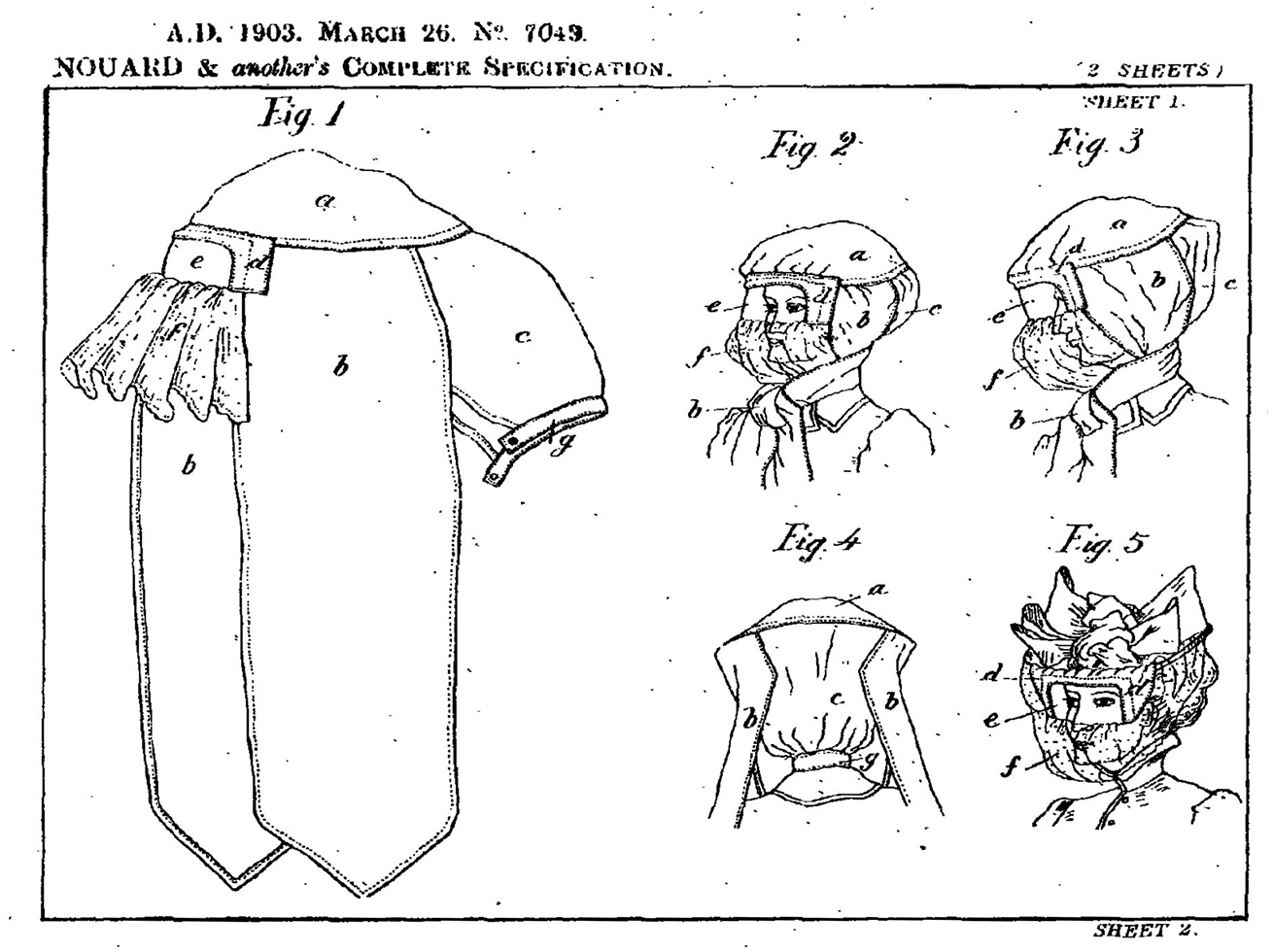
Camille and Gabrielle Nouard’s (1903) patent for ‘A Lady’s Head Covering and Mask for use on Motor Cars’ (GB190307049A).
Graham (2022: 33) defines personal protective equipment, or PPE, as ‘clothing for specialist protection’. While the Nouard sisters’ invention fits with this definition, on the surface it appears very different to the kinds of PPE catalysing recent attention. Along with vaccines, spatial distancing and the washing of hands, face masks became a key health measure in the global response to COVID-19. In this article we locate our sociological contribution in relation to the broader context of PPE research by drawing specific attention to analyses of masks, not only as critical health technology but also of acts of civic participation.
The Nouard sisters’ invention is a relevant place to begin because it did not just protect the wearer from weather. It also protected her from social scrutiny. The sisters explain how they ‘combine the protection desired with an elegant appearance, which ladies have no wish to abstain from, even if they engage in the pastime of motor car riding’. This points to gendered pressures and limitations on active women in public space, while at the same time offering means to navigate and resist them. Women had to drive well and negotiate often highly regulated boundaries between being appropriately dressed to drive, repair and maintain a complicated machine while adhering to social expectations about feminine appearance in contexts firmly coded as masculine. How women gained access to these new spaces, negotiated deep-rooted tensions and came up with inventive workarounds to expand and question conventional gendered boundaries are central to this article. Although small and concealing by nature, we argue that inventions like these are revealing for the expansive socio-political possibilities they offered wearers attempting to carve out new freedoms and express themselves as independent, modern citizens.
This article builds on the legacies of feminist researchers who have long provided evidence of women challenging restrictions to their social and political freedoms (see, for example, Chen, 2020; Clarsen, 2008; Franz, 2005; Parker, 2012; Scharff, 1991; Tamboukou, 2016). We focus on how early women motorists, much like cyclists a decade earlier, made use of all the resources available to them to make claims to rights to participate in exciting new technological worlds that were often hostile to their involvement. Clothing patents are a productive site to explore these socio-histories. Women motorists were initially overlooked as serious potential users and simultaneously overburdened with social pressures and gendered expectations. Yet it was the creative strategy of combining new forms of clothing and driving that provided a safe way into male privileged territory and helped ‘ease women’s access to early motoring’ (Chen, 2020: 152). This article takes clothing inventions, like the Nouard sisters’, as a starting point to explore how women invented and wore early motoring masks not only to drive safely, but also to position themselves as legitimate motorists, respectable women and as citizens with equal rights to public space and resources at the turn of the last century.
We start our analysis in contemporary health-oriented PPE discourse and broaden out to less conventional use of masks. We explain our study of early motoring masks at the turn of the last century in the USA, Canada, England and France and frame our approach via feminist histories, material participation and citizenship studies. These literatures open up ways to consider the role of everyday objects and interactions as alternative forms of civic participation and acts and enactments of citizenship (Hildebrandt et al., 2019; Isin and Neilson, 2008; Marres and Lezaun, 2011). Our motoring mask data come from a combination of clothing patents, newspaper and periodical archives from 1900 to 1925. We discuss how women from working to upper classes not only wore motoring masks, but many also invented and registered their designs. These data reveal unique insights into the problems wearers faced via the nature of their solutions. Throughout we ask: how and in what ways did clothing inventors use masks to make claims to citizenly rights, privileges and entitlements? What forms did these inventions take? And what might they reveal about the persistent problems and inventive possibilities of PPE today?
The Socio-Politics of PPE
Since the start of the COVID-19 pandemic, popular and scholarly interest in masks has grown significantly across a range of disciplines. As indicated above, it became evident that PPE, and especially masks, were not equally designed for all bodies. As news reports (Berg, 2021; Porterfield, 2020; Topping, 2020) and popular books (Criado-Perez, 2019) demonstrate, much mass-produced commercial PPE has been designed for a universal, specifically shaped male body and there are consequences when one size does not fit all. American Medical Association members complained about how PPE was designed for clean shaven European male wearers (Berg, 2021). Masks, gloves and gowns were too big (or too small) for some workers, making their jobs difficult or outright dangerous. Female care workers might account for most UK National Health Service staff, yet available PPE does not (Kleinman, 2020). Women and differently sized and hirsute men tend to be overlooked and under resourced leading to discomfort, injury and infection. During various peak periods of the COVID-19 pandemic, frontline workers across many fields around the world resorted to hacking at ‘standard’ sized items to fit or making their own versions from at-hand materials to protect their bodies and do their jobs. 2
Beyond the direct concerns of fit, mask-oriented research has addressed a range of issues. Researchers in the natural sciences have focused on mask efficacy in the context of other avoidance strategies for preventing the spread of COVID-19 (Moore et al., 2021; Wolff, 2020) while engineers and designers have explored alternative filter materials such as nanofibres (O’Dowd et al., 2020). At the same time, researchers in environmental studies and sustainability are raising concerns about the worldwide waste of disposable PPE (Kutralam-Muniasamy et al., 2022). Social scientists have explored people’s attitudes to mask wearing (Green et al., 2021; Wong and Claypool, 2021); the connection between face masks and social and political identity (Powdthavee et al., 2021; Sabnani, 2022), gender and masculinity (Howard, 2021) and the digital (Klinenberg and Sherman, 2021); as well as DIY mask-making practices (Achremowicz and Kamińska-Sztark, 2020). In addition, fashion scholars have studied how people as well as brands have shifted meanings of masks from practical public health necessity to desirable protective accessory (Elan, 2021; Kipp and Robertson, 2021).
More relevant to our approach is the work by Lupton et al. (2021) who analyse face masks as socio-material objects with cultural and historical elements. They invoke the Spanish influenza pandemic of 1918–1919 as the only other major incident in Europe in which masks were commonly worn by citizens as a public health measure. In this context, Elenowitz-Hess’ (2021) research on the ‘flu veil’ that became a popular fixture during that period brings to the fore some of the existing diversity of face coverings even within the medical context, which are often overlooked and on which our research into the clothing patent archive aims to shed further light. Lupton et al. (2021) also contextualise masking in wider cultural settings including Middle Eastern women’s face covering practices and the use of medical style masks in Asian countries like China and Japan.
More specifically, masks and face coverings play a key role in a range of acts of civic participation and protest in and beyond health-oriented contexts. For some, wearing a medical style mask is an act of solidarity aimed at protecting vulnerable people from infection and public health systems from collapse by slowing the spread of COVID-19 (see #ItsNotTooMuchToMask). Conversely, anti-maskers regard the practice as part of draconian and restrictive government mandates that limit their individual rights and freedoms (Klinenberg and Sherman, 2021; Utych, 2021). In their analyses of the mass-scale anti-government protests that took place in Hong Kong from 2019 to 2020, both Kwok (2021) and Pang (2022) argue that masking became a key element of resistance. Here, masks protected protestors from teargas used by the police. They also protected their identity from the state by disrupting existing surveillance technologies. As the action continued and the government banned protesters from wearing them, the face mask became a powerful symbol of solidarity and resistance to the state.
In their analysis of the contemporary Brazilian context, Amaral et al. (2021: 235) have identified the emergence of masks in street graffiti during the pandemic as ‘situated performances of symbolic resistance that contest and reveal the incoherences of [Brazilian president] Bolsonaro’s anti-science discourse’. Similarly, when the feminist Russian punk rock band Pussy Riot wore colourful homemade balaclavas during a performance that critiqued religious and governmental authorities, the face cover almost immediately gained iconic status as a symbol of feminist resistance and solidarity (Bruce, 2015). As the band members faced arrest and extremely punitive sentences in Russia, supporters around the world sported similar balaclavas at solidarity protests. According to Bruce (2015: 48, 42), ‘the balaclava, as costume and image, enables a diversity of populations to act as and with the group, using the formal features of the head covering to create a sense of anonymity and universality’ and generates ‘an affective sense of connection and responsibility’.
Schaub’s (2019) research, located in 14th- to 18th-century Venetian society, provides a useful past perspective on masks and resistant practices. She argues that the face only became an established marker of identity in Europe once the Enlightenment gained momentum. Prior to that, in the Venetian Republic a particular white mask called the bautà, which covered the upper part of the face, granted citizens the opportunity to anonymously participate in social and political life while also regulating political power. This mask ‘revolutionized social life by allowing a simple form of anonymization, thus guaranteeing Venetian citizens of both sexes libertine, even voluptuous, practices while respecting etiquette’ (2019: 244). Rather than restricting the citizens of Venice, the mask functioned as a ‘powerful social equalizer’ and important tool in managing corruption within the government ‘and, at the same time, allowed its citizens to lead a relatively untroubled life beyond convention and constraints’ (2019: 244). The Venetian bautà exemplifies how face coverings and the promise of concealment can help facilitate open civic participation and expansive opportunities especially in public space.
This brief overview indicates the diversity of interest on the broad subject of PPE and face masks. While the bulk of this timely and interdisciplinary scrutiny tends towards health-oriented discourse, due obviously to the COVID-19 pandemic, we have identified and drawn attention to research that attends to less conventional and complex use (and misuse) of masks. It is on this body of literature that we base our analysis of motoring masks. Although they are not commonly considered in this context, we hope to argue that these artefacts functioned as a form of practical protection and site of resistance and protest offering alternative and expansive opportunities for wearers to participate in new socio-political worlds.
Analysing Motoring Masks from the Turn of the Last Century
Much like the cycling craze that swept the western world at the turn of the last century, middle- and upper-class women and men were enthusiastic early adopters of the automobile. To provide context of its popularity in Britain alone, there were 23,000 cars on the road in 1904 and over 100,000 less than a decade later. 3 Although faster than bicycles and horses, driving was difficult. Unlike contemporary cars, with their enclosed, sonically secured, airconditioned and black boxed forms, early automobiles were rudimentary, noisy and open to the elements (without roofs or even doors in some cases). Motorists were exposed to all weathers and often coated in the detritus of unsealed roads. Not only did they have to know how to drive and navigate they also had to be skilled mechanics able to maintain or repair the machine at any time (Figure 2).
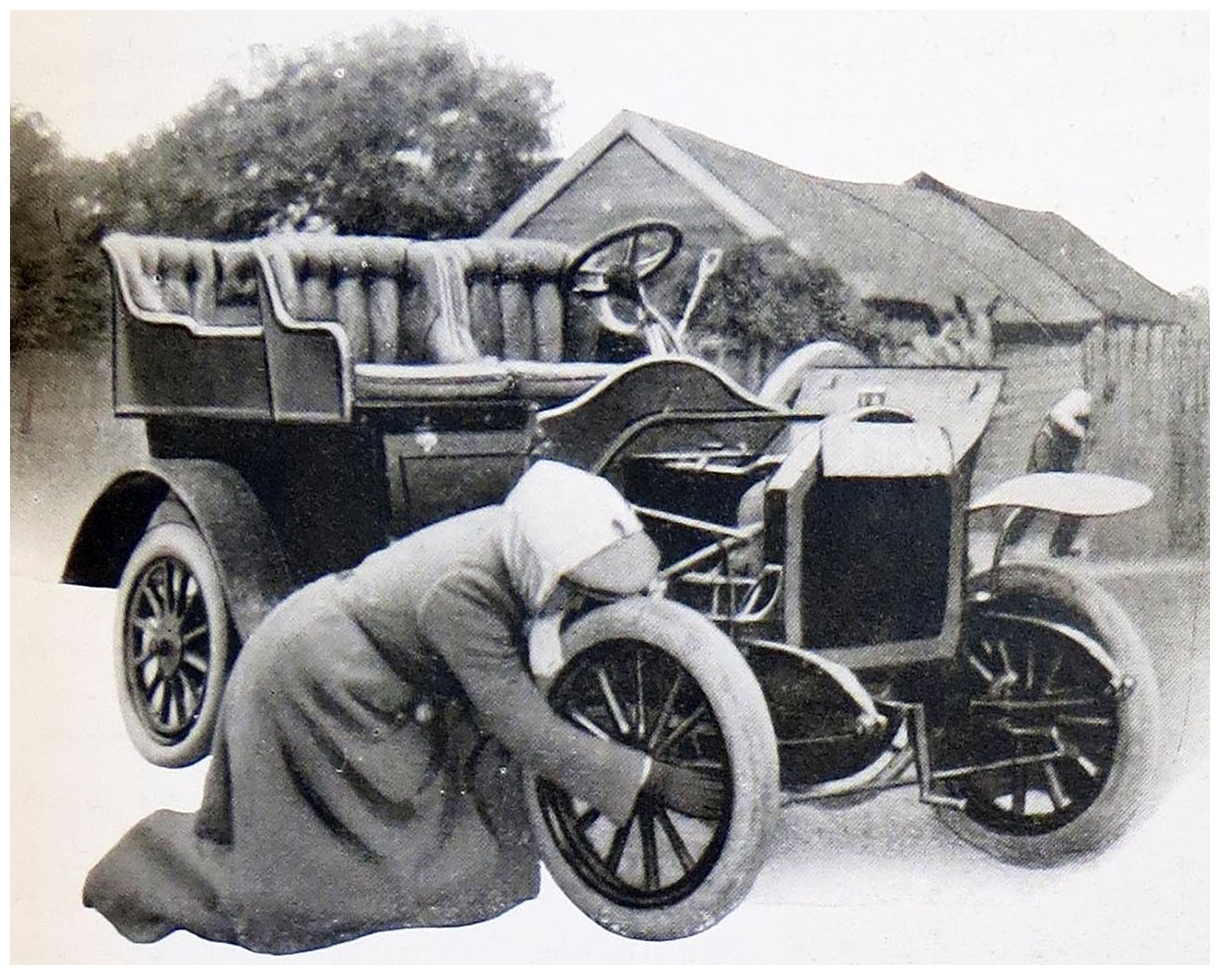
Image of a motorist fixing a tyre valve from Gladys Beattie Crozier’s (1905) article in The Lady’s Realm.
Ironically, the complexity of early driving made the motorcar an ideal emancipatory vehicle for women’s rights activists. Many suffrage campaigners promoted drivers’ ‘enhanced, machinic powers’ to ‘boost women’s claims to new forms of female citizenship’ (Clarsen, 2008: 83). Although specific numbers are not known, the range of opportunities motoring opened to all classes of women in the western world are well documented. Some pursued jobs as mechanics, chauffeurs and ambulance drivers, especially in wartime Europe. They worked with vehicles on front lines, on farms and in cities. Gaining technical competence in the mechanical arts provided a means to reframe women’s relationship with technology and expanded opportunities for working women. 4 Middle- and upper-class women with financial means, such as American Alice Ramsey (1909/1961), validated women as professional drivers by breaking epic endurance cross-country records. Others refrained from high-profile or political alignment and instead embraced driving as a ‘glamorous and safely feminine pursuit’ (Chen, 2020: 151). Regardless of approach, early motoring was embraced by a plethora of women to make direct claims to overdue recognition, equal rights and independence.
Yet, much like their early cycling sisters, women motorists struggled to claim these new independent and expert mobile identities. Motoring was considered masculine, with its modern technology, technical skills, specific clothing and public context. The challenges experienced by women motorists were socially, politically and sartorially entangled. ‘Men’s stamina and resourcefulness were assumed and could be confirmed in a glance’ explains Clarsen. ‘But for women determining how to live that competence as they travelled through rain, dust, mud, and hot sun in an open car, without straying too far from the norms of femininity, was not an easy task’ (2008: 76–77). Centuries of male dominance of social and cultural spheres and political discourse had firmly positioned them as the ‘weaker sex’, dependent, technologically incompetent and lacking inventive spirit. Not only did they have to constantly prove their proficiencies for the task, but they also had to comply with social expectations of dress and comportment befitting their class and gender.
Patenting was popular at the turn of the last century in the western world. It was catalysed by the cycle craze a decade earlier, political reform that opened the system to more inventors and an expanded media landscape hungry to broadcast new ideas to wide audiences. 5 Many women seized the chance to claim their own ideas in public, suggest alternatives to well-known problems and forge paths into business worlds. 6 Tamboukou (2016) writes about how some Parisian seamstresses at this time were radically active, revolutionary minded and politically engaged. Given the number of patents in their names, the Nouards may have had similarly entrepreneurial notions. Perhaps they dreamed about their idea being sold, commercialised and widely distributed, offering a chance to transform their life course. 7 Even for small amateur inventors, filing a patent in your own name secured a unique and timeless presence in formal legal records. Rather than being caught up in waves of socio-technical change, patenting radically positioned women as inventors of it (Jungnickel, 2018, 2023).
Critically, inventions did not have to be large in scale or radical in nature to have impact. Franz (2005: 84) writes about the advent of motoring as a key point where consumerism met invention: ‘Early motor travellers had first-hand experience and ample time on the road to “observe and study” the shortcomings of automobiles, and many motorists were eager to design, patent and profit from improvements to the car.’ As Khan (2000: 163) notes, ‘supposedly minor “macroinventions”’ were responsible for a ‘remarkable transformation in the daily experience of both men and women during the past 200 years’. A popular focus was on the motor itself and inventions for accessories such as bumpers, seats and windshields. However, because of the nature of early automobiles, protective clothing also catalysed inventive attention. Patent archives include many dusters (overcoats), mantles (raincoats), overalls, lap robes, gloves, hats, caps, goggles and all kinds of masks.
In this article we focus on the latter: motoring masks designed for and by women. At their most basic, they protected women’s faces in open cars from wind, sun, rain, dust and insects on the road. For women especially, it was imperative to avoid being seen or arriving at a destination dishevelled or dirty. Cleanliness was a firmly held construct of class, race and imperial superiority that infused all aspects of British society (McClintock, 1995). While dirt could be a marker of skill, authority and masculinity for some, it signalled incompetence, weakness and immorality for others (notably women and lower classes). However, masks did much more than keep early motorists’ faces clean and facilitate safe comfortable driving. They also equipped drivers to look like drivers. For women this was a much harder, more complicated identity to claim. As Scharff (1991: 22–23) explains: ‘Women in automobiles entered public space at a time of unprecedented debate over women’s right and capacity to step into public life with regard to the ballot box and the university’, which radically challenged boundaries ‘defining proper masculine and feminine roles’.
Clothing is a fascinating socio-technical device for analysis into political subjectivities and acts of resistance. Historically, it afforded many, especially women who had no voting rights, limited work options and unequal pay, a means to gain power and influence and participate in public life. Crane (2000: 100) has argued that clothing has also long been used by women as a form of resistance: ‘Lacking in other forms of power, they used nonverbal symbols as a means of self-expression.’ The suffrage movement provides a well-known example of clothing used as protest. Covering their bodies in green, purple and white sashes, pins and banners, women’s rights activists forged a highly visible and memorable ‘public identity for themselves in the public spaces of the city’ (Parkins, 2002: 99). However, material protests do not have to be large in scale to have impact. As Parker (2012: 11) has argued more generally, even modest women’s arts could be subverted as a tool of resistance: ‘The art of embroidery has been the means of educating women into the feminine ideal, and of proving that they have attained it, but it has also provided a weapon of resistance to the constraints of femininity.’
We approach the socio-politics of motoring masks via material participation and citizenship studies. New forms of active wear sparked different kinds of discourse and possibilities to imagine, question and reconsider women’s role in society. This is because ‘the idea that clothes were only for play made them less of a threat’ (Gordon, 2001: 25). We are drawn to the ‘struggle and contestation’ of things, not just subjects, to understand how they ‘serve to enact distinctive ideals of citizenship and participation’ (Marres and Lezaun, 2011: 491). Interdisciplinary scholars have expanded ideas of citizenship beyond something that is fixed and static and in sole relation to the nation state (Hildebrandt et al., 2019; Isin and Neilson, 2008). Isin and Neilson (2008: 10) explain ‘acts of citizenship’ as things that ‘disrupt habitus, create new possibilities, claim rights and impose obligations in emotionally charged tones; pose their claims in enduring and creative expression’. Our core argument lies in exploring how motoring masks were used by women to help expand their civic participation and opportunities in public space.
Data and Methods: Finding and Analysing Motoring Masks
Patents for this article come from the European Research Council Funded project ‘Politics of Patents’, which explores clothing inventions from 1820 to 2020. Most notably we use the European Patent Office (EPO) PATSTAT and Espacenet online databases collated from up to 94 individual patent offices around the world. Our dataset for this article includes 60 patents from 1900 to 1925 for women’s motoring face protectors, head-muffs, veils, visors and hoods. 8 Many combine multiple components, so for the purposes of this article, we include them all in our analysis of motoring masks. Reflecting the colonial nature of the patenting system at this time, inventors come from the USA, Canada, England, France, Germany and Russia. Over half are by women (39) and several are by multiple patentees.
Patents are more commonly found in legal and business studies. Yet, the combination of social and political insights, detailed problems and solutions and accompanying visual data offer potential for a wide range of social research (Jungnickel, 2018, 2023; Khan, 1996, 2000). Not every great idea has, of course, been patented, and like many official archives, these are shaped by power dimensions of gender, race and colonial privilege. Yet, they still provide a useful record of (some) inventive individuals taking PPE into their own hands, many of whom have not garnered the attention they deserve. Writing about women inventors, Khan (1996: 358) argues: ‘Patent records are imperfect measures of inventive activity, but they are still of value because they provide a consistent source of objective information about the market-related activities of women during a period for which only limited data are available.’
We start our investigations with patents, closely studying the problems outlined by inventors and their proposed solutions. Further research was undertaken in newspaper and periodical archives to thicken contextual understandings and deepen emerging ideas. This combination is critical for studying women’s motoring experiences prior to 1963 due to the rarity of first-hand oral accounts (Lezotte, 2019). Much like cyclists, women motorists were more often written about than writing themselves. Examples of sources for additional data include the British Newspaper Archives, UK National Archives, Hathitrust Digital Library, Library of Congress, Project Guttenberg ebooks, New York Public Library and The Smithsonian. These sites provide online access to women’s and popular culture periodicals, and motoring magazines such as The Lady’s Realm, The Car Illustrated, The Automobile Magazine, Punch, as well as broadsheet newspapers in the USA and England, which ran syndicated motoring and fashion features.
In the following sections we discuss emerging patterns and themes from our analysis of patents and related research (Charmaz, 2014). These insights come from the problems and solutions outlined by inventors and reveal how women navigated and resisted normative pressures to participate, work or simply enjoy moving in and through masculine dominated motoring spaces. In this endeavour women found themselves confronted with the difficulty of aligning their activities with society’s expectations while at the same time pushing the boundaries of what was regarded as acceptable for their sex. We discuss how inventors used motoring masks to claim and perform new expressions of citizenship via three tensions: feminine and competent; unofficial and professional; and private and public.
Feminine and Competent
As outlined above, early motoring worlds were firmly gendered, mirroring many technology and sporting conventions and assumptions, and for women this made acculturation difficult. While men were seen to ‘fit’ with driving, women struggled to claim a rightful place as their gender was considered a distinct disadvantage. They were ‘depicted as incompetent and flighty behind the wheel, helplessly ignorant in the face of mechanical problems, terrified of the rigors of motoring over mud holes or in storms, and timid (though dangerous) on crowded streets’ (Scharff, 1991: 167). Like many other parts of public life, women had to negotiate and reframe the seemingly contrasting assumptions of their gender and technological competence to claim a place in the car and on the road.
Clothing was a primary means of expression for many women lacking other forms of power and agency. However, the pressure to maintain a particular feminine appearance came from all directions. Like cycling, motoring populated mainstream newspapers, popular periodicals and highly visual advertisements with stories and consumables to inspire motoring lifestyles. A motoring outfit was essential for keeping clean. Dedicated American newspaper columnists proclaimed ‘The Goddess in the Car’, ‘Motoring with Dame Fashion’ and ‘Aboard with the Fashionable Motorist’. 9 While distracting for some from the actual act of driving, for others this sartorial attention brought with it the political possibilities for change. Chen writes about how women motorists’ deliberate adoption of fashion, elegance and status helped to ‘tame’ the motorcar. This strategy not only made room for them in the car, but in the driver’s seat. She writes about how ‘women often played with conservative stereotypes that seemed to belittle women but managed to turn them round in an unobtrusive manner to garner more public support’ (2020: 151). Women’s clothing continued to operate as a site for negotiation around what was possible, with many imagining and experimenting with new ways of being in and moving through public space: ‘Through the process of inventing and adapting clothing to suit new activities, both women and the fashion industry helped to produce a new conception of what it meant to be feminine’ (Gordon, 2001: 24).
Gordon is writing here about seamstresses, but patentees were literally ‘inventing and adapting’ motoring masks. They recognised women’s desire to be independent yet also conform to the status quo. Many invented their own versions that did both via a style of masks that converted, offering wearers options for more practical or stylish wear as needed. The Nouards do this with their 1903 patent: ‘In certain cases our head covering can be simplified by dispensing with the scarves and nape-cover, in fact it may consist only of a veil provided with a sheet of mica.’ Other patents further illustrate the aims of this approach. Constance Tucker Fergusson of Manhattan in New York filed her mask patent in December 1904 in the USA (US778536A), and again in January 1905 in Britain (GB190427898A). She discusses the ‘great difficulty’ of protecting women’s hair from ‘dust and dirt while automobiling’. She found practical designs were ‘unsightly’ for social situations yet emphasised the freedom drivers should have to stop ‘en route’ anytime they want. Her invention promises both. It was designed to ‘protect the face from cutting effects of the wind’ but can be ‘arranged so to lose all appearance as an automobile hat’. The latter offered the wearer a ‘stylish, ornamental and pleasing appearance’ for a social function ‘without the necessity of changing her hat’. Yet, changing the cap is exactly the technique provided by Camille Albérico (1907), of Seine, France (FR373102A). She designed a motoring mask ‘especially suitable for ladies’ and ‘which can be transformed into an ordinary cap when necessary’. She articulates the problem she is attempting to solve:
The essential qualities of a motorist’s cap lie above all in the resistance it offers to the wind, in the protection of parts of the head which it is not useful to have uncovered in order to prevent dust to penetrate, to avoid the cooling produced by the wind and to find a city cap when getting out of the car without needing to change it, because it is embarrassing and not very graceful to keep around the face a frame of fabric if the need is no longer felt.
These adaptable designs ambitiously attempt to do more than one thing. They aimed to protect the driver’s face and enable them to drive safely and comfortably while also attending to the normative expectations on women’s dress in larger society. Thus, their inventions can be seen as offering women both: a means to maintain conventional feminine attributes, while also claim a practical, competent and independent mobile identity in public space.
Unofficial and Professional
Work is a dominant category for PPE in contemporary discourse and in patent archives. Clothing inventors have enthusiastically approached the task of protecting workers for centuries. Predictably the focus for most PPE inventions are men’s bodies. 10 Women’s work has more often been domestic, behind the scenes or taken multiple forms. Changes in women’s clothes are striking at key points such as wartime, when they took on jobs previously held by men that amplified the impracticality of skirts and dresses (Bass-Krueger et al., 2021). While there is a noticeable lack of professional and formal women’s workwear in patent archives, there is evidence of them making creative claims to power, prestige and expertise in more unconventional forms.
In 1902, Armand Le Conte of Paris, filed a patent for a ‘Face Protector’ with all bodies in mind irrespective of gender in England and also in France (Figure 3) (GB190200085A). This was unusual at the time given clothing’s material structures, social conventions and political meanings. Le Conte explains the invention as ‘a transparent mask or protector which can be adapted to the head covering of a person of either sex in such a manner as to be adjustable and capable of being raised and lowered at will’. It was designed for ‘drivers, horsemen, coachmen, conductors of all kinds of vehicles and in general any persons exposed to the inclemency of the weather or who may be engaged in occupations where it is desirable to protect the face’.
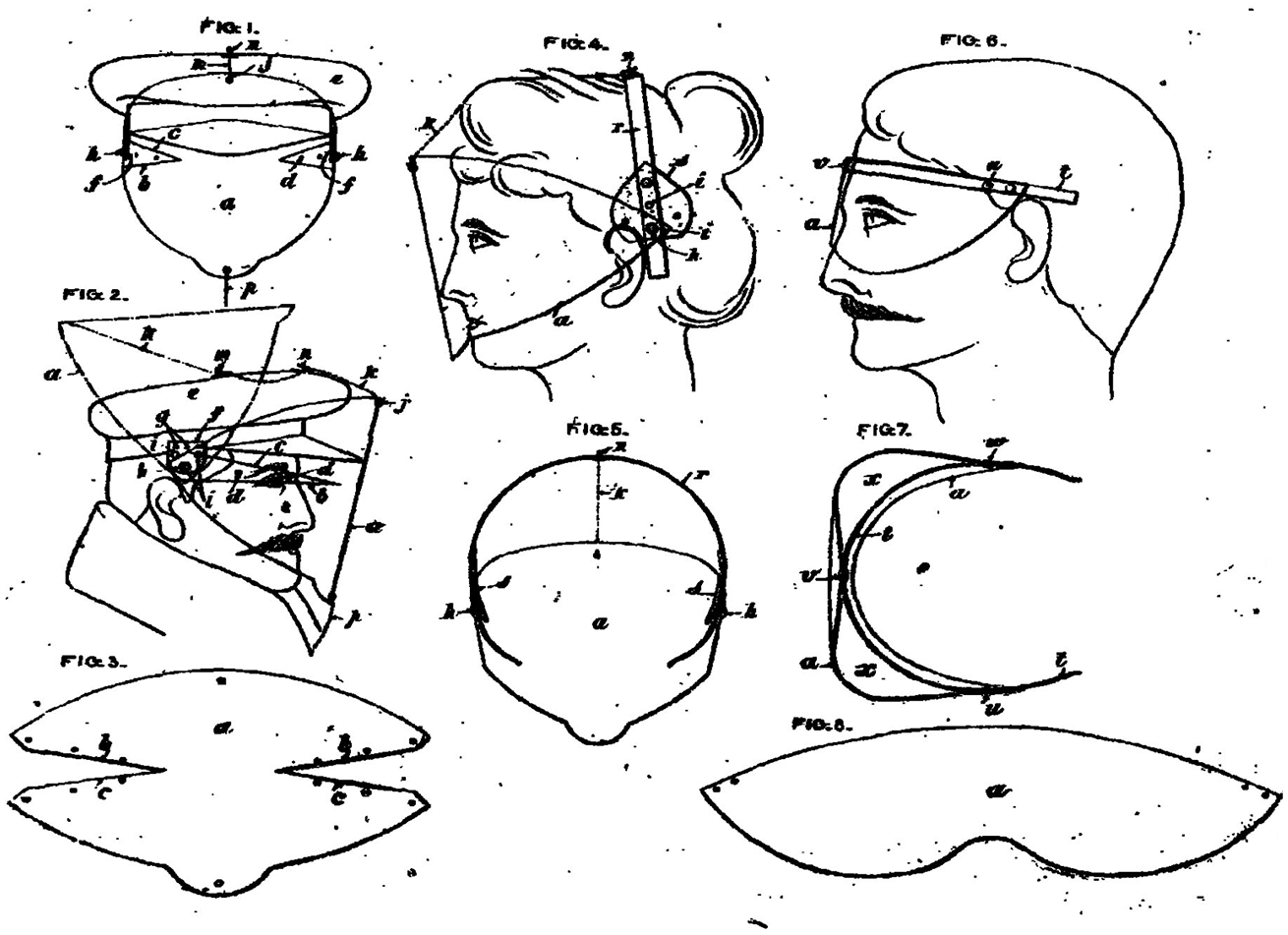
Armand Le Conte’s (1902) ‘Face Protector’ (GB190200085A).
Driving was an exciting high-profile activity and vocation at the turn of the century. It came with responsibility for new modern technology and signalled skill and expertise. As Franz (2005: 51) notes: ‘For women, mechanical skill, unlike physical strength, offered an even playing field on which they could claim equality with men.’ Driving as a vocation also sometimes came with an identifiable uniform. Some patentees drew on these visual cues to emphasise the professionalism of women drivers, even if they were unable to officially claim these roles and titles. To claim rights and entitlements otherwise denied required inventiveness or, as Hildebrandt and Peters (2019: 5) suggest, a ‘certain dimension of “fake it ‘til you make it”’. In her two patents for ‘Travelling Hats and Caps’, one filed in the UK and another in the USA, Margaret Emily Rhoda Douglas of London, explains how her design was ‘similar to that of a chauffeur’s cap’ (Figure 4) (GB201949A). The reason for this was twofold. It ensured ‘the face of the wearer is completely protected from dust, glare, wind’ and achieved an appearance that was ‘attractive and business-like’.
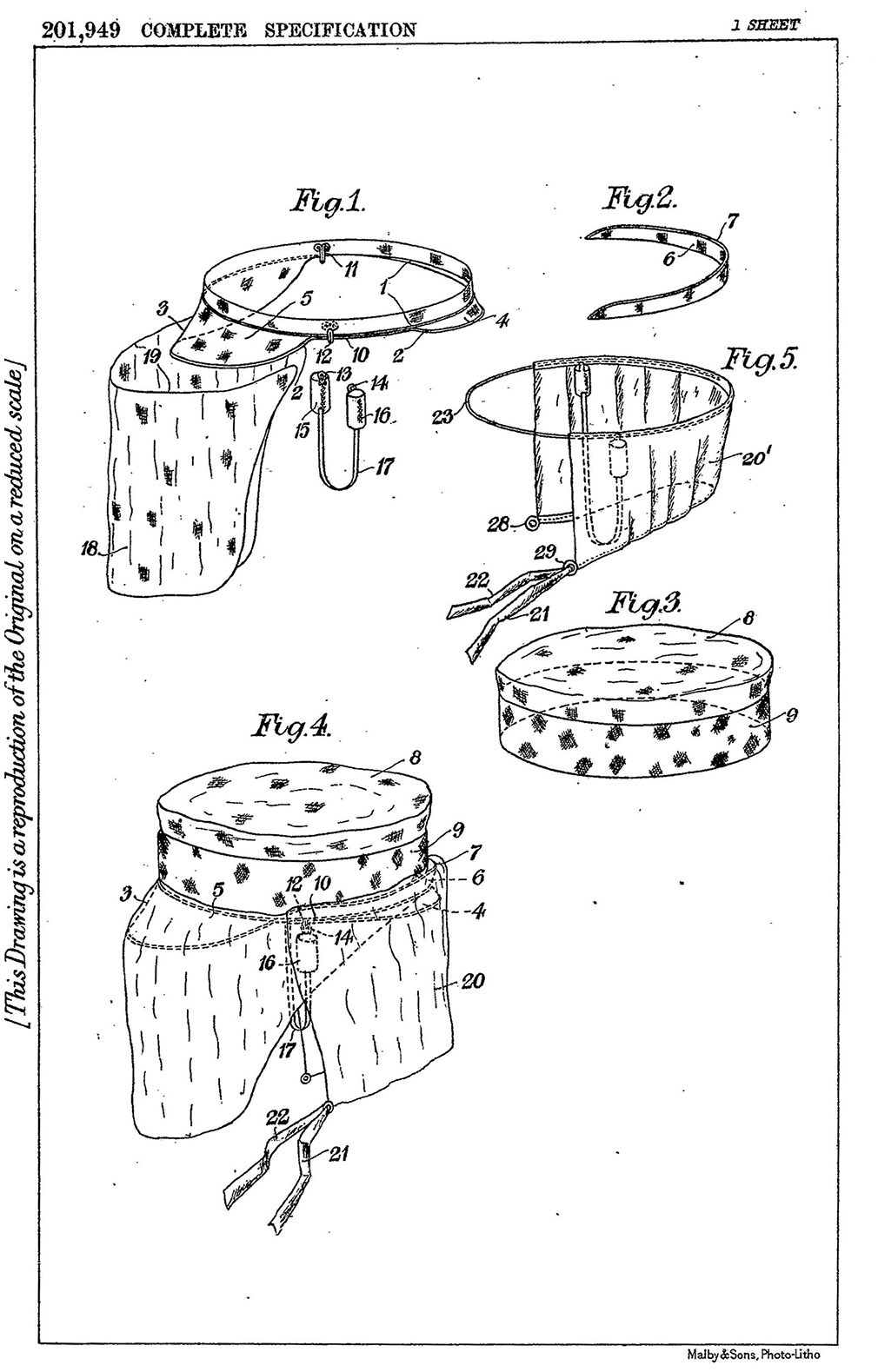
Margaret Emily Rhoda Douglas’ (1923) ‘Improvements in and Relating to Travelling Hats and Caps’ (GB201949A).
Douglas also writes about wanting ‘to protect the ears and facial nerves against being hurt by the rushing contact with the air while travelling’. Newspaper articles and opinion pieces of the time perpetuated the idea that motoring was dangerous for women. It built on a historic view of women as the weaker sex, ill-equipped and unprepared for the strains of exercise and public exposure. A column in an American publication, the Salt Lake City Herald Republican (1909: 28) repeats this common belief: ‘It is claimed that the strain upon the women drivers of the faster machines is too much, and many cannot stand the wear and tear on nerves.’ While the article goes on to showcase the successes of Alice Ramsey and other women racers, it highlights their achievements as exceptions to the rule. Ordinary women were apparently not able to do such things. Douglas recognises these conventional and limiting attitudes, but she does not let it stop her from inventing nor encouraging and equipping women to continue driving.
Private and Public
While it was important at times to claim space, voice and recognition in public, civic participation also includes the right to privacy. According to Clarsen (2008: 24), ‘women’s writing reveals an acute consciousness that they were being carefully observed when they were out driving’. She explains: ‘The novelty of early motoring made female drivers highly visible in open cars on the road, where they were exposed not only to dust and weather but also to increased social surveillance’ (2008: 24). Evidence shows this heightened visibility did little to dissuade those committed to new forms of mobility technology. As Chen (2020) argues, some women turned this visibility into a means for gaining social approval of their motoring activities. Although this is not directly discussed in the patents, many of the illustrations provided and related data suggest motoring masks also provided women motorists with an element of anonymity.
Many women’s motoring masks feature a veil to cover the face. The veil has been a mundane and ordinary artefact in women’s wardrobes for centuries. Adapting it for the automobile builds on a long history of creative, and often subversive, use by women to conceal the face and activities. An American 1906 newspaper article titled ‘Veils and veilings – their history and mystery’ reflects on its timeless popularity:
Whether to screen merely her complexion or to hide her entire identity whether to serve as one of those half-concealing, half revealing barriers between herself and the world at large, the veil has served as the badge of womanhood practically since the world began. (The Lincoln Daily Star, 1906: 16)
In 1903, Londoner Marion Hendriks patented a veil for use by motorists and cyclists and the image that accompanies the text is striking for its potential to conceal (Figure 5) (GB190216802A). This veil covers the entire face from hat brim to collar. The inventor explains how it can be ‘readily and securely attached to the wearer’s hat’ while ‘the lower edge of the veil can be secured round the neck of the wearer’. Given that the porosity of the material would determine how transparent it was to onlookers, this veil potentially afforded dual protection from the elements and social scrutiny. Another notable full face mask patent was filed in Canada and again in the USA in 1918 by Blanche Margaret Strachan of Montreal, Quebec (US1263958A and CA183782A). She explains how large veils bring ‘considerable inconvenience’ to the driver as they have to be ‘carefully and fashionably put on’ and can fall off or snag on something. It included various ribbon fixtures to keep it in place, yet it was easily and quickly adjustable to uncover the face when needed.
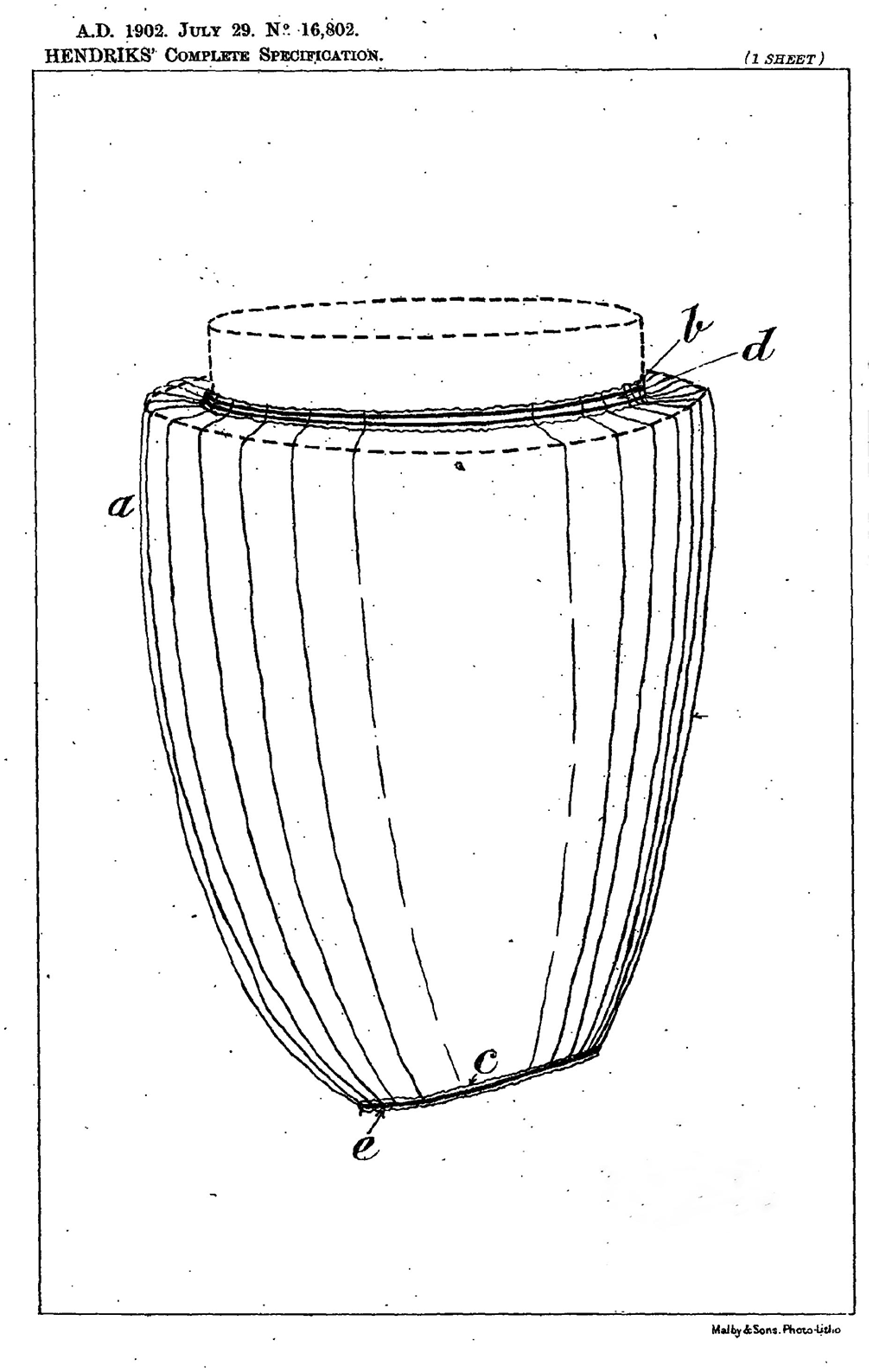
Marion Hendriks’ (1903) ‘Veil for the Use of Motorists and the like’ (GB190216802A).
Newspaper reports offer further insight into how motoring masks provided effective disguises not only when driving but also in other social contexts. In a 1911 fictional story called ‘The tragedy in the tower’ by Andrew Loring published in multiple instalments in various English newspapers, one of the main characters observes a woman secretly leaving the house in the middle of the night. She apparently wore a ‘heavy motoring veil [that] entirely hid her face’. Another more dramatic instance was reported by the East Anglian Daily Times (1908). ‘Extraordinary scenes’ took place in an English village in early April when a woman was ordered to be taken to Holloway Sanatorium as part of a plot arranged by her estranged husband, a councillor and motor-car manufacturer. The villagers however rallied around to prevent the nurses and police from taking her. She ‘disguised herself in a hat, cloak, motoring veil’, and managed to escape from her home out back through a neighbour’s house while the authorities waited out front. Although in the end the woman ‘submitted to the lunacy order’, she only had to spend a few nights at the sanatorium before she was released.
Another instance of mistaken identity was reported by the Worthing Herald (1921). Two English sisters, unbeknownst to each other, attempted to elope to London with their respective sweethearts and one accidentally got into the car with the wrong lover. He apparently failed to notice until they arrived in London because the face of the bride-to-be was ‘hidden under a thick motoring veil’. Here, the mask is an accessory in these two young women’s attempts to realise their romantic dreams of marriage. Similarly, it was a crucial tool for the woman escaping her husband’s plot to have her sectioned. In these cases, motoring masks not only expanded wearers’ mobility, but also their claims to independence, privacy and personal agency.
Conclusion: The Legacy of Persistent Problems and Inventive Possibilities of PPE
In this article we explored a subset of women’s motoring masks from the USA, Canada, England and France in patents from the turn of the last century. These data revealed some of the challenges faced by early women motorists attempting to claim new public spaces on their own, at new times and faster speeds than previously experienced. We explored how they ‘were grappling with fraught questions of how to fashion themselves into females who could feel properly at home within a domain in which being male had been constructed as the norm’ (Clarsen, 2008: 9). We took this idea of ‘fashioning’ literally by examining how women invented and wore new clothing, in the form of motoring masks, to help them inhabit new landscapes and negotiate and challenge the status quo. We highlighted the adaptability and creativity of designs, suggesting that a diversity of inventors generates a plethora of possibilities for a broader range of wear and wearers. Overall, the data rendered visible the often-invisible work and inventive material practices that go into participating in socio-political worlds for some, that comes more easily to others. They show how people are often forced into ‘doing rights with things’ rather than doing things with rights (Isin, 2019: 52). This has bearing on contemporary challenges.
We located our analyses in relation to PPE research to expand ideas about face masks from health-oriented purposes to political protest and resistance. Although PPE has changed dramatically over time, many of the same issues remain. For PPE to work, it must be available, and it must fit. This sounds obvious, but as indicated above there were vast inequalities in COVID-19 mask design and distribution. We can see similarities in how early women motorists had to take matters into their own hands to protect their bodies and claim expertise, and health workers who creatively addressed the existing shortcomings. Of course, this inventive bias is not necessarily deliberate, but the results are the same. Assumptions and lack of diversity perpetuate the same problems. One way to change is to recognise and value a wider range of inventive cultures and practices that emerge at different times. They are not hard to find. There are long and rich histories of women creatively working with and around problems and offering potential solutions (see Franz, 2005; Scharff, 1991; Tamboukou, 2016). Patent archives provide further valuable evidence. This attention is critical. Because, when these voices, needs and inventions do not get the attention they deserve, when they get ignored or systematically erased, this important work cannot be built on. Gaps remain and we must reinvent anew every time. And in the case of PPE, this spans from being annoying or uncomfortable to becoming dangerous and deadly.
Footnotes
Acknowledgements
The authors wish to thank the extended Politics of Patents research team for various discussions that helped to develop ideas in this article and also the anonymous reviewers for their constructive comments and suggestions.
Funding
The authors disclosed receipt of the following financial support for the research, authorship and publication of this article: Politics of Patents: Re-imagining Citizenship via Clothing Inventions 1820–2020 has received funding from the European Research Council (ERC) under the European Union’s Horizon 2020 research and innovation programme (Grant Agreement No. 819458).
Notes
 ).
).