




Abstract
Who gets to be ‘sporty’ and active in public is an enduring topic of socio-political debate. Disparities in participation continue from limited access, support and funding to ill-fitting equipment and clothing. This article focuses on the latter. Women have long been disproportionally restricted and harassed in public space not only in relation to how, where and when they move but also what they wear. I approach this issue via a unique data source – global clothing inventions for sport and athletic activities (1890–1940). Analysing convertible, multiple and hidden clothing patents, by and for women, reveals how inventors tackled ongoing socio-political restrictions to women’s freedom of movement from the ground up and, often secretly, from the inside out. I suggest these data might be read as acts of resistance, enabling wearers to move and inhabit spaces in new ways, engage in a wider range of activities and make claims to equal public participation and mobility rights. These lesser-known clothing inventions invite us below the surface of conventional sporting histories, expand ideas around the creative possibilities of sport and activewear, and spark imaginaries of what other kinds of inclusive and inventive athletic identities might be possible.
Introduction: ‘Three costumes in one’
John Noble was a renowned worldwide costumier operating at 11 Piccadilly, Manchester, in the 1890s. His company manufactured and sold garments for women, men and children, and prided themselves on providing affordable high-quality materials, expert tailoring and paying their factory workers well. In 1895, Noble tried his hand at patenting and it was a hit in England, America and France. His invention catalysed media attention across these countries with journalists calling it ‘Three Costumes in One’ (Salt Lake Tribune, 1895, p. 9). True to the Noble company philosophy, it was designed to be both functional and fashionable. Penny Illustrated Paper described it as ‘scientifically built on rational principles and finished in a thorough tailor-made style’ (1895, p. 349). Pearson’s Weekly reported on how it solved a well-known problem for active women: ‘The ordinary skirt is not convenient, and therefore many ladies have adopted full knickerbockers and long-skirted coats for riding’, and while ‘suitable enough while on the machine, is ungainly in the extreme if one wishes to make a call, or even to walk about’ (1895, p. 8). According to the magazine Gentlewoman, Noble’s invention was ‘a costume whose resources are apparently endless, adapting it to ordinary promenade wear, to golfing and mountaineering and particularly to cycling purposes’ (1895, p. 47). When it was ‘[w]orn in the ordinary way, it would not be difficult to suggest a neater design, the bodice and skirt being prettily finished with silk embroidery’. Priced at 25 shillings, it came in ‘navy, electric blue, fawn, cigar brown and grey’ (To-Day, 1895, p. 264). Essentially, it equipped the wearer to pass as a lady in polite society while also pursuing a multi-sport lifestyle. Clearly, this was no ordinary costume.
The inventor was no ordinary man. In a surprising turn-about, Noble’s invention was reported in newspapers as being designed by a woman. The Indianapolis Sunday called him a ‘feminine genius of England’ who ‘[d]eserves the homage of her sisters’ (1895, p. 5). They assumed only a woman could understand the social and sartorial challenges they faced trying to live active lives in Victorian society. The writer suggests the costume was ideal for a ‘bashful’ cyclist and provides a scenario of use:
Take it, for instance, that she wants to take a bicycle ride and yet she is too bashful to ride in bloomers. She mounts her wheel with the skirt of her convertible costume down. After she gets out of the city and onto a quiet country road, she alights, gives her garments a hitch or so and presto! She is soon as mannish as the most mannish of her sex. (1895, p. 5)
At this time, bashful could simply mean wanting to avoid social scrutiny or potential verbal or physical assault from onlookers threatened by the sight of women’s progressive clothes and activities. Sporting women needed all the allies they could get because undertaking physical activities considered masculine set women apart from their gender. As Constanzo writes: ‘Opponents of female athleticism, fearing that women’s physical activity would unravel the fabric of society, argued that vigorous exercise corrupted a woman’s moral intellect, disfigured her physique and, perhaps most heinously, eroded her reproductive capacity’ (2002, p. 33).
So entrenched was the skirt for women in Victorian society, that removing or replacing it was akin to rejecting traditional feminine roles. Hargreaves explains how ‘small numbers of women who took part in aggressive, muscular, traditional male sports had their sexuality denied’ and ‘were labelled “mannish” or “freakish”’ (2000, p. 2). In part, this was because ‘trousers were symbolic of the authority men held in society’ (McCrone, 1988, p. 221). Yet, the functionality of menswear was essential for some activities, especially sporting ones, and the freedom and privileges of their lifestyles were also highly desired. However, to wear anything considered ‘rational’, 1 such as a bifurcated garment like bloomers, required more than a little courage due to the harassment it could incite.
Demonstrating his awareness of the zeitgeist of the time, Noble patented a convertible costume (Figure 1). The sides of the skirt could be unbuttoned, and the waistband lifted to the shoulders and rebuttoned in different formations to create a new draped cape-style garment. This action cleared the skirt from bicycle wheels, revealed a bloomer suit underneath, and freed legs for mountain-climbing or golfing while the cape protected the wearer’s upper body from inclement weather. Importantly, it could be easily and quickly reversed back into a long ordinary and socially acceptable skirt.
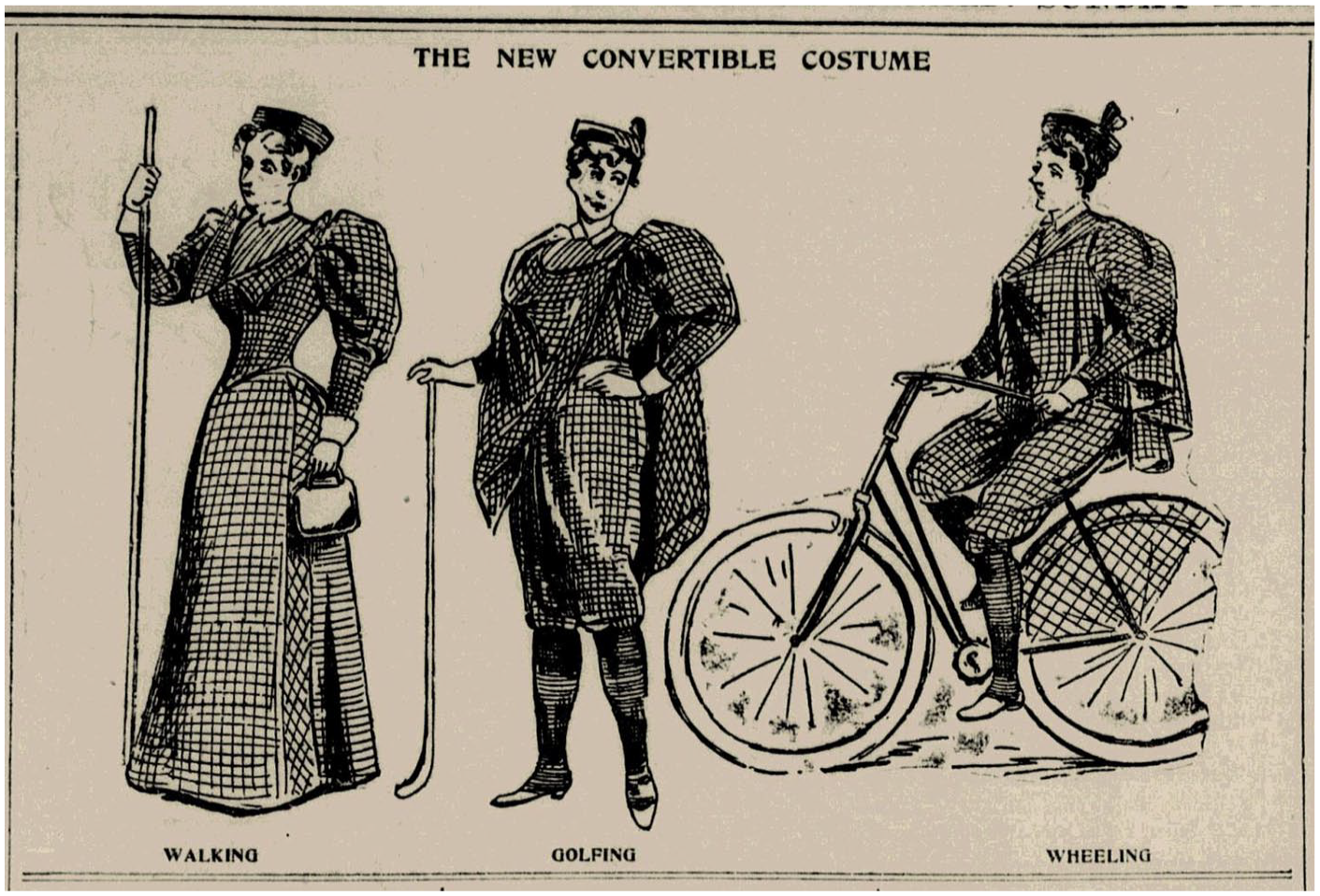
John Noble’s 1895 ‘New Convertible Costume’ appropriate for walking, golfing and wheeling (Los Angeles Herald, 1895, p. 18).
Inventive forms of clothing like this were popular with active women as they made valuable use of limited resources while offering fashionable flexibility to adapt to different contexts and conditions (Jungnickel, 2018). They could perform appropriate femininity on the surface, while enjoying more radical multi-modal identities where and when they wanted. These unique designs reflected women’s emancipatory desires to do more than was expected or encouraged for their sex. At the turn of the last century in England, America and France, women lacked equal rights to men regarding employment, property, voting and general mobility in public space. As Campbell Warner writes: ‘It was sports that brought women out-of-doors into new activities that took them away from their housebound roles’ and ‘changed their way of thinking about themselves’ (2006, p. 5). And the fact that new forms of sport and active wear were considered ‘only for play made them less of a threat to anyone who perceived them as challenging traditional women’s styles’ (Gordon, 2001, p. 25).
This article builds on research on the history of women’s sport about how women have always been active despite the barriers they faced and lack of surviving data (Burman, 2000; Campbell Warner, 2006; Constanzo, 2002; Gordon, 2001, 2007; Hargreaves, 1994, 2000; McCrone, 1988; Osborne & Skillen, 2010, 2020; Parker, 2010). I approach this issue via a unique source of data – historic clothing patents from 1890 to 1940. Patent data, I argue, provide insights into how individuals, many of them non-professionals, sought to tackle these problems from the ground up and, cleverly, from the inside out. My analysis conflates sport, athletics and activewear together to reflect the language in the patents and the reality of women engaged in some organised, but more often informal athletic activities. Although they attracted disproportionate social and media attention, they very rarely, if at all, had access to the same sporting arenas, opportunities, audiences, uniforms, or prize money as men. While more radical clothing and vigorous sports took place behind closed doors in places like women’s colleges, 2 I am interested in women’s sport and activewear worn in public, as it was shaped by different regulations and linked to wider socio-political struggles.
I bring citizenship studies to this literature to explore how inventors used innovative forms of sport and activewear as creative ‘acts’ to make claims, often in mundane and ordinary ways, to rights and entitlements otherwise denied (Hildebrandt et al., 2019; Isin, 2008, 2019; Netz et al., 2019). ‘Acts of citizenship’, Isin and Neilson explain, ‘disrupt habitus, create new possibilities, claim rights, and impose obligations’ (2008, p. 10). As Isin argues, ‘critical studies of citizenship over the last two decades have taught us that what is important is not only that citizenship is a legal status but that it also involves practices of making citizens – social, political, cultural, and symbolic’ (2008, p. 17). By providing a means of resistance to hegemonic norms, I examine how inventors of new forms of clothing might be considered alternative citizen makers. Rather than doing things with rights, here clothing might be seen as ‘doing rights with things’ (Isin, 2019, p. 52).
In the following I focus specifically on convertible, multiple and hidden clothing inventions that enabled wearers to creatively work around barriers to their freedom of movement. Throughout I ask: Who gets to be ‘sporty’ and active in public (then and now)? How did inventive clothing help wearers make claims to new, and sometimes transgressive, ways of being in and moving through public space? What can these historic inventions reveal about (ongoing) sporting issues for women and girls today? Overall, I aim to argue that investigating inventive clothing designed for and by women invites us below the surface of conventional (masculine) sporting histories. The data has the potential to unsettle assumptions around what sport and active bodies look like, and, in turn, expand ideas about what kinds of sport and active identities might be possible. This has bearing not only on how we reflect on the past but how we might question things we take for granted today and imagine different ways of recognising and encouraging active lifestyles in the future.
‘Sporty’ bodies, inventive clothing and alternative ‘acts’ of citizenship
Athletic performances in public have long been powerful symbols of what is valued in a society. ‘Spectator sport attracts mass audiences and hyperbolized media attention and has functioned as a stage for politicians, athletes, or other citizens to express political ideas’ (Guschwan, 2014, p. 861). For Butterworth, ‘sport is not merely a reflection of culture’, but also ‘functions ideologically to produce and reproduce culture, including political culture’ (2005, p. 112). Yet, while sport is often seen as a universal emblem of national identity, its associated glorified discourses of heroism, strength, commitment, risk and triumph over diversity have ostensibly been coded as masculine. From the advent of the able-bodied male-only Olympics in 776
For centuries, women and many others who could not or would not conform to these established forms have been excluded and marginalised in sporting contexts, more commonly narrated as supporters at the margins rather than participants at the centre. To partake, women had to resist and often actively challenge prevailing ideas that many sports and physical activities are incompatible with their sex. They have been regularly ignored, trivialised or mocked for their lack of skill and strength (Constanzo, 2002; Gordon, 2007; Hargreaves, 2000). They were either prevented from participating due to concerns about their ‘natural’ biological limitations or encouraged towards more ‘suitable’ activities such as gymnastics, ballet and swimming which disciplined the body in private contained spaces and thought to better reflect women’s alignment with grace over aggression or endurance (Parker, 2010).
The resulting dominance of male bodies in all levels of sport, and especially those played in public, restricted other kinds of stories from emerging and being appreciated. As Osborne and Skillen lament, ‘women in sport history remains a peculiarly neglected area of academic research in Britain’ (2010, p. 189). Researchers have attempted to bring ‘the struggles and achievements of specific groups of women whose stories have been excluded’ to life (Hargreaves, 2000, p. 1). Yet, as Hill notes, ‘[i]t is not simply a matter of “filling gaps”, but of confronting fundamental problems of epistemology’ (1996, p. 12).
There has also been an enduring issue of clothing. Those women eagerly adopting new sports and brave enough to challenge the status quo ‘quite literally had nothing to wear’ (Campbell Warner, 2006, p. 5). While conventional clothing, with its long skirts and petticoats, may have been appropriate for genteel activities like croquet, it was vastly incompatible with the moving machinery of the bicycle or steep icy mountain passes. As noted above, women have been under-resourced as athletes while simultaneously overburdened with social attention. Little (2014), for instance, writes about an Australian cricket team who were expelled from state competition for clothing offences. They had not worn stockings or regulation white uniforms. ‘It is telling that the reports of this expulsion’, he writes, ‘were the only time the team received any mention in the press, despite the fact that they had won their competition that season’ (2014, p. 1681). Around the same time, Lee (2007) writes about the ‘go slow’ strategy of some progressive English sportswomen. They tactically wore conventional cumbersome fashions to play sport rather than more comfortable and appropriate activewear so to minimise social criticism. He writes: ‘Obviously, skirted players were hampered in their ability to play their sports, but for women appearance was held to be more important than performance’ (2007, p. 1423).
Similar tensions remain for sporting and active women and girls today. As Osborne and Skillen write in their Sport in History special issue, ‘the more things change, the more they stay the same’ (2020, p. 411). While this is often amplified in worldwide spectacles, 4 sporting inequalities are enacted and performed in everyday life. Reports by sporting groups and charities show how women and girls remain disproportionally restricted, scrutinised and harassed in public space in relation not only to how and where they move but what they wear. 5 This has an ongoing detrimental impact on sport participation rates. A 2022 study by Sport England, Reframing Sport for Teenage Girls, found far more girls than boys in Britain stop feeling ‘sporty’ as they grow into adulthood, with many defining themselves outside this unnecessarily distinct binary identity. Barriers include ‘not belonging’, dislike of ‘others watching’ and ‘feeling judged’ (p. 14). A key finding of the report is to ‘expand [the] image of what “sporty” looks like’ (p. 18). While sport is considered more formal, organised and rule-based games (and historically, more masculine), there is increasing recognition of the value of more informal everyday exercise. And along with the need to recognise a wider range of sport and ‘sporty’ bodies, and ‘open eyes to what’s there’ (p. 26), there is a need to widen access to and appreciation of sport and activewear.
This article follows the call to seek out ‘alternative sources to enhance the understanding of women’s experience in the history of sport’ (Constanzo, 2002, p. 31). As Osborne and Skillen note, sports history has been ‘predominantly populated by male scholars and therefore, is still underpinned by a body of research that broadly speaks to male interests’ (2020, p. 415). Yet, there is much evidence throughout history of women enthusiastically taking up sports and athletic activities and leveraging all the tools, skills and materials available to them to respond to restrictions to their freedom of movement, to express themselves and to challenge the status quo. As Parker reminds us: ‘The art of embroidery has been the means of educating women into the feminine ideal, and of proving that they have attained it, but it has also provided a weapon of resistance to the constraints of femininity’ (2012, p. ix).
New forms of clothing, particularly for moving bodies worn in public, have long been sites of fierce socio-political negotiation. Queering widely accepted gender norms in public unsettled many. As McCrone writes, ‘sport was perplexingly ambiguous because it stood on the threshold between male and female’ (1988, p. 2). Inventive clothing provides a fascinating lens into specific challenges faced by sporting and active women. Because they had far less access to professional top-down provision, we instead find evidence of inventive practice and a different range of distinct sport and active identities emerging from the ground up and, as the following data show, from the inside out. By making unique claims to space and freedom of movement, I aim to argue that wearers used inventive sport and activewear to ‘constitute themselves as citizens – or, better still, as those to whom the right to have rights is due’ (Isin, 2008, p. 18).
Patents, data and methods
This article is part of the European Research Council funded project ‘Politics of Patents’ (POP) project that explores 200 years of clothing inventions from 1820 to 2020. 6 The bulk of data comes from the European Patent Organisation, home to over 120 million publicly available open access patents from around the world. 7 Patents provide valuable social science data with detailed information about inventors, their life and the problems that concerned them. 8 They also propose solutions in text and illustrations. My analysis focuses upon a subset of global patents for women’s sport and activewear from 1890 to 1940. This 50-year period was the ‘golden age’ of sport in the western world and a time of social, technological and political change (Constanzo, 2002). World Wars also brought about radical shifts in ideas and use of resources; and a growing interest in sport spearheaded by a cycling craze that swept the industrialised world, combined with a slowly emerging acceptance of the benefits of exercise for women and a patenting boom, opened previously highly privileged systems to non-professionals. 9
The subset for this analysis includes 200 clothing patents by inventors from Australia, Canada, Germany, France, New Zealand, North America and Switzerland. Initial searches were carried out with the International Patent Classification (IPC) code A41 for ‘Wearable Apparel’. 10 However, the fact that it was only partially useful for studying women’s sport and activewear is itself insightful. For comparison, finding men’s sport clothing patents in the archive is more straightforward. There are hundreds of results from standard keyword searches such as cricket, football and baseball. What is interesting, apart from how easy they are to find, is how singular they are in intention. Inventors tend to focus on smaller iterations in design. They are predominantly oriented around protecting the wearer or enhancing performance. Because a specific body – predominantly lean, strong and male – has always been at the centre of sport; there has rarely been a shortage in men’s sportswear, so change tends to take smaller increments. 11
Women’s sport and activewear for this period is more complicated, multi-faceted and surprising. Because they were seldom the focus for sportswear manufacturers or supplied with uniforms during this 50-year period, they had to borrow or adapt men’s wear, go without or, as I will show, invent it themselves. And, since they had to work around socio-political limitations and restrictions in public space, these inventions tend do more than one thing. They are often hidden from view. And there is remarkable variety. This dataset includes clothing for boating, camping, cycling, flying, gardening, gymnastics, hiking, horse-riding, golfing, mountaineering, skating, swimming, tobogganing, walking and more. They take the form of skirts, blouses, bloomers, breeches, trousers, jackets, jodhpurs, overalls, coats, capes and cloaks. Because they feature convertible, multiple and hidden possibilities, they are, unsurprisingly, harder to find.
Identifying a dataset of women’s sport and activewear inventions demands an inventive approach. Searching via IPCs was only partly useful as countries adopted this global system at different points throughout the century. Keyword searches were productive when titles and abstracts were available and included appropriate words. However, because they tend to be more multiple in purpose, they often have less useful titles. An example of this is American aviatrix Edith Foltz’s (1937) all-in-one convertible skirt, riding breeches and blouse opaquely titled ‘Skirt’. Many similar remarkable inventions were found by accident during the process of cleaning, translating and ordering the larger dataset. 12 The following analysis focuses on five patents, one per decade, to highlight the enduring issues facing sporting and active women. Further analysis into genealogical data, related periodicals and newspapers was conducted to thicken insights emerging in the patent research. Examples of sources include the British Newspaper Archives, Australian National Archives, UK National Archives, Hathitrust Digital Library, Project Guttenberg ebooks, New York Public Library and The Smithsonian.
Analysing inventive sport and activewear from the inside out
I organise the following analysis of historic sport and activewear patents in three themes: convertible, multiple and hidden. Although many of the patents overlap these categories, I use this thematic ordering to draw attention to key features and larger socio-political issues. The blurring itself is theoretically interesting. Data in this article are difficult to pin down. They resist singular labels. They are multi-part, flexible and dynamic, shifting shape and form as they adapt for changing conditions and contexts. (Even Noble himself was not viewed as entirely male and the sexuality of sporting women was often questioned.) This is of course their point, purpose and promise. ‘If bodies are multiple,’ argue Netz et al., ‘they can also be different, and other worlds are possible’ (2019, p. 646).
In the following I focus on inventors, their inventions, and on the broader role these clothes played in the struggles for women’s rights. Partly, this is because more about some inventors can be found than others, 13 but it is also by rendering visible and stitching fragments together with larger socio-political issues and happenings that larger insights are generated. Overall, I argue that these clothing patents might be read as acts of resistance, enabling wearers to move in new ways, engage in specific activities or claim freedoms otherwise inaccessible to them for personal, social or political reasons.
Convertible
To convert something is to ‘change the form, character or function’ and ‘to divert from the original or intended use’. 14 Most of the inventions in this dataset offer more than one garment or application of use. The examples in this section not only divert away from one use but transform to offer (at least) two entirely distinct possibilities. Corallie Thoma, a designer from New York, filed a patent for ‘Convertible Skirt and Breeches’ in America (1919) and again in Canada (1920) (Figure 2). Her patent images show how an otherwise unremarkable A-line skirt that skims the knee can be converted into a radically different garment – a pair of breeches. While these give the appearance of jodhpurs worn for horse-riding, Thoma explains how the narrow waist and fitted knee buttons emphasise the ‘wide military effect’ at the hips, a style symbolic of American and European male soldiers’ uniforms. This is a very interesting design choice given World War I had only recently ended (1914–1918). Women who had experienced new-found freedoms in workplaces due to the absence of men, were becoming displaced and expected to return to their domestic lives once more. Thoma borrows a material symbol of men’s freedoms and political power while also conforming to accepted women’s styled clothes.
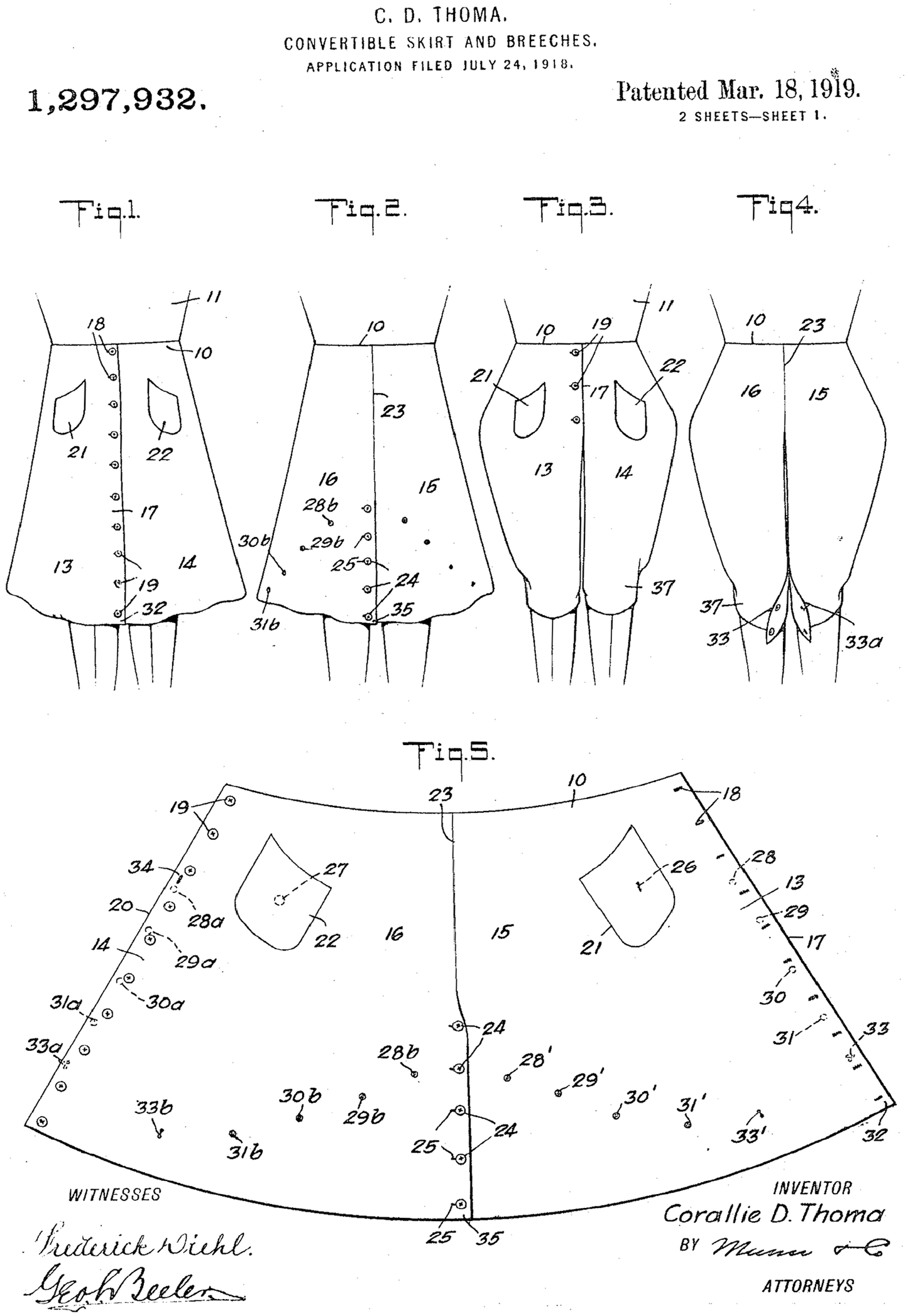
Coralie Thoma’s 1919 ‘Convertible Skirt and Breeches’ (US1297932A).
Uniforms, nationhood and masculinity have always been tightly entwined. Male subjects have been historically bestowed with primary responsibility to represent a country and fight for its freedoms. Writing about clothing at times of war in American history Schorman notes how this spread into every everyday life as consumers were ‘willing to mix consumption strategies with war fervour’ with specific colourways – red, white and blue – and military accessories such as capes, caps and collars (2003, p. 109). Furnishing bodies, particularly women’s, in nationalistic discourse became a way of staking a claim to these (masculine and dominant) forms of citizenship.
At the end of World War I, trousers were becoming more acceptable for women who had been wearing them to do specific types of war work. Yet, even in the 1920s, they were still considered appropriate only in certain contexts – in the factory, at home and while doing specific sports. As argued above, the latter offered freedom as sport was not considered serious and women, and inventors, embraced this as a means to experiment and push at the boundaries of acceptability. Inventions like Thoma’s gave wearers choice as to where and when to convert their clothes, and a means to hold onto at least some of the masculine freedoms they had experienced during the war.
Another invention featuring breeches relates to early aviation clothes. Aviation fever spread across the world at the turn of the last century. Girls and women especially ‘caught the spirit of freedom and limitless possibilities now that human beings could fly’ (VanWagenen Keil, 1979, p. 15). However, much like the bicycle and motorcar, the plane was considered masculine technology and women had to fight for a place in the air. Newspapers may have celebrated the drama, excitement and risk of women taking to the skies, but they also kept them firmly tethered to the ground in relation to their clothes. Schultz writes about Belgian aviatrix Hélène Dutrieu, who reportedly ‘flew uncorseted, considered immoral, thoughtless and “promiscuous” in the early 1900s’ (2019, p. 274). So fierce were grounded critics that some women pilots were forced to pack suitable evening attire for their destinations in severely compromised luggage space. Some even managed to change mid-air so they arrived in acceptable feminine form. In this way, the ‘everyday dominance of restrictive, enveloping and cumbersome clothing literally lay between them and their aspiration’ (Burman, 2000, p. 307).
With this pressure, it is perhaps unsurprising that women pilots’ accomplishments were often shadowed by what they wore. Black writes about Amy Johnson, the first woman to complete a solo flight from England to Australia, whose ‘appearance and clothing were continually referred to throughout her five-and-a-half-week trip in Australia’ (2009, p. 57). Because nothing appropriate existed in women’s conventional clothing, they had to constantly improvise and compromise with men’s wear. ‘Even Amelia Earhart, while she was learning to fly in 1920, wore men’s flying clothes not only because they were practical in the windy cockpit, but also because they made her less conspicuous at the flying field’ (VanWagenen Keil, 1979, p. 54). However, conversely, the enduring stigma of these transgressive practices required many to offset the wearing of men’s clothes with feminine behaviours. Earhart apparently ‘purposely kept her hair long enough so that she would not seem “eccentric”’ (VanWagenen Keil, 1979, p. 57). Increasingly dissatisfied with this, some women pilots made their own flying costumes from scratch. Much was made, for example, of Harriet Quimby’s ‘plum-coloured satin flying suit she wore, with hood, knickers and puttees – all of the same material’ (VanWagenen Keil, 1979, p. 10). In 1911, she described the problem and how she resolved it with convertible features:
It may seem strange, but I could not find an aviation suit of any description in the great city of New York – and I tried hard. In my perplexity it occurred to me that the President of the Tailors’ Association, Alexander M. Grean, might be a good advisor; and he was, for it did not take him long. . . . My suit is made of thick wool-back satin, without lining. It is all one piece, including the hood. By an ingenious combination it can be converted instantly into a conventional appearing walking skirt when not in use as knickerbockers form. (Quimby, 1911/1999, pp. 195–196)
Two decades later, similar problems persisted. Despite radical shifts brought in by World War I, parts of society were still troubled by the sight of independent women wearing trousers. Even women flyers who were redefining human capacity in the skies were forced to comply with limiting gender codes on earth. As Black writes: ‘Time and again the extraordinary adventurousness, independence and courage displayed by these young women on their pioneering flights were meshed with the requirements to appear feminine as soon as their feet touched the ground’ (2009, p. 71). As such, women pilots continued to make their own clothes, stitching needs and desires together with social expectations.
Edith Foltz, an accomplished record breaker, cross-country aviatrix, navigator and transport pilot from Oregon, took this even further in 1937 when she filed a patent for an innovative convertible costume (Figure 3). Although targeted at women pilots, she suggested it was useful for a range of outdoor activities, including ‘horse-back riding, hiking and like sports’. Uniquely, this all-in-one design consists of riding breeches covered by a fitted skirt attached at the waist. The convertibility comes from unzipping the sides of the skirt and lifting the lower edges up to the shoulders, where they are refastened at the neck to form a loose blouse. This action reveals breeches underneath, as Foltz explains:
The invention is particularly well adapted for women flyers in that it provides a garment which permits free action of the wearer’s limbs in getting in and out of an airplane, and also in the operation of the airplane. The invention also provides a skirt of attractive appearance which entirely covers the undergarment . . . thereby provides a garment suitable for street wear.
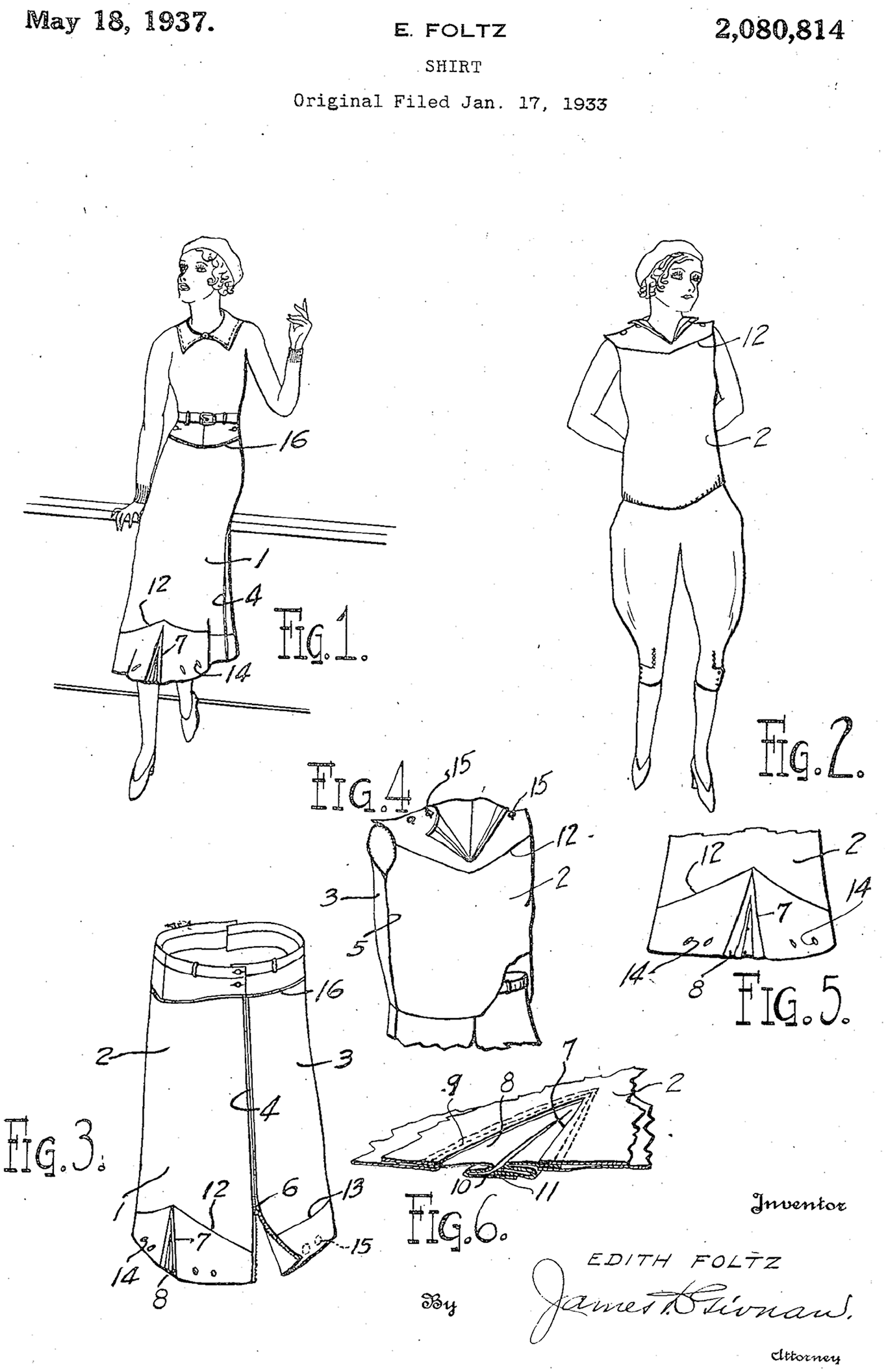
Edith Foltz’s 1937 ‘Skirt’ (US2080814).
Foltz leveraged the attention her gender and vocation catalysed in the media and society at large to promote the invention. Like the Noble costume 40 years earlier, it gained significant attention. The Salt Lake Tribune (also) called Foltz’s invention a ‘Three-In-One’ garment which can ‘be altered in a few seconds for street use, to serve as a sports outfit and as a pilot’s suit’ (1931, p. 22). The ‘Foltzup’, as it became known, was sold in Meier & Frank Ltd in Portland, one of most prominent and oldest retail chains in Pacific Northwest America. Full-page adverts in newspapers and periodicals encouraged shoppers to ‘Be Certain to See the New “Foltzup” Suit’ and appreciate its convertible possibilities: ‘An active sports tailored street costume – whichever you wish!’ The adverts suggest its suitability for even more physical activities women might be engaged in such as ‘hiking, fishing, hunting or camping’ (Oregonian, 1932, p. 16).
Foltz modelled it in the department store, demonstrated its features and answered shoppers’ questions. She wore it to flying events and told stories about it to journalists and even won a blue ribbon at the 1933 Inventor’s Congress in Los Angeles (Oregonian, 1933, p. 28). She seemed just at home in business worlds as she was in the skies. Further to blurring clothing categories with their convertible designs, ‘these women, in crossing borders and frontiers of speed and power, also crossed them in terms of gender and culture’ (Burman, 2000, p. 301).
Multiple
Being active was not limited to playing sports at home. The chance to travel offered welcome relief to middle- and upper-class women from the stultifying confinements of society. However, even women who enjoyed more masculine freedoms of movement remained encumbered by clothing restrictions, which were harder to shake off. New geographic and social freedoms were not always translated in clothing ‘as women were forced to take “home” with them as they moved’ (Cresswell, 1999, p. 179). Some places enforced fewer restrictions on women’s bodies and travellers often lamented having to return to more conventional practices in Britain. A contributor to The Rational Dress Gazette remarked: ‘The tolerance which prevails in France in respect to feminine rational cycling dress, strikingly contrasts with the intolerance displayed towards it in England’ (1899, p. 36).
While travelling became more available to the middle and working classes over the new century, some impediments remained largely unchanged. Clothing represented the tensions keenly felt by women travellers. It remained an ideological and physical reminder of ‘women’s rights, responsibilities, and limitations’ and ‘played a pervasive and sometimes insidious part in determining her behaviour and conditioning her to accept restrictions’ (McCrone, 1988, p. 216). Many women struggled with a desire for freedom and the responsibility of duty that fell disproportionately on them. Writing about the English traveller, writer and archaeologist Gertrude Bell (1868–1926), Birkett explains: ‘Her longing to be accepted sat in awkward combination with her fierce need to break all the boundaries of acceptable behaviour’ (1989, p. 28).
Paul, Hanno and Fritz Rößler attempted to solve one of these tensions: the clothing needs of travelling women who loved to play sport. In 1909 they patented a ‘Combined Ladies’ Overall and Sporting Costume’ in England and in France (Figure 4). Residing in Saxony, Germany, these self-identified manufacturers declared the nature of their invention to be ‘a sporting costume for ladies which, through a simple manipulation, can be converted into an overall’. A core objective was ‘to provide wearing apparel which, while being light and occupying small space, will be adaptable for the different stages of a journey’.
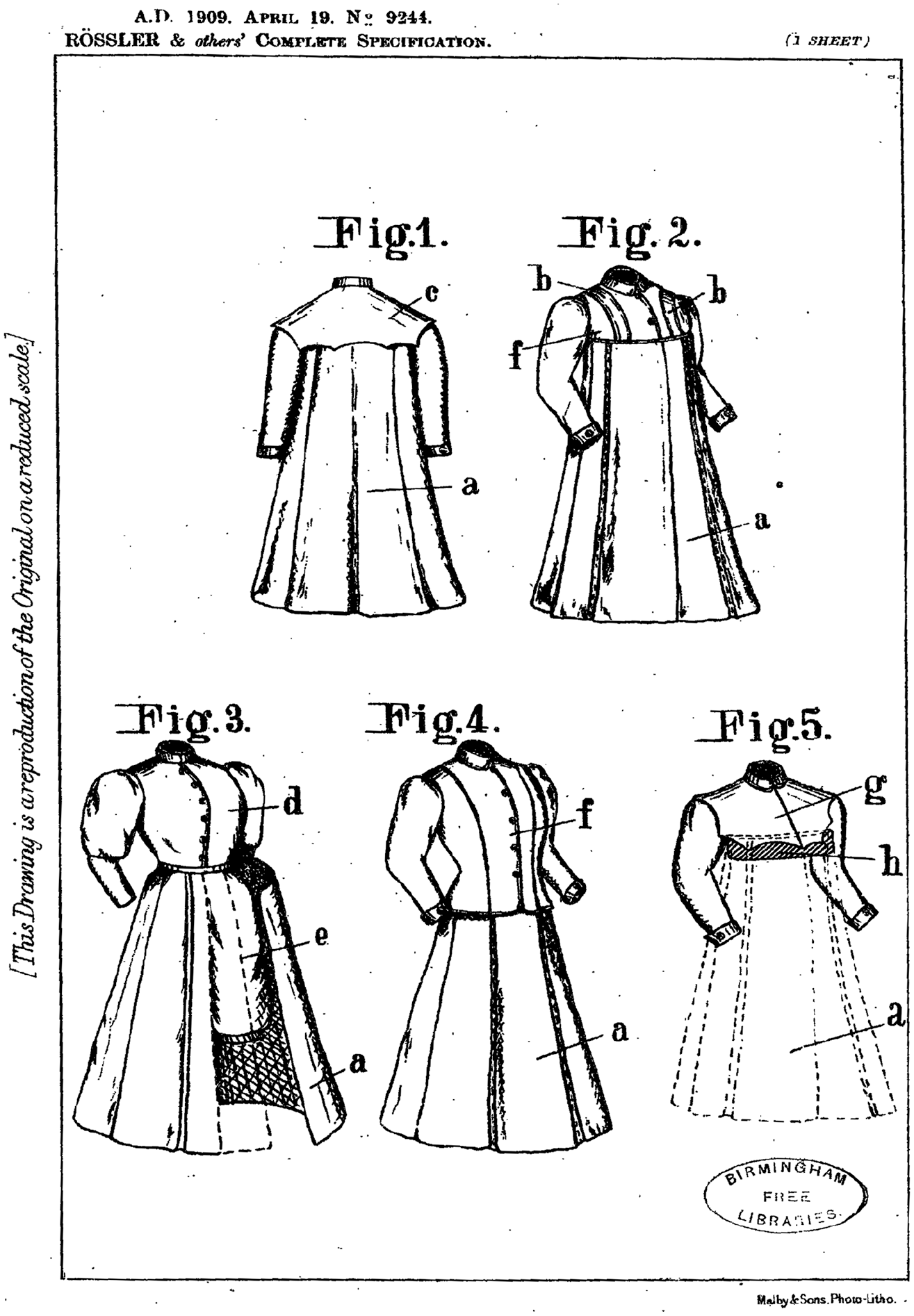
Paul, Hanno and Fritz Rößler’s 1909 ‘Combined Ladies’ Overall and Sporting Costume’ (GB190909244A).
Their invention achieves these ambitious aims with multiple interconnecting pieces. The Rößlers explain: ‘Many ladies, for instance, who, while occupied in mountaineering, tobogganing and cycle sport, dress themselves in sporting knickers, desire when arriving at a destination, to appear in skirts. This is not always possible, however, owing to the increase in baggage which it would involve.’ Their invention comprised five pieces – tailored jacket, cape (with and without sleeves), blouse, bloomers and convertible skirt/overall – and offers multiple combinations to suit different sports, social contexts, weather conditions and travelling comfort.
The skirt is particularly interesting. It appears to be an ordinary floor length A-line design until the wearer unbuttons the front panel and releases straps hidden at the waistband. Raising the waistband up the chest, looping the straps over the shoulders and rebuttoning the front onto a previously hidden panel widens the skirt and turns it into an ‘overall’ that covers the body from chest to calf. The inventors explain how ‘the skirt is suitably furnished with buttons, button-holes, hooks and eyes, as well as press buttons so as to make it adjustable for its different modes of application’. Critically, the multiple combinations were meant to be quick, and easily managed ‘by any lady and without assistance’. The inventors also emphasise the cost savings of their combination costume.
The Noble convertible costume was designed for similar purpose. The Gentlewoman reported on its use for women travellers. ‘It is a most unique design and represents a very clever idea that will save the tourist the trouble of luggage to any extent’ (1895, p. 47). While some privileged travellers had money for multiple garments and porters, many did not or preferred independent travel. Wearers of Noble and Rößler costumes could travel light, claim the outward appearance of a respectable lady when needed while still participating in all their sporting activities.
Even more innovations were hidden in the seams and stitches of these inventions. Of note in the Noble costume is the use of masculine tailoring. ‘The bodice is made at the neck like a man’s coat, the expanding principle being adopted at the waist for ease and convenience when leaning forward in riding a machine’ (Gentlewoman, 1895, p. 47). This was a subtle yet radical intervention at the time. A forward leaning position was predominantly a man’s cycle position, used for racing at speed. Women were meant to sit upright. Social propriety, the nature of a step-through ladies’ frame and style of their clothes enforced this. Noble’s costume thereby subtly offered women multiple ways to position themselves to be in and move through public space.
Historical writings on sport and citizenship document how women used a plethora of strategies, tools and materials to carve out space or more often force their way into the public sphere. Schultz writes about forms of ‘physical activism’ which ‘allowed the women not only to voice their message but to stake a symbolic claim on the polity, interweaving the democratic technologies of the right to assemble and speak freely with the incongruity of their denial of full citizenship’ (2010, p. 1135). While multiple and convertible costumes were less visible, deliberately so, they nonetheless offered wearers at least an imaginary if not a physical reality of new ways of being in the world: inhabiting spaces, moving differently, and making claims to rights and possibilities previously denied or made difficult due to conventional gender codes of behaviour. They also showcased women’s strenuous sporting capacities ‘further debunking the myth of female frailty that had been used to argue against their enfranchisement’ (Schultz, 2010, p. 1135).
There is no evidence, found as yet, of the Rößler invention making its way out of the archive, into manufacture and onto sporting women’s bodies. However, as indicated by the attention Noble’s invention generated in international media, these designs clearly caught the interest of women searching for solutions to restrictions to their freedom of movement. And as Birkett (1989) writes, many Victorian women first imagined themselves escaping society and carving out new ways of living via writing, paintings and poetry. With these creative acts they ‘formed a concrete picture of themselves as travellers which later enabled them to step out of the window, over the garden fence and realise their dreams’ (1989, p. 39). Inventions like these clothing patents might seem small in scale, yet whether they were made and worn or not, they held the creative potential of multiple ways of being in, moving through and experiencing the world. As Netz et al. (2019) remind us, it is just as important to focus on ‘actors and fields that are not in the spotlight but nevertheless important sites for potential change’ (p. 647).
Hidden
All the inventions in this dataset feature concealed elements to achieve multiple and convertible outcomes. Mundane elements such as buttons, buttonholes, zips, cords and ribbons, loops, straps, hooks and eyes and subtle extra layers of material are assembled in unique combinations or in unusual places to transform a garment from one form to another. Cecile Harrison’s 1914 patent for ‘Improvements Relating to Divided Skirts or such like Garments’ is a primary example (Figure 5). Harrison was a ladies’ tailor residing at 20–22 Beadon Road, Hammersmith, West London. Her modest patent title belies the ambition in the invention. Harrison explains the ‘marked advantages over other skirts’ come from its ‘special adaptability for exercise or games’. She clearly liked sports, as she claims to have designed a garment ‘affording exceptional freedom of movement for riding astride or aside on horseback, or for cycling, boating, punting, mountaineering, skating, golfing or indulging in any athletic games or physical exercise’. It required no more material than other bifurcated garments of its type. It was no heavier and would not look any different on the outside. She explains how the novelty lay inside: ‘[I]t is perfectly neat in appearance and has a close resemblance to an ordinary well-cut skirt for walking, street wear or indoor use without its being detected as a “divided” garment.’
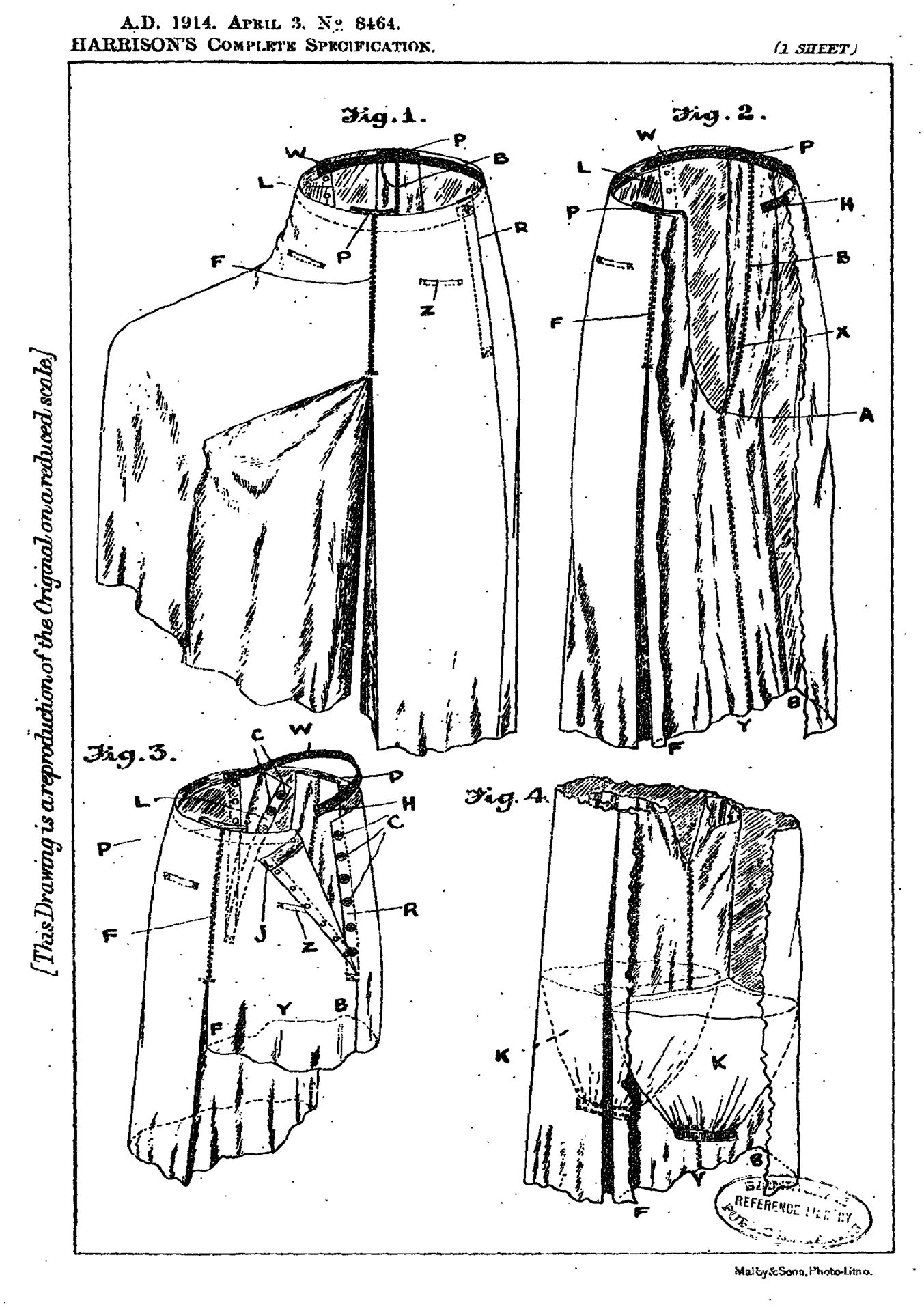
Cecile Harrison’s 1914 ‘Improvements Relating to Divided Skirts or such like Garments’ (GB191408464A).
Divided skirts emerged in the Victorian era to enable women to embrace more active lifestyles while adhering to gendered expectations. They encompassed a range of styles, from bloomers to wide legged culottes, yet they gave the illusion of an ordinary skirt from the outside. Basically, these designs ensured a wearer’s true intent could not be ‘detected’. She could walk, pedal bicycles, sit astride horses, hike, skate and generally move more freely in the pursuit of other activities. Her actively dressed body and sporting intentions were hidden in plain sight.
Despite its clear advantages, society was divided on the divided skirt. It was said to be the invention of Lady Florence Harberton, a leading campaigner of the English dress reform movement. In 1883, the National Health Society organised an exhibition to showcase advancements in clothing and household decoration but warned: ‘The dress is to be “hygienic, rational and artistic” but unless it shews [sic] an improvement in the ideas of Lady Harberton, I fear it will not even excite public curiosity.’ Their view was clearly stated: ‘Ladies will not wear the divided skirt’ (Western Morning News, 1883, p. 2).
Yet many did. But the threat of women wearing what was perceived as men’s clothing can not be understated. Gender roles in Victorian society were tightly regulated and clothing, along with education, race and class, shaped all aspects of everyday life. Such attired women were seen not only to be breaking into men’s wardrobes, but also imitating men by making claims to associated rights, privileges and behaviours. These anxieties, as indicated above, continued well into the twentieth century. There were fears that cycling and other sports were gateways to ‘new traits such as aggression, competition, smoking, drinking liquor and increased concern with political issues, which were formerly seen as masculine’ (Constanzo, 2002, p. 42).
Hildebrandt et al. argue that ‘to perform citizenship and to act as citizen includes a certain dimension of “fake it ’til you make it” when claiming, enacting, or presupposing a right that has yet to gain legal apparatus’ (2019, p. 5). Throughout the centuries, many women have sought to escape their restrictive lives via clothing or at least hide their true intentions. There are many accounts of women embracing menswear and the privileges that accompany them. For instance, Lady Florence Dixie, a Scottish writer, feminist and dress reformer, argued that gaining access to men’s domains was essential for women’s emancipation: ‘Women, as women, can write and lecture, but this will avail nothing unless they enter the haunts of men, partake of their chances, go into Parliament, and prove themselves capable of ruling. . . . Let them disguise themselves’ (Newcastle Weekly Courant, 1893, p. 6). Lady Harberton went even further by suggesting women ‘should walk in male attire, and thus gain admittance to the House of Commons by stratagem’ (Pembroke County Guardian, 1907, p. 3). Writing about the history of cross-dressing, Shopland notes how we only really know about those who failed and were caught, and while they ‘have left us with an extensive record of how they circumnavigated societal restrictions . . . it begs the question: how many more were there that were never caught?’ (2021, p. 11). In a similar vein, it’s possible many more women than we’ll ever know made and wore less-visible inventive forms of sport and activewear. There may have been an alternative history of women’s sport, if there’d been more awareness of convertible, multiple and hidden designs.
Pockets are another material device imbued with practical purpose and concealed potential which have catalysed much inventive attention over the centuries. 15 Many of the inventors in this dataset recognise the important role of pockets for active women. Pockets freed hands to steer bicycles, swing golf clubs and hold horse’s reins while also carrying personal belongings. More politically, they helped women hold property at a time when they were more often themselves considered others’ property. Some inventors are very specific about their use, placement and capacity. Harrison urges the inclusion of ‘a pocket or pockets of usual or exceptional capacity may be provided in the front part or side of the skirt’. The scale of these pockets suggests the potential of moving independently for a length of time. Thoma does something even more hidden with her two pockets located on the front of the skirt – they hide the central convertible technology. A button and buttonhole are located unusually inside the pockets. When joined with corresponding button/hole on the rear placket they create the seat of the breeches. Twenty further fastenings inside the costume complete the conversion into trousers. Without prior knowledge of these devices, their purpose would remain hidden. 16
There are further subtle novelties in Harrison’s invention worth noting. She suggests her convertible skirt is useful for ‘maids and children also’ and not just for ladies, thereby recognising the clothing needs of other citizens commonly overlooked. She also describes in detail the use of two side plackets, or buttoned openings on the hips which breaks the waistband in two parts. Rather than suggesting extra pockets, she designed a device for easy un/dressing. This unique mode of attachment enables ‘the rear portion to be let down for convenience without interference with the front portion of the waist’. Harrison recognises the need for women to relieve themselves when away from the home with modesty and ease. Unable to find a suitable toilet or unable to undress easily kept women ‘leashed’ to the home. Thus, this hidden feature can also be seen as an ‘act’ of citizenship. As Wiseman notes: ‘Experiences of access to toilets in both public and private spheres . . . say a lot about both how our bodies are perceived, and our citizenship imagined’ (2019, p. 789).
Conclusion: Moving beyond singular sporting binaries
My focus in this article is on what women wore at the turn of last century to participate in varied public physical pursuits. In addition to socio-political impediments to their freedom of movement, they were faced with an incompatible wardrobe. Conventional women’s clothes did not fit with new ways of moving. Unlike men who could more easily discard layers, purchase or adapt existing apparel, women had to adapt what they had, borrow, or hack at menswear or make their own. These gaps, combined with a fierce desire to participate in new ways of being in and moving through public space, generated conditions ripe for invention for and by women.
There is abundant creativity in the histories of inventive women’s sport and activewear. However, to find it requires looking below the surface, both in the archives and in clothing itself. I focused on global clothing patent archives from 1890 to 1940 and discussed how many inventions for sporting and active women have convertible, multiple and hidden layers. The early lack of professional or retail attention combined with distinct socio-political pressures on women’s bodies in public space meant that women’s sporting and active identities emerged differently, from the ground up, or as I argued in these cases, from the inside out.
Inventors had to address a plethora of issues which meant they often hid innovations in plain sight. Many were designed not to be seen, to enable wearers to choose where and when to participate in a wide range of activities that might be considered socially unacceptable, or to respond to changing conditions or uncomfortable situations. These inventions can be seen as experimental sites for new participatory practices and a way to claim rights and entitlements otherwise unavailable to women at this time. These data reveal lesser-known acts of resistance to dominant discourses and conventional practices and provide evidence of women as active drivers of socio-technical change rather than just being perceived as spectators or consumers of it.
Why does this matter now?
This article draws attention not only to these remarkable inventions, but more broadly to political acts of doing sport and activity differently. Although many early costumes were far from ideal, and in many ways compromised in the provision of convertible, multiple and hidden options, they nevertheless expanded possibilities for active women by helping them imagine, access or carve out space in often unwelcoming landscapes. These inventive histories map differently against more normative triumphal and heroic (singular and masculine) sporting discourses. This partly is why we know so little about them today.
I argue that drawing attention to and remembering lesser-known stories like these provides a means to build on them. We can ask different questions about things we take for granted. As Schultz argues, by ‘broadening our conception of sport, we might begin to construct more nuanced understandings of women’s history’ (2010, p. 1135). Had these accounts become part of sporting records, and been celebrated for the ingenuity they offered then, and developed further, perhaps today’s sport and activewear landscape might well be less singular and binary and more varied, inclusive, imaginative and inventive.
While many things have changed, girls and women continue to struggle to be ‘sporty’ and active in public. Recent reports reveal low participation rates for many reasons, including self-consciousness, sexual harassment, ill-fitting equipment and lack of appropriate clothes. Claiming ‘sporty’ identities for girls and women seems as challenging today as it was a century ago. And the unnecessary binaries of this identity are as problematic as they are enduring. What these inventive stories suggest is that they should not have to occupy a single identity. They should not have to accept normative representations that exclude them. The potential of making and wearing clothes that offer convertible, multiple or hidden options expands imaginaries of what might be possible for all citizens. Reclaiming legacies of these inventors and their remarkable inventions might well offer a way to think more creatively about the potential of today’s active bodies in public space.
Footnotes
Acknowledgements
The author wishes to thank the anonymous reviewers for their constructive comments and wider research team whose collective conversations helped inform this article.
Funding
This article is part of the project ‘Politics of Patents: Re-imagining Citizenship via Clothing Inventions 1820–2020’, which has received funding from the European Research Council (ERC) under the European Union’s Horizon 2020 research and innovation programme (Grant agreement No. 819584).