




Abstract
This article addresses the question of whether attending a private school affects voting behaviour and political attitudes in adulthood in Britain. The analysis is based upon the British Cohort Study, a nationally representative cohort of children born in one week in April 1970. The ‘effect’ of attending a private school on the tendency to vote Conservative in four consecutive General Elections, and on the expression of conservative attitudes in mid-life is assessed using path analysis. The model includes multiple indicators for a range of antecedents: social origins at birth, cultural and material capital, academic achievements and early social class destination. Once these antecedents are included in the model, for both men and women a direct positive relationship remains between attending private school and voting Conservative and holding right-leaning attitudes. The main significance of these findings follows from the high proportion of private school alumni in influential positions in public life.
Introduction
This article sets out to examine the association between attendance at a private (i.e. fee-paying) school and voting behaviour and political attitudes in Britain.
Most countries permit private schooling, but in Britain there is a distinctive very large resource gap between private and state schools that is supported by unusually high fees (Green and Kynaston, 2019; IFS, 2020). The private schools serve a mainly socially exclusive clientele (notwithstanding a small role for bursaries) based on wealth and the ability to pay (Anders et al., 2020; Henseke et al., 2021). A substantial research literature has demonstrated the influence of private schooling on educational attainment, earnings, homogamy within school-type and social mobility (examples are Brown et al., 2013; Dearden et al., 2002; Green et al., 2017, 2018; Henderson et al., 2020; Major and Machin, 2018; Parsons et al., 2017), demonstrating the significance of this institution for social reproduction in Britain. The study of elites, defined both in terms of wealth and power, and the reproduction of elites, is a longstanding interest within the discipline of sociology (Rahman Khan, 2012).
In another literature, how Britain votes has captured the attention of sociologists and political scientists since the Second World War (Evans and Tilley, 2017; Goldthorpe and Lockwood, 1968; Heath et al., 1985; Sobelowska and Ford, 2020). At the intersection of these two literatures, studies of the education of elites have highlighted the elevated proportions of private school alumni in positions of public influence (Reeves et al., 2017). To illustrate, more than half of junior government ministers, and a third of the British Chairs of FTSE 100 companies were privately schooled (Sutton Trust and Social Mobility Commission, 2019).
There is a prima facie link between British private schools and politics, which can be illustrated by the fact that 41% of Conservative Members of Parliament (MPs) were privately educated, compared with 14% of Labour MPs (Sutton Trust and Social Mobility Commission, 2019). This compares with 7% of the general population. Of course, an association between right-wing values and voting may be due, in whole or in part, to selectivity into private schools according to characteristics that may also be associated with an individual’s politics, such as parents’ socio-economic position and parental attitudes. Additional potential mechanisms include peer socialisation, teacher influence and indirect effects via higher post-school educational attainment and socio-economic position. The role of private schools matters because, with their high prevalence in elite occupations, the social and political attitudes of private school alumni may have a disproportionate impact on British politics and society.
The current article examines outcomes for a single cohort of ‘40-somethings’ born in the UK during one week in April 1970: the 1970 British Cohort Study (BCS70) (University of London, Institute of Education, Centre for Longitudinal Studies, 2022). A unique strength of our investigation is that it is based on longitudinal evidence for the same group of individuals measured over time where we have access to information on voter choice across four consecutive General Elections from 1997 to 2010. Longitudinal records on voting allow us to examine the interplay of individual characteristics and political behaviour in a way that repeat cross-sectional or panel surveys cannot. An additional exceptional feature of the dataset is the inclusion of individual political attitudes in the teenage years at age 16, and in mid-life at age 42. Using rich life-course data, we are able to incorporate information about early life origins and influences and adult destinations in our appraisal of the role of private schooling and higher education in shaping voting behaviour and political attitudes in later life. All of the prior influences are modelled simultaneously using a pictorial representation of associations or path analysis (Duncan, 1966; Wright, 1934). Given that our key variable was the receipt of private secondary schooling or not our preference was to represent the influences and outcomes in our path framework as manifest variables rather than define latent variables as in a structural equation model (Duncan, 1975). Statistically, our task is to examine to what extent private schooling maintains a direct relationship with adult voting behaviour and right-wing attitudes once we take account of all of the influences mentioned above.
The Association of Private Schooling with Political Attitudes and Behaviour
The inculcation of conservative political attitudes is not likely, in modern times, to have been an explicit objective of teaching in private schools. Rather, the possibility we are investigating may be interpreted as a type of peer effect (Sacerdote, 2011), whereby attitudes and assumptions are absorbed from other pupils and sometimes from teachers. Given that a private school community can become relatively closed – especially when it is a boarding school – these peer effects have a strong social character. The influence of group norms on social identities and personal behaviour is well established in social psychology (Brown and Pehrson, 2019), including application to schools (Brown et al., 2007). Such peer effects may be long-lasting, especially if they become reinforced through post-school networks.
The reproduction of elites is shaped by sex as well as class, and this is reflected in the distinct histories of private schooling for boys and girls in Britain. Many private schools during the relevant period were single sex, with boys’ and girls’ schools having different histories and, sometimes, a different ethos. For this reason, we cannot assume that private schools will have the same relationship with political attitudes and behaviour for women and men. In addition, political attitudes and voting behaviour have also differed between the sexes (Campbell and Shorrocks, 2021). Therefore, we investigate the effects for females and males separately.
Any investigation of the political socialisation role of Britain’s private schools needs also to take account of their distinctive character and that of their clientele. Lambert’s (1967) ethnographic account illustrates the view that the schools are politically conservative:
Boys and Masters alike are so Conservative in outlook and politics as to be ever breathing Conservatism down the necks of those who do not conform. It seems to be almost a crime to have thought a bit about politics and not to be for ever making unqualified statements against anything not conforming to their tastes. (Boy, aged 17, quoted in Lambert, 1967: 374)
Even if this model of cultural reproduction is overly deterministic (Walford, 1986), it raises the question as to whether private schools simply cater for a class of families with characteristics likely to produce conservative offspring, or whether attending a private school is associated with conservative views above and beyond this. Research confirms that the social attitudes of parents are significant, in addition to income and wealth, in affecting their decision to pay for their children’s private education (Anders et al., 2020; Ball, 1997). Beyond accounting for early-life influences on attitudes, the investigation also must account for the role of educational achievements (including university attendance), which themselves may partly be the consequence of private schooling (e.g. Parsons et al., 2017). There is a substantial literature on the link between educational credentials and individual politics (Hoskins et al., 2008; Johnston et al., 2018; Stubager, 2008; Surridge, 2016). We hypothesise that private schools’ effects on their pupils’ credentials will mediate the relationship between private schooling and the later expression of political attitudes and voting behaviour.
There are, thus, a number of issues to be examined: the extent of any differences between the views and behaviour of the privately and state educated, the significance in this context of social origins and of gender, and the role of educational attainment. In an earlier analysis using pooled cross-sectional data from the British Social Attitudes Survey, Evans and Tilley (2011) found that there were differences between the views of privately and state educated adults; these could not be accounted for by their current circumstances or their parents’ social class; moreover, the differences were larger among non-graduates than graduates. Their analysis is constrained, however, by the cross-sectional nature of the data.
In this article we are able to go beyond their account, using longitudinal data from the British Cohort Study, which affords very rich data, collected in real time rather than through recall, on the details of respondents’ social origins and significant childhood influences, and which permit a sequential analysis. These data also permit a study of voting behaviour at several stages in adult life, in addition to political attitudes. Our analysis draws on previous work using the British Birth Cohort Studies, which has examined various aspects of political attitudes and behaviour including voting, views, values, cynicism and political trust (Bynner et al., 1996; Deary et al., 2008; Paterson, 2008; Persson, 2014; Surridge, 2016; Wiggins et al., 1997). All of these studies share the principal advantage of using longitudinal evidence in order to provide fine-grained measures of individual and family characteristics in childhood and adolescence as well as the subsequent expression of views, values, interests, experiences and accounts of action and behaviour in adulthood. The analysis in these studies assumes that the passage of time conveys the direction of influence between early life characteristics and behaviour upon later life outcomes. In this way temporal ordering provides an interpretation of association or influence between antecedents and outcomes, which some authors (e.g. Surridge, 2016) label as an ‘effect’. For convenience we also use the term henceforth in this article without intending to claim causation or ‘cause and effect’ (Goldthorpe, 2001). Unlike these studies our approach concentrates on the type of schooling an individual receives and the extent to which that experience impacts upon voting Conservative and expressing right-wing views in adulthood.
Research Aims
First, we focus on the act of voting Conservative or otherwise across four consecutive General Elections from 1997 to 2010 and second, the expression of economic left–right attitudes two years later (2012) when BCS70 cohort members (CMs) were 42 years old. Our voting outcome is based on a count of how many occasions an individual reports a vote for the Conservative Party based on four successive General Elections as opposed to a single election (as in Deary et al., 2008). The expression of right-wing attitudes is based upon an operationalisation of economic views on a left–right dimension as reported two years after the creation of a Conservative–Liberal coalition government in 2010. Our analysis takes account of both origin and current social class destination in the presence of the cumulative influence of childhood and family antecedents on each outcome for men and women separately.
Our key research questions are:
(1) To what extent is private schooling associated with Conservative partisanship as measured by voting behaviour and the expression of right-wing attitudes among a cohort of Britain’s ‘40-somethings’?
(2) To what extent do early life social, material and cultural circumstances account for these differences?
(3) To what extent does university education mediate any difference in voting and attitudes among the state and privately educated?
(4) Do these patterns vary according to sex?
Sample Source and Analytical Approach
All of our analyses are based upon a single birth cohort of individuals who were born in 1970 and followed through their lives until the age of 42 years (University of London, Institute of Education, Centre for Longitudinal Studies, 2022). The BCS70 datasets are available to bona fide researchers via the UK Data Service. In Britain during this historical period cohort members (between the ages of 9 and 27 years) and their families experienced 18 years of uninterrupted Conservative government. The year of 1997 (the first voting record for BCS70 CMs) witnessed the election of Tony Blair and ‘New Labour’ who were to remain in power until 2010 (our fourth and final voting record) when a Conservative and Liberal coalition was formed under David Cameron.
Our analysis adopts a path analytic framework that captures the temporal ordering among the potential influences upon our two outcome variables: a count of whether or not a CM cast a vote for the Conservatives across each of four General Elections held in 1997, 2001, 2005 and 2010 and a CM’s left–right attitude score aged 42 years (in 2012) based on the summation of three Likert scaled items. None of these key variables were imputed in order to be totally confident about the actual type of school attended, actual number of votes cast for the Conservatives and political attitudes. Consequently, the analyses are based on samples of 6917 (3267 men and 3650 women) BCS70 members in 2012 resident in England & Wales. All modelling was conducted using MPlus version 7.4 (Muthén and Muthén, 2012) and employing a weighted least square mean and variance adjusted (WLSMV) estimator across 20 replications of ‘filled in’ data under multiple imputation (Kenward and Carpenter, 2013) to handle any item non-response for variables apart from type of school attended and our outcomes (Silverwood et al., 2020). In addition to the variables used in the analysis we also included a set of auxiliary variables in order to enhance the estimation of missing values. These variables are listed in Table A I in the Online Appendix. In addition to the constraint on sample selection for key analytical variables the selection of auxiliary variables was conditional on CMs having a complete set of birth characteristics. To assess ‘model fit’ we adopt three conventional criteria for assessing model fit: the Root Mean Square Error of Approximation (RMSEA), the Comparative Fit Index (CFI) and the Tucker Lewis Index (TLI) (Brown, 2006; Hu and Bentler, 1999). Typically, a model would be regarded as ‘acceptable’ if RMSEA < 0.08; CFI > 0.90 and TLI > 0.90.
Before continuing with a description of our operational variables it is worth considering the concept of statistical mediation and how it plays a role in the construction of our path models. The main focus of our analysis will be to examine the cumulative effects of attending private school (during preparatory (primary) and secondary stages) on voting behaviour and adult political attitudes. However, the literature suggests that rather than simply modelling the effect of schooling directly upon attitudes and voting we should allow the private schooling effect to be mediated via degree status (whether or not a CM gained a university degree) (Jose, 2013). In graphical terms this is represented by a ‘classic mediation’ triangle as illustrated in Figure 1 where a direct path connects ‘schooling’ (essentially fee-pay schooling or not) with the outcome labelled ‘right-wing voting history up to age 40 years’ and an indirect path connecting ‘schooling’ via university degree status to the right-wing voting history outcome). Similar ‘mediation’ triangles can be identified involving education and social position in early adulthood as mediators. Conventionally, the paths have arrowheads that point to the implied dependent variable so a variable can be both dependent and independent in this context. In the analysis that follows each path has an associated path coefficient. In terms of measurement, a mediation triangle can be described by a ‘total effect’ of a variable upon the dependent variable, which in turn is the sum of the ‘direct’ and ‘indirect effect’. For more complex mediation, involving more than one mediator the indirect effect can be decomposed into specific indirect effects (following MacKinnon et al., 2002)
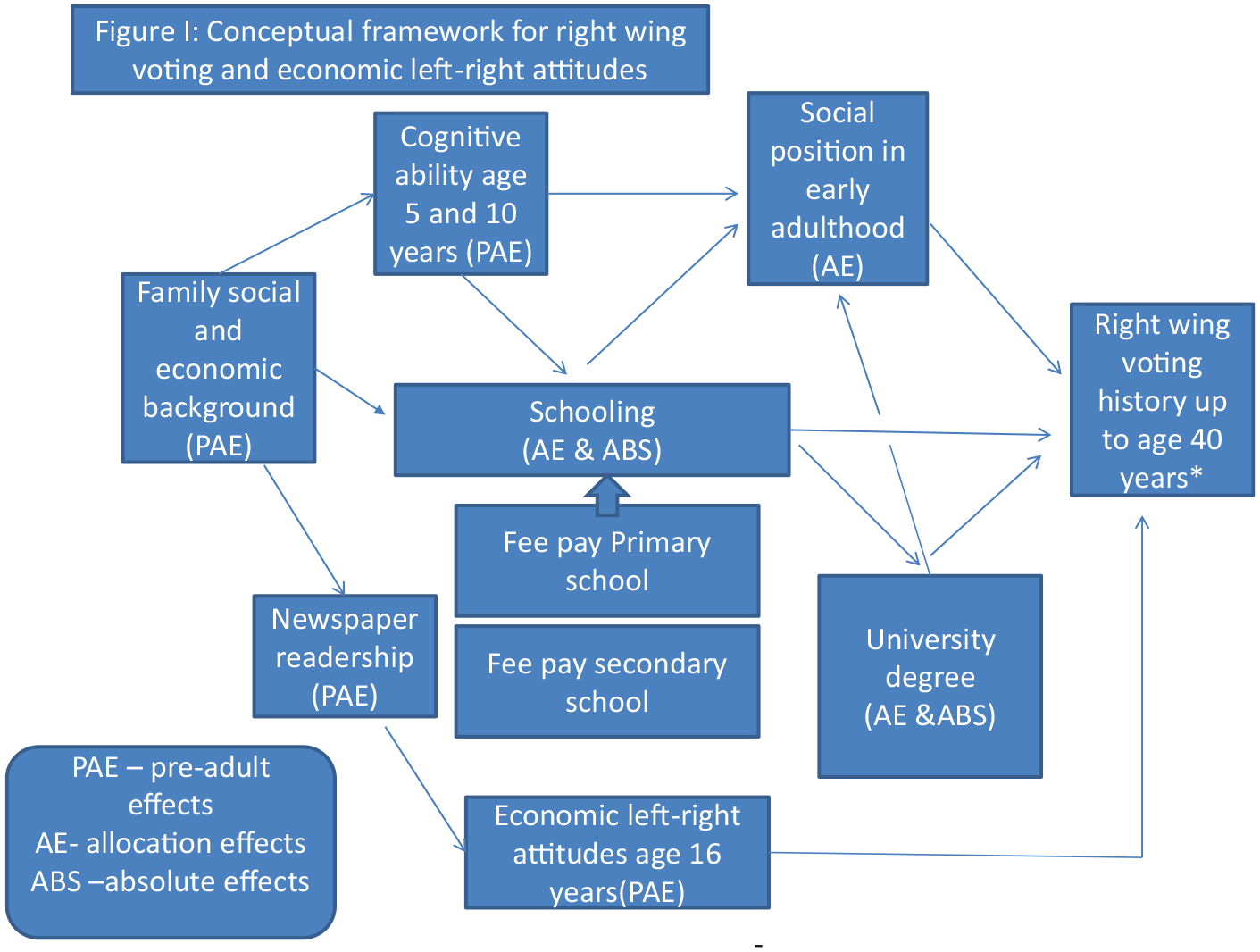
Conceptual framework for right-wing voting and economic left–right attitudes.*
The outcome variables are counts and handled by probit analysis (Aldrich and Nelson, 1984). Estimated path coefficients are interpreted as ‘standard deviation’ units and the interpretation of the strength of any effect follows Cohen (1992). 1 We now continue with a description of our variable selection.
Selection of Variables
Table 1 lists all of the variables entered into the path analysis together with their respective labels, which are used in the path diagrams.
Variables and labels used in the path analysis to interpret the influence of the expression of left–right attitudes and voting behaviour for ‘40-somethings’ in 2012.
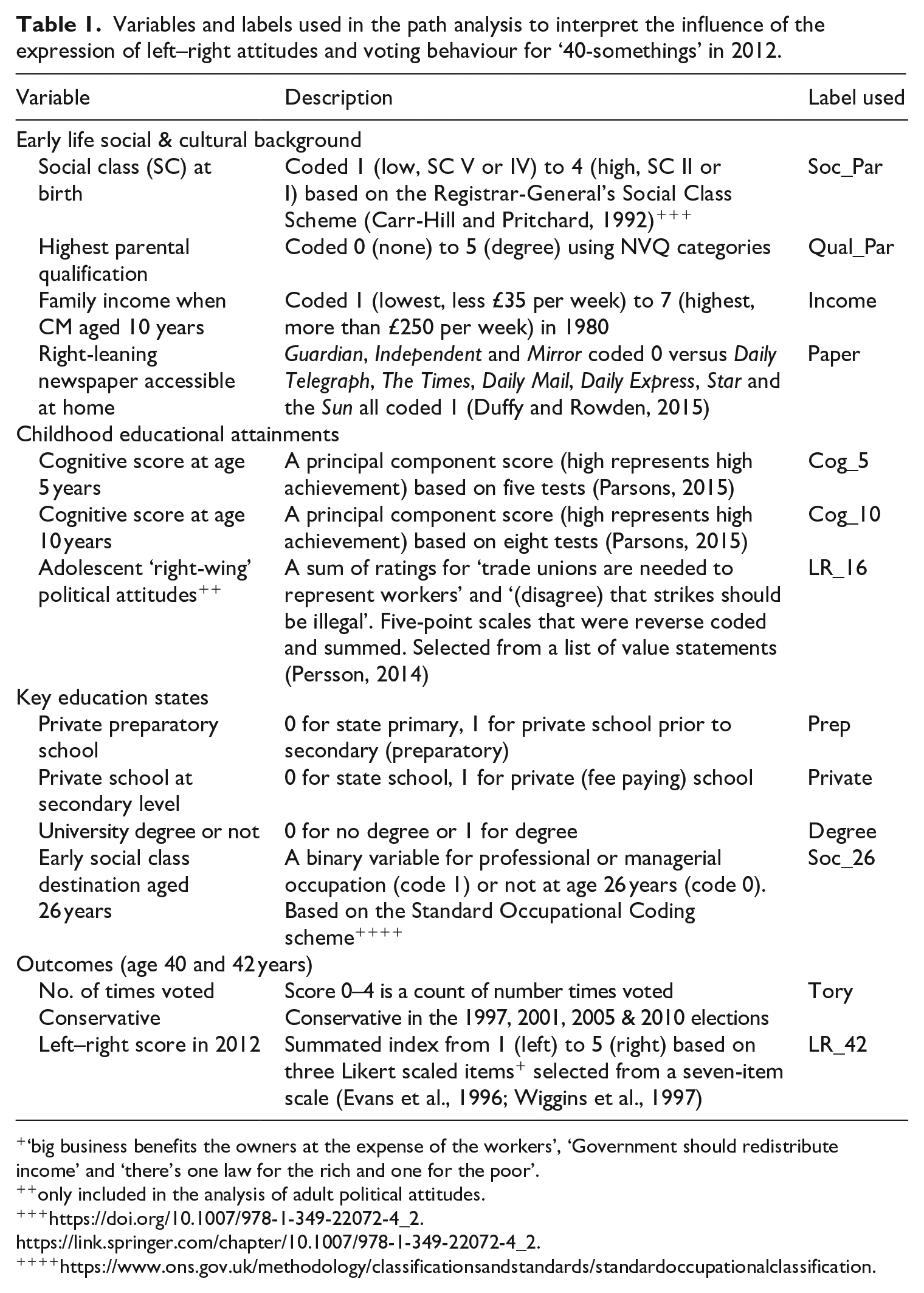
‘big business benefits the owners at the expense of the workers’, ‘Government should redistribute income’ and ‘there’s one law for the rich and one for the poor’.
only included in the analysis of adult political attitudes.
Descriptive Analysis
Table 2 reveals some important differences between state and fee-paying CMs and underscores the richness in our data source. Only 3.0% (3.3% men and 2.8% women) attended a private primary school before commencing their secondary schooling. At secondary school 6.2% (6.8% men and 5.7% women) attended a private school. Unsurprisingly perhaps, only 1% of those CMs attending a state secondary school had been to a private primary school whereas over a third (36.6%) of those attending a private secondary school had done so.
Mean and percentage differences by gender and type of secondary schooling. +
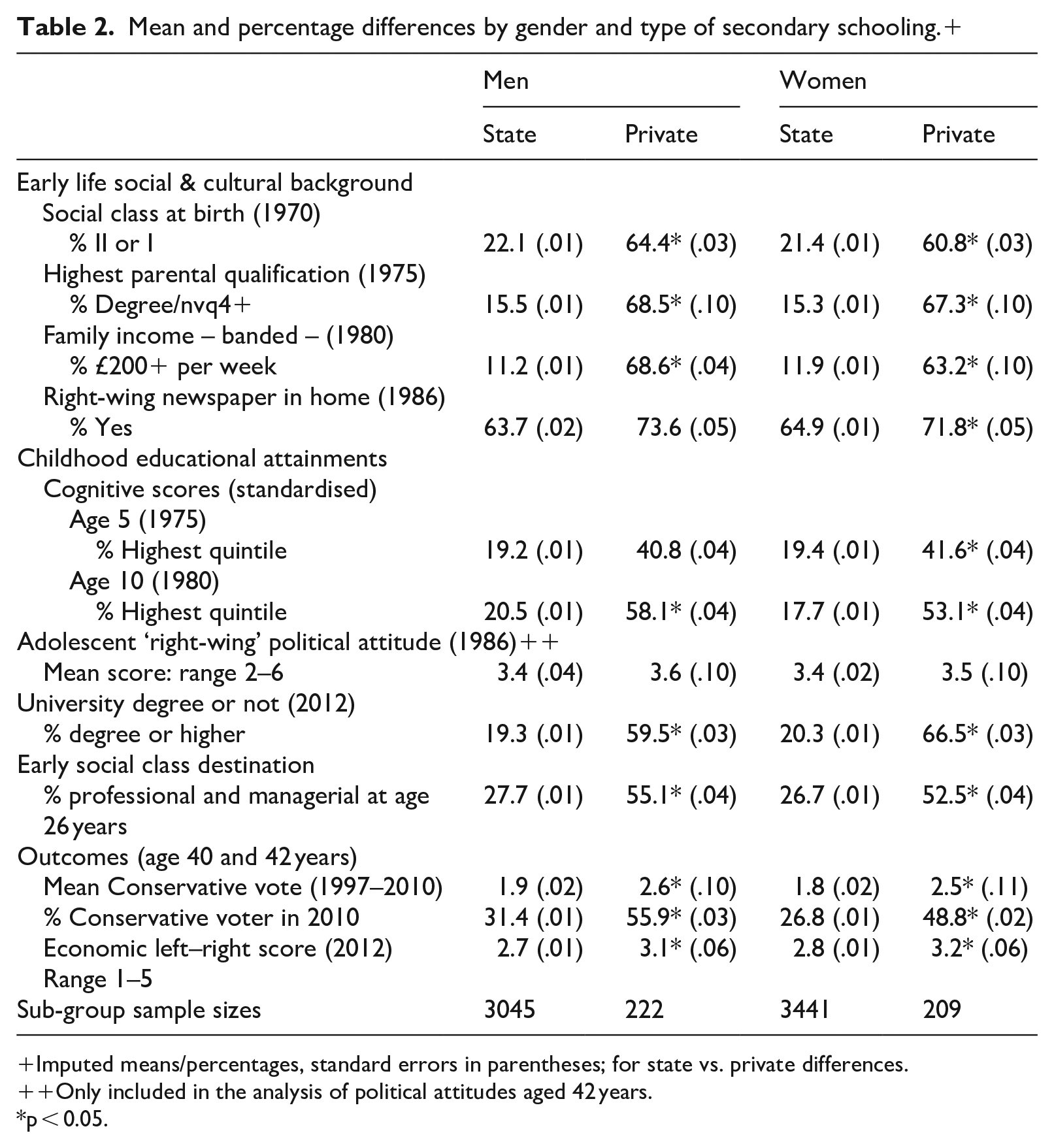
Imputed means/percentages, standard errors in parentheses; for state vs. private differences.
Only included in the analysis of political attitudes aged 42 years.
p < 0.05.
Among the pre-adult ‘early life social and cultural’ background variables we witness strong differences between state and private secondary school attendees according to social class, parental education and family income: the percentage of parents possessing these advantaged attributes with children in the private sector typically exceeds those with children in the state sector by a factor of three for both males and females. Among families whose children attend a private secondary school those taking a right-leaning paper (a proxy for social and political values) exceeds that for state school attendees by 7% and 10% for females and males respectively. The individual characteristics of state and privately educated children also varied in terms of their cognitive performance. In particular, state educated CMs were less likely to be in the highest quintile for cognitive scores at age five years compared with those in private secondary schools with consistent two-fold differences for both males and females at this age. This gap opens up to at least a striking three-fold difference in the cognitive scores at age 10 years and translates into a similar magnitude of difference when the highest educational qualification at age 42 years is considered.
Interestingly, private secondary school attendees are no more likely to hold right-wing views at age 16 years than their state school contemporaries. However, the correlation between the right-wing attitude scores at 16 years and those at age 42 years was very weak for the sample as a whole (0.04; 0.04 for men and 0.03 for women). This association was stronger among those who had attended private secondary school (0.10) and even stronger for women from this sector (0.13 compared with 0.07 for men). For those from the state sector, the corresponding correlations were 0.07 and 0.4.
Table 2 also shows our two outcome variables. Private school attendees are more likely to have voted Conservative on average than their state school counterparts, more likely to have voted Conservative in 2010, and held more right-wing attitudes in 2012 at age 42 years.
Table 3 gives more detail on these outcomes. The percentage of individuals casting four consecutive votes for the Conservatives is relatively low for both sectors. Nevertheless, cohort members who had been to private secondary schools were more likely to consistently vote Conservative across four consecutive General Elections (1997–2010) (less than one in five among fee-payers and less than one in 10 among state school attendees).
Percentage distribution of the number of times CM voted Conservative during 1997–2010 by sex and secondary school sector.
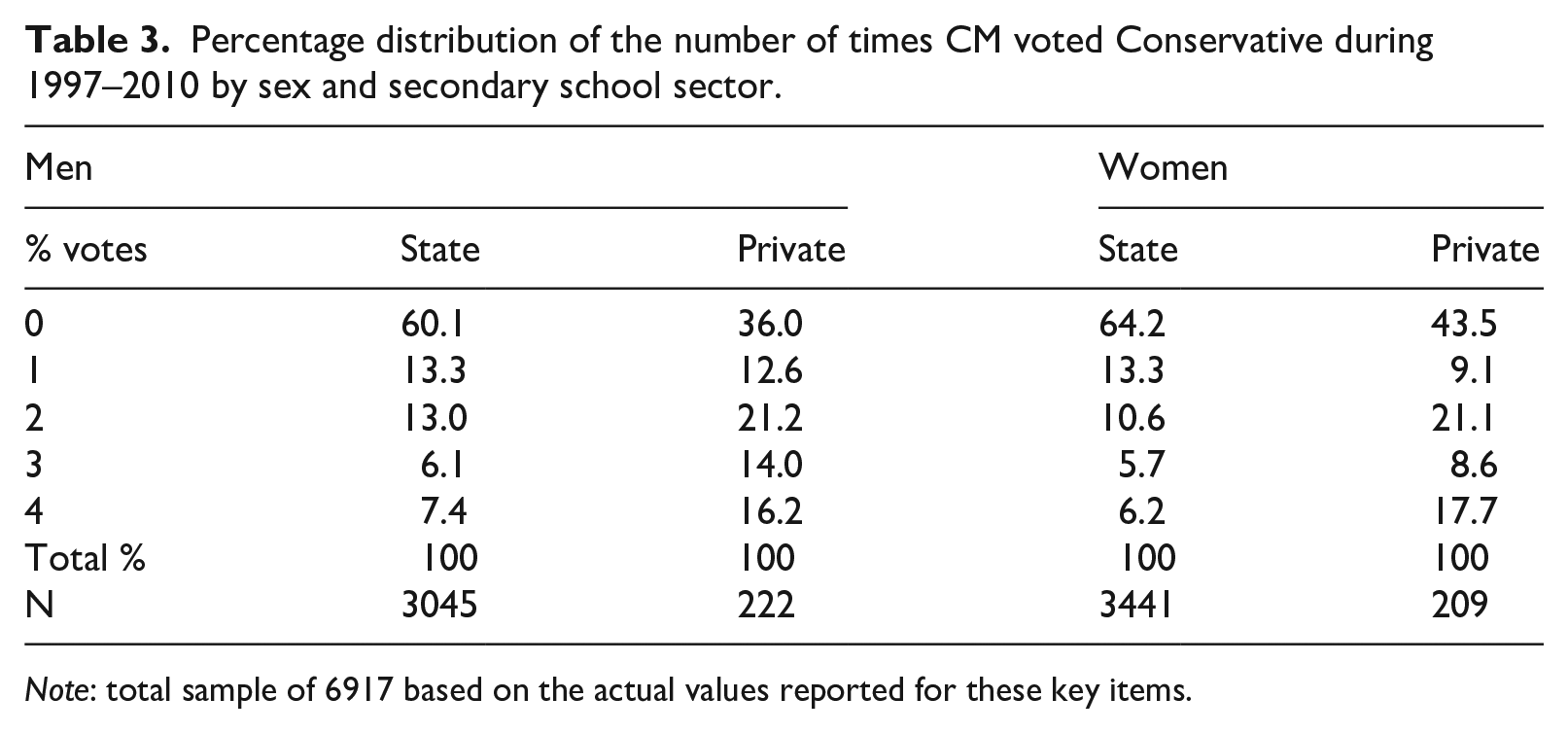
Note: total sample of 6917 based on the actual values reported for these key items.
Figure 2 gives further detail on the attitude outcomes, showing the percentage distribution of left–right scores by sex and school type. While the scores distribution is generally to the right of that for state school attendees, the distributions are quite symmetrical demonstrating a fairly even spread of opinion within each school sector, for both males and females.
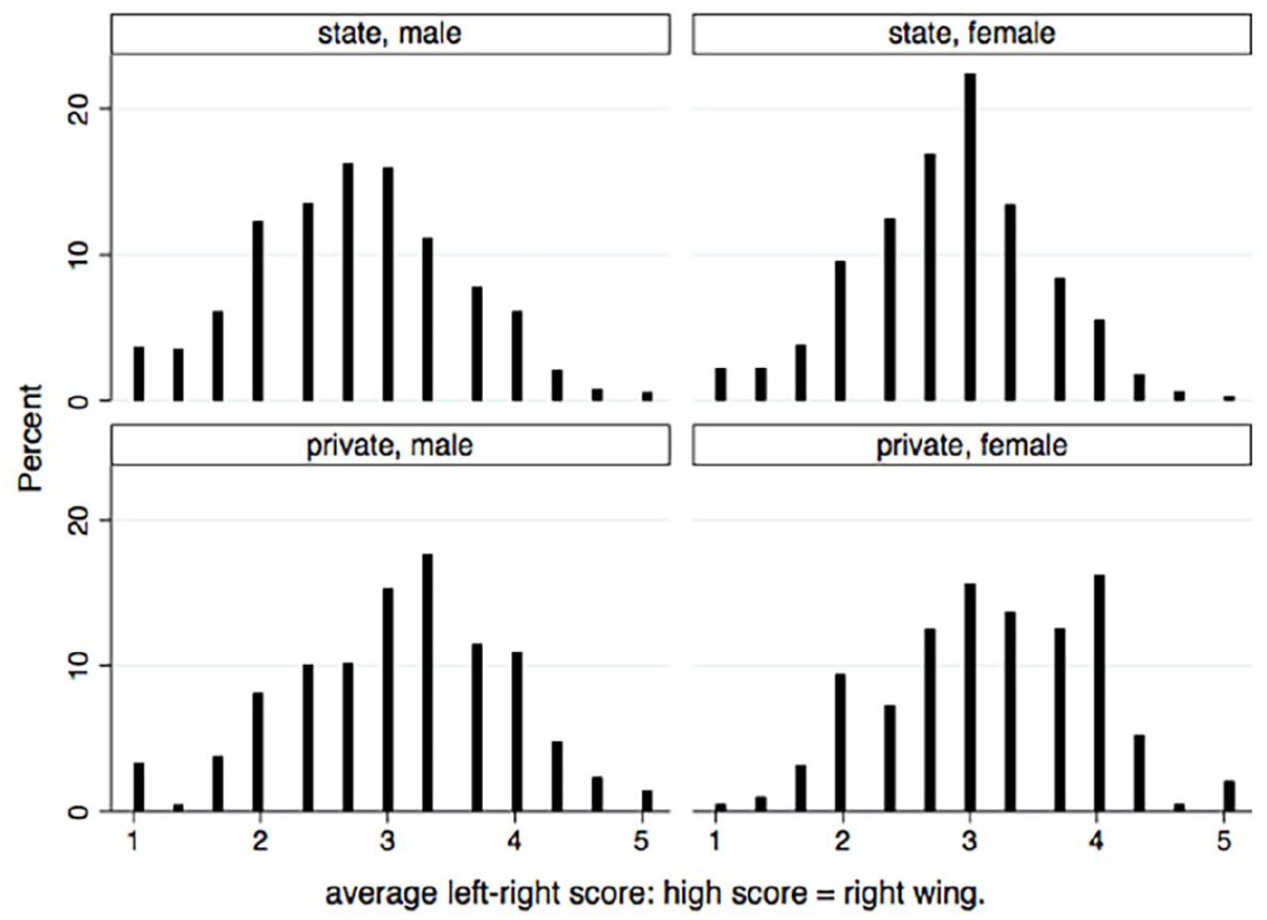
Percentage distribution of left–right score by sex and school type.
Path Analysis
Of course, these adult-life outcome differences are potentially attributable to multiple factors in earlier life, not necessarily just to their experiences in school. We now turn to our path analyses, beginning with the analysis of the Conservative vote count followed by the expression of right-wing political attitudes for men and women.
Figures 3 through 6 contain a set of final path models for each of our outcomes; the count of Conservative votes (Tory) and the score for the expression of economic left–right views (LR_42) as continuous variables and conducted separately for men and women. We will begin with the interpretation of the pre-adult effects, namely family circumstances, preparatory school attendance or not, childhood cognition scores and teenage political attitudes, followed by allocation and absolute effects, namely private secondary schooling, degree attainment and early destination social class on voting and economic political attitudes in the final models. Paths with a statistically non-significant path coefficient have been suppressed (p > .05). Estimated path coefficients can be interpreted as associations (positive or negative) showing the amount of movement along a standardised scale. As a result of employing the same set of antecedents for each model, the pre-adult effects convey the same inter-relationships prior to their impact on schooling, degree attainment and early social class destination and their interpretation will therefore not be repeated in what follows. For each outcome, we commence with the findings for men and then draw out any key differences between men and women.
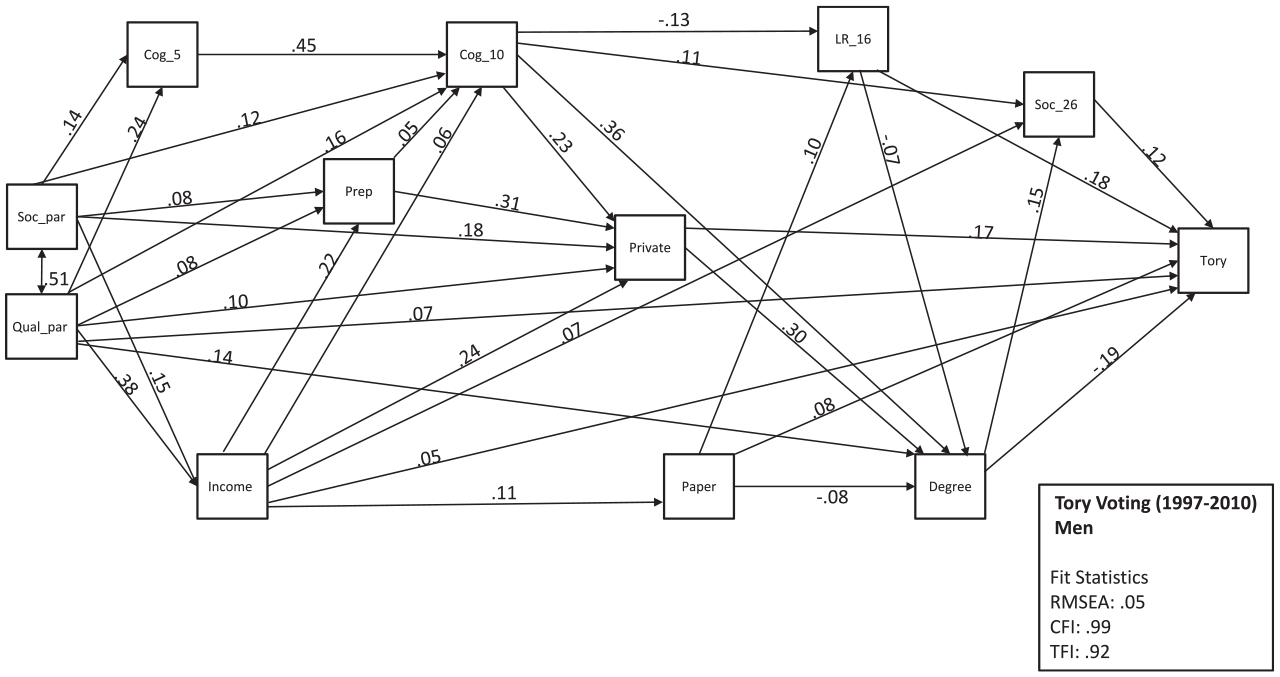
Final model on voting Conservative for men.
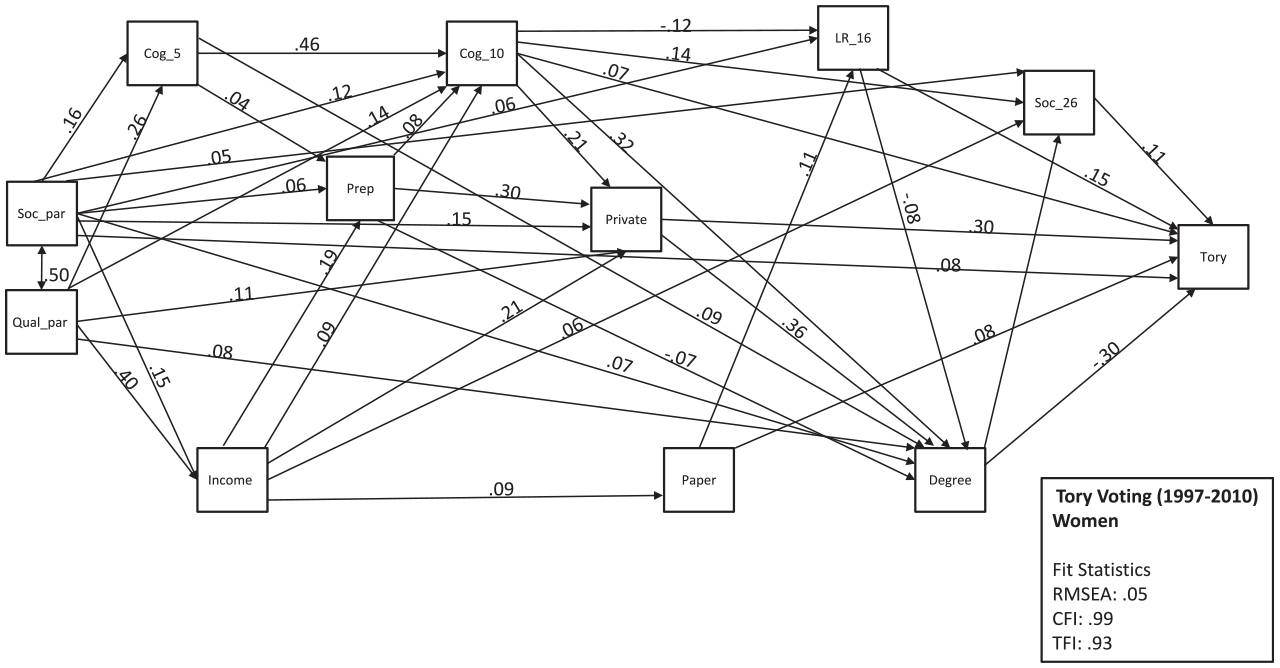
Final model on voting Conservative for women.
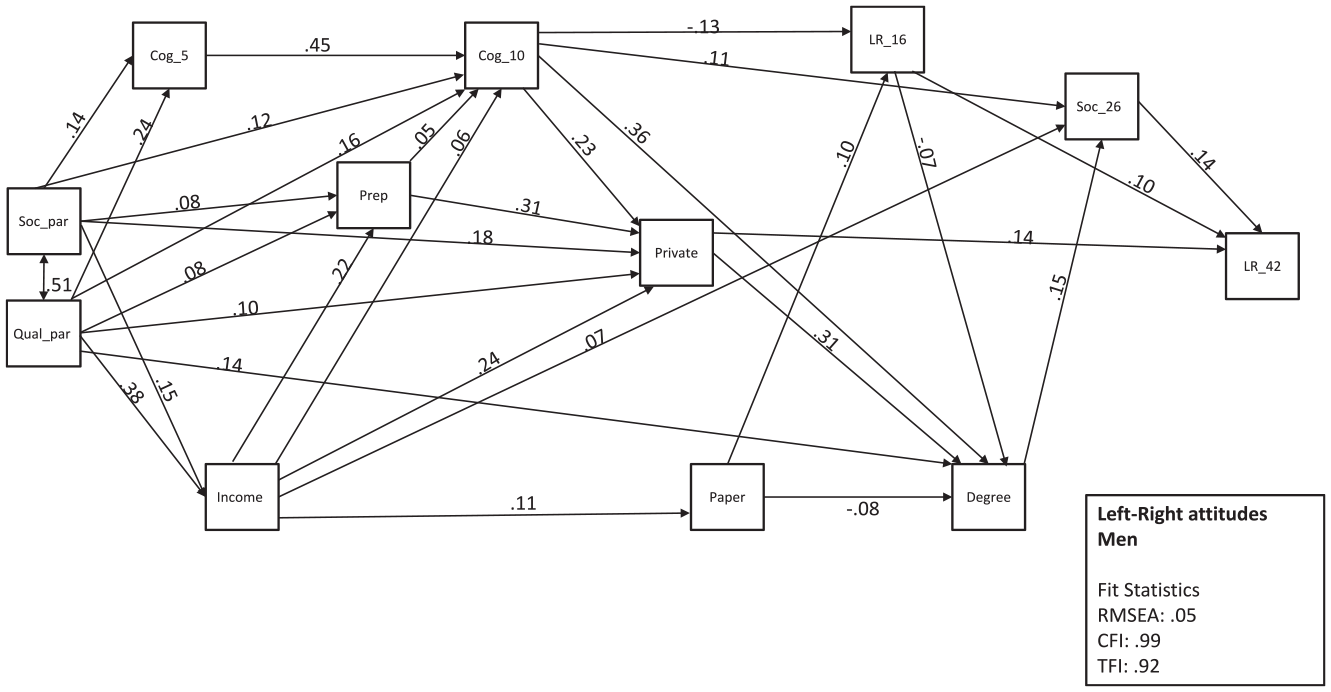
Final model on economic left–right attitudes for men
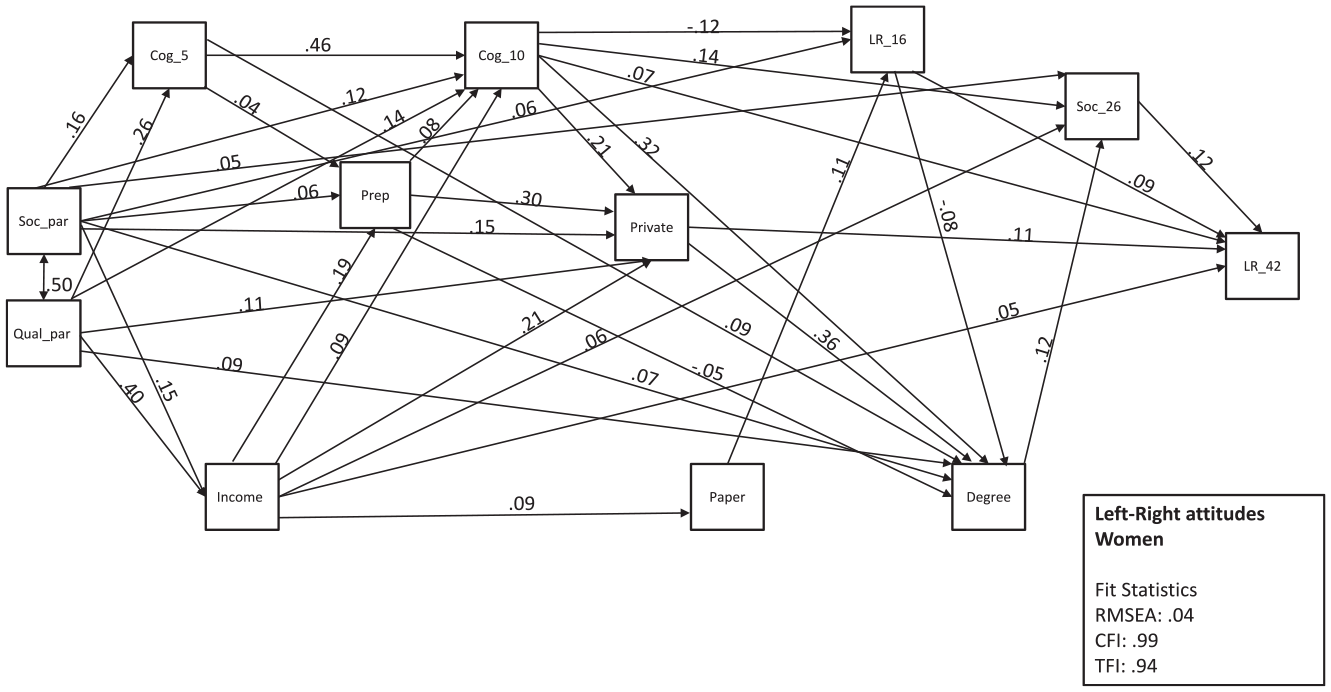
Final model on economic left–right attitudes for women.
Voting Conservative during 1997 to 2010
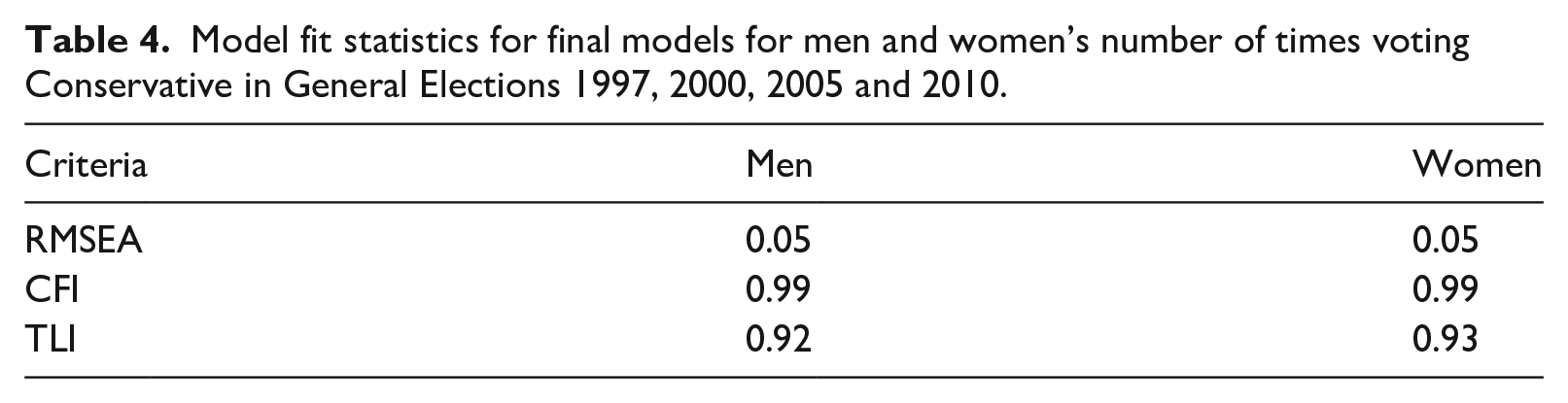
Table 4 contains the goodness of fit criteria for the final models for men and women that are ‘most acceptable’ under the conventional criteria described under our analytical strategy above. The values of the fit criteria are also reproduced in the diagrams for convenience. We will now continue to consider the results for men and women separately.
Model fit statistics for final models for men and women’s number of times voting Conservative in General Elections 1997, 2000, 2005 and 2010.
Pre-Adult Pathways
Parental social class and parents’ highest educational qualifications are strongly correlated (.51) and have separate and combined effects upon a CM’s cognitive achievement at age five years and at age 10 years. There is a strong direct path connecting the cognitive achievement scores at age five and10 years (.45). Parental social class and highest educational qualification also have fairly strong separate and combined effects upon family income as reported at age 10 years. These three variables all combine to have a direct path to preparatory school (primary) although family income is more influential than social class and education alone (.22 compared with .08 and .08 respectively). Family income is also positively related to cognitive achievement at age 10 years (.06), attendance at private secondary school (.24) and the take-up of a right-leaning newspaper in the home (.11), which in turn has a direct relationship with the expression of right-wing attitudes at age 16 years. The legacy of the familial culture reflected by right-wing newspaper readership can also be seen in terms of its negative relationship with degree attainment (−.08) and positive relationship with voting Conservative in early mid-life (.08). However, there is no direct path connecting the expression of right-wing attitudes at age 16 years and private schooling. Interestingly, cognitive ability at age 10 years is negatively related to the expression of right-wing views at age 16 years (−.13) and has a strong direct connection with degree attainment (.36) and with social position at age 26 years (.11) but not with voting Conservative. Unsurprisingly, preparatory and private secondary schooling are directly related (.31).
For women the pre-adult effects are quite similar to their male counterparts but we do see additional direct connections. Thus, there is a direct path between parental social class and the expression of right-wing attitudes at age 16 years (.06) in addition to that of taking a right-leaning newspaper in the home (.11). There is a direct path between parental social class and early social class destination (.05) and an enduring direct legacy of social class advantage upon voting Conservative (.08). Again, the expression of right-wing attitudes at 16 years is independent of private schooling but as with men there is a positive relationship between the expression of right-wing attitudes at 16 years and voting Conservative in mid-life (.15).
Allocation and Absolute Effects
For men, the receipt of a private secondary school education has positive direct effects on voting Conservative (.17) and degree attainment (.30) while degree attainment itself is negatively related to voting Conservative (−.19). In this way possession of a university degree mediates the direct effect of private secondary schooling on the tendency to vote Tory (the total effect is 0.11). Furthermore, degree attainment is also positively related to early social class destination (.15), which in turn is positively related to voting Conservative (.12).
The story for women is very similar to that for men in terms of the direction of effects as illustrated in Figure 4, but there are some noteworthy differences. The effect of private secondary schooling is relatively stronger than for men in its association with voting Conservative (.30 compared with .17) and again holds a positive relationship with degree attainment (.36), which in turn occupies a stronger mediating role on voting behaviour (−.30 compared with −.19) than for the men. Again, early social class destination is influenced by degree attainment, which in turn is positively related to voting Conservative.
For men and women, the interplay of private education, degree status, early social class destination and voting is relatively complex and cannot be disengaged from pre-adult effects. In particular, if having higher educated parents makes someone more likely to go to private school, but also more likely to obtain a degree and an advantaged occupation in early adulthood, how do these attributes play out in terms of voting Conservative at age 40 years? We can also pose the same question in terms of the influence of parental social class at birth and to do so we show the estimates of the total effect of parental qualifications and social class upon voting Conservative for both men and women in Table 5.
Total effects (direct and indirect) of highest parental qualification and social class on voting Conservative (1997–2010). +
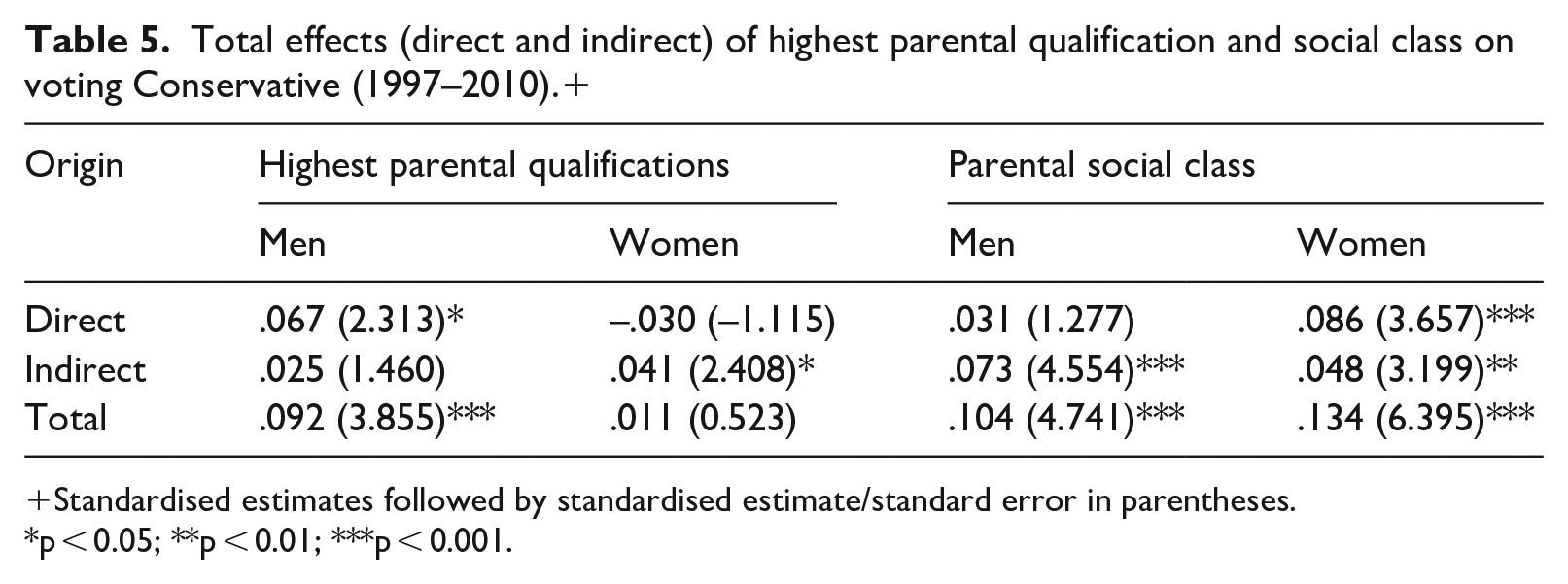
Standardised estimates followed by standardised estimate/standard error in parentheses.
p < 0.05; **p < 0.01; ***p < 0.001.
The lasting influence of parental education is significantly stronger for men compared with women, whereas the total effect of social class is relatively stronger for women compared with men, though not significantly so. Parental qualifications have a strong direct effect on degree attainment, which in turn mediates the direct effect of private secondary education for both sexes (see Figures 3 and 4). For women, social class has a lasting direct effect upon the tendency to vote Conservative whereas the opposite is the case for men where social class largely plays an indirect role on the tendency to vote Conservative.
Tables A II and A III in the Online Appendix provide further information on selected specific indirect effects using the ‘VIA’ command available in MPlus for parental qualifications and parental social class contrasting men and women. Specific indirect effects define the statistical effects of all possible paths that originate from each background variable via the named variable to the voting outcome. Both tables re-confirm the importance of secondary private schooling.
Economic Left–Right Attitudes
We now consider the results for predicting economic left–right attitudes aged 42 years, two years following the General Election in 2010.
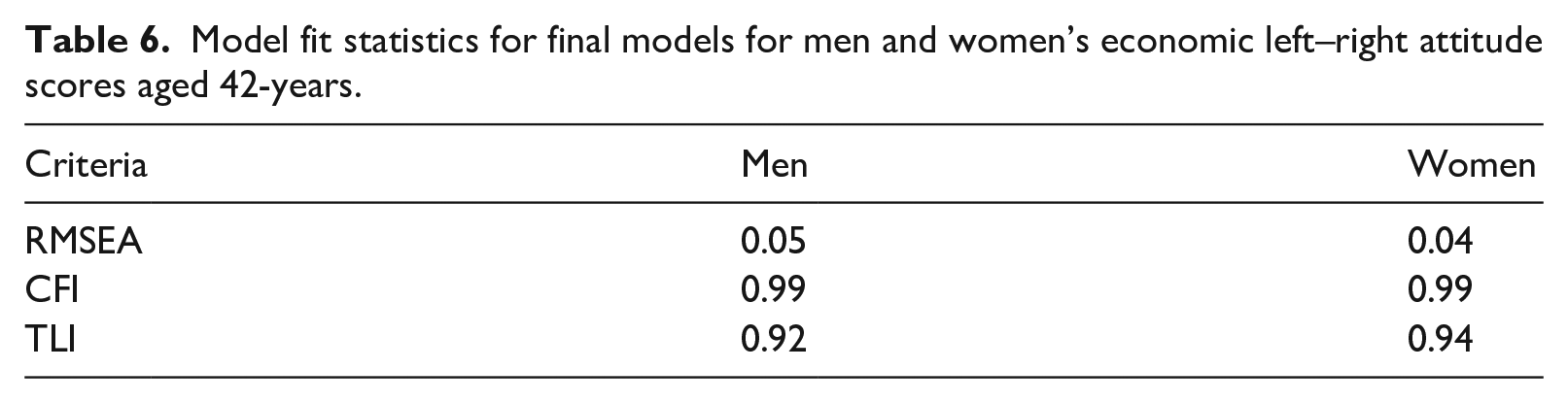
The selection of antecedent variables for the analysis of the economic left–right attitude scores corresponds exactly with those included in the voting model. As shown in Table 6 both models meet our goodness of fit criteria very well. The path diagrams for the final models are illustrated in Figures 5 and 6.
Model fit statistics for final models for men and women’s economic left–right attitude scores aged 42-years.
Pre-Adult Pathways
The path diagrams for voting and economic left–right attitudes (Figures 3 and 5 for men and Figures 4 and 6 for women) contain the same variables apart from the final outcome. For men, the only pre-adult effect to have a slightly weaker positive relationship with the expression of right-wing political attitudes at age 42 years compared with the voting outcome is the expression of right-wing attitudes at age 16 years. The latter being a narrowly focused score based on attitudes to trade unions and striking rather than the redistribution of wealth, big business and inequality. The influence of cognitive achievement at age 10 years reveals an interesting difference between men and women for which there is a direct (albeit modest) relationship with the expression of political attitudes at age 42 years (.07).
Absolute and Allocative Effects
Private secondary schooling appears to have a direct effect on the expression of right-wing political attitudes for both men and women (0.14 and 0.11). In contrast to our finding for the voting model, there is no evidence for the possession of a university degree as being a statistical mediator between attending private secondary school and holding right-wing political attitudes. However, as found for the voting model, degree attainment influences early social class destination, which in turn influences the expression of right-wing political attitudes. It would appear that having a university degree holds less import for the expression of right-wing attitudes than it does for voting behaviour. What matters more is attending a private secondary school and having a relatively privileged occupation in early life. The expression of right-wing attitudes at age 16 years also has an independent effect on political attitudes in early mid-life. Similarly, for women there is no evidence for the possession of a university degree as having a mediating role on the expression of right-wing attitudes at age 42 years.
The lasting influence of parental education and social class for both men and women is very similar and largely acts indirectly on the expression of economic political attitudes. The magnitude of the respective total effects is similar yet transmitted via their indirect effects, and not by any direct effect (Table 7).
Total effects (direct and indirect) of highest parental qualification and social class on economic left–right attitudes at age 42 years (2012). +
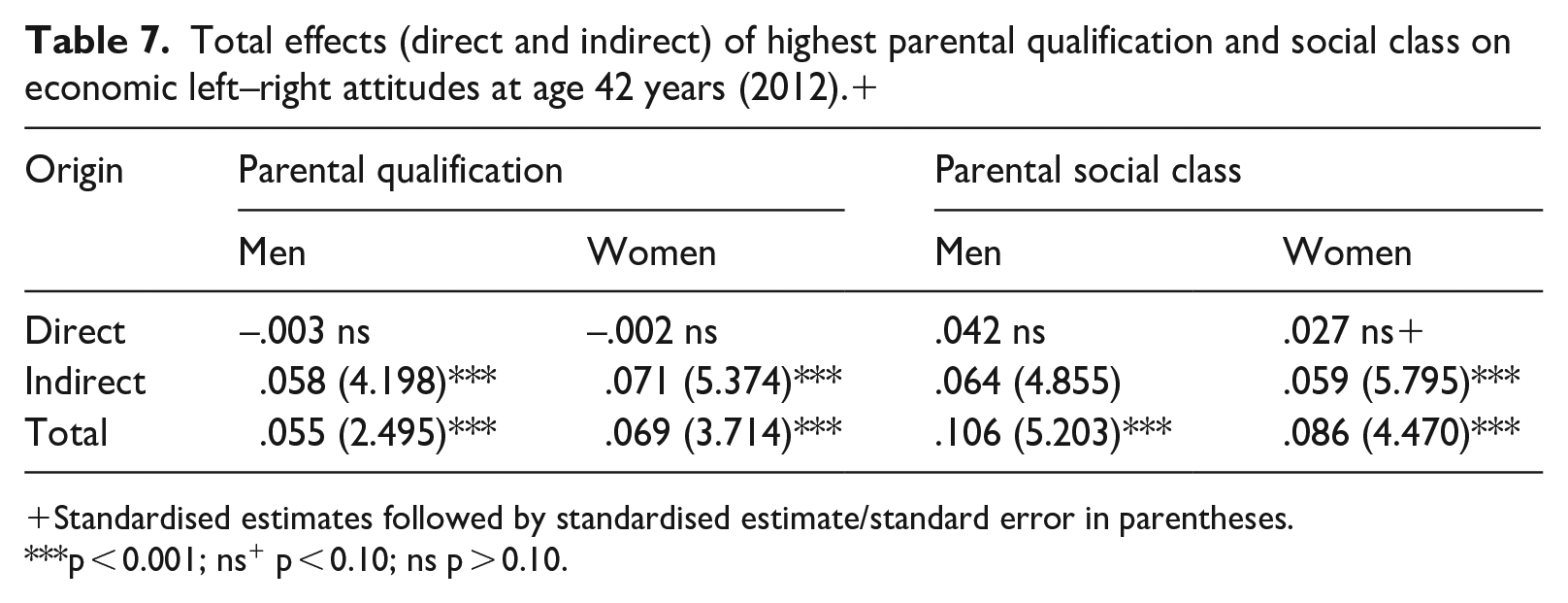
Standardised estimates followed by standardised estimate/standard error in parentheses.
p < 0.001; ns+ p < 0.10; ns p > 0.10.
From the Online Appendix: Tables A IV and A V we see that the combined influences of parents’ education and parental social class, family income, private secondary schooling and occupational status at age 26 also matter when it comes to having right-leaning attitudes. In addition, preparatory schooling and cognitive performance are also found to have their roles. Thus, private education at the primary stage and high cognitive performance scores at age 5 have formative influences on political attitudes some 30 years on. This is especially so for women.
Conclusion
Our findings contribute to the sociological understanding of elites and their political attributes (O’Rourke et al., 2015; Reeves et al., 2017). Specifically, we have studied the direct and mediated channels of influence of a fee-paying education for the generation that entered their 40s in the 2010s. Our key conclusion is that, among both males and females, there is a notable direct association between private schooling in the mid-1980s and later voting Conservative, and the expression of right-wing attitudes in mid-life, which cannot be explained by family background and related factors. Using a path-analytic framework and longitudinal data, our findings extend beyond the cross-sectional conclusions arrived at by Evans and Tilley (2011), because we have been able to take many more formative influences and channels into account. We have examined multiple channels through which childhood social class or parental education have their effects on attitudes and voting behaviour in later life, and estimated the part played by both primary and secondary private schooling.
The magnitude of the estimated coefficients suggests that having attended a primary or secondary private school is associated with moderate upward shifts towards right-wing views for men and women, and attending a secondary private school is associated with increased Conservative voting for women. In the case of voting, given that private school alumni constitute fewer than 10% of voters, one could not conclude that private schools have had a substantive influence on aggregate voting and hence election outcomes. Rather, their alumni’s voting behaviour may be seen as indicative of broader viewpoints, while being consistent with our separate, notable finding about right-wing attitudes. The significance of the findings arises because the political attitudes of this elite are important, since a disproportionate number of private school alumni reach positions of substantive influence in public and commercial life, such as in Parliament, the cabinet, the senior judiciary, the press commentariat and CEOs of FTSE companies (Sutton Trust and Social Mobility Commission, 2019).
The strengths of our analysis include the use of rich, nationally representative birth cohort data. Adopting a score of voting Conservative across four General Elections gives a stronger measure of attachment to right-wing values rather than one based on a single election as adopted in other longitudinal studies of political participation. The use of a path-analytic approach enables the simultaneous analysis of a range of mediating routes through the life course, taking into account the complex pattern of relationships between cognitive skills, family characteristics, education and attitudes. A notable example among the mediating channels that we investigated concerns adolescents’ political attitudes. The effects of private schooling did not include influencing political attitudes at the age of 16 (when they were still at school). Conceivably this could be the result of using a narrow measure based upon two items that were solely focused on the role of trade unions during the time of a teacher’s strike in the UK (1986), which would have resulted in less sympathy for trade unions among pupils in the state sector at that time. The long-term effects of private schooling are nevertheless revealed in their attitudes at age 42.
Set against these strengths, our findings do not amount to a causal analysis – something that is impossible to achieve in the absence of fortuitous quasi-experiments or lottery allocations of free private school places (absent in Britain). It is also recognised that there is some heterogeneity between types of state school and according to the wealth of private schools in Britain. Disaggregating the analysis further would, however, only be sensible with larger samples and data on private school wealth. Another limitation is that we were not able to examine a broader range of attitudinal outcomes.
Future research could usefully investigate different or broader indicators of political attitudes, and, given the evolution of private schooling since the 1980s (Green and Kynaston, 2019), also investigate younger cohorts’ attitudes. There have been striking changes in the relationship between education level, social class and voting from the 1990s onwards, such that university graduates are increasingly likely to vote for the Labour Party (Sobelowska and Ford, 2020). In this context, the relationship between private schooling and voting is also likely to change. However, while the attitudes and voting patterns associated with private education may change over time, analysing the politics of the privately educated in the UK will continue to matter for as long as people who have attended private schools continue to dominate our ruling elite.
Supplemental Material
sj-pdf-1-soc-10.1177_00380385221141386 – Supplemental material for Are Right-Wing Attitudes and Voting Associated with Having Attended Private School? An Investigation Using the 1970 British Cohort Study
Supplemental material, sj-pdf-1-soc-10.1177_00380385221141386 for Are Right-Wing Attitudes and Voting Associated with Having Attended Private School? An Investigation Using the 1970 British Cohort Study by Richard D Wiggins, Samantha Parsons, Francis Green, George B Ploubidis and Alice Sullivan in Sociology
Footnotes
Acknowledgements
A special thank you to Professor Alison Park and Professor Malcolm Williams for their invaluable comments on an earlier version of this article (Wiggins et al., 2020) and the BCS70 cohort members whose continued participation in this study is greatly appreciated.
Funding
The authors disclosed receipt of the following financial support for the research, authorship and/or publication of this article: this work was funded as part of an Economic and Social Research Council award ES/K007238/1.

Supplemental material
Supplemental material for this article is available online.
Notes
References
Supplementary Material
Please find the following supplemental material available below.
For Open Access articles published under a Creative Commons License, all supplemental material carries the same license as the article it is associated with.
For non-Open Access articles published, all supplemental material carries a non-exclusive license, and permission requests for re-use of supplemental material or any part of supplemental material shall be sent directly to the copyright owner as specified in the copyright notice associated with the article.
