




Abstract
This article explores the experiences of white, male manual workers in Hastings, East Sussex – a mid-sized UK seaside town that has undergone long-term decline in employment opportunities. Informed by the theoretical insights from Bourdieu, it focuses on the role of place in shaping the employment paths of a group that has arguably been ‘left behind’ by local and global forces. Drawing on broader notions of place as landscape and highlighting the significance of ‘immobility and dependence’, ‘competitive localism and belonging’ and ‘bounded potential’, it examines how landscape conditions are implicated in the meanings given to work experiences, perceived employment opportunities and future aspirations. We argue that incorporating landscape into Bourdieu’s Theory of Practice extends our understanding of landscape’s influence on employment experiences and its unique capacities as both a physical and a socially constructed entity.
Introduction
This article explores the work experiences of white working-class men employed in manual occupations in a UK seaside town. Specifically, it focuses on the significance of place for understanding the work history, geographical and occupational mobility and future aspirations of a classed, raced and gendered group that has been largely overlooked within public policy and the academy. As numerous studies reveal (e.g. McDowell, 2003; Roberts, 2013; Skeggs, 2004), members of the male, white working class have been devalued as ‘unprogressive’, ‘left behind’ by global forces and disadvantaged by localised economic change including welfare reform, loss of trade union power and the erosion of secure, low-skilled work (Atkinson et al., 2012). We extend this work by focusing on the role of place, as physical locality as well as a constellation of opportunities and relationships (Massey, 2005), in shaping ‘lived experiences’ of disadvantage. Here, Bourdieu’s (1990) Theory of Practice helps to highlight how wider contextual conditions of the ‘field’ – the setting in which agents and their social positions are located – generate ‘ways of being’ and identity formations (habitus), potentially reinforcing inequalities. Bourdieu therefore combines contextual conditions with subjective ‘schemes of perception’ in a context where, as Wenham (2020) points out looking at geographies of exclusion in seaside towns, there is a need to explore the materiality of place as well as meanings, perceptions and experiences.
We draw on notions of landscape (Bender, 2002; Massey, 2006; Zukin, 1991) to capture the socially constructed and the material aspects of place – the latter, as Cresswell (2015) and Massey (2009) have argued, often overlooked in current accounts. Conventionally viewed in terms of shape and topography and standing as clear material structures, landscape has recently been conceptualised by cultural geographers as bound up with meanings and personal experience (Bender, 2002; Cresswell, 2015). Drawing on these theoretical insights, and building on previous research focusing on place and inequality in urban and non-urban regions (e.g. Nayak, 2003; Southerton, 2002), this article centres on a mid-sized coastal town: Hastings in East Sussex, UK. Coastal towns have been recognised as new problem areas, economically and geographically ‘on the edge’ (Corfe, 2017) and distinctive through a combination of geography and industrial decline. Their location on the periphery carries economic disadvantage through a weakening in core activities including domestic tourism, fishing, shipbuilding and port activities (HoL, 2019). Hastings has been identified as within the top three most deprived coastal towns, having undergone long-term decline in income levels and employment opportunities, and with greater proportions of inhabitants experiencing above average levels of deprivation (ONS, 2013).
Based on the geographical and socio-economic conditions of Hastings, and drawing on broader understandings of place as landscape, we address the following question: how is landscape, with its specific physical, socio-economic and cultural topography, implicated in work experiences, perceived opportunities and future aspirations of white working-class men in manual occupations? We show from our data how ‘immobility and dependence’, ‘competitive localism and belonging’ and ‘bounded potential’ are understood in relation to landscape and how landscape processes and conditions contribute to and reflect a classed habitus oriented around an ethic of hard work and acceptance of compromised ambition. We argue that incorporating the significance of landscape into understandings of Bourdieu’s field conditions enables a more ‘geographically grounded’ Theory of Practice, highlighting how the geographical and the social interact to create particular opportunities, work experiences and dispositions.
Bourdieu: Placing the ‘Field’
As Cresswell (2002) points out, while Bourdieu did not position geographical space centrally in his earlier work, he drew on geographical concepts such as ‘field’ and ‘social space’. Bourdieu (1993: 72) defined fields as ‘structured spaces of positions’ while social space, comprising overlapping fields, is conceptualised as an arrangement of ‘people, objects, tastes and dispositions’ (Cresswell, 2002: 380). Individuals, as embodied bearers of capital, seek advantage within the field, the latter shaping – and being shaped by – the habitus in terms of specific values and practices that make sense in the context of that terrain. Accordingly, Bourdieu addresses meanings, perspectives and values (the habitus) as well as contextual issues in that the habitus is both informed by and informs the field.
Bourdieu’s later work (Bourdieu et al., 1999) foregrounds the interplay between social and physical space, acknowledging the spatial embeddedness of cultural relations and practices. This recognises that fields delineate social relationships partly through their spatial organisation and that bodies are situated in a site/location through lived, concrete experience. These sites, too, stand in relation to each other so that the invisible set of relationships (Bourdieu, 2018) of social space as well as the structured spaces of positions that comprise the ‘field’ can retranslate into physical space in the form of distributional arrangements of agents, positions, properties and locations. We can accordingly see a reorientation of the field concept in which social categories and social relations are ‘rooted’ in location (Savage, 2011). Thus, as Casey (2001: 405) notes, habitus is a ‘middle term’ between lived place and the geographical self in that the habitus is enacted in a particular place, incorporating its histories and regularities.
This offers potential to see ‘fields’ and ‘social space’ as socio-spatial phenomena. We suggest from our study that the concept of ‘landscape’ can usefully provide a link between Bourdieu’s concept of social space with its overlapping fields and the experience and physicality of place. At the same time, it helps to foreground the unique potential of locality in terms of employment experiences, dispositions and a sense of potential.
Landscape, Place and Class
Rather than being defined in traditional terms as a fixed, bounded territory, places are increasingly conceptualised as dynamic and inter-relational (McDowell, 1999), always in process and connected to other (local, global) places. As Massey (2005) has argued, the uniqueness of a place can be understood as the expression of a particular mix of social relations that incorporate individuals’ embodied relationship with the world. These include meanings and affective experiences that create varied and evolving opportunities, relationships and resources (Massey, 2005), helping to shape experiences of advantage and disadvantage through, for example, the constitutive elements of daily routines. As Cresswell (2015) points out, this increasingly dominant conceptualisation of place focuses on the realm of meanings and experience as socially constructed and differentially encountered. Class, for example, can mean a different relationship with place (Savage et al., 2005) through social relations of inclusion, exclusion and belonging (McDowell, 1999) where members of the working class are often seen as being less mobile and rooted in locality (Skeggs, 2004).
As Savage (2011: 511) notes, current concerns with ‘mobility, networks, liquidity and fluidity’ can overlook the fact that individuals are, in a corporeal sense, inevitably located in physical place, subject to and reproducing its unique structures and stratifications. There is accordingly a need, he argues, for a more effective dialogue between traditional understandings of place as a fixed territorial property with its particular spatial organisations and physical properties, and notions of place as flows, relationships, sensory perceptions and processes as above.
For Savage (2011), Bourdieu’s conception of capital, habitus and field goes some way to overcome this dilemma, offering a theoretical means of combining the physicality and structural conditions of the local with the relationality advanced by Massey (2005) and others in the field. We suggest that this can usefully incorporate conceptualisations of place as ‘landscape’ (Bender, 2002; Massey, 2009; Zukin, 1991), capturing the physical aspects of place, how it is given meaning and experienced through the senses as well as its processual, ongoing generative capacities. In its conventional usage, landscape refers to the shape and topography of a piece of land that is viewed from a particular point, thus incorporating the physical and material with a notion of the visual in terms of how landscape is seen (Cresswell, 2015). More recently, landscape has been viewed by cultural geographers as also bound up with personal experience. Thus, as a ‘set of relational places’, landscape has been defined as ‘“the world out there” as understood, experienced, and engaged with through human consciousness and active involvement’ (Bender, 2006: 303). This emphasises landscape both as an assemblage of physical and structural features and as inter-relational and culturally produced.
Landscape is accordingly not just part of a symbolically charged aestheticised world of views and vistas but also, through its consumption, is a locus of identity formation (Bender, 2002) and a dynamic collective activity that, marked by history, is ‘enmeshed’ within the processes that shape how the world is organised and understood. As both an assemblage of physical features and a ‘network of cultural codes’ (Darby, 2000: 8), landscape is differentially experienced and subjectively ‘in the making’ – a generative process of involvement and immersion where selfhood is reciprocally solicited by landscape sensibilities (Wylie, 2009).
As Darby (2000) notes, the co-ordinates of geography and class intersect through a network of inclusions and exclusions that relate in part to how landscape is claimed as well as, through the conventional orientation to vistas, to ideologically charged and dominant ways of seeing and defining. For Zukin (1991), landscape is conceptualised as an ‘architecture’ of social relations shaped by dynamics of power as seen, for example, in struggles over the control of space where priority is often given to dominant groups. Thus, the new Hastings pier re-opened in 2016 after being damaged by fire has been the source of dispute between longer-term (mainly working-class) residents who prioritised traditional pier attractions (fairground, gaming machines, fishing rights) and the new owner and council leaders, supported by an emerging middle class, who sought a performance and cultural venue (Moore, 2019). The resultant modernist and sparse structure (Figure 1) received scathing reaction from Tom, long-term resident and participant in the study, who categorised it as a ‘landing strip’.
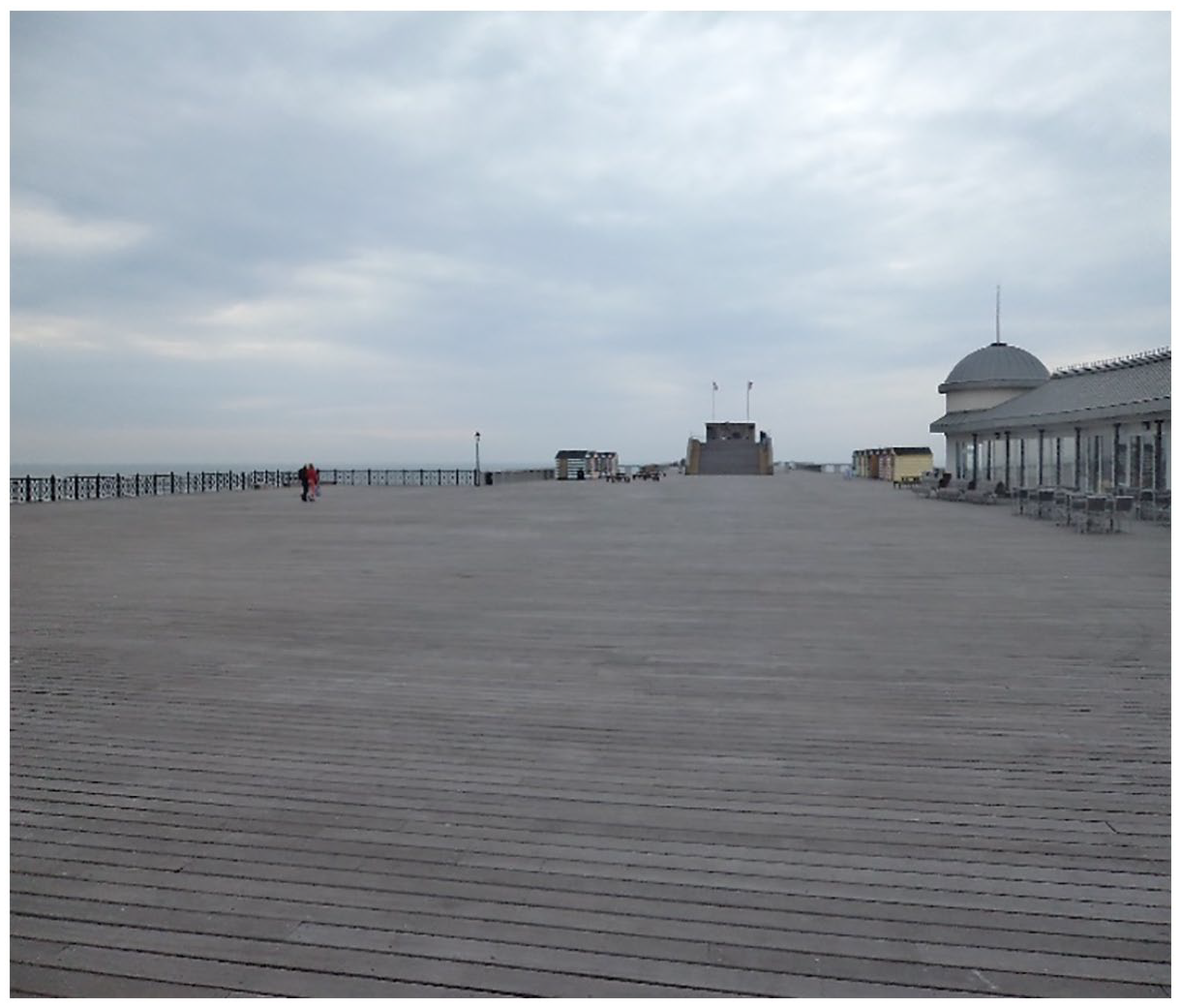
Hastings pier.
While also incorporative of place as processual and inter-relational, this conceptualisation of landscape broadens in scope to include geography, topography, architecture and structural configurations of employment opportunities as well as representations, aesthetics and sensory perceptions in terms of how landscape is viewed. In seeking an effective dialogue (Savage et al., 2005) between understandings of place as both physical and processual, this articulation enables a ‘bottom up’ (Darby, 2000: 36) analysis of experience, alerting us to the significance of the physical and geographical attributes of Hastings as well as the processual and inter-relational elements that are embedded in relations of power.
Seaside Inequalities and Hastings
We build on a growing body of work that has explored place-based inequalities in urban and non-urban regions. As notable examples of the former, Southerton (2002) has explored the complex, class-based boundaries between ‘Us’ and ‘Them’ in a UK new town; with a focus on the effects of changes in the local world of work on masculine identities and experiences, Nayak (2003) has highlighted a continued attachment to a legacy of waged work in a former UK mining town while Emery (2018), looking at a Nottinghamshire coalfield, points to the role of memory in the production of belonging. Similarly, Ward (2014) has shown the pressures that an industrial and cultural legacy in South Wales can have on young men as they seek to conform to a specific ideal of manhood. This highlights, as Hopkins and Noble (2009) argue, the importance of place in lived experiences of gender and how place articulates with other dimensions of social relations.
The above work notwithstanding, the ‘spatial dimensions of masculinity’ has been positioned as a neglected area (Hopkins and Noble, 2009: 811) with less work focusing on the context of seaside towns. Although the seaside economy is not a uniform entity, some resorts, particularly those with an over-reliance on tourism, have found themselves on the economic and social periphery (HoL, 2019), leading to a ‘geography of exclusion’ marked by lack of social mobility, uncertainty and limited work opportunities (McDowell and Bonner-Thompson, 2020; Wenham, 2020). This has led to feelings of marginalisation with young men often experiencing the emotional impact of locality in terms of listlessness and boredom and where insecurity is the norm (McDowell et al., 2020). Similar challenges emerged from Kraack and Kenway’s (2002) Australian study of the tensions caused by peripheral location and socio-cultural change and the limited identity resources available to young men.
We extend this work to explore the impact of coastal location on experiences of white, male manual workers. As McDowell and Bonner-Thompson (2020) have argued, the lives of white working class – year-round residents of seaside towns – are often neglected in both policy and academic research. This and other work (e.g. Burdsey, 2011; Wenham, 2020) point to the challenges faced by long-term residents of UK coastal communities where there are few opportunities for secure work – a situation exacerbated for less skilled men who can be seen as less eligible than women in terms of aptitude for the customer-facing service employment that can dominate these towns.
As a mid-sized coastal town in East Sussex, UK, with a population of 90,000, Hastings has relied on its attraction as a tourist destination, where a heritage based on a famous battle in 1066 (precipitating the Norman conquest of England), an historic castle and an attractive beach have proved popular with day-trippers and international tourists. Hastings is home to one of the oldest fishing ports in the UK and a small, beach-launched fishing industry, located in the Old Town (which was the extent of the town prior to the 19th century), still operates from a specific part of the seafront named The Stade.
More recently, Hastings has sought to establish a reputation as a cultural hub through the opening of the Jerwood (art) Gallery (now Hastings Contemporary) and the refurbishment of the Hastings pier as above. Pride in its historic and cultural legacy, in a lively summer trade and a meaningfulness based on an ancient invasion, tradition and the sea partly define the town. Nevertheless, Hastings is among the 10 most deprived towns in England (Corfe, 2017).
Low relative income levels are reflected in a higher percentage of socially rented properties compared to the average for the wider area (Hastings.gov, 2019). With below average education levels and economic activity rates (the latter reflective in part of a relatively older demographic), over a fifth of the population of Hastings has been identified as living in deprived households (Department for Communities and Local Government, 2015) with the proportion of working age adults experiencing employment deprivation currently eighth highest in the country (Department for Communities and Local Government, 2015). Rates of unemployment are higher than the national average (9.3% and 4.8% respectively) especially for young people, many of whom can be seen in groups on the streets during the day. While the largest category of employment is in professional occupations (the local council, the college and the NHS are key employers here), a higher-than-average proportion (14%) are found in mainly manual and ‘low-level’ service occupations such as construction, hotel, catering and retail, much of which is seasonal and insecure.
A walk around Hastings is to go through a small, uninspiring shopping complex to reach an attractive shingle beach and a long, wide promenade that reaches Bexhill-on-Sea. While in winter the promenade is largely deserted, on a sunny day, walkers, joggers and cyclists can be seen enjoying the seafront (Figure 2).
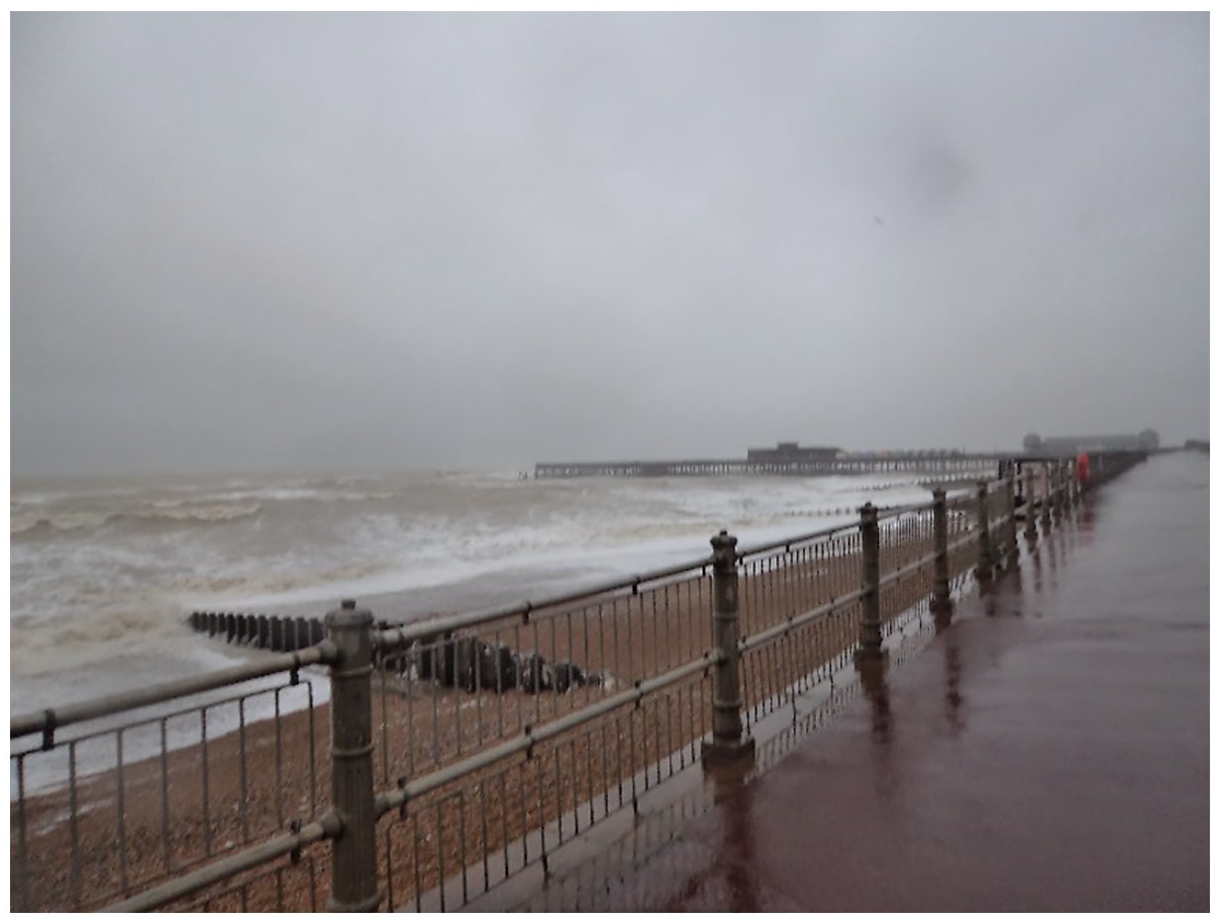
The promenade in winter.
The promenade is fronted by large, five-storey Victorian houses, many of which comprise multi-occupied, residential properties (Hastings was designated as an asylum seekers dispersal area in 2000) (Figure 3). In good weather, tourists throng the Old Town with its small shops and cafes, visit the fishing museum near The Stade or ride the two funicular railways to the East and West cliffs – more affluent areas that have panoramic views across the sea. While there is evidence of ‘gentrification’, as smaller Victorian terraced houses are restored by newly arrived middle classes, there is also visible social deprivation with rough sleepers occupying the dingy underpass that connects the main square with the seafront, and with an endemic drink and drug problem that is played out at night in specific areas of the town.
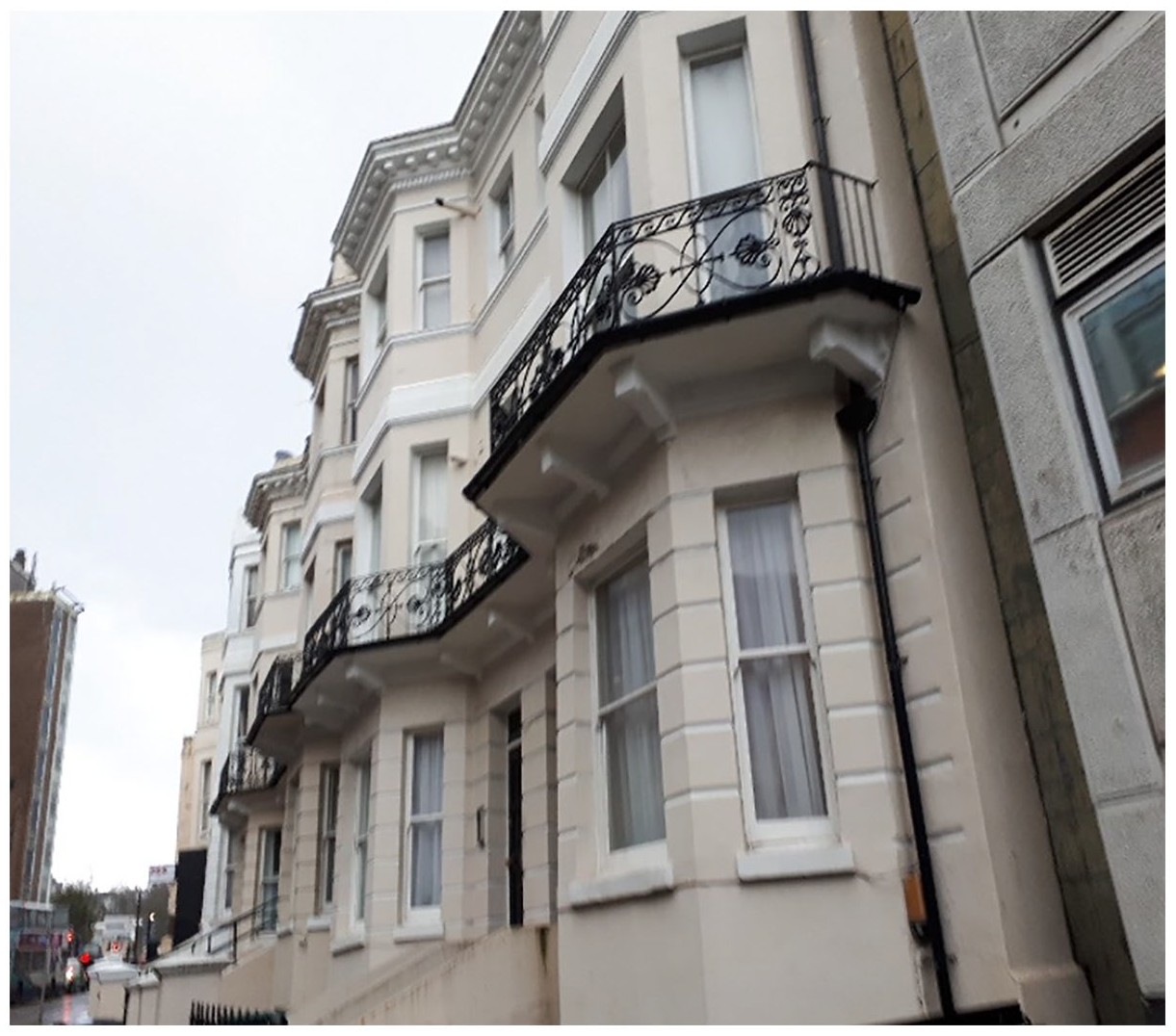
Multi-occupied Victorian houses.
Methodology
To capture the significance of landscape as defined above, the research drew on an ethnographic approach, based on semi-structured interviews and photographic representation. The first two authors collected 25 interviews and took over 50 photographs of the town, providing a rich visual depiction of Hastings as a place of work, leisure and as seaside resort. Neither researcher had visited Hastings before the research took place. We sought to capture visual imagery of Hastings as a ‘struggling’ but still popular seaside resort with its particular topography, culture and history as described above. At the same time, we sought an appreciation of the surroundings from the perspective of an outsider, enabling a fuller emergence into the locality.
Participants were contacted through advertisements placed in the local newspaper asking for volunteers and by forging links with local working men’s clubs and leisure establishments. In terms of age, half of the participants were in the 18–30 bracket with the remainder over 30 (five were over 60 and about to retire). Participants were employed or had recently been employed in various forms of manual work including building and construction (e.g. as roofer, scaffolder or ‘general labourer’), decorating, gardening and warehouse work. Two were working as apprentice car mechanics and five were in between jobs and seeking employment. Over half of the participants had been born in or around Hastings, with the remainder having moved to the town as a child or in early adulthood. This residential longevity, seemingly characteristic for members of that group in the area, was reflective potentially of a cultural expectation that children remain close to parents in the quest for work as well as relatively low educational levels among participants inhibiting mobility. Few participants had more than one or two GCSEs on leaving school and heavy reliance was placed, for younger participants, on vocational training (painting, decorating, bricklaying) as a means of entry into and progression within the local labour market. All were white – a deliberate sampling strategy to reflect not only the demographics of the area (95% white) but also the tendency, referred to above, for white working class to be a particularly disadvantaged group (McDowell et al., 2020; Skeggs, 2004).
Interviews, conducted between June 2018 and July 2019, took place in local cafes and working men’s clubs. As a form of collaborative conversation (Banyard and Miller, 1998), interviews explored broad themes including employment history, opportunities in Hastings, future work aspirations, leisure activities, family histories in the area and feelings of belonging. Ethical guidelines were followed throughout. For example, participants were assured of confidentiality and pseudonyms adopted. Interviews were recorded and transcribed in full. Initially organised according to the main interview themes above, data were analysed thematically (Clarke and Braun, 2014). Inductive analysis followed by ‘mapping’ onto Bourdieu’s conceptualisation of the interplay between habitus, capital and field was a key strategy. Thus, informed by Bourdieu’s relational approach, patterns of meanings or themes were sought across the data, and refined in an iterative manner, as analysis progressed. This was to highlight, for example, how particular ‘field’ conditions (cultural history, geographical location, transport accessibility, nature, and quality of work) combine with limited qualifications to generate a ‘classed’ habitus oriented in part around a sense of bounded potential.
Reflexive engagement guided our interactions with participants. Here, we sought to build a ‘sympathetic relationship’ and to convey an appreciation of their lives as they live them. As researchers in a professional occupation, our modes of understanding were likely to be different from those of our participants. We accordingly sought to ensure that participants were not only given appropriate space to express their ideas and feelings, but that we also gave their accounts deep and sympathetic attentiveness while being reflexive of our own occupational background. Over a cup of coffee, we sought to create a relaxed atmosphere, often by sharing our first impressions of Hastings as newcomers. This led to a conversation about the ‘real’ Hastings from the greater knowledge and experience of participants, who often gave advice on places to visit and areas to avoid. This enabled participants to settle more readily into a conversation about their experiences living and working in the town.
Landscape, Immobility and Dependence
All seaside towns are a bit of a dead-end because . . . my father used to say this about having a shop, if you’ve got a shop inland you can draw in customers from a full circle, but if you’re on the coast you can only draw customers from half a circle, and that’s the same with Hastings with the trade, you only operate within that half a circle. (Nick, electrician)
Surrounded by countryside and with the semi-circular landscape and peripheral status of a coastal town, geographical as well as structural limitations contour the size and scope of economic activities with implications, as Nick illustrated above, for commerce and trade. As we demonstrate, landscape conditions including coastal status and poor transport connectivity have implications for employment opportunities and mobility, contributing to a dependence on local work.
While Hastings ‘comes alive’ during the short summer season, with openings in tourist-based work such as in bars and cafes, work opportunities for male manual workers are both limited and insecure. ‘Pockets’ of factory work outside the town, a substantial building and decorating trade (assisted by conversions, middle-class renovations and ongoing salt damage from the sea) and some tourist-related, seasonal work associated with a coastal town are principal sources of local employment (Figures 4 and 5).
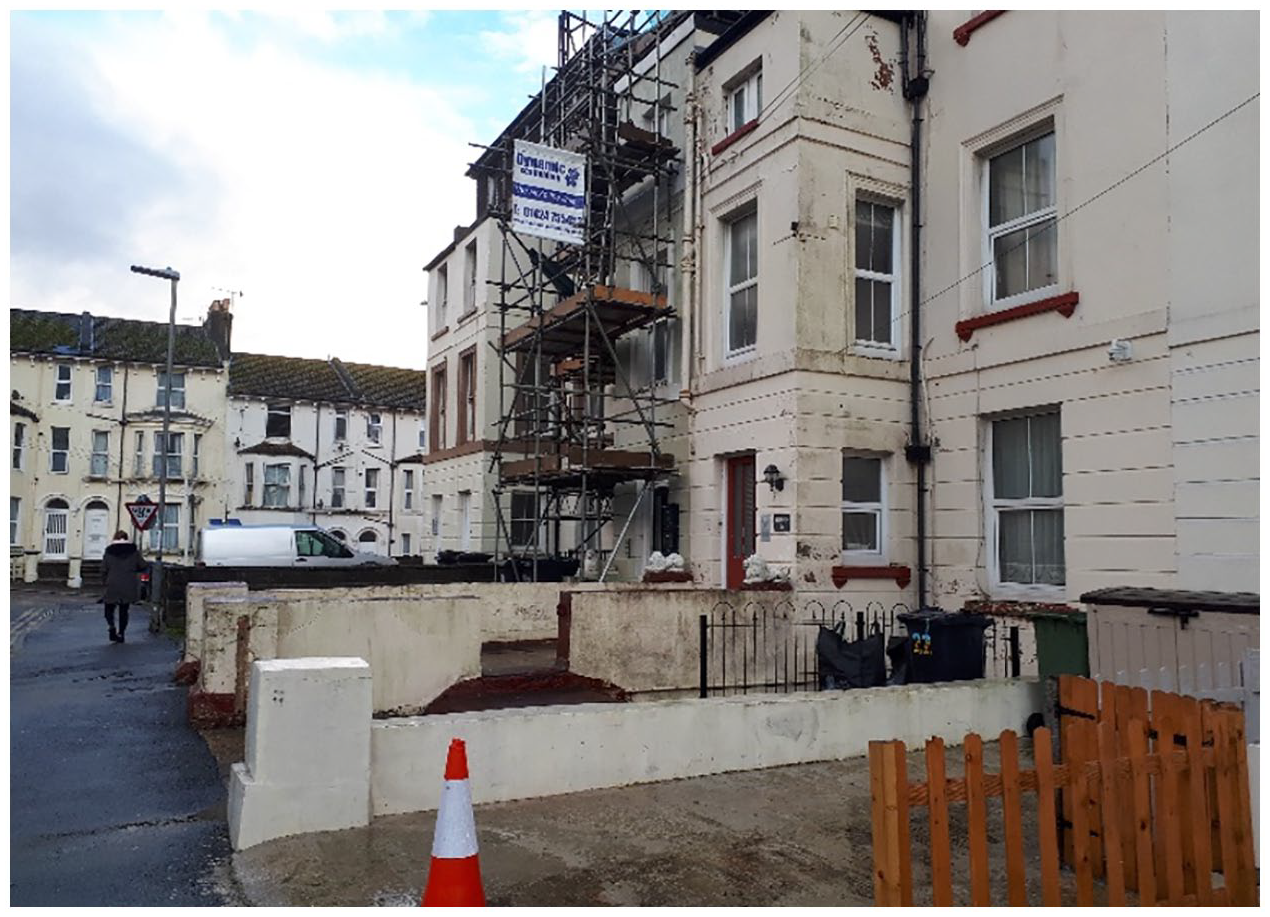
One of the many houses under renovation.
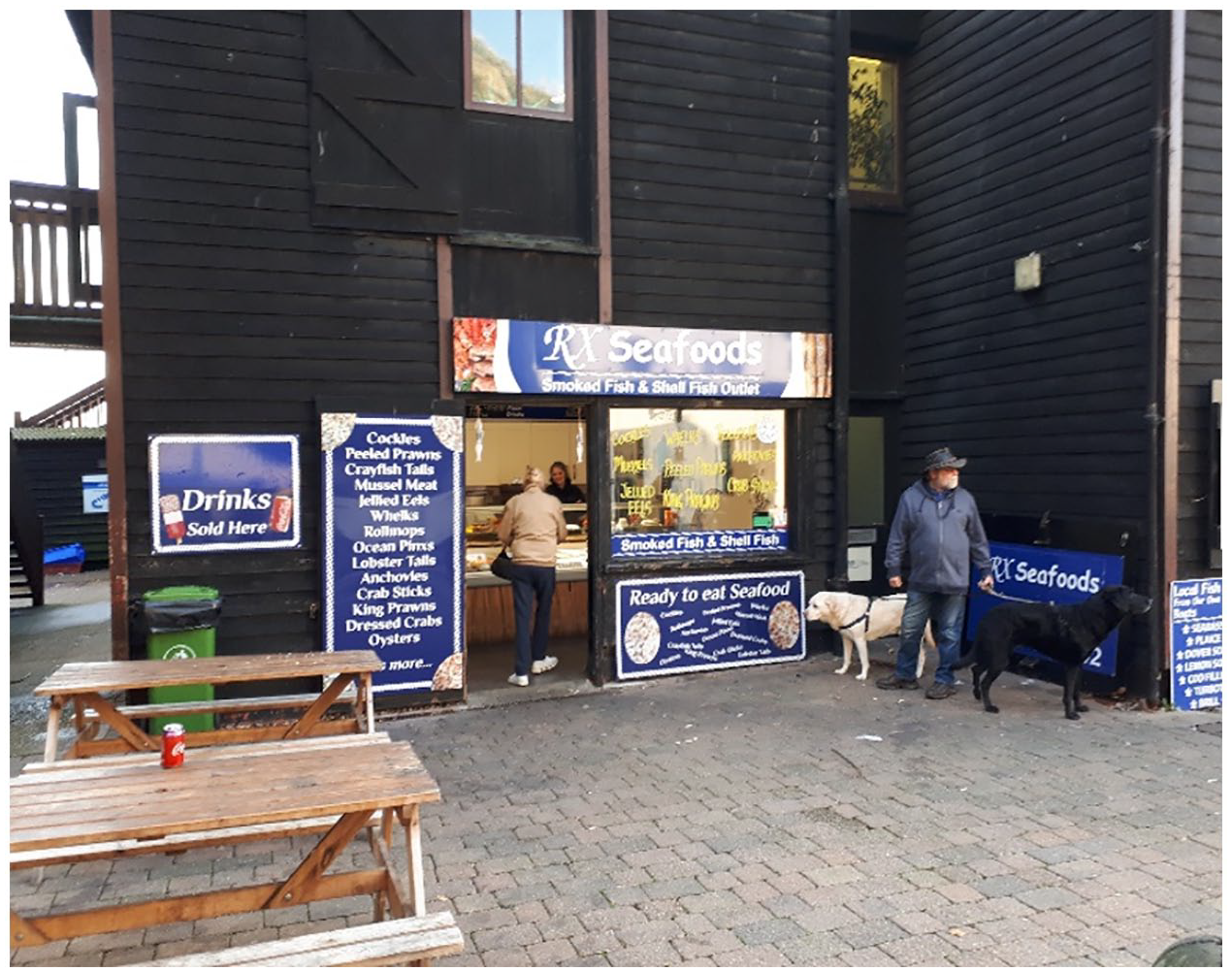
A stall selling cockles at The Stade.
With heavy competition for the few jobs available, finding local work within the area was a source of struggle and a preoccupation for all interviewees, where much of the work on offer is low-paid, short-term and insecure. Several participants spoke of Hastings’ peripheral status, ‘cut off’ from the rest of the UK, with detrimental implications for jobs so that, as John observed, there was ‘no real momentum’ with reference to opportunities in the area. As with other manual (and often seasonal) employment, such jobs are often finite and end once the work is completed. Joe recounted a typical experience: Manual work is so unreliable now . . . I mean if you work hard at a building site and you build a house and finish it, that’s what happened to me on this one here . . . I got the job of driving a lorry . . . and I used to pick the blokes up and take them to the site and then I’d go off and get sand and cement and you know, and when we finished the building site that was it. (Joe, roofer)
Poor transport connectivity was a further contributing factor behind a dependence on local work (the train to London can take nearly twice as long compared with Brighton further along the coast). Lack of transport is particularly problematic in construction with early starts to the day at sites, which can be out of town, leading potentially to the forgoing of work opportunities outside the area. As electrician Nick remarked regretfully, ‘I would have liked to move to Crawley (a large, airport town 50 miles inland) because there’s a lot more high-tech companies and that might have given me more opportunity’ but practical difficulties of moving, lack of transport and claims of family ties dissuaded him.
In terms of the latter, all participants had families living in the area, where landscape (its legacy, coastal status, peripheral geographical positioning) was commonly seen as the basis for a strong sense of community. Younger participants were living close to their parents and most of the older participants had children also living and working in Hastings. As Ray commented: ‘especially in the Old Town of Hastings, families go back years, they don’t move very far’. Proximity to family could be a source of ontological security in the face of uncertainty. While a few participants experienced Hastings as a form of ‘entrapment’ (‘you get the feeling that you ain’t going to get out’), family close by could provide a ‘safety net’ in a context where work is often sporadic and insecure. Andy commented: ‘I don’t think I could move away and not have that safety net. I need that, I do need that you know.’
Geographical ‘separateness’ and the distinctive features of Hastings as a seaside town are accordingly associated with low levels of mobility among inter-generational families and a legacy of close community ties (discussed below). As Darby (2000) notes, landscape can be seen as a cultural practice through which class is expressed. For example, in the struggle to find work, few participants used formal processes such as Jobcentres, relying instead on ‘unofficial’ networks including word- of- mouth and ‘pub talk’ for odd jobs in gardening, decorating or the building trade with work shared between friends and acquaintances: With a close-knit community like Hastings . . . even meeting people at, you know, like when you’re going to go to the builders’ centre to pick up some timber or some cement or something like that and you start chatting to people and then you say ah job’s finishing next week and they say oh we’re looking for somebody. (Tony, roofer)
Men in the study accordingly live and work within the locality where they grew up. In Bourdieu’s terms, structural and cultural conditions of the field can fix some groups, marking and restricting movements in geographical as well as social space. Here, physical landscape conditions that include poor transport connectivity, the town’s peripheral status and particular localised employment conditions combine with strong community and family ties to generate low levels of geographical mobility and a dependence on local work.
Landscape, ‘Competitive Localism’ and Belonging
Yeah. I think it’s lovely down (at The Stade), the boats with the birds. In real life it’s (fishing) . . . real hard and I think people in power and in governments are really out of touch. If you’ve never done work, proper work . . . (Nick, painter/decorator)
For Massey (2006), landscape and its histories can be evoked in creating a cultural identity and a sense of belonging. Landscape accordingly ‘talks back’ (Bender, 2006) through subjective experience, engaging our senses and emotions. Nick above offers a representation of The Stade as both meaningful and aesthetic, where the physical hardships of working with the sea go unrecognised by those in the ‘mainstream’. This representation, shared by the majority of participants, is grounded in Hastings’ occupational history and cultural heritage, particularly in relation to meanings created around harbour towns, to the pleasures of living on the coast and to a sense of belonging in the form of a ‘competitive localism’, where long-term residents claim cultural ownership of place to the exclusion of outsiders.
Described by John as a ‘working town’, participants placed value on Hastings’ characteristic reliance on manual labour – captured in Nick’s reference to ‘proper work’ above. As Nayak (2003: 20) found in the context of a declining mining town, a locally specific investment in waged labour can form part of the ‘psychic economy’ of a region, manifest in folklore, kinship histories, past-times and tradition. Thus, an ethic of physical labour and ‘hard graft’, symptomatic of a classed habitus, were positioned as having intrinsic value (‘you’re worth your weight in gold’), bringing its own rewards in terms of recognition and future opportunities. Ray commented optimistically, ‘you do a bit of graft, that will lead you on’. Expressed by Nick above, the physical demands and hardships of working with the sea were a source of pride, even though he was not directly involved, and the still thriving fishing industry offered a distinctiveness and identity based on an ethic of hard work and a tight working-class community: ‘I always liked the sea and I wanted to go fishing, before I left school, I used to go down to the fishing dock in Hastings and help the fishing boats, it’s a very close-knit family thing’ (Neil, plasterer) (Figure 6).
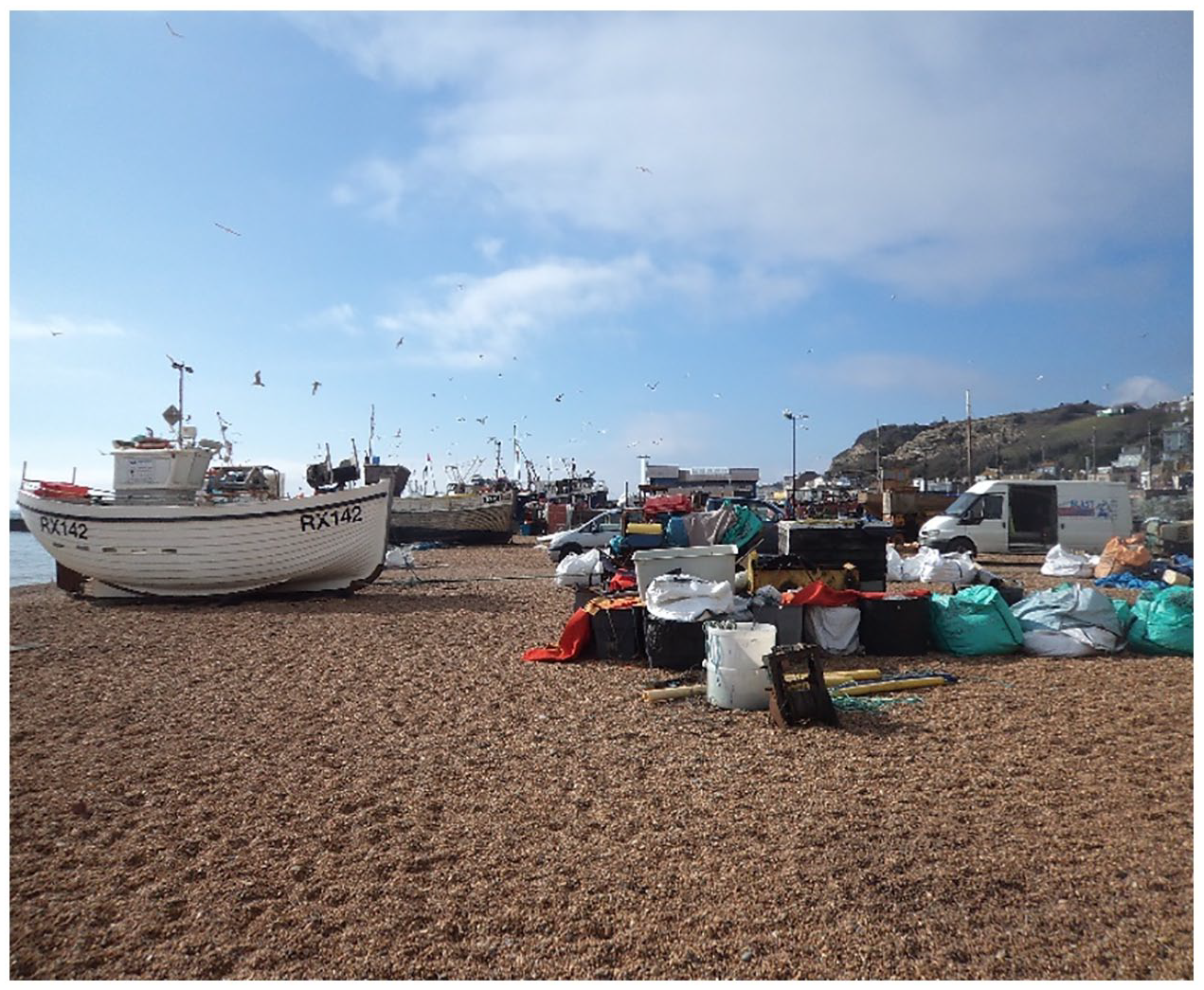
A fishing boat on The Stade.
All participants spent valued leisure time in coastal activities: fishing, walking, swimming or simply spending time on the beach (Ron commented: ‘I like coming down here and watching the sea come in and out on the cliffs’). This local distinctiveness, as Darby (2000) points out, can form the basis of a network of inclusions and exclusions that speak to landscape’s access, trespass and belonging, casting particular groups as outsiders. Incoming European workers, the middle classes arriving from London and those resettled from local boroughs into Houses of Multiple Occupancy (HMOs) in the large Victorian houses that dominate the area were seen to have eroded a strong sense of working-class community (‘it was more close-knit . . . it isn’t what it used to be’). Notions of belonging, underpinning low levels of mobility discussed above, were often tied up with claims to residential longevity (‘Hastings born and bred’) – a ‘competitive localism’ (Cresswell, 2015: 32) excluding ‘outsiders’ and based on origins in the area: It’s changed, yeah, there was more of a close-knit many years ago to what it is now. People tend to keep themselves to themselves a little bit more because of the people that are in Hastings now. It isn’t what it used to be you know. (John, labourer)
For Bourdieu, the habitus only ‘makes sense’ in the context of specific fields, where changes in the field can engender a sense of loss and disorientation, disrupting a sense of ‘rootedness’. As with Burdsey’s (2011) claim concerning the exclusive, racialised notions of belonging of many coastal towns, whiteness was expressed through common feelings of loss namely, of a traditional white, working-class community. As Darby (2000: 55) notes, landscape can act as an ‘abstract repository’ of projections, rooted in pre-existing ideological systems based, in this case, on a preferred past. Highlighting the critical role of memory in productions of belonging (Emery, 2018), Ron commented regretfully, ‘years ago you’d walk round the shopping centre and you’d know everybody . . . now you hardly ever hear an English voice’. This was seen to erode a positive sense of the future: ‘[for] the ordinary British people, there’s very little to look forward to here’. Thus, whiteness as a seemingly threatened condition is inflected with class as the ‘ordinary British’ are positioned against newcomers and where migrants are often presented as contributing to parts of Hastings being ‘run down’. Resonant with McDowell and Harris’s (2019) Hastings-based study of young men, whiteness matters but in a different way in that it is associated not only with colour and/or a racial group, but also with a legacy of belonging based on residential longevity and place of origin (Hastings itself) as well as family connections in the area.
In creating a cultural identity and a sense of belonging, the physical and the socially constructed as well as the sensory elements of landscape are seen to combine. Thus, physical features of the town in terms, for example, of its geographical positioning and topography, are rendered meaningful – reflecting and engendering a classed habitus that, from Bourdieu, is historically and culturally located. Our data echo Zukin’s (2009) claim of a class-based ‘authenticity’ in terms of how landscape is both inhabited and ‘owned’. This is invoked through adherence to an ethic of hard work, grounded in a localised male employment stereotype (see also Robertson, 2013) and claims to belonging based on residential longevity where incomers are associated with an erosion of community and landscape’s ‘downgrading’. As Balthazar (2021) found looking at a UK seaside town, narratives of loss help cement a sense of relatedness. As we suggest, this is partly inscribed onto landscape’s culture, history and topography.
Landscape and Potential: A Bounded World
it’s a little bit inter-generational almost . . . you’re from a part of Hastings, your family have always lived there, you’ve always lived there, maybe they didn’t work or have done a bit of work and so on and that kind of mindset I think is passed on a fair bit. (Steve, gardener)
Conditioned by social origin and shaped by the economic and cultural positions of the field, habitus refers to the group’s culture or ‘shared ethos’ that links past to present and thus to future potentiality. This is captured by Steve above in the form of a localised, inter-generational and classed ‘mindset’, interfering with aspirations and a sense of possibility. Our data extend current understandings of landscape, highlighting how landscape interacts with class-based conditions of existence, contributing to a ‘bounded world’ of constrained potential. In terms of the former, the lack of a Hastings-based higher education institution (unlike Bournemouth and Brighton along the coast) and its peripheral location, cut off from the ‘mainstream’, were cited as reasons for the low achievement and reduced prospects of the young where geographical disconnection was seen to engender a political neglect and constrained vision of the future. As Ray commented: ‘children fall behind because they’re cut off here, the education is not promoting how it would be in London or somewhere’. He continued, fatalistically with reference to his own education, ‘I was very much pushed into a trade.’
As Atkinson et al. (2012) have pointed out, material necessity can close access to certain resources including a sense of possibility and a vision of the future. Embedded within a set of local and global relations, Hastings has been particularly affected by austerity measures that have led to greater spatial inequality and lower income levels compared with inland towns (Rhodes and Clahane, 2019). Nearly all participants referred to downward pressures on living standards where participants, vulnerably positioned, were preoccupied with ‘making ends meet’: ‘people are desperate, even people who are working haven’t got the same sort of disposable income that they had even a few years ago, everyone seems squeezed at the moment, everyone seems pushed’ (George, labourer). With most participants on temporary contracts associated with seasonal and/or project-based work, a desire for security was a major aspiration and goal. Lack of personal (e.g. financial) resources and the need to earn a living were commonly cited as constraining factors in terms of a vision of the future. Thus, Joe highlighted a time-dependent and narrow ‘window of opportunity’ after which tight conditions of existence, dependent in part on the objective, localised relations of the ‘field’, contribute to a fatalistic futurity as options are foreclosed: You’ve got to go to work. You ain’t got time to go out and learn a new trade if you like once you’ve left school. If you ain’t done it by the time you’ve left school you’ve had it basically. (Joe, roofer)
From Bourdieu (1990, 1993), the inevitability of work and acceptance of its predictable routines are symptomatic of a class-inflected habitus. This has implications for how the landscape of Hastings was perceived. Thus, Len refers to how living in Hastings is ‘what I’ve known all my life . . . it’s the same, it doesn’t change from one week to the next . . . I’m quite used to just going, flat-lining and just doing the same old thing each week.’ In a similar vein, Tom, currently working as a bricklayer, expresses the powerful point that the absence of alternative models of ‘living a bit differently’ in Hastings prevents the envisaging of an alternative future: There’s very little motivation and we have . . . very little role models around you [i.e. in the locality] if you do want to do anything different and there’s not a lot of people . . . who just promote things a little bit differently . . . I think you’ve got to see both sides . . . you’ve got to see the real life of you’ve got to work but you’ve got to see other things as well.
As we have seen, a common theme was how Hastings, as a coastal town surrounded by villages and countryside, was geographically, socially and economically ‘cut off’ from the rest of the UK. This was linked to what one participant described as ‘a very blinkered view of life’ in terms of what was seen as possible. Ray commented regretfully with reference to his own work trajectory, ‘maybe I should broaden my horizons’. Many participants told of previous hopes that had come to nothing, symptomatic of limited cultural capital, which as Gidley (2013) found in the context of inner-city housing, contributes to a resigned acceptance of thwarted ambition. George noted resignedly how he ‘just got stuck with decorating’ while Tom’s hopes to go to college and then work on a farm bore no fruition, captured fatalistically in his words ‘never happened’.
For Bourdieu et al. (1999), place comprises a collection of resources and conditions of engagement with the world where horizons of place can offer a sense of scope that is inherited in part from the local culture. In a recursive sense, we have seen how landscape can be read and experienced as a constraint, both reflecting and forming a classed habitus oriented around necessity while at the same time offering few resources for individual possibility. Thus, as a mutually constitutive process, landscape conditions (e.g. its geography and opportunity structures) interact with a classed habitus, creating a ‘bounded world’ with implications for a sense of potential.
Discussion and Conclusion
Drawing on Bourdieu as a theoretical frame, and with a focus on the broader notion of landscape as both an assemblage of physical/material features (e.g. geography, topography, opportunity structures) and as inter-relational and culturally produced, this article has explored the work experiences, employment paths and perceived opportunities of white, working-class men in manual occupations. As a mid-sized seaside town on the UK’s south coast, Hastings is in one of the most deprived areas in the country with low relative income levels, above average rates of unemployment (Corfe, 2017) and a geography that contributes potentially to inequalities in terms of work opportunities and experiences.
Building on literature regarding inequality and ‘the local’, our empirical contribution is to highlight how landscape conditions contribute to certain employment experiences and attitudes to work through the dynamics and processes of ‘immobility and dependence’, ‘competitive localism and belonging’ and ‘bounded potential’. At the same time, through these processes, landscape is rendered meaningful as a source of belonging, aesthetic enjoyment and/or constraint. We show how the peripheral, geographical location, poor transport connectivity and localised employment structures translate into low levels of mobility, a strong sense of community and a dependence on local work; how landscape in the form of vista, representation and occupational legacy helps generate a (gendered and classed) valorisation of manual work; how in the face of demographic change, a class-based ‘authenticity’ (Zukin, 2009) is mobilised, oriented around ‘whiteness’ and belonging and comprising a ‘competitive localism’ in terms of how landscape is inhabited and claimed. Further, we extend understandings of landscape to include the implications for a sense of potential – how geographical location, institutional arrangements and tight conditions of existence contribute to a ‘bounded world’ in terms of what is seen as possible. Taken together, and in a similar vein to Robertson (2013) with a focus on place, this shows how landscape interacts recursively with a classed habitus in that it generates a particular set of dispositions and, through these dispositions, is given meaning. Landscape can accordingly be seen as a material and cultural practice through which both class and gender are experienced and expressed. These in turn are imprinted on landscape as a ‘repository of projections’ (Darby, 2000) and meanings.
As our theoretical contribution, we propose first that the concept of landscape provides a theoretical means for capturing the significance of the physicality of place, of the cultural and processual that have tended to dominate current accounts (Massey, 2006; Savage, 2011) as well as of landscape’s unique generative capacities in terms of dispositions and a sense of potential. Drawing on Bourdieu, we have enabled a more effective dialogue (Savage, 2011) between the physical and the processual and how they combine to explain localised disadvantage. This is to show, for example, how the physical properties of landscape give cultural priority to some forms of manual work while providing psychological sustenance through memories and a sense of belonging; and how a peripheral geographical positioning can limit opportunities and lead to a ‘bounded world’, as a physical and a social entity, in terms of what is seen as possible.
As noted above, Bourdieu’s later work (Bourdieu et al., 1999) gives recognition to place as a potential aspect of field conditions with fields conceptualised partly as socio-spatial phenomena. However, this may still underplay the fundamental importance of place with its unique, localised complexities and manifestations, to lived experience. Through the concept of landscape, our second contribution is to offer an account of the conceptual link between social space, locality and habitus in explanations of inequality. This is to highlight how social groups are formed and distributed in part through landscape conditions and relations (e.g. peripheral geography; a coastal occupational legacy) offering resources and conditions of engagement with the world and generating a historically and culturally located ‘mindset’ that reflects social positioning within that terrain. Going beyond a more generalised focus on ‘place’, landscape draws attention to the complexities of geographical conditions in terms of position, structural features, architecture, institutions and topography, to how place character is encountered through the senses (sights, smells and enjoyment from living near the sea), as well as to how it is subjectively and differentially experienced. Here, the conventional focus on landscape as vista and visual entity (Darby, 2000) alerts us to differences in terms of how it is ‘seen’ and to the role of class-based power relations in hegemonic interpretations and struggles over meaning, manifest in the ways in which the landscape is inhabited and claimed.
Landscape is accordingly part of how localised inequality can be understood. By incorporating the significance of landscape into Bourdieu’s notions of ‘social space’ and associated ‘field’ conditions, we can deepen our understanding of its influence on inequality and employment. Further, it enables a more ‘geographically grounded’ Theory of Practice that highlights how the geographical and the social combine to generate opportunities, experiences and dispositions.
Footnotes
Acknowledgements
We would like to thank the editor and the reviewers for their patience and for their valuable comments on this article.
Funding
The authors disclosed receipt of the following financial support for the research, authorship and/or publication of this article: this work was supported by the Leverhulme Trust through their Emeritus fellowship scheme: EM-2017-058/7.
