




Abstract
In 2020, not only did the Sars-Cov-2 virus become a global pandemic, but public life also changed in the wake of various infection control measures. Increased use of masks was one of the first clearly visible changes. With the masks came stories about masks. Who wore them, where people should wear them, and why? It quickly became clear, however, that stories about ‘the facemask’ also have a metaphorical content, negotiating not only problems of the pandemic as a social crisis, but also other social issues amalgamated through the use of masks and the surrounding narratives. Thus, masks not only prevented infection, but also fed and materialised the public imaginary of the pandemic and its challenges. From this perspective, we explore three exemplary cases from Germany and Finland in 2020 in which the mask played different roles as a socio-material phenomenon, linking theoretical perspectives on materiality and metaphors. Additionally, the analysis presents illustrations done by a visual artist. These illustrations capture the key content of the analysis in the form of drawings.
Introduction
In the wake of the COVID-19 pandemic, facemasks with different material qualities and in different shapes, forms and colours were introduced in a new way to everyday places and contexts, and they have since become a common sight throughout all Europe. From a ‘Western’ perspective, the wearing of surgical masks was previously associated with work in the medical field, urban cultures in Asia or ‘eccentric hypochondria’ (Burgess & Horii, 2012; Zhang, 2021). During the pandemic, masks started to serve various social and political functions and to hold many meanings. They have turned out to be far more than objects belonging to medical practice. For example, they have simultaneously fuelled a research trajectory in the social sciences (e.g. Böhrer, 2020; Iqani, 2022; Lupton et al., 2021; Scoville et al., 2022; Tateo, 2021; Tsang & Prost, 2021; Vallee, 2022).
A by-product of the global pandemic, masking as a form of protection – regardless of how it was received by an individual – soon became part of collective storytelling by pretty much everyone who participated in public life. The stories might have to do with sewing of masks at home, the strange feeling of going shopping with a mask on for the first time, the lack of a mask or wearing one incorrectly on the subway, the personal evaluation of the sense, or nonsense, of wearing masks as a safety precaution, or the question of specific situations in which wearing a mask is appropriate.
Such narratives of masking, the qualities of and practices with masks exposed ‘old’ and ‘new’ issues to be tackled in the middle of the pandemic. In other words, talking about masks rarely involved just talking about masks. Rather, it was often also about social inequality, solidarity, morality and stigmatisation (e.g. Kim & Chung, 2021; Labbé et al., 2022). Moreover, the understandings about masks and rationalisations of why, where and how to use them were constantly being negotiated in practical settings.
The starting point for our article is that pandemic facemasks were ‘processual’, fluid objects with special affordances (like covering essential parts of the face). They were the most visible and first change introduced to public life, and therefore, always a topic of conversation. Stories about facemasks became metaphors for processing the new situation. From such a starting point, we explore narratives and their metaphorical content enacted through the use of facemasks. The three cases we present have an empirical point of departure in the first year of the pandemic.
In what follows, we present our theoretical framework and explain our methodological approach. As we cooperated with a professional illustrator, the article also presents illustrations showing the multiple faces of masking and the range of social issues discussed in reference to facemasks in our empirical material. We start with a story about protest and the victimisation of children, continue with the social figure of ‘the hoarder’ and end with ‘infected’ items of consumption. Finally, we discuss how facemasks are linked to their respective practical contexts and a wide variety of problems, imaginations as well as other objects. Thus, facemasks not only prevented infections, they helped to feed and materialise the public imaginary of the pandemic and its challenges.
Theoretical background: Materiality and metaphors
Writing about masks while the COVID-19 pandemic was sweeping the world and ‘masking’ was becoming part of our daily routines felt like being part of a scientific wolf pack. Fields like epidemiology and virology studied the phenomenon feverishly, e.g. masks’ protective effectiveness and use in the mitigation of the COVID-19 pandemic (e.g. Beeson et al., 2020; Chua et al., 2020; Greenhalgh et al., 2020; Ma et al., 2020; MacIntyre & Chughtai, 2020). Additionally, numerous publications appeared in the social sciences dealing with the historical and practical contexts or meanings of medical facemasks (e.g. Chodosh et al., 2020; Czypionka et al., 2020; Matuschek et al., 2020a; Mheidly et al., 2020; Peeples, 2020; Spitzer, 2020; Strasser & Schlich, 2020) as well as their symbolic, iconic, national and cultural contexts (e.g. Betsch et al., 2020; Goh et al., 2020; Labbé et al., 2022; Lupton et al., 2021; Martinelli et al., 2021; Matuschek et al., 2020b; Schönweitz et al., 2022; Tsang & Prost, 2021; Van Gorp, 2021). While the use of surgical facemasks in urban cultures of Asia was often taken as an example (e.g. Hyun et al., 2022; Lupton et al., 2021, p. 10), the use and handling of masks in public seemed to be a novelty in European and Anglo-American regions (e.g. Schönweitz et al., 2022).
This field of studies is vast, varied and evolving quickly. Therefore, a near-future reader will recognise gaps in our summary of the ‘state of the art’. We acknowledge the growing discussion to which we contribute by showing masks’ enactment as a metaphor with the help of mask stories. The mask stories reveal the issues that most people needed to negotiate during the pandemic despite possible national differences. This became apparent to our international team (from Germany and Finland) of researchers, who were exposed to different policies in dealing with masks. We discussed these differences, but a comparison of specific countries is not the focus of our article. Instead, we are interested in how ‘the facemask’ became enmeshed in the broader social issues resulting from the pandemic situation. Ultimately, our article combines two perspectives on facemasks. We both explore their materiality and introduce them as the objects of narratives that unfolded in a metaphorical way.
What’s the matter?
Facemasks were globally the first material item – before tests and vaccines – introduced to protect a broader population during the COVID-19-pandemic. The recommendation to wear facemasks was based on scientific findings. A general understanding of person-to-person transmission of infection has not only translated into health policies (e.g. mask obligations), but also ‘materialised’ through the use of masks. Thus, the choice of wearing or not wearing a mask (properly) became options for action, or inaction, and new benchmarks for processing the pandemic throughout its course. Consequently, what is often referred to as facemasks or ‘the facemask’ can have multiple meanings. As such, people can perceive them as certain types of objects, e.g. when the general question about the necessity to wear masks is raised; as a whole network of objects imbued with different beliefs and of varying material quality (see e.g. Beeson et al., 2020; Chen, 2012; Lupton et al., 2021); or as one particular object or point of reference in a specific situation (e.g. my mask is wet). Additionally, a whole variety of masks (e.g. scarves, self-made masks, surgical masks, FFP2 masks) appeared as situational objects with context-bound meanings, depending on when they appeared.
We understand masks as fluid and processual, based on the concept of fluidity developed by Law and Mol (1995) in the context of Science and Technology Studies (STS). They argue that matter is not as solid and enduring as it appears, but rather it becomes what it is in each situation and context (Law & Mol, 1995, p. 291). Elaborating on fluidity, De Laet and Mol (2000, p. 225) have explored the role of a certain water pump as an object that ‘tries to serve, that is adaptable, flexible and responsive’ in many contexts. The notion of ‘fluidity’ recognises the complexities related to diverse entanglements of an object, i.e. the pump, or, in our case, ‘the facemask’. An object like a water pump, or a mask, can be used in multiple ways and made to work in various contexts. If we look at the mask with the help of this framing, it does not need a ‘stable identity’ (De Laet & Mol, 2000, p. 227) in all possible narratives and situations. It does not need to be only a certain type of object, such as an FFP2 mask or even a material object. Instead, a mask can have multiple meanings defined through various practices in different situations, but nevertheless be recognised as ‘a mask’ (Mol, 2002). Mol (2002) further argues that the multiplicity of an object, such as ‘disease’, is not about viewing it from different perspectives; instead, the ‘disease’ is multiple – each enactment in practice helps make it the object it is (Mol, 2002, pp. 6ff.). In her study on atherosclerosis, the disease enacted in the waiting room, in the operating room or at home are all different despite being defined as ‘atherosclerosis’ (Mol, 2002, pp. 54–55).
A ‘facemask’, then, can be an object with a protective purpose based on medical knowledge, a fashionable accessory, a medium of health communication, an object of solidarity and hope, a symbol of political oppression and much more. What counts as a facemask and whether it works in a certain situation is not a binary matter. Masks can be produced according to strict medical standards or be crafted with a napkin and a rubber band. One particular mask might only work for a while, but then become soaked or dirty, depending on its material, use and time; it might protect the wearer, the other party, both or neither. Thus, facemasks might easily fail (De Laet & Mol, 2000, p. 252). Nonetheless, the materiality and special affordances (Costall, 1995) of facemasks (like covering the mouth and nose with it) are enabling, structuring but also limiting in possible and imaginable practices. They influence the way in which they can serve as protagonists of pandemic storytelling.
Mask stories as metaphors and masks as protagonists
The body of research demonstrates that telling, circulating and modifying stories plays an important role in the perception and processing of endemic and pandemic events (Charteris-Black, 2021; Davis & Lohm, 2020; Lee, 2014). For a deeper understanding of pandemic storytelling, and in particular narratives about masks, two theoretical approaches to narratives in a broader sense were important for us. In the following section, we clarify to what extent we understand stories about masks as metaphorical and what role ‘the mask’ itself plays in them as the protagonist of the stories. Therefore, our discussion illuminates mask stories using the concept of metaphor as derived from cognitive linguistics (Lakoff & Johnson, 2003). Lakoff and Johnson (2003) suggest that metaphorical thinking structures and shapes our thinking and acting as well as our lived and perceived realities. They do not understand metaphors as purely linguistic phenomena or even merely as stylistic devices or ornamental accessories that could be dispensed with. On the contrary, Lakoff and Johnson (2003) assume that language operates metaphorically and that metaphors document fundamental cognitive patterns that represent and shape human perception, thought and action: ‘Our concepts structure what we perceive, how we get around in the world, and how we relate to other people’ (p. 3). In empirical research, as Pfaller (2022) suggests, one of the most productive points of application of metaphor-analytical approaches can be phenomena or highly rare occurrences that largely elude one’s own lived experiences, borderline experiences or entirely new phenomena that have emerged as a result of technical/medical progress. The central idea of cognitive linguistics is that abstract and unknown things are made understandable and manageable via metaphorical reference to concrete experiences – such as handling objects. A metaphor as a way of ‘understanding and experiencing one kind of thing in terms of another’ (Lakoff & Johnson, 2003, p. 5) can unfold not only through a word or phrase but also as a whole narrative or gesture (Schmitt, 2017, pp. 477ff.). Based on this definition of metaphor, we view stories about facemasks as a way of coming to terms with the pandemic. But how can we describe the role of masks in the respective stories?
Most of the daily-life stories about facemasks are not about understanding how the virus works, about how the disease is transmitted or about what kinds of masks are most effective. Instead, an important part of the social processing of the pandemic was and is about negotiating the morally and normatively charged spectrums of society associated with conforming to the (back in 2020) newly implemented infection control measures. Part of this negotiation involved social figures that seem to reappear often in the discursive narratives. In most cases, they are used to delimit and contain the phenomenon and/or articulate how things are (or are not) supposed to be in practice. The social figures structure the moral worlds of experiences and enable the narrators to position themselves. Similar to how Moser and Schlechtriemen (2021) discussed hoarders or virologists as ‘social figures’ of the pandemic, the mask appears repeatedly as a kind of ‘socio-material figure’ in pandemic narratives. As protagonists of daily-life stories, they are ‘a suitable means of pursuing the questions that people in present-day society are itching to answer but for which there are no clear or even institutionalized answers so far’ (Moser & Schlechtriemen, 2019, p. 5). They serve as narrative and figurative condensations of social experiences as well as instruments for simplifying complex issues; they give rise to (social) self-understanding and ethical-moral positioning (Moser & Schlechtriemen, 2018, p. 168). As such, masks as protagonists of daily-life stories appear as condensed articulations of social borderline experiences; they mark breaking points and describe the fragility of previous interpretations of the world (Moser & Schlechtriemen, 2018, p. 171). In their capacity as (often ethical/moral) points of reference, they can also serve a political function: they can express a problematic situation that exists for a collective without definitively resolving it and at the same time make the problematic situation understandable and tangible by projecting it onto ‘simple’ actions with ‘simple’ objects.
The following points guide our interest in mask stories, as talk about masks entails more than just their explicit function (e.g. the question of whether masks are useful for school children; see analytical section).
A mask is fluid and multiple. A mask was enacted in specific situations and phases of the pandemic. This view allows for a better understanding of the great variety in which masks appear in pandemic storytelling.
‘Comprehending one thing in terms of another’ characterises metaphors. Metaphors highlight certain aspects at the expense of something else (Lakoff & Johnson, 2003, p. 10), structure thinking and help people process new situations. Metaphors and their meaning are dynamic. Similarly, talking about masks is not just talking about masks. Instead, mask stories with masks as protagonists refer to epistemic and moral landmarks discussed during the pandemic.
Therefore, talking about a facemask means talking about and responding to the COVID-19 pandemic as a dynamic situation that arose in 2020, while the repetition of similar stories seems to help people grasp and bring order to suddenly highly uncertain realities.
Our project, materials and methods
In March 2020, we initiated an ad hoc project 1 with limited resources and an open-ended timeline. We had two aims: to gain a better understanding of narratives about the ‘mask’ as object and its socio-material entanglements in the pandemic, and to collaborate with an illustrator and involve her in the analytical process. Only the first aim falls within the scope of this article, the second one will be explored in depth in a future paper focusing on methodology.
During the early days of the pandemic, curiosity drove the selection of material. The sampling procedure was concretised when our project and its focus became better defined. From May 2020 onwards, we collected items that seemed to mark a ‘turning point’ in the debate about the pandemic or the role of facemasks; that appeared representative of a certain practice, argument or position; or that attracted extraordinary media attention. In total, we assembled a corpus of almost 200 files covering the period from March to November 2020 in our home countries of Germany and Finland. Although we noticed differences in the German and Finnish health policies (e.g. Germany had made it mandatory to wear masks, while in Finland it remained a recommendation), we found similar topics and narratives in materials from both countries. The collected materials contain (auto-)ethnographic memos of personal experiences and things reported to us, newspaper articles, screenshots of Twitter or Facebook posts, photos of signs and posters and mask bins in public places, and scans of flyers and advertisements explicitly dealing with facemasks. They are all tied to the beginning of the pandemic – a time when much of what we have become accustomed to today was new and out of the ordinary, when the first changes in the public sphere and our respective environments became visible. It was a time when society was being inundated with newspaper reports about the new infections, the hospitalised and the changes brought about by measures to protect people against infection.
Our work builds on a qualitative methodological framework. Openness, flexibility and an appreciation of the epistemic benefits of juxtaposing information (Silva & Parr, 2005) governed the research process, from data collection to analysis and the presentation of results. By contrasting the most similar and dissimilar cases at both a minimal and maximal level, we arrived at a sub-sample for in-depth analysis based on three premises: (1) the presentation of seemingly unique events follows a more general logic; (2) what appears as a singular narrative is primarily a verbal manifestation of knowledge along the lines of social conventions; and (3) certain patterns can be reconstructed and identified in metaphorical storylines and social figures (Earthy & Cronin, 2008; Moser & Schlechtriemen, 2018, 2019; Riessman Kohler, 1996).
In addition, we employed a visual artist. Together, we formed a ‘hermeneutic circle’ in which our preliminary analysis of the empirical material was first translated into verbal drafts, which then formed the basis for the first visual sketches and subsequent social scientific analysis. As the visual sketches highlighted certain aspects – at the expense of others – we revisited our own interpretations and confronted any presumptions implied in the original material and our initial analyses. The visualisations facilitated abstraction and reflexive feedback, and they triggered discussions about, for example, how to represent the (human) protagonists of the stories. The data collection effort developed into the final (illustrated) case studies discussed in this article. The illustrations (see examples below) depict the content of our analysis in the form of a drawing. Opening up the process of data analysis this way helped us test our interpretations and present our results in a clear and comprehensible manner. Furthermore, the sketches and illustrations helped us to discuss our findings with the broader public. The illustrations ultimately centre the discursive object of a ‘mask’ within the context of the respective narrative. At the same time, they do not tell the stories chronologically in several pictures, but rather condense them into a single picture.
Analytical section: Talk about masks
As noted earlier, the ‘facemask’ took many forms, shapes, standards and variations during the pandemic. Our aim is not to present an exhaustive history of ‘the mask’ in 2020, but to provide glimpses of the first year of the pandemic. Before going further, we want to emphasise two things: pandemic masking had different phases (see Figure 1) and had (metaphorically speaking) different faces (see Figure 2), i.e. a variety of different practices, some of which can be understood by looking at the temporal course in which the pandemic made its way into daily routines.
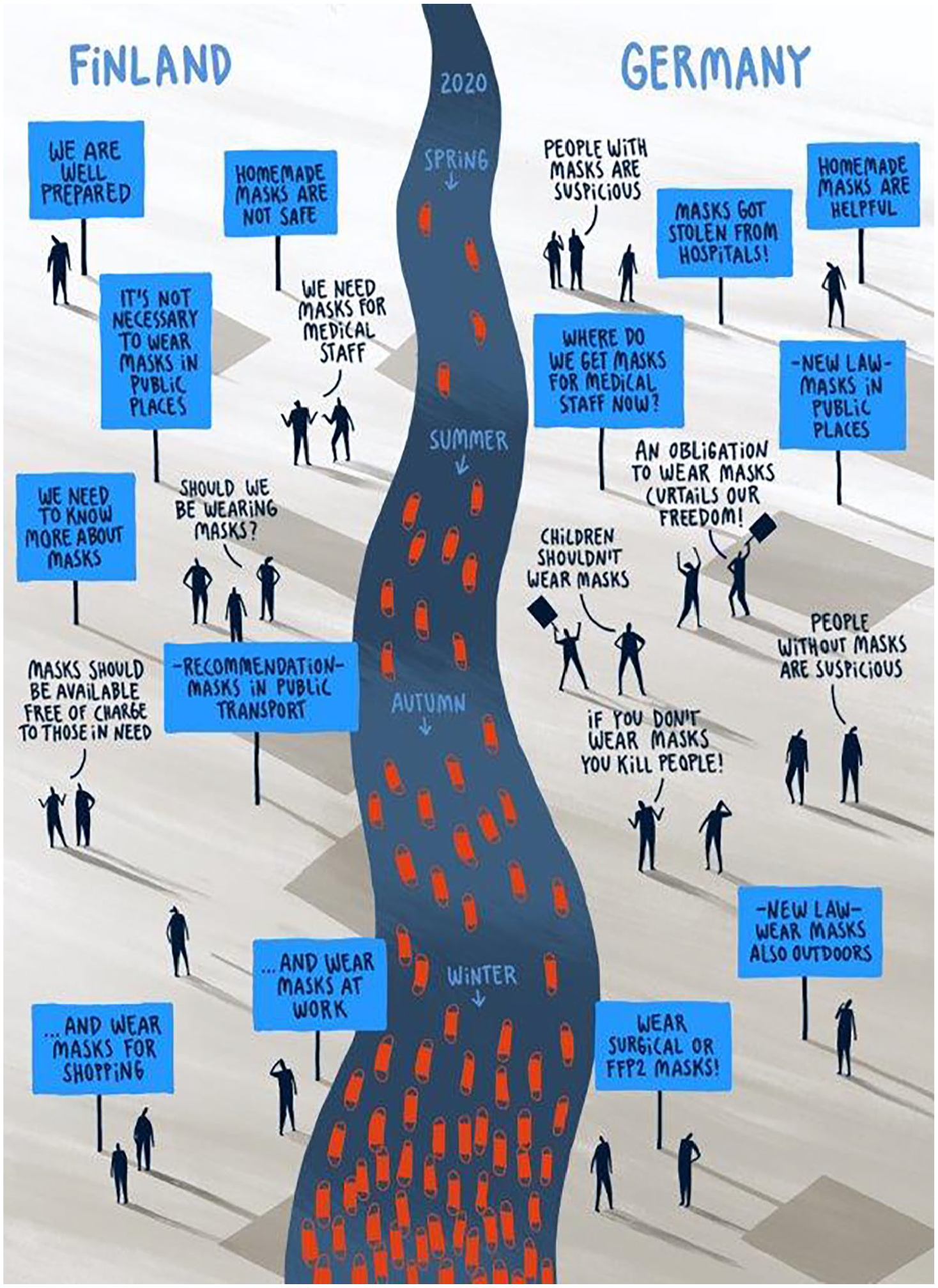
Exemplary depiction of the developments and phases of masking in Finland and Germany, 2020. Illustration by Susi Vetter.
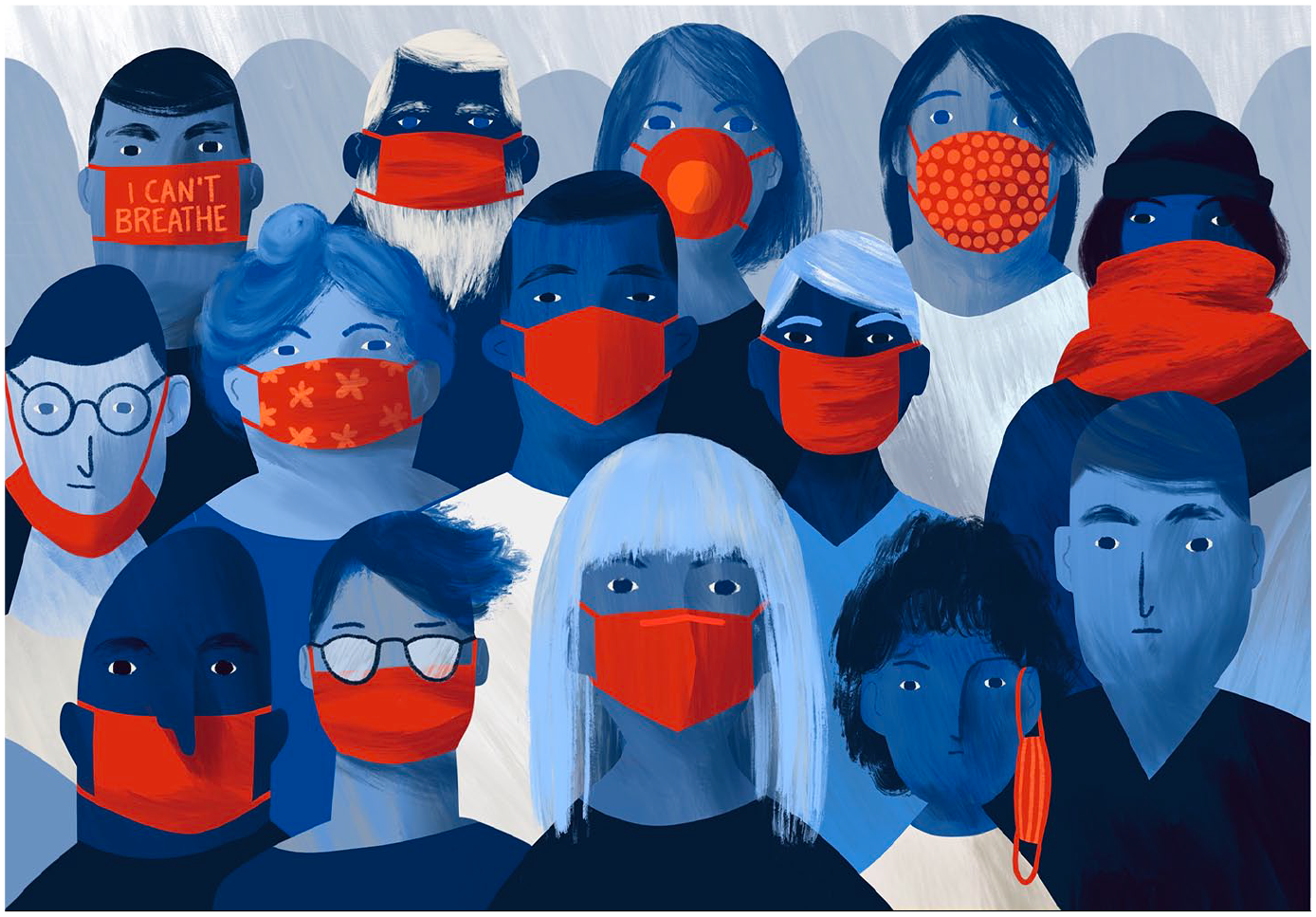
Examples of different masking practices and ‘faces’ of masking. Illustration by Susi Vetter.
Phases and ‘faces’ of masking
In 2020, many Europeans wore a mask for the first time in their own living environments. The way in which masks became a global, everyday practice of precaution and protection was a lengthy process – an evolving and changing one. We have provided Figure 1 as a non-exhaustive overview of varying chronicles of masking in 2020. In addition to Germany and Finland, other places may offer rather similar chronicles. They would probably differ slightly, but they would still most likely depict somewhat similar milestones and turning points. Despite the disease refusing ‘to be contained to a single plot line’ (Wong & Claypool, 2021, p. 207), shared stories emerged about the effectiveness of masks with different qualities and materials (from homemade masks to medical FFP2 masks). Additionally, we uncovered stories about the reasons for (not) using facemasks and about attitudes towards people choosing to wear or not wear one. In the beginning, people with a mask were sometimes subjected to hostility, whereas later they were celebrated for their solidarity. People without masks sometimes encountered a certain level of aggression and distrust (e.g. Choi & Lee, 2021).
The practice of wearing facemasks and of masking in general went through different phases. Homemade fabric masks, for example, gave many people the possibility to do something meaningful by sewing masks for others. Masks could be designed and worn in one’s favourite colours and printed with company logos or political statements. Photographing oneself wearing a mask and using these pictures as a visual statement on social media became a common practice. The mask as a visible medium of the pandemic quickly revealed its communicative and symbolic potential, both for communalisation purposes and for resolving conflicts. Masking oneself became an established practice, while simultaneously people began making critical observations of others: Is a mask being worn? Is it being worn correctly? Is it dirty? Is it being worn voluntarily? Who is it being worn for?
German public discourse on masking was more passionate and vehement than, for example, the public discussions in Finland. The introduction of mask obligations in public places in Germany led to numerous, sometimes violent, protests. The choice not to wear a mask became an explicit statement and symbolic practice just as much as wearing a mask could be akin to wearing a ‘muzzle’, thereby labelling a person as overly compliant, causing them to respond, ‘I wear this out of compulsion not fear’, or – in reference to the murder of the African American man George Floyd in the summer of 2020 – to exclaim ‘I can’t breathe’. The obligation to wear a facemask was related to both democratic freedom as well as a process of questioning it. 2
The mask as a threat to the vulnerable child: A protest story
At the beginning of the pandemic, the virus was thought to be dangerous mainly for older people and (due to health reasons) the vulnerable. Children had not yet become the focus of public concern. This changed in late summer, when schools began to reopen after a period of home schooling and the summer holiday in Germany. Wearing a mask was made obligatory in schools for at least two weeks, starting from the fifth grade. The reactions to this mandate were mixed but overall rather lacklustre. Some people did express doubts, though, about the effectiveness and necessity of wearing masks and worried about the adverse effects for their children. This first story line, then, develops around the social figure of children in relation to an obligation to wear facemasks at school. We begin the presentation of this theme by introducing a flyer (see Figure 3) which appeared in one of our mailboxes in October 2020, as well as an everyday ‘mask incident’ reported to us by a friend.
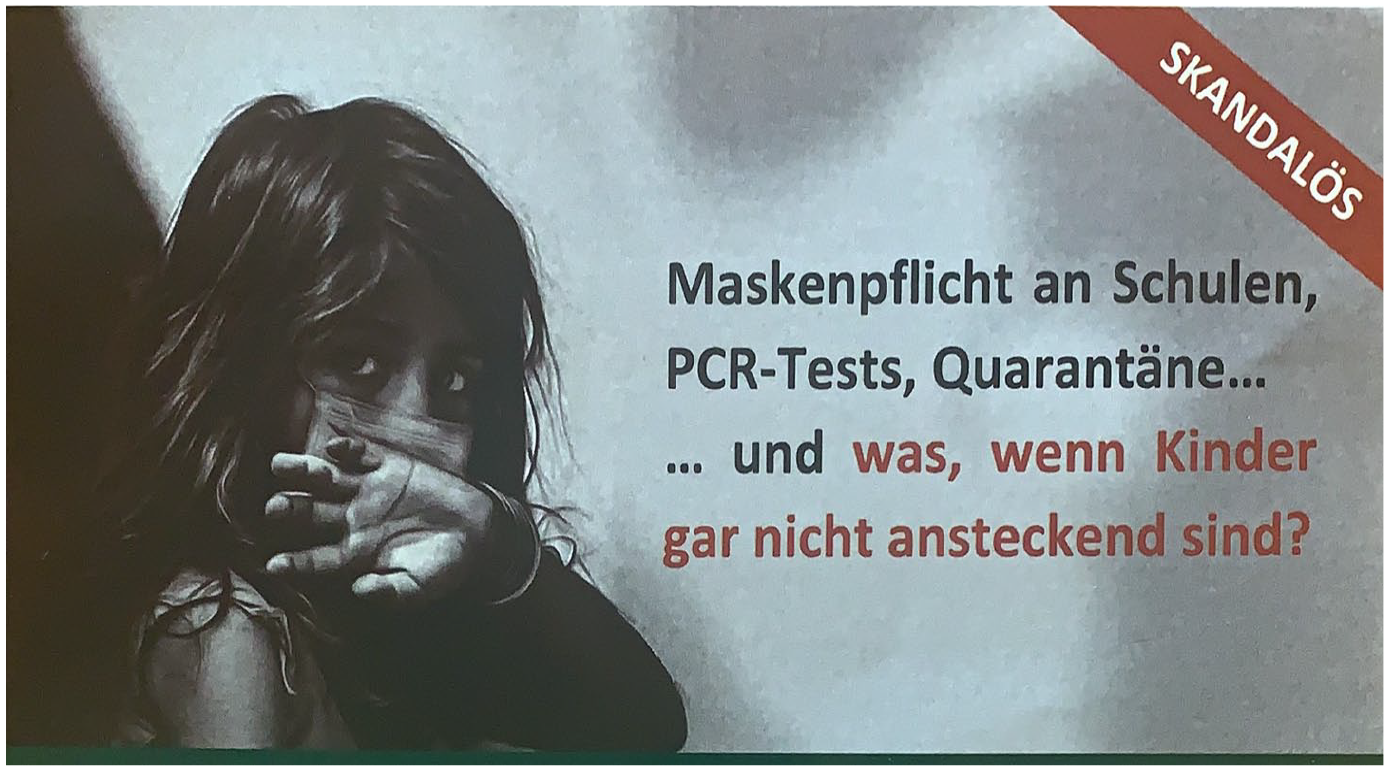
Detail of German anti-masking flyer. The names and links that could be seen at the bottom of the flyer introduced well-known figures of the so-called ‘Querdenker movement’. Bodo Schiffmann, named as author of the flyer, was for a while one of the most vocal leaders of the so-called ‘hygiene protests’. The issue of facemasks became a heated topic in his public speeches and in the protest movement in general. Criticising and demonstrating against the government and governmental measures rapidly acquired a right-wing touch and gave a boost to conspiracy theories. The alleged children’s deaths related to mask use were fuelling this ‘hygiene protest movement’. In this context, the facemasks became a symbol of alleged political suppression. (See e.g. Frei & Nachtwey, 2021; Masengarb, 2020; Reichardt, 2021.)
The flyer focuses attention on the word ‘scandalous’ in the upper right-hand corner, written in white on a red background against a black-and-white image. The picture’s style is reminiscent of war photography or images from disaster areas seen in charity appeals. It shows an intimidated-looking child holding one hand in a protective gesture over their masked face, wide eyes directed at the viewer. The headline reads: ‘mandatory masks in schools, PCR testing, quarantine. . . . . . and what if children are not contagious at all?’ This question of doubt about children’s role in spreading the pandemic is strengthened by reproduced quotes from different media sources and supposedly scientific statements printed beneath the photo of the child (not shown in Figure 3). Additionally, the reverse of the flyer portrays children as simultaneously being harmless with respect to the spread of the virus and as being endangered by the preventive measures. The mask-wearing pupils were allegedly reporting discomfort, dizziness or headaches. The flyer culminates by maligning such a ‘misunderstood and imbalanced solidarity’. It appeals to parents and politicians ‘to stand up for children’, who are identified as ‘the most precious thing you have been entrusted with in your life’.
A similar incident occurred in October 2020. The following section is a memo written after a phone call: S. is a psychotherapist for children working in a practice located close to a pedestrian zone, in a building next to private households. In autumn, the practice established the rule that clients had to wear a mask when walking through the premises. The mother of a seven-year-old client used to pick him up after the sessions. S. usually accompanied him downstairs and waited with him. This time, they didn’t think about taking off the mask when they came outside and waited in front of the door wearing masks. A neighbour from a nearby house came over and started yelling: ‘You are putting this child in danger!’ S. was surprised; it took a moment before she was able to understand the situation. The next day, she found two papers on the front door of the practice. Illustrated with Teddy bears and other playful motifs, one paper contained ‘good advice’ for parents, including suggestions to strengthen the child’s immune system by providing healthy food and cuddling instead of relying on the safety of masks. The other one talked about the dangers of masks for young children, which was ‘evidenced’ by a narrative about a child’s death related to wearing a mask.
The social figure of a suffering or even dying child is quite a common way of moralising that extends far beyond the COVID-19 pandemic (e.g. Christie, 1986; Hacking, 1999). Children are utilised as symbols of the vulnerable and innocent (see also Sontag, 2003) in various discourses, such as those regarding organ, blood and stem-cell donation, the Israel–Palestine conflict or climate change. Likewise, charity campaigns exploit the image of children being saved by the generosity of donors. Children are supposed to trigger empathy, and to expose people to the fact that what is harming children is abhorrent and detestable. In relation to COVID-19, however, the figure of a suffering child not only came to rival the threat of the virus on a moral level, but also was used to mobilise parents and give them arguments against wearing facemasks that extended beyond mere discomfort. Following Lakoff and Johnson’s (2003, pp. S.10ff.) idea that metaphors highlight certain aspects of an issue at the expense of others, another constellation is ‘hidden’ behind this narrative of masks harming children.
In the context of the pandemic, protestors exploited the social figure of a suffering child to argue against political measures and the new rules being implemented. Thus, the issue of masking functions as metaphor for such questions as the interests of young people versus old people. This issue then extends beyond the told stories, e.g. to the way in which the pandemic provoked, revived and redirected conflicts of interest. With respect to the idea that wearing masks would especially protect vulnerable groups, the call to protect children from these very acts of protection can be seen as a negotiation about acknowledgement and a weighing of the relative importance of different age groups (as illustrated in Figure 4). This story depicts often ambivalent and contradictory experiences with the rationales behind pandemic policies, with the mask being an easy target to focus on.
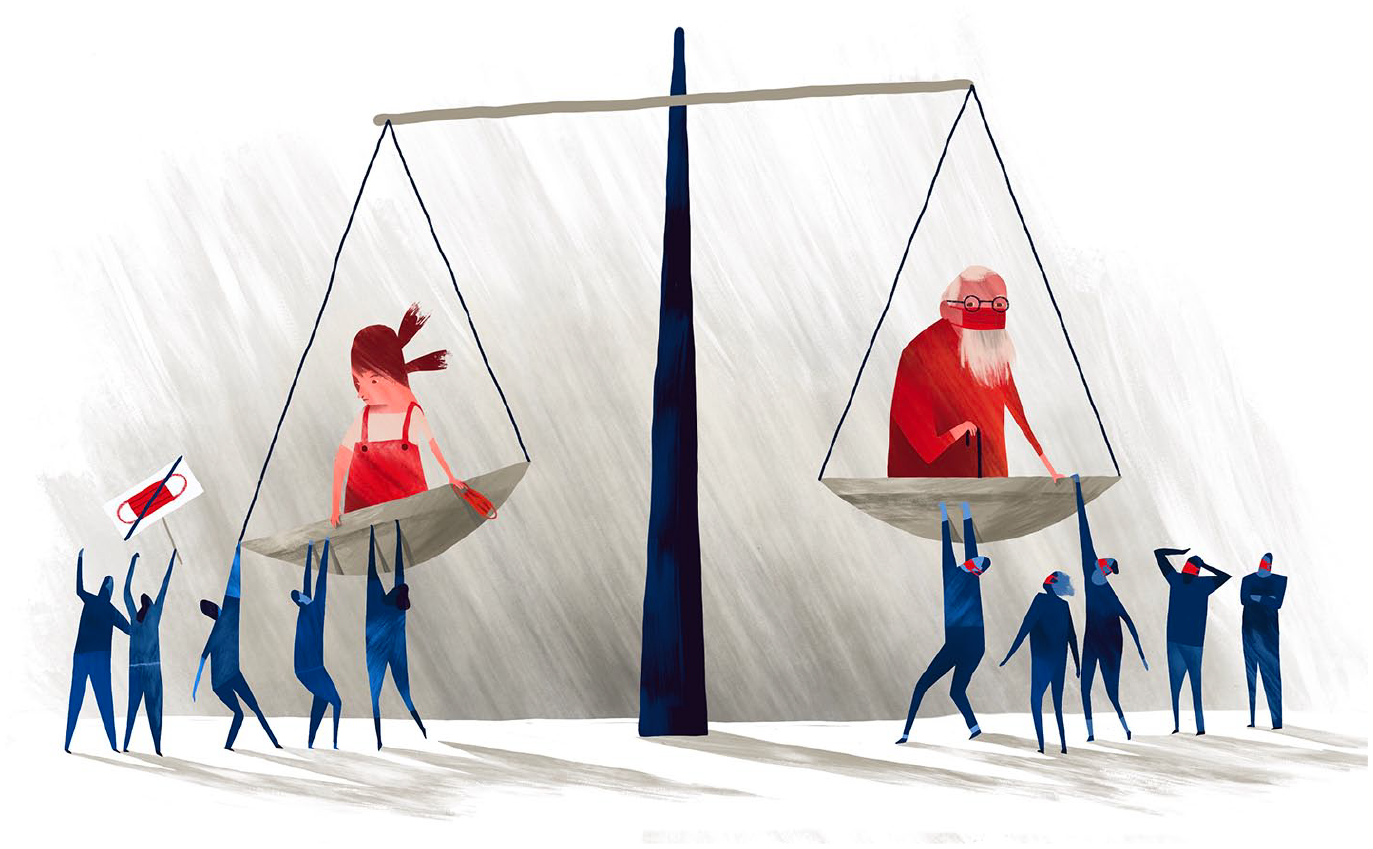
Protests against facemasks and the role of children and older poeple. Illustration by Susi Vetter.
Similar conflicts over who should wear masks appeared elsewhere in the world. Especially where stricter obligations were introduced in response to high infection rates, masks became politicised. Perhaps this is why the countermovement in Finland remained relatively small as mask wearing was never more than a ‘strong recommendation’. Minor demonstrations against restrictive pandemic policies or COVID-vaccinations were organised, especially in 2021, following the German example (YLE, 2021). They neither gained noteworthy political force nor had a societal impact comparable to events in Germany. Despite similarities in argumentation and the intention to protect whatever was perceived as ‘good’ (freedom of speech, bodily integrity and so forth), neither older people nor children became symbolic social figures, nor did a ‘mask’ gain the same metaphorical meaning as in the German protest movement.
The ‘new Volvo’ incident: A morality play about free masks
Our second story comes from a time when – ‘strongly recommended’ – mask use was just beginning in Finland after the government had long considered whether or not masks would be needed. At this point, medical masks were still scarce but nevertheless available for purchase at comparatively high prices. The masks, which were subsequently distributed free of charge to certain groups, draw attention not only to protection against infection, but also to the discussion of moral questions. Along with the new, official recommendation to use facemasks, for example on public transportation, Prime Minister Sanna Marin declared in August 2020 that masks would be given free of charge to people with a low income. This was an important gesture in the context of a universal welfare state. No one should be excluded from receiving state services because they cannot afford to buy masks now considered mandatory in many places. Since there were no official evaluations of who was entitled to receive a free mask, people could themselves estimate their eligibility.
A public concern about morals emerged when the media reported on an incident in the Kymenlaakso area, in southeast Finland: a couple came to collect free masks in a ‘relatively new Volvo’ (Ripaoja, 2020). An interviewed social worker said that she had seen them with mask packages in their hands. She stated: ‘The ones who live on social security do not drive new Volvos’, appealing to people’s conscience, since masks could not be provided with tax money to everyone. People asked whether those in need were really the ones receiving free masks or whether such masks were just an open call to exploit the system by hoarding or reselling them on the black market (Ripaoja, 2020). Later, the situation reportedly became more balanced: the ones not entitled to masks allegedly developed a bad conscience because of the public outcry. The number of people coming to pick up masks served as an indication that the masks were now being correctly distributed and going to those persons who needed them the most (Tillaeus, 2020).
In this story, there is a triangular relationship connecting the supposed hoarders with two seemingly contradictory items: (free) masks for the needy and a new, fancy car signifying wealth (see e.g. Bengry-Howell & Griffin, 2007; Hewer & Brownlie, 2007; Merriman, 2009; Michael, 2001, p. 74). The fancy Volvo (see Figure 5) calls into question the need for free masks and exposes behaviour that is viewed as unacceptable, not only during a pandemic. When the health crisis and the virus threatened the collective from the outside, the threat from the inside in the form of individuals thinking only of themselves can be seen both as a warning about such a threat and as a reinforcement of the guidelines for correct morals and solidarity during the situation.
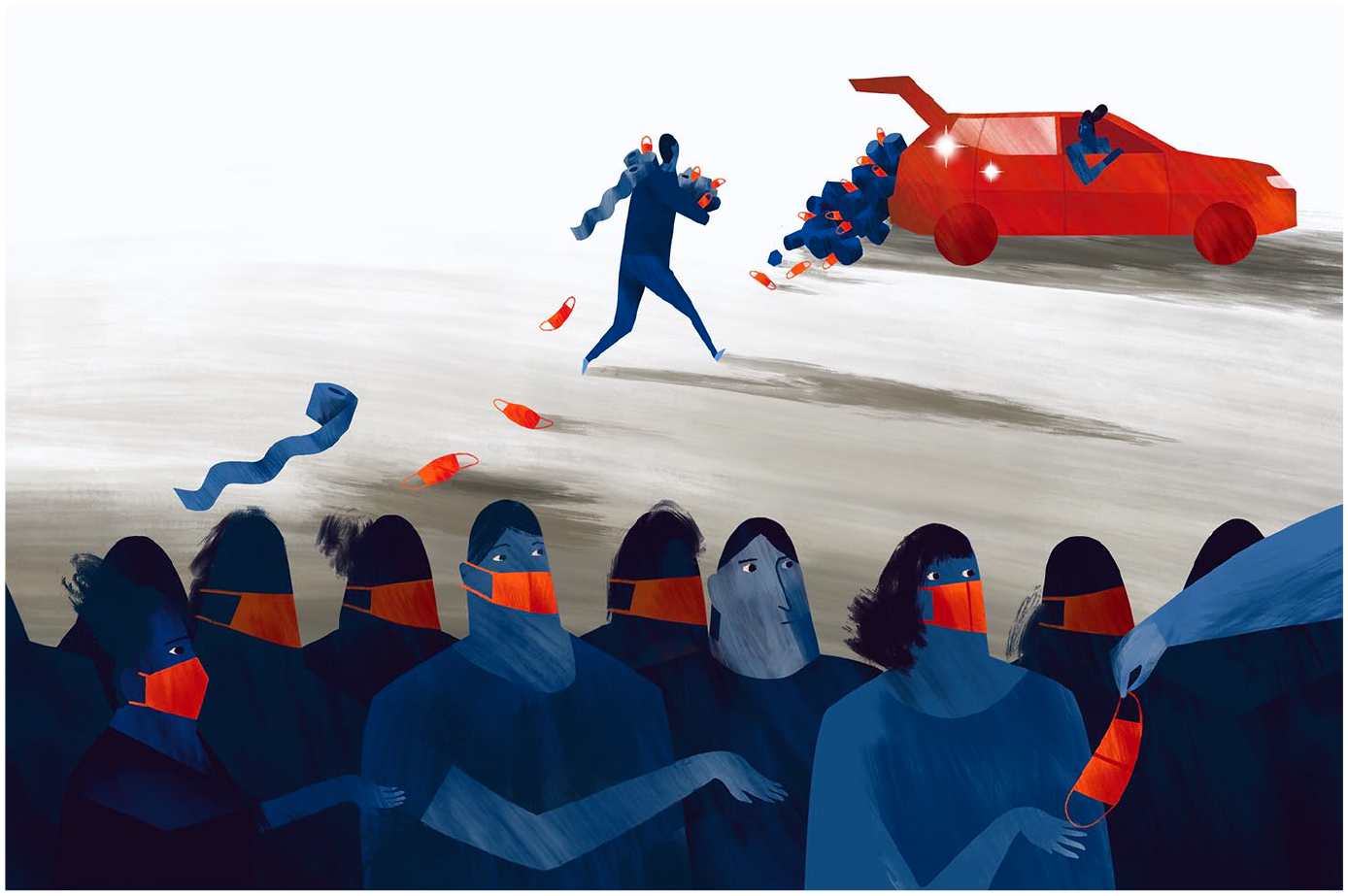
The ‘Volvo incident’ and facemasks as a scarce resource. Illustration by Susi Vetter.
The story revolves around masks and the social figure of the hoarder (see also Moser & Schlechtriemen, 2021). This figure appeared during the pandemic in different contexts. According to the literature, hoarding appears as an individual response, whether rational or emotional, to scarcity, which may elicit stress, anxiety, fear or panic (Micalizzi et al., 2021, p. 535). Hoarders began stockpiling essential goods, such as toilet paper, thereby possibly preventing others from having access to these goods (Baddeley, 2020; Garbe et al., 2020; Kirk & Rifkin, 2020; Micalizzi et al., 2021, p. 536). The social figure of the pandemic hoarder and their different motives could be seen in four different ways. First, the hoarder could be a ‘selfless hoarder’, who picks up more than currently needed by themselves in order to distribute supplies to others. Second, they could be the prepper, whose strategy for dealing with the experience of uncertainty (Micalizzi et al., 2021) is to prepare for the worst (Garbe et al., 2020). Third, they could embody the ‘selfish hoarder’, who exploits collective resources (in our case tax money and trust). Fourth, the hoarder could be a businessperson, who appropriates scarce resources to profit from the plight of others. While the first type of hoarder actually complies with moral behaviour and reveals solidarity, types two, three and four reveal different kinds of societal anomie (see e.g. Marks, 1974): preppers have lost confidence, at least temporarily, in the social structures, while for the exploiters and businesspersons all existing norms have become invalid.
In our Volvo example, hoarding has an amoral connotation because collective resources were being exploited, which reveals ignorance about the needs of others and a desire to take advantage of a better off societal position. This is neither new nor limited to the case of ‘free masks’. Instead, it has a longer history (e.g. externalisation society; see Lessenich, 2019) and reappeared in the context of global vaccine distribution when the first COVID-19 vaccines entered the markets.
Finally, stories like the ‘Volvo incident’ function as a metaphor, a moral piece that helps people interpret the new situation, underscoring order in a society that is not in a state of anomaly and – at least in the Volvo case – helping to reinforce social norms by showing that the violation of such norms does not go unpunished, even under exceptional circumstances. A similar instance happened in Germany a few months later. Three free masks per person were supposed to be distributed to members of ‘vulnerable groups’ (such as pregnant women or people over 60). However, several newspapers reported on how people would go from pharmacy to pharmacy picking up as many masks as possible. Both examples reveal how the scarcity of masks and their distribution to the needy lend themselves to lessons about ‘correct’ moral behaviour during exceptional times.
The illustration condenses and exaggerates mask hoarding and also incorporates further associations related to pandemic hoarding in our material and interpretation of it. Here, the mask stands for ‘taking more than one’s fair share’. It also shows hoarders’ privileged position and superior access to resources and ultimately hints at the recurring fears and discussions about (a lack of), among other things, medical resources that kept surfacing during the pandemic.
Masks on everyday consumer products: A story about changes
In October 2020, the Finnish food manufacturer Oululainen altered the appearance of one of its products. As part of a promotional campaign, an otherwise smiling bearded man, the iconic face of the Reissumies (= ‘travel man’) rye bread, was masked (see Figure 6).
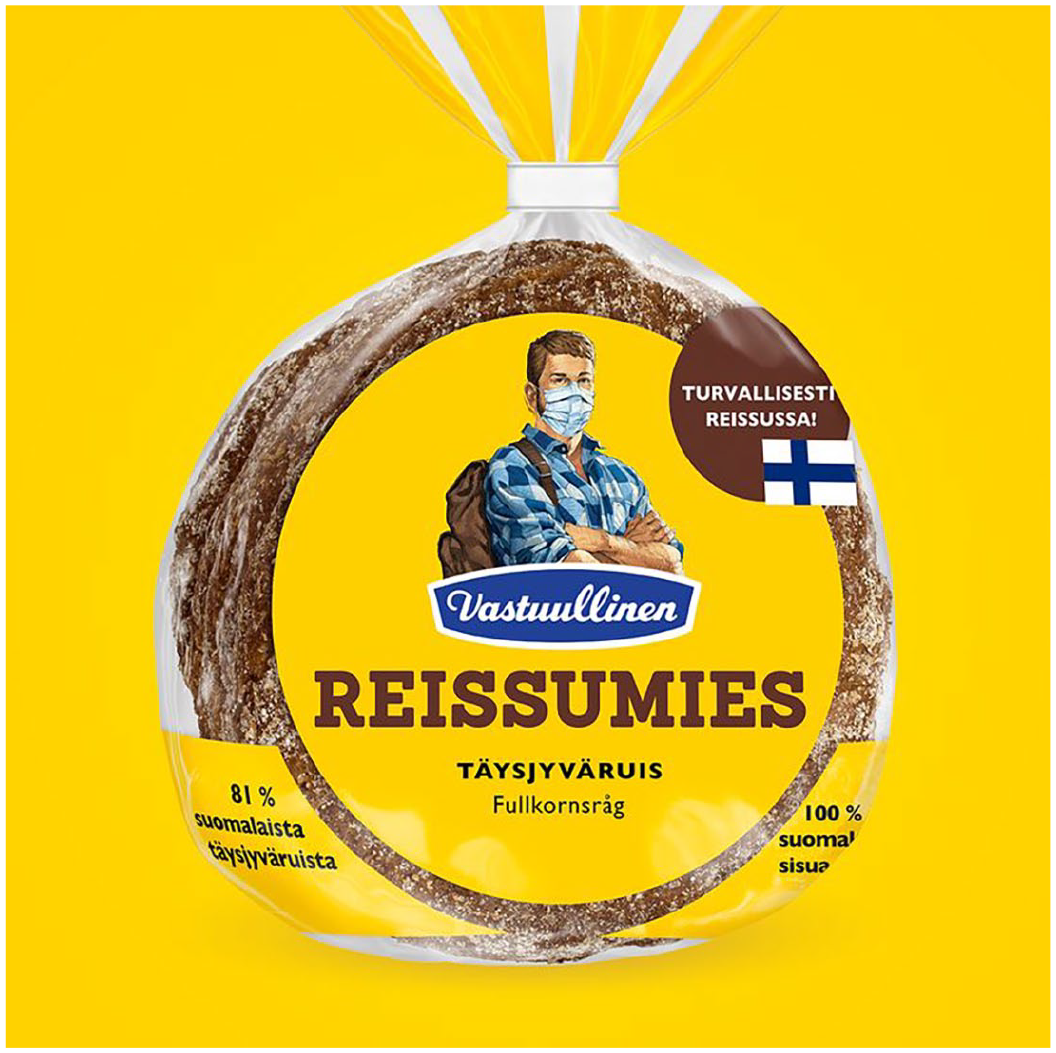
Photo of a Reissumies package during the ‘pandemic’ marketing campaign that has been analysed for this paper. The image used by Oululainen for the campaign is available, for example, on Facebook: www.facebook.com/reissumies/photos/a.271071662661/10158938998187662 (accessed 30 January 2023).
Part of the campaign involved the distribution of about a million ‘masked’ bread packages. They could be purchased in grocery stores and were given together with branded masks to the travellers at the train station in Helsinki. According to the company, the campaign was meant to set a good example, taking a stand on an ‘important issue’: The idea of the campaign is to remind people to act responsibly at a time when a global pandemic affects us all. ‘We want to take social responsibility and do everything we can to stay healthy and keep Finland open and the wheels spinning. The use of face masks can reduce the spread of the virus, and we now encourage all Finns to use the mask as recommended’, says Ari Ahola, Marketing Manager of Reissumies. (Oululainen, 2020)
The campaign provoked a lively discussion, especially on social media. Newspapers reported people commenting on how ‘this bread remains now on the shelf!’ and how the whole campaign was ‘outrageous propaganda’ (Laitinen, 2020). Some people were upset because they believed there was no proof of the benefits of facemasks, or because the company appropriated the pandemic for marketing purposes. Others emphasised the campaign’s societal value and ‘sense of responsibility’ (Laitinen, 2020). Thus, reactions to changes in the product’s image were mixed. The brand, launched in 1978, has been advertised in the past decades as a certain national, timeless and romantic idea of Finnishness. In the commercials, a white male travels alone in a beautiful natural setting, going wherever he wants to, eating the rye bread. A mask disrupts this imagined connection to nature and independence of an individual who only needs his bread and does not have to take others into account. Now, the ‘existence’ of this apparently genuine male representative of Finnishness and healthy rye bread had to be viewed in connection with the pandemic.
Similar cases occurred in Germany at Easter and Christmastime 2020. Between March and April, several smaller chocolate companies and patisseries started to produce chocolate Easter bunnies with masks. Some people found it funny and encouraging, while others found it disrespectful to people who had been infected and were now fighting for their lives. According to one chocolate producer, the initial ‘shit storm’ was followed by success. Not enough bunnies could be produced to satisfy demand from all over the world. Probably due to the public outcry, some companies decided to donate the profits to charity and not take advantage of the situation (Berliner Zeitung, 2020; Radgen, 2020; RTL, 2020). The same advertising strategy was repeated just before Christmas, in November, with masked chocolate Santa Clauses (BR24, 2020).
The ‘masking’ of known consumer products became a way for companies to react to the pandemic. The media reported the ambivalent reactions of consumers to these products in similar fashion. Besides dealing with bread or chocolate figures, the stories depict how the facemasks attached to the products served as a visible and simplified manifestation of the far-reaching changes to our reality caused by COVID-19. Different reactions to the masked food also translated into different acts of consumption, signalling that we have understood the joke and acknowledge the mask as a bearer of hope, or that we refuse to accept the pandemic taking over all spheres of life. Thus, changing something that has remained relatively unchanged for decades – like the package of rye bread or the shapes of Easter or Christmas chocolates – seemingly made manifest the fragility of everyday life. The masked products represented an additional threat to what people had previously experienced as a form of continuity. Safe and stable became unstable, as so many things did during the pandemic. All aspects of life could suddenly be ‘touched’ and changed by the virus. Equipping our everyday items with facemasks and the ensuing discussions and reactions, some of which were quite emotional, revealed the ongoing negotiations related to these changes.
While the other two cases we presented speak of inequality, solidarity and different social groups, the bread and chocolate cases are a story about social change in relation to the pandemic and its manifestation in consumer culture (see Figure 7).
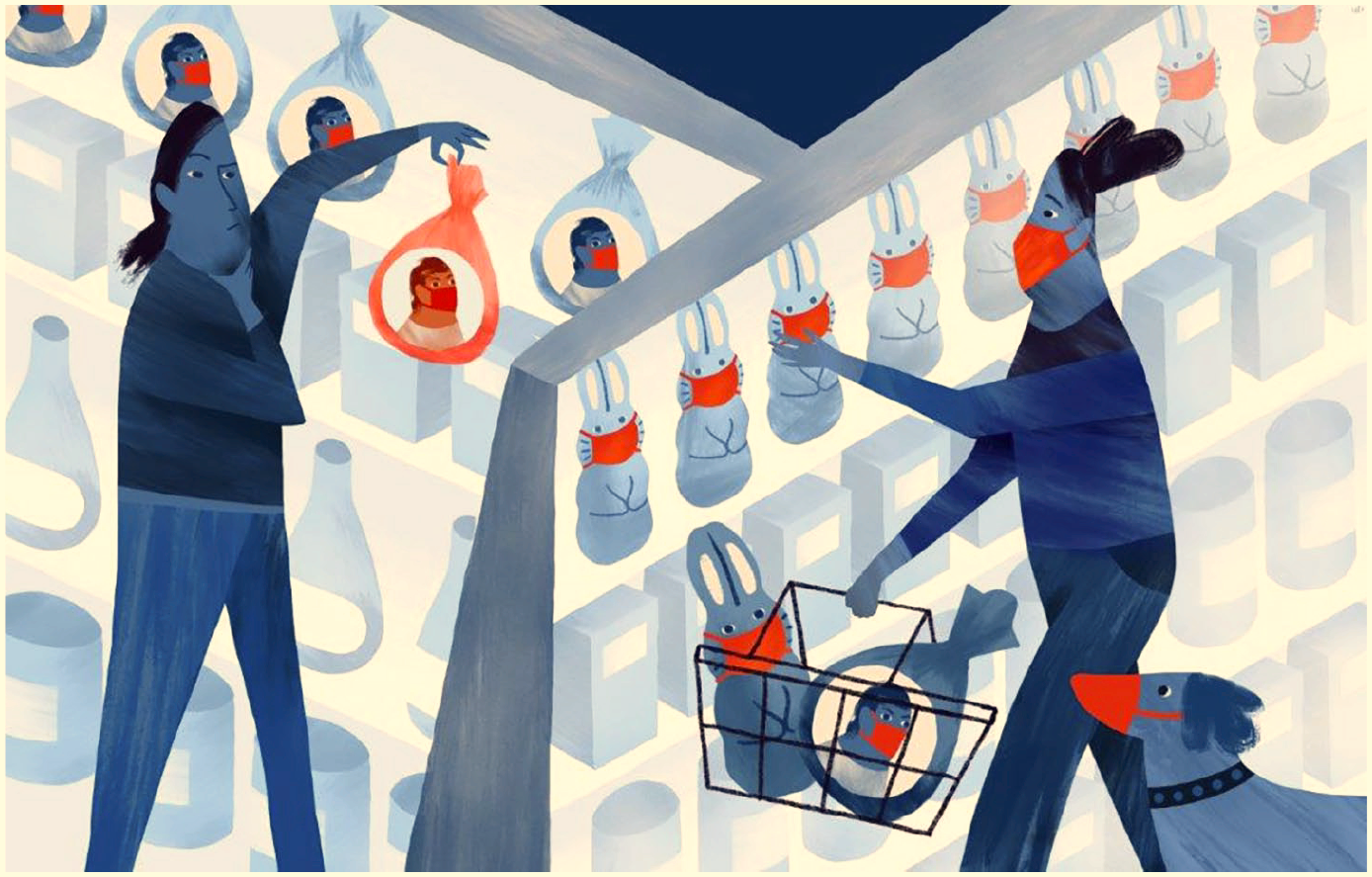
Travellers, bunnies and Santa Claus. Illustration by Susi Vetter.
Conclusion
This article builds on observations regarding the complexity of facemasks and their introduction into everyday life during the COVID-19 pandemic. Already in early stages of the project, we noticed how ‘the mask’ threatened to slip away from us as an object of analysis, how handmade cloth masks became more standardised than medical masks and how rare and contested objects became mass-produced. So what did we as a society actually talk about when discussing facemasks in a conceptual way? Our article aimed not only to interpret narratives about masks, but also to conceptualise their complexity from a theoretical standpoint. Two approaches were important to understanding the highly dynamic phenomenon of masks: (a) reflections on the fluid materiality and multiplicity of masks (De Laet & Mol, 2000; Law & Mol, 1995; Mol, 2002), and (b) their associated metaphorical content (Lakoff & Johnson, 2003), which makes them appear as a protagonist in different stories (Moser & Schlechtriemen, 2018, 2019, 2021).
The multiplicity and fluidity of masks already became evident in the three empirical snapshots about masking practices and the narratives circulating around them that we chose for analysis. Each mask narrated here and enacted in a specific situation, though always recognisable as a ‘mask’, differs from others narrated and enacted elsewhere. Not only do they appear as pictures, medical products or even confectionery, they are all nonetheless part of the multi-voiced negotiation of a biomedical emergency and the diverse questions and moral challenges posed by the crisis. Questions about the ‘effect’ of masks are correspondingly more complex than questions about availability or quality. Rather, it was the negotiations with and about masks that give us insights into their multiplicity and the discursive fields of the pandemic.
Mask stories and their metaphorical power relate the extraordinary with the everyday, reveal or create continuity, or voice scepticism. Combined with masks’ materiality and visibility, the metaphorical deployment of a ‘mask’ allowed people to grasp the otherwise mostly intangible pandemic situation and inconceivable changes. Thus, the mask stories we analysed show how masks, and the discussions about whether they should be worn or not or whether they are effective or not, were simultaneously discussions about solidarity, inequality and adaptations to the new situation even as consumers.
The mask is a medical product, a resource to be distributed or hoarded, an object one wants to have or believes one needs or may even have a right to, a desirable item or an item with feared effects, to name just a few of its meanings. In the context of political protests, masks became associated with ideas about democracy and freedom. Since masks cover the mouth and nose, they have repeatedly been viewed as a strategy for silencing political dissidents or associated with the idea that being able to breathe freely also means (political) freedom. In connection to the essential bodily function of breathing, people repeatedly doubted and questioned the necessity and usefulness of masks. The special affordances and properties of masks create a range of possibilities for interpretation and action, making it suitable for symbolically clothing other items. Our analysis shows how societal resilience, solidarity and scepticism or (in)security in times of pandemic – all of which hinge essentially on a shared understanding about what is going on and the right ways to behave – are continuously discussed in reference to ‘the mask’ and reinforced in the discussions about facemasks.
The illustrations created for this article and during the analysis of the empirical material (see analytical section) show ‘masks’ as part of our explorations of the stories behind the stories. They condense our interpretation into a single image and bring together elements – and generalisations – on a visual level. In illustrative form, they represent the main points of our analysis, highlight similarities or refer to themes intertwined with facemasks. In addition, they enrich the representation of our analysis both for an academic and lay audience. However, as we noted earlier in this article, a thorough reflection and further development regarding collaboration with an illustrator – the practicalities and consequences – is worth further exploration. Similarly, as our analysis focused only on the first year of the pandemic, and only on two different countries, many aspects and cases of pandemic masking and how masking evolved over the course of the pandemic remain a task for future studies. We see further potential in making a theoretical contribution to the conceptual interface of the multimodality of metaphors (Pfaller, 2022) and metaphoricity of objects.
Footnotes
Acknowledgements
We warmly thank Susi for conducting this experiment with us and not only drawing for us, but also discussing and interpreting with us. In addition, we would like to thank Karoliina Snell and Larissa Pfaller for their comments on earlier versions of this article as well as all the students, colleagues and friends who gave us their time to discuss sketches and visual outputs.
Funding
We would like to thank the Dr Hans Riegel Foundation, which made it possible for us to work with illustrator Susi Vetter through the COVID-19 special grant.