




Abstract
Under what social conditions would ethnic sectarians in developed countries engage in inter-country adoption, grafting ethnically diverse children into their homogeneous contexts? In this article, we present a case study of Amish-Mennonite adoption-oriented children’s homes in underdeveloped countries. As the ethnic sectarian, family-oriented, evangelical Amish-Mennonites met little success proselytizing adults, adoption-oriented children’s home allowed adoptive parents to demonstrate their commitment to mission while maintaining sectarian-style control over a child’s socialization. Ultimately, the children’s homes were short lived, coming and going based on larger geo-political dynamics, signaling that this unusual international adoption project is internally motivated but enabled and constrained by larger institutional contexts. Although the actual percentage of inter-country adoptees to Amish-Mennonite homes is small, this case demonstrates that the right combination of values and broader political dynamics create conditions facilitating migration of children from lesser developed countries into wealthy contexts, a process cracking – even if not fully opening – Amish-Mennonite ethnic/racial homogeneity.
Introduction
Post–World War II inter-country adoption flows have been almost entirely from economically poorer and communist countries to richer, Western countries (Selman, 2002). This migration of children is largely sustained by childless Western couples, who experienced declining prospects of – and increasing barriers to – adopting domestically across the latter twentieth century (Selman, 2000). However, international adoption is not necessarily random among childless couples. International adoption has taken on value-based overtones, especially in social contexts emphasizing the family unit, service to others, and the blessings of relationships (Firmin et al., 2017). Hence, it would seem like religious contexts – both ideological motivators and religious institutions – would be a prime focus of research. However, much of the current social literature about inter-country adoption overlooks the role of religion. Even when religion is addressed, this literature often focuses on evangelical Protestants, and, in particular, their value-based motivations for and the ethics of international adoption (Breuning, 2013; Firmin et al., 2017; Smolin, 2011; further evidenced in the absence of discussion on religion in Willing et al., 2012).
This article expands the literature on Western couples who adopt internationally by presenting a case study of members in a family-oriented ethnic sect who were motivated to create international adoption-oriented children’s homes. Institutionalized channels of international adoption, in turn, incidentally, cracked the ethnic homogeneity of this group, even as little to no motivation otherwise existed to diversify in ways complicating religious ethnicity. Specifically, our case study focuses on the inter-country adoption of North America’s Amish-Mennonites, an umbrella term for several related denominations (Beachy Amish-Mennonites, Mennonite Christian Fellowship, and others) who accepted early- to mid-twentieth-century convenience technologies, including automobiles, grid electricity, and home telephones. As with their stricter Old Amish counterparts, Amish-Mennonite doctrine values endogamous marriage and childrearing – both ethnicity-reinforcing behaviors. Yet, unlike the Old Amish, Amish-Mennonite doctrine stresses a (global) proselytizing orientation that could unsettle ethnic homogeneity. As such, Amish-Mennonite theology unsteadily hybridizes ethnic sectarianism and evangelistic consciousness.
Even though this present case study concerns a relatively small number of international adoptions, it demonstrates that, though ethnic religions may seem like counterintuitive destinations for inter-country adoptees, with the right value-based drivers, members can be motivated to adopt internationally, even to the point of organizing children’s homes designed to systematically adopt children into families. This process, however, is enabled and constrained by layers of institutions, from the global to ethnic-internal, which both facilitate new inter-country adoption channels and, just as quickly, close the door.
In this article, we introduce the Amish-Mennonites as ethnic sectarians integrated by a value-based ideological system and a system of institutions. We then unpack the adoption-relevant Amish-Mennonite systems of family and evangelistic mission. After outlining our case study method – based on interviews and archival research – we follow the successive historical development of Amish-Mennonite children’s home efforts in Paraguay (1968–1969), Costa Rica (1969–1970), El Salvador (1972–1983), Honduras (1970–1995), and Romania (1992–c.2013), and the eventual closure of each as geo-political institutional dynamics swung against inter-country adoption. Each home, though short lived, provided a major sending source for inter-country adoption to North American Amish-Mennonite families. In closing, we employ existing frameworks of inter-country adoption among evangelicals to argue that Amish-Mennonites extended their ethnic sectarian concepts of faith propagation via familialism to inter-country adoption, where the varied ethnic and racial profile of adoptees has helped crack the population homogeneity of the Amish-Mennonites. While ‘cracking’ has not produced a full ‘opening’, our case does demonstrate how the right configuration of ideologies and structures facilitated the counterintuitive process of inter-country adoption into ethnic sectarianism.
Background
Theorizing Amish-Mennonites: ethnic religiosity as ideology and institution
Religion-focused adoption research often approaches religion as a value-based ideological system, which motivates some adherents to consider adoption (e.g. Breuning, 2013; Firmin et al., 2017). We share this assumption and, below, describe two ideologies informing Amish-Mennonite adoption (family and evangelical mission). However, we also view ‘religion’ as an institution that enables/constrains behavior. As an institution, religion is interlinked with other institutions (Alba and Nee, 2003; Gordon, 1964; Lutz, 2017; Wimmer, 2013), including larger geo-political systems as well as internal institutions, such as family, church, and children’s homes. Institutions set the conditions for social action, which may be variously motivated. Here, Weber’s (1968 (1922) 24–26) typologies of social action – habitual/traditional, affectual/impulsive, personal utility, and cultural/religious values – are useful for drawing attention to value-rationalized behavior in particular. Yet, because the values actors base social action on may be unevenly internalized and even contradictive within the system (Vaisey, 2009), we reject interpretations of agents’ social action as necessarily contributing to functional system perpetuation, that is, all social outcomes are logically explainable as system survival. This is a common methodological fallacy in Amish research (Anderson et al., 2019; Billig and Zook, 2017). If anything, inter-country adoption represents rather threatening behavior to both stasis-based and adaptive equilibrium for a sectarian group.
Furthermore, we frame the Amish-Mennonites as an ethnic religion, the two institutional systems intertwined, neither necessarily embedded within the other. Elsewhere around the globe, an ethnic-religious approach may seem intuitive, but contemporary American sociology rarely theorizes religious systems as simultaneously ethnic, perhaps due to the country’s ‘melting pot’ model of society. As an ethnic religion, the broad Amish-Mennonite/Old Amish religious tradition is structured by (1) ethnic components, namely, common genealogical connections, perception of shared history, and some shared cultural practices (Enninger, 1986), and (2) sectarian religious components, including common adherence to the 18-article Dordrecht Confession of Faith (1632), origin in the 1693–1697 conflict between the established Swiss Brethren churches and a new wave of Anabaptist converts (the Amish-Mennonite side) (Beachy, 2011a), and a disciplined membership observing conspicuous acts of religiosity. Their traditional doctrine emphasizes local congregational authority, an untrained leadership pulled from lay members, and the ability of believers to understand and interpret the Scriptures, especially in conversation with family and local leaders (Petrovich, 2022a). In its ideal, members read the scriptures literally while seeking moral instruction applicable for their lives, then strive toward honorable examples of faithfulness while interpreting Scripture’s meaningfulness in localized contexts historically contingent on the church’s trajectory (Petrovich, 2022b).
These localist and literalist/practical doctrines have provided many opportunities for schisms, including an 1865 national division between the evangelical- and innovation-oriented Amish-Mennonites and the liturgically oriented Old Amish. Into the twentieth century, Amish-Mennonite splinters continued from the Old Amish. This case focuses on the largest of the twentieth-century schisms from the Old Amish: The Beachy Amish-Mennonites (c. 1910/1927/1958–1961) and their own closely related schisms, including the Mennonite Christian Fellowship (1978) (Anderson, 2011, 2012b) and Maranatha Amish-Mennonites (1996) (Anderson, 2019, 2012a).
As with the Old Amish, the Amish-Mennonites live their religion through everyday identity symbolization such as grooming/garment practices (Mong and Clifton, 2021), some sort of regulations on information communications technologies (Anderson, 2014), some use of their native German language (usually limited to just casual and family roles) (Brown, 2019; DeHaven, 2010; Downing, 2019; Fuller, 1999), and a focus on the church as locus of social activity and decision-making (Anderson, 2019; Smith, 2013). Socialization into this thick symbolic system is contingent on the highly regarded institutional process of family. Nevertheless, Amish-Mennonites have adopted an evangelistic model of church and, therefore, maintain ambivalence about the appropriateness of their in-group ethnic-religious practices. Prospective converts may fail to catch on to norms, converts’ presence may downplay the relevance of ethnicized ‘us-ness’, and converts may feel ethnic-religious elements hinder them from joining (Allemang, 1997; Brown, 2019; Matthews, 2001; Smith, 2015; Van Kampen, 2009). These two institutions/value sets – family and evangelical mission – merit closer analysis because of how they ultimately motivate and facilitate international, cross-ethnic adoption.
Amish-Mennonite institution-value set 1: family
Amish-Mennonites maintain several key ethnic-specific institutions that socialize the populace into ever-changing group-specific values and norms. Standing alongside church, school, and kin (Freundschaft), the immediate family is among the most highly esteemed institutions (Anderson, 2013; Lesher, 1983; Morris, 1993). Family occupies such a central role among Amish-Mennonites for at least two reasons. The first is demographic. Though Amish-Mennonites position themselves as outreach-oriented, the components contributing to population increase are the same as the Old Amish: relatively high levels of natural births and offspring retention (Landing, 1970; Wasao et al., 2021). The other source of growth – converts – is low. Some people are interested in joining the plain people, though it remains difficult for even the most motivated seeker to fully adjust to the symbolically thick and heavily structured ethnic context (Anderson, 2016a). Family, then, is the central progenitor of the faith (Škender, 2020). All couples will have children if able, perhaps even against daunting health threats (Hartman, 2001). Those who do not have children are presumed unable. Children help integrate the parents into the ethnic-religious institution of church, as children attend the local church school and teenagers attend youth activities.
The second reason family occupies such a central role is socialization. The family institution integrates members into broader ethnic-religious life. Families are the most involved in the many age-specific church institutions, such as the church’s private day school, where parents have an opportunity to regularly communicate, or in the work realm, where older children may be employed by other church families (Smith, 2013; Waite and Crockett, 1997). Families also connect parents across generations. Given the relatively young age of marriage (lower- to mid-20s) and the larger family sizes, generational proximity and continuity is more likely to attain. Large families also provide a microcosmic training ground for rehearsing cooperative behaviors with co-religionists. Cooperation is particularly necessary for members of this relatively splintered ‘Free Church’ tradition, where every believer is his own priest (i.e. has direct access to God and interprets His will) and small-scale schisms are a continuously looming reality (Enninger and Raith, 1982; Friesen and Friesen, 1996).
Given the importance of family, young adults are both expected – and expect – to get married (Hartman, 2001). The two-step rite of passage from adolescence to adulthood is baptism, then marriage with first birth following soon after. Unmarried early-to mid-life adults are assumed to be either without the ability to marry or, in the case of women, without a fitting suitor. The importance ascribed to the family institution is reflected in role-statuses (Enninger, 1980). Married men and women receive more status than single men and women, seen in, for example, the high unlikelihood that an unmarried man will be chosen a minister. By extension, couples with children typically have more status than childless couples, even as childless couples are recognized as being physically unable to have children. Married men without children are less likely to be nominated for church leadership than those with children. 1 Though men in these situations may be socially mature and religiously serious, they have not had the valuable social experiences family provides. Furthermore, they are unable to use their household as an operating platform from which to informally access the variety of age- and gender-based institutions in the church. Without children in school, young adults in the youth activities, and (for bachelors) a wife attending women’s activities, the leader knows much less about what is going on and his presence is underrepresented across the church’s institutions. Hence, much social pressure exists for couples to have children.
Amish-Mennonite institution-value set 2: evangelical mission
Evangelical theology is one important motivator for certain Christian religions to consider how they can spread religious influence to other people, domestically and internationally. By evangelical, we mean a Christian outlook that stresses the ideological mobilization and global diffusion of the ‘born again’ doctrine. To be ‘born again’ is to verbalize one’s hopelessly sinful state and acknowledge Jesus, the Son of God, as the source of pardon, thus bringing the individual eternal salvation. Ethnic sectarianism, which is characteristic of the Old Amish, is employment of ethnic components – including kinship, sense of shared history, language, and distinctive dress – to achieve insular ends, that is, defining one’s group as set apart from a society’s mainstream culture due to devout religious observance.
Originally just ‘Old Amish’ 2 with some technological conveniences such as automobiles and telephones, the Beachy Amish-Mennonites’ partial evangelical reorientation began in the 1950s. Mennonite-instigated tent revivals – modeled after Billy Graham tent revivals – swept across Old Amish regions of North America, triggering theological polarizations and an exodus of Old Amish into Beachy Amish-Mennonite, which, as a consequence, became more evangelically oriented (Anderson, 2011; Lapp, 2014; Miller, 2019; Stoltzfus, 2019). For the most inspired individuals, the new evangelical emphasis meant mobilization to missions, which in turn meant relocating to unfamiliar cultural environments to do missions. In the post–World War II era, as America expanded its military and economic presence across the globe, new destinations could be conveniently identified by secular media and economic linkages. They brought to Americans a window to peoples across the globe, of the poor, uneducated, and, through the eyes of some evangelicals, unsaved. Many Amish-Mennonite young adults were particularly interested in evangelical Protestant mission stories of the time and subscribed to evangelical mission newsletters. These young people felt a burden to help with the evangelical project of bringing the Christian salvation message to others (Stoltzfus, 2019).
The Amish-Mennonite religious context eventually offered two ways to do missions: through institutionalized mission programs such as AMA (Amish-Mennonite Aid, est. 1955), or through an independent church plant, that is, making religious institutions available to others by starting churches in new locations, what was called ‘evangelization by colonization’ (Anderson and Anderson, 2020; Anderson, 2016b). The years sandwiching 1970 saw a particularly rapid surge of new Amish-Mennonite and related evangelically oriented conservative Anabaptist 3 congregations in Paraguay, Costa Rica, Honduras, Guatemala, and Brazil. Added to these were new congregations in Belize and El Salvador, where AMA disaster relief and economic development projects begun in 1961 were refocusing toward church planting (Anderson and Anderson, 2019).
In sum
As an ethnic religion, the Amish-Mennonite system represents both social institutions and value-based ideologies. In particular, family and evangelical mission are important motivators (ideology) and facilitators (institution) of individual behavior.
Historical context of inter-country adoption
To historically contextualize our case study of the Amish-Mennonites’ adoption-oriented international children’s homes, we will now provide a short history of the global-scale US adoption movement. The Cold War Era global distribution of American militaries and increased media coverage of third-world countries provided a context ripe for American families to both learn about the purported poverty of other places and to open their affluent homes to underprivileged children, including those abandoned, facing severe poverty, or born to national mothers and American soldiers. Inter-country adoption began in earnest after World War II. Adoption efforts in the shadows of American military intervention were nicknamed ‘baby-lifts’, that is, rescuing babies facing imminent harm in war-torn Japan and Germany, then eventually Korea, Cuba, and Vietnam. While adoption did include many orphaned or abandoned children of national parentage, many others were ‘war babies’, born in the aftermath of American servicemen’s off-duty sexual liaisons with – and on- and off-duty assaults against – national women. Adopting in the wake of war – whatever the child’s parentage – reinforced to many Americans their patriotic view of international intervention, that America was bringing goodwill to the world. Furthermore, the increasing unpopularity of eugenics policy in the aftermath of World War II – even as latent senses of race-class superiority and many eugenics-informed government projects remained (Dikötter, 1998) – helped legitimize the social acceptability of cross-racial adoptions. Specifically, cross-racial adoption from East Asia paved the way for a rise in domestic transracial adoption in the 1960s and 1970s. In this domestic adoption, by-and-large, white families saw themselves as rescuing black and Native American children from poverty (Oh, 2015; The Schuster Institute for Investigative Journalism, 2010; Willing et al., 2012).
The ‘goodwill’ theme of adopting children out of wartime settings proved easily transferable to adopting children to save them from persistently impoverished places. With the widespread diffusion of television, Americans were more exposed to the day-to-day plight of children around the globe. Scenes of children subjected to forced migration, flooding, famine, and other disasters seemed particularly pitiable, flaming the international adoption market. Adoption institutions grew alongside demand for adoption. In the mid-1950s, a film about children – housed in poor orphanages and ‘stinted by the community’ for being born to Korean mothers impregnated by American G.I.s [soldiers] – prompted Harry and Bertha Holt to adopt eight Korean children. Their story, which was framed with evangelical overtones, made national news when Congress intervened to permit the Holts to adopt even more children. With this publicity, the first large scale foreign adoption agency was founded in 1955, sparking a movement that would eventually reduce the stigma of cross-racial adoption and broaden adoption considerations to special needs children. In this early period – between 1953 and 1962 – at least 15,000 children were adopted into American families from other countries (Oh, 2015; The Schuster Institute for Investigative Journalism, 2010).
Cross-country adoption came with its share of problems, including child abuse, disruption of the child’s development, and child trafficking. The ongoing demand for adoption has created lucrative black markets: parents might sell their children into adoption, while traffickers might kidnap children, kill parents for the children, or seek out special needs children who were particularly vulnerable to abuse. Both America and source-countries for adoption have responded to abuses with legislation and restrictions (The Schuster Institute for Investigative Journalism, 2010).
This brief history of global-scale adoption in the United States suggests that adoption patterns are shaped by larger institutional contexts, including legal contours, post-colonial diplomatic relations between sending and receiving countries, and broader evangelical religious movements, which have symbolized international adoption as an expression of evangelical values.
Method
Following this background, we now present our case study of international Amish-Mennonite adoption, with emphasis on Amish-Mennonite children’s homes as facilitating institutions. Our study pulls from two qualitative data sources. First, we conducted over 200 on-site, multi-topical, semi-structured interviews among Amish-Mennonite converts and missionaries living or working in El Salvador, Honduras, Nicaragua, Costa Rica, Paraguay, Kenya, Ukraine, and Romania from 2013 to 2015. These interviews provided a wealth of important contextual information. The transcripts analyzed for this present study represent 15 people (11 males and 2 couples) in 13 interviews, when adoption or children’s homes were discussed. All interviewees were ethnic Amish-Mennonites except two, who were first-generation converts. For this study, the transcripts were neither thematically coded nor probed for underlying cultural themes; rather, interviews were analyzed for face-value social facts and interviewees’ opinions to document the case.
Second, we accessed primary textual sources, including Amish-Mennonite authored accounts such as books and family newsletters (cited in this article). Several references are to The Budget. The Budget is a weekly newspaper filled with short columns from Amish, Mennonite, and other plain churches in the United States and Canada but also in places with their missions. We analyzed international columns from 1968 to 1979, the main years of activity for new mission projects, and analyzed text segments mentioning adoption.
Our work is also informed by the time we spent as adherents among the Beachy Amish-Mennonites, from 2002 to 2018 (first author) and 2010 to 2018 (second author). Even after 2018, we have remained adherents of a group closely related to the Beachy Amish-Mennonites. As insider-outsider researchers, we have had relatively unproblematic access to data and can offer a dynamic positionality that integrates both emic and etic perspectives (Dwyer and Buckle, 2009). A potential limitation of insider positionality is the social pressure to tell an internally acceptable story. While personally ascribing to many beliefs and practices of the Amish-Mennonites, we also nurture a critical value orientation. Furthermore, we do not have any institutional conflicts of interest that would hinder us from a circumspect assessment of the data. Finally, even Amish-Mennonites adherents have diverse opinions on inter-country adoption, suggesting a candid study is possible.
The case of inter-country adoption among the Amish-Mennonites
In this case study, we first document overall rates of adoption, then focus at length on the development and closing of four adoption-oriented children’s homes, and conclude with brief coverage of inter-country adoption outside the children’s home institutional model.
Rates of adoption
The demand for adoptees has grown not only with increases in the Amish-Mennonite population but also as infertility rates may be inching up – an informal observation of the authors’. Actual rates of adoption are unknown, though is common enough for parents to have an annual get-together at a Beachy-run retreat center in Pennsylvania. The Amish-Mennonite Directory 2015, which lists household members in over 200 congregations across North America, specifically labels 37 children among 21 households as ‘adopted’ or ‘foster’. While these numbers may seem small in a religious tradition with 23,402 adherents in the United States in 2020, 4 the number of unreported adoptees is in all likelihood several times over this number. 5 Even a small percentage of cross-ethnic/racial adoptees is quite significant for an otherwise ethnically homogeneous group.
International children’s homes: adopting children into North American families
While only a small percentage of North American Amish-Mennonites acted on their evangelical theology by migrating internationally to conduct missions, many have been eager to express support from home and through the family institution. One conspicuous expression of support has been adopting abroad. A series of these tenuous adoption-oriented ‘children’s homes’ emerged, and folded, following geo-political dynamics. Specifically, four efforts emerged in the years sandwiching 1970, in Paraguay, Costa Rica, El Salvador, and Honduras. In the 1990s, another home started in Romania. Plain people prefer working through trusted co-ethnic institutions on matters touching ethnic-religious values, such as adoption. As such, Amish-Mennonite-run international children’s homes became a major go-to for adoption.
International adoption among Amish-Mennonites was facilitated by twentieth-century transnationalism. High-speed air transportation gave Westerners quick access to the globe, which brought the United States into new global wars and political standoffs as they diffused their form of economy and political system. After America sent G.I.s to defend South Korea from North Korea’s attack in 1950–1952, South Korea became a major sender of adoptees to America – for decades thereafter – and served as a template for other countries that would send adoptees to Western countries (Oh, 2015)
Amish-Mennonites also participated in adoption from Korea, perhaps their first foray into international adoption. For example, in an inspirational book, a Beachy Amish-Mennonite author tells the story of Noah and Lovina Beachy, who had worked many years in Amish-Mennonite missions and had also, as part of their mission-mindedness, adopted two Korean children fathered by American soldiers (Beachy, 2011b). Another recipient of Korean adoptees was the Paul Eichorn family. The Eichorns wanted to expand their adoption of Korean children by starting a children’s home specifically for Koreans. Paraguay had generously open migrant policies for Koreans at the time, so over the winter of 1967–1968, he moved his family to Paraguay to start a children’s home, which was to begin by expanding his own family. Writes one of Paul’s biological sons in an autobiography:
(…) paper work was begun to adopt Nathan and Sharon from Korea, but before they arrived, Herman and Ramon were brought out to us by the Red Cross from Asuncion, so in 69 we had 4 babies added to our family in short order (…) When one baby yelled for his bottle all four wanted theirs, so they would often be lined up in the living room on the floor (…) and each with his bottle (Eichorn, 2014).
However, shortly thereafter, a Korean migrant killed a Paraguayan official and the migration policy tightened; Eichorn’s dream of a Paraguayan children’s home for Koreans ended.
Eichorn’s vision of a children’s home was the first among Amish-Mennonites of this era but not the last. In the 1960s and 1970s, Americans’ attention was more broadly shifting to Latin America as a source of adoptees. Not only was South Korea tightening adoption policies but the supply of children up for adoption in the United States was not keeping pace with demand. The 1973 Roe v. Wade Supreme Court decision opened the way for mothers to legally terminate pregnancies, while a greater openness to intercourse outside marriage reduced the stigma for an unwed mother, who otherwise may have put up her child for adoption (Carp, 2002; Stolley, 1993). By the 1980s, the percentage of unwed mothers choosing to put their child up for adoption had decreased from 19% before 1973 to just 3% (Stolley, 1993). On the demand side, medical technology allowed young couples to diagnose infertility more quickly, shortening the time before couples sought to adopt (Carp, 2002).
The Amish-Mennonite focus on Latin America paralleled a broader North American interest in these countries, from political alliances to economic development. Coming on the heels of Paul Eichorn’s migration to Paraguay, a Costa Rican children’s home was established. In 1968, a first-generation convert to the Amish-Mennonites – William McGrath – led a group of Amish-Mennonites to Costa Rica to start a church following the evangelization by colonization model. McGrath had converted to the plain churches in the 1950s – an energizing time for evangelical thought and missions – and his magnetic personality helped mobilize plain people to foreign missions during the decades following. His charisma captured people’s imaginations, and in sundry ways, he facilitated people’s involvement with missions (Anderson and Anderson, 2020). McGrath was moving from Mission Home, VA, where he helped administer the Beachy Amish-Mennonite-sponsored Faith Mission Home, a children’s home for mentally handicapped children in the Blue Ridge Mountains and in operation since 1965.
When moving to Costa Rica, McGrath initially planned to help start a new rural congregation with others. When he arrived in San Jose, he happened to learn that the crowded state homes were willing to rehouse children in new homes. Writing about this in The Budget, he discovered that North American plain people were interested in adopting children – whom they perceived as disadvantaged, impoverished, homeless, or injured – into their warm, stable, and religious homes. Abandoning the church effort of his fellow Amish-Mennonites, McGrath established a children’s home – Witmarsum – just outside the capital San Jose. ‘The purpose of this children’s home’, McGrath stated in his Budget column, ‘will be the adoption and Christian training of neglected Costa Rican children (…)’ (Dec. 5, 1968: 9). Rotating staff came from North America for service terms (Figure 1(a) and (b)). According to McGrath, an official was so impressed by their operation that she suggested the Amish-Mennonites take over a government children’s home. However, in July 1970, one of the volunteer Amish-Mennonite staff members from North America accidently dropped a boy on his head while showering him. The injury was fatal, and the government shut the home down. McGrath, however, continued responding to requests for adoption [interviews 1,2]. Writing to The Budget in 1973, McGrath announced that
[w]e just found out a new and rapid way of Americans adopting Costa Rican orphans; if some of those families who had contacted us several years ago would still be interested, write me now, and I will send the details. One American family came down here and within a week had adopted a child and left (‘Mountaineer Commentary’, 15 March 1973).
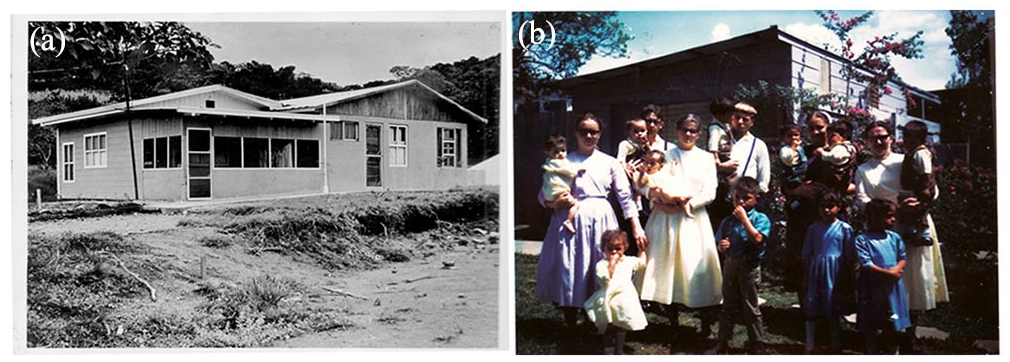
(a) The Whitmarsum’s children home building, San Jose, Costa Rica. (b) The Whitmarsum’s children home Amish-Mennonite staff, San Jose, Costa Rica.
While his statement made adoption sound as user-friendly as a vending machine, in reality, the Costa Rican-based adoption supply would continue narrowing, despite demand. By the end of 1973, McGrath had moved back to the United States and was on to other pursuits.
Others picked up where McGrath’s home left off. In El Salvador, AMA missionary Roman Mullet, who had visited McGrath’s home in Costa Rica, helped establish a children’s home – New Life and Hope Orphanage (NLHO) (Figure 2) – in 1972, situated about 20 miles north of the capital, San Salvador. The children’s home received abandoned children from the state-run reformatory and then matched them with plain parents in North America. Everyone involved wanted ‘to do something good to get these children a better future and better life’ [interview 3]. The first child was adopted in 1974 and the northward flow of Central American children resumed (Mullet, 1980). The Salvadoran project continued for a decade, into the early years of the 1980s Salvadoran civil war. Two socio-political forces then pinched the home to a close in 1983. First, the surrounding countryside – located 20 miles north of the capital and near mountains from which revolutionaries staged operations – became a high conflict zone, and the home became a regular target of extortion threats (Mast, 1980; interview 3). Second, the Salvadoran government was tightening laws on foreign adoptions, as a disconcerting economy had developed around exporting adoptees [interview 4].
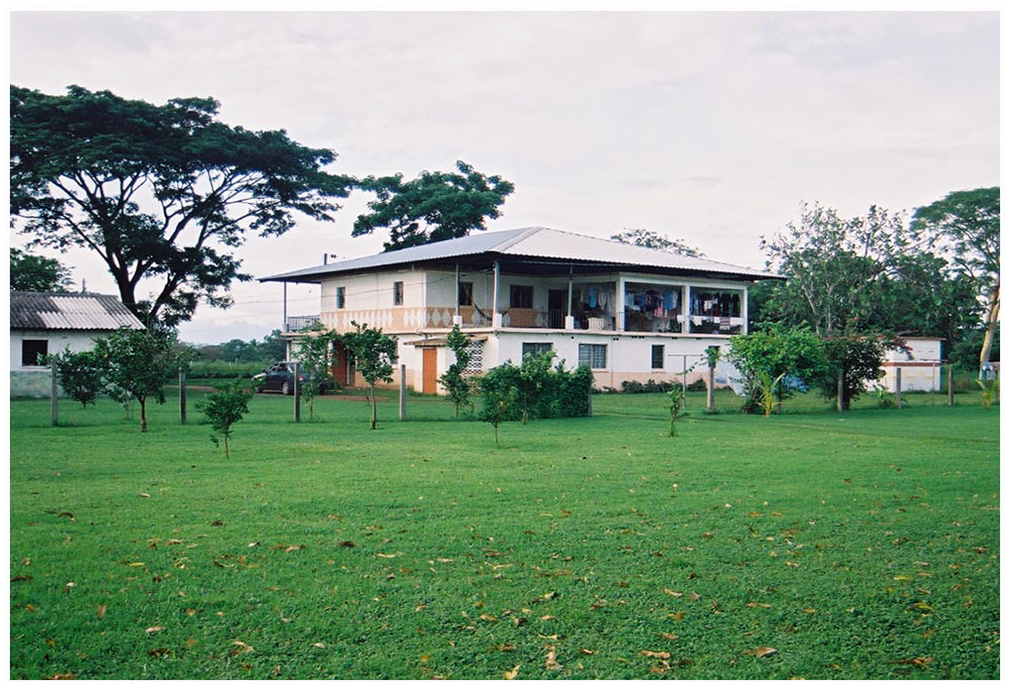
The New Life and Hope Orphanage (1972–1983) outside San Salvador, El Salvador.
A statistical report of international adoptions shows that in the 1980s, 2178 international adoptions came from El Salvador, making it the 10th highest sending country in the decade (Kane, 1993). Across its 10 years in operation, NLHO placed 69 children into North American Amish-Mennonite, Conservative Mennonite, or proximately affiliated families (Bontrager and Campbell, 2004). Additional children not adopted out of the country also passed through NLHO, though no final tally was located; one published source from 1979 states that ‘over 70’ children had been taken into the home to date (Mast, 1980). In 2001, a second Amish-Mennonite children’s home started around 15 miles northwest of the capital. This time, it was established by a Salvadoran convert and provided in-house care, not adoption logistics [interview 5], and sought to socialize the children into Salvadoran Amish-Mennonite life. They deliberately tried to keep publicity low, to minimize the flow of curious Amish-Mennonite missionary tourists attracted to the sight of a home full of disadvantaged children.
In Honduras in 1968, mission-minded Old Amish from Indiana and Ontario settled just outside the small town of Guaimaca, about 100 miles east of the capital Tegucigalpa. There, the Amish families built homes, ran businesses, and adopted several children. The adoption effort was formalized when they constructed a children’s home – Colonia Sansón Children’s Home (Figure 3) – in 1970. The home was the outgrowth of the settlement’s instigator, Canadian migrant Peter Stoll, who had developed a compassion for needy children on earlier investigative trips. Several single Amish women staffed the home. They took in, and ultimately adopted, abandoned children. The administrator, whose family adopted a boy of their own, resided in a house among the women’s own private residences, where they raised three to four children each (Anderson and Anderson, 2016; Eicher, 2013; Hochstetler, 2007; Stoll, 1996). Some of these children were adopted to North Americans, for example, in one fairly typical Budget report: ‘Sam Hostetlers are waiting expectantly for the completion of little Delbert’s adoption papers, and then they plan to start north toward their Missouri home’. (‘Guaimaca F.M., Honduras, C.A.’, Jan. 12, 1977).
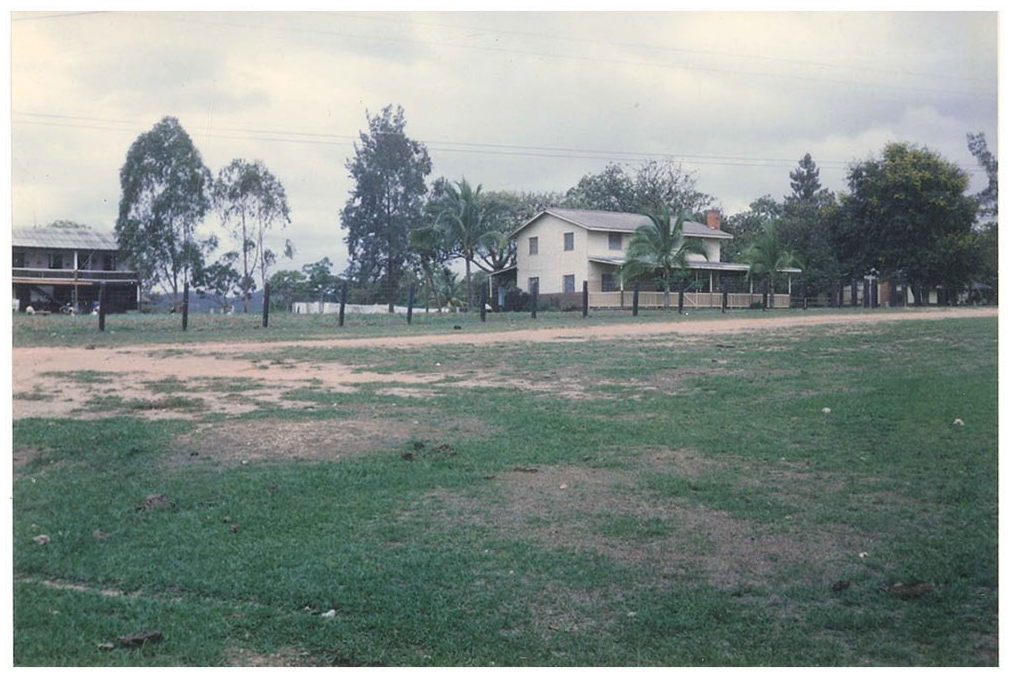
Colonia Sansón children’s home (1970–c.1995).
Around 1980, the Old Amish reorganized into an Amish-Mennonite church, coming under a North American mission board operated by the Mennonite Christian Fellowship. With this came a change of focus at the children’s home. Instead of several ladies raising children, volunteer staff came from North America for a term [interviews 6,7]. The explicit goal was to move all abandoned and unwanted newborn babies through the home, making the children available for adoption to North Americans. Thus, the Amish-Mennonites contributed their share of just over 1000 Honduran children adopted to North America in the 1980s, a number ranking Honduras 14th among sending countries that decade (Kane, 1993). Around 1995–1996, the home closed. According to an Amish-Mennonite missionary, government officials heard that Honduran babies were being dismembered in North America to provide organs for American babies [interview 8].
Tightening adoption regulations in Central America prompted North Americans to look elsewhere. In the 1990s, global adoption interests shifted to communist and formerly communist countries. Romania, in particular, had many abandoned children. Ceauşescu, the long-time totalitarian leader, had enacted policies that encouraged high birth rates while simultaneously relocating rural families into urban high-rise apartments, resulting in poor living conditions for growing families. Many children ended up in state-sponsored children’s homes, where program structures incidentally hindered family reunification (Johnson et al., 1993; Morrison, 2004). When Ceauşescu’s reign and Romanian communism fell in 1989, the West was flooded with horrific stories from the media about the conditions in which children lived. Romania quickly became one of the top sending countries for adoptions; nearly 4500 children moved abroad within the first 8 months of international adoption legislation. However, fears of unregulated adoption and black markets for adoption prompted the government to reform the adoption process, limiting international adoptions to children from state institutions that are matched with one of several foreign agencies (Johnson et al., 1993). Correspondingly, adoption from Romania fell through the 1990s (Selman, 2006).
The Ohio-based Christian Aid Ministries to Romania (later, just ‘C.A.M.’) had already been supplying material aid to Romania in the 1980s, drawing support not just from Amish-Mennonites but from many other related plain denominations. When communism ended, C.A.M. established a children’s home – Nathaniel Christian Orphanage (Figure 4) – on the rural outskirts of Suceava, located in Romania’s far north, in 1991. C.A.M. administration had toured Romanian orphanages soon after communism fell and were appalled by the poor conditions (Miller, 2008). Simultaneously, North American plain people were individually adopting children from Romania, including, among others, a couple from the horse-and-buggy New Order Amish [Bruce Jantzi, ‘Chernovtsi Chronicles, May 27, 2012]. C.A.M.’s home was going to help facilitate adoption of Romanian orphans.
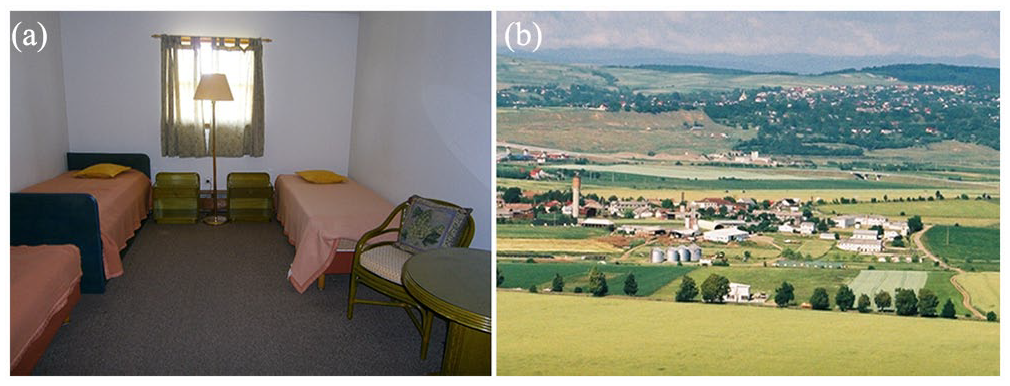
(a) Nathaniel Christian orphanage (1991–c.2012), Suceava, Romanina: a now-empty dorm room. (b) Nathaniel Christian orphanage (1991–c.2012), Suceava, Romanina: The farm property and residential buildings (Foreground).
However, they were not alone among Westerners wanting to save the Romanian orphans. Many children were being adopted out of the country at the time. Concerned about this trade, the Romanian legislature tightened laws on inter-country adoption, and international adoption was soon eliminated as an objective for the Nathaniel Christian Orphanage. Instead, C.A.M. adapted the program by turning the home into something of a collective adoption center. They launched relatively sophisticated, sensationalized marketing campaigns, drawing supporters in, who were regularly looking for updates about the children. C.A.M. provided these updates through regular mailings and annual convention-style showcases in North America. One of C.A.M’.s financing strategies was enabling sponsors to ‘adopt’ a specific child. The donation went to that child, and supporters received a picture and profile, which many donors hung in an open area in their home. Particularly able sponsors made trips to Romania to visit ‘their’ child, bringing gifts along. American visits to the children’s home were staggering. At its peak, the home entertained around 1000 visitors from North America per year, and the children were routinely showcased to visitors [interviews 9,10]. Sponsor-a-child programs were fairly normal in North America in the 1980s–1990s, though such in-person visits were unusual.
A decade-long administrator eventually published two books filled with stories of the home’s middle years, when the children were young: Heart Bridge (Miller, 2008) and A Heart to Belong (Miller, 2010). Titled ‘Family Album’, the books’ middle insert includes photos and names of 58 and 55 children, respectively. The stories cast children as naïve youngsters needing direction, triggering the Amish-Mennonite familial instinct to nurture, direct, and discipline. In these stories, the battle is child versus deviant behaviors – both humanity-wide carnality and Romanian-specific cultural draws – that could lead to the child leaving the home, either being dismissed or choosing to leave. The ‘good’ was found in the direction of Amish-Mennonite staff, who played a critical role in drawing out children’s innocence and purity (Anderson and Anderson, 2014). Throughout these books, the generic North American donor was a reoccurring character. Supporters visited and did projects, sent gifts, and gave monthly donations. In this way, supporters purchased a ‘share’ of a child’s nurture since direct adoption was not possible.
Many donors and volunteer staff-maintained relationships with the children into their adult years. For example, at the time of this research, two unmarried women living in North America, who had connections with many girls at the home, shared a Christmas photocard which included the (grown) children’s pictures. We saw this on display – among other photos of family and friends – at an Amish-Mennonite workplace in Romania (Figure 5). The photocard suggests a warm, family-style relationship that has extended beyond the dependent stage of life; ‘moms’ are pictured at the top, the ‘children’ listed below.
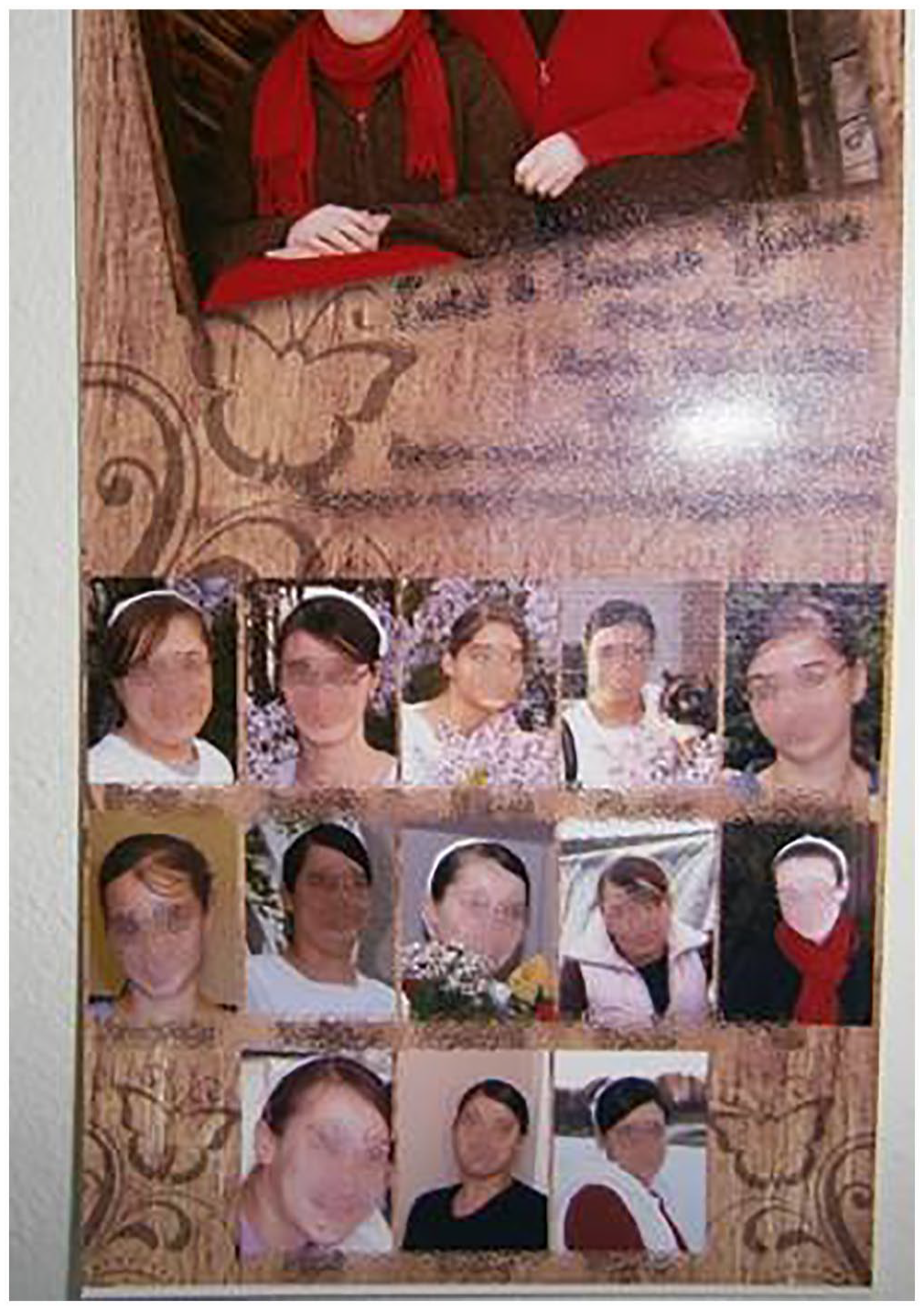
Photocard of former Amish-Mennonite workers and (grown) children from orphanage.
By the early 2010s, the Romanian home was basically closed, as the children had grown and legal complexities made the home’s continuation difficult. This was the last international Amish-Mennonite children’s home geared toward family/adoption-style framing that also depended on North American investment. The aforementioned second children’s home in El Salvador – still in operation today and largely administered by ethnic Salvadoran converts to the Amish-Mennonites – has gone great lengths to domesticize their program and limit publicity in North America, taking lessons from the models of former Amish-Mennonite homes. As one missionary said, ‘The children’s home [goal] now is to develop strong Christians that will be functional and serve here. That’s a big difference in the vision [from earlier homes]’ [interview 3].
Direct international adoption
While children’s homes institutionalized inter-country adoption for North American family- and evangelical-oriented Amish-Mennonites, the mere presence of international Amish-Mennonite church institutions also facilitates adoptions. Newsletters from a permanent missionary in Ukraine – Bruce Jantzi – note three adoptions from 2007 to 2015: in 2007, a 7-year-old boy to a Pennsylvania-based Amish-Mennonite couple who married late and had only five children; in 2009, a 4-year-old eastern Ukrainian boy to a young central Kansas Amish couple who could not have children beyond their second; and in 2013, a brother (age six) and sister (age three) to a 50-something, Holmes County, OH, Amish-Mennonite couple who had worked in Ukraine and fostered these orphans, one having TB (Jantzi’s accounts were cross-referenced with Miller, 2014; Miller, 2015; Interview 11). At an AMA clinic in Paraguay, adoption is always a back-of-the-mind possibility as nurses counsel pregnant patients. Said the clinic administrator:
Here, we don’t have many adoptions. (…) We find that if moms don’t want their babies, grandmas take it. We tell them, we know someone who wants to help pay and take care of the baby, they say no, grandma wants the baby. In Asuncion you find babies in trash cans, but not here. Grandparents act like parents. [Interview 12]
Amish-Mennonites living abroad as missionaries also frequently adopt within the country of residence. At least five Amish-Mennonite church leaders in Nicaragua and Costa Rica have sons and daughters adopted domestically and regionally, including some with handicaps. When a widow from the Honduras Amish settlement returned to North America, she took two adopted children with her [interview 12]. In another story, a lay family in Costa Rica, facing church difficulty, wanted to move back to the United States but could not get paperwork through for their two adopted children [interview 13].
Discussion
Amish-Mennonite children’s home efforts were the unusual product of a combined emphasis on the family and evangelistic mission. As trusted institutions operated by co-religionists, international children’s homes enabled North American Amish-Mennonites to adopt across ethnic/racial lines, symbolically establishing the significance of both evangelistic mission and family. In locating homes, Amish-Mennonites were enabled and constrained by the United States’ broader economic, political, and military interests in global regions, including Korea in the 1950s–1960s, Latin America in the 1960s–1980s, then Romania in the 1990s–2000s, as well as these countries’ political responses to US ties and country-internal changes. Ultimately, macro-level political institutions brought an end to each home in spite of ongoing demand for cross-country adoptees remained.
This study describes the why and how of Amish-Mennonite inter-country adoption but not the next logical question: has it changed Amish-Mennonite ethnicity, if at all? Anecdotal evidence suggests a comparatively high attrition rate among adoptees compared with birthright adherents. As such, ethnicity remains a dominant force in structuring Amish-Mennonite group membership and we can say cross-ethnic adoptions have only ‘cracked’ – but not fully exposed – Amish-Mennonite homogeneity. Indeed, ethnic sectarianism would seem entirely opposed to cross-ethnic adoption, if for no other reason than the strong tendency of humans toward homophily in their networks (McPherson et al., 2001).
To further unpack the counterintuitive social action of cross-ethnic/racial adoption, we will employ two frameworks that interpret cross-country Christian adoption practices. First, Breuning (2013) argues for a distinction of adoptive parents as ‘Samaritans’ versus ‘family builders’. Samaritans maintain an outward focus on rescuing a child needing a family due to unfortunate circumstances. As such, Samaritan parents are more willing to adopt at all ages and across ethnic/racial boundaries. Family builders are often unable to have their own children and are inwardly focused, seeking an infant who is available for adoption. When children are adopted in infancy, family builder parents have greater control over socialization and get to enjoy nearly all stages of the child’s life. Family builders are also more likely to prefer children with physical similarities to parents.
As homophily-oriented ethnic sectarians, Amish-Mennonites would seem ideal candidates for the ‘family builder’ model, where adoption priorities focus on satisfying the need to build a family and integrate infants into the sectarian culture. Indeed, the family builder model may be the default for childless Amish-Mennonite couples, who face a sense of incompleteness without children. The parents feel they are not passing through the next rite of passage – after marriage – into adulthood. Without children, they feel limited in performing their role as family heads, and they sense some disengagement with the full range of church institutions. Given that so much of this ethnic religion’s beliefs and practices are funneled toward raising children, those unable to have children, or have more, may seek other ways to start a family.
But if Amish-Mennonites are family builders, why are some adopting from other ethnic/racial groups? Given the acceptability of mission work and bringing proselytes into the Amish-Mennonite church – even if it rarely happens – the Samaritan model not only fits the evangelistic mission model of Amish-Mennonites but may actually be one of the most effective ways for ethnic sectarians to fulfill evangelistic obligations to non-adherents, given the difficulties adults may face converting to and integrating into an insular culture. Explicit in all children’s homes from the case study is an emphasis on the family roles as a mechanism for socialization. Amish-Mennonites strove to replicate the dynamics of family. For example, the staff employed familial terms to create a pseudo-home setting. In El Salvador, the married administration couple was ‘papa’ and ‘mama’ while the single workers were ‘aunt’ and ‘uncle’ (Mast, 1980). Similarly, in Honduras, the single ladies raising specific children were ‘aunts’ while the administrator acted as the father image (Stoll, 1996; interview 7). In Romania, the children called the administrator ‘Papa Johnny’.
Adopting these children into North American families was then one of the easiest ways to integrate non-adherents into day-to-day sectarian life and to symbolize loyalty to evangelistic mission, by the very fact the child’s physical features are conspicuous in a crowd of endogamous Swiss-Germans.
But in a religious culture that embeds deep meaning in nuanced symbols and strongly emphasizes visual conformity (Anderson, 2019; Enninger, 1980), is it advantageous for Amish-Mennonite couples to adopt children whose physical attributes differ from the birthright population? A lively conversation continues among plain people on this question. A plain Mennonite adherent summarized three prevailing perspectives among plain people in an email exchange with the authors:
There is no reason anyone should oppose interracial adoptions. Acts 17: 26, ‘one blood, all nations’. The best response to people who don’t see it this way is patience and prayer.
There is nothing wrong with interracial adoptions. But parents who make them must be prepared to help their children work through any racial identity issues experienced, in addition to adopted identity ones.
Interracial adoptions should be avoided. Everything works better if children have parents who share their physical appearance. And out of a population of thousands, plain people might include some textbook racists. [Email from Karlin High, 25 March 2018, used with permission.]
Whatever the case, parents who adopt children with biological attributes apart from their own communicate non-verbally, everywhere they take their children, that they, as parents, are mission-minded. Indeed, for North American Amish-Mennonites, these homes played a significant role in cracking the ethnic landscape of the lighter complexioned Amish-Mennonites, moving a few steps toward normalizing the presence of darker complexioned individuals in quotidian, group-internal social interactions.
What, though, about Amish-Mennonite evangelical thought is motivating cross-country, cross-ethnic adoption against ethnic sectarian normativity? Firmin and co-authors (2017) interviewed evangelical Christians who engaged in inter-country adoption and identified four sub-themes that can be mapped into quadrants based on external versus inward orientation and relationship with God versus child emphasis. External motivations include (1a) Bible mandates to care for orphans (relationship with God) and (1b) adoption as a way to evangelize children (relationship with child). Inward rationale includes (2a) adopting as a way to reciprocate one’s own ‘adoption’ as a ‘child of God’ (relationship with God) and (2b) as a way to not selfishly horde the blessings of living in a prosperous country (relationship with child). Their work coincides well with what Harder and co-authors found recently when interviewing Plain Anabaptist families (including Amish-Mennonites and others) on why they provide foster care (Harder et al., 2022). In their 24 interviews, most families fostering hoped to adopt the children, and most knew of others who fostered before they did it. The three major motivations included [1] seeing a need, [2] wanting to share their personal (material) blessings with others (similar to 2b in Firmin et al., 2017), and [3] feeling like fostering was part of a Christian command and calling (similar to 1a and 2a).
In our interviews and study of primary documents, the ‘relationship with God’ motivations – conceived by Firmin, et al. – seem less common than ‘relationship with child’. Parents desire to bring children into Christian consciousness and to bring them into a more prosperous family setting. The emphasis on concrete relationships reflects an historic Old Amish theological position privileging the practical realities of the ecclesia and lived religion (Petrovich, 2022b). The relative rarity of adoption motivated by abstract theologizing is noticeable, suggesting that evangelical reasoning has not fully overtaken Old Amish-style concepts of church as community (Petrovich, 2013, 2023). However, Harder et al. (2022) do capture a sense in which fostering is part of a Christian command, but citing Bible verses about caring for orphans or conceiving of one’s action to adopt as paralleling God’s adoption of the parents and children of God are unfamiliar theological concepts for Amish-Mennonites. Perhaps the theological elements in Firmin’s model need to be adapted to the particular theological concepts of the group under study.
Conclusion
This study detailed the historic case of international Amish-Mennonite children’s homes, the inter-country adoption that they facilitated, and the religious, cultural, and societal contexts – both population-internal and -external – that influenced their development. We showed that, while the Amish-Mennonites are an ethnic religion and, therefore, seem unlikely candidates to engage in inter-country adoption due to strong network homophily, their emphasis on both ethnic-style family life with an evangelical concept of mission make inter-country adoption an ideal option for ministering to non-adherents and integrating them into their religious context. In the process, the ethnic-racial homogeneity of the Amish-Mennonites has shifted very slightly away from their white, Swiss German profile.
While this study contributes to perspectives of adoption from the receiving side, it has been unable to probe dynamics from the sending side, that is, parents who relinquish oversight of the children who are put up for adoption or representatives from the country who are invested in children or adoption processes. This is a broader gap in the literature and problematic in reinforcing Western assumptions about adoption.
Furthermore, this study does not probe the relationships of adoptees with parents and the receiving culture, let alone retention/attrition. Research suggests that adoptee-family relationships may be strained as parents emphasize their altruism in adopting, which is an emphasis among many Amish-Mennonite parents. Furthermore, this study does not assess the impact of international and/or cross-racial adoption on the adoptees or local church bodies, and it does not attempt to assess the actual ‘visual’ differences of different ethnic and racial groups that could variously impact adoptee integration into the Amish-Mennonite setting. More research on outcomes of adoptees in ethnic religions, including the Amish-Mennonites and plain Anabaptist people more broadly, would help us understand whether family socialization can overcome ethnic sectarian barriers to adoptees being integrated for life (Willing et al., 2012).
Footnotes
Funding
The authors disclosed receipt of the following financial support for the research, authorship, and/or publication of this article: The study was supported through the Mennonite Historical Society’s open research grant and the Society for the Scientific Study of Religion’s graduate research grant and Jack Shand research grant. The first author acknowledges further support from the Population Research Institute at The Pennsylvania State University, which is supported by an infrastructure grant from the Eunice Kennedy Shriver National Institute of Child Health and Human Development (P2CHD041025) and a training grant on Social Environments and Population Health (T32HD007514).
Notes
Author biographies
 ) and lifetime editor of the Journal of Amish & Plain Anabaptist Studies. He researches population, culture, and policy issues for the Mennonites/Amish. He recently completed a five-article series synthesizing Amish health issues, including publications in Social Science & Medicine and Ethnicity & Health.
Address: 601 Oswald Tower, Pennsylvania State University, University Park, PA 16802, USA.
Email:
Address: Mt. Hope, OH, USA.
Email: