




Abstract
The aim of this article is to present the results of a sociological study on everyday life within a female cloistered monastery. This is a radical form of religious life, highly routinised, distanced from the outside world and conducted in community yet in almost total silence. By elaborating upon the concepts of everyday and lived religion, the scope of our examination complements dominant sociological approaches to the study of this religious phenomenon. By addressing the following research question: ‘Do cloistered monasteries de-individualise and totally regulate the life of nuns?’, we discuss selected aspects of everyday life in the institution and its contemporary transformations related to, among other things, new communication technologies and new generations of nuns. We show that in this highly institutionalised place nuns remain reflexive individuals.
Introduction: The crisis in Catholic religious orders and the increase of sociological interest in the religious life
Sociologists engaged in the study of religious orders, and who focus on cloistered monasteries in particular, highlight that studies on the phenomena are rare (Jonveaux et al., 2014; Jewdokimow, 2018). An increased sociological interest in Catholic religious life was triggered by a crisis in the late 1960s. One may refer here to the first special issue of Social Compass on religious orders published in 1971 (the second special issue was published 30 years later). This crisis has also affected dominant approaches in sociology towards religious orders which treat them as institutions or organisations that transform and adjust in relation to broader social changes. Implicitly or explicitly, these studies are oriented on measuring the ‘condition’ of religious orders or selected monasteries and seek to identify factors contributing to their decline or, more rarely, growth.
The quantitative crisis in Catholic religious orders is clearly visible from the numbers: between 1974 and 2015, there was a 32 per cent drop in the number of women religious, from over 980,000 to 670,000; in religious brothers by 23 per cent (from 70,500 to 54,000) and in priests by 9 per cent, that is, from almost 147,000 to 134,000. However, by contrast, in Africa, Asia and South America we observe the development of Catholic religious orders. Thus, the decline in number affects selected continents – essentially, the traditional seats of these institutions: Europe, North America and Australia and Oceania (Jewdokimow, 2018).
An institutional or organisational approach towards religious orders had been introduced in the 1950s, mainly by American scholars and it is explicitly applied by Erving Goffman (1961) and Helen Ebaugh (1991, 1993) but may also be found in French scholars, see Léo Moulin (1981). This approach is well-presented in the following passage by Ebaugh, one of the key American sociologists of religious orders, who defines them as organisations in a state of decline, understood (after Cameron et al., 1988) as the deterioration of an organisation’s adaptation to its domain or microniche and, as a result, the reduction of resources within the organisation. This definition highlights exchanges between the organisation and its environment and the reduction of organisational resources that results from shifts in the organisational–environmental exchange. (Ebaugh, 1993, 18–19)
Ebaugh points to different environmental factors which have impacted their condition such as Vatican II reforms and an increase in opportunities for women: ‘Religious orders had virtually no control over these changes within the larger Catholic Church and within society’ (Ebaugh, 1993: 22). In many sociological studies, the basic and vital question is how a religious community or a monastery reacts to or interacts with the social environment, the so-called ‘outside world’. Of course, the authors are fully aware of the fact that the distinction between a monastery and the outside world is elusive, but the dichotomy is clearly present in many methodological models applied in sociological studies of this phenomenon. In this article, we seek to introduce a different approach to the study of religious life. Following concepts of lived and everyday religion (Ammerman, 2007; McGuire, 2008) we propose to study its lived, everyday aspects. By doing so, we want to show how religious life may be understood from the perspective of social actors and actresses.
Religious life is a complex and diverse phenomenon in the Catholic religion. Our study was conducted in a cloistered female monastery where the life of nuns is highly routinised. Concrete regulations are in place that define every hour of the nuns’ life; they live in community but may talk to each other for only two hours a day. This, among other aspects of cloistered living that we will depict in the following sections, is their way of becoming closer to God. Our sociological ‘zooming in’ was underpinned by the following research question: Do monasteries de-individualise and totally regulate the life of nuns? Prima facie, the very question may appear either stereotypical and naïve (this is how outsiders sometimes think of cloistered monasteries) or simply played out. (In 1961, Erving Goffman affirmed this with the concept of the total institution which may be easily contested and deciphered as a blunt instance of a methodological atheism – Berger 1967 – since the American sociologist did not care for monks’ and nuns’ understanding of their lived world). 1 Yet, we state that if approached from the lived, everyday life perspective the very question sheds new light on this phenomenon of the religious life, showing that despite the limitations of personal autonomy, nuns remain reflexive individuals within their everyday environment, and that environment is in constant flux due to social factors. Or, in other words, the monastic organisation produces concrete religious selves rather than de-individualised social actors.
The article is divided into the following sections: in section 2 we discuss new ways of studying religious life from a lived, everyday perspective; section 3 is devoted to methodological issues elicited by our research; in section 4 we analyse core regulations of cloistered female monasteries which sketch the institutional background for the collected data analysis carried out in section 5.
From everyday, lived religion to everyday, lived religious life
Nancy T. Ammerman and Meredith B. McGuire applied the phenomenological approach, presented in sociology since the beginning of the 20th century, to the study of religion. Their concepts of everyday life religion and lived religion, have opened up new directions for the study of religious orders. The approach enjoys increasing popularity in scientific reflection on religion. Lived religion aims to focus on ‘individuals’ practices in everyday life’ (McGuire, 2008: 16) in order to show how religion overcomes traditional boundaries to enter into daily life activities. McGuire insists on the study of religion in relation to individuals who live their religions both inside and outside religious institutions which define beliefs and practices.
It allows for the following questions: How is religious life lived and experienced by the religious? What are their personal perspectives, experiences and narratives? In a highly organised environment, such as a cloistered monastery – the field of our inquiry – we may assume that the lived dimensions will be very limited. This is because aspects of everyday life are planned and structured to the very last detail: rituals, timetables, organisation of space, dress and so on. Also, the very process of formation (initial and permanent placement within the monastery – the second being continuous and never-ending) leads to internalisation – institutional rules, norms and language are incorporated fully in the process of becoming a nun or a monk. By doing so, individual experiences and feelings are being institutionally structured or framed.
Taking into account possible criticism of this approach (we do not seek to abandon the relevance of the institutional layer), in our study we aimed to examine how the female, cloistered monastery was organised and observe transformations due to different managerial instructions from the Holy See (the institutional layer), how nuns depict and interpret changes in their everyday life, and more generally, how they live their lives in a cloistered monastery. A cloistered, contemplative monastery is a specific one – in contrast to apostolic or active religious orders, monks and nuns who dwell in these monastic institutions radically disconnect with the outside world. The nuns who are the focus of our study, almost never go outside the monastery, and they conduct a silent, communal life concentrated on the practice of prayer. Within these ‘sealed off’ monasteries, processes of internalisation and incorporation are more penetrating compared to active monasteries from which the members go out in order to conduct duties such as work or education. Due to their radical lifestyle, members of contemplative communities are very hard to reach. There are only a few sociological studies that cover these institutions by the use of the ethnographic approach, and these have mostly been conducted in male monasteries which today are more connected to the social world than cloistered female monasteries (with the expectation of Trappists studied by Della Fave and Hillery, 1980; Hillery, 1992 2 ) (Dudley and Hillery, 1979; Irvine, 2010, 2017; Ludueña, 2002a, 2002b, 2005; Vandewiele, 2014, 2015). What is most relevant here is that all of these scholars carried out their fieldwork in situ – and to a varying extent living together with monks (with the expectation of Jewdokimow and Quartier 2019). Instead, our study relied on conducting interviews with nuns.
There is only one ethnographic study of a female, cloistered monastery, conducted by the anthropologist Francesca Sbardella (Sbardella, 2006, 2012, 2014) who carried out a remarkable ethnographic study in two female, Carmelite convents in France. Based on participant observation (she was treated as a postulant) she documented and interpreted daily life in female, cloistered monasteries beyond the parlour into restricted areas where only nuns may dwell. By doing so, she was able to investigate everyday life in much more detail. She depicts the mundane, repetitive and predictable pace of monastic life. Sbardella also shows that nuns control themselves in everyday life almost all the time in order to follow the schedule and to remain silent. The gestures, movements, gazes and other bodily practices are also repetitive, mundane and predictable. For instance, practices of silence are not only a means of subjectification and as such are part of a broader identity politics which takes place in the monastery, but they also bring nuns closer to the divine: From a Christian perspective, the condition of silence helps the individual communicate with the divinity and, as reported by the nuns themselves, establish a contact with it [. . .] The cloistered nuns’ everyday life is an attempt, at times a desperate attempt, to reify the mystic dialogue they establish with the assumed divinity, making it an integral part of the day. The presence of the divinity is perceived as real and tangible, so much so that every personal gesture is influenced by it (Sbardella, 2014: 61–67).
Sbardella’s work uncovers the phenomenological layer of the social reality within the monastery. However, her study, due to her research goals, paints a static view. She does not show changes in everyday life and, what is more relevant, she appears to claim that nuns live as the institution prescribes. However, our study, which was not based on participant observation, uncovers the very opposite: everyday life in a cloistered monastery may be transformed, sometimes vividly, due to exterior changes (such as new communication technologies) and interior interactions within the community. Additionally, when encouraged to do so, nuns eagerly offer their views on the organisation of life in the monastery.
Methodology: A sociological study of lived religious life
Our study was conducted in one female, cloistered monastery in Poland in 2018. The monastery that agreed to participate in our study had made a collective decision, however only seven interviews (structured by a list of topics) and two biographical interviews were carried out with the nuns who had voluntarily agreed to take part (more than ten nuns in total live in the monastery; ages ranged between 25 and 83). The personal motives behind refusals of the five nuns were not given (it was suggested that two of them might be too advanced in years, but one of the two nuns aged 80 years and over, did participate).
Interviews were conducted in two special places: in ‘chat rooms’ (parlours) (see Figure 1) dedicated for talking with visitors. During every meeting, the nun and an interlocutor were separated by two rows of bars in every place.
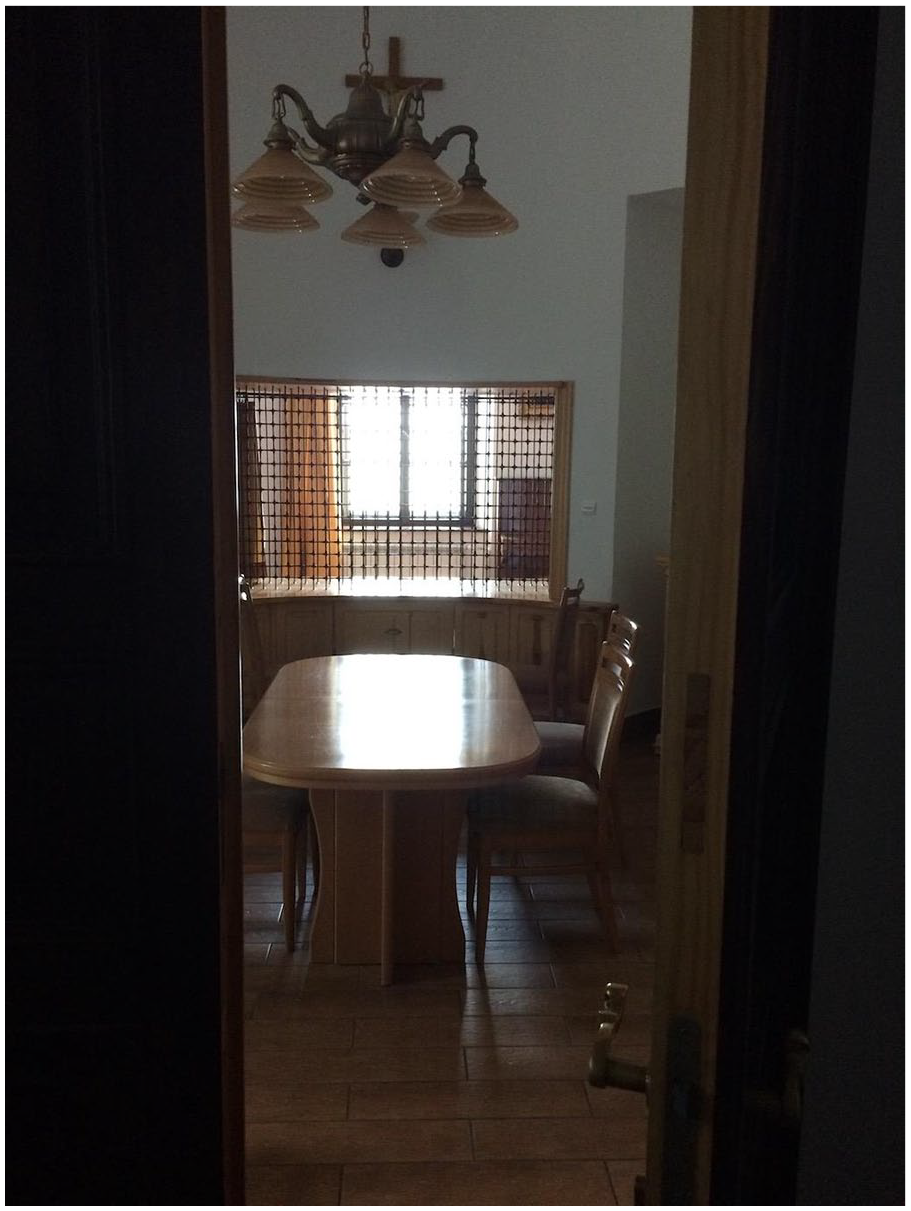
The ‘chat room’ (parlour) in the monastery where interviews were conducted.
The ‘chat room’, evokes institutional framing of interaction and the context of the discussion. It was not possible to perform observations in the cloistered parts of the monastery (where the nuns live). This institutional framing and collective discussion on the decision whether or not participate in our study (and perhaps further discussion between the nuns about the process of our study) may have impacted on the information that the nuns provided. The content of interlocutors’ narratives has to be interpreted in relation to identity politics which always takes place during each and every study and impacts on the data. We also sensed that talking to us – the familiar ‘outsiders’ – about their daily life was challenging to our interlocutors, which resulted not so much from their attitude to our study, but more from the general problem of the silent and mundane environment in which they live. The nuns confirmed that they do have difficulty in talking about what they do in their daily lives: Well, I have always had problems answering to people who ask me, ‘How do I do?’ Well, what can I say? That I recite the breviary, that I pray, and I contemplate? Actually, the pace of life in the monastery is very fast but there are no spectacular events. It is even very hard to depict it. The life here is, how to say it, monotonous, but not boring or tame. (B1)
Hence, our access to daily life practices was mediated – nuns showed us only what they wanted and how they wanted it to be seen. Sbardella is critical towards other, non-ethnographic insights into everyday life in monasteries: In studying monasticism, the field, as traditionally intended by the research community, is eventually misrepresented however. Whenever access is not granted, any type of encounter in the social actor’s daily life completely disappears, the only exception being the one that is mediated and controlled by the grating, leading to a fictitious relational situation. This controlled and binding situation takes place in a recreated border area, i.e., the parlour, which is not a living place after all: when access is granted, one has to deal with a unique field due to both the obligation to maintain silence, which is typical of these places, and the participatory conditions imposed by the nuns themselves. (Sbardella, 2014: 56)
It is, of course, true that what happens in a parlour is mediated and controlled, and that during interviews informants say only what they want to say, they do not talk about things that they wish to keep private. However, it does not therefore mean that nuns misrepresent daily life in interviews and that this results in fictitious data. Rather, they provide a limited and controlled representation of their life – the one that they choose to reveal and it may not necessarily be untrue. Let us briefly compare our findings with Sbardella’s comments on free speech among nuns to develop the argument here. In cloistered female monasteries individuals are taught and obliged to be silent most of the time and the period for what Sbardella calls free speech is limited to, as she recorded for the Carmelite order, 75 minutes of the total 1,005 minutes of daily activities. However, our interlocutors described these times as conventional and planned and called it recreation time which is an internal and official term: In the beginning, I treated it as mortification, because these conversations are not interesting . . . older people often say the same, the fifth time or the tenth time. Besides, it was for me a waste of time, that I am not with God. But after many years I understood that the recreation is the crucible of my sanctification, because while I am alone, I will not know myself, and when I’m with others, then everything comes out of me (S6).
The word ‘free’ did not arise during our interviews, nor any other suggestion that for nuns this was a time for speaking freely. It is also true they were critical about these events, saying that they were conventional, imposed and stuffy. So free speech is according to nuns, in fact, restricted and conventional, it is monitored as are other activities within the cloistered monastery, and as such is not a means of individual expression or individualisation, but rather a vehicle in the process of becoming a nun. From this point of view, one may clearly see how important it is to remove a nun from the controlled environment and to give her a place and time outside of it to allow for personal reflection on her life. Based on our research experiences, we would rather say that a parlour is a place of elicitation and interpretation, a breaking with the mundane, everyday routine (which includes routinised speech) rather than ‘a recreated border area . . . where a controlled and binding situation takes place’ (Sbardella, 2014: 56). The institutional framing is in play within a parlour, and yet the nun is partially removed from her community. Hence, we clearly see that our informants’ narratives are not false or artificial and in fact interviews in a parlour combined with participant observation inside the cloister, may triangulate and assist in bringing heuristic insights.
Since our study follows the structure of the case study it is necessary to depict the context in which the monastery under study functions. The number of women religious in Poland has dropped since the 1970s to 2015 by almost 6,000 to 20,000 which is similar to the situation in other European countries. However, in comparison the drop in number is smaller – the general decrease in Europe is 55 per cent from more than 550,000 to almost 250,000. This also translates into the drop of women in formation and the increase of the average age of women religious. However, this general tendency in Poland is true for the most populated, apostolic orders. Until 2012 there was an increasing tendency towards cloistered orders (where nuns dwell). In 2012 there were 1,355 nuns in Poland, while four years later 52 fewer. As for the situation of the community under study, nuns assessed the situation of recruitment as rather stable, however, they experienced years without new entrants. It must be noted that under the Communist regime women religious experienced severe repression which limited their social activities and they therefore focused their work on service within the parish. In addition, up until the mid-1950s more than a thousand women religious were interned in state-organised camps although they were later released. In 1989, the transition opened new possibilities for monasteries as the state then enabled religious orders, and the Catholic Church in general, to operate in the public sphere. The replacement of communism by capitalism has triggered deep societal and cultural changes – some of these changes have also affected cloistered monasteries which we show later in this article (there is no scientific article depicting and analysing transformations of functions of female religious orders in Poland after transition from communist rule, hence, we cannot compare our results).
Analysis of regulations in the cloistered female monastery: An institutional perspective
The monastic community that took part in our project is focused on contemplation and solitude. The monastery is not only a material site. It is also a place of realisation, a community of consecrated persons, collected within a single order (Cassidy-Welch, 2001: 48). Nuns usually do not leave the monastery and they do not perform activities in the ‘outside world’, yet they carry out artisanal activities within the confines of the monastery and sell their handmade products. They listen to the radio and from time to time they watch television (but only in relation to religious events such as the visits of Pope John Paul II). All nuns are allowed to surf the Internet in order to gather information on current events and to shop for the monastery (this means that they do not have to leave the confines of the monastery for food and necessities as they did before the Internet revolution).
The regulations of this way of living are numerous and differ depending on the religious order. The basic document concerned with the rules of living in a monastery is the Code of Canon Law. The most important regulations in the cloistered female monastery are: stability, charity, fraternity and vows of chastity, poverty, and obedience. Being a religious person requires adherence to the prescribed regulations of the order and making a permanent commitment to them which happens in a cloistered, separated place. Depending on the type of order, the enclosure may be strict or less so. In the case of our monastery the enclosure was the most strict – the so-called papal enclosure (1983 CIC Can. 667 §3) – which virtually isolates nuns from contact with most people outside the monastery walls, for instance, nuns need the superior’s permission to leave the enclosure and this may be granted in relation to specific needs such as health issues or the exercise of civil rights (Verbi Sponsa, 1999: 17 §1). The enclosure is a very means of regulating nuns’ life, yet for them it is seen as positive since it helps them reach their communal and religious goals: In fact, an enclosure serves as a means of repressing stimuli from the outside world which distract. Walking down a street we see advertisements and meet a lot of people. And whether we like it or not we perceive it, our senses register it. The purpose of the enclosure is to isolate us from these stimuli, but not to enclose us in our world; it allows us to focus on the One, on God, and thanks to it to see though His perspective on the world. (S4)
Traits of cloistered living contribute to the mundane and repetitive pace of life within the monastery as depicted above. However, the regulations that structure it are not fixed in time – they have evolved in recent decades, imposing adjustments and re-assessment of previous practices, introduced under the term renovation by the Second Vatican Council (Vatican II, 1962–1965). To this day, the Church continues the work of Vatican II. 3
Sociologists who focus on religious orders state that the most recent (post-1960s) regulations are one of the factors that contributed to the contemporary crisis of the phenomenon (Wittberg, 1994). Sociologists assume that the Council reduced the unique value of religious life in the eyes of both secular and religious people, since the reforms defined all Christians (not only consecrated persons) as seeking sanctity, and depicted religious life as directed towards the world. These losses are not compensated by either a reduction in the cost of this demanding life style or rewards for them in the secular sphere (no increase in prestige, in fact, a partial decline) (Finke and Stark, 2000).
Looking at these reforms and their consequences from a wider perspective, one may say that living in an enclosed monastery is perhaps mundane in personal experience, but institutionally it has evolved.
Discussion of collected data
Introducing an everyday life perspective for the study of religious orders allows for an unveiling of the personal attitude of nuns towards institutionalised practices and a revelation of the subtle transformations that occur within the cloister. As a result, this mundane, predictable and repetitive holy space reveals its dynamic and vital side; allowing a quest towards agency within a highly regulated environment.
Formation and production of religious selves
Thinking about cloistered living one may, as Goffman did, imagine it as a prison: solitude, restriction of space, bodily discipline, obedience, refraining from eating. This life is highly routinised and predictable, and it has its repetitive rhythm of waking, praying and eating. Every nun has her own cell which other nuns may not enter. The vow of poverty requires that nuns do not own personal objects, they may possess them only temporarily and use them according to a specific need, for example, nuns who can sew use sewing machines.
Nuns are totally aware of this understanding of their lifestyle. According to them, this is the faith that makes this form of living meaningful. Hence, total separation from the world is for the nuns understood in a positive light – the cloister facilitates the realisation of religious goals and produces conditions favourable for achieving unity with God which – according to monastic tradition – may only be accomplished by retreat from the world and abnegation of personal needs (Guillaumont, 1979). For nuns and monks, the world is not bad in itself – it is simply distracting. This is an institutional view which is shared and internalised by our interlocutors. Yet nuns expressed different comments regarding these ideas. Every Friday, nuns conduct acts of penitence, such as lying down with the cross, or kneeling with hands extended out of the cross, through the psalm: ‘Have mercy on me, O God, your kindness.’ Some nuns perceive these so-called external ascetic practices as undermining internal development: For me, the internal and individual ascetic practices are much more important. I do not think that the external practices have any deep impact on my life. Additionally, I think that it may happen – but I do not claim that it is the rule – that people who practice a lot of these external practices have in fact problems with their internal life and so they aim at mastering in ostentatious, external forms which are visible and recognisable by the community. (S2)
Nuns also affirm that the cloister, with its overarching regulations, does not automatically produce unity and harmony. One has to learn how to act in this environment and be cautious regarding the hazards born out of a mundane climate: After a few years of being inside the monastery there is a risk that our way of living would become only routine, which would reduce it to a set of external practices without the essence. (S2) Our life is inherently monotonous and at first, as someone enters into monastery, he is prepared for a very spiritual, full of prayer, and for experiencing certain positive feelings, associated with prayer and then after some time these feelings pass and the life of prayer, seven hours of prayer can be routine, something that is boring. (S4)
The whole process of formation (becoming a nun) aims at both retroactively and narratively uncovering God’s will and learning how to be a nun. Rebecca J. Lester, based on her ethnographic study in an active-life Mexican convent, introduces an informative definition. She stresses that it is ‘a dual process of deconstruction and repair that involves reorienting the phenomenology of embodied experience’ (Lester, 2005: 83). What is relevant here for us, it is not only the very definition of formation but also that it points to the very process of ‘working through’ or reconstructing the self, and additionally that it leads to the embodiment.
The formation is permanent which means that it is a lifelong process that never ends – a nun has to master the search for God all her life, she strives towards perfection in imitating Christ which she cannot fully accomplish because she is a sinner (cf. Lester 2005: 69). In comparison to Lester’s study which focuses on the process of becoming a sister in a very early stage of the novitiate, our study brings further details of how the life of a nun is experienced and performed while living this life for many years. It shows that embodiment and creation of the religious self does not lead to suppression of other spheres of experience such as emotions, feelings and reflections and that even nuns who have lived in a cloistered monastery for 30 years or more do not translate all that they experience into religious categories. It also does not mean that one is purified from doubts or hesitations. For instance, after more than ten years after her vows the nun S5, who had been a PhD candidate but did not finish her studies, still comes back to the choice that she had to make: It is about choosing something that you love more. But, frankly speaking, it is sometimes hard for me because I think that the former life was also for me and if it were only up to me, I would have chosen it. But God has different plans for me. Sometimes it is hard for me because I loved my studies. I just seek to love God more. (S5)
Another relevant issue is related to the dichotomy of obedience and autonomy. Nuns limit their personal autonomy which results also from the counsel of obedience – a nun must obey a superior’s orders and will. Is a nun (disconnected from the world, following God’s and her superior’s will and living in a highly regulated institution) still an autonomous individual? Talal Asad (1993) analysed the question of discipline in the monastery in the context of power. His detailed investigation into the phenomena shows that monastics are not simply fully controlled individuals or objects of power (which is in line with Lester’s argument). In fact, that very power is creative – it produces religious selves. Also, obedience does not repress individuals because it is a virtue towards which one voluntarily moves in order to imitate and approach God. As he claims, ‘the overall aim of this monastic project was not to repress secular experiences of freedom but to form religious desire out of them’ (Asad, 1993: 165). The metaphor of the prison with open doors, which he evokes after St Bernard, is highly illustrative in supporting the thesis that the disciplina is ‘not merely in the keeping of order among inmates’ (1993: 126) but in producing individuals who treat their condition as a virtue, as something desirable. Hence, according to Asad, that process is not domination or manipulation ‘but instead is creating a new moral space for the operation of a distinctive motivation’ (1993: 144). Our study supports these conclusions. Nuns perceive themselves as autonomous, since an individual may ‘be obedient yet rational and free’ (S4). Hence, following strict institutional rules resulting in limited personal autonomy, is also a process of production of religious selves; this limitation is also the expression of their choice of renunciation and flight from the world and as such is the expression of their agency. Our study shows in detail not only how the agency is being produced, but also how it is being performed and understood. For instance, nuns claim that this is emotional immaturity which is hazardous for forming a religious identity because an immature individual would invest herself in emotional relations and omit the divine dimension.
‘Loud’ individual life in a ‘silent’ community
In a cloistered monastery, nuns are separated from the world. This separation is practised both within the community and at an individual level. Nuns remain silent for most of the day – they have only two hours for chatting with each other. However, mute interactions are also socially ‘loud’, since they provoke reciprocal, silent reactions. Nuns learn body language: If I pass someone in the corridor, I can know if she has a good mood or a bad mood . . . So really being together all the time, we know each other really well, we know each other from the inside, so if there is some difference in personality, if conflict situation occurs . . . if it is hard for someone to tolerate someone else, it just breaks down for life. (S2)
In the ‘space of silence’ (S2) nuns must collaborate in order to complete different tasks, for instance, tasks related to the economy of the monastery. Nuns produce religious figurines for sale and in order not to talk during work, they divide the production process: one paints, other models etc. It takes time to adapt to this form of living. According to a nun (aged over 80 years), one needs five years to understand how to live in such a silent community. Living in communal silence does not mean that a nun is mute inside. On the contrary, the external silence is a way of reaching the internal ‘loudness’ – hearing God’s voice. Nuns stress that internal ‘loudness’ is both a religious and emotional pulsation.
Entering the external silence, one stays alone with her internal, emotional life – feelings and imaginations . . . ascetic work leads to domination over feelings and the imagination by rational elements. And in female cloistered life the problem is often that women are inherently more emotional and cutting them off from these external stimuli results in accumulation of feelings . . . which seek for a way of getting away . . . this is the formation process that leads to the naming, regulation and disciplining of them, so they do not disturb prayer nor community life. However, here conflicts mount easily. A person goes into her individual cell where the whole situation is being experienced again. It can grow in her, there is no place, no outlet, she will not go for a walk, she will not watch television or talk, so she must work it through by herself (S4).
Religious ‘loudness’ may also be called the very goal of the nuns’ life which is being reached by the monastic practices. The prayer is both communal and individual. The prayer is described in the regula and the constitution. The communal prayer is based on joint reading and recitations. The individual prayer is internal, private and takes the form of individual talking to and relating with God. Yet, in fact, this prayer happens all the time and, as a result, creates ‘a life in prayer’ (S3) or ‘a life as a prayer’ (S5), a state of existence which erases the distinction between sacrum and profanum and allows for becoming a fully religious person. It also constructs an individualised space for meeting with God and, thus, a particular place of agency: ‘Prayer is talking to God [. . .] I feel close to Jesus Christ, I feel His presence’ (S7).
Both forms of prayer are also the main ‘work of a nun, yet unpaid one’ (Prioress). It means that in their prayer nuns address God to help resolve concrete problems which are formulated by the concrete faithful (sending his or her query to the monastery via emails, texts, telephone calls or written on paper) or are being deduced by nuns from the media (they read newspapers, watch the news, and surf the Internet to acquire topics for prayer). The prayer is said to have a transformative power – thanks to God it changes the world by concrete interventions but also is a means of development of a nun in her quest towards God. As one nun says: ‘I came to the monastery with a vocation of calling for sinners and priests. If sinners act as they act, this is our [nuns] fault and we have to improve our prayer’ (S6).
Hence, the monastic life may seem monotonous, but it is also both challenging and changeable. It requires planning and management to comprise all duties.
On the one hand, this life is for me, I think so, all the time each new day brings new questions on work, over yourself, new things to reflect on and to work through. On the other hand . . . I seek to understand where this life leads me, how it functions. I mean, I am happy, I want to answer God in this way, I try, but I also see that due to different circumstances which occur here you have to be flexible and disposable. Basically, I do not know if it can be called this way, there are two opposites connected – on the one hand we live according to the plan of the day, there is a time for this and for that, and on the other hand it is always new and all the time I seek to look at this as on challenge which demands awareness of the threats to spiritual life. (S3)
The challenges of the cloistered life are recognised at the institutional level. Not everyone may become a nun – these are mental disorders and ‘psychological weakness, depression, excessive focus on oneself, effeminacy, a spinster personality who always blames everyone’ (Prioress) – these may eliminate an individual from embarking on this form of life because ‘the cloister would deepen it all; it may harm these individuals . . . due to its repetitiveness’ (Prioress). Eventually, the nuns stress, these individual problems would affect the entire community. This is why a candidate undergoes physical and psychological tests which assess her suitability for the cloistered life. In contrast to the stereotypical view, it is for ‘dynamic individuals. For those who have a strong personality, who know what they want and are determined to follow it’ (Prioress).
These rather demanding conditions should be interpreted in the broader context which we elicited at the beginning of the article – the general drop in number of women religious in Catholic orders. According to our interviewees, the decline is a result of general, cultural changes which they describe as an increase in individualisation and consumption, the crisis of the family and a decrease in enthusiasm for self-sacrifice. Interestingly, this is how they also view the new generation of nuns (born between the mid-1980s and 1990s); it is not only in the lifestyle of the outside world. On the one hand they are too individualised to merge seamlessly into monastic routine, but on the other, which is seen as a positive impact of the changes, this form of life now attracts more and more people who consciously choose this way of life for personal and not social reasons. We mean that from the second half of the 19th century until the 1960s, entering a female religious order was for many women a way of establishing a career in the public sphere and achieving a rise in social status. In the second half of the 20th century new, and secular, career and social paths have opened for women which are clearly competitive with religious ones. Yet, it is not a case of cloistered orders not offering work in the public sphere. In the reference to the Mexican context, Lester, who focused on an active-life order, says that what attracts some women to it is the promise of ‘self-discovery that enables them to work through certain personal conflicts within the context of their religious training’ (Lester, 2005: 231) and that the decision to enter the monastery also seeks to deal with the contemporary cultural tensions concerning models of femininity. Women to whom we talked also acknowledged that they construct their religious selves in strong contrast to the contemporary hyper-individualistic culture, even though it was also raised by those who entered the monastery during the communist era.
That ‘hyper-individualistic culture’ creeps into the monastery with a new generation of nuns who represent new cultural norms and as a result they provoke intergenerational conflicts. Nun S4 highlights that our contemporary consumer culture produces individuals who cannot restrain and subject themselves to the rigours of communal life. The counsel of obedience is at the very centre of this conflict. A new generation of nuns seeks to understand a duty before they observe it. As a nun (S5) expresses it: ‘Well, I have a problem with it (obedience), I come from the mountains, so I have to have a neat answer to my question, and here, however, one needs to be quiet’ (S5).
Connection and acceleration of the cloistered life
The previous analysis reveals that in order to comprehensively present the cloistered life, one has to supplement its mundane and repetitive form with individual and communal dynamics, which sometimes provokes intra- and interpersonal conflicts. Yet, contemporary transformations of cloistered living result not only from the presence of a new generation of nuns which brings a new dynamic to the monastery. The outside world slowly penetrates the cloister by other channels which are mostly related to new communication technologies. In a cloistered monastery nuns not only listen to the radio and watch television, but also have the use of computers and access to the Internet, and some of them, mostly prioresses, mobile phones. Cloistered nuns pray for the world and for the Church and in order to do so they need relevant information on current events provided by the means of communication technologies. However, their use is restricted.
In the monastery and under scrutiny, nuns have access to the Internet but not all of them know how to use it. The Internet has had a double-sided impact on monastery life. On the one hand, it helps to distance the monastery from the world, for example, nuns shop online and the purchased products are delivered directly to the monastery and they also sell their own products online – in both cases they do not have to go out and they can limit their contact with other people. Nuns also appreciate email communication which they find easy. On the other hand, they assert that communication technologies should be treated responsibly, since it can easily augment contact. The prioress allows the use of the Internet and delegates the responsibility of that use to the nuns: ‘I think that it is very good, that she leaves us this freedom, but you just have to watch yourself’ (S5).
Access to the Internet not only facilitates contact, it quantitatively increases it. However, it is just one of the elements contributing to a feeling of accelerated pace in the monastery, a feeling which is shared by the older nuns: Fast lifestyle has penetrated the monastery. We do online shopping, or we write emails . . . We sell figurines. It was not like this before – we were giving presents, not selling. The life was slower, more contemplative, and now it is just like at checkout . . . I dream of that spiritual life from the 80s, because it was a little slower and I could find myself there, but it’s gone . . . and I have to think about what I must do . . . just like you in the world too. (S6)
Conclusions
Even though cloistered life is highly routinised, imposing obedience on individuals, it does not de-individualise and totally regulate the nuns. It may be understood as a process in the production of religious individuals. Hence, it should not be surprising that focusing on everyday life in a contemplative monastery reveals that nuns not only observe regulations, but they are also reflexive towards the practices of everyday life, questioning both the institution and the community within it. Additionally, sharing the perspective of these social actors allows for a realisation that for them, a mundane and repetitive environment is also lively – beneath the exterior silence there is an individual, vibrant, spiritual, emotional life. Hence, viewing monastics from ground level (even though this is not as ethnographic as it might be) creates a space where they may speak freely and allows for the understanding that they are not just passive receivers but are in fact, active subjects. However, we are not celebrating here the discovery of autonomous individuals living in a highly regulated environment – yet, this point is also relevant when we take into account sociological interpretations of the cloistered monastery (like Goffman’s ‘total institution’), its popular views, and the legacy of Enlightenment, defining individuals as free and unfree, and splitting reason with faith. We are aware of the fact that they are being disciplined and as human agents they are yet both sovereign and subject. Our point here is that (1) in the monastery, control is being translated into religious agency and into the formation of religious selves, and (2) there is still room for individual, emotional, and religious loudness which evades control. The second conclusion distinguishes us from those scholars who, like Asad, focus primarily on power relations which, in their view, colonise every aspect of living. In our case study we see that they are, of course, in play and that they are productive, effective and not only suppressing, but we also notice the sphere beyond power relations which we call here the internal, multivocal ‘loudness’. From this perspective we may see nuns as actively manifesting against the world around and seeking to transform it by setting an example to outsiders. Their religious tools, prayer and contemplation, are the very means of combating mounting individualism. However, the line between autonomy and hyper-individualism is vague, since we also observe the increase of individualism inside the monastery – this is not only the case of the new generation of nuns, but also of the comparison of internal practices, such as meditation and individual prayer, with external practices, understood by nuns as outdated and even obstructive in the deeper development of the religious self. Perhaps this form of protest against contemporary culture together with the transformative, not repressive, power of the cloistered monastery is a magnet for some women and accounts for the stable situation of the number of nuns in comparison to sisters who – due to conducting active lives in the world – are less radical.
Additionally, these ‘outside the world’ institutions remain in constant reference to the world they avoid. It is clearly visible, not only in institutional regulations issued as responses to new challenges, but also in an everyday layer of life – new generations of nuns and new communication technologies challenge institutionalised routines and stimulate these transformations.
Footnotes
Acknowledgements
We would like to thank the nuns who collaborated with us on this project.
Funding
The article was financed with the resources from the National Science Centre (Poland). Decision number: UMO-2016/21/B/HS6/01057.
Notes
Author biographies
Address: Cardinal Stefan Wyszyński University in Warsaw, Faculty of Humanities, ul. Dewajtis 5, 01-815, Warsaw, Poland.
Email:
Address: Department of Culture, Politics and Society, University of Turin, CLE, Campus ‘Luigi Einaudi’, Lungo Dora Siena 100, 10153 Turin, Italy.
Email:
Address: Cardinal Stefan Wyszyński University in Warsaw, Faculty of Humanities, ul. Dewajtis 5, 01-815, Warsaw, Poland.
Email: