




Abstract
In studies seeking to understand cultural and institutional influences on the division of domestic labor, religion has often been left out of the picture in favor of economic, gender and welfare state context. By examining men from 34 countries using 2012 International Social Survey (ISSP) data this study explores the ways in which religion is associated with men’s household labor participation. We utilize individual measures of religiosity as well as cultural zones based on religious and cultural similarity to analyze the effect of predominant religion and religious participation on men’s housework. Differences emerge between men by religious tradition, level of religious attendance, and across cultural zones. Contrary to expectations, we find increased religious participation at the individual and cultural zone levels associated with greater participation in some housework tasks and time spent on housework, though the findings show great variation by task and religious tradition. Our findings indicate two potential paths leading to men’s increased housework participation: a nonreligious, egalitarian one, and a religious, family-centered one.
While men have increased their share of housework significantly over the past 50 years (Bianchi et al., 2012), discussions of a ‘stalled’ gender revolution (England, 2010) highlight continued inequality in the division of labor between heterosexual partners. Some even consider this as a sign of ‘the second half of the gender revolution’ (Bernhardt et al., 2008). Comparative research on housework has identified the complex structural and cultural factors that further our understanding of housework allocation processes (Fuwa, 2004; Fuwa and Cohen, 2007; Geist, 2005; Geist and Cohen, 2011; Ruppanner, 2009; Stier et al., 2001). However, the impact of religion on the domestic division of labor has not received much attention. At most, individuals’ religiosity has served as a proxy for traditional ideas about gender, and research has focused primarily on adherents of Western Christianity, especially Protestantism (Apparala et al., 2003; Bernhardt et al., 2008; Bianchi et al., 2012; Treas and Lui, 2013; Voicu et al., 2007).
The goal of this article is to explore how religion shapes men’s participation in housework at both the micro and macro levels. Aside from exploring differences in individual religious affiliation and participation, we are interested in the ways religion shapes societal norms and serves as the basis for distinctly gendered understandings of acceptable conduct regarding home and family care tasks net of individual characteristics. The focus on macro-level forces’ influences in the home is in line with the research that has examined the independent role of welfare states on housework (Geist, 2005).
Research on housework has often focused on women or couples. Our focus on men’s participation will examine a potential mechanism underlying the stall in the gender revolution: how religion functions at the individual and institutional levels to shape men’s understanding of their appropriate role in domestic labor among heterosexual couples. We examine men’s housework patterns throughout the world to better understand how and to what extent both individual religion and macro-level religious context influence men’s involvement in household chores and meal preparation. We introduce cultural zones as a novel way of exploring macro-level religious influence on men’s participation in housework (Cole, 2016) in an effort to show that religion’s influence goes far deeper than individual belief and affiliation; countries’ predominant faith traditions should be viewed as major sources of societal structure and culture norms which affect couples’ division of domestic labor (Stark and Finke, 2000).
Our study expands existing research in three crucial ways. First, we examine the role of religion in men’s housework performance. Second, we do so in a comparative perspective. Third, we use a novel conceptualization of religious context, that of cultural zones.
Below, we briefly summarize the importance of religion for understanding gendered family relations, and we outline dominant explanatory frameworks for the gendered division of labor alongside a discussion on the way religion is expected to shape domestic labor patterns.
Background
The influence of religion on gender and family
Religion is an underexplored sociocultural factor in explanations of differences in domestic labor participation between countries that possess similar welfare regimes and levels of development (Klingorová and Havlíček, 2015; Seguino, 2011; Voicu et al., 2009). This article will shed additional light on religion’s role in shaping men’s housework performance by examining data from countries representing a variety of religious traditions, including some whose residents primarily identify as non-religious.
Despite significant shifts away from participation in institutional religion in recent decades, religious collectivities remain strong sources of identity and provide important support for the development of individuals’ beliefs and values (Meintel, 2014; Pessi, 2013). Religion has historically been one of the strongest forces shaping the development and continuation of inegalitarian gender norms and family patterns (Kalmijn et al., 2003; Pankhurst and Houseknecht, 2000). All major world religions originated in patriarchal cultures and contain frameworks, hierarchies, doctrines, and practices that reflect these origins (Klingorová and Havlíček, 2015). While some denominations have opened their leadership ranks to women and revised or expanded upon teachings and doctrines that have historically excluded women from positions of power, others have remained true to their patriarchal past. After controlling for other possible factors, religious devoutness emerges as the primary factor in predicting traditional gender role ideation (Herzog and Bachman, 1982; Morgan, 1987).
The relationship between conservative religious affiliation and traditional gender attitudes has been studied extensively. Members of conservative Christian and orthodox Jewish denominations are more likely to espouse inegalitarian gender ideologies than their liberal and reform counterparts (Peek et al., 1991; Hardacre, 1993). Conservative Protestant denominations, from their pulpits as well as in their written works, promote traditional gender ideology, known as ‘complementarianism,’ and create religious cultures in which breadwinner/homemaker roles are imbued with divine significance (Ammons and Edgell, 2007; Read, 2003). Conservative religious women in the United States show lower levels of labor participation, earlier marriage, lower scores on measures of gender egalitarianism (Glass and Jacobs, 2005) and greater involvement in housework and child care (Ellison and Bartkowski, 2002).
Yet complementarian gender ideology and reduced male participation in household labor may not be directly linked. A number of conservative Christian organizations, as exemplified by the Promise Keepers, promote versions of masculinity which encourage men to spend more time in the home and develop qualities such as nurturance, cooperation, and expressiveness (Bloch, 2000; Ellison and Bartkowski, 2002; Glass and Jacobs, 2005). These organizations pointedly critique men who ignore their responsibilities at home, although these responsibilities center more around relationships than around participation in housework. Ammons and Edgell (2007) find that the activities these religious men engage in do not seem to include increased participation in tasks around the home. The effect of religiosity on housework participation is a central focus of this study.
Researchers have noted that more information is needed in order to expand the understanding of what religiously conservative men’s increased family involvement looks like in practice (Bartkowski and Xu, 2000), while a considerable body of literature has developed around the study of conservative religious women’s experiences juggling work and family obligations (Ellison and Bartkowski, 2002; Civettini and Glass, 2008; Ammons and Edgell, 2007). Existing work on religious men’s housework involvement is primarily focused on conservative or evangelical Protestants in the United States; Voicu et al.’s (2009) work in a European context is a notable exception.
This article recognizes the importance of studying men’s religiosity as a crucial factor in understanding the context within which couples structure their domestic division of labor arrangements. Half of the picture is left blank if only women’s religiosity is considered as a factor affecting couples’ housework, yet study after study has ignored men’s religiosity – their belief, belonging, and attendance – as a factor shaping their involvement in housework. Whether religiosity attenuates or increases this involvement is largely unknown.
Established determinants of the domestic division of labor
The gendered division of household labor remains an actively researched topic (Bianchi et al., 2000; Geist and Cohen, 2011; Singelmann et al., 1996). Three main areas of explanation have emerged in the micro-focused literature on household labor: ‘doing’ gender, time availability, and relative resources. The gender perspective on the division of household labor says that women and men ‘do’ gender when engaging in housework. The household chores they select and the amount of domestic work they participate in are part of a gendered performance which reinforce ideal notions of appropriate gendered behavior (Aassve et al., 2014; Bianchi et al., 2000; Greenstein, 2000; South and Spitze, 1994).
The time availability perspective focuses on how differences in men’s and women’s participation in paid work affect their contributions to housework. The greater the time spent in paid work, it is hypothesized, the less time spent on housework. Many studies find that the more hours women spend in paid labor, the fewer they spend engaged in household chores (Aassve et al., 2014; Knudsen and Wærness, 2007; Mannino and Deutsch, 2007; Pinto and Coltrane, 2009). Men’s share of household labor also rises when their partners enter the workforce, although not enough to fill the gap left by their wives’ decline in participation (Cunningham, 2007; Kroska, 2004; Noonan et al., 2007).
The relative resources perspective posits that the division of domestic tasks is heavily influenced by power dynamics within the household. Men’s breadwinner status has traditionally left women with less bargaining power in the realm of household duties (Acker, 1988; Brines, 1994; Lennon and Rosenfield, 1994; Sorensen and McLanahan, 1987). There exists a strong association between increased economic participation, relative earnings, and the development of egalitarian gender attitudes in women (Cunningham, 2007).
Men’s housework
In many regions of the world, men today perform a larger share of housework than their predecessors (Bernhardt et al., 2008; Bianchi et al., 2012; Moon and Shin, 2018; Treas and Lui, 2013). Despite this overall increase in domestic labor participation, the cross-national trend of male participation is neither continuous nor linear. Men in many Western nations have begun to close the gap with women in number of hours spent on domestic labor (Altintas and Sullivan, 2016; Bianchi et al., 2000; Treas and Lui, 2013), yet women’s share of domestic labor in the United States is still 1.6 times higher than men’s (Bianchi et al., 2012). Thus, despite a general movement towards greater equality in housework among Western couples, significant cross-national variations, as well as a distinct gender gap in men’s housework participation, remain (Altintas and Sullivan, 2016; Sayer, 2016).
As men are encouraged to assume more active roles in home and family care, the demands on their time grow (Kilkey and Perrons, 2010). Men today are increasingly expected to complete a greater number of tasks than their predecessors, including paid and unpaid work. Yet the types of household work traditionally marked as ‘masculine’ primarily consist of tasks that are not time-dependent, such as household maintenance, yard work, small repairs, and cosmetic improvements (Cancedda, 2001; Kilkey and Perrons, 2010). Therefore, the so-called ‘male time squeeze’ largely involves tasks that are much more amenable to outsourcing than those involved in the female time squeeze, which are performed on a routine, often daily basis (Blair and Lichter, 1991; Quadlin and Doan, 2018).
Comparative housework research
Contextual factors, beyond individual and couple characteristics, also play an important role in understanding housework patterns. In comparative studies of the domestic division of labor, a number of dimensions have been identified as relevant. Treas and Lui (2013) summarize that women’s empowerment and employment, the market for domestic labor, states and policy contexts, prevalent family patterns, and cultural influences matter. Research on the role of policy context, welfare state, or level of gender inequality typically encompasses several of these dimensional policy patterns and gender empowerment are linked to empowerment.
Cross-national differences in housework patterns remain pronounced (Geist and Cohen, 2011). Attempts to understand the link between culture and housework have been relatively scant, beyond studies that have used aggregate measures of attitudes as a proxy for culture. Gender specialization, gender equality, and socioeconomic inequality have emerged as essential factors in predicting the establishment of social norms involving housework participation (Treas and Lui, 2013). However, the influence of religion as a primary source of these norms has yet to receive its due in either the literature on housework participation or religion.
Research by Voicu et al. (2009) into housework division among European countries suggests that in predominantly Catholic and Orthodox countries, the domestic division of labor is less equal than in Protestant countries. Regional differences in religious culture and their impact on the division of household labor is one area in the complex nexus of structural, institutional, and cultural influences that has been understudied up to this point, and with which this article will engage.
Religion and national culture
Religion should be studied as a powerful organizing social force in order to better explain how countries’ dominant religious traditions have differentially shaped their cultures and institutions. One way of conceptualizing religion’s influence is through Cole’s (2016) schema of cultural zones. These cultural zones categorize countries by similarity of religious tradition and historical experience as well as geographical location. Building on earlier attempts at the construction of cultural zones (Huntington, 1997; Inglehart, 2010; Welzel, 2013), Cole’s zones take an empirical rather than purely historical approach to the assignment of countries into categories of primary religion by using data from the World Religion Dataset (Maoz and Henderson, 2013). By combining religion, level of development, and recognition of colonialism’s historical influence, cultural zones provide a hitherto unused schema through which to incorporate religion into the study of the division of household labor.
Based on existing research on religious participation and affiliation and differences explored across cultural zones, we posit the following hypotheses (net of other individual characteristics):
H1a: Increased religious participation by men will be associated with lower levels of involvement in housework.
H1b: Men’s participation in housework will vary across religious traditions, with those involved in conservative traditions (which emphasize traditional gender ideologies) reporting lower levels of household labor sharing.
H2a: Men’s participation in domestic labor will vary across cultural zones.
H2b: Based on existing research on contrasts between Protestant, Catholic, and Orthodox countries, we expect that men in Western Protestant countries will be more involved with housework than those in other cultural zones.
Methods
Data
We use data from the International Social Survey Programme (ISSP)’s module, ‘Changing Gender and Family Roles IV’ (ISSP Research Group, 2012). In the United States, the ISSP modules are attached to the General Social Survey (GSS). ISSP member nations now number over 60, but not all nations participate in every survey. The 2012 survey was administered in countries across Africa, the Americas, Asia, Europe, and Oceania. Sample collection varies by nation and consists of simple random or stratified random samples (see ISSP [2012] for details on survey mode and sampling strategies). Participating countries represent varying levels of economic development, dominant religious traditions, and welfare state regimes. Our study focuses on men who live in households with a female partner, resulting in a sample size of 10,619 men from 34 countries where all key measures were included in the survey (See Table 1).
Cultural zone and frequency of countries (N=10619).
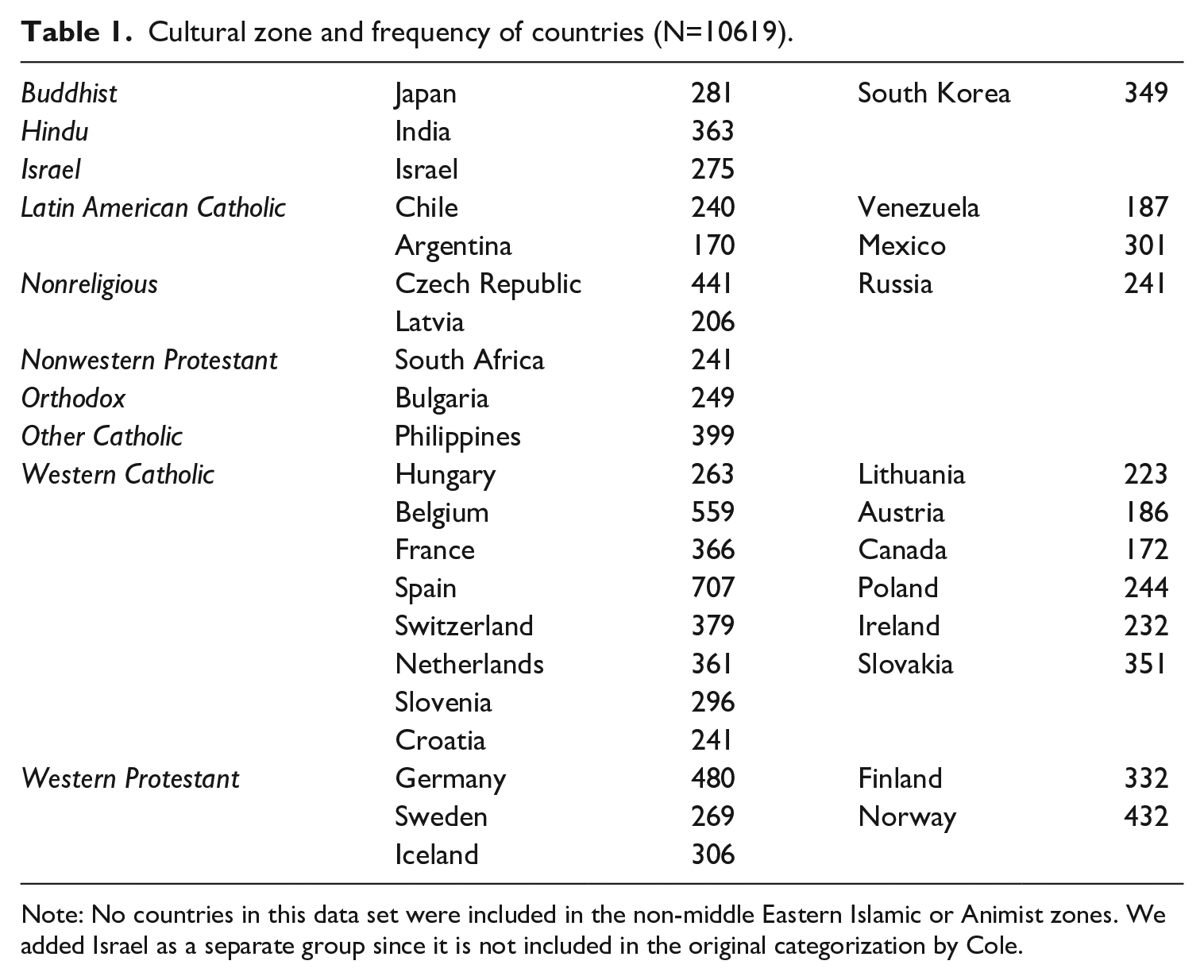
Note: No countries in this data set were included in the non-middle Eastern Islamic or Animist zones. We added Israel as a separate group since it is not included in the original categorization by Cole.
Dependent variable: Men’s housework
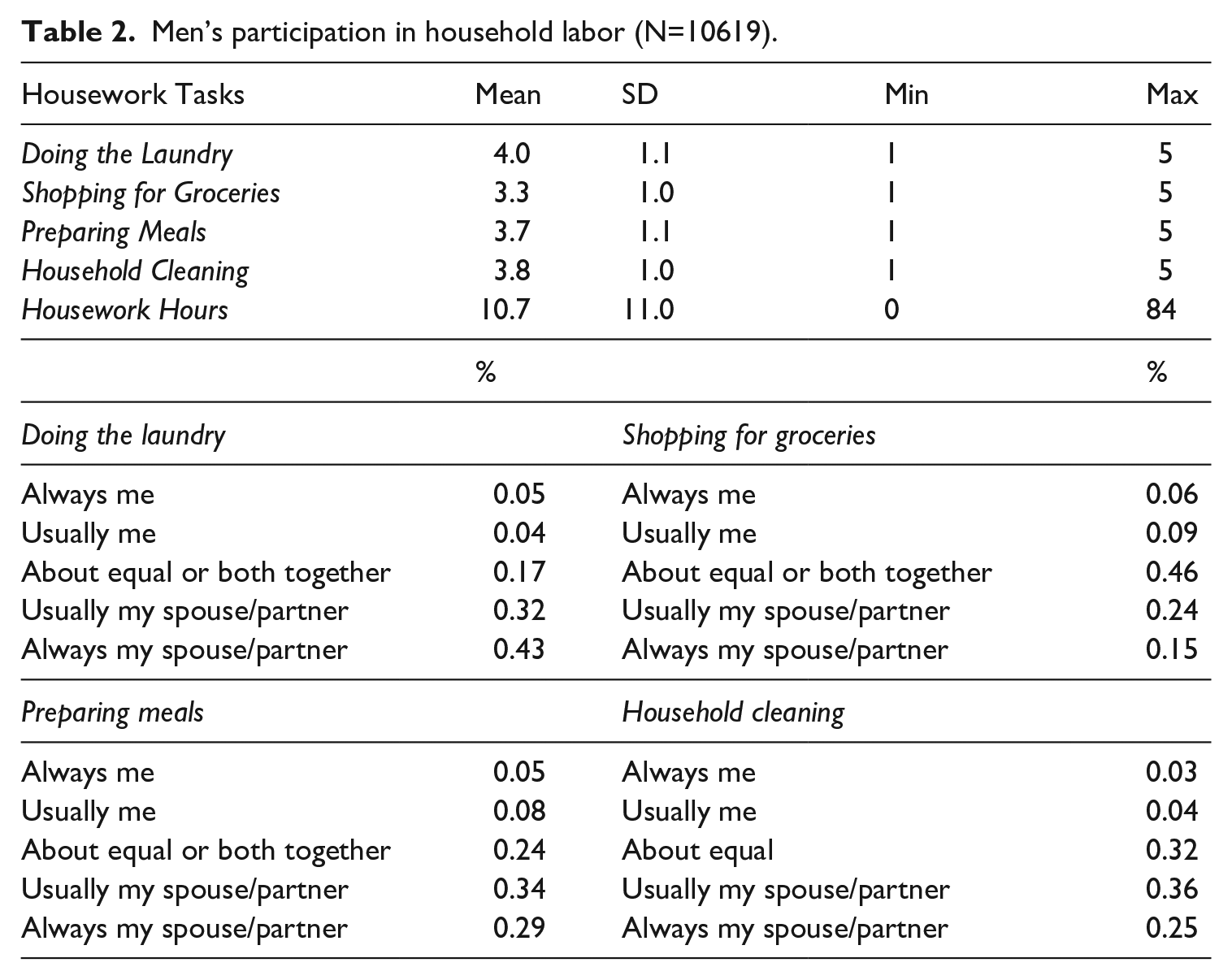
We focus on men’s share of regularly occurring household tasks as well as the time spent on housework. Participation in specific types of household labor is measured by the question, ‘In your household, who does the following things?’ Sub-questions are then asked about participation in laundry, grocery shopping, meal preparation, and household cleaning, with participants responding on a 6-point scale ranging from ‘Always me’ to ‘Always my spouse/partner.’ The response option ‘I pay someone to do this’ was re-coded as the equivalent of ‘About equal/both together.’ We also include a measure of the number of hours men report spending on hours per week (see Table 2). As with the division of labor, this is not a perfect measure, but we are confident that assessing both a relative measure and a time-based measure can give a good understanding about the association between religion and men’s housework.
Men’s participation in household labor (N=10619).
Key independent variables: Religion measures
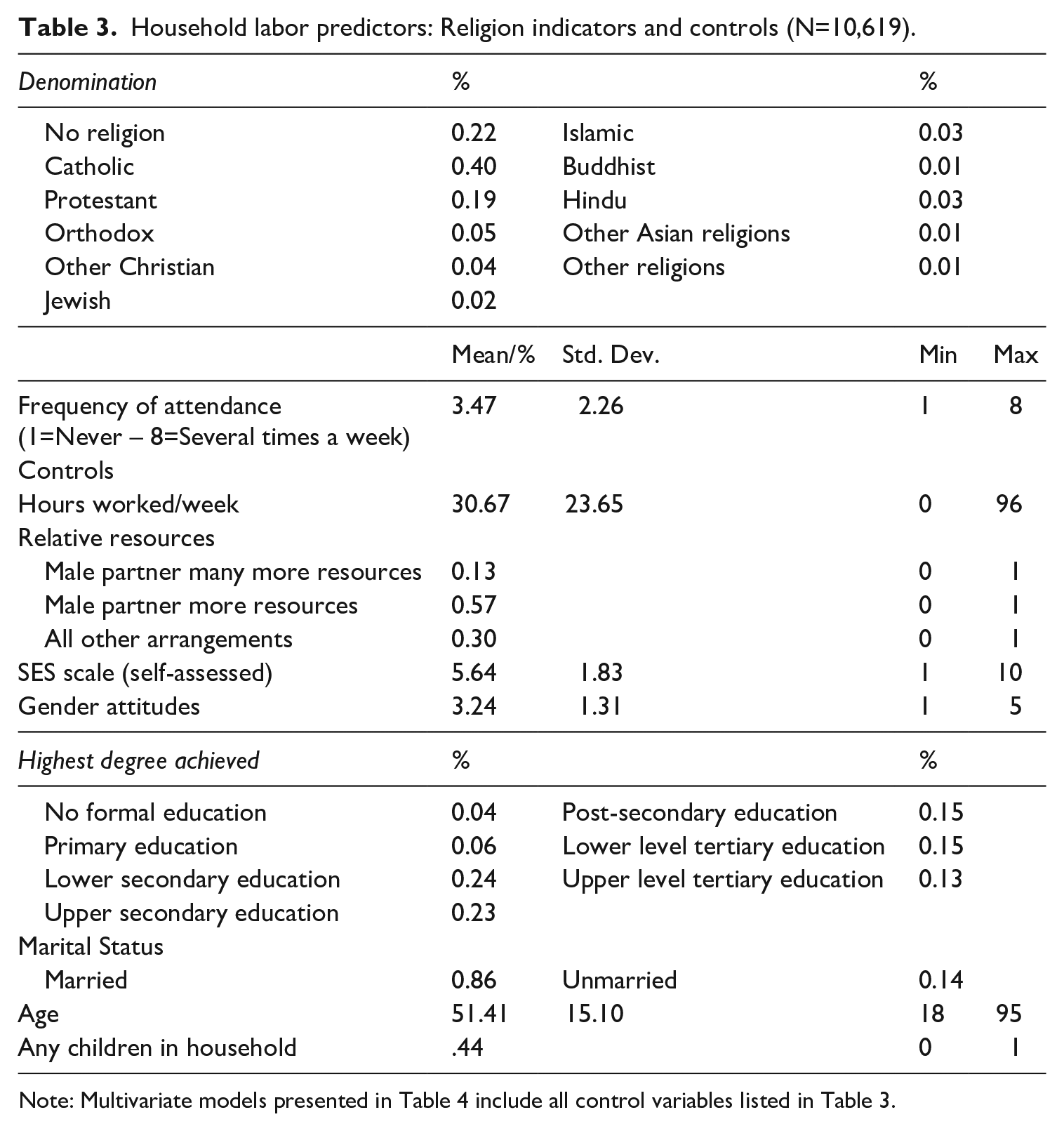
Men’s religious affiliation is determined by the following question, with slight variations in wording across countries: ‘Do you belong to a religion?’ Religious involvement is measured by the question: ‘Apart from special occasions such as weddings, funerals, etc., how often do you attend religious services?’ Participants selected from a 1–8 scale, with (1) equaling ‘Never’ and (8) ‘Several times a week.’ This measure, while imperfect, shows men’s degree of participation in their religious community, as well as a certain level of exposure to that religion’s beliefs and values (Ammons and Edgell, 2007). Thus, this measure of exposure and involvement is a good indicator of the degree to which men have internalized religious teachings and accept the worldview presented by their religious tradition (see Table 3 for descriptive statistics).
Household labor predictors: Religion indicators and controls (N=10,619).
Countries are grouped into cultural zones based on religious and cultural similarity and geographic proximity. We follow Cole’s (2016) categorization of countries in our sample, which consists of 12 distinct zones: Animist, Buddhist, Catholic (Latin American), Catholic (other), Catholic (Western), Confucian, Hindu, Islamic (Middle Eastern), Orthodox, Protestant (non-Western), and Protestant (Western). Although not included in Cole’s schema, our sample also includes Israel. We include Israel as a separate category because of its status as a unique religious and cultural civilization (Huntington, 1997). See Table 1 for a list of countries by zone.
Controls
We include controls to account for the three dominant approaches used in housework research. To assess time availability, we include a measure of average hours worked for pay per week. Individuals who are not working for pay were coded as working zero hours, with a maximum of 96 hours per week. For relative resources, we categorize respondents based on respondents’ and partners’ self-reported income: spouse has no income and the respondent is the sole provider; respondent’s income is much higher than spouse’s; and other, which includes the spouse being the sole provider and both partners contributing equally or neither partner reporting income. We also included a self-reported measure of socio-economic status on a 1–10 scale. Respondents are asked to situate themselves at the top (10) or the bottom (1) of their country’s economic strata. For the United States, this measure is not available. Instead, we calculate individuals’ decile placement in this country’s distributions for individual and household income, which we then use as a proxy of the self-reported socioeconomic status.
The extent to which individuals do gender is notoriously difficult to assess, but we include a measure that indicates adherence to traditional ideas about the division of labor between spouses in the labor market. Respondents are asked about their level of agreement with the statement ‘A man’s job is to earn money; a woman’s job is to look after the home and family.’ Higher values indicate a more gender equitable attitude. Additional controls include marital status, years of education, and age. Marital status is collapsed into a simplified binary measure distinguishing between currently married and not currently married. We include in this analysis only presumed heterosexual couples due to a lack of information and lack of theoretical context for men who live in couples with other men. For education, we use a measure that reflects the highest degree achieved (see Table 3 for details). Supplemental analyses also included an indicator for children living in the housework. The presence of children in the household was not associated with men’s share of housework.
Analytical approach
Our analyses were conducted in the statistical analysis program Stata
Analyses proceeded in three steps. We first establish a baseline model that accounts for the typical explanations of housework patterns: relative resources, time availability, and gender role attitudes. Second, we estimate models that further include individual-level measures of religion, religious identification, attendance at religious services, and both of those combined. Our third step considers a macro-level context and examines to what extent the context of cultural zones shape men’s housework both overall and net of individual characteristics. To reflect the cross-nationally cross-sectional nature of our data we estimate multilevel models to account for the fact that individual respondents are nested within countries (Rabe-Hesketh and Skrondal, 2008). We estimated mixed effect ordered logistic regressions (melogit) for relative housework contribution and linear mixed models (mixed) for housework time. Descriptive statistics for all controls are included in Table 3.
Results
Baseline model
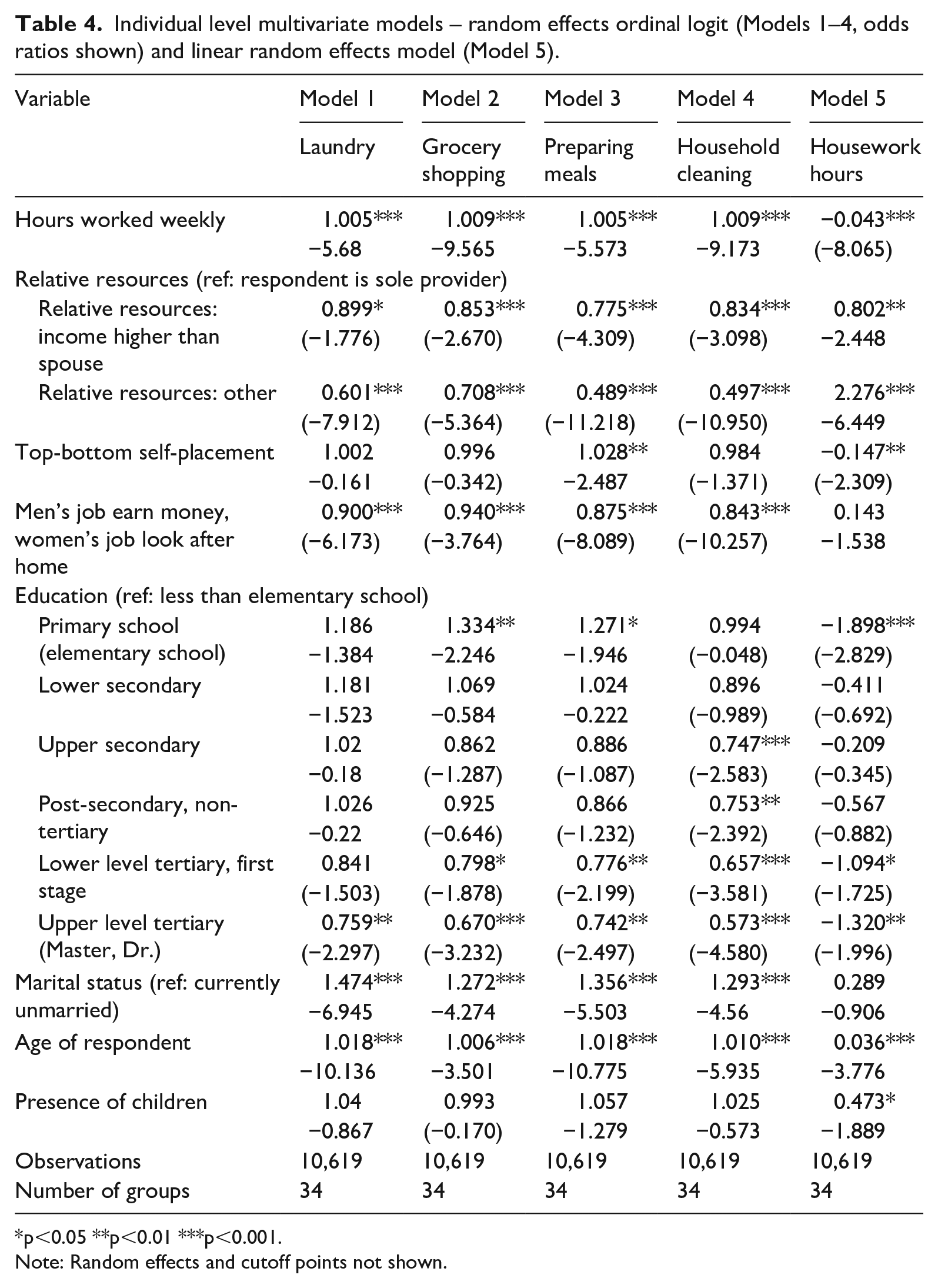
Our first multivariate model examines established predictors of the domestic division of labor. Table 4 demonstrates that long work hours are associated with lower levels of men’s involvement across all housework tasks, as well as shorter hours of housework. Compared to sole breadwinners, all other men share more equally and spend more time on housework. Where men see themselves relative to others in the stratification system is not associated with their participation in laundry and grocery shopping. Yet those who see themselves as higher in the societal hierarchy participate less in meal preparation and do less housework. Men who hold more egalitarian views about the division of paid labor between men and women share more equally in housework tasks, but attitudes are not associated with overall time spent on housework.
Individual level multivariate models – random effects ordinal logit (Models 1–4, odds ratios shown) and linear random effects model (Model 5).
p<0.05 **p<0.01 ***p<0.001.
Note: Random effects and cutoff points not shown.
There is also some evidence for variation by level of education. Compared to those without formal education, men with only primary education report less involvement in two out of the three housework tasks, but longer hours doing housework. Men with tertiary education report a more egalitarian division of labor, but also fewer hours doing housework. Men who are married share less in housework tasks, but do not differ in the amount of time they spend on housework tasks compared to their non-married counterparts. Older age is associated with a more traditional division of labor but also with slightly more time spent on housework. The presence of one or more children under the age of 18 is not associated with patterns of the division of labor, but with more time spent doing housework. These established predictors of housework time and tasks are included in all subsequent multivariate models. The effects remain virtually identical when we include religion measures, so we do not show them to keep tables more compact (full models available upon request).
Individual-level affiliation and attendance and housework participation
Next, we examine the association between men’s religious affiliation and housework patterns addressed in H1b. Table 5 shows that there is evidence that Catholic men, compared to non-religious men, report a more traditional division of labor net of all other individual level characteristics as described in Table 4 across 3 out of the 4 housework tasks. Hindu men and men who identity with ‘other’ Christian religions report less involvement in grocery shopping but do not differ on any of the other tasks. Muslim men report a more traditional division of labor for housecleaning and meal preparation. However, they are also less traditional than non-religious men concerning grocery shopping. Jewish men exhibit more equal sharing across three out of the four tasks we examine compared to men who are not part of any religious tradition. When we examine time spent on housework tasks (Model 5), Catholic men spend less time while Hindu men spend more time on household chores than non-religious men. No difference is evident for any of the other groups. Our findings provide no clear support for Hypothesis 1b across the board. The variation in housework performance across religious traditions does not follow a pattern that suggests that men from more conservative religious traditions are less involved.
Individual religious tradition and participation in housework-random effects ordinal logit (Models 1a–4a, odds ratios shown) and linear random effects model (Model 5a). All models include covariates from Table 4.
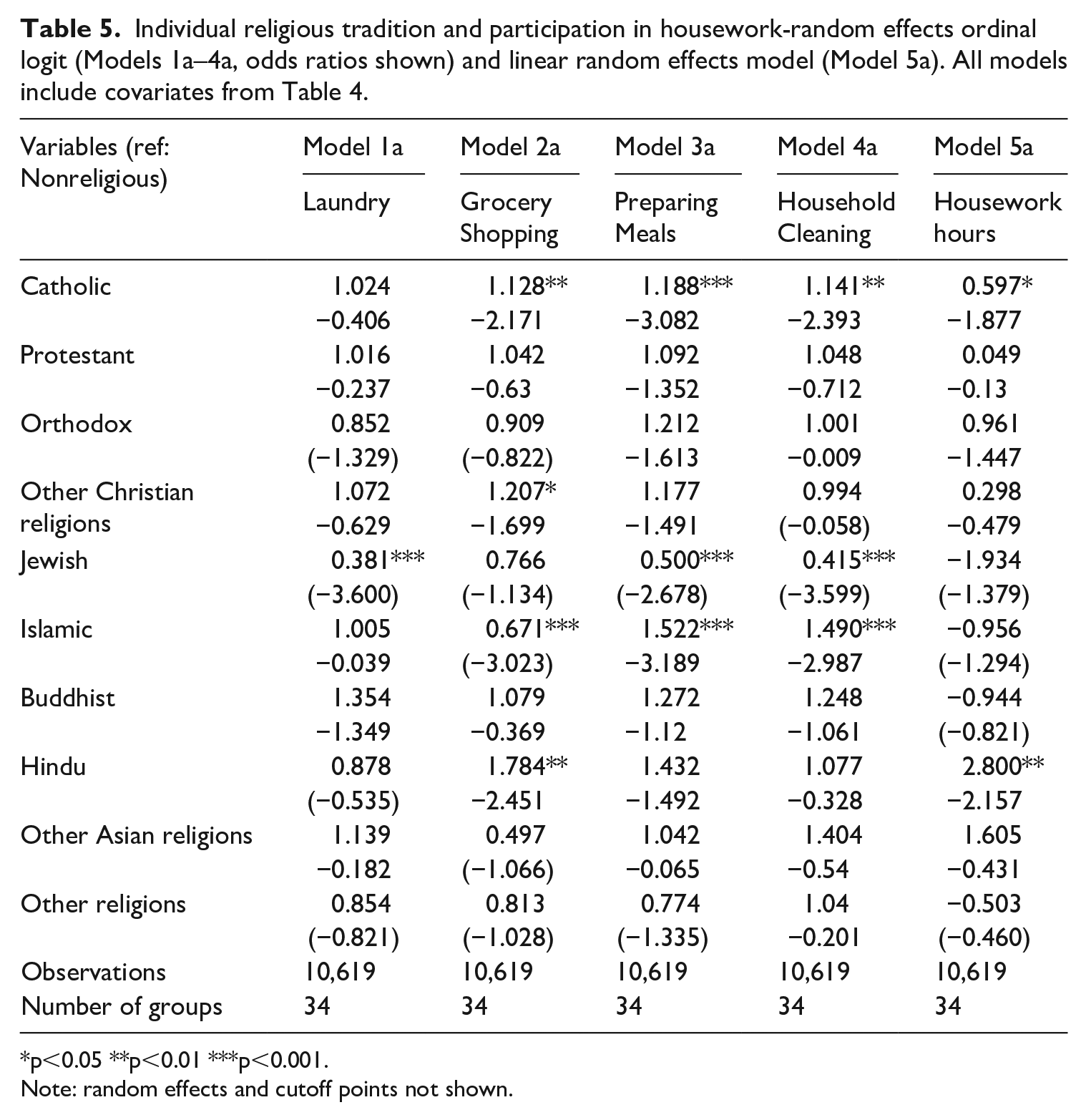
p<0.05 **p<0.01 ***p<0.001.
Note: random effects and cutoff points not shown.
When we consider men’s attendance of religious services and address H1a (see Table 6), we find that compared to men who never attend any religious services, those who attend sporadically to occasionally regularly report a more traditional division of labor for grocery shopping, meal preparation, and cleaning, and limited evidence that they may do less housework overall (among those who attend services once per month). However, men who attend religious services weekly share more in laundry tasks and report significantly longer housework hours. This set of findings support H1a to the extent that some participation in religious services may be associated with lower levels of housework involvement (especially if we do not account for men’s religious tradition). However, our finding that high levels of participation are associated with both evidence of equal sharing and more reported time for housework is in direct contradiction to H1a.
Attendance at religious services and participation in housework-random effects ordinal logit (Models 1b–4b, odds ratios shown) and linear random effects model (Model 5b). All models include covariates from Table 4.
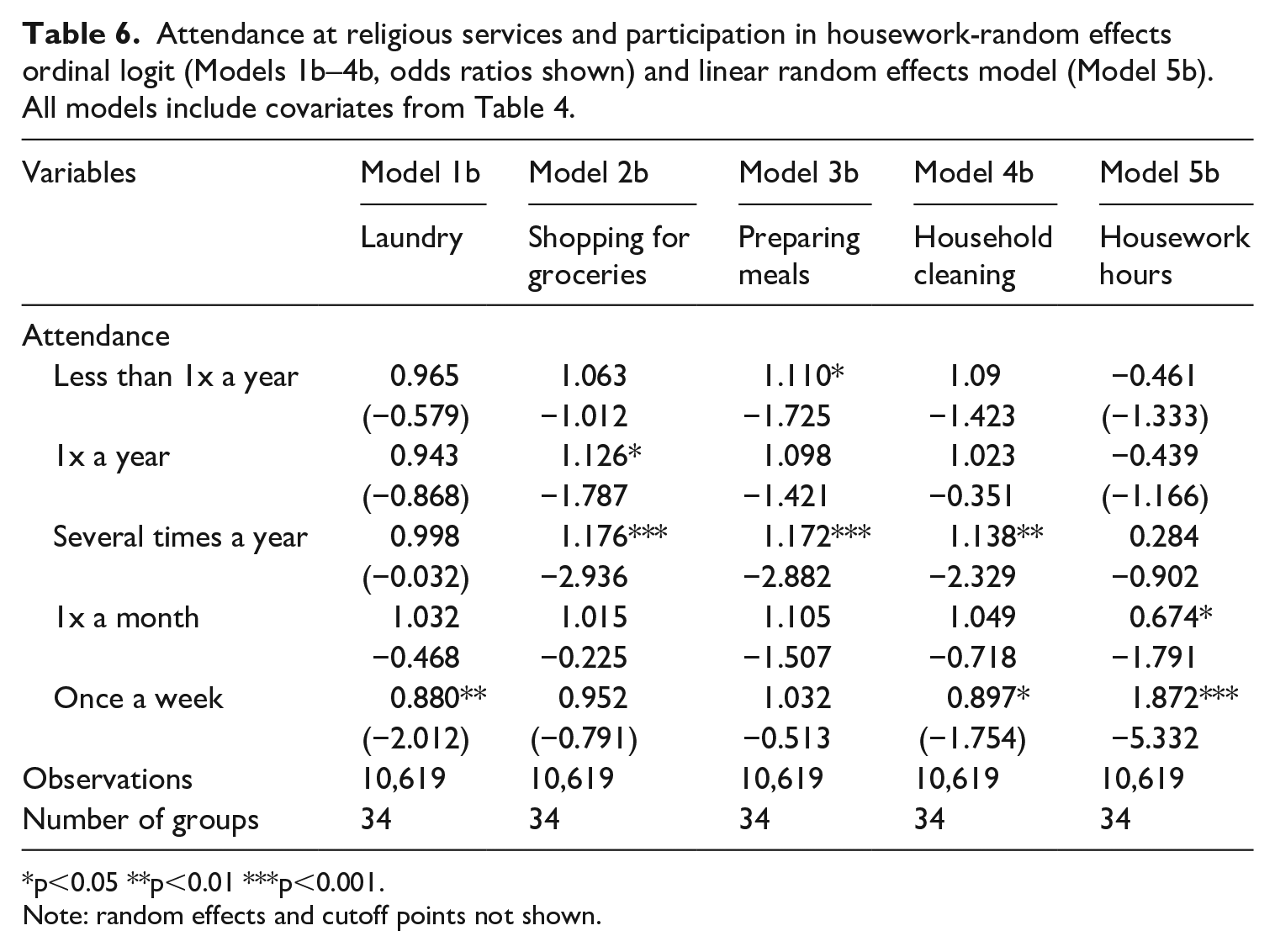
p<0.05 **p<0.01 ***p<0.001.
Note: random effects and cutoff points not shown.
The findings remain similar when we include both religious tradition and attendance of religious services in Table 7, although they weaken somewhat. The religious tradition differences remain similar for Jewish, Muslim, and Hindu men, but become weaker for Catholics. The evidence that occasional attendance of religious services is associated with a more traditional division of labor is considerably weakened, but the findings continue to suggest that men who attend religious services every week share more equally in at least laundry tasks and spend more time overall doing housework (a figure illustrating the predictions for hours spent on housework by attendance, denomination, and cultural zones is available upon request).
Religious tradition and attendance-random effects ordinal logit (Models 1c–4c, odds ratios shown) and linear random effects model (Model 5c). All models include covariates from Table 4.
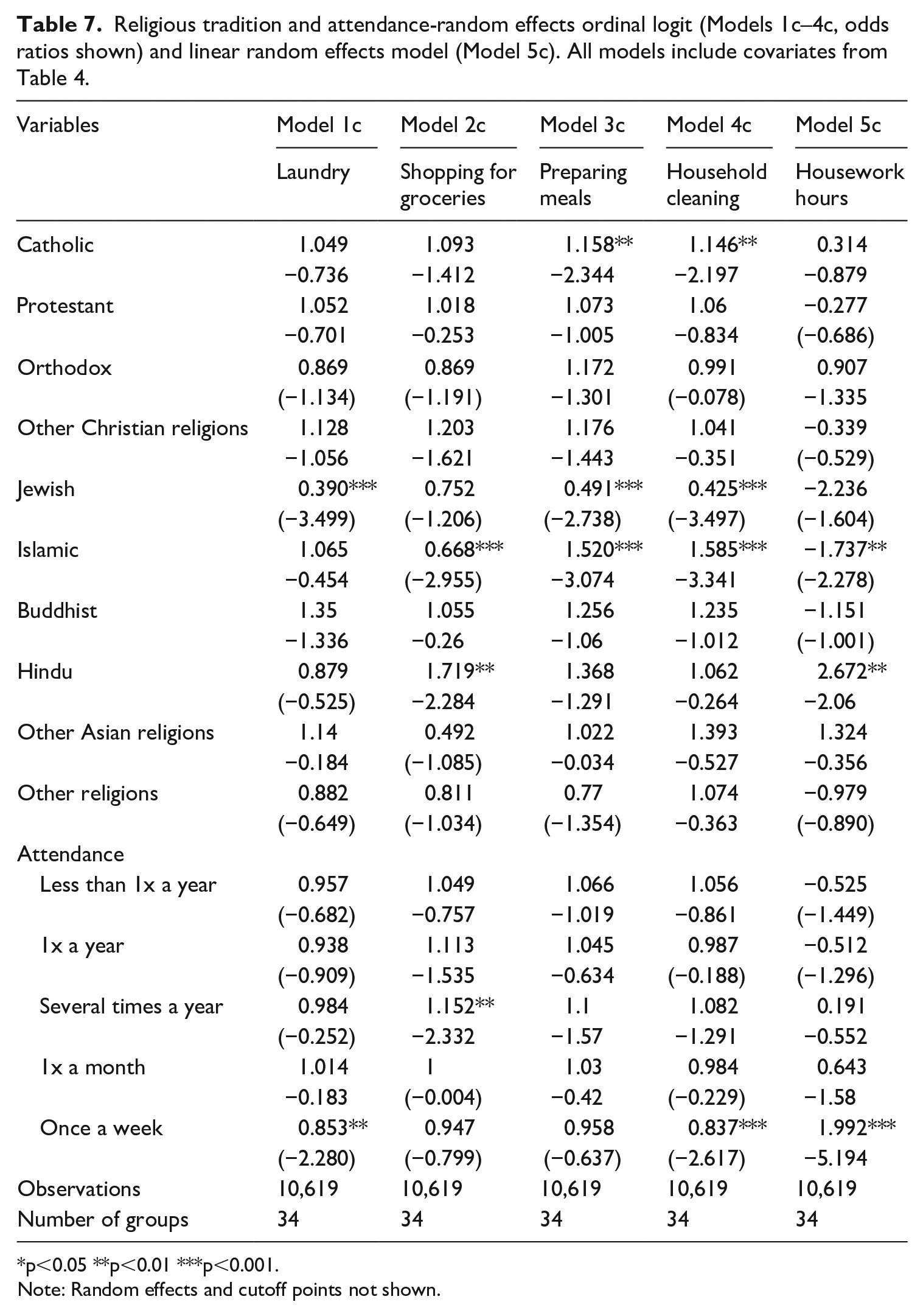
p<0.05 **p<0.01 ***p<0.001.
Note: Random effects and cutoff points not shown.
Cultural zones and housework participation
In the final set of models, we consider religion as a macro contextual measure through country-dominant religious traditions (see Table 8). We find support for H2a, as patterns of housework participation vary widely across cultural zones. There is at least partial evidence for H2b in that net of their individual characteristics, men in Nonwestern Protestant, Western and other Catholic countries, as well as men in Orthodox, Buddhist and nonreligious countries report a more traditional division of labor than men in Western Protestant nations. Men in India and Israel report both a more traditional and more egalitarian division of labor compared to Western Protestant men, depending on the task. As before, men in all Catholic countries, Hindu, and non-religious countries report more housework hours than men in Western Protestant countries net of a broad range of individual and household characteristics. Support for our basic hypothesis H2a of variation across cultural zones is clearly supported, but the different findings for the division of labor and the time spent on housework suggest that H2b is too simplistic.
Cultural zone effects – random effects ordinal logit (Models 1c–4c, odds ratios shown) and linear random effects model (Model 5c). All models include covariates shown in Table 4.
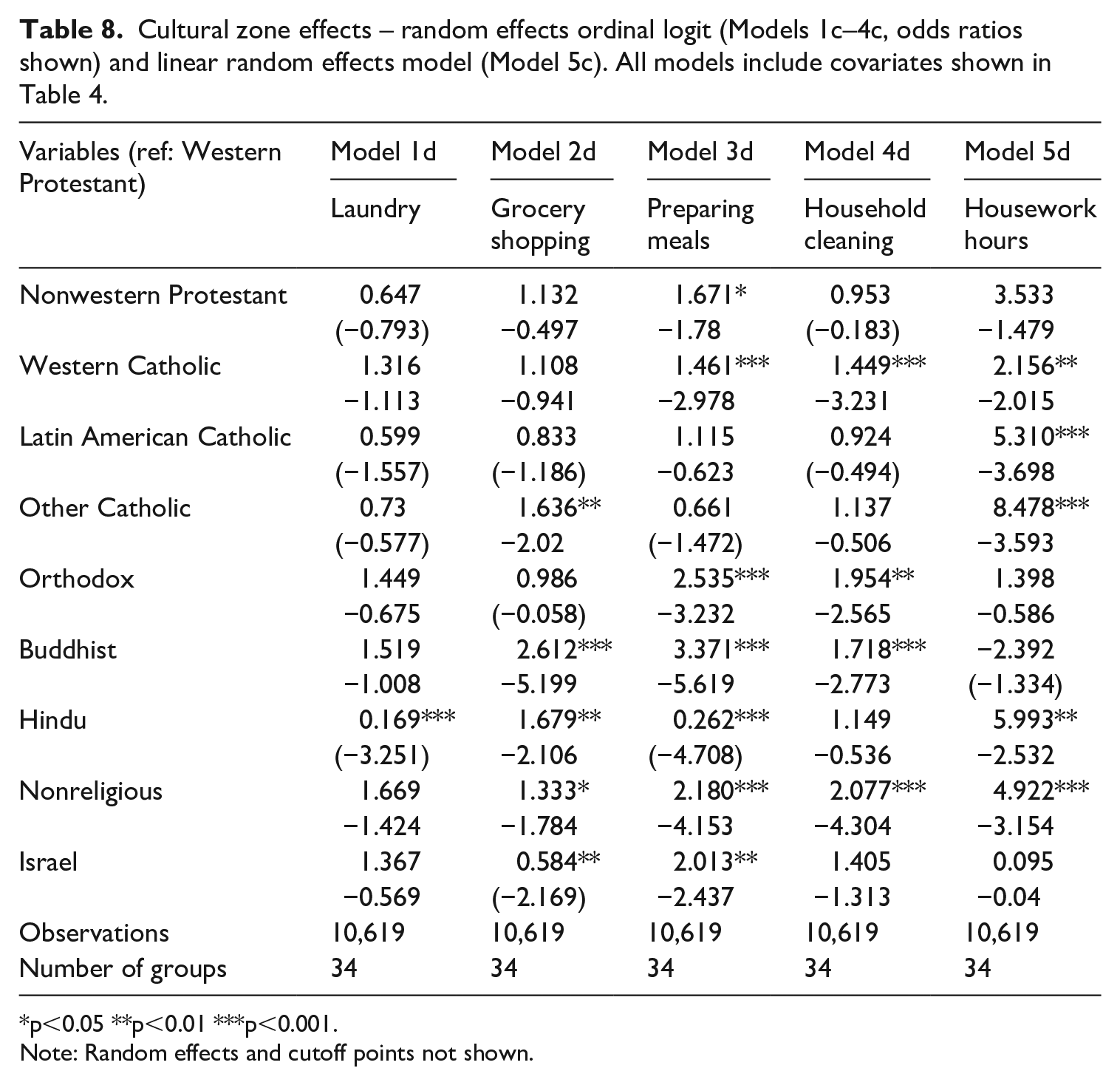
p<0.05 **p<0.01 ***p<0.001.
Note: Random effects and cutoff points not shown.
Conclusion
How families divide up the work done within the home continues to be an area of active research as its implications reverberate throughout the social structure and touch on a variety of social scientific topics: the progress of the gender revolution, women’s gains in paid work, welfare state regimes’ attitudes and policies regarding gender equality, and religion’s influence on the state and the family. This study adds to the literature on men’s involvement in domestic labor by examining the effects of individual religious affiliation, attendance at religious services, and country-level religious context and includes a novel frame through which to view religion’s societal-level influence, the cultural zone schema. Support for the study’s hypotheses were mixed and several unexpected findings emerged. At the individual level we do find evidence for variation of men’s housework performance across religious traditions. While Catholic, Other Christian, Muslim, and Hindu men show more traditional patterns of division of labor on a number of tasks, when we add attendance at religious services, we find that the weekly attenders are more likely to participate in at least some household tasks and spend more hours per week on housework. A limitation of the data used in this study is its self-reported nature. While self-reported measures have been criticized due to their potential for subjectivity and social desirability, they often represent the best available data on individual behaviors.
What can we surmise from these findings? One possibility is that highly religious men are heeding the call from their leaders to become more involved in family life, including participation in household chores. Despite giving lip service to traditional gender ideology, many conservative couples exhibit a pragmatic egalitarianism that may lead to more equal sharing of household tasks (Gallagher and Smith, 1999). The exact nature of the tasks these religiously active men are engaged in is unclear. Religiously active men may also look different from less or non-religious men in their personalities and preferences, which may impact their housework participation; however, that is beyond the scope of this study. While this analysis does show some support for the notion that men are increasingly engaging in traditionally ‘feminine’ tasks, more research is needed to determine whether or not the majority of this extra time is indeed helping to lighten their partners’ gendered load.
We posit the emergence\ of two pathways toward greater equality in housework participation. Nonreligious men individually (though not in nonreligious countries) participate more in all types of domestic labor, likely due to acceptance of gender equitable attitudes among this group (Seguino, 2011). At the same time, men who are more actively religious appear to espouse attitudes that place a high value on home and family life, also leading to greater participation in housework. Whether a man values his partner’s equality and autonomy or feels God-given stewardship over his home and family, the outcome may be similar: greater sharing of household tasks and more hours spent in housework.
Our findings echo those from Voicu et al.’s (2009) exploration of religion and housework in a European context. Non-western Protestant, Western and other Catholic countries, Orthodox, Buddhist and nonreligious countries exhibit more traditional patterns of domestic labor. These findings speak to the influence of national religious culture on the development of gender attitudes. The conceptualization of appropriately gendered participation in household tasks is influenced by religious beliefs on the divine establishment of gender roles and who carries the primary responsibility for the home sphere (Bartkowski, 2001; Shah et al., 2016). However, our findings indicate that conservative religious membership and reduced housework participation do not enjoy a direct, linear relationship; rather, highly religious men may find themselves taking on a greater share of housework despite their feelings on the gendered nature of those tasks.
This article provides a foundation for further research into religion’s association with household labor. One avenue for further research involves addressing Protestant men’s housework participation cross-nationally, as there is a great deal of variation between Protestant traditions. Adding cultural zones to analyses focused on macro-level indicators of housework participation proved fruitful for this study and showed a great deal of variation across zones. Cultural zones should be explored as a complement to other macro level measures of housework participation such as welfare state regimes and measures of gender equality. Data sets with larger numbers of non-Christian religious affiliates are especially needed in establishing a thorough understanding of religion’s influence on men’s housework participation.
We draw two broad conclusions from our study. First, the association between religion and men’s housework performance is complex, and the findings about cross-national variation between religious traditions should be a starting point to examine how national-level religious culture shapes the gendered division of labor. While we hope that religion scholars will examine the domestic division of labor in more detail in future research, the second conclusion we draw from our study is that housework scholars should not assume that men’s religious identities and practices are simply interchangeable with attitudes about gender. Religion needs to be included more systematically in research on housework and couple relationships. By bridging these two bodies of work, greater insight can be gleaned into the cultural contexts within which couples develop notions of appropriate labor sharing both within and outside of the home.
Footnotes
Acknowledgements
The authors wish to thank Wade Cole and the editors and anonymous reviewers at Social Compass for comments on earlier drafts of this work.
Funding
The author(s) received no financial support for the research, authorship, and/or publication of this article.
Author biographies
Address: 380 S. 1530 E., Room 301, Salt Lake City, UT 84112, USA.
Email:
Address: 260 Central Campus Drive, Suite 4200, Salt Lake City, UT 84112, USA.
Email: