



Abstract
Plastic packaging accounts for 36% of all plastics made, but amounts to 47% of all plastic waste; 90% of all plastic items are used once and then discarded, which corresponds to around 50% of the total mass of plastics manufactured. Evidence for the ubiquity of microplastic pollution is accumulating rapidly, and wherever such material is sought, it seems to be found. Thus, microplastics have been identified in Arctic ice, the air, food and drinking water, soils, rivers, aquifers, remote maintain regions, glaciers, the oceans and ocean sediments, including waters and deep sea sediments around Antarctica, and within the deepest marine trenches of the Earth. They have also been detected in the bodies of animals, including humans, and as being passed along the hierarchy of food chains, up to marine top predators. Evidence has also been presented that microplastics are able to cross different life stages of mosquito that use different habitats – larva (feeding) to pupa (non-feeding) to adult terrestrial (flying) – and therefore can be spread from aquatic systems by flying insects. The so-called ‘missing plastic problem’ appears to be, in part, due to limitations in sampling methods, that is, many of the very small microplastic particles may simply escape capture in the trawl nets that are typically employed to collect them, but have been evidenced in grab-sampling experiments. Moreover, it is simply not possible to measure entirely through the vast, oceanic volumes of the oceans. It can, however, be concluded with some confidence that the majority of the plastic is not located at the sea surface, and indeed, several different sinks have been proposed for microplastics, including the sea floor and sediments, the ocean column itself, ice sheets, glaciers and soils. The treatment of land with sewage sludge is also thought to make a significant contribution of microplastics to soil. A substantial amount of airborne microparticulate pollution is created by the abrasion of tyres on road surfaces (and other ‘non-exhaust’ sources), meaning that even electric vehicles are not ‘clean’ in this regard, despite their elimination of tailpipe PM2.5 and PM10 emissions. The emergence of nanoplastics in the environment poses a new set of potential threats, although any impacts on human health are not yet known, save, as indicated from model studies. While improved design, manufacture, collection, reuse, repurposing and reprocessing/recycling of plastic items are necessary, overwhelmingly, a curbing in the use of plastic materials in the first place is demanded, particularly from single-use packaging. However, plastic pollution is just one element in the overall matrix of a changing climate (‘the world’s woes’) and must be addressed as part of an integrated consideration of how we use all resources, fossil and otherwise, and the need to change our expectations, goals and lifestyles. In this effort, the role of deglobalisation/relocalisation may prove critical: thus, food and other necessities might be produced more on the local than the global scale, with smaller inputs of fossil fuels for transportation and other purposes, water and fertilisers, along with a marked reduction in the need for plastic packaging.
Keywords
Introduction
It is ironic, amid the current turmoil over plastic pollution, that the first synthetic plastic (a form of nitrocellulose) was intended to provide environmental protection, by reducing demand for ivory, from which billiard balls were made, although they would occasionally explode when struck. Indeed, it has been reported 1 that John Wesley Hyatt, who introduced it for this purpose, commented that, ‘in spite of their tendency to catch fire, cellulose nitrate saved the elephant’. The subsequent, and profound, incorporation of plastics into the commercial fabric of civilisation substantially contributed to its growth and to the creation of a consumer society. 1 Thus, in 1950, a total of less than 2 million tonnes of plastics were manufactured, 2 a tally that was estimated to have reached 464 million tonnes 3 in 2018, and which, according to different projections, might reach 1124 million tonnes 4 or 1900 million tonnes 3 in 2050. The proliferation 3 of plastic materials in society is underpinned by their durability, cheapness and ease of production, along with strength, but low mass, as compared to other materials, for example, metals. Thus, public and private transportation vehicles can now contain up to 20%, by weight, of plastic materials, 5 and for the recently developed Boeing ‘Dreamliner’ Jumbo Jet, the proportion is up to 50%, thus allowing an expected 20% reduction in the amount of fuel needed to be burned for each flight. 5 As a result of unremitting media coverage, the discharge of plastic waste into the environment, particularly the oceans, is now generally accepted to be a serious global problem, as was superlatively emphasised in the final episode of the Blue Planet II series 6 on BBC television, narrated by Sir David Attenborough, which has led to what is known as ‘The Blue Planet Effect’: a galvanization of action across society to curb the unnecessary use of plastic, and reduce plastic waste, particularly from packaging. The Sky Ocean Rescue campaign featured ‘Plasticus’, 7 a ‘whale’ made, significantly, from a quarter of a tonne of waste plastic, which is the amount estimated to enter the oceans every second, 8 while the film, ‘A Plastic Ocean’, graphically emphasises the effects of plastic waste on marine creatures. 9 Plastic is mentioned in the Laudato Si, 10 an encyclical letter from Pope Francis on ‘On Care for our Common Home’, but in the broader context of the moral imperative for humans to curb excessive consumerism, and hence mitigate our current consumption of fossil and other resources. 11
Wonderful plastic
The first synthetic plastic is considered to be Parkesine, which was first produced 3 in the United Kingdom, in 1856, by Alexander Parkes, from the treatment of cellulose with nitric acid. The product of this (called cellulose nitrate or pyroxylin) could be dissolved in various organic solvents, the removal of which resulted in a transparent solid material that became mouldable on heating (thermoplastic) and a ‘synthetic ivory’ could be made from it.1,3 Improvements to the invention for making ‘masses or sheets [of parkesine], or to spread the combinations on textile or other fabrics to produce waterproof cloth’ were described in an 1865 patent. In 1869, the American inventor John Wesley Hyatt produced ‘Celluloid’, by adding camphor to nitrocellulose as a plasticiser, with the result that it could be fabricated into a photographic film. 3 Celluloids were used extensively in the photographic and cinematographic industries, and Eastman marketed the first motion picture film on nitrate base in 1889. Advances in industrial chemistry, urged significantly by two world wars, led to innovations of many kinds and to the successful mass production of different types of plastic 3 – in particular, polyethylene terephthalate (PET), polyethylene (PE), polypropylene (PP), polystyrene (PS) and polyvinyl chloride (PVC) – which greatly expanded the range of available consumer products from the 1950s to the present day. Famously, in 1955, Life Magazine published an article 12 on ‘Throwaway Living’, which featured a picture of a family throwing a range of kitchen and other household items into the air, noting that ‘The objects flying through the air in this picture would take 40 hours to clean – except that no housewife need bother. They are all meant to be thrown away after use’. 12 This is often cited as the dawn of what is now referred to, mainly disparagingly, as the ‘throwaway society’.
The ubiquitous presence of plastic items, objects and devices, is a defining characteristic of the modern age, and plastic has been proposed as a distinctive stratal component and key geological indicator of the Anthropocene. 13 As of 2015, various kinds of packaging accounted for 44.8% of all plastic resins (fibres not included) manufactured, 2 which consisted of low-density polyethylene (LDPE), linear low-density polyethylene (LLDPE), PP, and PET, in comparable quantities, while the building and construction industry used 18.8% of the total, primarily in the form of PVC. Various sectors were identified, which consumed the following amounts of plastics (Mt = million tonnes): packaging (146 Mt), building and construction (65 Mt), textiles (59 Mt), consumer and institutional products (42 Mt), transportation (27 Mt), and electrical/electronic (18 Mt); 36% of all plastics were consumed by the packaging industry, and because this mostly provides for ‘single-use’ applications, the lifetime in use of most packaging materials is less than a year, while it is far longer in other sectors, rising to a mean of about 35 years for building and construction applications. 2 Some 302 Mt of primary plastic waste was generated in 2015, 2 to be compared with a production of virgin plastic totalling 407 Mt. However, it can be seen that the ratio of primary waste/production varies from sector to sector 3 and increases according to the shorter lifetime in use for the particular sector application: being 20% for building and construction, 33% for industrial machinery, 63% for transportation, 88% for consumer and institutional products, and 97% for packaging. 3 Thus, it is little surprise that the greatest single contribution to plastic waste arises from the many and various different kinds of packaging in use, which amounts to 47% of the total (Figure 1). 2
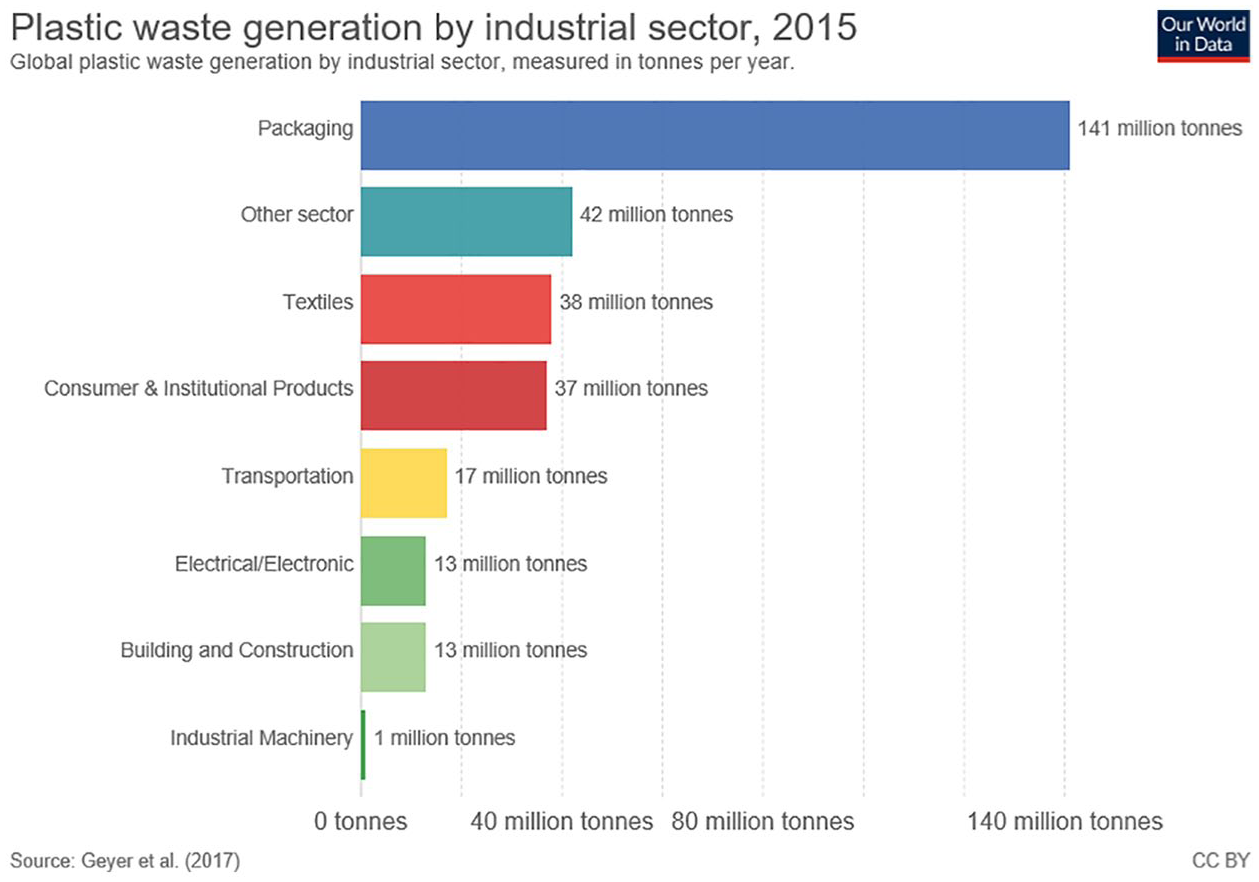
Primary plastic production by industrial sector, 2015.
Failure of the linear economic system
While application of the linear economic model, which uses resources in a ‘take-make-dispose’ manner, has generated unequalled levels of growth, it results in the production of insurmountable levels of waste, and the resource production rates required to support have risen to non-maintainable levels. Thus, the linear economy offers few solutions to such problems as the increasing demand for materials, against their depletion, elevating levels of pollution, and the need to fulfil increasing demand for ‘responsible products’. As applied to plastic production, a global environmental calamity has ensued 14 (Figure 2) since some 90% of the products made from plastics are for ‘single use’, after which they are thrown away. 14 Of the 8.3 billion tonnes of virgin plastic, manufactured since 1950, 6.3 billion tonnes have ended up as plastic waste, 2 of which around 79% has accumulated in landfills or in the natural environment, and 8–9 million tonnes is believed to enter the oceans annually, perhaps 2.41 million tonnes of which is delivered there by rivers.2,15 Plastics are extremely durable, and although this makes them highly useful in a myriad of applications, they are estimated to persist in the open environment for hundreds of years, and indeed, it has been argued that plastic never fully degrades, but merely fragments into increasingly smaller pieces (microplastics and nanoplastics) that may impact, adversely, on marine life, and which are entering and propagating up the food chain. 16 Hence, it is necessary not only to seek solutions to the problem of plastic pollution that already exists in the environment but also to achieve a future in which further such contamination by plastic is ameliorated over time.
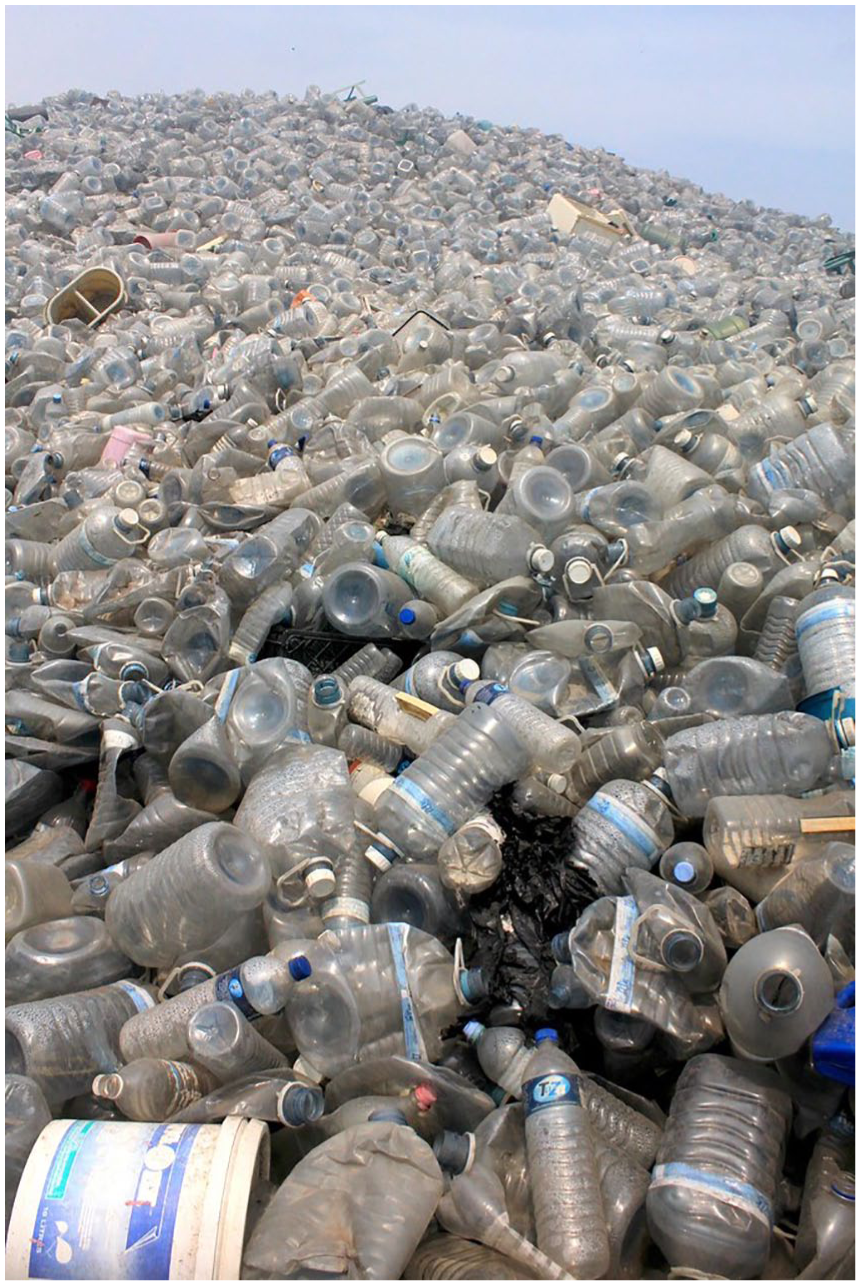
Mountain of plastic bottles: at the world’s biggest trash island (Thilafushi).
The resource depletion/plastic pollution problem may be partly mitigated via the reuse economy, 17 which involves some degree of reusing or repurposing of items, although non-recyclable waste is still generated, 17 while the circular economy3,18,19 aims to avoid the production of waste altogether, with maximum recycling as an essential component, and is modelled on the way natural systems operate, for example, a forest, where outputs from some processes become inputs for others, 20 for example, the annual leaf litter from trees is cycled into the creation of new soil, which provides a medium for new growth and nourishes and nurtures the entire ecosystem. Thus, we see that improved design, in all respects of our civilisation, may serve to address and mitigate many of the issues, including plastic pollution, that presently confront us, acknowledging that these are not individual problems ( ‘the world’s woes’) 21 that can be approached in isolation, but are interrelated symptoms of a broader reality of systemic failure. Thus, the term ‘the changing climate’ has been used, 21 rather than ‘climate change’ 22 – that is, as driven by fossil fuel burning/global warming – to encompass the many indicators of change that we currently experience.
Bioplastics
To reduce the burden on both the petroleum resource base and the environment, materials commonly called ‘bioplastics’ have been proposed, although the preferred term is ‘bio-based polymers’, to emphasise that they are derived from renewable/sustainable biological resources. Ideally, these are also ‘biodegradable polymers’ meaning they can be decomposed in the environment by microorganisms. The process of decomposition may be assisted by the same abiotic chemical reactions that are involved in the disintegration of conventional plastics, such as photodegradation, oxidation, and hydrolysis. 23 Indeed how biodegradable (or compostable) a piece of plastic is in the open environment depends critically on exactly where it ends up, since the decomposition process requires heat, light (mainly ultraviolet (UV)), and oxygen, and therefore, its effectiveness is largely determined by the availability of these agents. Some biodegradable polymers are produced by plants, animals or micro-organisms, or they may be produced synthetically. Those most commonly encountered are, polylactide (also known as polylactic acid) (PLA), polyglycolide (PGA), polycaprolactone (PCL), polyhydroxyalkanoates (PHA), poly(butylene succinate) (PBS) and poly(butylene adipate-co-terephthalate) (PBAT). 23
Of the above list, PLA is considered the most promising, since it is manufactured from lactic acid, which can be sustainably derived from corn and other crops.23,24 However, given the yield of about 2.6 tonnes per hectare that may be deduced from data provided by European Bioplastics, 25 it can be concluded that to replace the present about 400 million tonne annual production of largely petroleum-based plastics by bio-based polymers would require ca 150 million hectare of arable land or 11% of the total available on Earth, while to meet a projected growth in production/demand to 1900 tonnes, by 2050, with bio-based polymers, some 52% of the Earth’s arable land would need to be commandeered, leading to a serious competition between using land to grow crops for food or plastic, similar to the issue of creating first-generation biofuels from land-based crops (i.e. should the priority be to feed people or to run cars?). PLA has been used successfully for biomedical applications and to make packaging from, due to its mechanical strength and low toxicity, 23 and, for example, it can be employed to fabricate medical implants, such as anchors, screws, plates, pins, rods, and meshes, because it breaks down within the body, over a period of 6 months to 2 years, to form lactic acid as a harmless product. 26 As the PLA supporting structure decomposes, the load is steadily transferred to the body (e.g. the bone) as the particular area heals. 27 The fundamental mechanical properties of PLA are said to be intermediate between those of PS and 28 PET; however, one disadvantage of the material is its low glass transition temperature of around 60oC, which limits its use in applications that require temperatures greater than 29 this.
Particular interest in PLA is driven by the expectation that it will degrade more rapidly in the environment than the more usual petroleum-based plastics and thus be prevented from similarly accumulating there. 30 Although items made from PLA, such as tumblers for drinks, are often labelled as ‘100% compostable’ and ‘100% degradable’ (Figure 3), both descriptors may be misleading. In particular, although the term ‘biodegradable’ means that the component polymer molecules are expected to break down eventually under the influence of microbial action, it does not specify any definite timescale for the process, which might take many years, depending on the prevailing conditions. For example, PLA in artificial seawater at 25°C showed no significant degradation over a period of a year and would presumably take very many years to decompose 31 fully. Many biodegradable bioplastics require industrial composting facilities to break them down completely 32 and may not decompose effectively in a garden compost heap/bin. Moreover, during the latter, slower process, methane may be emitted, which is a potent greenhouse gas. 33 Such materials may also not degrade well in the open environment, for example, in the oceans, where oxygen levels are relatively low. Those biodegradable plastics that are described as ‘compostable’ must adhere to more rigorous criteria, and as certified to European Standard EN13432, 34 they must break down under industrial composting conditions 35 in less than 12 weeks. Industrial composting facilities operate at temperatures of around 60oC or more and additionally provide the necessary conditions of appropriate microorganisms, moisture, and air, which allow an efficient conversion of food and other organic waste to nutrient-rich organic material that can be added to nourish and enrich soil (i.e. as normal compost). 20 If the material becomes buried in the ground or is placed in a garden compost heap, the necessary microorganisms are not necessarily available, sufficient moisture and air may be lacking, and the temperature will almost certainly be below 60oC, meaning that the degradation time can be (very) much longer. There is also the risk that in the open environment, even biodegradable or compostable plastics can fragment to form 36 microplastics and that any further fragmentation of microplastics, as studied for polyhydroxybutyrate (PHB), to nanoplastics can exert toxic effects on freshwater ecosystems (and possibly 37 elsewhere). Among the advantages of a composting facility is that any small particles are contained until they are broken down further, rather than being released into the environment, with potentially harmful consequences. 36 From one study, 38 of actual ‘plastic bags’, it was shown that biodegradable, oxo-biodegradable and conventional (high-density polyethylene (HDPE)) plastic formulations persisted and remained functional in the soil and in seawater for more than 3 years. However, although a compostable bag disappeared entirely in seawater within 3 months, such a bag had survived in the soil environment after 27 months, although it could no longer hold weight without tearing. After 9 months in the open air, all of the bag materials were found to have disintegrated into fragments. The overall conclusion was that none of the bags could be relied upon to deteriorate substantially over a 3-year period in all environments and that specific regulation is necessary before labelling various materials in regard to their 38 biodegradability.
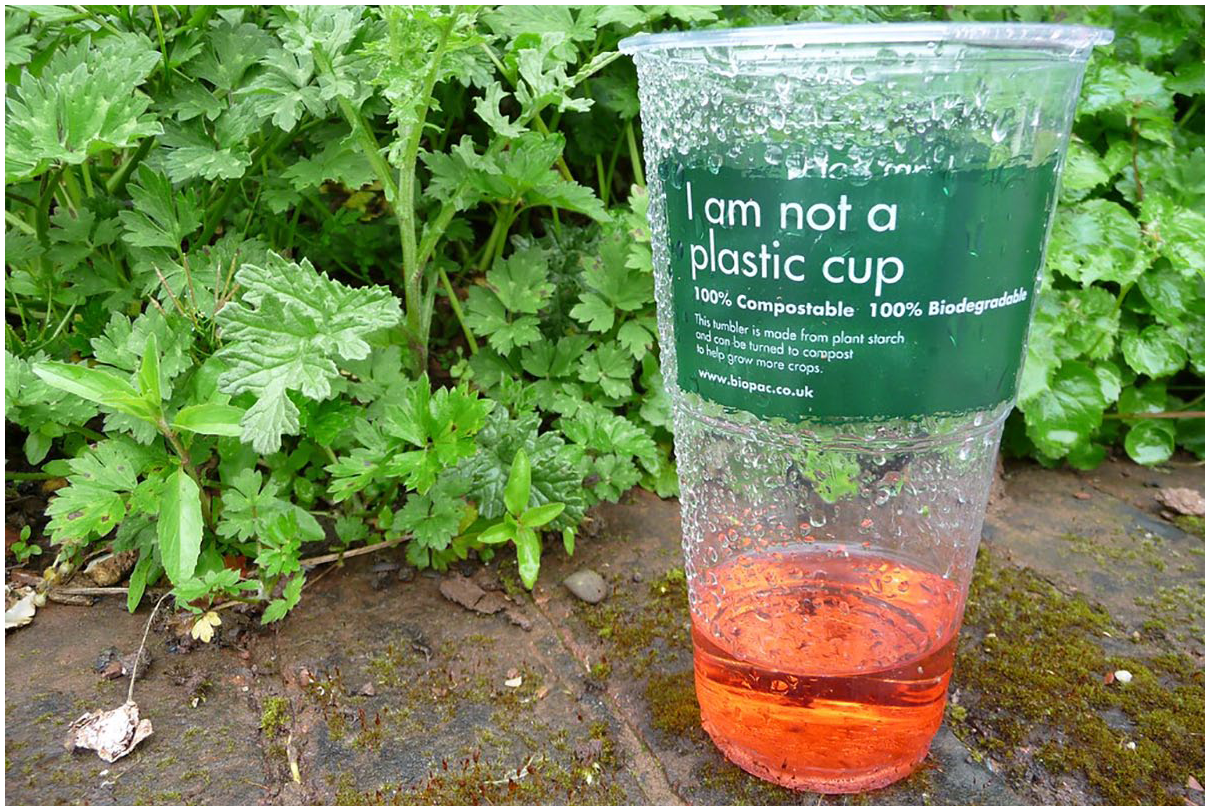
‘I am not a plastic cup’. Bio-based polymer drinking tumbler, described as ‘100% compostable’ and ‘100% biodegradable’.
It is thought that small molecules formed during biodegradation are less harmful to the environment than are microplastics, but they may add to the atmospheric burden of greenhouse gases (GHG), albeit that, on the basis of a lifecycle analysis, it was deduced that the GHG emissions are lower for PLA production than for petroleum-based plastics. 39 It has been concluded that, taken as part of a combined strategy of ‘reduce, reuse, recycle’, the implementation of biodegradable polymers could usefully help to reduce the quantity of plastic pollution in the environment; however, any significant substitution of conventional plastics by them will require further advances in R&D. 14 There is the further issue of matching the specific properties of a petroleum-derived plastic with those of a ‘biological’ alternative that is intended to replace it. For example, in an article published in Chemistry World, it is argued that it is impossible to replace polyester and polyamide completely with natural fibres, because it is very difficult to replicate those same properties that make an item of clothing able to withstand the elements and also to make it biodegradable under the same conditions. 40 The higher cost of such bioplastics than most petrochemically derived plastics is not the only barrier to the expansion of their use, which will require a more ‘circular’ analysis to be made, encompassing aspects both of origin and end of life, along with particular aspects of scaling up production, and any influence this may have on the properties of the plastics themselves. Since this will probably be fully achieved only through cooperation between academia and industry, and between different formal disciplines (e.g. chemistry, engineering, materials science, biogeochemistry and climate science), it is likely that the necessary multi-disciplinary developments will occupy significant effort and time. Thus, we should probably not expect a full-scale ‘bioplastics economy’ to be delivered in short order. 14 Moreover, there is the underpinning issue of where the material will come from to furnish such biobased polymers (as alluded to in the section on “Bioplastics”), in regard to a potential compromise between using land to grow crops to provide food or plastics.
The ubiquitous presence of microplastics
The U.S. National Oceanic & Atmospheric Administration categorises microplastics as being less than 5 mm in diameter. 3 Primary microplastics are plastic particles that were originally manufactured at those sizes in which they are encountered in the environment and include microfibres from clothing, microbeads, and pellets (nurdles) from which plastic items are made. Secondary microplastics are formed by the degradation of larger plastic items, including bottles for water and other drinks, plastic bags and fishing nets. It appears no exaggeration to say that microplastics are found ‘everywhere’, since they have been detected in the air, 3 rivers, 3 aquifers, 3 mountains, 3 glaciers, 41 soils, 3 Arctic sea ice, 3 insects, 42 drinking water 3 (tap and ‘worse’, bottled), food 3 (honey, sugar, salt, beer, seafood), the oceans 3 and ocean sediments, 3 including waters and deep sea sediments around Antarctica, 43 and within the deepest marine trenches of the Earth.3,44–46 Microplastics have been found in a pristine mountain environment (French Pyrenees), and on the basis of an air mass trajectory analysis, it was concluded that the particles can be moved through the atmosphere over a distance of up to 95 km, with the implication that even remote, sparsely inhabited, areas can become contaminated with microplastics through atmospheric transport. 47 Evidence has been presented 42 that microplastics are able to cross different life stages of mosquito (Figure 4) that use different habitats – larva (feeding) to pupa (non-feeding) to adult terrestrial (flying) – and therefore can be spread from aquatic systems by flying insects. In view of the ubiquitous presence of microplastics in water environments, this represents a potential airborne route for the contamination of new environments, since any organism that feeds on flying insects might become contaminated by microplastics that were present in aquatic ecosystems and pass them on elsewhere. 42
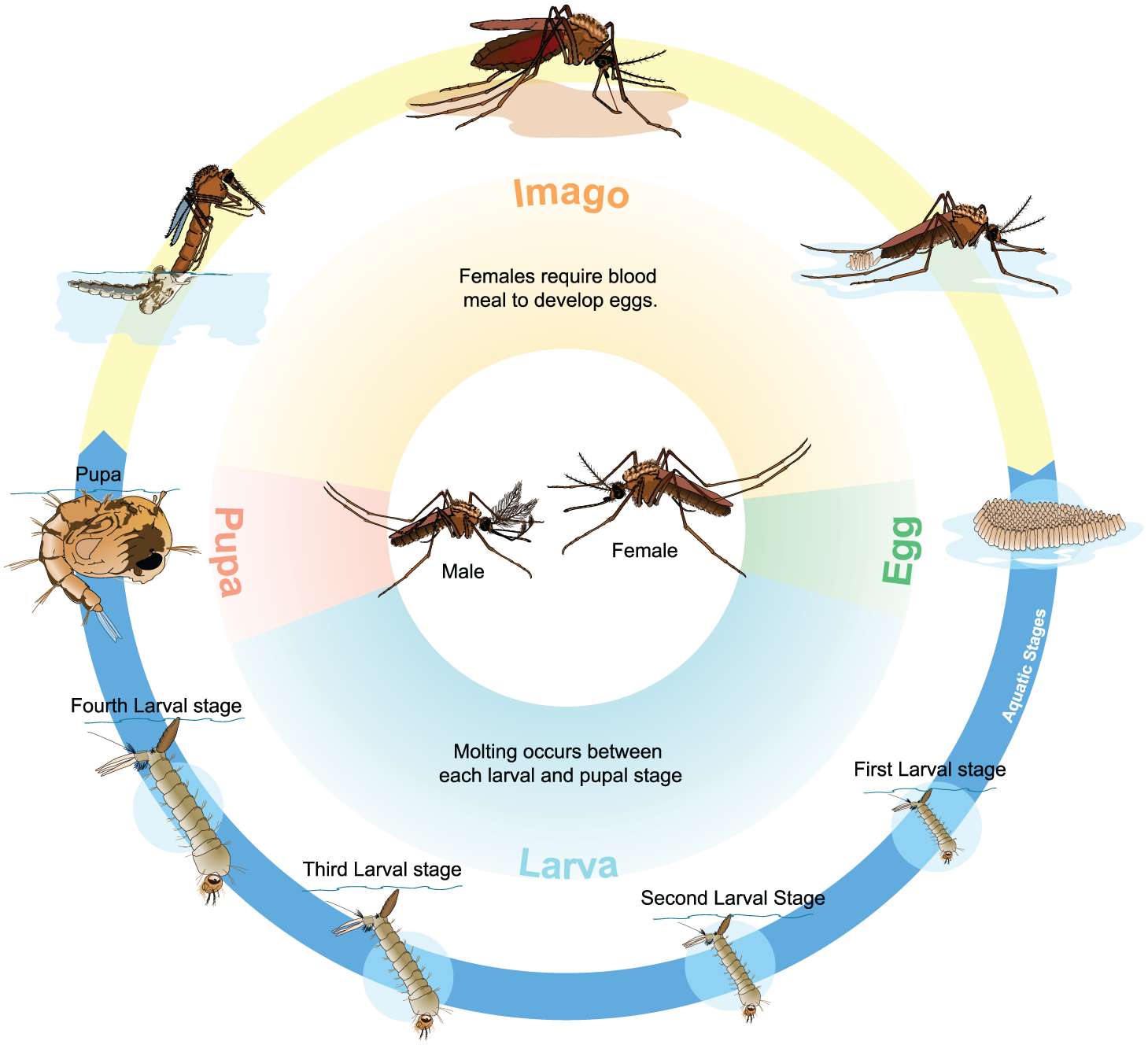
Life cycle of a mosquito of the genus culex.
An assessment has been made of the worldwide abundance and distribution of microplastics in marine and freshwater ecosystems. Thus, the accumulation of microplastics is found to vary geographically, according to location, hydrodynamic conditions, environmental pressure, and time, leading to the conclusion that unless the implementation of proper regulations is made, in order to reduce the occurrence of microplastics in the aquatic environment, human livelihood will eventually become threatened. 48 A critical review 49 of the available literature has been made, which identifies that while there is clear evidence that a comprehensive number of species, which occupy diverse regions and ecosystems, globally, are affected by microplastic pollution, knowledge about its transmission through food webs and the underlying mechanisms that determine where contamination will occur is limited; furthermore, there is, as yet, very little known regarding the effect of environmental microplastics on living organisms. Hence, the necessity is stressed for further research to understand the underlying factors that are responsible for processes of bioconcentration, bioaccumulation, and biomagnification. From the relatively few relevant studies that have been reported, awareness is emerging that trophic transfer of microplastics may occur, that is, along a food chain, or within a food web, which is a matter of considerable relevance. 49
Significant observations regarding macroplastics include the probable sighting of a ‘poster child’ plastic bag at the bottom of the Mariana Trench during the world’s deepest dive; 50 a record of growing amounts of plastic in the oceans, as indicated over six decades, on the basis of the increased rate of snagging of trawls employed to measure phytopkankton; 51 and a database compiled from 5010 dives, 52 during which some 3425 man-made debris items were collected. 52 Over 33% of these items were macroplastic, 89% of them being single-use products, and at depths >6000 m, these values increased to 52% and 92%, respectively. 52
Nanoplastics
Nanoplastics may be more dangerous than microplastics to aquatic organisms, as a result of their small size, since they can penetrate the tissues and organs of living creatures, which may cause adverse biological effects. 53 Using the king scallop (Pecten maximus) as an experimental subject, along with 14 C-labelled nanoplastics (nanopolystyrene), it was found that a rapid uptake occurred into the animal, which was greater for 24 nm than for 250 nm particles. After 6 hours, accumulation of the 250 nm nanoplastics had occurred in the intestine, while the 24 nm particles were dispersed throughout the whole body, a process that may involve a degree of translocation across epithelial membranes. However, depuration (exiting the body) was also rapid for both particle dimensions: no 24 nm particles were detectable after 14 days, although some 250 nm particles were still detectable after 48 days. 53 It has been demonstrated that nanoplastics can be formed by the mechanical breakdown of commonly used PS products, namely takeaway coffee cup lids and expanded PS foam, using a food processor. 54 In zooplankton, size-dependent toxicity has been demonstrated, 54 along with size-dependent uptake in zooplankton, fish eggs, fish embryos, and fish, which result in complex consequences. Thus, nanoplastics have been shown to traverse food webs from algae to zooplankton to planktivorous fish to piscivorous fish 54 and can cause changes in the behaviour and metabolism of the fish along this feeding chain. 54 It is extremely difficult to identify nanoplastics in biological samples, 55 in part because of their small size and also that they are chemically very similar overall to organic matter, and furthermore, merely knowing that they are nanoplastics is not enough, since they must be further identified in terms of their chemical structures. From a survey of the literature, just one study appears to have been published to date, reporting the successful detection and chemical identification of nanoplastics in an actual environmental sample, which consisted of water taken from the North Atlantic Subtropical Gyre (Figure 5). Following ultrafiltration, the presence of nanoparticles was established using a dynamic light-scattering technique, and by means of pyrolysis–gas chromatography–mass spectrometry measurements, the average colloidal nanoplastic fingerprint was determined to be 73% (±18%) PVC, 18% (±16%) PET, and 9% (±10%) PS. Changes in the pyrolytic signals of PE with decreasing debris size were also noted, and it was concluded that this might be a result of structural modification of the plastic by weathering processes. 55
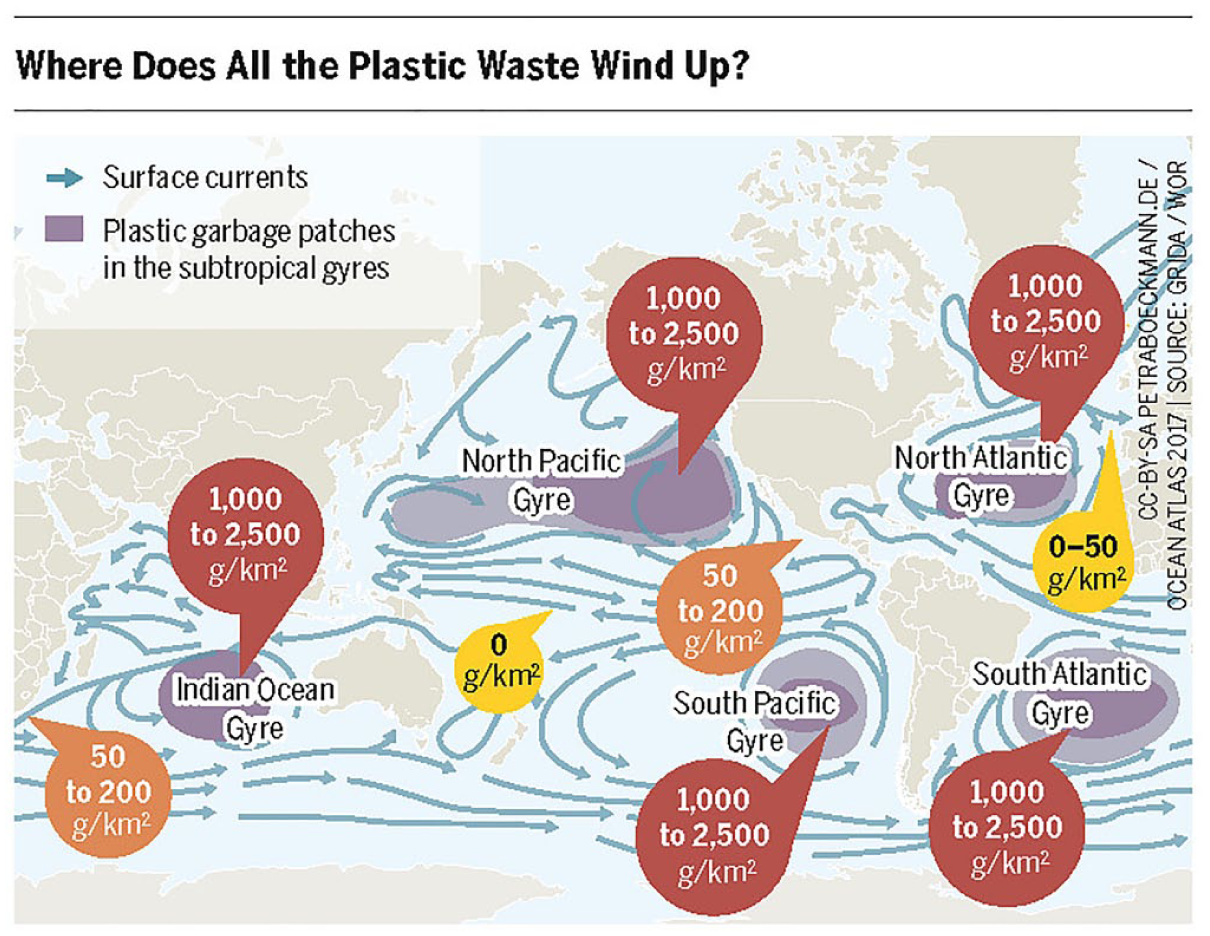
Plastic garbage patches in the subtropical gyres.
A review 56 has been made of recent developments in the separation and analysis of microplastics and nanoplastics, with particular reference to their determination in ‘complex samples’, such as organisms sampled in the field, and wastewater. A combination of different techniques is recommended, and it is suggested that methodological experience gained in different disciplines might be useful, such as cellular and molecular biology, which routinely employ separation techniques on the microscale and nanoscale. 56 On the basis 57 of previous feeding studies, it was found that spherical microplastics either pass unchanged through an organism and are excreted or are sufficiently small for translocation to occur, for example, across the intestinal epithelium. However, when Antarctic krill (Euphausia superba) were exposed to microplastics under acute static renewal conditions, it was observed that ingested microplastics (31.5 µm) were converted into fragments of <1 µm size, thus suggesting that microplastics may become fragmented into nanoplastics, of sufficiently small size that they might cross physical, anatomical barriers. The authors concluded that interactions between zooplankton and microplastics may be oversimplified by laboratory feeding studies, but that Antarctic krill, and potentially other species, may play a key role in the biogeochemical cycling and fate of plastics. 57
Missing plastics?
The fact that well below 1% of all the plastic waste believed to have entered the oceans over time, is not present at the surface (Figure 6), has been dubbed the ‘missing plastic’ problem. It has been speculated that some of it may be macroplastic that has fallen to the seafloor or become beached; microparticles that are more dense than seawater or have been caused to sink (e.g. through fouling by organisms); as absorbed into seafloor sediments (particularly fibres) 58 or dispersed and suspended through the ocean column down into the deep oceans; or consumed by fish and other marine organisms or by microbes. It is feasible that some particles are too small to be detected using normal sampling filters,59,60 or even if sampled, they may not be readily identifiable, for which a staining technique has been introduced that shows up particles in the size range of 1 mm–20 µm, and thus increases estimates of how much microplastic is present in a given sample. 61 One study concluded that buoyant microplastics are located at, or near, the ocean surface, but ocean mixing process pushes them down just below where the surface-sampling devices normally are, 62 meaning that appreciable underestimates of the ocean load can occur. Although microplastics are present throughout the mixed layer, it appears that most of those in the size range of 0.5–5.0 mm are present in the first 0–3 m of the water column. 62 Evidence so far indicated that critical factors for the mixing of microplastics <0.5 mm in size are Langmuir (wind-driven) circulation, breaking waves and heat-induced mixing. However, a modelling study, 63 aimed to simulate conditions in the North Atlantic, estimated that only 4.6 and 1.5% of 10 and 100 μm particles, respectively, are present in the first metre, compared to 95% for 1 mm particles, 63 while the detection 44 of microplastics in the deepest ‘pristine’ region of the oceans (the Mariana Trench, at 11 km depth), far removed from human activities, suggests that they are being dispersed throughout the oceans (which supports previous studies which demonstrate that the entire marine ecosystem is contaminated by microplastics). 44 Thus, 44 microplastic abundances in the range of 2.06–13.51 pieces per litre were found in the hadal bottom waters, which is several times greater than those present in the subsurface waters of the open ocean. Perhaps more significantly, far higher concentrations of microplastics (200–2200 pieces per litre) were measured in the hadal sediments of the Mariana Trench, which is much higher than those found in most deep sea sediments. It appears, therefore, that even the most remote and deepest places on the planet are not only being polluted by human activities, but are acting as a literal ‘sink’ in which microplastics are being concentrated. Since the hadal zone is probably one of the largest sinks for microplastic debris on Earth, it may prove to be a significant piece in the ‘missing plastic’ puzzle; however, the effects of introducing such foreign material to this fragile ecosystem are unknown, but unlikely to be beneficial. 44 The results are in accord with another recent study, which showed that microplastics and other synthetic particles were being ingested by amphipods (small crustaceans), in six of the deepest parts of the world’s oceans. 45 High concentrations of persistent organic pollutants (POP) have also been measured in the bodies of amphipods that live in the Mariana and Kermadec trenches (both >10 km deep). Since the levels were far higher than those measured in neighbouring areas where heavy industry operates, it appears that the amphipods are bioaccumulating these anthropogenic pollutants, which are pervasive across the world’s oceans and to full ocean depth. 46
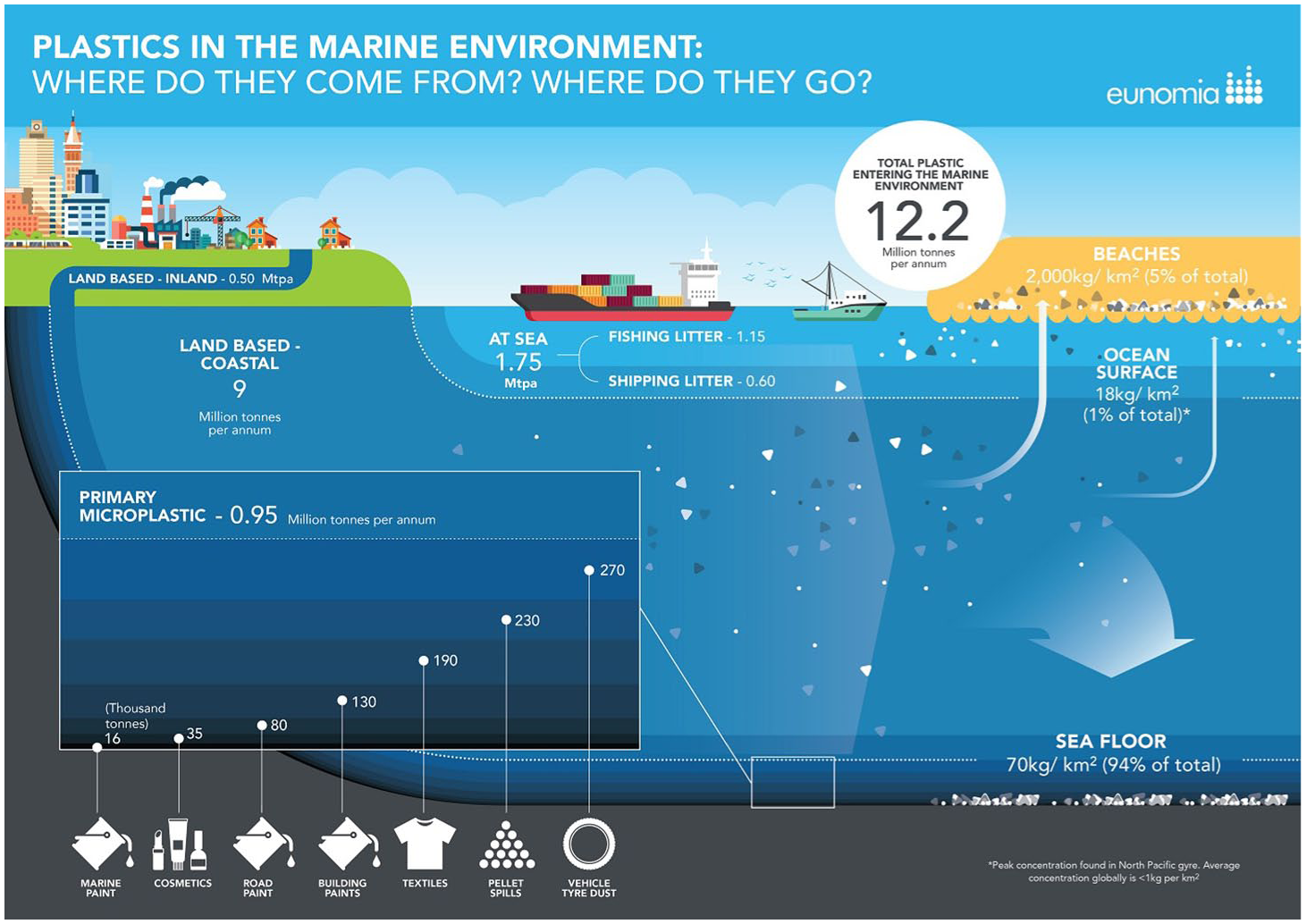
Plastics in the Marine Environment infographic.
Evidence for the distribution of microplastics through the ocean column is provided by a study 64 of the vertical distribution and biological transport of marine microplastics across the epipelagic (‘sunlight’ – down to 200 m) and mesopelagic (‘twilight’ – down to 1000 m) water columns, as measured in the offshore waters of the Monterey Bay pelagic ecosystem. The highest concentration of ocean microplastics was found at depths between 200 and 600 m (Figure 7). By examination of pelagic red crabs (Pleuroncodes planipes) and giant larvaceans (Bathochordaeus stygius), which are two abundant members of the ecosystem that feed on particles, it was demonstrated that the coupled water column and seafloor food webs act as an efficient sink for microplastics. 64 Thus, taken in parallel with a detailed description of the vertical distribution of the pool of microplastics present in the deep-water column, two distinct ecological pathways are identified, through which pelagic particle feeders transport microplastic to deeper waters and ultimately to the seafloor. Overall, the results offer the possibility that one of the largest reservoirs of ocean microplastics may be located within the water column and animal communities of the deep sea. Many of the particles were of PET and thus cannot be accounted for by fishing gear, and were ‘weathered’, which suggests that they had been in the ocean for months or years and transported there by ocean currents. 64 It was noted that the maximum concentration present (16 microplastics m−3) is greater than the highest concentration found in the Great Pacific Garbage Patch (12 microplastics m−3); 65 although the average concentration there is far lower. 66
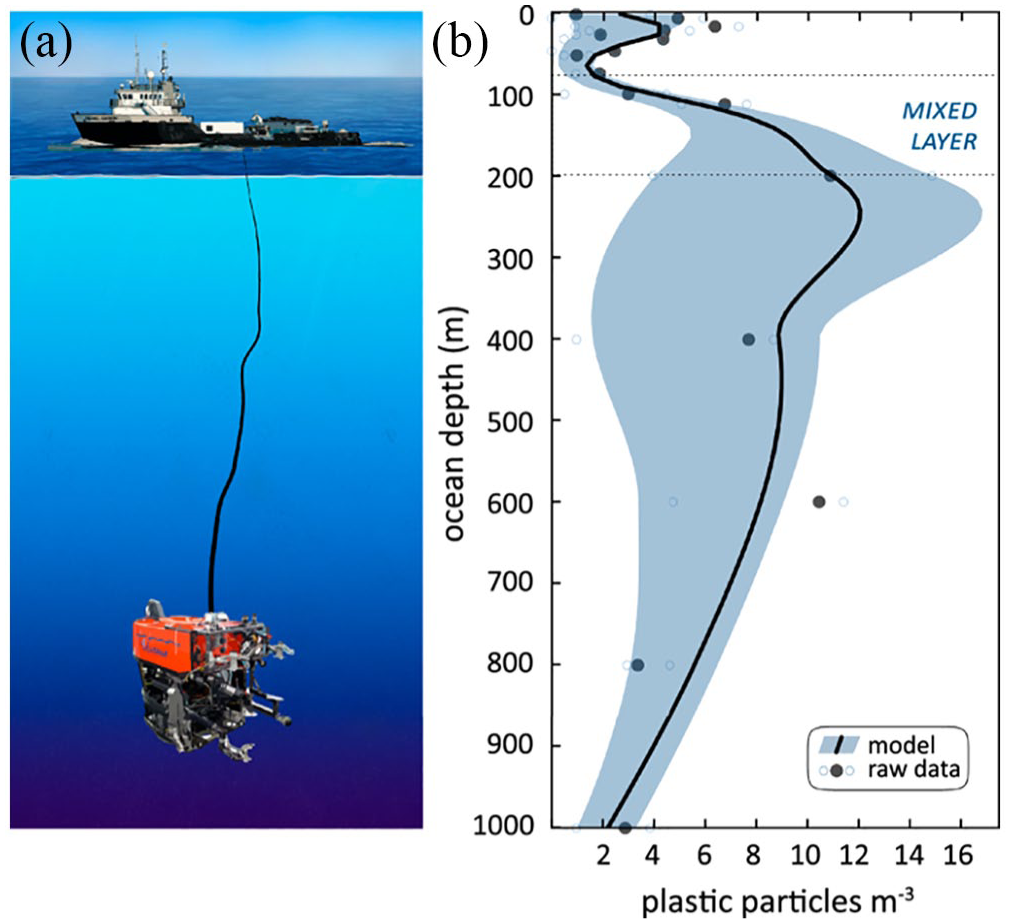
The highest concentration of ocean microplastics was between 200 and 600 m, in the offshore waters of the Monterey Bay pelagic ecosystem. (a) Sample collection schematic showing the ROV Ventana tethered to the R/V Rachel Carson, wherein ROV Ventana filtered seawater using purpose-built samplers across depths ranging from 5 to 1000 m. Seafloor depth at this sampling site is ~1600 m. (b) Microplastic concentrations varied across sample depths and peaked just below the mixed layer (see SI). We observed the lowest concentrations at the ocean surface, yet these concentrations were comparable to the most extreme depths we sampled. Confidence intervals reflect the 90% quantile of the empirical distribution of Pearson correlation distances between the laser Raman spectra of degraded ocean plastic samples (fishing gear) and a spectral library of 14 pristine industrial plastic types (see SI). https://www.nature.com/articles/s41598-019-44117-2#Figure 1 is licenced under CC BY 4.0/ (accessed 8 July 2019).
It is noteworthy 60 that concentrations, larger by up to 3 orders of magnitude than those determined using trawl nets, of microparticles (synthetic, semi-synthetic (e.g. rayon), and non-synthetic (e.g. cotton, linen, wool); all mainly microfibres) have been evidenced by means of a citizen science–driven, grab-sampling approach, where 1 L samples of seawater were taken at various points over the Earth’s surface, giving a global microparticle average of 11.8 ± 0.6 particles per litre, although significantly higher concentrations of particles were found in the open ocean than in coastal waters. Thus, some understudied regions are identified as areas where floating plastic and anthropogenic debris are becoming concentrated, originating from waste mismanagement at distant locations and/or from the deposition of airborne particles. It is likely that by including smaller sized microfibres in oceanographic models, a clearer comprehension will be provided of the transport mechanisms for synthetic, semi-synthetic and non-synthetic microparticles in regional seas and ocean basins. 60 To know the location of the plastic is critical to devising means for its removal from the oceans, as part of an environmental clean-up strategy, such as is being addressed by ‘The Ocean Cleanup Project’. 67
Environmental and human health effects of plastic pollution
It has been estimated, probably conservatively, that each year, at least 100,000 marine animals and 1,000,000 sea birds are killed by plastic waste, either through entanglement or ingestion. 68 Many seabirds, sea turtles, seals, whales and fish have plastic items in their stomachs, 69 and microplastics have been found in the tissues and organs of fish and other marine creatues.54,70 Plastic has been classified as a persistent marine pollutant. 71 Coral reefs are home to more than 25% of marine life, 72 and from an examination 73 of 125,000 corals across the Asia-Pacific region, where half the world’s reefs are, it was found that 89% of those fouled by plastic were suffering disease, in contrast with plastic-free reefs, where all but 4% of the corals appeared healthy. Coral becomes stressed by plastic, as a result of light deprivation, the release of toxins, and by anoxia, which encourages their invasion by pathogens. 73 It should be noted, however, that coral reefs are already under threat from climate change, and practically, all of them are predicted to die off in a 2oC scenario. 22 In another study, it was indicated that the leachates from commonly used plastic items (HDPE bags and PVC matting) can impair growth and oxygen production in Prochlorococcus, which is the ocean’s most abundant photosynthetic bacterium. 74 Following the great alarm sounded in the media over the possible ingestion of microplastics by humans who eat shellfish, it has now been concluded that this is minimal, compared to the number of such particles that might be consumed from the fallout of household fibres from the air during a meal. 75 Multiple sources 76 of microplastic exposure were considered in a report based on an analysis of 402 data points taken from 26 different studies, from which it was estimated that, depending on age and gender, a person living in America may ingest between 39,000 and 52,000 microplastic particles, annually, and when the number that may be additionally taken into the body through inhalation is factored in, the range limits rise to 74,000 and 121,000. Microplastics may also enter the body via drinking water, and individuals who drink only tap water may consume an additional 4000 particles annually, to be compared with an added load of 90,000 microplastic particles for those who meet their daily water requirement by drinking mainly bottled water. Although these figures are subject to a large range of variation, it is thought that they probably underestimate the total ingested microplastic load; however, any consequent health effects are presently unknown. 76 Definitive evidence that microplastics are getting into human bodies is provided by their presence in human stools, although the study was small, with only eight volunteers being sampled from Europe, Japan and Russia. 77
However, the matter of whether the ingestion of microplastics is harmful to humans remains largely unresolved, and for example, in an EU Report, it is concluded that there is no hard evidence for harmful effects on humans or the environment, except in small pockets, 78 while another EU report emphasises the need to obtain better evidence on which to base policy regarding microplastics. 79 Elsewhere, 80 it has been argued that while some claims for the harmfulness of microplastics may have been overblown, particularly in the media, nonetheless, a recent conclusion that ‘low exposure concentrations dictate there could be no risk’ is premature. 80 The debate between the two main protagonists was followed up on Twitter, and the somewhat unusual decision was taken to allow them both up to 1,000 words of journal space, to reinforce particular points and to flesh out the details. 81 The European Chemicals Agency (ECHA) has launched a public consultation on the proposed restriction of microplastics (to which all were invited to respond by 20 September 2019), which was aimed to address the following. 82
“ECHA’s restriction dossier provides for a wide-ranging definition of microplastics. It defines microplastics as solid-polymer-containing particles, to which additives or other substances may have been added, and where ⩾1% w/w of particles have (1) all dimensions 1 nm ⩽ x ⩽ 5 mm or (2) for fibres, a length of 3 nm ⩽ x ⩽ 15 mm and a length-to-diameter ratio of >3.
The dossier proposes to ban certain consumer and professional uses, while other uses would be subject to labelling/information requirements and annual reporting. Microplastics covered by the dossier have multiple applications, including in agriculture, horticulture, cosmetic products, paints, coatings, detergents, maintenance products, medical and pharmaceutical applications, and oil and gas sectors. ECHA has estimated that the impact of this restriction will be significant. Emission reduction obtained through the restriction would amount to 400.000 tonnes of microplastics and cost €9.4 billion over the next 20 years.” 82
However, this does not address unintentionally formed microplastics, although the report commissioned by the EU, from Eunomia Research and Consulting, emphasises the heavy load of microparticles that are released from the abrasion of tyres on road surfaces and from other sources. 83
Airborne microplastic pollution from vehicles
While the emission of particulate matter (PM) from vehicle exhausts (so-called PM10 and PM2.5, to denote their maximum dimension as being ⩽10 and ⩽2.5 µm, respectively) is a well-established phenomenon, such non-exhaust sources as tyre wear, brake wear, road surface wear and resuspension of road dust, have, as yet, received far less attention. 84 According to one study, 84 there is a positive correlation between the weight of a vehicle and its non-exhaust emissions, which account for 90% of PM10 and 85% of PM2.5 from traffic. The authors further find that because electric vehicles are, on average, 24% heavier than their conventional counterparts, even without the corresponding tailpipe emissions, their PM emissions are comparable to those of conventional vehicles, and hence, future transport policy should focus on reducing vehicle weight as a means to curb particulate pollution. 84 The European Commission has produced a comprehensive report on the generation and fate of microplastics from wear and tear, the majority of which it finds to arise from the abrasion of car tyres, and a much smaller proportion from brakes. 83 Other investigations have confirmed that tyre and brake wear are significant sources of microplastics in the environment (Figure 8).85,86 However, another study has indicated that the contribution to PM2.5 from tyre and road wear is small. 87 It has been claimed that microplastics from car tyres could be stunting the lung growth of children. 88 The Department for Environment, Food and Rural Affairs (DEFRA) 89 has issued a ‘call for evidence’ on the whole issue of air pollution from brake, tyre and road surface wear.
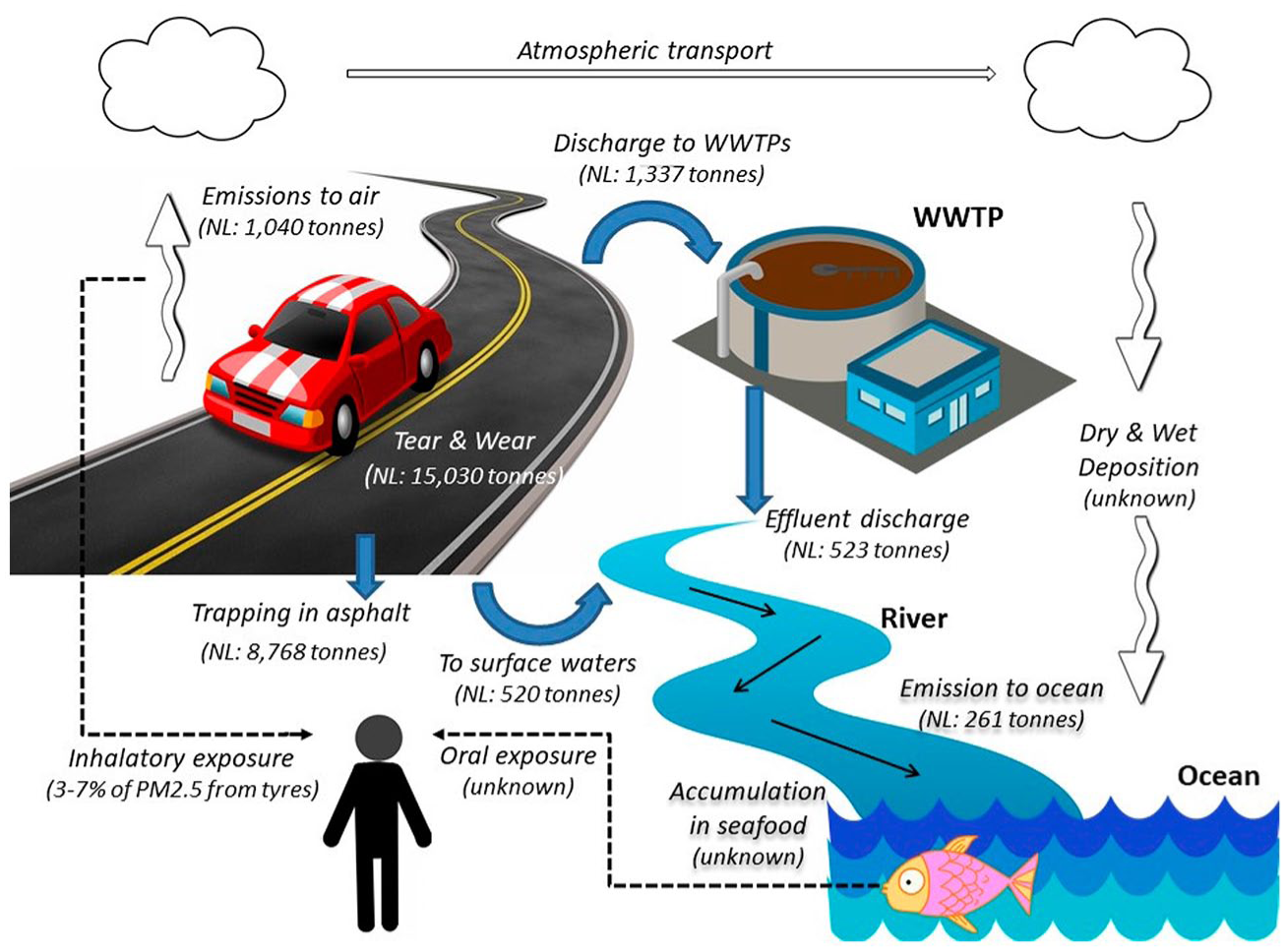
Distribution of tyre wear and tear.
Plastics as a driver of climate change
According to the report ‘The New Plastics Economy’ by the Ellen MacArthur Foundation, 4 the plastics industry consumes 6% of the global oil (including natural gas liquids (NGL)) supply and accounts for 1% of total anthropogenic carbon emissions. However, assuming a slower growth in total oil consumption (0.5% per annum), compared with a growth in plastics production (3.8% pa until 2025, then 3.5% pa until 2050), it is thought that by 2050, it will consume 20% of the total global oil supply. Taking account of carbon emissions from energy used in production and as a result of incineration/energy recovery (expected to increase from 14% in 2014, to 20% in 2050), it is thought that by 2050, production and use of plastics may account for 15% of the total global carbon budget, assuming a 2oC scenario. 4 As a possible further contribution to the overall carbon emissions from plastics, albeit those already discharged into the environment, it has recently been discovered that they degrade in the open environment to form the GHG, methane and ethylene. 90 Possible strategies to reduce the carbon footprint of plastics have been explored, 91 from which it is concluded that ‘aggressive application of renewable energy, recycling and demand-management strategies, in concert, has the potential to keep 2050 emissions comparable to 2015 levels’. However, to achieve a serious mitigation in emissions, it is also necessary to substitute fossil fuel feedstock with biomass 91 (to make bio-based plastics) on a very large scale, which, as noted earlier, would require a large conversion of the Earth’s arable land for the production of the necessary crops, for example, sugar cane or corn. The important aspect of this study is that it emphasises the need to integrate demand for energy and materials, with maximum recycling and demand management (mitigation), if the greenhouse gas emissions from plastics are to be held in check. 91
Plastic recycling
Rates of plastic recycling are reckoned at 30%, 25% and 9% in Europe, China and the United States, respectively; 2 however, it is estimated that roughly half of the global production of solid plastic is thrown away each year, that is, in excess of 150 million tonnes, 92 which accords with another statistic that approximately 50% of plastics are discarded after a single use. 38 The majority of plastic recovery is done mechanically, in which the organic component is recovered by washing, and is then shredded, melted and remoulded – frequently in a mixture with virgin plastic of the same type – so that it can be used to manufacture new plastic goods. Since this approach cannot be applied to thermosets and composites, only PET and different types of PE are recovered significantly, which, respectively, account for 9% and 37% of all plastics manufactured, while little more than 1% of the remainder is recovered. 3 Chemical recycling 3 includes such methods as catalytic pyrolysis, which uses the plastic as a feedstock for the production of gases, waxes, or fuels; however, it is, as yet, not widely used, due to the high energy consumption required. 3 A potentially promising advanced method for plastic recycling is depolymerisation, although necessary catalysts must be developed that can perform the process efficiently, without decomposing particular functional groups, and at acceptable energy and financial costs. 3 Methods for the processing of mixtures of plastics are also being sought3,93 to obviate the need for mechanical recovery efforts, which are laborious, lead to molecular structural deterioration, and in turn to a diminished strength of the materials, so rendering them less desirable than the corresponding virgin plastics; 93 plastics often also contain impurities (present as colourants, plasticisers, fire retardants, etc.), which may reduce such properties as opacity. The overall result is the creation of lower value materials, which eventually end up in landfill. Methods to upcycle plastic waste into high-value products by chemical recycling are currently being investigated. 93
In the present manufacture and use of plastic packaging, material flows are largely linear (i.e. ‘take, make, dispose’): 14% of plastic packaging is collected for recycling, 14% is sent for incineration/energy recovery, 40% is consigned to landfill, and the remaining 32% escapes into the open environment. However, of the 14% ‘recycling’ figure, 4% is lost during the procedure, while 8% is processed by cascade recycling (where it is converted into other, lower value products), and just 2% by closed-loop recycling (where it is converted into the same or similar quality applications, that is, a waste PET bottle becomes a new PET bottle). Thus, the input of virgin plastic to the system, overall, is still 98%. 4 Mismanaged plastic waste (MPW) is the major source of environmental plastic pollution, and from projections of global MPW generation, made at ~1 km resolution, it was estimated that some 60–99 million tonnes of MPW were produced in 2015, but this could reach 155–265 million tonnes per year by 2060, assuming a business as usual scenario. 94 Nations in Africa and Asia are expected to maintain their current high levels of pollution, unless, as their economies improve, and significant investment is made in creating necessary infrastructures for waste management. However, efforts are necessary, internationally, to curb the amount of plastic that is finding its way into municipal solid waste in the first place. 94 A major common feature of various strategies for dealing with plastic waste is to recast it as a resource, not a problem, and to work within the framework of a circular economy.4,95,96 The vision of ‘A New Plastics Economy’ 4 is that plastic never becomes waste or pollution, for which the following three actions are proposed to achieve this and create a circular economy for plastic:
Eliminate all problematic and unnecessary plastic items.
Innovate to ensure that the plastics we do need are reusable, recyclable, or compostable.
Circulate all the plastic items we use to keep them in the economy and out of the environment. 4
In any case, recycling is not cheap, and to do it more effectively requires changes in human behaviour; it also produces materials that are of lower quality, both in terms of their thermal and mechanical properties. 97 There are geopolitical aspects too, for example, the recent import ban by China, formerly the worlds’ greatest importer of ‘recycled’ plastic (Figure 9) from elsewhere, which is putting considerable pressures and burdens both on exporting and importing nations, in dealing with plastic waste. 98 Furthermore, it has been pointed out that plastic recycling merely delays, and does not prevent, plastic from ending up in landfill. 2 Finally, recycling does nothing to reduce growing global demand for plastics, and hence, to maintain current lifestyle, appropriate changes in the manufacture of plastics need to be made in step with effective recycling. 14
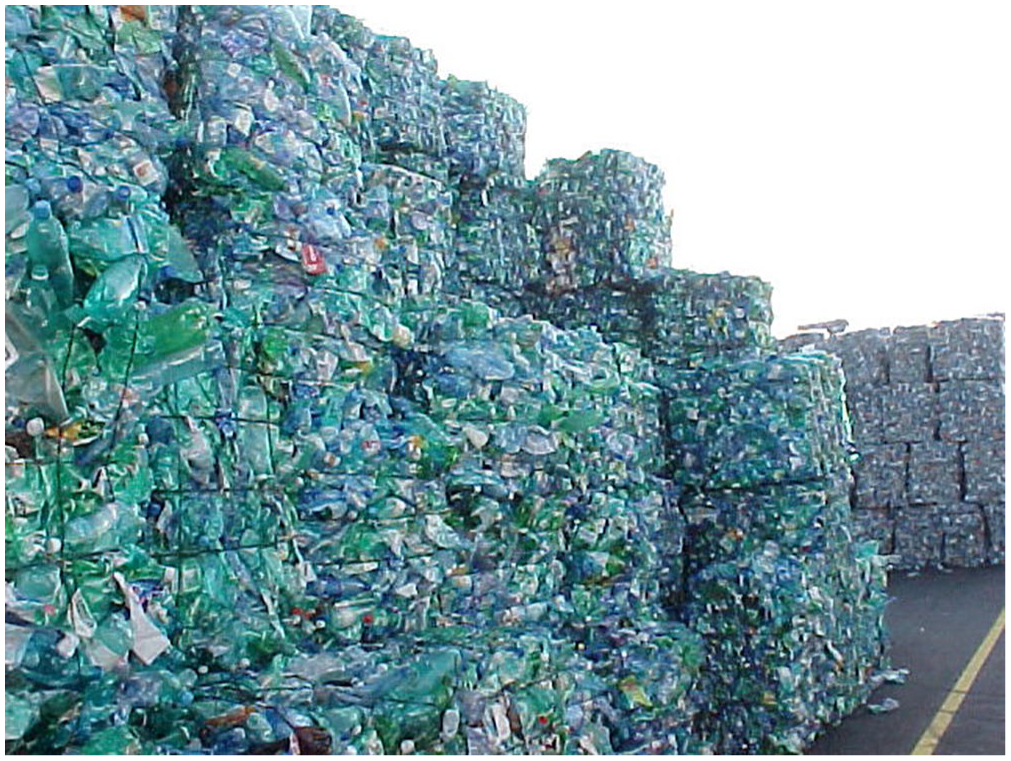
Bales of crushed PET bottles (many of which were exported to China, prior to the recent ban on importing recycled plastics).
Ocean cleanup strategies
In financial terms, the cost of marine plastic pollution has been reckoned at USD2.5 trillion per year. 99 ‘The Ocean Cleanup Project’ 100 is a non-government environmental engineering organisation based in the Netherlands, which develops technology with the aim to remove plastic that is present in the ocean. The methodology employs barriers placed in ocean gyres to collect marine debris, as the barrier is pushed by wind and current, and it is intended to emplace 60 such units in the Great Pacific Garbage Patch by 2021 to remove 50% 101 of the debris there over a 5-year period. After a couple of years of various tests, the prototype system suffered various operational problems and was finally towed to Hawaii for repairs and improvements in the design; however, it has been noted that in the 2 months that the device did operate for, some 2000 kg of plastic had been recovered. 102 It is aimed to make a further attempt later in 2019. Naturally, it is essential to know how much plastic there is, and where, and to this end, the project is collaborating with various universities and environmental groups to elucidate the facts of these matters. 67 However, even if successful, it is the larger sized plastic items that will be removed, and the strategy can do little for the microplastic burden that already permeates the ocean depths; although, naturally, once removed, the larger pieces will not degrade there to form further microplastics. Nonetheless, it is clear that the best way to reduce plastic in the oceans is to prevent it from entering them in the first place.
Using less plastic in the first place
Although there are significant potentials3,14,93 that might be realised through technological advances both in the manufacture of conventional plastics and the design of items made from them, they can more conveniently be recycled through the introduction of bio-based polymers (‘bioplastics’), as long as food production is not compromised, and improved collection and recycling methods are all largely means to alleviate the status quo, but essentially to preserve business as usual. However, various lifecycle analyses identify, as a very significant factor, the importance of reducing our demand for plastic materials per se.2,91,103,104 Around one half of plastic waste (by mass) arises from plastic packaging, 3 and if the 90% 14 of all plastic items that are used once, and then thrown away, are tallied together, some 50% of the total mass of manufactured plastics is thus accounted for. 38 The ‘Blue Planet Effect’ has stimulated several UK supermarkets to offer plastic-free alternatives,105,106 although in some cases such ‘loose’ fruit and vegetables are more expensive to buy than their plastic wrapped counterparts. 107 It has been argued that plastic packaging results in food lasting longer, with less being wasted; 20 however, this is only necessary as part of a global/industrial food production/distribution network, and a counterargument is that it leads to more food being bought, for example, ‘buy one get one free’ deals, but which is often then thrown away. 20 However, when food is grown locally, more of it tends to be eaten, and more quickly, with a reduced necessity for plastic packaging. 3 In addition, the need for fewer vehicles means that less plastic is needed 3 to fabricate their various components, along with a reduction in microplastic pollution, for example, from tyre abrasion on road surfaces (see ‘Airborne microplastic pollution from vehicles’ section). Campaigns to reduce waste from carrier bags (PE) and drinks bottles (PET) in Europe suggest that behavioural adjustments are possible, but plastics are such a deeply entrenched feature of our modern, consumer society that to break free from them entirely seems a remote prospect, at least without drastic changes to the fabric and mechanism of that society. 14 Given that a mere 9% of plastic waste is recycled currently, 2 considerable and fundamental amendments are required, and urgently, to make a real impact on eliminating plastic waste.
Plastic disposable water bottles (Figure 9), of which some 480 billion are sold across the world, annually (or over 15,000 per second!), and plastic carrier bags are banned by some businesses and communities, and certain regional authorities have pledged to introduce public drinking fountains, so that water bottles can be refilled. 3 Every year, in the United Kingdom, almost 2.5 billion disposable cups are used, which due to their composite nature 3 (plastic lining on a paper cup) are very difficult to recycle and hence mostly go to landfill. In Reading, the largest town in the United Kingdom, the ‘Refill Reading’ campaign 3 has been introduced – as a project of ‘Transition Town Reading’ – which encourages people to instead purchase a refillable cup (Figure 10) that is accepted by local coffee shops, many of whom offer a reduction of around 10% from the normal price of a cup of coffee, as served in a disposable cup. 3 There is also the Refill campaign, 108 where businesses that have signed up to the scheme will allow customers to refill water bottles that they carry with them, rather than buying water in plastic bottles that are then thrown away. This scheme began in the United Kingdom, but has since extended to other countries (Figure 11). 108 The UK government has confirmed that as of April 2020, there will be a ban on the sale and use of plastic straws and drink stirrers, and cotton buds with plastic stems, in England. 109

Symbol for ‘Refill Reading’, to indicate an outlet in the town of Reading, where refillable cups are welcome, usually at a reduced price from that changed for a drink, as normally sold in a disposable cup.
Logo for Refill Deutschland.
Conclusion
Despite the concern for the environment engendered by plastic pollution, which has led to a current sense of ‘all plastics are bad’, and the declaration of the ‘War on Plastic’, it is very unlikely that society can manage entirely without plastic materials, at least for the foreseeable future. The availability of cheap and diverse kinds of plastic has underpinned the growth of the consumer society, by unleashing a flood of consumer goods, 1 for example, the vast proliferation of mobile phones and related devices might not have occurred if they had to be made of something else, such as metals, and while plastics are indeed wonderful, they serve to drive and maintain a culture of modern consumerism. To reduce our use of plastic would necessitate fundamental changes to our behaviour and value systems. In the main, plastics would be best reserved for particular applications where they are not easily substituted for by other materials. 2 Plastic packaging accounts for 36% of all plastics made, but amounts to 47% of all plastic waste; 90% of all plastic items are used once, and then discarded, which corresponds to around 50% of the total mass of plastics manufactured. Evidence for the ubiquity of microplastic pollution is accumulating rapidly, and wherever such material is sought, it seems to be found. Thus, microplastics have been identified in Arctic ice, the air, soils, rivers, aquifers, remote maintain regions, food and drinking water, in the oceans, and ocean sediments, including waters and deep sea sediments around Antarctica, and within the deepest marine trenches of the Earth. They have also been detected in the bodies of animals, including humans, and as being passed along the hierarchy of food chains, up to marine top predators. Evidence has also been presented that microplastics are able to cross different life stages of mosquito that use different habitats – larva (feeding) to pupa (non-feeding) to adult terrestrial (flying) – and therefore can be spread from aquatic systems by flying insects.
The so-called ‘missing plastic problem’ appears to be, in part, due to limitations in sampling methods, that is, many of the very small microplastic particles may simply escape capture in the trawl nets that are typically employed to collect them, but have been evidenced in grab-sampling experiments. Moreover, it is simply not possible to measure entirely through the vast, oceanic volumes of the oceans. It can be concluded that the majority of the plastic is not located at the sea surface, and indeed, several different sinks have been proposed for microplastics, including the sea floor and sediments, the ocean column itself, ice sheets and glaciers, and soils. A significant contribution to airborne microparticulate pollution is made by the abrasion of tyres on road surfaces (and other ‘non-exhaust’ sources), meaning that even electric vehicles are not ‘clean’ in this regard, despite their elimination of tailpipe PM2.5 and PM10 emissions. While better design, manufacture, collection, reuse, repurposing, reprocessing/recycling of plastic items is necessary, a curbing in the use of plastic materials in the first place, particularly from single-use packaging, is demanded, as part of an overall reconsideration to use both fossil and other resources more judiciously, in which the role of deglobalisation/relocalisation may prove a critical factor. It has been argued that the use of plastic packaging results in less food waste, since food spoils less quickly when it is protected by plastic and can thus be preserved over longer timescales and hence transported over greater distances. However, a counterview is that consumers are thereby encouraged to buy an excess of food, which they later throw away. Indeed, the use of plastic packaging has become a central part of our industrialised food production and distribution system, which is underpinned by inputs of fossil resources (oil, gas and coal) to provide energy, fertilisers, pesticides, herbicides, and indeed the plastics themselves. As an alternative approach, food, and other necessities, might be produced more on the local than the global scale, with smaller inputs of fossil resources, water and fertilisers, and with a marked reduction in the need for plastic packaging. In addition to the greater preservation of the soil quality than is the case on industrialised farms, the more food that is grown locally, the less needs to be imported from across the country and indeed the wider world, thus saving on oil, mainly for transportation fuels, but also in the construction of vehicles themselves, according to a statistic that public and private transportation vehicles can now contain up to 20% plastic materials, 5 while 50% of a Boeing Dreamliner aeroplane is made from plastics. 5 Having fewer vehicles would also mean a reduction in airborne microparticulate pollution.
While the linear economic system appeared to work, untrammelled, on a smaller scale, it is now clear that there are limits to the rates of extraction of the finite resources, and conversion of the natural commons of the Earth, some of whose boundaries have been transgressed. 110 Thus, we see that an enlarging share of the limited global oil supply is being consumed by the manufacture of plastic materials, while the oceans, once thought so ‘oceanically’ huge that they could absorb whatever, and as much, human waste that strayed, or was dumped, into them, are now becoming ubiquitously polluted by plastic items, including microplastics. There are very many uncertainties regarding the likely outcomes of plastic waste accumulating in the environment, but it is generally acknowledged that such material does not belong in the oceans and indeed, having entered them, may pose a planetary boundary threat. 111 The recent IPCC report 22 on the measures that need to be taken to keep the mean global temperature below the 1.5 oC limit, require a massive curbing in global greenhouse gas emissions of 45% by 2030, reaching net zero by 2050. In this scenario, wholesale electrification of all infrastructure is planned, including transportation, 22 but efforts toward deglobalisation/relocalisation, requiring fewer vehicles and a decreased use of transportation fuels, in an effort to preserve the global oil supply and reduce pollution, including from plastics, would also assist in reducing carbon emissions.
It has been reckoned that in 2050, 20% of the global oil (plus NGL) supply will be consumed by the plastic industry. 4 Oil is needed for many other purposes, but depletion means potential problems in maintaining overall production, in particular if the fracking industry, which is currently running at a financial loss, stalls.112,113 However, the ‘war on plastic’ may provide a mitigating factor, since it has been predicted to reduce demand for oil, of similar magnitude to the effect of the introduction of electric vehicles to replace those currently running on petroleum fuels. 114 It is interesting to speculate that this ‘saving’ on oil use might be offset by an increased use of fuel, as required to transport heavier containers, made from glass, in place of those made from plastics according to the 2019 edition of the BP Energy Outlook. 115
In 1955, the American, Life Magazine, celebrated the dawn of ‘Throwaway Living’, but we have since learned that there is no ‘away’ where we can throw anything.
Plastics are indeed wonder-materials and have facilitated the creation of the modern, industrialised world. However, their robustness means they degrade only slowly and poorly in the environment and now pollute the oceans, the air, drinking water and food. The treatment of land with sewage sludge is thought to make a significant contribution of microplastics to soil. 116 The emergence of nanoplastics in the environment poses a new set of potential threats, although any impacts on human health are not yet known, save, as indicated from model studies. 117 As alarming as this all may sound, plastic pollution is really just one element in the overall matrix of a changing climate (‘the world’s woes’) and must be addressed as part of an integrated consideration of how we use all resources and the need to change our expectations, goals and lifestyles. Hence, the word ‘reincarnation’ in the title of this article refers to a future civilisation that is recast in using its resources to achieve regeneration, rather than degeneration, of its environment.
Footnotes
Declaration of conflicting interests
The author(s) declared no potential conflicts of interest with respect to the research, authorship and/or publication of this article.
Funding
The author(s) received no financial support for the research, authorship and/or publication of this article.
Author biography
 ) which cover radiation chemistry, catalysis, zeolites, radioisotopes, free radicals and electron paramagnetic resonance spectroscopy and more recently have developed into aspects of environmental decontamination and the production of sustainable fuels. Chris has given numerous radio and televised interviews concerning environmental issues, both in Europe and in the United States – including on BBC Radio 4’s Material World. Latest invitations include a series of international lectures regarding the impending depletion of world oil supply and the need to develop oil-independent, sustainable societies. He has published more than 250 peer-reviewed scientific articles and six books. He is also a published novelist, journalist and poet.