




Abstract
This study aims to evaluate the theoretical claims of American Civil Religion (ACR) in the context of the sociological experiences of American Muslims. The lack of sufficient research on ACR’s potential to include minority groups underscores the significance of this study. The research examines how ACR’s core values—unity, inclusivity, equality, and diversity—are reflected in the experiences of American Muslims. It is based on semi-structured interviews with 16 American Muslims in Phoenix, Arizona. The findings reveal that while ACR theoretically presents itself as a unifying and inclusive narrative, it was often perceived to operate in ways that exclude certain religious and ethnic groups. Participants highlighted that ACR’s rhetoric is Christian-centric, weakening the sense of social belonging among American Muslims. Furthermore, ACR is perceived not only as exclusionary but also as a factor complicating social cohesion for minority groups. In conclusion, this study emphasizes the need to reassess ACR’s theoretical claims in light of American Muslims’ lived experiences. It contributes to ACR literature and broader sociological discussions on the relationship between minority groups and religious frameworks.
Introduction
The concept of American Civil Religion (ACR) has been a topic of academic interest since Robert Bellah’s influential work. Despite the passing years, this concept remains a primary focus of scholarly discussion. Bellah defined ACR as a unifying factor for most American society, emphasizing its role in bringing the community together (Bellah 1967; Fuist and Williams 2015). ACR embodies values such as freedom of religion, pluralism, equality, and justice while promoting inclusivity, unity, and integration. Bellah’s (1967) study characterized civil religion as a structure that balances religious, ethnic, political, and ideological differences within society and argued that most Americans accepted these values. Hence, ACR represents the highest common denominator of society, and a large portion of the American population identifies with this civil religion.
A literature review indicates that ACR has primarily been discussed in theoretical and historical contexts, neglecting its sociological dimension. In the early discussions on ACR, several empirical studies were carried out (Christenson and Wimberley 1978; Gamoran 1990; Jolicoeur and Knowles 1978; Thomas and Flippen 1972; Wimberley 1976; Wimberley and Christenson 1980; Wimberley et al. 1976). However, these studies have been limited in quantity and focus, neglecting the experiences of minority social groups that could showcase ACR’s real potential. In other words, the preliminary studies aimed at assessing the social impact of civil religion were insufficient in evaluating its inclusivity in bridging societal differences. Furthermore, these studies were also conducted during relatively stable and less conflictual times. While there have been some recent attempts (Squiers and Arsenault 2023; Vegter, Lewis, and Bolin 2023) to address the lack of empirical studies, there is still a significant need for research that aims to uncover the empirical reality of ACR. This study, therefore, seeks to examine whether ACR is merely an abstract ideal or a lived sociological reality through empirical studies involving diverse social groups. Given the United States’ status as a predominantly Christian country with diverse religious, cultural, and ethnic backgrounds due to immigration, it presents a valuable opportunity to examine how American Muslims in this sample perceive and engage with the core tenets of ACR, assessing whether these principles are inclusive of their identities and experiences.
The purpose of this study is to test the claims of ACR, specifically regarding unification, equality, inclusivity, and pluralism, through the experiences and perspectives of American Muslims, a growing segment of American society. Although these values do not form a fixed framework in Bellah’s foundational essays, they are often discussed, either directly or indirectly, in his later works and in subsequent literature that interprets or critiques ACR concerning unity, equality, and pluralism (Bellah 1992; Coleman 1970; Gorski 2017; Williams 2013). These themes also play a significant role in critical conversations about ACR’s accessibility for minority groups (Chernus 2012; Danielson 2019; Gedicks 2009). The study aims to fill the gaps in existing literature and contribute to its development. American Muslims have been underrepresented in academic studies (Asfari, Hirschbein, and Larkin 2019; Asfari and Shuraydi 2020; Shaheen 2012) but closely observed by the media and subjected to hate crimes, especially following the September 11 attacks (Byers and Jones 2007; Kaplan 2006). The lack of literature evaluating ACR from the perspective of American Muslims presents an opportunity to gain insights into this religious group, but it is not sufficient for a comprehensive understanding of American Muslims or the empirical dimension of ACR. It is beneficial to draw on insights from sociology, political science, religious studies, and media studies to gain a deeper understanding of how ACR is perceived and practiced across various social groups, particularly among American Muslims. These disciplines provide complementary lenses on identity, public perception, policy discourse, and pluralism. This interdisciplinary approach enables a more grounded sociological evaluation of ACR, moving beyond abstract theorizing to consider how it is experienced and interpreted in diverse contexts. In this context, the present study investigates whether American civil religion is genuinely inclusive and representative of diverse communities, focusing on the experiences of American Muslims. It also aims to contribute to future research that explores how ACR is interpreted across various social and religious groups.
Literature Review
Scholars in the civil religion tradition have long framed American Civil Religion (ACR) as a unifying and legitimizing force grounded in a non-sectarian or non-partisan view of American national identity (Bellah 1967, 1992; Cherry 1969; Cole and Hammond 1974; Coleman 1970; Hammond 1980; Herberg 1983; Mead 1974). It is considered an ideal that brings society together (Richey and Jones 1974) and is seen as a social and cultural cohesion (Cristi 2001; Fuist and Williams 2015; Williams 2013). ACR has been described as a structure that embodies values such as freedom, justice, democracy, tolerance, charity, and equality (Bellah 1992; Tanenbaum 1975). This concept of civil religion is focused on ACR, as outlined by Durkheim’s theory of religion. Similar to all religions, civil religion is a phenomenon that fosters social harmony, creates a shared moral understanding, and provides an explanation and justification for society. In this context, civil religion serves as a source of legitimacy (Bellah 1967; Coleman 1970; Demerath and Williams 1985; Fenn 1977; Fuist and Williams 2015; Gehrig 1981b; Gorski 2015, 2017).
It has been emphasized that integration is one of the core ideas underlying the concept of civil religion. According to Coleman (1970), civil religion, to the extent that it is sufficiently differentiated from established institutional religions in countries such as the United States, is by its very nature a religious structure that enables the social integration of society. In contemporary times, however, it has been emphasized that any religious structure, including civil religion, cannot produce comprehensive cohesion in society. Richard Fenn is one of the most prominent representatives of this understanding. According to him, although civil religion has been developed as a social solution to overcome ethnic and religious differences that have the potential to divide society, it is, in fact, a myth constructed depending on social conditions. Although the state always utilizes the symbols of civil religion, it does not confine itself to its principles. These symbols of civil religion lose their unifying potential and become tainted when the state diverges from these principles yet masks its political and economic actions with these symbols (Fenn 1978). In such cases, civil religion loses its ability to unite citizens.
On the other hand, it has been argued that American society’s diverse experiences and the diversity these experiences bring have eroded civil religion’s unifying capacity. For example, Gedicks (2009) highlights how rapid demographic changes in three key areas have made establishing a unified civil religion in America unattainable. These areas encompass the surge in non-believers, the expansion of individuals beyond the Judeo-Christian tradition, and the burgeoning interest in post-modern spirituality. These trends suggest that the growing number of non-believers, the increasing variety of religious traditions, and the shift toward personalized spiritual practices present challenges in maintaining a cohesive civil religion in contemporary American society. This necessitates a reassessment of the fundamental assumptions of civil religion.
While some argue that ACR differs from nationalism (Bellah 1967; Coleman 1970; Haberski 2012; Vegter et al. 2023), the literature highlights a significant connection between civil religion and Christian nationalism (Danielson 2019; Long 1974; Moosa 2010; Murphy 2011). Civil religion is often depicted as a framework that supports white Christian nationalism, leading to division and posing a threat to diversity (Chernus 2010, 2012). It is viewed as a tribal concept closely associated with Christianity and white Americanism (Williams 2013) and is perceived as a myth that essentially equates to nationalism (Danielson 2019). However, Gorski (2017) argues that ACR and White Christian Nationalism (WCN) are fundamentally distinct. According to him, ACR is rooted in a covenantal tradition that integrates prophetic religious ethics with civic republicanism, promoting a pluralistic vision of national identity. In contrast, WCN fuses religious and national identity in an exclusionary manner, seeking to privilege white Protestantism as the defining feature of Americanness. While ACR recognizes the public role of religion and upholds the institutional separation between church and state, WCN promotes a more integrative approach, aligning religious authority with political governance (Gorski 2015, 2017). Empirical research further supports these distinctions; for instance, Squiers and Arsenault (2023) found that in its rhetorical form, ACR remains a non-sectarian civic identity, whereas WCN is closely associated with conservative political ideologies and exclusivist religious nationalism. However, despite these theoretical distinctions, scholars such as Gerteis and Danielson caution that ACR has historically overlapped with WCN, mainly when mobilized by political elites to construct an exclusionary vision of Americanness. For instance, Hartmann, Gerteis, and Croll (2009) found that nearly three-quarters of American Christians believe that America is, or should be, a Christian nation, reflecting how religious identity influences national belonging and civic inclusion.
A key aspect of civil religion is being viewed as a self-sufficient entity separate from the church and state (Bellah 1967; Gehrig 1981a, 1981b). Coleman (1970) stated that civil religion is “a religious system, designed to perform a differentiated function which is the unique province of neither church nor state.” Additionally, despite its extensive biblical origins, civil religion is not associated with a particular faith and is set apart from all religions, as explored in the literature on ACR (Bellah 1967; Carlson 2017; Cristi 2001; and see. Gorski 2017). The thesis that civil religion exists independently of church and state, separate from political and religious domains, has been contested by critics of civil religion (Chernus 2010, 2012; Cristi 2001; Fenn 1977; Gehrig 1981a; Gerteis 2011). While some early fieldwork in the literature supports Bellah’s claims (Wimberley and Christenson 1980), others have argued that civil religion has never been clearly distinct from either the church or politics (Gehrig 1981a). Instead, political leaders have often acted as its official interpreters, instrumentalizing civil religion for political ends (Cristi 2001).
Empirical Studies of American Civil Religion (ACR)
The empirical dimension of ACR has received relatively little attention. While there is a vast literature on the topic, the studies have mainly focused on the philosophical and historical aspects, that is, the theoretical dimension. However, some studies were conducted during the early stages to assess its empirical counterpart. These studies, aiming to gauge the societal dimension of Bellah’s American model of civil religion, obtained different results. For example, Thomas and Flippen (1972) analyzed national newspapers during the “Honor America Weekend” on July 4, 1970. They discovered that although many American values are essential, they are often not linked to divine origins, making them inconsistent with a transcendent civil religion. In contrast, Jolicoeur and Knowles (1978) identified transcendent civil religious beliefs within Masonic fraternal orders, aligning with Bellah’s theory. Furthermore, numerous surveys conducted by Wimberley et al. (Christenson and Wimberley 1978; Wimberley 1976, 1980; Wimberley and Christenson 1980; Wimberley et al. 1976) aimed to test Bellah’s model at the individual belief level, revealing a distinct civil-religious dimension of belief. In 1990, Adam Gamoran empirically studied the relationship between ACR and public schools. He concluded that public schools in the United States play a crucial role in producing and transmitting ACR. Accordingly, schools are critical in instilling civil religious beliefs and practices in future citizens. Nonetheless, he observed that not all students can engage fully in this process due to variations in their religious, racial, or ethnic backgrounds (Gamoran 1990).
This early research evidence, much of which supports Bellah’s model, has been interpreted as evidence that some form of civil religious understanding permeates American culture (Fuist and Williams 2015). However, it is unclear whether the term “American culture” here refers to all elements of American social reality. On the other hand, the common feature of these studies is that they were conducted when social differentiation was relatively low compared to today, and polarization was not intense (Vegter et al. 2023). Therefore, there seems to be more consensus on this issue. Further research has been proposed to investigate the connections and interactions between civil religion and American institutions to understand structural differences better (Gehrig 1981a). Furthermore, it is argued that civil religion has not been differentiated from the church or politics throughout history (Gehrig 1981a). On the contrary, political figures have been its official interpreters, and civil religion has been instrumentalized by the political elite for political purposes (Cristi 2001).
Recent studies have delved deeper into the empirical aspects of civil religion, especially in the context of a more polarized society. Hickel and Murphy studied the influence of Trump’s rhetoric and civil religious beliefs on his support base, particularly among those with prejudiced attitudes. They discovered that symbolic racism, modern sexism, and civil religious beliefs significantly shaped attitudes toward Trump (Hickel and Murphy 2022). Similarly, Vegter et al. explored the relationship between civil religion, nationalism, and partisanship in America. Their findings indicate that civil religion, although distinct from Christian nationalism, is often interpreted in partisan terms rather than as a unifying force (Vegter et al. 2023). Lastly, Squires and Arsenault analyzed presidential election speeches from 1960 to 2020, confirming that ACR is non-sectarian and distinct from Christianity yet continues to align along partisan lines. These contemporary studies underscore the evolving nature of ACR and highlight the need for ongoing research to understand its current manifestations and implications in a divided society (Squiers and Arsenault 2023).
American Civil Religion (ACR) and American Muslims
The studies on American Muslims have increased and diversified over time, but few studies examine ACR from the perspective of American Muslims. Most studies that do focus on American Muslims in terms of civil religion relate to the September 11 attacks. According to Chernus (2010), the concept of ACR declined in the 1990s but was revived by the September 11 attacks. In this regard, there seems to be a resurgence of ACR debates somehow linked to Islam, albeit through a negative example. It’s important to note that ACR literature often associates Muslims with the September 11 attacks (McDonald 2013; Williams 2013).
McDonald (2013) regards the September 11 attacks as the fourth trial for America, following the Revolutionary War, the Civil War, and the Vietnam War. Mori (2005) analyzes the acceptance of Islam in American society and its place in ACR, discussing the compatibility of Islam with American civil religious ideals and the experiences of Muslims in American society. The literature reflects that the majority of American society often sees Islam as an unaccepted “foreign religion” (Mori 2005), an “enemy” (Manis 2012), “other” (Khan 2012), and “inherently intolerant, violent, and antithetical to American values” (McDonald 2013), despite various efforts by American administrations. In a study on American exceptionalism, which is closely linked to ACR and American Muslims (Khan 2012), it is stated that American exceptionalism excludes and marginalizes African Americans and Muslims and that they do not enjoy the privileges granted to white Americans, weakening Muslims’ support for American exceptionalism and civil religion.
While exclusionary tendencies have been widely documented, recent research suggests that American Muslims also engage with ACR in more pragmatic ways, particularly at the collective level. Cantori (2024), for instance, examines how Muslim advocacy organizations strategically employ ACR rhetoric to establish Islam as compatible with American values, illustrating that interactions with ACR are shaped by both structural constraints and opportunities. This perspective provides a broader understanding of the varied ways American Muslims navigate ACR, demonstrating that exclusion and strategic adaptation are not mutually exclusive but rather exist along a spectrum depending on socio-political context.
Most research on ACR relies on theoretical approaches. Although many studies (See Williams 2013) have highlighted the importance of conducting field research to understand the societal dimensions and extent of ACR’s influence on American culture, there has been a long-standing neglect of the empirical aspect. To validate the assumptions made by a theory concerning society, the most direct approach is to measure these assumptions at the societal level, essentially employing a sociological perspective, grounded in empirical fieldwork and the lived experiences of a historically underrepresented group. This study examines key assumptions of ACR—particularly unity, equality, inclusivity, and pluralism—through the lens of American Muslims, a demographic that has become increasingly significant and cannot be overlooked (Mohamed et al. 2017; Williams 2013). Drawing on multiple surveys conducted by the Pew Research Center over the past decade, American Muslims have emerged as one of the fastest-growing, most ethnically diverse, and highly religious minority communities in the United States (Mohamed 2018, 2021; Pew Research 2007, 2017, 2018, 2024b). As such, as indicated by Pew’s studies, they have increasingly become central to public debates on national identity, religious pluralism, and public safety. However, their significance extends beyond demographic growth, as they frequently encounter systemic stigmatization (Ali 2011), are often framed not merely as religious adherents but as representatives of a broader ideological or political force (Cesari 2013; Patel 2024), and are routinely misrepresented in public discourse (Patel 2024; Samaie and Malmir 2017). These socio-political dynamics make American Muslims particularly relevant for assessing the perceived inclusivity of ACR, as their lived experiences provide crucial insights into whether ACR is experienced as an inclusive civic framework or reinforces exclusionary boundaries. By examining the societal impacts of ACR and the interactions of American Muslims with this concept, this research seeks to contribute to filling a critical gap in the literature.
Methods
Settings and Participants
The study was carried out in Phoenix, Arizona. Phoenix’s Muslim population is diverse, with a growing community from various backgrounds and nationalities. The majority are Sunni Muslims, with a significant number of Shia Muslims. Arab Muslims form the largest group, followed by Pakistanis and other Islamic immigrants from South Asia, Africa, and Southeast Asia. The Muslim community is an integral part of Phoenix, with numerous mosques, masjids, and Islamic centers serving as hubs for religious and social activities. These places provide a sense of community and belonging for followers of Islam in Phoenix, allowing them to practice their religion freely and comfortably (Ali 2011, 2021; Iqrasense n.d.).
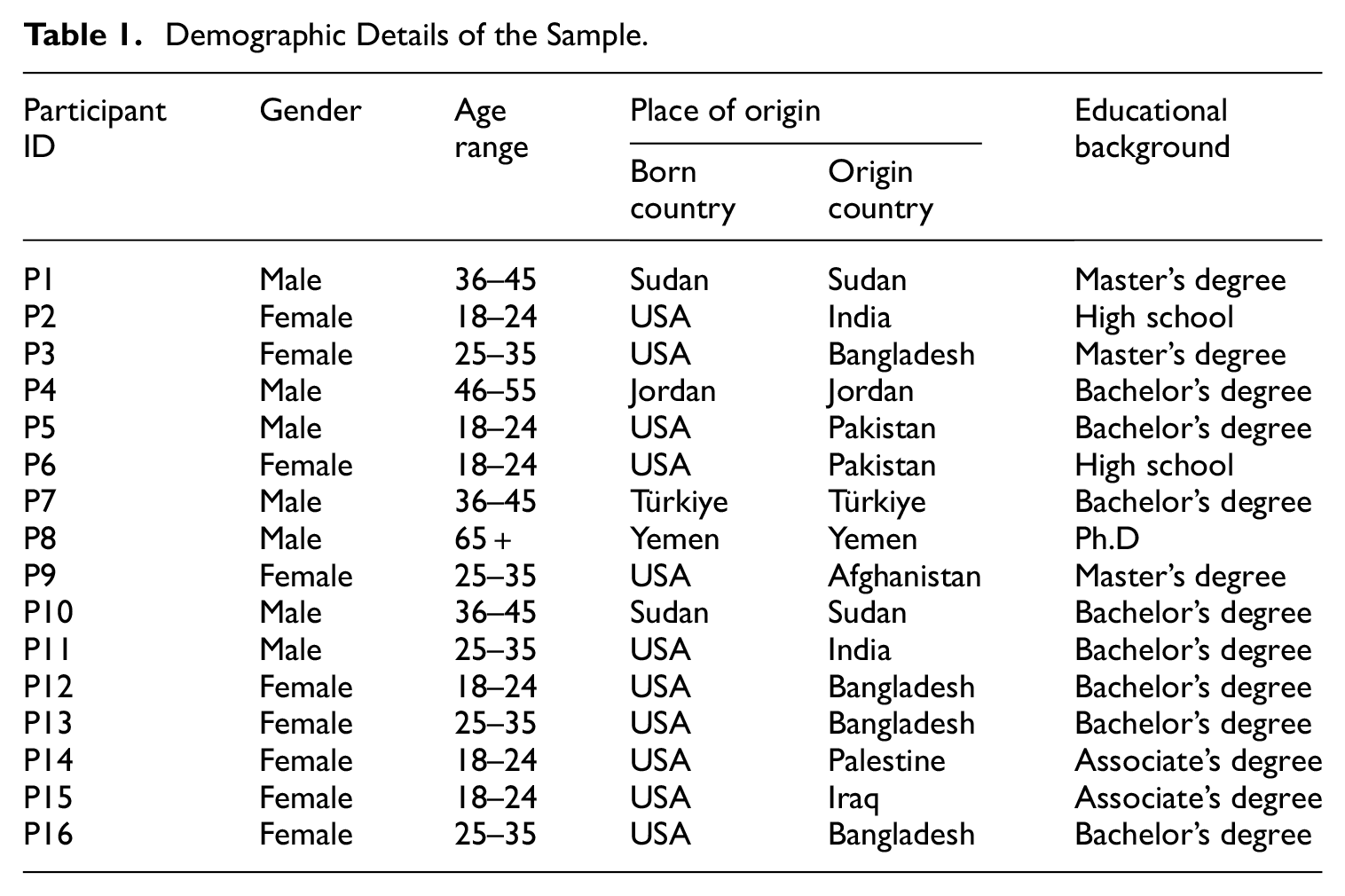
In this qualitative field study, 16 Muslim Americans from diverse backgrounds, aged 18 to 67, were selected to reflect a wide range of perspectives within the community. Participants came from 10 different countries—including Bangladesh, Pakistan, India, Sudan, Türkiye, Jordan, Afghanistan, Palestine, Yemen, and Iraq—highlighting the diverse ethnic and cultural backgrounds represented among Americans Muslims. The sample included nine women and seven men with varying educational backgrounds, ranging from high school diplomas to advanced degrees. Most participants (11 out of 16) were born in the United States, while the remaining 5 were immigrants. Religious observance levels and socioeconomic statuses also varied significantly across the sample. This diversity was not intended to ensure statistical representativeness; instead, it aimed to include a sufficiently varied set of participants to avoid basing conclusions on the particularities of a narrow subgroup. While the study did not pursue systematic comparisons across subgroups, this diverse composition allowed for identifying shared themes and concerns that resonate across different segments of the American Muslim community.
As detailed in the table below, the sample consisted of individuals aged 18 to 67 years, comprising nine females and seven males. They had varying educational backgrounds, ranging from high school diplomas to advanced degrees, and came from 10 different countries, highlighting the diverse ethnic and cultural backgrounds represented among American Muslims. Most participants were born in the United States. Religious observance levels and socioeconomic statuses also varied significantly across the sample. This diversity was not intended to ensure statistical representativeness; instead, it aimed to include a sufficiently varied set of participants to avoid basing conclusions on the particularities of a narrow subgroup. While the study did not pursue systematic comparisons across subgroups, this diverse composition allowed for identifying shared themes and concerns that resonate across different segments of the American Muslim community (Table 1).
Demographic Details of the Sample.
Participants were initially recruited through face-to-face communication at mosques, events, and community centers, and later expanded using the snowball method (Handcock and Gile 2011) by encouraging participants to refer interested friends or family. While the initial recruitment was based in community religious settings, the snowball technique facilitated the inclusion of individuals with varying levels of institutional religious engagement, thus enhancing participant diversity. I acknowledge that utilizing purposive snowball sampling restricts the generalizability of the study. Owing to the small sample size, the narratives presented in this study may not comprehensively encompass the experiences of all American Muslims (Morgan 2008; Raina 2015). Therefore, it is important to recognize that the findings from the interviews may not fully capture the diverse spectrum of American Muslims due to this limitation and should not be extrapolated to the entire American Muslim population. Potential participants were screened for eligibility based on the following criteria: individuals had to be over 18 years of age, identify as American Muslim (either religiously or culturally), and hold US citizenship.
Data Collection
The data in this study was gathered from 16 in-depth interviews with American Muslims. The interviews took place from March to May 2024 and were primarily conducted in English, with one interview in Turkish. The interviews lasted between 45 and 60 minutes, providing ample time to delve into participants’ experiences and perspectives. The interviews were conducted in various settings based on the interviewees’ preferences. These settings included the participants’ homes, libraries, Islamic centers, and coffee shops. All the interviews were conducted in person and recorded using audio equipment with the consent of the participants. The transcripts were then created using an internet-based application and meticulously reviewed in their entirety to minimize the potential for transcription errors.
Semi-structured individual interviews were conducted to delve into participants’ experiences through face-to-face interaction. The author recorded and transcribed all discussions verbatim. The duration of the interviews ranged from 45 minutes to about one hour. During the interviews, I avoided direct inquiries into the concept of American civil religion, a term that many may find unfamiliar. Instead, I focused on understanding the significance of fundamental assumptions tied to American civil religion- namely unity, equality, inclusivity, and diversity- as American Muslims perceive them. These assumptions acted as thematic anchors during the coding and analysis stages. These concepts were chosen thoughtfully, rather than assigned arbitrarily. They are recognized in the literature as key civic ideals associated with American civil religion and closely reflect the common concerns raised by participants during the interviews. Although participants were not directly prompted with instances of ACR, the interview guide featured open-ended questions regarding national identity, belonging, religious inclusion, and views on civic equality, each of which implicitly connects to essential ACR values. This approach proved effective, as most participants were not well-versed in the academic terminology related to ACR. The entire interview guide, presenting the full interview protocol, including the consent explanation, demographic prompts, core questions, and follow-up probes, is provided as a Supplemental document to offer further insight into the structure and objectives of the interviews.
Given this study’s qualitative and interpretive nature, it is important to reflect on the researcher’s positionality and influence on the interview process. Being perceived as someone who shares cultural and religious background similarities with the participants often positioned me as a trusted figure, potentially fostering a sense of safety and openness during the interviews. While this familiarity may have encouraged more candid responses, I remained mindful of my role as a researcher and made deliberate efforts to stay neutral and avoid asking leading questions. Throughout the data collection phase, I maintained a neutral stance and avoided leading questions or prompts that might imply specific values or expectations. While my positionality may have helped build rapport, I remained mindful of its potential influence and consciously avoided shaping participants’ responses.
Data Analysis
Interviews were recorded with participants’ consent and transcribed verbatim using MAXQDA 2018 software for qualitative analysis. Braun and Clarke’s (2006) reflexive thematic analysis was employed to examine how American Muslims engage with the core concepts of American civil religion in their everyday narratives. The analysis began with the researcher familiarizing themselves with the data by reviewing the transcripts and comparing them with the audio recordings. Initial codes were generated in MAXQDA, refined, and grouped to form preliminary themes and subthemes. Given the study’s aim of exploring how American Muslims engage with the normative ideals of ACR, a theoretical (top-down) approach was adopted—one in which the analysis was guided by existing theoretical constructs rather than emerging purely inductively from the data (Braun and Clarke 2006).
Furthermore, it is important to contextualize the interviews within the period of heightened Israeli-Palestinian conflict, during which the American administration’s explicit support for Israel served as a significant backdrop. This political climate likely influenced participants’ responses regarding national belonging, identity, and inclusion.
Ethics and Consent
I obtained verbal consent from all participants, explained the study’s goals in person, and provided an information sheet. Participation was voluntary, and participants were free to withdraw at any point during the interview. To preserve confidentiality, participants are identified in this study solely by their gender, education, and whether they were born in the United States and their country of origin. This study received ethical approval from Arizona State University’s Institutional Review Board (IRB ID: STUDY00019731).
Findings
This section presents key findings derived from interviews with American Muslims, organized around four themes: unity, equality, inclusivity, and diversity. The findings of this study indicate a complex relationship between participants’ lived experiences and the theoretical frameworks through which inclusion can be analyzed. While experiences described by participants could theoretically be analyzed through broader liberal democratic values, the specific objective of this study is to explore how these experiences resonate with the public narrative of inclusion articulated by ACR. Therefore, following a theoretical thematic analysis approach, which is guided by the researcher’s analytic interest in the area and is explicitly theory-driven (Braun and Clarke 2006), participant responses have been interpreted in relation to the symbolic ideals and rhetorical claims associated with ACR. Rather than viewing these narratives merely as expressions of alienation within a liberal democracy, the analysis frames them as implicit critiques of the public discourse, imagery, and normative expectations promoted by ACR or as points of alignment with them.
Unity: A Fragmented Ideal
Unity is a fundamental aspect of American civil religion, fostering a shared national identity beyond individual differences. However, participants in the study identified several obstacles to achieving this ideal, especially for American Muslims. They observed that unity frequently breaks down along religious, racial, and social divides, indicating a fragmented sense of belonging. While some recognized the shared values of Islam, Christianity, and Judaism as a possible means for enhancing unity, others pointed to hidden barriers stemming from religious privilege and societal prejudices. These observations illuminate unity’s intricate and often restricted nature within American civil religion.
Discussions often refer to an American “we” that aims to include all parts of society and highlight the unity of American civil religion. However, when asked if this “we” encompasses all social groups, most participants (12 out of 16) disagreed, stating it does not exist in America. One participant noted that various interpretations of “we” exist, emphasizing that her “we” represents people of color and minorities who often feel excluded from the identity associated with white Americans.
I don’t think that, because I think that there is multiple “we”s, you know. There’s multiple “we”s. There’re multiple groups of people in America that are we, we, we. I, when I say “we”, I think of my people. I’m not thinking about white people because, to me, that’s not “we”. I know I grew up here, and I know that they don’t think of me as them. So, to me, the people of color, the people that are part of the minority, that’s my “we”, you know. And it might separate us more, but I’m just that person that I know they don’t think of us that way. So, I know that there are multiple different “we’s” here. (Participant 13)
Similarly, another participant reflected on the limitations of unity in America, suggesting that a meaningful and inclusive “we” has never truly existed.
Currently? No, I don’t think so. Historically, it has never been. I mean, you’ve seen that the interests of certain groups of people have dominated American interests historically, right? And right now, we’re seeing like, you know, we saw the civil rights movement, we saw like, these are all other trans movements, women’s rights movements, and all of these things, or these movements have provided us with progress towards a more holistic ‘we’. But is that ‘we’ meaningful right now? No, it’s not. (Participant 9)
Participants also noted that American unity favors specific religious groups, especially Christians, who often feel a sense of belonging to the national community. In contrast, Muslims encounter barriers to achieving similar recognition. Many remarked that media and political narratives link Christianity with American identity, complicating Muslims’ integration. This creates an “invisible barrier” to unity for Muslims, indicating that religious dynamics significantly influence perceptions of unity, with Christianity holding a dominant role.
Some participants expressed that life in America is simpler for Christians compared to Muslims, noting that Muslims face unseen hurdles that they struggle to overcome.
I feel as though, so, there’s, of course, I’m not saying like I’m not an American just because I’m Muslim. But America makes life for following Christians who just support America as a whole so much more than a Muslim would, like supporting a certain contestant in an election, for example. I feel like it’s just there’s this slight invisible wall that you can never pass because you can’t see where it’s at, you don’t know what to do to become a true American, but somehow Christian Americans, it’s just so much easier for them to like pass that wall so quickly, you know? I don’t know if that makes sense but … (Participant 15) I just believe that, yes, it is easier to be a Christian in the U.S. than it is to be a Muslim. (Participant 1)
Another participant mentioned that non-Christians might encounter difficulties, particularly in certain regions of the country. In these areas, Christianity is definitely an identifier as an American. So, you should be a Christian American. They don’t expect a Muslim American. They don’t expect any other religion to be the number one identity for Americans. For sure. (Participant 10)
Nonetheless, most participants indicated that the assertion that America was founded on Judeo-Christian principles did not threaten their religious identity. They largely justified this by noting that Islam shares the same roots as both Judaism and Christianity, as well as similar values and traditions.
In my mind, I don’t see Islam, Judaism, and Christianity as very different things. I see them as divine messages from one God or at different points of time and as such I see that the roots the origins are one. I see … I believe there’s a lot of commonalities between them. I believe Islam is the completion of that message. I see Islam is the continuation of the message of Christianity so as such I see them as coming from the same source having very similar origins at the same time. (Participant 1)
Another participant mentioned that Judaism, Christianity, and Islam all originate from the Abrahamic tradition, highlighting that adherents of these religions share more similarities than they typically acknowledge.
My family practices Islam regularly and I always had this idea that the Abrahamic religions at least all had that similarity where I feel like everything I’m hearing is lining up with everything they’re saying. They’re saying it’s just different names like Noah and Nuh [Arabic], Jesus is the same, Jesus, Isa, they didn’t have a Muhammad but there’s a lot of very similar themes that gave me a bit of comfort because it felt in my mind these people that hate us because we’re from this country or from this religion, they don’t realize that we’re actually so similar … I do think that Muslims, Christians and Jewish people have a lot more similarities than they realize. (Participant 11)
Equality: A Conditional Promise
Equality stands as a fundamental principle of American civil religion, yet those in this study characterized it as an ideal that remains unfulfilled for American Muslims. They pointed out that deep-seated biases, especially those favoring Christianity and White Americans, continue to exist, despite noticeable initiatives aimed at fostering acceptance. Participants noted that these systemic obstacles limit equal opportunities for Muslims in both professional and social settings, highlighting the disparity between the ideal of equality and their actual experiences realities. When reflecting on the equality of Muslims in the USA, one participant noted that Maybe on the outside, like people are so nice and accepting and they get jobs and they offer interviews, this and that. But on the day-to-day life, again, it’s hard to be a Muslim in America, whether it means like finding prayer times, finding places to pray, or having to take off of work for special days, like on Fridays. It’s always harder to be a Muslim in America. (Participant 2)
A participant noted a bias favoring Christians, explaining it stems from the fact that Christians make up the majority of the population. He pointed out that just as Muslim-majority nations show a preference for Muslims, similar dynamics apply to Christians in the USA.
From what I see, yes, certain religions, the majority, takes a preference. And that’s normal. It’s understandable. In Muslim countries, the mosques take priority. There are churches, there are synagogues even in certain Arabic countries. But what takes preference or priority is the Muslim faith. It’s understandable. This is not to say that Christianity is not being treated well. They actually have amazing churches in the Middle East, and you know. But it’s based on the majority of the faith that it’s being practiced in the country. The majority here is Christianity. And they’re getting the biggest buy, which is normal. It’s understandable. (Participant 4)
When it comes to equal opportunity for American Muslims in the US, the participants overwhelmingly emphasized the lack of equal opportunities for American Muslims in the US. One participant expressed that, as an American Muslim, she often faces disparities in opportunities due to her identity. She mentioned her name and status as a young Muslim woman have led to her exclusion from some professional projects, despite being qualified.
I don’t believe that most Americans have equal opportunities simply just based on me, having the name that I have. And I don’t think that Muslim people are presented with as many opportunities. I see it in my daily life. I mean, my white manager got a job just like that. The second she quit this one, it was already sitting there waiting for her. And I have the exact same qualifications and I’ve been searching for months, for months, you know, to leave this job. So I’m well aware that it is not my qualifications, that it is just the lack of opportunities that are being presented to a person with my name. (Participant 13)
Another participant stated that although equality provides equal opportunities for all, genuine equity considers individual needs and disadvantages, noting that systemic advantages often favor Christian White Americans.
I feel like, um, it’s more, it’s not, it’s equal but it’s not equity. So it’s like, you both get a step up but maybe that person’s like way more above and you’re way down here, so you don’t really, you’re not on the same level, but they say they give you like equal opportunities. But that person has more advantages, they have more, just like, just advantages in all types of areas. And I feel like more than equality, we need like equity for job opportunities, you know? Um, we need to be helped with this, like the area, like the point in life we’re in. So not really, um, I don’t, I mean, I think it’s way harder for a Muslim American to, for example, become a good lawyer in a top firm or, I don’t know, like become the best of doctors or become a good engineer because it’s just the system is catered more towards Christian white Americans because that’s how the system was based off of. (Participant 15)
Inclusivity: A Limited Embrace
Participants frequently highlighted the tension between inclusivity and exclusivity within American nationalism, particularly emphasizing how white, Christian nationalism often excludes not only Muslims but also other minority groups, such as African Americans and Jews. These reflections reveal the complex and often selective nature of national identity in the United States.
One participant pointed out the exclusionary ideology of white Protestant nationalism, which depicts minorities as invaders threatening the nation’s core identity. He highlighted that a sizable portion of the population, including many Trump supporters, adheres to this perspective, further entrenching exclusion.
Nationalists are the enemies of everyone else. They have a core belief that “we have to regain our country. And it is a Christian, it is a Protestant, and it is white, and these are invaders. And we get to get them out, and we get to block the borders, and we get to deprive them of everything”. Maybe 70 million believe that … They are the ones who voted for Trump. And they are still voting for him. Seventy million believe that this country has been invaded by all minorities, not just Muslims. Even Jews, they are nationalists. (Participant 8)
In addition, another participant framed the exclusion of Muslims within a wider historical context of systemic marginalization, pointing out that African Americans and other minority groups have consistently experienced similar exclusion, showing that this pattern is not exclusive to them Muslims.
There are a group of Americans who don’t even consider or want to consider African Americans as part of the American Fabric Society. So, who am I to come and try to say to that racist person or person who have no base of education or love to other faiths and nationalities, even color, to try to tell him, okay, we are all ‘we’. He doesn’t consider me as ‘we’. He considers me as someone outsider. But I’m not the first who he or she considered is outsider. They considered outsiders, someone who lived with them for 100 years. And just because he’s a different color. But I also have to clarify. I’m not talking about all Americans. Actually, small portion. And we know where they … where they are. And the way they live or the way they think or just. So, I’m not the first in line. There are other faiths and ethnicities before me who struggled in America. (Participant 4)
Participants also noted how political parties influence inclusivity. One individual remarked that Muslims frequently tend to favor the Democratic Party, largely because of the Republican Party’s exclusionary rhetoric, even if they share common ground with some Republican views and values.
When you see specific movements and groups of people, or perhaps even political parties that demonize Muslims, that prevents us from being widely accepted. For example, you will rarely see a Muslim Republican, right? I feel like the Republican Party has shunned Muslims when perhaps some of our values align more with the Republican Party than they do the Democratic Party. And so, Muslims have aligned themselves with the Democratic Party because they’ve gained acceptance there. (Participant 9)
Finally, one participant articulated the emotional ramifications of exclusion, highlighting the initial distress associated with marginalization and the solidarity that arises among diverse marginalized groups. This shared experiential framework cultivates a collective sense of agency in addressing systemic exclusion.
I don’t know. I feel like at first, sad or almost hurt by the fact that we’re in a place that I know is never really gonna truly value us, but at the same time, I know that activism and justice and all of these different abstract ideas are intersectional, and I know that this government treats black people the same way it treats Mexicans, the same way it treats poor people, the same way it treats gay people, the same way. So, there’s a lot of different groups that feel that exact same way, so that almost makes me feel like you go all the way around back to unity where because you’re excluded so much and you’re excluded so much and you’re excluded so much, well, why don’t we just gather together? (Participant 11)
Diversity: A Celebrated Ideal, but a Complicated Reality
Diversity is often recognized as one of America’s greatest strengths, and American Civil Religion regularly highlights the value of a multicultural society. However, those involved in this study observed that it is not consistently practiced despite celebrating diversity in theory. While participants acknowledged that diversity is a vital component of American identity, they also pointed out that it isn’t always fully welcomed, especially concerning Muslims. Although the U.S. boasts of being a melting pot of cultures, many participants felt that Muslims frequently remain on the outskirts of this diversity.
Participants critiqued the performative nature of religious diversity in the U.S., particularly within corporate culture, where inclusivity is outwardly celebrated. Still, systemic inequalities persist, mainly affecting Muslims and people of color. This indicates that the ideals of freedom and diversity frequently conceal more profound structural problems of exclusions.
It’s celebrated in a very performative way, this is what I would say. So under capitalism, we have these guys that religious freedom, you know, like land of the free. That’s what people hear when they hear about America. And then they come here and you have the freedom, essentially, to be who you want to be. But apparently there are consequences for being who you want to be if you are a certain type. So yes, religious diversity in America, in my opinion, is celebrated in a performative way where corporate culture is like, everyone is welcome to be whoever they want to be. But in reality, if you are Muslim, if you are brown, or if you are black, anything you do or say will be held against you. And not just that, you will move slower than everyone else just because of who you are. So I think that’s how it’s viewed, that it’s very performative. In front of our faces, it’s like we celebrate religious diversity, but behind the curtain, that’s not the story. (Participant 13).
While performative diversity is celebrated, one participant pointed out that appreciation for religious diversity often fades when practical accommodations, such as halal food or prayer times, are required.
I think it’s a good thing. People like to be proud of it. They’re like, ‘Oh, America is very religiously diverse.’ They love to say it, they’re glad that it exists. Americans like that it’s part of America. But I do think they only say that for convenience. The second religious diversity becomes inconvenient for America, they forget about it, they don’t like it anymore. So, when religious diversity means you have to accommodate for food or halal options or you have to accommodate for certain prayer times or days off, then they start to feel kind of like, ‘Oh, dang it, like we have to deal with that.’ But they do like, they appreciate it on the outside, but they are starting to learn more about what it actually means. (Participant 3).
Participants highlighted the challenges of addressing religious diversity in the U.S., noting that many interactions lack genuine understanding or acceptance of Islam. Discussions about faith often revolve around preconceived notions and a desire to assert superiority, making it difficult to foster meaningful dialogue. As a result, these encounters reinforce dominant religious narratives and place Muslims in a defensive position, illustrating the limitations of inclusivity in faith discussions.
I think a lot of the time, they try to change your mind. If you say that you’re Muslim, they try to kind of tell you, “But have you read the Bible? But Islam is wrong because Jesus said this,” you know? And then you kind of have to, again, defend yourself and just be like, “How do you know? How do you know that that’s what Jesus said? And how do you know that this wasn’t translated by millions and billions of people into something that’s not what Jesus said? That’s not something that God said, you know? My beliefs are not similar to your beliefs.” But yeah, I think that when it comes to religious diversity, most people who don’t know about Islam, again, like people who don’t have people in their life who are Muslim, that’s how they approach it. They say, “What do Muslims believe? Like, what do they really believe? Like, do you guys believe in sacrificing yourself and committing suicide in the name of God? Or why do you guys always say, what does Allahu Akbar mean? What do all these things mean?” They ask questions, but I think it’s always a leading question because they’re always trying to then ask you a follow-up question that’s more to do like they want you to answer your question so that they can ask a question. That’s really what they’re looking for, which is about, “Well, Jesus said this, Jesus said that can’t be true because historically, it’s proven that Jesus did this and said this and all this.” (Participant 12)
One participant shared insights on the complexities of diversity in the U.S. based on her experiences as a Muslim woman. After she began wearing the hijab, she sensed that others regarded her more personally than merely as one among a diverse group. This shift in perception underscores how identity markers, such as religion, can shape social interactions.
I think Christians have more of an advantage than Muslims. I feel like we don’t get looked the same, and then, like personally me, I’m going back to my own experience, because I started wearing the hijab like recently, like a month ago, but before I used to like show my hair, but I would kind of fit more into the American Muslim category, but before I think I used to get treated differently. People, they would be nicer, and like it would just be more of like, oh, like she’s just like, she’s an American, like diverse, like I don’t know if they knew I was Muslim, but she’s just like, you know, just like diverse, but now it’s more of people like treating me for like who I am personally, and it’s not more about like, oh, like she’s just like, you know, like everyone else, but it’s just more of who I am. (Participant 6).
A participant pointed out that many U.S. leaders consider diversity a positive asset for the nation. However, nationalist groups also oppose it, perceiving it as a danger. This underscores the conflict between supporting diversity and confronting exclusion.
It’s good that it is working. Working for religious groups and working for the country. They are working for the country because the thinkers, the leaders, the strategists, they believe it is good for the country. And they try to promote it by any means they can. Now, the prejudice, nationalism, or nationalist groups don’t like it. (Participant 8)
Discussion
In exploring the experiences of American Muslims with the core concepts of ACR—specifically unity, inclusiveness, equality, and diversity—this research highlights a troubling disconnection between the rhetoric of ACR and the actual lived experiences of this community. Participants consistently articulated feelings of exclusion and marginalization, illustrating how their identities often clash with the prevailing notions of Americanness. Such findings resonate with existing scholarship that critiques ACR’s purported ability to unify diverse populations while simultaneously privileging Judeo-Christian norms (Chernus 2012; Cristi 2001; Danielson 2019; Gedicks 2009). Although ACR is theoretically framed as a vehicle for social cohesion (Bellah 1967; Coleman 1970; Gorski 2015), the evidence from this study underscores a significant gap between this ideal and the lived reality of American Muslims.
This study’s methodological approach enhances its contribution to the empirical literature on American civil religion by highlighting how its principles are understood and negotiated in everyday life. By utilizing semi-structured interviews, participants could express their views on the ACR without the constraints of academic jargon, shedding light on how its principles manifest in daily life. The sample’s diversity, encompassing various ethnicities, socio-economic backgrounds, and generations, uncovered subtle patterns in perceptions of unity and exclusion. Additionally, the interviews were conducted during a time of growing political and cultural polarization in American society, marked by increasing partisanship, declining trust in institutions, and heightened tensions around race, religion, and immigration (Gorski and Perry 2022; Pew Research 2024a). In this broader context, Muslim Americans were frequently placed under public scrutiny and securitized discourse, particularly in matters related to national identity and belonging (Alsultany 2011; Beydoun 2018). This period also coincided with heightened Israeli-Palestinian conflict and widespread protests in the U.S. against government funding for Israel, creating a political climate in which many American Muslims felt particularly scrutinized and marginalized. The heightened visibility of Muslim communities in public debates during this time may have influenced how participants articulated their experiences with ACR, shaping both their perceptions of inclusion and exclusion.
The findings align with criticisms suggesting frequent conflicts between the ideals and realities of ACR. The research indicates that many American Muslims believe a significant number of Christians, who make up the majority of the American population, do not view non-Christians as “true Americans.” As a result, Muslims feel they struggle to find their place within the broader concept of “American identity.” These findings support the research conducted by Hartmann, Gerteis, and Edgell (2010), which revealed that a significant majority of the American public—approximately 76 percent—perceives America as a Christian nation. Nonetheless, it was noted that the foundational Judeo-Christian principles and values of America did not create a serious antagonism among the participants. A considerable number of those involved, while referencing the Abrahamic tradition, stated that Islam shares the same origins as Judaism and Christianity, so this does not pose any problem. In support of the findings of another study on American Muslims (Ali 2011), most participants identified themselves as American Muslims, basing their Americanness on citizenship, being born and raised in America, or having lived in America for a very long time. However, despite this positive trend, American Muslims stated that the Judeo-Christian emphasis reinforced the distinction between “us” and “them” and that they strongly felt that they were included in the “them” category in this distinction. Contrary to the literature that emphasizes the potential of ACR to produce a common language among citizens (Gorski 2011), this finding aligns with some previous studies (Danielson 2019; Gedicks 2009; Gerteis 2011; Hartmann, Zhang, and Wischstadt 2005) that argue individuals outside the Judeo-Christian circle are excluded. Thus, the criticisms that the discourse of “American we” is not shared equally by all communities in the country and that the ACR represents the interests of wealthy, white, and Christian communities (Chernus 2012) are echoed in the context of American Muslims.
Another fundamental principle of the ACR, equality, also uncovers notable inconsistencies in practice. Participants often referred to structural inequalities in public life that favor Christian norms. For instance, the acknowledgment of Christian religious days and the freedom for Christians to celebrate them freely, in contrast to the limited opportunities for Muslims, was perceived as unfair. Participants highlighted the benefits and privileges associated with being Christian in America, stressing that it is easier to practice Christianity in America than Islam. Participants also shared experiences of systemic exclusion, highlighting how they faced heightened scrutiny regarding their allegiance to the nation. This double standard casts Muslims as perpetual “others” who must continuously demonstrate their loyalty. Additionally, the racialization of Muslim identity (Garner and Selod 2015) intensifies these obstacles, with participants recounting encounters with stereotypes that portray them as threats to national security or social unity. These dynamics are also reflected in the 2017 study by the Pew Research Center, which points to a continued mistrust of Muslims in the United States. Such patterns reveal the limits of the ACR’s egalitarian claims and show that equality remains contingent and conditional on adherence to dominant norms.
The findings reveal that, despite the rhetorical claim of inclusivity within ACR, its ideals often remain unfulfilled in the lived experiences of minority groups. While ACR purports to embrace diversity, the lived experience of American Muslims contradicts this claim, aligning with literature that critiques the inherent exclusionary aspects of ACR (Gedicks 2009; Long 1974; Moosa 2010). Specifically, ACR often reflects an idealized American identity that largely excludes those who do not conform to specific religious or ethnic characteristics, typically associated with a dominant Christian, white, European immigrant identity (Long 1974). As a result, American Muslims report feeling that they are not viewed as acceptable citizens of ACR, and the broader American society perceives them as outsiders. This exclusion is exacerbated by an exclusionary nationalism that enforces the belief that being American requires citizenship and adherence to certain religious and ethnic norms (Williams 2013). These dynamics lead to a sense of alienation among American Muslims, resulting in psycho-social fractures in their sense of belonging (Ali 2011).
Furthermore, the findings corroborate criticisms of ACR, which argue that American nationalism promotes a dominant language of identity that is far from universal or inclusive, often marginalizing Muslims and other minority groups (Danielson 2019; Long 1974). The exclusionary nature of nationalism tends to divide society and view diversity as a threat in the US, as it does everywhere else (Chernus 2012). However, the findings indicating that older generations are more exclusionary and newer generations are more tolerant align with Gorski’s (2015) views that the tradition of civil religion is in the process of development, and as it develops, it moves away from forms of exclusionism. However, it was also observed that exclusionism, in general, continues to exist strongly.
The results may also uncover essential tensions within the ACR framework on diversity. Responses from participants revealed the discrepancies between ACR’s theoretical assertions and the social reality, indicating that even with the diversity present in American society, American Muslims do not align with ACR’s view of seeing society as a unified entity (Bellah 1967). This study occurred amid a climate of rising polarization, and while earlier research suggested that ACR serves as an adaptive factor (Christenson and Wimberley 1978; Wimberley 1976, 1979), the findings align with studies indicating a decline in cultural adaptation (Demerath and Williams 1985; Gedicks 2009). This indicates that the arguments suggesting ACR remains effective in fostering social cohesion (Carlson 2017; Gorski 2015, 2017), along with the notion that a more inclusive civil religion emerges from accepting diverse beliefs (Olehla 2010), lack a strong empirical foundation when it comes to American Muslims. In an increasingly diverse society, it is evident that the assertions about ACR providing social cohesion and inclusiveness do not reflect the actual experiences of American Muslims specifically.
To wrap up this section, we can compare the study’s findings with two recent empirical studies on ACR (Squiers and Arsenault 2023; Vegter et al. 2023). When compared, the findings reveal both congruities and contradictions. Squires and Arsenault (2023) argue that ACR is a non-sectarian, inclusive civil religion distinct from Christianity and offers rhetoric capable of transcending partisan boundaries. In contrast, Vegter et al. (2023) point out that ACR is perceived among the public through two dimensions—“priestly” and “prophetic”—contributing to partisan divisions. Both studies question the unifying potential of ACR; however, while Squires and Arsenault emphasize its rhetorical inclusivity, Vegter et al. highlight how its symbolic discourse may reinforce social divisions in certain contexts.
Focusing on the experiences of American Muslims, this research complements these two works by providing an alternative perspective. The study’s findings may offer a critical counterpoint to Squires and Arsenault’s view that ACR is inclusive and transcends partisan boundaries while aligning more closely with Vegter et al.’s conclusion that ACR may contribute to deepening partisan divisions. Participants in the study expressed that, despite ACR’s rhetorical claims of inclusivity, it effectively excludes specific religious and ethnic groups. Additionally, they perceived that the rhetoric associated with both the “priestly” and “prophetic” dimensions of ACR had exclusionary effects. This reveals a significant disconnect between the public discourse of ACR, particularly as invoked during presidential campaigns, and the lived experiences of American Muslims. Ultimately, the findings suggest that ACR may function less as a unifying framework and more as a structure marked by boundary-making and exclusion—at least from the standpoint of those interviewed in this study.
However, it is crucial to recognize that these findings should be interpreted within the specific context of the study’s sample and analytical framework. While the participants interviewed frequently articulated a sense of exclusion from ACR narratives, these experiences do not necessarily reflect the perceptions of all American Muslims. As Cantori (2024) demonstrates, alternative engagements with ACR exist, particularly at organizational and public levels, where American Muslims may strategically align with and embrace ACR rhetoric. The tensions identified in the study highlight individual-level perceptions that may diverge from institutional or collective representations. Thus, the findings should not be seen as broadly indicative of American Muslims’ relationship with ACR but rather as a reflection of particular lived experiences shaped by context, sample characteristics, and analytical focus. Additionally, as discussed in the methods section, the researcher’s positionality—sharing a similar religious background with participants—might have also shaped the openness of responses and the dynamics of the interview setting.
Conclusion
This study evaluated ACR’s theoretical claims in the context of the sociological experiences of American Muslims. The findings reveal that ACR’s claims of inclusivity, unity, and transcendence of partisan boundaries are perceived as unfulfilled, particularly for religious and ethnic minorities. Participants clearly expressed that, despite ACR’s rhetorical inclusivity, it effectively operates as a structure that excludes certain groups. This highlights the gap between ACR’s symbolic promises and how minority groups perceive them in real-world contexts. The study also demonstrates that while ACR appears to be a strong theoretical narrative, it lacks sufficient grounding in social reality. The findings suggest that instead of providing an inclusive framework, ACR’s ideals may reinforce religious and ethnic exclusions in practice. In this context, ACR’s pronounced Christian tone emerges as a fundamental limitation that weakens its theoretical claims.
This study’s limitations include its relatively small sample size, its exclusive focus on the experiences of American Muslims, and the fact that all participants were from Phoenix, Arizona. While these factors constrain the generalizability of the findings, they do not undermine the study’s aim of offering an in-depth qualitative analysis. Future research could explore the impact of ACR on other minority groups through comparative studies and examine its broader societal implications with larger and more diverse samples, including individuals who identify culturally as Muslim but do not actively participate in religious practices. While some studies have examined civil religion in relation to non-Christian and racial minority groups, such as Hindu (Rudrappa 2004), Hispanic (León 2005), and African American communities (Woodrum and Bell 1989), this study specifically focuses on the experiences of American Muslims and does not engage in a broader comparative analysis. These existing studies provide important insights into how different communities engage with ACR, yet a systematic comparison across these groups remains absent. Future research could address this gap by examining how different religious and ethnic minorities experience ACR in relation to civic inclusion and exclusion. Additionally, the gendered dimensions of ACR remain largely unexplored. While some studies have examined ACR’s role in reinforcing social hierarchies, further research is needed to assess its intersection with gender and sexuality. Investigating whether ACR privileges specific identities or fosters inclusive civic participation would provide deeper insight into its social impact.
In conclusion, this study underscores the need to reassess the theoretical claims of ACR in light of the lived experiences of minority groups, offering a significant contribution to the literature in this context.
Supplemental Material
sj-pdf-1-rrr-10.1177_0034673X251348249 – Supplemental material for Between Theory and Practice: American Muslims and the Limits of American Civil Religion
Supplemental material, sj-pdf-1-rrr-10.1177_0034673X251348249 for Between Theory and Practice: American Muslims and the Limits of American Civil Religion by Mesut Düzce in Review of Religious Research
Footnotes
Acknowledgements
I thank the study participants who generously gave their time to be interviewed. I am grateful to John D. Carlson, the director of the Center for the Study of Religion and Conflict at Arizona State University, who enabled me to conduct my research in the USA, and Jason Bruner, the director of Desert Humanities Initiative at Arizona State University, who helped me to obtain ethics committee approval for the research.
Declaration of Conflicting Interests
The author declared no potential conflicts of interest with respect to the research, authorship, and/or publication of this article.
Funding
The author(s) disclosed receipt of the following financial support for the research, author ship, and/or publication of this article: This work was supported by the Scientific and Technological Research Council of Turkiye (TUBİTAK) under the 2219—Postdoctoral Research Fellowship Program (Application No: 1059B192203155).
Ethics Approval
This study received ethical approval from Arizona State University’s Institutional Review Board (IRB ID: STUDY00019731) on 3/14/2024.
Consent to Participate
Informed consent was obtained verbally before participation.

Data Availability Statement
The data supporting this study were securely stored on Arizona State University’s servers during the author’s tenure as a visiting researcher. Following the conclusion of this affiliation, access to the raw data was discontinued in accordance with the university’s data management policies. However, the analysis was completed during the author’s tenure at Arizona State University, and all findings are based on thoroughly analyzed, anonymized data. Where appropriate, excerpts of anonymized data relevant to the study are included within the manuscript.
Supplemental Material
Supplemental material for this article is available online.
Author Biography
References
Supplementary Material
Please find the following supplemental material available below.
For Open Access articles published under a Creative Commons License, all supplemental material carries the same license as the article it is associated with.
For non-Open Access articles published, all supplemental material carries a non-exclusive license, and permission requests for re-use of supplemental material or any part of supplemental material shall be sent directly to the copyright owner as specified in the copyright notice associated with the article.
