




Abstract
Young children’s development is a crucial period determining their adult outcomes. Through adversities caused by the COVID-19 pandemic, preschool teachers play an essential role in nurturing children’s development. This study has the objective to explore preschool teachers’ perceptions of their students’ development throughout the COVID-19 pandemic. 12 Teachers living in West Timor, Indonesia, were involved in the photovoice process. The qualitative data analysis resulted in three overarching themes: cooperation between teachers and parents, alternative stimulations of child development, and uncomprehensive child development. More support on options and alternatives for facilitating young children’s remote learning is needed to maintain a stable and comprehensive development process in this pandemic.
Introduction
COVID-19 was first reported on 31 December 2019, in Wuhan City, China, and has spread worldwide. By April 2020, the global number of COVID-19 cases had surpassed one million cases and more than 220 thousand deaths (Onyema et al., 2020). In Indonesia, as of 28 January 2021, there were 10, 242, 298 confirmed cases, with 164,113 cases under treatment, 831,330 recoveries, and 28,855 confirmed deaths (Karpman et al., 2020). With the number of cases increasing, every country continues to make efforts to prevent the spread, such as Germany, China, Italy, France, and South Korea had prepared a lockdown strategy when the pandemic started. The handling of the pandemic in South Korea is a little different because they do not implement a lockdown, but four strategies, namely tracking, tracing, testing, and treating (Narlikar, 2020).
However, with various prevention efforts, it still caused negative impacts that have crippled several sectors of life. The coronavirus outbreak is increasing over time, causing a global gap in education where millions of students cannot study properly due to school closure (Onyema et al., 2020). In Indonesia, the response to addressing the issues in the education sector was implementing the Work from Home policy at all levels of education, from early childhood education to tertiary education. Early childhood education, which ideally should be done in person between teachers and children, now is carried out from home with parents. Before and during the pandemic, the purpose of learning in early childhood education is to help children reach their stages of development (Puspitasari, 2012). A report from UNICEF stated the importance of developmental stimulus given by parents/caregivers by providing a solid structure and routines, designing and organizing activities and interactions which support children to learn and play with peers, and facilitating homeschooling to help children learn comfortably at home. At the same time, parents were required to do household and vocational works to provide for their children, often neglecting children’s early education.
Another issue is that the pandemic has also made preschool teachers, as educators have to try to carry out various strategies in supporting the education process so that children continue to develop. The development of children who are usually monitored directly by teachers must now be monitored through parents. Thus parents must take the time to accompany children in the learning process at home. A global systematic review found that parenting interventions are essential to help children develop their cognitive, language, motor, socioemotional development, attachment, and reduced behavior problems (Jeong et al., 2021). As children’s first teachers at home, parents must start and enhance the parent-child relationships to eventually support children’s development. Additionally, another issue is that in the current situation, teachers and parents also have challenging responsibilities when they have to change from a face-to-face learning system in the classroom to an online system that has never been implemented before. Teachers and parents must be able to adapt all instructional components including the media that will be used in remote learning to help children’s development (Aliyyah et al., 2020).
Currently, studies exploring the abovementioned issues on preschool teachers’ teaching in developing areas during a pandemic are lacking. Therefore, in this study, the perspective of preschool teachers is explored to see the development of children during the pandemic and how to deal with issues surrounding it, especially for children living in developing areas. This research was conducted in the East Nusa Tenggara area in Indonesia. East Nusa Tenggara has consistently ranked in the bottom three positions as the province with the lowest Human Development Index (HDI) in Indonesia, this fact highlights the complex issues of low life expectancy, poor education, and poor per capita income in East Nusa Tenggara.
Methods
Research settings and ethics
This research took place in Kupang, Timor region, East Nusa Tenggara Province, Indonesia. The HDI value of East Nusa Tenggara ranks third lowest nationally, and the life expectancy of East Nusa Tenggara province also occupies the sixth-lowest position compared to other areas. Various risk factors threaten young children in this area, including lack of basic services, poverty, and human trafficking (Bunga et al., 2021b; Kiling et al., 2021). Thus, efforts must be made to improve the quality of education in the East Nusa Tenggara region, especially during the COVID-19 pandemic, so that young children can be provided with adequate education to help with their development. This study received ethical clearance from a health research ethics committee in a public university in Indonesia (2021118 – KEPK).
Study design and participants
This qualitative research used photovoice techniques as the primary method in the data collection process. This study uses the photovoice method, the proper method for use in the era of the COVID-19 pandemic (Bunga et al., 2021a). The pandemic pushes many scientists to produce quick research to help contribute to solving problems, resulting in plenty of surveys and cross-sectional studies. Conducting photovoice will help in giving opportunities so that vulnerable communities’ voices can be heard by the policymakers and related stakeholders.
Participant's characteristics.
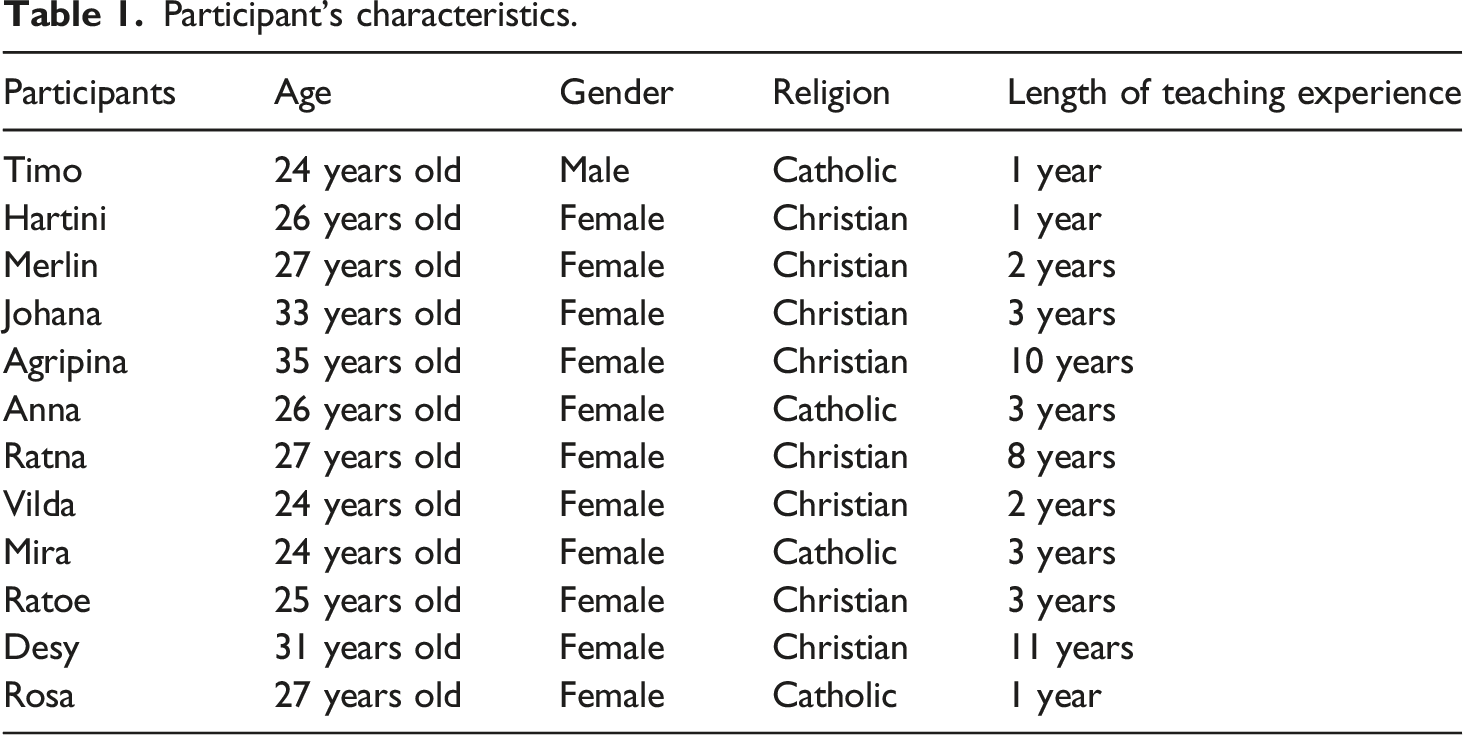
Six people refused to participate in the study for several reasons: they were busy; did not have stable Internet access; busy gardening and teaching, and refused for no reason.
Research stages
The study started in March 2021 and finished in October 2021. Firstly, the research assistants contacted potential participants by phone, explained the study purpose and procedures. If they agreed to participate in the study, the participants then signed the consent form. First, three potential participants were approached. After that, the rest of the participants were recruited through a snowball approach concerning data saturation. The next step is that research assistants train participants to take photos that describe their perceptions and experience regarding their student’s developmentand issues during the COVID-19 pandemic. The focus was on the stories and meaning behind that photograph.
The participants were instructed, “please take as many photos that you like that represent your views on your students’ development during the COVID-19 pandemic.” Each participant took an average of four photos on average over 7 days duration. Participants were also briefed on how to take clear and visible photos. Next, research assistants schedule interview sessions with participants to discuss the stories behind the photos. The interviews were conducted online using the Zoom meeting application by research assistants who are responsible for being the interviewers. The main question of the interview is “what is the meaning behind this photo you took?” followed by probing questions that focused on the issues and solutions related to children’s development. Examples of probing questions include: “How does the story connect to your child’s developmental issues?” “Why do you think this issue happens?” “What resources are available to you to help you with this issue?” and “What do you do to solve this problem?” The interview was recorded using the recording feature in the application. The research assistants used Bahasa Indonesia and Kupang-Malay creole to create a familiar and informal yet meaningful discussion. Throughout the process of the study, the authors kept an audit trail and diary to improve the trustworthiness of the study.
Analysis
The authors used thematic analysis as the analysis method to develop themes based on the interview results. First, research assistants completed the interview transcriptions in Bahasa Indonesia. Next, familiarization was done by reading through the text and taking important notes. Data were coded by the first and last author and then examined by the second and third authors. Themes were developed from the codes. Feedback for the themes was provided by participants to ensure the quality of the analysis. This study also used The Consolidated Criteria for Reporting Qualitative Research (COREQ) checklist (Tong et al., 2007) as the report writing guide.
Results
Teachers and preschoolers’ collaboration
The pandemic has limited all activities, including studying from home. The pandemic impacts learning in Elementary Schools, Junior High Schools, High Schools, and Universities and affects Early Childhood Education. Teachers as learning resources are the primary key to the success of students. In the learning process, both during and before the pandemic, a collaboration between teachers and parents is needed to boost children’s development.
Hartini: Cooperation between teachers and parents is more important. Some do not have a smartphone; sometimes, assignments are sent there. If parents do not receive information, the teacher must call them directly. Some parents call directly. Some parents said, “teacher, I am sorry, please do not give more assignments for 1 week because the student is ill.” So I replied, “get well soon.”
An issue related to this collaboration is that parents believe that teaching and educating is the teacher’s responsibility, not the parent’s. This belief made parents focus more on working than on educating. Parents act as breadwinners while educating; teaching is entirely the teacher’s task. This often results in poor collaboration between teachers and parents, impacting education quality. Some potential impacts include declining children’s learning outcomes, being bored, not listening, disobeying their parents, avoiding teacher assignments, low motivation, and even decreased moral values. (Figure 1) Agre: The child’s development is not optimal. Maybe our weakness is when delivering and explaining learning materials. Students and their parents may not be at home when we bring the lesson plan for the week. Sometimes, the students do not collect their assignments, which (I think) also hinders their development. We want to assess how the children’s learning outcomes are, but often parents were not supportive of their children’s education due to their work. On August 17, we gave the task of wearing traditional clothes, making flags from plastic at home, but only two people finished this assignment. Here the cooperation of parents and teachers is essential. (Hartini).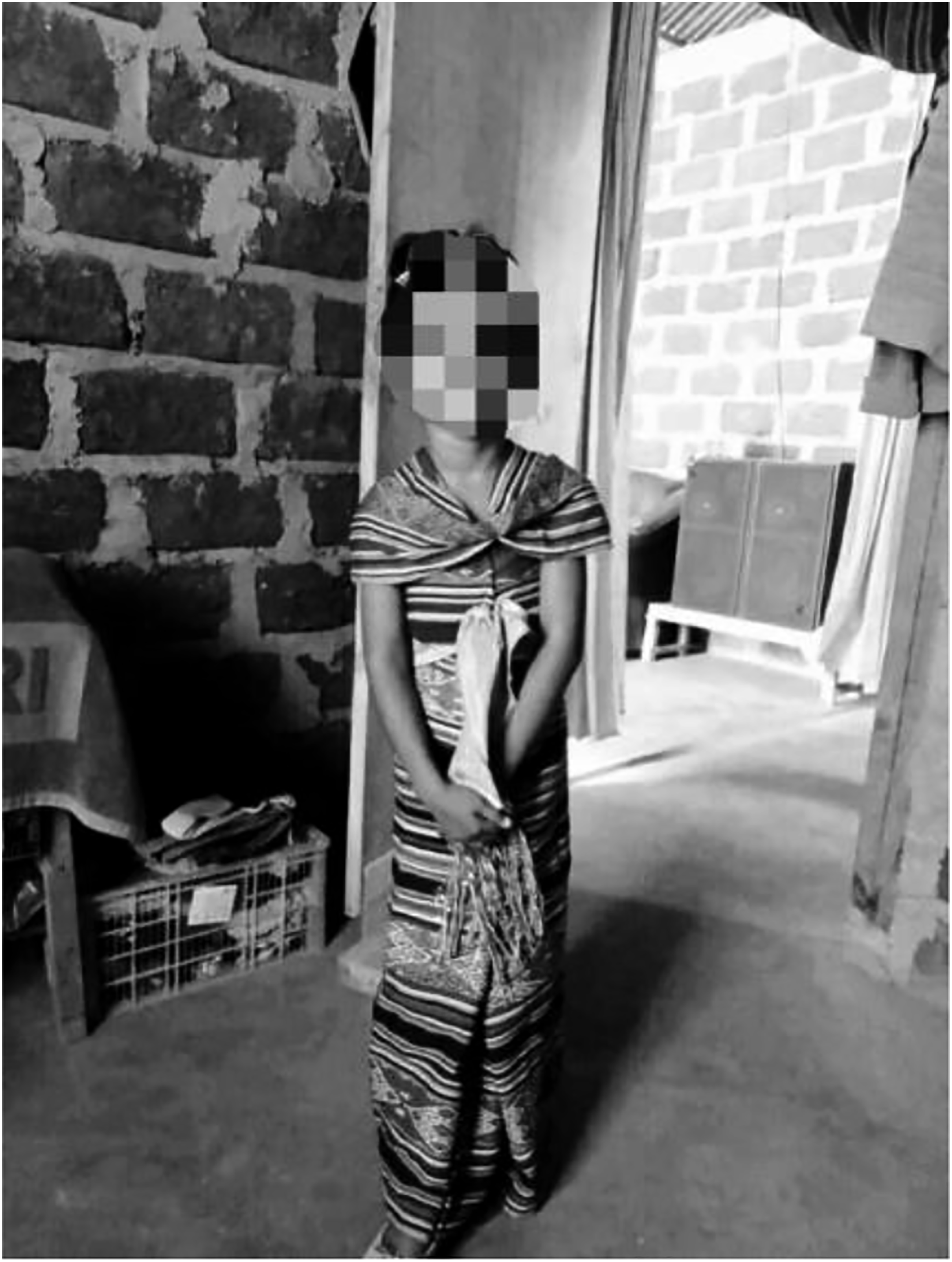
Children’s learning happens everywhere
The government’s policy to carry out learning from home significantly impacts changes in the pattern of activities in the early childhood learning environment. The learning process was commonly known through the teacher in the classroom or room with books and props, but since the pandemic, it has significantly changed. Now children have to be with their parents at home, in the garden, in the fields, and even in the market. This, of course, affects the learning and development of children today. Learning can happen anywhere, depending on parents’ occupation and availability. Agre: We provide socialization materials to parents to guide their children in doing the tasks we give them. But parents’ professions are different. Not all of them are always at home. Some are in the garden; some gather sand in the river. I explain that children can learn anywhere, not necessarily from the teacher’s paper only. As well as parents with children in the garden, rice field, river, that’s okay. The important thing is that mom or dad can talk to the children. So with it, children can get to know what plants are in the garden or the colors, tools, and items. Because all this time, parents’ understanding of children’s learning is just from the book. Agre: So he (the student) told me when he was fishing for fish, he washed it, grilled it, and ate it as lunch. After he (the student) told stories like this, I felt happy because he told me what he did in the rice fields with his parents. Then his mother told me that if there were no one to look after him at home (the student), they would bring him to play in the fields. So, it means that we, teachers, are trying not to force children to only read, write, and count, but we want children to imitate learning like this. Develops in language, sensory, and motor aspects as well.
However, if the environment is not optimized, the results can hamper the development of children as well. (Figure 2) Hartini: There is no progress for the children because the parents are busier. He said that COVID-19 is now a social restriction, especially in the market. We said that now there are restrictions on shopping hours at the market, then at least take free time when not selling. But parents say that it is time to rest, so we do not force parents either. Children do not only learn from books. Here is a portrait of children playing on bicycles in the market, improving psychomotor development (Hartini).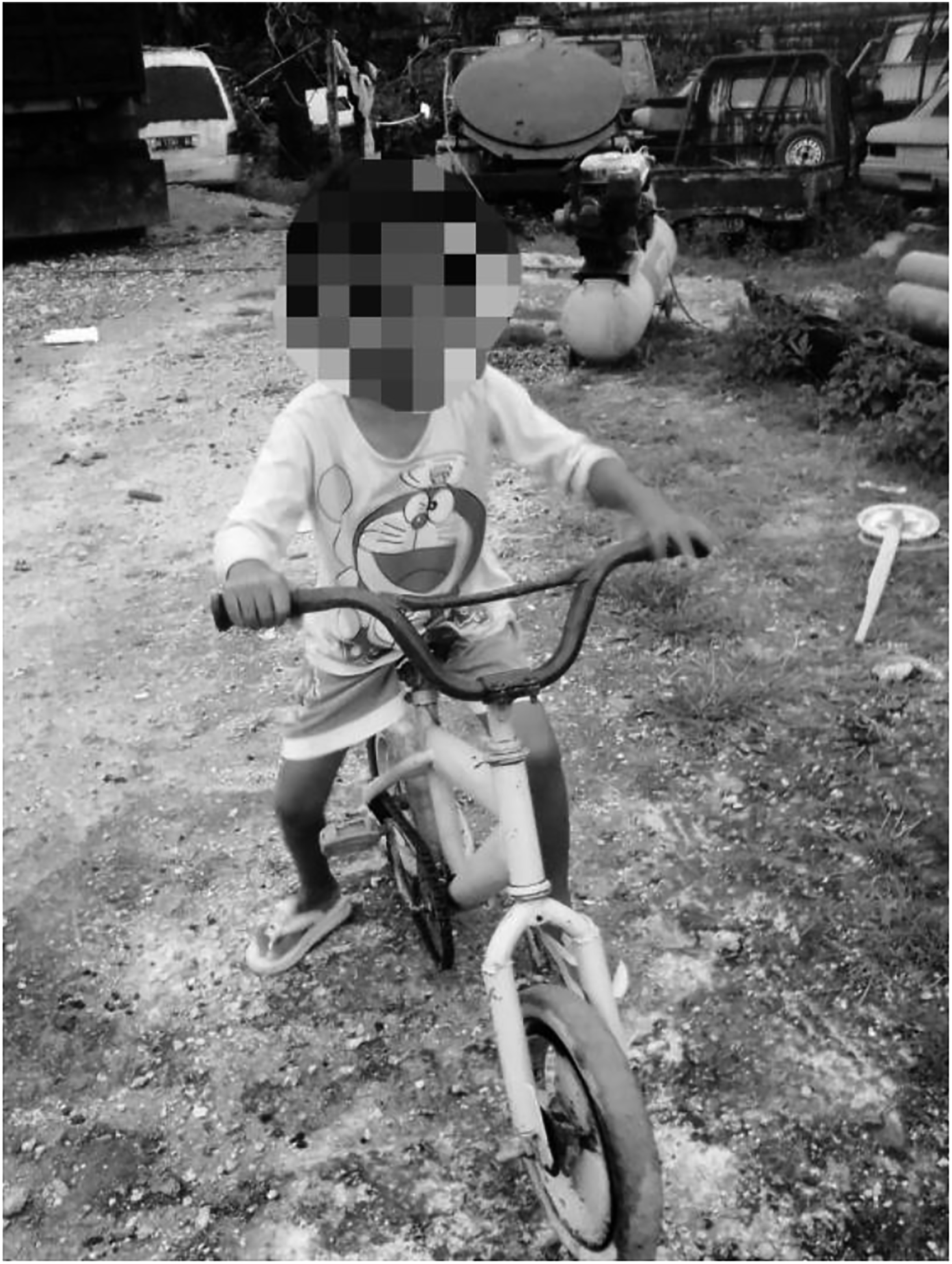
Uneven child development
In early childhood education, six important aspects become a reference for teachers in assessing a child’s development: religious and moral values, physical, cognitive, language, social-emotional, and artistic. During the COVID-19 pandemic, children’s learning process at school was shifted to learning from home. The development of children did not develop evenly, some were progressing, and some were experiencing setbacks. Timo: These six aspects of development do not develop evenly; in my opinion, cognitive does not stand out, why does it not stand out? Because children must recognize letters, numbers, and so on.
Many things caused uneven development in children. According to participants, one of the most significant factors was that parents did not accompany their children. Ideally, parents have to supervise children during remote learning, play a more active role, and pay more attention than before. Johana: More and more children have setbacks in learning. Because of that, preschoolers have had more assistance, but many parents are busy. The children are eager to learn, only when the parents are unavailable. Hartini: There have been decent developments, but some have not. Because there are parents who care, and there are parents who do not care. They do not make their children their top priority; they were busy making a living. Anna: Similarly, I think some of my students have abandoned the habit of praying and saying gratitudes to God. It might be just me, but maybe the other teachers also notice this. Maybe the parents did not know about these habits that we have taught to the students in school. It is important to rebuild the communications so that we can work together in this time of pandemic.
Children’s learning interests vary. Some children have a high interest in learning but were hindered by the minimal willingness of parents' time so this is the reason for the loss of children’s learning intentions during learning at home. (Figure 3) Hartini: Then when the child says, “Mom, I want to study,” the mother replies, “wait a minute, I’m still working on this and that.” Eventually, the child is asleep, so he does not study anymore. Johana: The children who have the mood to study in the morning, the parents say, “wait, wait, wait.” Eventually, the kids will not be in the mood anymore at noon. This picture shows a decline in children’s development in socio-emotional and cognitive aspects where children did not sew according to boat pattern and were impatient in sewing (Ratna).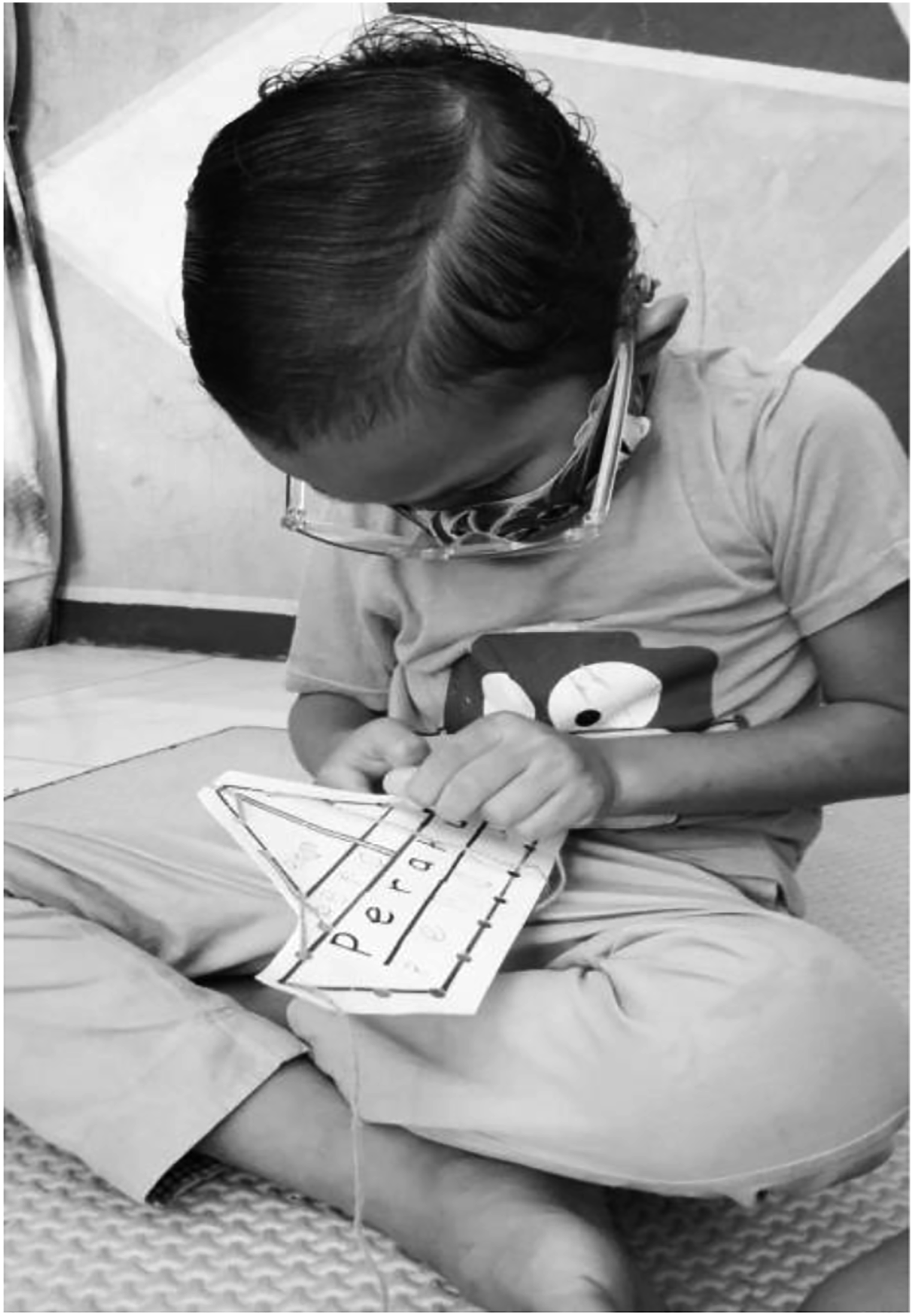
Discussion
The COVID-19 pandemic period affects every world order, including the world of education. Almost overnight, the pandemic forced the cancellation of traditional learning in the school environment into an alternative learning model, namely learning from home. The COVID-19 crisis has caused significant disruption to children’s daily lives and many risks from children’s health, well-being to development (Karpman et al., 2020). Based on our findings, parents and teachers cannot meet face-to-face, so they have no choice but to use social media to communicate and collaborate. However, not every parent in developing areas has access to gadgets. This is surprisingly in line with a report from the United Kingdom, where one in five children who had been learning online did not have access to an appropriate device for their online-learning activities. Therefore, teachers are eventually worried about child development. According to the findings of this study, several things can be done to support the development of children so that they are evenly stimulated, including; parents must cooperate with teachers, namely by taking the time to accompany children in the learning process, including the role of parents in limiting children playing gadgets.
The role of parents is vital in directing and controlling whenever their children can interact with their gadgets by providing an understanding that they can digest. Teachers stated an increase in technological and artistic aspects, and there is also a decrease in cognitive, socio-emotional, physical motor, religious and moral values. The uneven development of children in this study required attention from several parties, namely teachers, parents, and policymakers. They are to solve the issue of a gadget-heavy learning approach while maintaining health protocols during the pandemic (Firmanto et al., 2020). A report from the UK Parliamentary shows that teachers raised their concerns regarding limited opportunities for children to play and engage in physical activity due to COVID-19 restrictions. Playing without gadgets particularly promotes children’s physical, cognitive, social, and emotional well-being (Hobbs and Bernard, 2021).
From the teacher’s perspective in this study, it is known that the causes of uneven child development include parents who are busy and do not take the time to accompany children during the learning process. The occupation of parents, which responsibilities and demands increased during the pandemic, made parents’ attention diverted and dominated by work. Firmanto et al. (2020) stated that mothers in Indonesia prioritized house chores, and learning with children is their second priority and is carried out during their free time. Similarly, a report from UNICEF (2021) showed that in Vietnam, parents are busy and cannot pay much attention to supervising or tracking their children’s learning process. Moreover, according to participants, teachers also have limitations as educators, where teachers run out of ideas in preparing weekly lesson plans. Sometimes, the preparation of these lesson plans does not match the needs and conditions of the child’s parents. This highlights the importance of parents’ involvement in accompanying their children during learning.
Fortunately, children’s development happens everywhere. Based on what we found, some teachers explained that learning is by book and in our surroundings –nature. The value of nature education is that children can get a foundation to help them in making sense of their world, and they will have a more comprehensive understanding of the real-life context that they cannot get only from books in Bullock, 1994. Children will also develop a deep curiosity, respect, and appreciation for nature (Bullock, 1994). Therefore, when the teacher encourages parents to take their children to nature while they are working, it is an effective strategy to continue children’s learning process with the parents’ help. From taking children to rice fields, and gardens, gathering sand in the river, to fishing, students may develop resilience, problem-solving, and critical-thinking skills since they are learning by doing. A study from Australia, China, Italy, Sweden, the UK, and the USA shows that children’s enjoyment leads them naturally to increase their connection with nature through gardening and planting activities to increase benefits for children’s well-being (Friedman et al., 2021). Another study from Denmark also found a positive impact of nature on children’s motivation (Bølling et al., 2018)
However, not every parent can do nature-based learning; thus, the children have no choice but to study at home. When children learn from home, many things may distract them which affects their development process. Today with all the advancements such as gadgets, various entertaining features are readily available when boredom hits, especially during a pandemic. These technological advances undeniably affect children’s learning process from home. According to this study, giving gadgets to children is a diversion made by parents when they are busy so that children can be occupied with something else than them. Parents need to learn to control and limit the time their children play, especially in early childhood, because it is known that prolonged exposure to gadgets harms children, for example, being indifferent to the environment and abandoning their obligations to study. Indirectly contributing to the uneven development of children, this is supported by research on the impact of using gadgets on the development of children 3–6 years old. The results of the study found that children who spend too much time playing with devices, especially when they are not with their parents, children’s development still need stimulation, such as attention (Tyastiti, 2020). If it is done continuously, the child will be addicted to gadgets, and their development will be hampered. It is obvious in this study that parents need to be equipped with knowledge and skills to manage their children’s playtime, especially with gadgets.
As for the teachers themselves, creativity and the ability to prepare weekly learning implementation plans are needed to support parents in home learning. In addition to teachers preparing lessons, it is also crucial for teachers to develop professionalism by participating in webinars and reading the latest journals related to education. Teachers can do this during the pandemic so that teachers’ abilities are increasingly honed to support children’s development. Policymakers should stop this, particularly in developing areas where access and resources and lacking, so that teachers can contribute better to children’s development during the pandemic. This study highlights the perceptions and experiences of preschool teachers on young children’s development during the pandemic in developing areas. The children’s uneven development needs to be dealt with immediately by stakeholders in similar areas such as in East Nusa Tenggara, Indonesia through facilitating stimulation with the use of nature and improving collaboration between teachers and parents. It is recommended for future studies to explore parents’ voices, particularly those living in developing areas in order to provide more insights into the issue of pandemics and early childhood education.
Conclusion
The preschool teachers’ perspectives show their concern regarding parents’ and teachers’ collaboration. Rather than just being a breadwinner, parents should be more focused on educating. Weak collaboration between teachers and parents will decrease the quality of children’s education, from boredom, refusing to do assignments from teachers, low motivation to learn, and reduced creativity, patience, and problem-solving abilities. Parents must be informed that children’s learning, thus development, happens everywhere, and these study findings show that parents expose their children to nature-based learning. Through nature-based learning, children can learn things in their surroundings to help them gain and enhance their understanding of real life, which also teaches them creativity and problem-solving skills. The collaboration of parents and teachers is essential to overcome many shortcomings in this study. Teachers’ effort in making learning plans suitable to parents and children in respective areas. Thus parents are expected to cooperate with teachers’ efforts in implementing the best remote learning strategies and actively supervise children’s remote learning process at home. As a policymaker, the government must also complement teachers’ needs, in this case, training that can upgrade the skills of teachers to encourage and change teacher practices to be adequate in guiding students in this changing and challenging time.
Footnotes
Acknowledgements
The authors want to thank M. Yusuf Tanjung, Amelia Huky, Grace Manik, Gluseppina Wutun, Charla Luan and Angngi Libu for their contributions as assistants in this study.
Declaration of conflicting interests
The author(s) declared no potential conflicts of interest with respect to the research, authorship, and/or publication of this article.
Funding
The author(s) received no financial support for the research, authorship, and/or publication of this article.
