




Abstract
School-external expectations regarding implementation of reforms and innovations often do not lead to successful school improvement processes in schools. To better understand these processes in schools, this paper aims to investigate school improvement processes on a deep level by focusing on cognitive, metacognitive, and motivational regulation strategies used by school teams and by exploring what school-external and school-internal factors are related to this strategy use. Principals, teachers, and specialist teachers (N = 1328) at 59 primary schools responded to an online questionnaire indicating their school’s use of regulation strategies on school improvement. Results from descriptive, variance, and hierarchical multiple regression analyses revealed that school teams use all forms of school-based regulation strategies but that schools differ significantly in their strategy use. These differences were mainly explained more by school-internal deeper structures (e.g., task cohesion) and less by school-internal surface structures (e.g., school size) and not at all by school-external factors (e.g., governance systems).
Keywords
Introduction
Schools have to continuously adapt to external expectations so that teachers can teach and students can learn in the best possible ways. However, research shows that it is difficult for schools to implement external expectations, with the result that reforms often do not lead to successful change (Cohen et al., 2018; Terhart, 2013). There are many explanations for why schools often struggle with this process, and research offers suggestions on how school improvement processes might be fostered (e.g., McFadden and Williams, 2020; Staman et al., 2017). However, to understand why school-external expectations and related school improvement efforts often do not lead to sustained development, deeper investigation is required to identify processes in which school improvement to deal with school-external expectations take an unfavorable course (Maag Merki et al., 2021a). To achieve this deep-level investigation, we rely on a theoretical framework of school improvement that is able to analyze regulation strategies within school improvement. Referring to theories on self-regulation (Winne and Hadwin, 2008; Panadero, 2017), we see regulation strategies in the context of school improvement as the school team’s cognitive, metacognitive, and motivational strategies for identifying, analyzing, and adapting the school improvement tasks, the standards set, the individual and collective dispositions of the teams, and the school improvement processes implemented (Maag Merki et al., 2021a). Up to now, regulation strategies within school improvement processes have not been analyzed. Therefore, this paper aims to examine school teams’ regulation strategies in school improvement, determine whether schools differ in their strategy use, and explore what factors are related to strategy use.
This study took place in Switzerland, where school-external expectations are multifaceted, and for schools to deal with them, continuous activities are required. A major school-external expectation in recent years was the implementation of a new national (D-EDK, 2016). This reform commits the cantons and their schools to school improvement and therefore to educational change. Furthermore, the cantonal educational governance systems include several monitoring instruments, such as school inspections and achievement testing during and at the end of the school year.
Regulation strategies for school improvement
How do schools learn and improve?
School improvement is seen as the responsibility of the individual school. It develops from within by different actors negotiating and adapting conditions and interests at different levels (Creemers and Kyriakides, 2010; Mitchell and Sackney, 2011). The focus is on a school’s capacity to deal with change in a way that achieves high-quality teaching and enables students to learn in the best possible way (Hopkins, 2005). This perspective on single schools brings school improvement close to the theoretical concept of organizational learning (Schechter and Atarchi, 2014). In many organizational learning theories, the starting point of learning is a challenging situation. While acting, organizations notice gaps between expected and actual results, or exploit promising opportunities (Argyris and Schön, 1996; March and Olsen, 1975). Based on the theories, organizations learn productively when individuals, subgroups, or entire teams start to inquire into these contradicting situations in a way that strengthens the organizations’ capacity for managing change. In this process of learning, the use of data is crucial, as it may reveal gaps between expected and real outcomes that are worth examining (Poortman and Schildkamp, 2016) and may lead to data-driven decisions that are expected to improve teaching and learning (Mandinach and Jimerson, 2016).
To investigate data-based school improvement processes related to school-external expectations, in this study we analyze a school team’s regulation strategies. To this end we use theories of self-regulated learning and apply them to collective learning in schools (Maag Merki et al., 2021a).
How do school teams regulate their learning?
Theories of self-regulated learning (SRL) offer a broad umbrella of aspects that influence learning (Panadero, 2017). SRL describes students as “metacognitively, motivationally, and behaviorally active participants in their own learning process” (Zimmerman, 2001: p. 5). The learning process starts with setting goals and then making choices on how to achieve those goals. In this way students regulate conditions of tasks, operations that lead to products, and standards by which products are assessed (Winne and Hadwin, 2008). During this learning process, different regulation strategies are used. Here, we focus on three: cognitive, metacognitive, and motivational. Cognitive regulation strategies are strategies that students use to learn, remember, and understand domain-specific knowledge and skills. The strategies are used for working on an academic task (Boekaerts, 1996). They include, for example, rehearsal, elaboration, structuring, and summarization (Weinstein and Mayer, 1986). Metacognitive regulation strategies are relevant when learners identify a discrepancy between the strategy used and the demands of the task and realize that a change in strategies makes sense (Boekaerts, 1996). Examples of a metacognitive strategy are creating a distinct mental representation of the task demands and redefining it when needed, or creating an action plan and expanding or modifying it when necessary. Motivational regulation strategies are applied during learning processes to create good states of mind and prevent undesired situations (Boekaerts, 1996). Examples are reducing external distractions or using thought stopping when negative feelings arise (Weinstein and Mayer, 1986).
Social constructivist learning theories expanded the SRL theories’ focus on the individual learner by directing more attention to the social embeddedness of the learning process and considering co-regulation and shared regulation (Hadwin et al., 2011). These concepts describe regulated learning in interactions such as exchanging expertise or collectively regulating processes towards a shared goal.
SRL is fruitful when thinking about collective regulation processes among school staff for school improvement. Maag Merki et al. (2021b) define regulation processes in school teams aiming to improve a school “as the (self-) reflective individual, interpersonal, and organizational identification, analysis, and adaptation of tasks, dispositions, operations, and standards and goals by applying cognitive, metacognitive, motivational-emotional, and resource-related strategies.” Cognitive regulation might refer to data-based decision making when schools are required to elaborate and structure results of different feedback. An example of metacognitive regulation is regular reflection upon the further development of teaching and considering whether a change is needed. Motivational regulation refers, for example, to strategies for carrying on even if work is sometimes demotivating, such as when pupils do not show expected outcomes.
Research on regulation strategies in school teams
For teachers, SRL is of particular importance, as “teachers have no boss supervising their daily work in the classroom or motivating them to stay focused on goals” (Randi, 2004: p. 1826). There is initial research linking SRL, professional learning, and professional development (e.g., Persico et al., 2015). Special in this area is that ideally, teachers should not only apply self-regulation to their own learning but also implement it in the classroom. Studies suggest that teachers’ ability to self-regulate their own learning is related to how they can promote self-regulation in students (Randi, 2004; Perry et al., 2006). Accordingly, there is research interest in SRL during teacher education with a view to teachers’ later continuous professional development. Studies show that pre-service teachers’ use of SRL varies greatly and is positively associated with their academic achievement (Hwang and Vrongistinos, 2002). Programs for teachers’ professional development using SRL are more effective than others regarding different professional growth measures (Kramarski and Michalsky, 2009) in terms of cognitive, metacognitive, and motivational self-regulation (Michalsky, 2012). Regarding in-service professional development, Butler et al. (2004), for instance, combined collaborative development theories with theories of SRL. Their 2-years collaborative researcher–teacher partnership aimed at supporting the learning of students with learning challenges. They applied a qualitative case study design to examine instructional innovation and found that teachers reflected upon and self-regulated their learning regarding shifts in instructional practice.
This brief literature review reveals that self-regulation among teachers is already being studied but almost exclusively as an individual’s competency and rarely as embedded in the social structure of a school team. In addition, the studies examined regulation strategies in relation to student learning and not to school improvement in general. Finally, previous studies did not consider school-internal as well as school-external influences on teachers’ SRL strategies. We argue that examining school-based regulation strategies for school improvement can shed new light on why external expectations and related improvement processes might not lead to sustainable change. Examining different regulation strategies in school teams can reveal which strategies are used to what extent, whether there are schools that are more capable than others in strategy use, and what factors influence strategy use.
Research questions and hypotheses
We investigated the following research questions
1. As reported by teachers, to what extent do school teams use various school-based regulation strategies for school improvement? 2. To what extent are there systematic differences between schools in school-based regulation strategies? 3. If there are differences, to what extent can they be explained by school-external and school-internal factors?
As there have been no studies investigating school-based regulation strategies for school improvement up to now, this study is exploratory in nature. However, if we take school improvement studies into account that analyzed differences between teachers and schools in their professional activities (Camburn and Won Han, 2017; Holzberger and Schiepe-Tiska, 2021), we can hypothesize that there are systematic differences between teachers (hypothesis 1, H1) and schools (hypothesis 2, H2) also with regard to the implementation of school-based regulation strategies for school improvement. However, as previous studies found, the differences between schools might be smaller than those between teachers. Furthermore, we expect only moderate school effects (Camburn and Won Han, 2017), particularly as our analyses are done within a rather narrow sample focusing on only one type of schools. To investigate school-external and school-internal factors that might explain the differences in strategy use (hypothesis 3, H3), we developed a hypothetical framework, which we also derived mainly from findings in school improvement research.
Framework of school-external and school-internal factors
Factors are grouped into school-external and school-internal factors; for school-internal factors we distinguished surface and deep structures.
School-external factors
Different countries have highly diverse models of governance systems, for example, ranging from rigorous monitoring to more decentralized systems (Kogan, 1996). Different governance systems are related to the practices of school officials, principals, and teachers (e.g., Altrichter and Kemethofer, 2015; Coburn et al., 2016; Slomp et al., 2020). Switzerland is a federally organized country, and the cantons (states) differ in their educational policies. We assumed that stronger cantonal accountability pressure has an impact on regulation strategies in schools, in that they will be used in a more targeted manner regarding desired educational goals (H3a).
In addition, the socioeconomic status of the school’s catchment area seems to be relevant as a school-external factor (H3b). Socioeconomic composition and status are negatively related to instructional quality and students’ academic outcomes (Holzberger and Schiepe-Tiska, 2021; Palardy, 2020).
School-internal factors
In line with Mitchell and Sackney (2011), as school-internal factors we distinguished surface and deep structures. Both support improvement processes in schools. As surface structures we considered school size and teacher characteristics, such as gender and seniority of practice.
Regarding school size effects, studies found that the direct impact of school size on cognitive learning outcomes and non-cognitive outcomes on students and teachers is rather weak (Luyten et al., 2014). Although most studies found a negative relationship between school size and outcomes in teacher professional development, some studies reported positive or curvilinear effects. It has been argued that the inconsistent empirical evidence is due to factors interfering with the impact of school size (Luyten et al., 2014). As we included aspects like leadership, we assume no direct effects of school size on regulation strategies (H3c). Further, as the relationships between teacher characteristics and professional learning activities are inconsistent (Kwakman, 2003; Kyndt and Baert, 2013), we have no hypotheses concerning gender and seniority effects (H3d).
Deep structures of collective learning were conceptualized as organizational culture, supportive school leadership, and teachers’ interest in their professional development.
Organizational culture is composed of task cohesion (Van Den Bossche et al., 2006), handling of errors, and knowledge sharing (Staples and Webster, 2008)—three aspects of a cognitive and affective working culture that have a direct impact on the well-being and working performance of teachers. We suppose that these three aspects are highly interrelated and form a fabric of essential features of the culture in a school that positively influences the use of regulation strategies (H3e). In particular, we assume a positive contextual effect in that a higher-level of organizational culture among teachers in the same school has a positive effect on the individual teacher’s perspective on strategy use in the school (H3f).
Supportive school leadership has proven to be an important aspect of teacher development and school improvement (e.g., Amels et al., 2020). There is evidence of a broad repertoire of what school leaders do to positively influence work condition to foster high-quality teaching, such as setting directions, supporting desired practices, and developing people (Leithwood et al., 2020). Therefore, we suppose that supportive school leaders also foster regulation strategies of their school teams (H3g). We assume a positive contextual effect such that if teachers at the same school perceive the principal as highly supportive, this has a positive effect on the individual teacher’s perspective on regulation strategies (H3h).
Teachers’ interest in their professional development as a more individual element of deep structures is related to more collaborative work and a higher motivation to collaborate (Pancsofar and Petroff, 2013). Also, SRL research provides evidence that interest is linked to SRL and the use of learning strategies (e.g., Cleary and Kitsantas, 2017), especially for metacognitive and motivational regulation (Wang et al., 2021). Therefore, we assume that a teacher’s educational interest is associated with metacognitive and motivational regulation (H3i).
Method
Participants and procedure
This study examined regulation processes for school improvement at 59 primary schools (students aged 6–12) in 14 cantons in the German-speaking part of Switzerland. The schools were in urban, peri-urban, or rural regions, varied in size (34–593 pupils), and differed in the socioeconomic status of the communities. Participants were 1328 school staff (87% women) working as principals, teachers, and specialist teachers. Teachers’ age ranged from 21 to 67 (M = 42.81, SD = 11.51). Teachers completed an online questionnaire (response rate 82%; 1328 of 1627 teachers) on regulation strategies for school improvement.
Measures
Regulation strategies for school improvement
Instruments to assess regulation strategies for school improvement.
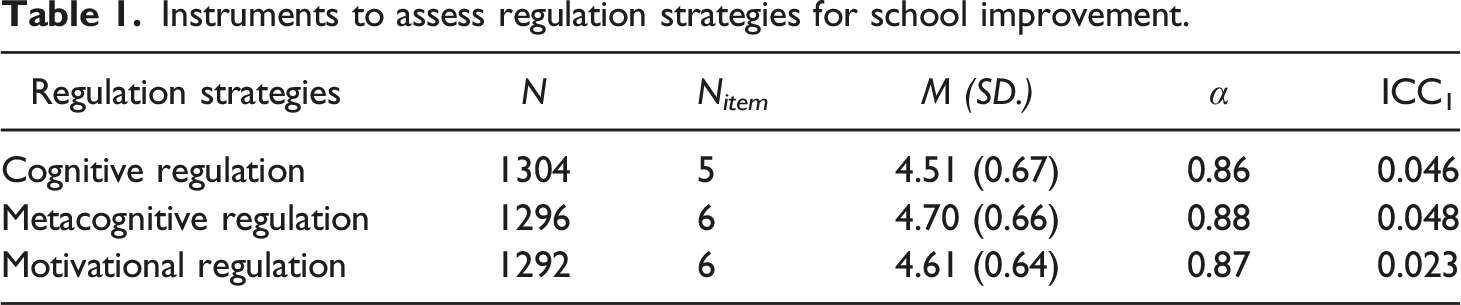
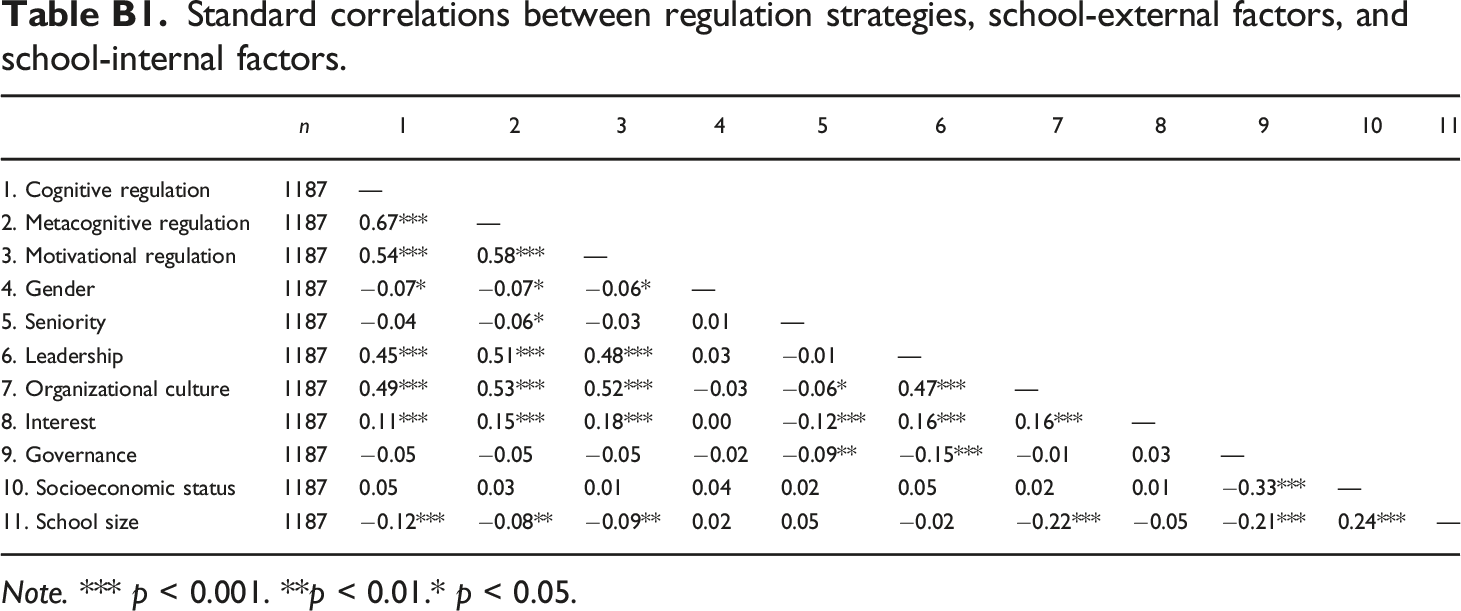
As the mean scores of the scales are relatively high and interrelated (see Appendix B) and as the ICCs are relatively small, we calculated confirmatory factor analyses for a three-factor model and compared it to a one-factor model using the lavaan statistical package (Rosseel 2012, Version 06–3). Because not all items had a normal distribution, a maximum likelihood robust estimator was used. In addition, two error correlations were allowed, one in cognitive regulation and one in motivational regulation, as these items asked the same questions but differed in wording. The three-factor model showed good fit values (χ2 = 305.607, df = 136, p = 0.000, χ 2 /df= 2.25, CFI = 0.976; RMSEA = 0.043; SRMR = 0.029) whereas the fit of the one-factor model was not sufficient (χ2 = 1968.677, df = 119, p = 0.000, χ 2 /df= 16.54, CFI = 0.765; RMSEA = 0.132; SRMR = 0.085) (Hu and Bentler, 1999). The three-factor model fit the data significantly better. The chi square value, AIC, and BIC of the three-factor model were smaller than those of the one-factor model, and the difference in chi square values is significant.
School-external factors
The governance systems of the German-speaking cantons of Switzerland were analyzed by assessing eight categories in publicly available documents. The categories were rated using a scale ranging from 0 (not existing, for example, no staff appraisal), 1 (existing, no or low accountability pressure, for example, formative staff appraisal without consequences), to 2 (existing, high accountability pressure, for example, wage-effective staff appraisal). As these questions could be answered unambiguously, the analysis was carried out by one trained person. Accordingly, the cantons’ governance systems could range from 0 (no accountability pressure) to 16 (high accountability pressure). The governance score of the cantons was allocated to the schools. On average, the schools had a governance score of 9 (N = 59, SD = 1.73, Min = 6, Max = 13).
Socioeconomic status was assessed by average taxable income per capita in Swiss francs in the municipality, as assessed by the Swiss Federal Statistical Office (N = 59, M = 33,489, SD = 10,390, Min =16,183, Max = 64,735).
School-internal factors
School size referred to the total number of pupils per school. The average school size was 227 pupils (N = 59, SD = 153, Min = 34, Max = 593).
Teacher characteristics were described as gender (f = 86.7%) and seniority of practice in years (M = 17, SD = 11, Min = 0, Max = 45).
Teachers’ personal interest in improving their work was assessed with a self-developed and pre-piloted instrument that showed good reliability (α = 0.80). Teachers indicated the extent to which they agreed with statements such as “I really want to know what I can do better in the classroom” on a 6-point Likert scale ranging from strongly agree to strongly disagree (N = 1316, M = 4.78, SD = 0.69).
In the instrument leadership for developing people, based on Sleegers et al. (2014) and Robinson et al. (2008), teachers reflected upon the work of their school principal by providing information on statements such as “Our principal encourages us to try new things that are important to us.” The statements were assessed on a 6-point Likert scale (N = 1239, M = 4.73, SD = 0.83) and showed good reliability (α = 0.87, ICC1 (ICC2) = 0.128 (0.755)).
The school’s organizational culture was assessed using three subscales with four items each: (1) handling of errors (e.g., “People in our school admit it when they have made a mistake” (self-developed and pre-piloted); α = 0.88, ICC1 (ICC2) = 0.103 (0.717)), (2) knowledge sharing (e.g., “People in our school are willing to share knowledge and ideas with others” (Staples and Webster, 2008); α = 0.80, ICC1 (ICC2) = 0.128 (0.766)), and (3) task cohesion (e.g., “Our school is united in trying to reach its goals for performance” (Brawley et al., 1987); α = 0.73, ICC1 (ICC2) = 0.176 (0.826)). All items were rated on a 6-point Likert scale ranging from strongly disagree to strongly agree. Results of a confirmatory factoring analysis based on this three-dimensional structure revealed an acceptable model fit (χ2 (51) = 371.25, p < 0.001, CFI = 95, TLI = 0.93; RMSEA = 0.069, SRMR = 0.04). For further information on the factorial structure of the psychometric scales, see Appendix A.
Analytical approach
First, to obtain an impression of how teachers assess the use of regulation strategies for school improvement at their school, descriptive analyses were carried out. Second, hierarchical multiple regression analyses were performed. The analyses were conducted using the lme4 package in R (Bates et al., 2015; version 1.1–23). Three models were specified for cognitive, metacognitive, and motivational regulation strategies as dependent variables. Teacher’s gender, seniority, as well as the assessment of leadership, organizational culture, and interest were entered into the model as predictors on the within school level (level 1). Governance system, socioeconomic status, school size, and again leadership and organizational culture were inserted as predictors on the between school level (level 2).
Leadership and organizational culture were inserted on both levels to determine a contextual effect. Level 1 predictors were centered at the grand mean. In this way a contextual effect can be taken from the level 2 regression coefficients (Raudenbush and Bryk, 2002). We interpreted: (1) within effects as the effect of individual level variables on the individual outcome for the predictors gender and seniority, (2) between effects referring to the influence of a mean characteristic of a school on the mean outcome for the predictors governance system, socioeconomic status, and school size, and (3) contextual effects as the effect that refers to how the actions of others at the same school influence individual behavior (outcomes) for the variables leadership and organizational culture.
Random intercept models were calculated. The estimation method of maximum likelihood was used.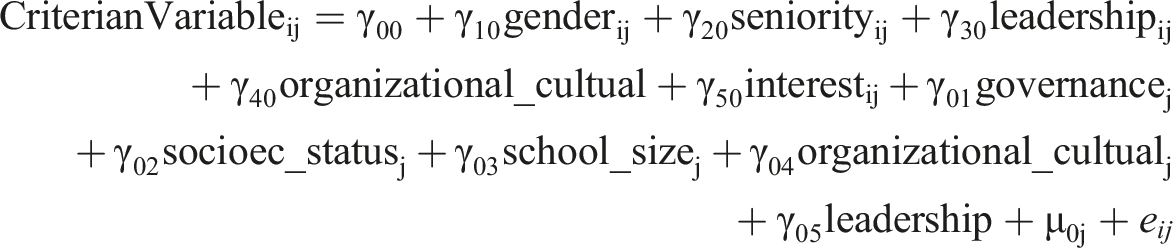
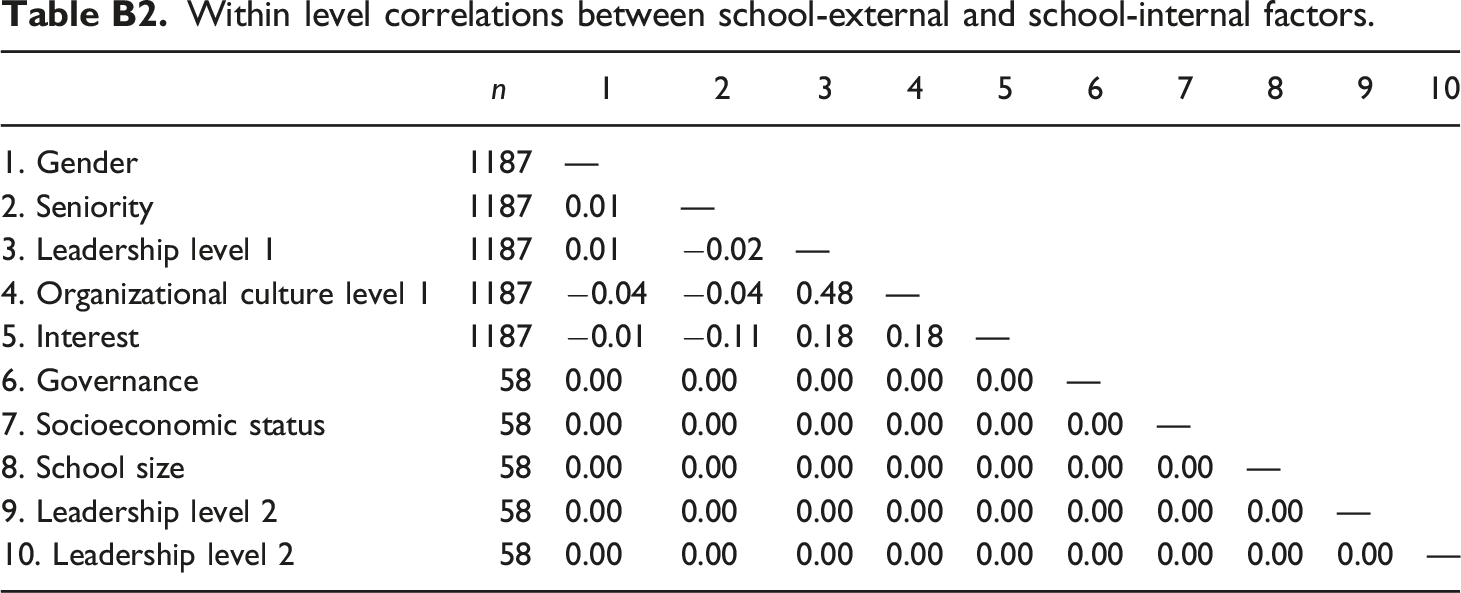
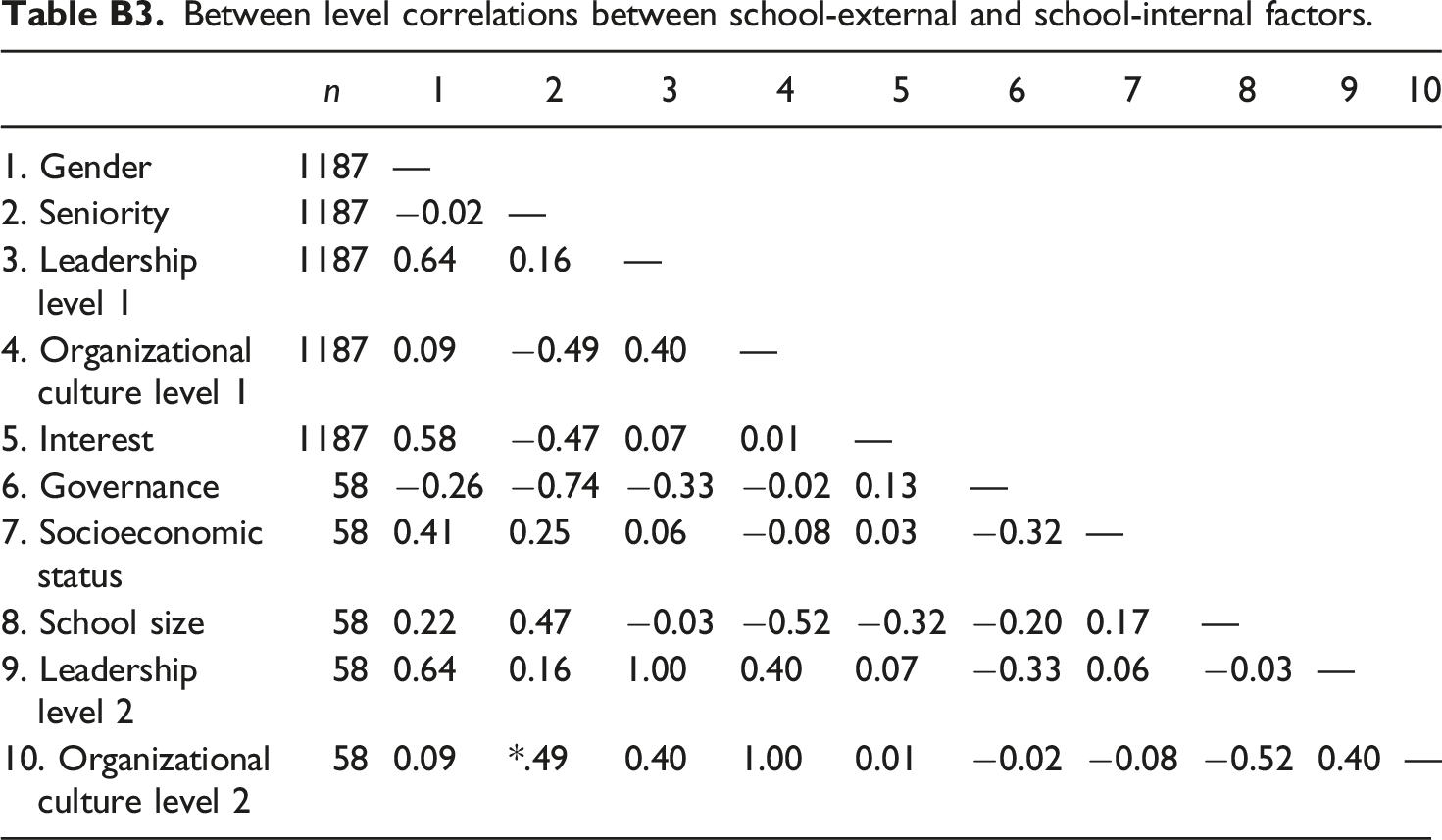
For the multilevel analysis we checked linearity, homoscedasticity, and residual assumptions. The data satisfied linearity assumptions. One model—cognitive regulation—slightly violated the homoscedasticity assumption as assessed using the Levene test (p = 0.009). An upward residual analysis was applied to check level 1 residuals separately (Loy and Hofmann, 2014). The level 1 residuals of each model appeared normal except for the very low values. However, this discrepancy was quite small and hardly constituted a violation of the normality assumption. Normal quantile plots of the level 2 residuals for the intercept revealed no evidence of a deviation from normality. For additional information on the analyses, see Appendix B for standard correlations as well as within and between level correlations.
Results
Frequency data
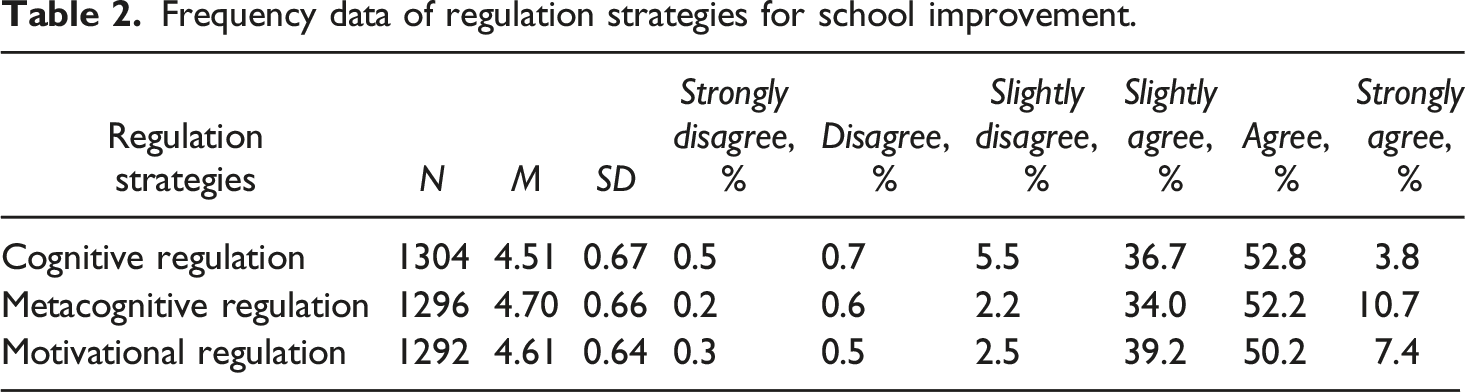
Frequency data of regulation strategies for school improvement.
Regulation strategies related to school-external and school-internal factors
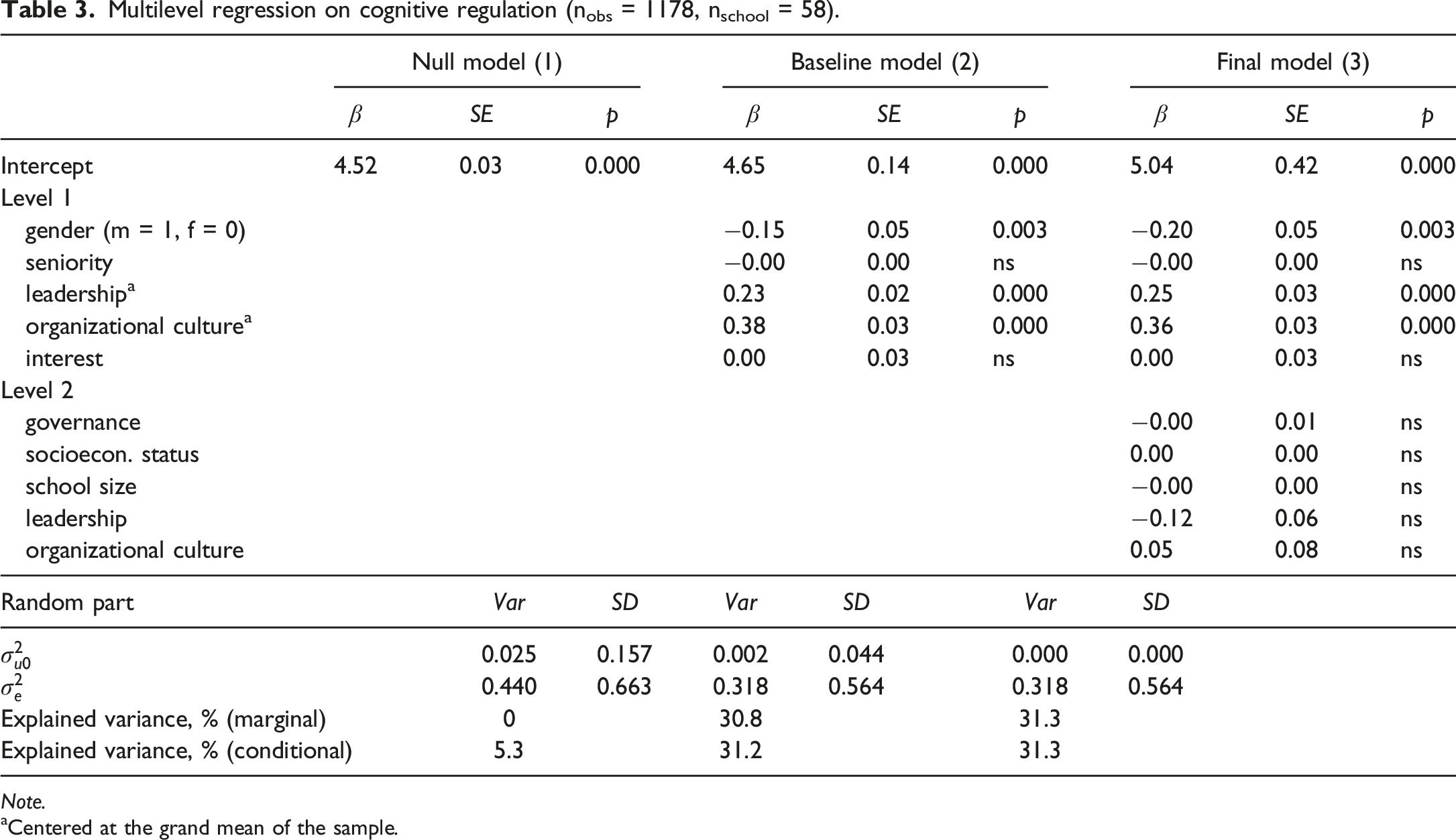
Multilevel regression on cognitive regulation (nobs = 1178, nschool = 58).
Note.
Centered at the grand mean of the sample.
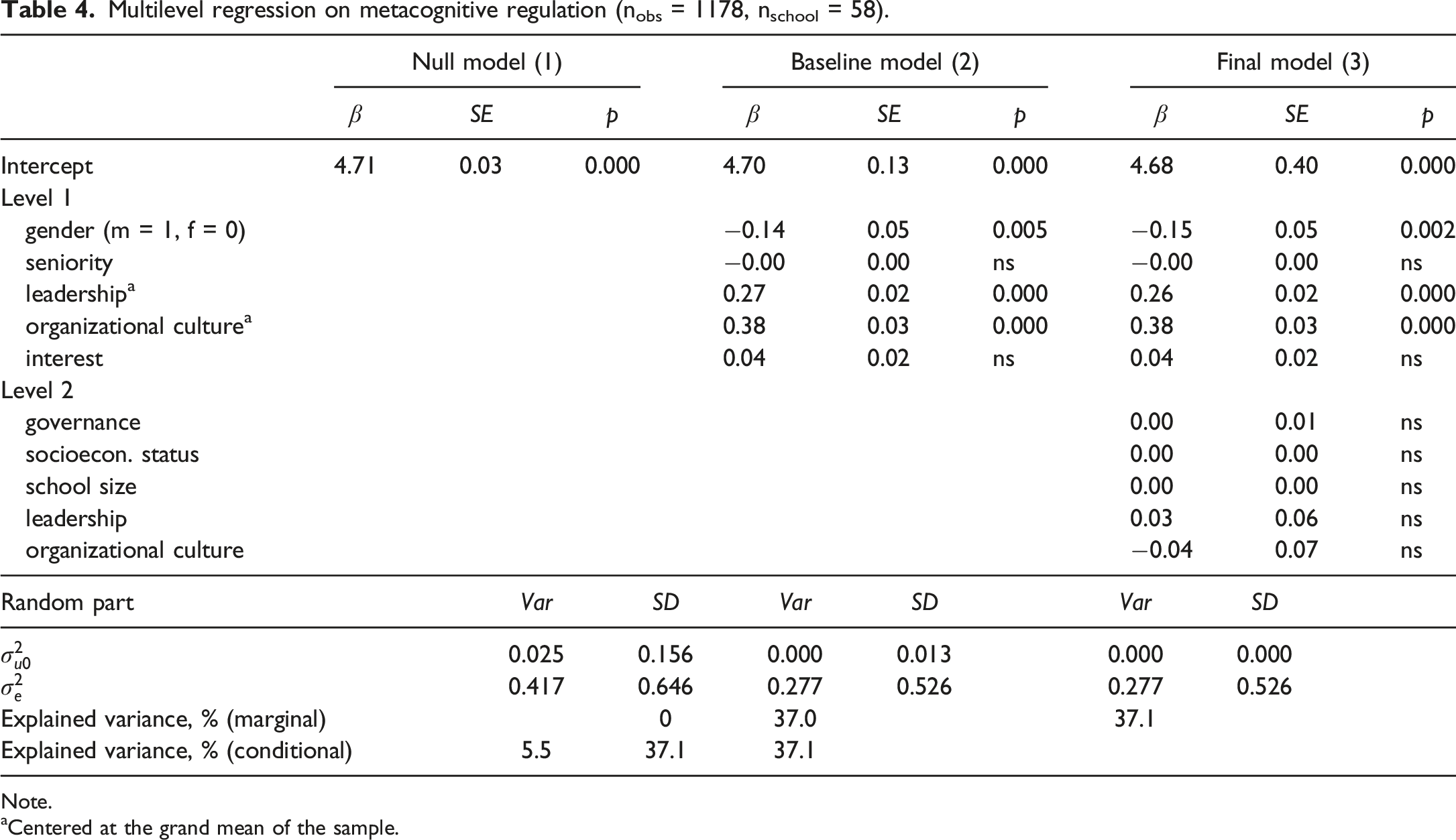
Multilevel regression on metacognitive regulation (nobs = 1178, nschool = 58).
Note.
Centered at the grand mean of the sample.
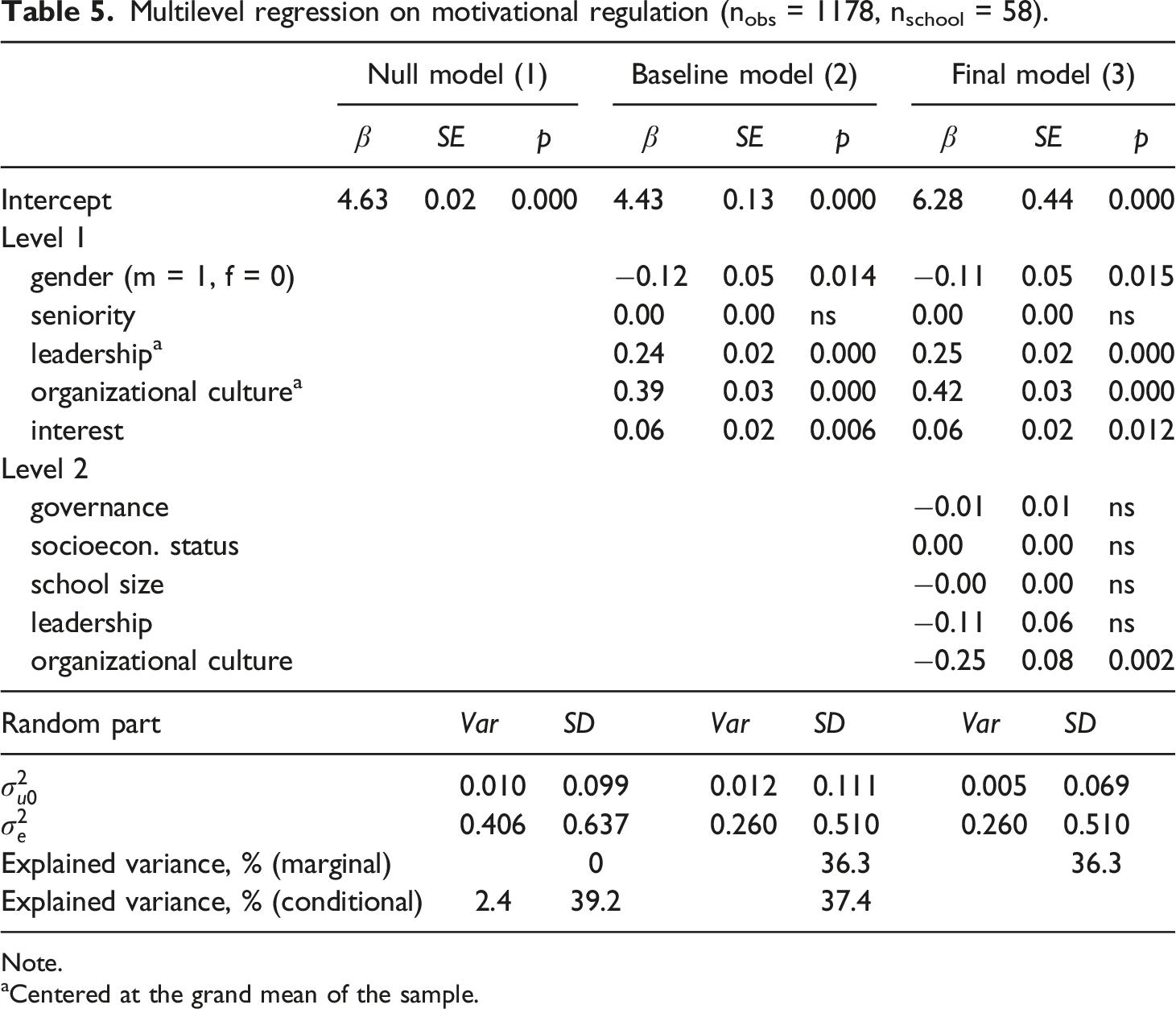
Multilevel regression on motivational regulation (nobs = 1178, nschool = 58).
Note.
Centered at the grand mean of the sample.
Comparing the baseline models (only within school predictors) with the final model (within and between school predictors) in all cases, the results reveal that the between school predictors did not add much variance explanation to the models. This is also evident in the final models when comparing within and between school variances. Following Nakagawa and Schielzeth (2013), we report marginal and conditional R2. Marginal R2 estimates the variance explained by the fixed effects and conditional R2 by the fixed and random effects. The effect sizes for the overall models were f2 = 0.47 for cognitive regulation, f2 = 0.46 for metacognitive regulation, and f2 = 0.54 for motivational regulation, indicating large effects (Cohen, 1992).
Within effects: Regarding gender, at the within school level (level 1) women reported significantly stronger agreement with statements indicating that all three forms of regulation strategies were used more often by their school. In contrast, teacher’s seniority was not related to any form of regulation strategies. Teachers’ personal interest in improving their work was significantly and positively associated with only motivational regulation, indicating that teachers with a strong interest in developing their work reported significantly stronger agreement that their school used motivational regulation strategies.
Between effects: At the between school level (level 2), school-external factors (governance system, socioeconomic status) and school size were not significantly associated with the use of regulation strategies.
Contextual effects: For supportive leadership there was no significant contextual effect for all three regulation strategies. This means that how individuals within the same school perceived the support of their school leader had no effect on individual agreement with the use of regulation strategies. For organizational culture we found a significant negative contextual effect for motivational regulation (−0.25). This means that the more positively individuals within the same school rated organizational culture, the lower their individual agreement with the use of motivational regulation strategies was. The school context thus negatively influenced individual agreement with the use of motivational regulation strategies. For cognitive and metacognitive regulation, we found no significant contextual effect.
Discussion
This paper is an attempt to consider new aspects in school improvement processes to shed light on their often unsuccessful implementation of external expectations. To do this, we investigate cognitive, metacognitive, and motivational regulation processes in Swiss primary schools, where school-external expectations are multifaceted. Dealing with these expectations requires continuous activities on the part of the schools.
Regulation strategies of school teams
Regarding research question one on different school-based regulation strategies for school improvement, the findings indicate that all forms of school-based regulation strategies are used in school teams, as the majority of principals, teachers, and specialist teachers slightly agree or agree with the statements on the regulation strategies used. However, the use of strategies still can be improved, as very few participants indicate strong agreement with the statements. Compared to other studies on teachers’ reflective practice (Camburn and Won Han, 2017), there is quite low variation in the identification of regulation strategies, meaning that teachers’ perspectives on the implementation of collective regulation strategies are quite coherent. This could be an indication of the reliability of the measures. On the other hand, further studies are needed to analyze if the self-report data was impacted by social desirability (see Limitations).
The results provide evidence for shared regulation processes in the context of school improvement, as has been already identified for student learning (Hadwin et al., 2011). However, as our results are only able to show that school teams use the strategies that we surveyed here, further research should investigate how, how often, and how well strategies are used and include methods that are able to capture the performed activities (Ohly et al., 2010), for instance, by using data on collaborative interactions in school teams (Hadwin et al., 2011). Further, analyses should explore whether and how the implemented collective regulation processes impact instruction and student learning (Panadero, 2017).
Regarding research question two on school differences in school-based regulation strategies, the findings reveal differences—but small ones. These moderate differences were expected, as previous studies in related fields yielded similar results (e.g., Camburn and Won Han, 2017). The small between school differences may be explained by the narrow sample focusing on only one type of school, namely, primary schools. Future research could extend these findings by researching different school types. The findings reveal further that the differences are larger for cognitive and metacognitive than for motivational regulation strategies. As we know from school improvement research, teachers’ motivation is one of the challenges in school improvement (Thoonen et al., 2011). Therefore, the fact that schools hardly differ in their use of motivational regulation strategies could be explained by the widespread knowledge on the part of school leaders that it is important to strengthen the capacity to regulate a lack of motivation.
Regarding research question three on school-external and -internal factors to explain differences in regulation strategies, the findings reveal that school-based regulation strategies are not related to school-external factors. This is contrary to our expectations (H3a, H3b) based on previous findings that different governance systems are related to school improvement practices (e.g., Altrichter and Kemethofer, 2015) and that socioeconomic composition is related to school practices (Holzberger and Schiepe-Tiska, 2021). The finding of no governance effect may be due to the rather low variation between the cantonal governance systems in Switzerland. Although the cantons differ in their education policy, they vary in the low to medium range on accountability pressure. The lack of an effect of socioeconomic status could be an artifact of our data. The Federal Statistical Office provides data only at the municipality level. However, it is possible that different school locations within a municipality have different socioeconomic catchment areas, so that the values are not equally applicable to all schools.
As for school-internal factors, surface structures tend to be less predictive of the perceived use of regulation strategies (H3c and H3d) than are deep structures conceptualized as organizational culture, supportive leadership, and teachers’ interest in their professional development on the within level (H3e, H3g, and H3i). As expected (H3i), teachers’ interest in their professional development is related to motivational and metacognitive regulation. The findings reveal that interest is relevant not only for students’ learning (Wang et al., 2021) but also for teachers’ learning. However, as our results reveal almost no contextual effect for supportive leadership and organizational culture, which is contrary to our expectations (H3f, H3h), the use of regulation strategies for school improvement is basically influenced by individual perceptions. Accordingly, it is less about whether a school team member is a man or woman or has a lot of or little experience, whether the school is large or small, or whether the individuals within the same school assess the level of a school’s organizational culture on average as high or low, and more about how individuals perceive the working culture and leadership support and how interested they are in improving their work.
Why most contextual effects were nonsignificant and why there was even a negative contextual effect on the use of motivational regulation strategies needs to be analyzed in further studies. One possible explanation for these unexpected results may be that the working culture in a school team may be different in different subteams, as subteams are an important unit of analysis (e.g., Vangrieken et al., 2017). In this respect, further research should include a third level with subteams in the analyses.
Implications
As an implication for school improvement theory, the results show that cognitive, metacognitive, and motivational regulation strategies are used in primary schools to deal with school-external expectations. Therefore, complementing existing school improvement theories with SRL theories is profitable, especially because they focus on concrete learning processes and thus provide a deeper insight into which strategies are used to what extent, whether there are schools that are more capable than others in strategy use, and what factors influence this.
As an implication for educational policy and practice, the results are important, as they reveal that a focus on regulation strategies in teachers’ professional development is relevant. However, to understand influencing factors further research is needed.
Limitations
First, self-reporting should always be regarded with certain reservations and should be complemented by alternative measures (Pekrun, 2020). It is possible, for example, that the high mean values of the regulation variables may be related to social desirability. Therefore, methods that are able to capture not only perceived activities but also concrete performances would extend these results substantially (Ohly et al., 2010). Second, future studies should focus also on capturing the quality and not only the quantity of the implemented regulation strategies (Wirth and Leutner, 2008). Third, as we use cross-sectional data, the interpretation of the results must be viewed with some reservation. Fourth, the assumption of homoscedasticity for the multilevel analysis regarding cognitive regulation was slightly violated. This may have multiple causes, none of which is immediately apparent. As the extent is not severe, this is only a slight limitation.
Conclusions
Up to now, no studies have investigated school-based regulation strategies for school improvement. This paper marks only the beginning in the exploration of regulation strategies in school teams. The results show that it is worthwhile to continue along this path by investigating regulation strategies in a more differentiated way. Future research should approach the topic with a variation of the methodology, preferably combining quantitative and qualitative data.
Footnotes
Declaration of conflicting interests
The author(s) declared no potential conflicts of interest with respect to the research, authorship, and/or publication of this article.
Funding
The author(s) disclosed receipt of the following financial support for the research, authorship, and/or publication of this article: This work was supported by the Swiss National Science Foundation [grant number 100019_175872/1].

Appendix A
All psychometric scales have a single-factor structure. The factor loadings can be taken from the table below.
Appendix B
Results of factor analyses of the psychometric scales of the study. Note. N = 1239–1316. The extraction method was principal component analysis with an orthogonal (varimax) rotation. Reverse-scored items are denoted with an (R). Standard correlations between regulation strategies, school-external factors, and school-internal factors. Note. *** p < 0.001. **p < 0.01.* p < 0.05. Within level correlations between school-external and school-internal factors. Between level correlations between school-external and school-internal factors.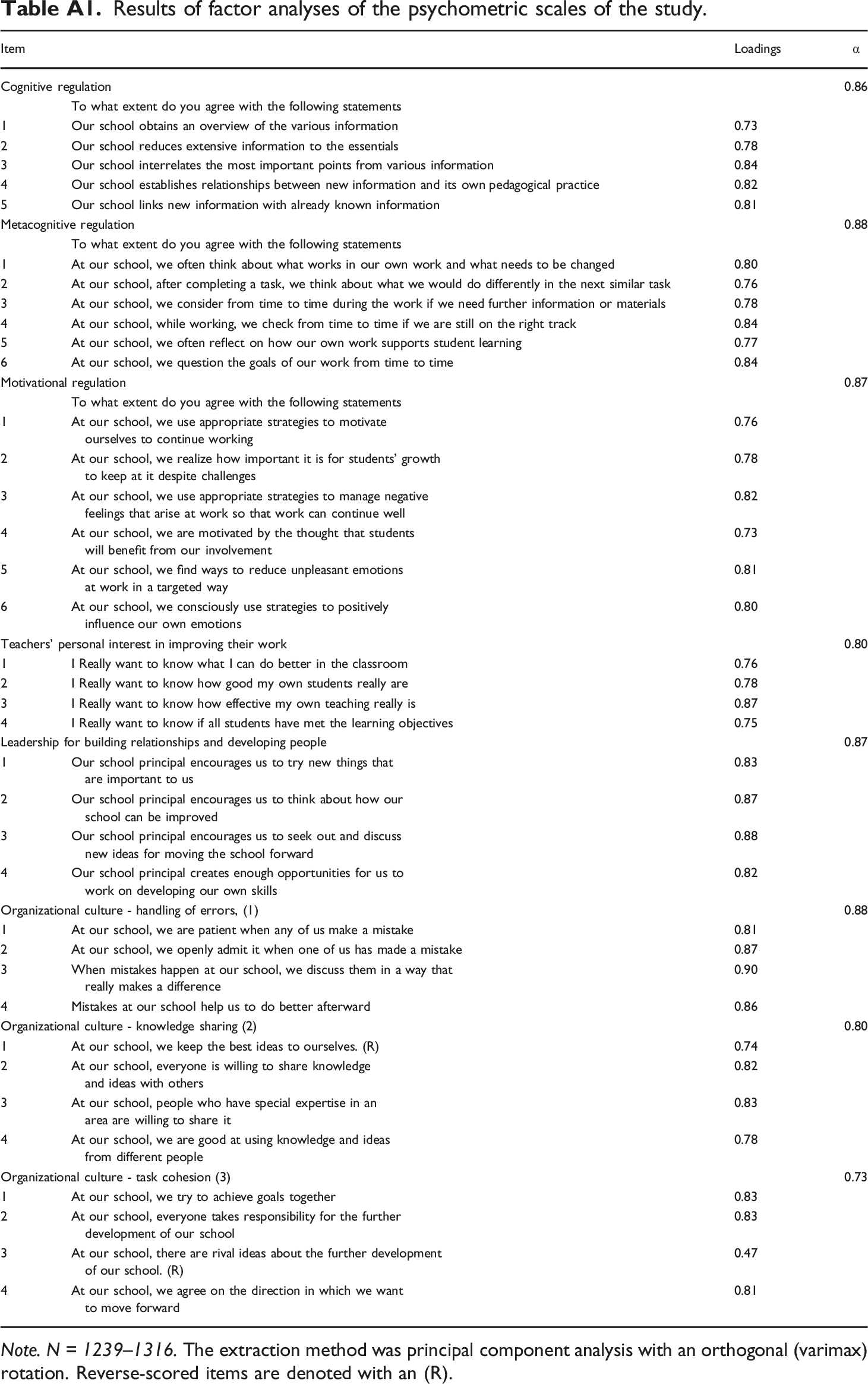
Item
Loadings
α
Cognitive regulation
0.86
To what extent do you agree with the following statements
1
Our school obtains an overview of the various information
0.73
2
Our school reduces extensive information to the essentials
0.78
3
Our school interrelates the most important points from various information
0.84
4
Our school establishes relationships between new information and its own pedagogical practice
0.82
5
Our school links new information with already known information
0.81
Metacognitive regulation
0.88
To what extent do you agree with the following statements
1
At our school, we often think about what works in our own work and what needs to be changed
0.80
2
At our school, after completing a task, we think about what we would do differently in the next similar task
0.76
3
At our school, we consider from time to time during the work if we need further information or materials
0.78
4
At our school, while working, we check from time to time if we are still on the right track
0.84
5
At our school, we often reflect on how our own work supports student learning
0.77
6
At our school, we question the goals of our work from time to time
0.84
Motivational regulation
0.87
To what extent do you agree with the following statements
1
At our school, we use appropriate strategies to motivate ourselves to continue working
0.76
2
At our school, we realize how important it is for students’ growth to keep at it despite challenges
0.78
3
At our school, we use appropriate strategies to manage negative feelings that arise at work so that work can continue well
0.82
4
At our school, we are motivated by the thought that students will benefit from our involvement
0.73
5
At our school, we find ways to reduce unpleasant emotions at work in a targeted way
0.81
6
At our school, we consciously use strategies to positively influence our own emotions
0.80
Teachers’ personal interest in improving their work
0.80
1
I Really want to know what I can do better in the classroom
0.76
2
I Really want to know how good my own students really are
0.78
3
I Really want to know how effective my own teaching really is
0.87
4
I Really want to know if all students have met the learning objectives
0.75
Leadership for building relationships and developing people
0.87
1
Our school principal encourages us to try new things that are important to us
0.83
2
Our school principal encourages us to think about how our school can be improved
0.87
3
Our school principal encourages us to seek out and discuss new ideas for moving the school forward
0.88
4
Our school principal creates enough opportunities for us to work on developing our own skills
0.82
Organizational culture - handling of errors, (1)
0.88
1
At our school, we are patient when any of us make a mistake
0.81
2
At our school, we openly admit it when one of us has made a mistake
0.87
3
When mistakes happen at our school, we discuss them in a way that really makes a difference
0.90
4
Mistakes at our school help us to do better afterward
0.86
Organizational culture - knowledge sharing (2)
0.80
1
At our school, we keep the best ideas to ourselves. (R)
0.74
2
At our school, everyone is willing to share knowledge and ideas with others
0.82
3
At our school, people who have special expertise in an area are willing to share it
0.83
4
At our school, we are good at using knowledge and ideas from different people
0.78
Organizational culture - task cohesion (3)
0.73
1
At our school, we try to achieve goals together
0.83
2
At our school, everyone takes responsibility for the further development of our school
0.83
3
At our school, there are rival ideas about the further development of our school. (R)
0.47
4
At our school, we agree on the direction in which we want to move forward
0.81
n
1
2
3
4
5
6
7
8
9
10
11
1. Cognitive regulation
1187
—
2. Metacognitive regulation
1187
0.67***
—
3. Motivational regulation
1187
0.54***
0.58***
—
4. Gender
1187
−0.07*
−0.07*
−0.06*
—
5. Seniority
1187
−0.04
−0.06*
−0.03
0.01
—
6. Leadership
1187
0.45***
0.51***
0.48***
0.03
−0.01
—
7. Organizational culture
1187
0.49***
0.53***
0.52***
−0.03
−0.06*
0.47***
—
8. Interest
1187
0.11***
0.15***
0.18***
0.00
−0.12***
0.16***
0.16***
—
9. Governance
1187
−0.05
−0.05
−0.05
−0.02
−0.09**
−0.15***
−0.01
0.03
—
10. Socioeconomic status
1187
0.05
0.03
0.01
0.04
0.02
0.05
0.02
0.01
−0.33***
—
11. School size
1187
−0.12***
−0.08**
−0.09**
0.02
0.05
−0.02
−0.22***
−0.05
−0.21***
0.24***
—
n
1
2
3
4
5
6
7
8
9
10
1. Gender
1187
—
2. Seniority
1187
0.01
—
3. Leadership level 1
1187
0.01
−0.02
—
4. Organizational culture level 1
1187
−0.04
−0.04
0.48
—
5. Interest
1187
−0.01
−0.11
0.18
0.18
—
6. Governance
58
0.00
0.00
0.00
0.00
0.00
—
7. Socioeconomic status
58
0.00
0.00
0.00
0.00
0.00
0.00
—
8. School size
58
0.00
0.00
0.00
0.00
0.00
0.00
0.00
—
9. Leadership level 2
58
0.00
0.00
0.00
0.00
0.00
0.00
0.00
0.00
—
10. Leadership level 2
58
0.00
0.00
0.00
0.00
0.00
0.00
0.00
0.00
0.00
—
n
1
2
3
4
5
6
7
8
9
10
1. Gender
1187
—
2. Seniority
1187
−0.02
—
3. Leadership level 1
1187
0.64
0.16
—
4. Organizational culture level 1
1187
0.09
−0.49
0.40
—
5. Interest
1187
0.58
−0.47
0.07
0.01
—
6. Governance
58
−0.26
−0.74
−0.33
−0.02
0.13
—
7. Socioeconomic status
58
0.41
0.25
0.06
−0.08
0.03
−0.32
—
8. School size
58
0.22
0.47
−0.03
−0.52
−0.32
−0.20
0.17
—
9. Leadership level 2
58
0.64
0.16
1.00
0.40
0.07
−0.33
0.06
−0.03
—
10. Organizational culture level 2
58
0.09
*.49
0.40
1.00
0.01
−0.02
−0.08
−0.52
0.40
—