




Abstract
The purpose of this study is to examine (a) to what extent demographic covariates, foundational and emerging positive psychology traits (FEPPTs), and PERMA uniquely predict college life adjustment, health-related quality of life (HRQOL), and life satisfaction of student military veterans; (b) PERMA as a happiness and well-being model for college life adjustment, HRQOL, and life satisfaction among student veterans; and (c) FEPPTs as predictors of PERMA (positive emotion, engagement, relationships, meaning, and accomplishment). In addition, we tested whether total PERMA scores mediate the relationship between service-connected disability and college adjustment. A total of 205 student veterans responded to an online survey. Results revealed that demographic covariates (e.g., service-connected disability), FEPPTs (e.g., optimism), and PERMA (e.g., positive emotion) significantly accounted for college life adjustment, HRQOL, and life satisfaction of student veterans. In addition, a mediation analysis revealed that PERMA partially mediated the relationship between service-connected disability and college life adjustment of student veterans. The results of this study provide empirical supports for the use of PERMA as a comprehensive well-being model of college life adjustment for student veterans.
Postsecondary education is like a public health intervention given it has countless benefits for individuals (e.g., social mobility, improved well-being). However, transitioning from military service to college can be challenging for student military veterans given they are more likely to be transfer, part-time, and first-generation college students as compared with their civilian peers (M. Alschuler & Yarab, 2016; Cunningham, 2012). In addition, service-connected disability is common among student veterans, which will likely affect all facets of a veteran’s post-service life, including college life (Cate, 2014; Elliott et al., 2011; Umucu, Lee et al., 2021). For example, Rudd et al. (2011) reported that 35% of student veterans experienced severe anxiety, 24% experienced severe depression, and 46% experienced significant symptoms of post-traumatic stress disorder (PTSD). According to Tanielian et al. (2008), roughly 20% of returning service members report experiencing a traumatic brain injury (TBI) during deployment. Student veterans with service-connected disabilities may experience unpredictable attendance in class due to disability-related complications, which negatively affect college life adjustment and well-being (Ackerman et al., 2009; DiRamio et al., 2008; Umucu et al., 2018).
College Adjustment/Well-Being, Health-Related Quality of Life (HRQOL), and Life Satisfaction in Student Veterans
Student veterans face unique problems and challenges, negatively their college life and overall health and well-being. Hoffman and Weiss (1986) conceptualized college life adjustment as an absence of the following conditions: depression, anxiety, physical health problems, substance use problems, relationship problems, and academic problems. Similar to college life adjustment, well-being may be multidimensional in student veteran population. For example, Umucu and colleagues (2020) examined the dimensionality of well-being in student veterans. Their research revealed that well-being consisted of two dimensions (i.e., emotion and performance character strengths), which is consistent with previous research given positive psychology researchers (e.g., R. M. Ryan & Deci, 2001; Seligman, 2011b) have considered well-being as a multidimensional construct (e.g., PERMA).
In addition to college life and well-being, Norman et al. (2015) found that student veterans’ quality of life was negatively correlated with poor post-deployment community reintegration, higher levels of PTSD, higher levels of alcohol consumption, and higher levels depression and anxiety. Similar to quality-of-life research for student veterans, there is a dearth of research examining life satisfaction in student veterans. Recently, Umucu et al. (2020) examined hope in student veterans and found that student veterans with higher hope scores had higher life satisfaction scores. Similarly, Umucu and colleagues (2018) reported that student veterans with higher levels of positive emotion, optimism, resilience and lower levels of depression and anxiety reported higher levels of life satisfaction. Finally, Umucu et al. (2018) found that student veterans with higher levels of flourishing scores reported higher levels of life satisfaction scores.
Academic problems
Academic problems may cause significant college adjustment and well-being problems in student veterans (Umucu, Chan et al., 2022). Norman et al. (2015) reported that student veterans face extensive challenges in working toward their academic goals. Age differences from peers, transition challenges, mental and physical health issues, and perceived GI Bill implementation inefficiencies are some of the reasons that may lead student veterans to have academic problems (Barry et al., 2014; Elliott et al., 2011; Norman et al., 2015). In addition to the effects of internal and external stressors on academic functioning and performance, the college environment is essentially the opposite of the military service environment, which may be difficult to manage for student veterans (Barry et al., 2014). Durdella and Kim (2012) found that student veterans had lower levels of sense of belonging on campus than nonveteran students. Authors also reported that, even after controlling for the effect of collaborative work, extracurricular engagement, academic time, academic interaction and participation, and time employed, along with a set of precollege characteristics and other college experiences, student veteran status was negatively linked to college GPA (Durdella & Kim, 2012).
Health problems
Student veterans may experience emotional and physical health problems, negatively affecting their college life adjustment and well-being (e.g., Elliott et al., 2011; Norman et al., 2015; Umucu, Lee et al., 2022; Umucu, Reyes et al., 2021; Umucu, Rumrill et al., 2022). These health problems may easily impose more challenges for student veterans, although the degree of severity of the health concerns influence the long-term or short-term negative effects and other potential symptoms (Whitley et al., 2013). As some health concerns and disabilities—such as TBI—are invisible, student veterans sometimes may not be aware of their own disabilities. More than a quarter of U.S. combat troops were estimated to have a TBI, causing problems with memory, organization of thoughts, concentration, problem-solving, decision-making, and reading comprehension (DiRamio & Spires, 2009; Whitley et al., 2013). These cognitive skills and abilities are important to academic success in postsecondary education. Student veterans may also experience emotional health problems such as PTSD (Elliott et al., 2011; Umucu, Lo et al., 2022). Considering the nature of mental illness, symptoms associated with mental illness can be very disruptive for student veterans during postsecondary education (Whitley et al., 2013). Experiencing one of those symptoms may lead a student veteran to leave a lecture during a class, which can be damaging academically, socially, and psychologically, as unusual behaviors can be isolating (M. Alschuler & Yarab, 2016). Student veterans with PTSD may also experience poor physical health, alcohol abuse, difficulties with intimacy, and troubled family relationships (Elliott et al., 2011). Researchers have also identified substance use as a health concern among student veterans (Barry et al., 2012). For example, Barry et al. (2012) reported that alcohol consumption was a salient concern among student service members and student veterans in postsecondary education. According to Barry et al. (2012), binge drinking among student service members/veterans was linked to greater problems, highlighting potential adjustment difficulties/risks. Finally, student veterans may experience perceived weakness, shame, and moral turmoil that may potentially lead them to develop help-seeking stigma (M. Alschuler & Yarab, 2016; S. W. Ryan et al., 2011; Sherman, 2010; Umucu, Ghosh et al., 2022) associated with lack of treatment engagement (S. W. Ryan et al., 2011). Overall, physical and emotional health problems may cause significant academic difficulties for student veterans.
Interpersonal relationship problems
Social support is an important protective factor for student veterans as they adjust to college life. Research revealed that veterans may experience social isolation (e.g., Grenawalt, Lu et al., 2022; McGuire et al., 2022). Similarly, student veterans may experience interpersonal problems due to difficulties related to their nontraditional student status, health problems, and transition to college life (Barry et al., 2014; Umucu et al., 2020). Student veterans consider postsecondary education as a mission to be completed (Ely, 2008). According to researchers (Basham, 2008; Milliken et al., 2007), overseas deployment, particularly with combat exposure, may increase interpersonal relationship issues with friends, family, and coworkers when veterans return home. Student veterans may think that there is no one who can understand the experiences of veterans on campus (Whitley et al., 2013). Due to fewer common interests between student veterans and traditional students, the former may feel a sense of isolation (M. Alschuler & Yarab, 2016; Whitley et al., 2013). Interpersonal problems have been found to be linked to emotional problems such as PTSD (Elliott et al., 2011), which may eventually lead to poor college life adjustment and well-being outcomes.
A Proposed Model for Well-Being Contributing to College Adjustment
In recent decades, researchers have focused on foundational and emerging positive psychology traits (FEPPTs), including optimism, hope, resilience, coping flexibility, and secure attachment. For this study, these five traits were categorized and given the acronym FEPPTs (e.g., Umucu, Lee et al., 2021). We selected these variables based on our literature review and scope of this article although there are many other foundational and emerging positive psychology variables.
Optimism, hope, resilience, coping flexibility, and secure attachment as FEPPTs have been found to be positively correlated with the good life, happiness, well-being, and flourishing among adults and college students (Bajaj & Pande, 2016; Butler & Kern, 2016; Cheng et al., 2014; Cole et al., 2015; Feldman & Dreher, 2012; Karreman & Vingerhoets, 2012; Kato, 2015; Mattanah et al., 2004; Peterson, 2000; Yarcheski & Mahon, 2016). For example, K. J. Chan and colleagues (2016) reported that optimism, hope, resilience, coping styles, and secure attachment were some of the positively associated predictors for post-traumatic growth. Riggs and Riggs (2011) examined the role of family attachment in risk and resilience in military families with deployment. They reported that optimism, hope, resilience, coping efforts, and secure attachment are contributors to psychological, spiritual, and social growth and to overall well-being of military families experiencing deployment. Griffith and West (2013) tested whether the Master Resilience Training has an impact on well-being and stress among National Guard soldiers. They found that resilience training improved resilience competencies that promoted coping with stressful circumstances and optimism.
Optimism
Dispositional optimism is defined as “the generalized, relatively stable tendency to expect good outcomes across important life domains” (Scheier & Carver, 2018, p. 1082). The effect of dispositional optimism on subjective well-being, physical well-being, meaning in life, engagement in treatment, and goal attainment has been established over decades (Geers et al., 2009; Scheier & Carver, 1992; Seligman, 2011a, 2011b). Seligman (2002) considered optimism to be a positive attitude toward life. Optimistic college students have been found to have less depression, less stress, more social support, and more meaning in life than pessimists (Şahin-Baltacı & Tagay, 2015; Scheier & Carver, 1992). Besides, according to Geers et al. (2009), optimism is positively associated with goal engagement and attainment among college students.
Hope
Hope is defined as “a positive motivational state that is based on an interactively derived sense of successful agency and pathways” (Snyder et al., 1991, p. 287). Research studies over the years have shown that hope is one of the predictors of good health and well-being (e.g., Snyder et al., 1991). Feldman and Dreher (2012) reported that college students who received the hope intervention displayed greater increases in hope from pre- to posttest regarding a self-nominated goal, as well as in sense of life purpose and vocational calling. Berg et al. (2011) investigated the role of hope in engaging in healthy behaviors among college students. They reported that lower hope scores were associated with higher rates of binge drinking and smoking, and higher hope scores were associated with greater likelihood of and more frequent exercising and fat limitation in diets. Hope has been also studied in student veteran population as well (Umucu, Moser et al., 2020).
Resilience
Resilience is defined as a dynamic process, encompassing both psychological and behavioral manifestations of positive adaptation in the context of significant adversity (Todd & Worell, 2000). Resilience is one of the positive individual traits, and a growing body of research supports its association with better physical health, mental health, and overall well-being (Peterson & Seligman, 2004). Huppert and So (2013) reported that resilience was positively correlated with positive emotion, engagement, relationship, meaning, and competence, with small to moderate effect sizes. Li and Yang (2016) reported that trait resilience in college students positively correlated with active coping, secure attachment, and self-efficacy, and it negatively correlated with stress.
Coping flexibility
Coping flexibility refers to “not only to the way individuals vary their coping strategies across situations but to whether such flexible strategy deployment is situation appropriate” (Cheng, 2001, p. 815). Positive health outcomes were linked to individual differences in coping flexibility (Cheng, 2009). According to Kato (2012), coping flexibility was found to be positively associated with assimilative and accommodative coping, social problem-solving, cognitive flexibility, and constraint relaxation among college students and employees.
Secure attachment
Adult attachment can be defined as “the stable tendency of an individual to make substantial efforts to seek and maintain proximity to and contact with one or a few specific individuals who provide subjective potential for physical and/or psychological safety and security” (Berman & Sperling, 1994, p. 8). Securely attached individuals were found to have better life strategies and higher levels of happiness, improving psychological adjustment and health (Peterson & Park, 2007). Secure attachment is linked to more positive college student adjustment and academic and emotional adjustment (Mattanah et al., 2004; Rice et al., 1995).
PERMA
Seligman (2011a, 2011b) has developed PERMA as a comprehensive model of happiness and well-being. PERMA was built upon Authentic Happiness Theory (AHT; Seligman, 2002) to recognize the multidimensionality of well-being. PERMA has been examined in the field of rehabilitation (e.g., Grenawalt, Umucu et al., 2022; Huck et al., 2022; Tansey et al., 2018; Umucu, 2021). Seligman (2011a, 2011b) stated that the purpose of well-being theory is to increase flourishing by increasing positive emotion, engagement, relationships, meaning, and accomplishment (i.e., PERMA).
Positive emotion
The first element in well-being theory is positive emotion (Butler & Kern, 2016), which refers to good feelings such as joy, hope, rapture, happiness, and contentment (Seligman, 2011a, 2011b). Positive emotion has been considered as a key indicator of well-being (Coffey et al., 2016). Trigwell et al. (2012) found that college students who experience strong positive emotion are more likely to adopt a deeper approach to learning.
Engagement
The second element, engagement, refers to the act of becoming highly interested in, absorbed by, or focused on daily life activities (Seligman, 2011a, 2011b). Across several studies, engagement has been found to be positively associated with other indicators of well-being, including life satisfaction and positive emotion (Ruch et al., 2010). Engagement has been found to increase academic performance in college students (Engeser et al., 2005).
Relationships
The third element in well-being theory is positive relationships, which refers to feelings of being cared about by others, authentically connected to others, and secure in those connections (Seligman, 2011a, 2011b). Positive relationships are considered to represent a fundamental human need and are strongly linked to happiness (e.g., Peterson, 2006). Diener and Seligman (2002) reported that college students who have stronger romantic and social relationships and who socialize more frequently tend to be happier than students who do not.
Meaning
The fourth element in well-being theory is meaning, which refers to a sense of purpose in life derived from something greater than the self (Seligman, 2011a). A higher sense of meaning has been found to be positively associated with higher life satisfaction, positive affect, and positive mental health outcomes (e.g., Steger & Frazier, 2005), along with better academic achievement in college students (DeWitz et al., 2009).
Accomplishment
The fifth and last element in well-being theory is accomplishment, which refers to a persistent drive to make progress toward personal goals and having a sense of achievement in one’s life (Butler & Kern, 2016; Seligman, 2011a, 2011b). A study by Levasseur et al (2010) found that a having sense of accomplishment in participation in social roles was associated with a number of positive outcomes, including better health, higher well-being, and greater quality of life, in adults with various impairment levels.
Purpose of the Study
Although each FEPPT and PERMA variable has been well-studied in general well-being research, these variables were not studied as a multidimensional well-being theory to predict college adjustment of student veterans and to serve as a foundation on which to design strength-based interventions to help these students achieve positive college life and psychosocial outcomes. Thus, research to validate PERMA as a well-being model for student veterans seems warranted. The purpose of this study was to examine (a) demographic covariates, FEPPTs, and PERMA as predictors of college life adjustment, HRQOL, and life satisfaction of student veterans; (b) PERMA as a happiness and well-being model for college life adjustment, HRQOL, and life satisfaction among student veterans; and (c) FEPPTs as predictors of PERMA. In addition, we also examined whether PERMA mediates the relationship between service-connected disability and college life adjustment.
Method
Procedures
A quantitative descriptive design, utilizing simultaneous and hierarchical regression analysis, was used. Following IRB approval, directors of student veteran programs at colleges and universities were identified and contacted to seek their assistance to recruit student veterans to participate in the study. Student veterans were recruited from several universities across the United States. Participants were informed of the opportunity to obtain a $15 gift card.
Participants
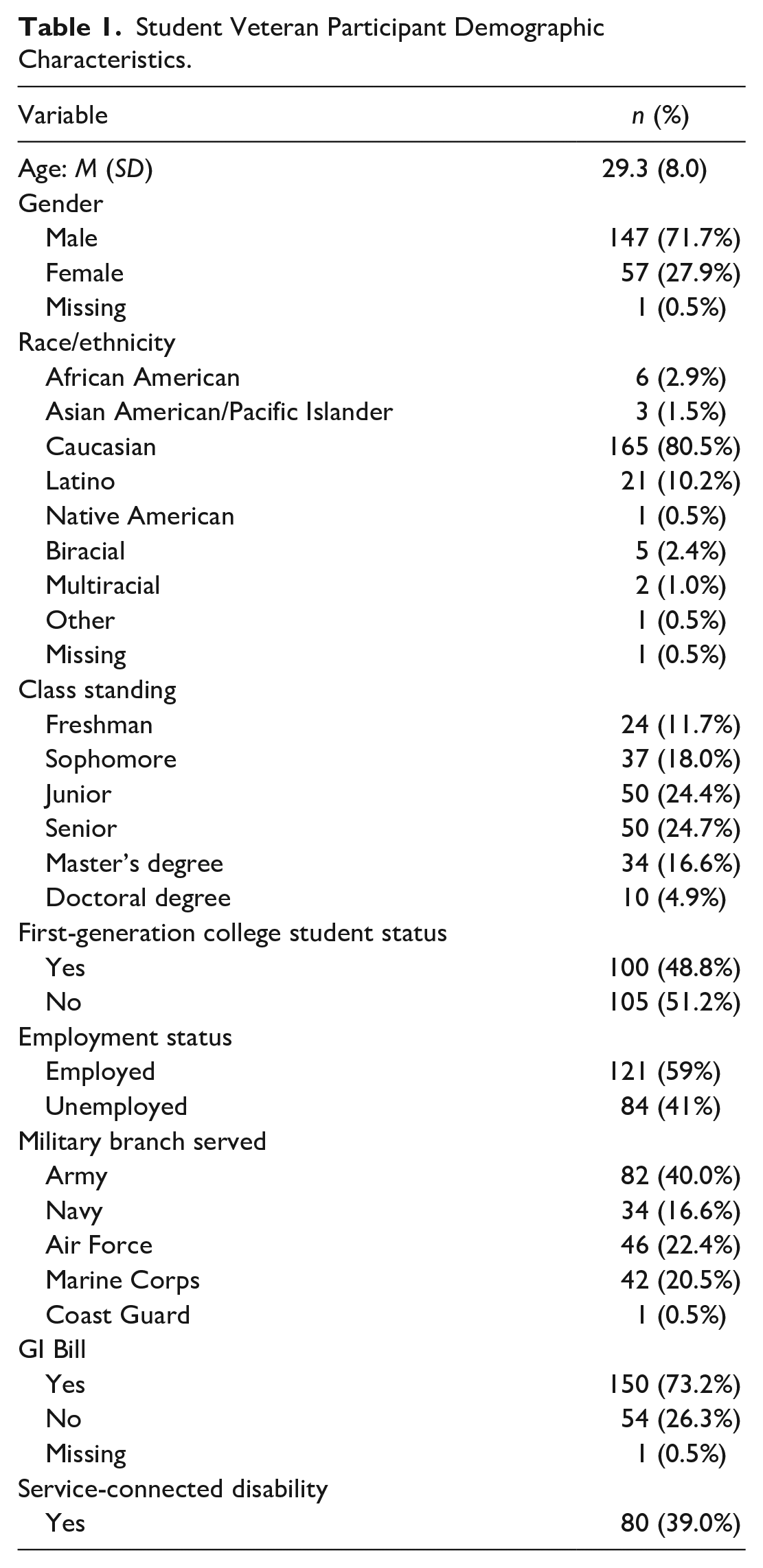
Descriptive statistics are found in Table 1. The sample was composed of 147 (71.7%) males and 57 (27.8%) females and was mostly White (80.5%). Participants ranged in age from 18 to 64 years (M = 29.3, SD = 8.0).
Student Veteran Participant Demographic Characteristics.
Measures
PERMA
PERMA-Profiler (Butler & Kern, 2016) is a 23-item scale measuring positive emotion, engagement, relationships, meaning, accomplishment, overall well-being, negative emotion, and physical health. In the current study, only 15 items (e.g., “In general, how often do you feel joyful?”) were used to measure well-being. Each item is rated on an 11-point scale ranging from 0 (never) to 10 (always), or 0 (not at all) to 10 (completely). Higher scores are indicative of higher levels of well-being. The reported internal consistency reliability coefficients for the subscale scores ranged from .71 to .89 for positive emotion, .60 to .81 for engagement, .75 to .85 for relationships, .85 to .92 for meaning, and .70 to .86 for accomplishment subscale scores (Butler & Kern, 2016). Cronbach’s alpha coefficients calculated in the present study were .91 for positive emotion, .57 for engagement, .85 for relationships, .92 for meaning, .81 for accomplishment, and .95 for overall well-being.
Optimism
The Life Orientation Task–Revised (LOT-R; Scheier et al., 1994) is a 10-item scale measuring optimism. Of the 10 items, four items serve as fillers, resulting in only six items (e.g., “In uncertain times, I usually expect the best”) being used in the current study. Each scale item is rated from 0 (strongly disagree) to 4 (strongly agree). Higher scores are indicative of higher levels of optimism. Cronbach’s alpha of the LOT-R has been reported to be .78 (Scheier et al., 1994). Cronbach’s alpha coefficient calculated in the present study was .86.
Hope
The Trait Hope Scale (THS; Snyder et al., 1991) is a 12-item (e.g., “I can think of many ways to get out of a jam”) scale measuring hope. Each scale item is rated from 1 (definitely false) to 4 (definitely true). Of the 12 items, four items serve as fillers, resulting in only eight items used in the current study. Higher scores are indicative of higher levels of hope. Cronbach’s alpha for the THS ranged from .74 to .84 in previous research (Snyder et al., 1991). Cronbach’s alpha coefficient calculated in the present study was .85.
Resilience
The Brief Resilience Scale (BRS; Smith et al., 2008) is a six-item (e.g., “I tend to bounce back quickly after hard times”) scale measuring resilience. Each scale item is rated from 1 (strongly disagree) to 5 (strongly agree). Higher scores are indicative of higher levels of resilience. Cronbach’s alpha for the BRS ranged from .80 to .91 in previous research (Smith et al., 2008). Cronbach’s alpha coefficient calculated in the present study was .85.
Coping flexibility
Coping flexibility was measured by the Coping Flexibility Scale (CFS; Kato, 2012). This scale consists of 10 items (e.g., “I only use certain ways to cope with stress”), each rated on a 4-point Likert-type scale ranging from 0 (not applicable) to 3 (very applicable). Reliability coefficients have been reported to range from .81 to .82 (Ng et al., 2014; Reed, 2016). Cronbach’s alpha coefficient calculated in the present study was .79.
Secure attachment
Secure attachment was measured by the Secure Attachment subscale of the Short-Form Version of the Attachment Style Questionnaire (ASQ; Iwanaga et al., 2017). The Short-Form Version is a revised version of the original ASQ (Feeney et al., 1994). The Secure Attachment subscale consists of four items (e.g., “I feel confident that other people will be there for me when I need them”) rated on a 7-point Likert-type scale ranging from 1 (totally disagree) to 7 (totally agree). The internal consistency reliability coefficient for the secure attachment subscale was reported to be .74 (Iwanaga et al., 2017). Cronbach’s alpha coefficient calculated in the present study was .87.
College life adjustment
College life adjustment was measured by a score based on the four subscales of the Inventory of Common Problems (ICP; Hoffman & Weiss, 1986) and the Patient Health Questionnaire for Depression and Anxiety (PHQ-4; Kroenke et al., 2009). The four subscales of the ICP—Academic Problems, Interpersonal Problems, Substance Use Problems, and Physical Health Problems—were composed of 16 items (e.g., “Difficulty caring about or concentrating on studies?”). Each item was rated on a 5-point Likert-type scale ranging from 1 (not at all) to 5 (very much). The PHQ-4 consisted of four items (e.g., “Feeling nervous, anxious or on edge”) rated on 4-point Likert-type scale ranging from 0 (not at all) to 3 (nearly every day). The PHQ-4 was used to measure depression and anxiety. The internal consistency reliability coefficient was found to be .82 (Löwe et al., 2010). Items of the PHQ-4 and of the subscales of the ICP are negatively worded, so negatively worded items were reverse coded. The second step was to sum up the standardized values of the PHQ-4 and the four subscales of the ICP to generate a global college life adjustment score, with higher scores indicating a greater college life adjustment.
HRQOL
Health-related quality of life was measured using the Patient-Reported Outcomes Measurement Information System (PROMIS®) global mental and physical health items, which were categorized by Hays et al. (2009). The PROMIS global mental health and physical health scales consist of four items (e.g., “In general, would you say your quality of life is . . .”) each. Items are rated on a 5-point Likert-type scale ranging from 1 to 5. PROMIS provides a conversion table on assessmentcenter.net, where raw scores can be converted to a t score metric with M = 50 and SD = 10 (assessmentcenter.net). Internal consistency reliability coefficients were found to be .78 for mental health and .84 for physical health (K. N. Alschuler et al., 2016).
Life satisfaction
Life satisfaction was measured by the Satisfaction with Life Scale (SWLS; Diener et al., 1985). This scale consists of five items (e.g., “In most ways my life is close to my ideal”) rated on a 7-point Likert scale ranging from 1 (strongly disagree) to 7 (strongly agree). The total score ranges from 5 to 35, with a higher score indicating a greater life satisfaction.
Data Analysis
Descriptive statistics were computed for all independent variables and dependent variables to examine the shape of the distribution, central tendency, and dispersion. Coefficient alphas were used to estimate internal consistency reliability of scores on each measure. Multiple regression analysis assumptions for this study were carefully tested and evaluated. In this study, Cook’s distance (Cook’s D) was used to identify outliers in the data set. A series of simultaneous and hierarchical regression analyses were used to identify the unique contribution of each variable to the variance of the criterion variable. Independent variables were grouped under the categories of demographic covariates (i.e., age, gender, race, marital status, service-connected disability, college level, and first-generation student status), FEPPTs (i.e., optimism, hope, resilience, coping flexibility, and secure attachment), and PERMA (i.e., positive emotion, engagement, relationships, meaning, and accomplishment). A priori specifications for hierarchical regression analysis included the following:
Step 1. A set of demographic covariates were entered;
Step 2. Five FEPPTs variables were entered; and
Step 3. Five pillars of PERMA were entered.
Finally, multiple regression analysis was utilized to test a mediator hypothesis examining the effect of PERMA total scores on the relationship between service-connected disability and college life adjustment.
Results
Simultaneous Regression Analysis
With college life adjustment, HRQOL, and life satisfaction as the criterion variables and demographic covariates, FEPPTs and PERMA, 12 simultaneous regression analyses (three sets of independent variables × four outcome variables) examined the effects of the following sets of variables: (a) demographic covariates, (b) FEPPTs, and (c) PERMA.
Demographic covariates
When using college life adjustment as the outcome variable, demographic covariates accounted for 19% of the variance in college life adjustment, R = .44, R2 = .19, F(7, 183) = 6.21, p < .001. Examining the standardized partial regression coefficients, marital status was found to significantly contribute to variance in college life adjustment, with B = .38, t(183) = 3.49, p < .01. Service-connected disability was also found to significantly contribute to variance in college life adjustment, with B = −.49, t(183) = −4.62, p < .001. When using physical health QOL as the outcome variable, demographic covariates accounted for 27% of the variance in physical health QOL, R = .52, R2 = .27, F(7, 183) = 9.50, p < .001. Examination of the standardized partial regression coefficients indicated that age, β = −.17, t(183) = −2.23, p < .05; service-connected disability, B = −7.90, t(183) = −6.69, p < .001; and class standing, β = .15, t(183) = 2.07, p < .05, contributed significantly to explaining variance in physical health QOL. When using mental health QOL as the outcome variable, demographic covariates accounted for 17% of the variance in mental health QOL, R = .41, R2 = .17, F(7, 184) = 5.28, p < .001. Examination of the standardized partial regression coefficients indicated that age, β = −.23, t(184) = −3.06, p < .01; marital status, B = 3.37, t(184) = 2.49, p < .01; and service-connected disability, B = −4.64, t(184) = −3.46, p < .001, significantly contributed to variance in mental health QOL. When using life satisfaction as the outcome variable, demographic covariates accounted for 16% of the variance in life satisfaction, R = .40, R2 = .16, F(7, 178) = 4.73, p < .001. Examination of the standardized partial regression coefficients indicated that age, β = −.31, t(178) = −3.95, p < .001; marital status, B = .64, t(178) = 3.15, p < .01; and class standing, β = .16 t(178) = 2.10, p < .05 significantly contributed to variance in life satisfaction.
FEPPTs
When using college life adjustment as the outcome variable, FEPPTs accounted for 59% of the variance in college life adjustment, R = .77, R2 = .59, F(5, 185) = 53.159, p < .001. Examination of the standardized partial regression coefficients indicated that optimism, β = .35, t(185) = 5.54, p < .001; hope, β = .20, t(185) = 3.02, p < .01; resilience, β = .19, t(185) = 3.21, p < .01; and secure attachment, β = .25, t(185) = 4.25, p < .001, significantly contributed to variance in college life adjustment. When using physical health QOL as the outcome variable, FEPPTs accounted for 40% of the variance in physical health QOL, R = .63, R2 = .40, F(5, 185) = 24.56, p < .001. Examination of the standardized partial regression coefficients found that hope, β = .19, t(185) = 2.38, p < .01; resilience, β = .24, t(185) = 3.35, p < .01; and secure attachment, β = .28, t(185) = 3.99, p < .001, significantly contributed to variance in physical health QOL. When using mental health QOL as the outcome variable, FEPPTs accounted for 64% of the variance in mental health QOL, R = .80, R2 = .64, F(5, 186) = 67.29, p < .001. Examination of the standardized partial regression coefficients indicated that optimism, β = .23, t(186) = 3.83, p < .001; hope, β = .26, t(186) = 4.02, p < .001; resilience, β = .16, t(186) = 2.81, p < .01; and secure attachment, β = .39, t(186) = 7.17, p < .001, significantly contributed to variance in mental health QOL. When using life satisfaction as the outcome variable, FEPPTs accounted for 60% of the variance in life satisfaction, R = .78, R2 = .60, F(5, 180) = 54.51, p < .001. Examination of the standardized partial regression coefficients indicated that optimism, β = .43, t(180) = 6.46, p < .001; hope, β = .19, t(180) = 2.85, p < .01; and secure attachment, β = .24, t(180) = 4.03, p < .001, significantly contributed to variance in life satisfaction.
PERMA
When using college life adjustment as the outcome variable, PERMA accounted for 67% of the variance in college life adjustment, R = .82, R2 = .67, F(5, 185) = 76.51, p < .001. Examination of the standardized partial regression coefficients indicated that positive emotion, β = .52, t(185) = 5.68, p < .001 and accomplishment, β = .38, t(185) = 5.37, p < .001, significantly contributed to variance in college life adjustment. When using physical health QOL as the outcome variable, PERMA accounted for 40% of the variance in physical health QOL, R = .63, R2 = .40, F(5, 185) = 24.42, p < .001. Examination of the standardized partial regression coefficients indicated that positive emotion, β = .31, t(185) = 2.26, p < .05, and accomplishment, β = .43, t(185) = 4.77, p < .001, significantly contributed to variance in physical health QOL. When using mental health QOL as the outcome variable, PERMA accounted for 68% of the variance in mental health QOL, R = .83, R2=.68, F(5, 186) = 79.19, p < .001. Examination of the standardized partial regression coefficients indicated that positive emotion, β = .45, t(186) = 4.96, p < .001; relationships, β = .25, t(186) = 3.23, p < .01; and accomplishment, β = .14, t(186) = 2.05, p < .05, significantly contributed to variance in mental health QOL. When using life satisfaction as the outcome variable, PERMA accounted for 59% of the variance in life satisfaction, R=.77, R2=.59, F(5, 180) = 54.78, p < .001. Examination of the standardized partial regression coefficients indicated that positive emotion, β = .35, t(180) = 3.27, p < .01; relationships, β = .36, t(180) = 3.60, p < .001; and accomplishment, β = .21, t(180) = 2.96, p < .01, significantly contributed to variance in life satisfaction.
Hierarchical Regression Analysis
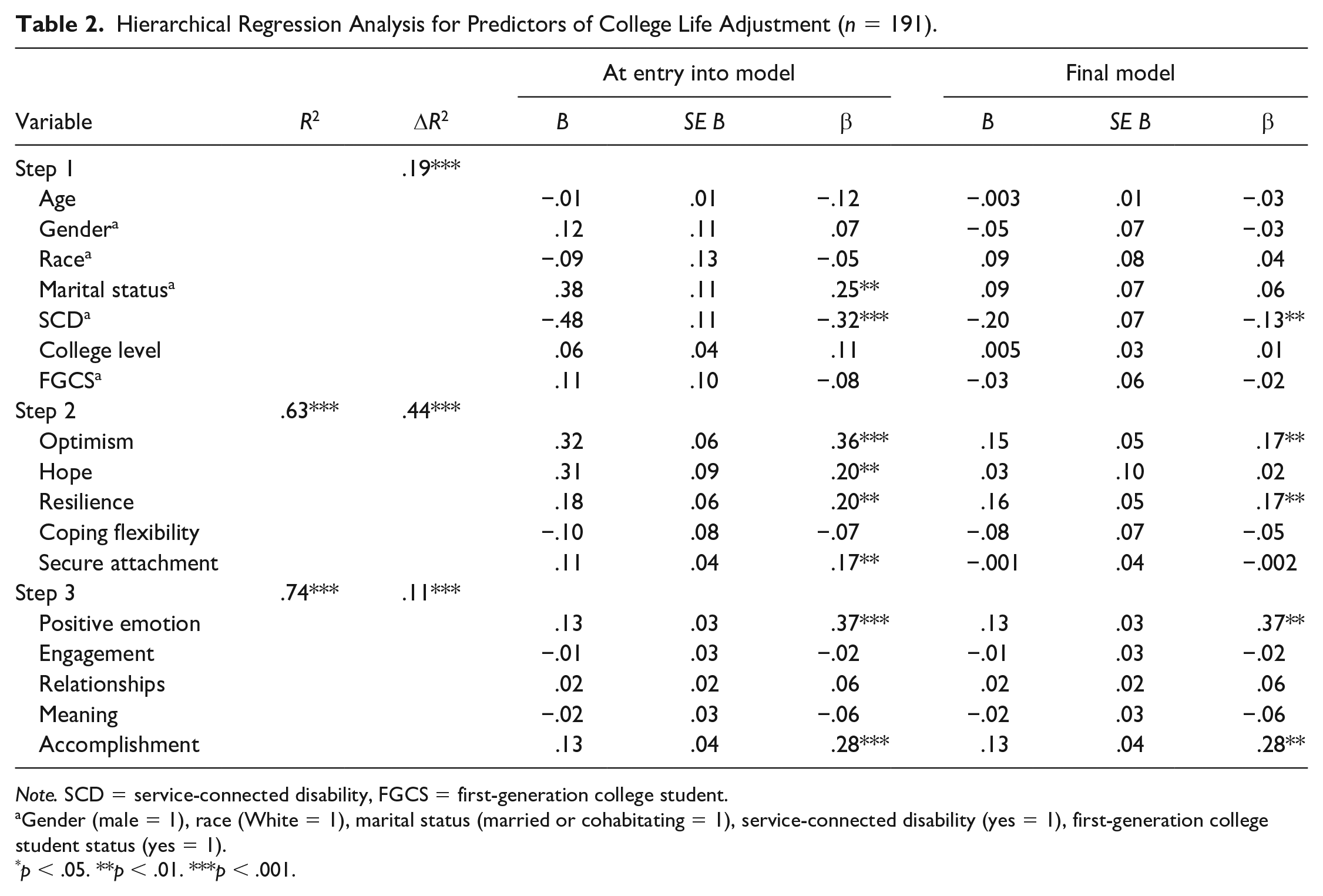
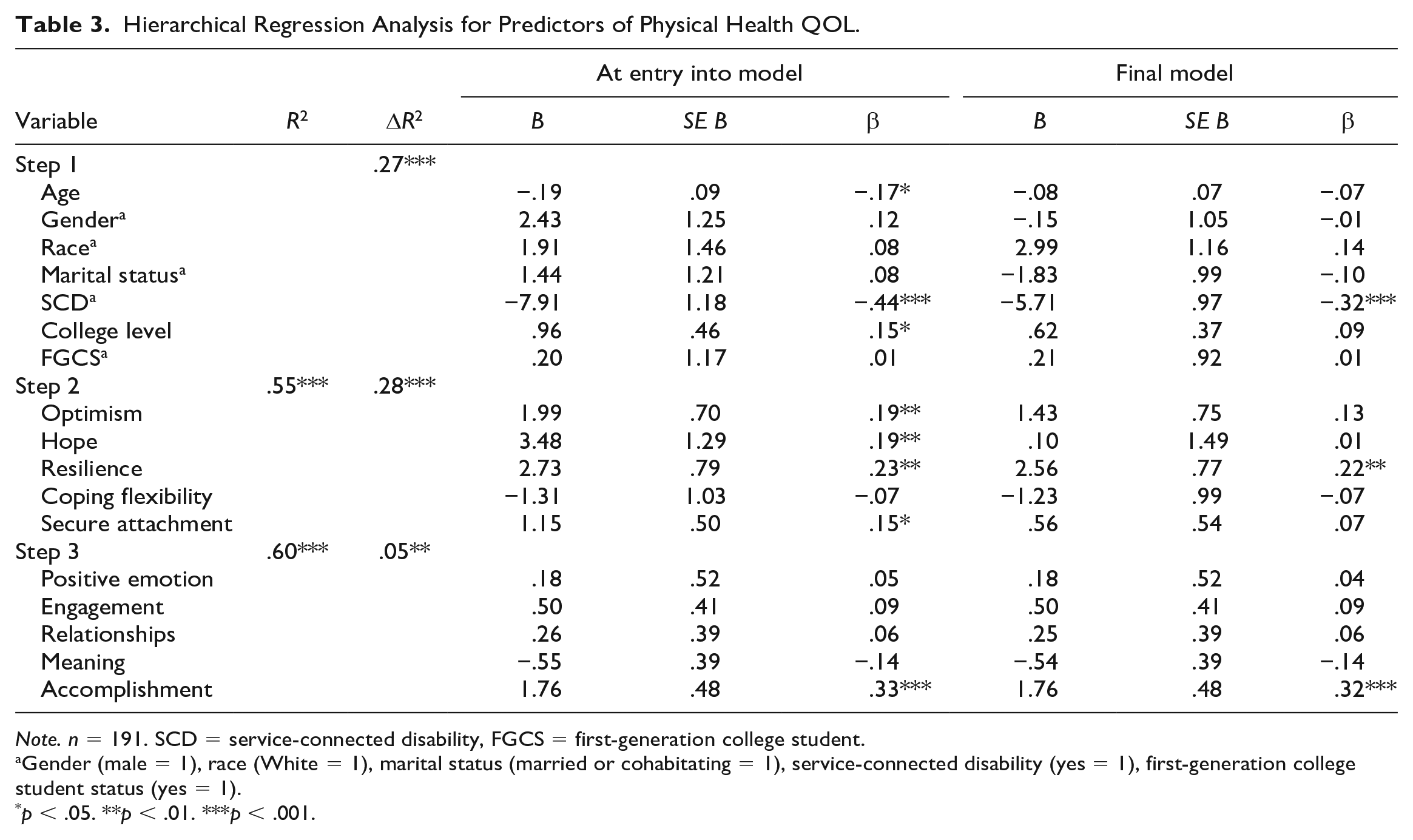
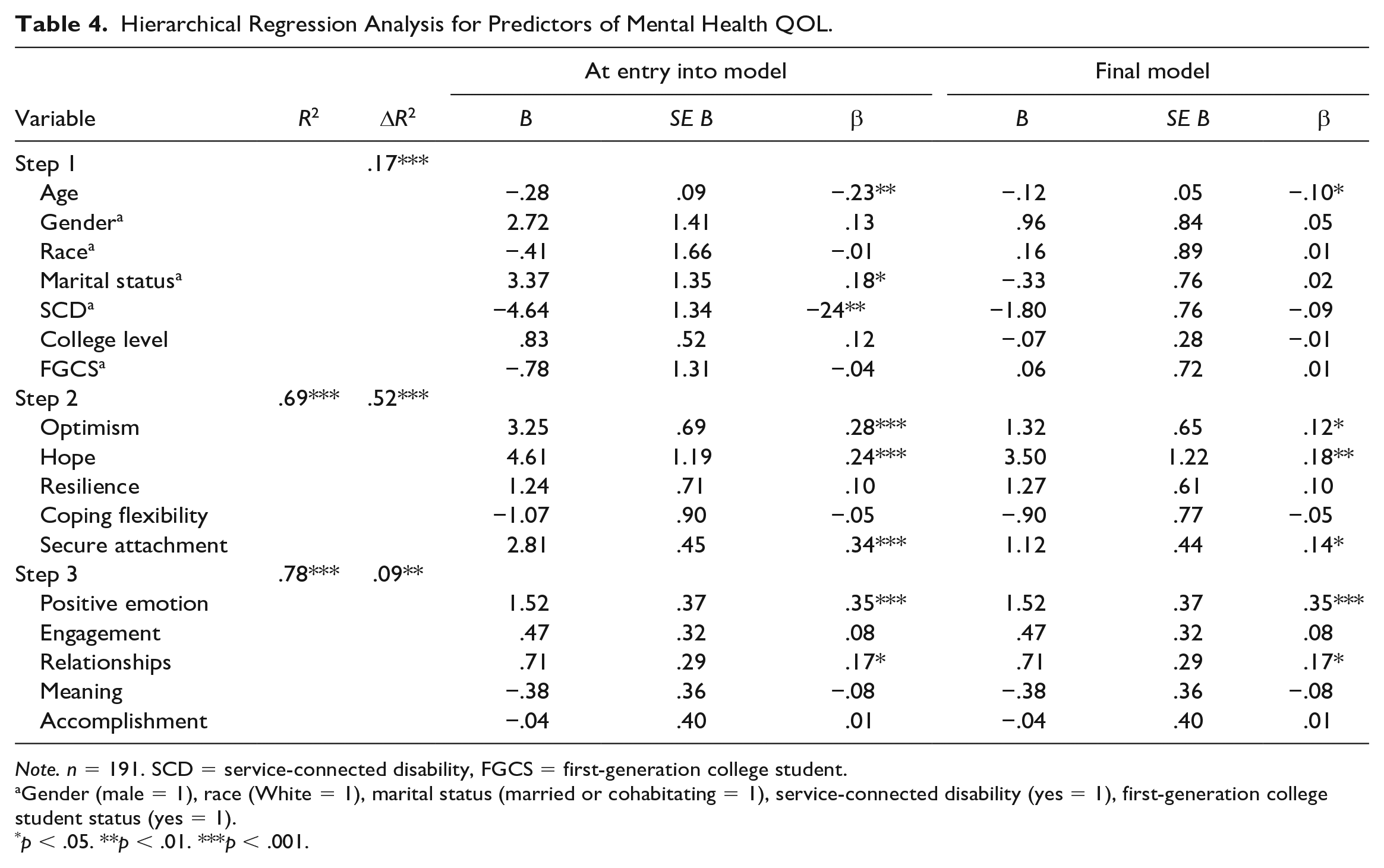
A series of hierarchical regression analyses was used to examine the research hypotheses. A priori specifications for the order of entry for the sets in the hierarchical regression analyses were (a) demographic covariates, (b) FEPPTs, and (c) PERMA. The results, including R2, ΔR2, the unstandardized regression coefficients (B), and standardized coefficients (β) for all variables at each step and within the final model, are presented in Tables 2 to 5.
Hierarchical Regression Analysis for Predictors of College Life Adjustment (n = 191).
Note. SCD = service-connected disability, FGCS = first-generation college student.
Gender (male = 1), race (White = 1), marital status (married or cohabitating = 1), service-connected disability (yes = 1), first-generation college student status (yes = 1).
p < .05. **p < .01. ***p < .001.
Hierarchical Regression Analysis for Predictors of Physical Health QOL.
Note. n = 191. SCD = service-connected disability, FGCS = first-generation college student.
Gender (male = 1), race (White = 1), marital status (married or cohabitating = 1), service-connected disability (yes = 1), first-generation college student status (yes = 1).
p < .05. **p < .01. ***p < .001.
Hierarchical Regression Analysis for Predictors of Mental Health QOL.
Note. n = 191. SCD = service-connected disability, FGCS = first-generation college student.
Gender (male = 1), race (White = 1), marital status (married or cohabitating = 1), service-connected disability (yes = 1), first-generation college student status (yes = 1).
p < .05. **p < .01. ***p < .001.
Hierarchical Regression Analysis for Predictors of Life Satisfaction.
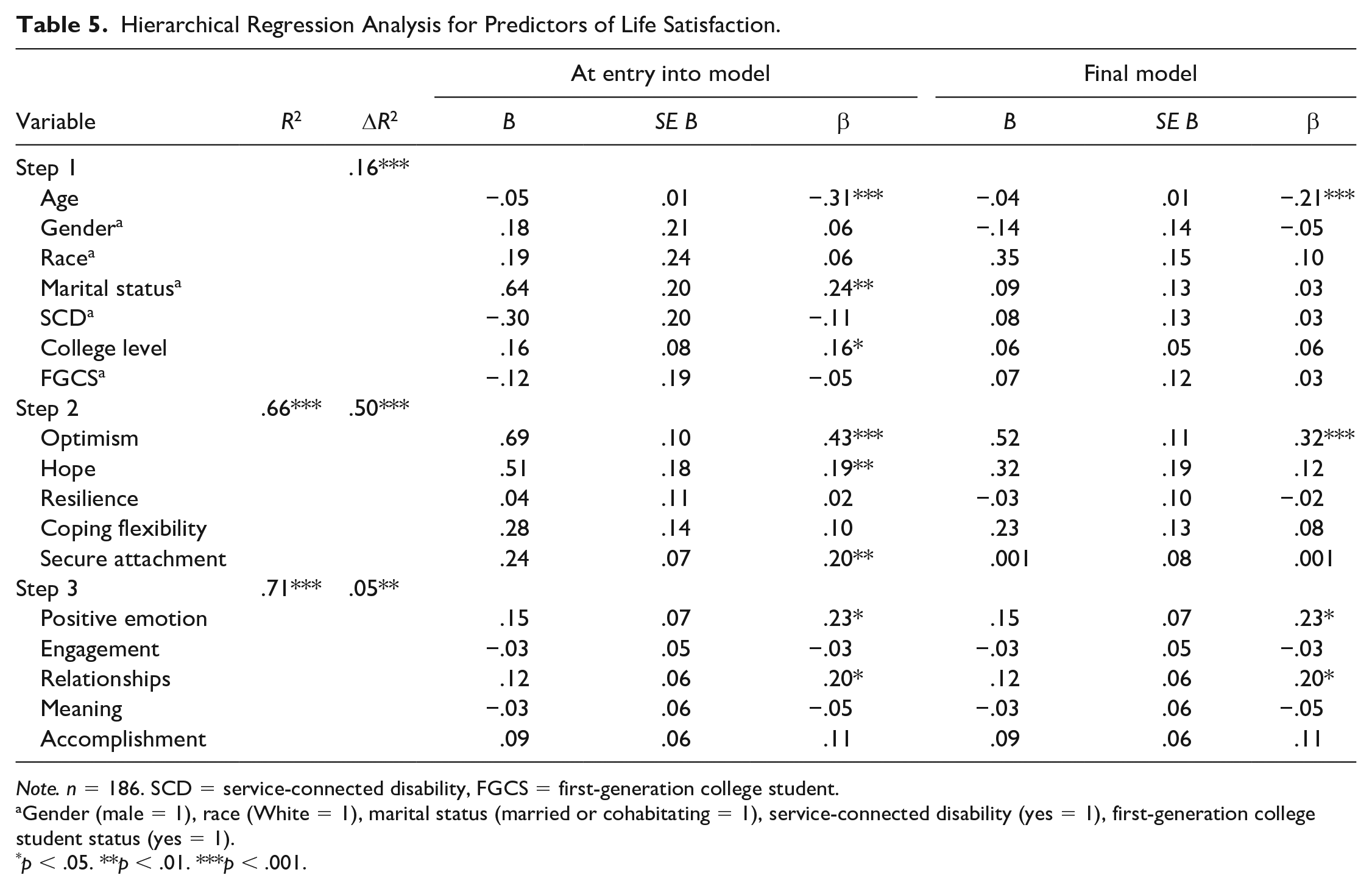
Note. n = 186. SCD = service-connected disability, FGCS = first-generation college student.
Gender (male = 1), race (White = 1), marital status (married or cohabitating = 1), service-connected disability (yes = 1), first-generation college student status (yes = 1).
p < .05. **p < .01. ***p < .001.
College life adjustment
As the first step of the hierarchical regression analysis, the set of demographic covariates was entered. Demographic covariates accounted for a significant amount of the variance in college life adjustment, R = .44, R2 = .19, F(7, 183) = 6.21, p < .001. The FEPPTs were entered in the second step of the regression analysis, including optimism, hope, resilience, coping flexibility, and secure attachment. The addition of these variables accounted for a significant amount of the variance in college life adjustment that was not explained by demographic covariates, R = .80, R2 = .63, ΔR2 = .44, F(12, 178) = 25.85, p < .001. The change in ΔR2 indicated that FEPPTs accounted for a significant amount of the variance above and beyond that explained by demographic covariates. PERMA was entered in the final step of the regression analysis. The addition of PERMA accounted for a significant amount of additional variance in college life adjustment, R = .86, R2 = .74, ΔR2 = .11, F(17, 173) = 29.01, p < .001. The ΔR2 indicates that PERMA accounted for a significant amount of the variance above and beyond demographic covariates and FEPPTs.
Physical health QOL
As the first step in the hierarchical regression analysis, the set of demographic covariates were entered. Demographic covariates accounted for a significant amount of the variance in physical health QOL, R = .52, R2 = .27, F(7, 183) = 9.50, p < .001. The FEPPTs were entered in the second step of the regression analysis including optimism, hope, resilience, coping flexibility, and secure attachment. The addition of these variables accounted for a significant amount of additional variance in physical health QOL, R = .74, R2 = .55, ΔR2 = .28, F(12, 178) = 17.84, p < .001. The change in ΔR2 indicates that FEPPTs accounted for a significant amount of the variance above and beyond demographic covariates. PERMA were entered in the final step of the regression analysis. The addition of PERMA accounted for a significant amount of additional variance in physical health QOL, R = .77, R2 = .60, ΔR2 = .05, F(17, 173) = 15.06, p < .01. The ΔR2 indicates that PERMA accounted for a significant amount of variance in physical health QOL above and beyond demographic covariates and FEPPTs.
Mental health QOL
In the first step of the hierarchical regression analysis, the demographic covariates were entered as the first set of predictors. Demographic covariates accounted for a significant amount of the variance in mental health QOL, R = .41, R2 = .17, F(7, 184) = 5.28, p < .001. The FEPPTs were entered in the second step of the regression analysis, including optimism, hope, resilience, coping flexibility, and secure attachment. The addition of these variables accounted for a significant amount of the variance in mental health QOL, R = .83, R2 = .69, ΔR2 = .52, F(12, 179) = 32.89, p < .001. The change in ΔR2 indicated that FEPPTs accounted for a significant amount of the variance above and beyond the demographic covariates. PERMA were entered in the final step of the regression analysis. The addition of PERMA accounted for a significant amount of additional variance in mental health QOL, R = .88, R2 = .78, ΔR2 = .09, F(17, 174) = 35.83, p < .01. The ΔR2 indicated that PERMA accounted for a significant amount of the variance above and beyond the sets of demographic covariates and FEPPTs.
Life satisfaction
As the first step in the hierarchical regression analysis, the set of demographic covariates were entered. Demographic covariates of predictors accounted for a significant amount of the variance in life satisfaction, R = .40, R2 = .16, F(7, 178) = 4.74, p < .001. The set of FEPPTs was entered in the second step of the regression analysis, including optimism, hope, resilience, coping flexibility, and secure attachment. The addition of these variables accounted for a significant amount of additional variance in life satisfaction, R = .81, R2 = .66, ΔR2 = .50, F(12, 173) = 27.45, p < .001. The large ΔR2 indicated that FEPPTs accounted for a significant amount of additional variance above and beyond the set of demographic covariates. PERMA were entered in the final step of the regression analysis. The addition of PERMA accounted for a significant amount of additional variance in life satisfaction, R = .84, R2 = .71, ΔR2 = .05, F(17, 168) = 24.31, p < .001. The ΔR2 indicated that PERMA accounted for a significant amount of variance above and beyond the demographic covariates and FEPPTs.
Mediation Analysis
The standardized regression coefficient for the a path between service-connected disability and PERMA was statistically significant. Moreover, the standardized regression coefficient for the b path between PERMA and college life adjustment was also statistically significant. The standardized indirect effect (ab path) was (−.97)(.32) = −.31. Bootstrapping procedures were used to test the significance of the indirect effect. The bootstrapped standardized indirect effect was −.31, and the 95% confidence interval ranged from −.49 to −.15. Therefore, the indirect effect was statistically significant, supporting PERMA as a partial mediator for the relationship between service-connected disability and college life adjustment (see Figure 1).
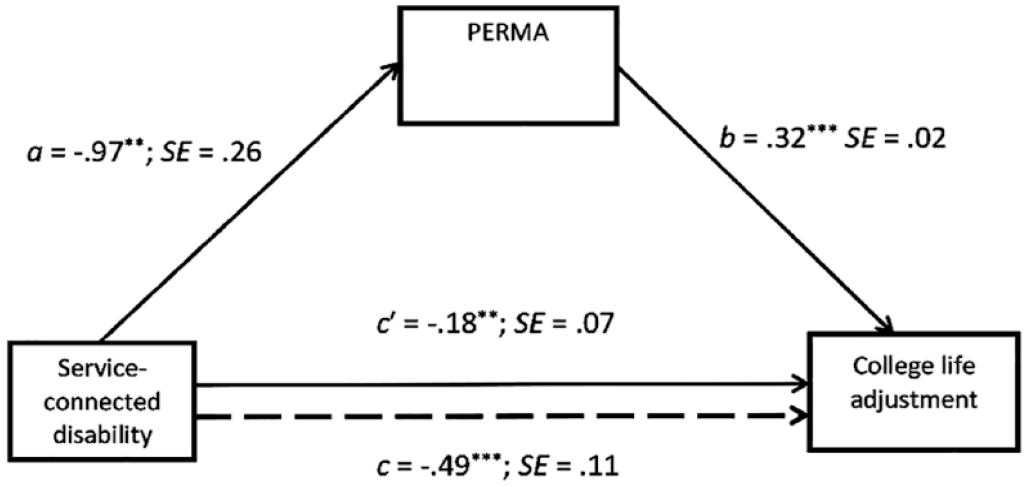
Path coefficients for simple mediation analysis on college life adjustment (N = 191).
Discussion and Implications
The purpose of this study was to examine (a) demographic covariates (i.e., age, gender, race, marital status, disability, class standing, and first-generation status), FEPPTs (i.e., optimism, hope, resilience, coping flexibility, and secure attachment), and PERMA as predictors of college life adjustment, HRQOL, and life satisfaction of student veterans; (b) PERMA as a happiness and well-being model for college life adjustment, HRQOL, and life satisfaction among student veterans; and (c) FEPPTs as predictors of PERMA. This study is the first comprehensive well-being study utilizing positive psychology theory for student veterans, and findings from this study would appear to have a number of clinical implications for rehabilitation and mental health and for student veterans in postsecondary education.
In this study, various demographic covariates account for a significant amount of the variance in college life adjustment, physical health QOL, mental health QOL, and life satisfaction of student veterans. Older age was found to be negatively correlated with physical health QOL, mental health QOL, and life satisfaction of student veterans. Given student veterans are older than civilian students, age difference may negatively affect veterans’ ability to connect with their civilian peers. Student veterans who are married or co-habiting were found to have better college life adjustment, mental health QOL, and life satisfaction compared with student veterans who were single, widowed, separated, or divorced. Being married or cohabiting may be considered a proxy for social support, which is strongly linked to well-being among college students, including student veterans (Ingala et al., 2013; Umberson et al., 1996).
Findings also revealed that student veterans with a service-connected disability had lower ratings of college life adjustment, physical health QOL, and mental health QOL compared with student veterans without a service-connected disability. This finding is plausible, given that the literature has suggested that a service-connected disability interferes with student veterans’ college life adjustment, well-being, and quality of life (e.g., Elliott et al., 2011). The challenge for any student veteran with a disability in postsecondary education is significant; therefore, individual-, institutional-, and policy-level interventions should be implemented. For individual-level interventions, student veterans should be informed about available campus support services, including university counseling centers and student disabilities centers, and should be encouraged to seek help from these resources. University disability resource centers should help student veterans with academic accommodations to reduce stress in living with a service-connected disability. In addition, university counselors and faculty members can be informed on military culture, terms, and benefits, which may potentially facilitate student veterans’ participation in counseling services and classroom activities. At the policy level, Veterans Affairs should implement strategies to develop evidence-based mental health interventions.
FEPPTs
In general, the various FEPPTs were found to be positively associated with more college life adjustment, physical health QOL, mental health QOL, and life satisfaction.
Optimism
The current study found that student veterans with higher optimism scores had more positive college life adjustment, mental health QOL, and life satisfaction. Consistent with previous research, optimism was associated with higher levels of mental health, physical health, post-traumatic growth, and quality of life, and it was linked to lower levels of pain and depressive symptoms among veterans (Feder et al., 2008). Rehabilitation and mental health interventions can be utilized to help student veterans cultivate their optimism. Specifically, positive psychology interventions aim to promote positive psychological states such as optimism. Seligman (2011a) and Rashid (2015) emphasized optimism as one of the strengths built into psychotherapy. As an example, positive psychotherapy techniques have been implemented in clinical settings to cultivate character strengths and positive emotion, including optimism (Rashid, 2015). It has been emphasized that optimism is malleable and that pessimistic individuals can become optimists by utilizing techniques such as cognitive-behavioral therapies and positive psychology interventions (Carver et al., 2009; Seligman, 2011a).
Hope
Hope was found to be positively linked to college life adjustment, physical and mental health QOL, and life satisfaction of student veterans, meaning that student veterans who had high scores on hope also reported higher levels of college adjustment, physical and mental health QOL, and life satisfaction. Hope is an important positive emotion and positive human trait that rehabilitation and mental health practitioners should implement within their clinical and research practice interventions to increase student veterans’ hope. Efforts during hope interventions aimed at developing agency and pathways thinking may help student veterans achieve their goals by generating new routes to a goals and abilities to use those new routes.
Resilience
Resilience was positively associated with college life adjustment and physical and mental health QOL of student veterans, meaning that student veterans with higher resilience scores had higher scores in college adjustment and HRQOL. Research revealed that resilience is positively associated with life satisfaction in persons with disabilities (Moser et al., 2020). Previous research has demonstrated that resilience is malleable: people can learn how to be resilient (Reivich et al., 2011). Resilience training has been very popular in the U.S. Army, where they created the Comprehensive Soldier Fitness (CSF) to build an army that is just as psychologically fit as it is physically fit (Cornum et al., 2011). It is a long-term strategy, which consists of four program components: program assessment, universal resilience training, individual training, and master resilience trainers. These components aim to test and train resilience skills and increase emotional, physical, spiritual, social, and family strengths through continuous self-development. Student veterans may benefit from similar resilience programs in higher education.
Secure attachment
The current study found that secure attachment is linked to college life adjustment, physical and mental health QOL, and life satisfaction of student veterans, indicating that student veterans who are securely attached tend to have better college life adjustment, physical and mental health QOL, and life satisfaction. Although attachment styles are primarily established through the earliest caregiver experiences, the literature indicates that a sense of others being trustworthy, loving, and caring can be developed by a strong working alliance with rehabilitation health professionals (Bordin, 1979; F. Chan et al., 1997; Umucu et al., 2016). Therefore, our results and previous findings provide evidence for the importance of building working alliances and helping student veterans in the professional practice of rehabilitation and mental health counseling.
PERMA
Positive emotion
Simultaneous regression analysis results revealed that positive emotion was positively correlated with college life adjustment, physical and mental health QOL, and life satisfaction in student veterans. Hierarchical regression analysis results suggested that positive emotion was a unique correlate of college life adjustment, mental health QOL, and life satisfaction but not of physical health QOL among student veterans, when demographic covariates and FEPPTs were included in the final model. This suggests that positive emotion was no longer a significant correlate of physical health QOL due to possible overlap with demographic covariates and FEPPTs in the model. Our results are consistent with previous findings. Positive emotion is a marker of overall well-being and happiness, but it also may enhance success and future growth (Cohn & Fredrickson, 2009). Positive emotion has also been found to enhance the development and maintenance of flourishing and health (Fredrickson, 2013). With its benefits, positive emotion should be incorporated into rehabilitation and mental health interventions for student veterans as a means to improve overall college life adjustment, mental health QOL, and life satisfaction, thus bolstering a number of outcomes, including well-being. Given that positive emotion may help student veterans build lasting resources, such as resilience (Cohn et al., 2009), this research provides support for rehabilitation and mental health practitioners to help student veterans cultivate positive emotion for the purpose of improving their sense of well-being.
Engagement
In this study, engagement was not associated with any of our outcomes, which could be due to overlap with FEPPTs. Our findings are inconsistent with previous findings that engagement was positively associated with other indicators of well-being, including life satisfaction and positive affect (Gabriele, 2008; Ruch et al., 2010). Engagement was also linked to increased academic performance in college students (Engeser et al., 2005). Seligman et al. (2006) identified session-by-session descriptions of positive psychotherapy, which has specific tools and techniques for positive psychology themes including engagement. For example, he specifically reported “Identifying Signature Strengths” as an engagement tool (Seligman et al., 2006).
Relationships
In both simultaneous and hierarchical regression analyses, relationships were found to be a significant predictor of mental health QOL, and in the hierarchical regression analyses, relationships were found to be a significant contributor to prediction of both mental health QOL and life satisfaction among student veterans. Previous findings have revealed that positive relationships were associated with happiness (Diener et al., 2009). Student veterans may think that there is no one on campus who can understand their experiences (Whitley et al., 2013). Due to fewer common interests between student veterans and traditional students, the former may feel a sense of isolation (Whitley et al., 2013).
Meaning
In this study, neither simultaneous regression analyses nor hierarchical regression analyses results revealed that meaning uniquely predicted college life adjustment, physical and mental health QOL, and life satisfaction of student veterans. This is not consistent with previous research findings that a greater sense of meaning has been found to be positively associated with higher life satisfaction, positive affect, and positive mental health outcomes (e.g., King et al., 2006; Steger & Frazier, 2005), along with better academic achievement in college students (DeWitz et al., 2009).
Accomplishment
In this study, simultaneous regression analyses revealed that accomplishment was positively correlated with college life adjustment, physical and mental health QOL, and life satisfaction among student veterans. However, the final model of the hierarchical regression analyses revealed that accomplishment was a significant predictor of only college life adjustment and physical health QOL, perhaps because of overlap of accomplishment with components of the demographic covariates and FEPPTs. To effectively help student veterans transition to colleges and universities, a comprehensive understanding must be developed regarding facilitators and barriers to the academic success of student veterans (Norman et al., 2015). We know that age differences from peers, mental health issues, physical health issues, and perceived GI Bill implementation inefficiencies are some of the reasons that may lead student veterans to have academic problems (Barry et al., 2014; DiRamio & Spires, 2009; Elliott et al., 2011; Norman et al., 2015). To increase accomplishment, Gander et al (2016) asked participants to “remember three things you have experienced today where you were successful or where you had the impression that you did something really well. Write the things down and describe how you felt.” Rehabilitation and mental health practitioners should implement similar positive psychology interventions to help student veterans increase their sense of accomplishment.
PERMA as mediator
Mediation analysis was used to examine the hypothesis that PERMA (total score) mediates the relationship between service-connected disability and college life adjustment. PERMA (total score) was found to partially mediate the relationship between service-connected disability and college life adjustment, indicating that not having service-connected disability played a role in increasing PERMA, which in turn improved college life adjustment of the student veterans. We believe that rehabilitation and mental health professionals may help student veterans improve their overall well-being to eventually improve their college life adjustment.
Limitations
There are several limitations to this study that should be considered when interpreting the findings. First, a cross-sectional convenience sampling was used. Participants were predominantly Caucasian. Second, the current study used descriptive correlational analysis, meaning that no statement can be made about causation or directionality of the observed effects between the proposed positive psychology predictors and outcomes. Third, this study used self-report measures for data collection. Last, this study did not include samples from community colleges. This is a significant limitation given there are many student veterans enrolled in these institutions. We believe that student veterans in community colleges may have different needs and challenges; therefore, it is important that future research examine and compare needs and barriers student veterans experience in community colleges.
Footnotes
Data Availability
Data are available only if requested due to ethical reasons.
Declaration of Conflicting Interests
The author(s) declared no potential conflicts of interest with respect to the research, authorship, and/or publication of this article.
Funding
The contents of this article were developed with support from the Rehabilitation Research and Training Center (RRTC) on Employment of People with Physical Disabilities. The RRTC was funded by the National Institute on Disability, Independent Living, and Rehabilitation Research Grant H133B13001 to Virginia Commonwealth University.
