




Abstract
Customized employment (CE) is designed to meet the specific needs and interests of individuals with disabilities as well as the needs of the employer by using flexible strategies at every stage of employment. The objective of this study was to ask U.S. rehabilitation providers who implement these services to describe the current status of CE service delivery. An online survey was administered to employment professionals from agencies within the United States. Participants responded to questions on the unique characteristics of Discovery and job development, current use of CE services, and information on their personal and agency demographics. Results indicate that there is agreement among CE providers on critical Discovery and job development activities, which suggests that providers are regularly accessing information to inform their practice. There appears to be a gap between what respondents identify as critical activities and how well they are being implemented. Recommendations for providing CE training for providers and provisions for individuals with disabilities are explored.
Keywords
Typically, rehabilitation interventions have focused on adapting behaviors of the person with a disability rather than customized approaches that may improve competitive integrated employment (CIE) outcomes (Smith et al., 2019). Customized employment (CE) was initially defined in the Federal Register as a blending of services and supports to include job development or restructuring strategies that result in job responsibilities being customized and individually negotiated to fit the needs of individuals with disabilities (Federal Register, June 26, 2002, Vol. 67, No. 123 pp. 43154–43149). In 2014, CE was added to the Rehabilitation Act’s definition of supported employment in the Workforce Innovation and Opportunity Act (WIOA). CE is defined in the final WIOA regulations, Federal Register, 361.5 (c) (11) as competitive integrated employment for an individual with a significant disability that is based on the unique strengths, needs, and interests of the individual with a significant disability; designed to meet the specific abilities of the individual with a significant disability and the business needs of the employer; carried out through flexible strategies.
Flexible strategies include job exploration; customizing a job description based on current employer needs or on previously unidentified and unmet employer needs; developing a set of job duties, a work schedule, work arrangement and the specifics of supervision, and determining a job location; and providing services and supports at the job location.
Callahan and his associates described a 2001 model demonstration program initiative by the Office of Disability Employment Policy (ODEP) to provide a foundation for the concept of CE (Callahan et al., 2011). ODEP funded these model demonstration grants for strategic planning and activities designed to improve the employment and career advancement of people with disabilities through the availability and delivery of CE under the Workforce Investment Act of 1998 (WIA; P.L. 105–220, 29 U.S.C. 2801 et seq.). This ODEP initiative helped identify and define CE support strategies to generate employment opportunities for individuals with disabilities. Elinson and colleagues evaluated the outcomes of ODEP’s CE demonstration program that included 31 demonstration sites within WIA’s One-Stop Centers (Elinson et al., 2008). They reported that 44.8% of program participants with disabilities achieved competitive employment using the model. For those participants in Round 1 of data collection with a 2-year follow-along, 44.5% retained employment for 12 months or longer; for those in Round 2 with a 1-year follow-along, the 12-month retention rate was 73.6%. Citron and colleagues (2008) presented outcomes from a 7-year systems change effort that emphasized CE. The project served 198 participants across a range of disabilities, with 141 (71%) achieving an employment outcome. Of the 141 individuals with employment outcomes, 73 (52%) were placed into positions where negotiation was critical to successful placement.
Riesen et al. (2015) conducted an extensive review of CE literature. These authors identified 15 non-databased and 10 databased articles on CE published between 2006 and 2013. The authors found it noteworthy that published research on CE did not include experimental or quasi-experimental research designs. Although the articles did not use experimental, quasi-experimental, or single-subject methodologies, positive outcomes associated with CE were consistent among the studies reviewed. Reported outcomes included increased quality of life, wages higher than minimum wage, attainment of part-time or full-time employment, and consistency in wage earnings and hours worked up to a 2-year follow-up period. Riesen et al. (under review) conducted a follow-up review and found that the extant research on CE still consists predominately of descriptive research. Based on this review, Riesen and colleagues recommend more research that describes or operationalizes what elements of the CE process produce desirable outcomes.
As states integrate CE into service delivery, they will need guidelines on best practices and how to ensure fidelity to these practices (Riesen et al., 2019). In 2017, The Workforce Innovation Technical Assistance Center (WINTAC) and the Youth Technical Assistance Center (Y-TAC) released the Essential Elements of Customized Employment for Universal Application. The document outlines elements that subject matter experts determined as essential to the practice of CE (WINTAC, 2017). Inge and her colleagues conducted a series of focus groups with nationally recognized experts in CE to identify the practices that are associated with CE (Inge et al., 2018). Twelve themes, or core practices of CE were identified from the focus group analysis. The core practices of CE were identified as follows: (a) physically meet at a location of the individual’s choice; (b) build rapport and get to know the individual; (c) mindfully listen to the person; (d) identify the individual’s interests, skills, and abilities; (e) conduct in-depth interviews with family and friends concerning the person’s interests, skills, and abilities; (f) observe the person in daily activities in a number of different community settings; (g) arrange for the job seeker to observe at local businesses that potentially match job seeker’s interests, skills, and abilities; (h) conduct informational interviews with employers at local businesses that are representative of the job seeker’s interests, skills, and abilities; (i) observe the job seeker engaging in job-related tasks; (j) assist the job seeker in identifying a work experience(s) to refine/identify job interests, skills, and abilities; (k) collaborate with the job seeker, family, and friends in confirming the job seeker’s interests, job interests, skills, and abilities; and (l) negotiate a customized job description.
Hall and his associates developed the Discovery Fidelity Scale (DFS) to guide CE Discovery implementation (Hall et al., 2018). The Discovery process includes interviews, observations, documentation review, and interactions with the job seeker. Discovery uses observations of the job seeker engaged in activities and requires interviews with family members and other influential people in the job seeker’s life. This information is used to develop well-coordinated customized job development activities. The development of the fidelity scale relied significantly on literature and research reviews, interviews, focus groups, case studies, surveys with education and adult service professionals, and national organizations, Griffin-Hammis Associates and Mark Gold and Associates, with demonstrated knowledge and experience in Discovery implementation.
Riesen and colleagues conducted several studies to validate the DFS. In the first study, Riesen et al. (2019) used a modified online Delphi process to generate consensus among CE experts regarding what they believe to be acceptable and unacceptable indicators for CE Discovery systems and services constructs. In a follow-up study, Riesen et al. (2021a, 2021b) sought to determine the internal consistency of the DFS and the respective systems and services constructs. The authors examined completed DFS for customized job seekers and used Cronbach’s alpha to determine the internal consistency of the systems and service-level tenets. The results analysis indicated moderately acceptable internal consistency for both services and systems constructs. Hall and Keeton (2019) also developed the customized job development fidelity scale (JDFS). The JDFS assumes a job seeker is employable and that task-based Discovery activities are used to determine how best to support the job seeker in a customized job. In addition, the JDFS uses an informational interview framework to learn more about employers, working conditions, and other potential employers who engage in similar work. Riesen et al. (2021a, 2021b) used the Delphi process to build consensus among professionals regarding items on the scale. After the three Delphi rounds, consensus was obtained for the majority of CE job development fidelity descriptors.
All of these efforts and related resources provide guidance on CE as a service to facilitate CIE for individuals with disabilities. However, there is limited information on how practitioners in the field are implementing CE. The objective of this research was to describe the current status of CE service delivery as viewed by the rehabilitation providers that implement these services, using an online survey. The survey endeavored to answer the following research questions:
Method
Sample
The survey sample was identified using email lists from Virginia Commonwealth University’s Rehabilitation Research and Training Center (VCU-RRTC) and the Association of People Supporting Employment First (APSE). The VCU-RRTC email list included individuals who registered for and participated in the Supported Employment Online Course with VCU-RRTC between 2003 and 2019. The content in this course includes a lesson on CE and the best practices associated with this service. At the time of the survey, the database contained 4,388 emails of participants who completed the course and received the Association of Community Rehabilitation Educators (ACRE) Basic Certificate in Employment Services as well as participants who did not complete the course. Of this number, 1,665 emails were returned as undeliverable, leaving 2,723 valid emails who received the request to participate. APSE identified 1,056 employment providers’ emails on their membership role at the time of the survey. Therefore, the sample for the study consisted of 3,779 individuals identified as employment professionals from agencies in the United States.
Survey Development and Description
The survey was developed by reviewing the CE literature, the Essential Elements of Customized Employment for Universal Application (WINTAC, 2017), CE focus groups (Inge et al., 2018), and the Delphi study on best practices for Discovery (Riesen et al., 2019). The authors of this article discussed the survey items by audio conferences to make edits to the items that were developed from the literature review. The edits consisted of changing the wording of items to ensure that they represented the essential elements of CE as described in the documents reviewed for survey development.
The draft survey was reviewed by five nationally recognized experts in CE who made recommendations on the survey. Items were deleted that the reviewers and authors agreed were redundant with other items in the survey. Approximately, five items were viewed as redundant and deleted. In general, the reviewers agreed that the survey represented the essential elements of CE as found in the literature and practice. A final discussion of the survey was conducted by audio conference, and the survey finalized. The survey consisted of four sections and is available online at https://drrp.vcurrtc.org/resources/content.cfm/1400.
Section 1 of the survey contained 18 items describing the unique characteristics of Discovery. The respondents were asked to select how critical they perceived each activity to be on a 5-point Likert-type scale: 1 = unsure, 2 = not at all critical, 3 = not very critical, 4 = critical, and 5 = very critical. Next, they were asked to select how well this activity is being implemented: 1 = not at all, 2 = poor, 3 = fair, 4 = good, and 5 = excellent. Section 2 contained 16 items describing the unique characteristics of CE job development. As in Section 1, the respondents were asked to select how critical they perceived each activity to be and how well each activity was being implemented, on two separate Likert-type scales.
For data analysis, the Likert-type items in Sections 1 and 2 assessing the perceived importance of each CE element were grouped by combining the responses of unsure, not at all critical, and not very critical into a not critical activity category, and critical and very critical as a critical activity category. The responses, as to how well each CE element was being implemented, of not at all, poor, and fair were combined into a category of not well, and responses of good and excellent were combined into a category of well.
Section 3 asked respondents whether they were currently providing CE services and how often they provided services. The Likert-type scale included five categories: 1 = never, 2 = almost never, 3 = occasionally, 4 = almost every time, and 5 = every time. The results are reported by combining the never, almost never, and occasionally levels into an occasionally or less category, whereas the levels of almost every time and every time were combined into a most of the time category. Only respondents who reported that they were personally assisting individuals with disabilities in finding and obtaining a job, using CE, were included in this analysis (n = 273).
In Section 4, respondents provided information on personal and agency demographics. They were asked to specify their job title to include VR Counselor, VR Manager/Supervisor, Community Rehabilitation Program (CRP) Direct Staff, Employment Services Manager/Supervisor, Employment Specialist, Job Developer, Job Coach, or other. These categories were recoded into CRP Direct Staff, Direct Support Professional, VR Professional (includes VR counselor and VR manager), Employment Specialist (includes job coach and job developer) and Other. The Other category included primarily school personnel such as transition coordinators and teachers. Participants were asked how long they had been employed, whether they had an ACRE Certificate or Certified Employment Support Professional (CESP) Certification, and whether they personally provided employment services to individuals with disabilities. Finally, participants were asked to identify the primary service provided by their agencies. A definition was included of facility-based nonwork, community-based nonwork, facility-based work, mobile work crew, group placements/enclaves, individual supported employment, and CE to assist respondents in selecting a service. For analysis, the respondents were grouped into two categories: integrated employment services and agency services. Integrated employment services included individual supported employment and CE. Agency services included those services in which the individuals supported were engaging in nonpaid or subminimum wage activities.
Administration Procedures
The survey was developed using ColdFusion, which is a web application development framework that enables development of dynamic web-based applications. ColdFusion was leveraged to build the online survey as an HTML form on a webpage. When respondents submitted the survey, a ColdFusion handler page containing code extracted the survey responses and inserted them into a database table. At the end of the survey, participants were asked whether they would like to enter their email address to enter a random drawing for a US$25 gift card. Emails for survey participants who chose to enter the drawing were stored separately from the raw survey data to ensure participant confidentiality.
The private link to the survey on the Center’s website was sent directly in an email to the two email lists previously described. The first author sent the email to the VCU-RRTC list and APSE staff sent the email to their list. The initial email explained the purpose of the study as gathering information from individuals (e.g., VR professionals, employment specialists, job coaches, and direct service providers) who provide employment services specifically on CE services and its implementation in the United States. Participants were told that they must be 18 years old to participate and live in the United States. The initial email was followed by a second email within 1 week and finally with a third at the end of 1 month. Thereafter, the survey link was disabled. Gift cards were mailed to 50 respondents, randomly selected from the participants who complete the survey, after the link was disabled.
Statistical Method
Frequencies and standard deviations were used to describe the demographic and employment characteristics of each of the respondents. Similar measures were used to summarize each survey item. Separate summaries of the item responses were reported based on whether a respondent received or did not receive an ACRE certificate or CESP certification and whether a respondent was employed at an agency that primarily supported individuals with disabilities in supported employment, CE, or in nonwork or subminimum wage activities. Pearson chi-square tests were used to assess differing responses between each of the aforementioned respondent characteristics. A Type-I error rate of 0.05 was used for identifying important differences in the item responses between the characteristics of interest.
Results
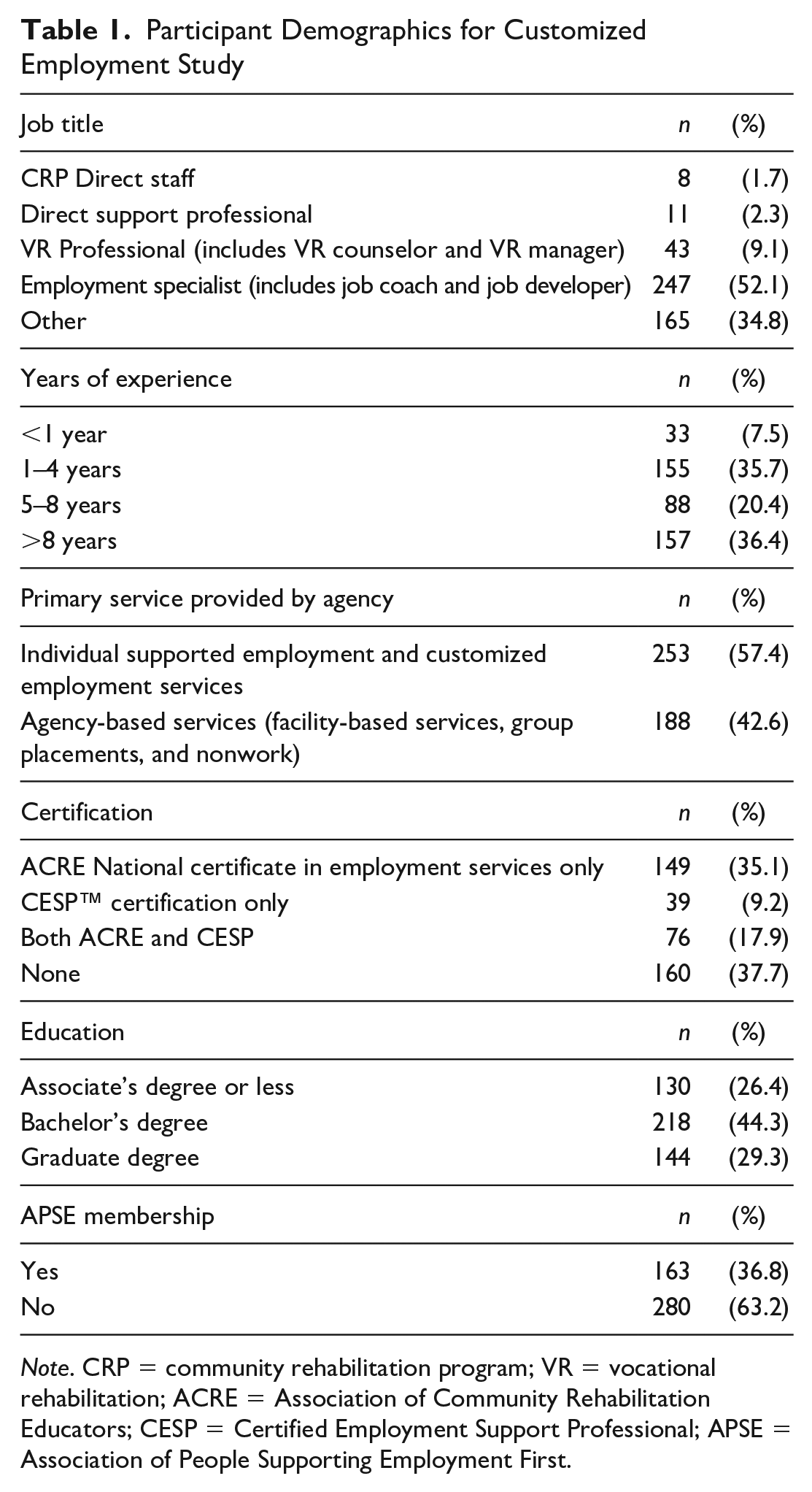
Out of the 3,779 individuals receiving an email, 527 respondents participated in the survey for a 14% response rate. However, 27 respondents did not complete at least half of the perceived importance or implementation items in Sections 1 and 2 and were removed from all analyses. Table 1 provides information on the respondents’ demographic characteristics.
Participant Demographics for Customized Employment Study
Note. CRP = community rehabilitation program; VR = vocational rehabilitation; ACRE = Association of Community Rehabilitation Educators; CESP = Certified Employment Support Professional; APSE = Association of People Supporting Employment First.
Slightly more than half of the respondents (52.1%) reported that they were employment specialists, which includes those who identified themselves as job developers and job coaches. The “other” category allowed respondents to write in a job title. The write-in responses were reviewed and recoded across the job titles such as recoding the write-in response of job coach to the employment specialist category. After write-in survey responses were recategorized in the database tables, 165 respondents were left in the other job title category (34.8%), which included primarily school personnel such as transition coordinators and teachers as the main write-in respondents. A small percentage of the respondents identified themselves as CRP direct staff or direct support professionals (4.0%). The remaining respondents indicated that they were VR professionals, including counselors and managers (9.1%). Approximately, 36% of the respondents had been employed for 1 to 4 years, 20.4% had 5 to 8 years of experience, and 36% reported being employed for more than 8 years. The smallest percentage, 7.5%, indicated that they had less than 1 year of experience.
Approximately, 26% of the respondents reported having an associate’s degree or less, whereas 44.3% reported having a bachelor’s degree. Twenty-nine percent of the respondents reported that they had an advanced degree beyond a bachelor’s degree. Respondents were asked whether they had an ACRE Certificate (35.1%) or a CESP certification (9.2%). Approximately, 18% of the respondents had both the ACRE certificate and CESP certification. The remainder, 37.7% of the sample, did not have an ACRE certificate or CESP certification. When asked whether they belonged to National APSE, 63.2% of the respondents indicated that they were not members, whereas 36.8% reported that they were. Slightly less than half (42.6%) reported that their agency primarily supported individuals with disabilities in nonpaid or subminimum wage activities. Conversely, the remainder of the respondents (57.4%) reported that their agency primarily provided integrated employment services to include individual supported employment or CE.
Sections 1 and 2 Results
Table 2 presents the results for Section 1 of the survey, which consisted of the Discovery best practices. About 90% of the respondents identified the majority of the CE elements as critical for Discovery. Although the majority of the respondents identified most of the Discovery activities as critical, fewer than 60% of the participants identified any of the elements as being implemented well. The percentage of respondents indicating implementing each Discovery activity ranged from a low of 36.6% to a high of 58.5%. Of the 18 items, nine were reported as implemented well by less than half of the respondents. For example, only 36.6% of the respondents reported the item, “community rehabilitation providers (CRP) do not use the same pre-determined work experiences that all job seekers rotate through to identify work preferences,” as implemented well. However, approximately 72% of the respondents reported that this is a critical CE activity. As another example, 42.7% of the respondents selected “Discovery begins with a home visit” as implemented well. Approximately, 47% reported that agency checklists are replaced with open-end conversations to gather information on job seeker’s work preferences as implemented well. In addition, approximately 47% responded that employment specialists observe and participate with job seekers in familiar activities as being implemented well. Less than half of the respondents (48.1%) indicated that job seekers have the opportunity to shadow employees in businesses that match their interests and work preferences as implemented well. The item rated the highest as implemented well, at 58.5%, was “a meeting is held with the job seeker, his/her support network, VR counselor, and the employment specialist to discuss and develop the job seeker’s plan for employment.” Interestingly, 96.2% of the respondents identified this as a critical CE activity.
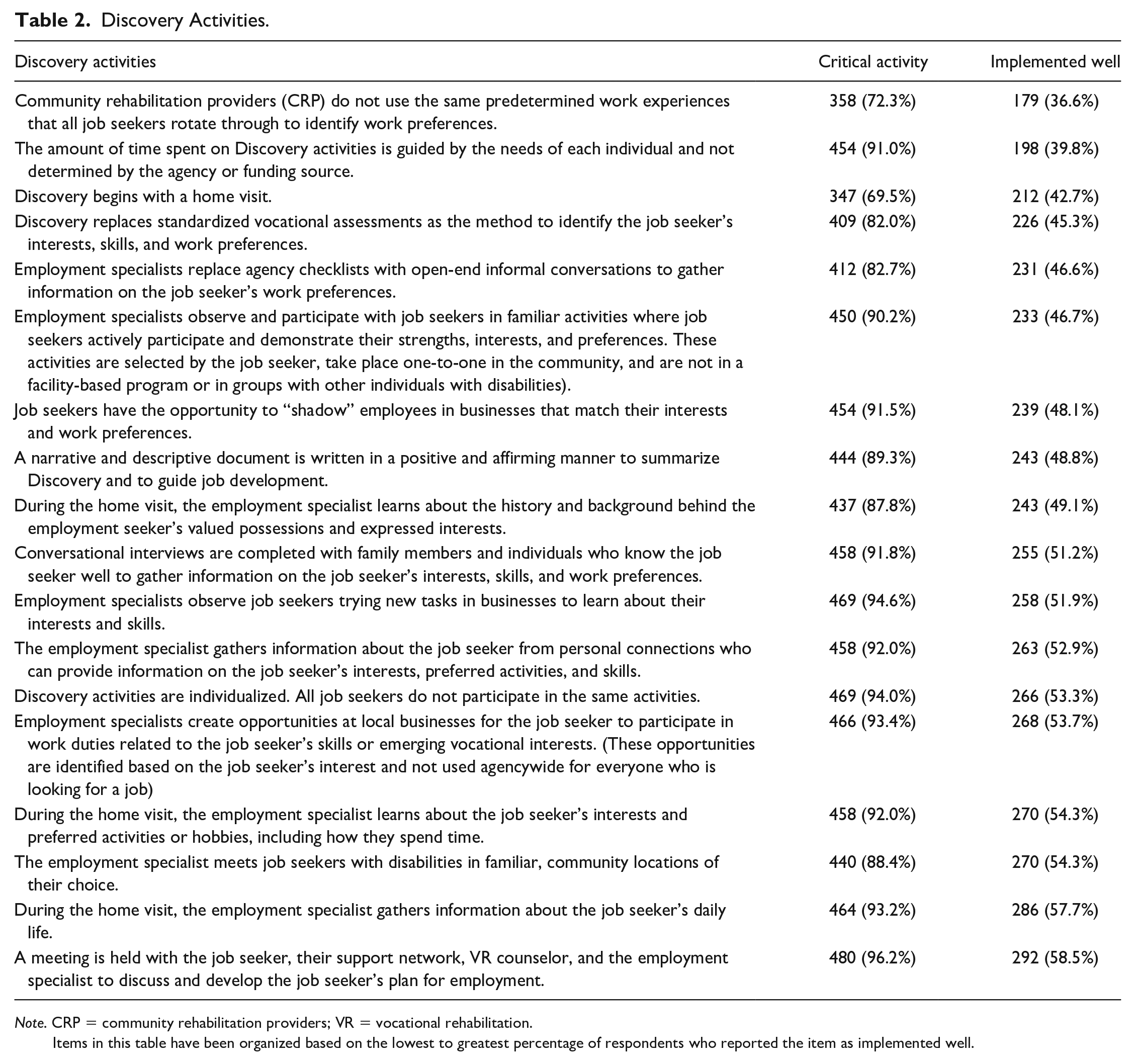
Note. CRP = community rehabilitation providers; VR = vocational rehabilitation.
Items in this table have been organized based on the lowest to greatest percentage of respondents who reported the item as implemented well.
A similar trend was noted in the CE job development elements, in that a greater percentage of respondents identified the activities as being critical than those who reported they were being implemented well, as presented in Table 3. The range across the 16 items was from a low of 27.7% to a high of 62.2%. The fewest number of respondents (27.7%) selected the item, “employment specialists do not identify open positions in businesses for the purpose of customizing a job,” as being implemented well. The item, “individualizing job development activities through conversations with the job seeker and family” was reported as implemented well by the highest percentage of the respondents (61.2%). There were several items that were not identified as critical activities for CE by a lower percentage of participants. For instance, the employment specialist identifying open positions for the purpose of customizing a job (52.3%), the businesses being contacted on behalf of only one job seeker (62%), and that CE includes resource ownership (68%) were reported as critical by a lower number of participants than other activities.
Job Development Activities.
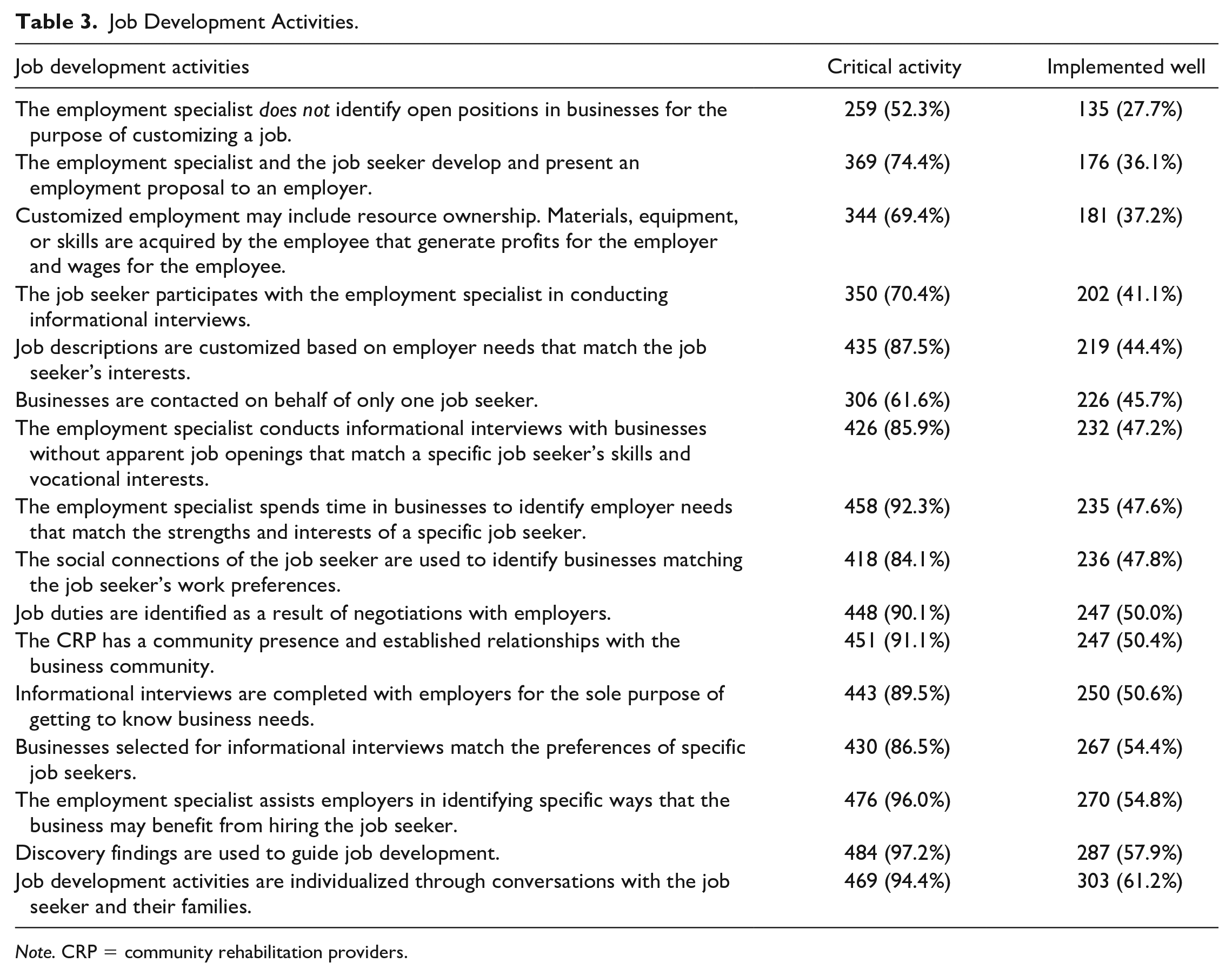
Note. CRP = community rehabilitation providers.
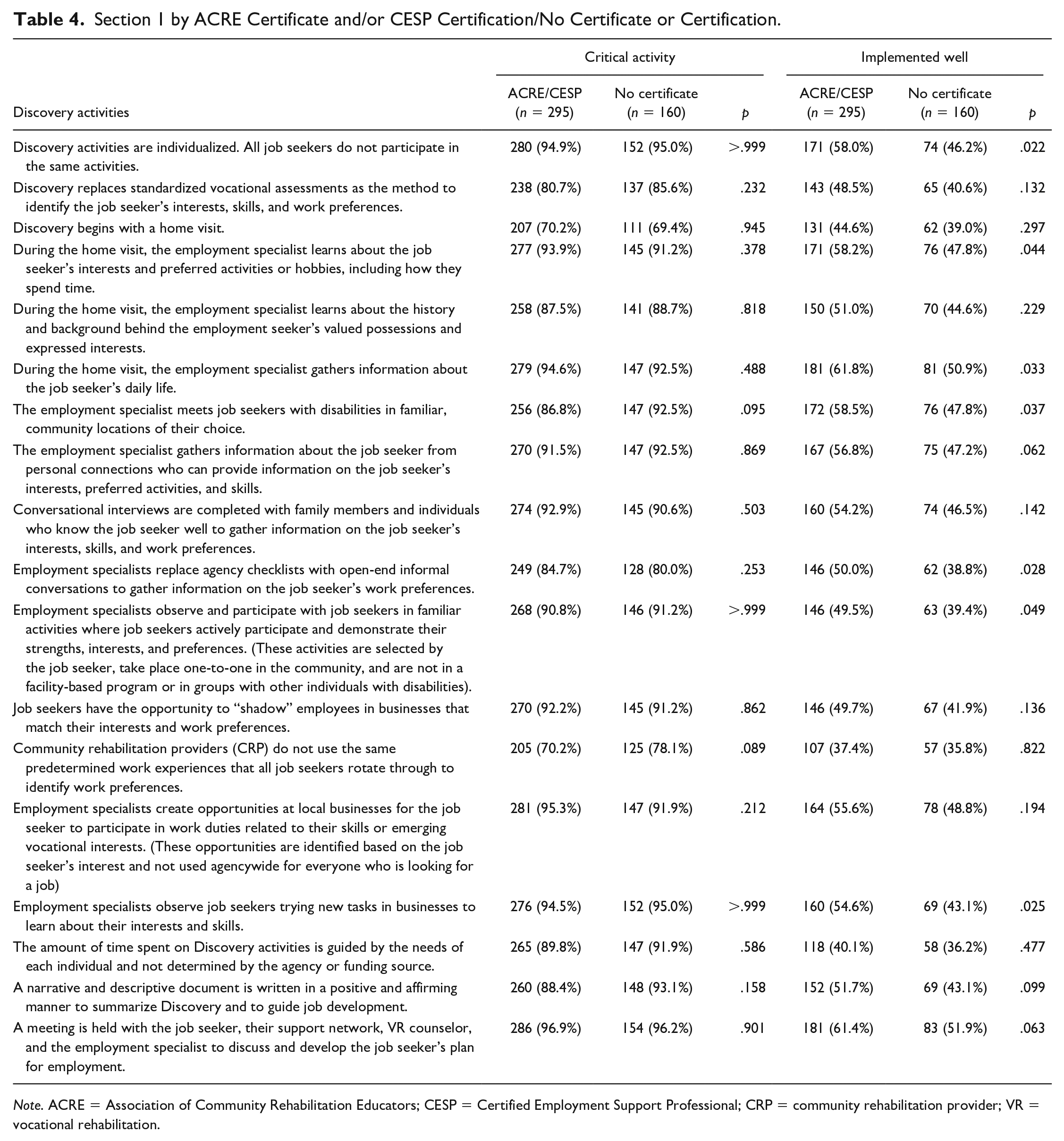
No major differences or trends were identified when comparing the critical elements for CE based on the respondents’ ACRE certificate or CESP certification status for either the Discovery or job development constructs (Tables 4 and 5). However, respondents with a certificate were almost uniformly more likely to report implementing the elements of CE well. The magnitude of these differences ranged from 2% to 14% for both the Discovery and job development elements. Seven of the 18 Discovery activities in Section 1 were identified as more likely to be implemented well by respondents with an ACRE certificate or CESP certification than respondents who did not have them. These activities included the following:
Discovery activities are individualized. All job seekers do not participate in the same activities (58% vs. 46.2%; p = .002).
During the home visit, the employment specialist learns about the job seeker’s interests, preferred activities, or hobbies, including how they spend time (58.2% vs. 47.8%; p = .044).
During the home visit, the employment specialist gathers information about the job seeker’s daily life (61.8% vs. 50.9%; p = .033).
The employment specialist meets job seekers with disabilities in familiar community locations of their choice (58.5% vs. 47.8%; p = .037).
Employment specialists replace agency checklists with open-end informal conversations to gather information on the job seeker’s work preferences (50% vs. 38.8%; p = .028).
Employment specialists observe and participate with job seekers in familiar activities where job seekers actively participate and demonstrate their strengths, interests, and preferences. (These activities are selected by the job seeker, take place one-to-one in the community, and are not in a facility-based program or in groups with other individuals with disabilities (49.5% vs. 39.4%; p = .049.)
Employment specialists observe job seekers trying new tasks in businesses to learn about their interests and skills (54.6% vs. 43.1%; p = .025).
Section 1 by ACRE Certificate and/or CESP Certification/No Certificate or Certification.
Note. ACRE = Association of Community Rehabilitation Educators; CESP = Certified Employment Support Professional; CRP = community rehabilitation provider; VR = vocational rehabilitation.
Section 2 Summaries by ACRE Certificate and/or CESP Certification/No Certificate or Certification.
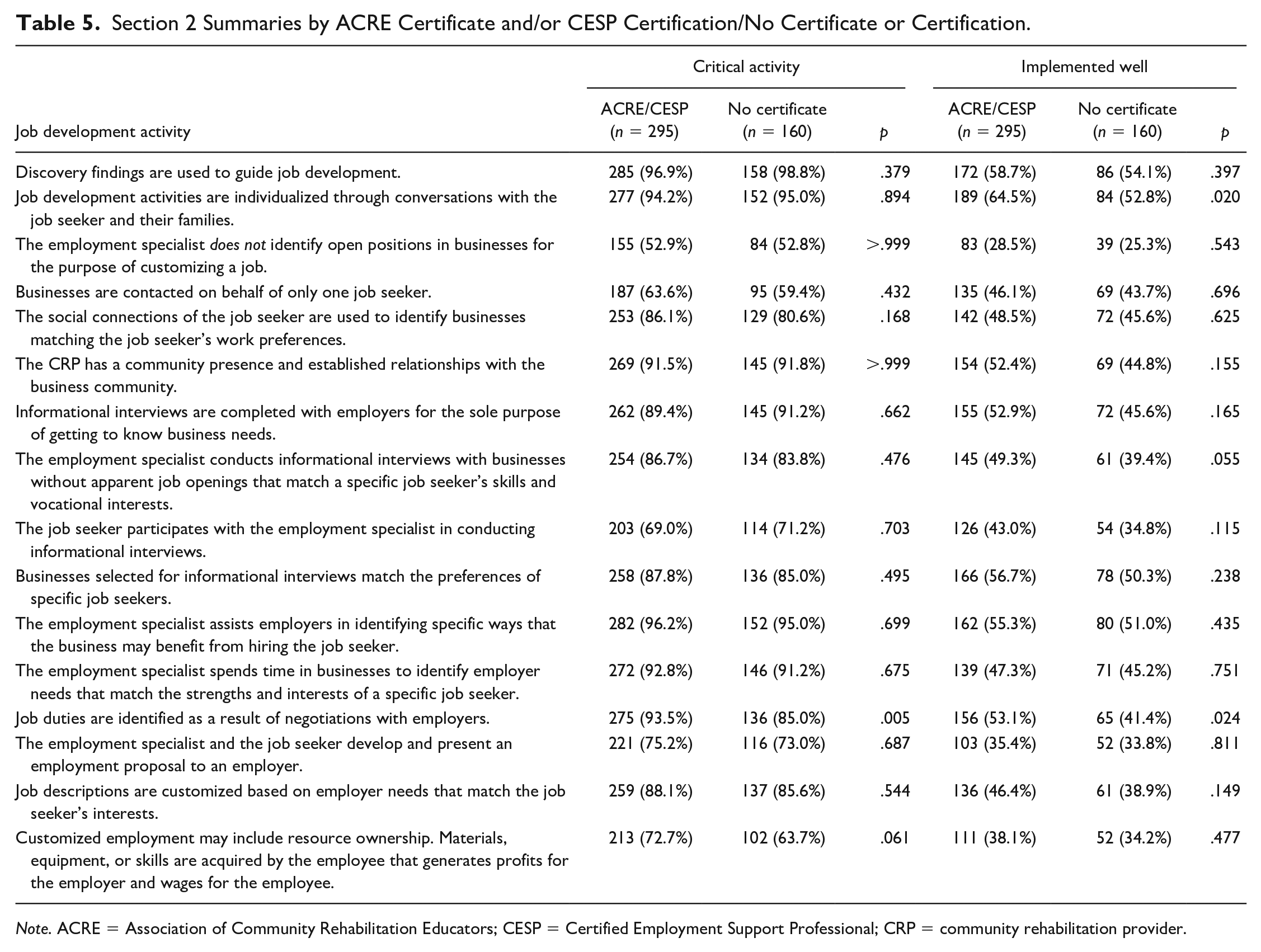
Note. ACRE = Association of Community Rehabilitation Educators; CESP = Certified Employment Support Professional; CRP = community rehabilitation provider.
In addition, other notable exceptions in Discovery included items assessing the “The employment specialist meets job seekers with disabilities in familiar, community locations of their choice” and “Community rehabilitation providers (CRP) do not use the same pre-determined work experiences that all job seekers rotate through to identify work preferences,” which were both assessed as more critical by respondents without an ACRE certificate or CESP certification than those that had one (86.8% vs. 91.2%, p = .095; 70.2% vs. 78.1%, p = .089, respectively). The CE items of “Job duties are identified as a result of negotiations with employers” and “Customized employment may include resource ownership . . .” were indicated as more critical by respondents with an ACRE or CESP certification (93.5% vs. 85.0%, p = .005; 72.7% vs. 63.7%, p = .061, respectively).
Slightly less than half of the items in Discovery were rated as implemented well, at least 10% higher, by respondents with a certification compared with those without. Only two items in Discovery differed by less than 5% (“Community rehabilitation provider (CRP) agencies do not use the same pre-determined work experiences that all job seekers rotate through . . . .”; “The amount of time spent on Discovery activities is guided by the needs of each individual and not determined by the agency or funding source”].
Conversely, just less than half of the items in job development had differences between the certificate groups that were less than 5% whereas only two items had certificate group differences of at least 10% (“Job development activities are individualized through conversations with the job seeker and families”; “The employment specialist and the job seeker develop and present an employment proposal to an employer”). Only two out of the 15 job development activities were identified as differing based on certification status. Respondents with an ACRE certificate and/or a CESP certification were more likely to identify “job duties are identified as a result of negotiations with employers” as a critical activity than those who did not have a certificate or certification. Respondents with an ACRE certificate and/or a CESP certification were more likely to report that “job development activities are individualized through conversations with the job seeker and families” was implemented well than those respondents who did not.
Similar results were observed when comparing respondents working at agencies that provide primarily supported and CE services with ones that provided primarily agency services. Respondents working in agencies that provide primarily supported and CE services reported implementing the Discovery CE elements well more frequently than those that provided primarily agency services. Two items had a noticeably higher selection for respondents in organizations that provide primarily supported and CE services (“Discovery activities are individualized. All job seekers do not participate in the same activities”; “Employment specialists observe and participate with job seekers in familiar activities where job seekers actively participate and demonstrate their strengths, interests, and preferences”) at a 14% differential, whereas two other items showed practically no difference between the two groups (“During the home visit, the employment specialist gathers information about the job seeker’s daily life”; “The employment specialist gathers information about the job seeker from personal connections who can provide information on his or her interests, preferred activities, and skills”; Table 6.)
Section 1 Integrated Employment Services / Agency Services.
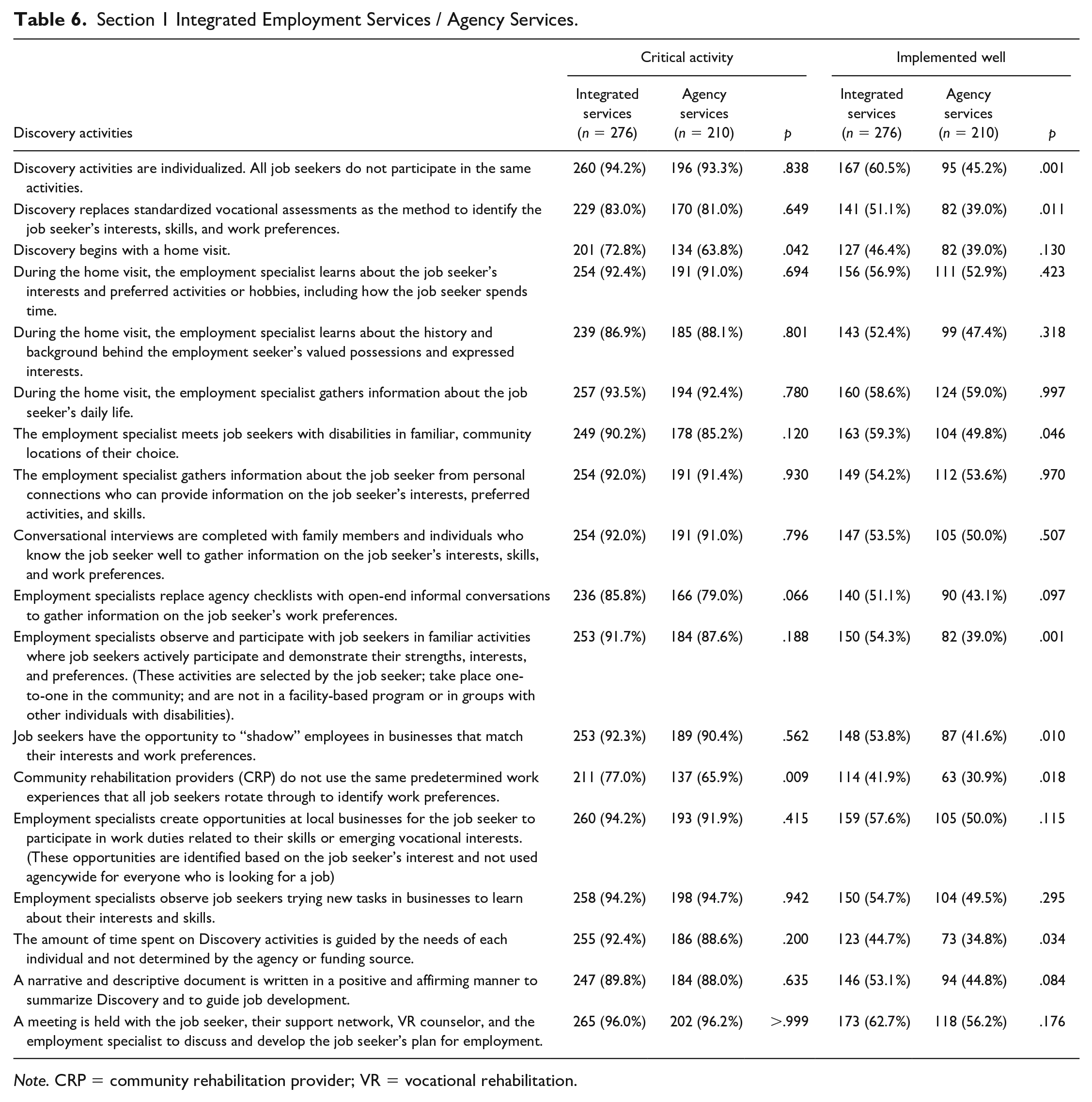
Note. CRP = community rehabilitation provider; VR = vocational rehabilitation.
Seven of the 18 Discovery activities were identified as more likely to be reported as implemented well by respondents who worked at agencies that primarily provided integrated employment services. This included the following:
Discovery activities are individualized. All job seekers do not participate in the same activities (60.5% vs. 45.2%; p = .001).
Discovery replaces standardized vocational assessments as the method to identify the job seeker’s interests, skills, and work preferences (51% vs. 39%; p = .011).
The employment specialist meets job seekers with disabilities in familiar, community locations of their choice (59.3% vs. 49.8%; p = .046).
Employment specialists observe and participate with job seekers in familiar activities where job seekers actively participate and demonstrate their strengths, interests, and preferences. (These activities are selected by the job seeker; take place one-to-one in the community; and are not in a facility-based program or in groups with other individuals with disabilities, 54.3% vs. 39%; p = .001)
Job seekers have the opportunity to “shadow” employees in businesses that match their interests and work preferences (53.8% vs. 41.6%; p = .01).
Community rehabilitation providers (CRP) do not use the same predetermined work experiences that all job seekers rotate through to identify work preferences (41.9% vs. 30.9%; p = .018).
The amount of time spent on Discovery activities is guided by the needs of each individual and not determined by the agency or funding source (44.7% vs. 34.8%; p = .034).
Seven of the 15 job development activities were more likely to be reported as being implemented well by respondents who worked at agencies that primarily provided integrated employment services than those who worked primarily in agencies that provided nonwork subminimum wage activities (Table 7). These items include the following:
Discovery findings are used to guide job development (63.6% vs. 52.4%; p =.017).
The employment specialist conducts informational interviews with businesses without apparent job openings that match a specific job seeker’s skills and vocational interests.
The job seeker participates with the employment specialist in conducting informational interviews (52.4% vs. 42.3; p = .036).
Businesses selected for informational interviews match the preferences of specific job seekers (60.5% vs. 48.3%; p = .01).
The employment specialist assists employers in identifying specific ways that the business may benefit from hiring the job seeker (59.6% vs. 50%; p = .046).
The employment specialist spends time in businesses to identify employer needs that match the strengths and interests of a specific job seeker (53.2% vs. 41.8%; p = .018).
Job duties are identified as a result of negotiations with employers (55.3% vs. 44.7%; p =.027).
Section 2 Summaries by Integrated Employment Services/Agency Services.
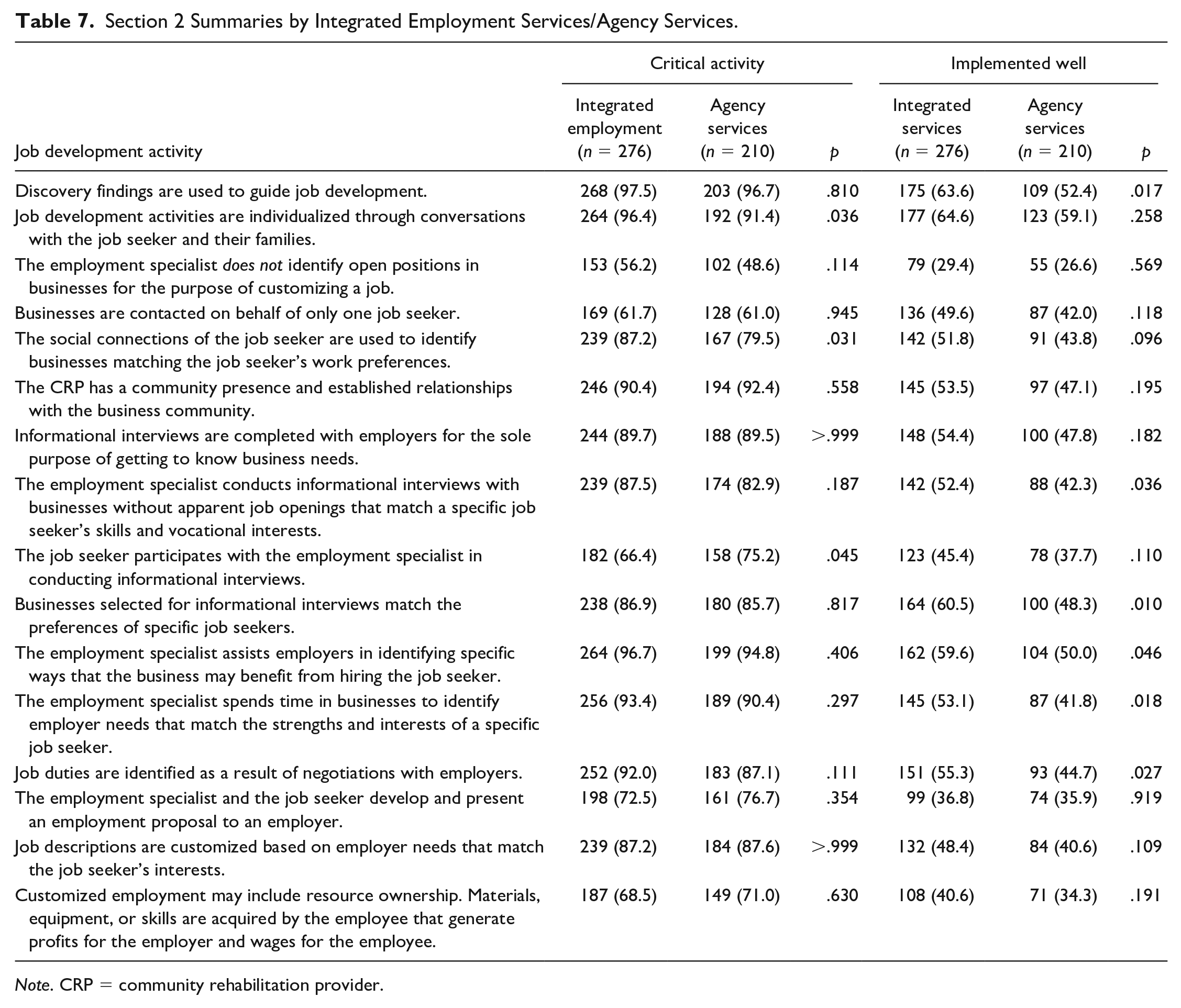
Note. CRP = community rehabilitation provider.
Section 3 Results
Only respondents (n = 273) who reported providing CE services were included in the analysis for Section 3. Table 8 reports the percentages of respondents who indicated that they complete the CE practice “most of the time” or “occasionally or less.” Approximately, 39% to 77% of the respondents indicated that they practiced the CE elements in their service delivery most of the time. Conversely, 61% to 32% reported that they practice the CE elements occasionally or less. As an example, less than half of the respondents, 48.4%, reported that they conduct home visits to learn about the individuals’ interests, skills, and work performance most of the time. Only 38.8% of the respondents indicated that they develop and present an employment proposal to an employer, and 43.6% reported negotiating individualized job descriptions with employers most of the time. Conversely, 77.3% of the respondents indicated that they replace an agency checklist with open-end, informal conversations to gather information on the job seeker’s work preferences most of the time. Finally, 68.9% of the respondents reported meeting most of the time with job seekers with disabilities in familiar, community locations of the job seeker’s choice.
Frequency of CE Activities.
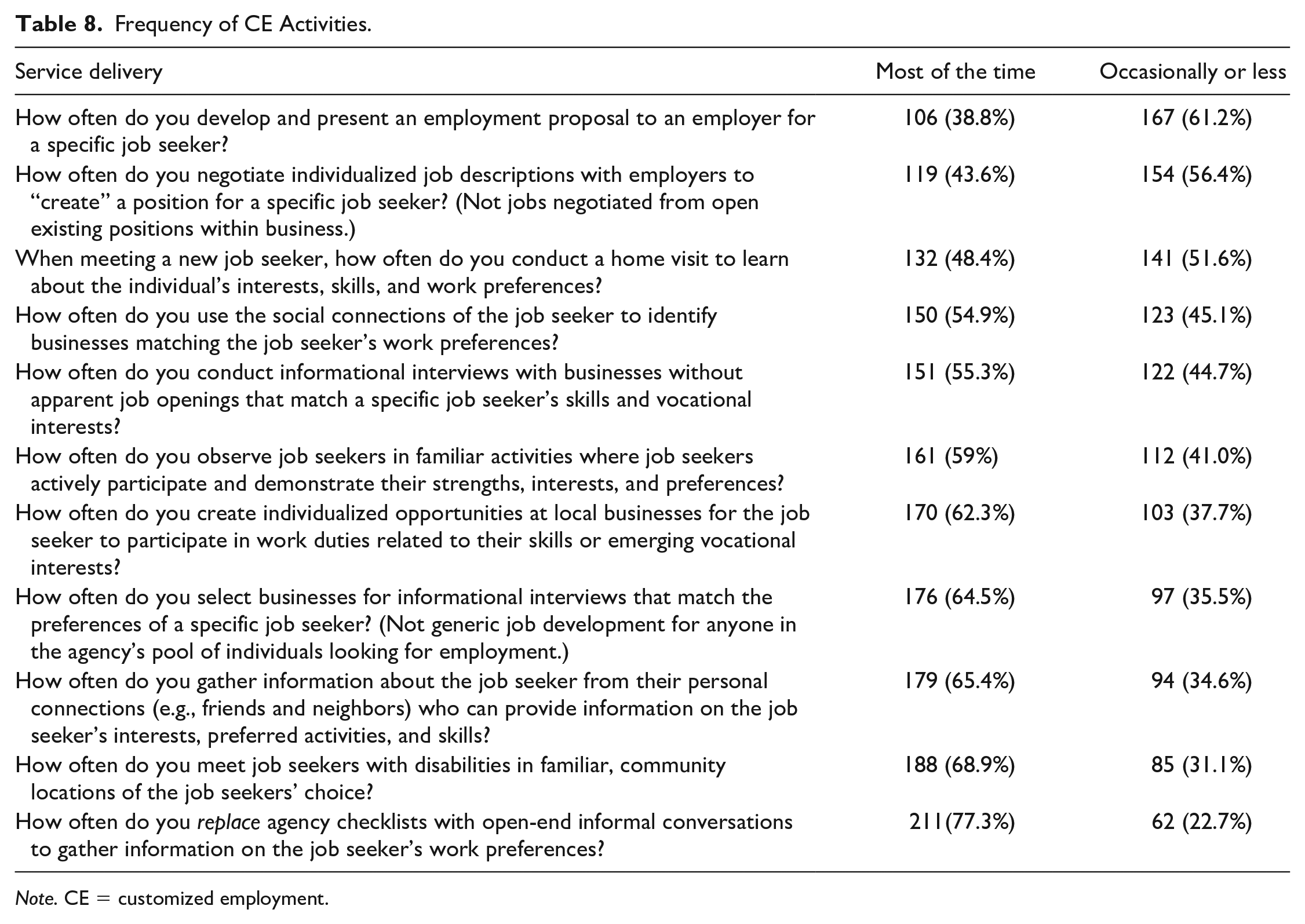
Note. CE = customized employment.
Discussion
This study was designed to describe the current status of CE service delivery as viewed by rehabilitation providers. The study sample was identified using email lists that included individuals identified as employment providers, specifically, individuals who participated in an ACRE-approved online course that included CE content and individuals who were members of National APSE. These individuals were selected because they had received training on the activities described in the survey. Therefore, they should be familiar with CE and able to identify CE elements and report whether the activities are being implemented effectively. However, a limitation of the study is that it did not include questions to evaluate the knowledge of the respondents, and the results are the respondents’ opinions on CE implementation. Because the findings represent the opinions of the respondents, the results may not reflect how CE is actually being implemented. In some cases, participants may have reported that services are being implemented more effectively or less effectively than what they are. In addition, respondents for this survey were those who had enrolled in an ACRE online course and may be more familiar with the essential elements of CE than other professionals who have not received or received limited training on CE.
These findings may not be generalizable to agencies whose employment staff have neither participated in ACRE-approved training nor are members of National APSE. As such, the results should be interpreted with caution as to the status of CE service delivery and implementation.
Four basic research questions were addressed in this study related to identifying the (a) critical features of CE employment service delivery, (b) determining how effectively these features are implemented, (c) determining the relationship between service provider perceptions and their views of the critical features of CE, and (d) determining the relationship between the demographics of the providers and how well CE is being implemented. Regarding Research Question 1, CE service providers generally agree about what CE Discovery and job development activities are considered critical. A majority of the respondents indicated that Discovery activities outlined in the survey were critical, with high agreement across all Discovery activities, with more than 90% of respondents rating 11 of the 18 activities as critical, more than 80% rating on five of the 18 activities as critical, 72% rating one of the 18 activities as critical, and 69% rating one activity of Discovery as critical. Similarly, a majority of service provider respondents indicated that the job development activities outlined in the survey were critical, with more than 90% of respondents rating six of the 16 job development activities as critical, more than 80% rating five of the activities as critical, more than 70% rating two of the 16 activities as critical, more than 60% rating two of 16 activities as critical, and 52% rating one activity as critical. The high respondent agreement on the criticality of CE Discovery and job development activities suggests that service providers are regularly accessing information to inform practice and how to implement provisions of CE. This finding is not surprising, given the extant literature about CE (i.e., Inge et al., 2018; Keeton et al., 2015; Riesen et al., 2019; WINTAC, 2017) and the general availability of consultants and subject matter experts who provide training on the topic (i.e., Griffin-Hammis Associates, Marc Gold and Associates, and Office of Disability Employments Policy).
In response to the second research question, the data indicated that there is a significant gap between what respondents identify as critical Discovery activities and how well the activities are being implemented. Fewer than 60% of respondents reported that any of the 18 Discovery activities were being implemented well and there were a number of Discovery activities that respondents believed to be critical but were not implemented well. First, 72% of respondents indicated that it is critical that CRPs do not rotate all job seekers through predetermined work experiences, whereas only 36.6% of the respondents indicated that this was implemented well. Second, 91% of respondents indicated that time spent on Discovery should be guided by the individual and not determined by the funding agency and only 39% of respondents indicated that this is implemented well. Third, 82% of respondents indicated that it is critical that Discovery replaced standardized assessments, whereas 45% indicated that this was implemented well. These gaps raise questions about the capacity of service providers to implement elements of CE with a high degree of fidelity. Each of the Discovery activities is considered an essential component of the Discovery process and rotating customized job seekers through predetermined job sites and having a funding agency guide the Discovery process contradicts the literature on CE Discovery. Moreover, a fundamental principle of CE Discovery is to move away from traditional employment assessment measures and use more qualitative observations (WINTAC, 2017) to discover an individual’s assets, interests, skills, and support needs to obtain and maintain gainful employment. Given that only 45% of respondents indicate that this Discovery activity is implemented well, there may be issues on how providers distill information from the literature and training and apply it to applied CE Discovery activities.
There were also significant gaps between what respondents believe are critical CE job development activities and how well these activities are implemented. Similar to the essential Discovery activities, fewer than 60% of respondents reported that any of the 16 CE job development activities were being implemented well. The results from responses to several Discovery activities are noteworthy. First, a low percentage of respondents (52%) indicated that employment specialists do not identify open positions in businesses for the purpose of customizing a job and only 27% indicated that this was being implemented well. Second, that 61.6% of respondents indicated that businesses are contacted on behalf of only one job seeker is critical and 45.7% indicated this was implemented well. Finally, 74.4% of respondents indicated that developing and presenting an employment proposal to an employer was critical but only 36.1% of respondents report this activity as being implemented well. The fact that respondents indicated that these activities are not implemented well is surprising because CE is predicated on the idea that jobs are indeed customized or created and not based on current job openings within a business. A customized job is individualized and based on the strength and interests of one individual, and the job should not exist before the job seeker and employment specialist approach a business. To effectively customize jobs, service providers must be proficient at developing an employment proposal to use as a starting point to negotiate a customized job (Griffin et al., 2007; Inge et al., 2018).
These gaps may indicate knowledge translation issues about how service providers learn, acquire, and apply information about CE Discovery and job development. This issue of knowledge translation is not a novel finding with respect to employment support professionals, and it aligns with calls to build the capacity of employment specialists to possess an array of highly sophisticated skills related to promoting positive employment outcomes for people with disabilities (Hall et al., 2018; Rogan & Mank, 2011; Wehman et al., 2018).
Research Questions 3 and 4 examined the relationship between characteristics of service providers (training, agency affiliation, and years of experiences) and their perceptions of how they view the critical features of CE and how well these activities are being implemented. Regarding training, although there were no significant differences between respondents who have an ACRE or CESP certification and those without a certificate, there was, however, on average, a 5% to 10% average difference on how respondents with a certificate rated how well Discovery and job development activities are implemented compared with those without a certificate. The difference in responses between those with a certificate and those without reinforces the importance of having highly trained service providers who can deliver a provision of CE services.
When examining responses from service providers who work for agencies that provide supported and CE, and agencies that provide facility-based or group agency services, there were some noticeable differences. Respondents who work for service providers who provide primarily supported and CE reported that they implemented the CE Discovery and job development well with more frequency as compared with agencies that provided primary agency services. The fact that there is a difference in how well providers, based on agency affiliation, implement CE is not surprising as providers who only provide supported and CE are more likely to dedicate resources and training to effective implementation. When examining data from providers who only provide CE services, an interesting finding contradicts the assumptions that providers who only provide supported employment or CE dedicate more resources to training. Specifically, there was a large range (39%–77%) of responses from respondents who indicated that they practiced the CE elements in their service delivery most of the time and a large range (61%–32%) who reported that they practice the CE elements occasionally or less. It appears that only a small percentage of respondents who provide CE implemented two of the critical elements of CE job development well. That is, only 38.8% of the respondents indicated that they develop and present an employment proposal to an employer, and 43.6% reported negotiating individualized job descriptions with employers most of the time. Once again, the range in response from providers reinforce the notion that, although service providers may be trained on the provisions of CE, there remains significant service provider capacity problems to effectively implement CE Discovery and job development.
Recommendations
Customized employment emerged as a promising practice that is producing positive outcomes for individuals with disabilities, particularly those with more significant disabilities. Similar to other employment support models for people with disabilities, CE requires highly trained and skilled professionals to ensure that key elements CE Discovery and job development are implemented with fidelity. The inconsistent implementation as reported by rehabilitation providers may lead to a funded support strategy, codified in statute that does produce timely and desired outcomes. Therefore, there are two primary recommendations for improving a substantive provision of CE service delivery.
First, it is critical that investments be made to ensure that evidence-based training and technical assistance are provided to service providers on the provisions of CE Discovery and job development. Training on CE should not only be didactic, classroom-based training, it should also be coupled with systematic follow-along and capacity building activities for both practitioners and supervisors. Remund et al. (2022) recommend that funding agencies, such as state offices of rehabilitation, designate CE liaisons in each office. The liaison would engage in targeted training on CE, so VR counselors clearly understand the CE process and ensure that service delivery is consistent across providers. There are several resources for training and capacity building. First, the Association for Community Rehabilitation Educators (ACRE) offers an employment services certificate with an emphasis on CE. To obtain this certificate, trainees must complete 40 hr of training on CE from an approved training provider. Second, the Vocational Rehabilitation Technical Assistance Center for Quality Employment (VRTAC-QE) offers technical assistance to state VR agencies to support quality employment outcomes for people with disabilities including CE implementation. Third, national consulting agencies such as Griffin-Hammis Associates and Marc Gold and Associates provide entities with direct technical assistance on CE implementation.
Second, to ensure that CE Discovery and job development are implemented well, CE fidelity scales for both Discovery and job development should be utilized at the provider and funder levels. Utilizing fidelity scales at the provider level would help capture and delineate the essential practices and procedures for both CE Discovery and job development. This information can be used so providers can make meaningful adjustments to both the Discovery and customized job development process based on objective feedback. Fidelity scales at the funding level can be used as an objective measure of performance to assist funding agencies determine which community rehabilitation agencies provide CE that aligns with best practice and to determine the efficacy of outcomes.
Conclusion
This study provides insights on the status of CE service delivery as viewed by rehabilitation providers. The results suggest that, although service providers largely understand critical elements of CE, these critical Discovery and job development elements are not always implemented well. Hence, additional research is needed both on the implementation of CE nationally and on the outcomes that are being achieved by recipients of these services.
Footnotes
Declaration of Conflicting Interests
The author(s) declared no potential conflicts of interest with respect to the research, authorship, and/or publication of this article.
Funding
The author(s) disclosed receipt of the following financial support for the research, authorship, and/or publication of this article: The contents of this paper were developed under a grant from the National Institute on Disability, Independent Living, and Rehabilitation Research (Grant 90RTEM0001) and support from the Vocational Rehabilitation Technical Assistance Center for Quality Employment, U.S. Department of Education (H264K200003). However, those contents do not necessarily represent the policy of the U.S. Department of Health and Human Services or the U.S. Department of Education, and you should not assume endorsement by the Federal government.
