




Abstract
Dialogue journals are written conversations in which two partners communicate regularly. When practiced between a teacher and student, dialogue journaling has the potential to engage students in writing, and can lead to improved teacher–student rapport. In this Innovations in Practice article, we evaluate the use of structured dialogue journals between a student teacher and his English as a Second Language (ESL) students during a seven-week teaching practicum at a local secondary school in Hong Kong. The aim of this practice was for the teacher to engage with students on a personal level, thereby enhancing teacher–student rapport – an otherwise challenging goal during short-term school placements. The dialogue journals were designed to elicit students’ learning experiences, other out-of-class life experiences, and personal interests, which, when reciprocated with teachers’ comments, created a dialogic context for improving open and honest teacher–student communication in English. In this practice, a total of 11 rounds of dialogue journals were administered and completed throughout the teaching practicum period. An evaluation of the practice was based on an analysis of the dialogue journal entries, semi-structured interviews with students, and the student teacher's own reflection. Implications of this practice are discussed in terms of the possibilities for ESL/English as a Foreign Language (EFL) teachers to use dialogue journals for enhancing teacher–student rapport.
Introduction
During teacher education programs, pre-service teachers experience various teaching activities, including microteaching and school observations. Arguably the most demanding of these activities is the teaching practicum (TP), in which student teachers are placed at a school, responsible for teaching a class(es) for part of a semester (Trent, 2013). One difficult aspect of the TP experience is establishing strong rapport with students within the limited placement period. This can be especially challenging for English as a Second Language (ESL)/English as a Foreign Language (EFL) teachers whose students may be reluctant to interact with them in English on non-lesson-related topics. Yet, strengthening the teacher–student relationship through dialogue is important, as understanding students’ psychological states, and responding with support and empathy, is seen as a key strategy for creating a supportive classroom environment (Barber and Foord, 2014).
A practice that can facilitate teacher–student rapport while also engaging in target language use is dialogue journaling, which involves ongoing informal written exchanges between the teacher and students (Peyton, 1997). The innovation presented in this article is the development of a guided dialogue journaling program between a teacher and ESL students during a seven-week TP to enhance teacher–student rapport. Excerpts from dialogue journal entries and interviews with students at the conclusion of the program are used to discuss how journaling can be used to strengthen teacher–student relationships. While this practice was carried out with a pre-service English teacher, we believe that this is also a useful practice for ESL/EFL teachers more generally.
The Teaching Context
This innovation was implemented by a student teacher (first author) during his secondary school TP in his final year of a five-year Bachelor of Arts (English Studies) and Bachelor of Education (English Language Education) joint degree program at a university in Hong Kong under the guidance of his TP supervisor (second author). The aim of the program is to equip students with the theoretical and practical knowledge required to be English teachers at both primary and secondary school levels in Hong Kong. As part of the practical component of the program, the TP provides opportunities for student teachers to enhance teaching competence and understanding of school life. During the seven-week TP, student teachers are placed at a secondary school and assume regular teaching duties of an ESL class supported by a “mentor”, an experienced full-time teacher at the school.
The study presented in this article took place at an English as Medium of Instruction (EMI) secondary school in Hong Kong where the student teacher taught a Grade 9 (Secondary 3) English class. The dialogue journaling practice was carried out with all 25 members of the class (nine males, 16 females), in addition to required learning and teaching activities. The student teacher taught four one-hour lessons weekly with the class for seven weeks. The four key skills (i.e. reading, writing, listening, and speaking), grammar, and some literary texts were included in the curriculum to prepare students for senior secondary education. The students were 14 or 15 years old and spoke Cantonese as their first language. The English proficiency of these student participants was equivalent to the Common European Framework for Languages (CEFR) Levels B1–B2 (intermediate to upper intermediate level), meaning students had competency in communicating with the teacher on personal topics in English. However, these students tended to use Cantonese between themselves and with the teacher whenever possible. The dialogue journals provided a medium through which students were encouraged to use English to communicate with their teacher, with the expectation of enhancing teacher–student relationships while participating in authentic target language use. The dialogue journaling practice lasted for the entire TP, coinciding with the conclusion of the first term of the academic year and the term-end assessment.
Reason for the Innovation
Learner engagement, or the degree to which learners are actively involved in the learning process, is crucial for effective second-language instruction (Hiver et al., 2021). Engagement can be facilitated in several ways, such as by carefully designing interactive language tasks or by choosing lesson topics that are familiar and interesting to students (Aubrey et al., 2020). However, the significance of the teacher in creating a supportive classroom dynamic cannot be overstated (Dornyei, 2001).
Teacher–student rapport (i.e. a mutual, trusting, and prosocial bond) is seen as an essential quality of an effective teacher (Catt et al., 2007), leading to higher participation levels and greater academic success (Frisby and Martin, 2010). Theoretically, the importance of teacher–student rapport is supported by self-determination theory (Ryan and Deci, 2000), which specifies “relatedness” (i.e. our need to belong) as a key social need regulating our desires. Learners, acting on this need, seek to develop trust with their teacher, which can be considered a pre-condition for productive learning behavior (e.g. taking risks in the classroom). However, achieving strong rapport with students can be a time-consuming task requiring conscious action, especially with second-language learners when communicating in the target language. To facilitate rapport-building behavior in a second-language classroom, Mercer and Dörnyei (2020) outline six principles for successful engagement with language learners – a teacher should be (1) approachable, (2) empathetic, (3) responsive to learner individuality, (4) manifest a belief in learners’ potential to improve, (5) seek to support learner autonomy, and (6) show their passion in teaching. Not only do teachers need to subscribe to these principles, but they also need to create opportunities to display these characteristics regularly.
The written exchange between teachers and students that occurs during dialogue journaling (Peyton, 1997) is one way of purposefully engaging with students to facilitate rapport-building. In dialogue journaling, students and the teacher write and respond to each other regularly on various topics. As learning about each other through “sharing genuine personal information” is crucial in fostering classroom relationships (Dörnyei and Muir, 2019: 722), journals might focus both on personal concerns and individual interests (e.g. hobbies, home relationships) in addition to academic issues (e.g. classroom experiences). Through this process, teachers can ensure that students have opportunities to voice their ideas and feelings (Davis, 2010; Konishi and Park, 2017). Though traditionally used in the language classroom to scaffold learners’ ongoing language development through writing (e.g. Kim, 2011; Nassaji and Cumming, 2000), dialogue journals have also been shown to enhance teacher–student mutual understanding, promote a caring classroom environment, and facilitate higher student autonomy (Linares, 2019). In ESL teacher education programs, dialogue journals have been an encouraged practice; however, the purpose has often centered around the student teachers’ critical reflections on their own teaching or cultivating the mentor–student teacher relationship (Cole et al., 1998; Lee, 2004). We thus felt that, given the limited duration of the TP, dialogue journaling, implemented with structured prompts to guide comminication on various topics, would be a potent tool through which the teacher and students can engage with each other authentically in English outside of regular classroom interaction for rapport-building purposes.
Description of the Innovation
Dialogue journaling has been defined as “a written, ongoing interaction between individual students and their teacher in a bound notebook” (Peyton, 1997: 199). Rather than providing an open-ended format (e.g. a blank sheet of paper, or use of a notebook), a template was developed to ensure both the students and teacher had a framework to guide the dialogue and promote meaningful exchanges. The self-developed journal template was based on four principles:
it should elicit students’ learning experiences; it should elicit students’ life experiences; it should have space for the teacher's responses; and it should not be a time-consuming task.
As can been seen in Figure 1, the resulting dialogue journal template included four focus areas and reply spaces for both the student and the teacher to engage in written dialogue. The focus areas are recalling learning experiences, positive recent life experiences, negative recent life experiences, and interest-probing prompts. These areas were seen as suitable for eliciting relevant content, so that the teacher could offer advice and support to students in his attempt to build rapport (Mercer and Dörnyei, 2020).
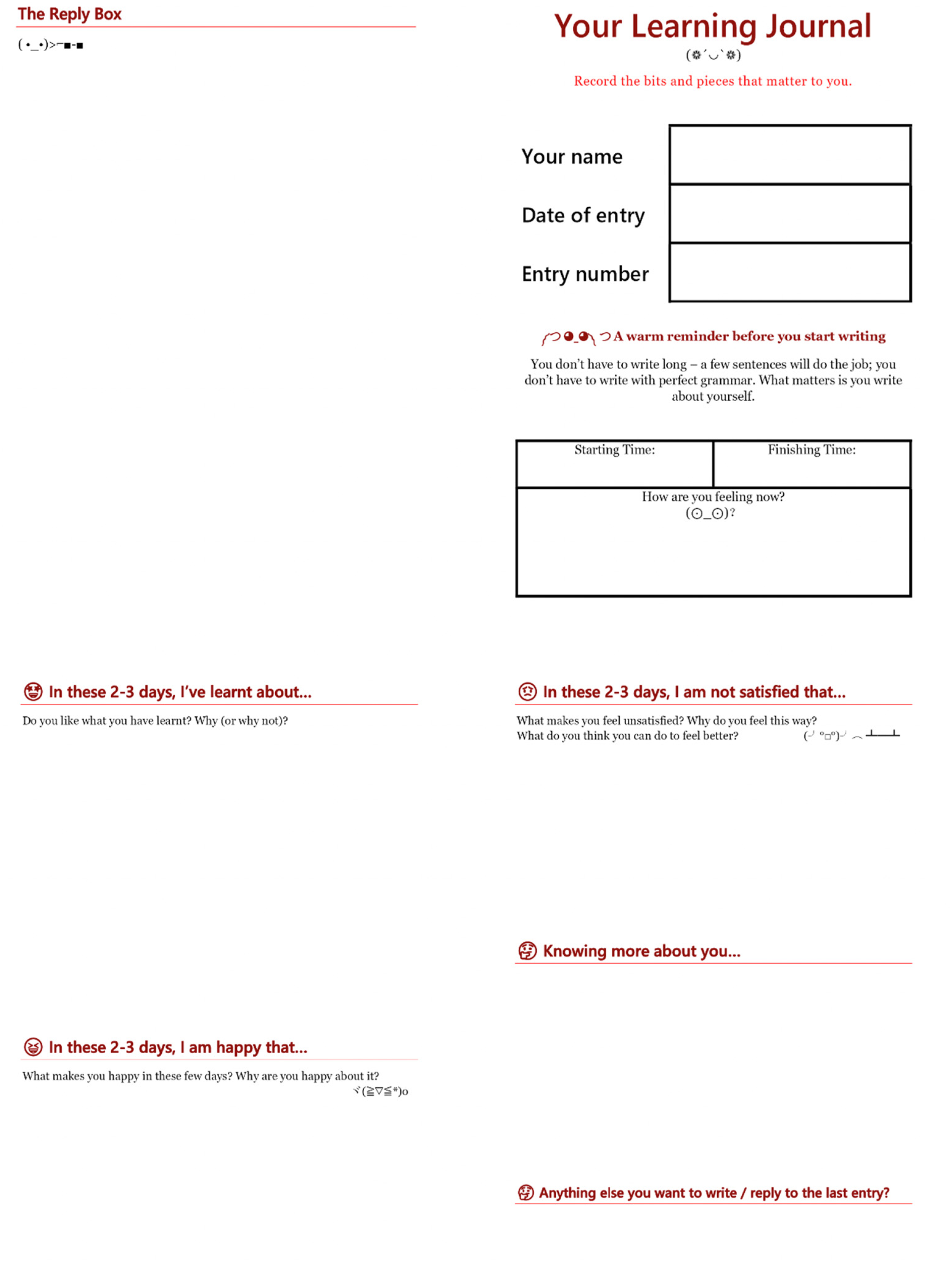
The self-developed dialogue journal template.
As Figure 2 shows, implementation of the journaling practice followed a cyclical process, which begins with the teacher assigning an entry and ends with the student receiving a reply from the teacher. During the first four weeks, two journals were assigned to students weekly; however, due to timetable constraints, journals were assigned once per week after Week 4. In total, 11 rounds of journals were assigned. Journaling was non-assessed and voluntary, so students could skip a round if they were occupied with other schoolwork with no consequences of any kind for non-submission. Students were instructed to write in English, but to improve participation and distinguish journaling from other homework, the teacher encouraged students to draw pictures to supplement their writing. The teacher's responses were written in English and given back to students the day after submission. Grammatical mistakes were overlooked, as goal of the teacher's response was to initiate and sustain the teacher–student dialogue.
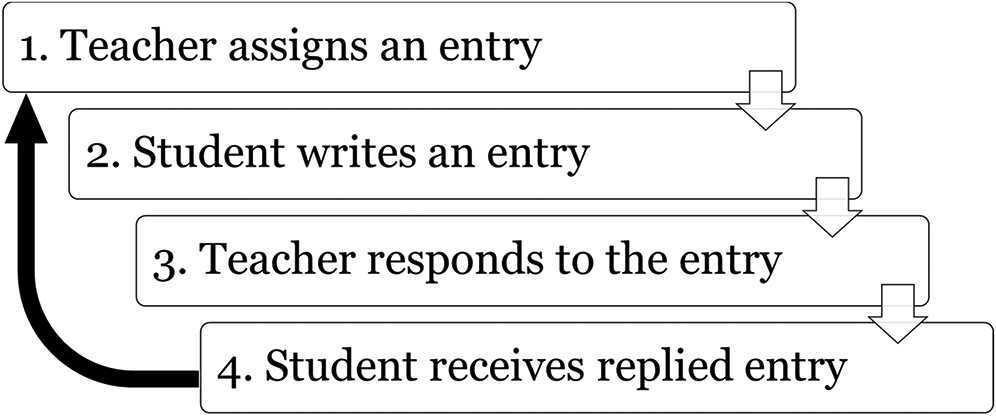
The cyclical process of the dialogue journaling.
Upon the conclusion of the seven-week dialogue journal program, semi-structured interviews were conducted voluntarily with 16 students to collect their thoughts, experiences, and perceptions of the dialogue journaling practice for a more contextual understanding of their participation. All interviews were approximately 20 min in duration and conducted in Cantonese.
Evaluation and Reflection
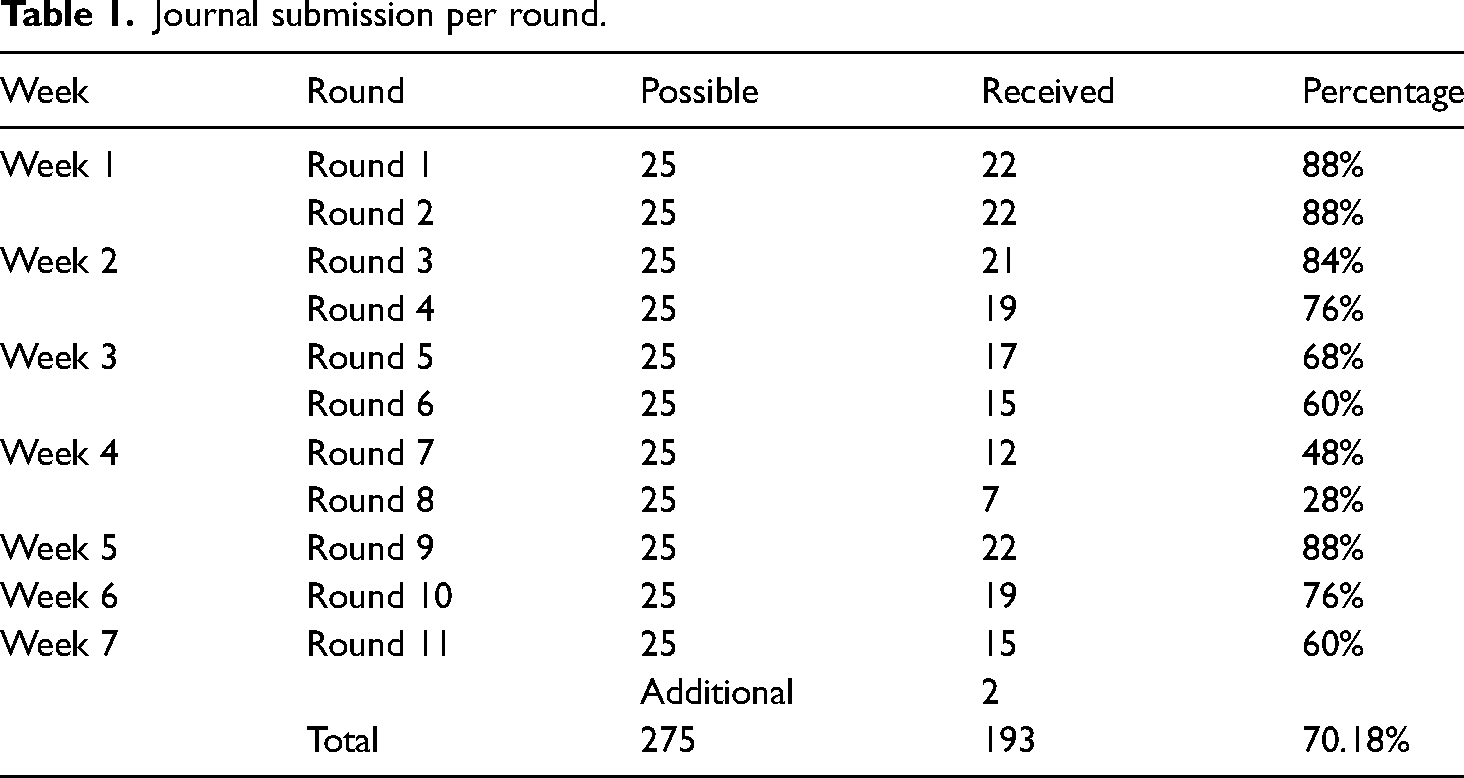
Our evaluation of the dialogue journaling practice is based on participation rates of students, the teacher's own reflections, the dialogue journals’ content, and students’ interviews. Selected excerpts from dialogue journals and quotations from interviews are used to illustrate the perceived benefits and weaknesses of the practice in terms of facilitating teacher–student rapport. Table 1 summarizes participation rates throughout the seven-week period. Except for round 7 and 8, which coincided with the schools’ assessment period, the participation rates for all rounds were at least 60%, with the total submission rate being 70%. Given the voluntary nature of the practice, the teacher was satisfied with the overall submission rate.
Journal submission per round.
Regarding the usefulness of the dialogue journals in facilitating rapport, the guided structure of the journal, with focused prompts for students, was effective in eliciting communication on diverse topics, such students’ interests, family background, and their concerns, both inside and outside school. Responding to students’ journal entries in a dialogic manner provided an effective platform for the teacher to show characteristics contributing to strong teacher–student rapport as outlined by Mercer and Dörnyei (2020) (approachable, empathetic, responsive, belief in learner improvement, supportive, passionate). To illustrate a typical instance of the rapport-building process, Figure 3 shows a written interaction where one student reveals her fear of a COVID-19 outbreak during her Christmas holiday. The teacher, in response, uses the opportunity to show understanding and offer reassurance. The content of the journal entry exemplifies the kind of personal information that students were willing to divulge, and how the teacher positioned himself as an empathetic and supportive interlocutor.
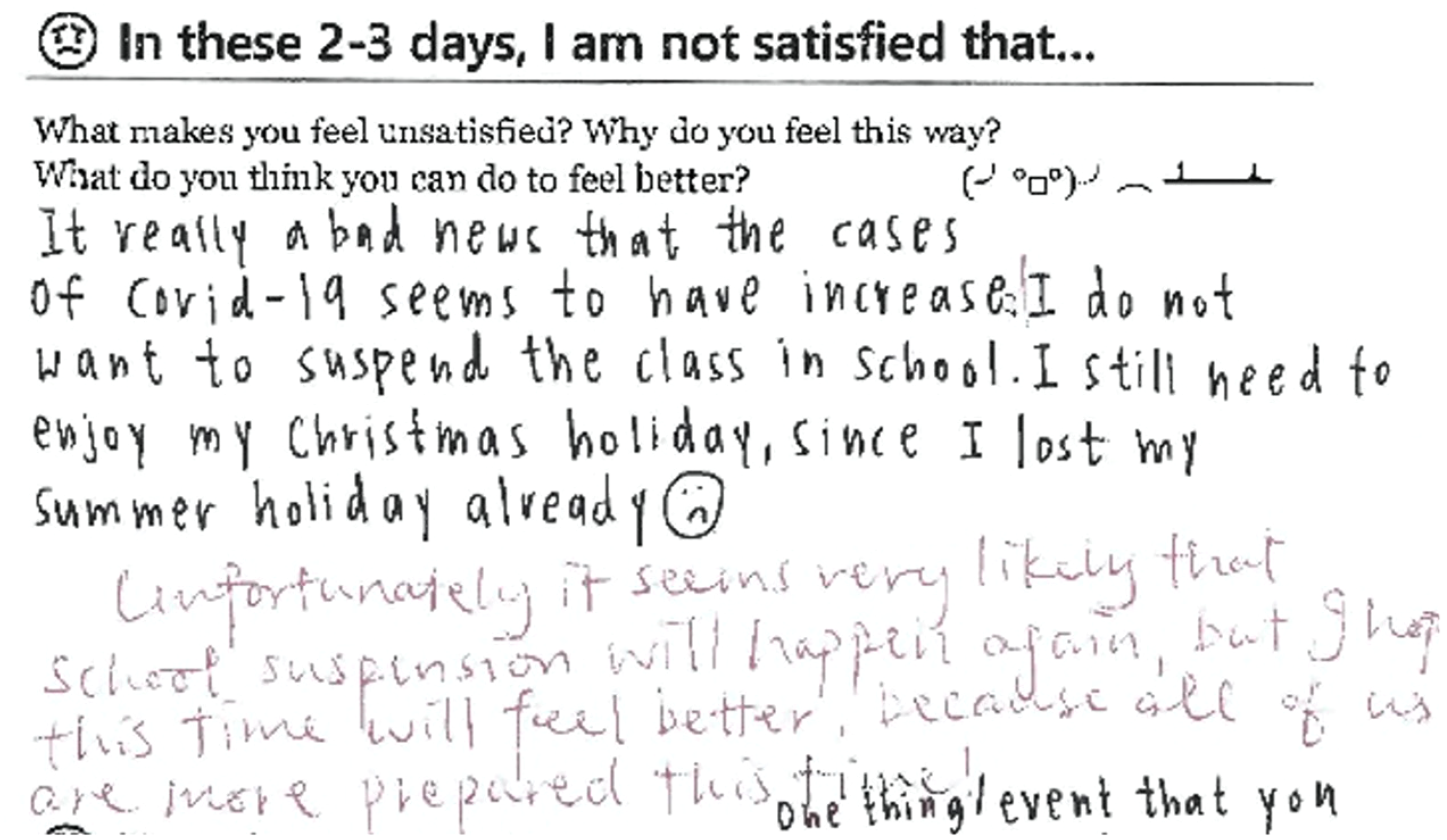
Dialogue journal entry: sharing personal issues.
Lee (2004), reporting on her practice of dialogue journaling with pre-service teachers, found that students occasionally used the journal entries for “thanking the teacher for advice” (p.79). This was also found in our practice. Students sometimes expressed their appreciation for the teachers’ previous journal comments and specific teaching moments in previous lessons. In this way, the journal acted as a feedback tool for the teacher. This is illustrated in Figure 4, which shows a student thanking the teacher for reading and commenting on her journals and pointing out a feature from a previous lesson she enjoyed. The teacher then reciprocates by showing appreciation for her comments. In Figure 5, the teacher uses the reply box to follow up on this theme, honestly communicating the process of preparing content for the class.
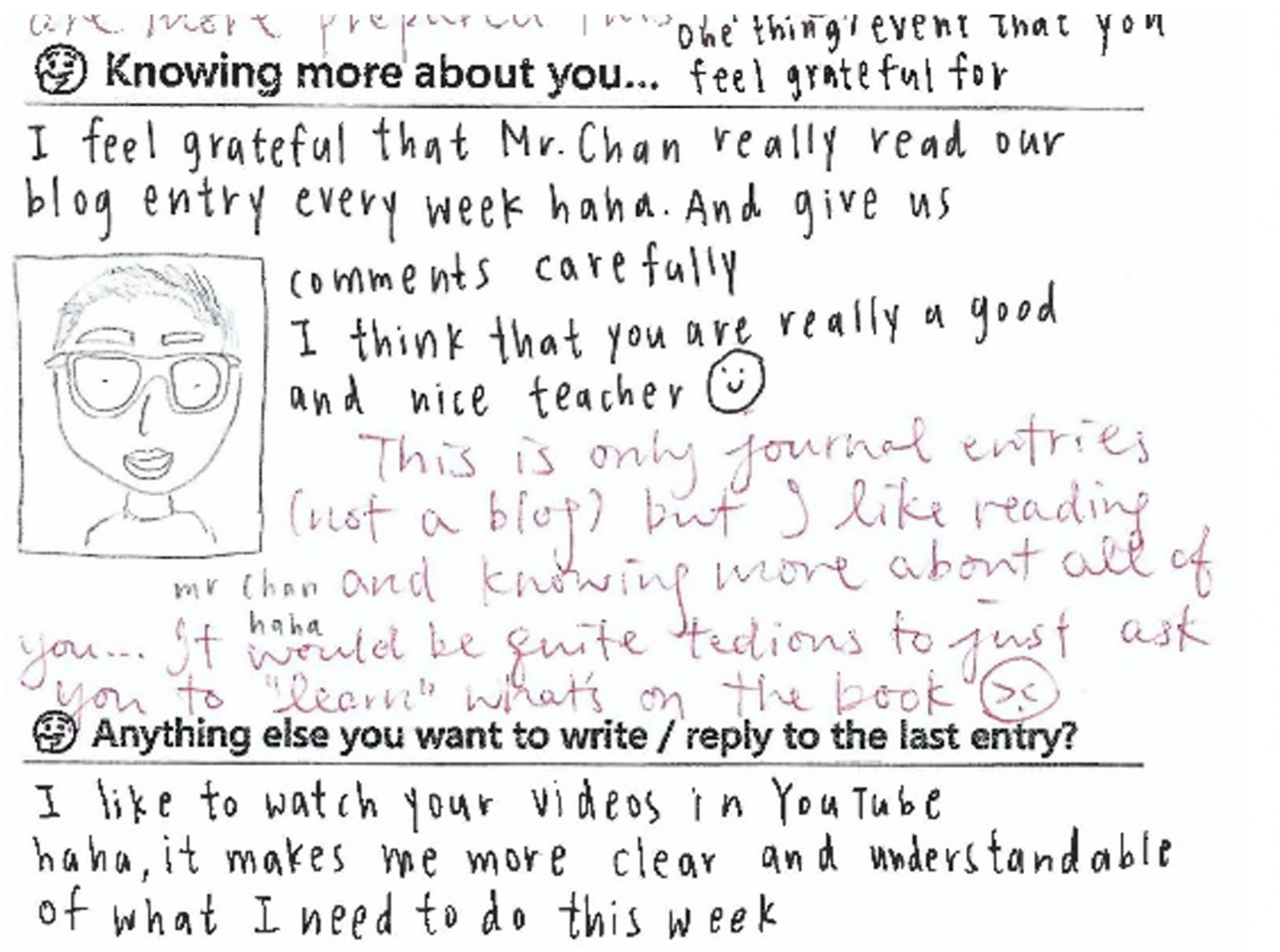
Dialogue journal entry: showing appreciation.

Dialogue journal entry: responding to students.
Themes related to teacher–student rapport were also prominent in students’ interviews, as illustrated by the following quotes (translated from Cantonese): I very much enjoy the process of writing about myself because I don't need to think as hard as I do when brainstorming ideas for a particular composition. I feel less restrained in writing. I also feel more dedicated to writing because I know that this will be read and understood by you, instead of being graded. It is like having a teacher as a pen friend! (Student 1) I do not think I would participate much in class if you were just the “normal teacher” who only teaches and gives us tasks. The conversation we had through the journals made me feel that you are more approachable, and I enjoy the lessons more because of that. (Student 2)
Comments such as having a teacher as a pen friend (Student 1) and you are more approachable (Student 2) illustrate how students perceived their teacher as a relatable person as a result of dialogue journaling. Additionally, Student 1 experienced greater engagement in writing (e.g. I feel more dedicated to writing), while Student 2 felt that her class participation improved during practice (e.g. I do not think I would participate… if you were just the “normal teacher”). These comments support the notion that improved rapport can lead to productive language learning behavior (Frisby and Martin, 2010).
Throughout the entire program, students were observed to be more proactive and responsive in class. Students, in general, volunteered answers to questions from the teacher more frequently, and more frequently asked the teacher learning-related questions in class and after class. Some more outgoing students took the initiative to converse casually with the teacher during recess. While the teacher found that engaging in dialogue journaling was time-consuming, he claimed that more personalized and relatable lessons were made possible with the journals.
However, not all students responded positively to the journaling practice. Most notably, two students did not participate at all. To understand their reasons, one of these students, Student 3, was interviewed and provided the following explanation: I was just very tired. To have all the tasks completed and prepare for the term-end assessments took most of my time and energy away. When I finally got a good break, I would rather relax than journal. It also felt bizarre to start journaling when I had already missed so many entries. (Student 3)
The student attributed his initial non-participation to the time-consuming nature of journaling, which led to continued non-participation during the latter part of the practice. This reveals a potential weakness – for at least two students, dialogue journals were perceived as low priority work, and initial non-participation might have caused them to feel excluded from joining the practice at a later stage.
Future Pedagogical Directions: Improvements to the Practice
There are several ways where dialogue journaling, as reported in this article, could be improved. First, the voluntary journal submissions were seen as low priority work for less motivated students, resulting in low submission rates for some students. Moreover, the teacher, adapting to the expectations of a new workplace, also struggled to balance responding to journal entries and fulfilling regular teaching responsibilities. To alleviate the workload for students and the teacher, “group” dialogue journaling (Cole et al., 1998), where journal entries are assigned to groups of students who together collectively write to the teacher, could be implemented. This may improve submission rates by promoting students’ obligation towards others in the journaling group (Dörnyei, 2005) while also reducing the number of journals the teacher must respond to. Second, as commonly practiced in dialogue journaling, the primary role of the teacher was to respond to students’ written entries rather than generate content of his own, leading to a somewhat imbalanced exchange. To promote a more balanced dialogue, the template could have included an additional focus area for the teacher to write unsolicited information about himself or his teaching. This could have provided an opportunity for the teacher to demonstrate his “passion in teaching” (Mercer and Dörnyei, 2020) while also providing additional input for students to respond to. Finally, other than the submission of the 11th journal entry, there was no final outcome of the journaling practice. Perhaps the practice could have culminated in a final task (e.g. presentation, portfolio, writing activity) that required learners to reflect on their journals, signifying the end of the journaling practice. Including a final task connected to their journals would help enhance engagement as it would add structure, direction, and purpose to the practice (Aubrey, 2021; Ibrahim and Al-Hoorie, 2018).
Despite these shortcomings, the innovation was deemed successful for enhancing teacher–student rapport in this ESL secondary school context. We felt that journaling was particularly useful for the participating teacher as, by nature of the TP, he had limited time to gain students’ trust. However, it is hoped that this description and evaluation of the dialogue journaling practice would be beneficial for all teachers who see value in connecting with students on a personal level while promoting authentic language use.
Footnotes
Declaration of Conflicting Interests
The author(s) declared no potential conflicts of interest with respect to the research, authorship, and/or publication of this article.
Funding
The authors received no financial support for the research, authorship and/or publication of this article.
