




Abstract
Objective:
Public Health Reports (PHR) is the oldest public health journal in the United States and has reported on viral epidemics since the 19th century. We describe the creation and analysis of a collection of historic PHR articles on emerging viral epidemics in the United States to inform public health response to COVID-19 and future epidemics.
Methods:
We searched databases from 1878 through 2021 using custom search strings and conducted a manual search for articles published under previously used names for PHR. We evaluated all articles based on inclusion/exclusion criteria and coded the final list for virus/disease, article type, public health emergency preparedness and response capabilities from the Centers for Disease Control and Prevention (CDC), and PubMed citation count.
Results:
We identified 349 relevant articles including 130 commentaries/reviews/editorials, 79 epidemiologic reports, 75 research articles, and 65 case study/practice articles. The collection focused on influenza (n = 244), COVID-19 (n = 75), dengue (n = 14), and other emerging viruses, such as Zika and Ebola (n = 25). The collection included 48 articles on health disparities/health of various disadvantaged populations, highlighting such disparities as race and ethnicity (n = 22), socioeconomic status (n = 17), and age (n = 15). When we categorized articles by CDC public health emergency preparedness and response capabilities, we found that 207 addressed surveillance and epidemiologic investigation, 36 addressed community preparedness, and 28 addressed medical countermeasure dispensing and administration. The articles addressing surveillance and epidemiologic investigation, nonpharmaceutical interventions, and community preparedness had the most PubMed citations (799, 334, and 308, respectively).
Conclusions:
PHR’s historic articles on US emerging viral epidemics covered a range of virus/disease types, emergency preparedness and response capabilities, and contribution types and were widely cited in the scholarly literature. This publicly available and continuously updated collection is a valuable resource for pandemic planning and response.
Public Health Reports (PHR), the official journal of the Office of the Surgeon General and the US Public Health Service, is the oldest continuously published public health journal in the United States.1,2 PHR was established in 1878 as Bulletins of the Public Health to publish reports on the sanitary conditions on vessels departing for the United States. PHR was the sole source of US epidemiologic data during the first part of the 20th century and served as the precursor to the Centers for Disease Control and Prevention’s (CDC’s) Morbidity and Mortality Weekly Report (MMWR), providing reports on circulating diseases, including weekly reports from various localities. 3 Given this background, PHR’s past volumes are a valuable archive on the historical state of US public health. 4
While the Journal of the American Medical Association, 5 the Journal of Public Health Management and Practice, 6 and MMWR 7 provide online article collections on infectious disease, PHR articles date further back than most of these collections and offer more complete coverage of historic public health emergencies (eg, the 1918 influenza pandemic). Given PHR’s unique historicity, our goal was to identify and establish a collection of PHR articles on emerging viral epidemics to inform US public health to improve its readiness for present and future viral challenges, 8 such as the COVID-19 pandemic.9,10
Methods
Identification of Articles for Inclusion in the Collection of PHR Articles on Emerging Viral Epidemics in the United States
The librarian searched the Medline, Embase, Global Health, Scopus, JSTOR, and PubMed databases to identify potential articles of interest using search terms developed in collaboration with emerging infectious disease experts on PHR’s editorial committee. We included PHR articles from 1878 through December 2021. Inclusion and exclusion criteria for subsequent manual review were guided by emerging infectious disease/pathogen definitions from the National Institute of Allergy and Infectious Diseases 11 and the information on emerging infectious diseases and zoonoses from the World Health Organization 12 (Box). This project did not involve human data or participants; therefore, institutional review board assessment was not necessary per the policy of the Office of Science and Medicine at the US Department of Health and Human Services, Office of the Assistant Secretary for Health.
Search strategies, inclusion and exclusion criteria, and definitions used during automated searches, manual reviews, and analysis of historic articles on emerging viral epidemics in the United States published in Public Health Reports, 1878-2021
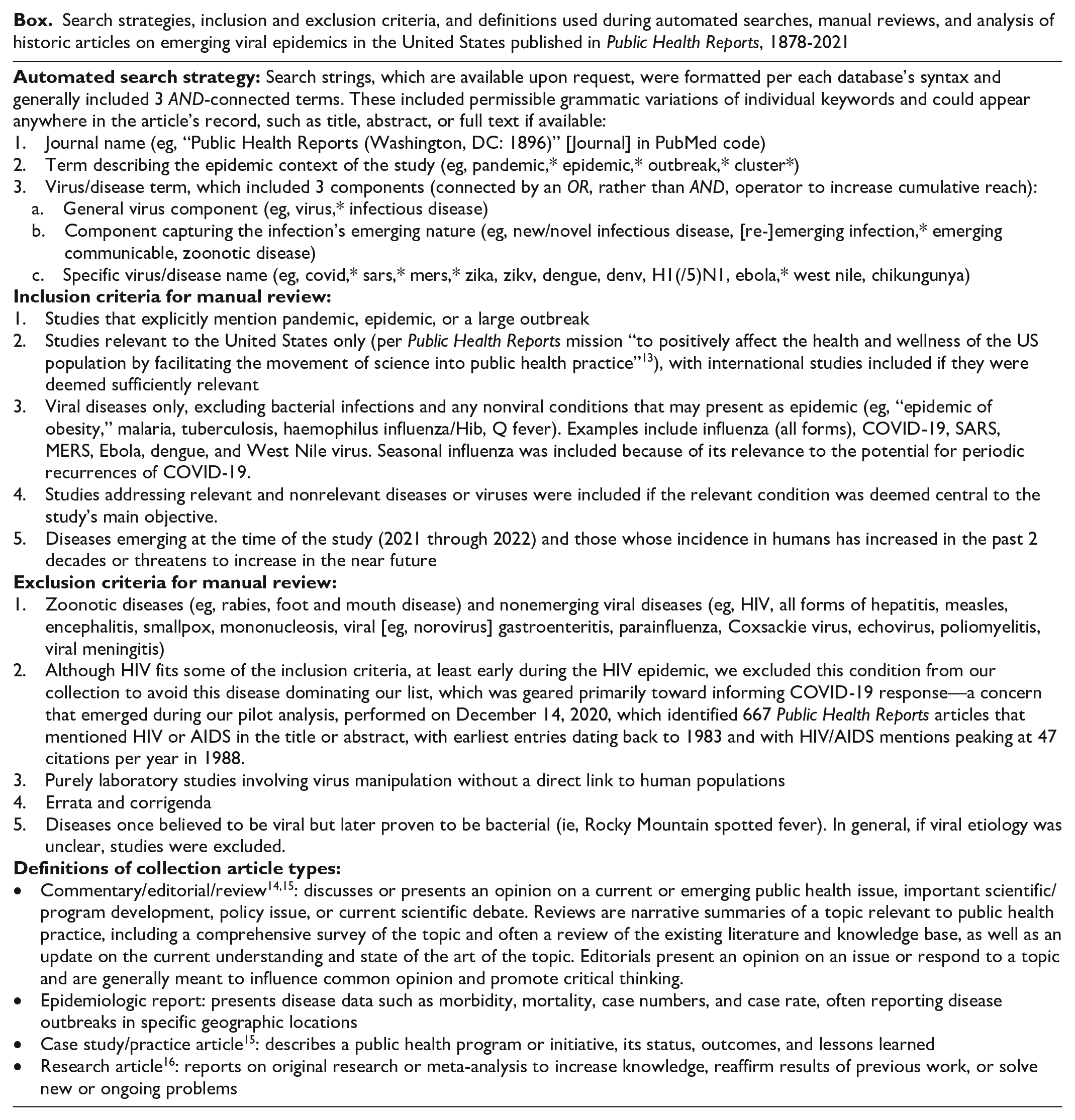
The database search end date was December 14, 2020. For articles published online after this date and through December 31, 2021, we performed manual searches. We removed duplicates using the EndNote (version X9; Thomson Reuters) “find duplicates” function based on title, author, and year. Because the JSTOR database displays abstracts for approximately 20% of its records and limits the number of characters in search strings, we searched this database using only the journal and epidemic terms and then manually searched in EndNote for viral terms.
To account for previously used names of PHR, which included Bulletins of the Public Health (1878), Weekly Abstract Sanitary Report (1887-1895), HSMHA Health Report (1971-1972), and Health Service Report (1972-1974), we manually reviewed full-text articles published under these journal names on PubMed 4 using the CTRL F command to search for the terms epidemic, outbreak, pandemic, influenza, emerging, virus, viral, and grippe (an antiquated influenza term). We excluded non–US studies and articles with nonviral or nonemerging infection terms. We then applied our formal inclusion and exclusion criteria to the identified articles (Box). We created a flow diagram to summarize the results of this search (Figure 1).
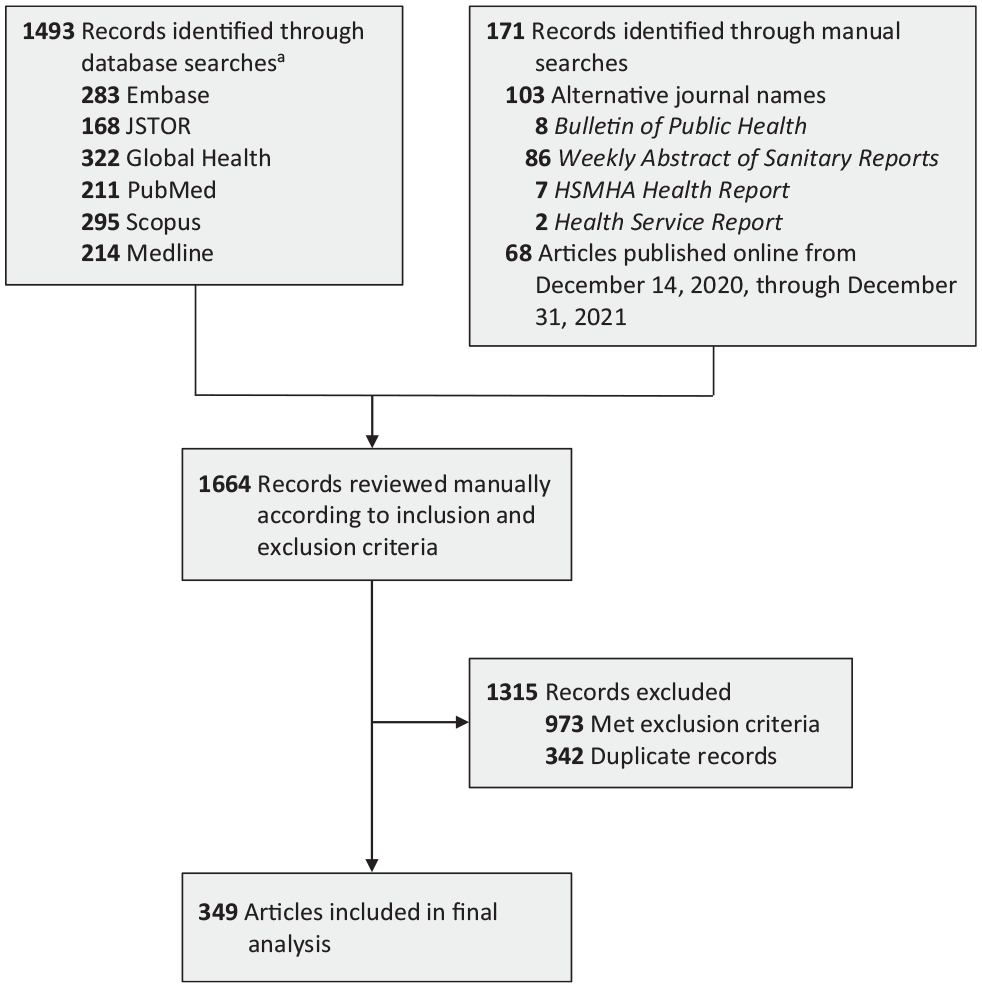
PRISMA flow diagram (Preferred Reporting Items for Systematic Reviews and Meta-analyses) 17 of the selection of historic articles in Public Health Reports on emerging viral epidemics in the United States, 1878-2021. Abbreviation: HSMHA, Health Services and Mental Health Administration. a These numbers are after the EndNote-removed duplicates (additional duplicates were identified later during manual review).
We manually searched all PHR articles published from December 14, 2020, through December 31, 2021, and then reviewed each article using the web browser’s CTRL F command to search for the terms epidemic, outbreak, pandemic, influenza, emerging, virus, viral, COVID, and SARS-CoV-2 (Figure 1). Two authors (N.M.H., A.K.) reviewed the 68 articles identified in this search using the collection’s inclusion and exclusion criteria. Three subject matter experts (A.I.I., Z.F.D., H.D.D.) reviewed the final list of articles, with disagreements resolved via all-author discussion. We manually removed duplicates missed by EndNote.
Analysis of the Included Articles by Disease/Virus and Article Type
We grouped articles in the final collection by disease/virus and by article type, which reflects key present and past submission categories (epidemiologic report, original research, case study/practice, and commentary/editorial/review) (Box). 15 Primary viral diseases included influenza A and B, general (ie, subtype unspecified or seasonal) influenza, 1918 influenza pandemic, COVID-19, dengue, and others (eg, Ebola, Zika). Some articles were relevant to multiple diseases.
Coverage of Health Disparities and Minority Health by the Collection
We intended this collection to serve as a practical reference for responders to COVID-19 and future pandemics, including on the effect of pandemics on health disparities. 17 We included a health disparities coding category, which was defined as in PHR’s 2020 and 2021 Year in Review articles.18,19 We based inclusion criteria on a Healthy People 2020 definition of health disparities, with articles deemed relevant only if they explicitly mentioned a health outcome seen to a greater or lesser extent among various populations by race and ethnicity, age, sex/gender identity, residence in urban versus rural area, socioeconomic status, immigrant status, veteran status, or disability.20-22 We excluded articles that presented patterns of health differences by age, race and ethnicity, or another disparity category without explicit focus on observed differences. Further categorization by disparity and population was based on a description from the National Institute on Minority Health and Health Disparities. 21 We categorized articles on health disparities and minority health by article type in an attempt to quantify actionable research (vs speculative opinion pieces or commentaries).
Categorization of Articles by CDC Public Health Emergency Preparedness and Response Capabilities
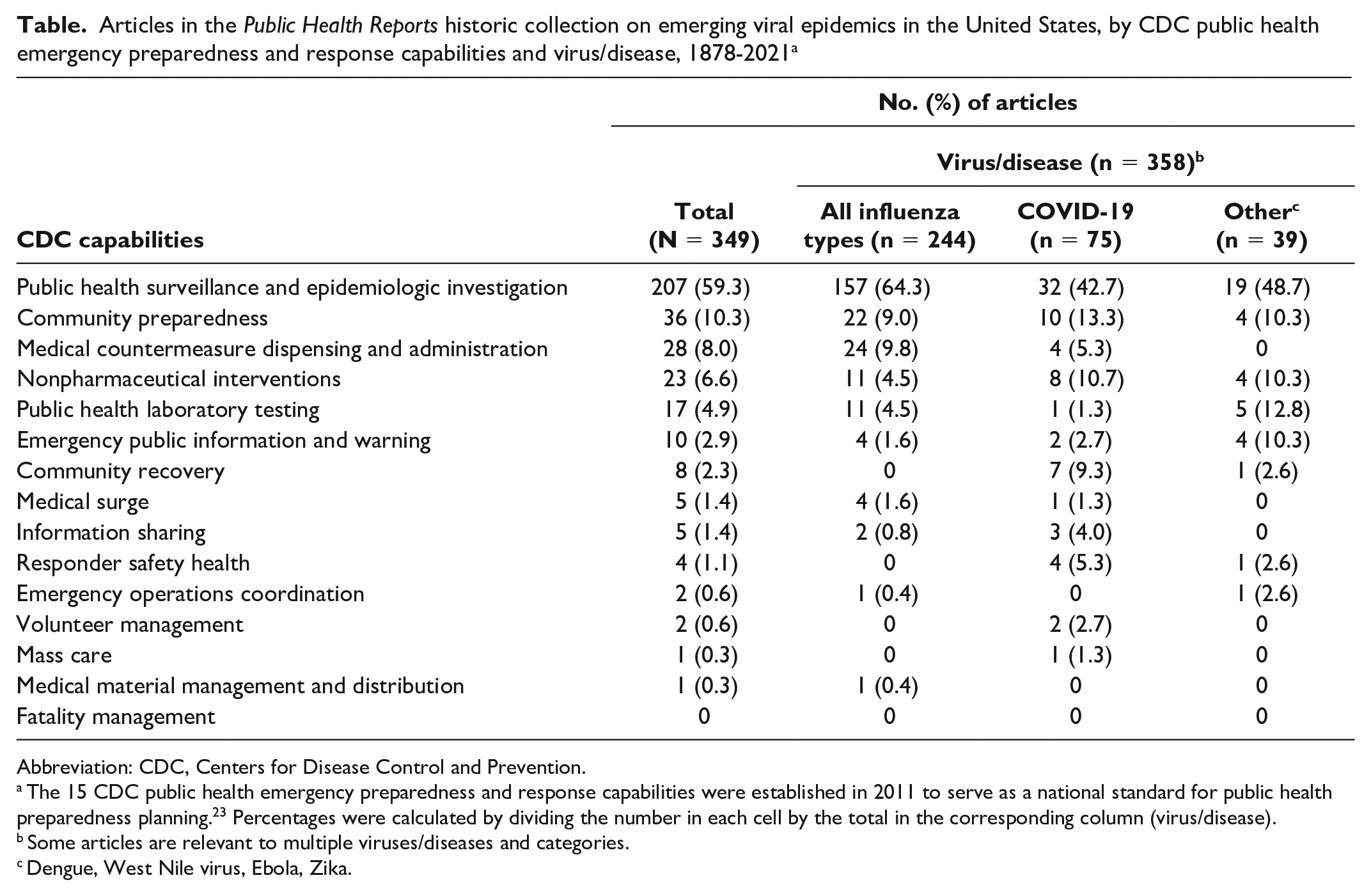
To make our collection more useful to epidemic responders, we categorized collection articles according to their relevance to CDC’s 15 public health emergency preparedness and response capabilities, which serve as a national standard for public health preparedness planning. 23 To better understand the impact of PHR articles on public health practice, we examined collection articles in these response categories by disease/virus and article type (Table).
Articles in the Public Health Reports historic collection on emerging viral epidemics in the United States, by CDC public health emergency preparedness and response capabilities and virus/disease, 1878-2021 a
Abbreviation: CDC, Centers for Disease Control and Prevention.
The 15 CDC public health emergency preparedness and response capabilities were established in 2011 to serve as a national standard for public health preparedness planning. 23 Percentages were calculated by dividing the number in each cell by the total in the corresponding column (virus/disease).
Some articles are relevant to multiple viruses/diseases and categories.
Dengue, West Nile virus, Ebola, Zika.
Categorization of Articles by Number of PubMed Citations
We identified the collection’s most cited articles using the “cited by” PubMed functionality on July 13, 2022. To adjust for recently published articles, we analyzed citations per year (calculated as the number of citations to the article divided by the number of years between the article’s publication date and the date when the citations were assessed). We identified the articles in our collection most frequently cited by COVID-19 studies in PubMed by searching the article titles listed under “cited by” on each collection article’s PubMed page for mentions of COVID-19 (or related keywords). We also identified the public health emergency preparedness and response capabilities with the highest scholarly impact by analyzing their cumulative number of PubMed citations. One author (N.M.H.) replicated all analyses for accuracy.
Results
Collection’s Coverage of Disease/Virus and Article Type
Literature searches and manual reviews yielded a total of 349 articles (see Supplemental Material). We grouped collection articles into 6 disease/virus categories: general influenza (including seasonal influenza and unspecified influenza types; n = 139), influenza A or B (including various strains; n = 67), COVID-19 (n = 75), the 1918 influenza pandemic (n = 38), dengue (n = 14), and other viruses (n = 25), which included Ebola (n = 11), West Nile virus (n = 8), Zika (n = 7), Middle East respiratory syndrome (n = 2), and severe acute respiratory syndrome (SARS) (n = 1) (Figure 2). Some articles discussed multiple diseases. The total number of categorized articles (n = 358) exceeded the 349 collection articles because some were relevant to ≥2 diseases. Influenza (all types) was the most frequently discussed disease until 2020, when COVID-19 emerged, with COVID-19 then becoming the top covered virus in 2020 and 2021.
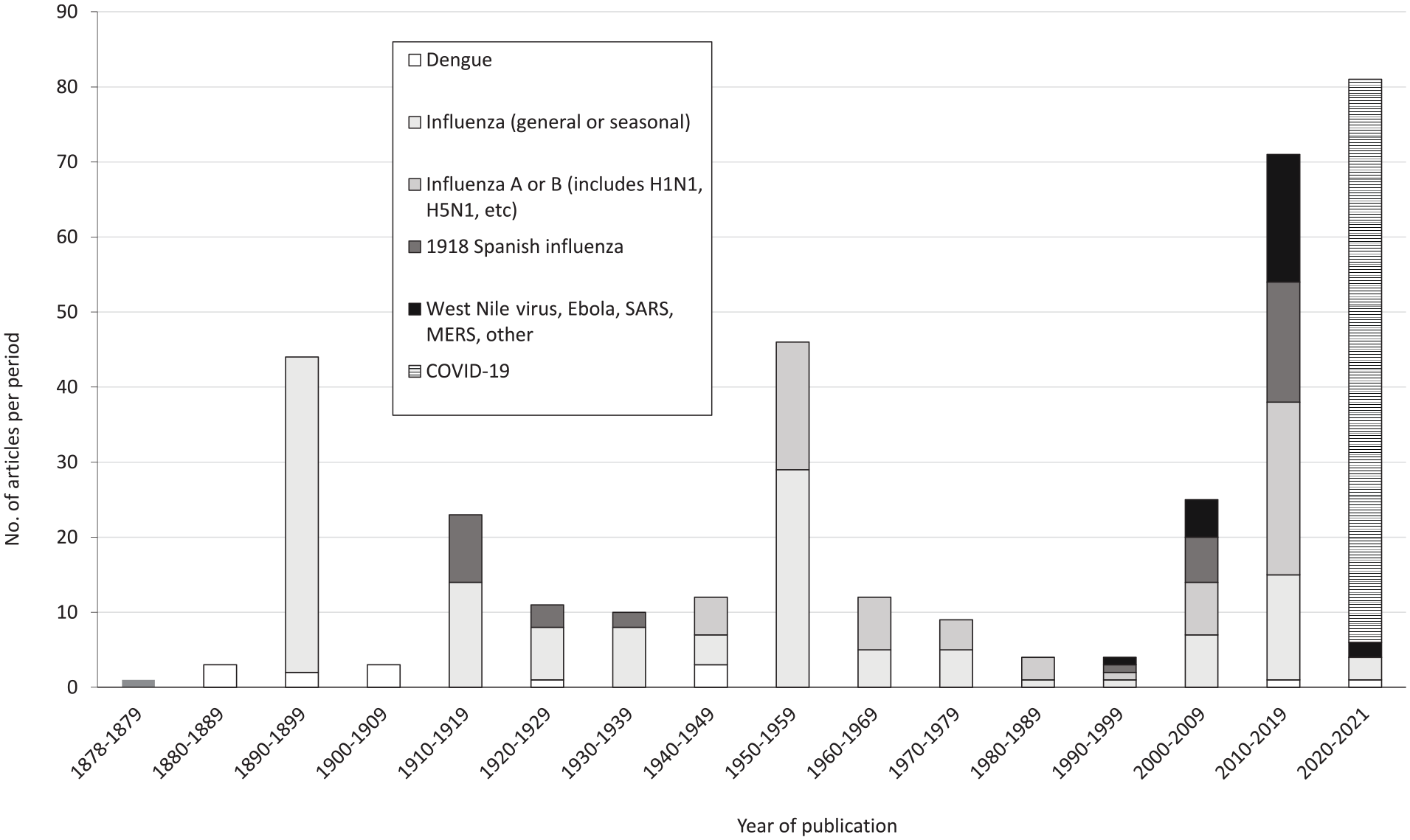
Articles in the Public Health Reports historic collection on emerging viral epidemics in the United States, by year and virus/disease, 1878-2021.
Most collection articles were commentary/review/editorial articles (n = 130; 37.2%), followed by epidemiologic reports (n = 79; 22.6%), research articles (n = 75; 21.5%), and case study/practice articles (n = 65; 18.6%). From 1878 through 1959, the primary article type was epidemiologic report, constituting 76 of 152 (50.0%) articles; however, only 3 of 197 (1.5%) articles were epidemiologic reports among collection articles published from 1960 through 2021. Research articles first appeared in 1941 and became the most common article type after 2020 (accounting for 41 of 80 [51.3%] articles published in 2020 and 2021). The most frequent article type from 1960 through 2020 was commentary/review/editorial (55 of 129; 42.6%).
Collection’s Coverage of Health Disparities and Minority Health
The first collection article on health disparities was a 1931 report by Edgar Sydenstricker, who documented higher levels of influenza morbidity among people classified as “poor” and “very poor” as compared with people classified as “well-to-do” and “moderate” during the 1918 influenza pandemic. 24 Before 2020, only 15 articles discussed health disparities (Figure 3); however, from January 2020 through December 2021, 33 articles addressed this topic, all of which were related to COVID-19. Among the 48 articles on health disparities in the collection, we identified 28 (58.3%) research articles, 17 (35.4%) commentary/review/editorial articles, 3 (6.3%) case study/practice articles, and no epidemiologic reports. The proportion of original research articles on health disparities (28 of 48; 58.3%) was 171.2% higher than the proportion of original research articles in the collection overall (75 of 349; 21.5%).
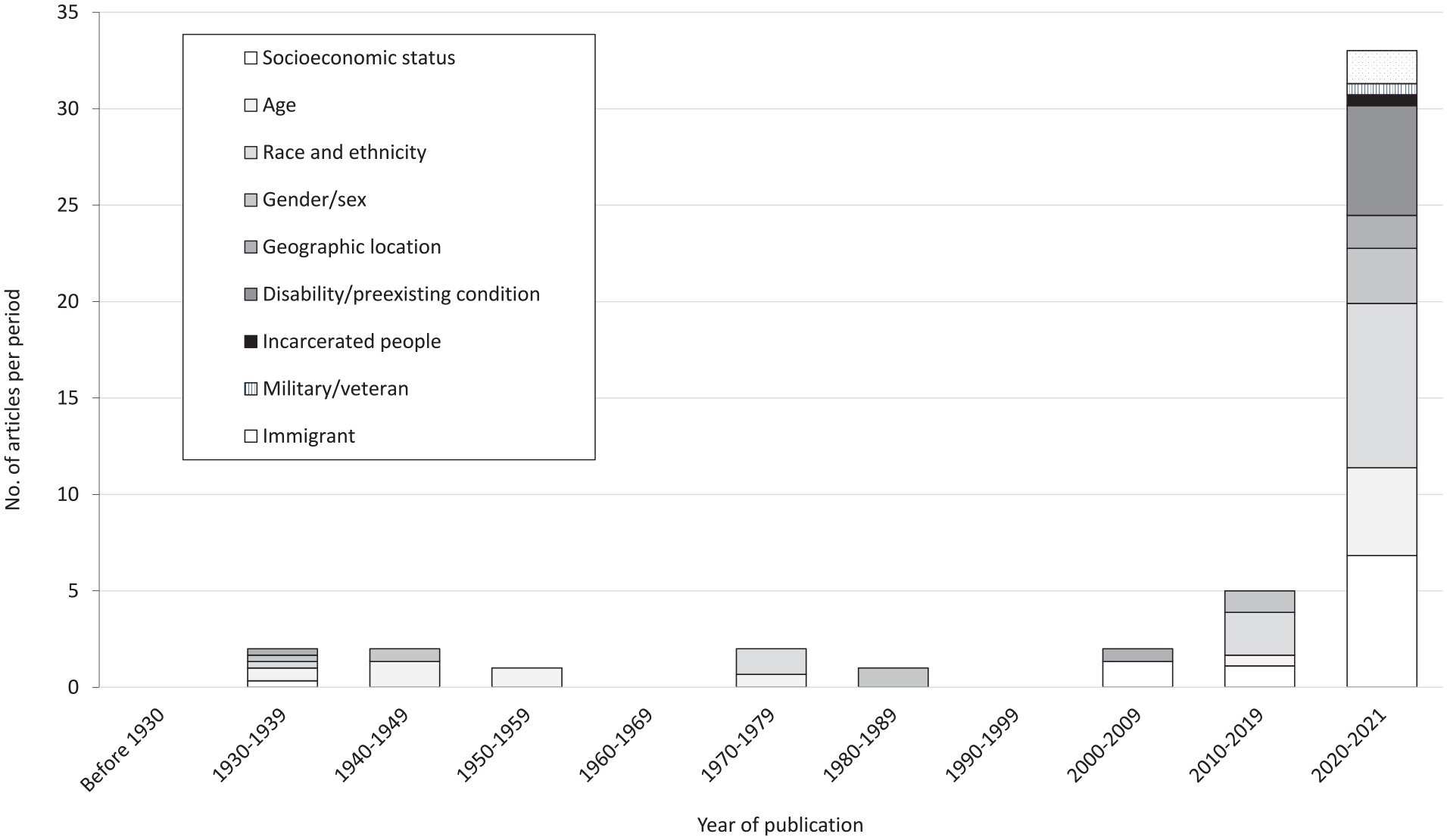
Articles in the Public Health Reports historic collection on emerging viral epidemics in the United States focusing on health disparities and the health of racial and ethnic minority and other socially or economically disadvantaged populations, by year and disparity type or minority population, 1878-2021.
Some of the 48 articles on health disparities in the collection addressed multiple disparities or populations. Disparities by race and ethnicity were the most frequently analyzed (n = 22; 45.8%), followed by socioeconomic status (including homelessness, education, and food security; n = 17; 35.4%), age (n = 15; 31.1%), gender (including LGBTQ [lesbian, gay, bisexual, transgender, and queer] identity and maternal health; n = 10; 20.8%), disability/preexisting conditions (including deafness, mental health, HIV, and diabetes; n = 10; 20.8%), rural/geographic location (n = 6; 12.5%), immigrant status (n = 3; 6.3%), military/veteran health (n = 1; 2.1%), and incarceration (n = 1; 2.1%). The collection articles that addressed health disparities (n = 48; note that an article can address multiple disparities or populations) focused primarily on COVID-19 (n = 33); influenza (n = 15; seasonal influenza, influenza pandemic, and influenza A and B [n = 5 each]); and West Nile virus (n = 1).
Collection’s Analysis by CDC Public Health Emergency Preparedness and Response Capabilities
Among the 349 articles in the collection, 207 (59.3%) were categorized under the CDC public health emergency preparedness and response capability of surveillance and epidemiologic response (Table), followed by 36 (10.3%) under community preparedness, 28 (8.0%) under medical countermeasure dispensing and administration, and 23 (6.6%) under nonpharmaceutical interventions. Among 75 articles on COVID-19, articles on public health surveillance and epidemiologic investigation (n = 32; 42.7%), community preparedness (n = 10; 13.3%), nonpharmaceutical interventions (n = 8; 10.7%), and community recovery (n = 7; 9.3%) were represented most frequently. We observed a similar distribution for influenza (data not shown). Capabilities represented least in the collection were medical material management and distribution (1 article), mass care (1 article), and fatality management (no articles).
The public health surveillance and epidemiologic investigation capability was represented most frequently by epidemiologic reports (79 of 207; 38.2%) and commentaries/reviews/editorials (63 of 207; 30.4%), which were mostly methodological. These results were consistent with the collection’s overall distribution by article type. For community preparedness, however, commentary/review/editorial articles were the most common type (21 of 36; 58.3%), followed by case study/practice (11 of 36; 30.6%), which frequently shared lessons learned and practical guidance. Similarly, articles under medical countermeasures were commonly represented by commentary/review/editorial articles (13 of 28; 46.4%), which included narrative reviews on immunization programs and strategies.
With regard to research articles, articles categorized under public health surveillance and epidemiologic investigation represented 57.3% (43 of 75) of all research contributions across response capabilities. Research questions addressed by these articles included the effects of influenza during pregnancy on birth defects, 25 the impact of influenza surveillance systems, 26 and COVID-19 testing among various populations. 27
Collection’s Analysis by Number of PubMed Citations
To compare the scholarly impact of our collection’s articles across various diseases, we analyzed PubMed citations to articles for which citation information was available. From 1946 through 2021, 243 of 349 (69.6%) articles had citation information. Articles discussing multiple diseases/viruses were counted once in each disease category, bringing the total number of articles in various disease/virus categories to 252. Among these, 23 (9.1%) articles on the 1918 influenza pandemic were cited 13.0 times per article, 62 (24.6%) articles on influenza A and B were cited 9.6 times per article, 65 (25.8%) articles on general/seasonal influenza were cited 9.5 times per article, 27 (10.7%) articles on other viruses (including Ebola, Zika, dengue, West Nile) were cited 4.9 times per article, and 75 (29.8%) COVID-19 articles were cited 4.4 times per article.
The 3 top-cited articles in the collection were a 1963 article on methods of statistical analysis of excess pneumonia–influenza deaths 28 (207 citations), a 2010 article on the history of influenza pandemics 29 (105 citations), and a 2010 article on the history of ultraviolet germicidal irradiation for air disinfection 30 (86 citations). Articles with the most citations per year were a 2021 article on the effects of COVID-19 policies on social distancing behavior 31 (46.7 citations), a 2020 article on mental health and well-being in sexual and gender minority populations 32 during COVID-19 (16.3 citations), and a 2020 article on Boston’s response to COVID-19 among people experiencing homelessness 33 (14.0 citations).
We identified 707 citations made by studies on COVID-19, representing 39.1% of 1808 total citations to the collection articles. The 3 articles cited most frequently by COVID-19 studies were the 2021 article on the effects of COVID-19 policies on social distancing behavior 29 (69 COVID-19 citations), the 2020 article on the history of ultraviolet germicidal irradiation for air disinfection 28 (59 COVID-19 citations), and a 2010 article on the effects of nonpharmaceutical interventions on urinary tract infections and influenza in crowded urban households 34 (38 COVID-19 citations).
Public health emergency preparedness planning and response capabilities with the most cited articles were public health surveillance and epidemiologic investigation (799 citations to 109 articles), nonpharmaceutical interventions (334 citations to 20 articles), and community preparedness (308 citations to 35 articles). Articles categorized under nonpharmaceutical interventions, which included COVID-19 studies on social distancing and face mask wearing, attracted the highest numbers of citations per article (16.7). This category was followed by emergency operations coordination (10.0 citations per article for 2 articles in the category) and community preparedness (8.8 citations per article for 35 articles). The least cited capabilities (counting only capabilities with >3 articles) were community recovery (5.1 citations per article for 8 articles), information sharing (3.6 citations per article for 5 articles), and public health laboratory testing (2.8 citations per article for 16 articles). We did not observe a clear correlation between citation counts and the relative prevalence of a particular article type within the category. 35 Articles categorized under nonpharmaceutical interventions, for example, had roughly the same number of research contributions as medical countermeasures (7 vs 8, respectively), yet the number of citations per article in the former category was nearly 4 times higher than in the latter category (16.7 vs 4.6).
Discussion
To inform COVID-19 and potential future pandemic responses, we created a historical collection of PHR articles on emerging viral epidemics and analyzed its content along several dimensions, including period, virus/disease, type of scholarly contribution, number of citations to the article, and relevance to health disparities/minority health and to CDC’s public health emergency preparedness and response capabilities. While other journals have created similar collections,5-7 PHR’s collection has a deep history and more detailed characterization, offering advantages for practitioners, policy makers, and researchers seeking actionable historical knowledge.
Before federal morbidity and mortality statistics were transferred to MMWR, 3 most of PHR’s articles on emerging viral epidemics were epidemiologic reports, with influenza being the most frequently mentioned condition. After the transfer of morbidity and mortality statistics from PHR to MMWR in 1950, PHR began to focus more on hypothesis-driven research and practice/commentary articles.
The 1918 influenza pandemic set the stage for many commonsense public health interventions (eg, face mask wearing, social distancing), which became an important part of the COVID-19 response. However, the recurrence of themes observed in our collection suggests that nonpharmaceutical interventions continue to be challenging to promote and implement from epidemic to epidemic. Nevertheless, this shortcoming presents an opportunity and a need for public health researchers, policy makers, and practitioners to explore more systematically available historical literature. Our collection and the present analyses offer a useful framework for such inquiries.
Collection’s Coverage of Disease/Virus and Article Types
Influenza was the most discussed virus in PHR until COVID-19 emerged. The influenza virus was first isolated in 1933, and influenza type B was differentiated in 1940. 36 A bivalent vaccine was first produced in 1942. 36 The number of PHR articles on influenza increased in the 1890s and 1950s, which could be attributed to the fact that, during these years, PHR frequently published epidemiologic reports related to various infectious diseases of national concern. There was an uptick in reporting on the 1918 influenza pandemic during the early 21st century, which may have been related to increased national concern about preparedness following the bioterrorist scares related to September 11.37-39 This increase was reflected in a 2006 special issue on PHR’s historical contributions, 40 which included multiple commentaries on past articles in PHR on the 1918 influenza pandemic41-43 and a 2010 special issue 44 on lessons learned from that pandemic. Important outbreaks and outbreak threats of West Nile virus, SARS/Middle East respiratory syndrome, Zika, and Ebola that occurred during that period were also covered by PHR.22,45,46
Collection’s Coverage of Health Disparities and Minority Health
Achieving health equity requires elimination of health disparities (ie, preventable differences in disease outcomes or opportunities to achieve optimal health).47,48 The topic of health disparities has been brought into focus by the COVID-19 pandemic, 49 the response to which our collection aims to inform. PHR’s long publication history offers a unique opportunity to analyze how the subject of disparities was addressed in reports on past epidemics.
Although PHR’s early epidemiologic reports often included statistics on morbidity and mortality by race and ethnicity, sex, and other demographic characteristics, the journal’s first emerging viral epidemic article that substantively addressed health disparities was published in 1931. 24 Its finding of increased 1918 influenza morbidity among people classified as “poor” and “very poor” is consistent with reports of substandard urban living conditions experienced by many immigrants who moved to the United States between 1900 and 1915. 50 Most of the collection’s articles on health disparities and minority health were categorized as research articles, suggesting that the journal contributes to the evidence base of equity-promoting interventions. The high proportion of research publications on health disparities for emerging viral epidemics likely reflects simultaneous recent increases in PHR’s original research content and attention to health equity. The latter mirrors the growing societal and scholarly awareness of the importance of social determinants of health in public health and emergency preparedness. 51
Collection’s Coverage of CDC Public Health Emergency Preparedness and Response Capabilities
To increase our collection’s value to viral epidemic emergency responders, we analyzed its content by CDC’s public health emergency preparedness and response capabilities. 23 The most common and most cited capability was public health surveillance and epidemiologic investigation, reflecting the fact that PHR was responsible for disseminating national health statistics prior to MMWR and its historical focus on disease surveillance. 19 Articles on nonpharmaceutical interventions had the most citations per article, likely because of a recent discussion of such interventions for COVID-19 (eg, social distancing, face mask wearing). Low citation numbers in such categories as community recovery, information sharing, and public health laboratory testing reflect the fact that these categories are geared more toward public health practice than academic research, which primarily drives PubMed citations.
Number of PubMed Citations to Collection Articles
The high number of PubMed citations to 1918 influenza studies in our analysis could reflect their long historical horizon as compared with more recent epidemics and their effect on subsequent research. The top 3 cited articles28-30 in the collection may have been cited frequently because they serve as foundational references for growing research on COVID-19 and recurring influenza outbreaks. Two of the top cited articles29,30 were published relatively recently (2010), suggesting that factors other than time since publication, such as timeliness of the article’s subject, may influence citation counts.
Limitations
Our study had some limitations. First, our initial search results yielded several gaps caused by limited database coverage and changes in the journal’s name. Early PubMed entries were not fully digitized, and some relevant content from these years could have been missed (eg, our PubMed searches did not identify any records prior to 1918 or from 1918 to 1946). Medline claims database coverage going back to 1946, with no assured coverage before 1946. 52 Although articles in PubMed date back to the 19th century, articles containing search terms in searchable fields (eg, abstract, full text) were not found before 1918. Accordingly, some articles may have been missed during these periods.
Second, potentially relevant articles that did not contain the exact search term combinations in searchable fields may have been missed. Another difficulty concerned changes in the names of viruses and diseases over time. For example, we searched for grippe, an antiquated term for influenza. However, there may have been other antiquated or nonstandard terms that we overlooked during our search.
Third, we recognize that we excluded HIV/AIDS from this analysis. We hope to address this limitation in future research focusing on PHR’s HIV content.
Fourth, our citation analysis was limited by the unavailability of PubMed data for articles published before 1946 and the relative underweighting of more recent articles, especially those on COVID-19, which may not have been in print long enough to accrue citations comparable to earlier studies. We attempted to partially resolve this difficulty by calculating citation rates per year.
Finally, we adopted modern distinctions between viral and bacterial diseases. Therefore, our collection does not reflect the relative importance of different conditions at different moments in time and excludes some of the dominant infectious diseases of the 19th and early 20th centuries, such as cholera, smallpox, and typhoid. Our inclusion of only “viral” diseases may have missed some past public health activities that could inform modern epidemic response, including to viral agents such as COVID-19.
Conclusion
Throughout its long history, PHR has published extensively and impactfully on emerging viral epidemics in the United States, covering a broad range of conditions and topics. Our collection and its analysis can serve as a useful resource to current and future emergency responders.
Supplemental Material
sj-docx-1-phr-10.1177_00333549221148782 – Supplemental material for Informing COVID-19 Response and Health Equity Agenda: Collection of Public Health Reports Articles on Emerging Viral Epidemics in the United States, 1878-2021
Supplemental material, sj-docx-1-phr-10.1177_00333549221148782 for Informing COVID-19 Response and Health Equity Agenda: Collection of Public Health Reports Articles on Emerging Viral Epidemics in the United States, 1878-2021 by Noelle M. Harada, Andrey Kuzmichev, Zygmunt F. Dembek, Amy I. Ising and Hazel D. Dean in Public Health Reports
Footnotes
Acknowledgements
We are grateful to PHR’s past editorial fellows, Jared Stokes, EdD, MA, MPH, CHES, and Nnedi Onyejiuwa, MPH, CHES, for their work on this project. We thank Joanna Taliano, MA, MLS, the CDC librarian who assisted us with the initial search, and Frederic Shaw, MD, JD, past PHR editor in chief, for sharing his subject matter expertise. We also thank David Rosner, PhD, MPH, of Columbia University for his insightful comments on the article.
Disclaimer
The findings and conclusions in this article are those of the authors and do not necessarily represent the official position of the Uniformed Services University of the Health Sciences, Battelle Memorial Institute, University of North Carolina at Chapel Hill, the US Department of Health and Human Services, or the US government.
Declaration of Conflicting Interests
The authors declared the following potential conflicts of interest with respect to the research, authorship, and/or publication of this article: In addition to their positions at the Uniformed Services University of the Health Sciences and Battelle Memorial Institute and the University of North Carolina at Chapel Hill, respectively, Drs Dembek and Ising also serve as members of the Editorial Committee of Public Health Reports.
Funding
The authors received no financial support for the research, authorship, and/or publication of this article.

Supplemental Material
Supplemental material for this article is available online. The authors have provided these supplemental materials to give readers additional information about their work. These materials have not been edited or formatted by Public Health Reports’s scientific editors and, thus, may not conform to the guidelines of the AMA Manual of Style, 11th Edition.
References
Supplementary Material
Please find the following supplemental material available below.
For Open Access articles published under a Creative Commons License, all supplemental material carries the same license as the article it is associated with.
For non-Open Access articles published, all supplemental material carries a non-exclusive license, and permission requests for re-use of supplemental material or any part of supplemental material shall be sent directly to the copyright owner as specified in the copyright notice associated with the article.
