




Abstract
Objective:
Research on COVID-19’s effect on substance use is mixed, and few studies have focused on adolescents. We assessed whether implementation of the COVID-19 lockdown affected substance use and changed perceptions of psychoactive substance availability in middle and high school students.
Methods:
We assessed self-reported use and perceived availability of alcohol, tobacco cigarettes, electronic cigarettes, marijuana, synthetic marijuana, nonprescribed prescription drugs, and illicit drugs (heroin, inhalants) among middle and high school respondents aged 11-18 years to the Rhode Island Student Survey (N = 17 751). An administrative pause because of COVID-19 lockdowns allowed us to divide results into surveys completed before (January through March 2020; n = 13 259) and after (November 2020 through May 2021; n = 4492) the lockdown implementation. We determined the effects of the COVID-19 lockdown using logistic regression models, adjusting for age, gender/sexual orientation, middle/high school level, and city/town classification.
Results:
After the COVID-19 lockdown implementation, the odds of respondents using psychoactive substances decreased, with the largest decreases occurring for prescription drugs (odds ratio [OR] = 0.39; 95% CI, 0.28-0.54) and inhalants (OR = 0.37; 95% CI, 0.26-0.53). The odds of respondents perceiving difficulties in obtaining psychoactive substances significantly increased after lockdown implementation, with the largest increases occurring for prescription drugs (OR = 1.53; 95% CI, 1.39-1.69) and illicit drugs (OR = 1.65; 95% CI, 1.44-1.88).
Conclusions:
COVID-19 lockdown implementation was associated with a decreased perception of availability of psychoactive substances and use of psychoactive substances. Decreases in substance use may be because of decreased perceived availability and increased parental support and oversight. Interventions that focus on parental oversight and strengthened policies to disrupt the licit and illicit drug markets are needed.
On March 11, 2020, the World Health Organization officially declared the COVID-19 outbreak a global pandemic. 1 During this time, implementation of lockdowns halted daily activities worldwide, with restrictions imposed to contain the virus. The lockdown period and the unavoidable disruptions to daily life likely increased symptoms of depression and anxiety among adults. 2 These symptoms may have been due to isolation, increased life stress and fear of the virus, or economic instability. Poor mental health is often accompanied by increased engagement in risky behaviors, such as substance use, as a means to cope with negative feelings. 3
Studies of adults in the United States have reported increased substance use after the initial COVID-19 lockdown. Young adults, racial and ethnic minority groups, essential workers, and unpaid adult caregivers had a disproportionate level of poor mental health and increased substance use after the lockdown. 4 A survey of Belgian adults in April 2020, during the full COVID-19 lockdown, found that alcohol and cigarette consumption increased, but no significant changes were found in cannabis consumption. 5 However, a similar survey of Dutch university students showed no changes in cigarette smoking, decreases in binge drinking, and increases in cannabis use. 6 Moreover, a study of emergency medical services data showed an increase in transportation runs for opioid overdose and suspected opioid overdose. 7 Although increased use of specific substances has been reported among adults, 8 few studies have assessed changes in substance use among children and adolescents before and after the COVID-19 lockdown.
Substance use among children and adolescents can increase risky behaviors, decrease overall health, 9 and result in a risk for lifetime substance use or dependence.10,11 Adolescence is a critical stage in which neurobiological development can be easily influenced by environmental factors such as substance use. Specifically, substance use during adolescence can hinder learning and memory, which persists into adulthood. 12 Although substance use in adolescence was of concern before the COVID-19 pandemic, the increased anxiety, depression, and stress as a result of COVID-19 may have had a negative effect on the short-term and long-term use of psychoactive substances among adolescents. 13 In the Adolescent Brain Cognitive Development Study, US adolescents completed 3 substance use assessments from May through August 2020, and substance use remained stable, with fewer people in early adolescence using alcohol and more using nicotine or misusing prescription drugs during this period compared with prepandemic surveys completed by the same respondents. 14 In a study of Canadian adolescents, although the prevalence of substance use generally decreased, the frequency of alcohol and cannabis use increased. 15 Another study of Canadian adolescents found that cannabis use increased from before COVID-19 (2019) to the early COVID-19 period (2020); however, the increases in use in the early COVID-19 period were smaller than increases in use from 2018 through 2019. Canadian adolescents in the study also did not report using cannabis because of COVID-19 or to cope with COVID-19. 16 Among adolescents aged 13 to 18 years in Iceland, along with worsened mental well-being, cigarette smoking, electronic cigarette (e-cigarette) use, and alcohol intoxication declined during the COVID-19 pandemic. 17 However, the comparison assessment from before COVID-19 was conducted years before the pandemic began.
A complication to the assessments of changes in substance use during COVID-19 is the dramatic change in legal and illegal drug markets, which can greatly influence drug availability and use.18,19 COVID-19 restrictions on restaurants, liquor stores, and other locations led many states to relax alcohol availability laws, making it possible to purchase alcohol through delivery services or as part of a takeaway food order. 20 Illegal drug markets, on the other hand, may have been disrupted due to severe reductions in global transportation and commerce, through which illegal drugs are often smuggled. 21 Consequently, decreases in illegal drug supply, increases in alcohol use, and increases in price have been noted. 22
To our knowledge, no studies have assessed changes in substance use across numerous substances among adolescents between the immediate periods before and after implementation of COVID-19 lockdown or have assessed perceived availability of substances among this age group in the United States. For this study, we leveraged a unique, large, school-based survey of middle and high school students in Rhode Island. The survey was administered in spring 2020 just before implementation of the COVID-19 lockdown, paused during lockdown, and then resumed in fall 2020 after the lockdown was implemented. The survey assessed the use of alcohol, cannabis, and nicotine, as addressed in relevant literature, as well as synthetic marijuana, prescription drugs, heroin, and inhalants. Our aim was to examine changes in the use of various substances before and after implementation of the COVID-19 lockdown and the role of perceived substance availability among middle and high school students.
Methods
Our study was a natural experiment in which we analyzed secondary data of deidentified survey data to determine changes in substance use influenced by implementation of the COVID-19 lockdown. Because of an administrative pause in survey data collection, we had survey data before and after implementation of the COVID-19 lockdown. The Johnson & Wales University Institutional Review Board reviewed and approved the study.
Data Collection and Participants
The Rhode Island Department of Behavioral Healthcare, Developmental Disabilities & Hospitals (BHDDH) implemented the Rhode Island Student Survey (RISS) to assess demographic and behavioral characteristics associated with adolescent substance use, mental health, school and cyber bullying, school involvement, school climate, parental engagement, and social norms regarding various adolescent behaviors. The BHDDH administered the RISS to 20 028 middle and high school students from 29 school districts (80% of all districts) and 50 schools in Rhode Island from January 2020 through May 2021. The BHDDH paused administration of the survey because of COVID-19 in March 2020 (pre–COVID-19 lockdown) and resumed administration during the following school year (post–COVID-19 lockdown), from November 2020 through May 2021. Random selection of schools was not possible because of external factors in some municipalities, such as lack of approval from the local school board or administration team. All schools used passive consent procedures for study recruitment.
Participants completed surveys electronically during school hours on school-issued computers. The BHDDH provided no paper surveys. The BHDDH provided surveys in Spanish for students who spoke Spanish. The survey contained embedded skip patterns, which allowed students to answer questions based on their responses to other items. The number of students participating from each school ranged from 25 to 1193, reflecting differences in school size across sites. On average, 4 grade levels (eg, ninth, tenth, eleventh, twelfth) were surveyed from each participating school, equaling 202 unique, school-specific grade levels from 50 schools that participated. Eleven (5.4%) school-specific grade levels had response rates of <60%. Otherwise, the response rate by school-specific grade level was as high as 100%. Only data from school-specific grade levels with a response rate of ≥60% were available for analysis because of privacy and potential identifiability concerns. From 18 151 total respondents, we removed participants with missing data (318 pre–COVID-19 lockdown respondents, 82 post–COVID-19 lockdown respondents), resulting in 17 751 participants included in our analysis.
Substance Use
To assess current (past 30 days) use of 8 psychoactive substances (alcohol, tobacco cigarettes, e-cigarettes, marijuana, synthetic marijuana, nonprescribed prescription drugs, heroin, inhalants), we obtained survey answers to “During the past 30 days, did you use ___?” We coded the dichotomous response options as 1 for yes and 2 for no.
Perceived Substance Use Availability
To assess perceived availability of psychoactive substances (alcohol, tobacco cigarettes, e-cigarettes, marijuana, prescription drugs, illicit drugs), we obtained survey answers to “If you wanted to get ___, how easy would it be for you to get some?” The survey allowed responses based on a 4-point Likert scale that ranged from very difficult to very easy. We created dichotomous variables by combining the “very easy” and “easy” responses, which we coded as 0, and the “somewhat difficult” and “very difficult” responses, which we coded as 1.
Covariates
We included age, gender and sexual orientation, school level, and city/town classification as covariates. We combined gender and sexual orientation classifications into heterosexual cisgender male, heterosexual cisgender female, and sexual/gender minority. School levels consisted of middle school (grades 6-8) and high school (grades 9-12). We abstracted city/town classification from the National Center for Education Statistics (NCES) Public School Characteristics 2019-2020 dataset, which was supplied by state education agency officials. 23 Based on NCES information, we classified each city or town as rural, suburb, or city. We used this measure as a proxy for race and ethnicity because race and ethnicity were not included in the RISS due to privacy concerns in school districts with low numbers of racial and ethnic minority students. The percentage of people who identify as a racial or ethnic minority has been previously linked to level of urbanicity. 24
Statistical Analysis
All variables in the analysis were categorical except for age, which we considered a normally distributed continuous variable after examining its distribution. We reported descriptive statistics for demographic and substance use variables for the overall survey sample and for pre–COVID-19 lockdown and post–COVID-19 lockdown participants. We used t tests and Pearson χ2 analyses to identify crude effects between pre–COVID-19 lockdown and post–COVID-19 lockdown survey participants. We used logistic regression models that adjusted for all covariates to identify the adjusted main effects of COVID-19 lockdown on substance use and perceived substance use availability. We used pre–COVID-19 lockdown implementation, heterosexual cisgender males, middle school, and rural towns as the reference groups. We interpreted odds ratios (ORs) as the change in odds of using a psychoactive substance and the change in odds of finding it somewhat or very difficult to obtain a psychoactive substance after implementation of the COVID-19 lockdown. We used SPSS for Windows version 26.0 (IBM Corporation) for statistical analyses. We determined significance using 95% CIs at the α = .05 level.
Results
The mean (SD) age of survey respondents was 14.8 (1.6) years (range, 11-18 years), and 44.5% of total participants identified as heterosexual cisgender males (Table 1). High school students composed 64.7% of the sample, and 77.5% lived in a suburb. Most (n = 13 259) of the 17 751 total participants completed the survey before the COVID-19 lockdown. Participants who completed the survey post–COVID-19 lockdown were significantly more likely to be older (P < .001), to identify as a sexual/gender minority (P < .001), to be in high school (P < .001), and to live in a rural community (P < .001) than participants who completed the survey pre–COVID-19 lockdown.
Demographic characteristics of middle school and high school students aged 11-18 years who participated in the Rhode Island Student Survey, conducted before and after COVID-19 lockdown implementation a
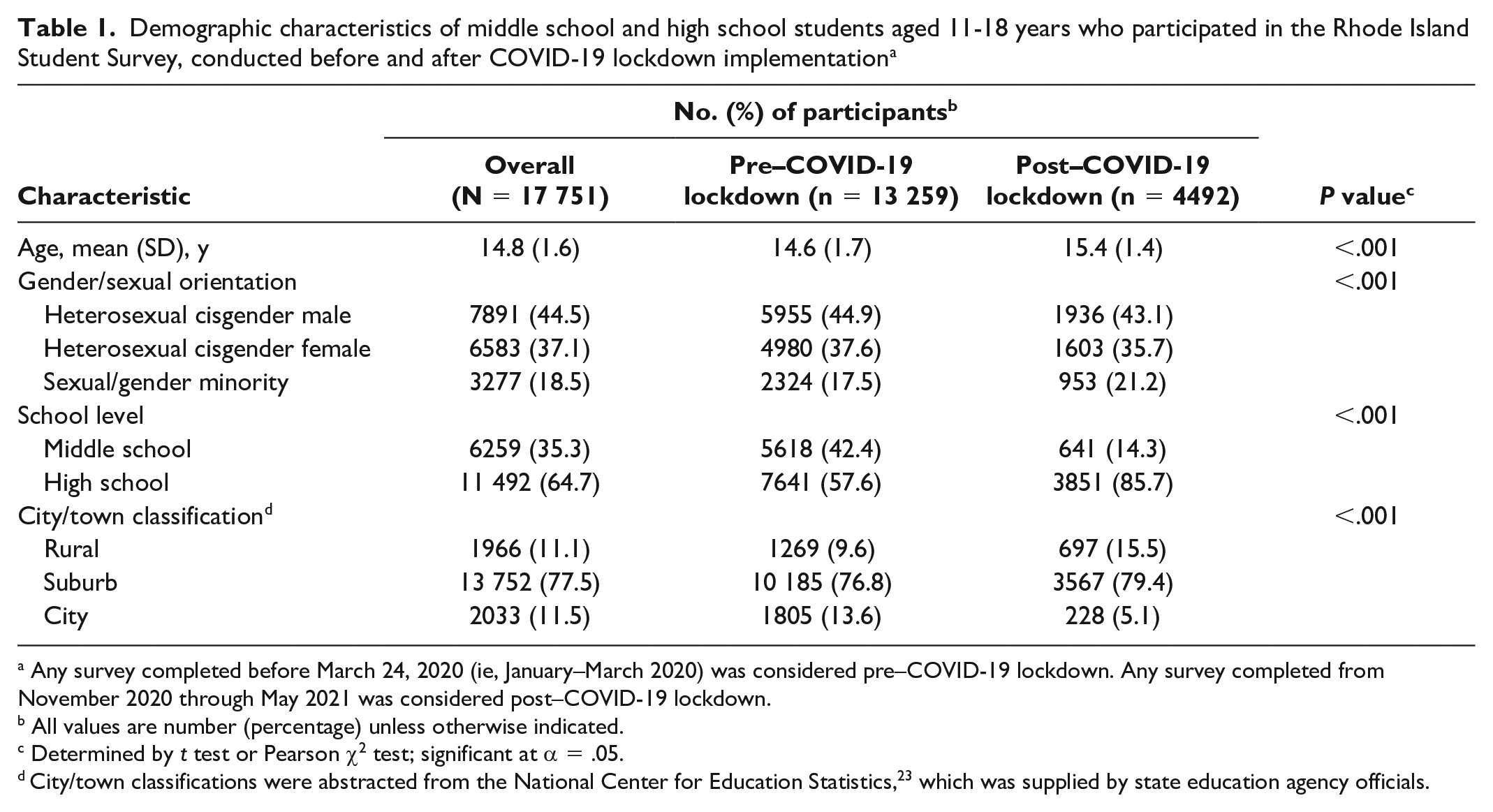
Any survey completed before March 24, 2020 (ie, January–March 2020) was considered pre–COVID-19 lockdown. Any survey completed from November 2020 through May 2021 was considered post–COVID-19 lockdown.
All values are number (percentage) unless otherwise indicated.
Determined by t test or Pearson χ2 test; significant at α = .05.
City/town classifications were abstracted from the National Center for Education Statistics, 23 which was supplied by state education agency officials.
Alcohol (13.0%), marijuana (13.0%), and e-cigarettes (12.1%) were the most prevalent psychoactive substances used among participants (Table 2). The use of tobacco cigarettes (P = .02), marijuana (P = .001), synthetic marijuana (P = .04), prescription drugs (P < .001), heroin (P = .008), and inhalants (P < .001) was significantly lower post–COVID-19 lockdown than pre–COVID-19 lockdown. After adjustment for age, gender/sexual orientation, school level, and city/town classification, the odds of using any of the psychoactive substances decreased significantly post–COVID-19 lockdown (Table 3). The largest decreases occurred in the use of prescription drugs (OR = 0.39; 95% CI, 0.28-0.54), heroin (OR = 0.46; 95% CI, 0.31-0.68), and inhalants (OR= 0.37; 95% CI, 0.26-0.53).
Self-reported current use of alcohol and illicit substances among middle school and high school students aged 11-18 years who participated in the Rhode Island Student Survey, conducted before and after COVID-19 lockdown implementation a
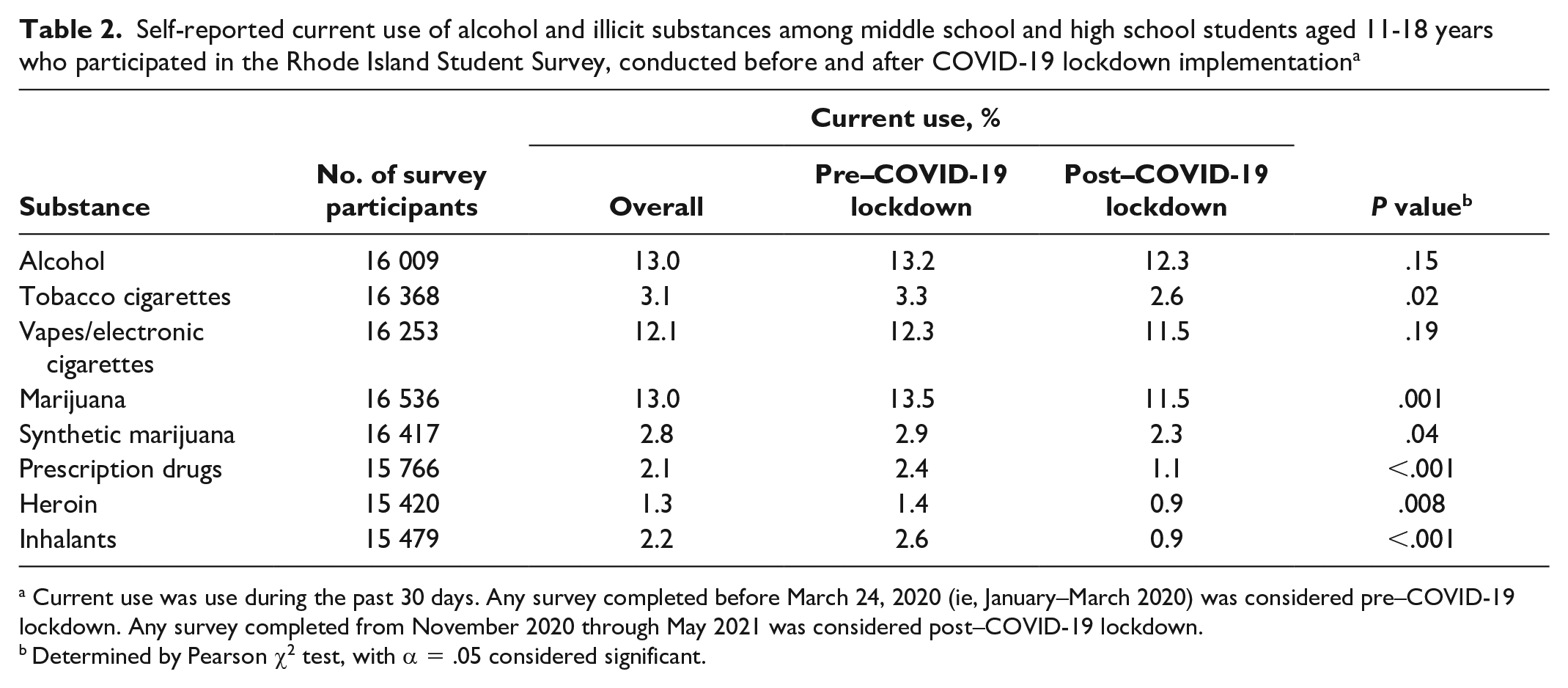
Current use was use during the past 30 days. Any survey completed before March 24, 2020 (ie, January–March 2020) was considered pre–COVID-19 lockdown. Any survey completed from November 2020 through May 2021 was considered post–COVID-19 lockdown.
Determined by Pearson χ2 test, with α = .05 considered significant.
Adjusted logistic regression model for the effect of COVID-19 lockdown implementation on use of psychoactive substances among middle school and high school students aged 11-18 years (N = 17 751), Rhode Island Student Survey a
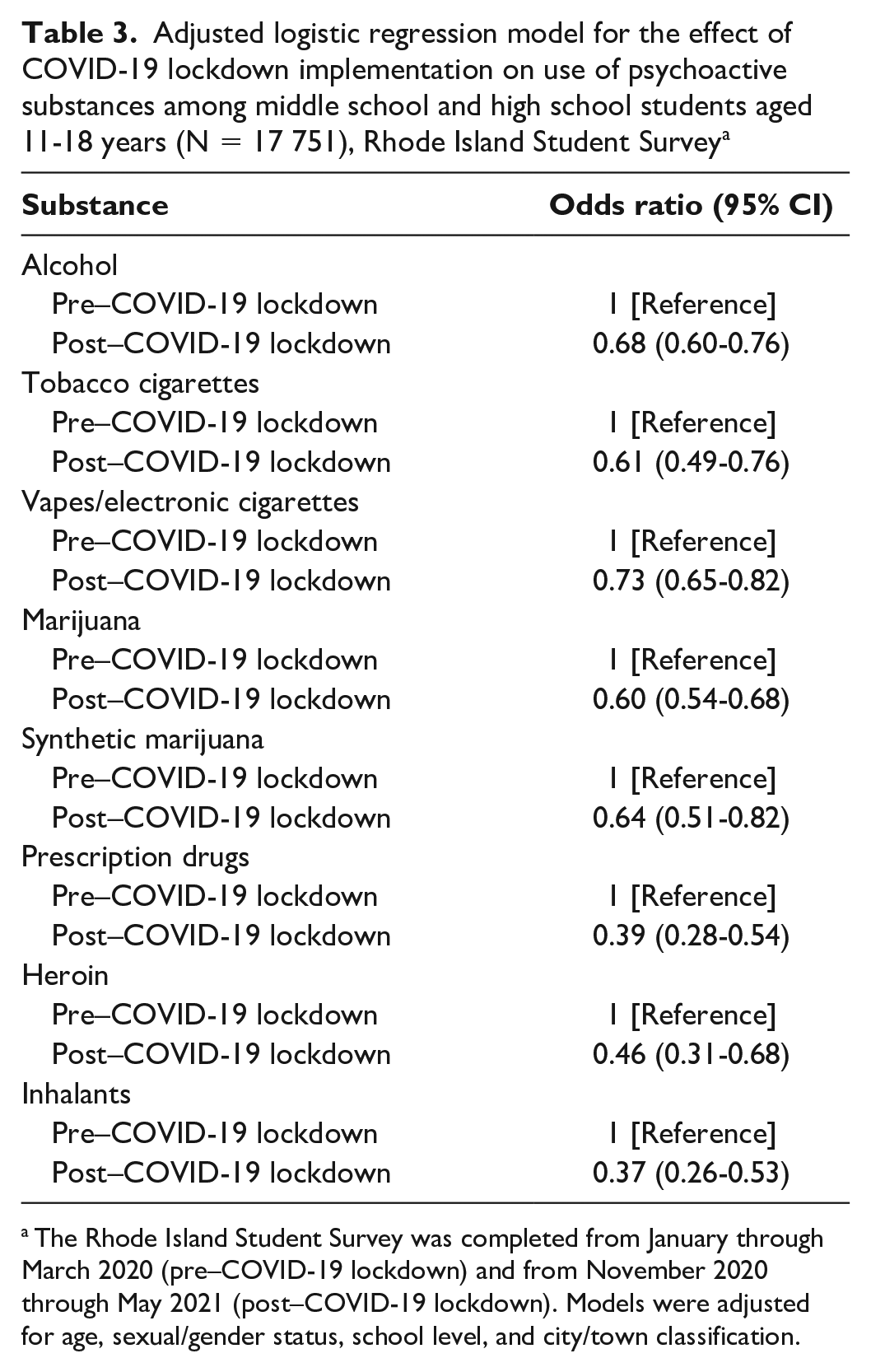
The Rhode Island Student Survey was completed from January through March 2020 (pre–COVID-19 lockdown) and from November 2020 through May 2021 (post–COVID-19 lockdown). Models were adjusted for age, sexual/gender status, school level, and city/town classification.
Overall, 51.6% of participants indicated that obtaining alcohol was somewhat or very difficult, and 53.7% of participants indicated that obtaining marijuana was somewhat or very difficult, although we found no significant difference based on COVID-19 lockdown status in the crude analysis (P > .35 for all) (Table 4). Although 68.9% of overall participants indicated that tobacco cigarettes and e-cigarettes were somewhat or very difficult to obtain, we found no significant differences between pre–COVID-19 lockdown and post–COVID-19 lockdown participants. Significantly more participants indicated that it was somewhat or very difficult to obtain prescription drugs (82.5%) and illicit drugs (91.4%) post–COVID-19 lockdown compared with pre–COVID-19 lockdown (P < .001).
Middle school and high school students aged 11-18 years who indicated it was somewhat or very difficult to obtain psychoactive substances, Rhode Island Student Survey, conducted before and after COVID-19 lockdown implementation a
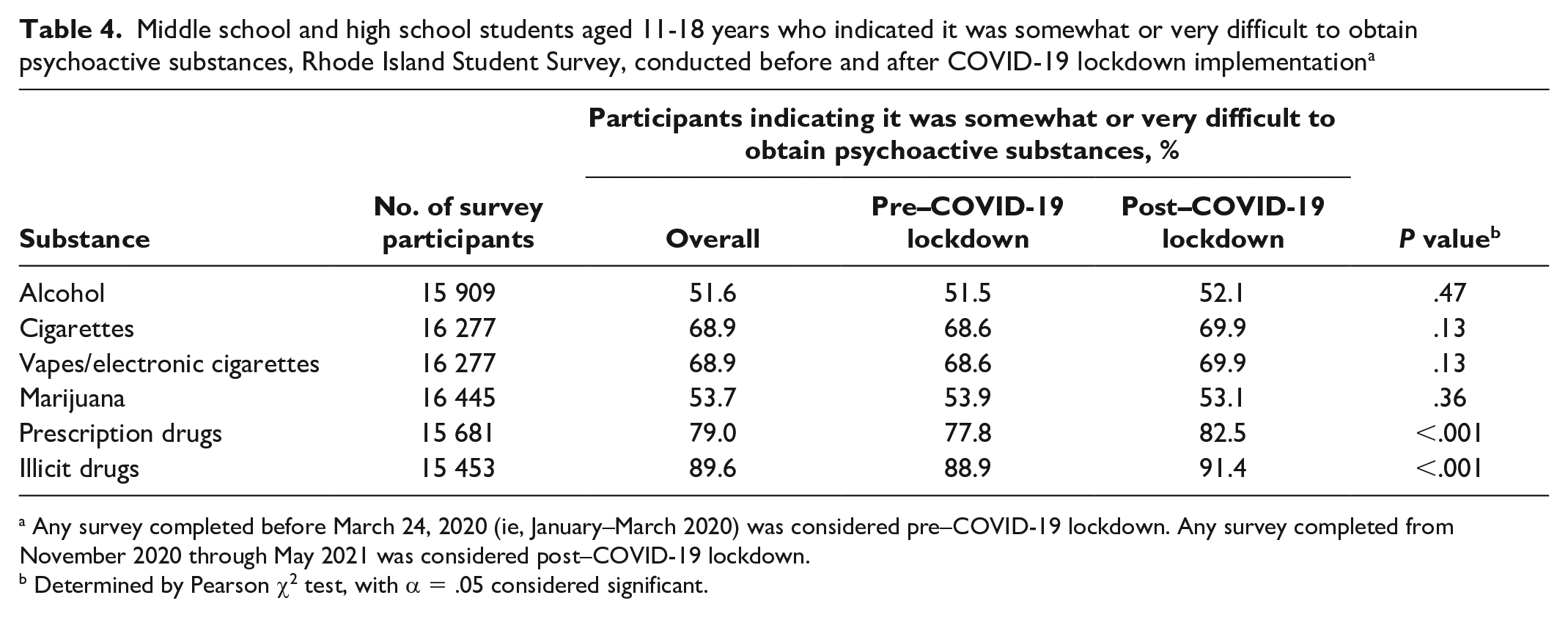
Any survey completed before March 24, 2020 (ie, January–March 2020) was considered pre–COVID-19 lockdown. Any survey completed from November 2020 through May 2021 was considered post–COVID-19 lockdown.
Determined by Pearson χ2 test, with α = .05 considered significant.
After adjustment for age, sexual/gender status, school level, and city/town classification, the odds of participants perceiving that it was somewhat or very difficult to obtain all psychoactive substances significantly increased post–COVID-19 lockdown compared with pre–COVID-19 lockdown (Table 5). The increased odds were greatest for prescription drugs (OR = 1.53; 95% CI, 1.39-1.69) and illicit drugs (OR = 1.65; 95% CI, 1.44-1.88). Post–COVID-19 lockdown, the odds of participants perceiving that it was somewhat or very difficult to obtain marijuana increased by nearly 50% compared with pre–COVID-19 lockdown (OR = 1.48; 95% CI, 1.37-1.60).
Adjusted logistic regression models for effect of COVID-19 lockdown implementation on perceived difficulty (somewhat or very difficult) of obtaining substances as reported by middle school and high school students aged 11-18 years (N = 17 751), Rhode Island Student Survey a
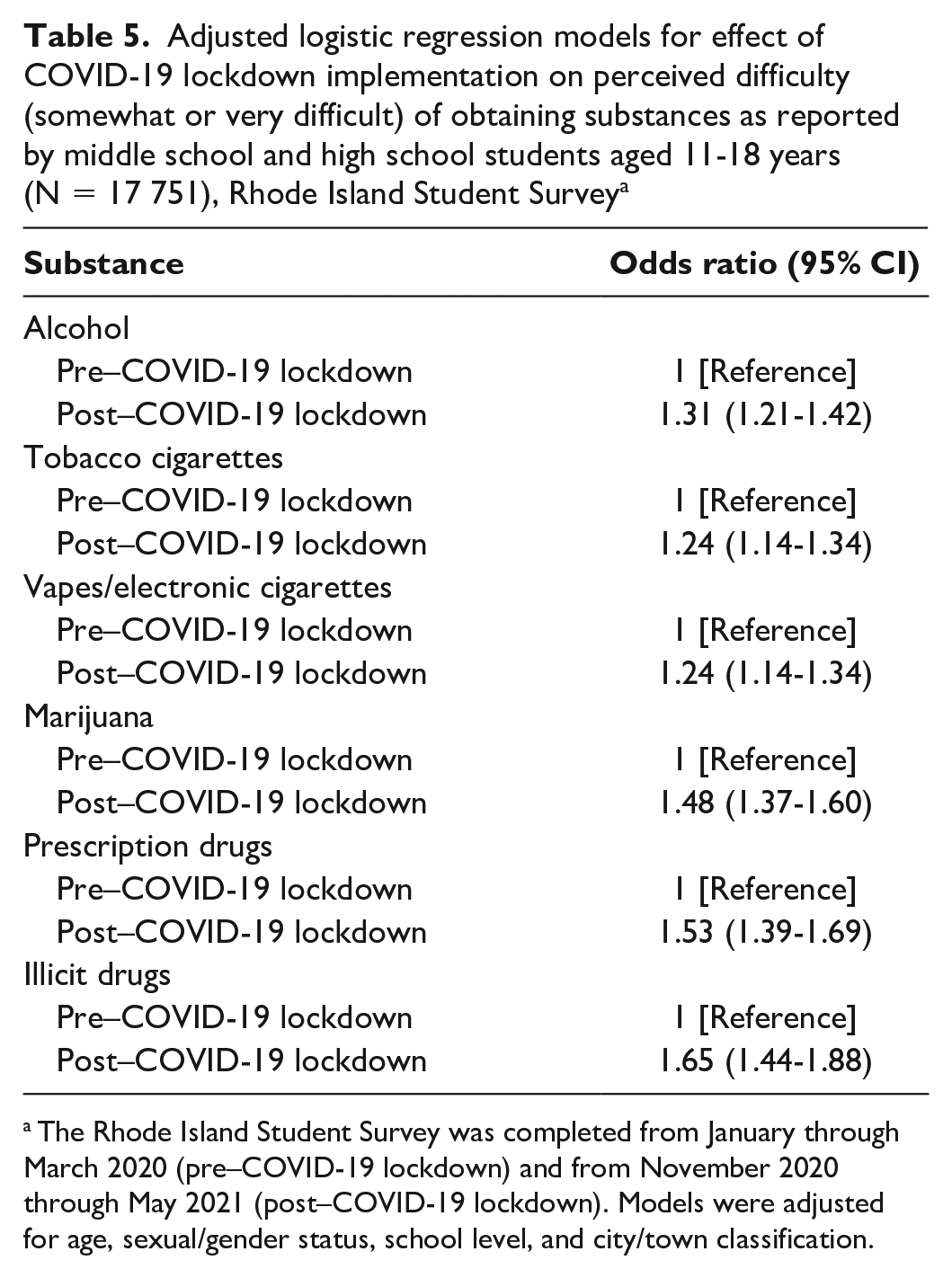
The Rhode Island Student Survey was completed from January through March 2020 (pre–COVID-19 lockdown) and from November 2020 through May 2021 (post–COVID-19 lockdown). Models were adjusted for age, sexual/gender status, school level, and city/town classification.
Discussion
Among the large RISS sample of high school and middle school students, we found that self-reported psychoactive substance use, whether licit or illicit substances, significantly decreased after the implementation of COVID-19–related lockdowns relative to immediately before lockdowns. We found a significantly increased perceived difficulty in obtaining psychoactive substances during the COVID-19 lockdown, suggesting an intimate link between substance use and availability in the sample. Although we found changes for all measured substances, the COVID-19 lockdown may have influenced self-reported use of illicit substances more than self-reported use of legal substances (eg, alcohol, tobacco cigarettes, marijuana).
The results add to and extend the literature on the effects of COVID-19 on substance use. Previous studies have reported both increases and decreases in substance use among adults and adolescents, with exact substance use trajectories determined by a complex mechanism involving the age of the person who uses and the substance involved.14-17 The study also extends previous research by including participants in middle school and as young as 11 years of age, a group often excluded from similar research. Our findings showed substantial decreases in substance use among middle school and high school students, presumably due to COVID-19, with the greatest decreases occurring for illicit drugs. Perhaps uniquely, participants reported decreased use of all measured substances, which conflicts with reports published elsewhere.14-17 This finding suggests that the experiences of the children and adolescents in our sample from Rhode Island may have been different from those living elsewhere where lockdown restrictions may have been different. Indeed, effects on mental health and quality of life have differed during COVID-19 across geographic regions, 25 which further highlights the need for additional research on US adolescents and children.
Two distinct mechanisms may explain the decreased use of substances in our sample of middle and high school students. First, substance use may have decreased because of a greater difficulty in obtaining any one substance. Students under the minimum legal purchase age for legal substances (ie, tobacco cigarettes, e-cigarettes, alcohol, marijuana [although recreational marijuana was not yet legal in Rhode Island during data collection]) have reported giving money to someone else to complete a proxy purchase or buying directly from a friend or peer. 26 Because of the social isolation measures enacted to limit the spread of COVID-19, opportunities to interact with people outside the household to complete such transactions would have been limited. For some legal substances, such as alcohol, delivery services and alcohol-to-go orders may create a more alcogenic environment; however, the use of those services may require an active credit card and age verification at the time of delivery, 27 making it difficult for those under the minimum legal purchase age to obtain alcohol. Results from the National Survey on Drug Use and Health suggested that adolescents aged 12 to 17 years primarily rely on prescriptions from family, friends, and physicians to misuse prescription drugs, 28 and a systematic review of prescription drug diversions similarly identified friends and family as the primary source of misused prescription drugs. 29 Unless parents or siblings are complicit in the transfer of these substances, we suggest that availability during COVID-19 decreased because of limited in-person social interactions with people outside the household. Similar results have been reported for other illicit drugs. 30
A second possible mechanism is decreased social influence of peers and increased parental influence. The relationship between friends’ substance use and personal substance use is strong, 31 perceived substance use by peers may predict substance use initiation and greater use, 32 and information exchanged between peers is an important predictor of illicit substance use. 33 Conversely, strong parental support is considered a protective factor against substance use. Parental social support, particularly by mothers, may be key, and parental monitoring may moderate the relationship between peer influence and substance use. 34 Restrictions during COVID-19, whether with remote classrooms, decreased extracurricular activities, or general adherence to social isolation requirements, limited peer interactions, provided opportunities for enhanced parental interactions, and increased parental oversight of behavior patterns. Consequently, parental influence may have been substantially greater than peer influence regarding substance use after COVID-19 restrictions were implemented.
Our study may have broad implications that can inform decision making after COVID-19. If the substantial declines in substance use were influenced by a combination of increased parental oversight and decreased availability, the study findings provide strong support for increased parental involvement and monitoring of adolescent activities through the high school years. Research has suggested that the quality of parental relationships and parental monitoring are important protective factors in preventing the use of substances among adolescents.35,36 Given that the mid-adolescence period is typically when teenagers begin to spend more time with peers and less time with parents, 35 the initiation and sustainment of prolonged school lockdowns due to COVID-19 may have created a unique set of circumstances that delayed this process and provided parents with more opportunities to monitor their children’s or teenagers’ behavior and to engage in meaningful social interactions. As such, prevention interventionists may choose to take a fresh look at programs that promote positive parental interactions and enhance parental monitoring to aid in preventing substance use in children and adolescents.
Increased efforts to regulate the legal and illegal markets for psychoactive substances to decrease availability may also be needed. Strengthened regulatory controls on legal substances, such as alcohol, tobacco cigarettes, and marijuana, may include increases in taxes, limits on the days or hours of sale, and zoning enforcement to limit outlet density. 18 Disruption of the illegal drug supply may include strengthened prescription drug regulations, drug precursor regulations, and law enforcement interdiction activities. 19 Finally, if availability, particularly for illicit substances, is a key factor in adolescent substance use, evidence-based prevention programs that focus on limiting exposure to environments where psychoactive substances are more easily accessed and that start in early childhood and continue throughout adolescence are needed.
Limitations
This study had 6 limitations. First, although a quasi-experimental design was used, the data are cross-sectional, and within-person behavior changes that occurred before versus after implementation of COVID-19 lockdown could not be assessed. For this reason, causality cannot be assumed. Second, the sample was recruited from a single US state, and the results may not be generalizable to middle or high school students elsewhere. Third, although response rates were high, it is possible that students with high levels of substance use were more likely than students who abstain from substance use to be absent on the days that the survey was administered, which would decrease the representativeness of the sample. Fourth, students in the Providence Public School District, which is the largest school district in the state, were not included because that district administers a different student survey and data could not be reliably pooled across studies. Fifth, data were self-reported and subject to recall and social desirability bias. Finally, race, ethnicity, and socioeconomic status were not directly measured by the RISS, and the direct influence of these variables was not assessed.
Conclusions
The implementation of COVID-19 lockdowns may be associated with decreased perceived psychoactive substance availability and use in our sample of middle and high school students. Decreases in substance use may have occurred because of decreases in perceived availability and increases in parental support and oversight. Prevention interventions that focus on parental oversight should be revisited, and strengthened policies to disrupt the licit and illicit drug markets accessible to students should be considered.
Footnotes
Declaration of Conflicting Interests
The authors declared no potential conflicts of interest with respect to the research, authorship, and/or publication of this article.
Funding
The authors disclosed receipt of the following financial support for the research, authorship, and/or publication of this article: This work was supported by the Substance Abuse and Mental Health Services Administration (grants 1B08TI083070 and 1H79SP080979).

Data Availability
Data are available via reasonable request to the Rhode Island Department of Behavioral Healthcare, Developmental Disabilities & Hospitals.