




Abstract
Public policy may be strongly influenced by the language used in the media to discuss issues. This language can create a policy image or policy representation that frames the issue as being either deserving or undeserving of policy aid. This policy representation, in turn, may influence the direction of public policies proposed to address the issue. This article presents the development of a codebook for systematically examining the language used in the media to create these policy representations. Framing theory and a qualitative content analysis approach were used to develop the codebook, using a 4-part taxonomy: problem definition, causal interpretation, moral evaluation, and policy recommendation. The issue of juveniles involved in commercial sexual activity in Hawai‘i was used as a case study to guide creation of the codebook. Pilot study data were drawn from Hawai‘i’s local newspapers and from testimony submitted to the Hawai‘i State Legislature during 1985-2016. A set of coding schemes built on the 4-part taxonomy was based on the dichotomous attitude of juvenile criminality and juvenile exploitation. Pilot data indicated that juveniles are increasingly being represented as victims of sexual exploitation (newspaper, 45%; testimony, 90%), and the presence of thematic elements in the media strongly correlated with this overall shift. A key lesson learned was the ability of the codebook to capture episodic and thematic elements, which may have strong implications for those concerned with populations that are exploited, politically marginalized, and in need of policy aid. Another key lesson learned was the strength of the codebook to collect quantitative and qualitative data that may lie outside carefully constructed dichotomous frames (eg, a policy representation of juveniles as survivors) and the media’s prevailing narratives (eg, the experience of sexual minority juveniles).
Keywords
Public policy may be strongly influenced by the language used in the media to discuss particular issues.1-7 This language creates a policy image or policy representation that presents an issue or a population as being either deserving of policy aid or undeserving of policy aid. This policy representation, in turn, may influence the direction of proposed public policies.1,2 Notable past examples of populations whose policy representation has shifted include populations experiencing poverty and certain populations of racial and ethnic minority juveniles (ie, people aged <18 years). A current example of a population whose policy representation is shifting is juveniles involved in commercial sexual activity. By systematically examining these policy representations, it is possible to identify key conceptual changes that are needed to shift a policy image from one undeserving of policy aid to one deserving of policy aid.
Examples of shifting policy representations and subsequent public policy changes can be seen in the framing of populations experiencing poverty. The “deserving” populations (widows, children, those with disabilities) are framed as social dependents, while “undeserving” populations (drug addicts, criminals, those who cheat the system) are framed as social deviants.8-12 For example, recipients of Aid to Families with Dependent Children were often framed as “welfare queens,” characterized by stereotypes such as laziness and a tendency to have numerous children.9,13 Whereas previously these populations had been framed as victims of the economic system, by the 1980s they were framed as “cheaters and swindlers” of the welfare system. 13 Another example is the framing of racial and ethnic minority juveniles as “superpredators,” defined as “godless” and “deviant creatures” who suffer from a condition of “abject moral poverty.” 14 Whereas juvenile offenders had previously been protected from public exposure by law and practice, by the 1990s nearly every state in the country had passed legislation that made it easier than before legislation to prosecute juveniles as adults in criminal court. 14 Scholars have noted that the image of welfare recipients as welfare queens seemed to play a role in the passage of stringent welfare reforms, including the Temporary Assistance for Needy Families program.9,13 Likewise, the image of juvenile superpredators may have helped to establish a sustained legislative effort that resulted in racial bias in the administration of juvenile justice and a more punitive approach to the juvenile justice system, including rapidly increasing racial and ethnic disparities. 7
Juveniles Involved in Commercial Sexual Activity
The issue of juveniles involved in commercial sexual activity offers a contemporary example of the influence of communication frames on the direction of public policy. Analysis of juvenile narratives indicates that physical, emotional, and sexual abuse are defining features in the lives of many juveniles involved with commercial sexual activity.15-18 These juveniles have often experienced complex trauma prior to their commercial exploitation, including domestic violence, neglect, abuse, homelessness, and sexual violence.19,20 However, these juveniles have historically been prosecuted as criminals, often represented as child prostitutes or juvenile sex workers and subjected to arrest, detention, incarceration, and registration as sex offenders under state criminal and juvenile delinquency laws. 21
For juveniles of racial and ethnic minority groups and juveniles of gender and sexual minority groups, this experience may have additional layers of trauma. For juveniles of racial and ethnic minority groups, the presence of racial and ethnic disparities in criminal justice processing is well established in the literature. 22 They are more likely to be referred to juvenile court, they are overrepresented in the juvenile justice system, and they are more likely to receive harsher punishment than their White counterparts. 22 Juveniles who identify as gay, lesbian, bisexual, transgender, or queer are at an increased risk of sexual exploitation, yet their experiences are largely absent from the dominant public narrative.23-25
Despite the complex trauma that characterizes commercial sexual exploitation, this particular form of child sexual abuse has begun to be addressed only in the past 2 decades. 19 Increasingly, these juveniles are being identified as victims of insupportable sexual exploitation, as evidenced by passage of the Victims of Trafficking and Violence Protection Act of 2000 (TVPA) and 5 subsequent pieces of major federal legislation.26-30 Through the TVPA, Congress established for the first time that all juveniles involved in commercial sexual activity were to be identified as victims of sex trafficking. Before and after the passage of antitrafficking legislation, political decision makers framed sex trafficking as a criminal justice problem that should be addressed through criminal laws that punish traffickers, and this framing can be seen in the public policies now in place.25,31 This foundational piece of legislation and this new framing of juveniles signaled an important shift in the federal perspective.
As of 2021, however, prostitution laws in many states could still be applied to juveniles.32-36 At the federal level, all juveniles involved in commercial sexual activity are identified as victims of exploitation in need of protective policies focused on recovery and restoration. At the state level, though, juveniles can still be subjected to criminal policies focused on punishment and correction.19,32,33,37 The consequence of this inconsistency in policies is the failure of states to identify juveniles as sex trafficking victims and an inability to provide them with specialized services needed to disrupt their exploitation, address their trauma, and provide them with physical and psychological recovery and social reintegration.33,34,38
Purpose
A potential factor contributing to a state-level punitive response is the way that the issue is discussed and framed in state-level public communications. Public perceptions of juveniles involved in the commercial sex industry are influenced by media portrayals and public narratives that use communication frames that highlight either the individual characteristics of those involved or the social conditions surrounding the issue.17,20,39 These 2 framing approaches have many differences, but the key difference is the attribution of responsibility. 40 Media representations that are episodic or event oriented situate individuals, rather than society, at the center of the discussion about how to solve the problem and, thus, shift attention from larger societal issues to smaller individual issues. This episodic framing tends to skew public understanding of forced and coerced prostitution and limits the degree to which exploited juveniles are recognized as needing rehabilitative aid. Thematic frames, however, situate public issues within a larger social context and place societal conditions at the center of the discussion about how to solve the problem, focusing the responsibility for solutions within the collective public.
The presence or absence of episodic and thematic frames has important implications for policy solutions that are proposed to address the issue. As juveniles continue to be portrayed as prostitutes complicit with their abuse rather than as victims of abuse and as research findings suggest that society often holds these juveniles responsible for their own exploitation, research is needed that can examine these policy representations and the implications that they may have for public policy proposals.22,35,36,41,42
This article presents the development of a codebook for systematically examining the language used in the media to create policy representations. The issue of juveniles involved in commercial sexual activity in Hawai‘i is used as a case example. In Hawai‘i, prostitution laws can still be applied to juveniles, and Hawai‘i is ranked among the states with the least amount of legislative protection for juvenile sex trafficking victims. Notably, Hawai‘i was the last state to pass a law that criminalized sex trafficking41,43 and the last state to pass a law that made juvenile sex trafficking a serious offense without regard to the use of force, fraud, or coercion. 44
However, the framing of these juveniles in Hawai‘i is slowly shifting from criminals undeserving of policy aid to victims deserving of policy aid. 45 This representation has shifted so substantially that in 2016 Hawai‘i finally passed into law a statute that classified sex trafficking as a violent crime and made sex trafficking of minors a class A felony. 46 Numerous variables, known and unknown, impact policy and lead to change, but the research is clear that media framing and public narratives can have a strong influence.6,9,13,14,47-60
Methods
For the initial development of the codebook, a pilot study was conducted that used Hawai‘i’s public communications as a case study. The codebook was designed using framing theory and a qualitative content analysis approach. The data were organized into 4 categories (problem definition, causal identification, moral evaluation, and policy recommendation), and subcodes were created for the presence or absence of episodic and thematic elements using Microsoft Word and Excel. The University of Hawai‘i Institutional Review Board determined that the study was not human subjects research and therefore did not require review or approval by the Human Studies Program or a University of Hawai‘i Institutional Review Board.
To conduct the pilot study, 4 steps were taken. First, the issue chosen was juveniles involved in commercial sexual activity in Hawai‘i. Second, the attitude chosen was one of either juvenile criminality or juvenile exploitation, the 2 most dominant frames represented in the literature. Third, a set of coding schemes was established according to these predefined attitudes and structured from Robert Entman’s 4-part taxonomy. 52 Fourth, the sources selected for content analysis were drawn from Hawai‘i’s local newspapers and from testimony submitted to the Hawai‘i State Legislature. Newspapers were selected for analysis because they can be used as a primary source for tracking how an issue is framed by and for community members and policy decision makers, 13 and they are an influential source of political information for the general public. Written legislative testimony was selected for analysis because it presents an official public record of the views and opinions of community members and other interested community parties.
To collect the newspaper article dataset, a search was made of publicly available digital newspaper indices for the 3 major local print newspapers during 1985-2016: the Honolulu Advertiser, the Honolulu Star-Bulletin, and the Honolulu Star-Advertiser. All articles concerned with juveniles involved in commercial sexual activity in the United States were included in the dataset. To collect the legislative testimony dataset, a search was made of the publicly available indexed archives of the Hawai‘i State Legislature during 1985-2016. All testimony concerned with juveniles involved in commercial sexual activity was included in the dataset. Content analysis using the 4-part taxonomy contained in the codebook was conducted, and interrater reliability was used to ensure quantitative and qualitative reliability. Three independent coders were trained in the use of the codebook, and intercoder reliability was assessed on a randomly selected 10% sample of the 2 datasets with results ranging from 90% to 100% agreement on all main codes.
Outcomes
The codebook was constructed using the dichotomous comparison “juveniles are criminals OR juveniles are victims.” For example, Frame 1: Problem Definition was constructed as “juveniles involved in commercial sexual activity are criminals offending society” OR “juveniles involved in commercial sexual activity are victims being exploited” (Figure 1). Each of the 4 primary frames included subcodes that identified the presence or absence of episodic and thematic elements. For example, for Frame 1: Problem Definition, the episodic frame was “juvenile experiences” and an episodic element was defined as “individual juvenile experiences are discussed”; a thematic frame was “societal issues” and a thematic element was defined as “societal issues are discussed” (Figure 2). The codebook also provided for the recording of qualitative data. For each frame that was present, qualitative data were gathered to capture themes and phrases. For example, if Frame 1: Problem Definition was present (juveniles are criminals), the language used to identify that particular frame was recorded (eg, “children . . . may engage in prostitution to get [goods] beyond the means of their allowance”).
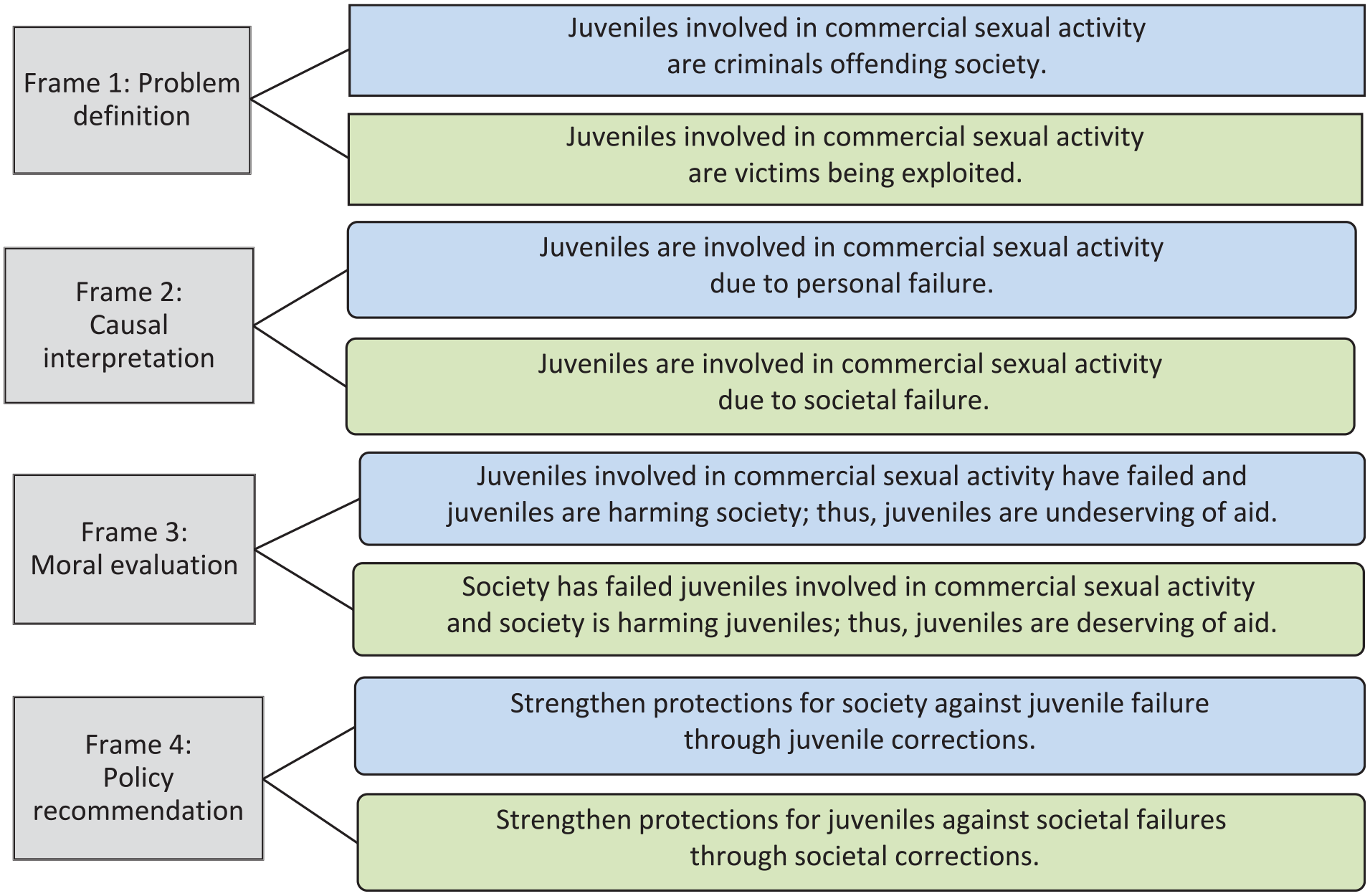
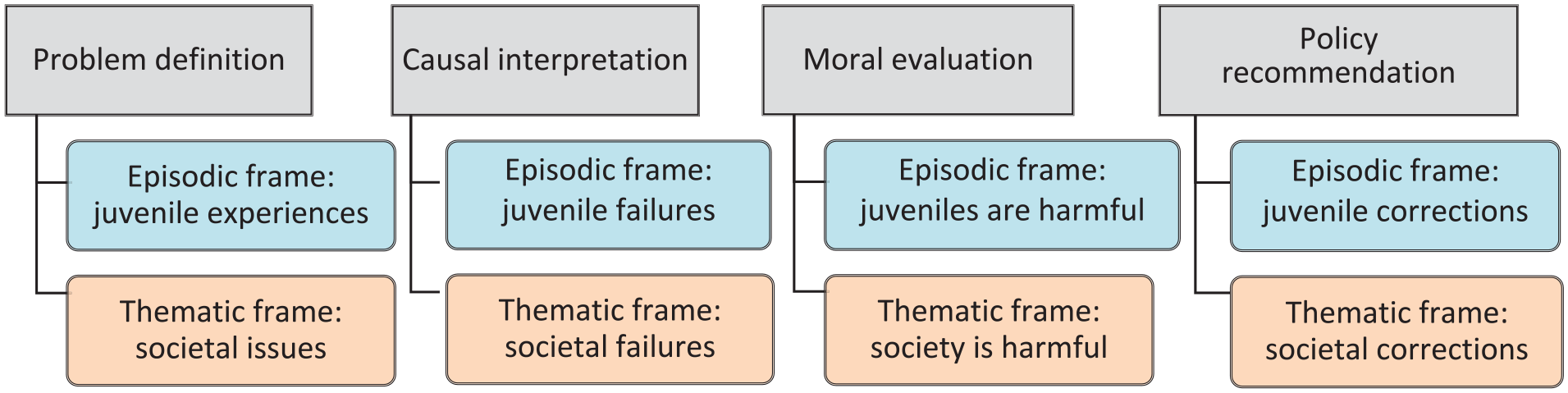
The 4 primary frames in the 4-part taxonomy 52 with subcodes that identify the presence or absence of episodic and thematic elements used in a codebook to examine policy representations in a study of Hawai‘i’s perspective on juveniles involved in commercial sexual activity, 2017-2018. Data source: Marshall. 45
The study posed 2 research questions: (1) How is the issue of juveniles involved with commercial sexual activity in the United States framed in Hawai‘i’s public communications? and (2) Have these frames changed since passage of the TVPA in 2000? If so, how? To answer the first question, analysis was guided by Entman’s 4-part taxonomy. To answer the second question, data were sought for the 15 years prior to passage of the TVPA and the 15 years thereafter (1985-2016). In alignment with the literature, pilot data indicated that the presence or absence of episodic and thematic elements in Hawai‘i’s public communications strongly correlated with the overall shift in the policy representation of juveniles. 45 The trends over time in the 2 pilot datasets (newspaper articles, n = 102; legislative testimony, n = 399) revealed that thematic frames discussing social trends were predominantly used. This key conceptual change is reflected in juveniles being framed as deserving of policy aid focused on recovery and restoration rather than as a population deserving of policies focused on punishment and correction.
Concerning the first question, in the newspaper article dataset (n = 102), the overall policy framing of juveniles was variable. Most often, a representation of juveniles as victims of sexual exploitation was used (45%, n = 46). However, in 22% (n = 22) of the articles, juveniles were clearly portrayed as criminals, with language such as “they advertised themselves as prostitutes,” and in 33% (n = 34) of the articles, juveniles were portrayed as both criminals and victims through the use of language such as “the runaway girl working in a massage parlor . . . ‘this population, they’re victims themselves.’” 35 In the legislative testimony dataset (n = 399), the overall policy framing of juveniles was primarily a representation of juveniles as victims of sexual exploitation (90%, n = 359) with the use of language such as “they are children and they are victims.” The predominant use of thematic frames held political institutions responsible for addressing the issue and invited government action to confront the problem. 45
Concerning the second research question, in the newspaper article dataset during 2000-2008 (n = 34), the representation of juveniles as criminals or the representation of juveniles as both criminals and victims defined the predominant frames (85%, n = 29). During 2009-2016 (n = 66), a shift occurred, and the representation of juveniles as victims or the representation of juveniles as both victims and criminals became the predominant frames (88%, n = 58) (Figure 3). In the legislative testimony dataset, it was not possible to determine if the frames used had changed since passage of the TVPA in 2000 because of a lack of accessible legislative testimony. However, it was possible to examine the change over time in the language used in available archived legislative bills. From 2007 to 2011 (n = 61), bills that addressed juveniles involved in commercial sexual activity primarily identified the issue as one of prostitution (72%, n = 44), and from 2012 to 2016 (n = 106), bills increasingly identified the issue as one of trafficking (58%, n = 62) (Figure 4).
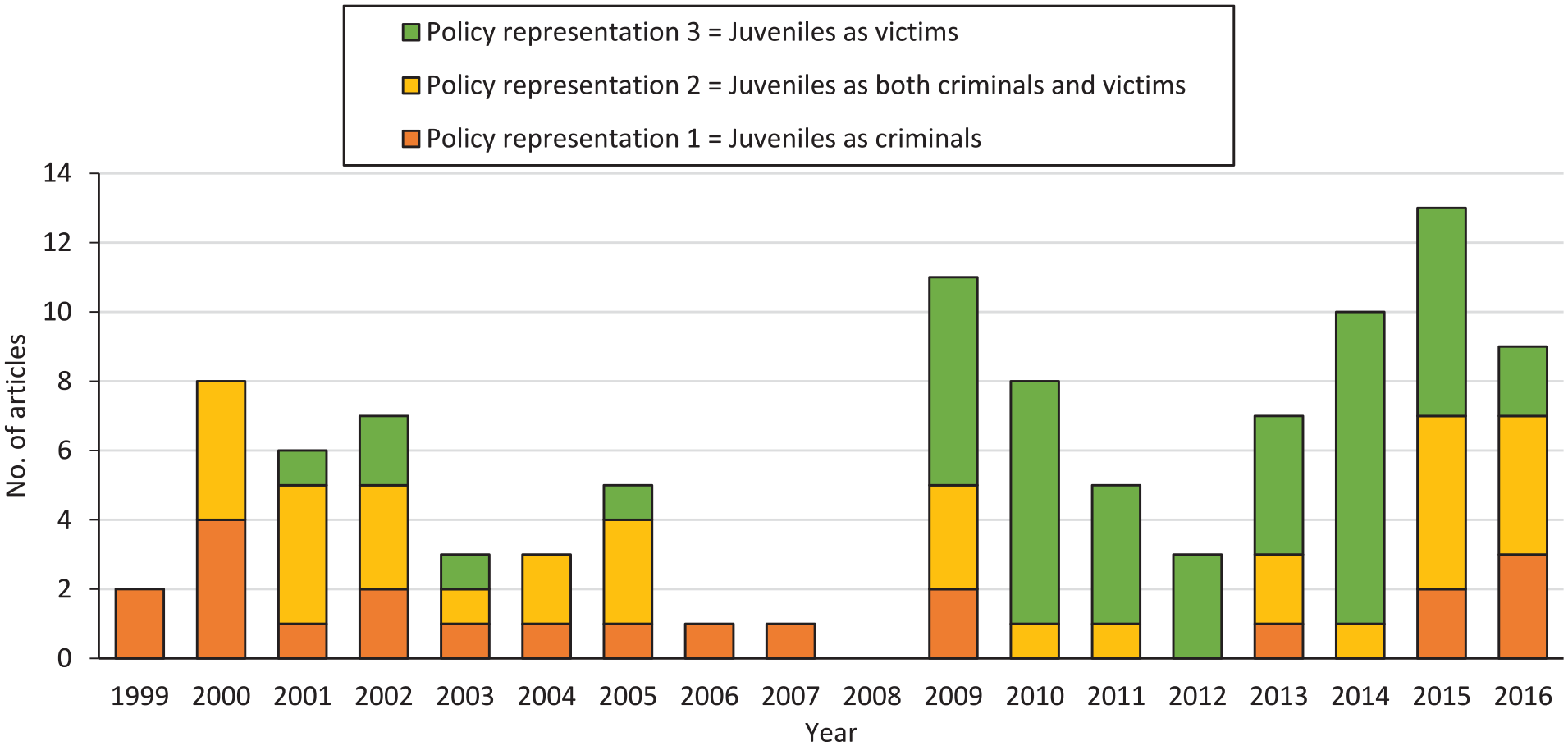
Changes in the policy representation of juveniles involved in commercial sexual activity in Hawai‘i’s newspapers, 1999-2016. Data source: Marshall. 45
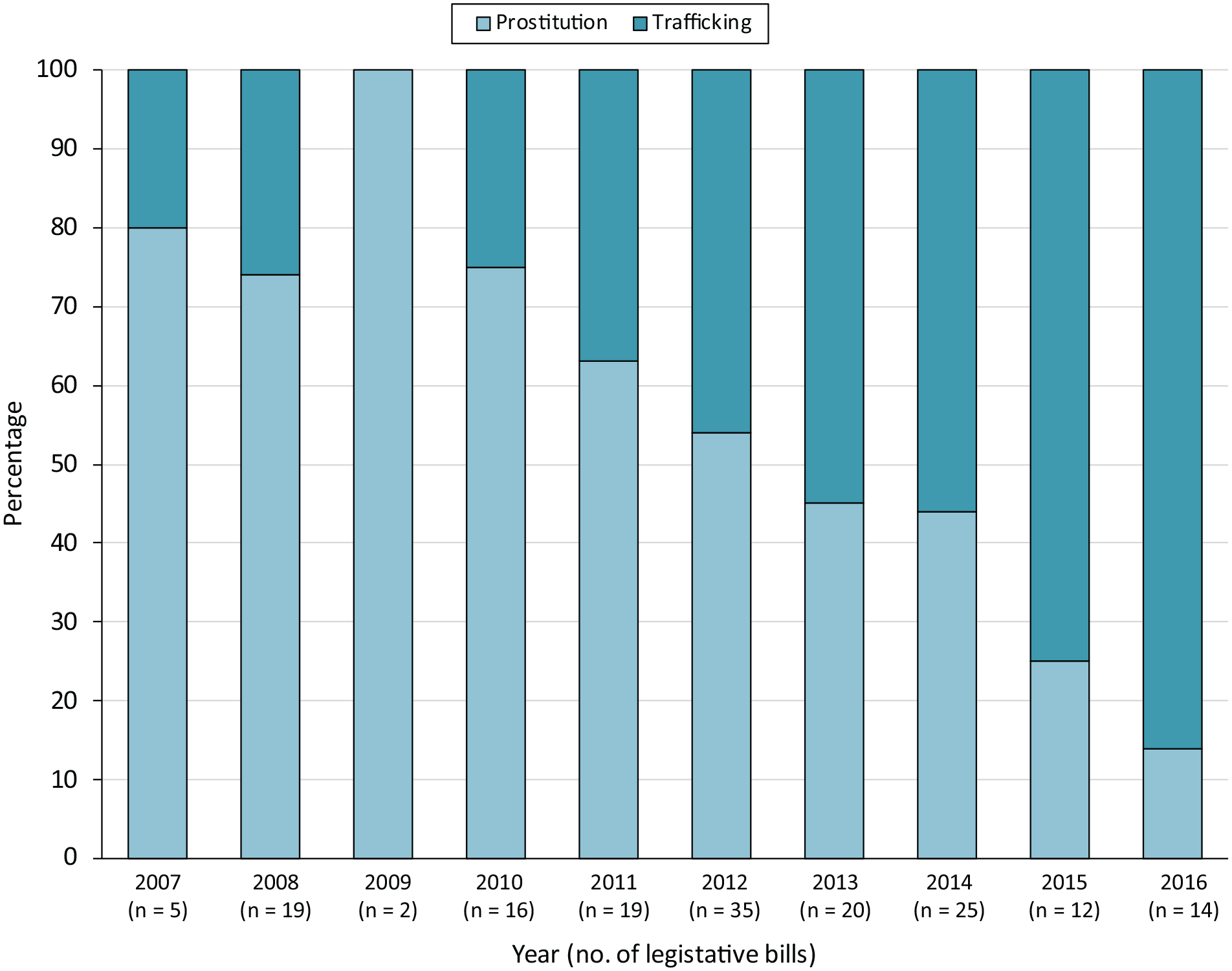
Changes in the legislative language used to frame the issue of juveniles involved in commercial sexual activity in Hawai‘i state legislative bills, 2007-2016. Data source: Marshall. 45
Lessons Learned
The ability of the codebook to capture the use of episodic and thematic frames in the discussion of social issues may have strong implications for those concerned with populations that are vulnerable to exploitation, politically marginalized, and in need of policy aid. Hawai‘i’s shifting public perspective on juveniles through the use of thematic framing may serve as a policy representation template for other populations that do not yet have a strong policy representation (eg, transgender populations, populations experiencing homelessness, and undocumented immigrant populations).
Another key element of the codebook is its ability to collect quantitative and qualitative data. While this codebook systematically presented a dichotomous quantitative comparison between “juveniles as criminals” and “juveniles as victims,” preliminary qualitative data indicated a more nuanced and less simplified policy representation emerging: “juveniles as survivors.” Because survivor language was not included in the original coding scheme, survivor language was not coded. However, survivor language emerged frequently enough that preliminary qualitative data were collected. Examples of survivorship language included the identification of juveniles as survivors of sex trafficking, violent crime, and prostitution. Their survival skills may only marginally resemble “survival” to others, but research indicates that the complexity of their lives challenge simple one-dimensional portrayals of these juveniles as “victims” or “offenders” and some of the more simplistic constructions of “sex trafficked girls.”17,20 While the nuances of being a “victim” or a “survivor” may not yet resonate with official definitions of agency or societal understanding of the actual lived experience of these juveniles, preliminary qualitative data indicate that this identification is emerging within public communication frames.
The qualitative component of the codebook holds particular value in its ability to capture data that may lie outside its carefully constructed frames. One of its limitations is a reliance on a dichotomous construction of opposing frames based on the dominant narrative found in public communications. As the issue of juveniles involved in commercial sexual activity has revealed, dominant frames often fail to capture realities that lie outside those prevailing narratives, such as the representation and experience of juveniles as survivors or the experience of juveniles of racial and ethnic minority groups and juveniles of gender and sexual minority groups. By incorporating a qualitative component, the codebook is able to mitigate some of its limitations and elevate the diversity of the data gathered. Despite this limitation, the codebook can still serve as a vital first step in pursuing the knowledge needed to understand complex and multilayered issues. It may also have the potential to perform as a tool to evaluate public perspectives and attitudes that influence policy responses; function as a method for examining deserving versus undeserving policy representations; and serve as a portable model for evaluating the policy representation of a range of groups in need of policy aid.
Footnotes
Acknowledgements
The author thanks Jing Guo, PhD, Meda Chesney-Lind, PhD, Peter Mataira, PhD, Susan Nakaoka, PhD, and Marvin Puakea Nogelmeier, PhD, for their assistance and guidance.
Declaration of Conflicting Interests
The author declared no potential conflicts of interest with respect to the research, authorship, and/or publication of this article.
Funding
The author received no financial support for the research, authorship, and/or publication of this article.
