




Abstract
Project ECHO (Extension for Community Healthcare Outcomes) at the University of New Mexico is a telementoring program that uses videoconferencing technology to connect health care providers in underserved communities with subject matter experts. In March 2020, Project ECHO created 10 coronavirus disease 2019 (COVID-19) telementoring programs to meet the public health needs of clinicians and teachers living in underserved rural and urban regions of New Mexico. The newly created COVID-19 programs include 7 weekly sessions (Community Health Worker [in English and Spanish], Critical Care, Education, First-Responder Resiliency, Infectious Disease Office Hours, and Multi-specialty) and 3 one-day special sessions. We calculated the total number of attendees, along with the range and standard deviation, per session by program. Certain programs (Critical Care, Infectious Disease Office Hours, Multi-specialty) recorded the profession of attendees when available. The Project ECHO research team collected COVID-19 infection data by county from March 11 through May 31, 2020. During that same period, 9765 health care and general education professionals participated in the COVID-19 programs, and participants from 31 of 35 (89%) counties in New Mexico attended the sessions. Our initial evaluation of these programs demonstrates that an interprofessional clinician group and teachers used the Project ECHO network to build a community of practice and social network while meeting their educational and professional needs. Because of Project ECHO’s large reach, the results of the New Mexico COVID-19 response suggest that the rapid use of ECHO telementoring could be used for other urgent national public health problems.
Project ECHO (Extension for Community Healthcare Outcomes) began at the University of New Mexico (UNM) in 2003 as a virtual telementoring program to meet the needs of clinicians and their patients living in rural and underserved locations in New Mexico. The program’s goal was to “move knowledge, not people” by providing de-identified, case-based consultation with an evidence-based, best-practices curriculum, while evaluating outcomes for quality assurance for postlicensure clinicians.1-5 After building a global reputation of trust, with 412 physical and virtual hubs in 41 countries and learners from more than 160 countries, Project ECHO was positioned in 2020 to meet the challenges of rapidly changing best practices of the coronavirus disease 2019 (COVID-19) pandemic in the face of social isolation.6-10
The COVID-19 pandemic presented a unique challenge for patients and their physicians. Many patients were afraid to seek medical care, and clinicians needed timely and accurate clinical advice. An acute need for just-in-time clinician education about COVID-19 was identified because of the rapid speed at which new symptom management, treatments, use of personal protective equipment, and testing options arose.11,12
Before the COVID-19 pandemic, clinicians acquired new medical information by talking informally to colleagues in their outpatient clinics, on hospital rounds through information consultations, or by traveling to medical conventions. These in-person venues, so cherished in the medical profession, have been virtually eliminated during the COVID-19 pandemic.13,14
By implementing health care and educational programming to address the COVID-19 pandemic for all frontline workers, Project ECHO has been a key partner in New Mexico’s statewide response to this health care emergency. New Mexico’s COVID-19 response plan has included (1) an early stay-at-home order,15,16 (2) mandatory use of face coverings in public places,16-18 (3) high rates of COVID-19 testing per capita,16,19 (4) statewide contact tracing,16,20 (5) a coordinated Emergency Operations Center, 16 and (6) statewide continuing education, including education provided by Project ECHO. 19
Project ECHO COVID-19 Programs
The Project ECHO program operations team created 10 novel COVID-19 programs (7 weekly sessions and 3 special sessions) that can be used as a model for other ECHO programs globally. 21 Each COVID-19 program includes subject matter experts at the hub and a digital librarian, who immediately posts evidence-guided journal articles and other just-in-time supporting information in the Zoom chat box that is discussed during the session. The hub refers to the diverse team of subject matter experts who both facilitate each ECHO session and deliver the didactic content.
Beginning on March 11, 2020, Project ECHO partnered with UNM’s Office for Community Health and used videoconferencing to engage community health workers in New Mexico in the first of 10 COVID-19–related programs. 22 On March 19, in collaboration with the New Mexico Department of Human Services, New Mexico Department of Health, and UNM faculty, Project ECHO held a special “All Hands-on Deck” COVID-19 session for nearly 1300 clinicians in New Mexico. The Project ECHO team then rapidly created 7 weekly COVID-19 programs to respond to the needs of the state’s clinicians and educators. Each weekly program, except for Infectious Disease Office Hours, delivers content in the traditional ECHO model of case-based, bidirectional learning. We detail each COVID-19 program.
Infectious Disease Office Hours (Office Hours)
The hub team for the Office Hours program includes an infectious disease specialist, a New Mexico state epidemiologist, and a primary care physician. Content includes weekly COVID-19 updates from hub members and a robust clinician question-and-answer session.
Critical Care
The hub team for the Critical Care program includes a pulmonary/critical care specialist and other subject matter experts as needed. Information covered in this program includes “Management of the Hospitalized Patient With COVID-19,” “Mechanical Ventilation of the COVID-19 Patient,” and “Ethical Issues Regarding End-of-Life Care.”
Multi-specialty
The hub team for the Multi-specialty program includes specialists from infection control, infectious disease, pulmonary/critical care, family medicine, and pharmacy as well as epidemiologists from the New Mexico Department of Health. Each session includes clinical updates, evidence-based didactics, and a real, de-identified COVID-19 case presentation.
First-Responder Resiliency (First Responder)
The interprofessional hub team for the First Responder program includes mental health professionals, emergency department physicians, law enforcement officers, paramedics, and pastoral care professionals. The goal of this program is to bring together all frontline health care workers to support psychological health by focusing on the importance of self-care, while introducing psychological first aid. During each Zoom session, small listening groups of 12-15 participants break out into randomly assigned virtual rooms for 20 minutes to facilitate attendee engagement. Facilitated listening sessions allow participants time and space to share their stories, while engaging in a supportive community of practice.
Community Health Worker (CHW COVID): English and Spanish
The hub team for the CHW COVID program includes a community health worker, a mental health clinician, and a peer support worker. Sessions are offered twice per week, in English and Spanish, to provide education to community health workers, peer navigators, and peer support workers who are critical to the diverse cultural needs of the state’s population. Topics of discussion included “Myths and Truths Around COVID-19 Testing and Treatment” and “How and When to Wear Personal Protective Equipment (PPE).”
Education
The hub team for the Education program includes subject matter experts from various educational specialties to support this kindergarten through 12th grade educational program. Topics have included how to use Google Classroom, Kahn Academy, and PBS Learning Media to support teachers and help them engage their students while students are learning from home during the COVID-19 pandemic.
Special Sessions
The Project ECHO team also created 3 special sessions. The “All Hands on Deck” COVID-19 session on March 19, 2020, was a collaboration between Project ECHO and the state of New Mexico. The “COVID-19 Safety Topics for NM Early Childhood Professionals” session on April 22, 2020, provided education related to the physical and emotional well-being of young children, their parents, and teachers who continue to care for young children. The “Virtual Online Education for Parents” session on April 30, 2020, brought parents of school-age children together virtually to teach parents how to use online learning at home with their children.
Methods
The Zoom platform registration recorded program attendance. Four programs (Office Hours, Critical Care, Multi-specialty, and First Responder) collected licensure information of attendees, and 6 programs (Office Hours, Critical Care, Multi-specialty, First Responder, Education, and the April 22 Special Session) collected information on the city and state of attendees. Examples of commonly asked questions were obtained from the chat box and preregistration and then summarized. The ECHO Program research team used Microsoft Excel to categorize information on city and state for available programs. The ECHO Program research team calculated the range, mean attendance, and standard deviation per session by program and summarized data on professional licensure information. We collected the calculated attendance data and the COVID-19 infection data by county through May 31, 2020. 23 We used QGIS (QGIS.org) to map the number of COVID-19 infections and the total attendance at COVID-19 ECHO programs by county. We used Stata/SE version 16.0 (StataCorp) to calculate the Pearson correlation coefficient comparing the number of COVID-19 infections and the total number of attendances by county after testing for the linearity assumption using locally weighted regression. All attendees received no-cost continuing education credits for their participation in the COVID-19 sessions. The institutional review board of the University of New Mexico Health Sciences Center approved this study.
Outcomes
For the 7 weekly programs and 3 special sessions that took place from March 11 through May 31, 2020, the cumulative attendance was 9765. For the weekly, ongoing sessions, the mean number of attendees per session varied. For the English-language CHW COVID sessions, the mean number (standard deviation [SD]) of attendees was 62.8 (35). The Office Hours program had a mean (SD) attendance of 164.3 (25) attendees in each session, and the Multi-specialty program had a mean (SD) of 151.9 (34) attendees per session. Among the sessions that collected attendee licensure information, a wide range of professionals attended the sessions (Table 1). A range of 6% (CHW ECHO) to 34% (Multi-specialty) of attendees participated more than twice in the ECHO programs. For 3 programs, more than 18% of participants attended regularly (≥4 sessions; Critical Care, Infectious Disease Office Hours, and Multi-specialty). Attendance differed by license type and county of residence. For example, behavioral health professionals were more likely than first responders (eg, law enforcement, emergency medical services) to attend more sessions. Participants from rural counties were more likely than participants from metropolitan counties to attend more Critical Care and Education sessions.
Attendance and licensure information of attendees at COVID-19 Project ECHO programs, New Mexico, March 11–May 31, 2020 a
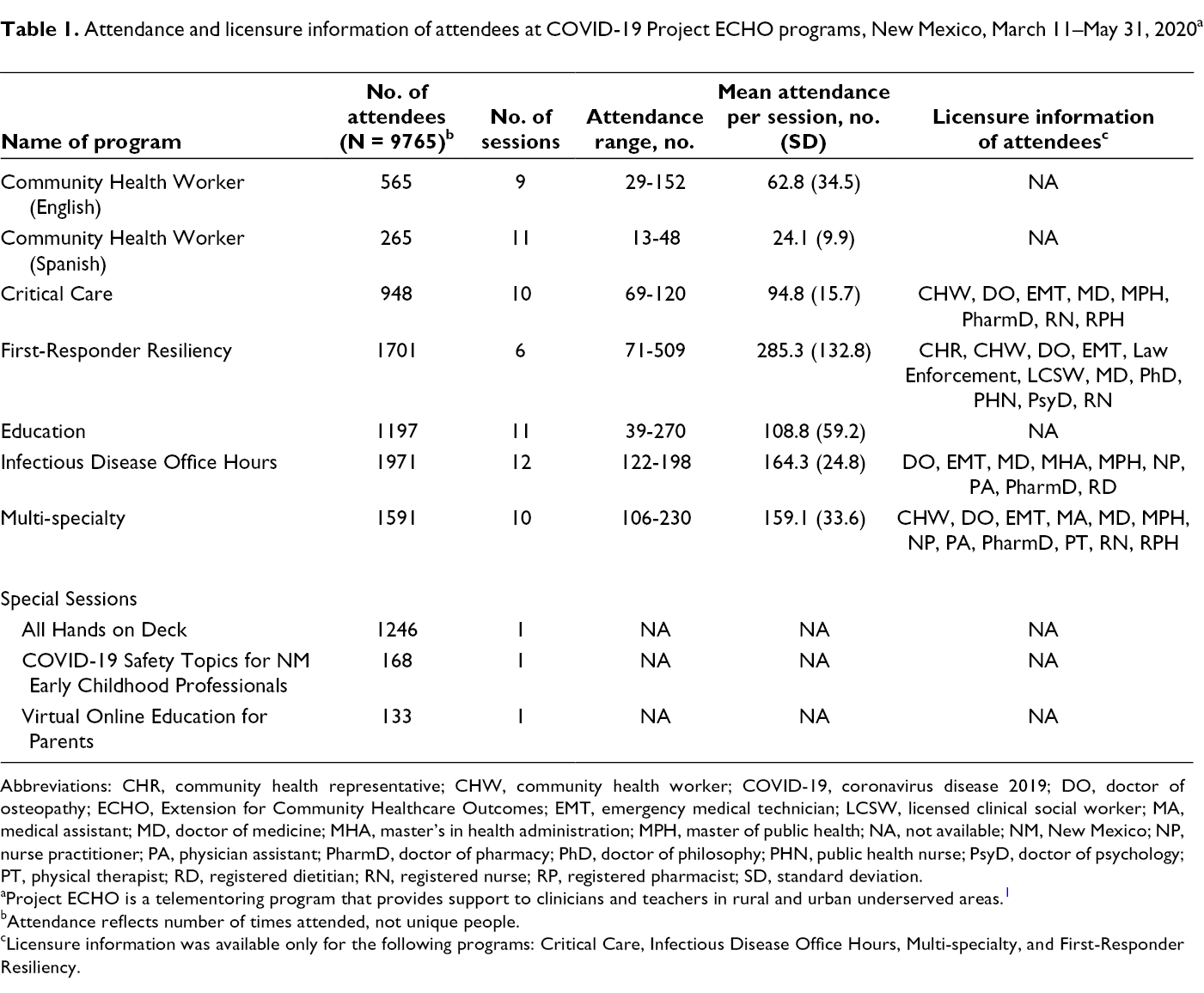
Abbreviations: CHR, community health representative; CHW, community health worker; COVID-19, coronavirus disease 2019; DO, doctor of osteopathy; ECHO, Extension for Community Healthcare Outcomes; EMT, emergency medical technician; LCSW, licensed clinical social worker; MA, medical assistant; MD, doctor of medicine; MHA, master’s in health administration; MPH, master of public health; NA, not available; NM, New Mexico; NP, nurse practitioner; PA, physician assistant; PharmD, doctor of pharmacy; PhD, doctor of philosophy; PHN, public health nurse; PsyD, doctor of psychology; PT, physical therapist; RD, registered dietitian; RN, registered nurse; RP, registered pharmacist; SD, standard deviation.
aProject ECHO is a telementoring program that provides support to clinicians and teachers in rural and urban underserved areas. 1
bAttendance reflects number of times attended, not unique people.
cLicensure information was available only for the following programs: Critical Care, Infectious Disease Office Hours, Multi-specialty, and First-Responder Resiliency.
Most attendees were from New Mexico (72.7%) and represented 31 of 35 (89%) New Mexico counties (Figure). The highest number of attendees (n = 2398) came from Bernalillo County, the most populous county in New Mexico. Attendees at COVID-19 ECHO programs came from 8 rural counties in New Mexico. A range of 4%-47% of participants attended from other states, including Arizona, Colorado, Indiana, Montana, and Texas. Fewer than 2% of attendees came from other countries, including Canada, Guatemala, India, Jamaica, and Mexico.
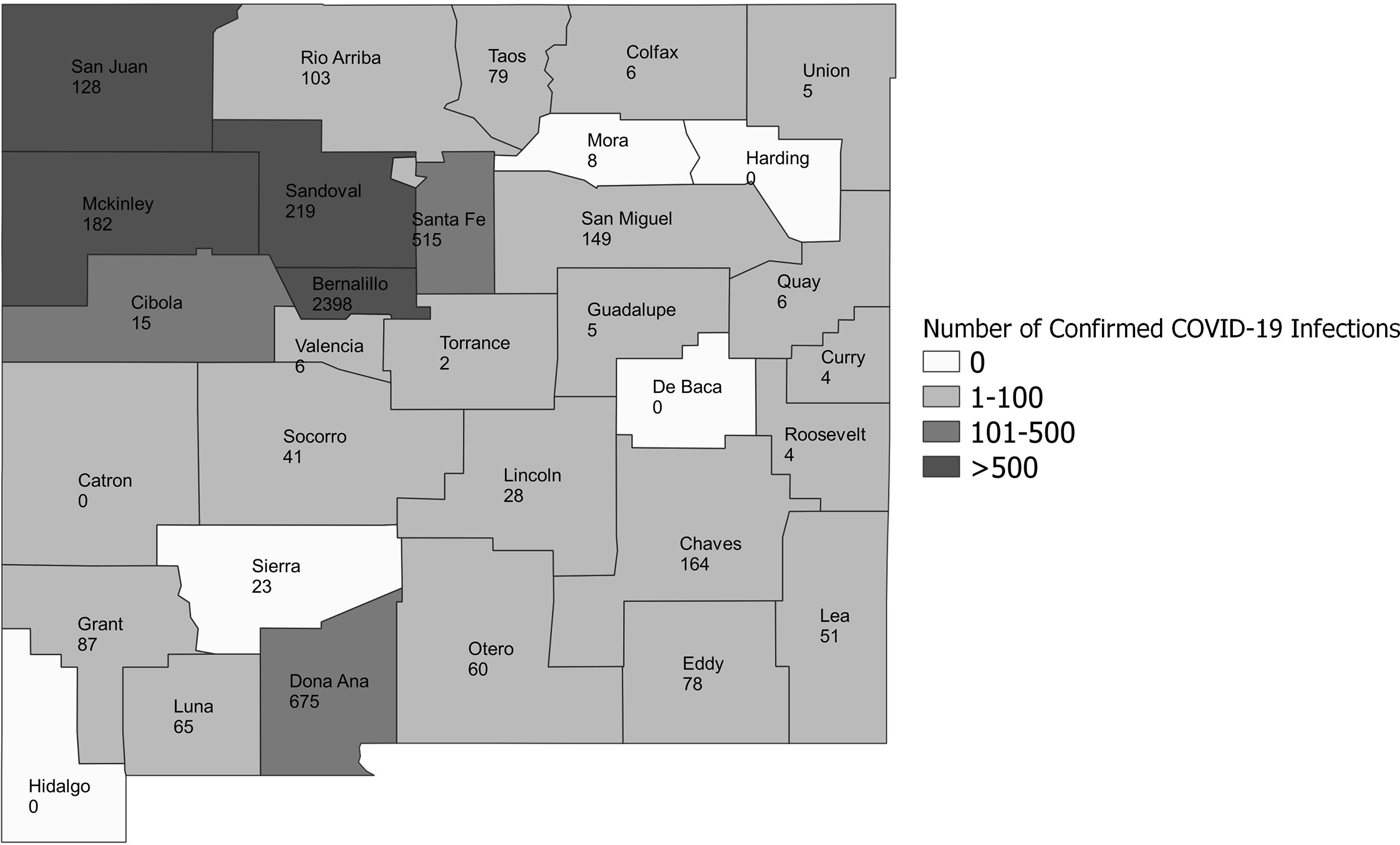
Number of attendees at COVID-19 Project ECHO programs (March 11–May 31, 2020) and number of confirmed COVID-19 infections as of May 31, 2020, by county, New Mexico. Numbers in the map indicate total Project ECHO attendees from each county. Abbreviations: COVID-19, coronavirus disease 2019; ECHO, Extension for Community Healthcare Outcomes. Project ECHO is a telementoring program providing support to clinicians and teachers in rural and urban underserved areas. 1 Attendance reflects the number of times a program was attended, not the unique number of people who attended the programs. Data source for COVID-19 infections: New Mexico Department of Health. 18 Geographic information was only collected for COVID-19 Infectious Disease Office Hours, Critical Care, Multi-specialty, First-Responder Resiliency, Education, and the Safety Topics for NM Early Childhood Professionals. The data do not include information for the COVID-19 Community Health Worker (English and Spanish), All Hands on Deck, and Education programs.
Each New Mexico COVID-19 ECHO program director identified gaps and cross-cutting themes in their programs. For example, the CHW COVID program identified contact tracing as an important skill for community health workers and community health representatives during the pandemic. The hub teams identified clinical gaps in knowledge (eg, educating clinicians about guidelines and providing education on contact tracing) and program improvement–centered gaps in knowledge (eg, adding more cases). The hub teams also identified programmatic cross-cutting gaps, which included education on the long-term effects of COVID-19, social consequences, and the need to educate clinicians on the long-term physical effects and unintended social and societal consequences of COVID-19 (Table 2). Finally, questions that were asked by participants during sessions varied from the clinical, to personal safety and well-being, to social concerns.
Identified gaps, cross-cutting themes, and commonly asked questions and concerns among COVID-19 Project ECHO programs developed in New Mexico, March 11–May 31, 2020 a
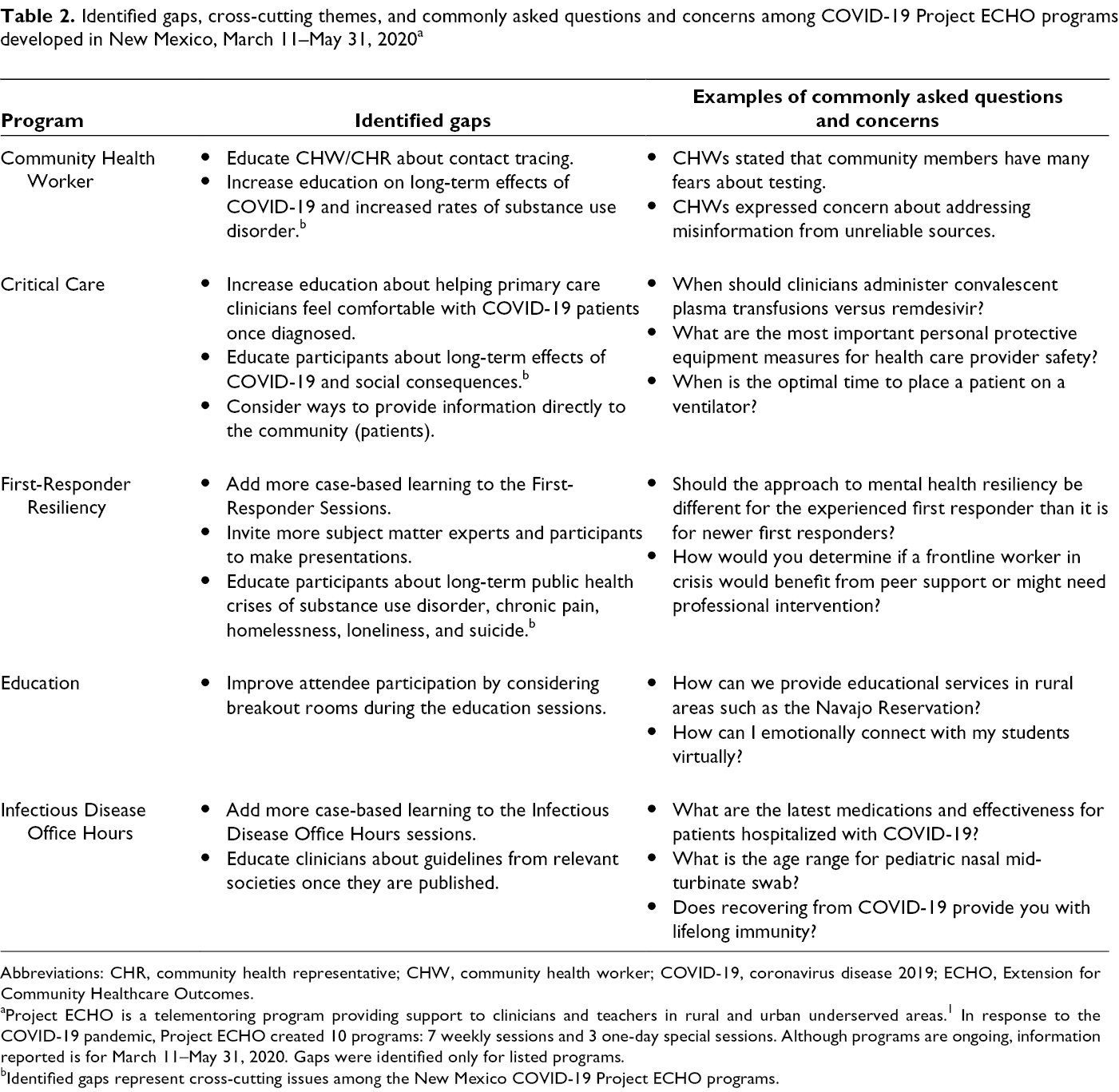
Abbreviations: CHR, community health representative; CHW, community health worker; COVID-19, coronavirus disease 2019; ECHO, Extension for Community Healthcare Outcomes.
aProject ECHO is a telementoring program providing support to clinicians and teachers in rural and urban underserved areas.1 In response to the COVID-19 pandemic, Project ECHO created 10 programs: 7 weekly sessions and 3 one-day special sessions. Although programs are ongoing, information reported is for March 11–May 31, 2020. Gaps were identified only for listed programs.
bIdentified gaps represent cross-cutting issues among the New Mexico COVID-19 Project ECHO programs.
Lessons Learned
Rurality of New Mexico
Clinicians and educators from 31 of 35 (89%) New Mexico counties attended the 10 COVID-19 ECHO programs during the study period. The only counties in New Mexico without COVID-19 ECHO participation (Catron, De Baca, Harding, and Hidalgo) are 4 of the most rural counties in the state. The New Mexico Department of Health defines county rurality using US Census–defined metropolitan statistical areas. 24 These 4 counties have a total combined population of <11 000 with only 4 primary care clinicians.25,26 By having attendance from nearly all counties in New Mexico, the 10 COVID-19 ECHO programs were able to engage clinicians and teachers from almost every New Mexico county and could therefore educate clinicians throughout the state about the pandemic.
New Mexico is home to part of the Navajo Nation, which includes McKinley (3.6% of the population) and San Juan (5.9% of the population) counties, with low combined populations compared with other county populations in New Mexico. Although these Northern New Mexico counties are sparsely populated, 310 attendees from McKinley and San Juan counties participated in the COVID-19 ECHO programs during the study period. These clinicians appeared very engaged with the COVID-19 ECHO programs because of the COVID-19 crises in their regions.
An estimated 5531 physicians practice full- or part-time in New Mexico, and most reside in Bernalillo County, the most urban and populous region in the state. 27 It is not surprising that Bernalillo County also had the highest attendance at the COVID-19 ECHO sessions. By May 31, Bernalillo County had more than 1500 cases of COVID-19, which was second only to McKinley and San Juan counties. This level of attendance seems to reflect the interest and concern of these clinicians because of the high rates of COVID-19 in Bernalillo County, northern New Mexico, and the Navajo Nation.
The rates of COVID-19 per 1000 people living on Native American reservations are more than 4 times higher than rates of COVID-19 in the United States. 28 The Indian Health Service reports that 6.7% of COVID-19 tests were positive through August 10, 2020. However, the Navajo Nation Indian Health Service area reports that 15% of COVID-19 tests were positive. 29 In New Mexico, as of August 11, 2020, 34.5% of all positive COVID-19 cases were among American Indian/Native American people. 23
Collaboration and Community of Practice
The early and ongoing success of the COVID-19 ECHO programs in New Mexico suggest that clinician education is an important part of the coordinated COVID-19 response in New Mexico. Many participants have long-time knowledge of Project ECHO and/or have used Project ECHO as a resource for providing care to their patients, whereas others were new to Project ECHO.
Based on real-time participant feedback, information acquired through the COVID-19 ECHO programs during the pandemic fills the gap in medical information for many clinicians who need immediate time-sensitive guidance. In addition, Project ECHO supports a digital librarian, who participates and provides internet links to peer-reviewed, evidence-based journal articles and other resources for attendees during every COVID-19 ECHO session.
ECHO as a Social Network
Although the need for medical information and trust play key roles in connecting clinicians and educators with Project ECHO during the COVID-19 pandemic, the desire to be part of a community of practice may also be compelling for attendees. 30 During this time of social and professional isolation, clinicians and educators, who were previously accustomed to working in bustling and stimulating environments, may find themselves looking for social connection. Many previous Project ECHO studies have demonstrated the social benefits of the ECHO model in addition to improving clinician knowledge and self-efficacy.31,32
COVID-19 ECHO Program Growth
Most Project ECHO hubs throughout the United States and globally are also rapidly responding to the COVID-19 pandemic by creating similar programs in their regions. Project ECHO demonstrated the ability to rapidly scale its programming for the COVID-19 pandemic. The US Department of Health and Human Services Assistant Secretary for Preparedness and Response is using Project ECHO to reach national audiences to deliver evidence-guided COVID-19 information. 33 In addition, clinicians who seek guidance at the Centers for Disease Control and Prevention Clinician On-Call Center may be referred to the New Mexico COVID-19 programs because of their valuable just-in-time training (written communication, Debbie Dowell, April 14, 2020). Because of Project ECHO’s wide reach, in the United States and globally, it has the possibility for use with other urgent national and international public health crises in the future.
Conclusions
New Mexico COVID-19 ECHO sessions were among the first ECHOs of their kind and are now being replicated in Central and South America, Africa, and Southeast Asia. For example, the First-Responder and Infectious Disease Office Hours programs are being replicated in Central and South America. 34 Currently, more than 240 distinct COVID-19 ECHO programs are being delivered in the United States and globally. 21
From March 11 through May 31, 2020, the Centers for Disease Control and Prevention reported that 1 239 169 COVID-19 tests had been performed, and 12% of tests were positive. 35 As of May 31, 2020, a total of 194 447 COVID-19 tests had been performed in New Mexico, approximately 4% of which were positive. 36 The COVID-19 ECHO programs in New Mexico may have contributed to the state’s comprehensive pandemic response. Essential components of an enduring and well-attended ECHO program include ensuring that the trainings are evidence guided, making the program accessible to rural participants, promoting the development of a social network and community of practice, and having the flexibility to evolve along with the pandemic.
Footnotes
Acknowledgments
The authors thank the following people for their support with the development of this article: Minh-Thy N Bui, Summers Kalishman, Chamron Martin, and Robin Swift.
Declaration of Conflicting Interests
The authors declared no potential conflicts of interest with respect to the research, authorship, and/or publication of this article.
Funding
The authors disclosed receipt of the following financial support for the research, authorship, and/or publication of this article: This work was partially supported by the New Mexico Legislature.
