




Abstract
Objective:
The Centers for Disease Control and Prevention (CDC) conducts research on legal epidemiology, the scientific study of law as a factor in the cause, distribution, and prevention of disease. This study describes a scan of articles written by CDC staff members to characterize the frequency and key features of legal epidemiology articles and their distribution across CDC departments and divisions.
Methods:
CDC librarians searched an internal repository for journal articles by CDC staff published from January 1, 2011, to May 31, 2015. Researchers reviewed and coded the abstracts to produce data on key features of the articles.
Results:
Researchers identified 158 CDC-authored legal epidemiology articles published in 83 journals, most frequently in Preventing Chronic Disease (14 publications), Journal of Public Health Management Practice (10 publications), and Morbidity and Mortality Weekly Report (9 publications). Most articles concerned the use and impact of law as a deliberate tool of intervention. Thirteen articles addressed the legal infrastructure of public health, and 3 assessed the incidental or unintended effects of nonhealth laws. CDC-authored articles encompassed policy making, implementation, and impact. Literature reviews and studies mapping laws across multiple jurisdictions constituted one-quarter of all publications. Studies addressed laws at the international, national, state, local, and organizational levels.
Conclusion:
Results of the scan can be used to identify opportunities for the agency to better support research, professional development, networking, publication, and tracking of publication in this emerging field.
Law influences public health and is an important tool that the government can use to protect and promote well-being. 1,2 Law can be important to health, but research is needed to identify when and how law matters. Legal epidemiology is the scientific study of law as a factor in the cause, distribution, and prevention of disease in a population. 3 Despite growing support for research in legal epidemiology and many instances of robust legal evaluation in US public health, 4 concern persists that, overall, the effects of law on health are too rarely assessed. 5 –7
Burris et al distinguished among 3 domains of legal epidemiology research (also called public health law research): research that evaluates deliberate legal health interventions (interventional legal epidemiology), research that studies the impact of law on the design and functioning of health systems (infrastructural legal epidemiology), and research that explores the health effects of laws and legal practices that are not primarily designed to influence health (incidental legal epidemiology). 6 These domains reflect differences in historical patterns of attention and funding in legal epidemiology.
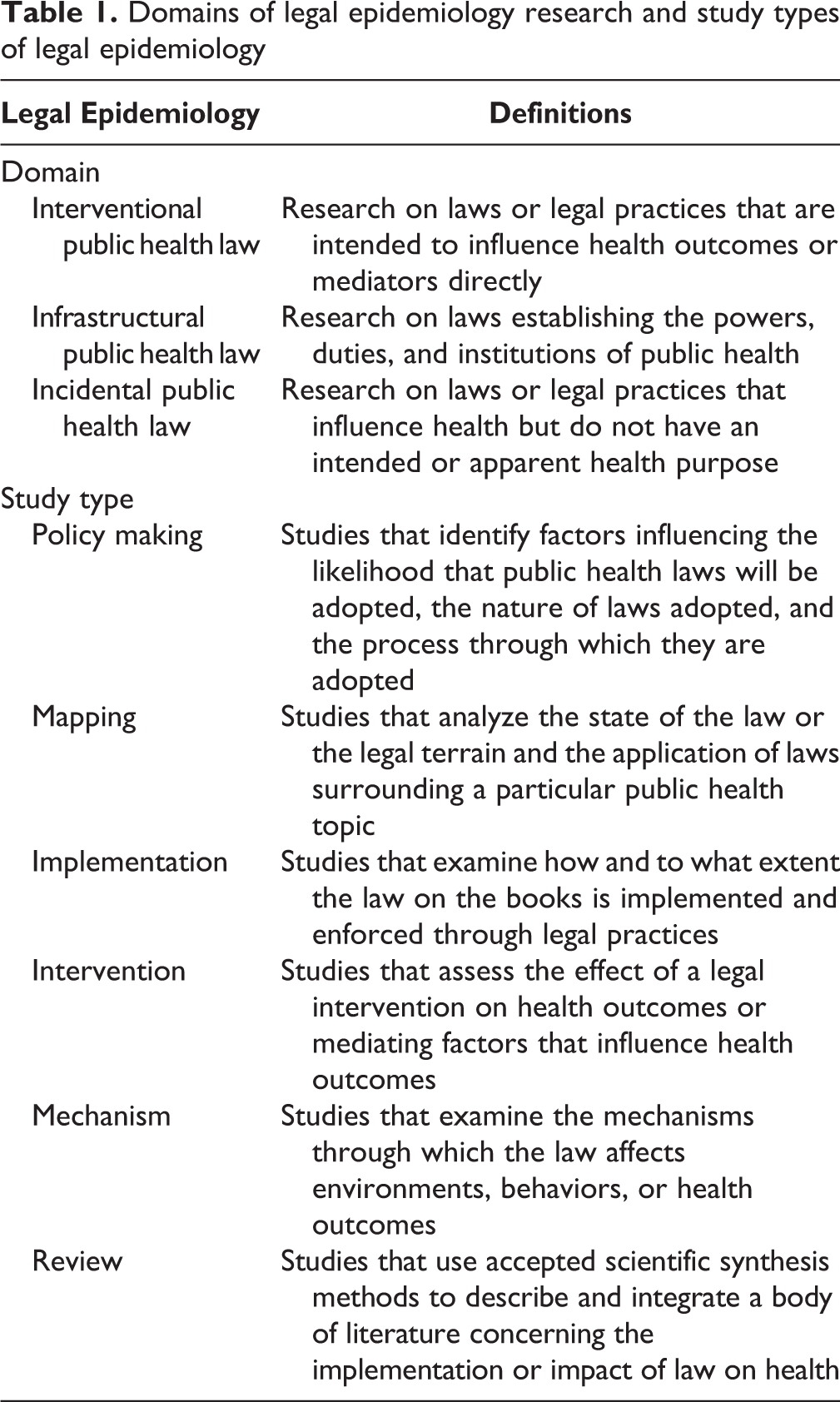
The evaluation of legal interventions has a long history and is the most well-understood and accepted area of research in legal epidemiology. 4 Although recognition of the importance of law as an element of public health infrastructure and practice has been slow to crystallize, acceptance of this domain has grown. 5,8 Incidental legal epidemiology represents the frontier of the field, addressing issues such as the unintended consequences of social policies, 9 the health impact of general social policies, 10 and the role of law in the model for the social determinants of health. 11 Articles on incidental legal epidemiology are much less frequently published than articles on interventional or infrastructural legal epidemiology. The domains of legal epidemiology are based on the attributes of the law being studied. Legal epidemiology articles are also classified by type of study. Intervention studies assess the effect of a legal intervention (of any legal epidemiology type) on health outcomes or mediating factors that influence health outcomes. Implementation studies examine how and to what extent the law on the books is implemented and enforced through legal practices.
Reviews have documented the extent of evaluation in policy fields, 12,13 but no studies have documented the overall extent of research in legal epidemiology. Part of the difficulty in this endeavor is the breadth of the field. Another challenge is that no Medical Subject Heading term is available for empirical evaluation of the health effects of laws and legal practices, whereas law-related search terms such as “regulation” and “policy” produce many articles, only a small proportion of which meet the definition of legal epidemiology. As an organization committed to the use of science to inform disease prevention and control, the Centers for Disease Control and Prevention (CDC) plays a leading role in funding and conducting research to monitor and evaluate health threats and interventions, including legal ones. In an effort to better understand and support legal epidemiology at CDC, we conducted a scan of articles on legal epidemiology authored by CDC staff members from January 1, 2011, to May 31, 2015.
Methods
Science Clips is a bibliography of articles by CDC authors that is maintained by CDC librarians in the form of an Endnotes software library. Articles are selected for inclusion in Science Clips through searches of subject databases (MEDLINE, Embase, Global Health, Scopus, Engineering Village, CINAHL). Some articles authored by the National Institute for Occupational Safety and Health are included via self-submission. CDC librarians searched Science Clips for journal articles published from January 1, 2011, to May 31, 2015. Search terms included “law* or legislat* or policy or policies,” “regulation,” “regulatory,” and “legal.” A total of 1017 records were retrieved and provided to us in an EndNote library. Because this article was a literature review and no human subjects were involved, institutional review board review was not required.
Two coders independently reviewed abstracts to determine if articles met the definition of legal epidemiology. 3,6,14 Six articles were administrative regulations published in the Federal Register rather than journal articles. Sixty-seven articles had legal content but did not report on or review data produced through an explicit scientific process 6 ; 786 articles had no substantial legal content. We determined that 158 articles met the definition of legal epidemiology, and we coded them according to health topic, the 3 domains of legal epidemiology research (interventional, infrastructural, and incidental), and type of study based on the 5 classifications (policy making, mapping, implementation, intervention, mechanism, and reviews) developed by Burris et al. 6 We added the category “other” (Table 1). The list of health topics was taken from the taxonomy developed by the Public Health Law Research program of the Robert Wood Johnson Foundation for use in classifying and tracking legal epidemiology. We discussed coding discrepancies until we achieved consensus. In ambiguous cases, we retrieved the article to complete the classification.
Domains of legal epidemiology research and study types of legal epidemiology
A single researcher collected further information on the authors’ CDC affiliations (ie, office, branch, division, or center) and whether any author had a law degree. We also categorized each article by level of jurisdiction of the law described in the article; we established 6 categories of jurisdiction: local, state, national, or international; organizational policy; and multiple levels. Science Clips records were not consistent in reporting author affiliations; we recorded the most specific author affiliation information provided for each article per a published CDC organizational chart that was current as of 2016. 15 We determined the participation of lawyers by viewing the published article; however, credentials were listed only in some articles. We determined the jurisdictional level for the law from the abstract or, if the abstract did not provide that information, the article. Organizational policies included those of private institutions (eg, hospitals) and public agencies (eg, school districts).
Results
We identified 158 articles that met the definition of legal epidemiology and were authored by CDC staff members from January 1, 2011, to May 31, 2015. We found substantial year-to-year variation in the number of articles published (range, 14-61 articles) but no discernable overall trend. CDC authors published articles on legal epidemiology in 83 journals. The 3 most frequent publishers were Preventing Chronic Disease (14 articles), Journal of Public Health Management Practice (10 articles), and Morbidity and Mortality Weekly Report (9 articles). The mean number of articles per journal publishing any articles on legal epidemiology was <2.
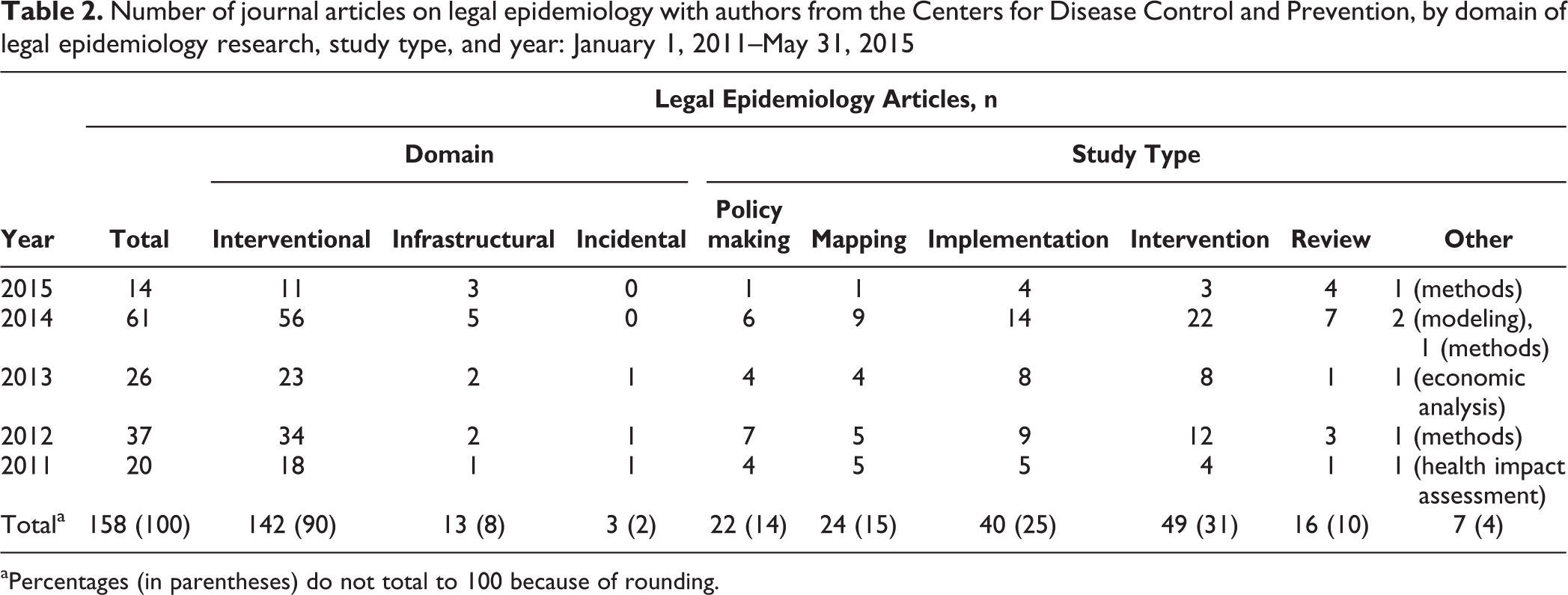
By domain, most articles (142 of 158, 90%) were interventional (Table 2). The legal interventions studied ranged widely from human immunodeficiency virus (HIV) confidentiality laws, 16 land use policies, 17 vaccination requirements, 18 dram shop liability, 19 tattooing regulations, 20 occupational health regulations, 21 and child protection 22 to collaborative enforcement strategies to reduce medication counterfeiting. 23 Of the 158 studies, 13 were infrastructural, and 3 were incidental. The number of infrastructural studies increased slightly during the study period. Of the 13 infrastructural studies, 6 examined organizational or structural components, such as immunization advisory committees and the laws governing immunization information systems, and their operation or effects. 24 –29 Three studies examined the mechanisms of change within the health system, such as accreditation and incentives, 30 –32 and 3 studies focused on system outcomes and outputs. 33 –35 Of the 13 infrastructural articles, 1 reported on the development of a monitoring and assessment tool for implementation of the International Health Regulations. 36 The studies on incidental legal epidemiology evaluated the side effects of medical liability, 37 the possible health effects of community redevelopment, 38 and policies on school discipline. 39
Number of journal articles on legal epidemiology with authors from the Centers for Disease Control and Prevention, by domain of legal epidemiology research, study type, and year: January 1, 2011–May 31, 2015
aPercentages (in parentheses) do not total to 100 because of rounding.
Of the 158 articles by study type, the most common included intervention studies (n = 49, 31%) and implementation studies (n = 40, 25%), followed by 24 (15%) on legal mapping, 22 (14%) on policy making, and 16 (10%) reviews. Of the 16 reviews, 2 were systematic reviews completed under the auspices of the Community Guide 19,40 ; 4 were other systematic reviews; and 10 were narrative reviews. Seven studies (5%) were classified as “other,” including 3 methods papers, 36,41,42 2 simulations, 43,44 1 health impact assessment, 45 and 1 economic analysis. 46 We identified no mechanism studies.
Nearly one-third of the studies (n = 46) focused on the topic of infectious disease control and prevention policies, 11 of which examined the impact of policies on the international level or national law outside of the United States. Most of the US-based studies on infectious disease control and prevention (at the national, state, local, and organizational levels) focused on influenza, whereas most studies conducted abroad focused on tuberculosis and/or HIV/AIDS. Alcohol, tobacco, and other drugs constituted a major portion of legal epidemiology study topics. Most of these studies were conducted at the state level and evaluated the impact of a policy intervention on particular health outcomes. All but 1 of the 11 infectious disease-related mapping studies concerned either HIV or immunization law, as did 11 of the 16 implementation studies. Intervention studies within this topic were diverse, including studies of directly observed therapy and contact investigation policies for tuberculosis, 47,48 Ebola quarantine, 49 expedited partner therapy, 37,50 and food safety rules. 51 Similarly, all but 2 of the 13 intervention studies on alcohol, tobacco, and other drugs focused on the impact of tobacco control policies. The other 2 studies addressed road injury and alcohol 52 and reducing opioid overdose. 53
Articles addressed a law at all 6 jurisdictional levels (Table 3). Most studies were of US state, federal, or local laws. Two articles focused exclusively on international law, and 19 examined only national law outside the United States. Seventeen studies examined law at multiple levels, often seeking to understand legal ramifications at the national, state, and local levels in the United States. Sixteen studies concerned policies at the organizational level, including schools, 39 hospitals, 54 and businesses. 55 Many of these studies described the policies of schools or child care centers and focused on nutrition and weight status or physical activity.
Number of journal articles on legal epidemiology with authors from the Centers for Disease Control and Prevention, by study type and level of law assessed: January 1, 2011–May 31, 2015a
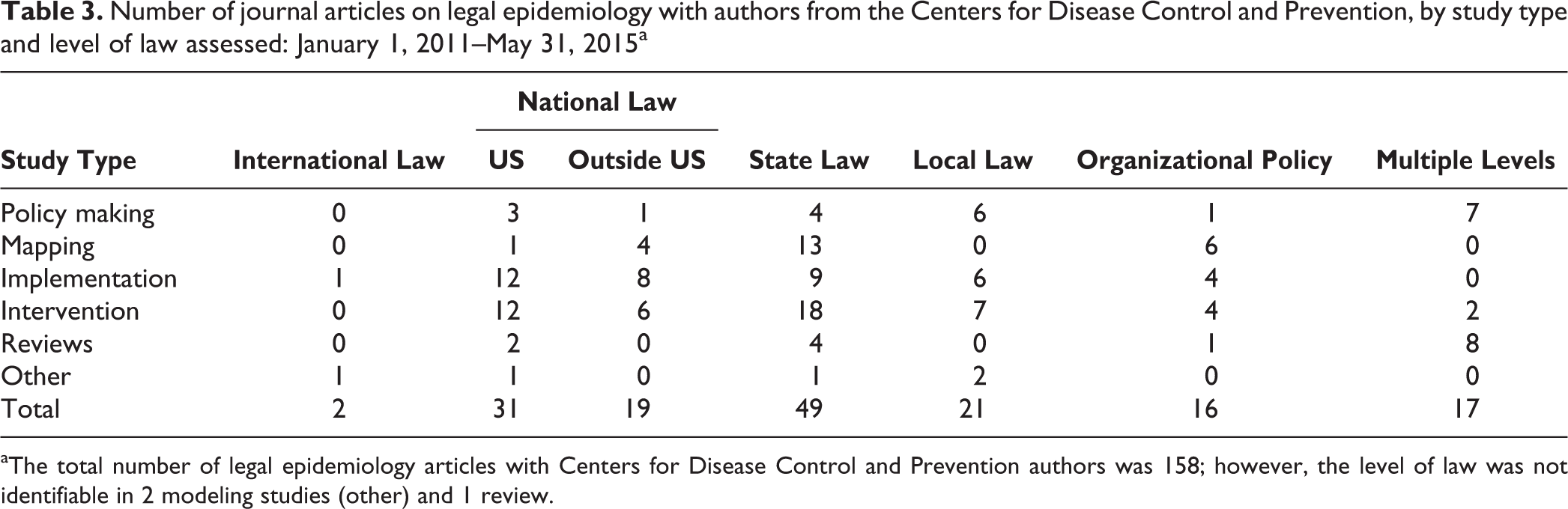
aThe total number of legal epidemiology articles with Centers for Disease Control and Prevention authors was 158; however, the level of law was not identifiable in 2 modeling studies (other) and 1 review.
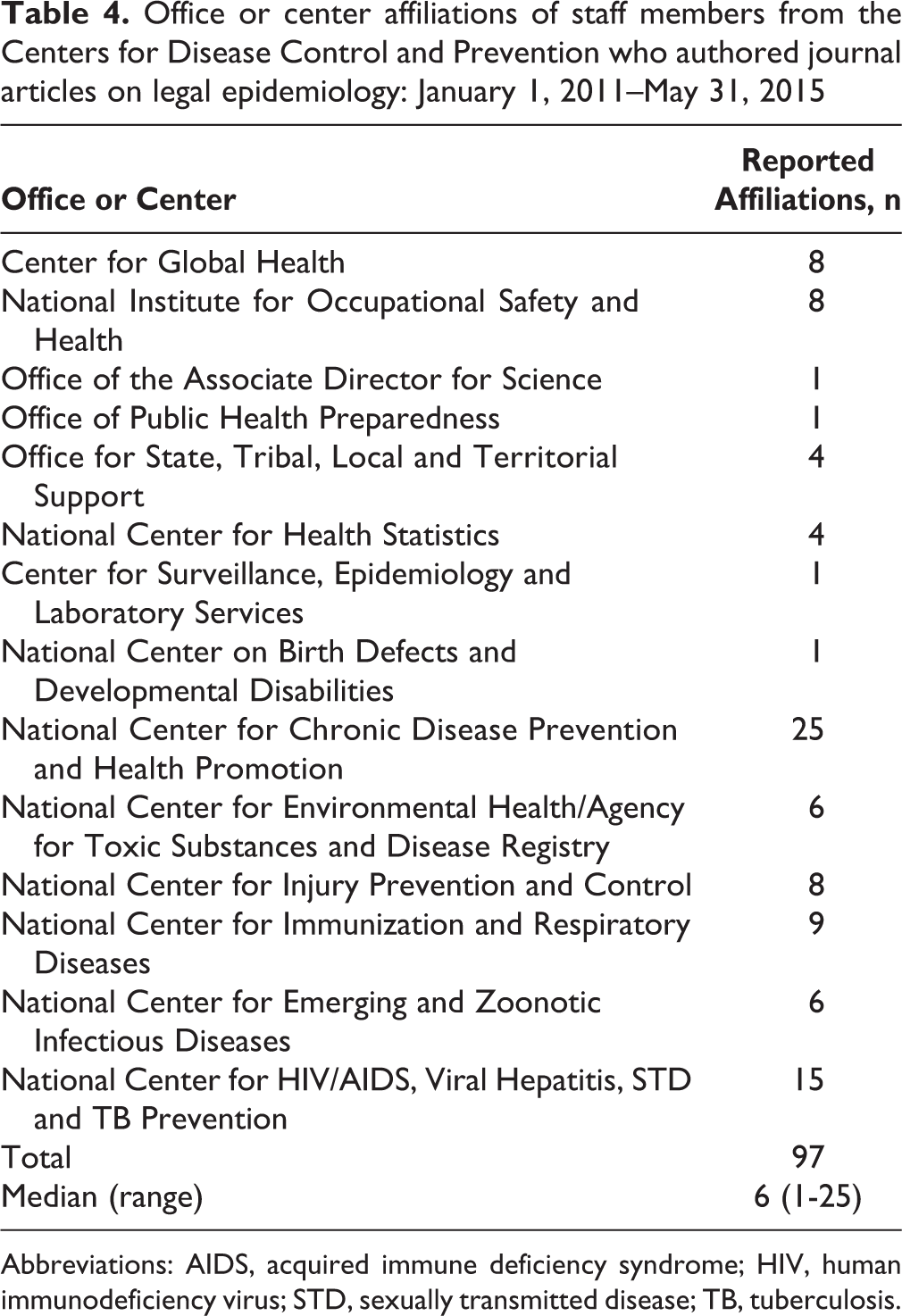
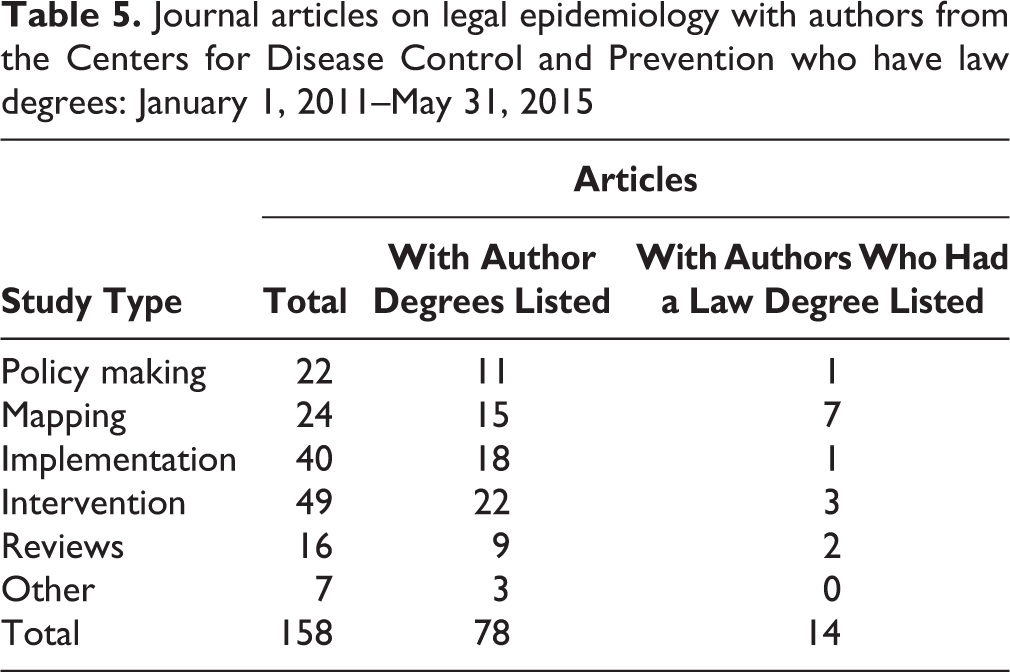
Eighty-seven articles identified at least 1 CDC office, branch, division, or center as an author’s affiliation, for a total of 97 affiliations (Table 4). The 14 CDC units identified as a source of legal epidemiology had a median of 6 articles each (range, 1-25). Authors’ professional degrees were reported in 78 of the 158 studies (49%) (Table 5). Of the 78 articles that included authors’ professional degrees, 14 (18%) articles had at least 1 author with a law degree. Mapping studies, which require the collection and analysis of legal information, had the highest proportion of authors with a juris doctorate (JD) degree: 7 of the 15 articles reporting author degrees included 1 or more authors with law degrees.
Office or center affiliations of staff members from the Centers for Disease Control and Prevention who authored journal articles on legal epidemiology: January 1, 2011–May 31, 2015
Abbreviations: AIDS, acquired immune deficiency syndrome; HIV, human immunodeficiency virus; STD, sexually transmitted disease; TB, tuberculosis.
Journal articles on legal epidemiology with authors from the Centers for Disease Control and Prevention who have law degrees: January 1, 2011–May 31, 2015
Discussion
CDC’s research on legal epidemiology in this sample focused on interventional public health law. Despite CDC’s role in providing guidance and technical assistance to state, local, and tribal health agencies, far less research has been conducted on the legal infrastructure of public health and its effects on health system performance. Likewise, the widespread recognition of the importance of law as a structural factor in population health and the corresponding attention given to a Health in All Policies approach 56 are not reflected in this sample, which included only 3 studies of incidental public health law. It is important to recognize that the topics given little or no attention in CDC’s articles on legal epidemiology are nevertheless important to CDC’s mission and amenable to legal intervention. The following topics were studied in fewer than 5 articles since 2011: disabilities; food safety; health policy making; maternal, infant, and child health; mental health; preparedness; and social determinants of health. Hearing; health communication; lesbian, gay, bisexual, transgender health; and oral health were not the primary or secondary focus of any studies in the sample.
These findings could be interpreted as evidence that CDC as an organization still does not recognize the importance of law to health and the need for more and better evaluation of legal effects. Given how widely legal epidemiology has spread across the agency and how strongly the agency’s leadership emphasizes the importance of policy, 1 we have a better explanation: insufficient resources and infrastructure for legal epidemiology at CDC. Law is not different from other modes of influence on behaviors or environments and can in general be studied through standard scientific methods and tools. 14 Measuring law and evaluating its impact have their own challenges, which can be readily overcome through a modest degree of training and the inclusion of legally trained researchers on research teams. We found indications, however, that legally trained authors are not typically included on CDC’s legal epidemiology research teams despite the interdisciplinary quality of CDC’s staff members and work. Even in mapping studies, which require the skills for which lawyers are trained, authors with JDs were listed on 7 of the 15 studies for which author credentials were provided.
As policy surveillance gains recognition as an important practice in legal epidemiology 57 and as more rigorous standards gain acceptance, 58 it will be important to ensure that both lawyers and nonlawyers conducting mapping studies are familiar with and able to practice the state of the art. More broadly, our findings support steps to expand legal epidemiology capacity at CDC.
These steps could take the form of more resources for CDC’s Public Health Law Program to provide training and research support and more attention in staffing decisions to the need for legal epidemiology expertise on CDC’s project teams.
Of the 1011 articles retrieved from Science Clips through legal search terms, 786 (78%) did not have substantial legal content. Such studies were usually retrieved in the Science Clips searches because the abstracts referred to policy or legislation as a background or contextual factor or discussed policy implications of nonlegal research. That most articles using basic legal terms were not actually about legal epidemiology points to the need for (1) the development of standard keywords or terms in the Medical Subject Heading system or at CDC to accurately tag legal epidemiology studies for easier retrieval and (2) better tracking of growth and improvement in the field.
Limitations
This study had several limitations. First, it was not designed to assess the rigor or impact of CDC’s legal epidemiology work product or to determine the gap between the need for legal epidemiology and CDC’s output. Second, studies included in Science Clips had at least 1 CDC coauthor, but our study was not designed to determine the relative contributions of CDC authors and non-CDC authors. Lastly, we were not able to obtain data on the professional credentials of all authors; as such, findings on the involvement of those with JDs are not generalizable to all CDC studies on legal epidemiology.
Conclusion
This scan shows that most CDC offices, centers, and divisions contribute to the field of legal epidemiology. Most articles in our sample addressed law as an intervention, but far less research was conducted on the legal infrastructure of public health and its effects. Likewise, the widespread recognition of the importance of law as a structural factor in population health and the corresponding attention given to Health in All Policies approaches were not reflected in this sample, which contained only 3 studies of nonhealth laws having unintended or incidental health effects. The articles encompassed a range of laws at the international, national, state, local, and organizational levels. Although the scan did not assess the quality or rigor of the research, we did find that legally credentialed authors were underrepresented, suggesting that efforts should be made to diversify public health law research teams.
Results of the scan can be used to identify opportunities for CDC to better support research, professional development, networking, and publication in this emerging field. A stronger effort to support shared methods and tools, especially in the area of legal mapping, would contribute to more accessible and useful products. The development and use of standard keywords for work in legal epidemiology would facilitate monitoring and evaluation of CDC research in this field.
Footnotes
Author Note
The opinions expressed in this article are those of the authors and not those of the Centers for Disease Control and Prevention or the Robert Wood Johnson Foundation.
Declaration of Conflicting Interests
The author(s) declared no potential conflicts of interest with respect to the research, authorship, and/or publication of this article.
Funding
The author(s) disclosed receipt of the following financial support for the research, authorship, and/or publication of this article: Work on this article was supported by the Robert Wood Johnson Foundation and the Centers for Disease Control and Prevention under collaborating agreement CDC-RFA-OT13-1302.