




Abstract
We examined whether the cultural values of indebtedness and repayment expectation as two facets of reciprocity were indirectly associated with adolescents’ drinking via parental psychological control (PPC) in Korean culture. Korean adolescents (N = 354, 13–16 years old, and 207 female-identified) attending a middle school in Seoul participated in an innovative online survey using a slider (0–100). Measures included the Indebtedness and Repayment Expectation Scale developed for this study, an established scale of PPC, and drinking frequency in the past year. Latent variable Structural Equation Models revealed that repayment expectation—expecting others to repay favors—was significantly positively associated with PPC among male-identified adolescents. PPC was in turn significantly positively associated with drinking frequency. Female-identified adolescents felt more controlled by their primary caregivers than did male-identified adolescents, whereas multiple group analyses showed that the strength of the association between reciprocity facets and PPC was larger for male-identified adolescents than female-identified adolescents. These results suggest that both repayment expectation and PPC may be risk factors for Korean middle school adolescents’ drinking. Our results highlight potential cultural and familial risk factors for Korean adolescents’ drinking and may guide prevention efforts focusing on reducing repayment expectation and PPC in order to reduce adolescents’ drinking.
Keywords
Adolescents’ drinking increases the risks of multifarious harmful outcomes and morbidities including alcohol use disorder, substance misuse, gastrointestinal problems, unprotected sex, and cancer (Marshall, 2014). Given that Korean adults drink at a high rate (Ryu et al., 2013), and drinking at work and social functions is embedded in Korean culture with dinner gatherings with co-workers accompany high consumption of alcohol called “HweSig” where “bottoms-up” is frequently encouraged (Çakar & Kim, 2015), Korean adolescents may be particularly at risk for drinking. However, even in a culture that embraces alcohol consumption, individual differences in adolescents’ drinking exist. In order to prevent adolescents’ drinking and its negative consequences, it holds grave importance to understand which factors contribute to these individual differences.
To further knowledge regarding individual differences in Korean adolescents’ drinking, we examined whether differences in the cultural values of repayment expectation and indebtedness were indirectly associated with drinking among middle school adolescents in Seoul, South Korea via parental psychological control (PPC) and tested for gender differences. We conceptualized reciprocity as repayment expectation and indebtedness and developed a scale to measure it due to scarce measures of specific cultural values. We focused on middle school adolescents in Korea (ages 13–16), an important time to form values (Irvin, 1996) and also a period of conflict with parents at its peak (Laursen et al., 1998). We hypothesized that high repayment expectation would be associated with high PPC, which would be associated with frequent drinking among Korean middle school adolescents.
Indebtedness and Repayment Expectation as Two Facets of Reciprocity
Indebtedness refers to the psychological state elicited by receiving help from another (Greenberg & Shapiro, 1971). It reflects the norm of reciprocity (Gouldner, 1960), and it attempts to restore balance after receiving help, favors, or gifts from another. Indebtedness is associated with avoidance motivation (Watkins et al., 2006), such as a person avoiding receiving favors or gifts to escape the sense of obligation to repay. In this paper, we operationalized indebtedness as “discomfort about owing others.”
Indebtedness pervades Korean culture (Kim & Lim, 2022). Buddhism had been the dominant ideology in Korea from the 7th century to 10th century (the SilLa dynasty) and from the 10th century to 14th century (the GoRyo dynasty) and has greatly impacted Korean culture (Vermeersch, 2014). Notably, it has influenced Koreans’ values regarding indebtedness (Kim & Lim, 2022). Buddhism teaches that if one did not repay a ‘debt’ in this life, they will need to repay the benefactor in the next life by working as a slave or employee of the benefactor (if reborn as a person) or as other animals helping the benefactor household (e.g., a cow to help agriculture). Although other religions have been introduced to Koreans since the 19th century (e.g., Christianity), and Koreans now practice a variety of religions, Buddhist beliefs influence Koreans’ value systems and continue to guide their behaviors (Park, 2014). Thus, Koreans or those from other cultures influenced by Buddhism may feel particularly indebted when others have helped them, done a favor, or given them a gift.
The other side of indebtedness may be repayment expectation. If one owes others for the favors and gifts that others gave them in order to not be in debt, then one may believe that others are held to the same standard and expect others to repay them as well. For example, Koreans give each other monetary gifts for weddings, with an understanding that the recipient will give monetary gifts in return when they or their children have weddings. One may become upset if another did not reciprocate a wedding gift, such as the other giving no gift, a lesser amount, or even the same amount as the original gift if a long time has passed since the original gift (e.g., they should give twice as much money if a decade has passed). Growing up in this culture, Korean children can learn to expect others to repay them in addition to experiencing discomfort about owing others. Hence repayment expectation can be the other side of indebtedness, and people can experience it at the same time as indebtedness. Yet repayment expectation has received little attention relative to indebtedness. To our knowledge, our paper is the first to conceptualize and operationalize repayment expectation in conjunction with indebtedness as two facets of reciprocity and to develop a measure of these cultural values. We operationalized repayment expectation as “expecting others to repay favors.”
Reciprocity consisting of indebtedness and repayment expectation has its advantages, especially in a collectivistic culture such as Korean culture. For example, big events such as weddings and funerals often require more resources than a family can handle on their own, and friends’ and neighbors’ help and support can make it possible for each family to manage such big events. Thus, feeling indebted to others’ help and being able to expect (and depend on) others’ help when in need can serve the community well. However, reciprocity values in the context of parent-child relationships may not benefit children’s health and development. If children feel indebted to their caregivers and expected to repay their caregivers, this can impair children’s development, especially during adolescence when a key developmental task is establishing autonomy. Despite its importance, reciprocity with indebtedness and repayment expectation has received little attention. Thus, in the current study, we focused on indebtedness and repayment expectation and the roles they play in caregiver-child relationships.
The Impacts of Repayment Expectation and Indebtedness on Adolescents’ Drinking
Theory and prior literature indicate different hypotheses regarding whether reciprocity values should have a direct effect on Korean adolescents’ drinking. As cultural values related to reciprocity—familism and filial piety—have been suggested to protect Asian adolescents from poorly adjusting (Jocson, 2020; Ng et al., 2011), reciprocity values may protect Korean adolescents from drinking. Alternatively, repayment expectation may function as a risk factor for adolescents’ drinking. Expecting others to repay them concerns others’ behaviors, over which they do not have control, and thus, can set them up with their expectations not being met. Then adolescents may drink to cope with the stress from the unmet expectations, as the drinking motive literature suggests (Cooper et al., 1992).
In contrast, indebtedness may be unrelated to adolescents’ drinking. Given that indebtedness concerns one’s own behaviors that one can control, it may not create a need to drink alcohol. Thus, we did not expect that holding reciprocity values would necessarily be directly associated with adolescents’ drinking. Instead, we focused on another factor related to repayment expectation and indebtedness—parental psychological control (PPC)—as a likely mechanism linking reciprocity values to Korean adolescents’ drinking.
Indirect Effects via Parental Psychological Control
Parental psychological control (PPC) refers to a set of intrusive parenting behaviors that emotionally manipulate children to obey their parents (Choe & Read, 2019). Since Schaefer (1965) first measured and Barber (1996) revisited PPC, over 750 published research papers reported PPC’s connection to a wide range of negative consequences for children’s health and development (Choe et al., 2023). Thus, PPC holds importance for emotional and personality development in children. PPC has been associated with Korean adolescents’ poor adjustment (Jang & Lee, 2020; Kim & Dembo, 2000; Kyeong et al., 2023; Lee et al., 2012; Park & Han, 2020; Rohner & Pettengill, 1985; Soenens et al., 2012, 2018). However, little is known about PPC and Korean adolescents’ drinking.
Cultural values and norms may predict PPC (Choe et al., 2023), yet the PPC literature provides limited evidence about the association between cultural values and PPC. One study examined cultural values and their associations with PPC—caballerismo—indicating men’s respectful manner toward women. Male-identified adolescents who endorsed caballerismo reported less mothers’ psychological control than female-identified adolescents in Mexico (Reid et al., 2019). Despite these interesting results, the PPC field has scant information on the associations of PPC with other cultural values and in other cultural contexts.
Adolescents’ repayment expectation may be positively associated with adolescents’ perception of PPC. To expect others to repay them, one must keep track of the favors, help, or gifts that they have given to others to know if and when others have ‘cancelled out’ their debts. Hence adolescents who hold high repayment expectation are likely good at keeping score of what they gave to others and what others gave them back. Adolescents may experience PPC as transactional, such that they need to give up their autonomy (obey their caregivers) to receive caregivers’ affection (Choe et al., 2020a, 2021). Adolescents who are good at keeping score of what they gave to others and what others repaid may be likely to notice PPC, such as an adolescent who had to give up their decisions to receive conditional affection from their caregivers. Therefore, the more adolescents expect others to repay them, the more PPC they likely perceive and report.
Alternatively, adolescents’ repayment expectation may reflect their caregivers’ values or behaviors, and those caregivers who highly expect others to repay them may psychologically control their adolescent children more than other caregivers who hardly expect others to repay them. According to children’s value internalization in the family (Grusec & Goodnow, 1994), children observe how their caregivers practice values and learn values from their caregivers. Hence adolescents who grow up with caregivers who expect others to repay them are likely to learn to expect others to repay. Extending repayment expectation to parent-child relationships, caregivers may believe that they—people who spent a lot of time, effort, and money to raise their children—deserve something in return from their children, such as children’s obedience (Choe et al., 2020b). This may manifest as caregivers intruding upon children’s decisions and manipulating their children to obey them (PPC). Thus, their adolescent children can observe their caregivers’ psychological control.
Adolescents’ indebtedness may not be associated with PPC. When people feel discomfort about owing others, they are likely to avoid receiving favors, help, or gifts in order to not owe others. To not be in others’ debt, they may overlook others’ taking something from them if the others gave them something already or may allow the others taking something from them. To extend indebtedness to parent-child relationships, children cannot avoid caregivers’ efforts and time to raise them, as childrearing requires such time and efforts from caregivers for children to survive and grow, and adolescents may feel that autonomy and positive self-concept that PPC takes away from them (Choe et al., 2020b) are too big to lose or give up just because they feel indebted to their caregivers’ childrearing efforts. In addition, adolescents may have learned indebtedness from their caregivers, seeing families as systems (Cox & Paley, 1997), and caregivers’ indebtedness may also not be negatively associated with PPC. Caregivers may not view children as others whom they can owe, especially in Korean culture that emphasizes hierarchical relationships based on Confucianism (Hyun, 2001), as behaviors towards people outside of the family often differ from behaviors toward their children. Thus, caregivers’ feeling discomfort about owing others may not impact their PPC, and adolescents may not report less PPC when they learned indebtedness from their caregivers. Therefore, indebtedness may not be related to PPC.
PPC, in turn, may be positively associated with adolescents’ drinking. Losing autonomy and feeling pressured to obey caregivers—PPC—can frustrate adolescents or cause them stress (Choe & Read, 2019). They may cope with this frustration or stress by drinking alcohol (Cooper et al., 1992). Consistent with this, PPC has been positively associated with adolescents’ drinking to cope in the United States (Ramarushton et al., 2024) and also adolescents’ drinking in China (Wang et al., 2019, 2022; Zhao et al., 2019), Italy (Inguglia et al., 2020), Germany (Ji & An, 2022), and the United States (Nelson et al., 2011; Rote et al., 2022). The exposure to Korean adults’ heavy alcohol consumption for work and social functions (Çakar & Kim, 2015) can encourage Korean adolescents to drink alcohol. However, little is known about the link between PPC and Korean adolescents’ drinking.
Gender Differences
We also examined gender differences in reciprocity values, PPC, and adolescent drinking. First, the differences can lie in the constructs themselves (e.g., indebtedness, repayment expectation, PPC). Buddhism, which may have impacted indebtedness and repayment expectation in Korean culture, teaches people that everyone regardless of their gender should repay favors and gifts, thus, indebtedness and repayment expectation may not differ by adolescents’ gender. Stated differently, female-identified and male-identified adolescents may not differ in the degree of indebtedness and repayment expectation. However, different hypotheses exist for gender differences in PPC in adolescence. On the one hand, several studies reported no significant differences in PPC by children’s gender in the United States in middle childhood and adolescence (Reed et al., 2008), in Brazil in middle childhood (Nunes et al., 2013), and in the Netherlands in middle childhood (Stone et al., 2015). On the other hand, PPC may differ by Korean adolescents’ gender due to cultural factors. As the dominant ideology in Korea since the late 14th century (the JoSuhn dynasty), Confucianism has greatly impacted Korean culture (Park & Cho, 1995). Confucianism teaches that women should take passive, domestic, and supportive roles (Chung, 2015), whereas men should take leading, dominant, and commanding roles. This can lead caregivers to treat female-identified adolescents differently from male-identified adolescents, that caregivers support and encourage male-identified adolescents to explore the world and lead activities, whereas caregivers control female-identified adolescents’ autonomy to raise their female-identified adolescents to fit the gender norm, thus adjust well in the gender pronounced society (Choe & Schoppe-Sullivan, 2025). Documents from the GoRyo dynasty (before late 14th century) show that Korean women took active roles in business and other aspects of society, but women’s lives changed with Confucianism in the JoSuhn dynasty (Dhawan, 2015). Influenced by Confucianism’s emphases on pronounced gender roles, female-identified adolescents in Korea may receive more PPC than male-identified adolescents in Korea.
Second, gender differences may exist in the strength of the association between indebtedness and PPC and the association between repayment expectation and PPC. Specifically, these associations may be stronger for male-identified adolescents than for female-identified adolescents. Male-identified adolescents with high repayment expectation may find PPC particularly emasculating (e.g., they are expected to give up their autonomy for caregivers’ child rearing efforts) and thus report more PPC than female-identified adolescents. This difference can manifest especially in a gender pronounced society like Korean culture, influenced by Confucianism (Chung, 2015). However, the strength of the association between PPC and drinking frequency may not differ by adolescents’ gender. Regardless of which gender adolescents identified themselves with, Korean adolescents who experience more PPC may drink more frequently than the counterparts who experience less PPC, as previous research on PPC documented a lack of gender differences in associations of PPC with adolescents’ adjustment (Choe et al., 2020a, 2020b, 2021, 2022). Therefore, we did not expect associations between PPC and drinking to differ by adolescents’ gender.
The Developmental Context: Middle School Adolescents in Korea
Middle school adolescents in Korea make an ideal age group for studying repayment expectation, indebtedness, and PPC. Adolescence is an important time to form values (Irvin, 1996). In the Korean 6-3-3 education system, middle school ages are the three years between the six years of elementary school (ages 8–13) and the three years of high school (ages 17–19) before college (ages 20–23). Adolescence in the U.S. refers to ages 14–17 between early adolescence of ages 10–13 (Curtis, 2015) and emerging adulthood of ages 18–29 (roughly from freshmen in college, Arnett, 2014). Ergo, adolescence (ages 14–17) mostly corresponds to the three years in middle school in Korea after the second half of the elementary school period of early adolescence. During middle school, adolescents in Korea may have more time or opportunities to interact with their caregivers to develop their value systems than high school adolescents in Korea who spend most of their time to prepare for the college entrance exam, which is considered the most important exam in Koreans’ lives (Kim, 1999). In addition, adolescents have the most conflict with their parents around ages 15–16 (Laursen et al., 1998), which falls into middle school in Korea. Accordingly, the combination of these factors may make middle school in Korea an excellent developmental period to examine cultural values and PPC.
Present Study
We examined if repayment expectation and indebtedness were associated with adolescents’ drinking via PPC, using latent variable Structural Equation Models with a Korean middle school adolescent sample. Moreover, we tested if differences existed by the gender of the adolescents in the constructs (e.g., indebtedness, repayment expectation, PPC) and in the paths among constructs via multiple group analyses. We hypothesized that high repayment expectation would be associated with high PPC, which would in turn be associated with more frequent drinking among Korean middle school adolescents.
Method
Procedure
Consent and Permission Processes
The institutional review board (IRB) of a university in South Korea approved the study and procedures. Homeroom teachers in a middle school in Seoul, South Korea distributed the forms for the caregivers’ permission and adolescent child’s assent to all of the students in three grades (N = 715). The students whose caregivers consented and themselves assented (“participants”) provided the signed forms to their homeroom teachers (N = 374, 52% participation). No financial compensation was offered for their participation, and the information on the students whose caregivers did not consent or themselves did not assent is not known. The students answered the online survey during a class session in school (all classrooms at the same time), with their homeroom teachers’ presence in the classrooms. The school sent the signed caregivers’ permission and assent forms to the researcher at the medical school, who then verified that the number of permission and assent forms equaled the number of students who answered the online survey. We reported the data collection process to the IRB to ensure that we followed all of the approved procedures and also reported the results to the IRB as the IRB requested.
Study Implementation
Platform
We implemented the study on Qualtrics. We checked with Qualtrics whether they support studies in South Korea, and Qualtrics confirmed that they allow access to people in South Korea. We also verified that people in South Korea could see an online study on Qualtrics and answer it, that the answers were recorded, and that we could access the data in the U.S.
Slider
As the statistical analyses we performed require interval scales, and yet Likert scales are ordinal scales (McArdle & Nesselroade, 2014), we provided a slider from 0 to 100 for each item to obtain continuous responses rather than ordinal indicators. In addition, using a slider with numbers can reduce ambiguity of responses like “frequently” or “infrequently,” given that some people may consider five times to be “frequent,” whereas others may consider “frequently” to mean a behavior occurs 10 times. To help adolescents use the slider, the instruction included guidance such as “For example, if you are with your primary caregiver 7 times, and your primary caregiver presents the behavior described below 5 times, it is 5/7 (0.71). Thus, place the slider at 71.” To not bias answers in either direction, we initially placed each slider at 50. We included four practice questions at the beginning of the online survey to help students try out the slider (e.g., Please move the sliders to 70, 30, 87, and 23). We recommended that students use their phone or tablet screens in the horizontal direction (not vertical) to show the full slider until the right end (100), so that students would not need to move the screen every time they answered an item. We also informed students that they could simply touch the place where they want the slider to be instead of dragging the slider, and the numerical value of the slider would be displayed.
Pilot Study
To ensure that this online study with a slider on Qualtrics worked well for Korean adolescents, we collected a pilot sample of 43 students (14 and 17 years old) in another middle school and a high school in South Korea. They answered several items that this study did not examine. We included open-ended questions for any suggestions they had after answering the survey items (which could have included the students’ experience using the sliders). No one mentioned anything about the slider, and we received varying answers to the survey questions. This gave us confidence to use the slider on Qualtrics with Korean adolescents.
Culturally Mindful Data Collection
Adolescents’ Age
Traditionally, Koreans count age based on the calendar year, and everyone obtains one year of age on January 1st of every year. Hence asking about adolescents’ developmental age based on their birthdays with a fill-in-the-blank response can confuse adolescents and not give us the correct information on the time past their birthdays. Thus, we asked for their developmental ages by specifying month and year of their birth, based on the month and year when we collected data, with four options: “age 13 (born from February 2010 to January 2011)”; “age 14 (born from February 2009 to January 2010)”; “age 15 (born from February 2008 to January 2009)”; “age 16 (born from February 2007 to January 2008).”
Given that students in the same grade can have 11 months difference developmentally, capturing and considering these developmental differences within one grade matters to conduct developmental studies rigorously (Little, 2013). Ergo we collected information on the number of months after their birthdays. To help adolescents answer easily, we provided 12 options for months, considering the date of the study and March as the first month of a new academic year, from “less than a month has passed after my birthday (birthdays from January 2 nd to February 1 st )” to “11 months or more than 11 months and less than 12 months have passed since my last birthday (birthdays from February 2 nd to March 1 st ).” We coded the month as 0.5 if less than a month had passed after their birthdays and 11.5 if 11 months or more than 11 months and less than 12 months had passed since their last birthday, divided those numbers by 12 (months), and added them to their digit ages (13–16), resulting in ages reflecting their developmental months ranging from 13.04 (13 years old with less than a month after their birthdays) to 16.96 (16 years old with more than 11 months after their birthdays).
Terms
Because the term “primary caregiver” (or even “caregiver”) is not often used among non-researchers in Korean culture, to help adolescent participants answer the question about their relationship with the primary caregiver, we provided the students with this instruction: “Although multiple adults can raise children, often a primary caregiver exists. Primary caregiver refers to someone who has been primarily responsible for raising you. Please mark your relationship with your primary caregiver.”
Participants
Data were drawn from the Korean Middle School Adolescents’ Decision-making, Adjustment, and Cultural Values project (Choe et al., 2024), conducted in February, 2023. Korean adolescents attending a middle school in Seoul, South Korea (N = 374) participated in the study. The answers from 20 students contained about 90% missing data. Removing these responses made an analytic sample of 354. Adolescents’ age varied from 13 to 16 years old: Mage = 15.39 and SDage = 0.96. Age information from 12 adolescents was unknown. For gender, 207 students identified as female whereas 141 students identified as male. Gender information for six students was unknown.
Adolescents identified their primary caregivers’ gender as mostly female (N = 315, 90%) with 299 mothers, 15 grandmothers, and one sister. Some adolescents identified their primary caregiver as male (N = 42, 10%): 31 fathers, two uncles, one brother, and five unknown. Primary caregivers’ age ranged from 29 to 81 years: Mage = 47.61 and SDage = 6.71. Adolescents reported their primary caregiver’s marital status in six categories: 292 married; 9 separated, but not divorced; 31 divorced; 0 cohabiting and not married; 1 in a relationship and not married; 3 single and never married. Marital status for 18 adolescents’ primary caregivers was unknown.
Socio-Economic Status
School Context
The information on the area where the middle school is located can provide insights on the adolescents’ background, as the Korean education system assigns students to public schools near their home addresses. Among the 25 districts in Seoul (“Gu”), the district where this middle school is located ranked 18th in mean income in 2023 (Seoul Credit Guarantee Foundation, 2023). In addition, this Gu has almost three times fewer private educational institutions per 10,000 students than other districts (Seoul Metropolitan Government and Seoul Institute, 2022). Hence the adolescents came from a poor area and a disadvantaged academic environment.
Education
Adolescents reported their primary caregivers’ education levels with 10 options: 10 less than high school graduation; 119 graduated from high school; 15 attended less-than-4-year college, but did not graduate; 23 graduated from trade/technical/vocational training or degree; 2 attended 4-year college, but did not graduate; 129 graduated from 4-year college; 3 attended Master’s program, but did not graduate; 12 graduated from Master’s program; 0 attended Doctoral program, but did not graduate; 8 graduated from Doctoral program. Because most Koreans finish high school education (91% of adults from age 25 to 64 in 2022) (OECD, 2024), we used high school as the lowest education level. Compared to the statistics that 69.3% of Korean adults from age 25 to 34 graduated from college (Ministry of Education in the Republic of Korea, 2023), the primary caregivers’ education level in this sample was less than the average.
Subjective Wealth
Because adolescents may not know the income (or income bracket) of their primary caregiver, we asked about adolescents’ subjective perception of their family’s wealth. The utility of the adolescents’ subjective perception of wealth has been shown in numerous studies. For example, a meta-analysis showed that adolescents’ perception of their or their family’s socioeconomic, financial, or social status was associated with adolescents’ health (Quon & McGrath, 2014). Adolescents’ subjective perception of wealth was used with Korean middle school adolescents (Cho & Khang, 2010). We assessed it with seven options: 9 struggle to afford basic resources (shelter, food, and clothing); 16 are able to afford basic resources all the time, but struggle to afford other resources; 32 are able to afford basic resources most of the time; 50 are able to afford gifts for special occasions (e.g., birthday, holidays); 44 are able to afford luxurious things on special occasions; 155 are able to afford things I want when there are not special occasions; 29 are able to afford luxurious things any time I want. Information on the adolescents’ subjective perception of wealth from 19 adolescents was unknown. Whereas the median fell into the category “are able to afford things they want when there are not special occasions,” over 17% reported that their families were concerned about basic resources (the first three categories). Given that South Korea is ranked the 13th largest economy in the world (WorldData.info, 2024), the participating adolescents came from a relatively low-income area in South Korea.
Measures
Indebtedness and Repayment Expectation Scale
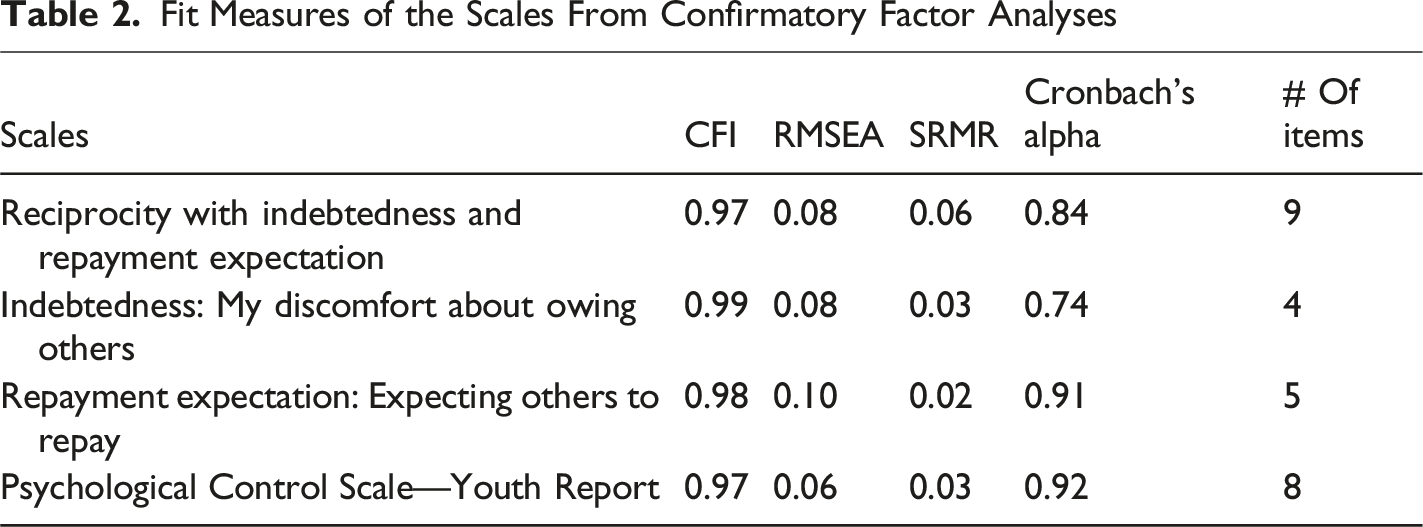
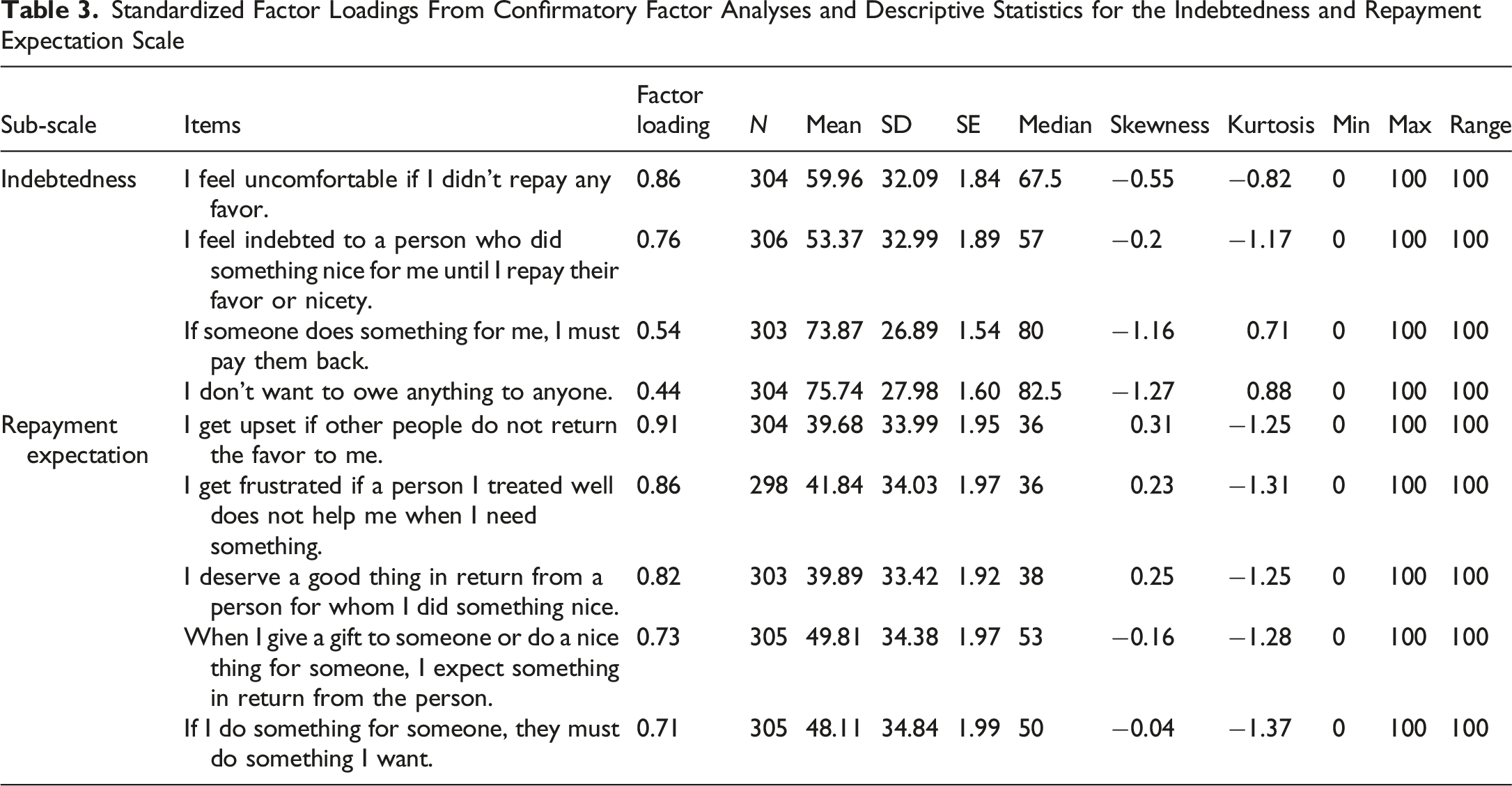
This scale assesses the degree of discomfort people feel about owing others when others did a favor for them or helped them or gave them gifts and also the extent to which they expect others to repay them after they did a favor to others or helped others or gave others gifts. We created the items for this study representing two sub-scales: four items for indebtedness and five items for repayment expectation. Sample items include “I feel uncomfortable if I didn’t repay any favor” for indebtedness and “I get upset if other people do not return the favor to me” for repayment expectation. We wrote the items for this new scale both in Korean and English and discussed them with a research team that is fluent in Korean and English to ensure the items have the same meaning in both languages. Then we verified the meanings were the same by back-translation. The instruction stated “People are exposed to many ideas or perspectives while living in a culture. But how much a person accepts these cultural thoughts can vary. Please indicate how accurately these items describe your beliefs. Please indicate how true each item is for you.” We indicated frequency on a slider: 100 = I believe this all the time; 0 = I do not believe this at all; 50 = depending on the specific situation, half of the time, I believe this, and the other half of the time, I do not believe this (see Supplemental materials for this new scale). The Cronbach’s α coefficients for this sample were .74 for indebtedness and .92 for repayment expectation.
Psychological Control Scale–Youth Self-Report
Students completed the eight items (Barber, 1996). The instruction said “My primary caregiver is a person who…”, and a sample item is “is less friendly with me if I do not see things her/his way.” The Cronbach’s α coefficient for this sample was .92.
We found Korean translations that other researchers had used, compared the wording with the original English versions, and changed wording slightly with a bilingual research team to represent the same meaning. The instruction stated “Children often feel that they need to change their behaviors or thoughts or feelings based on the caregiver’s opinions. Please indicate how frequently your primary caregiver engages in these behaviors toward you. This is not based on a particular time duration (such as 24 hours). Please think about the time you are with your primary caregiver (including video chats, phone calls, and texts) and indicate the frequency with which your primary caregiver engages in these behaviors. For example, if you are with your primary caregiver 7 times, and your primary caregiver presents the behavior described below 5 times, it is 5/7 (0.71). Thus, place the slider at 71.” Adolescents indicated the frequency of each behavior on a slider: 100 = My primary caregiver always engages in the behavior when my primary caregiver is with me; 0 = My primary caregiver does not at all engage in the behavior when my primary caregiver is with me; 50 = My primary caregiver engages in the behavior half of the time when my primary caregiver is with me and does not engage in the behavior the other half of the time when my primary caregiver is with me.
Adolescents’ Drinking Frequency
Students answered one question: “During the last 12 months, how many times have you had alcohol or beverages that contain alcohol?” that was presented on a slider: 0 = not at all; 99 = 99 times; 100 = more than 99 times.
Statistical Analyses
We used Mplus version 8.10 (Muthén & Muthén, 2023) to perform Confirmatory Factor Analyses (CFA) and latent variable correlations. We used a robust estimator for non-normality—maximum likelihood parameter estimates with standard errors and a chi-square test statistic that are robust to non-normality and non-independence of observations (MLR)—after consulting with the founder of Mplus regarding the appropriate type of robust estimator in Mplus for this data set (personal communication with Linda Muthén on 1/18/2024). We performed CFA to create latent variables representing all of the scales except for drinking frequency (one item). Moreover, we tested correlation coefficients and their significance among latent variables. We performed Structural Equation Modeling (SEM) to test if latent variables of indebtedness and repayment expectation were associated with adolescents’ drinking frequency via PPC (modeled as a latent variable). The analytic models controlled for adolescents’ age, primary caregiver’s education, and adolescents’ perception of their family’s wealth. Then we determined significance based on the 95% CIs, although we also reported p-values for reference.
Differences by the Gender of the Adolescents
For the differences at the variable level, we tested if the three latent variables—indebtedness, repayment expectation, and PPC—and drinking frequency differed by adolescents’ gender. For potential differences in the paths, we performed multiple group analyses. First, Mplus computed two models to check which model fit better comparing a constrained model (where all path estimates were constrained to be equal across female-identified and male-identified adolescents) and a freely estimated model (where the path estimates for female-identified and male-identified adolescents were allowed to be freely estimated). Using the Akaike information criterion and the number of free parameters that Mplus provided for each model, we computed the likelihood ratio chi-square and compared it with the critical value of the chi square. We selected and reported the model with the better fit between the constrained model and the freely estimated model.
Additional Analyses
R version 4.3.0 (R Core Team, 2023) software handled analyses other than the models mentioned above, along with packages in R. The psych package version 2.3.3 (Revelle, 2023) provided descriptive and correlation statistics, and the CTT package version 2.3.3 (Willse, 2018) performed reliability analyses. The misty package (Yanagida, 2023) performed the Little’s missing completely at random (MCAR) test, and the MplusAutomation package version 1.1.0 (Hallquist & Wiley, 2018) converted data files for Mplus.
Results
Descriptive Statistics
Descriptive Statistics for all of the Scales and Demographic Variables
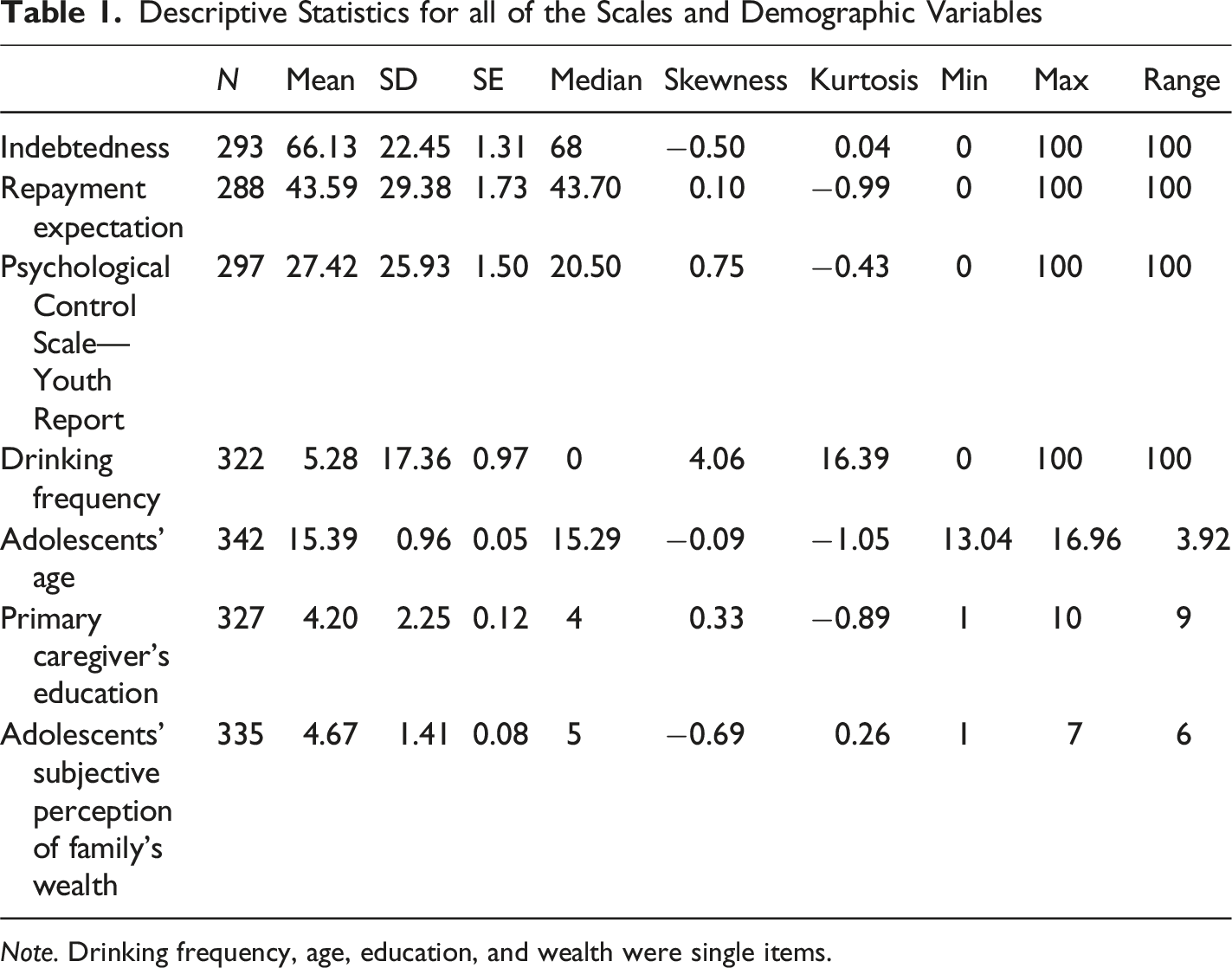
Note. Drinking frequency, age, education, and wealth were single items.
Missing Data Analyses
Little’s MCAR test indicated that the data were likely to be MCAR, χ2 (660, N = 354) = 594.48, p > .96. We used the FIML method to account for missing data.
Confirmatory Factor Analyses (CFA)
Fit Measures of the Scales From Confirmatory Factor Analyses
Standardized Factor Loadings From Confirmatory Factor Analyses and Descriptive Statistics for the Indebtedness and Repayment Expectation Scale
Correlations
Correlations Among Latent Variables and Demographics
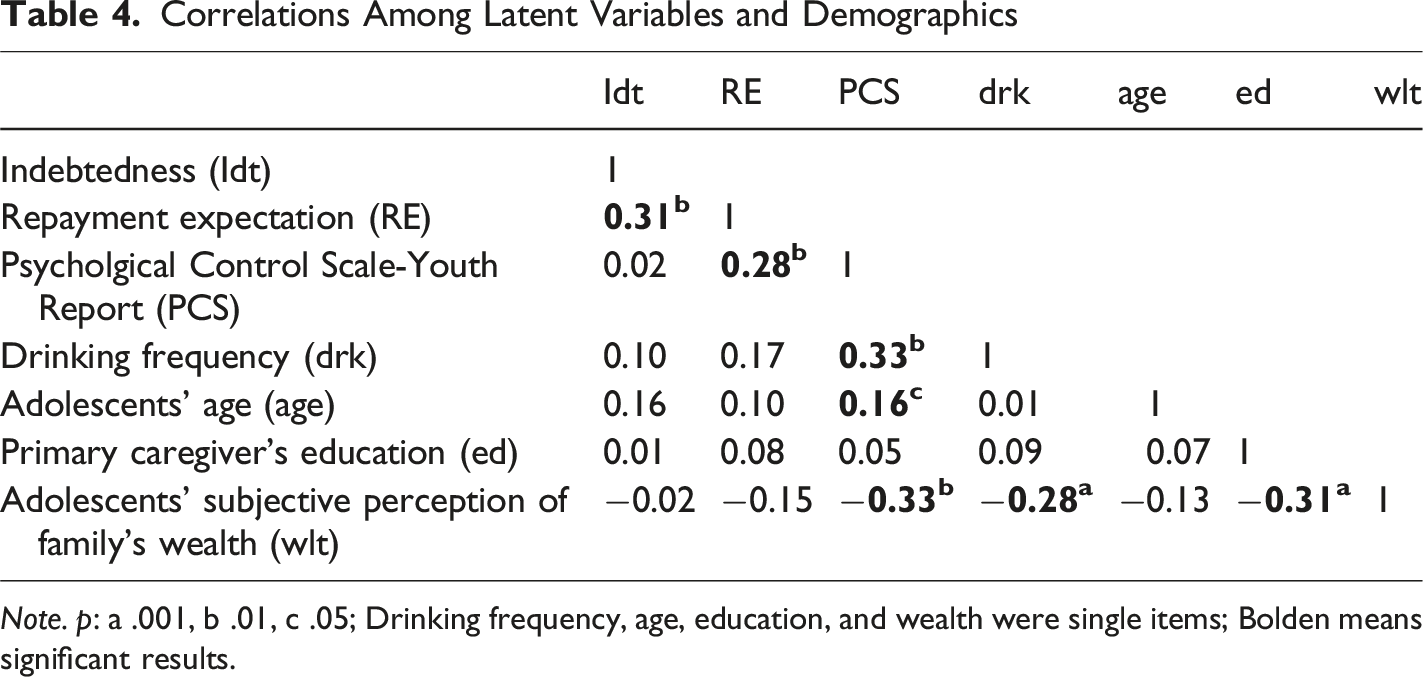
Note. p: a .001, b .01, c .05; Drinking frequency, age, education, and wealth were single items; Bolden means significant results.
Gender Differences
Regression From Gender to Latent Variables
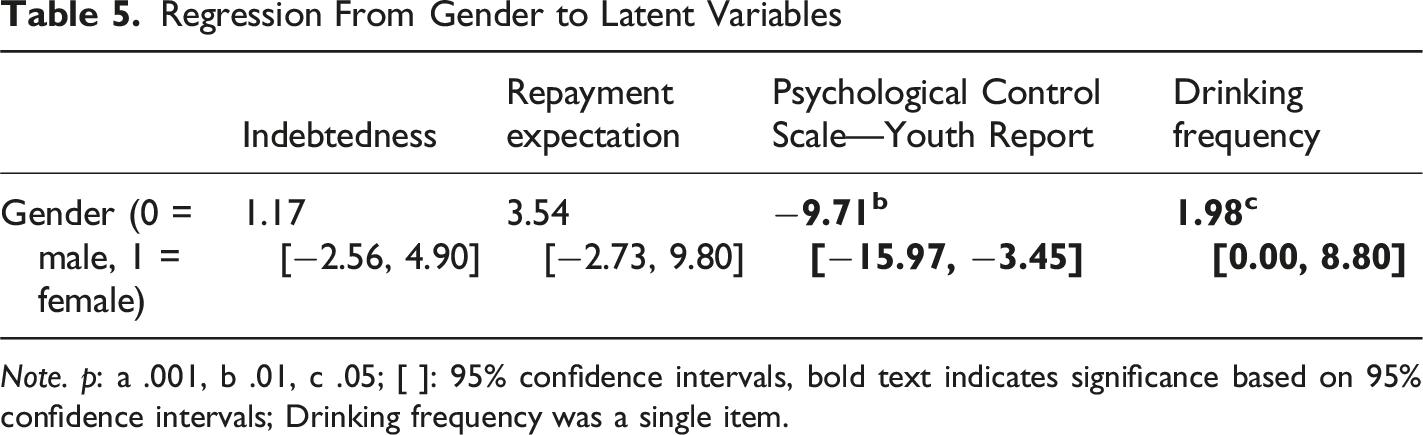
Note. p: a .001, b .01, c .05; [ ]: 95% confidence intervals, bold text indicates significance based on 95% confidence intervals; Drinking frequency was a single item.
Multiple groups analyses showed that the freely estimated model fit better than the constrained model: Δχ2 = 13.90 and ΔDF = 5. Hence we chose the freely estimated model, which shows that the paths from both indebtedness and repayment expectation to PPC differed by the gender of the adolescents, and the other paths did not. Therefore, we tested a partial freely estimated model where we freed the two paths that showed significant gender differences in the freely estimated model and constrained the other paths that did not differ by the gender of the adolescents in the freely estimated model. This partial freely estimated model fit better than the constrained model (Δχ2 = 11.09 and ΔDF = 2) and provided the final results for interpretation (see Figure 1). Path models for indirect effect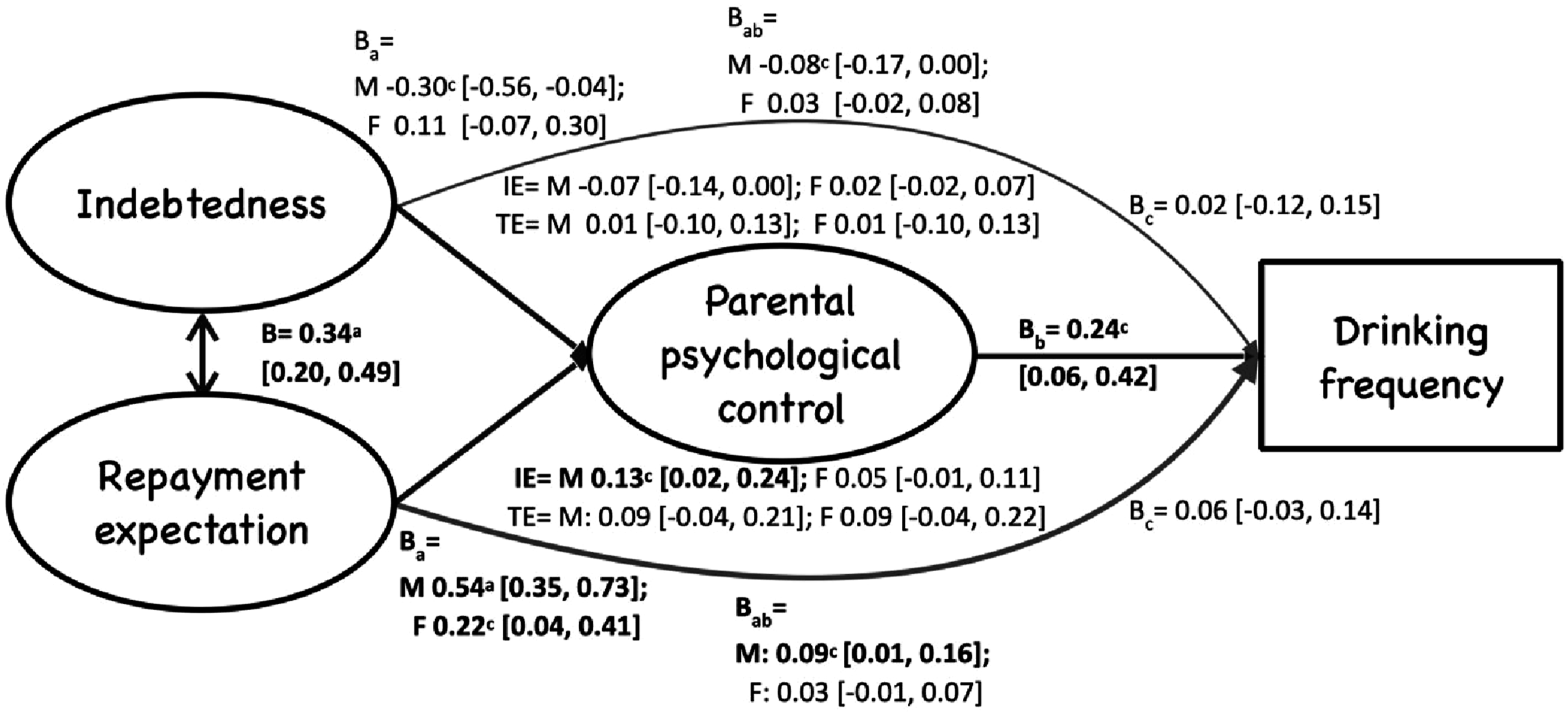
Indirect Effects of Parental Psychological Control
Figure 1 shows standardized results from the path models. SEM models included three covariates: adolescents’ age, primary caregiver’s education, and adolescents’ subjective perception of family’s wealth. Repayment expectation was significantly positively associated with PPC among both male-identified and female-identified adolescents, whereas indebtedness was not significantly associated with PPC among either male-identified or female identified adolescents. Repayment expectation was significantly associated with drinking frequency indirectly via PPC among male-identified adolescents, whereas indebtedness was not significantly associated with drinking frequency indirectly via PPC. Neither repayment expectation nor indebtedness were significantly associated with drinking frequency directly.
Discussion
We examined whether repayment expectation and indebtedness were associated with Korean adolescents’ drinking via PPC and if the levels of these constructs and the strength of the associations differed by the gender of the adolescents. PPC had indirect effects from repayment expectation to drinking frequency among male-identified adolescents, whereas PPC did not have indirect effects from indebtedness to drinking frequency. This study addresses important gaps in the literature about the cultural and familial risk factors for adolescents’ drinking among Korean middle school adolescents.
Indebtedness and Repayment Expectation as Two Facets of Reciprocity
Unlike previous research, we conceptualized reciprocity as indebtedness and repayment expectation, extending the previous construct of indebtedness (Greenberg & Shapiro, 1971) to capture both aspects of reciprocity (Gouldner, 1960). When one feels discomfort about owing others, they also may expect others to repay them. Our results support two facets of reciprocity comprising indebtedness and repayment expectation. Indebtedness and repayment expectation are significantly positively correlated with each other, yet they were associated with PPC and drinking differently. Indebtedness and repayment expectation may exist in certain cultures, but not others. Moreover, people in a given culture may vary in the extent to which they believe in and practice indebtedness and repayment expectation. We provide a tool to measure indebtedness and repayment expectation that can be used for further research in diverse cultures to determine in which cultures indebtedness and repayment expectation are emphasized and how people vary in beliefs and practices relating to indebtedness and repayment expectation.
Repayment Expectation and Parental Psychological Control as Risk Factors for Korean Adolescents’ Drinking
The significant indirect effects via PPC suggest that the cultural value of repayment expectation and PPC may be risk factors for drinking among Korean middle school adolescents. Not surprisingly, reciprocity values were not linked directly to Korean adolescents’ drinking. Instead, the cultural value of repayment expectation was linked to male-identified adolescents’ drinking via PPC. In other words, the more male-identified adolescents expected others to pay them back for favors, gifts, or help that they gave to others, the more psychological control they perceived from their primary caregivers, and the more male-identified adolescents noticed from their primary caregivers, the more frequently they drank alcohol. Some studies reported that relevant constructs such as familism and filial piety functioned as protective factors for Asian adolescents’ adjustment (Jocson, 2020; Ng et al., 2011), whereas our study suggests that the cultural value of repayment expectation may be associated with poor adjustment for Korean adolescents.
These results call for a nuanced interpretation of how cultural values may affect parenting and adolescent development. Not all cultural values protect adolescents from poor development or adjustment, and a particular cultural value may function as a risk factor for some aspects of adjustment, while serving as a protective factor for another aspect of adjustment. Other than a single study in Mexico (Reid et al., 2019), a dearth of information exists in the literature about cultural values and their associations with PPC (Choe et al., 2023). Further examining aspects of adjustment for which a cultural value may be a risk or protective factor in diverse cultures will extend the adolescent development literature in critical ways. Our findings may apply to other cultures beyond Korean whose people value reciprocity and provide a starting point to study cultural values and their associations with PPC in diverse cultures.
It is noteworthy that repayment expectation was not a risk for drinking in and of itself, unless PPC took place as indirect effects. It demonstrates the detrimental impacts of PPC on adolescents’ health and development, especially the adolescents who are growing up in a culture that values reciprocity. Stated differently, experiencing PPC can change developmental trajectories of male-identified adolescents although they grow up in a culture that teaches them to value reciprocity. Despite the harmful influences of PPC on children’s health and development that over 750 papers reported (Choe et al., 2023), the indirect effects of PPC from cultural values to drinking were scarcely noted. Our results add to the literature on the negative consequences of PPC in a cultural context and provide a starting point to further identify which facets of PPC contribute to the indirect effects of PPC from cultural values to adolescents’ health and development.
Gender Differences
Adolescents’ gender was significantly associated with PPC and drinking frequency. Female-identified adolescents felt more psychologically controlled than male-identified adolescents. This may reflect gender based adolescent development in Korean culture, possibly still impacted by Confucian ways of treating women as submissive and subordinate (Son, 2006). Our results call for further research on PPC and gender to determine whether female-identified adolescents may receive more intrusiveness or emotional manipulation or both than male-identified adolescents, based on the Two Facet Model of PPC that specifies intrusiveness and emotional manipulation as the two core facets of PPC (Choe et al., 2023).
The significant difference in the paths from repayment expectation to PPC and from indebtedness to PPC may imply that male-identified adolescents develop or are socialized differently from female-identified adolescents in Korea. In both paths between repayment expectation and PPC and between indebtedness and PPC, the strength of the associations was stronger for male-identified adolescents than female-identified adolescents. In other words, male-identified adolescents appear to have shown stronger associations between reciprocity values and PPC. Male-identified adolescents who expect others to repay them may find PPC particularly emasculating (e.g., they are expected to give up their autonomy for caregivers’ child rearing efforts) and report more PPC than female-identified adolescents, especially in a gender pronounced society like Korean culture, influenced by Confucianism that favors men over women (Chung, 2015). Given the scant literature on cultural values and PPC, particularly about gender differences, more research is needed to investigate the role of gender in adolescent development, specifically how adolescents form cultural values and how their cultural values are associated with PPC. Our results indicate the importance of examining gender differences in the paths to study differences in developmental mechanisms that may link cultural values, PPC, and adolescent behavior. On the other hand, the lack of gender differences in the path from PPC to drinking is aligned with previous studies that argued for PPC’s detrimental effects on adolescents regardless of gender (Choe et al., 2020a, 2020b, 2021, 2022).
Limitations and Future Directions
This study comes with some weaknesses. It did not directly measure the caregivers’ perspectives. Examining caregivers’ beliefs about indebtedness and repayment expectation and their associations with PPC would provide further understanding of cultural antecedents of PPC. Lack of PPC reports about secondary caregivers is another weakness. Many secondary caregivers could have been fathers, given that mostly married mothers functioned as primary caregivers in this sample. Previous studies have reported the unique role of fathers’ psychological control (Chen & Cheng, 2020; Choe et al., 2022), and examining fathers’ cultural values and fathering behavior in future studies will add to the literature. Moreover, cross-sectional data do not allow making causal inferences or examining temporal ordering among the variables. Longitudinal data would illuminate how indebtedness, repayment expectation, and PPC change over time and how they predict changes in adolescents’ drinking while controlling for earlier PPC and drinking and allow scholars to test competing models of the directions of associations between adolescents’ reciprocity values and PPC. Further, not being able to test the psychometric properties of this new Indebtedness and Repayment Expectation Scale with other scales that measure the same constructs is another weakness, due to lack of existing scales measuring reciprocity with indebtedness and repayment expectation. Instead, we reported the psychometric properties of this new scale thoroughly, and future research can test and report such psychometric properties of this new scale if the field would have multiple scales of the same constructs. Lastly, given the cultural and socio-economic background and the ages (13–16) of this sample, we caution against generalizing the results to all adolescents across cultures, socio-economic background, and ages and recommend scholars test these associations in families and children from diverse cultures, socio-economic backgrounds, and age groups.
Conclusion
Our study examined cultural values that have been rarely studied in relation to PPC or adolescents’ drinking—reciprocity consisting of the two facets of indebtedness and repayment expectation—and provided a measure that can be used to assess these values. We found significant associations from repayment expectation to adolescents’ drinking via PPC. In addition, our study focused on Korean adolescents, an important, yet understudied cultural group that may deal with more exposure to heavy drinking culture for work and social functions in Korea (Çakar & Kim, 2015) and in the midst of an important developmental period in which children form values (Irvin, 1996) and conflict with their caregivers at its peak (Laursen et al., 1998). Further, the sample came from a vulnerable population in a district in South Korea with below average income and caregivers with below average education. Our results contribute to the cultural values, PPC, and adolescent drinking literature and provide a rigorous starting point to examine indebtedness, repayment expectation, and PPC with adolescents’ drinking and other health and behavioral outcomes in other cultural contexts.
Supplemental Material
Supplemental Material - Repayment Expectation and Indebtedness are Associated With Korean Middle School Adolescents’ Drinking Indirectly via Parental Psychological Control
Supplemental Material for Repayment Expectation and Indebtedness are Associated With Korean Middle School Adolescents’ Drinking Indirectly via Parental Psychological Control by So Young Choe, Sarah J. Schoppe-Sullivan, Kyoung-Uk Lee in Psychological Reports.
Footnotes
Acknowledgement
We thank Gustavo Carlo for his contribution to the design of the study. We also thank the adolescent participants in South Korea, their caregivers who provided the permission to participate, the teachers who distributed the forms and who were present in the classrooms during the study, and the vice principal and principal of the middle school who allowed us to collect data from their middle school in South Korea.

Ethical Considerations
The institutional review board (IRB) from the Catholic University of Korea, UiJeongBu St. Mary’s Hospital in South Korea approved of this study and procedure on December 29th, 2022 (reference number UC22QISI0151).
Consent to Participate
Caregivers received permission forms, and adolescent children received assent forms. The students whose caregivers and themselves consented (“participants”) provided the signed forms to their homeroom teachers. Only those who consented themselves and whose caregivers permitted their children to participate in the study received access to the online survey and participated in the study.
Author Contributions
So Young Choe conceived the ideas, designed the study, wrote the IRB application, analyzed the data, and wrote the manuscript. Sarah J. Schoppe-Sullivan contributed to the design of the study, developmental perspectives, discussion of results, and writing. Kyoung-Uk Lee worked on the IRB process in South Korea, ensured safety of the adolescent participants in South Korea, and contributed to writing.
Funding
The authors disclosed receipt of the following financial support for the research, authorship, and/or publication of this article: Analyzing the data and writing the manuscript by Dr. Choe were supported by a grant T32AA014125 from the National Institute on Alcohol Abuse and Alcoholism (NIAAA) of the National Institutes of Health (NIH). Writing the manuscript by Dr. Choe was also supported by the Eunice Kennedy Shriver National Institute of Child Health & Human Development of the National Institutes of Health (NICHD) under Award Number K99HD115797. The content of this manuscript is solely the responsibility of the authors and does not necessarily reflect the views of NIAAA or NICHD or NIH.
Declaration of Conflicting Interests
The authors declared no potential conflicts of interest with respect to the research, authorship, and/or publication of this article.
Data Availability Statement
Research data are not shared.
Supplemental Material
Supplemental material for this article is available online.
Author Biographies
References
Supplementary Material
Please find the following supplemental material available below.
For Open Access articles published under a Creative Commons License, all supplemental material carries the same license as the article it is associated with.
For non-Open Access articles published, all supplemental material carries a non-exclusive license, and permission requests for re-use of supplemental material or any part of supplemental material shall be sent directly to the copyright owner as specified in the copyright notice associated with the article.
