



Abstract
Self-control allows people to align their behaviour with intention in the face of a motivational conflict. Lay beliefs about self-control are associated with self-control performance. However, previous research has focused on whether self-control is seen as a limited resource in the short term and mostly ignored beliefs about whether self-control is malleable in the long term. We examined these two aspects of lay beliefs in two preregistered questionnaire studies with adult UK participants (n1 = 182, n2 = 199). In both studies, beliefs about the limitedness and malleability of self-control were relatively independent of each other. Moreover, limitedness beliefs varied depending on the self-control domain. Self-control beliefs were related to but relatively distinct from self-esteem, self-efficacy, and trait self-control. Beliefs about the malleability of self-control were moderately associated with beliefs about the malleability of overall personality, but not with beliefs about intelligence. Our results support a multidimensional and domain-specific approach when measuring self-control beliefs.
In our daily lives, we are often faced with competing, contradictory motives: an urge to scroll through social media when we were planning to focus on writing an essay, an impulse to argue with a provoking relative although we wanted to enjoy a peaceful dinner together. These situations require self-control – that is, they require us to align our behaviour with a motivational commitment, such as an intention or better judgment, in the face of conflicting impulses or motives (Koi, 2023).
Self-control can be understood as state: our ability to deal with motivational conflicts varies depending on situational factors. We might refrain from opening a social media app and successfully finish our essay but still end up starting a family feud later in the evening. However, there also appears to be meaningful individual differences in people’s general ability to exercise self-control across different situations (e.g., Allemand et al., 2019; Daly et al., 2015; de Ridder et al., 2012). From this perspective, self-control is a trait or skill (see Bermúdez, 2021; de Ridder et al., 2018). Individual differences in self-control predict many important life outcomes such as physical health, subjective well-being, educational achievement, employment, and success in interpersonal relationships (Daly et al., 2015; de Ridder et al., 2012; Moffit et al., 2011).
Although traditional conceptions of self-control often emphasize effortful inhibition of unwanted behaviour, empirical evidence suggests that individual differences in self-control cannot be reduced to differences in effortful inhibition (Duckworth et al., 2016; Hofmann, 2024; Inzlicht & Friese, 2021; see also Eisenberg et al., 2019; Saunders et al., 2018). Many researchers have started to view self-control as an umbrella concept encompassing multiple strategies that do not rely on a shared psychological process or a single neural mechanism (e.g., Duckworth et al., 2016; Fujita et al., 2020; Milyavskaya et al., 2019; but see also Sripada, 2021). Importantly, this view of self-control encompasses situational strategies that rely on our physical, digital, and social surroundings. People who excel in self-control are often actively shaping their environments to support their goal pursuit: avoiding places with noisy distractions, choosing paths with less temptations, and seeking out for social support (see Hofmann, 2024). At the same time, people’s self-control success is constantly being shaped by contextual factors that they cannot control, from their immediate environments to broader sociocultural influences (Hofmann, 2024; Michaelson & Munakata, 2020).
Both situational self-control strategies and intrapsychic strategies, such as inhibition or cognitive reframing, serve the common goal of helping us to align our behaviour with our commitments when facing a motivational conflict (Koi, 2023). Indeed, the flexible use of a diverse strategy repertoire might be the most adaptive approach in dealing with self-control challenges (Bürgler et al., 2021; Hennecke & Bürgler, 2020). For example, when trying to focus on a tedious writing task, you can try to simply inhibit the urge to check your messages or scroll social media. Alternatively, you could leave your phone in a different room and temporarily turn off your internet connection.
Metacognitive Beliefs About Self-Control
A view that emphasises the heterogenous nature of self-control and the benefits of flexible strategy use also points to the importance of metacognition about self-control – that is, people’s beliefs and knowledge about their own self-control and the self-control of others (Hennecke & Bürgler, 2023). If self-control is a broad toolkit, then people’s success in self-control could in part depend on their beliefs and knowledge about the features of that toolkit. One of the metacognitive factors that may affect self-control behaviour are people’s beliefs (or “implicit theories”) about the nature of self-control (Francis & Job, 2018). While these beliefs are typically examined with explicit questionnaire items, the assessed beliefs are not expected to result from deliberative reasoning. Rather, it is assumed that people are usually not consciously reflecting on their beliefs or the effects these beliefs may have on their behaviour (Bernecker et al., 2017). Yet, as these beliefs are expected to systematically inform people’s reasoning and behaviour across different situations, measures used in this field assume that such lay beliefs can be assessed by asking people to rate their agreement with statements that reflect different views of self-control. A related assumption is that, despite situational variation, individual differences in these beliefs are relatively stable over time such that self-control beliefs can be meaningfully assessed as trait-like characteristics – although further longitudinal research is still needed on this matter (see Bernecker et al., 2017; de Ridder et al., 2020; Job et al., 2010).
Research on self-control beliefs has primarily focused on whether self-control is seen as a limited or nonlimited resource – that is, whether people believe that exercising self-control leads to a temporary shortage of self-control resources (see Francis & Job, 2018). A limited view of self-control is associated with poorer self-control performance in both laboratory tasks and real-life challenges such as studying or following a healthy diet (e.g., Bernecker & Job, 2015; see; Francis & Job, 2018; Job et al., 2015). Moreover, nonlimited self-control beliefs also predict better subjective well-being through more successful goal-striving (Bernecker et al., 2017). These real-life associations have generally been observed during high self-control demands – for example, in university students when final exams are approaching (e.g., Bernecker et al., 2017; Job et al., 2015). Importantly, laboratory studies have shown that manipulating people’s self-control beliefs can affect their performance in self-control tasks, offering preliminary evidence of causal effects (Haimovitz et al., 2020; Job et al., 2010; Miller et al., 2012; but see Klinger et al., 2018; Li et al., 2024).
Researchers measuring these beliefs have designed several subscales to focus on different self-control domains, such as continuing with tasks that require strenuous mental effort versus resisting temptations. In initial research, these subscales were combined to form one general score (Job et al., 2010). However, more recent research suggests that limitedness beliefs might be domain-specific to some extent. That is, limitedness beliefs in different domains are not necessarily correlated with each other (Jędrzejczyk & Zajenkowski, 2020). Furthermore, focusing on the relevant self-control domain (e.g., resisting temptations versus controlling emotions) may be important for detecting associations between beliefs and self-control behaviour (Bernecker & Job, 2017).
The Structure of Self-Control Beliefs
Existing research has focused on a single characteristic of people’s beliefs – the extent to which they see self-control as a limited resource in the short term (but see Li et al., 2025 for a recent study with a more bottom-up approach). By contrast, studies have largely ignored the extent to which self-control is considered fixed versus malleable in the long-term – a question central to the research on beliefs about other psychological attributes, such as intelligence (see Dweck & Yeager, 2019). For example, intervention studies have suggested that beliefs about the long-term malleability of intelligence may lead to better academic achievement (Burnette et al., 2023; Hecht et al., 2021; but see Macnamara & Burgoyne, 2023). Limitedness and malleability beliefs are conceptually distinct from each other. For instance, one may view self-control as a limited resource at any given moment while still believing that it can be trained in the long run, like muscle power (see Baumeister & Exline, 1999). Similarly, it is possible to simultaneously believe that one’s capacity to exercise self-control is not depleted by acute self-control demands and that self-control is a fixed, stable trait similar to height. Thus, measuring both dimensions simultaneously would offer a more comprehensive picture of people’s metacognitive beliefs about self-control and allow a better understanding of how these beliefs are associated with everyday self-control (see Francis & Job, 2018).
Indeed, some preliminary evidence from consumer research supports this idea (Mukhopadhyay & Johar, 2005; Mukhopadhyay & Yeung, 2010). For example, university students who saw self-control more as a nonlimited resource tended to make more consumption-related resolutions, but only if they also believed self-control to be malleable (Mukhopadhyay & Johar, 2005). Furthermore, compared to other parents, parents with strong limitedness and malleability beliefs tended to take their children less frequently to fast-food restaurants, give their children unhealthy snacks less often, and prefer educational to entertaining television programs for them (Mukhopadhyay & Yeung, 2010). While these studies found that beliefs about short-term limitedness (measured with items such as “I believe that people cannot hold themselves back beyond a point.”) and the long-term fixedness (i.e., lack of malleability; e.g., “Everyone has a certain amount of self-control, and one can’t do much to change this amount.”) were positively correlated, these correlations were only weak to moderate in magnitude, suggesting that these beliefs are relatively independent of each other. Moreover, considering both dimensions separately allowed more nuanced predictions of people’s behaviour. However, these studies were conducted with very specific groups: university students and parents of young children. To our knowledge, people’s beliefs about the malleability of self-control have not been specifically studied after this initial work.
Studying this aspect of self-control beliefs would also allow comparisons between people’s beliefs about the malleability of self-control and their beliefs about the malleability of other psychological attributes, such as intelligence and personality. Earlier research has examined associations between people’s beliefs about the malleability of various psychological phenomena (Dweck et al., 1995; Hughes, 2015; Schleider & Weisz, 2016; Spinath, 2003; Zhu et al., 2020). It appears that beliefs about attributes that are often considered as more stable traits – such as intelligence or personality – are moderately correlated, but relatively domain specific. However, we are not aware of previous research that would have included self-control beliefs in such comparisons.
Associated Psychological Phenomena and Demographic Characteristics
Self-control beliefs have been measured with scales that ask participants to report their agreement with statements such as “After a strenuous mental activity, you feel energized for further challenging activities.” or “Your capacity to resist temptations is not limited. Even after you have resisted a strong temptation you can control yourself right afterwards.” (Job et al., 2010). Considering that persisting in strenuous mental tasks and resisting temptations are generally valued abilities in many cultures (see Fitouchi et al., 2023; Horstkötter, 2015; Oliviola, 2023), people’s responses could also reflect their general self-esteem or self-efficacy. Self-esteem refers to people’s general sense of how worthy they are as a person (see Donnellan et al., 2015; Rosenberg, 1965), whereas self-efficacy reflects people’s beliefs about their ability to deal with challenges and reach their personal goals (see Bandura, 1997; Luszczynska et al., 2005). To the extent that people think about their own self-control when filling in the self-control belief scales, their responses may be influenced by these more general self-related attitudes. Self-control beliefs were significantly but weakly correlated with self-efficacy such that a nonlimited view of self-control was associated with lower self-efficacy in a diverse Dutch community sample (de Ridder et al., 2020). However, most studies measuring people’s self-control beliefs have not tested the association between self-control-belief items and general self-related attitudes.
If self-control beliefs scales capture beliefs that are specific to self-control, how do they relate to people’s assessments of their own self-control? Studies have reported weak-to-moderate negative correlations between nonlimited beliefs of self-control and self-rated trait self-control (Bernecker et al., 2017; de Ridder et al., 2020; Job et al., 2015), suggesting that although the scales are related to some degree, they still measure two distinct concepts. However, previous studies have not tested whether the same applies to beliefs about the malleability of self-control. As both theoretical reasoning and preliminary empirical evidence suggest that beliefs about long-term malleability may be distinct from beliefs about short-term limitedness, these two types of beliefs could also be differently associated with self-rated self-control capacity.
Finally, while much of the previous research has been conducted with university students, there is also some research on age-related differences in self-control beliefs. Two studies with relatively large adult samples with a broad age range from Germany and the US reported that older adults were less likely to view self-control as a limited resource (Job et al., 2018). These age-related differences in self-control beliefs were mediated by differences in perceived autonomy: older adults’ stronger autonomous motivation appeared to promote nonlimited beliefs. The researchers suggested that the observed age-related differences in limitedness beliefs may have been driven by older adults’ increased autonomy on strenuous tasks in their everyday life. That said, we are not aware of other studies that would have examined these age-related differences in samples with a broad age range – or any studies that would have measured age-related differences in malleability beliefs.
Overview of the Studies
In sum, prior research has focused on whether self-control is seen as a limited resource and mostly ignored beliefs about the long-term malleability of self-control. Thus, there is a need for further information about how the two belief dimensions relate to each other. In the present studies, we examined the structure of people’s self-control beliefs by adding a new subscale to the scale developed by Job and colleagues (2010), which has been the standard measure in this line of research. More specifically, in addition to measuring whether self-control is seen as a limited resource, we measured the extent to which people see self-control as fixed versus malleable and how these two dimensions relate to each other. Furthermore, we investigated whether and how the scores on the self-control beliefs subscales are associated with people’s general self-esteem and self-efficacy, self-rated trait self-control, and beliefs about intelligence and personality. We also tested whether there were age-related differences in self-control beliefs.
We had five key predictions. Firstly, we expected that adding a new malleability subscale to the self-control beliefs scale previously used by Job and colleagues would yield a two-component structure consisting of two dimensions: (1) limited versus nonlimited and (2) malleable versus fixed (Studies 1 and 2). Secondly, we expected that the self-control beliefs are related but relatively distinct from self-esteem and self-efficacy. Thus, the self-control beliefs subscales should show moderate correlations with the Rosenberg Self-Esteem Scale (Rosenberg, 1965, 1989; Study 1) and self-efficacy as measured by the General Self-Efficacy Scale (Schwarzer & Jerusalem, 1995; Study 2). Thirdly, we expected to replicate the finding from previous studies that self-control beliefs would only have a weak to moderate correlation with the Trait Self-Control Scale (Tagney et al., 2004) as the scales are assumed to measure distinct concepts (Study 1). Fourthly, we expected that people’s beliefs about the malleability of self-control will be positively correlated with their beliefs about the malleability of intelligence and personality as measured by the implicit theories scales (Dweck, 1999; Hughes, 2015) but that these correlations will be only weak-to-moderate (Study 2). Finally, we expected to replicate the earlier finding that age is positively associated with a nonlimited view of self-control (Studies 1 and 2).
Study 1
In study 1, we examined the structure of self-control beliefs by adding a new malleability-versus-fixedness subscale to the scale previously used in this research. We also tested how these beliefs were associated with trait self-control and general self-esteem, as well as age and other demographic variables.
Method
Pilot Study
We first ran a pilot study to detect any potential practical issues with the questionnaire and to evaluate whether manipulating the wording of the self-control beliefs scale (i.e., referring to “willpower” versus “self-control”, inclusion versus exclusion of phrases that strongly imply the ego depletion view on self-control) affected participants’ responses. The scales used to measure self-control beliefs use the term “willpower” instead of “self-control” (see Francis & Job, 2018). Considering the strong connotation between “willpower” and power as in muscular strength or an energy resource (Koi, 2024), this choice of words could affect participants’ judgements. Furthermore, in self-control literature, the term willpower has often been used to refer specifically to internal self-control in which effortful inhibition plays a central role (e.g., Duckworth et al., 2018; Fujita et al., 2020; Inzlicht & Friese, 2021). That said, empirical evidence suggests that lay people may consider the terms willpower and self-control as relatively synonymous. (Bermúdez et al., 2021).
A pilot sample (n = 34; MAge = 18.8, SD = 1.0; 73.5% Female, 17.6% Male, 8.8% Other) was recruited using the student volunteer panel of a public research university in the United Kingdom. This pilot data was collected in October 2022. Each participant was randomly assigned to one of the two versions of the scale: (A) the original version or (B) an alternative version in which the term “willpower” was replaced with “self-control” and phrases that strongly implied the ego depletion view of self-control (e.g., “you must rest to refuel your energy”) were replaced with arguably more neutral ones (“you must rest to recover”).
When the results from the two versions of the scale were compared, there were no significant differences in the mean scores of any of the subscales (all p-values ≥ .33; see Appendix 1) Moreover, participants also appeared to provide similar definitions for willpower and self-control when they were asked to explain these terms in their own words. Due to the limited size and unrepresentative nature of the pilot sample, this result does not allow any strong conclusions. However, in the absence of clear signs of wording-related differences, we decided to prioritise comparability with previous studies and only used the original willpower version of the scale in our main studies.
Participants
Study 1 Sample Characteristics
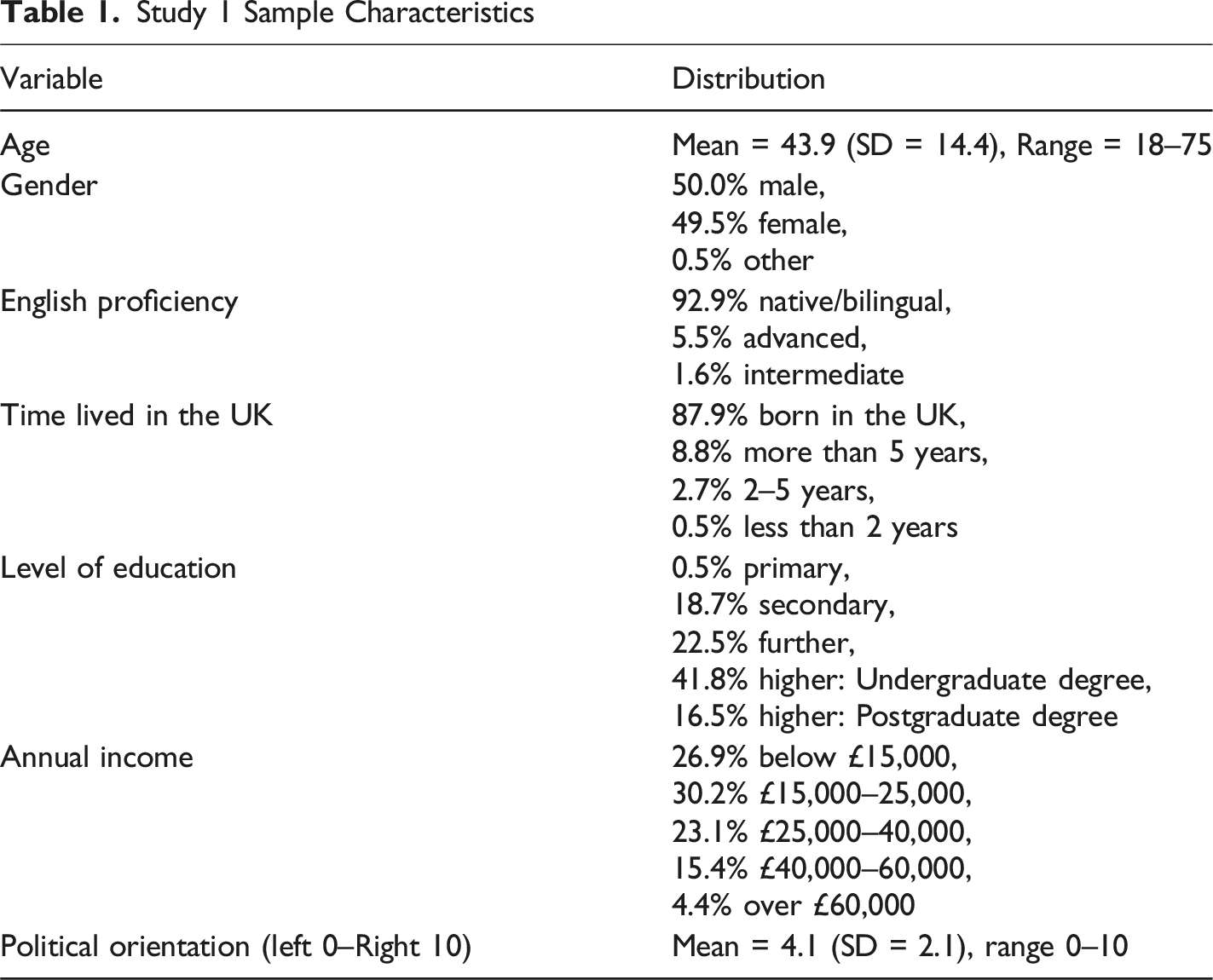
The questionnaire included a simple attention check item (“There is no actual statement here, this is just a simple attention check. Select all response options.”) that was embedded in the self-control beliefs scale. One participant failed to provide a correct answer and was excluded from the final sample. In addition, 26 participants started the online questionnaire, but did not complete it and were therefore excluded. The exclusion criteria were preregistered before data collection.
Procedure
The questionnaire was implemented using the Qualtrics online survey software. Participants filled in the original self-control beliefs scale by Job and colleagues (2010) about the limitedness of self-control, and our additional subscale about the malleability of self-control. Next, general self-esteem and self-rated trait self-control were measured with the Rosenberg Self-Esteem Scale and the Brief Trait Self-Control Scale, respectively. The order of the three scales was fixed, but items within each scale were presented in random order. Finally, participants were asked to report their age, gender, level of education, annual income, and political orientation. This demographic information was collected to estimate the diversity of our sample as well as to allow statistical analyses on associations between these characteristics and self-control belief. Apart from the age-related analyses, the analyses with demographic information were exploratory.
Measures
All measure items are presented in Appendix 2.
Self-Control Beliefs
Self-control beliefs were measured with three subscales, each of which included 6 statements. Participants had to rate each statement on a scale from 1 (“Strongly agree”) to 6 (“Strongly disagree”). Two of the subscales were from the original scales designed by Job and colleagues (2010), measuring how strongly participants endorse a limited view of self-control in the domains of strenuous mental effort (e.g., “After a strenuous mental activity, your energy is depleted, and you must rest to get it refuelled again.”) and resisting temptations (e.g., “Resisting temptations makes you feel more vulnerable to the next temptations that come along.”), respectively. Additionally, we included a new subscale to measure how strongly participants endorse a fixed versus malleable view of self-control (e.g., “Your willpower is something about you that you can’t change very much.”). We designed these new items based on the items used to measure implicit theories of intelligence (Dweck, 1999). The final score for each subscale was derived by calculating the mean of the item scores.
General Self-Esteem
General self-esteem was measured with the Rosenberg Self-Esteem Scale (Rosenberg, 1965, 1989). This scale has been extensively used in self-esteem literature for decades and has generally demonstrated good psychometric properties (e.g., Donellan, 2015; but see also Hubley et al., 2025). The scale includes 10 self-related statements (e.g., “I feel that I have a number of good qualities.”), which are rated on a scale from 1 (“Strongly agree”) to 4 (“Strongly disagree”). Each item is scored from 0 to 3, and the total score is calculated by adding the raw scores from each item.
Trait Self-Control
Trait self-control was measured with the Brief Self-Control Scale, one of the most frequently used self-rate measures of trait self-control (Tangney et al., 2004; for psychometric analyses, see Haktanir et al., 2024; Manapat et al., 2021). The scale comprises 13 self-control-related items (e.g., “I am able to work efficiently towards long-term goals.”), which are rated on a scale from 1 (“Not at all”) to 5 (“Very much”). Each item is scored from 1 to 5, and the total score is calculated by adding the raw scores from each item.
Demographic Information
In addition, participants were asked to provide information about their age, gender, English proficiency and how long they had lived in the UK, level of education, annual income, and political orientation (see Table 1).
Statistical Analyses
Statistical analyses were carried out following a preregistered analysis plan. All the analyses were conducted with R (R Core Team, 2022). The structure of self-control beliefs was examined with a principal component analysis (PCA). We opted for an exploratory PCA instead of a confirmatory factor analysis (CFA) because the latter assumes that the individual items are mutually uncorrelated after conditioning on the common factor and that the target constructs are equivalent to whatever is in common among all indicators, such that anything not shared among the items belongs to the residual (Rhemtulla et al., 2020). However, previous research with the self-control beliefs scale does not provide unambiguous evidence for either of these assumptions (Bernecker & Job, 2017; Jędrzejczyk & Zajenkowski, 2020; Napolitano & Job, 2018). Thus, we opted for an exploratory PCA instead of a CFA. The associations between the self-control beliefs subscales and self-esteem, trait self-control, and demographic variables were examined with correlation coefficients. 2
Results
Self-Control Beliefs Subscales
Study 1 Self-Control Beliefs Subscales: Descriptive Statistics
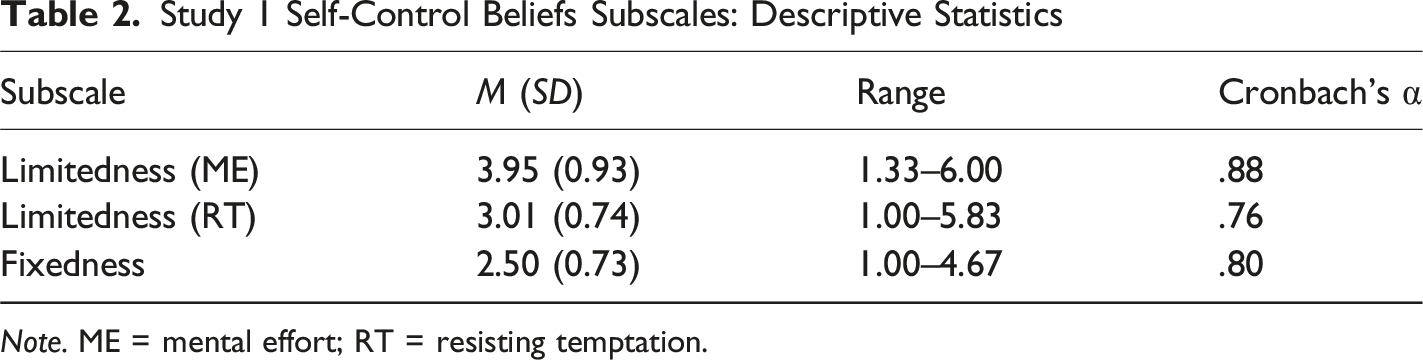
Note. ME = mental effort; RT = resisting temptation.
Partial correlations between the mean scores of the subscales did not support the hypothesis that there would be two dimensions reflecting beliefs about the fixedness (i.e., lack of malleability) and limitedness of self-control. Instead, one of the original limitedness subscales (resisting temptation) was moderately correlated with both the other limitedness subscale (mental effort; r = .42, p < .001) and the fixedness subscale (r = .42, p < .001). Additionally, there was a weak negative correlation between the fixedness subscale and the mental-effort limitedness subscale (r = −.16, p = .03).
Principal Component Analysis
Study 1 Varimax Rotated Component Matrix
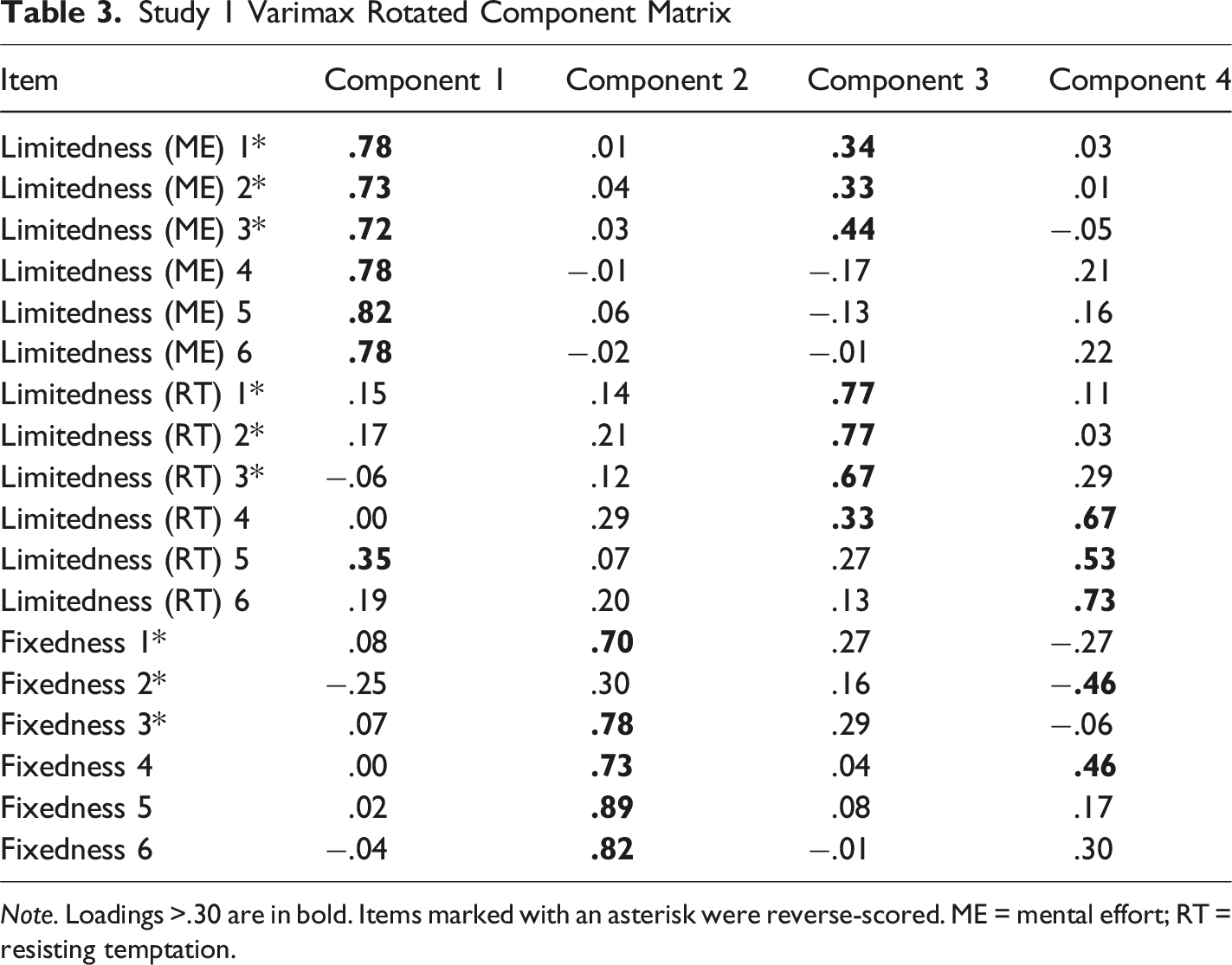
Note. Loadings >.30 are in bold. Items marked with an asterisk were reverse-scored. ME = mental effort; RT = resisting temptation.
Two of the components corresponded to a specific subscale: all six mental-effort items loaded heavily on Component 1 and five of the six fixedness items loaded heavily on Component 2. The inconsistent fixedness item was also the only one that described the possibility of a negative change (“Some things you do can damage your self-control in the long term.”).
The remaining two components mainly captured different subsets of the resisting-temptation items, with reverse-scored items reflecting nonlimitedness beliefs (e.g., “If you have just resisted a strong temptation, you feel strengthened and you can withstand any new temptations.”) loading heavily on Component 3 and non-reverse-scored items reflecting limitedness beliefs (e.g., “Resisting temptations makes you feel more vulnerable to the next temptations that come along.”) loading heavily on Component 4. However, several mental-effort and fixedness items also have moderate loadings on these two components.
Association with Self-Esteem
The mean scores of the mental-effort (r = −.30, p < .001) and resisting-temptation (r = −.31, p < .001) subscales were moderately negatively correlated with general self-esteem. That is, stronger beliefs about the limitedness of self-control were associated with lower self-esteem regardless of the domain (i.e., exerting mental effort or resisting temptation). By contrast, the fixedness subscale was not correlated with general self-esteem (r = −.09, p = .21).
Association with Trait Self-Control
Similarly, there was a moderate negative correlation between the trait self-control score and the mean score on the two limitedness subscales. Weaker self-reported trait self-control was associated with stronger endorsements of the limited resource view of self-control in the domains of mental effort (r = −.38, p < .001.) and resisting temptation (r = −.35, p < .001). There was no significant correlation between the trait self-control score and the mean score on the fixedness subscale (r = −.04, p = .60).
Age-Related Differences
In contrast to the previous research, there were no significant associations between age and either the mental-effort (r = −.07, p = .33) or resisting-temptation (r = −.12, p = .11) subscales. Moreover, there was no significant association between age and the fixedness subscale, with (r = .05, p = .51). We also conducted exploratory analyses on other potential demographic differences (See Appendix 4). However, we observed no significant correlations or group differences after controlling for multiple comparisons.
Summary
Study 1 provided support for the hypothesis that beliefs about the short-term limitedness and long-term malleability of self-control are relatively distinct from each other. In terms of mean scores, there was a moderate positive correlation between the fixedness subscale and resisting-temptation limitedness subscale, and a weak negative correlation between the fixedness subscale and the mental-effort limitedness subscale. In addition, the two limitedness subscales were only moderately correlated with each other. The PCA further suggested that the limitedness and fixedness items were relatively independent of each other. Moreover, limitedness beliefs varied depending on the self-control domain and the positive versus negative wording of the items.
Both limitedness subscales were moderately associated with general self-esteem and self-rated trait self-control, suggesting that these scales measure related but distinct concepts. The fixedness subscale was not associated with either self-esteem or trait self-control. Finally, in contrast to previous research, we did not find any age-related differences in self-control beliefs.
Study 2
Study 2 aimed to assess the robustness of the structure of self-control beliefs observed in Study 1 by replicating it in a second sample, and to test whether and how people’s beliefs about self-control may be associated with their beliefs about intelligence and personality and their general self-efficacy.
Method
Participants
Study 2 Sample Characteristics
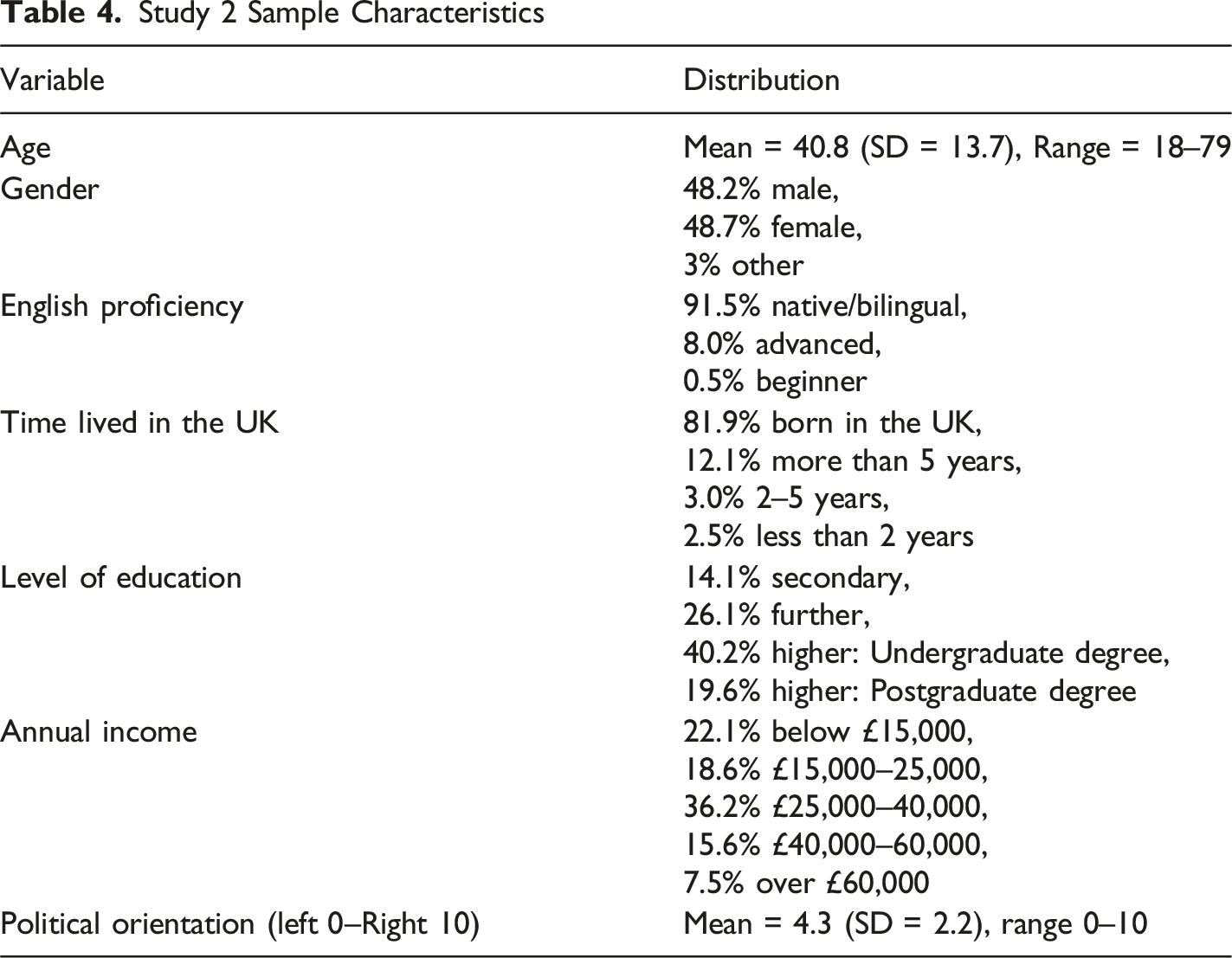
Procedure
The questionnaire was implemented using the Qualtrics online survey software. Participants first filled in the scales measuring their beliefs about self-control, intelligence, and personality. The order in which these three scales were presented, as well as the order of items within each scale, was randomised. Next, general self-efficacy was measured with the General Self-Efficacy Scale (with a randomised item order). Finally, participants were asked to report their age, gender, level of education, annual income, and political orientation.
Measures
All measure items are presented in Appendix 2. For measuring self-control beliefs and gathering demographic information, we used the same items as in Study 1. Additionally, we included scales for measuring participants’ beliefs about the malleability of intelligence and personality (Dweck, 1999; Hughes, 2015) as well as their general self-efficacy (Schwarzer & Jerusalem, 1995).
Intelligence Beliefs
The scale consisted of 8 items measuring people’s beliefs about the malleability of intelligence (Dweck, 1999; Hughes, 2015). Similar to the self-control belief scale, participants rated statements on a six-point scale (from “Strongly Agree” to “Strongly Disagree”). Each item was scored from 1 to 6 and the final score is derived by calculating the mean of the item scores.
Personality Beliefs
The scale consisted of 8 items measuring people’s beliefs about the malleability of people’s character (Dweck, 1999; Hughes, 2015). Similar to the other scales described above, participants were presented with simple statements and use a six-point scale (from “Strongly Agree” to “Strongly Disagree”). Again, each item was scored from 1 to 6 and the final score was derived by calculating the mean of the item scores.
General Self-Efficacy
The scale consisted of 10 items measuring self-efficacy (Schwarzer & Jerusalem, 1995; for validity studies, see Luszczynska et al., 2005; Scholz et al., 2002; Zhou, 2016). Participants rate each statement on a four-point scale to indicate how well the statement applied to them (from 1 = “Not at all true” to 4 = “Exactly true”). The total score was calculated by finding the sum of all items.
Statistical Analyses
Statistical analyses were carried out with R (R Core Team, 2022), following a preregistered analysis plan. After examining the internal consistency of each self-control belief subscale and the correlations between their mean scores, we conducted a PCA to examine the structure of the whole scale. 4 The associations between the self-control beliefs subscales and intelligence and personality beliefs, general self-esteem, and demographic variables were examined with correlation tests.
Results
Self-Control Beliefs Subscales
Study 2 Beliefs Scales: Descriptive Statistics
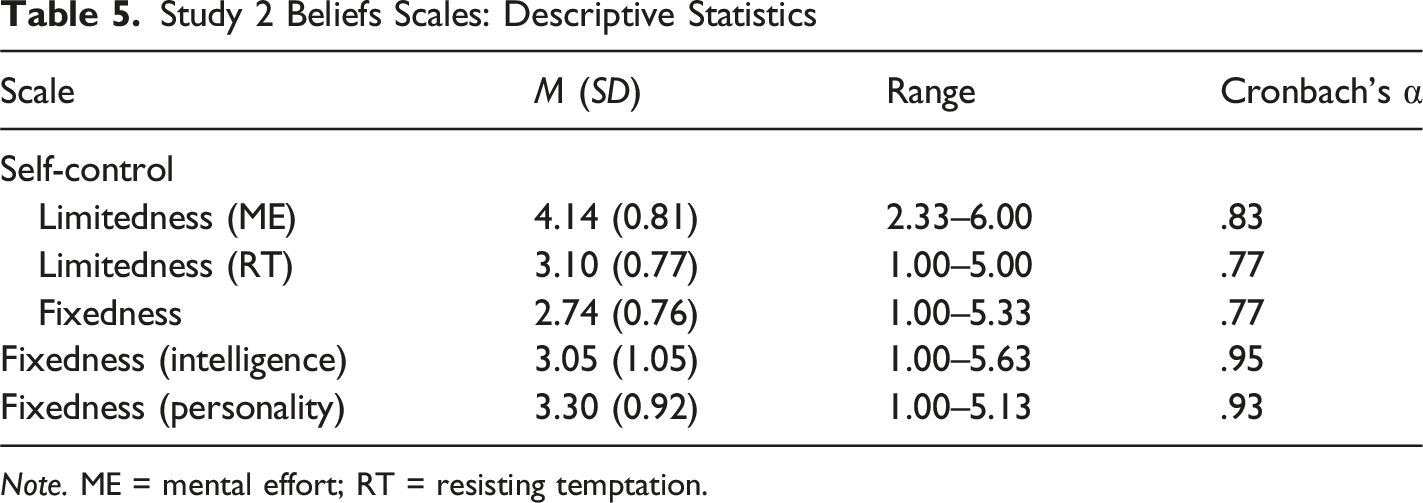
Note. ME = mental effort; RT = resisting temptation.
Principal Component Analysis
Study 2 Varimax Rotated Component Matrix
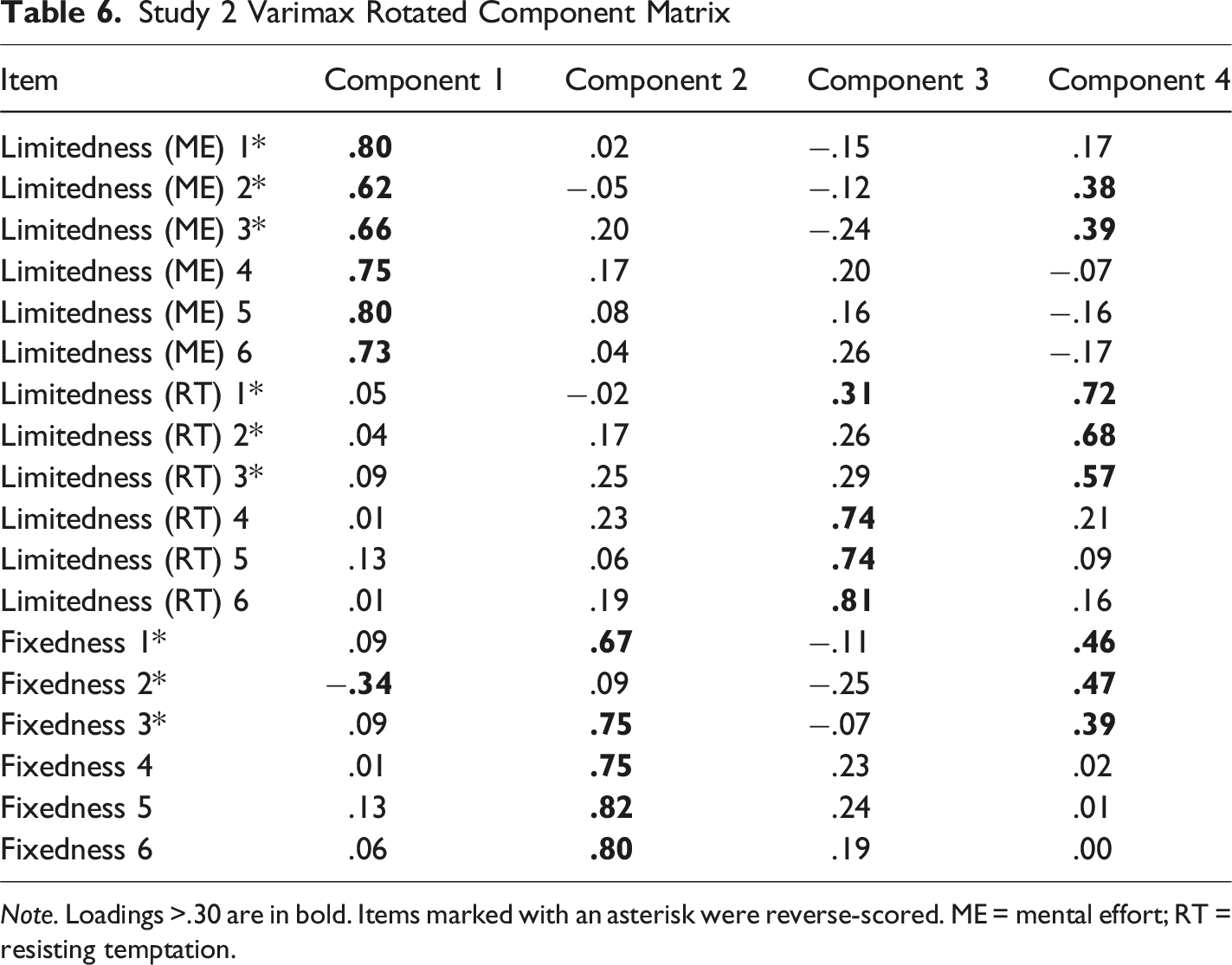
Note. Loadings >.30 are in bold. Items marked with an asterisk were reverse-scored. ME = mental effort; RT = resisting temptation.
As in Study 1, two of the components correspond to a specific subscale: all six mental-effort items loaded heavily on Component 1 and five of the six fixedness items loaded heavily on Component 2. Again, the only inconsistent fixedness item was the one describing the possibility of a negative change (“Some things you do can damage your self-control in the long term.”). Interestingly, in the present study, this item had a moderate negative loading on Component 1.
The results of Study 1 were further replicated as the remaining two components again mainly captured different subsets of the resisting-temptation items. Non-reverse-scored items reflecting limitedness beliefs (e.g., “Resisting temptations makes you feel more vulnerable to the next temptations that come along.”) loaded heavily on Component 3 and reverse-scored items reflecting nonlimitedness beliefs (e.g., “If you have just resisted a strong temptation, you feel strengthened and you can withstand any new temptations.”) loaded heavily on Component 4 However, all reverse-scored fixedness items and two reverse-scored mental-effort items also had moderate loadings on Component 4.
Associations with Intelligence and Personality Beliefs
Stronger beliefs about the fixedness of self-control were associated with stronger beliefs about the fixedness of personality (r = .36, p < .001) and there was similarly a positive correlation between beliefs about the fixedness of personality and the beliefs about the fixedness of intelligence (r = .49, p < .001.) By contrast, there was no correlation between self-control beliefs and intelligence beliefs (r = .04, p = .55).
Interestingly, participants rated intelligence and personality as more fixed than self-control (see Table 5), as suggested by an exploratory analysis of variance, F (2, 594) = 18.14, p < .001, η2 = .06. Mean fixedness ratings significantly increased across self-control (2.75), intelligence (3.05), and personality (3.30), all p-values < .009. False discovery rate correction was used in these comparisons. Removing the negative malleability item from the self-control beliefs scale did not change this pattern of results (Appendix 5).
Association with Self-Efficacy
As expected, self-control beliefs were associated with general self-efficacy, but the correlations were weak. There was a weak negative correlation between general self-efficacy and the mean score of the resisting-temptation limitedness subscale (r = −.29, p < .001), the fixedness subscale (r = −.20, p = .005), and the mental-effort limitedness subscale (r = −.17, p = .02). Thus, greater general self-efficacy was associated with a less limited and more malleable view of self-control.
Age-Related Differences
Similar to Study 1, there were no significant associations between age and any of the self-control subscales after correcting for multiple comparisons (all p-values > .11).
Summary
Study 2 replicated the main findings of Study 1, thus further supporting a multidimensional and domain-specific view of self-control beliefs. The mean scores of the self-control belief subscales again suggested that malleability beliefs are relatively distinct from limitedness beliefs. The fixedness subscale was moderately correlated with the resisting-temptation limitedness subscale, but not with the mental-effort limitedness subscale. In contrast to Study 1, the limitedness subscales were not correlated with each other. The PCA results were very similar to Study 1, yielding four components which mostly reflected mental-effort limitedness items, fixedness items, non-reverse-scored resisting-temptation limitedness items, and reverse-scored resisting-temptation limitedness items, respectively.
All self-control belief subscales were weakly associated with general self-efficacy, suggesting that these scales measure something related to but distinct from self-efficacy. Beliefs about the malleability of self-control were moderately associated with beliefs about the malleability of overall personality, but not with beliefs about intelligence. Similar to Study 1, there were no significant age-related differences in self-control beliefs.
General Discussion
In these two studies, we examined the structure of people’s self-control beliefs by adding a new subscale to the predominant measure in this line of research. Our results suggest that beliefs about the short-term limitedness and long-term malleability of self-control are indeed relatively independent of each other, but that limitedness beliefs may also be domain-specific. A more limited view of self-control was associated with lower self-esteem and weaker self-rated trait self-control, but only moderately. Moreover, both limitedness and fixedness beliefs were associated with poorer self-efficacy. Interestingly, beliefs about the malleability of self-control were moderately associated with beliefs about the malleability of personality, but not with beliefs about the malleability of intelligence. Finally, in contrast to previous research, there were no age-related differences in self-control beliefs.
Multidimensional and Domain-Specific Beliefs
The distinction between limitedness and malleability beliefs could be observed both at the level of subscales and at the level of individual items. Firstly, we observed significant correlations between the mean scores of the subscales, but these were only weak-to-moderate in magnitude in both studies, suggesting the scales captured relatively distinct aspects of self-control beliefs. Secondly, in both studies, the PCA suggested a model with four components, two of which seemed to closely correspond to a specific subscale. The first component mainly captured variance related to the limitedness items related to mental effort and the second component mainly captured variance related to the fixedness items. The only inconsistent fixedness items was also the only item that expressed a possibility of negative long-term changes, suggesting a dissociation between lay beliefs about the possibility to improve versus damage one’s self-control in the long term.
Our findings consistently support the hypothesis that limitedness and malleability beliefs are relatively distinct from each other. This highlights the need to measure both types of beliefs while conducting research on self-control. There is already preliminary evidence that beliefs about the malleability of self-control have behavioural implications (Mukhopadhyay & Johar, 2005; Mukhopadhyay & Yeung, 2010). Moreover, a large body of research suggests that beliefs about the long-term malleability of other psychological attributes, such as intelligence, are associated with important life outcomes (e.g., academic achievement; see Dweck & Yeager, 2019). Hence, measuring malleability beliefs – which appear both conceptually and empirically distinct from limitedness beliefs – may well offer important insights to the role of metacognition in self-control behaviour.
The remaining two components from the PCA results are slightly more difficult to interpret, yet again similar across the two studies. In both studies, one component mainly contained high loadings from the reverse-scored resisting-temptation items, which expressed nonlimited views of self-control (e.g., “If you have just resisted a strong temptation, you feel strengthened and you can withstand any new temptations.”). By contrast, the remaining component contained high loadings from all the non-reverse-scored resisting-temptation items reflecting a limited view of self-control (e.g., “Resisting temptations makes you feel more vulnerable to the next temptations that come along.”). This finding resembles the results of an earlier study that combined several different US samples to examine the mental effort subscale using a factor analysis (Napolitano & Job, 2018). The analysis suggested that it might be useful to include a separate “method” factor to account for variance associated with reverse-scored items. However, in our data, this seemed to mainly be a concern for the items related to resisting temptation.
Somewhat surprisingly, the two subscales measuring limitedness beliefs in different self-control domains were also only moderately correlated with each other in Study 1. Furthermore, in Study 2, this correlation was not even significant. As described above, the PCA similarly suggested that resisting-temptation and mental-effort items mainly loaded on different components. These results suggest that limitedness beliefs are relatively domain specific. Rather than holding a single, domain-general view of self-control, people appear to view the limits of self-control differently depending on the type of the motivational conflict. This is noteworthy, as previous studies have sometimes combined the scores of different limitedness subscales to form a single dimension (e.g., Job et al., 2010). However, similar to our results, more recent studies have found limitedness beliefs to be domain-specific (Bernecker & Job, 2017; Jędrzejczyk & Zajenkowski, 2020).
Acknowledging this domain-specificity may allow researchers to increase prediction accuracy. For example, prior studies with Swiss participants found that people had different expectations about their self-control or willpower for exerting mental effort, resisting temptations, and controlling one’s emotions (Bernecker & Job, 2017). Importantly, the role of these beliefs in predicting people’s self-control behaviour was also domain specific. Thus, focusing on the relevant self-control domain can offer a better understanding of the links between metacognitive beliefs and self-control success.
One might even ask whether it makes sense to discuss “self-control beliefs” at a general level if people do not hold domain-general beliefs about self-control. That said, even if future research confirms that people’s beliefs about self-control are profoundly domain-specific, there is a clear theoretical rationale for considering various distinct behaviours as self-control – as long as they involve self-regulation in the face of a motivational conflict (Koi, 2023; see also Fujita et al., 2025). While findings about the domain-specificity of people’s beliefs should inform scale development and our understanding of how metacognitive beliefs relate to behaviour, this does not require us to abandon self-control as an umbrella concept.
In sum, our results support a multidimensional and domain-specific approach to measuring self-control beliefs. In addition to the distinction between beliefs about limitedness and malleability, there may be other important distinctions, such as between different self-control domains (i.e., continuing tasks requiring strenuous mental effort versus resisting temptation) and between beliefs in the possibility of a positive versus negative long-term change. Taking these nuances into account enables us to better understand how lay people reason about self-control. These insights into people’s metacognition about self-control, in turn, can eventually help us to better predict and support everyday self-control. For example, if studies consistently replicate the previous experimental findings that self-control beliefs affect self-control behaviour (see Francis & Job, 2018), shaping these beliefs could be a way to support people’s self-control. Findings about the multidimensional and domain-specific nature of self-control beliefs suggest that such intervention efforts should be carefully designed to cover the self-control belief dimensions and domains that are relevant to the self-control behaviour the intervention is designed to support.
Self-Control Beliefs, Self-Esteem, and Self-Efficacy
We also tested whether the self-control beliefs subscales measure something distinct from general self-esteem, self-efficacy and self-reported trait self-control. Stronger beliefs in the limitedness of self-control – regardless of the domain – were associated with lower self-esteem, poorer self-efficacy, and weaker trait self-control. Thus, limitedness beliefs are related to people’s general feelings of self-worth and efficacy and their evaluations of their baseline self-control ability. As each of these constructs has also been linked to real-world behavioural outcomes (Hagger & Hamilton, 2024; Honicke & Broadbent, 2016; Muris & Otgaar, 2023), the present findings speak to the importance of studying self-control beliefs. At the same time, these correlations were only weak-to-moderate. This suggests that individual differences in people’s scores on the limitedness subscales cannot be reduced simply to differences in self-evaluated trait self-control, self-esteem, or self-efficacy. Our findings are in line with previous studies on self-control beliefs, which have reported weak-to-moderate correlations and self-efficacy and trait self-control (Bernecker et al., 2017; de Ridder et al., 2020; Job et al., 2015). However, further research should be conducted to move beyond these broad descriptions and reach formal theories about the relations between these phenomena and the potential interacting factors (e.g., the role of measurement instruments).
Malleability beliefs were also weakly associated with self-efficacy. Considering that self-efficacy is associated with important real-life outcomes such as academic performance (Honicke & Broadbent, 2016; Tsang et al., 2012), this finding further highlights the need to consider malleability beliefs in addition to limitedness beliefs. By contrast, there was no correlation between beliefs about the malleability of self-control and either general self-esteem or trait self-control. While this pattern of results was unexpected, it may be related to meaningful differences between the relevant concepts and measures. The scales we used to measure general self-esteem and trait-self-control include items that focus on people’s general evaluations of what kind of people they are (e.g., “I feel I do not have much to be proud of.”, “I am lazy.”). By contrast, the General Self-Efficacy Scale is more exclusively focused on what people think they can do (e.g., “If I am in trouble, I can usually think of a solution.”). Items referring to general problem-solving skills could be more closely linked to one’s beliefs about their ability to change their self-control capabilities (e.g., “There are things you can do to improve your willpower.”). Interestingly, some earlier work suggests that self-efficacy is more closely related to motivational constructs and self-esteem to affective constructs (Chen et al., 2004). Thus, if malleability beliefs are specifically related to self-efficacy, they might be especially relevant for motivational research focusing on topics such as work-related effort, performance, and achievement. That said, more research will be needed to test whether this finding can be replicated.
The Perceived Malleability of Different Psychological Phenomena
In Study 2, we found that beliefs about the malleability of self-control were moderately associated with similar beliefs about personality, but not with beliefs about intelligence. Beliefs about personality and intelligence were also moderately associated with each other. Thus, while beliefs about the malleability of different psychological attributes are not fully independent., our results suggests that people do not hold generalized beliefs about the malleability of psychological phenomena. Rather, their views vary depending on which phenomenon they are thinking about – at least to some extent. This finding is in line with previous research (e.g., Hughes, 2015; Zhu et al., 2020). Still, the finding that only personality beliefs were correlated with self-control beliefs was unexpected. This may reflect the fact that the scale we used measures personality in very broad terms instead of focusing any specific set of traits (e.g., “People can always substantially change the kind of person they are.”). Arguably, self-control and intelligence both contribute to “the kind of person one is”, which might explain why self-control and intelligence beliefs were associated with these types of overall personality beliefs, but not with each other.
In our exploratory analyses, we observed that people viewed self-control as more malleable than overall intelligence or personality and that intelligence was rated as more malleable than personality. Other studies using these or similar scales have similarly found that people view intelligence as more malleable than overall personality (Hughes, 2015; Zhu et al., 2020; but see Spinath et al., 2003). A possible interpretation of the present pattern of findings is that people view specific characteristics and abilities, such as self-control and intelligence, as relatively malleable, but are somewhat more sceptical when it comes to changing one’s “most basic qualities” or the “kind of person one is”. However, future research should further test this hypothesis. Moreover, other factors not examined here, such as the extent to which the public understanding of different psychological phenomena highlights neurobiology, may also shape malleability beliefs (see Lebowitz & Appelbaum, 2019; O’Connor & Joffe, 2013).
It should be noted that our measure for malleability beliefs about self-control differed from the other two malleability scales in one important respect: it included an item which referred to the possibility of negative change (“Some things you do can damage your self-control in the long term.”). Moreover, the PCA results suggested that this item functioned distinctly from the other items of the same subscale. Removing this item from our analyses did not affect the overall pattern of results. However, future studies could use a larger pool of negative malleability items to test whether people’s beliefs about negative versus positive malleability beliefs are in fact relatively independent of each other – and whether this depends on the psychological phenomenon they are thinking about.
The Missing Age-Related Differences
Finally, in contrast to previous research (Job et al., 2018), we did not find any evidence of age-related differences in self-control beliefs. In the earlier studies with German and US participants self-control beliefs were associated with age such that older adults were more likely to endorse nonlimited beliefs. It is hard to find a simple explanation for this null finding. Based on the effect size estimates reported in the earlier research, our sample sizes should have yielded a statistical power of 95% for detecting the effect of age. Moreover, the age distributions of the present studies do not differ dramatically from the earlier study with German participants.
Strengths and Limitations
To our knowledge, the present studies are the first ones to examine lay beliefs about both the limitedness and malleability of self-control in a diverse sample of adult participants. This design allowed us to gather valuable information about the structure of self-control beliefs. Yet, our study is not without its limitations.
Firstly, we relied on a limited set of multiple-choice items. While we analysed our data using a PCA without a predefined assumption of the structure of self-control beliefs, our measure inherently limits the type of information we were able to collect. Since we wanted our studies to map onto existing research, we built on existing scales (Job et al., 2010). However, some of our item choices could be seen as controversial given the debate about the scope of the concept of self-control (Bermúdez, 2021; Goschke & Job, 2023; Koi, 2023). For example, on skill-based accounts of self-control, strenuous mental activity is not a paradigmatic dimension of self-control. The items used were also heavily reliant on the willpower metaphor (e.g., “After a strenuous mental activity, your energy is depleted, and you must rest to get it refuelled again.”). Our initial pilot study showed no difference for a less metaphorical phrasing, but the existence of such an effect cannot be completely ruled out. More generally, research published after our data collection suggests that when more open-ended questions are used, people’s self-control beliefs appear even more multidimensional (Li et al., 2025). Thus, future studies could combine quantitative and qualitative methods to allow a more comprehensive exploration of self-control beliefs.
Secondly, our results do not allow strong conclusions about whose self-control people are thinking about when filling in the scale. Do people’s responses reflect their beliefs about the limitedness and malleability of their own self-control or is the scale capturing more general beliefs about self-control? Research on lay beliefs has generally been somewhat vague in this regard. When research is conducted in English, scales often use items that are phrased from an ambiguous second-person perspective and researchers do not always state whether they are interested in people’s beliefs about a given attribute in general or about their personal attributes. Some studies on beliefs about intelligence have examined this issue (e.g., De Castella & Byrne, 2015; Gunderson et al., 2017). For example, a study with Australian high school students reported that a scale that was explicitly focused on participants’ views of their own intelligence was a better predictor of their motivation and grades than a scale using more ambiguous second-person phrases. (De Castella & Byrne, 2015). Thus, people may interpret second-person items as statements about human nature in general and their evaluations of the nature of their own psychological attributes might be more relevant when predicting real-world outcomes.
Thirdly, our studies did not include a measure of everyday self-control behaviour. Thus, while limitedness and malleability beliefs appeared to be relatively distinct from each other in lay thinking about self-control, it is still an open question whether assessing malleability beliefs in addition to limitedness beliefs will allow better predictions of people’s behaviour. Although there is preliminary evidence supporting this hypothesis (Mukhopadhyay & Johar, 2005; Mukhopadhyay & Yeung, 2010), future studies should test the predictive validity of the multidimensional model suggested here.
Finally, we did not assess the stability of self-control beliefs. Previous research on self-control beliefs has largely assumed these beliefs to be relatively stable over time. However, to our knowledge, only a few studies have empirically tested this assumption (see Bernecker et al., 2017; de Ridder et al., 2020; Job et al., 2010). More research is therefore needed on the short- and long-term temporal dynamics of these beliefs. For example, studies could use ecological momentary assessment methods to explore whether and how self-control beliefs fluctuate in interaction with daily events (see van den Bekerom et al., 2025; Shiffman et al., 2008). This general limitation of our cross-sectional approach also applies to the measurement of other psychological phenomena, such as self-efficacy and self-reported self-control (see de Ridder et al., 2020; Ouweneel et al., 2013). That said, single-time-point measures of self-control beliefs do predict self-control behaviour and real-life outcomes (see Francis & Job, 2018). Thus, while this approach does not tell the whole story, it nevertheless provides meaningful insights into people’s beliefs and behaviour.
A better understanding of lay beliefs about self-control could eventually inform science communication and intervention development. Lay beliefs and knowledge about psychological concepts can differ from researchers’ beliefs and knowledge (Bermúdez et al., 2021; Warne & Burton, 2020). This, in turn, may shape how they respond to science communication or intervention initiatives (see Schuetze, 2022). For example, there is some evidence that teachers’ evaluations of the effectiveness of educational interventions and their use of such interventions may be associated with their pre-existing beliefs about intelligence and education (Schuetze, 2022; Warne & Burton, 2020). Similarly, lay beliefs about self-control might play a role in how effective people perceive different self-control strategies to be and how committed they are to follow an intervention designed to support self-control.
Conclusion
Our findings support a multidimensional and domain-specific approach when measuring self-control beliefs and suggest that these beliefs are related to but nevertheless distinct from self-esteem, self-efficacy, self-rated trait self-control, and beliefs about personality. Our results also raise questions about how robust the previously reported age-related differences in self-control beliefs are. Further research should be conducted to test the robustness of our findings and examine whether different belief dimensions are also differentially associated with self-control behaviour. Eventually, a more comprehensive model of lay beliefs about self-control can allow us to better understand the metacognitive mechanisms underlying everyday self-control. Moreover, intervention design and science communication in this field can benefit from considering people’s pre-existing beliefs. In a society where people are often bombarded with competing impulses, self-control research may help us to build environments that allow people to live up to their commitments amid motivational conflicts.
Supplemental Material
Suppplemental Material - Measuring Self-Control Beliefs: A Multidimensional and Domain-Specific Perspective
Suppplemental Material for Measuring Self-Control Beliefs: A Multidimensional and Domain-Specific Perspective by Anssi Bwalya, Polaris Koi, Hugh Rabagliati, and Nicolas Chevalier in Psychological Reports
Supplemental Material
Suppplemental Material - Measuring Self-Control Beliefs: A Multidimensional and Domain-Specific Perspective
Suppplemental Material for Measuring Self-Control Beliefs: A Multidimensional and Domain-Specific Perspective by Anssi Bwalya, Polaris Koi, Hugh Rabagliati, and Nicolas Chevalier in Psychological Reports
Supplemental Material
Suppplemental Material - Measuring Self-Control Beliefs: A Multidimensional and Domain-Specific Perspective
Suppplemental Material for Measuring Self-Control Beliefs: A Multidimensional and Domain-Specific Perspective by Anssi Bwalya, Polaris Koi, Hugh Rabagliati, and Nicolas Chevalier in Psychological Reports
Supplemental Material
Suppplemental Material - Measuring Self-Control Beliefs: A Multidimensional and Domain-Specific Perspective
Suppplemental Material for Measuring Self-Control Beliefs: A Multidimensional and Domain-Specific Perspective by Anssi Bwalya, Polaris Koi, Hugh Rabagliati, and Nicolas Chevalier in Psychological Reports
Supplemental Material
Suppplemental Material - Measuring Self-Control Beliefs: A Multidimensional and Domain-Specific Perspective
Suppplemental Material for Measuring Self-Control Beliefs: A Multidimensional and Domain-Specific Perspective by Anssi Bwalya, Polaris Koi, Hugh Rabagliati, and Nicolas Chevalier in Psychological Reports
Footnotes

Ethical Considerations
The research has been approved by the PPLS Research Ethics Committee, reference numbers: 7-2223/1 (Study 1) and 19-2425/1 (Study 2).
Consent to Participate
At the beginning of the online survey, the nature of the study was described, and participants were asked to indicate whether they agreed to participate in the study and whether they consent to the storage and use of their data. Participants gave their informed consent by ticking the box next to the response “Yes, I give my consent”.
Funding
The authors disclosed receipt of the following financial support for the research, authorship, and/or publication of this article: This work was supported by the School of Philosophy, Psychology, and Language Sciences (PPLS), the University of Edinburgh (College Research Award).
Declaration of Conflicting Interests
The authors declared no potential conflicts of interest with respect to the research, authorship, and/or publication of this article.
Data Availability Statement
Supplemental Material
Supplemental material for this article is available online.
Notes
Author Biographies
References
Supplementary Material
Please find the following supplemental material available below.
For Open Access articles published under a Creative Commons License, all supplemental material carries the same license as the article it is associated with.
For non-Open Access articles published, all supplemental material carries a non-exclusive license, and permission requests for re-use of supplemental material or any part of supplemental material shall be sent directly to the copyright owner as specified in the copyright notice associated with the article.
