




Abstract
Procrastination is a self-regulatory failure in which important tasks are delayed despite the knowledge that this is unhelpful; episodic future thinking is the process of constructing detailed mental simulations of possible future events. High trait procrastination has been linked to reduced sensory-perceptual detail when simulating future events based on experimenter prompts, yet it remains unclear if this extends to events reflecting achievement of one’s personal goals. The present investigation aimed to establish the relations between trait procrastination and attributes of short-term (<1 month) and long-term (>6 months) personal goals and goal achievement simulations. High procrastination was expected to predict high self-reported likelihood of goal avoidance, especially for long-term goals (due to associated delay sensitivity); reduced sensory-perceptual detail in achievement simulations; and heightened anticipatory anxiety when contemplating goal failure. Multilevel models controlling for other goal attributes showed a positive predictive effect of procrastination on avoidance likelihood for long- and short-term goals; no effects on sensory-perceptual detail of achievement simulations; and a positive predictive effect on anticipatory anxiety which was most pronounced for short-term goals. Exploratory analyses further showed that neither goal importance nor achievement simulation characteristics (autonoetic consciousness, anticipated emotions) were sensitive to procrastination levels. These findings suggest that a tendency to procrastinate, though disruptive, does not imply deficits in goal setting; and further, that its effects on future simulation may not extend to personally important goal-related events. Finally, results on anticipatory anxiety highlight a potential mechanism by which high procrastinators are drawn into focussing on short-term goals at the expense of more important long-term priorities.
Keywords
Procrastination is a self-regulatory failure manifesting in the tendency to delay initiation or completion of important tasks (Klingsieck, 2013; Steel, 2007). It has been investigated using both individual differences metrics (e.g., the pure procrastination scale, PPS; Steel, 2010) and more context-sensitive self-report or behavioural measures (Steel et al., 2018; Svartdal et al., 2017; S. Zhang & Feng, 2020; P. Y. Zhang & Ma, 2024; Zuber et al., 2020). Theoretically, procrastination is assumed to occur as a product of high task aversiveness, the presence of comparatively attractive alternatives, and individual impulsivity or delay sensitivity (Steel & König, 2006; S. Zhang & Feng, 2020). On this basis, predictions can be made about who will most likely procrastinate on which tasks, under which circumstances. In short, those with high delay sensitivity, when faced with a choice between an effortful long-term payoff (e.g., a strong essay grade) and an immediately rewarding activity (e.g., playing games now), are likely to procrastinate and choose the latter option.
A paper by Rebetez et al. (2016) united procrastination research with a separate literature on episodic future thinking (i.e., the mental simulation of specific events that may happen in one’s personal future; Atance & O’Neill, 2001). If procrastination is driven by impulsivity and a focus on present rewards, then those exhibiting high trait levels might struggle to construct detailed simulations of future events (Sirois & Pychyl, 2013). In line with this, Rebetez et al. (2016) showed that those scoring highly on a French adaptation of the PPS reported diminished sensory-perceptual detail (SPD) in their simulations when asked to imagine specific future events based on experimenter-provided cues. Notably, this finding remained when controlling for general negative affect, suggesting that diminished detail or ‘vividness’ of future simulation occurs in procrastination irrespective of its negative affective component (S. Zhang & Feng, 2020).
Rebetez et al. (2016) also measured autonoetic consciousness (i.e., feeling of transportation through time; Tulving, 2005), which is known to relate to SPD (D’Argembeau & van der Linden, 2012). However, despite this link, they found no evidence of association between PPS score and autonoetic consciousness. Rebetez et al. (2016) speculated that this may be because levels of autonoetic consciousness depend on the relevance of imagined events to participants’ personal goals, or their personal importance, which were not measured in their study. This creates an opportunity for subsequent research to explore the relevance of trait procrastination to the subjective experience of specifically goal-related future event simulations.
Steel et al. (2018) investigated procrastination in a naturalistic academic context in which students were allowed to progress through a number of course milestones (i.e., completing quizzes) at their own pace. Progress was assessed at different points (when work was initiated, completed, etc.), highlighting possible mechanisms of procrastination operating at each successive stage. Several precise theory-derived hypotheses were tested, including that goal pursuit should follow a hyperbolic curve which would be steeper for high trait procrastinators (based on temporal motivation theory; Steel & König, 2006). Steel et al. (2018) also hypothesised that the degree of trait procrastination would predict the size of a student’s intention-action gap (Steel et al., 2001) but not the strength of intention per se (e.g., number of hours a student planned to study for).
Both these hypotheses were supported in Steel et al.’s (2018) longitudinal data set. The results regarding intention imply that procrastination does not manifest at the level of goal setting; procrastinators intend to work hard and achieve highly, but are waylaid later due to delaying initiation, succumbing to tempting alternate activities, and so on (Steel et al., 2001). This is of interest in beginning to understand how goals – as internal mental representations of desired future states (Austin & Vancouver, 1996) – intersect with the dispositional or behavioural tendency to procrastinate. Yet despite its strong theoretical underpinnings, Steel et al.’s (2018) study relied on standardised, simplistic goals imposed at a group level (i.e., features of an academic course), thereby omitting the diversity of content and characteristics present in individuals’ self-selected personal goals (Milyavskaya & Werner, 2018). Combined with Rebetez et al.’s (2016) findings on future simulations, this opens the door to research examining the relationship between person-level procrastination tendencies and individual goal representations.
The present investigation aims to assess the correlates of trait procrastination among attributes of personal goals and simulations of their achievement. As well as goal-related procrastination work (e.g., Steel et al., 2018), this builds upon recent research finding differences in goals and achievement simulation for those high in depressive symptoms (Anderson et al., 2023; Gamble et al., 2021). These studies have shown that high depressive symptomatology coincides with a blunting of positive future-oriented emotion, and diminished motivation and perceived likelihood of success, in relation to personal goals (see also Dickson et al., 2011). The present study mirrors this approach, investigating systematic differences in goal attributes and associated simulations according to another individual-difference dimension – trait procrastination. Just as depressed individuals possess meaningful and subjectively important goals while showing pessimism and decreased motivation (Dickson et al., 2011; Dickson & Moberly, 2013), we predict that frequent procrastinators will harbour subjectively important personal goals despite their high impulsivity and focus on short-term rewards (Chen & Chang, 2016; Steel et al., 2018).
Given the temporal dimension to procrastination identified in other literature (Steel & König, 2006; S. Zhang & Feng, 2020), we employed two distinct timeframes or temporal distance categories, sampling goals that were expected to be complete within the next month (‘short-term goals’) or at a remove of at least six months from the present (‘long-term goals’). This is common practice in wider future thinking research, where it is known that the quality and detail of simulations declines as the temporal distance of an event increases (D’Argembeau & van der Linden, 2004; Trope & Liberman, 2010).
Based on prior literature and conceptual understanding, we posed three pre-registered hypotheses (https://doi.org/10.17605/osf.io/ykwrd). Our first hypothesis concerns goal avoidance. This acts as a validity check since (deliberately) avoiding progress on a personal goal closely resembles the voluntary delay of important tasks that is characteristic of procrastination (Steel, 2010, etc.). We therefore hypothesised that self-reported likelihood of goal avoidance would in general be positively related to trait procrastination score (PPS). We further expected that this would differ as a function of goal distance, because procrastination involves the devaluing of future rewards (i.e., temporal discounting) and hence tends to be more extreme for tasks whose expected payoff lies further into the future (Steel et al., 2018; Steel & König, 2006). The highest ratings of goal avoidance likelihood would therefore occur for high procrastinators imagining completion of long-term goals.
Our second hypothesis concerns sensory-perceptual detail (SPD), i.e., an index of the quality of one’s mental simulation of goal achievement. While we expected all participants to rate this higher for short-term goals (reflecting more concrete construal of near future events; D’Argembeau & van der Linden, 2004; Trope & Liberman, 2010), we also expected SPD to decrease with increasing trait procrastination, based on prior evidence of a negative relationship in the case of more generic future event simulations (Rebetez et al., 2016). Additionally, in the goal achievement context, ratings of autonoetic consciousness might also be expected to be lower for those high in trait procrastination (although this was not pre-registered and should therefore be taken as exploratory).
Our third hypothesis concerns anticipatory anxiety experienced while contemplating goal failure (a form of future-oriented emotion; Baumgartner et al., 2008; Clayton McClure et al., 2024). Since procrastination depends on perceived risk or aversiveness attached to engaging in particular tasks (S. Zhang & Feng, 2020), we reasoned that anticipatory anxiety would be positively related to trait procrastination. High procrastinators would find it more worrisome to think about pursuing, and potentially failing in, their goals (cf. relations between trait anxiety and procrastination; Gautam et al., 2023). This might then contribute to explaining any goal avoidance tendency found in accordance with hypothesis one.
Finally, we included several other goal attributes as control measures, to check consistency in the goals selected by higher and lower procrastinators. These included cognitive attributes (e.g., importance, perceived likelihood of success, controllability) and additional emotional measures (anticipated happiness if successful, anticipated disappointment if unsuccessful). These measures were taken from the psychopathology literature, where they are commonly used to establish which aspects of goal representations differ or remain constant across depressive symptom levels (Anderson et al., 2023; Dickson et al., 2011).
Method
Participants
An a priori target sample size of 110 was set based on power calculations suggesting this would provide at least 90% power to detect regression coefficients with an f 2 effect size of 0.1 (R 2 = 0.09). True power is likely to exceed this due to the multilevel modelling approach used (see below). 111 UK university students recruited via Prolific Academic participated in the study (age M = 25.6, SD = 5.0; 49 females, 58 males, 4 other identities/undisclosed). They were remunerated for their time with a payment of £4.00. Participants were screened in advance using Prolific’s custom screening tools to ensure they were students resident in the UK, with English as their first language.
Design
The study used a quasi-experimental design in which participants reported on three goals at each of two distance levels (short-term [<1 month] and long-term [>6 months]). Multilevel models were used to analyse individual goals (level 1), nested within participants (level 2), with covariates incorporated at goal-level (e.g., goal difficulty) 1 and participant-level (trait procrastination score). Each model contained a fixed factor of goal distance plus its interaction with participant procrastination score, and a random intercept term. REML estimation was used to compute a single model for each dependent variable using the GAMLj module for jamovi (Gallucci, 2019). Specific model details are given below in Results.
Materials and Procedure
The study received ethical approval from the relevant institutional ethics committee. On signing up via Prolific, participants were directed to a Qualtrics survey to complete all study measures. They were provided with full information regarding the tasks involved and gave informed consent before proceeding.
Participants reported their six personal goals in two counterbalanced blocks of three, either short-term first or long-term first, providing a brief description in an open textbox for each one. Each goal description was then displayed back to the participant and rated on six characteristics (intended effort, likelihood of avoidance, importance, likelihood of success, controllability, and difficulty) all on percentile sliders anchored from 0 = none/not at all to 100 = extremely. Participants also rated each goal on self-concordance using the four items developed by Sheldon and Elliot (1998) to reflect autonomous versus controlled reasons for goal pursuit (not included in analysis due to poor internal consistency; see Supplemental Materials).
For each reported goal, participants were next asked to imagine a future scenario where it had been successfully completed (an ‘achievement event’) in as much detail as possible (Gamble et al., 2021; Rebetez et al., 2016), describing it in a few sentences in a larger textbox. Following this, achievement events were rated on two phenomenological characteristics (sensory-perceptual detail, autonoetic consciousness) using measures taken from Rebetez et al. (2016), producing a total score from 1–7 (see Supplemental Materials). They were then rated on three emotional characteristics: anticipated happiness (How happy would you feel at the moment you achieve this goal?); anticipated disappointment (How disappointed would you feel if you failed to achieve this goal?); and anticipatory anxiety (How anxious do you feel right now when you think about failing to achieve this goal?), all on percentile sliders anchored from 0 = not at all to 100 = extremely.
Finally, the Pure Procrastination Scale (PPS; Steel, 2010) was used to measure trait procrastination tendency. This consists of 12 items loading onto two subscales of voluntary delay (e.g., “I delay making decisions until it’s too late”; 8 items) and observed delay (e.g., “I find myself running out of time”; 4 items), all rated from 1 (strongly disagree) to 5 (strongly agree). The PPS has shown strong psychometric properties in general and student samples (Steel, 2010; Svartdal, 2017). In the present sample, the measure showed excellent internal consistency (α = .94).
Data Processing
Per the study pre-registration, outliers were defined and removed per variable based on a cutoff of >3 SD from the sample mean at goal-level. This led to the removal of 4 items from the intended effort data, 5 items from the likelihood of success data, 7 from the controllability data, and 12 items from the anticipated happiness data. No participants’ data were removed in full for any of these variables. Analyses involving these characteristics (both confirmatory and exploratory) therefore included fewer than 666 goals, as reflected in the given model details.
Additionally, to ensure consistency in the type of representations being rated, goal achievement events were coded for specificity (i.e., being a single event occurring in a particular time and place and lasting no more than a day; Williams et al., 1996). The first author coded all achievement events (N = 666) as either specific or non-specific, and the last author independently coded a random subsample of ∼25% (N = 168), showing acceptable interrater reliability (κ = .64). In all, 582 achievement events (87%) were coded as specific, and 84 (13%) as non-specific. Two participants produced no achievement events which were coded as specific.
Only goals with achievement events coded as specific were included in analyses involving achievement event characteristics (both confirmatory and exploratory). Therefore, the number of participants in these analyses stood at 109 and the number of events (items) varied up to a maximum of 582, reflected in the given model details.
Results
Descriptive Statistics and Zero-Order Correlations
Participant-Level Descriptive Statistics (M(SD)) and PPS Correlations for Goal Ratings
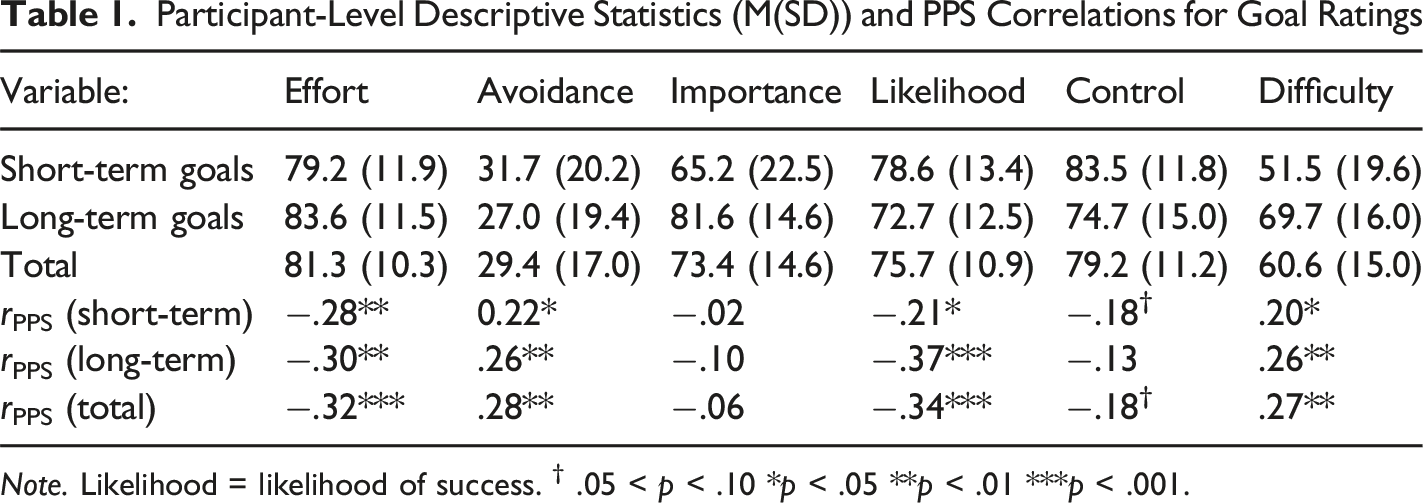
Note. Likelihood = likelihood of success. † .05 < p < .10 *p < .05 **p < .01 ***p < .001.
Participant-Level Descriptive Statistics (M(SD)) and PPS Correlations for Achievement Event Ratings
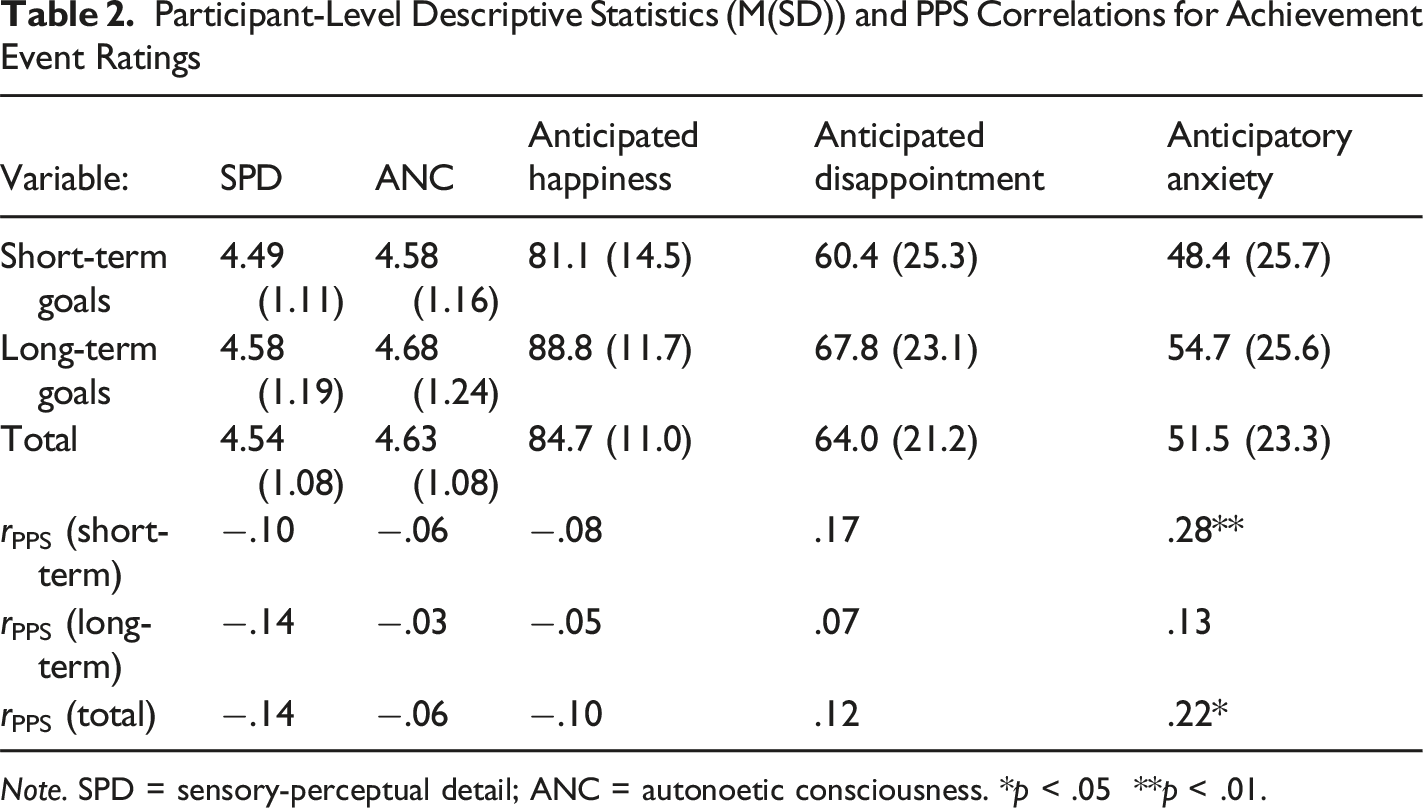
Note. SPD = sensory-perceptual detail; ANC = autonoetic consciousness. *p < .05 **p < .01.
Multilevel Analyses – Confirmatory
Likelihood of Avoidance
A multilevel model was computed to predict likelihood of avoidance based on goal distance (short = 0, long = 1), PPS score (continuous, participant-level), their interaction, and cluster-centred control covariates of intended effort, likelihood of success, and goal difficulty. This model included 658 goals clustered within 111 participants (due to outlier exclusion). The conditional R 2 value for the model was 0.45 (p < .001) and the inclusion of a random intercept by participant explained significant variance (p < .001).
Multilevel Model Results for Analysis of Avoidance Likelihood
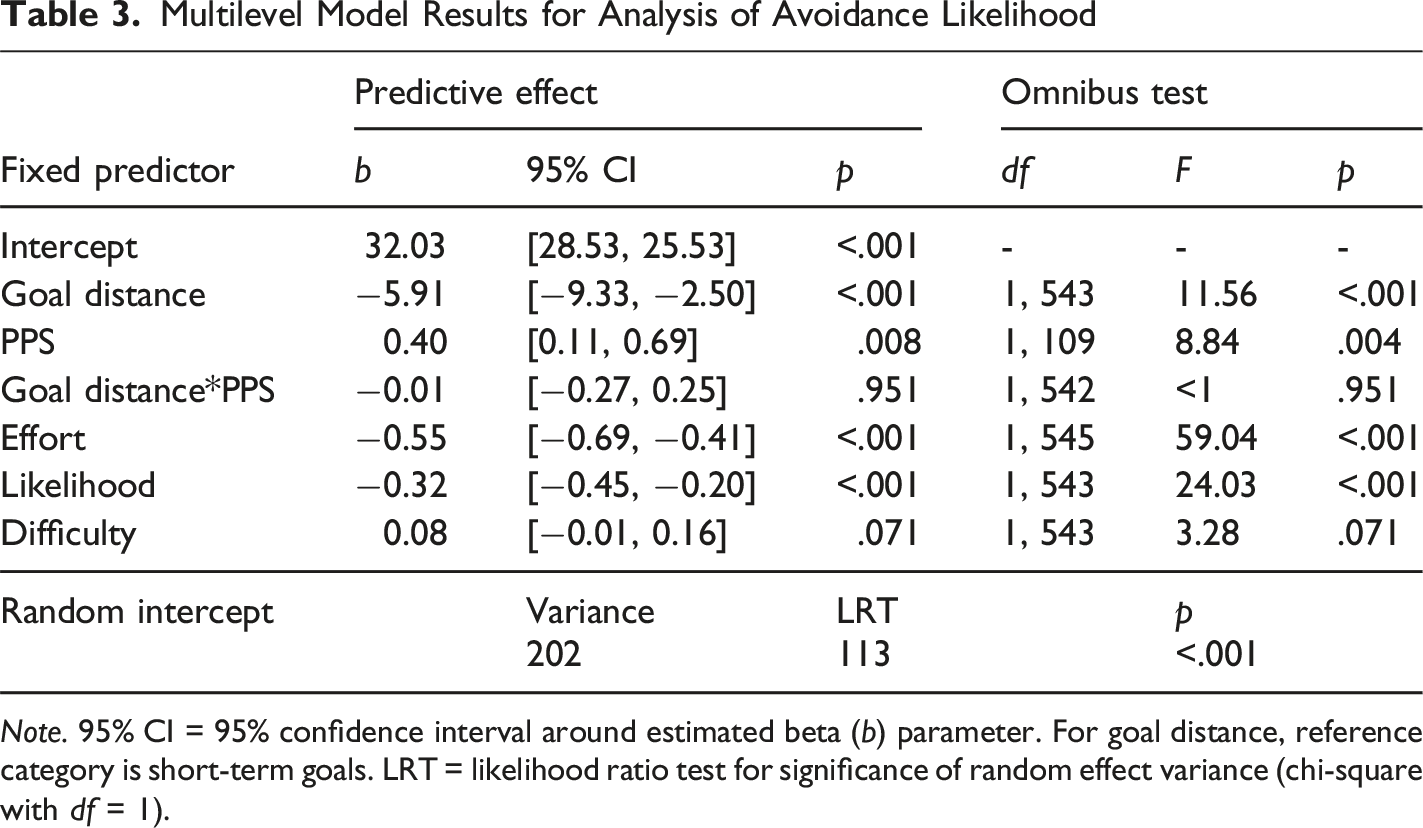
Note. 95% CI = 95% confidence interval around estimated beta (b) parameter. For goal distance, reference category is short-term goals. LRT = likelihood ratio test for significance of random effect variance (chi-square with df = 1).
Sensory-Perceptual Detail
A similar model was computed to predict sensory-perceptual detail in goal achievement events based on goal distance (short = 0, long = 1), PPS score (continuous, participant-level), their interaction, and cluster-centred control covariates of intended effort, likelihood of success, and anticipatory anxiety. This model included 575 goals clustered within 109 participants (due to exclusion of outliers and non-specific achievement events). The conditional R 2 value for the model was 0.61 (p < .001) and the inclusion of a random intercept by participant explained significant variance (p < .001).
Multilevel Model Results for Analysis of Sensory-Perceptual Detail
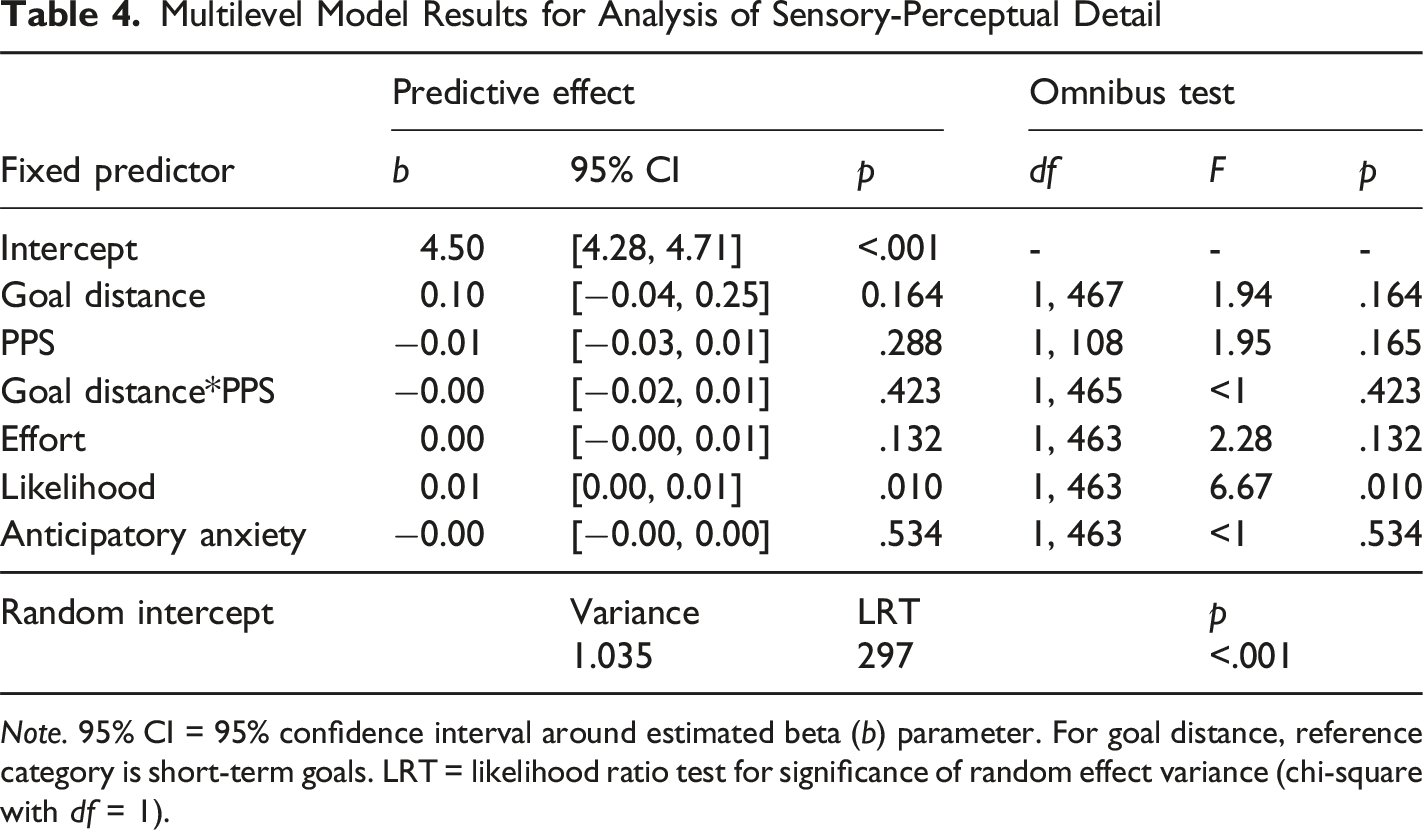
Note. 95% CI = 95% confidence interval around estimated beta (b) parameter. For goal distance, reference category is short-term goals. LRT = likelihood ratio test for significance of random effect variance (chi-square with df = 1).
Anticipatory Anxiety
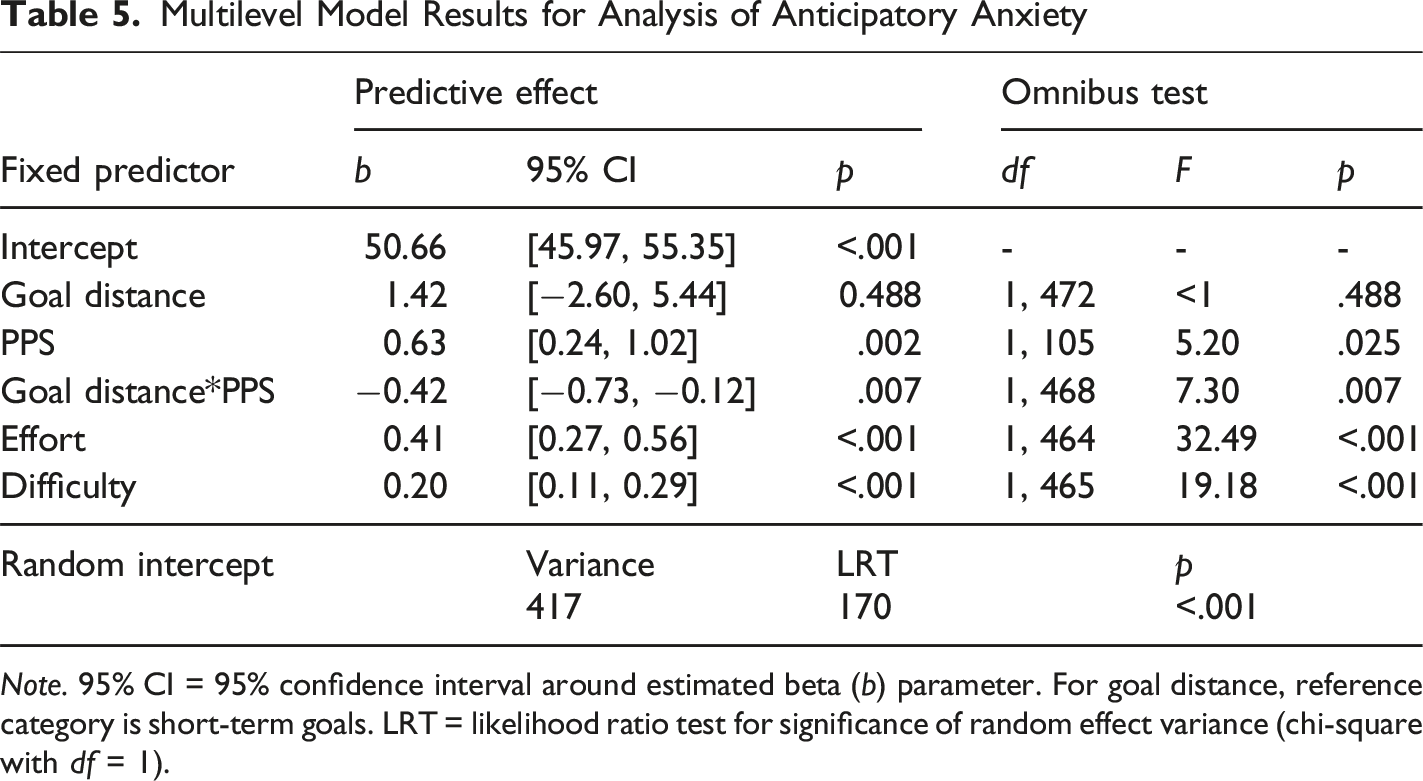
Finally, a similar model was computed to predict anticipatory anxiety based on goal distance (short = 0, long = 1), PPS score (continuous, participant-level), their interaction, and cluster-centred control covariates of intended effort and goal difficulty. This model included 578 goals clustered within 109 participants (due to exclusion of outliers and non-specific achievement events). The conditional R 2 value for the model was 0.52 (p < .001) and the inclusion of a random intercept by participant explained significant variance (p < .001).
In this model, the main effect of goal distance was non-significant (F < 1). However, there was a significant main effect of PPS score (F (1,105) = 5.20, p = .025), with higher scores predicting higher anticipatory anxiety (b = 0.63, 95% CI [0.24, 1.02], p = .002). The interaction of Goal Distance × PPS Score was also significant (F (1,468) = 7.30, p = .007), with a negative coefficient (b = −0.42, 95% CI [−0.73, −0.12], p = .007) corresponding to a steeper regression line for short-term than for long-term goals. This pattern is visualised in Figure 1. Finally, significant effects of effort and difficulty with positive regression coefficients (ps < .001) suggested that higher ratings on these variables predicted higher levels of anticipatory anxiety about potential goal failure after simulating achievement. See Table 5 for full model details. Regression lines for predictive effect of PPS score on anticipatory anxiety, for short-term (blue) and long-term goals (yellow). Note. Shaded areas represent 95% CIs Multilevel Model Results for Analysis of Anticipatory Anxiety Note. 95% CI = 95% confidence interval around estimated beta (b) parameter. For goal distance, reference category is short-term goals. LRT = likelihood ratio test for significance of random effect variance (chi-square with df = 1).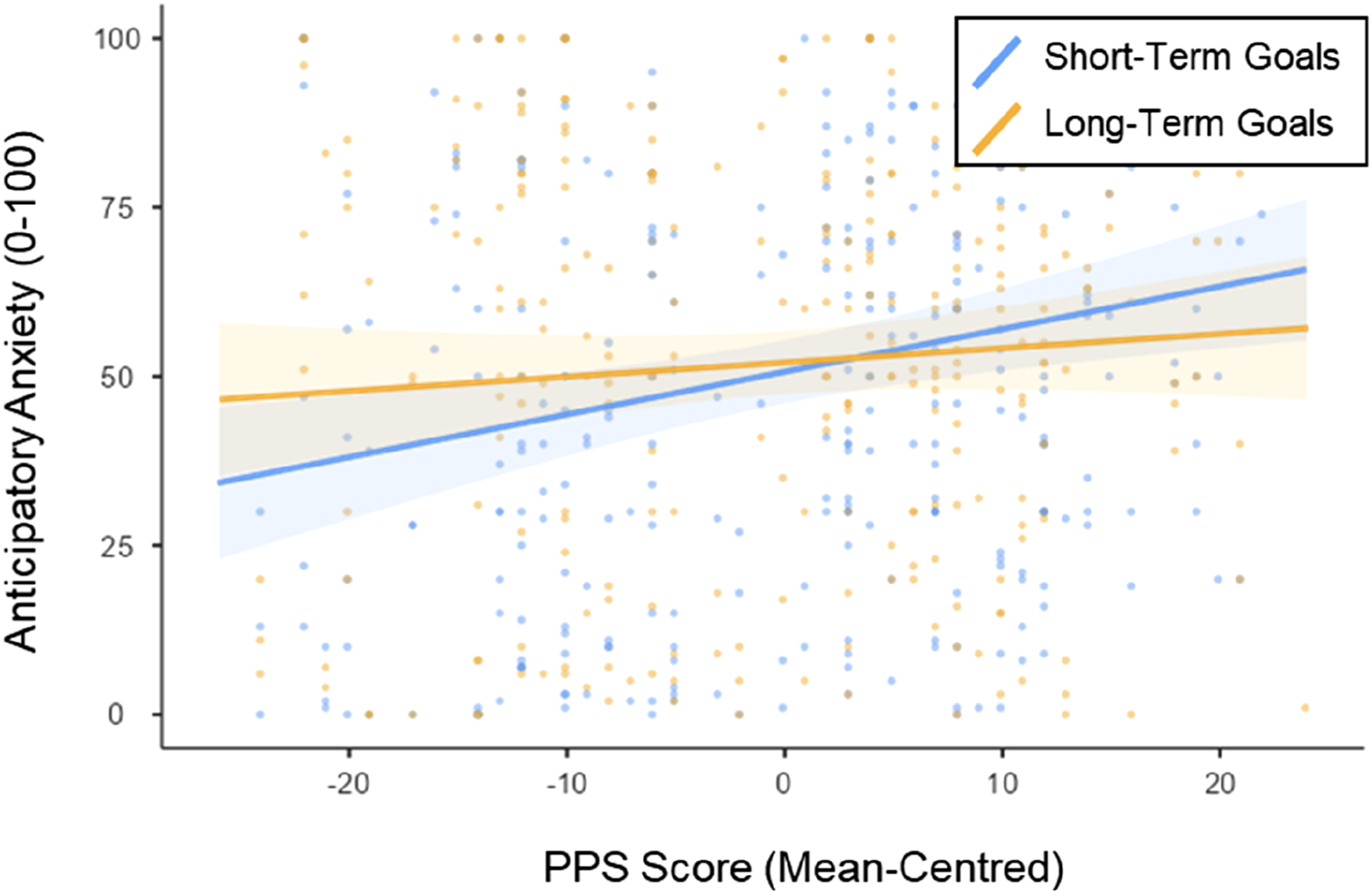
Multilevel Analyses – Exploratory
The following exploratory models were computed to establish which of the remaining goal and simulation characteristics were sensitive to goal distance, PPS score and/or their interaction when controlling for relevant covariates (indicated for each model, cluster-centred in all cases). Full model details are provided in supplementary materials (Tables S1–S8).
Intended Effort
This model contained covariates of likelihood of avoidance, likelihood of success, goal difficulty and anticipatory anxiety. A significant main effect of goal distance was found (F (1,471) = 4.14, p = .042), with participants intending to invest more effort in long-term than short-term goals (b = 2.17, 95% CI [0.08, 4.26], p = .042). A significant main effect of PPS score was also found (F (1,106) = 13.24, p < .001), with higher scores predicting lower intended effort (b = −0.34, 95% CI [−0.52, −0.17], p < .001). The interaction of Goal Distance × PPS Score was non-significant (F (1,466) = 1.37, p = .24). There were significant main effects of likelihood of avoidance, likelihood of success, difficulty (ps < .001) and anticipatory anxiety (p = .004).
Importance
This model contained covariates of intended effort, likelihood of success, goal difficulty and anticipatory anxiety. A significant main effect of goal distance was found (F (1,478) = 31.03, p < .001), with long-term goals rated as more important than short-term goals (b = 10.56, 95% CI [6.84, 14.29], p < .001). The main effect of PPS score was non-significant (F < 1), with a negligible predictive effect (p = .58). The interaction of Goal Distance × PPS Score was also non-significant (F < 1). There were significant effects of intended effort, difficulty and anticipatory anxiety (ps < .001).
Likelihood of Success
This model contained covariates of intended effort and likelihood of avoidance. A significant main effect of goal distance was found (F (1,544) = 56.04, p < .001), with short-term goals perceived as more likely to succeed than long-term goals (b = −8.39, 95% CI [−10.59, −6.19], p < .001). A significant main effect of PPS score was also found (F (1,108) = 14.71, p < .001), with higher scores predicting lower perceived likelihood of success (b = −0.24, 95% CI [−0.42, −0.05], p = .014). The interaction of Goal Distance × PPS Score was non-significant (F (1,542) = 1.20, p = .27). There were significant effects of intended effort and likelihood of avoidance (ps < .001).
Controllability
This model contained covariates of intended effort and likelihood of success. A significant main effect of goal distance was found (F (1,536) = 22.49, p < .001), with short-term goals perceived as more controllable than long-term goals (b = −6.20, 95% CI [−8.77, −3.63], p < .001). A significant main effect of PPS score was also found (F (1,106) = 4.03, p = .047), with higher scores tending to predict lower controllability (b = −0.20, 95% CI [−0.40, −0.00], p = .052). The interaction of Goal Distance × PPS Score was non-significant (F < 1). There was a significant effect of likelihood of success (p < .001) but not intended effort (p = .18).
Goal Difficulty
This model contained covariates of likelihood of avoidance and anticipatory anxiety. A significant main effect of goal distance was found (F (1,483) = 113.79, p < .001), with long-term goals perceived as substantially more difficult to achieve (b = 19.13, 95% CI [15.61, 22.66], p < .001). A significant main effect of PPS score was also found (F (1,108) = 8.97, p = .003), with higher scores predicting higher difficulty ratings (b = 0.32, 95% CI [0.04, 0.61], p = .025). The Goal Distance × PPS Score interaction was non-significant (F < 1). There were significant effects of likelihood of avoidance and anticipatory anxiety (ps < .001).
Autonoetic Consciousness
This model contained covariates of intended effort, likelihood of avoidance, likelihood of success and anticipatory anxiety. The main effect of goal distance was non-significant (F (1,469) = 1.15, p = .28), as were the main effect of PPS score and the Goal Distance × PPS Score interaction (Fs < 1). There were significant effects of likelihood of avoidance (p = .001) and likelihood of success (p = .028) but not intended effort or anticipatory anxiety (ps > .50).
Anticipated Happiness
This model contained covariates of intended effort, likelihood of avoidance, likelihood of success and anticipatory anxiety. A significant main effect of goal distance was found (F (1,458) = 24.84, p < .001), with long-term goals associated with higher anticipated happiness ratings (b = 5.28, 95% CI [3.20, 7.36], p < .001). The main effect of PPS score and the Goal Distance × PPS Score interaction were non-significant (Fs < 1). There were significant effects of intended effort (p = .009), likelihood of avoidance (p = .013) and anticipatory anxiety (p < .001) but not likelihood of success (p = .59).
Anticipated Disappointment
This model contained covariates of intended effort and anticipatory anxiety. The main effect of goal distance was non-significant (F (1,471) = 2.63, p = .11), as were the main effect of PPS score (F (1,106) = 1.72, p = .19) and the Goal Distance × PPS Score interaction (F < 1). There were significant effects of intended effort and anticipatory anxiety (ps < .001).
Discussion
The present study aimed to build on existing understanding of procrastination and its relationship to episodic future thinking by investigating characteristics of short- and long-term personal goals and achievement simulations according to trait procrastination. Three pre-registered hypotheses were tested, alongside exploratory analyses of other goal characteristics. First, we predicted that perceived likelihood of goal avoidance would be higher for high trait procrastinators, especially for long-term goals (where they should experience a higher degree of temporal discounting; Steel & König, 2006). Second, we expected sensory-perceptual detail (SPD) in simulations of goal achievement to be lower for long-term goals and for high procrastinators, based on prior findings on episodic simulation (D’Argembeau & van der Linden, 2004; Rebetez et al., 2016). Third, we predicted that anticipatory anxiety while contemplating goal failure would be higher for high procrastinators because procrastination is related to general anxiety (Gautam et al., 2023) and in part driven by perceived aversiveness of engaging in important tasks (S. Zhang & Feng, 2020).
The first hypothesis was partially supported, with a positive predictive effect of trait procrastination on likelihood of avoidance. This coheres with a wide range of literature highlighting the self-aware tendency to deliberately delay or avoid important tasks as a hallmark feature of procrastination (e.g., Klingsieck, 2013; Steel, 2007, 2010). To our knowledge, this is the first study to demonstrate this for self-selected personal goals. However, the predicted interaction between goal distance and trait procrastination was not observed, with high procrastination predicting high avoidance likelihood for both short- and long-term goals. Furthermore, an unexpected main effect of distance suggested that participants generally perceived short-term goals (to be completed in the next month) as more likely to be avoided, despite their temporal proximity presumably making expected payoffs more salient (cf. predictions of temporal motivation theory; see Steel et al., 2018). Exploratory analyses of wider goal characteristics may yield relevant insights here: Long-term goals were, on average, perceived as more difficult (by ∼ 18 points on percentile scale) and yet also more important (by 9 points) and substantially more rewarding (indexed by anticipated happiness if successful; 25 points). Therefore, intrinsic differences in the goals selected – which for long-term goals may have been ‘higher-order’ achievements (D’Argembeau, 2020) – could have outweighed greater discounting of equivalent outcomes located further away in time (Peters & Büchel, 2010; Steel & König, 2006). To test these aspects of TMT more directly in the case of personal goals, one would need to somehow sample goals offset in temporal distance yet equal in subjective magnitude, which would be challenging given the naturally hierarchical nature of goal pursuit (Milyavskaya & Werner, 2018).
The second hypothesis was not supported by the present data, which instead suggested that goal achievement events were simulated with a similar level of sensory-perceptual detail across trait procrastination levels. This conflicts with the findings of Rebetez et al. (2016), who found a negative predictive effect of PPS score (albeit a translated version with 11 rather than 12 items) on SPD ratings of generic episodic future thoughts. Rebetez et al. (2016) in fact argued that the same or stronger effects should be found for goal-related future simulations (potentially extending to differences in autonoetic consciousness; Lehner & D’Argembeau, 2016). Yet the discrepancy in our findings may be explained by fundamental differences of methodology. Firstly, our study was conducted online, with fairly brief instructions for generating goal achievement events (provided in supplementary materials); whereas Rebetez et al. (2016) used a lab procedure in which participants were directly cued by the experimenter to construct novel, spatiotemporally specific future events. Indeed, mean values for SPD in the present study were somewhat lower (M = 4.54, SD = 1.08, compared to M = 4.74, SD = 0.76 in Rebetez et al., 2016), suggesting a potential difference in participant engagement with the episodic construction element which could have obscured differences according to procrastination score. Furthermore, different analysis techniques were used; and Rebetez et al. (2016) did not report any measure/manipulation of temporal distance, making it difficult to establish if this might have contributed to the difference in findings. It is generally found that events projected further into the future are imagined with a lower level of detail (e.g., D’Argembeau & van der Linden, 2004, 2012), consistent with construal-level theory (Trope & Liberman, 2010). It is therefore noteworthy that no effect of goal distance on SPD was found in the present study – highlighting again that imagining goal achievement may be a special case of future thinking in which distant yet important events are imagined in relatively high detail, even by high trait procrastinators.
Conversely, the third hypothesis was supported, with high procrastinators experiencing greater anticipatory anxiety about potential goal failure when they simulated goal achievement. This coheres with findings that general trait anxiety covaries positively with trait procrastination (Gautam et al., 2023) and the theoretical proposition that procrastination is a product of perceived aversiveness in making progress with important tasks (S. Zhang & Feng, 2020; P. Y. Zhang & Ma, 2024). The present data do not allow us to distinguish between anxiety at the thought of failure per se and anxiety arising from spontaneously contemplating obstacles or difficulties associated with a goal (i.e., the outcome-process dichotomy; Pham & Taylor, 1999). Future research should probe goal-related thought content in high/low procrastinators in greater detail and investigate longitudinal patterns of goal-directed behaviour according to trait procrastination (cf. Steel et al., 2018).
If merely thinking about (failing to achieve) goals evokes amplified anxiety in procrastinators, then presumably this would constitute a barrier to taking overt goal-directed action (Richardson, 2023). Yet in the present data, despite showing the predicted positive association with procrastination, ratings of avoidance likelihood were uncorrelated with anticipatory anxiety at either goal-level (r = −.02, p = .64) or participant-level (r = .17, p = .07). While this may simply reflect certain design limitations (e.g., use of a self-report measure of avoidance likelihood which may not accurately predict behavioural avoidance; Krause & Freund, 2014; Rothblum et al., 1986), it could hint at a more nuanced relationship between anxiety and goal avoidance in high procrastinators. For instance, the anxiety-avoidance relationship might be moderated by the use of more or less adaptive coping strategies (e.g., avoidance coping; Panayiotou et al., 2014). Relatedly, Winch et al. (2015) found that trait anxiety predicted increased introjected motivation (i.e., pursuing a goal in order to avoid negative outcomes), but not other reasons for goal pursuit. Again, this is worthy of further investigation using complementary (e.g., longitudinal) methods.
In addition to the expected main effect, analysis of anticipatory anxiety showed a significant interaction between procrastination and goal distance, such that the predictive effect of procrastination was stronger for short-term goals. This appears counterintuitive; one might expect the more important, rewarding and difficult long-term goals (see distance effects in exploratory analyses) to evoke greater anxiety, since the implied loss is greater if they are unsuccessful (i.e., their value is higher; Steel et al., 2018). However, on a second reading, the result may be highly informative about the nature of procrastination: Short-term goals are acknowledged by all to be less important, and yet for the high trait procrastinator they ‘loom larger’ emotionally (cf. looming cognitive style; Riskind, 2024). In addition to discounting far future rewards (and losses) more heavily, exaggerating nearer-yet-smaller gains and losses – including oversensitivity to short-term goals going awry – would be compatible with the temporal motivation understanding of procrastination (Steel et al., 2018; Steel & König, 2006). Yet given the potential intrinsic differences between short- and long-term goals, this interpretation should be viewed as tentative. Alongside goal distance, future work could attempt to manipulate difficulty or intended effort – shown here to have independent positive effects on anticipatory anxiety – to deepen understanding of how trait procrastination may interact with specific goal attributes in predicting anxiety at the prospect of goal failure.
Exploratory findings showed intended effort, likelihood of success and goal difficulty to be sensitive to trait procrastination when controlling for other related characteristics. However, this was not consistently the case for controllability, and there was no evidence of differences in importance according to trait procrastination at either goal distance. There were also no differences in emotional predictions (happiness and disappointment), which can be taken to index incentive value (Klinger, 1977); nor in the phenomenological characteristics already discussed (SPD and ANC). This suggests that, despite motivational disparities, there are some key sources of invariance in high versus low procrastinators’ personal goals. These constancies in terms of importance, phenomenology and anticipated emotion underline the relevance of our confirmatory findings: In our sample, high procrastinators ‘set their sights’ upon similar goals to lower-trait individuals; yet they felt more anxious when imagining (especially short-term) goal achievement, and – apparently independent of the latter – more inclined to avoid progress on all their stated goals. Parallels can be drawn here with the constancies and disparities found in depressive individuals’ goals – for instance, low expectations of success and lack of motivation despite high perceived importance (Anderson et al., 2023; Dickson et al., 2011).
While procrastination is not a diagnosable form of psychopathology, trait scores are known to be intercorrelated with trait anxiety and depression (Beutel et al., 2016; Gautam et al., 2023) and it is generally conceived as a maladaptive self-regulatory trait (Steel, 2007, 2010). It is therefore interesting to obtain further evidence that procrastination, like common emotional disorders (MacLeod, 2025), has characteristic implications for future-oriented cognition and emotion. Future research concerned more broadly with emotional and motivational dynamics of goal pursuit should incorporate the measures (e.g., PPS, Steel, 2010; GPS, Klingsieck & Fries, 2012) and theory (e.g., TMT; Steel & König, 2006) arising from procrastination research.
In conclusion, the present study provides novel evidence on the links between procrastination, goal pursuit and episodic future simulation. Specifically, high procrastinators expected to avoid making progress on their stated personal goals, and rated them as more difficult and less likely to succeed – despite believing they were equally important and valid incentives for behaviour. This presents parallels with findings on goal pursuit in states of depression. By eliciting not only goal descriptions, but also simulations of possible achievement scenarios, we were able to probe whether procrastination-linked differences in episodic future thinking (Rebetez et al., 2016) extend to the personal goal context. We found no evidence, however, that simulations were less vividly or immediately experienced by high procrastinators. Instead, a clear difference emerged with respect to anticipatory anxiety: Higher procrastinators felt more anxious when they contemplated failing to achieve their goals, and this was more pronounced for short-than for long-term goals. Future research should build upon this in longitudinal designs capable of tracking subsequent goal-directed behaviour.
Supplemental Material
Supplemental Material - High Trait Procrastination Predicts Increased Goal Anxiety Despite Invariance in Simulation of Goal Achievement
Supplemental Material for High Trait Procrastination Predicts Increased Goal Anxiety Despite Invariance in Simulation of Goal Achievement by J. Helgi Clayton McClure, Stephanie Sayan, and Rachel J. Anderson in Psychological Reports
Footnotes

Ethical Considerations
Ethical approval to conduct the reported study was granted by the University of Hull Faculty of Health Sciences Ethics Committee under the approval code FHS 22-23.82 (dated 31st May 2023).
Consent to Participate
All participants provided informed consent via an online form administered before completion of the study.
Consent for Publication
Not applicable as no individual details or identifying information were collected.
Funding
The authors received no financial support for the research, authorship, and/or publication of this article.
Declaration of Conflicting Interests
The authors declared no potential conflicts of interest with respect to the research, authorship, and/or publication of this article.
Data Availability Statement
The data supporting the analyses presented in this paper are available upon request from the corresponding author and will be made permanently available via an open data repository upon publication.
Supplemental Material
Supplemental material for this article is available online.
Note
Author Biographies
References
Supplementary Material
Please find the following supplemental material available below.
For Open Access articles published under a Creative Commons License, all supplemental material carries the same license as the article it is associated with.
For non-Open Access articles published, all supplemental material carries a non-exclusive license, and permission requests for re-use of supplemental material or any part of supplemental material shall be sent directly to the copyright owner as specified in the copyright notice associated with the article.
