




Abstract
This study builds upon Riester and Keller (2025) and extends prior findings by (a) employing an experimental approach involving the recollection of neutral, positive (meaningful) or negative (bullshit) work episodes (b) examining the effect of the experimental manipulation, and specifically the recollection of bullshit episodes, on the reported likelihood to engage in deviant work behavior, turnover intentions and negative affect, (c) investigating the mediating role of negative affect, and (d) analyzing the moderating role of work ethic. In a sample of German employees (N = 253), we manipulated the recollection of experienced work episodes, including a neutral, a meaningful, or a bullshit episode. Results show that recalling bullshit work episodes was associated with increased negative affect and, in turn, with enhanced likelihood to engage in problematic workplace behavior and turnover intentions compared to the other experimental conditions. Furthermore, these relationships were amplified among individuals with stronger work ethic convictions. In contrast, the effects of recollecting meaningful (vs. neutral) experiences at work were not significant for all dependent variables. The study extends prior research (Riester & Keller, 2025) through an experimental investigation and underscores the effects of bullshit job experiences on negative affect, the tendency to engage in unethical work behavior and the critical role of work ethic.
Keywords
Introduction
Extensive research has demonstrated an interconnection between the degree to which employees perceive their work as meaningful and various constructs of crucial importance in the work context, e.g., job satisfaction and performance on the job, work motivation or subjective well-being (Allan et al., 2019; Simonet & Castille, 2020). Remarkably, most of the research exploring experiences at work concentrated exclusively on investigating positive experiences, such as meaningful work, and remained cross-sectional in character. As a result, a notable gap in the literature pertains to the lack of experimental studies investigating work experiences (Lysova et al., 2019). This study builds upon and extends previously published work (Riester & Keller, 2025) which documented a robust relation between Bullshit Job Perceptions (BJP) and deviant work behavior particularly for employees holding a strong work ethic. Here, we introduce an experimental approach to the examination of positive (meaningful) and negative (bullshit) work experiences. We implement a manipulation involving the recollection of work episodes exploring both positive and negative work experiences in comparison to neutral ones, to examine the differential impact of rendering specific work episodes salient on the readiness to engage in deviant work behavior, turnover intentions, and negative affect. As unethical behavior and turnover intentions are costly for organizations (Carpenter et al., 2021; Riester & Keller, 2025), our objective is to explore the potential adverse outcomes that perceiving work as bullshit can have for both employees and organizations.
Specifically, we hypothesize that recollection of bullshit episodes elicits negative affective reactions, subsequently leading to an increased likelihood of engaging in deviant work behavior and turnover intentions of employees. Negative affect is expected to serve as a mediator between the experimental manipulation (recollection of meaningful, bullshit, or neutral work episodes) and work-related attitudes and behavioral tendencies. Furthermore, in alignment with earlier findings, we anticipate that the nature of the effects is dependent on individual’s endorsement of work ethic (Riester & Keller, 2025).
Positive (MWP) and Negative (BJP) Experiences at Work
The term Bullshit Jobs, introduced by David Graeber (2018), refers to a form of paid employment deemed completely pointless, unnecessary, or even pernicious to the extent that employees cannot justify the existence of their own job, but feel obliged to pretend otherwise, as a part of the employment conditions. Crucially, the concept is framed as a subjective experience, herein conceptualized as BJP, reflecting employees experiencing their work as pointless, unnecessary, or even harmful. Graeber’s (2018) concept has attracted widespread attention, highlighting the prevalence of bullshit work episodes in the contemporary workforce (e.g., Dean et al., 2022; Müller et al., 2025; Soffia et al., 2021; Walo, 2023). We argue that experiences at work cannot be fully understood by considering only the presence or absence of positive features but also the presence and absence of negative features (Lepisto & Pratt, 2017), which do not necessarily imply the opposite of each other (cf., Gable & Haidt, 2005; Cacioppo & Berntson, 1994). A growing body of theory and research supports this dual perspective. For example, Herzberg (1964) distinguished between motivators and hygiene factors as drivers of job satisfaction and dissatisfaction, highlighting that the presence of positive features does not automatically negate negative ones. Similarly, Bailey and Madden (2016) emphasized that the factors fostering a sense of meaningfulness differ qualitatively from those generating meaninglessness. Within the Self-Determination Theory (SDT) framework, Olafsen et al. (2017) demonstrated that psychological need satisfaction and need frustration are distinct constructs with unique antecedents and consequences. Differentiating between positive experiences, such as need satisfaction, and negative experiences, such as need frustration, clarifies that the absence of satisfaction does not imply frustration; each has unique psychological and behavioral implications (Olafsen et al., 2017; Vansteenkiste et al., 2020). Thus, building on insights from SDT (Olafsen et al., 2017), there is a conceptual distinction between perceiving work as “not meaningful” and perceiving it as outright pointless, unnecessary or pernicious.
Translating these insights into the present research, BJP reflects active frustration rather than merely the absence of meaningfulness, representing negative work experiences, whereas positive experiences are reflected in meaningful work perceptions. To ensure conceptual and terminological clarity, this study adopts a focus on the subjective and episodic experience of work meaningfulness, referred to as Meaningful Work Perception (MWP; Riester & Keller, 2025). MWP underlines the subjective experience as fundamental to the meaningful work concept and highlights employees’ subjective sense-making regarding their work meaningfulness (Lips-Wiersma et al., 2020). Thus, in line with Müller et al. (2025) and Riester and Keller (2025), we propose a separate examination of both facets - positive (meaningful) and negative (bullshit) experiences at work - each with unique associations with input and output factors, to fully comprehend the complexity of work experiences.
Work Experiences and Their Impact on Affect, Attitudes and Behavior at Work
Humans exhibit an intrinsic drive to seek meaning (Baumeister & Vohs, 2002) making the experience of meaningfulness essential in both work and general life domains (Rosso et al., 2010). As work is a central source of life purpose, the concept of meaningful work has attracted significant scholarly attention emphasizing its positive associations with work-related attitudes, behaviors, and well-being outcomes (Allan et al., 2019; Bailey et al., 2019; Steger et al., 2012). When employees are provided with rich job resources and opportunities for self-actualization, they likely find their work meaningful, which fosters a sense of reciprocity and commitment toward the organization (Hackman & Oldham, 1975). Conversely, the absence of meaningful work experiences can result in disengagement and various forms of dysfunctional behavior, leading to increased negative affect, or turnover intentions. Overall, research indicates that experiencing meaningful work acts as a powerful intrinsic motivator, enhancing employee commitment and performance, while reducing the likelihood of deviant work behavior and improving employee retention (Allan et al., 2019; Rosso et al., 2010).
Nonetheless, much of the existing research has primarily focused on the positive outcomes associated with meaningful work, such as commitment as preventative concerning deviant work behavior, while largely neglecting connections to negative work behavior (Allan et al., 2019; May et al., 2004; Steger et al., 2012). Given the financial and reputational costs of negative work behaviors to organizations and stakeholders, there is an increasing need to understand the drivers of these behaviors, especially in a competitive job market where attracting and retaining talent is critical (Carpenter et al., 2021; Hancock et al., 2013; Howard et al., 2020). Thus, it is essential to discern conditions under which employees engage in unethical or withdrawal behaviors.
Recognizing that various forms of deviant work behavior and disengagement stem from different antecedents and motivations, we distinguish between different criterion variables that reflect different dimensions of employee disengagement and aggression directed against the organization and their stakeholders (Spector et al., 2006). Our applied CWB measure primarily captures aspects of sabotage and abusive behavior and is complemented by a measure of cyberloafing which focuses on aspects of disengagement and production deviance, plus a measure of turnover intentions centering on withdrawal tendencies.
Counterproductive Work Behavior (CWB)
CWB refers to intentional employee actions that violate the legitimate interests of the organization, aiming to harm organizations and/or their stakeholders (Gruys & Sackett, 2003). These behaviors can vary, from minor infractions like coming late to work, to more serious offenses such as sabotage, abuse, or theft. CWB is classified based on its target, with behaviors directed either at individuals (CWB-I) or the organization itself (CWB-O). In this study, the CWB scale employed focuses on sabotage, withdrawal and abuse directed at either the organization (CWB-O) or individuals within it (CWB-I; Spector et al., 2010). A combined CWB index is used in our analyses (Spector et al., 2010).
Cyberloafing
Cyberloafing, recognized as a form of production deviance, entails the use of the internet for personal purposes during work hours (Lim, 2002). Activities such as browsing through social networks or reading private e-mails are examples of cyberloafing. With the growing reliance on technology and increasing prevalence of remote work, cyberloafing has become a pervasive challenge for organizations (Lim, 2002; Mercado et al., 2017).
Turnover Intentions
Turnover intentions refer to employees’ inclination to leave their current organization or job, despite having the opportunity of continued employment (Podsakoff et al., 2007). While turnover intentions do not necessarily result in actual employee turnover, they serve as a robust precursor in the turnover process (Podsakoff et al., 2007). Research indicates that individuals voluntarily quit their jobs for various reasons, such as poor working conditions, work-related stress, or insufficient job satisfaction (Podsakoff et al., 2007; Zimmerman & Darnold, 2009).
The Differential Effects of Positive and Negative Work Experiences on Negative Affect, Turnover and Deviant Work Behavior
Much of the existing research on deviant work behavior finds its roots in the exploration of aggression or revenge (Spector et al., 2006). According to the stressor-emotion model proposed by Spector and Fox (2005), stressful or negative work events trigger negative emotional responses, such as anger or anxiety, which can fuel hostile motives and behavioral intentions, culminating in actions like CWB (Spector et al., 2006). Affective states, especially negative affect, play a crucial role in how individuals process work experiences and cope with stress, as they represent immediate reactions to perceived (stressful) situations and facilitate behavioral responses (Spector & Fox, 2010). Spector and Fox (2005) suggest that engagement in aggressive behaviors, like CWB, can act as coping mechanism in response to workplace strain, temporarily alleviating negative emotional states, despite being detrimental to organizational functioning and performance (Rodell & Judge, 2009). Additionally, previous research often included withdrawal behaviors as a part of unethical work behavior, involving the withdrawal of efforts to achieve organizational goals (Fox & Spector, 1999). Decisions to leave or stay in an organization are influenced by affective states, acting as a motivational force for employees in the decision-making process (Maertz & Griffeth, 2004). Given that employees perceive negative working conditions as unchangeable, they may withdraw from their job to dispense with the source of their negative emotions. Therefore, turnover intentions can be seen as a common reaction to negative work experiences or events that evoke anger (Fitness, 2000) and should be considered as a possible consequence related to BJP and negative affect.
Although research on BJP is only emerging (Müller et al., 2025; Riester & Keller, 2025), previous research established a link between stressful or negative work events, negative affect, and deviant work behavior and attitudes (Apostel et al., 2018; Fida et al., 2015; Fila & Eatough, 2020; Fila et al., 2023; Podsakoff et al., 2007; Semmer et al., 2010). Consistent with research on illegitimate tasks (Apostel et al., 2018; Fila & Eatough, 2020; Fila et al., 2023), unnecessary tasks can be considered a source of stressful experiences and provoke frustration and negative affect as suggested by Spector and Fox (2005).
Following Riester and Keller (2025), we propose that encountering “bullshit” episodes at one’s job, arising when individuals experience their jobs as pointless or harmful, can be considered a stressful or negative work experience and potential trigger for negative affect (Spector & Fox, 2005). We argue that BJP has the potential to threaten professional identity and motivation, provoking disengagement, hostile motives or trigger negative affect. Consequently, we hypothesize that recalling negative work experiences (BJP) will lead to higher negative affect, increased readiness to engage in CWB, cyberloafing and elevated turnover intentions compared to recalling neutral or positive work episodes (MWP). We argue that positive and negative work experiences have distinct effects on work outcomes. Negative experiences often show a greater impact than positive ones, exerting more pronounced effects on negative behavior and outcomes (Gable & Haidt, 2005; Kahneman & Tversky, 1979). As a result, BJP may play a more critical role in prompting a readiness to engage in deviant work behaviors compared to the potential preventative influence of meaningful work perceptions (MWP). Negative affect is expected to be a mediator linking negative work experiences to the readiness to engage in CWB, cyberloafing and increased levels of turnover intentions.
Participants in the negative (BJP) condition will report a higher likelihood of engaging in (a) CWB, (b) cyberloafing and (c) turnover intentions compared to participants in the positive (MWP) or neutral condition.
Negative affect will mediate the relationship between experimental conditions and the dependent variables. Participants in the negative (BJP) condition will report a higher likelihood of experiencing negative affect, in turn reporting a stronger readiness to engage in (a) CWB, (b) cyberloafing and (c) increased levels of turnover intentions compared to participants in the positive (MWP) or neutral condition.
The Moderating Role of Work Ethic
Going beyond a simple main-effect-perspective, we argue that the relationship between work experiences triggering negative affect and deviant work behavior is a function of specific boundary conditions (Riester & Keller, 2025). Individual differences in personality structures, attitudes, or values shape how employees appraise their work environment and, consequently their emotional and behavioral responses. Several studies have examined the role of individual differences in moderating the relationship between stressors and CWB (e.g., Bowling & Eschleman, 2010; Fox et al., 2001). As one crucial finding emerged the fact that the relationship between BJP and deviant work behavior was found to be dependent on individuals’ endorsement of work ethic (Riester & Keller, 2025). To be more specific, this research indicated that individuals with a strong work ethic exhibit a more pronounced relationship between BJP and both CWB and cyberloafing.
Work Ethic
The concept of work ethic traces its origins to Weber’s (1930) seminal idea of the Protestant Work Ethic, which initially framed hard work as a religious virtue. Today, this notion has evolved into a secular perspective, emphasizing general work ethic. Work ethic emphasizes that hard work and effort are essential for achieving success and advocates for a relentless pursuit of productivity (Weber 1930, 2018), while condemning leisure or “wasting time” (Furnham, 2021). Those who strongly identify with this ethic believe that success is primarily a result of sustained effort, and that failure should be met with stringent consequences (Christopher & Schlenker, 2005; Katz & Hass, 1988). For these individuals, work is not just a job but a cornerstone of their identity and a source of personal fulfillment.
As documented by Riester and Keller (2025), work ethic moderates the relationship between BJP and deviant work behavior. Work ethic increased the strength of this relationship, leading to particularly strong tendencies to engage in deviant work behavior when both BJP and work ethic were at a high level. Individuals holding a strong work ethic perceive work as an integral part of their self-concept (Furnham, 2021). These ethical principles and expectations clash with the experience of “bullshit” tasks at work, making individuals endorsing work ethic more sensitive or vulnerable when faced with this specific stressor. Furthermore, work ethic is linked to a range of antagonistic tendencies such as Machiavellianism (Miller & Konopaske, 2014; Mudrack & Mason, 1995), right-wing authoritarianism (RWA; Christopher et al., 2008) and low honesty (Silvia et al., 2014). Due to their heightened sensitivity to expectancy violations (Christopher et al., 2003), individuals with a strong work ethic may be particularly vulnerable and susceptible to negative experiences and harshly react or seek revenge towards their organizations (e.g., by engaging in CWB) in response to unmet expectations and perceived misfits between their personal values and the work environment (Christopher & Schlenker, 2005; Kristof, 1996).
Thus, we hypothesize that work ethic functions as a moderator and amplifier of the relationship between BJP and negative affect, as well as a boundary factor for the strength of the indirect relation between BJP and CWB, cyberloafing and turnover intentions via negative affect. We anticipate that both pathways – from BJP (compared to the MWP or neutral condition) to negative affect and from BJP to CWB, cyberloafing and turnover intentions via negative affect – will be moderated by work ethic (two-stage moderated mediation; see Figure 1). Individuals strongly endorsing work ethic are expected to report an increased likelihood of experiencing negative affect and readiness to engage in deviant behavior and higher levels of turnover intentions in response to the recollection of bullshit workplace experiences (compared to the recollection of meaningful or neutral experiences). Proposed moderated mediation model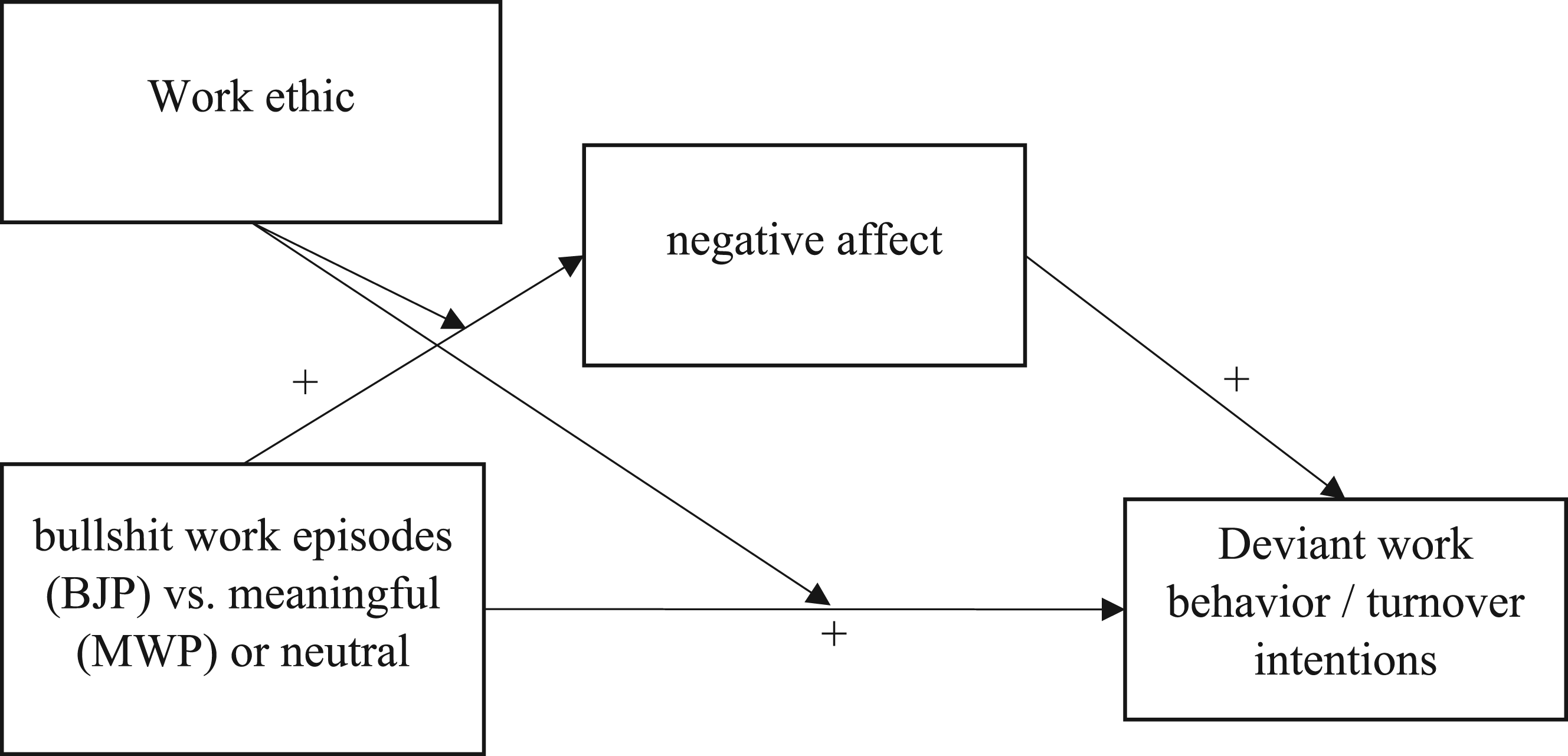
Work ethic moderates the effect of the recollection of negative work experiences (BJP vs. positive [meaningful] or neutral) on (a) negative affect as well as the effect on (b) CWB, (c) cyberloafing and (d) turnover intentions, in that the mediation effect is stronger under conditions of high (vs. low) work ethic.
The Present Study
Despite several theories suggesting that negative experiences at work are associated with an increased likelihood of deviant work behavior, turnover intentions, and negative affect, there is a notable scarcity of experimental studies examining this assertion (Semmer et al., 2010; Spector, 2011). Drawing on existing experimental research (Allan et al., 2018), the primary objective of the present study was to investigate whether the recollection of bullshit work episodes increases the readiness of employees to engage in CWB, cyberloafing, their level of turnover intentions, and negative affect. Data were analyzed using SPSS (version 29).
Method
Participants
The study sample consisted of N = 253 working German participants (Mage = 29.91, SDage = 8.30 rangeage = 20–66, 159 women, 93 men, 1 non-binary). Participants were mostly Caucasian (97.6%) and worked in a wide range of jobs with the most being academic professionals (34.0%), clerical staff (26.5%) and service jobs (13.0%). Please see Table S2 in supplement for more details on sample characteristics and occupations per experimental condition. Participants were recruited via personal contacts and social media platforms from September 2023 until December 2023.
Participation in the study required participants to provide informed consent, be at least 18 years old, be employed for at least 8 hours a week for the past three months, possess adequate German skills, and correctly answer an attention check item. We utilized convenience sampling, which may involve a risk of low-quality responses (e.g. based on inattentiveness). To address this potential issue, we collected data form a larger number of participants to account for potential attrition and exclusion. Attention check items and responses on open-ended questions (experimental manipulation description) were reviewed to ensure data quality (Aguinis et al., 2021). Detailed information on the subject inclusion and exclusion criteria, sample size determination for each experimental condition, and the results of the prior power analysis can be found in the supplement.
Procedure
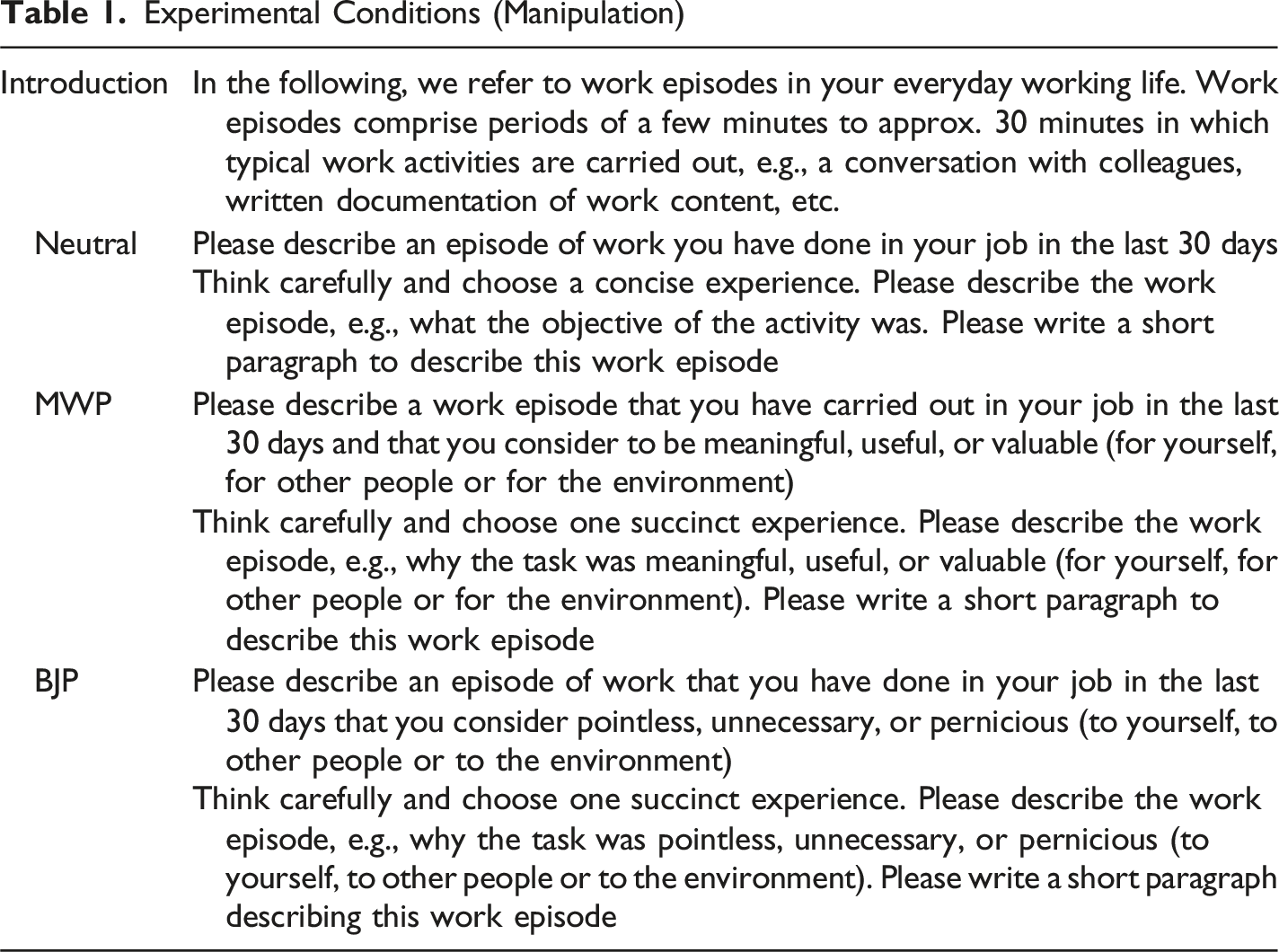
Experimental Conditions (Manipulation)
Instruments
We asked participants to fill in inventories to measure work ethic, negative affect, CWB, cyberloafing and turnover intentions. Note that only work ethic was measured before the manipulation implementation. In addition, a manipulation check item was installed after the manipulation asking participants how strongly they felt that their work was generally characterized by pointless, unnecessary, or harmful work episodes (measuring BJP). Furthermore, participants had to indicate whether their described work episode was falling into one of the relevant categories depending on the experimental condition (e.g., pointless, unnecessary or/and pernicious in the BJP condition).
Work Ethic
To measure work ethic the scale by Katz and Hass (1988) was used. The scale consists of 11 items with an answering scale ranging from (1) strongly disagree to (6) strongly agree (Cronbach’s α = .88). A sample item reads “Most people who don’t succeed in life are just plain lazy.”
Negative Affect
To measure negative affect, we measured seven negative affective states as proposed by Möwisch et al. (2019) including Anger, Frustration, Stress, Boredom, Loneliness, Mourning and Worries. All items were rated ranging from (1) not at all to (7) very strong answering the questions “When you think of an episode at work like the one described before, what emotions does it trigger in you?”. Cronbach’s α was = .84.
Counterproductive Work Behavior (CWB)
To measure CWB the 10-item scale of Spector et al. (2010) (5 items targeting the organization and 5 targeting individuals within the organization) was implemented. Items were answered on a scale ranging from (1) not likely at all to (7) very likely in response to the question “When you think of an episode at work like the one described before, to what extent do you think it is likely that you will…” e.g., “…be late for work without permission”. For our purposes, a total score was computed (Cronbach’s α = .91).
Cyberloafing
To assess cyberloafing a scale of Lim (2002) including 11 items was used. Items were answered on a scale ranging from (1) not likely at all to (7) very likely (Cronbach’s α = .91) in response to the question “If you think of an episode at work as described before, to what extent do you think it is likely that you visit the following websites or send private messages during working hours?” e.g., “General news pages”.
Turnover Intentions
Three items were implemented adapted from Meyer et al. (1993) to measure turnover intentions (“I really want to quit my job at my company.”, “I intend to leave my company within the next year.”, “I intend to leave my company within the next year”). Items were answered on a scale ranging from (1) not at all to (7) very strongly (Cronbach’s α = .92) in response to the question “When you think of an episode at work as described before, how strongly does it trigger the following reactions in you?”
Results
Descriptive Statistics and Correlations
Means, Standard Deviations, and Zero-Order Correlations for Each Experimental Condition
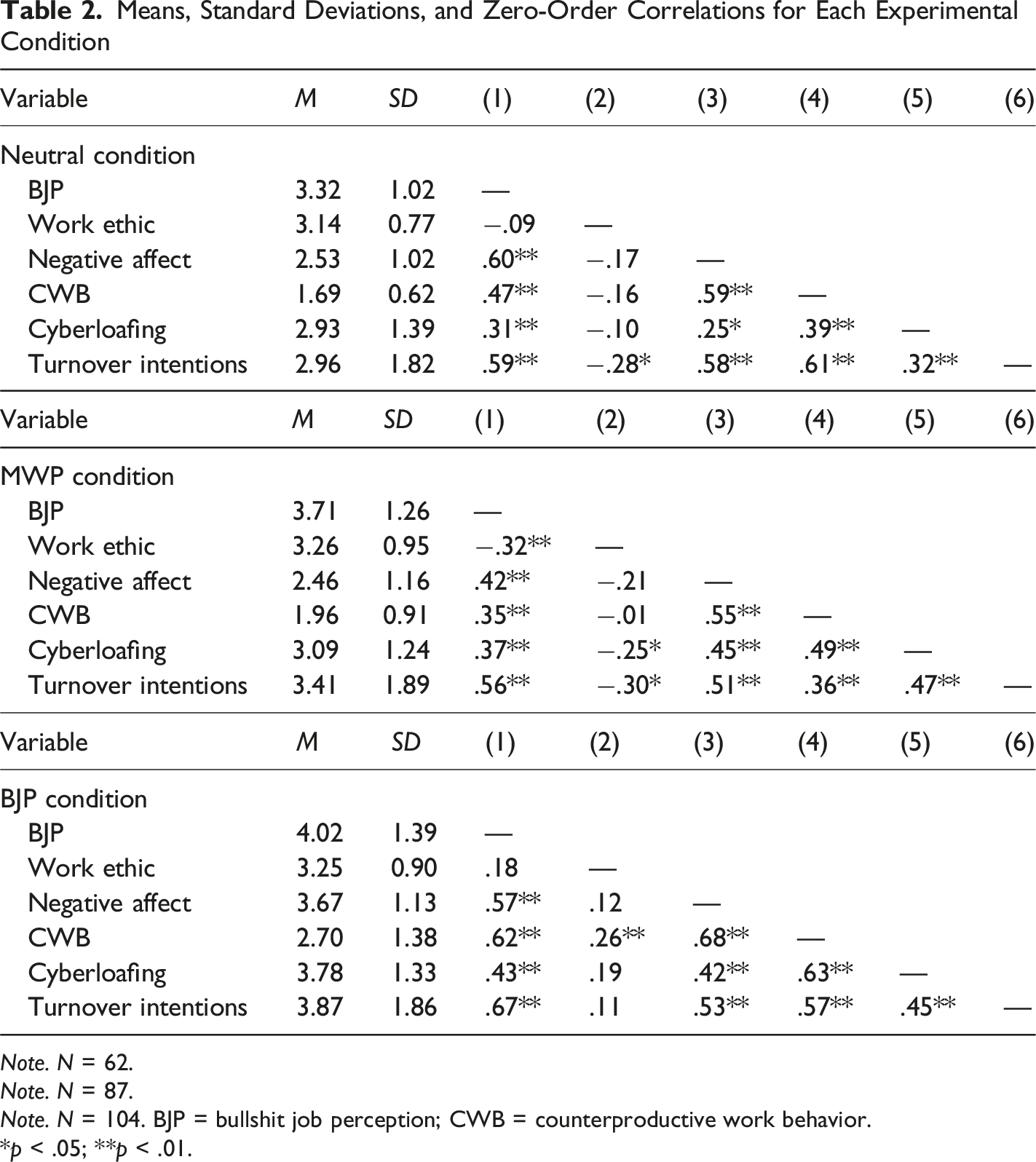
Note. N = 62.
Note. N = 87.
Note. N = 104. BJP = bullshit job perception; CWB = counterproductive work behavior.
*p < .05; **p < .01.
Preliminary Analyses
To ensure that the randomized assignment to experimental conditions was successful, we conducted a series of chi-square tests and one-way analyses of variance (ANOVAs) to compare conditions on demographic and personality variables. The chi-square analyses were not significant for ethnicity (χ2 (6) = 2.25, p = .895), education (χ2 (10) = 10.93, p = .363), relationship status (χ2 (8) = 10.28, p = .246) and gender (χ2 (4) = 2.12, p = .715). For age and work ethic one-way ANOVAs were conducted, revealing no significant differences between the experimental conditions (age (F (2,250) = .40, p = .670) or work ethic (F (2,250) = .41, p = .666). Thus, experimental conditions were equally set-up regarding participant characteristics.
Manipulation Check
To examine whether the experimental manipulation had the intended effect, we conducted a one-way ANOVA testing differences between conditions on the manipulation check item (BJP). The results showed significant differences between the reported BJP (manipulation check item) of participants at their current job (F (2,250) = 5.94, p < .01). In the bullshit episode condition, BJP (M = 4.02, SD = 1.39) were significantly higher than in the meaningful episode condition (M = 3.71, SD = 1.26) or the neutral condition (M = 3.32, SD = 1.02). In line with previous research (Allan et al., 2018), the results implicate that the manipulation (work episode recollection) was successful.
Effect on Criterion Variables
To test whether the three experimental conditions showed differences on the criterion (dependent) variables (negative affect, CWB, cyberloafing and turnover intentions) additional one-way ANOVAs were conducted. In line with H1, the analyses showed that there were significant differences between conditions on all dependent variables: CWB (F (2,250) = 20.33, p < .001), cyberloafing (F (2,250) = 10.40, p < .001), turnover intentions (F (2,250) = 4.73, p < .05), negative affect (F (2,250) = 34.38, p < .001) (see Table 2 for means and standard deviations of all dependent variables across the different experimental conditions). The results revealed significant differences for the bullshit episode condition compared to the neutral or meaningful episode conditions. Higher means on negative affect, CWB, cyberloafing and turnover intentions were observed in the bullshit episode condition compared to the other two conditions. Conversely, no significant differences, particularly no lower values on the dependent variables, emerged for the meaningful episode condition compared to the neutral condition. The findings underline the importance of conceptually and empirically distinguishing between positive and negative work experiences and their effects on outcome variables. Consequently, further analyses were conducted.
Regression Analyses Using Dummy and Effect Coding
To further investigate H1, regression analyses were conducted. To include the experimental condition as a categorical variable into the regression models, dummy coding was used. Two dummy coded variables were calculated, using the control (neutral) condition (1) as the reference group compared to the meaningful episode condition (DC1) and the bullshit episode condition (DC2) (see Table S4 in supplement for the coding structure of the dummy variables).
Regression of Negative Affect, CWB, Cyberloafing and Turnover Intentions on the Experimental Condition Using Dummy Coding
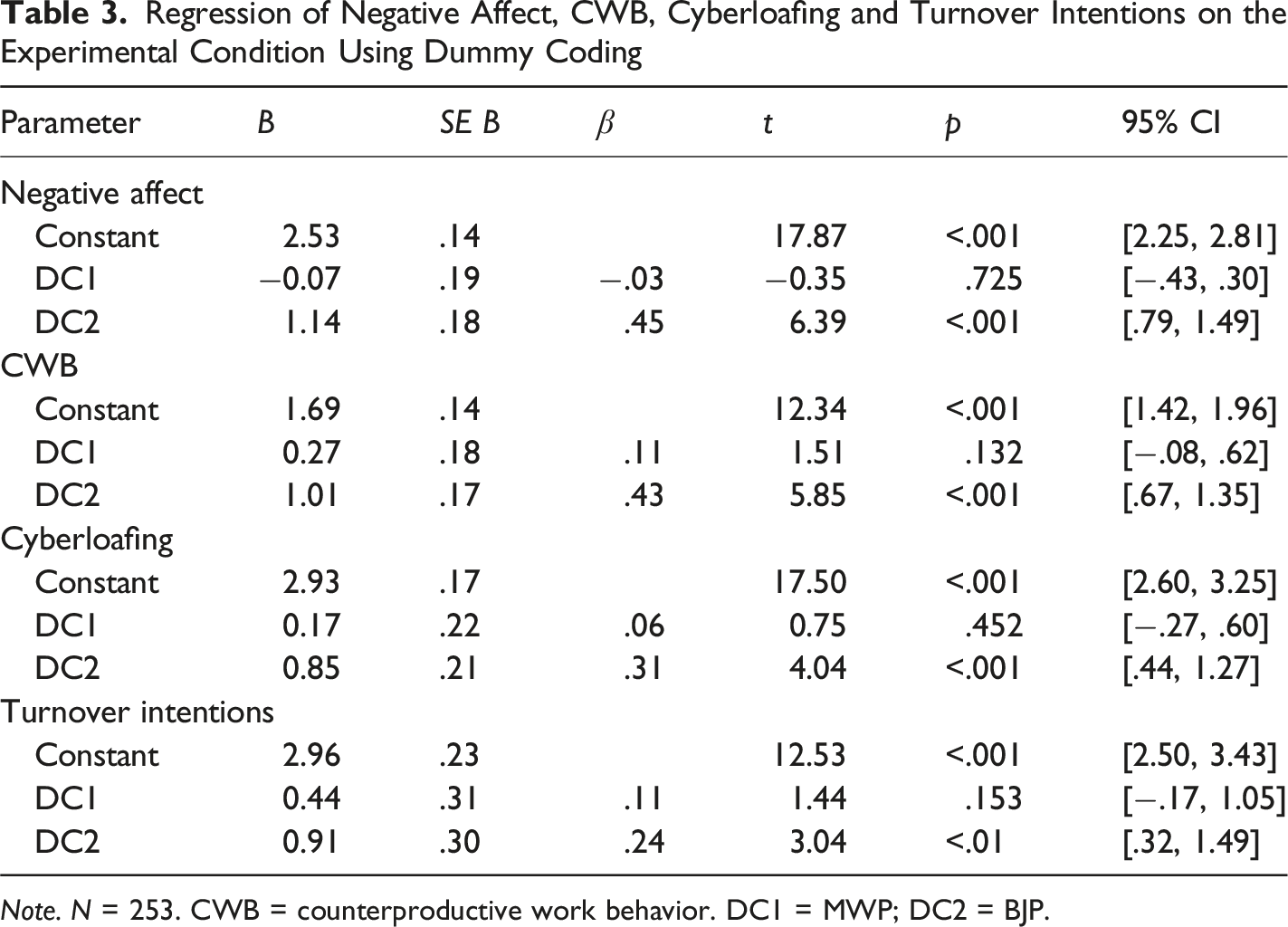
Note. N = 253. CWB = counterproductive work behavior. DC1 = MWP; DC2 = BJP.
To explore the robustness of the findings, regression analyses were conducted employing effect coding (see coding procedure in Table S5 and S7 in supplemental). All in all, the results remained robust, when using effect coding or when comparing the bullshit episode condition with the meaningful episode condition (see Table S6 and S8 in supplement).
Mediation Analyses
To test H2, we used path analytic procedures and conducted bootstrapping analyses to assess the significance of the indirect effects (Hayes, 2015). We utilized the SPSS macro process to estimate the mediation model (Model 4; Hayes, 2022). H2 predicted that negative affect mediates the relationship between experimental conditions and CWB, cyberloafing and turnover intentions. Again, we included dummy coded variables for the meaningful episode (DC1) and bullshit episode (DC2) conditions, with the neutral condition as reference group.
Results of the Mediation Analyses
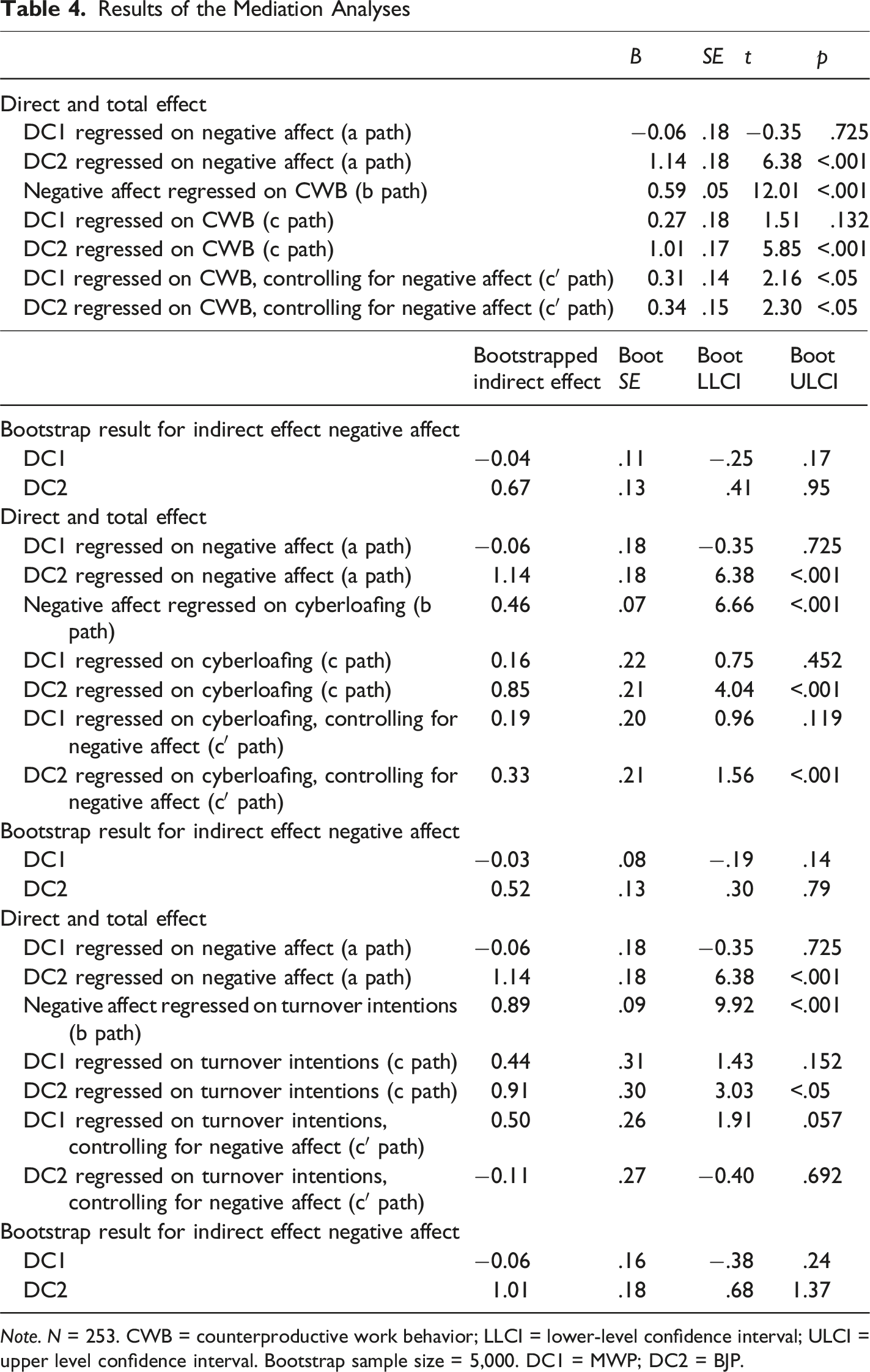
Note. N = 253. CWB = counterproductive work behavior; LLCI = lower-level confidence interval; ULCI = upper level confidence interval. Bootstrap sample size = 5,000. DC1 = MWP; DC2 = BJP.
Again, to further test the robustness of the findings, mediation analyses were conducted using effect coding and different dummy coded variables comparing specifically the BJP and MWP conditions. The results remained robust for the different coding procedures (see Table S9 and S10 in the supplemental materials).
Moderated Mediation Analyses
Results of the Moderated Mediation Analyses
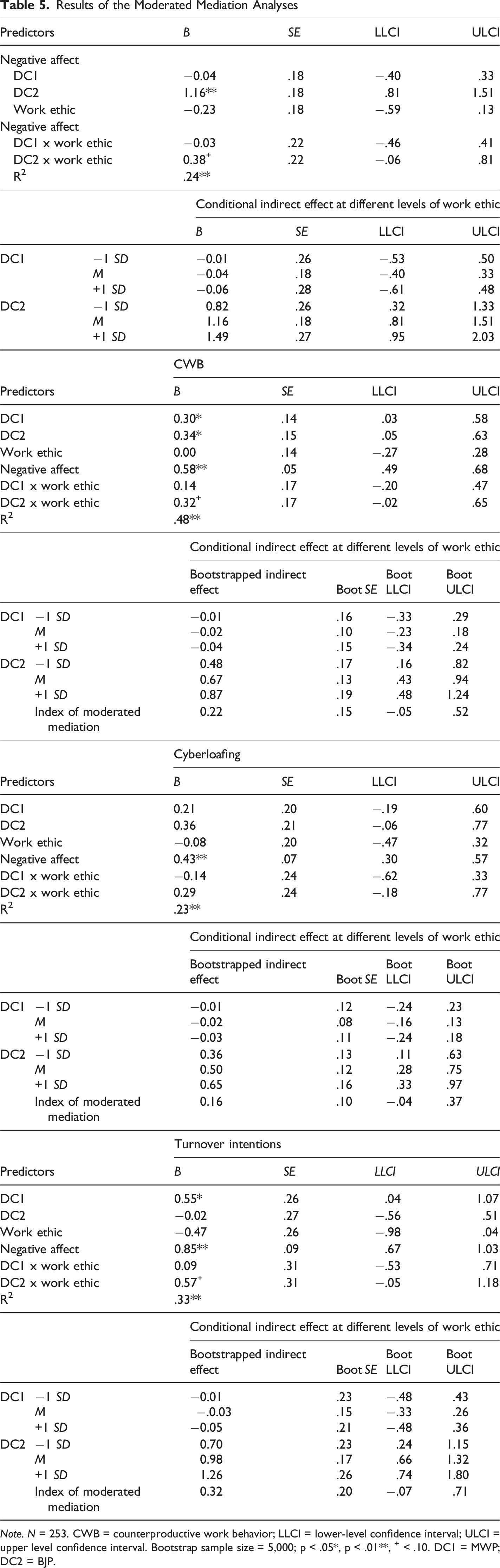
Note. N = 253. CWB = counterproductive work behavior; LLCI = lower-level confidence interval; ULCI = upper level confidence interval. Bootstrap sample size = 5,000; p < .05*, p < .01**, + < .10. DC1 = MWP; DC2 = BJP.
The results reveal that the bullshit episode condition (compared to the neutral condition) was associated with higher levels of negative affect especially for individuals with high work ethic (see Table 5). Therefore, work ethic strengthened the effect of recollecting a bullshit episode (compared to the neutral condition) on negative affect. Of note, the interaction effect (DC2 x work ethic) was only visible at trend-level. For DC1 x work ethic (MWP compared to neutral condition) no significant effects could be found. Next, we examined the conditional indirect effect of bullshit episode (compared to the neutral episode condition) on CWB, cyberloafing and turnover intentions through negative affect at three values of work ethic (one SD below the mean, the mean, and one SD above the mean). As the results in Table 5 show, the conditional indirect effects for bullshit episodes (compared to neutral episodes) on CWB, cyberloafing and turnover intentions were significant across all levels of work ethic but were stronger for higher work ethic levels. Again, all effects were not significant for DC1 x work ethic, which compared the meaningful episode with the neutral episode condition.
Taken together, the results indicate that work ethic showed moderating effects concerning the relationship between bullshit episodes (compared to neutral episodes) and negative affect, as well as concerning the partial mediation via negative affect. The results support H3, which posits that work ethic moderates both paths. However, the interaction effects were visible only at trend-level. No significant interactions (DC1 x work ethic) were observed for the meaningful episode condition compared to the neutral condition. Again, the findings underline the importance of conceptually and empirically distinguishing between positive and negative work experiences and their effects on outcome variables. Figure 2 shows graphical displays of the interactions between the experimental conditions (DC1 and DC2) and work ethic on negative affect as well as the moderated mediated relationship to CWB, cyberloafing and turnover intentions via negative affect. Graphic representation of the moderating effect of work ethic concerning the relation between experimental conditions (DC1 and DC2) and negative affect as well as the moderated mediated relationship to CWB, Cyberloafing and turnover intentions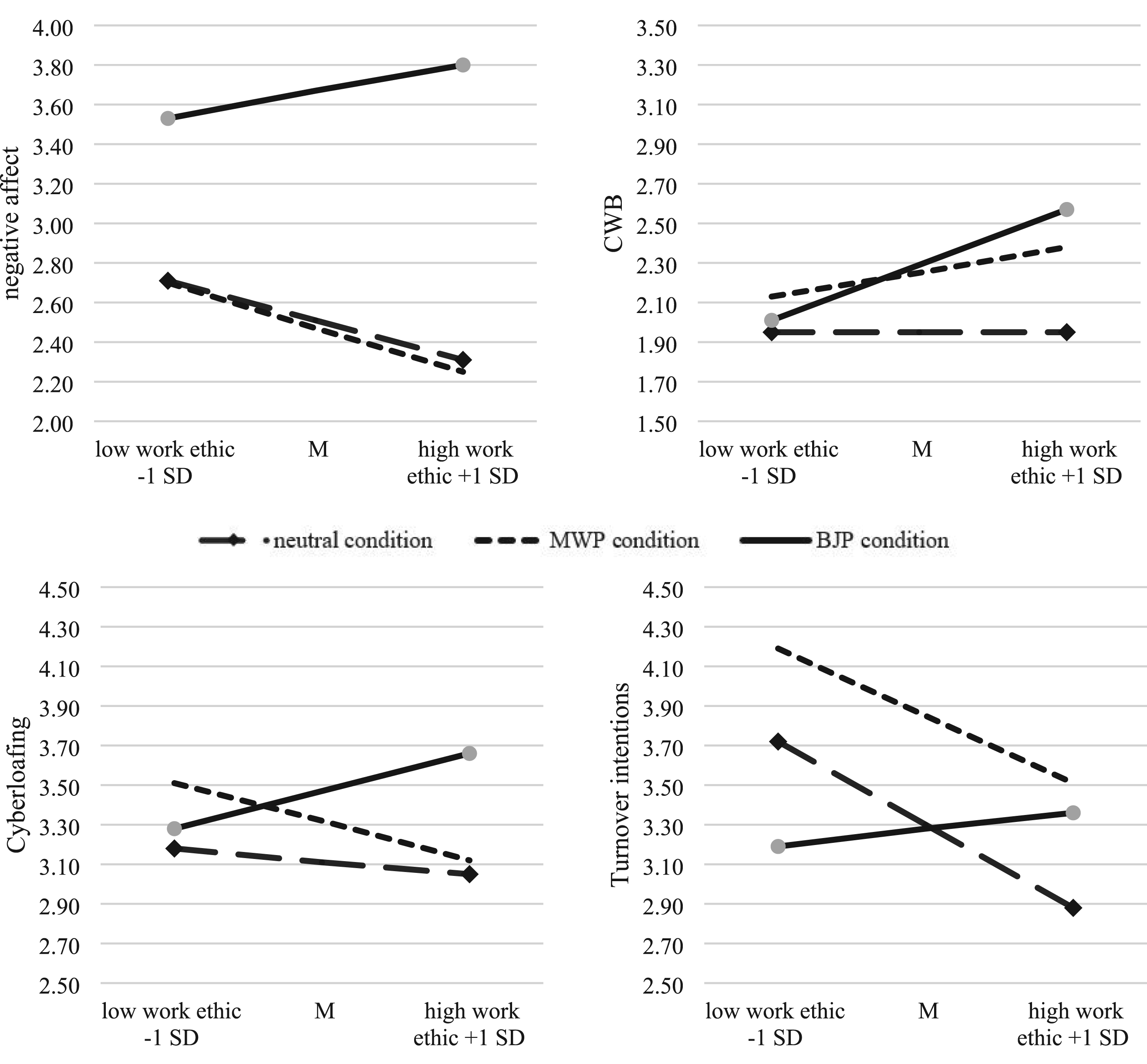
As before, to further test the robustness of the findings, moderated mediation analyses were replicated using effect coding. The results remained robust for the different coding procedures. When using effect coding, the interaction terms of EC2 x work ethic were significant and not only visible at a trend-level, supporting H3. Please see Table S11 and S12 in the supplemental.
Discussion
This study builds on prior research addressing BJP (Riester & Keller, 2025) and had four main objectives extending prior work. First, we aimed to address the gap in experimental research concerning the role of experiences at work by realizing an experimental design to investigate the causal effect of recalling bullshit (as opposed to meaningful or neutral) episodes on various negative outcome variables. By doing so we demonstrate that recalling work episodes characterized by pointless, unnecessary, or pernicious elements increased the general BJP among participants. Thus, the current experimental study serves as a crucial extension to cross-sectional and correlational studies connecting positive and negative work experiences to various criteria. Significantly, to our knowledge, it stands as the first to assess the experimental manipulation of encountering meaningful or bullshit episodes at work and the differential causal effects on negative affect, deviant work behavior and turnover intentions. By establishing this causal link, the study contributes to and strengthens existing theories of work experiences (e.g., Lepisto & Pratt, 2017; Rosso et al., 2010; Semmer et al., 2015).
Second, our research supports prior work by demonstrating the differential impact of positive and negative work experiences on the relevant criterion variables, specifically on CWB, cyberloafing, turnover intentions and negative affect. In line with our second aim and H1, our analyses revealed that the recollection of bullshit episodes (compared to meaningful and neutral ones) was significantly related to the readiness to engage in CWB, cyberloafing, turnover intentions and the experience of negative affect. However, recollecting meaningful episodes (compared to neutral) was not significantly related to any of the outcome variables. Thus, the experience of bullshit (compared to meaningful or neutral) episodes emerged as the primary and only predictor. While the association between stressful work events and negative affect (Semmer et al., 2010; Spector, 2011), or BJP and CWB has been documented (Riester & Keller, 2025) experimental evidence was lacking, particularly in exploring the differential effects of positive and negative work experiences. Conclusively, our findings highlight that experiences at work involve not only the presence or absence of positive features but also the presence or absence of negative features, which do not necessarily represent direct opposites (Lepisto & Pratt, 2017). Examining both facets including positive (MWP) and negative (BJP) experiences is essential to fully grasp the complexity of work experiences and their unique relationships with distinct outcome factors. Furthermore, the results underscore that positive associations of MWP to outcomes such as commitment or performance (Allan et al., 2019; Bailey et al., 2019) do not necessarily imply a reduction or prevention of negative outcomes. Specifically, for turnover intentions Wang and Seifert (2022) found that meaningful work had no preventative effect on staff resignation, instead negative working conditions (e.g., low pay) emerged as an explanatory factor. Thus, in alignment with findings in other contexts (prospect theory, Kahneman & Tversky, 1979; the evaluative space model of affect, Cacioppo & Berntson, 1994) we demonstrate that negative experiences at work can have more substantial impact compared to positive ones. These findings are in line with classic research on mood manipulations, which consistently demonstrates that inducing negative moods produces stronger deviations from neutral affect than inducing positive moods (Esses & Zanna, 1995). This asymmetry supports the notion that negative experiences are more salient and psychologically impactful than positive ones, a pattern that also emerged in our findings.
Next, effects of BJP (compared to the neutral and meaningful condition) on the criterion variables were mediated via negative affect, aligning with H2. The findings are in line with the stressor-emotion model proposed by Spector and Fox (2005), showing that frustrating or stressful work events can elicit negative affective responses, leading to hostile motives or behavioral reactions in form of deviant work behavior. Engagement in unethical work behavior or even withdrawal may serve as a coping strategy or a form of protest to alleviate the unpleasant affective state resulting from negative work experiences (Spector et al., 2006; Spector & Fox, 2010). In line with research on illegitimate tasks (Fila & Eatough, 2020; Semmer et al., 2015) we demonstrate that bullshit episodes, including unnecessary, pointless or harmful tasks, represent such stressful or frustrating events and have the potential to trigger negative affect and in turn unethical work behavior.
At last, we find support for a boundary factor (work ethic) concerning the relationship between BJP and negative affect, as well as concerning the strength of the indirect relation of BJP to CWB, cyberloafing and turnover intentions via negative affect. In line with previous research, we assumed that personality traits or work attitudes can significantly influence the likelihood of engaging in deviant behavior. Factors such as trait anxiety, trait anger or irritability can intensify the negative effects of organizational constraints or personal conflict on deviant work behavior (Fida et al., 2015; Fox et al., 2001). Our findings reveal that BJP (compared to the neutral or MWP condition) was positively related to negative affect, CWB, cyberloafing and turnover intentions, particularly and more strongly among individuals endorsing work ethic. As hypothesized, work ethic moderated and amplified the relationship between BJP and the criterion variables by increasing the probability of negative affect and, consequently, the readiness to engage in deviant behavior and turnover intentions in response to negative work experiences. Both pathways (two-stage moderated mediation, Figure 1) were moderated by work ethic. Both patterns may be attributed to underlying psychological processes driving negative affect or unethical behavior.
First, as per Graeber’s (2018) argument, individuals perceiving their job as filled with bullshit job characteristics described their work as mentally exhausting and degrading. Hence, BJP may pose a threat to one’s professional identity and self-worth, leading to feelings of frustration or anger. Individuals strongly endorsing work ethic, who view work as central to their self-concept and moral values (Miller et al., 2002), are particularly vulnerable to experience negative affect when confronted with “bullshit” tasks. Such tasks contradict their ideals of hard, productive, and challenging work and disdain for wasted time and idleness, creating dissonance between attitudes and actions (Furnham, 2021). Consequently, BJP triggered stronger negative affect, such as anger or frustration, especially for those placing significant value in work (strong work ethic). Second, considering that work ethic is linked to traits like indifference to conventional morality, antagonistic tendencies (Miller & Konopaske, 2014; Mudrack & Mason, 1995), and sensitivity towards expectancy violations (Christopher et al., 2003), individuals with strong work ethic may display more hostile and aggressive motives when they experience unpleasant affective states or when their expectations are violated. When those individuals feel their job is bullshit but continue working, dissonance arises between their work ethic and actions (Festinger, 1957). These individuals may attribute their dissatisfaction to their organizations, using aggressive behavior as a way to seek revenge and cope with their negative emotions and the aversive experience of cognitive dissonance (Christopher et al., 2008). Their engagement in CWB may serve as means to address unmet expectations and related unpleasant emotional states.
Implications
Our findings have significant implications for the field and research on work experiences. First, it is crucial to recognize the multifaceted nature of work experiences, including both positive and negative work experiences. This complexity results in intricate dynamics between positive and negative work experiences, their correlates, and subsequent outcomes (Lepisto & Pratt, 2017). Our results challenge the notion that experiencing one’s work as meaningful produces opposite effects compared to perceiving work as pointless, unnecessary, or harmful. Recalling bullshit episodes at work (compared to meaningful or neutral ones) heightened the readiness to engage in CWB, cyberloafing or turnover intentions, while the recollection of meaningful episodes did not significantly reduce those tendencies. Many jobs entail a mixture of positive and negative work experiences (Anusic et al., 2017). However, work that is fundamentally meaningful or possesses a meaningful core (e.g., clinical staff) should also be provided with the opportunity to be performed in a purposeful and harmless way (Voswinkel, 2015). As an implication, research aiming to mitigate negative affect or deviant behavior among employees should set their focus on appropriate strategies. Substantial research suggests strategies to provide and promote meaningful work experiences, such as upskilling programs, job rotations or job-crafting (Berg et al., 2013; Lysova et al., 2019). However, in our opinion it remains unclear whether these strategies effectively address the reduction of negative (bullshit) work experiences and therefore are productive when trying to mitigate negative affect, deviant work behavior or turnover intentions. We propose that research and practitioners should explicitly target strategies addressing the reduction of negative work experiences rather than primarily focus on fostering positive ones, due to their differential effects on outcome variables. Research on illegitimate tasks suggests practices like diligent planning and a careful organization of work regarding oversights in decision-making, organizational inefficiencies to avoid unnecessary tasks and provide highly motivated employees the opportunity to concentrate on meaningful work instead of being pushed out of the job by unpleasant circumstances (Fila et al., 2023).
Furthermore, organizations aim to attract individuals with a strong work ethic, recognizing its positive impact on beneficial work outcomes (Meriac & Gorman, 2017). At the same time, organizations seek to mitigate deviant work behavior, due to its costs and negative consequences (Carpenter et al., 2021). Our findings suggest a potential tension between those two characteristics. While it seems beneficial for organizations to select employees endorsing work ethic and valuing hard and efficient work (Meriac & Gorman, 2017), this may come with a price. Individuals with strong work ethic are more vulnerable to expectancy violations (Christopher et al., 2003) and more likely to feel frustrated or angry when faced with negative work experiences and consequently may engage in aggressive acts targeting the organization to seek revenge and to reduce their unpleasant state. Thus, selecting employees who endorse work ethic does not reduce the necessity to provide acceptable conditions at work to mitigate deviant work behavior or withdrawal. By providing opportunities that align with employees’ expectations and goals (Kristof, 1996) to carry out necessary and purposeful work and avoiding bullshit work experiences, employers can reduce the risk of highly motivated employees starting to contemplate leaving the organization or to engage in deviant behavior as a way to alleviate negative affect or to cope with stressors that impair their ability to perform efficient and necessary work. Additionally, in line with Ilies et al.’s (2013) suggestions, furnishing employees with feedback to prompt self-reflection on their engagement in unethical work behavior may evoke feelings of guilt and resentment and thus may motivate them to undertake retributive actions.
Limitations and Future Directions
Several limitations of the current study could be addressed in future research. First, we asked participants to recall meaningful, bullshit or neutral work episodes experienced during the last 30 days at their job. Prior experimental research (Allan et al., 2018) demonstrated that the mere act of recalling aspects of one’s current job is sufficient to affect the degree to which work is experienced as meaningful. Additionally, positive or negative experiences are events with a significant impact and thus tend to be easily accessible in employees’ memories (which we checked; the majority of respondents indicated that they could easily remember such events, see supplement). Nevertheless, an optimal but challenging-to-implement design would be to ask people about their reactions immediately after experiencing such episodes and then longitudinally tracking their behavior.
Furthermore, our study utilized convenience sampling, raising concerns about the generalizability of our findings to the population at large. Additionally, the sample was restricted to respondents from Germany, meaning we cannot draw conclusions about whether the observed relationships among variables would hold across different cultural contexts. Nevertheless, prior research investigating the relationship between BJP, work behavior or well-being has also found moderating effects of work ethic in U.S. samples (Müller et al., 2025; Riester & Keller, 2025). Given that work ethic is generally more strongly endorsed in the United States than in European countries (World Values Survey, 2023), it is notable that we observed a significant influence of work ethic even in a context where this moral perspective is less prevalent. This suggests that the relationships between BJP, work ethic, and work behavior may extend beyond the specific cultural background of our sample. Still, future research should include samples from more diverse cultural contexts, increase sample sizes, and employ randomized sampling methods to enhance the generalizability of our findings.
The potential for common method bias is another important consideration in our study using self-reports. The combination of subjective measures with other work-related metrics poses the risk of consistency effects, potentially inflating relationships or exaggerating correlations and effects among key variables (Podsakoff et al., 2003). Moreover, subjective measures are susceptible to perceptual and motivational distortions, such as social desirability or consistency bias (Podsakoff et al., 2003). Social desirability can pose challenges when assessing negative work behavior like CWB or turnover intentions. However, it is noteworthy that research suggests that self-reports of CWB are reliable and yield results consistent with third-party assessments (Berry et al., 2012).
Moreover, for a more comprehensive examination of the interplay of negative work experiences and work ethic, further research should employ a more granular scale measuring work ethic. The Multidimensional Work Ethic Profile (MWEP) developed by Miller et al. (2002) includes seven sub-dimensions of work ethic, each demonstrating differential effects on outcome variables. Our study employed the scale of Katz and Hass (1988), which shares a similar item basis with the MWEP (Miller et al., 2002). However, it primarily concentrates on dimensions like hard work, work centrality and anti-leisure, which are key areas of interest in this study, as we anticipated their significance in shaping expectations regarding productivity and resistance to the experience of bullshit episodes. Still, delving into additional dimensions such as morality or self-reliance may uncover distinct effects.
At last, future research should expand its scope to include additional work-related behaviors, including positive outcomes (e.g., commitment). Our results indicate that recollecting negative work experiences is primarily associated with negative behavioral tendencies and recollection of positive experiences had no significant effect. Still, existing research highlights a clear connection between positive work experiences and positive work outcomes (Allan et al., 2019; Bailey et al., 2019). Thus, meaningful experiences at work may well exert substantial effects on positive outcomes without necessarily reducing negative ones. Simultaneously, negative experiences at work may have larger effects on negative outcomes without necessarily diminishing positive ones. Future research should further delve into the complexity and differential effects of positive and negative work experiences on various work-related criteria.
Conclusion
Through the experimental manipulation of recollections pertaining to neutral, meaningful and bullshit work experiences, our research addressed the significance of two facets of work experiences acknowledging the complexity of experiences reflecting positivity and negativity. Give the substantial evidence suggesting that negative experience can have more pronounced impact than positive ones (Kahneman & Tversky, 1979) our study emphasizes the need to assess and address negative (bullshit) work experiences as a distinct facet. This urgency is underscored by their strong link to negative affect and increased likelihood to engage in deviant behaviors, particularly among individuals with a strong work ethic. Our study contributes to research by demonstrating how a variable that is typically considered a resource, can increase vulnerability concerning negative affect and deviant work behavior when confronted with a stressor that clashes with expectations associated with work ethic (Meriac & Gorman, 2017). Future studies can build on these insights to explore the intricate dynamics between positive and negative experiences at work, their differential effects and correlates and address respective implications.
Supplemental Material
Supplemental Material - Recollection of Bullshit Work Episodes (vs. Meaningful or Neutral Ones) Relates to Negative Affect, Deviant Work Behavior and Turnover Intentions
Supplemental Material for Recollection of Bullshit Work Episodes (vs. Meaningful or Neutral Ones) Relates to Negative Affect, Deviant Work Behavior and Turnover Intentions by Johanna Riester, Johannes Keller in Psychological Reports
Footnotes

Ethical Consideration
This is an observational study. The study was approved as exempt from review by Ulm University’s Institutional Review Board.
Consent to Participate
Informed consent was obtained from all individual participants included in the study.
Author’s Contribution
All authors contributed to the study conception and design. Material preparation, data collection and analyses were performed by Johanna Riester. The first draft of the manuscript was written by Johanna Riester and all other authors (Prof. Dr. Johannes Keller) commented and supervised on the manuscript. All authors read and approved the final manuscript.
Funding
The authors received no financial support for the research, authorship, and/or publication of this article.
Declaration of Conflicting Interests
The authors declared no potential conflicts of interest with respect to the research, authorship, and/or publication of this article.
Supplemental Material
Supplemental material for this article is available online.
Author Biographies
References
Supplementary Material
Please find the following supplemental material available below.
For Open Access articles published under a Creative Commons License, all supplemental material carries the same license as the article it is associated with.
For non-Open Access articles published, all supplemental material carries a non-exclusive license, and permission requests for re-use of supplemental material or any part of supplemental material shall be sent directly to the copyright owner as specified in the copyright notice associated with the article.
