




Abstract
Digital forms of communication afford users unprecedented access to supportive others during times of need. Yet there has been little experimental research that compares the nature and effectiveness of informal support provided through digital communication. In this lab-based experiment, 348 female young adults took part in a stressful task and were randomly assigned to receive support from a close female friend through (1) in-person communication, (2) video calling, (3) voice calling, (4) text messaging, or (5) a no-support control condition. In-person, video and voice communication resulted in similar perceived levels of received support, satisfaction with support, and affective outcomes of support. However, participants who received support through texting reported significantly lower positive affect and less laughter and smiling (compared to all other forms of communication). Text message support was also perceived as less empathetic and resulted in lower satisfaction (compared to in-person communication). The present study replicates and extends past research by identifying specific ways in which text-based support may fall short. In both research and clinical contexts, more work is needed to optimize this popular and convenient platform for the provision of social support.
Keywords
Introduction
Strong supportive relationships are among the most powerful determinants of health and well-being (Holt-Lunstad, 2018; Levere et al., 2022). Seminal research documenting the benefits of social support emerged during the late 1970s and early 1980s, when the ability to access support from friends and family was mostly limited to phone calls and in-person interactions. Fifty years later, humans now have an unprecedented ability to connect with supportive others when in-person contact is not available. Over four billion people own smartphones, which offer 24/7 access to social networks via text messaging, voice calls, video calls, and social media platforms (Statista, 2024). As communication patterns shift across the globe, there are growing calls for a better understanding of the role of different communication modalities in the social support process (Pauw, 2023; Rains et al., 2015; Sbarra et al., 2019). Using an experimental design, the current research sought to compare affective outcomes of support, satisfaction with support, and perceptions of received support when support is provided through computer-mediated communication (CMC; video calls, voice calls, texting), compared to in-person communication.
Social Support Theory
The provision of social support during times of stress is one of the most important functions of social relationships (Cohen & Wills, 1985). According to the stress-buffering hypothesis of social support, the negative effects of stress on health and wellbeing will be attenuated when people feel supported by their social networks (Cohen & Wills, 1985). The perception that support is there when one needs it (i.e., perceived availability of support) has been most consistently linked with beneficial outcomes (Uchino, 2009). In contrast, the impact of receiving greater support during times of need (i.e., received or enacted support) on wellbeing appear to be more context-dependent, and results have been mixed (Dunkel Schetter & Brooks, 2009; Gottlieb & Bergen, 2010; Uchino, 2009). A guiding principle of the current research is that the recipient’s perception and evaluation of support received (versus provider or observer ratings) matter most for recipient wellbeing (Arican-Dinc & Gable, 2023; Bodie et al., 2012).
In order to provide practically useful suggestions regarding how to best support others during times of stress, researchers must clarify the core aspects of the support process that impact perceptions and outcomes of received support (Holt-Lunstad, 2022; Uchino, 2009). A variety of theories and frameworks have been put forth to explain the mixed findings for received support on wellbeing (e.g., Bolger et al., 2000; Cutrona, 1990). One critical factor is the specific type of support provided (Dunkel Schetter & Brooks, 2009), with the most consistent benefits derived from emotional support that communicates understanding, valuing and caring (Maisel & Gable, 2009; Trobst, 2000). Social support researchers have also highlighted stressor type, characteristics of the support provider and recipient, and relationship factors as important context for understanding satisfaction with, and outcomes of, received support (Uchino, 2009). Communication scholars have similarly argued that the outcomes of a supportive interaction are influenced by features of the supportive message, provider and recipient characteristics, and support context (Bodie & Burleson, 2008). In the current study, we focus on the mode of communication used for supportive interactions as a relevant yet underexplored contextual factor that may impact perceptions of received support, satisfaction with support and support outcomes (Pauw, 2023).
Computer-Mediated Communication Theory
Existing theory on how supportive interactions may be impacted by the use of mediated communication comes from diverse disciplines, including communication studies, computer science, and psychology. Early CMC theories, such as media richness theory, proposed that the quality of social interactions will improve as the number of available verbal (e.g., tone, volume) and non-verbal (e.g., facial expressions, gestures) cues increases (Daft & Lengel, 1986). Media naturalness theory also advocates for a fundamental role of verbal speech, facial expressions, and body language in social interactions, arguing that, because the human brain evolved for in-person communication, interactions will be most fulfilling when they take place via synchronous, co–located communication (Kock, 2012).
More recent theorizing offers a more optimistic view of the capacity of mediated communication to fulfill similar interaction goals as in-person communication (Walther, 2011), and in some cases to surpass its effectiveness (Walther, 1996). Social information processing theory (SIPT) was first developed to understand impression formation and relationship development through text-based CMC (Walther, 1992). It explicitly acknowledges the lack of cues in CMC, but argues that users can adapt their communication, harnessing available paralinguistic cues (e.g., punctuation, emojis) and other cues (e.g., response time) to suit their needs and goals (Walther & D’Addario, 2001). Although SIPT emphasizes that CMC interactions take more time than in-person interactions, supporting research is often conducted in the context of unacquainted dyads, not established close relationships. Within close relationships, even brief interactions over text messaging could have stress-buffering effects. This argument is bolstered by previous research showing that digital technologies can reduce negative affect by increasing the perception that support is available (Gabbiadini et al., 2020; Shin et al., 2022) and that merely thinking about close others can have stress-buffering effects (Bourassa et al., 2019).
Also relevant to the current research is channel expansion theory (CET), which emphasizes the role of user experience with a given communication channel in shaping perceptions of media richness and CMC users’ ability to encode and decode affective and social information (Carlson & Zmud, 1994, 1999). According to CET, CMC will be optimized when users are communicating with a familiar other, about a familiar topic, and using a familiar communication channel (Carlson & Zmud, 1999). Given these tenets, we might expect especially positive outcomes of CMC-based support among digital natives (i.e., those who have grown up in the digital age; Prensky, 2009). An estimated 97% of American young adults own a smartphone (Pew Research Center (2025)) and recent studies show that seeking support via CMC has become a normative part of daily life for this age group (Colasante et al., 2022; Collier & Hughes, 2022).
Computer-Mediated Communication for Supportive Interactions
Following from relevant social support and CMC theory, it is not surprising that receiving support via CMC, even text-based communication, seems better than receiving no support at all (Holtzman et al., 2017; Yau et al., 2021; Zayas et al., 2024). In fact, there is now a substantial body of literature demonstrating benefits of receiving support online, including support obtained through social media platforms (Gilmour et al., 2020) and online communities (Obst & Stafurik, 2010; Rains et al., 2015), and more formal support services offered through crisis text lines (Coady et al., 2022), teletherapy (Lin et al., 2022), and video-delivered psychotherapy (Fernandez et al., 2021). However, among studies that have directly compared outcomes of in-person versus CMC support outside formal professional settings, results have been mixed. Some cross-sectional and panel surveys have revealed the stress-buffering effects of online support to be weaker than in-person support (Eamiello & Reid, 2023; Lewandowski et al., 2011; Trepte et al., 2015), whereas others have found similar or complementary effects of support provided online (Cole et al., 2017; Mikami et al., 2019).
In line with recent calls in the literature (Pauw, 2023), a handful of studies have used experimental and intensive longitudinal designs to directly compare evaluations and outcomes of support provided via CMC versus in-person communication. A common procedure used in experimental research has been to randomly assign participants to receive emotional support through CMC or in-person communication following a lab-induced stressor (Holtzman et al., 2017) or while discussing a stressful topic (e.g., High & Solomon, 2014; Rains et al., 2016, 2017; Youngvorst & High, 2025). To our knowledge, only one research group has tested differences in positive affect, and found that support from a close friend or confederate resulted in significantly greater positive affect when support was provided in person, compared to via text message (Holtzman et al., 2017). Although not specific to social support, an experiment of social interactions between same-sex peers also found higher positive affect following in-person versus text-based interactions (Sacco & Ismail, 2014). Experimental studies evaluating changes in negative affect have been mixed, with some results favoring in-person support (Rains et al., 2017), text-based support (Rains et al., 2016), and others failing to find significant differences (Holtzman et al., 2017).
Previous lab-based experiments have also compared participants’ evaluations of received support. Overall, text-based support seems to produce high levels of satisfaction at a level that matches (Holtzman et al., 2017; Rains et al., 2017) or even exceeds in-person support (Rains et al., 2016). However, studies have also found evidence for more positive evaluations of in-person support in the context of high-quality support in female-female dyads (High & Solomon, 2014) and when support is from a close friend (Holtzman et al., 2017). Others have found that higher perceptions of in-person support quality from friends (versus text or video support quality) can be partly explained by greater feelings of social presence (i.e., of “being together” with their friend; Youngvorst & High, 2025).
Although controlled, lab-based experiments have allowed researchers to isolate relevant aspects of the CMC support process, some questions have been raised about ecological validity. For example, studies often rely on support from a stranger (High & Solomon, 2014) or trained confederate (Holtzman et al., 2017; Rains et al., 2016, 2017), despite most supportive text exchanges occurring within close relationships (Ehrenreich et al., 2020). Another limitation is the provision of CMC support from a nearby room (High & Solomon, 2014; Rains et al., 2016, 2017; Youngvorst & High, 2025). This differs from “real-life” CMC support, and may have inflated the perceived social presence of CMC support providers (Biocca et al., 2003).
Only two studies to the authors’ knowledge have employed naturalistic, intensive longitudinal designs to compare in-person and digitally-mediated social support. Colasante and colleagues (2022) found no difference in emerging adults’ self-rated success at regulating negative emotions when support was received in-person or digitally (e.g., texting, calling). In Hulur and colleagues’ (2024) study of older adults, receiving support through text-based communication (email or text) was associated with greater feelings of acceptance and closeness compared to receiving support in-person, and similar levels of calm and satisfaction with interactions compared to in-person and telephone support. While these studies offer a more ecologically valid examination of CMC support, both studies aggregated across diverse stressor types and support sources. These factors are known to impact needs for support and support outcomes, and may have confounded study findings. Further, Colasante and Colleagues (2022) treated “digital support” as a monolithic category (collapsing across very different forms of CMC, such as texting and calling) which is in contrast to growing calls for studies that disaggregate mediated communication (Kumar & Epley, 2021; Pauw, 2023; Walther et al., 2005). Indeed, there has been limited attention to more cue-rich forms of CMC (e.g., video and voice calls) for informal support provision (Gabbiadini et al., 2020; Liang et al., 2024). Also noteworthy, is the lack of research examining how perceptions of specific supportive gestures may differ based on mode of communication. In the current study, we focused on perceptions of empathic support, esteem support, and support that makes recipients laugh or smile.
Types of Received Support in the Context of Mediated Communication
Emotional (or nurturant) support is a form of support aimed at improving the recipient’s emotional wellbeing, without necessarily trying to change the situation itself (Cutrona & Suhr, 1992; Trobst, 2000). Empathic responses fall under this category and refer to gestures that communicate understanding, validation and caring (O’Brien et al., 2009; Sahi et al., 2022). Empathy can be communicated both verbally (e.g., asking questions, repeating back what is heard) and nonverbally (e.g., nodding, facial expressions). In their review of differences between online and offline interactions, Lieberman and Schroeder (2020) point out that fewer nonverbal cues in online interactions can make it more difficult to accurately gauge others’ thoughts and feelings. In their conceptual framework of online empathy, Grondin and colleagues (2019) highlight that, even if support providers accurately perceive how someone is feeling and engage in empathic responding, the lack of socioemotional cues in text-based communication may still interfere with support recipients’ ability to perceive those responses as empathetic. Thus, from a theoretical perspective, we may expect differences in the degree of empathy perceived by support recipients across different modes of communication.
Empirically, there is ample evidence that a support provider’s non-verbal behaviors (e.g., leaning forward, nodding, eye contact) can contribute to a support recipient’s feeling of being listened to and cared for when disclosing negative emotional experiences (Arican-Dinc & Gable, 2023; Hall et al., 1995). For example, vocal cues (e.g., volume, tone, pitch) may facilitate empathic support exchanges by giving support providers information about a support seeker’s level of stress and emotional arousal (Bulling et al., 2023; Giddens et al., 2013) and by influencing a support recipient’s perception of provider warmth (Morris & Suckerman, 1974). On the other hand, the lack of nonverbal cues in text-based communication may lead people to feel less understood (Kelly & Miller-Ott, 2018; Petrova & Schulz, 2022).
Esteem support, such as words of encouragement, pointing out others’ positive qualities and characteristics, is another form of nurturant support that promotes wellbeing and relationship satisfaction (Cutrona & Suhr, 1992). Although esteem-building support is commonly expressed in online contexts (Rains et al., 2015) and relies heavily on verbal content, it is unclear whether text-based communication is sufficient to convey this type of support to the same degree as other forms of CMC and in-person communication.
Feeling valued, cared for and understood are critical ingredients to close relationships and supportive interactions specifically (Gordon & Diamond, 2023). However, calls have also been made for a greater consideration of laughter as a core aspect of positive social interactions (Algoe, 2019; Curran et al., 2018; Scott et al., 2022) and supportive interactions in particular (Niven et al., 2009). Both laughter and smiling have been shown to boost positive affect (Cross et al., 2023; Dunbar et al., 2021; Vlahovic et al., 2012) and reduce the psychological and physiological aspects of the stress response (Cross et al., 2023; Kraft & Pressman, 2012; Zander-Schellenberg et al., 2020). Laughter and humor are widely recognized as social phenomena (Bänninger-Huber & Salvenauer, 2023; Scott et al., 2014). Within the burgeoning field of interpersonal emotion regulation (IER), humor (i.e., telling jokes, attempts to make someone laugh) has been posited as a core strategy used to improve the emotional state of others (Niven et al., 2009). Yet, empirical research on humor as an IER strategy is scant and has been largely conducted in the context of romantic couples. Nonetheless, results show a link between positive humor and laughter and lower negative affect (Howland & Simpson, 2014; Monin et al., 2021) and higher positive affect (Horn et al., 2019) during supportive interactions.
Despite the well-established benefits of laughter and smiling, there is a striking absence of research evaluating how these factors may be impacted by CMC. Vocal cues are critical to the stimulation of smiling and laughter (Provine et al., 2007) and the mere sound of someone laughing can be contagious (Provine, 1992). Although smiling and laughter can be expressed in text-based communication (e.g., emojis, typed laughter), fewer smiles and less time spent laughing have been observed during text message interactions between close friends, compared to in-person, video, and voice communication (Sherman et al., 2013). Thus, while there is tentative evidence that mode of communication matters for smiling and laughter in social interactions, no studies have examined this in a social support context.
The Current Research
The current study employed an experimental design to examine perceptions and outcomes of received support delivered through either in-person, video, voice, or text communication, or a no-support control condition. The first study aim was to compare affective outcomes and satisfaction with support across the five conditions. It was hypothesized that social support via any mode of communication would lead to significantly higher positive affect and lower negative affect, compared to no support at all (H1). Given conflicting research and theory regarding the relative effectiveness of mediated versus in-person communication, three opposing hypotheses were tested. First, grounded in CMC theories that emphasize the problematic lack of cues in digital communication (Daft & Lengel, 1986; Kock, 2012), it was expected that in-person communication would result in the greatest improvements in positive and negative affect and satisfaction with support, followed by video, voice, and text-based communication (H2A). Other research suggests that verbal cues may be sufficient to facilitate empathic accuracy (Kraus, 2017), promote bonding, and reduce stress (Seltzer et al., 2012), so another possibility is that the in-person, video, and voice conditions would lead to similarly superior outcomes, compared to text messaging (H2B). Last, since participants were all young adults (and therefore digital natives) receiving support from close friends, CET (Carlson & Zmud, 1999) and related research (e.g., Colasante et al., 2022; Rains et al., 2017) would expect similar benefits, regardless of whether support was provided via mediated or in-person communication (H2C).
Within in-person contexts, there is ample evidence that empathic responses, esteem-building support, and support that elicits smiling and laughter can all result in powerful social and emotional benefits (Cross et al., 2023; O’Brien et al., 2009; Robinson et al., 2019; Sahi et al., 2022). However, there is a scarcity of empirical work that has directly compared specific types of support across different communication modes (Sherman et al., 2013). Thus, the second study aim was to investigate potential differences in perceived levels of received support (empathic support, esteem support, support that elicits smiling and laughter) provided across four modes of communication. An additional set of hypotheses was put forth that parallel the three competing hypotheses described above. Specifically, it was expected that the more cues available, the greater the perceived levels of support (empathic support, esteem support, elicitation of laughter/smiling; H3A), that conditions with audio cues (in-person, video, voice) would lead to greater perceived levels of support compared to text-based support (H3B), and that perceived levels of support would be equivalent across all modes of communication (H3C).
Method
Participants and Recruitment
Participants were recruited through the undergraduate subject pool at a mid-sized Canadian university between January 8, 2018 and October 23, 2019. Eligible participants were female, 18 to 25 years old, fluent in English, and able to bring a close female friend to participate (also required to be 18 to 25 years old and fluent in English). Participants were excluded if they had been diagnosed with a mental health condition or if they or their friend had previously participated in the study (as a participant or friend). After study completion, participants received course credit or $25CAD and friends received course credit or $10CAD. The study received institutional approval from the Behavioral Research Ethics Board (H17-02255).
A total of 401 participants met the inclusion criteria and provided written informed consent to participate. Participant data were excluded from the present analyses for the following reasons: participant withdrew prior to completing the study protocol (n = 25), friend was not available to provide support (n = 11), protocol deviation (n = 9), friend described the participant as “not a very important friend” (n = 6), and friend did not complete any surveys (n = 2). The final sample consisted of 348 females with an average age of 19.33 (SD = 1.41) years. Participants identified as European (56.4 %), East or Southeast Asian (15.9 %), South Asian (7.6 %), and other ethnicities (20.1%). Over two-thirds (68.6%) were Canadian-born. Participants were frequent smartphone users, reporting they check their phones almost constantly (7.5%), every few minutes (33.8%), a few times an hour (48%), every 2 to 3 hours (9.2%), a few times a day (1.2%), or once or twice a day (0.3%).
Procedure
A research assistant (RA) conducted the eligibility screening and randomization procedures via email (in advance of the scheduled study session). Once participants were deemed eligible, the RA asked them to identify a close friend who was willing and able to participate in the study with them. Specifically, they were instructed to name a close female friend who they rely on for support, and with whom they had exchanged at least one text message during the past two weeks. The latter was required to reduce potential bias against the texting condition (the leanest of communication modes). This decision was grounded in CET, which emphasizes the importance of user experience with a communication technology and communication partner (Carlson & Zmud, 1999), and SIPT, which posits that text-based CMC (more so than video or voice chat) requires users to adapt and modify their communication strategies to optimize interaction outcomes (Walther, 2011). Once a close friend was identified, the RA randomly assigned the participant to one of five study conditions: social support via (1) in-person communication, (2) video call, (3) voice call, (4) text message, or (5) a no-support control. Participants assigned to the in-person condition were instructed to bring their friend to their session. Participants in the video, voice, and text message conditions were asked to ensure their friend was available over the phone during a specific window of time during the study session (the RA also emailed the timeslot directly to the friend). Participants in the no-support condition were told their friend was not needed for the study.
After arriving at our research lab, a research assistant obtained informed consent and gave participants a 10-min rest period (reading magazines) to acclimatize to the lab environment. Next, participants completed baseline measures of positive and negative affect. Participants then took part in the Trier Social Stress Task (TSST), a widely used protocol that reliably induces an acute psychological stress response (Kirschbaum et al., 1993). This task involves a 5-min verbal arithmetic task and 5-min speech (about why they should be hired for a job on campus) in front of an audience. The audience consisted of two female confederates trained to respond in a neutral manner (e.g., neutral facial expressions, no verbal or non-verbal expressions of encouragement or reassurance) to ensure the task was perceived as demanding. The speech and math tasks were video-recorded. Immediately after the task, participants completed post-stress measures of positive and negative affect. While participants completed the speech task and post-stress measures, the research assistant provided the close friend with instructions regarding how to respond to the participant during the next phase of the experiment. At this time, friends providing CMC support were made aware of the specific mode of communication (i.e., video, voice, text) that they would be using. In all four support conditions, friends were instructed to ask the participant how the task went, with the main goal of listening and trying to understand their experiences. They were encouraged to respond in a way that felt natural to them. Instructions were identical across all four support conditions and were communicated via text message in the digital conditions and via printed instructions in the in-person condition (see Supplemental Materials; Figure S1).
Participants in the support conditions then received 10 minutes of social support from their friend (in-person, video chat, voice call, or texting). Participants in the mediated support conditions were given a smartphone to communicate with their friend (iPhone or Samsung, whichever they were most familiar with). Participants in the no-support (control) condition waited for 10 minutes alone in the lab. Following the support manipulation, participants completed a more comprehensive battery of psychosocial questionnaires. Although beyond the scope of the current study, friends also provided informed consent and completed a brief questionnaire immediately following the support period, and a more comprehensive questionnaire within 24 hours of the study session. To reduce residual distress from the experimental procedures, all participants received support from the research assistant at the end of the lab session (see Supplemental Materials; Figure S2).
Measures
Present levels of positive and negative affect were reported at three timepoints (pre- and post-stress task, and post-support). Eight positive affect items (amused, calm, excited, happy, hopeful, inspired, proud, relieved) and eight negative affect items (annoyed, angry, anxious, embarrassed, guilty, sad, upset, worried) were drawn from previous research (Côté et al., 2011). Each item was rated from 1 (“do not feel at all”) to 7 (“feel very strongly”). Cronbach’s α was .81, .79, and .85 for positive affect, and .80, .85, and .85 for negative affect at each of the three timepoints, respectively.
Following the support manipulation, participants reported how their friend responded to them. Four items tapped into cognitive-affective and behavioral aspects of empathic support (“Tried to see things from my perspective,” “Tried to understand how I felt,” “Was aware of what I was thinking and feeling,” “Really listened to me”; α = .77) as measured in past research (Cutrona & Suhr, 1992). Esteem-building was measured using two items (“Focused on the ‘best side’ of me,” “Expressed liking and encouragement for me”; α = .70) drawn from the Perceived Partner Responsiveness Scale (Reis et al., 2017). Two items measured responses that elicited laughter or smiling (“Made me laugh,” “Made me smile”; α = .75). Response options ranged from 1 (“not at all”) to 4 (“a lot”). Satisfaction with support was measured by asking, “Overall, to what extent were you satisfied with the way your friend responded to you?” using a 0 (“not at all”) to 7 (“extremely”) scale.
Statistical Analyses
As a randomization check, one-way analysis of variance (ANOVA) was used to ensure there were no significant baseline differences in positive and negative affect across conditions. Independent t tests compared pre- and post-stress levels of both positive and negative affect to confirm that the TSST successfully elicited a significant change in affect. Analysis of covariance (ANCOVA) was used to ensure that the TSST resulted in similar post-stress levels of positive and negative affect across conditions, controlling for baseline levels of the outcomes. A chi-square test was used to confirm that there were no between-group differences in the closeness of the friendships (i.e., best friend, second best friend, top five friends, or top 10 friends).
The main study analyses used ANCOVA to test whether post-support levels of positive and negative affect differed across conditions, after controlling for post-stress levels of the outcome variables. Bonferroni-corrected post-hoc tests with bootstrapping (5000 resamples) were used to follow up on significant effects (i.e., p < 0.05) (Field, 2013; Sadooghi-Alvandi & Malekzaden, 2014). ANOVAs compared empathic support, esteem support, laughter/smiling, and satisfaction with support across the four support conditions. Games-Howell post-hoc tests were used when Levene statistics were significant. Effect sizes for the post-hoc comparisons are presented as Cohen’s d, with 0.2, 0.5, and 0.8 traditionally indicating small, medium, and large effects, respectively (Fritz et al., 2012). All analyses were conducted using SPSS version 24.0.
Results
Preliminary Analyses
Means and Standard Deviations for Positive and Negative Affect Across Time and Condition
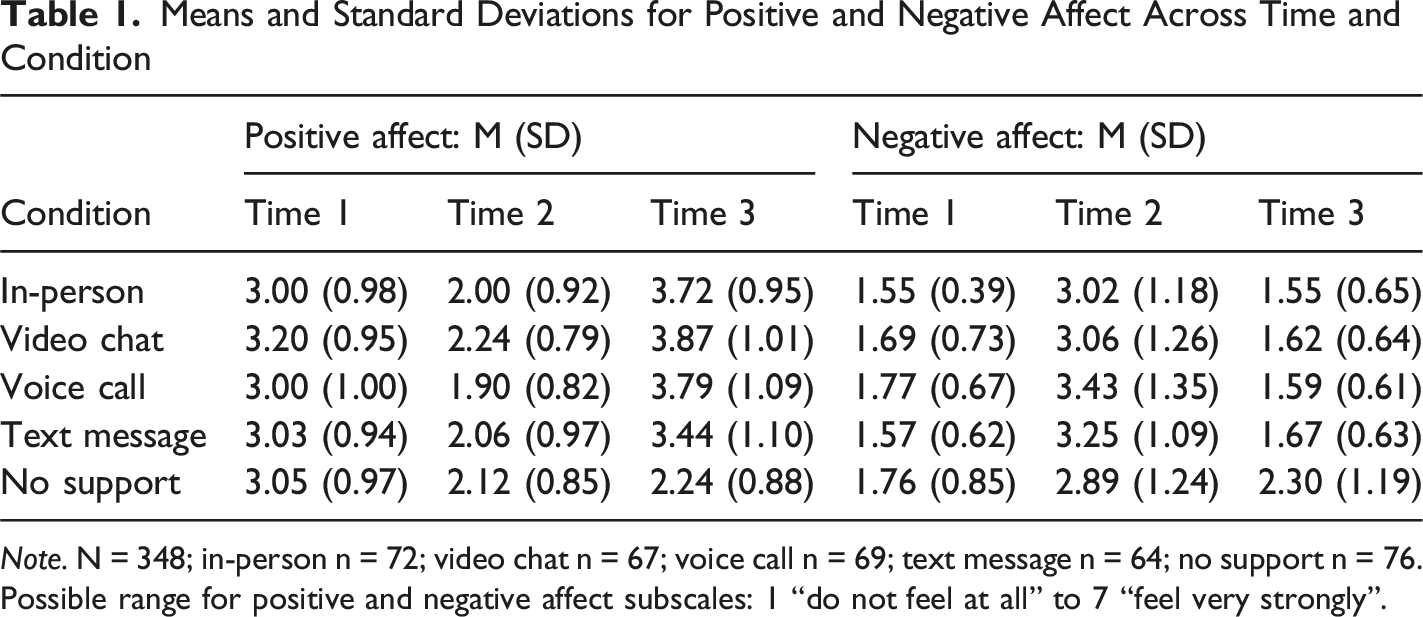
Note. N = 348; in-person n = 72; video chat n = 67; voice call n = 69; text message n = 64; no support n = 76. Possible range for positive and negative affect subscales: 1 “do not feel at all” to 7 “feel very strongly”.
Means and Standard Deviations for Satisfaction with Support and Supportive Gestures Across Conditions
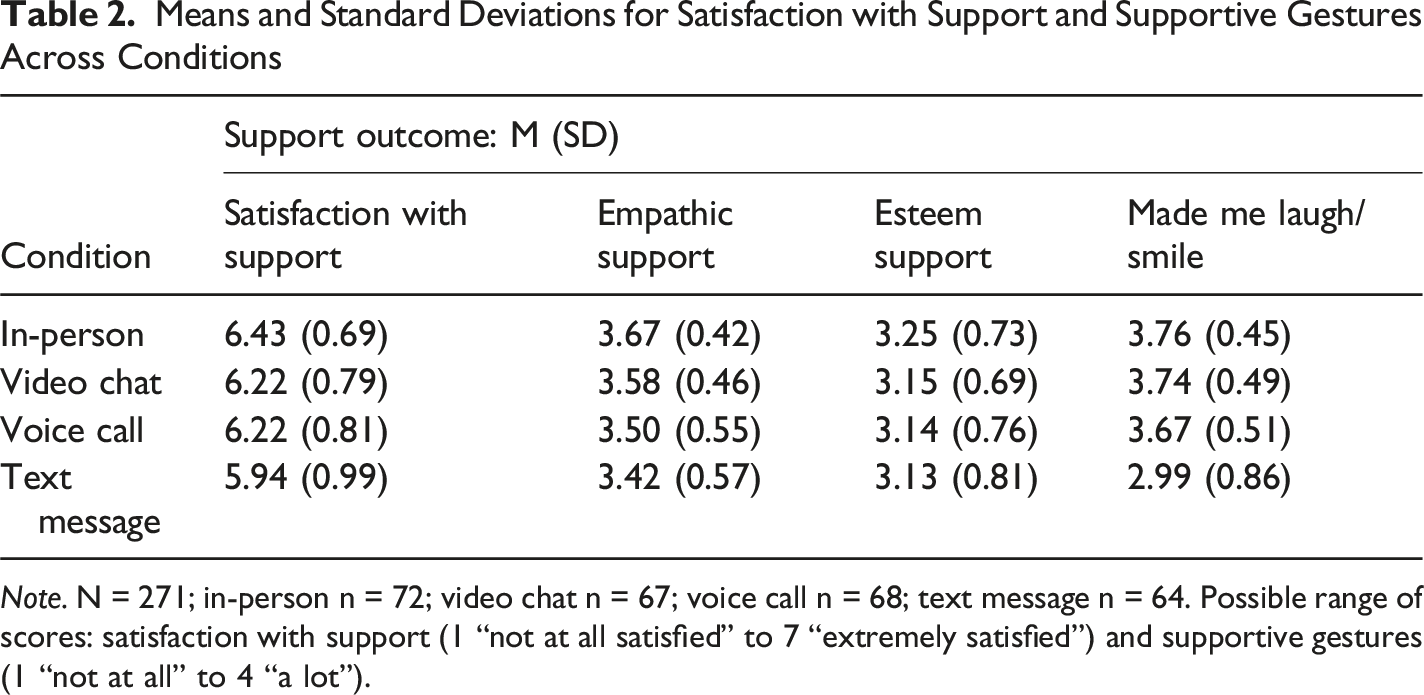
Note. N = 271; in-person n = 72; video chat n = 67; voice call n = 68; text message n = 64. Possible range of scores: satisfaction with support (1 “not at all satisfied” to 7 “extremely satisfied”) and supportive gestures (1 “not at all” to 4 “a lot”).
Main Analyses
Post-Support Positive and Negative Affect
A significant effect of study condition on post-support levels of positive affect was found, after controlling for post-stress levels of positive affect, F(4, 342) = 35.75, p = < .001, η
p
2 = .37 (see Figure 1). Post-hoc tests indicated that participants who received support via text message reported significantly lower post-support levels of positive affect compared to those who received support via in-person communication, ΔM = −0.32, 95% CI [−0.61, −0.03], p = .03, d = −0.37; video call, ΔM = −0.33, 95% CI [−0.62, −0.03], p = .03, 95% CI, d = −0.38; and voice call, ΔM = −0.45, 95% CI [−0.79, −0.13], p = .006, d = −0.52. Receiving support via any mode of communication was superior to receiving no support at all (all p < .001). The differences for each mode of communication, compared to no support, were: in-person support (ΔM = 1.55, 95% CI [1.31, 1.78], d = 1.82), video call (ΔM = 1.56, 95% CI [1.32, 1.80], d = 1.82), voice call (ΔM = 1.69, 95% CI [1.42, 1.96)], d = 1.96), and text message (ΔM = 1.23, 95% CI [0.98, 1.49], d = 1.44). All other between-group comparisons for positive affect were non-significant (all p’s > .35). Positive affect following the social support manipulation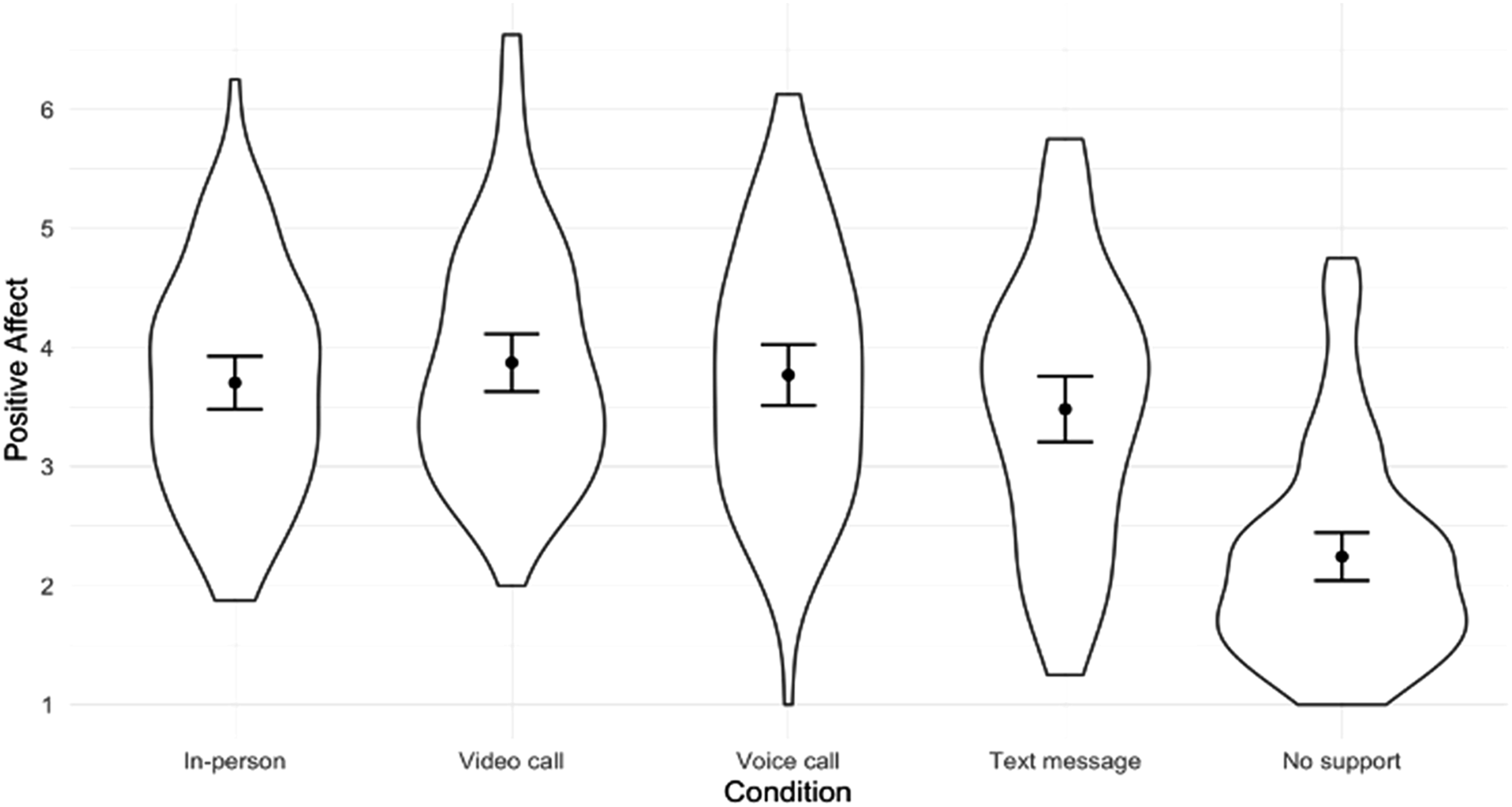
There was a significant effect of study condition for post-support levels of negative affect after controlling for post-stress levels of negative affect, F(4, 342) = 26.07, p < .001, η
p
2 = .23 (see Figure 2). Participants who received support via any mode of communication reported significantly lower negative affect compared to those who received no support at all (all p’s < .001). The differences in negative affect for each mode of communication, compared to no support, were: in-person support (ΔM = −0.80, 95% CI [−1.03, −0.58], d = −1.27), video call (ΔM = −0.75, 95% CI [−0.99, −0.53], d = −1.19), voice call (ΔM = −0.92, 95% CI [−1.16, −0.68)], d = −1.45), and text message (ΔM = −0.77, 95% CI [−1.02, −0.51], d = −1.21). Participants who received support in a voice call reported slightly lower negative affect (small effect size) compared to participants who received support through video call (ΔM = −0.17, 95% CI [−0.36, 0.01)], p = .07, d = −0.24). The other between-group comparisons for negative affect yielded negligible effect sizes and were also non-significant (all p’s > .15). Negative affect following the social support manipulation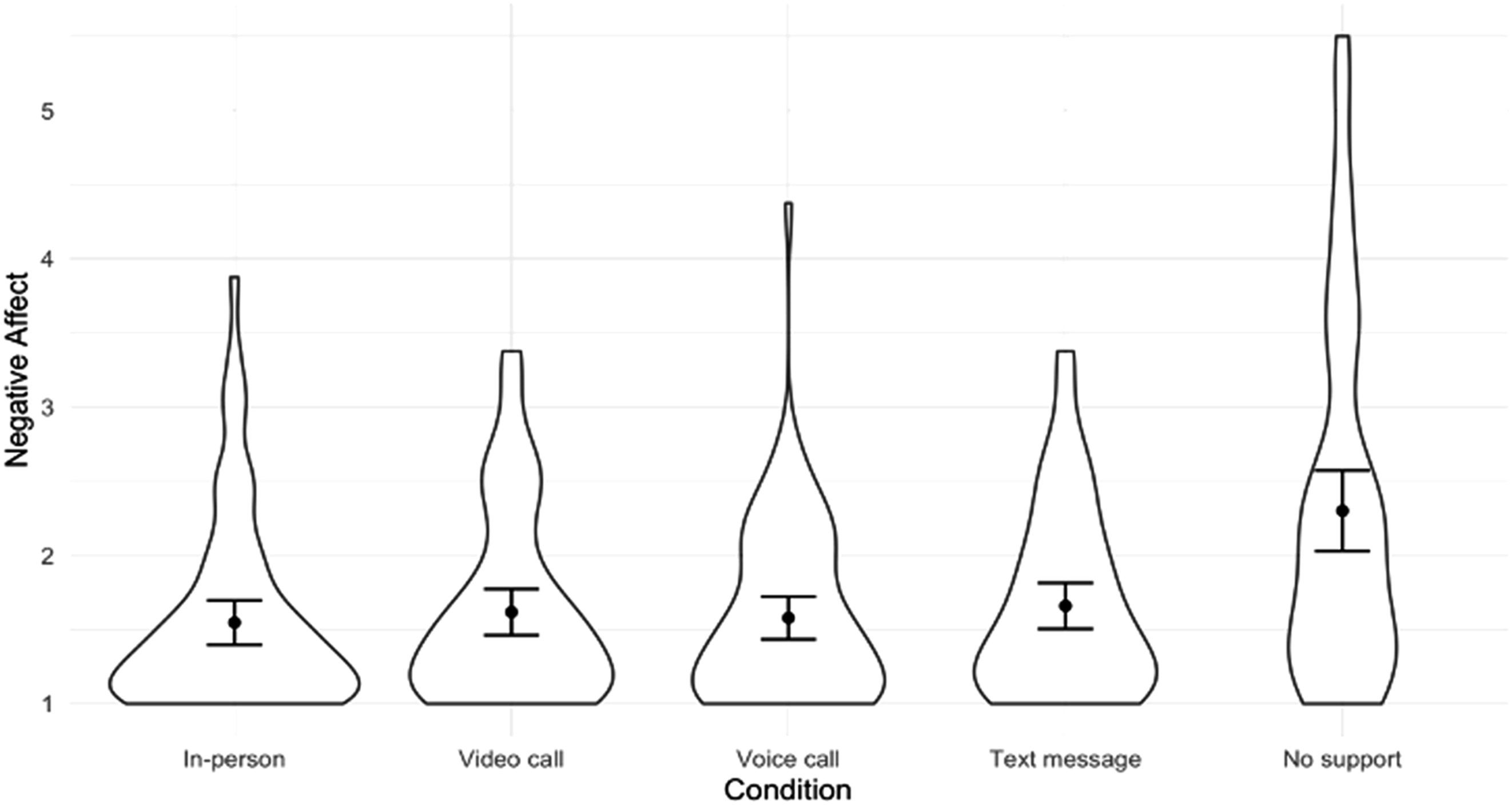
Satisfaction with Support
There was a significant effect of study condition on levels of satisfaction with support, F(3, 267) = 4.08, p = .007, η
p
2
= .04 (see Figure 3). Participants who received in-person support reported significantly higher satisfaction with support compared to participants in the text message condition, ΔM = 0.49, 95% CI [0.12, 0.89], p = .003, d = 0.55. There were no other differences across the study conditions (all p’s > .25). Satisfaction with support across four communication modes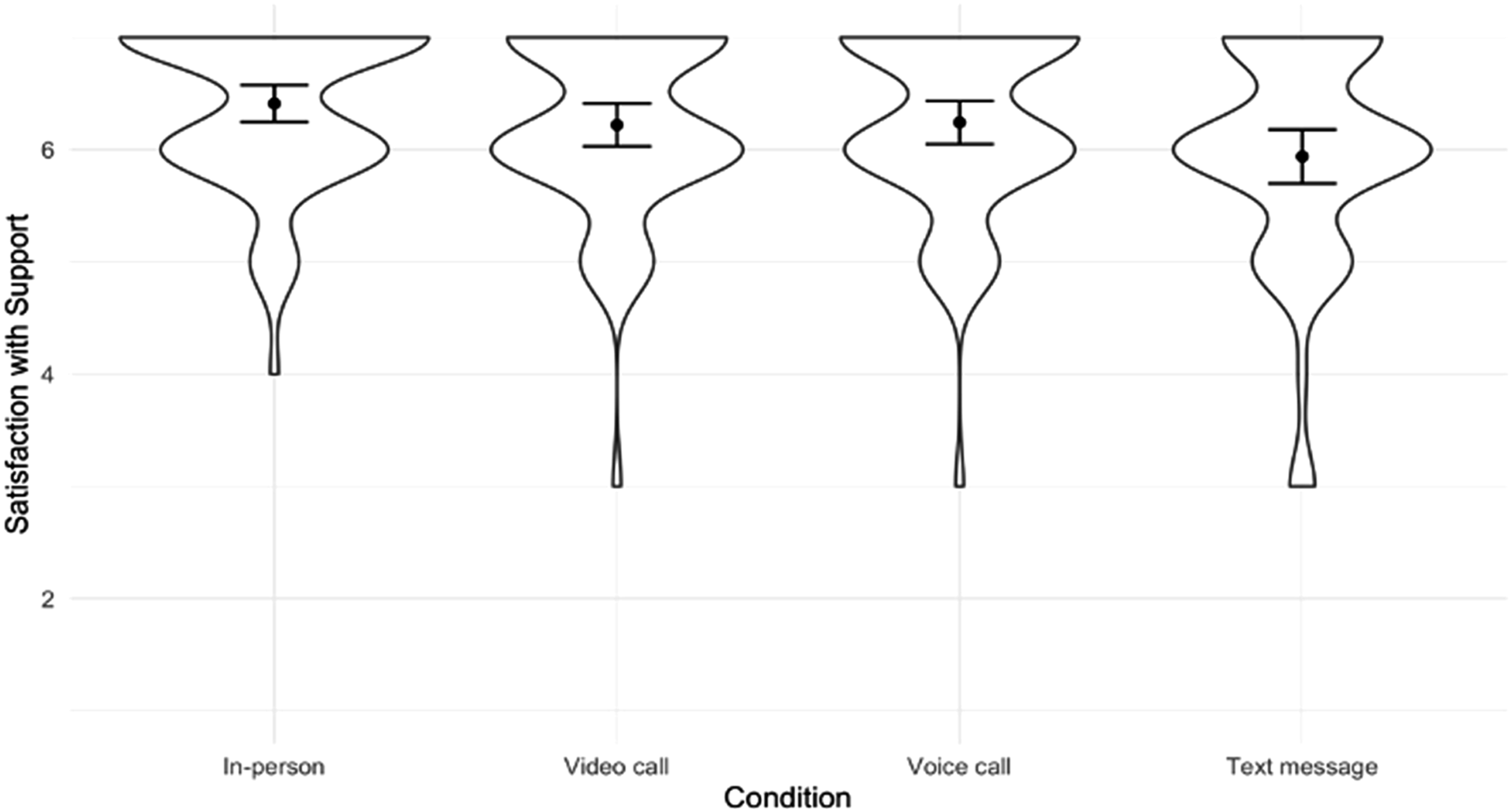
Types of Supportive Responses
There was a significant effect of study condition on participant perceptions of empathic support, F(2, 267) = 3.18, p = .02, η
p
2
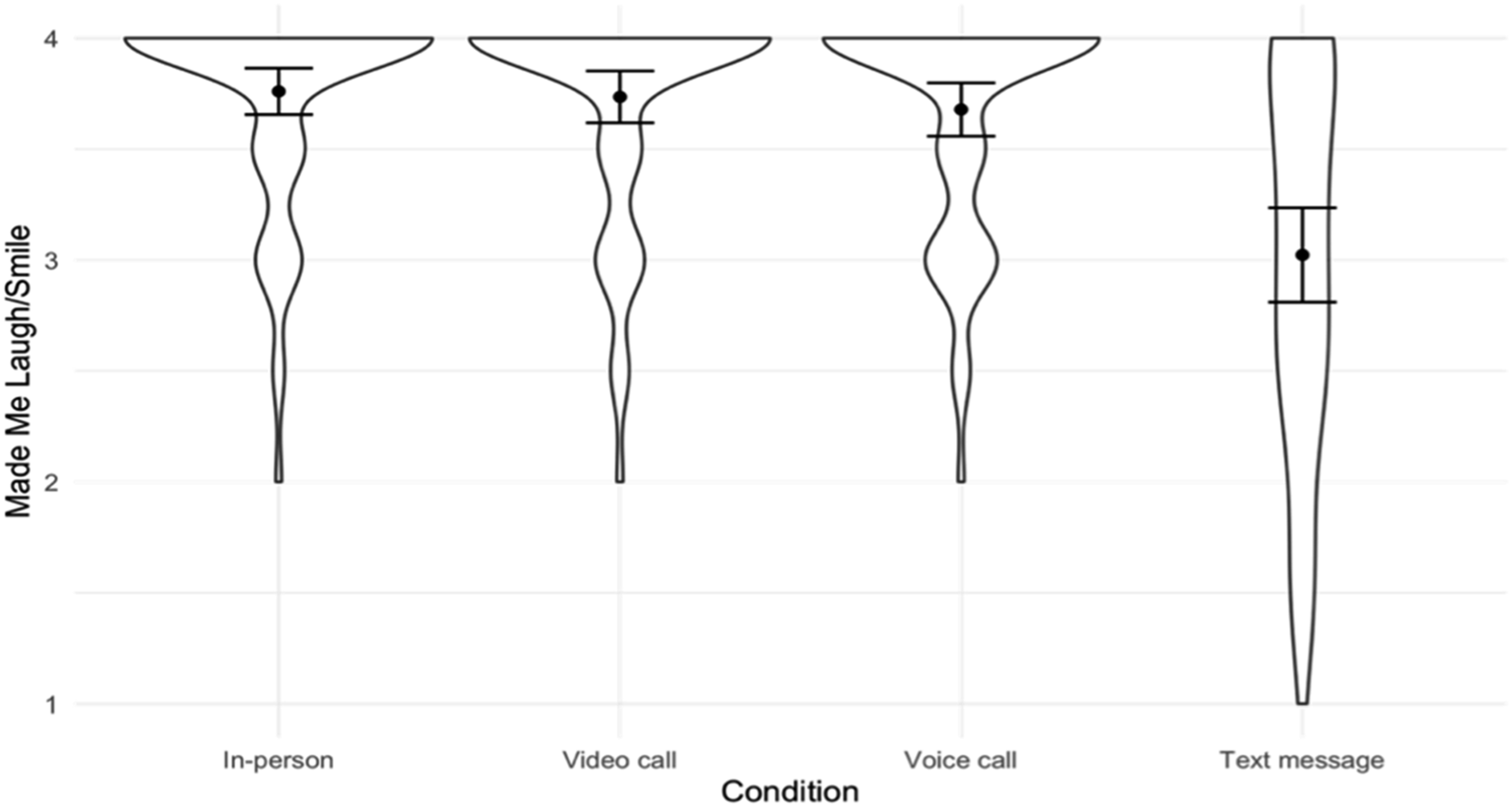
= .04 (see Figure 4). Post-hoc analyses revealed that participants who received in-person support reported that their friends responded in a significantly more empathic way, compared to participants who received support via text, ΔM = 0.25, 95% CI [0.03, 0.48], p = .02, d = 0.47. No other between-group differences in empathic support were identified (all p’s > .15). There was also a significant effect of study condition on participants’ reports that their friend made them laugh or smile, F(3, 267) = 25.09, p < .001, η
p
2
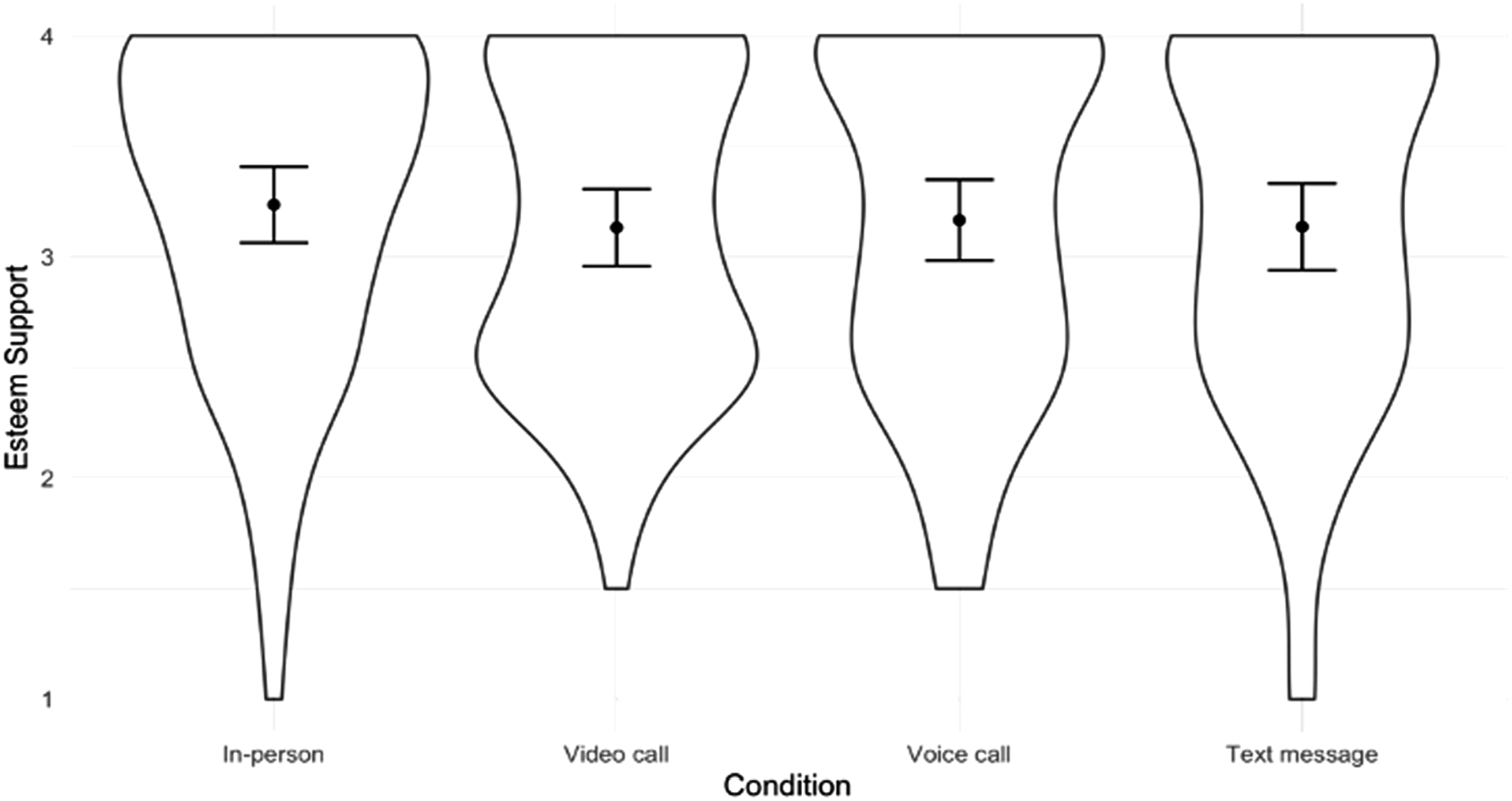
= .22 (see Figure 5). Participants in the text condition reported significantly lower levels of laughter and smiling as a result of their friends’ responses, compared to those who received support via in-person communication (ΔM = −0.77, 95% CI [−1.09, −0.46], p < .001, d = 1.07), video call (ΔM = −0.75, 95% CI [−1.07, −0.43], p < .001, d = −1.02), and voice call (ΔM = −0.68, 95% CI [−1.00, −0.35), p < .001, d = −0.93]. All other between-group differences in laughter/smiling were non-significant (all p’s > .65). Levels of esteem support did not vary significantly based on study condition, F(3, 261) = 0.35, p = .79 (see Figure 6). Empathic support across four communication modes Laughter/smiling across four communication modes Esteem support across four communication modes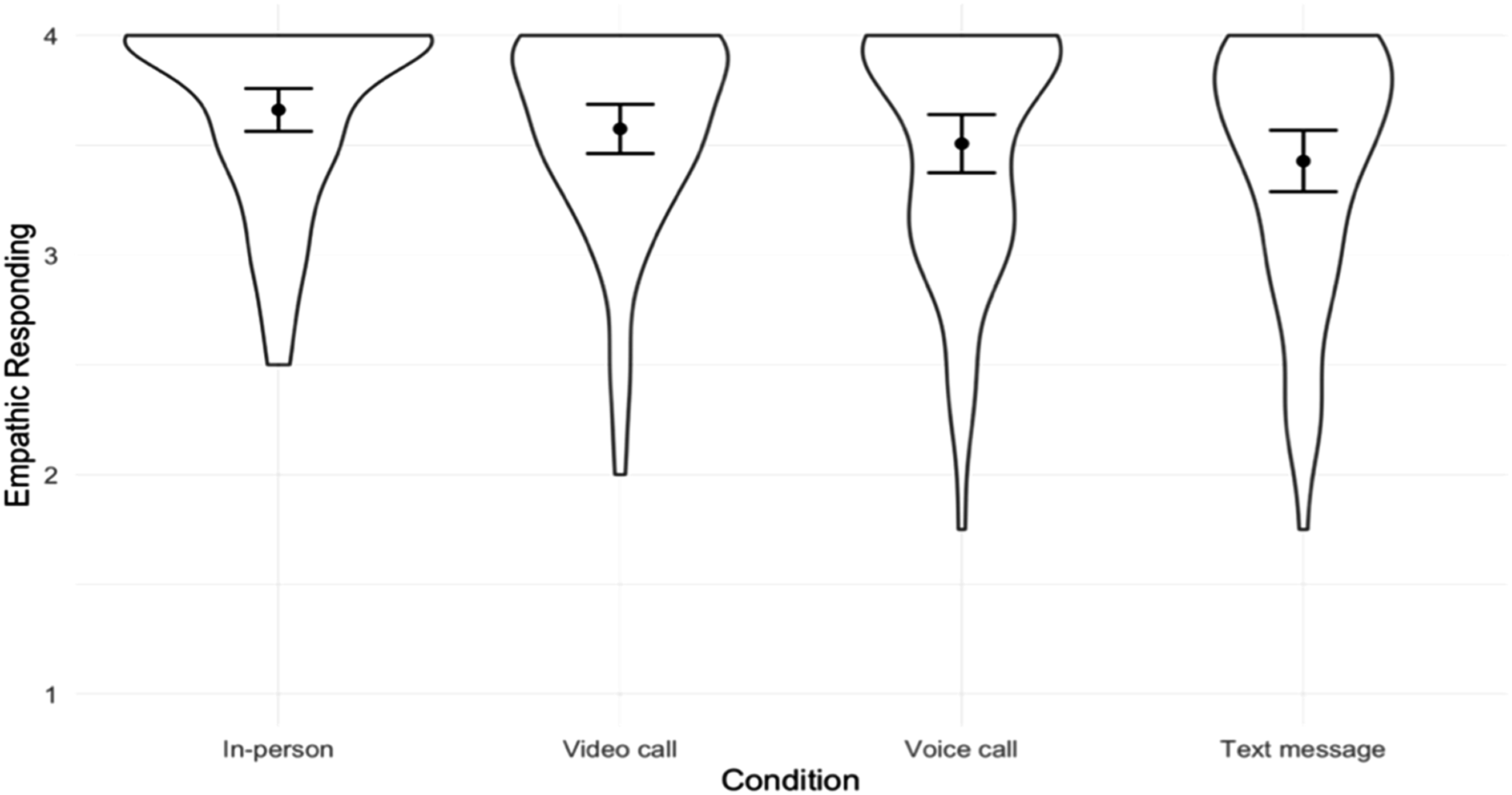
Discussion
The widespread adoption of smartphones has conferred an unprecedented ability to connect with others during times of stress. The current lab-based experiment demonstrated that receiving support from a close friend through in-person, video or voice communication leads to similar affective outcomes, satisfaction with support, and perceived levels of received support. In contrast, the use of text messaging led to suboptimal outcomes. Social support via text message led to significantly lower positive affect compared to all other modes of communication. Novel insights were also generated regarding the degree to which perceived levels of received support may differ based on mode of communication. Most notably, support provided via text was perceived to be less empathetic and elicited less self-reported laughter and smiling.
Before delving into some of the weaker effects of text-based support, it is important to highlight that CMC (including text messaging) still yielded benefits in the current study. Social support via in-person, video, voice and text message communication all led to significantly lower negative affect and higher positive affect compared to receiving no support at all, and the effect sizes were large in magnitude. These results replicate previous experimental research (Holtzman et al., 2017; Sacco & Ismail, 2014) and are consistent with a broader literature showing the value of text-based communication for increasing access to support during times of stress (Coady et al., 2022; Rains et al., 2015). It is also important to note that post-support levels of negative affect were not significantly different between the four support conditions. This finding is consistent past research that has failed to find differences in negative affect outcomes based on mode of communication (Colasante et al., 2022; Holtzman et al., 2017; Rains et al., 2016). An exception is a study by Rains and colleagues (2017), that found text-based support led to greater negative affect compared to richer forms of communication.
The similar results for negative affect across communication modes is in line with CET (Carlson & Zmud, 1999) that purports equivalence of CMC among experienced users. Further to this, even text-based communication can likely engender a feeling of “being together with another” (Biocca et al., 2003, p. 459), which can in and of itself reduce distress (Melumad & Pham, 2020). Indeed, the general perception that support is available during times of stress has been shown to have powerful benefits for mental health and well-being‚ regardless of whether the support is actually received (Cohen & Wills, 1985). While a feeling of social presence can be enhanced by visual and auditory cues in mediated communication (Short et al., 1976), contextual and individual difference factors also play a role (Oh et al., 2018). Indeed, our participants were digital natives receiving support from a close friend who they can rely on for support.
Despite the equivalent findings for negative affect, the current study adds to a mounting body of evidence showing that text-based support may fall short when it comes to eliciting positive affect. The current study replicates past research showing that text-based social support (Holtzman et al., 2017) and text-based social interactions (e.g., Achterhof et al., 2022; Lin & Lachman, 2021; Petrova & Schulz, 2022; Sacco & Ismail, 2014; Verduyn et al., 2021) lead to lower positive affect compared to in-person interactions. Our findings extend past research by demonstrating that receiving support through video and voice calling also lead to significantly higher positive affect compared to text-based support, and are statistically equivalent to in-person support. From a methodological perspective, the differential effects across modes of communication highlights the importance of disaggregating specific forms of CMC (Walther et al., 2005). From a theoretical standpoint, this provides only partial support for theories that argue “the more cues the better” when CMC is used for social support (Culnan & Markus, 1987; Daft & Lengel, 1986; Short et al., 1976). The current study observed similar levels of positive affect, empathy, and satisfaction with support following a voice call compared to in-person and video conversations; two theoretically “richer” communication methods. This points to the power of auditory cues for eliciting positive outcomes of support (Kraus, 2017; Kumar & Epley, 2021). Differences for positive (but not negative) affect in the current study are also in line with brain imaging research showing activation of mirror neurons to be stronger in response to vocalizations of positive (versus negative) emotions (Warren et al., 2006).
The largest and most notable difference in terms of supportive responses were in the extent to which friends made participants laugh and smile. Less laughter and smiling were reported by participants in the text message condition compared to the in-person, video, and voice conditions (all large effect sizes). These discrepancies should not be overlooked given the well-documented benefits of laughter and smiling for stress reduction, social bonding, and overall health and well-being (Cross et al., 2023; Kurtz & Algoe, 2015; Pressman et al., 2019). Less smiling and laughter in text-based conversations may have occurred through both conscious and unconscious processes. Humor is a commonly used strategy to help regulate others’ negative affect in informal social situations (Bippus, 2000; Niven et al., 2009). With a lack of verbal and non-verbal cues from the participant, and limited knowledge regarding what the participant had just gone through, friends in the text condition may have been more hesitant to employ humor as an interpersonal emotion regulation strategy. Furthermore, smiling and laughter are known to be “contagious” through unconscious processes such as facial mimicry and affective resonance (Hess & Fischer, 2013; Provine, 1992). Smiling is a common gesture of warmth and reassurance within supportive interactions (Burgoon et al., 1984). Laughter occurs spontaneously during humorous social exchanges, but also punctuates speech in everyday conversation (irrespective of humor; Provine, 1993). Thus, participants in the cue-rich CMC and in-person conditions may have been automatically responding to hearing their friend laugh and seeing them smile. In contrast, while happy-face emojis and written expressions of laughter are commonplace in text message exchanges (Godard & Holtzman, 2022; Petitjean & Morel, 2017), they may not be contagious in the same way as the sound of human laughter (Mills et al., 2021).
Next, participants in the text condition reported less empathic support from their close friend, compared to the in-person condition. Specifically, when support was provided via text, participants were less likely to feel that their friends really listened to them and tried to understand how they felt. These were moderate-sized effects. Media multitasking is common in young adults, who often text while completing other tasks (e.g., homework), engaging in leisure activities (e.g., watching TV), and socializing (van der Schuur et al., 2015). Thus, it is possible that friends were objectively paying less attention to participants during the 10-min texting interaction (Madore et al., 2020). Even if friends were listening and attempting to express empathy to the same extent as the other support conditions, common cues to indicate active listening (e.g., eye contact, nodding, interjections like ‘uh huh’ or ‘hmm’) can be lacking or poorly timed in text-based communication (Grondin et al., 2019). Regardless of whether friends in the texting condition were truly listening and understanding to the same degree, we argue that the perception that friends were less empathic is most important. In contrast, perceived levels of esteem-building support (encouragement, emphasizing positive characteristics) were similar across all communication modes, suggesting it may be more easily and successfully provided through text-based communication. Indeed, the provision and receipt of esteem support (e.g., “I’m sure you did great!” “You’re such a good speaker!”) could be considered a less complex task compared to empathic responding, which requires more decoding and encoding of social-emotional cues to understanding another’s experience.
Lastly, participants in the text condition reported significantly lower satisfaction with support compared to those in the in-person condition (medium-sized effect), although satisfaction was still quite high. In contrast, similar levels of satisfaction with support were reported by participants who received support via in-person, video, and voice communication. This latter finding parallels the formal psychotherapy literature showing similar levels of satisfaction with treatment when provided in-person, through video conferencing and telephone calls (Fernandez et al., 2021; Jenkins-Guarnieri et al., 2015; Lin et al., 2022).
Clinical Implications
Taken together, our results suggest that a relatively brief text message exchange with a close friend can effectively reduce distress, provide encouragement, and lead to relatively high satisfaction with support following an acutely stressful event. Certainly, text-based support was better than no support at all and some types of support (esteem-building) seemed to be more easily provided via text-based communication. This is important from a practical standpoint, since in-person communication and richer forms of mediated communication (e.g., video and voice calls) are often not possible (or even desirable) during times of stress (Ishii et al., 2019). Talking on the phone, for example, has become less common among adolescents and young adults, with many expressing a dislike of voice calls for reasons of time, social awkwardness, and perceived intrusiveness (Anderson, 2015; Kumar & Epley, 2021). Nonetheless, seeing a friend, at least in the brief social interaction examined here, did not tend to yield benefits over and above a phone call.
However, our findings do highlight what support recipients may be sacrificing when they choose leaner means of communication to obtain emotional support—namely, less positive affect, laughter, smiling, and perceived empathy. While recent studies provide preliminary evidence for the value of text-based mental health support (Coady et al., 2022; Navarro et al., 2020), this area of research is still in its infancy and is restricted to support being provided by trained counsellors. In the context of informal support between close friends, our findings suggest that support providers may need to make more conscious and explicit attempts to ask how the other person is feeling, to respond attentively, and to maximize the use of available paralinguistic cues to convey empathy and understanding (Grondin et al., 2019). Given that empathy may be particularly challenging to communicate via text, this is an important area for future research. The finding that participants in the text condition felt their friends were less likely to make them smile or laugh requires further investigation to determine whether this is due to less explicit attempts to elicit laughter on the part of friends and/or due to more automatic processes that promote laughter and smiling in social interactions. Given a now highly cited article in The Lancet (Brooks et al., 2020) that recommended mobile phones as a critical means for staying connected with loved ones during the pandemic, it is important for the message to be carried forward that all forms of smartphone communication may not result in the same degree of benefit for well-being. Indeed, repeated use of smartphones instead of, or as a replacement for, in-person communication may be more problematic for support outcomes and well-being over time (Kushlev & Heintzelman, 2018).
Limitations and Future Directions
A lab-based experimental design allowed us to directly compare support provided through different modes of communication while holding other key variables constant, such as the support provider and the stressor itself. However, this does generate some limits to ecological validity. Texting is the most commonly used function on smartphone devices, but young adults often seek support via multiple modes of communication simultaneously and/or in close succession in daily life (Choi & Toma, 2014). We also did not allow participants to select their preferred method of receiving support and we restricted all support conversations to 10-min to avoid time being a confounding variable (even though texting conversations may naturally unfold over longer periods of time; Walther, 1992). That being said, many intensive longitudinal studies have found a similar disadvantage of CMC versus in-person interactions, even when there is freedom and flexibility in how people communicate and for how long (Petrova & Schulz, 2022; Subramanyam et al., 2018; Verduyn et al., 2021). Our equivocal results for negative affect and esteem support across all conditions also suggests that time alone is insufficient to account for our results.
The focus on female-female dyads also raises questions regarding the generalizability of study findings. Given past research showing that women may be more likely to use and prefer mediated communication (Kimbrough et al., 2013; Lim et al., 2013), our results may have overestimated the benefits of mediated support. Sex and gender have been found to influence satisfaction with digital support in complex ways (High & Solomon, 2014; Savicki & Kelley, 2004; Shalaby et al., 2021; Spottswood et al., 2013), warranting further inquiry into the role of sex, gender and gender norms in mediated support. It is also unclear whether findings from this university sample of young adults would generalize to different-aged participants and to non-college/university students. Further, our study was not powered to evaluate differences in support and support outcomes that may exist based on ethnicity or preferred language for seeking support (Martingano et al., 2022). These questions should also be explored in other types of close relationships (e.g., long-distance relationships) in which in-person support is often unavailable (Holtzman et al., 2021), other types of support seeking (e.g., seeking information or practical assistance) and in types of stressors (e.g., stigma-related) in which users may benefit more from the anonymity and asynchronicity afforded by text messaging (Fox & McEwan, 2017).
Given our focus on participants’ self-report, a dyadic perspective that considers both support provider and recipient, as well as objective measures of support behaviors (including nonverbal cues) will help to further elucidate support processes in CMC contexts. Others have aptly called for more in-depth conversational analyses of mediated communication (Rains et al., 2023) and greater focus on the characteristics and perceived affordances of communication channels (rather than the channels themselves; Fox & McEwan, 2017; Walther et al., 2005). Research that focuses on understanding and enhancing supportive text-based interactions specifically within crisis text lines and online chat services is also critical given the rising demand for these services (Runkle et al., 2021). Last, future research is needed to examine whether differences in laughter, smiling, and enhanced positive affect extend to other frequent texting purposes, such as the sharing of positive events and everyday experiences.
Conclusion
The success of social support provision is clearly driven by a myriad of factors beyond the mode of communication used. However, our results point to some limitations of text-based social support (versus in person, video, and voice communication), and in particular, the extent to which it can elicit laughter, smiling, and positive affect to the same degree. Positive affect is known to be a critical pathway through which social relationships can benefit mental and physical health (Uchino et al., 2012). Given this, and the ubiquity of texting in our society, our findings require serious attention and consideration in future research.
Supplemental Material
Supplemental Material - Support at Our Fingertips: An Experimental Comparison of In-Person, Video, Voice and Text-Based Support
Supplemental Material for Support at Our Fingertips: An Experimental Comparison of In-Person, Video, Voice and Text-Based Support by Susan Holtzman, Diana Lisi, Rebecca Godard, Anita DeLongis in Psychological Reports.
Footnotes
Acknowledgements
This research was supported by grants from the Social Sciences and Humanities Research Council to the first author [435-2017-0781] and last author [430–2019-00387], and fellowships from the Social Sciences and Humanities Research Council to the second and third authors.

Funding
The authors disclosed receipt of the following financial support for the research, authorship, and/or publication of this article: Social Sciences and Humanities Research Council of Canada, 430–2019-00387, 435-2017-0781.
Declaration of conflicting interests
The authors declared no potential conflicts of interest with respect to the research, authorship, and/or publication of this article.
Data Availability Statement
The data used in the research cannot be publicly shared but are available upon request. The data can be obtained by contacting the corresponding author. The materials used in the research are available upon request. The materials can be obtained by contacting the corresponding author.
Supplemental Material
Supplemental material for this article is available online.
Author Biographies
References
Supplementary Material
Please find the following supplemental material available below.
For Open Access articles published under a Creative Commons License, all supplemental material carries the same license as the article it is associated with.
For non-Open Access articles published, all supplemental material carries a non-exclusive license, and permission requests for re-use of supplemental material or any part of supplemental material shall be sent directly to the copyright owner as specified in the copyright notice associated with the article.
