



Abstract
Research suggests that perfectionistic concerns are associated with lower levels of well-being while perfectionistic strivings are associated with higher levels of well-being. While characteristics such as unrealistic expectations and a fear of failure help to explain why perfectionistic concerns are associated with lower levels of well-being, it remains unclear why perfectionistic strivings are associated with higher levels of well-being. To address this issue, the present research utilised a cross-sectional design and an opportunity sample of undergraduate psychology students (N = 218; mean age = 18.7 years; 34 male, 209 female, 1 non-binary, 1 gender-neutral, 2 missing) to investigate the possibility that eudaimonic motives mediate the relationships between the two forms of perfectionism and both hedonic (positive affect, life satisfaction) and eudaimonic (meaning in life, subjective vitality) forms of well-being. The results showed that eudaimonic motives fully mediated the positive relationships between perfectionistic strivings and positive affect, meaning in life, and subjective vitality. Eudaimonic motives also fully mediated the negative relationship between perfectionistic concerns and meaning in life, and partially mediated the negative relationships between perfectionistic concerns and both positive affect and subjective vitality. These findings suggest that eudaimonic motives play an important role in explaining why some forms of perfectionism are beneficial to well-being while other forms of perfectionism are harmful to well-being.
Keywords
Introduction
Perfectionism is a complex personality orientation involving several distinct characteristics, including a desire for flawlessness, very high standards of performance, and overly critical self-evaluations (Stoeber, 2018a). Historically, perfectionism was viewed in unidimensional terms as a maladaptive phenomenon and a type of obsessive neurosis to be perfect originating from an overly punitive superego (R. W. Hill et al., 1997; Horney, 1950), with studies finding links between perfectionism and various aspects of ill-being such as depression (Hewitt & Dyck, 1986), anxiety (Nekanda-Trepka, 1984), eating disorders (Laessle et al., 1988), and personality disorders (Broday, 1988).
However, the contemporary view is that perfectionism is multidimensional in nature involving two higher-order dimensions commonly referred to as perfectionistic concerns and perfectionistic strivings (Stoeber, 2018a; Stoeber & Otto, 2006). Perfectionistic concerns are characterised by a preoccupation with personal failure, a fear of negative social evaluations, and negative reactions to imperfection; while perfectionistic strivings are characterised by an intrinsic desire for perfection combined with high personal standards and expectations of performance (Frost et al., 1993; Stoeber & Otto, 2006).
An area of research that has been particularly influential in the development of the multidimensional model of perfectionism is subjective well-being, which is defined as the presence of positive affect, the absence of negative affect, and a sense of life satisfaction (Diener, 1984, 2000). One of the earliest and most influential studies into the multidimensional nature of perfectionism was led by Frost et al. (1993), who explored the relationships between the two perfectionism dimensions and affect. Frost et al. (1993) found that while perfectionistic concerns were associated with higher levels of negative affect, perfectionistic strivings were associated with higher levels of positive affect, providing a clear distinction between the two perfectionism dimensions in terms of their unique relationships with affect. Further evidence from a number of more recent studies corresponded with the findings outlined by Frost et al. (1993), with perfectionistic strivings having been linked with higher levels of subjective well-being and perfectionistic concerns having been linked with lower levels of subjective well-being (Damian et al., 2014; Gaudreau & Verner-Filion, 2012; Grzegorek et al., 2004; Stoeber et al., 2020; Stoeber & Otto, 2006). Taken together, these findings imply that people who strive for perfection (perfectionistic strivings) evaluate their lives more positively in terms of their experiences of affect and life satisfaction when compared to individuals who are preoccupied with personal failure and negative social evaluations (perfectionistic concerns).
Hedonic and Eudaimonic well-being
Well-being is increasingly recognised as encompassing multiple distinct forms as opposed to a single, unified construct (Huta & Waterman, 2014). Though there are many different conceptualisations and names attributed to these different forms of well-being, they can be broadly categorised as being either hedonic or eudaimonic (Ryan & Deci, 2001; Vittersø, 2016).
Hedonic well-being is an affective aspect of well-being that draws upon the idea proposed by thinkers such as Aristippus, DeSade, Hobbes, and Bentham that the central purpose of life is the maximisation of pleasure and the minimisation of pain (Ryan & Deci, 2001). A useful definition of hedonic well-being in the contemporary psychological literature was provided by Kahneman et al. (1999), who said that hedonic psychology concerns “…the study of what makes experiences and life pleasant or unpleasant” (p. ix). The general aim of research into the nature of hedonic well-being is to understand the factors that contribute to the maximisation of human happiness (Ryan & Deci, 2001). Subjective well-being, which is commonly used by researchers as a measure of happiness, is a key indicator of hedonic well-being (Deci & Ryan, 2008; Diener, 1984, 2000; Kashdan et al., 2008; Ryan & Deci, 2001).
In contrast, eudaimonic well-being is considered to represent a range of “higher” but often neglected aspects of well-being (Huta, 2013; Huta & Ryan, 2010). Specifically, these higher aspects of well-being are characterised as such because they are proposed to accompany pursuits of excellence and growth that push people beyond their usual boundaries and limitations (Huta, 2013). Two aspects of well-being that are viewed as being characteristically eudaimonic in nature are a sense of meaning and experiences of subjective vitality (Deci & Ryan, 2008; Huta, 2012, 2013; Huta & Ryan, 2010; Ryan & Deci, 2001).
Meaning is a widely studied variable across a diverse range of research domains but can be a difficult construct to define clearly because meaning has been studied as both a feeling and as a way of living (Huta, 2013). However, a widely cited definition of meaning within the eudaimonia literature was provided by Huta and Ryan (2010), who defined meaning as the extent to which individuals’ activities and experiences are personally significant, are considered valuable, and are believed to influence the self and the surrounding world (see also Huta, 2013). There are several overlapping arguments as to why meaningful experiences are more strongly associated with eudaimonic well-being than hedonic well-being. These include the idea that eudaimonic pursuits (e.g., pursuits towards excellence and growth) are naturally congruent with one’s intrinsic values, which in turn encourage more meaningful experiences (Huta & Ryan, 2010); that meaning arises from the eudaimonic process of actualising one’s inner nature or potential (Waterman, 1990); and that eudaimonic pursuits align one’s priorities to more meaningful ends beyond those of the present moment (Huta, 2013).
Subjective vitality is related to the familiar physiological experience of feeling “alive” or energised, yet also encompasses psychological experiences of enthusiasm, invigoration, and spirit (Ryan & Frederick, 1997). According to Ryan and Frederick (1997), subjective vitality arises in situations involving an absence of conflict and external controls combined with the sense that one is the origin of one’s decisions and behaviours (Huta & Ryan, 2010; Ryan & Frederick, 1997). Subjective vitality is viewed as a more eudaimonic form of well-being because experiences of vitality are proposed to accompany the autonomous self-expression of one’s intrinsic values and beliefs – characteristics that are fundamentally eudaimonic in nature (Huta & Ryan, 2010; Ryan & Frederick, 1997).
Studies have found empirical evidence to support the distinction between hedonic and eudaimonic forms of well-being. For example, Gallagher et al. (2009) used a confirmatory factor analysis to test the discriminant validity of hedonic and eudaimonic aspects of well-being, finding that hedonic well-being was factorially distinct from eudaimonic well-being (see also Joshanloo, 2016; Joshanloo et al., 2017). Furthermore, Henderson et al. (2013) found that hedonic behaviours (e.g., window shopping) were associated with higher levels of hedonic well-being in the form of positive affect, vitality, and satisfaction with life, while eudaimonic behaviours (e.g., attending personal development courses) were associated with higher levels of eudaimonic well-being in the form of meaning in life. These findings further support the validity of the distinction between hedonic and eudaimonic well-being in terms of their unique associations with hedonic and eudaimonic behaviours (see also Disabato et al., 2016; Huta & Ryan, 2010; Ryan & Deci, 2001).
The development of this broader and multifaceted picture of well-being provides a valuable framework to explore and understand the nature of perfectionistic strivings and concerns in greater depth. This is especially important given the significant increase in mental health problems observed in recent years, especially among young people, which Curran and Hill (2019) suggested may be partly due to rises in perfectionism as a core vulnerability factor for mental health problems.
Perfectionism and Well-Being
The majority of studies into perfectionism and well-being have focused on indicators of hedonic well-being such as positive affect and satisfaction with life, yet there have been comparatively fewer studies into the relationships between perfectionism and indicators of eudaimonic well-being. The research that has been conducted in this area has focused primarily on meaning; for example, Park and Jeong (2016), Suh et al. (2017), and Suh and Chong (2022) each explored the relationships between perfectionism and participants’ experiences of meaning, and found that perfectionistic strivings were associated with higher levels of meaning while perfectionistic concerns were associated with lower levels of meaning. Evidence from previous research also suggests that perfectionistic strivings are positively associated with subjective vitality, while perfectionistic concerns are negatively associated with subjective vitality (Atienza et al., 2020; Gaudreau & Verner-Filion, 2012). When considered together, these findings suggest that striving for perfection is a more personally meaningful and energising pursuit when compared to perfectionistic concerns. However, while there is some evidence to suggest that striving for perfection is associated with higher levels of eudaimonic well-being in the form of meaningful experiences and subjective vitality, this evidence is somewhat limited in both scope and quantity.
Explaining the Relationships Between Perfectionism and Well-Being
Researchers have proposed several features and qualities that explain why perfectionistic concerns are linked to lower levels of well-being. Ellis (2002) suggested that the unrealistic and irrational expectations inherent to maladaptive forms of perfectionism cause significant levels of anxiety and stress. Indeed, empirical studies have found clear and consistent evidence to support Ellis’ suggestion: Flett et al. (1991) found that perfectionistic concerns were associated with unrealistic expectations and irrational beliefs including a need for social approval, dependency, blame proneness towards the self and others, and anxious rumination. In addition, Blankstein et al. (1993) found that perfectionistic concerns were associated with a fear of failure and a fear of looking foolish in front of others which, as Elison and Partridge (2012) explained, are closely linked to unrealistic and irrational expectations. Other authors have suggested that perfectionistic concerns involve a fear of shame, humiliation, and guilt (Curran & Hill, 2018; Sorotzkin, 1985) combined with a sense of inferiority towards others (Ashby et al., 2005). Collectively, these findings highlight some of the central features and mechanisms that are proposed to characterise perfectionistic concerns as a maladaptive form of perfectionism.
However, while research suggests that striving for perfection is associated with higher levels of hedonic and eudaimonic well-being, the characteristics and qualities inherent to perfectionistic strivings that might explain these trends remain unclear. Indeed, Stoeber (2018b) identified this as a general issue in the perfectionism literature and called for more mediation studies to identify the mechanisms that explain how perfectionism affects outcome variables. As such, the present study aims to explore the factors that might explain the relationships between perfectionism—especially perfectionistic strivings—and both hedonic and eudaimonic forms of well-being.
Perfectionistic Strivings and Eudaimonic Motives
A starting point to address this issue can be found by tracing the lineage of perfectionism theory which leads back to a central idea of several philosophical systems of ancient Greece—namely, the idea of maximising one’s inner potentials (Huffman, 1995; Hurka, 1987, 1996). This idea characterised not only philosophical accounts of perfectionism but also the earliest conceptualisations of eudaimonia (Hurka, 1996). Specifically, eudaimonia represented a system of ethics which argued that human beings have a responsibility to live in accordance with, and to perfectly actualise, their daimon or true self (Haybron, 2016; Waterman, 1990). In addition, Aristotle argued that a good life involves the pursuit of virtue in the form of reason, moderation, and excellence, culminating in an intrinsically meaningful life that allows individuals to flourish and fully realise their inner potential (Haybron, 2016; Michalos & Robinson, 2012; Ryan et al., 2008; Waterman, 1990).
These pursuits are represented in a more contemporary conceptualisation of eudaimonia in the form of eudaimonic motives. According to Huta (2016), eudaimonic motives represent the intrinsic priorities, values, and goals that underlie an individual’s behaviours. Huta and Ryan (2010) identified three core eudaimonic motives, which include motives for excellence, growth, and authenticity. Eudaimonic motives are considered to be an important component and antecedent of healthy psychological functioning including a sense of meaning, learning, resilience, and belonging (Huta, 2016).
Previous studies have explored the relationships between perfectionism and each of these eudaimonic motives.
In terms of excellence, there is an ongoing debate concerning the nature of the relationship between perfectionism and the pursuit of excellence; specifically, the question of whether striving for perfection is equivalent to or merely related to the pursuit of excellence. Greenspon (2000) argued that striving for perfection is often conflated with striving for excellence and that this is particularly common in studies that seek to promote the view that perfectionistic strivings are adaptive in nature. Conversely, Gaudreau (2019) argued that while the pursuits of perfection and excellence are conceptually distinct, in that one can attain excellence without pursuing perfection, one cannot pursue perfection without simultaneously seeking out—and in some cases, achieving—excellence. Thus, for Gaudreau (2019), excellence is necessarily associated with, and a natural by-product of, striving for perfection. Recent research supports this suggestion, with evidence provided by Gaudreau et al. (2022) and Goulet-Pelletier et al. (2022) to suggest that the pursuits of perfection and the pursuit of excellence (also known as excellencism) are indeed closely related.
In terms of personal growth, A. P. Hill et al. (2010) explored the relationships between perfectionism and growth-seeking—which represents the desire to develop one’s capacities and to realise one’s potential (Dykman, 1998)—and found that perfectionistic strivings were associated with higher levels of growth-seeking while perfectionistic concerns were associated with lower levels of growth-seeking. In a more recent study, Mofield and Parker Peters (2019) explored the relationships between perfectionism and a growth mindset and found a positive relationship between perfectionistic strivings and a growth mindset, and a negative relationship between perfectionistic concerns and a growth mindset (see also Mofield & Parker Peters, 2018). In addition, Umandap and Teh (2020) measured several aspects of personal growth using the personal growth initiative (Robitschek, 1998)—including readiness for change, planfulness, using resources, and intentional behaviour—and found positive relationships between perfectionistic strivings and each indicator of personal growth, and negative relationships between perfectionistic concerns and each indicator of personal growth. These findings suggest that striving for perfection is closely associated with a desire to grow and achieve one’s potential.
In terms of authenticity, previous studies have explored the relationships between perfectionism and intrinsic motivation (also referred to as autonomy), which is considered to be an indicator of authenticity and refers to a form of motivational regulation leading to behaviours that are fundamentally congruent with the self, self-authored, and self-endorsed (Deci & Ryan, 2008; Huta & Waterman, 2014; Ryan & Deci, 2000; Ryan et al., 2008). Perfectionistic strivings are generally considered to be a more intrinsically motivated form of perfectionism while perfectionistic concerns are considered to be a more extrinsically motivated form of perfectionism (Stoeber et al., 2018), and evidence from a range of studies supports this view: positive relationships have been observed between perfectionistic strivings and intrinsic motivation and negative relationships between perfectionistic concerns and intrinsic motivation (Barcza-Renner et al., 2016; Gaudreau et al., 2016; Jowett et al., 2013; Madigan et al., 2016; Miquelon et al., 2005; Moore et al., 2021; Stoeber & Damian, 2016; Stoeber et al., 2009).
Huta and Waterman (2014) argued that eudaimonic motives give rise to experiences of both hedonic and eudaimonic well-being (see also Huta, 2015, 2016). Thus, given the evidence pointing to a relationship between perfectionistic strivings and eudaimonic motives in the form of excellence, growth, authenticity, it could be that the association between perfectionistic strivings and eudaimonic motives explains why striving for perfection is associated with higher levels of well-being. This hypothesis represents the basis of a standard mediation model, which is illustrated in Figure 1. Proposed Mediation Model.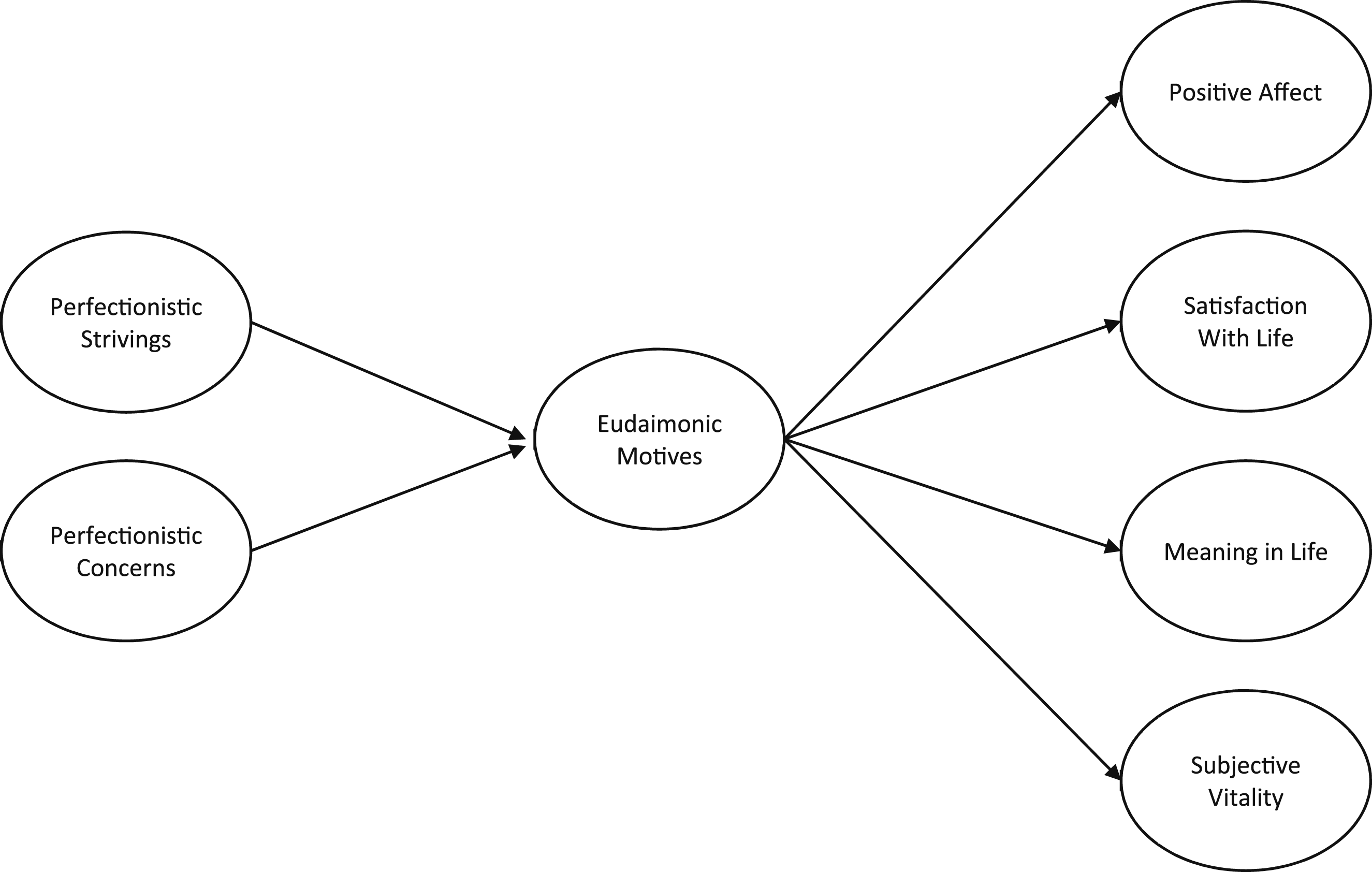
The Present Research
While previous studies have shown positive relationships between perfectionistic strivings and indicators of both hedonic and eudaimonic well-being, there have been few attempts to identify the factors that explain these relationships. The present research aimed to address this issue by exploring the extent to which eudaimonic motives explain why striving for perfection is associated with higher levels of hedonic and eudaimonic well-being.
It was predicted that perfectionistic strivings would be associated with higher levels of hedonic well-being (positive affect, satisfaction with life) and higher levels of eudaimonic well-being (meaning in life, subjective vitality) while perfectionistic concerns would be associated with lower levels of hedonic well-being and eudaimonic well-being. Secondly, it was predicted that eudaimonic motives would mediate the relationships between the two forms of perfectionism and the indicators of both hedonic well-being and eudaimonic well-being.
Method
Participants
An initial sample of 247 participants (34 male, 209 female, 1 non-binary, 1 gender-neutral, 2 missing) with a mean age of M = 18.7 years (SD = 2.7) was recruited during a lecture for undergraduate psychology students at the University of Lincoln.
Measures
Perfectionism
The present study used versions of the Frost Multidimensional Perfectionism Scale (Frost et al., 1990), the Hewitt-Flett Multidimensional Perfectionism Scale (Hewitt & Flett, 1991), and the Revised Almost Perfect Scale (Slaney et al., 2001) to capture perfectionistic strivings and perfectionistic concerns. These measures have been shown to demonstrate good internal consistency and factorial validity (see Flett & Hewitt, 2015) and include subscales that can be used as indicators (or proxies) of perfectionistic strivings or perfectionistic concerns (Stoeber, 2018a).
Three indicators were used to capture perfectionistic strivings—namely, pure personal standards, self-oriented perfectionism, and high standards. Pure personal standards (5 items; e.g., “I have extremely high goals”) were measured on a 1 (strongly disagree) to 5 (strongly agree) scale using the Cox et al. (2002) short form of the Frost Multidimensional Perfectionism Scale (DiBartolo et al., 2004; see also Frost et al., 1990). Self-oriented perfectionism (5 items; e.g., “I set very high standards for myself”) was measured on a 1 (disagree) to 7 (agree) scale also using the Cox et al. (2002) short form of the Hewitt and Flett Multidimensional Perfectionism Scale (Hewitt et al., 1991). High standards (4 items; e.g., “I expect the best from myself”) was measured on a 1 (strongly disagree) to 7 (strongly agree) scale using the Rice et al. (2014) short form of the Revised Almost Perfect Scale (Slaney et al., 2001).
Three indicators were used to capture perfectionistic concerns—namely, concern over mistakes, socially-prescribed perfectionism and discrepancy. Concern over mistakes (5 items; e.g., “If I fail partly, it is as bad as being a complete failure”) was measured on a 1 (disagree) to 5 (agree) scale using the Cox et al. (2002) short form of the Frost Multidimensional Perfectionism Scale (Frost et al., 1990). Socially-prescribed perfectionism (5 items; e.g., “My family expects me to be perfect”) was measured on a 1 (disagree) to 7 (agree) scale using the Cox et al. (2002) short form of the Hewitt and Flett Multidimensional Perfectionism Scale (Hewitt et al., 1991). Discrepancy (4 items; e.g., “Doing my best never seems to be enough”) was measured on a 1 (strongly disagree) to 7 (strongly agree) scale using the Rice et al. (2014) short form of the Revised Almost Perfect Scale (Slaney et al., 2001).
Eudaimonic Motives
Eudaimonic motives were measured using the eudaimonic motives subscale of the Hedonic and Eudaimonic Motives for Activities scale (HEMA; Huta & Ryan, 2010). The instructions to the measure read: “To what degree do you typically approach your activities with each of the following intentions, whether or not you actually achieve your aim? In my life, I…”. Participants were then asked to respond to four items (e.g., “Seek to develop a skill, learn, or gain insight into something”) using a 1 (not at all) to 7 (very much) scale. The four items capture motives for excellence, growth, and authenticity. The scale authors Huta and Ryan (2010) found that the eudaimonic motives subscale demonstrated good levels of internal consistency (α = .82–.87) and factorial validity across a series of studies.
Hedonic Well-Being
Hedonic well-being was measured using two indicators: positive affect and satisfaction with life. Positive affect (5 items; e.g., “Excited”) was measured on a 1 (“very slightly or not at all”) to 5 (“very much”) scale using the Stoeber et al. (2011) short form of the Positive and Negative Affect Schedule (PANAS; Watson et al., 1988). Satisfaction with life (5 items; e.g., “The conditions of my life are excellent”) was measured on a 1 (“strongly disagree”) to 7 (“strongly agree”) scale using the Satisfaction with Life Scale (SWLS; Diener et al., 1985). Both the PANAS and SWLS are widely used measures and the psychometric properties of each have been investigated extensively. The factor structures of the PANAS (Crawford & Henry, 2004) and the SWLS (Pavot & Diener, 2008) have been supported consistently. Furthermore, a meta-analysis by Leue and Lange (2011) found that the mean internal consistency of the PANAS across 44 studies was α = 84 (SD = 0.06), while a meta-analysis by Vassar (2008) found that the mean internal consistency of the SWLS across 62 studies was α = 78 (SD = 0.09).
Eudaimonic Well-Being
Eudaimonic well-being was measured using two indicators: meaning in life and subjective vitality. Meaning in life (12 items; e.g., “My activities and experiences play an important role in some broader picture”) was measured on a 1 (“not at all”) to 7 (“very much”) scale using items created by Huta and Ryan (2010). Huta and Ryan (2010) tested the psychometric properties of their meaning in life scale and found that the items loaded onto a single factor and demonstrated excellent reliability (α = .94).
Subjective vitality (6 items; e.g., “I have energy and spirit”) was measured on a 1 (“not at all true”) to 7 (“very true”) scale using the Bostic et al. (2000) short form of the Subjective Vitality Scale (Ryan & Frederick, 1997). Bostic et al. (2000) found that the short form items loaded onto a single factor and demonstrated good reliability (α = .80–.89).
Procedure
The study was described as an investigation into the relationships between perfectionism and well-being. Participants who consented to take part in the study were provided with a QR code and URL link to access the survey using the University of Lincoln School of Psychology Qualtrics® account. Participants who consented to take part were then asked to complete the measures for the study. To prevent order effects, the presentation order of the measures was counterbalanced and the presentation order of the questions within each measure was randomised. After completing all of the measures, participants were presented with a debrief which restated the study aims and also provided additional information and resources about the research topic. The study received ethical approval from the University of Lincoln School of Psychology Research Ethics Committee (ethics reference: 2020–3488). All participants provided informed consent (eConsent) to take part.
Analytic Strategy
Descriptive statistics (means, standard deviations, medians, interquartile ranges) were calculated along with skewness and kurtosis values. Cronbach’s alphas were also used to examine the internal consistency of measures. Bivariate and partial correlations were calculated using IBM SPSS® to examine the initial relationships between the two forms of perfectionism (perfectionistic strivings and perfectionistic concerns) and the indicators of hedonic well-being (positive affect, satisfaction with life) and eudaimonic well-being (meaning in life, subjective vitality). Partial correlations are commonly used in perfectionism studies to control for the positive correlation consistently observed between perfectionistic strivings and perfectionistic concerns, and thus allow researchers to isolate and observe the independent relationships between each form of perfectionism and outcome variables (Gaudreau et al., 2018; Stoeber & Gaudreau, 2017).
Structural equation modelling (SEM) with robust maximum likelihood estimation was performed using Mplus® to explore the extent to which eudaimonic motives mediated the relationships between the two perfectionism dimensions and the indicators of hedonic and eudaimonic well-being. All variables were modelled as latent factors. The measurement model fit was evaluated using the following fit indices: chi-square, the comparative fit index (CFI), the root mean square error of approximation (RMSEA), the Tucker-Lewis indicator (TLI), and the standardised root mean square residual (SRMR). A combination of CFI and TLI values >.90, RMSEA values ≤.06, SRMR values ≤.08, and a chi-square/degrees of freedom ratio <2 is considered to be indicative of a good model fit (Alavi et al., 2020; Cole, 1987; Hu & Bentler, 1999; Schermelleh-Engel et al., 2003).
Cohen’s (1988) guidelines were used to interpret the magnitude of all observed relationships as being either small (.10 ≤ | r | < .30), medium (.30 ≤ | r | < .50) or large (r ≥ .50).
Preliminary Analyses
Data Screening
Four attention check questions were randomly presented to participants during the survey (e.g., “It is important that you try to pay attention to the questions in this study. Please select ‘slightly agree’”). Twenty-eight participants failed one or more of the attention check questions and were subsequently removed from the final dataset. Mahalanobis distances were also calculated to detect multivariate outliers. One case was found to exceed the critical value of χ2(8) = 26.125, p < .001 (Tabachnick & Fidell, 2013) which was subsequently excluded from the final dataset. The final sample consisted of 218 participants (25 male, 189 female, 1 non-binary, 1 gender-neutral, 2 missing) with a mean age of M = 18.6 years (SD = 2.8).
Normality and Reliabilities
Descriptive Statistics and Normality Tests.
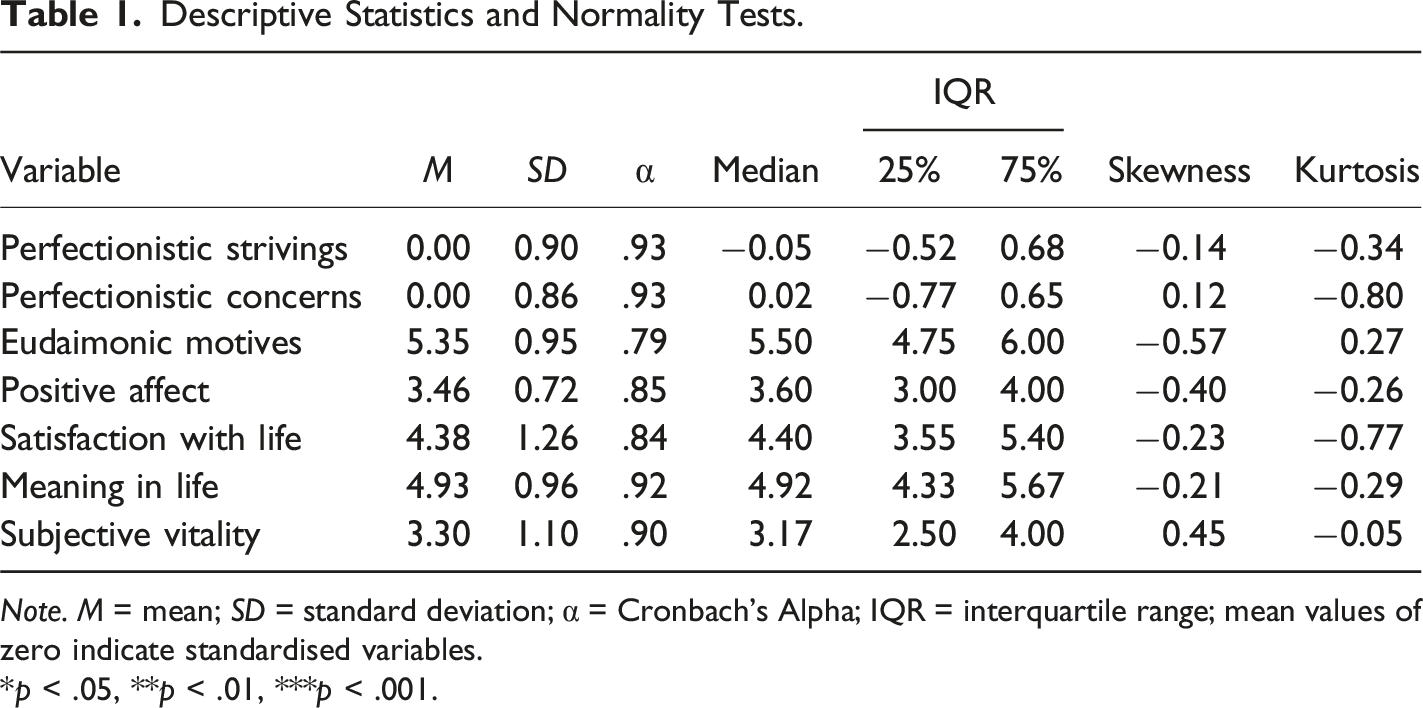
Note. M = mean; SD = standard deviation; α = Cronbach’s Alpha; IQR = interquartile range; mean values of zero indicate standardised variables.
*p < .05, **p < .01, ***p < .001.
Power Analysis and Monte Carlo Simulation
Two methods were used to explore whether a sample of 218 participants was sufficient in size for SEM.
Firstly, a power analysis for SEM was performed based on an approach outlined by Westland (2010) and using a tool developed by Soper (2024). The power analysis revealed that a minimum sample size of 187 participants would achieve statistical power of .85 (α = .05) in relation to medium effect sizes of .03.
Secondly, a Monte Carlo simulation was performed using Mplus® following the guidance provided by Muthén and Muthén (2002). The Monte Carlo approach provides estimates of bias for individual parameters including factor loadings, correlations, and regression paths. A post-hoc Monte Carlo simulation was used, which involved taking random draws of cases from the present study data. This is in contrast to an a priori approach which performs random simulations of hypothetical variable relationships specified by the researcher and supported by relevant theory and research (see Wolf et al., 2013). A total of 1000 replications were requested which generated population parameter estimates based on the data from the present study, and average parameter estimates which represent the mean parameter values from the 1000 separate Monte Carlo simulations. The sample was evaluated according to three criteria: parameter biases 1 , standard error biases 2 , and coverage 3 . All parameter and standard error biases were found to be less than the critical value of 5% (<.05), indicating that the sample of 218 participants was sufficient to obtain unbiased parameter estimates. All coverage values were centred closely around the 95% confidence interval (range 0.93–1.00). Taken together, these findings suggest that the sample of 218 participants was sufficient in size to perform structural equation modelling.
Results
Bivariate Correlations
Bivariate Correlations, Descriptive Statistics, and Reliabilities.
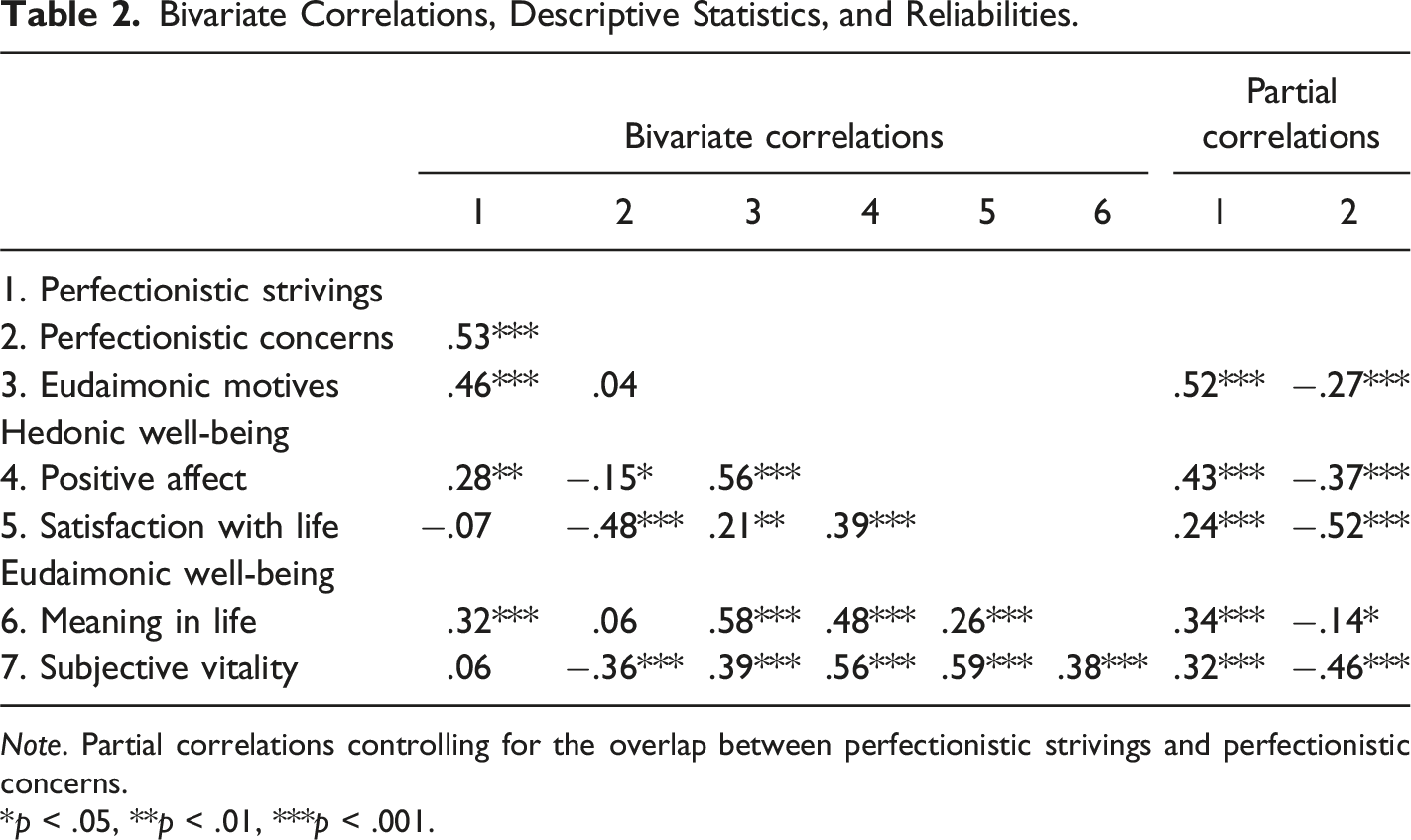
Note. Partial correlations controlling for the overlap between perfectionistic strivings and perfectionistic concerns.
*p < .05, **p < .01, ***p < .001.
In terms of the relationships between perfectionistic concerns and the indicators of hedonic well-being, there was a small negative relationship with positive affect and a medium negative relationship with satisfaction with life. In terms of the relationships between perfectionistic concerns and the indicators of eudaimonic well-being, there was a non-significant relationship with meaning in life, and a medium negative relationship with subjective vitality. Finally, there was a non-significant relationship between perfectionistic concerns and eudaimonic motives.
In terms of the relationships between eudaimonic motives and the indicators of hedonic well-being, there was a large positive relationship with positive affect and a small positive relationship with satisfaction with life. In terms of the relationships between eudaimonic motives and the indicators of eudaimonic well-being, there was a large positive relationship with meaning in life, and a medium positive relationship with subjective vitality.
Partial Correlations
The results of the partial correlations are also displayed in Table 2. In terms of the relationships between perfectionistic strivings and the indicators of hedonic well-being, the small positive relationship with positive affect increased in size to a medium positive relationship, while a small positive relationship emerged with satisfaction with life. In terms of the relationships between perfectionistic strivings and the indicators of eudaimonic well-being, the medium positive relationship with meaning in life remained unchanged, while a medium positive relationship emerged with subjective vitality. Finally, the medium positive relationship between perfectionistic strivings and eudaimonic motives increased in size to a large positive relationship.
In terms of the relationships between perfectionistic concerns and the indicators of hedonic well-being, the small negative relationship with positive affect increased in size to medium negative relationship, while the medium negative relationship with satisfaction with life also increased in size to a large negative relationship. In terms of the relationships between perfectionistic concerns and the indicators of eudaimonic well-being, a small negative relationship with meaning in life emerged, while the medium negative relationship with subjective vitality remained unchanged. Finally, a small negative relationship between perfectionistic concerns and eudaimonic motives emerged.
Measurement Model
The initial measurement model showed adequate model fit (CFI = .90; TLI = .89; RMSEA = .06 [90% confidence interval = 0.05, 0.06]; SRMR = .07; χ2/df = 1.69). All factor loadings were highly significant (p < .001; see Table S1). However, modification indices suggested that the model fit could be improved by allowing several of the meaning in life items to correlate: item 3 (“They are precious to me”) with items 5 (“They are something I can treasure”) and 6 (“They are dear to me”), item 5 and item 6, and item 7 (“They play an important role in some broader picture”) and item 9 (“ I can see where they fit into the bigger picture”). Theoretical justification is necessary when interpreting and amending models based upon modification indices (Whittaker, 2012) which necessitated a closer inspection of the items in question. Items 3, 5, and 6 each refer to experiences that are personally valuable (e.g., “precious”, “treasure”, “dear”), and so it was deemed appropriate to allow these items to correlate on this basis. Items 7 and 9 also shared a connection based on their reference to meaningful experiences in relation to a “broader” and “bigger” picture, and so there was also justification to allow these items to correlate. Consequently, a second model was tested which allowed the items above to correlate, and was found to have good model fit (CFI = .93; TLI = .92; RMSEA = .05 [90% confidence interval = 0.04, 0.05]; SRMR = .06; χ2/df = 1.47). All factor loadings remained highly significant at the p < .001 level.
Structural Equation Model
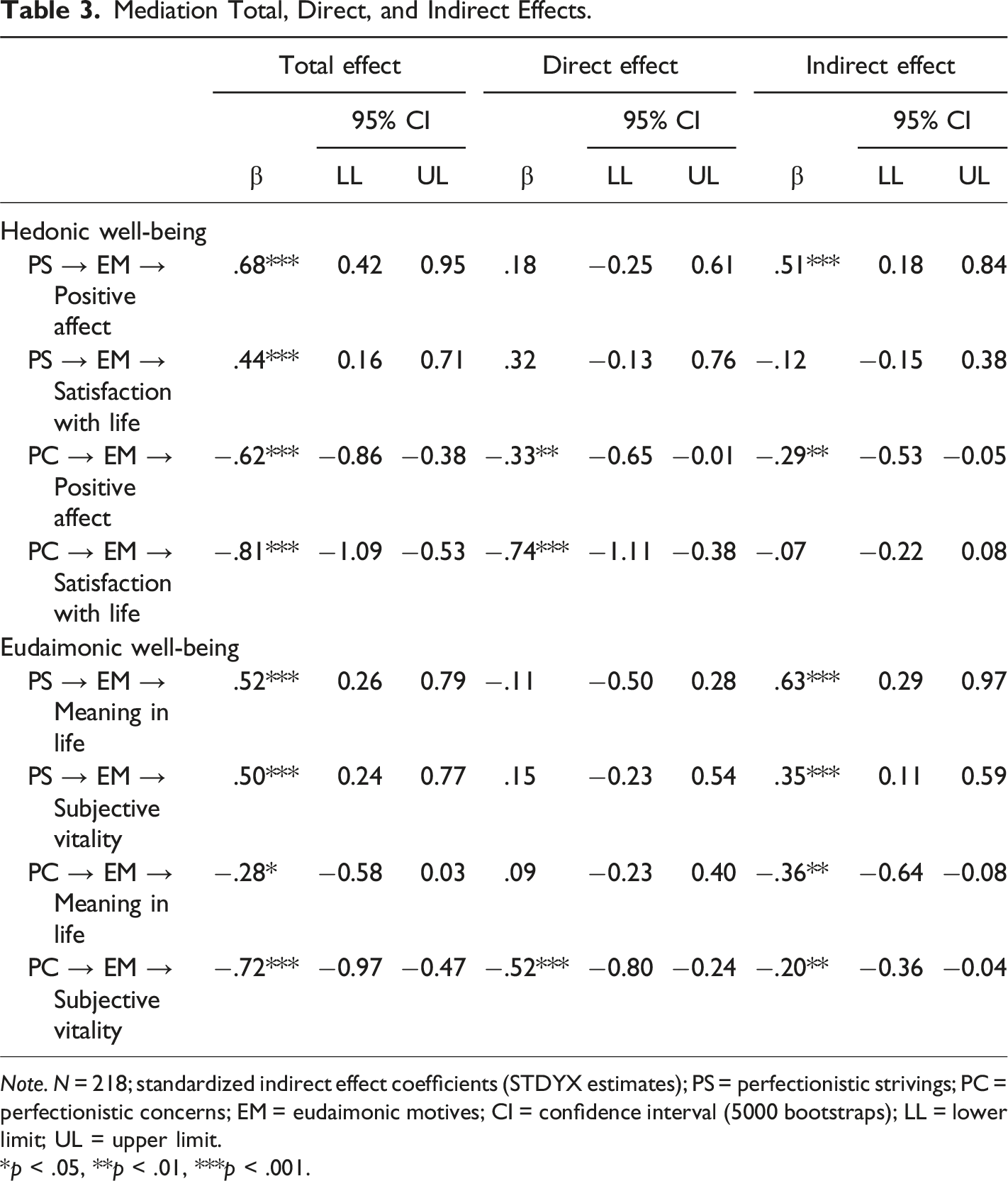
Figure 2 displays the structural equation model that was tested, and the coefficients and significance levels of the total, direct, and indirect effects are displayed in Table 3. Structural Equation Model. Note. Only significant paths displayed; brackets contain 95% confidence intervals of β [lower limit, upper limit]; standardized coefficients (STDYX estimates). *p < .05, **p < .01, ***p < .001. Mediation Total, Direct, and Indirect Effects. Note. N = 218; standardized indirect effect coefficients (STDYX estimates); PS = perfectionistic strivings; PC = perfectionistic concerns; EM = eudaimonic motives; CI = confidence interval (5000 bootstraps); LL = lower limit; UL = upper limit. *p < .05, **p < .01, ***p < .001.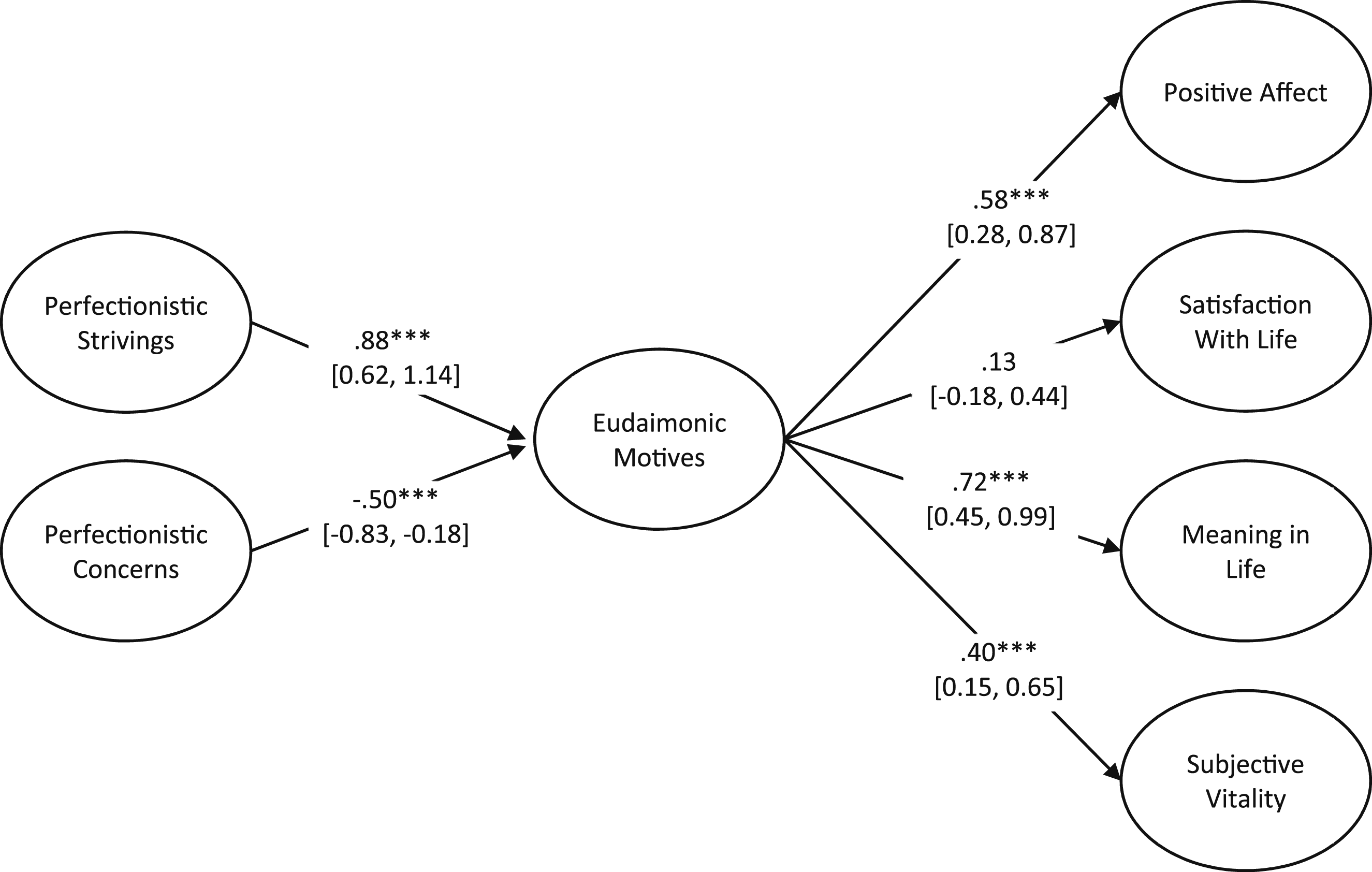
Hedonic Well-being
In terms of the relationships between perfectionistic strivings and the indicators of hedonic well-being, there were significant positive total effects with positive affect and life satisfaction. There was a non-significant direct effect and a significant positive indirect effect (via eudaimonic motives) between perfectionistic strivings and positive affect, which indicated full mediation. However, there were non-significant direct and indirect effects between perfectionistic strivings and satisfaction with life, which indicated no mediation effect.
In terms of the relationships between perfectionistic concerns and the indicators of hedonic well-being, there were significant negative total effects with positive affect and life satisfaction. There were also significant negative direct and indirect effects between perfectionistic concerns and positive affect, which indicated partial mediation. However, while the negative direct effect between perfectionistic concerns and satisfaction with life was significant, the indirect effect was non-significant, which indicated no mediation effect.
Eudaimonic Well-being
In terms of the relationships between perfectionistic strivings and indicators of eudaimonic well-being, there were significant positive total effects with meaning in life and subjective vitality. There were non-significant direct effects and significant positive indirect effects (via eudaimonic motives) between perfectionistic strivings and meaning in life and subjective vitality, which indicated full mediation in both cases.
In terms of the relationships between perfectionistic concerns and indicators of eudaimonic well-being, there was a non-significant total effect with meaning in life and a significant negative total effect with subjective vitality. There was a non-significant direct effect and a significant negative indirect effect between perfectionistic concerns meaning in life, which indicated full mediation. Finally, there were significant negative direct and indirect effects between perfectionistic concerns and subjective vitality, which indicated partial mediation.
Discussion
While previous research has found evidence of positive relationships between perfectionistic strivings and hedonic forms of well-being, there are relatively few examples of research into the relationships between perfectionism and eudaimonic forms of well-being. Furthermore, while perfectionistic strivings are generally considered to be conducive to higher levels of well-being, there is a lack of research into the factors that explain why this is the case. To address these issues, the present study sought to investigate the relationships between perfectionism and indicators of both hedonic and eudaimonic well-being, and to also explore the extent to which eudaimonic motives explain the relationship between perfectionistic strivings and the two forms of well-being.
Perfectionism and Well-Being
In terms of hedonic well-being, as predicted, the partial correlations and total mediation effects showed that perfectionistic strivings were associated with higher levels of positive affect and satisfaction with life, while perfectionistic concerns were associated with lower levels of positive affect and satisfaction with life. These findings are consistent with previous research (Damian et al., 2014; Frost et al., 1993; Gaudreau & Verner-Filion, 2012; Grzegorek et al., 2004; Stoeber et al., 2020; Stoeber & Otto, 2006) and suggest that perfectionistic strivings are linked with more positive emotional experiences and life evaluations in comparison to perfectionistic concerns, which are linked with more negative emotional experiences and life evaluations.
In terms of eudaimonic well-being, the partial correlations and total mediation effects showed that perfectionistic strivings were associated with higher levels of meaning in life and subjective vitality while perfectionistic concerns were associated with lower levels of meaning in life and subjective vitality. These findings are also consistent with previous research (Atienza et al., 2020; Gaudreau & Verner-Filion, 2012; Park & Jeong, 2016; Suh & Chong, 2022; Suh et al., 2017), and suggest that striving for perfection is a more personally meaningful pursuit conducive to experiences of psychological energy and invigoration in comparison to perfectionistic concerns.
Taken together, these findings support previous research by highlighting the clear distinction between the two perfectionism dimensions in terms of their unique and divergent associations with well-being outcomes.
Eudaimonic Motives
This study is novel in its exploration of the relationships between perfectionism and eudaimonic motives which, as in the case of perfectionism and well-being, identified a clear and distinct pattern of associations.
A small negative partial correlation between perfectionistic concerns and eudaimonic motives was observed, which was expected given the clear contrast between the priorities that characterise perfectionistic concerns—including unrealistic expectations, a fear of failure, and a need for social approval—and the priorities that characterise eudaimonic motives, which include a desire for excellence, growth, and authenticity. Indeed, recent research suggests that eudaimonic motives are inversely related to several outcomes closely linked to perfectionistic concerns, including avoidance, anxiety, and depression (Crego et al., 2022).
Conversely, a large positive partial correlation between perfectionistic strivings and eudaimonic motives was observed which supports previous research pointing to positive relationships between perfectionistic strivings and aspects of eudaimonic motives, including excellence (Gaudreau et al., 2022; Goulet-Pelletier et al., 2022), growth (A. P. Hill et al., 2010; Mofield & Parker Peters, 2018, 2019, Umandap & Teh, 2020), and authenticity (Barcza-Renner et al., 2016; Gaudreau et al., 2016; Jowett et al., 2013; Madigan et al., 2016; Miquelon et al., 2005; Moore et al., 2021; Stoeber & Damian, 2016; Stoeber et al., 2009). Taken together, these findings suggest that the priorities towards excellence, growth, and authenticity that characterise eudaimonic motives may also be priorities linked to perfectionistic strivings.
Building on these associations, the present study explored the role of eudaimonic motives as a mediator between the two perfectionism dimensions and the two aspects of well-being.
Eudaimonic motives fully mediated the positive relationship between perfectionistic strivings and positive affect, and partially mediated the negative relationship between perfectionistic concerns and positive affect. Importantly, positive emotions are thought to accompany the experiences of self-realisation, meaning, and fulfilment which are proposed to emerge as a result of eudaimonic motives (Huta & Ryan, 2010; Ryan & Deci, 2001; Ryan et al., 2008). As such, these findings suggest that experiences of positive affect as a result of striving for perfection may be due to the excellence-, authenticity-, and growth-based priorities that accompany perfectionistic strivings. Furthermore, these findings suggest that the absence of such priorities explains why perfectionistic concerns are linked with lower levels of positive affect, though the partial mediation in this case suggests that there may be additional factors involved. One possibility is that extrinsic and avoidance-based motivational characteristics that are conducive to experiences of negative affect (Isen & Reeve, 2005; Jun & Lee, 2024) and which are also central to perfectionistic concerns (e.g., a fear of failure, a desire to avoid incompetence and performing worse than others; Stoeber et al., 2018), may play an important role in explaining the negative association between perfectionistic concerns and positive affect.
Interestingly, there were no mediation effects observed in terms of the positive relationship between perfectionistic strivings and satisfaction with life or the negative relationship between perfectionistic concerns and satisfaction with life. These findings suggest that the sense of life satisfaction that accompanies perfectionistic strivings, and which is absent in the case of perfectionistic concerns, may derive from other factors beyond eudaimonic motives. Two relevant factors in this context are self-compassion and contingent self-worth, which concern how individuals evaluate (self-worth) and relate (self-compassion) to themselves (Neff, 2011), and which are both important elements of perfectionism (Bardone-Cone et al., 2017; Linnett & Kibowski, 2020). Self-compassion is proposed to encourage life satisfaction via enhanced self-kindness and positive self-evaluations in response to undesirable situations and outcomes (Zipagan & Galvez Tan, 2023). Research by Sahin (2021) found that an absence of self-compassion explains why perfectionistic concerns are associated with lower satisfaction with life, while research by Sotardi and Thompson (2025) found people who strive for perfection experience greater self-compassion, which mediated the positive association with satisfaction with life. In terms of self-worth, Houltberg et al. (2018) performed a cluster analysis involving a sample of athletes and found that individuals displaying mixed perfectionism (high levels of strivings and concerns) alongside a fear of failure and contingent self-worth showed lower levels of life satisfaction compared to individuals with a combination of a high sense of purpose, global self-worth, and positive self-appraisals (see also Raedeke et al., 2021). Taken together, these findings suggest that self-compassion and contingent self-worth may play an important role in explaining why the two perfectionism dimensions are positively and negatively associated with life satisfaction.
Eudaimonic motives were found to fully mediate the positive relationship between perfectionistic strivings and meaning in life, and the negative relationship between perfectionistic concerns and meaning in life. Eudaimonic motives are proposed to be inherently meaningful because they are self-congruent with individuals’ personal values (Huta & Ryan, 2010), encourage self-realisation (Waterman, 1990), and focus individuals’ priorities towards meaningful longer-term goals (Huta, 2013). As such, the full mediation effects observed in the present study suggest that perfectionistic strivings are a meaningful pursuit because they encourage self-congruence, self-realisation, and meaningful goals via eudaimonic motives, whereas the absence of these characteristics explains why perfectionistic concerns are less meaningful in nature.
Finally, eudaimonic motives were found to fully mediate the positive relationship between perfectionistic strivings and subjective vitality, and were also found to partially mediate the negative relationship between perfectionistic concerns and subjective vitality. Subjective vitality is proposed to emerge as a result of the authentic self-congruence and self-expression of one’s values and behaviours that characterise eudaimonic motives (Huta & Ryan, 2010; Ryan & Frederick, 1997). As such, the present findings suggest that perfectionistic strivings are also associated with these characteristics due to their association with eudaimonic motives, and that this is why striving for perfection encourages experiences of vitality. Conversely, the present findings suggest that the absence of authenticity, self-congruence, and self-expression in the case of perfectionistic concerns due to the negative relationship with eudaimonic motives explains why perfectionistic concerns are inversely related with subjective vitality. However, the partial mediation in this case suggests that there may be other factors involved in explaining this inverse relationship. One possibility is that the negative affective experiences and disorders that are proposed to result from perfectionistic concerns, such as depression and anxiety (e.g., Bieling et al., 2004), may explain the negative association with subjective vitality, given that depression and anxiety themselves have been found to be negatively associated with subjective vitality (Goldbeck et al., 2019; Ryan & Frederick, 1997). As such, there may be both a motivational element (via eudaimonic motives) and an affective element (via anxiety and depression) involved in the association between perfectionistic concerns and subjective vitality.
Theoretical Implications
A significant proportion of previous research has tended to focus on outcomes as a gauge of whether perfectionism can be adaptive or maladaptive, and this approach is perhaps one of the reasons for the lack of understanding regarding the factors that explain why striving for perfection is considered to be a more adaptive form of perfectionism. Indeed, the suggestion promoted by researchers that perfectionistic strivings are a more adaptive form of perfectionism derives almost entirely from outcome-based research (see Stoeber & Otto, 2006), yet outcome-based research in and of itself does not reveal the characteristics or mechanisms inherent to variables of interest that promote, generate, and explain their respective relationships with positive and negative outcomes (Kazdin, 2007; Windgassen et al., 2016). Consequently, the mediation effects observed in the present study address this issue by suggesting that the pursuits towards excellence, growth, and authenticity that characterise eudaimonic motives may be inherent to or closely associated with perfectionistic strivings, and absent in the case of perfectionistic concerns, and that these associations help to explain the distinct and divergent relationships between the two forms of perfectionism and well-being.
While it is perhaps beyond the scope of the findings outlined in the present research to draw conclusions regarding the nature of the association between perfectionistic strivings and eudaimonic motives, it may be that perfectionistic strivings either represent a form of eudaimonic pursuit, or are conducive to eudaimonic motives. In either case, it is possible that striving for perfection is a more self-congruent activity (authenticity), driven by a desire to grow beyond one’s personal limitations (growth) in the pursuit of excellence. As the literature demonstrates, such pursuits are proposed to underlie experiences of meaning (Huta & Ryan, 2010), and vitality (Huta & Ryan, 2010; Ryan & Frederick, 1997), in addition to forming an important predictor of hedonic aspects of well-being (Huta, 2016).
Perhaps the most interesting implication of these mediation findings derives from the close conceptual association between eudaimonic motives and self-actualisation (Haybron, 2016; Huffman, 1995; Hurka, 1987, 1996; Waterman, 1990) and what this might reveal in terms of the nature of perfectionistic strivings. Indeed, early philosophical conceptions of perfectionism centred on the idea that the pursuit and contemplation of perfection is a natural and inherently positive phenomenon leading to the actualisation of one’s latent potentials (Huffman, 1995; Hurka, 1987). While this is not to say that perfectionistic strivings should be viewed as an entirely adaptive and desirable disposition, the findings outlined in the present study provide an interesting link to the philosophical ideas underpinning the pursuit of perfection and eudaimonia, in that striving for perfection might, in some way, be linked with the pursuit of self-actualisation in the form of eudaimonic motives.
Nonetheless, the precise nature of the relationship between perfectionistic strivings and eudaimonic motives is undoubtedly more complex and nuanced than the findings from the present study suggest. Indeed, a recent development in the perfectionism literature that explores this question in more depth centres around the nature of the relationship between perfectionistic strivings and excellencism (Gaudreau, 2019). Gaudreau (2019) suggested that the pursuits of perfection and excellence are closely related yet remain conceptually distinct, in that one can attain excellence without pursuing perfection though one cannot pursue perfection without simultaneously seeking out excellence. One question that is central to future research in this area concerns whether striving for perfection is less, equally, or more beneficial to individuals in comparison to striving for excellence. Though research in this area is in its early stages, studies by Gaudreau et al. (2022) and Goulet-Pelletier et al. (2022) found evidence to suggest that striving for perfection does not provide any additional benefits beyond the pursuit of excellence, meaning that the pursuit of excellence is what drives the beneficial effects linked to the pursuit of perfection. Further research suggests that the pursuit of excellence itself is a precursor for longstanding and meaningful experiences of well-being (Martínez-Martí et al., 2016; Schwartz & Wrzesniewski, 2016). Importantly, the full mediation effects observed in the present study between perfectionistic strivings and positive affect, meaning in life, and subjective vitality support this conclusion, in that partial mediation would indicate that striving for perfection may have residual benefits for well-being even when accounting for the overlap with eudaimonic motives. Full mediation in these cases suggests that it is the association with eudaimonic motives that explains why striving for perfection is beneficial for well-being.
Practical Implications
There are also practical implications to explore against the background of the theoretical implications outlined above, particularly in the context of therapeutic interventions. If perfectionistic strivings overlap with eudaimonic motives and if striving for perfection does not yield additional benefits beyond eudaimonic motives, as the findings from the present study and previous studies (e.g., Gaudreau et al., 2022; Goulet-Pelletier et al., 2022) suggest, then therapeutic interventions should aim to encourage eudaimonic motives as a healthier and more beneficial alternative to striving for perfection. Indeed, targeting individuals’ perfectionistic tendencies while maintaining or even enhancing their eudaimonic pursuits—including a sense of ambition, autonomy, competence, and growth—was highlighted as a priority for perfectionism treatments by Wade (2018) and Iliakis and Masland (2023).
However, perfectionism is considered a notoriously difficult phenomenon to treat therapeutically, with common challenges including poor responses to interventions and issues developing an effective therapeutic alliance between therapists and perfectionistic clients (Flett & Hewitt, 2002). Flett and Hewitt (2002) argued that these issues often emerge because perfectionists are reluctant to abandon their excessively high personal standards due to the perceived benefits and rewards associated with them. Furthermore, Sorotzkin (1998) suggested that some perfectionists can develop unrealistic expectations of the therapeutic process itself, including an inability to embrace the gradual growth and improvements that often accompany therapeutic interventions over time, and attempts to achieve perfect therapeutic outcomes such as a total absence of anxiety, fear, and conflict.
Nonetheless, one approach that has shown to significantly reduce levels of perfectionism and associated symptoms of depression, anxiety and eating disorders is cognitive behavioural therapy for perfectionism (CBT-P; Galloway et al., 2022). Research by Gaudreau and Schellenberg (2024) found that use of CBT-P reduced individuals’ levels of perfectionism (both perfectionistic strivings and concerns) with a negligible impact on levels of excellencism (see also Grieve et al., 2022). A further study by Vekas and Wade (2017) observed the effects of a lesson-based intervention on levels of perfectionism among a sample of schoolchildren. One aspect of the intervention involved an activity that contrasted the pursuit of perfectionism with the pursuit of excellence in the form of “trying your best” (p. 464) and found that the intervention significantly reduced levels of perfectionism.
A therapeutic approach known as well-being therapy (WBT) could also be utilised to encourage the other aspects of eudaimonic motives beyond the pursuit of excellence as a method of reducing individuals’ levels of perfectionism. WBT is a cognitive behavioural approach that aims to encourage eudaimonic characteristics and experiences as part of the therapeutic process, including autonomy, purpose in life, environmental mastery, belongingness, self-actualisation, and self-acceptance (Fava & Ruini, 2003). Research into the use of WBT in treating perfectionism is somewhat limited, though Ruini et al. (2009) found that WBT was effective in fostering self-acceptance among highly self-critical perfectionists. Given the overlap observed between perfectionistic strivings and eudaimonic motives in the present study combined with the centrality of eudaimonia to WBT, the latter may be an effective form of treatment for perfectionism and a potentially fruitful avenue for future research.
Limitations and Future Directions
The findings from the present study provide novel insights into the relationships between perfectionism and well-being, and also identify a possible mechanism by which perfectionistic strivings and perfectionistic concerns relate to well-being in the form of eudaimonic motives. Nonetheless, the present study had several limitations.
Firstly, while the present study involved the use of two indicators of eudaimonic well-being in the form of meaning and subjective vitality, there are other forms of eudaimonic well-being for future studies to consider. Examples of additional indicators of eudaimonic well-being include the experiences of interest and engagement. These factors were identified by Vittersø et al. (2010) as experiences that accompany and result from eudaimonic goals and pursuits, and are distinct from more hedonic experiences of well-being. There are also social aspects of well-being—such as social integration, social contribution, and social acceptance—which are proposed to be important aspects of well-being (Keyes, 1998, 2002) and have been shown to be factorially distinct from hedonic and eudaimonic aspects of well-being (Gallagher et al., 2009; Joshanloo, 2016; Joshanloo et al., 2017). Therefore, future studies could build upon the findings from the present study by exploring additional indicators of eudaimonic well-being such as interest and engagement along with social aspects of well-being to provide a more comprehensive picture of the relationships between perfectionistic strivings and well-being in general.
Secondly, the present study involved a cross-sectional design, and as a result, it was not possible to test for directions of causality between the variables. This is less of an issue for understanding the nature of the overlaps between perfectionism and eudaimonic motives since both are considered to be relatively stable personality orientations (Huta & Waterman, 2014; Rice & Aldea, 2006). Thus, the cross-sectional mediation design approach used in the present study provided a suitable means of exploring the overlap between perfectionism and eudaimonic motives in relation to the well-being outcomes. However, unlike stable personality orientations, individuals’ experiences of well-being are prone to fluctuations over time (Huta, 2013; Pancheva et al., 2021). As such, studies should utilise longitudinal designs to account for any such fluctuations to gain a clearer understanding regarding the extent to which perfectionism and eudaimonic motives predict well-being.
Thirdly, given the emerging importance of excellence to understanding the nature of perfectionistic strivings as outlined by Gaudreau (2019), excellence was only considered as one of the three elements that comprise eudaimonic motives in the present research, alongside authenticity and growth. Consequently, future studies should seek to isolate the individual components of eudaimonic motives and to observe their independent roles in mediating the relationships between perfectionistic strivings and well-being. Of particular interest would be to explore whether excellence motives stand out as a primary factor in explaining the relationships between perfectionistic strivings and well-being, as per Gaudreau’s (2019) suggestion, or whether other aspects of eudaimonic motives including growth and authenticity play a similar role.
Finally, the sample in this study was predominantly female (85%). Previous studies have explored possible gender differences in perfectionism, with evidence suggesting that there are no meaningful differences across genders (Sherry et al., 2015; Stoeber & Stoeber, 2009), though a study by Sand et al. (2021) involving adolescents found that girls were more likely to score in the highest categories of overall perfectionism than boys. Nonetheless, the majority of evidence in this area suggests that there are minimal differences in perfectionism across genders. In addition, a meta-analysis by Batz-Barbarich et al. (2018) involving an examination of 281 separate effect sizes and over one million participants found no significant differences in well-being across genders, though the authors acknowledged the importance of accounting for cultures and nations that are less progressive regarding gender inequality. The evidence is less clear regarding eudaimonic motives however, with some studies suggesting that women are more likely to pursue eudaimonia than men, and other studies pointing to no significant difference between women and men (see LeFebvre & Huta, 2021). When considered together, future investigations into perfectionism, eudaimonic motives, and well-being should aim to recruit balanced and representative samples to explore and account for any possible gender differences.
Conclusion
The present study builds upon previous research into perfectionism and hedonic forms of well-being by investigating the relationship between perfectionism and eudaimonic well-being. The findings from this research provide evidence to suggest that perfectionistic strivings are associated with higher levels, and perfectionistic concerns lower levels, of both hedonic and eudaimonic well-being, and that eudaimonic motives may play an important role in explaining these associations. Future studies could develop this line of research further by exploring a wider range of well-being indicators, by utilising longitudinal research designs to address the limitations associated with cross-sectional studies, and by investigating the individual mediation effects of excellence-, authenticity-, and growth-based motives.
Supplemental Material
Supplemental Material - Perfectionism and Well-Being: An Investigation into the Mediating Role of Eudaimonic Motives
Supplemental Material for Perfectionism and Well-Being: An Investigation into the Mediating Role of Eudaimonic Motives by William T. Burkitt in Psychological Reports.
Footnotes
Acknowledgements
I would like to extend my thanks to Dr. Patrick Hylton and Dr. Rachel Bromnick for their support in the initial stages of this research.
Declaration of Conflicting Interests
The author declared no potential conflicts of interest with respect to the research, authorship, and/or publication of this article.
Funding
The author received no financial support for the research, authorship, and/or publication of this article.
Ethical Considerations
This research adhered to the ethical guidelines of the British Psychological Society and received ethical approval from the University of Lincoln School of Psychology Research Ethics Committee (ethics reference: 2020–3488).
Consent to Participate
All participants provided informed consent (eConsent) to take part.
Data Availability Statement
The data for this research are publically available via the Open Science Framework: https://doi.org/10.17605/OSF.IO/AYZT3,  .
.
Supplemental Material
Supplemental material for this article is available online.
Notes
Author Biography
References
Supplementary Material
Please find the following supplemental material available below.
For Open Access articles published under a Creative Commons License, all supplemental material carries the same license as the article it is associated with.
For non-Open Access articles published, all supplemental material carries a non-exclusive license, and permission requests for re-use of supplemental material or any part of supplemental material shall be sent directly to the copyright owner as specified in the copyright notice associated with the article.
