




Abstract
The way individuals conceptualize and value work and family plays a crucial role in shaping identity and guiding personal and professional priorities. This descriptive-correlational and cross-cultural study aimed to analyze the centrality attributed to work and family, as well as to explore the social representations associated with these two domains. Samples were collected from Canada (n = 77), India (n = 201), Oman (n = 175), Portugal (n = 340) and Spain (n = 102), totaling 895 participants. Participants provided demographic information, completed the Work–Family Centrality Scale, and evoked three words related to “family” and “work” through a free association task. Principal Component Analysis (PCA) was used to identify latent dimensions of representation, and cluster analysis grouped participants into six distinct symbolic profiles. Results confirmed cultural differences in work–family centrality, with participants from Portugal and Spain prioritizing family, and participants from India attributing greater centrality to work. Gender differences were small and not statistically significant. Representational clusters were meaningfully associated with both country and centrality scores, indicating that the symbolic configuration of work and family informs how individuals prioritize these roles in their identity. This study highlights the value of integrating identity theory and Social Representations Theory to understand how personal and cultural meanings shape work–family dynamics.
Keywords
Dedicated to Gabriela, whose strength and inspiration continue to light the way.
Introduction
Each individual assigns different levels of importance to various dimensions of their identity, a concept known as identity domain centrality. The time and effort invested in each domain are directly related to the value attributed to them. This centrality is influenced by individual preferences and by the social relevance of each domain at different stages of life. In adulthood, key identity domains typically include work and family, and their integration is considered essential (Svensson & Frisén, 2022). These processes cannot be fully understood without considering the influence of organizational structures and cultural norms. Ramarajan and Reid (2013) demonstrate that the integration and compatibility between work and family identities are not merely individual processes but are deeply embedded in organizational and social contexts. Their dynamic model shows how the salience and compatibility of these identities are shaped both by situational factors, such as organizational norms, and by individual strategies for managing boundaries. Complementing this perspective, Rothbard and Edwards (2003) emphasize that the segmentation or integration between the work and family domains influences how individuals experience identity centrality, impacting well-being and performance. Settles (2004) explores the impact of identity centrality—the psychological importance attributed to a given identity—and concludes that when identities are highly central, there is a greater likelihood of role interference, which requires effective negotiation strategies. In turn, Benet-Martínez and Haritatos (2005), through the concept of Bicultural Identity Integration (BII), highlight that perceiving compatibility between cultural identities contributes to greater psychological adjustment, underscoring the relevance of perceived harmony or conflict between identities. These contributions provide a robust theoretical foundation for understanding the relationship between identity centrality, cultural differences, and the work–family dynamic. The present study focuses on analyzing how social representations and cultural norms influence the centrality attributed to work and family roles, deepening the understanding of identity dynamics across diverse cultural contexts. Social Representation Theory (Marková, 2007; Moscovici, 1961) offers a fundamental perspective for this analysis, allowing us to explore the collective meanings that shape how work and family are conceptualized and prioritized in different societies. These representations not only shape how individuals perceive their roles but also influence the centrality they attribute to them. Thus, investigating both centrality and the social representations associated with work and family provides deeper insight into identity dynamics across diverse cultural settings.
This study, therefore, seeks to explore these dynamics through a cross-cultural approach, assessing how different cultural and gender contexts influence the centrality attributed to work and family and how the social representations of these domains are associated with different levels of centrality.
This study offers an innovative perspective by integrating the analysis of centrality with a qualitative exploration of social representations, enriching the understanding of the identity and cultural dynamics that shape contemporary experiences of work–life balance.
Work–Family Centrality
Contemporary society is marked by profound changes that affect various domains of individuals’ lives, particularly the family sphere, with transformations in behaviors and family structures (Ademuyiwa et al., 2022). In parallel, the world of work continues to play a central role in shaping personal and social identities (Maciel & Marques, 2008). Work–family centrality refers to the relative value that individuals assign to work and family, serving as a key concept for understanding identity priorities in today’s societies. This centrality can be understood in two dimensions: intrinsic and extrinsic. Intrinsic centrality relates to the emotional and symbolic meaning of each domain, such as personal fulfillment or a sense of belonging; extrinsic centrality, on the other hand, refers to external factors, such as financial rewards or social recognition (Carr et al., 2008; MOW, 1987).
According to the international research team Meaning of Working (MOW, 1987), work is a multidimensional psychological construct shaped by everyone’s personal and professional experiences. In this context, work centrality can be observed in absolute terms (its overall importance in the individual’s life, reflected in their temporal and emotional commitment to work) or relative terms (comparing the importance of work with other life domains, such as family, health, or leisure) (Coda & Fonseca, 2004; MOW, 1987). Maciel and Marques (2008) emphasize that work has historically been seen as an identity pillar and a means of social integration, playing a decisive role in both individual and community life. This centrality remains relevant despite recent social transformations, reflected in people’s choices and priorities at different life stages.
Some studies (Carr et al., 2008; Zhang et al., 2022) suggest that high levels of centrality attributed to both work and family can lead to challenges in reconciling these roles, as valuing both highly may intensify demands and generate tensions. However, the present study does not focus on the effects of work–family conflict but rather on how individuals from different cultural and gender contexts value work and family in their lives. Beyond individual differences, work–family centrality is also shaped by broader cultural factors. Several studies highlight that cultural values influence how individuals prioritize work and family, reflecting shared social norms and collective expectations (Gyberg et al., 2019; Raina et al., 2020). In more traditional cultural contexts, for example, greater centrality is often attributed to family, whereas in societies more oriented toward work and individual success, work tends to occupy a more prominent place in people’s identities (Calvo-Salguero et al., 2012; Gu et al., 2022). By considering samples from different countries, this study seeks to capture these cultural variations broadly, without focusing on specific cultural dimensions. The cross-cultural approach allows for an exploration of how socially shared norms and values influence the centrality attributed to work and family, providing a richer and comparative perspective on the identity dynamics associated with these fundamental life domains.
Work–Family Centrality and Gender
Social expectations regarding gender roles stem from deeply rooted ideologies and stereotypes (Davis & Greenstein, 2009; Knight & Brinton, 2017). Traditionally, men have been viewed as primary financial providers, while women have been associated with caregiving roles (Magadley, 2021; Zhang et al., 2022). These norms shape identity centrality by reinforcing the importance of family for both genders, albeit in different ways: for women, family centrality is generally linked to caregiving roles; for men, it is more often associated with the role of support and provision (Eagly, 1987; Greenhaus et al., 2012). However, several studies reveal significant shifts in these patterns. For example, Livingston and Judge (2008) and Rajadhyaksha and Velgach (2015) show that men increasingly value family involvement, while women simultaneously prioritize both career and family commitments. These trends, particularly evident in more egalitarian cultural contexts (Svensson & Frisén, 2022), indicate a reconfiguration of work and family identities. Despite these changes, social pressures continue to influence identity choices: studies show that women face more barriers in accessing professional opportunities, and men, although increasingly involved in family life, still experience the expectation to prioritize professional success (Gonçalves et al., 2018; Hull & Nelson, 2000; Kirchmeyer, 2006). Thus, the centrality attributed to work, and family reflects a complex dynamic between traditional values and contemporary social transformations.
The Content of Work and Family Social Representations
The landscape of the work and family domains has undergone significant transformations, challenging the balance between these fundamental spheres and producing diverse impacts on people’s lives. Despite this, there remains a gap in understanding how individuals conceptualize and assign meaning to these domains. A study by Eby et al. (2005), through an extensive narrative review of literature published between 1980 and 2002, observed a considerable emphasis on the work domain, while the family received relatively little attention. The authors also highlighted the absence of deeper and more phenomenological concepts—such as the roles and values associated with each domain—that would allow for a richer understanding of work–family dynamics. This gap underscores the relevance of applying Social Representation Theory to explore these spheres in greater depth.
Social representations are complex constructs, deeply rooted in common sense and transmitted across generations, shaping beliefs, attitudes, and behaviors. These representations emerge and persist through mechanisms such as anchoring, objectification, and thematic elements, forming interconnected sets that define each other (Abric, 1994; Marková, 2007). Although related, representations and identities are distinct concepts: social representations constitute collective symbolic frameworks that guide how individuals and groups interpret and give meaning to the world around them, while identity refers to the unique configuration of values, roles, and characteristics that define a person or group (Stryker & Serpe, 2000). Social representations are shared, stable over time, and deeply embedded in cultural contexts. Identities, on the other hand, while influenced by these representations, are personal and dynamic. A key concept in this theory is that of themata, latent sources of meaning unconsciously embedded in everyday thought and discourse, which activate socially shared knowledge and contribute to tensions and conflicts (Marková, 2007).
Research in this field focuses on the symbolic dimension of representations, distinguishing itself from traditional cognitivism. The analysis prioritizes the meanings that people attribute to their interactions with the world and with others, without seeking to validate whether these meanings are “correct” or “incorrect” in objective terms. Instead, it focuses on the expressive power of various forms of representation—such as language, imagery, and rituals—and their capacity to construct specific realities for social groups (Jovchelovitch, 2001). This symbolic function explains why the same social object can take on different meanings in different contexts and time periods (Abric, 1994). Thus, a social representation is not merely a reproduction of reality; it is also an active process of organizing and interpreting that reality, guiding individuals’ behaviors and practices.
Measuring a representation implies understanding its structure, according to Central Core Theory (Abric, 1996), which proposes a hierarchical organization composed of core beliefs and peripheral elements. The central core contains a limited number of beliefs that gather broad consensus within a group and tend to remain stable over time, forming the essence of shared meaning. Peripheral elements refer to concrete and individual experiences, offering flexibility and adaptation to context (Moliner & Abric, 2015).
Exploring work and family through the lens of Social Representation Theory thus offers a promising avenue for uncovering the deep meanings and values individuals attach to these domains. This approach enriches the understanding of their interactions and impacts in everyday life and justifies the use of free association as a method to access underlying representations. In the context of the present study, this perspective allows for the analysis not only of the centrality attributed to work and family but also of the symbolic content underpinning these priorities, broadening the understanding of identity dynamics across diverse cultural contexts.
Present Study
This study is primarily grounded in Social Representation Theory (Marková, 2007), which emphasizes the symbolic and collective nature of knowledge, allowing us to understand how cultural and gender norms shape perceptions and meanings attributed to work and family. This perspective provides a solid foundation for analyzing the content and values associated with these domains, as well as how they are internalized by individuals across different sociocultural contexts.
Additionally, the concept of identity centrality (Carr et al., 2008) is fundamental to this work, as it enables the assessment of the relative importance individuals assign to work and family roles in the construction of their identity. While centrality is an individual-level concept, social representations operate at the collective level, reflecting shared understandings that influence behaviors and attitudes (Jovchelovitch, 2001).
Exploring these dimensions in an integrated way allows for a deeper understanding of the dynamics of identity related to work and family, considering not only the subjective importance attributed to each domain but also the underlying meanings and symbolic associations. This framework justifies the use of free association as a data collection method, enabling access to the structure and content of participants’ social representations.
The main objective of this study is to analyze the centrality attributed to work and family in five culturally distinct countries, examining how these priorities vary across cultural contexts and between men and women, and further exploring the relationship between the words evoked and levels of work–family centrality. Based on the literature and theoretical framework, the following hypotheses were formulated:
There are differences in work–family centrality among participants from different countries.
There are gender differences in work–family centrality.
The words evoked in the social representations of family and work very across countries and are associated with levels of work–family centrality.
The social representations of family and work are associated, such that the content or structure of one relates to the other within individuals.
The social representations of family and work vary across countries.
The social representations of family and work are associated with levels of work–family centrality.
This study thus aims to contribute to a deeper understanding of how work and family are valued and represented in different sociocultural contexts, offering a comparative perspective that integrates both individual identity dimensions and collective meanings.
Method
Participants and Procedures
A total of 895 adults voluntarily participated in the current study. The data were collected using purposive sampling. The selection of countries aimed to ensure a diverse representation of geographic regions, socioeconomic contexts, and sociocultural characteristics that could influence how work and family are valued. Portugal and Spain were included as Southern European countries with historical and cultural ties, where family networks often play a central role in social life. Canada was selected as a representative of North America, with a high degree of urbanization and a labor market characterized by strong individual labor rights. India offers a perspective from South Asia, where rapid economic development intersects with deeply rooted family structures and multigenerational households. Oman, located in the Arabian Peninsula, brings a perspective shaped by strong community traditions and religious values, alongside increasing modernization. This diversity allows for a comprehensive and comparative exploration of how distinct contextual factors—such as economic development, social structure, and regional traditions—influence the way individuals prioritize and represent work and family roles.
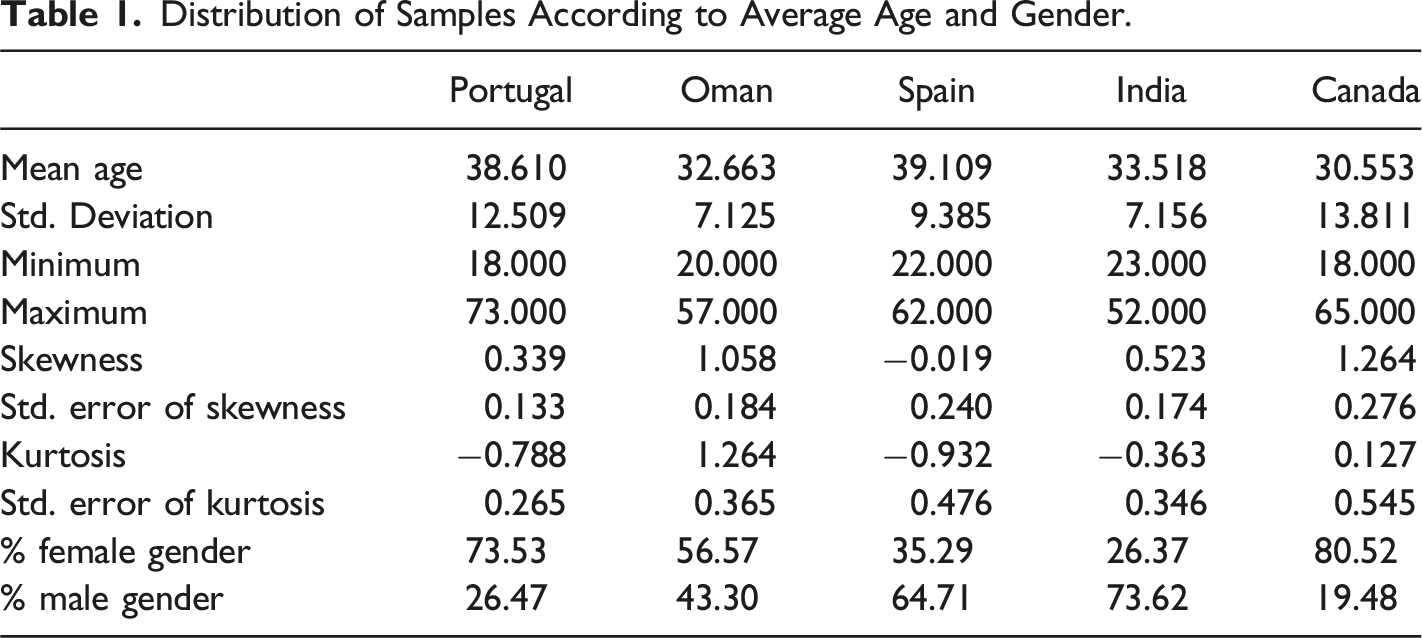
Distribution of Samples According to Average Age and Gender.
The measures were presented in a fixed order for all participants. Initially, participants completed the demographic questionnaire, followed by the free association task for ‘family’ and ‘work,’ and concluded with the Work-Family Centrality Scale. While this consistent order ensured uniformity in data collection, we acknowledge the potential for serial effects, as responses in earlier tasks might have influenced those in subsequent ones.
As shown in Table 1, the average age of participants ranges from 30 years (Canada) to 39 years (Spain). The Portuguese sample shows the widest age range (18–73), while the Canadian sample has the highest variability around the mean. Regarding distribution shape, Portugal, Oman, India, and Canada all show slight to moderate right skewness, indicating a tendency towards older participants. Spain’s distribution is nearly symmetrical. In terms of kurtosis, Portugal, Spain, and India display slightly flatter distributions (platykurtic), suggesting greater heterogeneity in age and fewer extreme age concentrations. Oman shows a sharper peak (leptokurtic), and Canada approximates a normal distribution. Table 1 also shows substantial variation in gender distribution across countries. Women represent the majority in Canada (80.5%) and Portugal (73.5%), while men are the majority in India (73.6%) and Spain (64.7%). Oman presents a more balanced distribution (56.6% women, 43.3% men). These differences should be accounted for in cross-country and gender-based analyses.
On average, participants reported having 1.01 children (SD = 1.24). Regarding marital status, the majority were married or in a common-law relationship (57.8%), followed by single individuals (36.0%) and divorced or widowed participants (6.1%). In terms of educational qualifications, the sample was predominantly highly educated: 42.8% held a university degree, 16.9% a master’s degree, and 4.7% a PhD. The remaining participants had completed secondary (14.8%), basic (10.2%), or primary education (4.3%).
Measures
In addition to demographics, the self-reported questionnaire contained the following measures:
Family and work representations: the data collection instrument employed in this study to define the representation of family and work was the free recall task, a commonly used method for exploring the content and structure of social representations. Participants were instructed to engage in the task by spontaneously evoking three words associated with each of the given concepts: family and work. The instructions emphasized that there were no right or wrong answers, and participants were encouraged to generate words that immediately came to mind. This open-ended approach allowed for the elicitation of participants’ personal associations and perceptions related to the concepts of family and work. The free recall task served as a structured yet flexible instrument to capture participants’ spontaneous thoughts and to facilitate the exploration of representations pertaining to family and work.
Work–family Centrality Scale by Carr et al. (2008): the work-family centrality refers to the degree to which individuals perceive the integration of work and family roles as central and significant to their identity. In our study, we employed the work-family centrality Scale developed by Carr et al. (2008) to measure this construct. It is a unidimensional scale composed of five items that assess the relative importance of work versus family in the life of everyone (e.g., item 2 “The major satisfaction in my life comes from my work rather than family”). Responses are rated on a 7-point Likert scale (1 – totally disagree to 7 – totally agree), with higher means corresponding to greater centrality on work, and lower means corresponding to greater centrality on family. The non-original versions were translated into the respective country’s language through a translation and retranslation process, according to the procedures proposed by Hambleton (2005).
Statistical and Data Analysis Procedures
The statistical procedures employed in this study were carefully selected to address the research objectives, focusing on examining cultural differences in work-family representations and centrality. These analyses also aimed to explore the interplay between participants’ evoked words and their Work-Family Centrality (WFC) scores. By integrating qualitative and quantitative approaches, the study provides a comprehensive understanding of how cultural and individual factors influence perceptions of work and family.
To process the free association data, we used the prototypical analysis, grounded in Vergès' methodology (1992, 1994). This method involves systematic examination of participants’ raw evocations to identify the cognitive structure of social representations. This method prioritizes the preservation of raw words, as they provide direct insights into participants’ mental schemas without imposing external interpretative frameworks. In this approach, words are analyzed based on their frequency and average rank of evocation, with high-frequency and early evoked words classified as central elements of the representation. These central elements are considered more stable and culturally shared, whereas low-frequency or later-evoked words represent peripheral elements, which are more variable and individual. The data were preprocessed through lemmatization to ensure consistency in grammatical form while retaining the original semantic content, aligning with Vergès’ emphasis on authenticity in capturing participants’ cognitive representations. This methodological rigor ensures that the analysis reflects both the shared cultural dimensions and individual nuances in work-family representations.
This analysis allowed us to identify core elements of participants’ representations, where higher frequencies and earlier ranks indicated greater cognitive salience and centrality. Words were further classified into central or peripheral categories through prototypical analysis, differentiating shared elements from individual variations in the representations. Chi-square tests were performed to compute contribution values, identifying words strongly associated with specific cultural groups (χ2>±2.00). These procedures align with social representations theory (Abric, 1993; Flament & Rouquette, 2003), which emphasizes the importance of frequency and order in understanding shared cognitive frameworks.
To test H1 and H2, we conducted independent samples t-tests and one-way ANOVAs, respectively. H1 explored cross-cultural differences in work–family centrality scores among participants from five countries. A one-way ANOVA was performed, followed by post-hoc comparisons using Tukey’s HSD to identify specific group differences. H2 investigated gender differences in centrality, tested via an independent-samples t-test comparing male and female participants. These analyses enabled the identification of statistically significant variations in centrality scores according to both cultural and gender factors.
To explore H3a, which posited that the representations of family and work are structurally associated, we first conducted a Principal Component Analysis (PCA) on binary-coded evocations of family and work-related words. This allowed us to reduce the dimensionality of the data and identify underlying latent dimensions reflecting shared symbolic patterns. The PCA used Oblimin rotation, acknowledging the potential correlation between components. Components with eigenvalues above the threshold of interpretability were retained, and item loadings above .30 were considered meaningful.
Next, to test whether these dimensions clustered meaningfully at the individual level, we applied k-means cluster analysis to the PCA component scores, using Ward’s method with Ward’s method with squared Euclidean distance.
For H3b, we assessed whether the representational clusters varied significantly across countries by performing a Chi-square test of independence. Adjusted residuals were used to interpret the over- and under-representation of each country within each profile. This analysis allowed us to map the distribution of symbolic configurations within cultural contexts.
Finally, to address H3c, we examined whether representational clusters were associated with levels of work–family centrality. A one-way ANOVA was conducted to compare WFC scores across the clusters. Effect size measures (η2) were calculated to evaluate the magnitude of the association.
The dataset described in this article is openly available in Figshare 10.6084/m9.figshare.26048650.
Results
Work–Family Centrality
A preliminary analysis of the Work-Family Centrality scores was carried out to explore the general distribution of the data and examine assumptions relevant to subsequent comparative analyses across countries.
As a preliminary step, descriptive statistics were computed for the Work-Family Centrality (WFC) scores to characterize the overall distribution and assess assumptions for subsequent comparative analyses.
The sample included 892 valid cases. On a scale from 1 (strongly family-oriented) to 7 (strongly work-oriented), participants reported an average score of 2.46 (SD = 1.24) and a median of 2.20. The distribution was positively skewed (skewness = 0.616), meaning lower scores were more frequent, and slightly platykurtic (kurtosis = −0.502), suggesting a flatter distribution with greater variability around the central value. Observed scores ranged from 1.00 to 6.40, covering most of the possible response range. Altogether, results suggest a general tendency to prioritize family over work.
To examine the assumption of normality, a Kolmogorov–Smirnov test with Lilliefors correction was conducted, revealing a significant deviation from the normal distribution (D = 0.122, p < .001). Although the large sample size (N = 892) enhances the robustness of subsequent parametric tests, the results suggest caution in interpreting significance levels. ANOVA was considered appropriate due to its relative insensitivity to moderate violations of normality in large samples.
To test H1, which predicted that work–family centrality would differ across countries, a one-way ANOVA was conducted with country as the independent variable and work–family centrality (WFC) as the dependent variable. Results revealed a significant main effect of the country on WFC, F(4, 887) = 24.33, p < .001, indicating that the degree of centrality attributed to work and family differs significantly across cultural contexts.
The analysis of mean work–family centrality scores shows cross-country variation. Spain reported the lowest average score (M = 1.62), indicating a stronger orientation towards family. In contrast, Canada presented the highest mean (M = 3.09), suggesting a greater relative orientation towards work. India (M = 2.78), Oman (M = 2.59), and Portugal (M = 2.30) fell in between. Standard deviations ranged from 0.93 (Spain) to 1.30 (Oman), reflecting differences in within-country variability.
Post hoc comparisons were conducted using the Games-Howell test (chosen due to heterogeneity of variances; Levene’s test: p < .001).
Pairwise Comparisons of Work–Family Centrality (WFC) Between Countries.
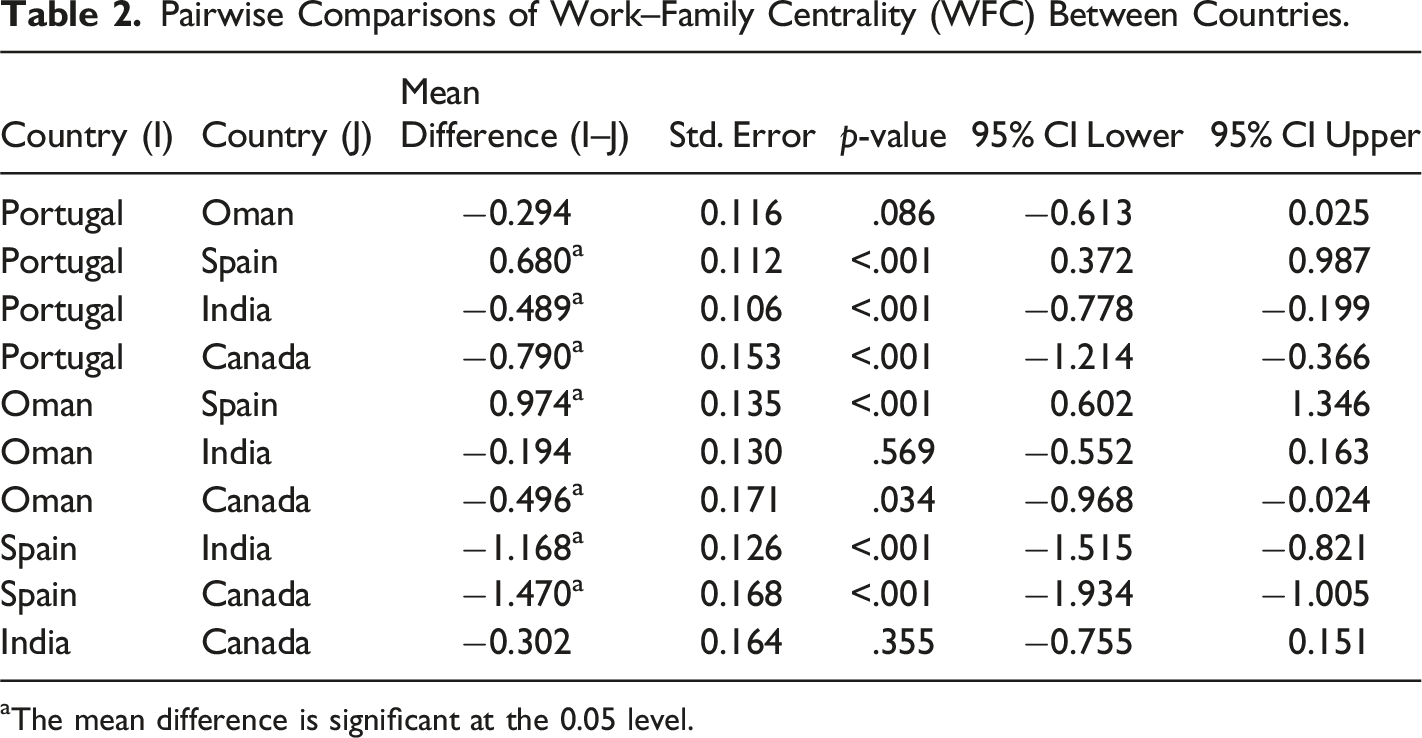
aThe mean difference is significant at the 0.05 level.
To address concerns regarding the unbalanced sample sizes across countries, a post hoc power analysis was conducted using G*Power (Faul et al., 2009). The test was based on an ANOVA (fixed effects, omnibus, one-way) design with five groups (countries), total sample size of 892, and an observed effect size of f = 0.289 (corresponding to partial η2 = .077). The analysis indicated that the test had a power of 1.00 to detect the observed effect at the conventional alpha level of .05. These results confirm that the test had sufficient sensitivity to detect cross-country differences in work-family conflict despite unequal group sizes.
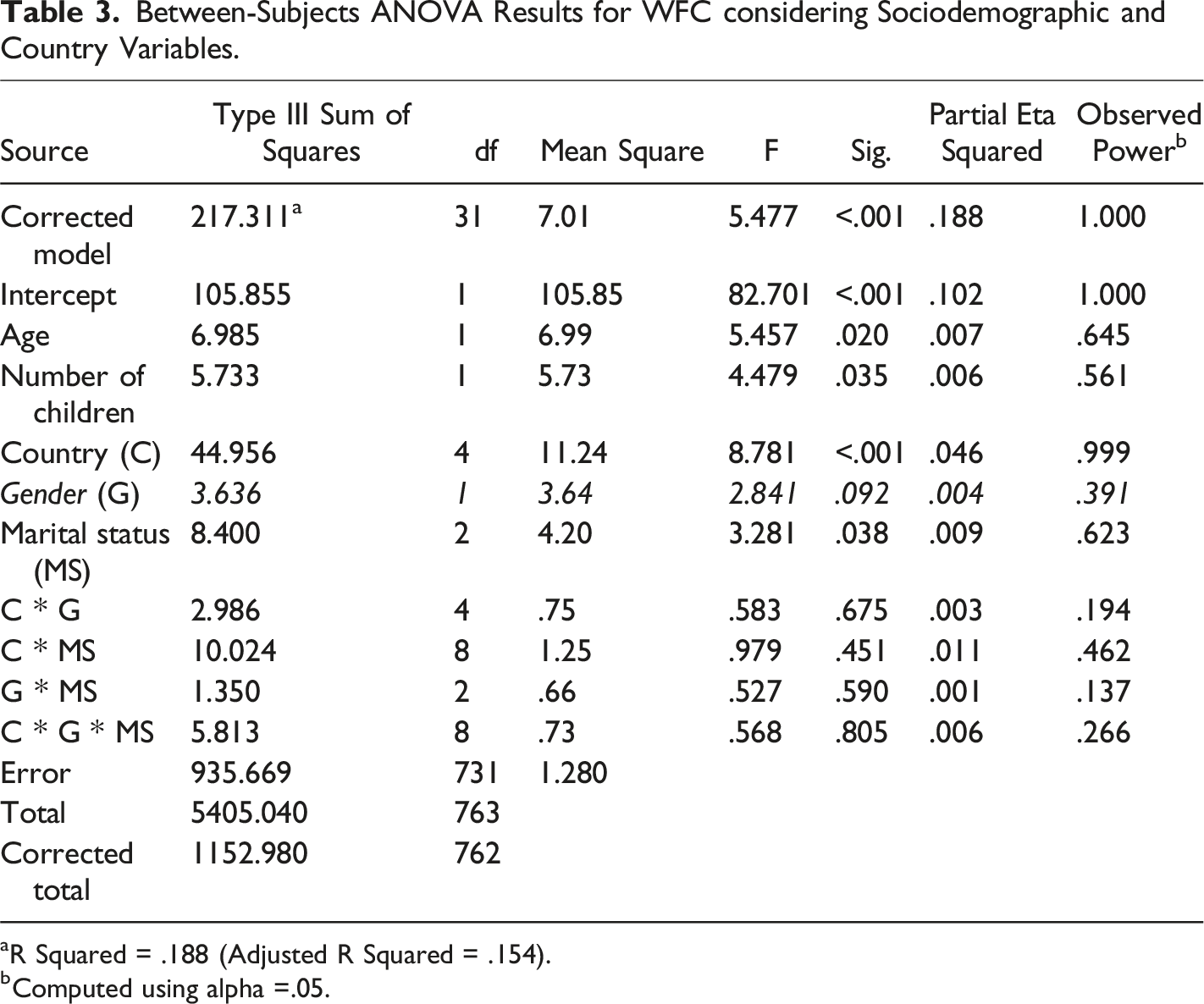
We also observed the potential influence of sociodemographic variables. An additional analysis was conducted including age, number of children, gender, and marital status as covariates and factors, along with their interactions with country.
Between-Subjects ANOVA Results for WFC considering Sociodemographic and Country Variables.
aR Squared = .188 (Adjusted R Squared = .154).
bComputed using alpha =.05.
These findings suggest that gender alone does not substantially influence how individuals prioritize work and family, but marital status showed a small yet significant effect, F(2,731) = 3.28, p = .038, η2p = .009, suggesting that single participants reported the highest WFC scores (M = 2.69, SD = 1.32), indicating a stronger orientation toward work, whereas those who were married or in common-law relationships (M = 2.22, SD = 1.14) and divorced or widowed (M = 2.05, SD = 1.18) prioritized family more, on average.
Age and number of children also emerged as significant covariates. To better understand the effects of age and number of children on work–family centrality, a linear regression analysis was conducted. Results showed that both variables were significant negative predictors of WFC: higher age (B = −0.013, p = .004) and a greater number of children (B = −0.081, p = .038) were associated with a stronger orientation towards family (lower WFC scores). Although the effect sizes were modest (R 2 = .028), these findings indicate that sociodemographic factors play a small but significant role in shaping work–family priorities.
No significant interactions were found between country and gender, marital status, or their combinations, indicating that the effect of country on centrality is robust across gender and marital status. These results reinforce the cultural relevance of country-level differences in the valuation of work and family, beyond individual demographic characteristics. To address concerns about sample size imbalance across countries, a post hoc power analysis was conducted using G*Power (v3.1). For the ANCOVA testing Hypothesis 2 (with 5 groups, 2 covariates, numerator df = 31, and a total sample size of 763), the observed effect size was f = 0.48. The achieved power was 1.00 (α = .05), indicating that the analysis was sufficiently powered to detect the observed effects.
To test Hypothesis 3, we first analyzed the words evoked in response to the stimuli “family” and “work”.
Family Representations
Up to three evocations related to the term “family” were collected from all countries presented in this study. The words were recorded in the native languages of each country and subsequently translated into English by proficient English speakers. The primary corpus underwent initial lemmatization: reducing plural words to singular form and hyphenating compound expressions (e.g., well-being) that represent a single idea. All entries consisting of phrases were either eliminated or, if possible, simplified to the most basic expression when the meaning was understandable and easily identifiable.
The corpus consists of 375 different words evoked 2625 times, divided into three possible relative positions. The total number of hapax legomena – words evoked one time – is 210 words, accounting for 56% of the corpus. Given the high number of hapax, the corpus underwent further lemmatization, reducing words to their etymological root and creating word families while avoiding lexical field groupings.
Expressions used by the participants were also observed, and when they represented a single idea already present in the text, they were replaced with individual words. Idiomatic expressions were left unchanged (e.g. first priority).
The reductions made allowed us to determine the final corpus related to the word “family” with the following characteristics (see Table 3).
A word evocation task provides researchers with a set of indicators, such as the total number of evocations (N), the total number of different evocations (T), the quantity of items evoked only once (hapax, H), and the frequency of the items. According to Wolter and Wachelke (2013) and Flament and Rouquette (2003), two complementary indices can be calculated – the diversity index and the rarity index – which allow for the examination of quality aspects of the evocations.
Characteristics of the Corpus for the Word “Family”.
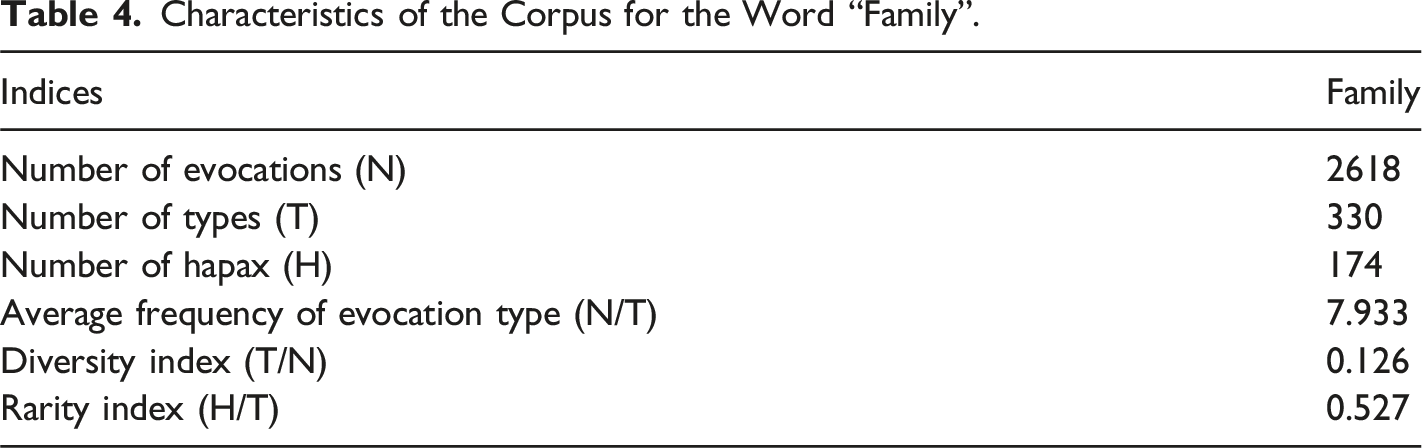
The rarity index represents the degree of idiosyncrasy of the provided responses. According to Flament and Rouquette (2003), there should be a relationship between both indices, as a representation is expected to be shared among elements of the same group but also to show some individual appropriation. In a study of social representations, it is desirable to have hapax, but the level of rarity should not be high. In this case, an acceptable level of rarity is observed, indicating relative idiosyncrasy. Considering the various subsamples, possible differences in the distribution of associated words for each group should be examined.
However, the indicators support the possibility of conducting a joint analysis of all subsamples before observing specific associations with countries.
A minimum inclusion criterion for analysis was considered, including words evoked by at least 5% of the total final sample (≈45).
Prototypical Analysis of the Word “Family” for the Total Sample.
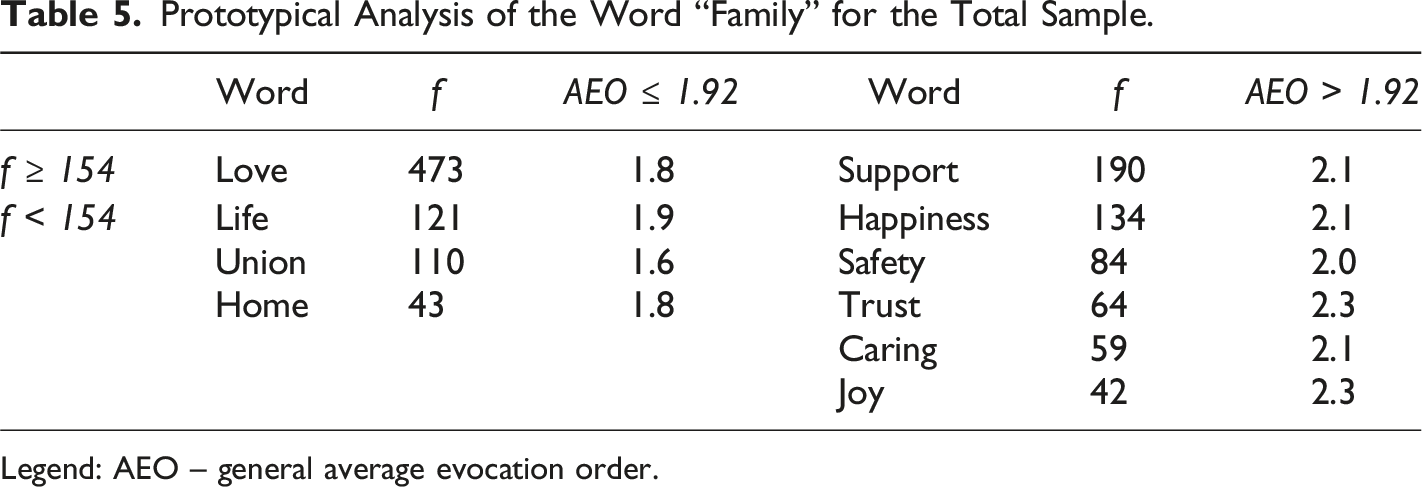
Legend: AEO – general average evocation order.
The prototypical analysis of the word “Family” reveals that the social representation of family is deeply rooted in concepts of love, support, and positive emotions. High-frequency words like “Love” and “Support” indicate core components of family, while words with high AEO like “Trust,” “Joy,” and “Happiness” suggest that family evokes strong positive emotional responses. This analysis underscores the multifaceted emotional and social dimensions that constitute the concept of family.
Work Representation
Evocations related to the concept of “Work” were collected, with participants providing up to three words for this concept. The initial corpus underwent lemmatization, a process that involved reducing plural forms to singular and hyphenating compound expressions to capture a unified idea. Entries composed of phrases were either eliminated or simplified to ensure clarity and consistency.
The resulting corpus comprises 550 distinct words that were evoked a total of 2584 times, distributed across three relative positions. Notably, 57% of the corpus consists of hapax legomena, indicating words that were evoked only once. To enhance the analysis and facilitate meaningful comparisons, a second round of lemmatization was conducted, aligning words with their etymological roots and grouping them into word families while avoiding lexical field associations.
Expressions used by participants were also observed, replacing them with individual words when they represented a unique idea already present in the text. Idiomatic expressions remained unchanged (e.g., first priority).
The reductions made allowed the determination of the final corpus regarding the word “work,” with the following characteristics.
Characteristics of the Corpus for the Word “Work”.
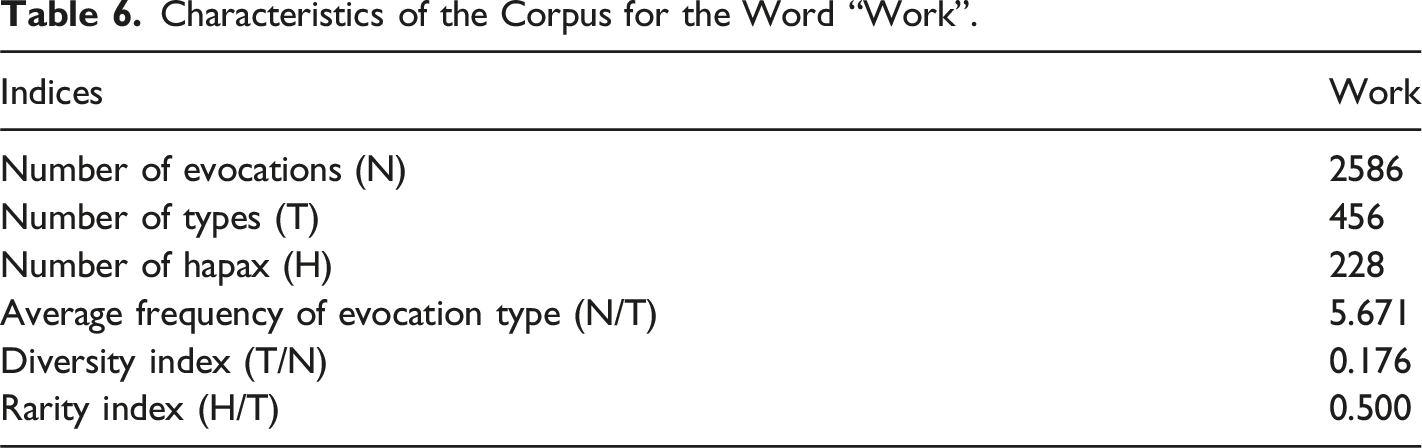
The average order of evocation for each word was also considered to appropriately differentiate between central and peripheral elements of the concept “work”. The average of all the mean orders of evocations for each word was calculated, resulting in a value of 1.92. The intermediate cut-off criterion was automatically determined by the IRaMuTeQ software.
Prototypical Analysis of the Word “Work” for the Total Sample.
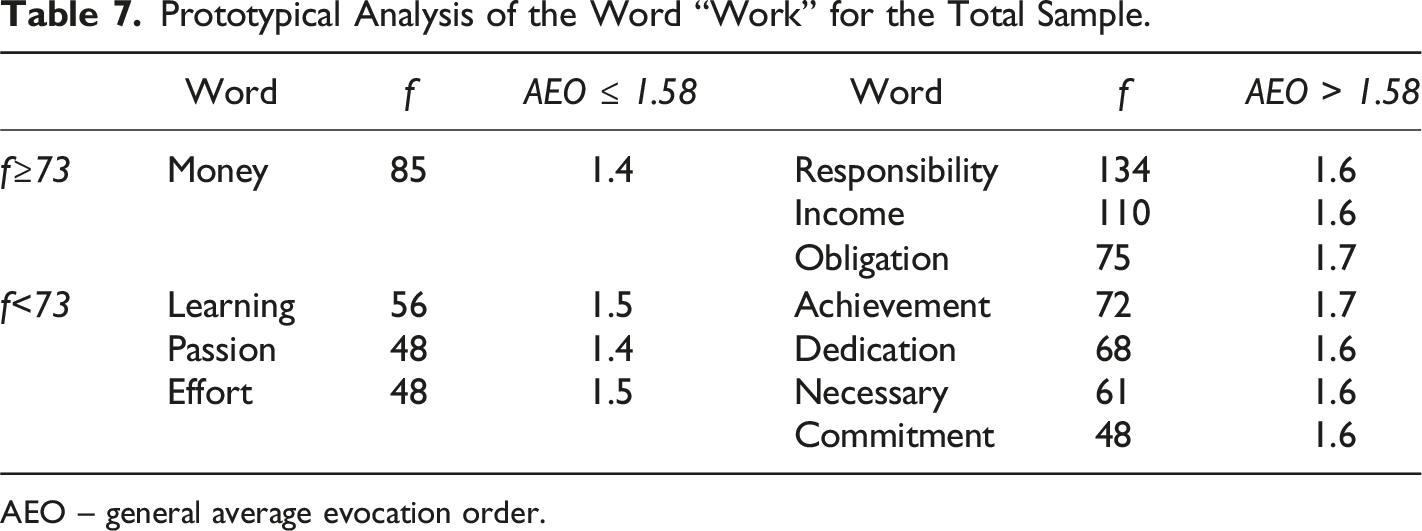
AEO – general average evocation order.
To test whether the categories evoked in the social representations of family and work are associated, we conducted a Pearson chi-square test of independence.
The result was statistically significant, χ2(110) = 230.088, p < .001, supporting Hypothesis 3a. This suggests that the representations of family and work are not independent: the content evoked in one domain varies systematically in relation to the other. However, caution is warranted in interpreting this result, as more than 20% of the cells had expected frequencies below 5, which may affect the robustness of the test. Even so, this statistical association is visually supported by the pattern observed in Figure 1, which presents a heatmap of co-occurrences between family-related and work-related categories. Simple bar mean of WFC by country.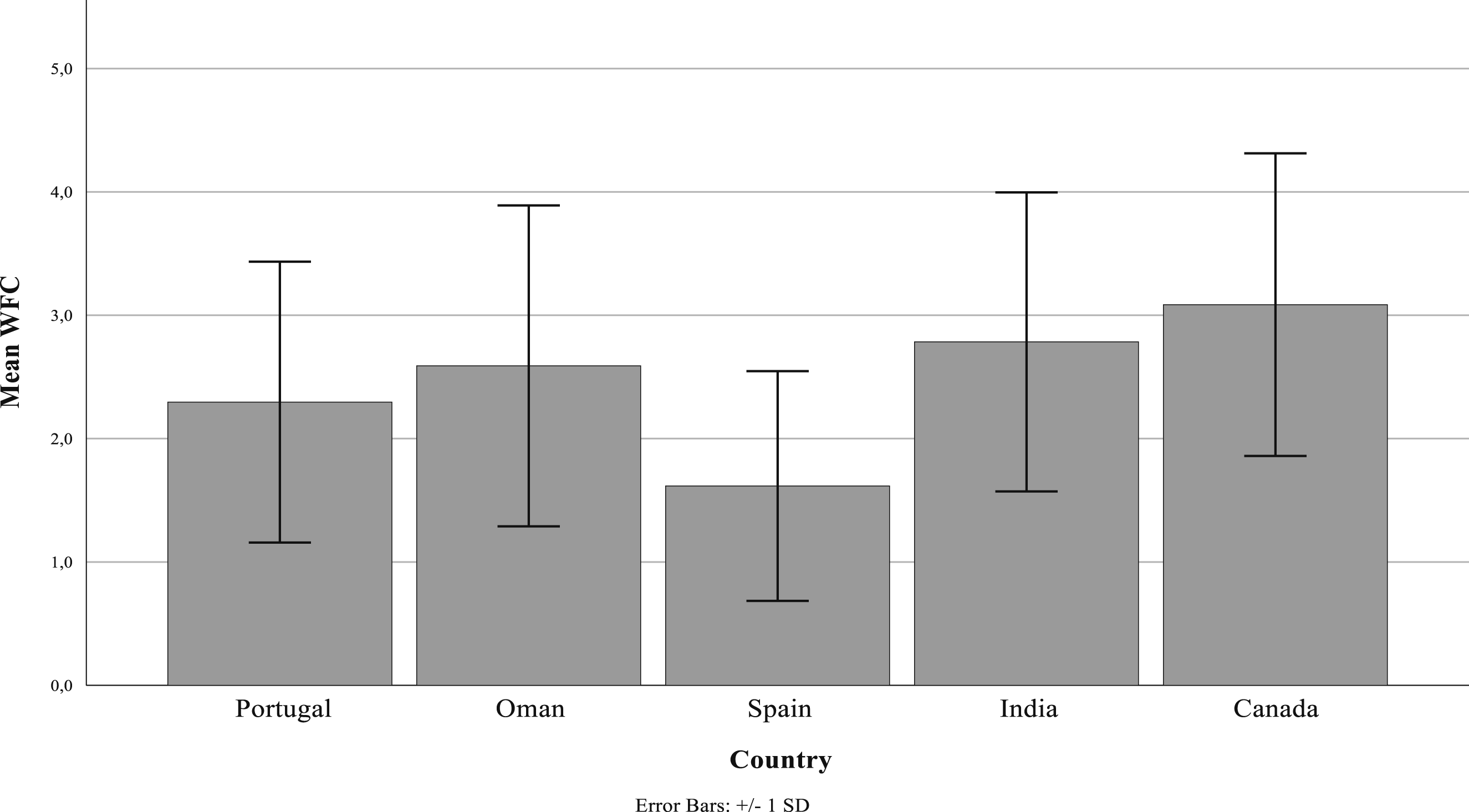
As shown in Figure 2, some categories such as “love”, “support”, and “union”—frequently evoked in relation to family—also co-occur consistently with work-related categories such as “responsibility”, “income”, and “obligation”. This pattern suggests the presence of representational alignments between emotional and functional dimensions across both domains. For instance, the co-occurrence between love and responsibility (n = 68) and between support and income (n = 37) points to a symbolic integration where emotional commitment in family is mirrored by notions of duty or provision in the professional sphere. Heatmap of associations between family and work representations.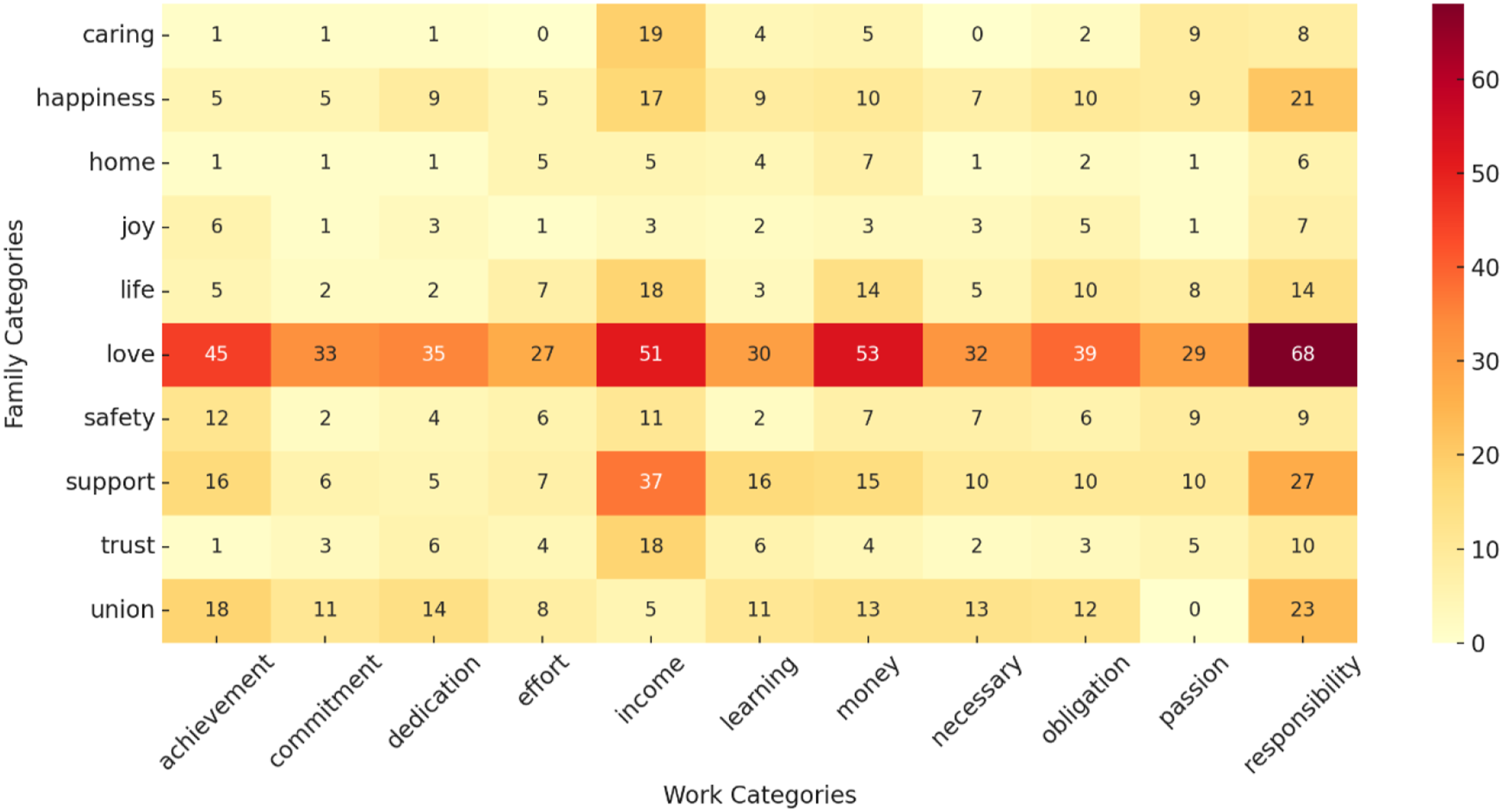
To examine the hypothesis that social representations of family and work are associated within individuals (H3a), we conducted a Principal Component Analysis (PCA) on binary-coded indicators of evoked words from both domains. This method aimed to identify latent dimensions that capture shared symbolic structures across work and family representations.
Although a tetrachoric correlation matrix would have been optimal for dichotomous data, technical constraints led us to apply PCA on standardized binary inputs—a commonly accepted approximation in exploratory studies using categorical data. Sampling adequacy was assessed through the Kaiser-Meyer-Olkin (KMO) measure, which yielded a global value of 0.542. While this is modest, such values are expected with binary and sparsely distributed variables, which tend to reduce inter-item correlations and thus underestimate KMO. The Bartlett’s test of sphericity was significant (χ2 = 494.00, df = 210, p < .001), confirming the suitability of the correlation matrix.
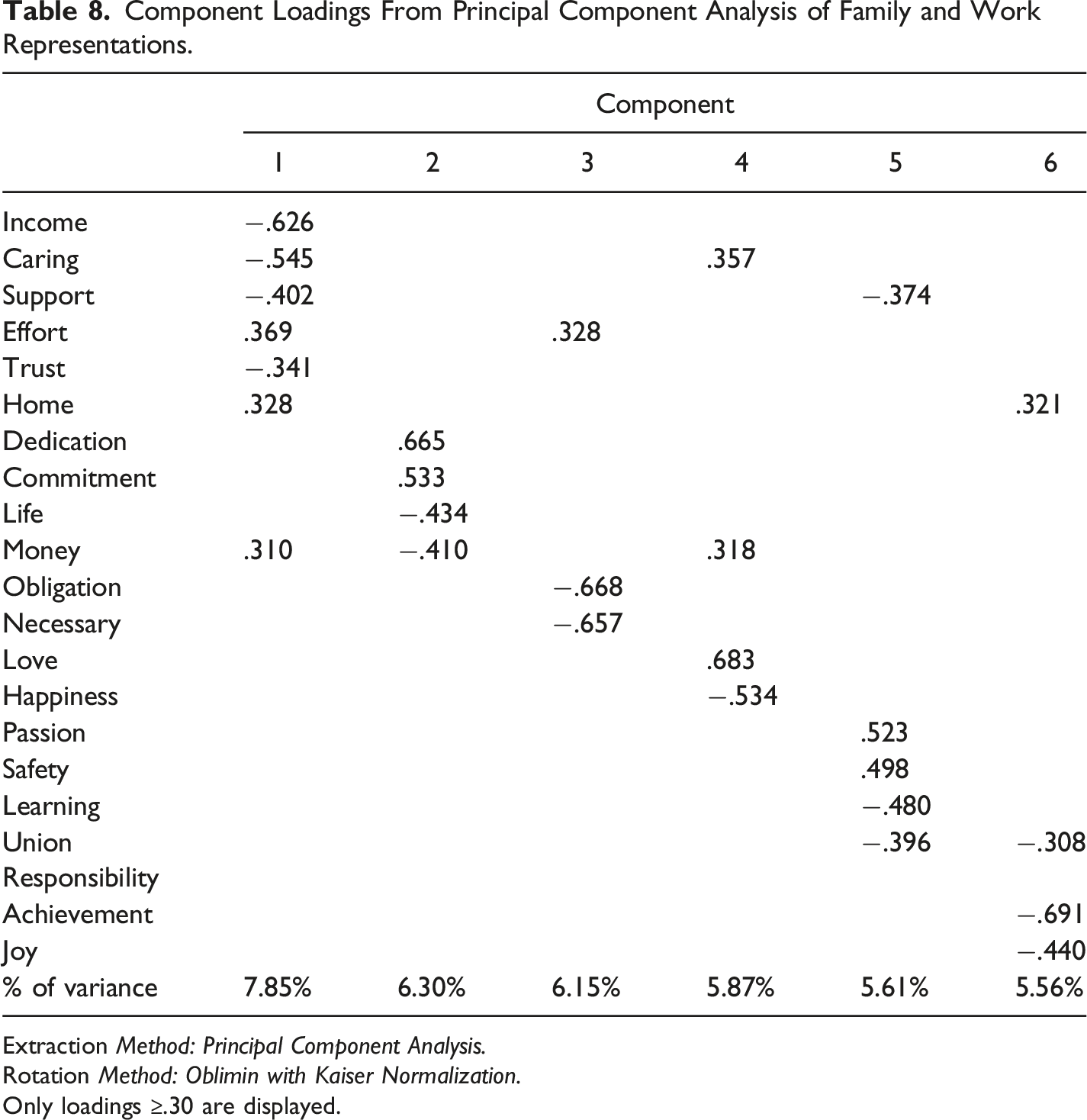
Component Loadings From Principal Component Analysis of Family and Work Representations.
Extraction Method: Principal Component Analysis.
Rotation Method: Oblimin with Kaiser Normalization.
Only loadings ≥.30 are displayed.
Six principal components were extracted through PCA, collectively explaining 37.3% of the total variance. These components captured latent symbolic dimensions underlying participants’ evoked representations of family and work, each capturing distinct symbolic dimensions integrating representations of both family and work:
Component 1 suggests that money, effort and home contribute positively to this factor, while income, caring, support, and trust contribute negatively to it. This component appears to reflect a symbolic boundary between self-sufficiency through effort. It aligns with a representation in which individuals perceive material provision and personal commitment (effort) as legitimate and valued contributions to family and work life, while emotional needs and interdependence (caring, support, trust) are viewed as less central or even undesirable.
Component 2 reveals a symbolic contrast between normative commitment to work and the value attributed to personal or material life aspects. The strong positive loadings on dedication and commitment highlight a representation anchored in responsibility, duty, and moral investment, likely associated with the professional domain. These terms evoke the idea of work as a central identity marker, not just an obligation but a domain of meaning, where value is expressed through personal effort and loyalty. Conversely, the negative loadings on life and money suggest a devaluation of personal enjoyment, leisure, or material gain.
Component 3 is fully defined by work representations; it has high negative loadings on obligation and necessary, and positive on effort revealing a perception of work an intrinsic choice. This component reflects a counter-normative representation in which individuals attribute value to work based on voluntary involvement rather than imposed necessity. It emphasizes self-determination over normative conformity.
Component 4 includes strong emotional terms like love and happiness, yet with mixed signs, suggesting that family ties are meaningful but may be experienced with emotional tension. The positive loadings on caring and love point to an emotionally engaged representation of family life. These terms reflect deep affective involvement and the importance of emotional ties in close relationships. The presence of money with a positive loading—within the same factor—suggests that material provision is also symbolically linked to love and care. This indicates a representation in which financial responsibility is seen as an integral part of emotional commitment, particularly within family roles. However, the negative loading of happiness introduces tension. It implies that although love and care are central, they do not necessarily evoke personal emotional well-being.
Component 5 combines positive loadings on passion and safety with negative loadings on support, learning, and union. This pattern suggests a symbolic orientation toward individual fulfillment and emotional security, while de-emphasizing collective growth, interdependence, and social cohesion. The positive loading of passion reflects a strong investment in personal motivation, enthusiasm, and inner drive—possibly related to professional identity or self-actualization. The positive loading on safety suggests a desire for stability, predictability, and emotional protection. In contrast, the negative loadings on support and union indicate a distancing from relational interdependence, signaling that close connection and mutual support are not central in this representation. Likewise, the negative loading on learning implies an absence of focus on growth, exploration, or transformation—traits often associated with development in group or relational contexts.
Component 6 features a positive loading on home and negative loadings on union, achievement, and joy. This combination points to a representation where the home is symbolically central, but relational closeness, personal success, and emotional fulfillment are weakened or absent.
These components jointly illustrate how the symbolic content of family and work are interconnected within individuals’ representations. The presence of items from both domains across the components supports the interpretation that these two spheres are not perceived as isolated, but rather as integrated and mutually informing.
To evaluate the statistical robustness of the observed differences in work–family centrality across the six representational clusters (H3c), we conducted a post-hoc power analysis using G*Power. Based on the observed effect size (f = 0.215, corresponding to η2 = .045), an alpha level of 0.05, and a total sample size of 892, the achieved statistical power was 0.9998. This result indicates that the analysis was well powered to detect even small-to-moderate effects, thereby supporting the reliability of the findings related to this hypothesis.
To examine whether these abstract dimensions translated into coherent representational profiles at the individual level, we conducted a k-means cluster analysis using the six component scores of each participant. These standardized scores served as continuous input variables in the clustering procedure, summarizing the participants’ overall representational structure.
The hierarchical cluster analysis using Ward’s method resulted in a six-cluster solution, with participants distributed as follows: Cluster 1 (n = 95; 10.6%), Cluster 2 (n = 154; 17.2%), Cluster 3 (n = 410; 45.8%), Cluster 4 (n = 87; 9.7%), Cluster 5 (n = 62; 6.9%), and Cluster 6 (n = 87; 9.7%). The distribution of PCA components across clusters was determined by calculating the mean factor scores of all participants within each cluster (Figure 3). Distribution of clusters by principal component analysis factors.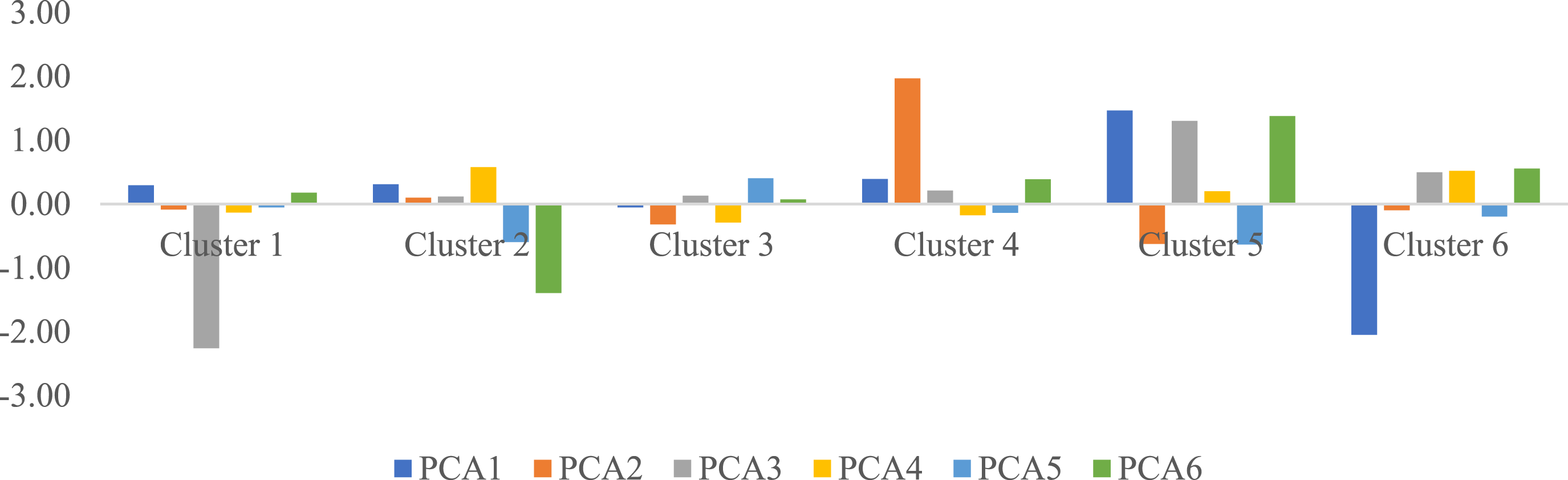
These components jointly illustrate how the symbolic content of family and work are interwoven within individuals’ representations.
Cluster 1 (n = 95) presented a markedly negative score on Component 3, indicating a rejection of obligation and imposed necessity, and suggesting a disengaged stance toward social roles. Slightly positive scores on Components 1 and 6 reflect moderate identification with meritocratic self-sufficiency and domestic centrality.
Cluster 2 (n = 154) showed positive scores on Component 4, reflecting emotional involvement in family roles, but strongly negative scores on Components 5 and 6, suggesting a distancing from collective support, learning, and symbolic investment in home. This group appears emotionally engaged yet structurally detached.
Cluster 3 (n = 410) exhibited near-zero scores across all components, forming a neutral profile. A slight positivity on Component 5 indicates a modest inclination toward individual fulfillment and personal stability, while slight negativity on Components 2 and 4 reflects a low normative or emotional anchoring.
Cluster 4 (n = 87) was strongly characterized by a high score on Component 2, suggesting a representation anchored in normative commitment and moral duty, particularly in the professional sphere. Moderate positivity on Components 1 and 6 reinforces a structured view that integrates work effort and domestic symbolism.
Cluster 5 (n = 62) displayed high scores on Components 1, 3, and 6, highlighting an emphasis on personal initiative, effort, and home-centered values. Negative scores on Components 2 and 5 suggest a rejection of imposed norms and low relational interdependence. This cluster reflects the profile of self-determined individuals anchored in home, yet relationally distant.
Cluster 6 (n = 87) was defined by a highly negative score on Component 1, indicating openness to emotional and social support, and positive scores on Components 3, 4, and 6, reflecting voluntary involvement, emotional engagement, and symbolic centrality of the home. This cluster presents a relational and affective orientation.
To test H3b — that social representations of family and work vary across countries — we examined the distribution of participants across the six representational clusters by country. A chi-square test of independence revealed a highly significant association, χ2(20) = 532.264, p < .001, indicating that representational profiles are not evenly distributed across cultural contexts.
Crosstabulation With Adjusted Standardized Residuals of Country-Cluster.
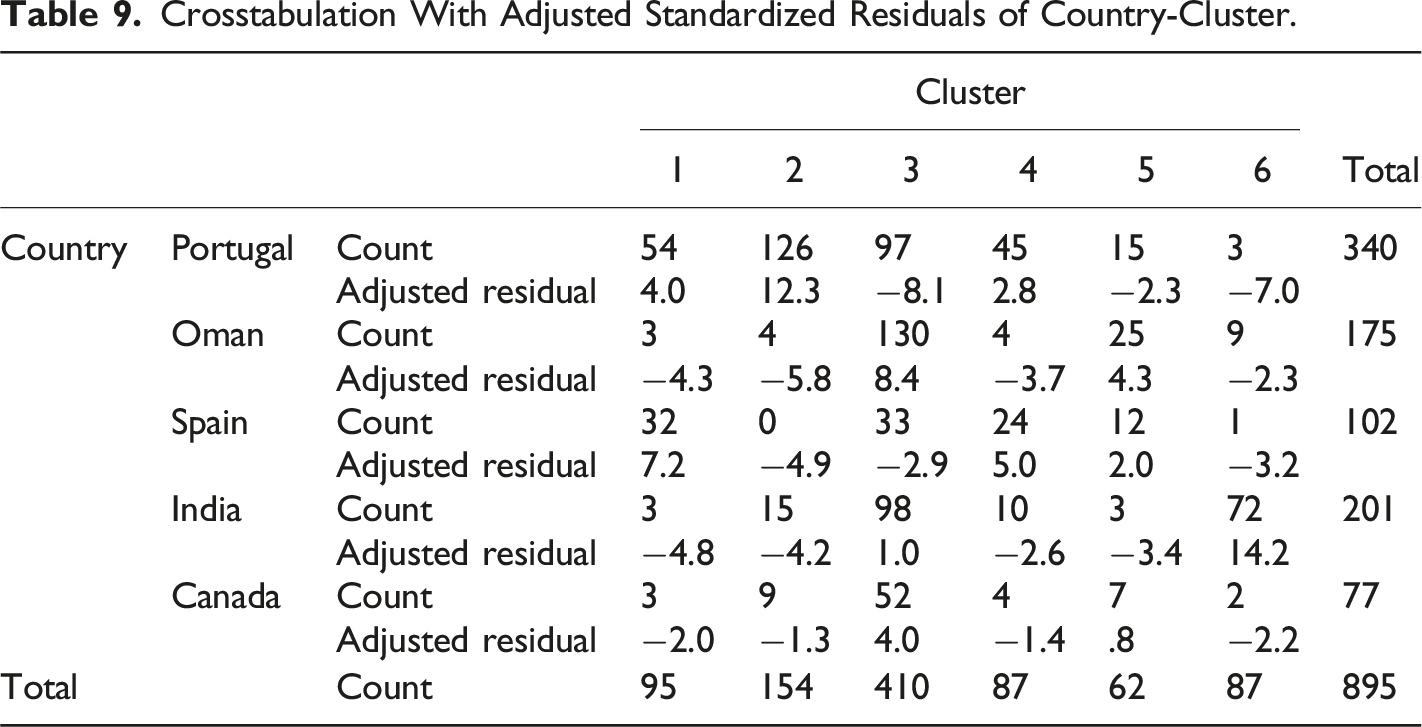
A chi-square analysis revealed a significant association between country and representational profile, as indicated by adjusted residuals. In the Portuguese sample, Clusters 1 and 2 were over-represented, reflecting a higher prevalence of profiles centered on rejection of imposed norms (Cluster 1) and emotionally engaged but relationally distant views (Cluster 2). Conversely, Clusters 3 and 6 were under-represented in Portugal, suggesting that neutral or strongly relational profiles were less frequent. In Oman, Cluster 3—characterized by representational neutrality—was over-represented, while Clusters 1 and 2 were under-represented. Cluster 5, emphasizing self-determination and home centrality, was also more frequent in Oman. In the Spanish sample, Clusters 1 and 4 were over-represented, revealing both detachment from obligation and a strong normative orientation. In contrast, Clusters 2 and 6 were less common. The Indian sample showed a pronounced over-representation of Cluster 6, marked by affective and home-centered representations, and under-representation of Clusters 1, 2, 4, and 5. Finally, in Canada, Cluster 3 was over-represented, indicating a predominance of neutral or moderately individual-focused profiles.
Altogether, these patterns provide strong support for H3b. Not only do social representations of family and work differ significantly across countries, but these differences also align with meaningful symbolic profiles, suggesting that cultural contexts shape the structure and emotional tone of individuals’ representations in distinct ways.
Descriptive Measures of WFC by Clusters.
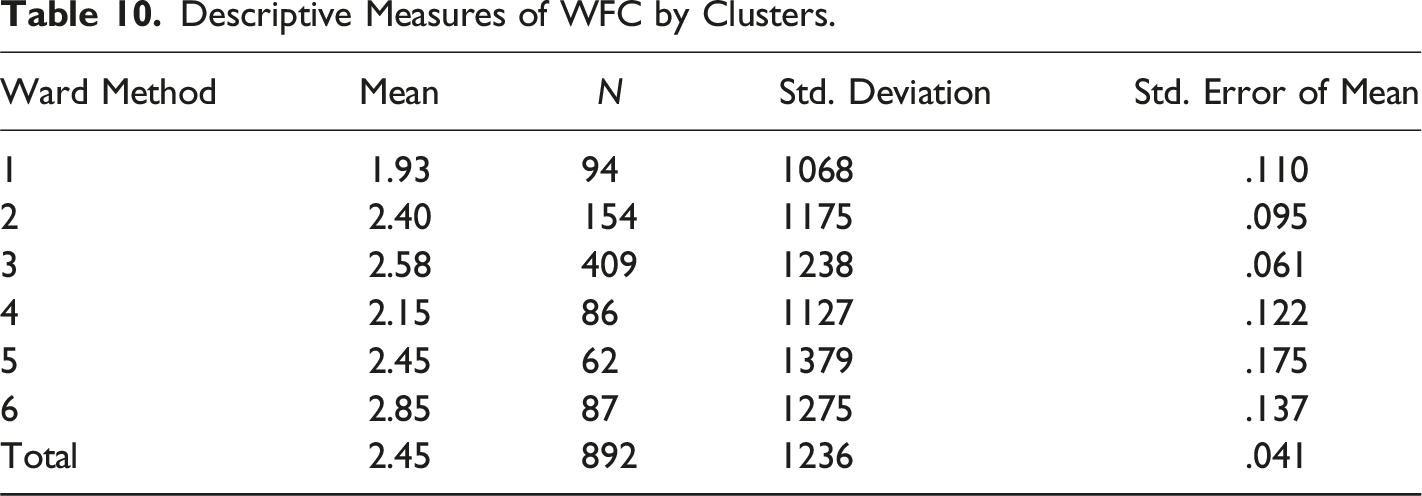
Significant differences were found between clusters in terms of Work–Family Centrality (WFC). Cluster 6 presented the highest mean WFC score (M = 2.85, SD = 1.28), suggesting a stronger prioritization of work over family. This was followed by Cluster 3 (M = 2.58) and Cluster 5 (M = 2.45), both of which showed above-average values. In contrast, Cluster 1 reported the lowest mean score (M = 1.93), reflecting a greater relative centrality of family. Cluster 4 also presented a relatively low WFC score (M = 2.15). These findings indicate that clusters marked by affective and relational profiles (e.g., Cluster 6) tend to prioritize family more, whereas clusters characterized by detachment from emotional ties or stronger normative orientations toward work (e.g., Clusters 1 and 4) attribute greater centrality to professional roles.
Cluster Profiles, Associated Countries, PCA Components, WFC Scores, and Interpretation.
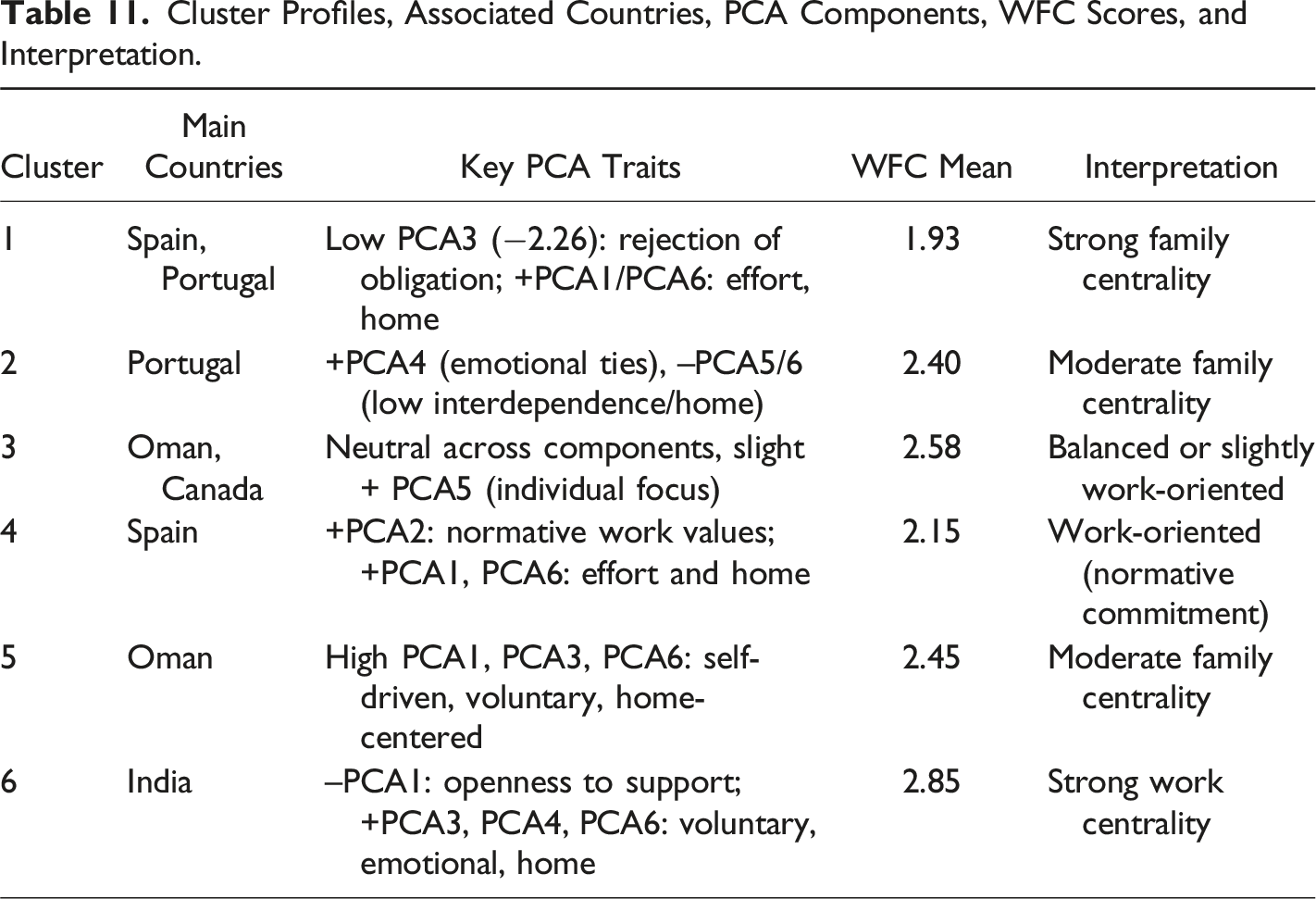
The integration of country distribution, PCA profiles, and Work–Family Centrality (WFC) scores reveals consistent cross-cultural patterns in symbolic representations of work and family. Cluster 1, primarily associated with Portugal and Spain, combines rejection of obligation (low PCA3) with moderate emphasis on effort and home (PCA1, PCA6), and presents the lowest WFC score (M = 1.93)—indicating a clear prioritization of family roles. Cluster 2, also frequent in Portugal, shows strong emotional involvement (PCA4) but low interdependence and symbolic home value (low PCA5 and PCA6), corresponding to a moderate family-central profile (M = 2.40).
Cluster 3, predominant in Oman and Canada, is neutral across components with a slight individual focus (PCA5), and exhibits a more balanced orientation (M = 2.58). Cluster 4, with high commitment to work (PCA2), is found mostly in Spain and reflects greater work centrality (M = 2.15). Cluster 5, more common in Oman, is self-driven and home-oriented (high PCA1, PCA3, PCA6), with a moderate WFC score (M = 2.45). Finally, Cluster 6, largely composed of Indian participants, stands out for its strong relational, emotional and domestic anchoring (low PCA1, high PCA3, PCA4, PCA6), and reports the highest WFC score (M = 2.85)—indicating a clear prioritization of work.
Discussion
The work–family interface significantly affects an individual’s well-being, social life, family life and professional life, as well as their work performance and attitudes (e.g., Huyghebaert-Zouaghi et al., 2022). However, this interface presents challenges related to social and individual identities and the benefits derived from work and family. The importance attributed to work, or family, is influenced by personal and cultural values, and by gendered norms and social expectations.
This cross-cultural study aimed to qualitatively examine and compare how work and family are understood and represented, while also quantitatively evaluating their salience using the centrality construct of “role salience” in five countries. We explored three main hypotheses, relating to cultural and gender differences in work-family centrality (H1 and H2), and to the association between representational profiles and centrality (H3).
The first hypothesis, which predicts the existence of cross-national differences in work–family centrality, is grounded in the assumption that the value attributed to work and family is not universal but shaped by cultural norms. Our data seems to support this hypothesis. Participants from Portugal and Spain attributed significantly greater centrality to family, as indicated by lower WFC scores, while participants from India showed the opposite pattern, with the highest WFC scores reflecting stronger work centrality.
Identity centrality in these domains reflects societal expectations, family structures, and socialization models specific to each sociocultural context (Calvo-Salguero et al., 2012). Prior literature indicates that in cultures where familial interdependence and community ties are emphasized—such as in some Southern European countries—family tends to hold a more central position in individuals’ identity. Conversely, in societies where work is regarded as a primary path to personal fulfillment, status, and autonomy—often associated with individualistic and achievement-oriented values—work centrality tends to prevail (Gu et al., 2022). Furthermore, Social Representations Theory (Marková, 2007; Moscovici, 1961) reinforces the idea that the symbolic meanings attached to work and family are socially constructed and contextually embedded, shaped by collective memory and value systems.
The first hypothesis, which predicts the existence of cross-national differences in work–family centrality, is grounded in the assumption that the value attributed to work and family is not universal but shaped by cultural norms.
The second hypothesis, regarding gender differences in WFC, had no support in our data. While some differences emerged, with men tending to attribute slightly more centrality to work, the effect size was small and did not reach strong statistical significance. Moreover, no significant interaction was observed between gender and country, suggesting that gendered patterns in work–family priorities may be less prominent or more contextually modulated than initially expected. These results may reflect evolving gender roles across the countries studied, with increasing variability in both male and female orientations toward work and family.
The second hypothesis, which anticipated gender differences in work–family centrality, was only partially supported. Although women and men showed some variation in the degree to which they prioritized work or family, the observed effects were small and did not reach strong statistical significance. This result may reflect an ongoing shift in gender norms, as previously discussed in literature, whereby traditional divisions of labor and identity roles are increasingly contested. As noted by Svensson and Frisén (2022), contemporary identity configurations often blur the boundaries between historically gendered domains, with both men and women navigating dual commitments to work and family.
Nevertheless, the persistence of structural and cultural constraints may limit the expression of more egalitarian ideals. For instance, women continue to carry disproportionate caregiving responsibilities (Zhang et al., 2022), while men may experience normative pressure to maintain strong work-oriented identities (Gonçalves et al., 2018). The absence of stronger gender effects in our data might also be influenced by contextual factors specific to each country, such as varying degrees of institutional support for work–life balance and differing cultural expectations around gender roles.
Taken together, these findings suggest that while gender remains a relevant dimension in work–family identity, its predictive power may be attenuated in contemporary, culturally diverse contexts. This calls for a more nuanced understanding of how gender intersects with cultural and institutional variables in shaping work–family priorities.
The third hypothesis predicted that social representations of work and family—captured through free evocations—would be significantly associated with work–family centrality, and that this relationship would vary across countries. This hypothesis was grounded in Social Representations Theory (Abric, 1994; Moscovici, 1961), which conceptualizes shared meanings as socially constructed symbolic frameworks that guide perception, identity, and action. Within this framework, words evoked in relation to family and work can be seen as indicators of the symbolic positioning individuals attribute to these life domains. Simultaneously, centrality theory suggests that identity-relevant domains are shaped by, and expressed through, the meanings people associate with them (Carr et al., 2008; Settles, 2004).
Our results support the global formulation of H3, confirming that social representations of work and family are meaningfully linked to how individuals prioritize these domains. The principal component analysis (PCA) revealed six latent dimensions—spanning themes such as meritocratic values, emotional engagement, normative commitment, and symbolic centrality of the home—which cut across both domains. These components were then used to create representational profiles through cluster analysis. The resulting clusters displayed significantly different levels of work–family centrality (H3a), supporting the idea that symbolic configurations are systematically related to identity priorities.
Moreover, the distribution of clusters was not random across countries (H3b). For instance, clusters characterized by high emotional or familial salience (e.g., Clusters 1 and 4) were more frequent in Portugal and Spain, whereas clusters reflecting high work centrality and emotional ambivalence (e.g., Cluster 6) were particularly salient in India. These findings support the view that social representations are culturally embedded and that national context plays a critical role in shaping both symbolic structures and identity investment (Gu et al., 2022; Marková, 2007).
Finally, the relationship between representational content and centrality was not homogeneous but reflected different meaning-making processes (H3c). For example, components that emphasized obligation or normative commitment were generally associated with higher WFC scores—indicating stronger investment in work—while components reflecting voluntary choice, emotional ties, and symbolic value of home aligned more closely with family centrality.
The differentiated associations between representational components and work–family centrality (H3c) align with the theoretical assumption that social representations do not merely reflect societal norms, but function as prescriptive frameworks that actively structure how individuals engage with key identity domains (Abric, 1994; Marková, 2007). The present findings show that components emphasizing obligation or normative commitment (e.g., “obligation,” “necessary,” “dedication”) were associated with higher WFC scores, indicating a stronger work orientation. In contrast, components rooted in voluntary investment (e.g., “effort,” “passion”) or affective symbolism (e.g., “love,” “home,” “caring”) were linked to greater family centrality. This contrast supports the idea that representations carry evaluative weight and direct the individual’s identity construction—not only by making certain meanings available, but by privileging specific relational logics (e.g., duty vs. desire; self-fulfillment vs. collective responsibility).
These results also reinforce the integrative role of social representations in shaping identity centrality. As described in our framework, the centrality of work and family is not solely determined by external factors or life roles but emerges from the symbolic significance attributed to these domains through shared representations. The fact that participants’ scores on PCA-derived components were predictive of their cluster membership—and that each cluster exhibited distinct levels of work–family centrality—underscores how symbolic content is internalized and translated into identity positioning (Ramarajan & Reid, 2013; Rothbard & Edwards, 2003). Moreover, the presence of emotional tension in some components (e.g., positive “love” with negative “happiness”) suggests that the centrality of family is not universally experienced as harmonious but may involve emotional ambivalence and negotiation. These nuances illustrate the richness of the representational system and the way it underpins both consistency and conflict in identity domains.
Overall, the findings from H3c extend beyond descriptive associations: they provide evidence that symbolic configurations serve as identity anchors that vary in salience and value across individuals and cultures. This supports a dynamic model of work–family centrality, where personal investments are shaped not only by context, but by the meanings that individuals attribute to each domain.
Limitations
While this study examines key variables such as gender and age, other potentially influential factors, including socioeconomic status (SES), work arrangements (e.g., full-time vs. part-time), and family structure (e.g., single parenthood, number and age of children), were not explicitly analyzed. Future research should consider controlling these dimensions to provide a more comprehensive understanding of the dynamics of work-family centrality across diverse populations.
A fixed sequence was used in administering the measures, which may have introduced serial effects. Future studies could employ counterbalancing techniques to minimize potential order effects and better isolate the influence of each measure. Data collection occurred in varying environments, including workplaces and homes, which may have introduced situational priming effects influencing participants’ responses. This potential variability was not directly analyzed due to the constraints of the study design. Future research should address this limitation by systematically controlling and examining the influence of environmental contexts on identity-related responses.
Another limitation of this study is the small size of certain subsamples, particularly when stratified by gender and country. For instance, the low proportion of male participants in Canada (19%) may limit the robustness of gender-related analyses within this context. This underrepresentation poses challenges in detecting nuanced interactions between gender and cultural variables. Future research should aim to recruit larger and more balanced samples across demographic groups to strengthen the validity of findings and enable a more comprehensive analysis of cross-cultural and gendered dynamics in work-family centrality.
Although the Work-Family Centrality Scale is well-established, its limitations should also be noted. Specifically, the scale may conflict with identity structure (e.g., harmony or conflict) with position (e.g., salience of work or family identities). Moreover, its binary or double-barreled items can lead to varying interpretations. For instance, disagreement with certain statements could reflect multiple perspectives (e.g., prioritization of family over work, equal prioritization, or lack of salience for both). While the results align with previous findings that family is prioritized over work, this interpretation should be viewed cautiously, given the potential for response variability. Future research should consider integrating more nuanced tools that capture dynamic processes and include advancements in identity theory (e.g., Ramarajan & Reid, 2013). Finally, we address the exploratory nature of the relationship between evoked words and WFC scores. While the analysis provides valuable insights into cognitive representations and role salience, it does not establish causality. Additionally, cultural artifacts may influence both the words evoked and the WFC scores, potentially introducing biases. Future research should consider incorporating more robust models to explore these associations.
Conclusions
This study is important for several reasons. Firstly, it contributes to a deeper understanding of the work–family interface, shedding light on how it influences well-being, social life, family life, professional life, work performance and attitudes toward work. By examining these interactions, the study underscores the importance of promoting a healthy balance between work and personal life, enhancing both individual satisfaction and organizational performance. Additionally, it highlights how social and individual identities - particularly gender and culture - shape the way people perceive, prioritize, and negotiate work and family roles.
The cross-cultural approach is particularly valuable, as it enables a comparative analysis of work–family priorities across five diverse cultural contexts (Canada, India, Portugal, Spain, and Oman). This perspective provides unique insights into how cultural norms, values, and traditions shape individual behaviors and societal expectations regarding work and family.
Beyond its theoretical contributions, this study has practical and policy implications. Understanding the different cultural emphases on work and family can inform the development of tailored policies and workplace strategies that promote work–life balance. These may include family-friendly workplace policies, parental leave reforms, accessible childcare programs, and initiatives fostering a supportive work culture.
Future studies could further explore cultural barriers affecting women’s workforce participation and gendered dynamics in work–family balance (e.g., Blaydes et al., 2021). This could involve examining traditional gender norms, social expectations, and their impact on career decisions and family responsibilities. Additionally, studies could assess how workplace policies - such as paid parental leave and flexible work arrangements - affect gender equality in different cultural settings (e.g. Farré, 2016). Further investigations might also explore work–family reconciliation strategies adopted by men and women across cultures (e.g., Matysiak & Weziak-Bialowolska, 2016), and how organizational cultures influence gender equity and work–family dinamics (e.g., Figueroa & Reveco, 2020; Lomazi et al., 2019).
In conclusion, this study advances knowledge on the work–family interface, emphasizing the role of individual and cultural factors in shaping work–life dynamics. By offering empirical insights and practical recommendations, it contributes to both academic literature and policy development, fostering a more balanced and inclusive approach to work and family life.
Footnotes
Declaration of Conflicting Interests
The authors declared no potential conflicts of interest with respect to the research, authorship, and/or publication of this article.
Funding
The authors received no financial support for the research, authorship, and/or publication of this article.
Ethical Statement

Data Availability Statement
Data sharing is not applicable as no new data were generated or analysed during this study.