




Abstract
The current research examined how hazardous and harmful patterns of alcohol consumption, problematic online shopping when drinking alcohol, impulsivity, and compulsive buying were associated with and predicted the frequency of making purchases while under the influence of alcohol. A sample of American adults between the ages of 25 and 64 who reported having at least one drink per week over the past 6 months were surveyed. Regression-based path modeling revealed for those who made online purchases while moderately intoxicated, hazardous and harmful patterns of drinking alcohol and, problematic online shopping when drinking alcohol, predicted the frequency of making purchases while intoxicated. For those who made online purchases while heavily intoxicated, hazardous and harmful patterns of drinking alcohol, impulsivity, problematic online shopping when drinking alcohol, and compulsive buying predicted the frequency of making purchases while intoxicated. We explain our findings by suggesting individuals engage in frequent drunk purchases because they are motivated to alleviate their negative mood states.
Keywords
Introduction
One major risk factor for psychological disorders, disease, injury, and mortality is excessive alcohol consumption (Lim et al., 2012). For example, Chan et al. (2008) found that up to half of those receiving treatment for problematic alcohol use also experienced one or more anxiety disorders, while Anker and Kushner (2019) reported that about half of those receiving treatment for hazardous and harmful patterns of alcohol consumption also experienced strong anxiety and mood problems. Additionally, problematic alcohol consumption has been associated with a lack of impulse control. That is, poor impulse control has been linked to consuming more alcohol, consuming alcohol more frequently, and consuming more alcohol than intended (Smith et al., 2014). Poor impulse control also has been found to be associated with overspending (Tarka et al., 2022). Given that online purchasing can be made at any time, and on any day, those who have poor impulse control may be especially vulnerable to overspending when shopping online (Fenton-O’Creevy & Furnham, 2020). Indeed, overspending under reduced impulse control (as with compulsive buying) may result in psychological (e.g., embarrassment, anxiety, regret), social (e.g., interpersonal conflict, familial criticism), or financial (e.g., increased likelihood of debt) problems (Black, 2022; Christenson et al., 1994; McElroy et al., 1994; Roberts & Jones, 2005). Thus, the goal of this research is to explore problematic online shopping when drinking alcohol. By doing so we attempted to identify possible predictors of online purchasing when under the influence of alcohol so that consumers may avoid the psychological, social, or financial problems related to overspending, and that online retailers may create preventative measures to assist consumers in avoiding overspending and its negative results for both consumers and retailers (e.g., cost associated with returns).
Alcohol Consumption and Addiction
Alcohol consumption can become compulsive depending on various factors, such as genetic predisposition, pharmacological history, and environmental and social contexts (Ahmed et al., 2020; Vengeliene et al., 2008). To the extent alcohol consumption becomes compulsive, like any compulsive behavior, it may evolve into an addictive behavior (Hyman & Malenka, 2001). Despite the progress in identifying factors that contribute to susceptibility in developing alcohol addiction (Shuia et al., 2022), little is known about how alcohol consumption affects consumer purchasing behavior. However, various researchers (e.g., Elliott, 1994; Reimann et al., 2012) have drawn parallels between addictive behaviors such as alcohol abuse and compulsive consumer behavior (e.g., compulsive shopping, compulsive buying) because both maladaptive behaviors provide affective relief for individuals (i.e., an escape from negative mood states). For example, Elliott (1994) noted that “… the shopping experience, may … produce … cognitive narrowing and focused attention on immediate pleasure, where the experience itself takes over and becomes deconstructed from the symbolic meaning of goods…” much like “… alcohol use … may narrow attention to immediate, pleasant experiences and unpleasant thoughts about identity and long-term implications are blotted out of awareness … This is very similar to the narrowing process by which ‘the addictive experience comes to dominate a person’s life’…” (p. 172). A more recent neurophysiological study conducted by Reimann and colleagues (2012) suggests that close consumer-brand relationships may lead to a type of addiction because such relationships are associated with activating the insula, part of the orbital prefrontal cortex, that with the ventral striatum, the ventral pallidum, and the midbrain dopamine neurons comprise the brain’s reward circuit (Haber & Knutson, 2010; Koban et al., 2021). Activating the insula has been implicated in the development of alcohol addiction (Blaine et al., 2020; Myrick et al., 2004) as well as nicotine addiction (Betts et al., 2021; McClernon et al., 2005).
Hazardous and Harmful Patterns of Alcohol Consumption
Alcohol consumption has negative effects on an individual’s physical wellbeing (e.g., toxic effects on organs and tissues) as well as an individual’s psychological wellbeing (e.g., dependence, depression; Babor et al., 2010; Carvalho et al., 2019). Economically developed regions of the world generally have the highest alcohol consumption per capita with Western Europe, Russia and other non-Muslim parts of the former Soviet Union having the highest per capita consumption levels although some Latin American countries are close behind (Rehm et al., 2009; Ritchie & Roser, 2018; World Health Organization, 2019). Alcohol consumption differences also exist between the sexes, age groups, and socioeconomic status groups. Men are more likely to consume alcohol, drink to intoxication, and consume larger quantities of alcohol per occasion compared to women (Ritchie & Roser, 2018; Wilsnack et al., 2009; World Health Organization, 2019). Similarly, younger adults are more likely to consume alcohol, and drink to intoxication compared to older adults (Wilsnack et al., 2009; World Health Organization, 2019). Individuals in higher socioeconomic status groups are more likely to consume alcohol than those in lower socioeconomic status groups; however, those in lower economic status groups are more likely to be excessive drinkers, and thus, more vulnerable to the negative effects of alcohol consumption (Boyd et al., 2022; Grittner et al., 2012; King et al., 2020). As noted earlier, negative effects associated with alcohol consumption include a variety of health-related problems (e.g., cirrhosis; Roerecke et al., 2019; Van Oers et al., 1999), and psychological issues (e.g., depression; Li et al., 2020), but extend to interpersonal and societal matters as well. For example, drunk driving (Leonard & Quigley, 2017), family dysfunction (e.g., divorce, child abuse; Johnson & Stone, 2009; Raitasalo et al., 2019), and work-related issues (e.g., absenteeism, unemployment, decreased output, reduced earnings potential; Anderson & Baumberg, 2006; Thavorncharoensap, et al., 2009; Thørrisen et al., 2019) are some of the interpersonal and societal problems posed by alcohol consumption.
Definitions of Drunkenness
How researchers have defined drunkenness has caused debate with some (e.g., Greenfield & Kerr, 2008; Grüner Nielsen et al., 2021; Knupfer, 1984; Wechsler et al., 1994) arguing that drunkenness should be measured by objective behaviors such as the number of alcoholic drinks consumed per week. Others (e.g., Clark, 1982; Levitt et al., 2009; Midanik, 1999) have suggested that the frequency of self-perceived drunkenness is a better measure because respondents are the best judges of their level of impairment caused by the consumption of alcoholic beverages. However, Midanik (2003) reported that objective measures and self-reported measures “… appear to be close to how most people defined drunkenness …” (p. 1298). More recently, Levit and colleagues (2009) identified words used to describe different levels of intoxication which exemplify moderate or heavy intoxication. Words representing moderate intoxication included tipsy, buzzed and lightheaded, while those associated with heavy intoxication were hammered, wasted, and trashed (Levitt et al., 2009; Linden-Carmichael et al., 2020).
Impulsivity
Researchers have demonstrated an association between impulsiveness and alcohol use as well as alcohol-related problems (Camatta & Nagoshi, 1995; Hutchinson et al., 1998; Sliedrecht et al., 2021). In addition, self-control, defined as one’s ability to exert control over one’s “own states and responses” (Baumeister, 2002, p. 670), is negatively correlated with alcohol use (Coates et al., 2020; de Ridder et al., 2012; Dvorak et al., 2011; Quinn & Fromme, 2010). Additionally, impulsivity and compulsiveness have been identified as two main types of misregulation. Impulsivity is a failure to resist harmful impulses (Iyer et al., 2020; McHugh et al., 2019; Stein & Hollander, 1993; Thompson & Prendergast, 2015) while behaviors intended to alleviate intrusive thoughts are related to compulsiveness (Abramowitz & Reuman, 2020; Beck, 1976; Sanavio, 1988). Researchers also have demonstrated that impulsivity predicts alcohol abuse (e.g., Camatta & Nagoshi, 1995; Herman & Duka, 2019) while alcohol dependence seems to be related to compulsiveness (e.g., Bohn et al., 1996; Saunders et al., 2019).
Alcohol consumption has been found to be associated with pleasure, enjoyment, and an escape from daily pressures (Pettigrew et al., 2000) which is characteristic of hedonistic motives. Like alcohol consumption, impulse buying, a sudden urge to buy (Iyer et al., 2020; Redine et al., 2022; Rook & Fisher, 1995), has been found to satisfy a number of hedonic desires (Iyer et al., 2020; Piron, 1991; Redine et al., 2022; Rook & Fisher, 1995; Thompson et al., 1990). That is, when shopping, impulse buyers possess greater feelings of amusement, enthusiasm, and joy compared to non-impulse buyers (Iyer et al., 2020; Weinberg & Gottwald, 1982). The affect elicited by impulse buying may be triggered by a variety of external as well as internal factors. External factors include the retail environment (e.g., store atmosphere; Donovan & Rossiter, 1982; Iyer et al., 2020), the social environment (i.e., group vs. solo buying), the purchase occasion (e.g., gift purchases; Kim & LaRose, 2004), and demographic variables (Fenton-O’Creevy & Furnham, 2020; Rook, 1987). Internal factors include one’s self-image, self-expression, social standing, and mood when the buying opportunity arises (Elliott, 1994; Redine et al., 2022).
Impulsivity has been found to be related to household debt (Ottaviani & Vandone, 2011), and the amount of online shopping consumers conduct as well as their unregulated purchasing behavior (Iyer et al., 2020; LaRose & Eastin, 2002). This may be due to a number of factors including the anonymity the Internet offers to those who wish to hide their shopping behavior and purchases from others (Blair & Roese, 2013), the acceptance of credit cards to avoid the feeling of guilt when spending cash (Harnish et al., 2019a; Kalla & Arora, 2011; Lea et al., 1995), and the ability to shop any time and any day of the year (Rook & Fisher, 1995). Further, Web site features that connote hedonic shopping experiences (Babin et al., 1994; Zhong & Mitchell, 2012) by emphasizing cash-back offers, exclusive deals, and an enticing variety of products tends to weaken self-control that increases unregulated purchasing (Kim & LaRose, 2004). In sum, the Internet facilitates impulse buying behavior (Chan et al., 2017; Greenfield, 1999).
Compulsive Buying
Researchers also have found an association between impulsiveness and compulsive buying (Black et al., 2012; Mueller et al., 2009; Pacheco et al., 2022). For example, Black et al. (2012) demonstrated that those diagnosed with compulsive buying disorder scored higher in impulsivity as compared to controls. Indeed, McElroy and colleagues (1994) suggested that 40% of those with compulsive buying disorder also are diagnosed with impulse control disorders. Compulsive buying, therefore, is a maladaptive behavior in which an individual is not only preoccupied with buying, but repetitively buys because of a lack of control over urges to buy (Bellini et al., 2017; Christenson et al., 1994; Ridgway et al., 2008). It is thought that compulsive buying occurs in response to irresistible urges that are precipitated by high levels of anxiety and negative affect which only can be alleviated by shopping and completing a purchase. When purchasing is complete, a temporary reduction in anxiety and negative affect is experienced (Christenson et al., 1994; Harnish et al., 2021; O’Guinn & Faber, 1989). However, the alleviation of anxiety and negative affect is short-lived; compulsive buyers report a return to high levels of anxiety and negative affect, marked by feelings of guilt, anger, or sadness (Christenson et al., 1994; O’Guinn & Faber, 1989). This negative affect spurs additional purchasing behavior that produces a vicious cycle of purchasing followed by negative affect followed by additional purchasing to alleviate the negative affect (Harnish & Bridges, 2015).
Significant comorbidity has been observed between compulsive buying and mood disorders (e.g., Black, 2022; Kyrios et al., 2013; McElroy et al., 1994), anxiety disorders (e.g., Black, 2022; Christenson et al., 1994; Harnish et al., 2019a), alcoholism (e.g., Black et al., 1998; Roberts & Tanner, 2000), substance use (e.g., Black, 2022; Mestre-Bach et al., 2017; Schlosser et al., 1994), gambling disorders (e.g., Black & Moyer, 1998; Granero et al., 2016), eating disorders (Black, 2001; Christenson et al., 1994; Munguía et al., 2021; Ridgway et al., 2008), and evaluative attitudes related to appearance, fitness and health, as well as eating disorder risk (Harnish, Gump et al., 2019b). Additionally, compulsive buyers have reported low levels of self-esteem and well-being (Dittmar et al., 2014; Harnish et al.., 2018; Ridgway et al., 2008; Williams, 2012).
Although compulsive buying is not classified as a psychopathological disorder in the Diagnostic and Statistical Manual of Mental Disorders (5th ed.; DSM-5; American Psychiatric Association, 2013) or the International Statistical Classification of Diseases and Related Health Problems (11th ed.; ICD-11; World Health Organization, 2019), the DSM-5 taskforce recommended changes related to compulsive buying. These recommendations included: 1) separating obsessive-compulsive disorders from anxiety disorders; 2) proposing that compulsive buying should be placed in a separate category (i.e., obsessive-compulsive disorder spectrum disorders); and 3) creating a new autonomous disorder for compulsive buying (i.e., compulsive-impulsive shopping; Lejoyeux & Weinstein, 2010). In sum, compulsive buying is thought to be a behavioral addiction because compulsive buyers are more interested in the consumption process itself than the consumer goods purchased (Lejoyeux & Weinstein, 2010). Because of this, the “Internet retail environment may promote compulsive buying because it permits avoidance of direct, face-to-face social contact, allows the transactions to be kept private (e.g., hidden from family), and provides continuous electronic feedback about product offerings and prices” (Lejoyeux & Weinstein, 2010; p. 249).
Goal and Hypothesis Development
The goal of the study was to further our understanding of factors that explain making online purchases while under the influence of alcohol. Therefore, we developed a conceptual model and hypotheses based on which it was postulated that hazardous and harmful patterns of alcohol consumption, impulsivity, and compulsive buying would influence online purchases. Importantly, the effects of this prediction will differ according to the intensity level of online purchases. As such, within the framework of our conceptual model (see Figure 1) we examined to what extent problematic online shopping when drinking alcohol, hazardous and harmful patterns of alcohol consumption, impulsivity measured by individual capacity for self-control, and compulsive buying impact consumers’ frequency of making online purchases while intoxicated. Note in this context that the level of intoxication reflects the dependent side of the diagnosed model; this variable served as the frequency measure (i.e., intensity level) of online purchases, consequently allowing us to divide it into two variants comprising (A) moderately intoxicated (tipsy/buzzed but not drunk buyers) - and (B) heavily intoxicated (i.e., drunk buyers) individuals. All the other measures (1–4) included in the model represented the respective composed predictors. Following this line of conceptualization, we posited that: The Impact of Hazardous and Harmful Patterns of Alcohol Consumption, Impulsivity, and Compulsive Buying on Frequency of Online Purchase. Note. Circles denote comparison areas of path parameters: OSDAS → OPMI to OSDAS → OPHI; AUDIT → OPMI to AUDIT → OPHI; CSCS → OPMI to CSCS → OPHI; RCBS → OPMI to RCBS → OPHI.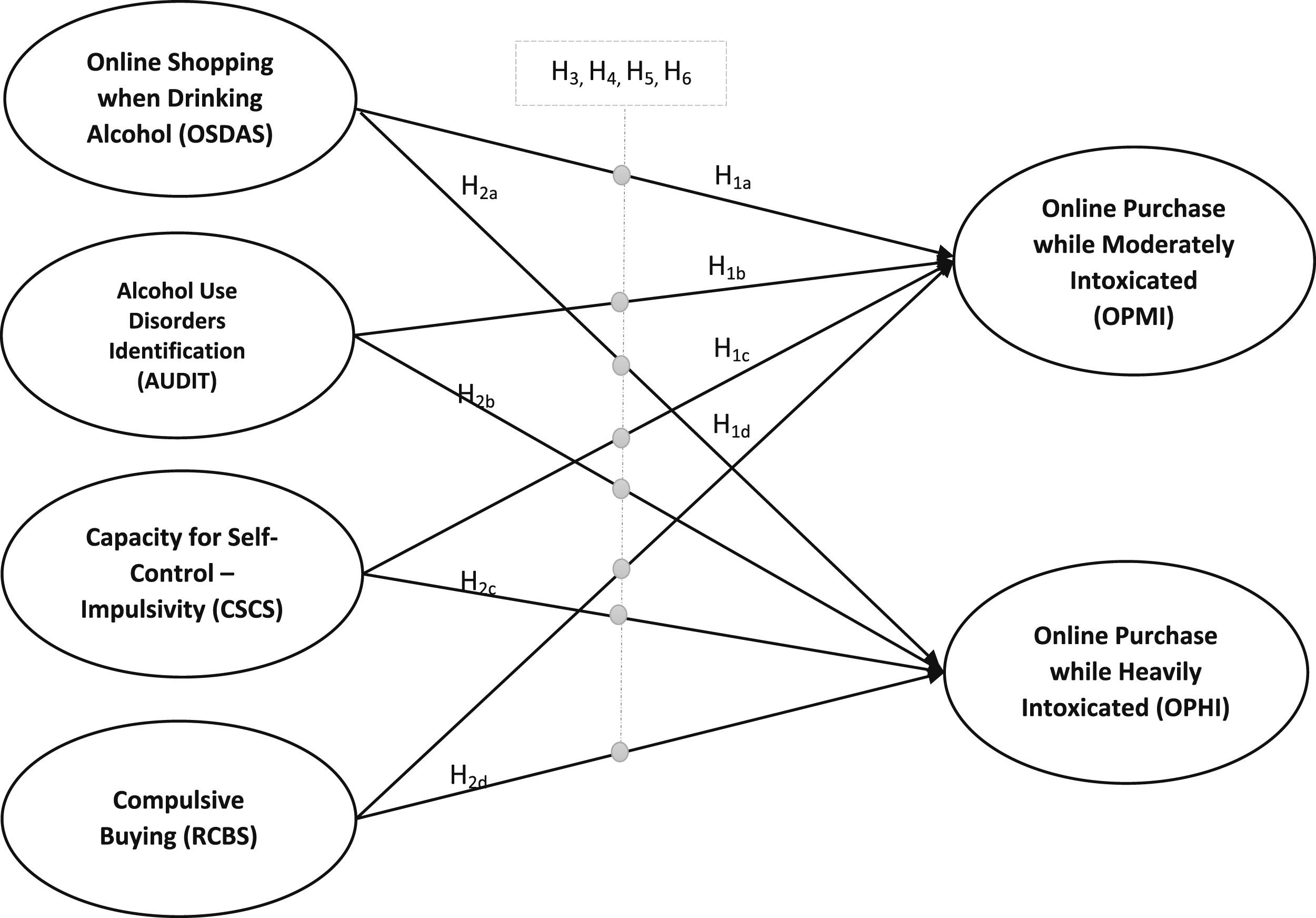
Problematic online shopping when drinking alcohol (H1a), hazardous and harmful patterns of alcohol consumption (H1b), impulsivity (H1c), and compulsive buying (H1d) are positively related to the frequency of making online purchases while moderately intoxicated.
Problematic online shopping when drinking alcohol (H2a), hazardous and harmful patterns of alcohol consumption (H2b), impulsivity (H2c), and compulsive buying (H2d) are positively related to the frequency of making online purchases while heavily intoxicated.
However, given the anticipated higher intensity of online purchases, specifically among those individuals being heavily intoxicated, as compared to moderately intoxicated, we postulated that the strength of each predictor will vary depending on the level of intoxication. Thus, we hypothesized that:
The effect of problematic online shopping when drinking alcohol on the frequency of making online purchases will differ across moderately- and heavily-intoxicated respondents.
The effect of hazardous and harmful patterns of alcohol consumption on the frequency of making online purchases will differ across moderately- and heavily-intoxicated respondents.
The effect of impulsivity on the frequency of making online purchases will differ across moderately- and heavily-intoxicated respondents.
The effect of compulsive buying on the frequency of making online purchases will differ across moderately- and heavily-intoxicated respondents.
Method
Participants
Data were obtained from a sample of 376 respondents during the first week of June 2020 (a few months after the COVID-19 pandemic impacted the US 1 ) through Prolific (www.prolific.ac). A sample size of 376 respondents yielded a confidence interval of .05 with an upper bound of .55 and a lower bound of .44 with a standard error of .026 at the 95% confidence level. Potential respondents had to meet the following criteria to participate: were U.S. citizens, were between the ages of 25 and 64, English was their first language, and consumed at least one alcohol beverage per week during the past 6 months. Respondents participated for payment. The average age of respondents was approximately 35 (SD = 7.63) years old. Of the 376 respondents, 59% were men, 40% were women, less than 1% non-binary/third gender, and less than 2% preferred not to say. Approximately 53% of the respondents were married, 39% were single (never married), 4% were divorced, 1% were separated, less than 1% were widowed, and 3% preferred not to say. The majority were Caucasian (84%), with African American (7%), Asian (5%), and “other” (3%) represented. Approximately half of the respondents (48%) reported an annual household income of less than $79,999 before taxes in the previous year. In terms of education, 5% had a high school education, 11% attended some college but received no degree, 5% obtained an associate degree, 44% received a bachelor’s degree, 24% earned a master’s degree, 4% were awarded a doctoral degree and 4% reported a professional degree (e.g., JD, MD) with 3% preferring not to say. The majority of respondents were employed in the management sector (47%) followed by sales (14%), service (10%), government (9%), production (4%), construction (2%), and “other” (10%) with 3% preferring not to say. The study was approved by the Institutional Review Board at the first and second authors’ university, and all consented to the study.
Procedure
Respondents were recruited using Prolific as noted earlier. Individuals who were registered with Prolific could view available study titles, the study’s host (i.e., the principal investigator), the reward, and time allotted for completion among other information. Respondents who met the study requirements (i.e., consumed at least one alcoholic drink a week over the prior 6 months) and who were interested in participating clicked on a “Start Now” link that directed them to the survey, which was housed outside of Prolific. Qualtrics (www.qualtrics.com) was used to create the survey and it was hosted on their servers. Respondents who completed the survey were each compensated with a sum of $3.25. On average, respondents took 30 minutes to complete the survey.
Measures
Purchasing Behavior
First, respondents were asked to complete the Online Shopping when Drinking Alcohol Scale (OSDAS), a measure created by the authors to assess problematic online shopping when drinking alcohol as no measure existed. The OSDAS consists of 10 statements where respondents indicated their agreement with each statement using a 5-point scale where 1 = Strongly disagree and 5 = Strongly agree. Table 3 presents descriptive and reliability information, as well as convergent information, while Appendix A lists the items for this measure.
Then, respondents were asked if they purchased something from an online retailer (e.g., Amazon, Wayfair, Macy’s) while drinking alcohol in the past 6 months. For those who indicated they had made a purchase from an online retailer while drinking alcohol, they were asked to indicate if they were tipsy/buzzed (i.e., moderately intoxicated), or drunk (i.e., heavily intoxicated) while making the online purchase. Respondents could answer in the affirmative for none, one or all of the questions. Next respondents were asked how many times they drank enough alcohol to feel tipsy/buzzed, and to feel drunk when purchasing something from an online retailer (e.g., Amazon, Wayfair, Macy’s). Finally, respondents were asked what they purchased, how many times they purchased the item, in total how much was spent on the item, and from which retailer(s) the items were purchased.
Alcohol Use Disorders Identification Test
To identify respondents with hazardous and harmful patterns of alcohol consumption, the Alcohol Use Disorders Identification Test (AUDIT; Babor et al., 2001) was utilized. The AUDIT consists of 10 self-report items that assessed three different domains (i.e., hazardous alcohol use, dependence symptoms, harmful alcohol use) associated with excessive drinking. See Table 3 for descriptive, reliability level and convergent validity information, and Appendix A for the items.
Both measures (OSDAS and AUDIT) substantively provided two different and concurrently complementary views on the alcohol drinking. The OSDAS captures individual’s self-reflection of the online shopping when drinking alcohol experience. In contrast, the AUDIT defines the behavioral aspects of respondent’s alcohol consumption patterns outside the shopping experience.
Capacity for Self-Control Scale
Impulsivity was measured by the Capacity for Self-Control Scale (CSCS; Hoyle & Davisson, 2016). The CSCS consists of 20 items that assesses three different types of self-control: self-control by inhibition, self-control by initiation, and self-control by continuation. Because we were interested in impulse control associated with drinking alcohol and online shopping, we used only the self-control by inhibition subscale which consisted of seven items. Respondents indicated how frequently a statement applied to them using a 5-point scale, where 1 = Hardly ever and 5 = Nearly always. Table 3 contains descriptive, reliability and convergent validity, and Appendix A presents the items for this measure. Higher scores indicate a greater capacity for self-control, lower scores indicate greater impulsivity.
Richmond Compulsive Buying Scale
The Richmond Compulsive Buying Scale (RCBS; Ridgway et al., 2008) was used to measure compulsive buying which is a 6-item scale that surmounts shortcomings associated with older measures of compulsive buying (see Ridgway et al., 2008). Using a 7-point scale where 1 = Strongly disagree and 7 = Strongly agree, respondents indicated their agreement on three obsessive-compulsive buying items (e.g., “My closet has unopened shopping bags in it” and three impulse control buying items (e.g., “I buy things I don’t need”). See Table 3 for descriptive, reliability and convergent validity information, as well as Appendix A for the items. Higher scores (i.e., 25 or higher) indicate compulsive buying tendencies (Ridgway et al., 2008).
Statistical Analyses
We conducted regression-based path modeling (Duncan, 1966) to examine the postulated relationships, following causal theory assumptions (Blalock, 1985; Bollen, 2011). The reason why we opted for path analysis instead of Structural Equation Modelling (SEM) – despite the fact both types of analysis share similarities (e.g., Grapentine, 2000) – ensued from methodological conditions. First, the model under test involved four extensive theoretical predictors: OSDAS = Online Shopping when Drinking Alcohol Scale (diagnosed with 10 items); AUDIT = Alcohol Use Disorders Identification Test (10 items); CSCS = Capacity for Self-Control Scale (7 items); and RCBS = Richmond Compulsive Buying Scale (6 items). In addition, the model comprised of two dependent behavioral composites diagnosing the Frequency of Online Purchases. Thus, if we were to configure a SEM model with Moderately Intoxicated individuals (n = 214) and Heavily Intoxicated individuals (n = 75) including four latent variables, with 35 observed items – at the minimum absolute anticipated effect size of 0.2, and with a desired statistical power level equal to at least 0.8 and the probability of 0.05 – we would need the sample size to be at least 342. Thus, we decided first to parcel/index items within each measure (OSDAS, AUDIT, CSCS, RCBS) following guidelines by Bandalos (2008) and Little et al. (2002), while for diagnosis of prospective differences in the sizes of the structural paths being dependent on the intensity level of intoxication (moderate vs. heavy), we conducted Wald test on the respective path coefficients (see Kwan & Chan, 2011 for methodological details). Thus, we examined the relationships postulated in the conceptual model from the perspective of two groups: (1) individuals being moderately intoxicated (i.e., tipsy/buzzed but not drink); and (2) those being heavily intoxicated (i.e., drunk). The entire analysis was conducted in Mplus software and based on the Maximum Likelihood (ML) estimator, meeting the normality distribution assumptions, with no serious violations noted (West et al., 1995).
Results
Descriptive Information about Purchases while Intoxicated
All participants were screened to ensure that they had consumed one drink per week over the prior 6 months. Of the 376 respondents, 242 (64%) indicated that they had made an online purchase while drinking alcohol in the previous 6 months. These respondents were asked how many times they made online purchases while moderately intoxicated and heavily intoxicated. Because of the presence of outliers in the number of times an online purchase was made while moderately intoxicated and/or heavily intoxicated, these variables were winsorized. Respondents reported a winsorized mean of 4.28 purchases made while moderately intoxicated over the prior 6-month time span (winsorized SD = 3.81, winsorized range = 1–20), and a winsorized mean of 4.35 purchases made while heavily intoxicated over the previous 6-month time span (winsorized SD = 3.73, winsorized range = 1–15).
Online Purchases Made While Moderately Intoxicated
What Was Purchased, How Often It Was Purchased, How Much in Total Was Spent, and Where Purchased When Making an Online Purchase While Moderately Intoxicated in Past 6 Months.
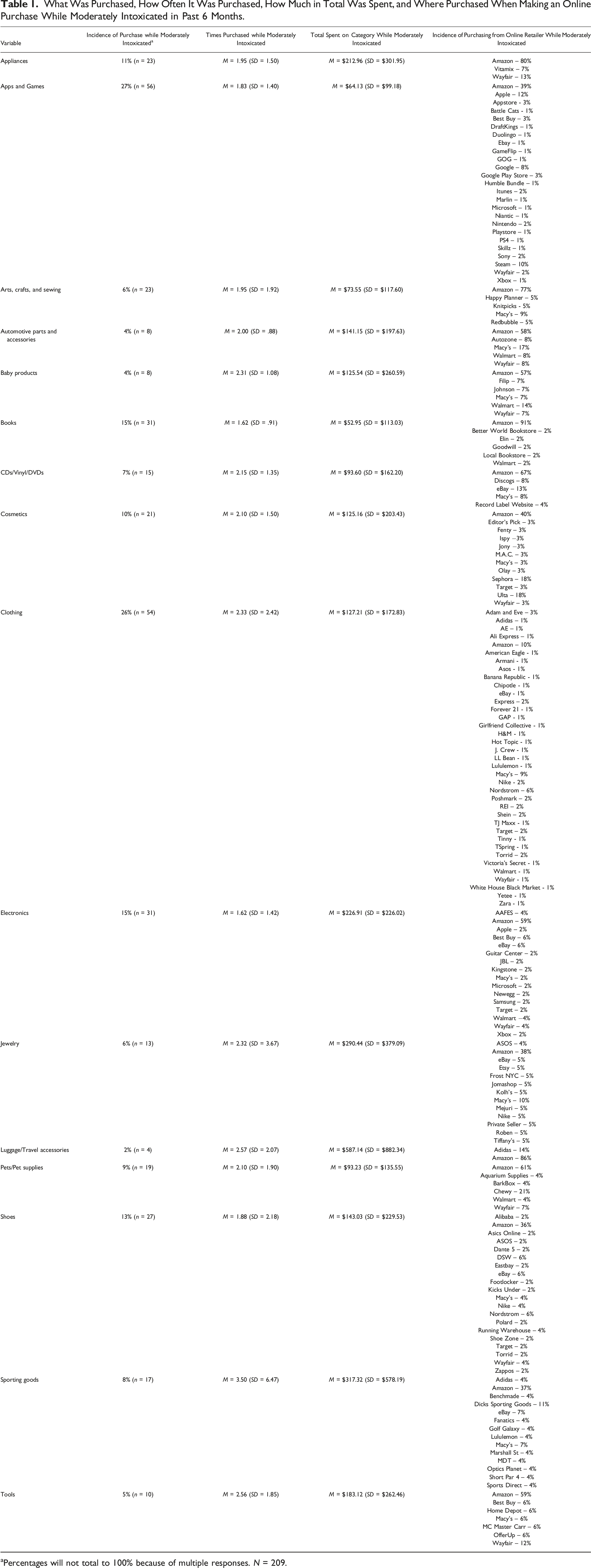
aPercentages will not total to 100% because of multiple responses. N = 209.
Online Purchases Made While Heavily Intoxicated
What Was Purchased, How Often It Was Purchased, How Much in Total Was Spent, and Where Purchased When Making an Online Purchase While Heavily Intoxicated in Past 6 Months.
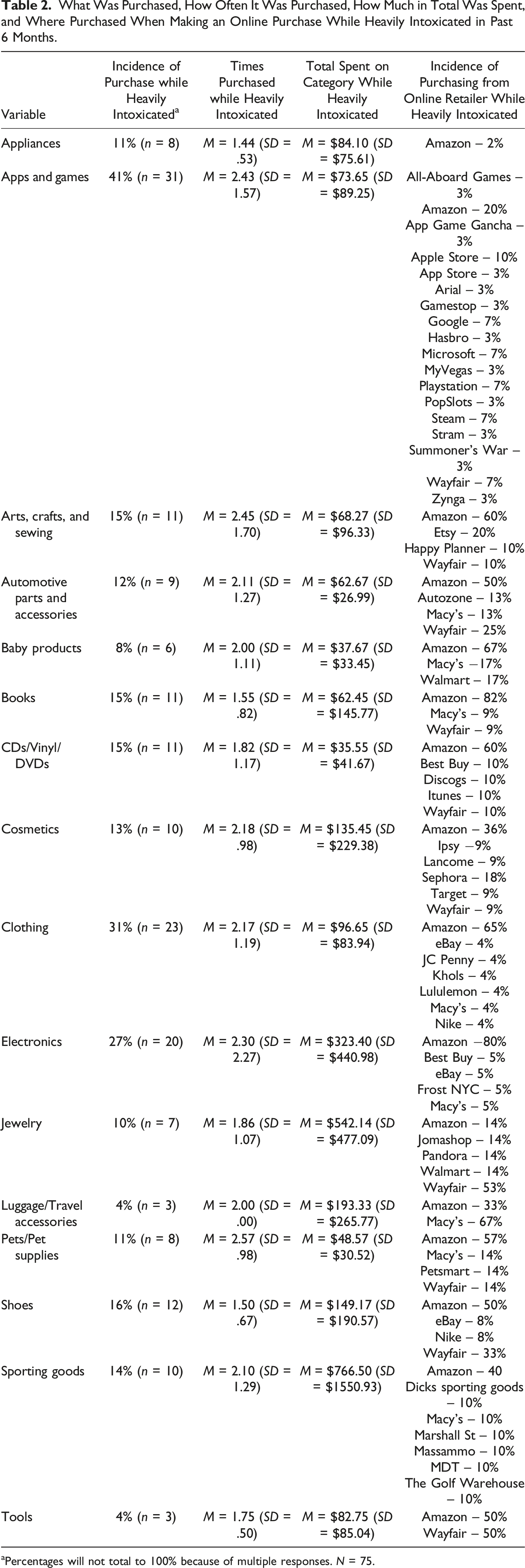
aPercentages will not total to 100% because of multiple responses. N = 75.
Descriptive Statistics, Reliabilities, Convergent Validity, and Correlations among the Measures
Descriptive and Reliability Information for the OSDAS, AUDIT, CSCS, and RCBS.
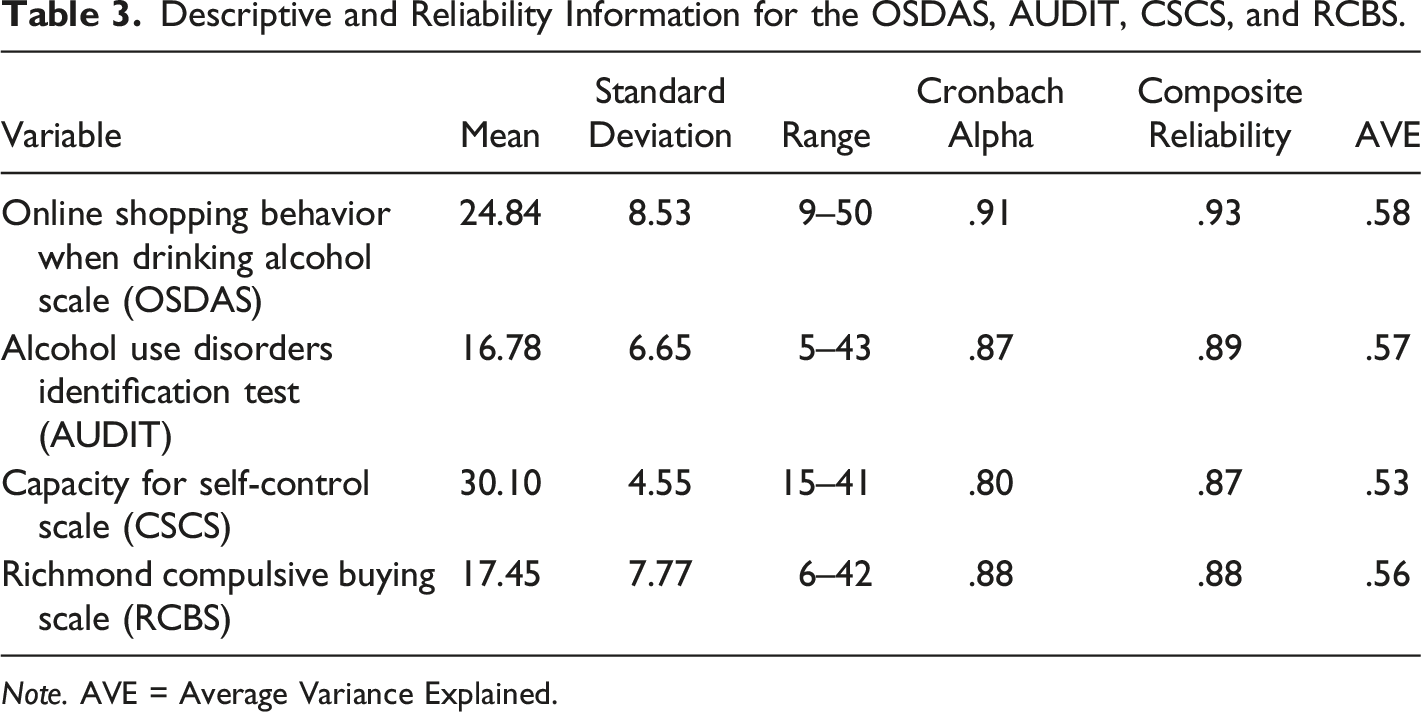
Note. AVE = Average Variance Explained.
Model Evaluation
In evaluating the goodness of fit of the model, we used the recommended indices (see Hu & Bentler, 1999) such as RMSEA, SRMR, and CFI. Based on the literature guidelines of RMSEA cutoff values of .05–.08, SRMR values of .08 or less and CFI values of .95 or higher (Hu & Bentler, 1999), the model under test exhibited satisfactory fit:
Predicting Online Purchases Made while Moderately- and Heavily Intoxicated from Scores on OSDAS, AUDIT, CSCS, and RCBS
Standardized Parameter Estimates and Fit Information of Path Model.
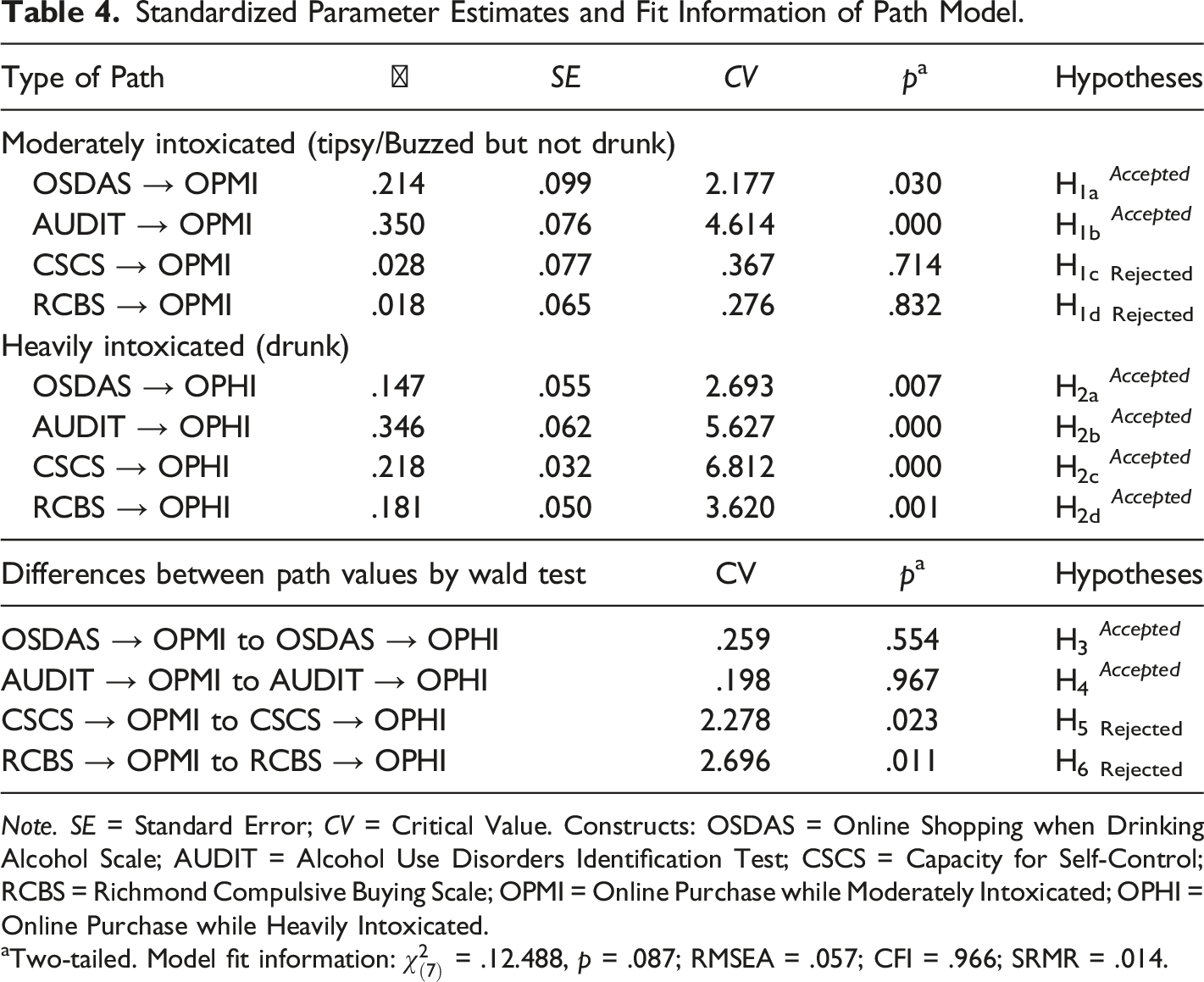
Note. SE = Standard Error; CV = Critical Value. Constructs: OSDAS = Online Shopping when Drinking Alcohol Scale; AUDIT = Alcohol Use Disorders Identification Test; CSCS = Capacity for Self-Control; RCBS = Richmond Compulsive Buying Scale; OPMI = Online Purchase while Moderately Intoxicated; OPHI = Online Purchase while Heavily Intoxicated.
aTwo-tailed. Model fit information:
On the other hand, results of our study reflecting the frequency of making purchases while heavily intoxicated (OPHI) indicated significant linkages with OSDAS (β = .147, SE = .055, p = .007), AUDIT (β = .346, SE = .062, p = .000), CSCS (β = .218, SE = .032, p = .000), and RCBS construct (β = .181, SE = .050, p = .001), with the AUDIT making the strongest contribution. See Table 4. These results suggest that problematic online shopping when drinking alcohol as assessed by the OSDAS, hazardous and harmful patterns of alcohol consumption as assessed by the AUDIT, impulsivity as measured by the CSCS, and compulsive buying as measured by the RCBS relate to making online purchases while heavily intoxicated. Based on these results, we accept hypotheses H1a-b, H2a-d, and reject those denoted as H1c-d.
Comparison of Relationships Reflecting Online Purchases Made while Moderately- and Heavily Intoxicated on OSDAS, AUDIT, CSCS, and RCBS
Table 4 shows two nonsignificant differences between the following path parameters by comparison of Wald test. This regards the path defined as OSDAS → OPMI compared to the path denoted as OSDAS → OPHI (p = .553), as well as the path AUDIT → OPMI versus AUDIT → OPHI (p = .967). The other compared relationships in the model: CSCS → OPMI to CSCS → OPHI (p = .023) and RCBS → OPMI to RCBS → OPHI (p = .011) were found to be significant. Therefore, we accepted hypotheses H3 and H4 and rejected H5 and H6.
Discussion
The goal of the present research was to further our understanding of factors that explain purchasing while under the influence of alcohol by examining how hazardous and harmful patterns of alcohol consumption, problematic online shopping while drinking alcohol, impulsivity, and compulsive buying were associated with and predicted the frequency of making online purchases while moderately and heavily intoxicated. The current findings extend this body of research by suggesting that as a result of alcohol use, online, because they are made under impaired judgment, may culminate in psychological (e.g., embarrassment, anxiety, regret), social (e.g., interpersonal conflict, familial criticism), or financial (incurring debt) problems for the individual. Moreover, in that making purchases are made increasingly easy through the use of one click purchasing and app-based payments (e.g., Apple Pay), those who exhibit hazardous and harmful patterns of alcohol consumption may be at a greater risk of making more frequent drunk purchases because fewer and fewer decision points are needed to confirm a purchase. Additionally, the Internet retail environment in particular seems especially suited for making purchases while intoxicated because the “Internet offers the opportunity to buy frequently, at any time, . . . unobserved” (Kukar-Kinney et al., 2009, p. 298). Although marketers may not have intentionally had drunk purchases in mind when developing technologies that facilitate purchasing, a number of application developers have attempted to capitalize on drunk purchasing by developing apps for smartphones that link credit and debit cards to a breathalyzer or biosensor to prevent such purchases.
Our results revealed that impulsivity predicted the frequency of making an online purchase while heavily intoxicated but not moderately intoxicated. As impulsivity is a hallmark of addictive behavior (Goldstein & Volkow, 2011), our findings support prior research that has demonstrated an association between increased impulsivity and alcoholism (Lejuez et al., 2010). Indeed, more recent research suggests that among those who abuse alcohol, repeated cycles of abstinence and alcohol use increase impulsive behavior (Irimia et al., 2015). Thus, it could be that those who indicated that they made online purchases while heavily intoxicated have less impulse control in online shopping environments compared to those who were moderately intoxicated. Additional research is needed to explore this possibility.
Results also revealed that compulsive buying propensity was a predictor of making online purchases while heavily but not moderately intoxicated. As compulsive buying is considered in this study to be an obsessive-compulsive and impulse control disorder (Ridgway et al., 2008), it again may be the case, that those who indicated they were heavily intoxicated when making an online purchase also may have lacked impulse control. Moreover, depression and anxiety has been found to be associated with compulsive buying (Christenson et al., 1994; Harnish et al., 2021; Mueller et al., 2009) as well as alcohol abuse (Babor et al., 2010; Carvalho et al., 2019). Thus, to alleviate these negative states, it may be that those who are heavily intoxicated at the time of making an online purchase compulsively buy to further escape from their negative affective states. In fact, affect and mood states play an important role in consumer behavior facilitating consumer-attitude formation and brand selection (Czeller, 2003; Gardner, 1985) with advertising and in-store experiences designed to foster positive affect (Bagozzi et al., 1999; Fleur et al., 2005).
Finally, results found that OSDAS (i.e., online shopping when drinking alcohol) scores were related to drunk purchases made during moderate but not heavy intoxication periods. The OSDAS allowed the authors to assess specific buying patterns and outcomes of intoxicated shopping (e.g., buyer’s remorse, resulting financial hardship, etc.). This measure of problematic online shopping when drinking alcohol helped us to shed light on purchasing behaviors for those who tend to shop while buzzed or tipsy, however, additional research is needed to assess the utility of this measure. To our knowledge, this is the first attempt to create a measure that specifically assesses the phenomenon of shopping while intoxicated. Although previous research has assessed and found a relationship between problem shopping and alcohol use (Grant et al., 2011), the OSDAS is the first measure designed to assess these behaviors as they occur simultaneously.
Theoretical Implications
Researchers (e.g., Baumgartner, 2002; Westbrook & Black, 1985) have attempted to identify the motives or underlying needs consumers engage in shopping. Although multiple needs have been identified through various typologies, it may be likely that they fall within one of three fundamental motives (Griskevicius & Kenrick, 2013). According to Griskevicius and Kenrick (2013), fundamental motives can be activated by external or internal cues for survival (e.g., to acquire a product to fulfill one’s utilitarian needs), or the currently active fundamental motive can shape preferences (e.g., to obtain entertainment to escape boredom thereby meeting one’s hedonic needs), or the currently active motive can guide one’s decision processes, which may appear to be rational or irrational (e.g., to engage in impulsive or compulsive buying to alleviate stress and anxiety).
Using the fundamental motives framework (Griskevicius & Kenrick, 2013), it is possible to further our understanding of factors that explain why individuals would make online purchases when drinking alcohol. In what appears to be an irrational behavior (i.e., the loss of control over spending due to alcohol intoxication which increases impulsivity and compulsion), the fundamental motives framework provides another interpretation. Using this lens, purchasing products while under the influence of alcohol may be a rational decision if the goal for the consumer is to alleviate stress and anxiety thereby escaping from a negative mood state.
Practical Implications
The current findings indicate that those who made online purchases while intoxicated spent between $36 to $767. Although the lower range of monies spent might seem inconsequential, if we take an average of the reported range, the average spent was approximately $400. Keeping in mind that about half of our respondents reported an annual household income of less and $79,999 before taxes in the previous year and that prior research has indicated that those at the lower income range overreport their incomes (Pedace & Bates, 2000), such “drunk” online purchases are not so inconsequential after all. Given the expense incurred by consumers who make online purchases while under the influence of alcohol, it is likely that they may experience psychological (e.g., embarrassment, anxiety, regret), social (e.g., interpersonal conflict, familial criticism), or financial (e.g., increased likelihood of debt) problems due to their behavior. Thus, treatment models for alcohol abuse should address the issue of making online purchases while under the influence of alcohol to help alleviate or avoid potential psychological, social and/or financial problems.
Although retailers might delight in overspending by consumers or when consumers who are under the influence of alcohol and purchase impulsively and compulsively, the retailer does not escape from the cost of such purchases as consumers can always return the item for a full refund. The cost associated with restocking an item and the cost of free return shipping certainly can cut into profit margins for online retailers and to recoup the cost, many retailers are now charging a fee for restocking, shipping or both (Zhang et al., 2023). Additionally, Bower and Maxham (2012) noted that when customers have to pay for their own return shipping, the likelihood of continuing to shop with the retailer declines. Thus, our findings suggest that online retailers may wish to re-examine one click purchasing and app-based payments (e.g., Apple Pay) to reduce unwanted purchases.
Limitations
The current research has several limitations that should be acknowledged. First, our results are based upon self-report measures among adults in the U.S. Because of this, our findings cannot be generalized to different populations (e.g., non-U.S. citizens). Because we used a cross-sectional design, we obtained only a snapshot of how hazardous and harmful patterns of alcohol consumption, impulsivity, and compulsive buying predicted making purchases while intoxicated. Therefore, future studies could focus on testing the same configuration of variables and postulated relationships in the model as proposed in the current study, but with a stronger emphasis on the collection of longitudinal data. On the other hand, future research could also expand the focus of making online purchases while under other mind-altering substances (e.g., marijuana). Indeed, after tobacco and alcohol, marijuana is the most commonly used addictive drug among Americans (Substance Abuse Center for Behavioral Health Statistics and Quality, 2018). Finally, our results are based on data collected at the start of the COVID-19 pandemic. However, consumer behavior changes that occurred as a result of COVID likely have long-lasting effects and therefore, our data is still relevant. For example, recent research suggested that the COVID-19 pandemic increased consumers’ online purchasing behavior (Abdul Hussein et al., 2022) and that the pandemic also boosted growth tendencies for online retailers (Szasz et al., 2022).
Conclusion
The results of the present study make a useful contribution to our understanding of making online purchases under the influence of alcohol. Our results are the first that we are aware of that identified predictors to making frequent drunk purchasing. Those who engage in hazardous and harmful patterns of alcohol consumption appear to be more likely to make frequent online purchases while moderately and heavily intoxicated while only those heavily intoxicated when making an online purchase appear to do so because of impulsivity. Additionally, it appears those who are heavily intoxicated when making an online purchase may do so compulsively to escape their negative mood states.
Footnotes
Declaration of Conflicting Interests
The author(s) declared no potential conflicts of interest with respect to the research, authorship, and/or publication of this article.
Funding
The author(s) disclosed receipt of the following financial support for the research, authorship, and/or publication of this article: This research was funded by an internal research development grant by the Pennsylvania State University.
