



Abstract
In recent years, the problem of mobile phone addiction (MPA) has become increasingly serious among mainland Chinese adolescents. Studies have found that self-esteem may be related to MPA, but the conclusions are inconsistent. Consequently, this meta-analysis aims to explore the real relationship between self-esteem and MPA, and analyze the moderator variables. The relevant studies used in meta-analysis were obtained by searching China National Knowledge Infrastructure (CNKI), Wan Fang Data, Chongqing VIP Information Co., Ltd. (VIP), PubMed, Web of Science, Scopus, Medline and Embase. Then articles were screened and coded, and statistical analysis was carried out by Stata 16.0 software. A total of 45,765 participants from 64 articles were included in the research. Meta-analysis showed that there was a moderate negative correlation between self-esteem and MPA(r = −.25, 95%CI = −.29, −.21). Subgroup analysis and meta-regression analysis showed that the age and publication time can significantly moderate the relationship between self-esteem and MPA, but MPA measurement instrument, gender, region and publication type have no significant moderating effect. The current meta-analysis provided solid evidence that self-esteem was negatively correlated with MPA. Longitudinal studies are needed to clarify the causality between them, so as to make more specific practice and policy recommendations.
Introduction
According to the 48th Statistical Reports on Internet Development in China released by China Internet Network Information Center (2021), as of June 2021, there were 1.007 billion mobile phone users in China, of which 15.7% were adolescents. Mobile phones have overcome the time and space limitations of traditional network devices, bringing incomparable convenience in life and work. At the same time, the problem of mobile phone addiction (MPA), especially that of adolescents, has also aroused people’s concern (Lu et al., 2021). MPA, also known as mobile phone dependence, problematic mobile phone use and so on, generally refers to the condition in which an individual suffers from impaired physical, psychological and social functioning as a result of excessive use of mobile phones (Bianchi & Phillips, 2005; Yen et al., 2009). The MPA problem of Chinese adolescents is too serious to be neglected. A study shows that the prevalence of MPA among Chinese adolescents has reached 21.3% (Long et al., 2016). In contrast, the number in Spain is 14.8% and in Britain is 10% (De-Sola Gutiérrez et al., 2016; Lopez-Fernandez et al., 2014). There are expansive studies linking MPA to physical and psychological problems during adolescence, such as headache, sleep disorder, anxiety, depression, loneliness, alexithymia and academic burnout (Chen & Shao, 2019; He et al., 2019a; Lepp et al., 2014; Li et al., 2017; Liu et al., 2017; Parashkouh et al., 2018; Wang et al., 2017a). Therefore, MPA is becoming one of the important factors hindering adolescents' healthy growth. It is necessary to make an in-depth study on the related factors of adolescents' MPA, so as to take better actions to deal with it.
At present, studies from Spain (Romero-Rodríguez et al., 2020), South Korea (Chu et al., 2020), Italy (Servidio, 2021)and other countries show that there is a relation between adolescents' self-esteem and MPA, and many Chinese studies have also confirmed it (Bao & Jiang, 2017; Li et al., 2019c; Zhang, 2018). Self-esteem is the subjective evaluation of an individual’s ability, value and significance, which is conveyed by attitude, language and behavior (Wilson et al., 2010). Some theories suggest that there is a negative correlation between self-esteem and MPA. According to the pathway model of problematic mobile phone use, low self-esteem is one of the established risk factors of MPA (Billieux et al., 2015). Individuals with low self-esteem usually face interpersonal problems in the real world, while their basic needs to gain emotional connection with others can be well satisfied from indirect communication provided by mobile phones (Billieux, 2012; You et al., 2019). For example, SMS and social applications meet the need for affection and compensate for fear of social loss (Bianchi & Phillips, 2005). A study also confirmed people with low self-esteem prefer indirect communication (Rai et al., 2019). Therefore, people with low self-esteem may be more dependent on mobile phones, leading to a negative correlation between self-esteem and MPA. In addition, cognitive-behavior model holds that maladaptive cognition, such as low self-esteem, is the core factor related to Internet addiction (Davis, 2001). The model is also used by scholars to explain the negative correlation between self-esteem and MPA (Billieux, 2012; Ha et al., 2008). People with low self-esteem always fail to evaluate themselves and the external world correctly, which leads to low self-acceptance and low expectations for the real world and believe that only on the internet can they be respected (Li et al., 2019a). In this case, mobile phones may be addictive, because they may be used by people with low self-esteem to escape from reality. Therefore, individuals with low self-esteem may be more likely to get addicted to mobile phones. Most studies support this view, namely self-esteem is negatively related to MPA (Jin et al., 2017; Kong et al., 2021).
However, there are different voices from other researchers, that is, there is no correlation between self-esteem and MPA (Choi & Oh, 2017; Ehrenberg et al., 2008; Khang et al.,2013; Walsh et al., 2011). Researchers who hold this view believe that self-esteem is formed in social comparison (Liu, 2021). It is also related to the feedback from people around, particularly if their self-worth is contingent on approval from others (Crocker & Wolfe, 2001; Leung et al., 2021). Although people can connect with and get feedback from others by using mobile phones, it just acts as a channel and carrier. Thus, there may be no close relationship between self-esteem and mobile phone use behavior (including MPA). Indeed, although three studies on mainland Chinese students conclude the correlation coefficient between self-esteem and MPA(r =.06; r =.04; r = −.05), none of them showed significance (Jiang & Shi, 2016; Ni & Deng, 2017; Zhang et al., 2015). In a word, these researchers believe that self-esteem has no relation with MPA.
Consequently, the relationship between self-esteem and MPA is ambiguous and needs to be clarified. Meanwhile, it should also be considered whether the relation between self-esteem and MPA is moderated by the following variables: MPA measurement instrument, age, gender, region, publication type and publication time.
MPA Measurement Instrument
At present, there are three MPA measurement instruments commonly used by Chinese scholars. The first is the mobile phone addiction tendency scale for college students (MPATS), which was developed by Xiong et al.(2012). The scale consists of 16 items, including four dimensions: withdrawal symptoms, salience, social comfort and mood changes. In addition, the Mobile Phone Addiction Index (MPAI), compiled by Professor Leung (2008) from the Chinese University of Hong Kong, is also widely used. The MPAI is suitable for measuring the MPA behavior of college students and secondary school students. It contains 17 items and four factors: loss of control, withdrawal, avoidance and inefficiency. What’s more, Su et al.(2014) developed the Smartphone Addiction Scale for College Students (SAS-C), which covers 6 factors, namely, withdrawal behavior, salient behavior, social comfort, negative influence, use of application (App) and renewal of App, and has 22 items in total. It has a good effect in measuring the addiction of smartphone users. All of the scoring criteria of these scales are that the higher the score, the more serious the MPA is. Especially, for MPAI, if 8 questions are answered positively, the responder can be confirmed as MPA (Leung, 2008). The three measuring instruments have different emphases, which are aimed at only college students, both college and secondary school students and smartphone users respectively. There are also great differences in the number of dimensions and items they contain. Therefore, the measurement instrument of MPA may affect the relationship between self-esteem and MPA.
Age and Gender
Age might moderate the relationship between self-esteem and MPA. According to Zhang Wenxin (2002), a Chinese scholar, adolescents include junior high school students (early adolescents), senior high school students (middle adolescents) and college students (late adolescents). Combined with the characteristics of China’s educational stage, the participants in this study are divided into two groups for analysis: secondary school students and college students. According to life-span development view of self-esteem, mean level of self-esteem in college students is lower than that in secondary school students (Robins et al., 2002). In fact, since faced with various new challenges, such as unclear self-orientation, complicated interpersonal relationships and the great changes in social situations, the self-esteem level of individuals in the college stage is almost at the lowest point of life (Robins et al., 2002; Zhang et al., 2010). Correspondingly, college students with frustrated self-esteem may be more dependent on the various functions of mobile phones to release the pressure caused by the above challenges. (Bian et al., 2016; Guo & He, 2017; Niu, 2014). Thus, the link between self-esteem and MPA may be closer in college students. In addition, different management styles in secondary schools and universities also lead to age differences in the correlation between self-esteem and MPA. In the Chinese mainland, one of the features of school management is strict in secondary schools (e.g., secondary school students are prohibited from using mobile phones when they are in school) and lenient in universities (e.g., there is no restriction on college students’ behavior of mobile phone use), which is similar to family management styles aimed at different age period students. These differences are regarded as important external factors that lead to the difference between secondary school students and college students in MPA (Ding et al., 2019; Gao et al., 2020; Yang et al., 2019). When experiencing psychological distress with low self-esteem, it is more convenient and easier to achieve for college students to escape reality and make psychological compensation by indulging in mobile phones. Thus, the relationship between self-esteem and MPA may be vary with age.
The relationship between self-esteem and MPA may also be moderated by gender. Firstly, there are obvious gender differences in self-esteem level during adolescence, that is, girls have lower self-esteem than boys (Kling et al., 1999; Wang et al., 2021b; Xiao, 2020). Scholars believe that entering adolescence, the changes of individual physical and social emotions will reduce his/her self-esteem level, and these physiological and psychological changes have a greater impact on girls, resulting in the self-esteem of girls being lower than that of boys (Orth et al., 2010; Zhang et al.,2010). Secondly, the prevalence of MPA also shows gender differences and most studies found that the MPA prevalence of girls is higher than that of boys (Demirci et al., 2015; Kwon et al.,2013; Kwon & Paek, 2016; Leung et al., 2007). A review on MPA showed that the most problematic applications used by users are voice calls, text messages, and social networks and girls generally spend more usage time on these applications than boys, which causes higher MPA prevalence among them (De-Sola Gutiérrez et al., 2016; Roberts et al., 2014). Finally, since there are gender differences in both self-esteem and MPA, the correlation between these two constructs may also be influenced by gender. Individuals with low self-esteem are full of doubts about self-worth, which leads to low self-acceptance and high psychological pressure (Zhang et al., 2019). Compared to boys, girls have lower psychological resilience and higher self-disclosure desire (Dindia & Allen, 1992; Hao et al., 2019; Sadeghi et al., 2020). Thus, it is more difficult for them to withstand psychological pressure brought by low self-esteem and they may be more inclined to pour out to others. The anonymity, security and speed of mobile phones can meet the needs of girls for self-disclosure, so girls with low self-esteem may rely more on mobile phones (Zhang et al., 2020). Therefore, the correlation between self-esteem and MPA may be stronger in girl groups.
Region
Regional differences in economy might affect the relation between self-esteem and MPA. China has a vast territory and a large population, and there is a serious imbalance in regional development. According to the economic level, mainland China can be divided into eastern, central and western regions. The east is the richest region and the western is the poorest (Lei et al., 2018). Benefiting from a higher economic level, people in eastern come into contact with the mobile Internet earlier, and the holding rate of mobile phones is higher than central and western (China Internet Network Information Center, 2016). Studies found that prevalence of MPA in eastern is also higher than other two regions (Bao & Jiang, 2017; Cui et al., 2015; Jin et al., 2017). Therefore, this difference may lead to different correlations between self-esteem and MPA among regions. A meta-analysis related to MPA has shown significant regional differences in the relationship between MPA and impulsivity (Ren et al., 2021). It found that in economically and technologically developed regions the relationship between MPA and impulsivity is closer. Based on the above reason, we speculate that the correlation between self-esteem and MPA may vary from region to region. Specifically, the correlation may be stronger in eastern region, followed by central region and western region. This study will examine the moderating effects of region on the relation between self-esteem and MPA.
Publication Type and Time
There may be differences in the correlation between self-esteem and MPA reported in different publication types. After screening, articles finally included in this research belong to two publication types: published journal papers and unpublished degree papers. It is found that journals may favor studies that report significant results, while studies with non-significant results may not be published and end up in the ‘file drawers’ of researchers (Rosenthal & Researcher, 1991; van Geel et al., 2015). Hence, the results presented in journal articles may have a certain tendency, that is, most of them are significant results. In this case, the real relationship between variables might be distorted (e.g., exaggerated correlation, Borenstein et al., 2009b; Guo & He, 2017; Rothstein et al., 2005). While dissertations that are not officially published may avoid the influence of above “publication tendentiousness” and contain various possible results. The significant moderating effect of publication type has been affirmed in relevant meta-analysis (Lu et al., 2021). In this study, we will consider publication type as a source of heterogeneity and test its moderating effect on the correlation between self-esteem and MPA.
The time of publication may also play a moderating role. According to statistics, the number of mobile phone users in China was about 420 million in 2012(China Internet Network Information Center, 2013), while it was 1.007 billion in 2021(China Internet Network Information Center, 2021), which more than doubled. It has been found that with the increasing popularity of mobile phones, the prevalence of MPA is also increasing (Lee & Lee, 2017). Given the differences in scale of mobile phone users in China during the past decade, this study also tests whether publication time moderates the relation between self-esteem and MPA.
Purpose of this Study
There are plenty of studies on the relationship between adolescents’ self-esteem and MPA, but the results are different. So, what is the real relationship between self-esteem and MPA? In order to answer the question more scientifically, this paper conducted a meta-analysis based on mainland Chinese adolescents. Moreover, we expect the aforementioned variables (i.e., MPA measurement instrument, age, gender, region, publication type and publication time) will play a moderating role in the relationship between self-esteem and MPA, and test them. By doing so, we can clarify association between self-esteem and MPA, and identify sources of inter-study variability.
Methods
Literature Search
Two authors searched the articles published from the creation of each database to June 24, 2021 in eight databases, including China National Knowledge Infrastructure (CNKI), Wan Fang Data, Chongqing VIP Information Co., Ltd. (VIP), PubMed, Web of science Core Collection, Scopus, Medline and Embase. Search strategy are as follow: (“cell phone” OR “cellphone” OR “cellular phone” OR “cellular telephone” OR “mobile phone” OR “smart phone” OR “smartphone”)AND(“addiction” OR “addicted to” OR “dependence” OR “dependency” OR “abuse” OR “overuse” OR “excessive use” OR “problem use”)AND(“self-esteem” OR “self-perception” OR “self-confidence” OR “self-concept” OR “self-respect”). In order to avoid omissions, two authors also tracked the citations while reading the articles.
Literature Screening
The retrieved articles were screened according to the following inclusion and exclusion criteria. Inclusion criteria:(1) type of studies: cross-sectional study; (2) variables: self-esteem and MPA must be included; (3) study participants: adolescents (including secondary school students and college students); (4) samples must be from mainland China; (5) it is necessary to report sample size and effect sizes such as r value, or report data that can be converted into r, such as T value, F value, χ2 value, β value, etc.; (6) it reports the measuring instruments of self-esteem and MPA clearly. Exclusion criteria: (1) studies using the same data; (2) studies that can’t obtain the full text and no reply has been received after contacting the author; (3) studies that are not published in Chinese or English.
Coding Variables
Two researchers encoded the retained articles at different times, then checked the results of these two codes. The results are 97% consistent. After that, inconsistent parts of coded information were discussed by researchers, so as to obtain final data. Coding information includes basic information such as author information, publication time, publication type, participant type (age), region, female proportion (gender), mobile phone addiction measures and self-esteem measures, and statistical data such as sample size and correlation coefficient. For articles that did not report the correlation coefficient directly, but reported the T value, F value, χ2 value and β value, we used formulas to transform T value, F value, χ2 value and β value into r value before coding [
Assessment of the Literature Quality
The Agency for Health care Research and Quality (AHRQ) was used to evaluate the quality of literature (Rostom et al., 2004). AHRQ is suitable for cross-sectional study and the literature quality was evaluated from the aspects of data sources, inclusion and exclusion criteria, investigation time, participants, sampling methods, reliability and validity, research settings, data processing, sample size and follow-up. The list contains 11 entries, and each entry has three options. Selecting “Yes” scores 1 point, and selecting “No” or “Unclear” scores 0 point. The aggregate score ranges from 0 to 11, with <3 being low quality, 4 to 7 being medium quality, and 8 to 11 being high quality.
Effect Size Calculation
In order to examine the relationship between self-esteem and MPA among mainland Chinese adolescents, the correlation coefficient r was used as the effect size. Firstly, the r value is converted into the corresponding Fisher’s Z value by formula
Data Processing and Analysis
The meta-analysis was performed by using Stata16.0 software. The funnel plot, Begg’s test and Egger’s test were used to analyze publication bias. If the scatter points are concentrated at the top of the funnel plot and evenly distributed on both sides of the center line, it shows that there is less possibility of publication bias. If the p value of Begg’s test and Egger’s test are both greater than .05, it also indicates that there is less possibility of publication bias. Meanwhile, we use Q statistic and I 2 index to investigate the heterogeneity of each study. If p <.05 and I 2 >50%, it shows that there is heterogeneity among the effect sizes, the random effect model is used; on the contrary, the fixed effect model is used (Higgins & Thompson et al., 2002). Sensitivity analysis was carried out by deleting one article at a time and observing the changes in the results of the remaining articles (Tao et al., 2018). For the categorical variables such as publication type (journal and dissertation), age (secondary school student and college student), regions (eastern, central and western China) and MPA measurement instruments (MPAI, MPATS and SAS-C), subgroup analysis was used to explore their moderating effects. While, for the continuous variables such as gender and publication time of literature, meta-regression analysis was used to test their moderating effects.
Results
Eligible Studies
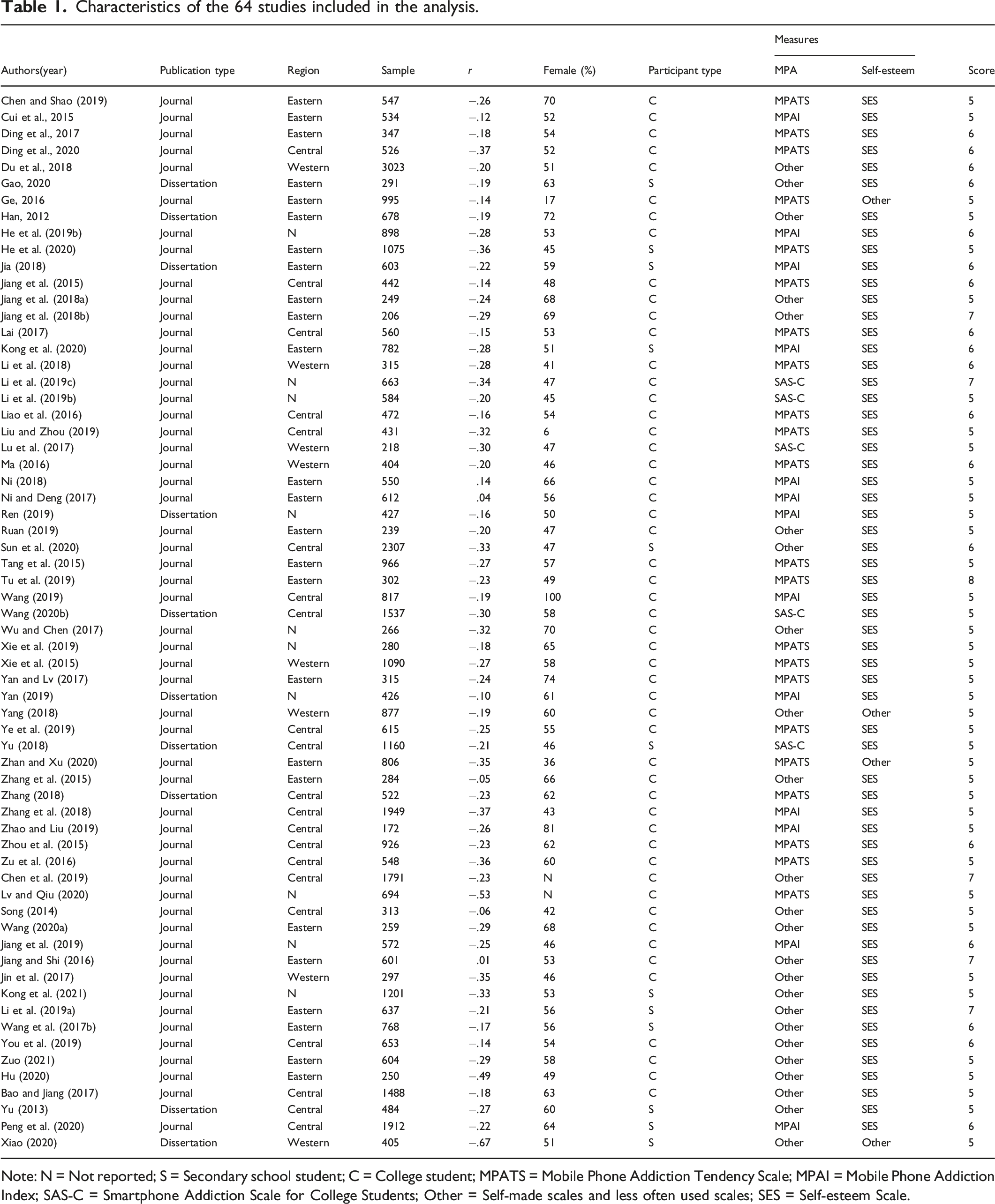
A total of 1058 articles were obtained, of which 1052 were retrieved by database and 6 by manual retrieval. Firstly, we used Endnote X9 to eliminate 436 duplicate articles. Secondly, there were 505 articles excluded according to the title and abstract. Thirdly, by reading the full text, 53 articles were excluded, because they were either not cross sectional studies (n = 1), no self-esteem or MPA (n = 6), not Chinese mainland adolescents (n = 28), incomplete data provided (n = 14) or unavailable full-text (n = 4). Finally, 64 papers were included in the study (See Figure 1), involving 45,765 participants. There are 54 journals and 10 dissertations, and the sample source region covers the eastern, central and western of China. According to the quality evaluation standard of AHRQ list, the quality of the included articles is at a medium-high level. The basic characteristics and quality evaluation scores of articles are shown in Table 1. Flow chart of the study selection process. Characteristics of the 64 studies included in the analysis. Note: N = Not reported; S = Secondary school student; C = College student; MPATS = Mobile Phone Addiction Tendency Scale; MPAI = Mobile Phone Addiction Index; SAS-C = Smartphone Addiction Scale for College Students; Other = Self-made scales and less often used scales; SES = Self-esteem Scale.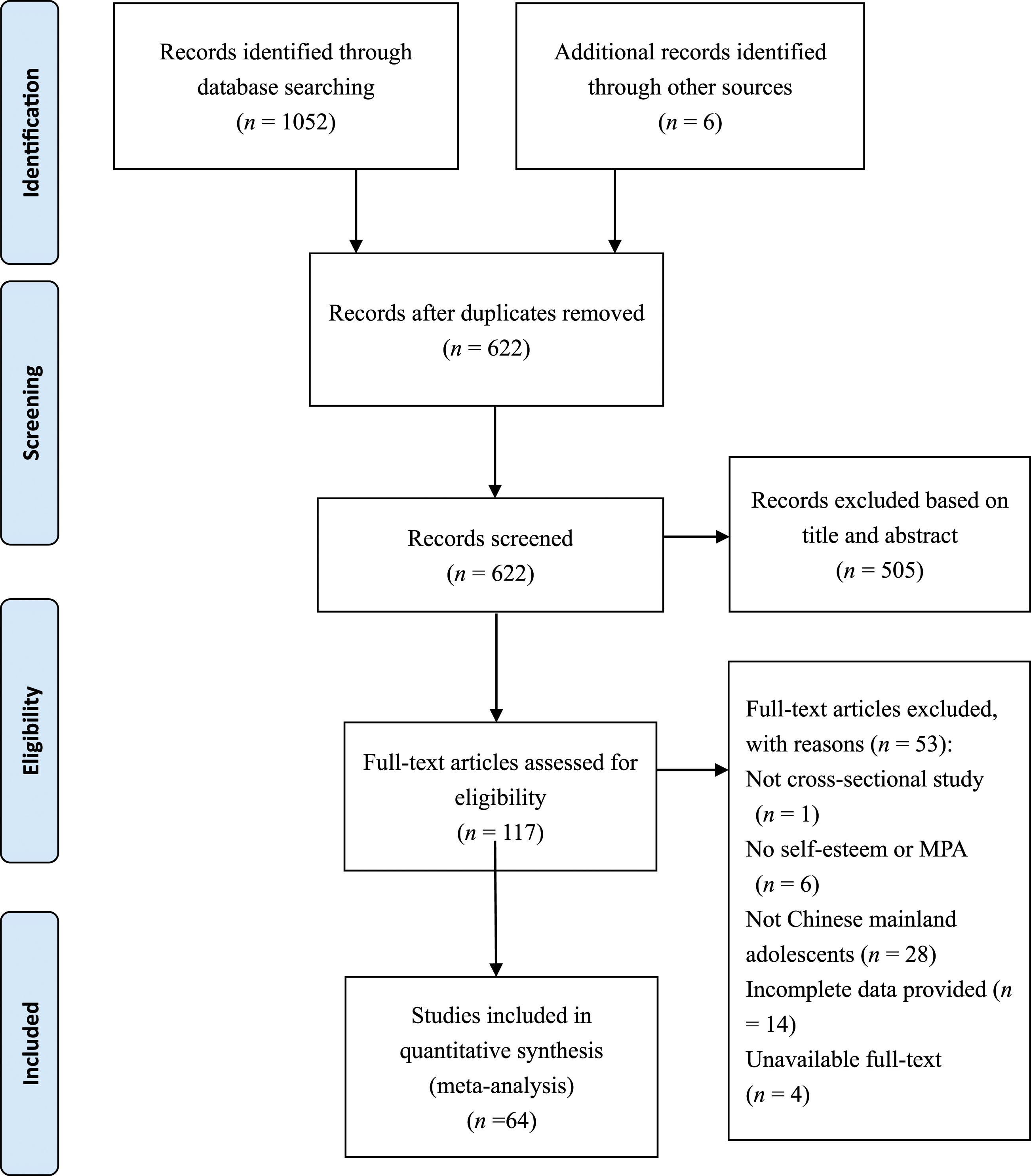
Publication Bias
First of all, the funnel plot shows that there may be publication bias in the included articles. As shown in Figure 2, most scattered points are evenly distributed on both sides of the midline, and concentrated in the middle of the funnel plot, but not at the top position. However, this method has the disadvantage of being too subjective. In order to evaluate publication bias more accurately, this study also used Begg’s test and Egger’s test to verify it. Then, we observed no significant publication bias in the Begg’s test (p = .99) and Egger’s test (p = .62). Therefore, combined with the test results of the three methods, it can be considered that there is no publication bias in the articles included in this study, and the research results are valid. Funnel plot of self-esteem and mobile phone addiction.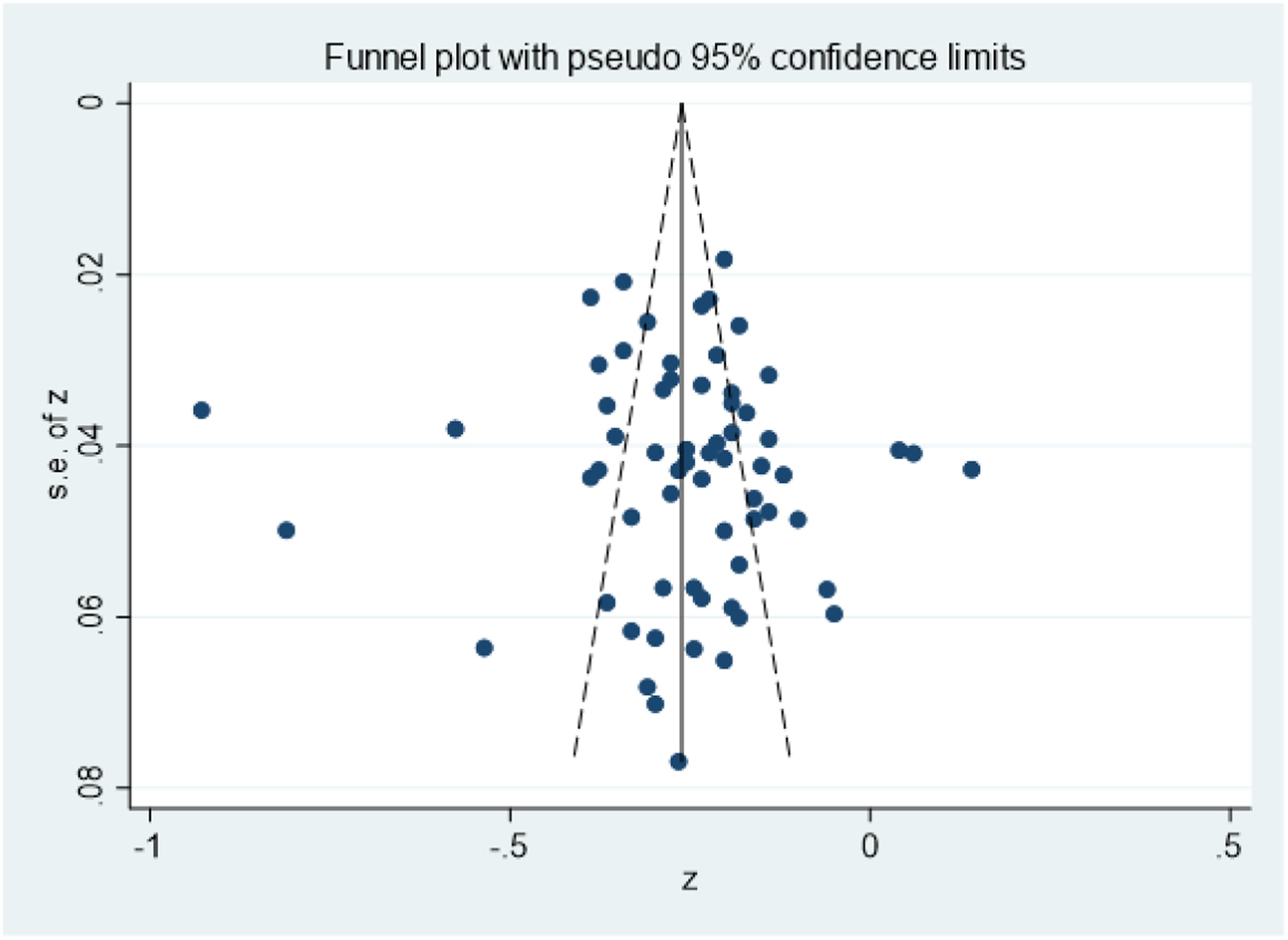
Heterogeneity Test
Random-model of the correlation between self-esteem and MPA.
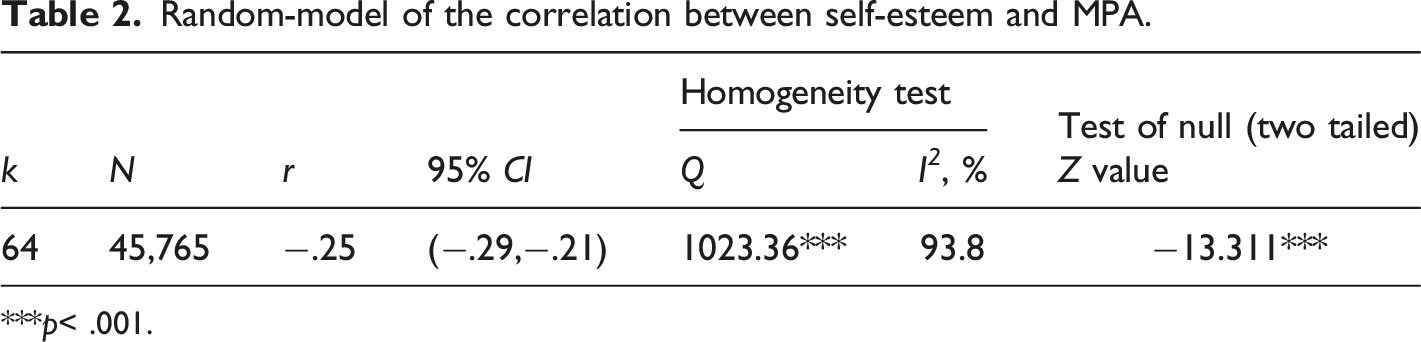
***p< .001.
Main Effect Test and Sensitivity Analysis
The random-effect model shows that the correlation coefficient between self-esteem and MPA is −.25(95%CI: −.29 to −.21) (See Table 2). According to the standard proposed by Gignac and Szodorai (2016) (r = .10, weak correlation; r = .20, medium correlation; r = .30, strong correlation), the correlation coefficient of self-esteem and MPA in our study is between .20 and .30, which can be considered that there is a medium negative correlation between them. The forest plot of the main effect is shown in Figure 3. Sensitivity analysis shows that the effect size fluctuates between −.29 and −.22 when any single study is deleted. Thus, the meta-analysis results of this study is stable and reliable. Forest plot for the relationship between self-esteem and mobile phone addiction.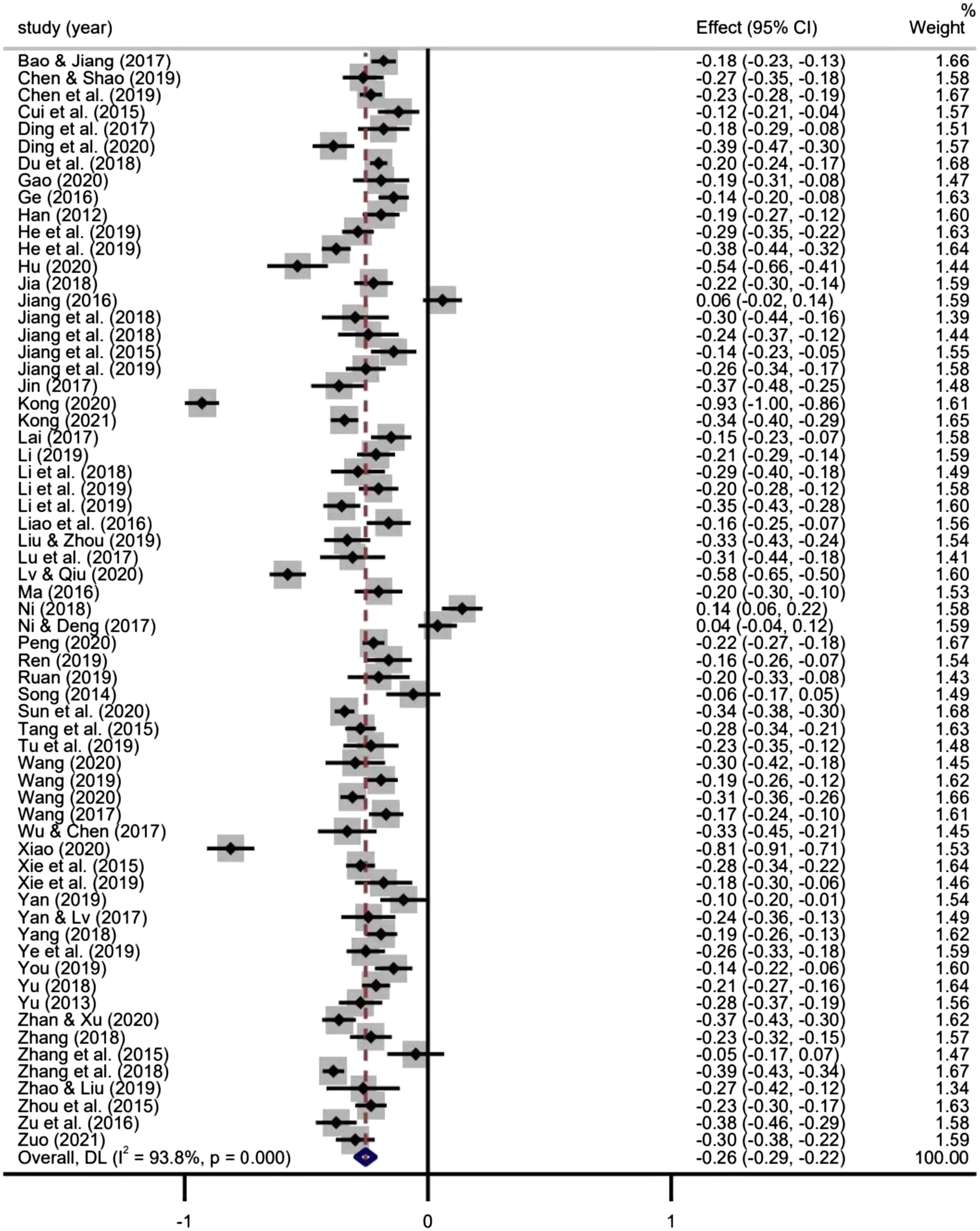
Moderating Effects Analyses
Subgroup analysis of moderator variables.
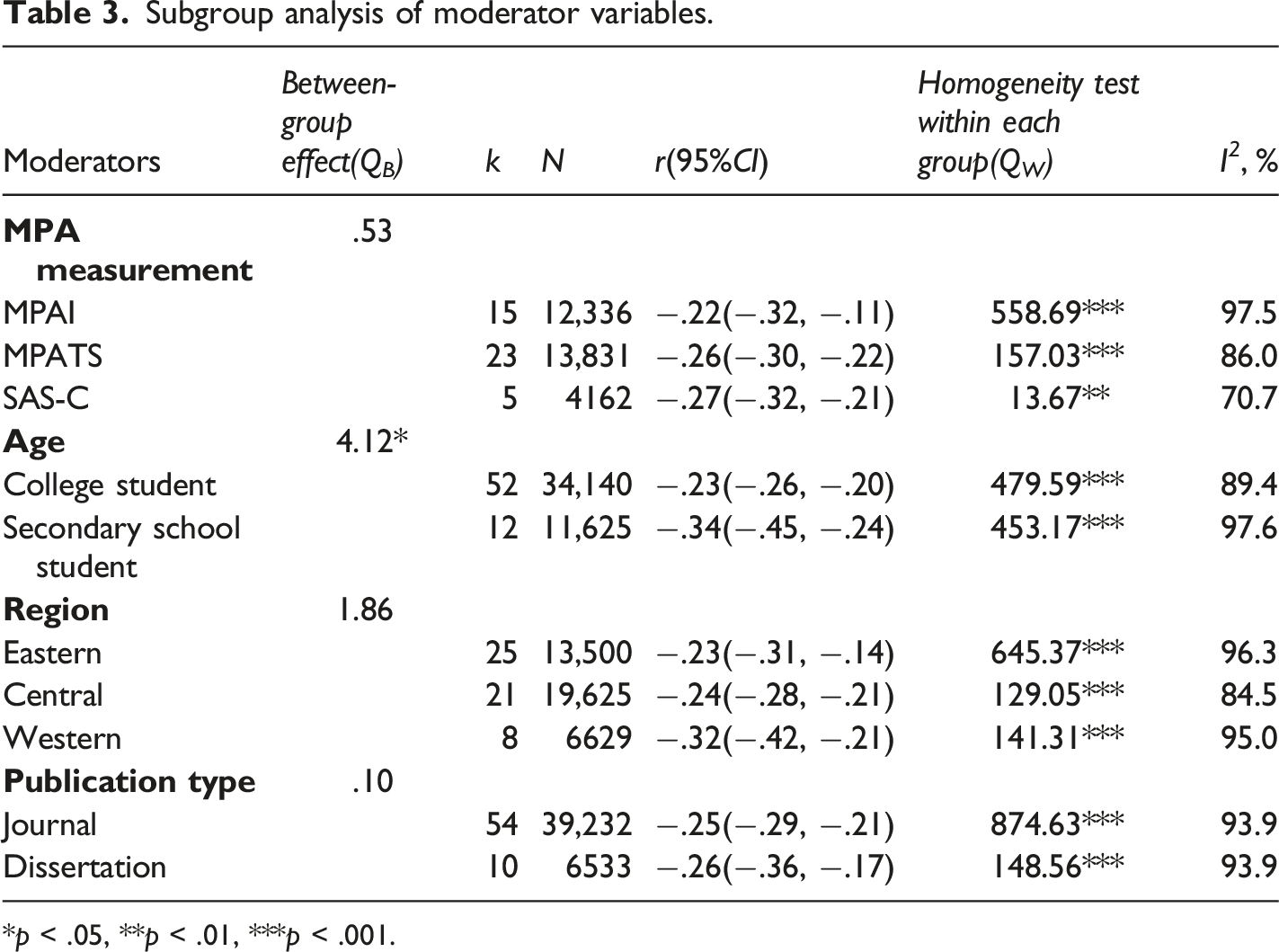
*p < .05, **p < .01, ***p < .001.
Meta-regression analysis of moderator variables.
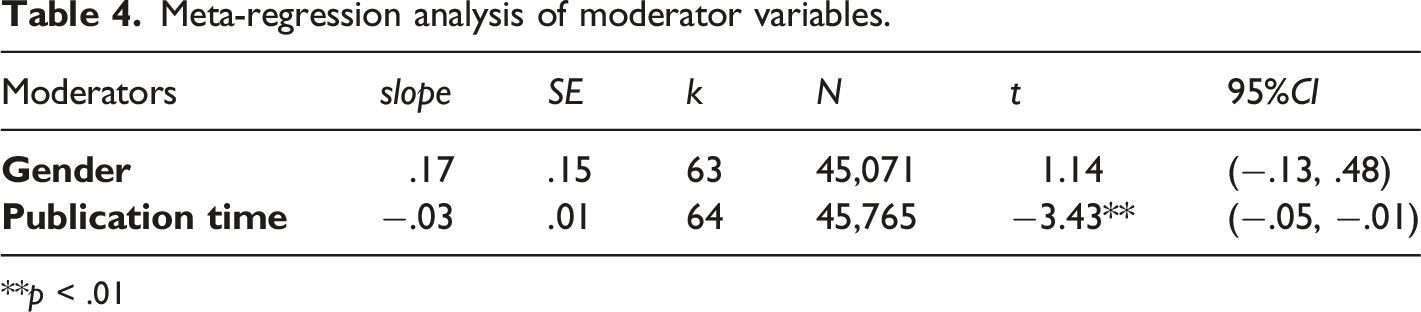
**p < .01
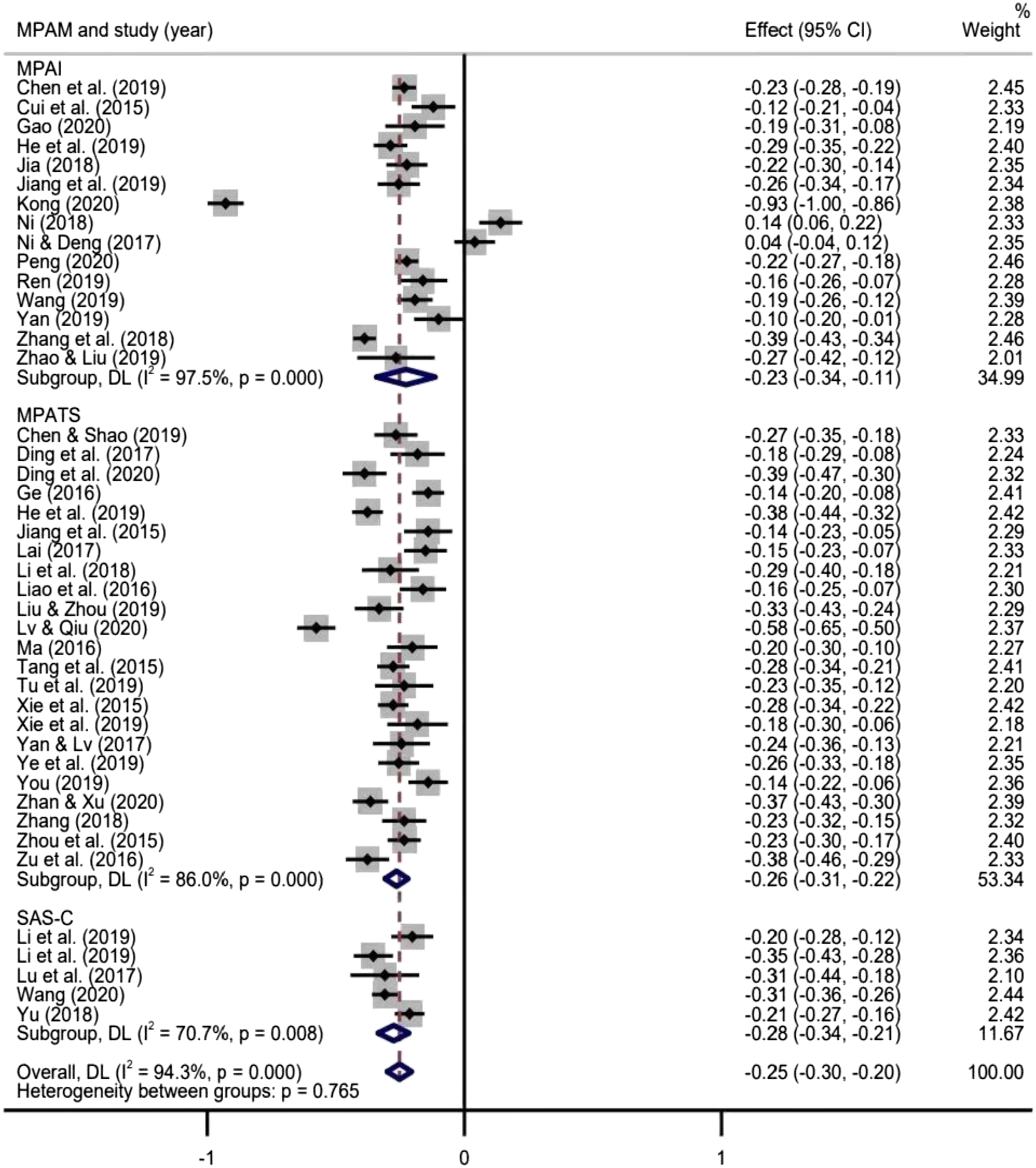
Forest plot for the moderating effects of the mobile phone addiction measurement instrument.
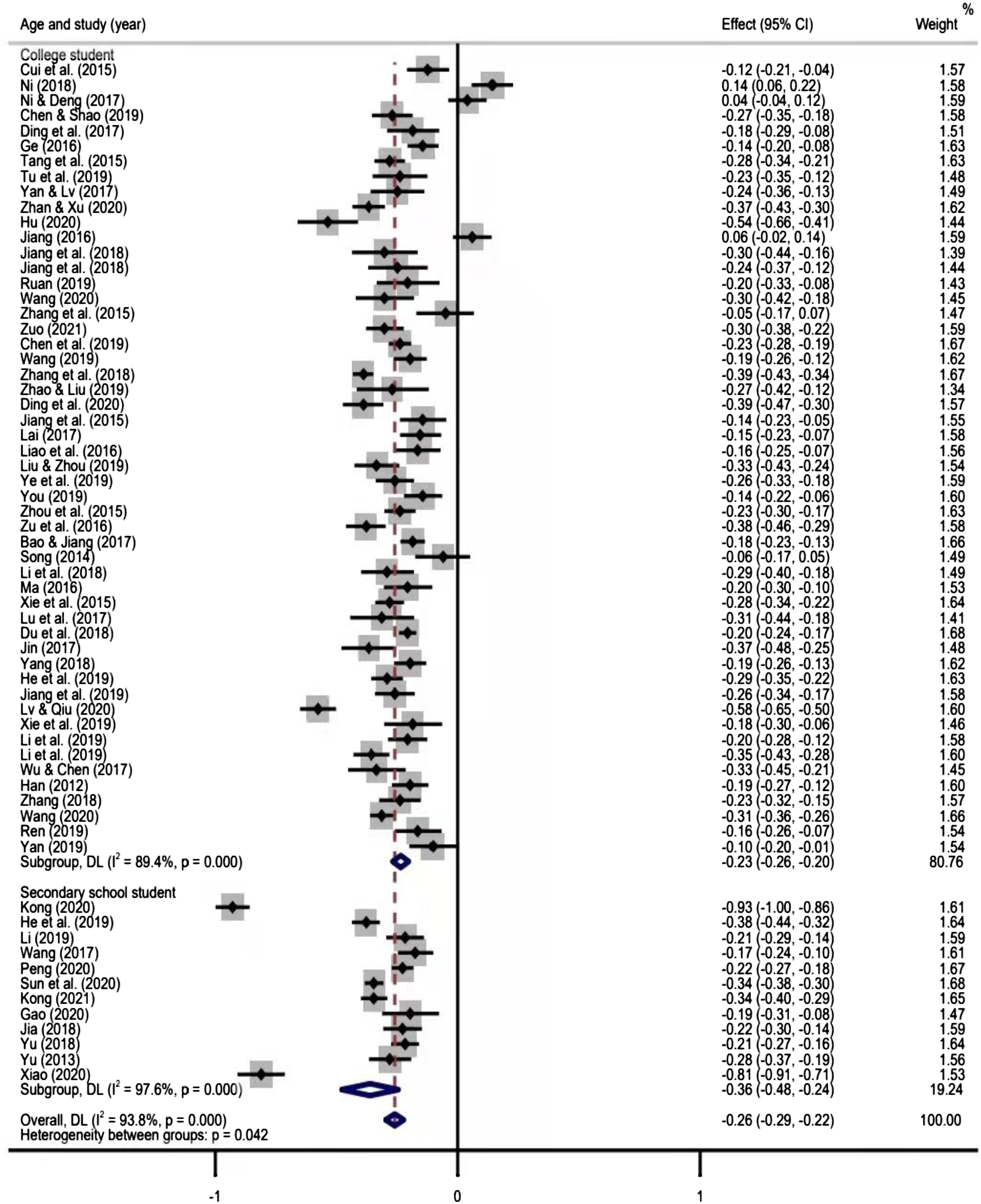
Forest plot for the moderating effects of age.
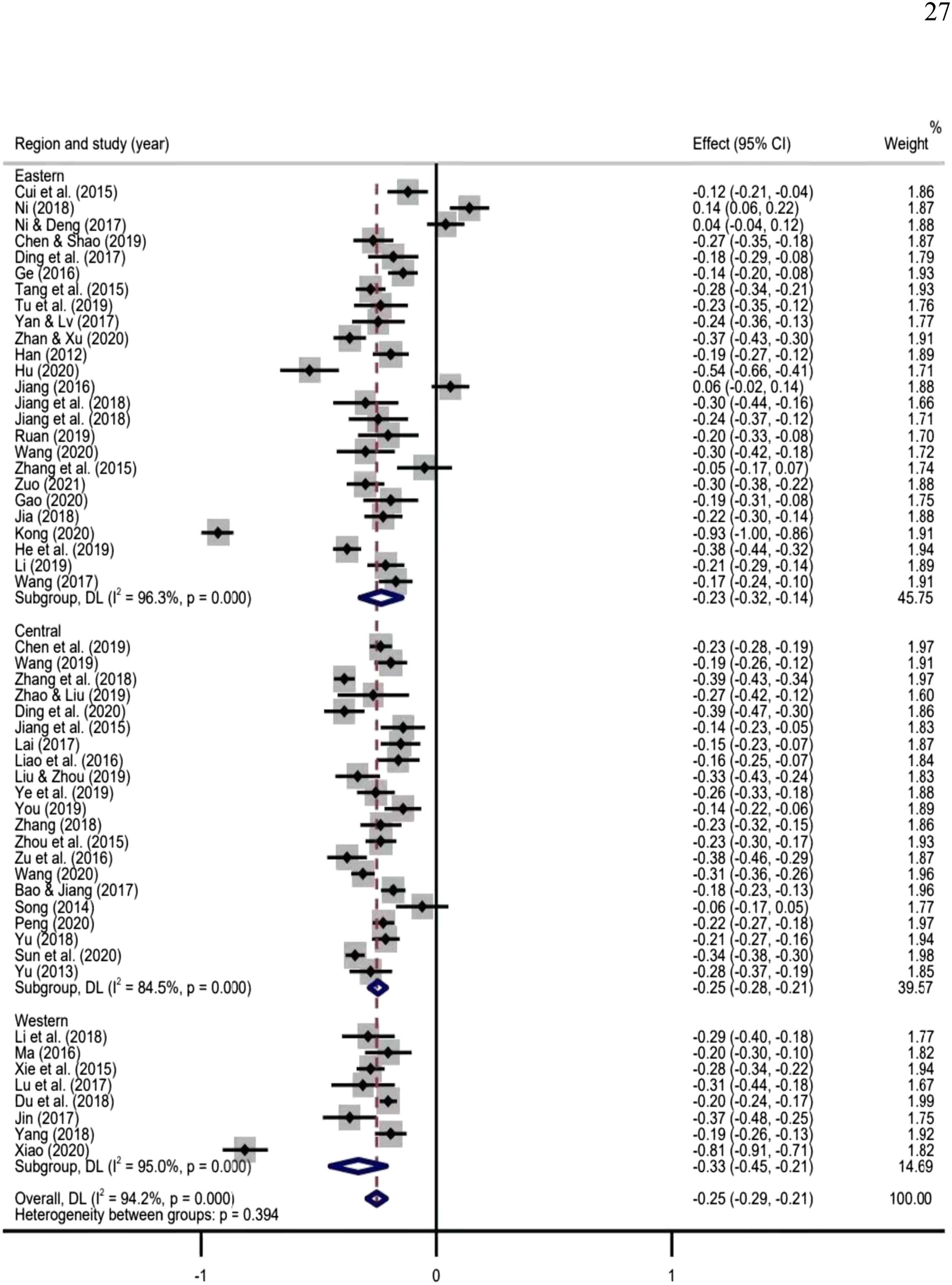
Forest plot for the moderating effects of region.
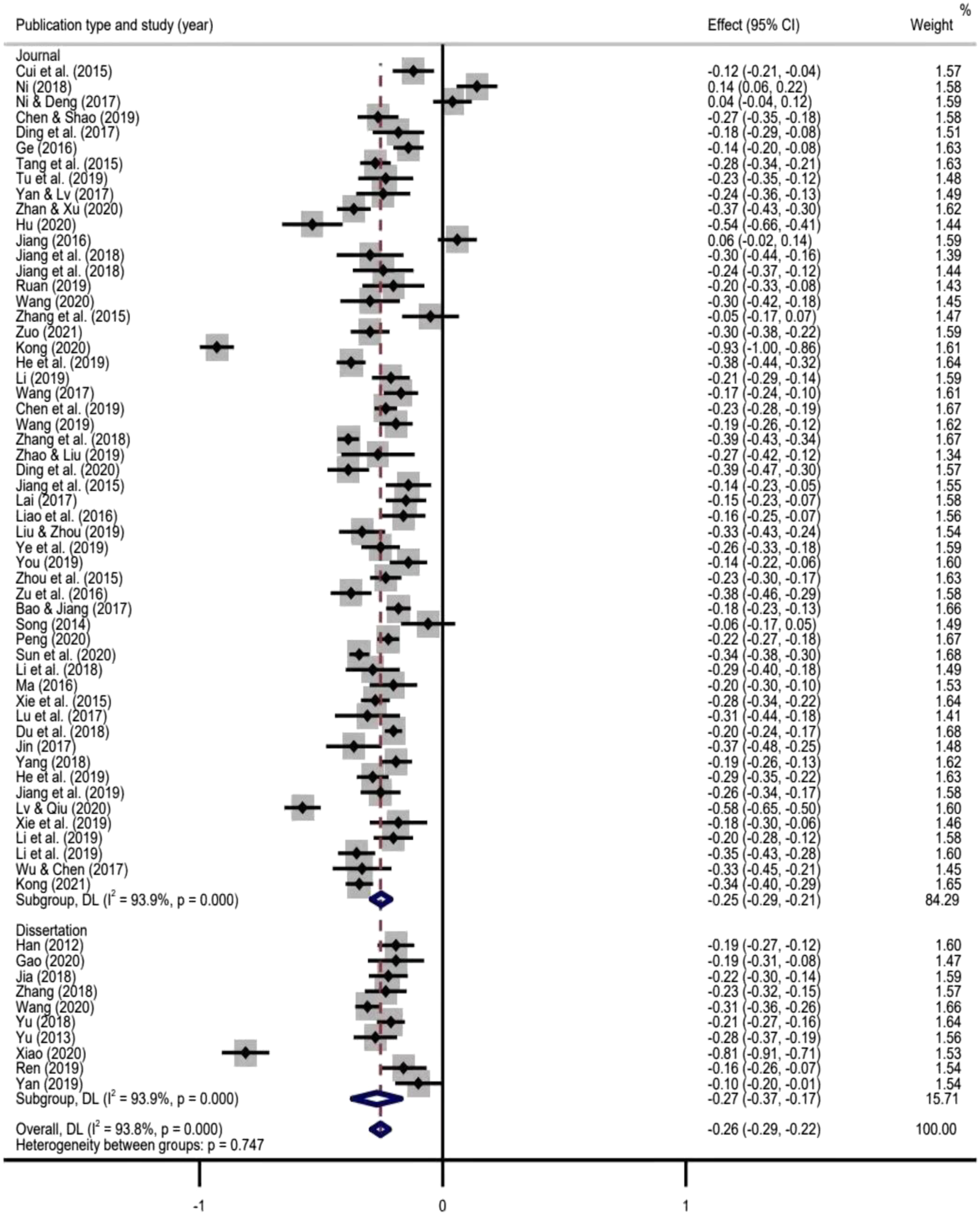
Forest plot for the moderating effects of publication type.
Discussion
Relation Between Self-Esteem and MPA
As far as we know, this is the first time that researchers have used meta-analysis to explore the relationship between self-esteem and MPA of adolescents in the Chinese mainland. We found that self-esteem has a significant negative association with MPA. This result strongly supports the conclusions of most studies (Ruan, 2019; Tang et al., 2015; Tu et al., 2019), as well as the viewpoint of problematic mobile phone use pathway model and cognitive-behavioral model (Billieux et al., 2015; Davis, 2001). The result shows that the lower one’s self-esteem, the higher the degree of addiction to mobile phones. People with low self-esteem are more dependent on using mobile phones to maintain relationships with others and seek comfort from others, and they are easily attracted to the world in mobile phones because of their maladaptive cognition of themselves and the real world (Billieux et al., 2015; Davis, 2001), which may be accompanied by a high MPA. Or it could be that the higher an individual is addicted to mobile phones, the lower his/her self-esteem. Namely, self-esteem decreases with MPA behavior. Adolescence is the key stage for students to develop their self-esteem (Ma et al., 2021), but the poor grades and interpersonal barriers caused by MPA are not conducive to the development of self-esteem (Kates et al., 2018; Lai, 2017; Lee et al., 2016). Therefore, MPA behavior may cause individual inferiority complex, affect their subjective evaluation of themselves, and ultimately influence their self-esteem.
Moderating Role of MPA Measurement Instrument
The relationship between self-esteem and MPA is not affected by MPA measurement instruments. The reason might be that although the MPA measurement instruments are quite different in dimensions, applicable groups and details, they all draw lessons from the research methods and ideas of Internet addiction and take the basic symptoms of Internet addiction proposed by Young (1998) as reference. Hence, their measurement results all truly reflect the nature of MPA, and they are highly consistent in measuring MPA. Besides, some Chinese scholars used self-made scales in their studies. According to Card (2012), subgroups with effect sizes less than 5 were not included in the analysis to ensure the accuracy of the results. Thus, whether the relationship between self-esteem and MPA is affected by a few testing instruments needs further confirmation in the future.
Moderating Role of Age and Gender
Age has a significant moderating effect on self-esteem and MPA. The correlation between self-esteem and MPA of secondary school students is stronger than that of college students. The reason may be that secondary school students and college students have differences in psychological maturity. According to Eight Stages of Development Theory proposed by Erikson (1959), individual development is a gradual process, which needs to go through eight stages of psychosocial development and gradually mature. In his view, secondary students and college students are at different stages of psycho-social development. Specifically, secondary school students are building their sense of identity, while college students have already passed this stage and are facing the next challenge (Erikson, 1959). Correspondingly, college students may have a higher psychological maturity, which may help them adopt a more mature coping style to deal with their negative emotions caused by low self-esteem instead of choosing invalid methods such as indulging in mobile phones (Demirci et al., 2015; Zhang et al., 2020).Therefore, the association between self-esteem and MPA is weaker among college students than secondary school students. This view is also supported by a comparative study on Korean students (Lee, 2019), which concludes that the correlation coefficient between self-esteem and MPA is highest in junior high school students (r = −.34), lower in senior high school students (r = −.28) and lowest in college students (r = −.22).
The gender of participants does not moderate the negative relation between self-esteem and MPA among Chinese adolescents. Although there are differences in self-esteem and prevalence of MPA between boys and girls (Leung et al., 2007; Wang et al., 2021b), there is no obvious difference between the two groups in the relationship between self-esteem and MPA. One possible reason is that mobile phones have many functions which can meet both the social needs (talking to others) preferred by girls and the entertainment needs (playing games) preferred by boys (Mohamed & Mostafa, 2020; Roberts et al., 2014; Zulkefly & Baharudin, 2009). So, it may be universal for low self-esteem groups to solve negative emotions by mobile phones (Zhang et al., 2020). Another meta-analysis also found that gender has no significant moderating effect on the correlation between MPA and anxiety, depression and sleep quality (Yu & Liu, 2019). In addition, since most articles included in this paper do not report the correlation coefficient between self-esteem and MPA in male and female respectively, this paper is based on the proportion of female samples in the total sample to analysis the moderating effect of gender, which may not be rigorous enough. Future research should try to count the correlation coefficients between self-esteem and MPA in male and female groups respectively (if reported), so as to draw more credible conclusions.
Moderating Role of Region
The region also does not moderate the negative correlation between self-esteem and MPA, which is in disaccord with our expectations. Although there are differences in economy among the eastern, central and western regions, the negative relationship between self-esteem and MPA may be a common phenomenon among adolescents in the Chinese mainland. It may be because of the decline in the price of mobile phones, which has made mobile phones an ordinary tool in people’s lives regardless of whether the regional economy is developed or not (Huang et al., 2022). As a matter of fact, some empirical studies have found that there is no significant regional difference in both self-esteem and MPA of Chinese mainland adolescents (Zhang, 2018; Jia, 2018), which support our finding. Therefore, the difference of the correlation between self-esteem and MPA among different regions is not obvious.
Moderating Role of Publication Type and Publication Time
The publication type can’t moderate the negative correlation between self-esteem and MPA. Although there are some differences in the effect sizes between journal papers and dissertations in the articles included in meta-analysis (r=−.25, r=−.26), the differences are not significant (p=.712). That is to say, the quality of articles about the relationship between self-esteem and MPA is relatively stable. The result of publication bias test (i.e. no publication bias) also suggests that the effect of publication type is not significant.
The correlation between adolescents' self-esteem and MPA is affected by the publication time of literature. As time goes on, the correlation between self-esteem and MPA is stronger. This is consistent with the results of a meta-analysis on the relationship between social support and mobile phone dependence of Chinese students (Guo & He, 2017). The moderating effect of publication time may be related to the increasing popularity of mobile phones. According to the accessibility hypothesis of addiction proposed by Mann (2005), the addiction risk will increase with the increase of the availability of “addictive substances”. With the popularity of mobile phones, there are more ways for adolescents to get mobile phones (Xiong et al., 2021). Not only can they use their parents' mobile phones to surf the Internet, but more and more adolescents have their own mobile phones (Yang et al., 2019). This trend correspondingly increased the risk of MPA (Guo & He, 2017; Huang et al., 2022). Meanwhile, in this case, individuals with low self-esteem can use mobile phones to relieve bad mood more conveniently (Xiong et al., 2021). Consequently, the correlation between self-esteem and MPA gets stronger with time. In addition, it may also be related to the increasing mental stress in recent years. With the increasingly fierce social competition, the learning pressure and peer pressure faced by adolescents are also increasing (Xiao, 2020). People with low self-esteem often can’t cope well with stress and tend to adopt negative coping styles of shrinking and escaping, such as indulging in mobile phones (He et al., 2022; Lu et al., 2021). This phenomenon may also lead to the negative correlation between self-esteem and MPA increasing with time.
Practical Implications
The conclusion of this meta-analysis brings some enlightenment to the prevention and control of adolescents’ MPA behavior. Firstly, the negative correlation between self-esteem and MPA reminds us that cultivating and maintaining students' self-esteem level may be an effective way to reduce the risk of MPA. For individuals with low self-esteem, parents should choose positive parenting style to protect and improve their self-esteem, such as giving them unconditional love and respecting their ideas. Educators could actively organize meaningful social activities and encourage students to take part in them, such as helping left-behind children, visiting lonely empty nesters, volunteering for environmental protection and so on, which can not only help students cultivate self-esteem and realize self-worth, but also help them stay away from mobile phones. Secondly, the moderating effect of age shows that the correlation between low self-esteem and high MPA is stronger among low age period adolescents. This result suggests that more attention should be paid to improving self-esteem when coping with secondary school students' MPA. Parents and teachers should keep a close eye on the changes of secondary school students’ self-esteem in a timely manner and give more support and affirmation to students with low self-esteem (Wang et al., 2021a). Secondary school can strengthen mental health education and establish a multi-evaluation mechanism to help students improve self-esteem level and make self-evaluation correctly. Thirdly, facing the popularity of mobile phones and the trend that correlation between self-esteem and MPA is gradually increasing with time, our society should deal with MPA behavior more seriously in future. Although the trend of integrating mobile phones into life is unstoppable, educators and parents have an obligation to guide students to treat mobile phones correctly and help them develop good habits of mobile phone use. In addition, anti-addiction systems for adolescents have been preliminarily developed and applied to short video applications. In the future, this kind of technical protection could be further improved, and extended to more applications that easily lead to mobile phone addiction.
Limitations and Prospects
In this study, meta-analysis is used to explore the relationship between adolescents’ self-esteem and MPA. It is found that self-esteem is negatively correlated with MPA, which provides new evidence for the long-standing debate about their relationship. However, this study also has some limitations: First of all, except for a few studies, most studies use SES proposed by Rosenberg to measure self-esteem. Hence, this paper didn’t test the moderating effect of self-esteem measurement instruments. When studies using other scales increase, researchers can test the moderating effect of different self-esteem measurement instruments in the future. Secondly, this study only investigates the overall correlation between self-esteem and MPA, but not the relationship between self-esteem and various dimensions of MPA. However, the correlation between self-esteem and each dimension of MPA may be different, which deserves further study in the future. Thirdly, this study mainly focuses on the correlation between self-esteem and MPA. However, longitudinal studies, such as prospective studies, usually focus on how self-esteem is related to MPA behavior later in life, which is different from concurrent links. Meanwhile, the data collected by longitudinal design has a time span and may be interfered by external factors, so it may not reflect the real correlation between the two variables. Considering the above reasons, we didn’t include longitudinal research in the current meta-analysis. Therefore, although this study has clarified the negative correlation between self-esteem and MPA, the controversy about causality between them is still waiting to be resolved. For example, some studies show that MPA will lead to low self-esteem (Tu et al., 2019; Mohamed & Mostafa, 2020), while other studies show that self-esteem will affect MPA (Kim, 2019; You et al., 2019). In future meta-analysis, it is necessary to pay attention to longitudinal research samples and analyze the causality between them. Lastly, the data used in the study are all from China, so researchers can discuss whether the results are applicable to other cultural backgrounds in the future.
Conclusion
The meta-analysis shows: (1) there is a negative correlation between adolescents' self-esteem and MPA, namely individuals with low self-esteem are more likely to be addicted to mobile phones; (2) age and publication time can significantly moderate the relationship between self-esteem and MPA, but MPA measurement instruments, gender, region and publication type have no significant moderating effect. In the future, researchers should also pay attention to tracking research on the relationship between self-esteem and MPA, so as to understand the dynamic changes in the relationship between them better.
Footnotes
Acknowledgments
Haitao Huang is the co-first author. All authors read and approved the manuscript.
Author Contributions
Yipei Liang and Haitao Huang provided the idea, designed this study and wrote the manuscript. Yueming Ding and Yiming Zhang contributed to data analysis and data collection. Guangli Lu and Chaoran Chen contributed to revised this manuscript.
Declaration of Conflicting Interests
The author(s) declared no potential conflicts of interest with respect to the research, authorship, and/or publication of this article.
Funding
The author(s) disclosed receipt of the following financial support for the research, authorship, and/or publication of this article: This research was Sponsored by Graduate Education Reform and Quality Improvement Project of Henan Province (grant numbers: YJS2021AL074), Graduate Education Innovation and Quality Improvement Project of Henan University (grant numbers: SYL19060141), Planning and Decision Consultation Project of Henan Province (grant numbers: 2018JC38).
