




Abstract
This study explores challenges senior inmates face in a Norwegian prison and evaluates the “Come and Meet Each Other” (CAMEO) program's effects on their life, focusing on changes in policy and practice to transform inmates’ perceptions of their environment. Utilizing a mixed-methods approach, including survey and interviews, thematic analysis revealed that CAMEO enhances inmates’ daily lives, dignity, and community integration, promoting a more normal life. Despite positive outcomes, issues persist with drug rehabilitation cohabitation and prison structure. Recommendations include improving facility design, expanding activities, and enhancing staff training. The findings highlight broader issues in correctional settings and suggest areas for further research on recidivism and reintegration.
Introduction
Senior inmates often serve their sentences in maximum-security prisons, despite assessments suggesting lower-security placements. These high-security facilities provide specialized medical care and enhanced supervision which lower-security ones lack due to limited resources (Hayes, 2017). This misplacement, although legal, is not optimal, as bureaucratic policies and lack of re-evaluation in such institutions tend to create challenges to rehabilitation for aging incarcerated persons (Mann, 2012).
Although most people cease criminal activity in their 30s (Bjørgo, 2015), the number of older inmates has increased, contradicting this trend (BBC News, 2019; CBS, 2023; Kriminalforsorgen, 2022; Kriminalvården, 2022). Between 2010 and 2020, inmates over 50 have significantly increased in the Netherlands, Canada, and England and Wales, while other age groups have declined (Robinson, 2023). Sweden and Denmark are exceptions, showing no significant change in older inmates (Kriminalforsorgen, 2022; Kriminalvården, 2022). Reports from Her Majesty's Inspectorate of Prisons and the Australian Institute of Criminology emphasize the need for tailored measures for senior inmates, including adapted prison conditions, staff training, and individual health assessments (Baidawi et al., 2011).
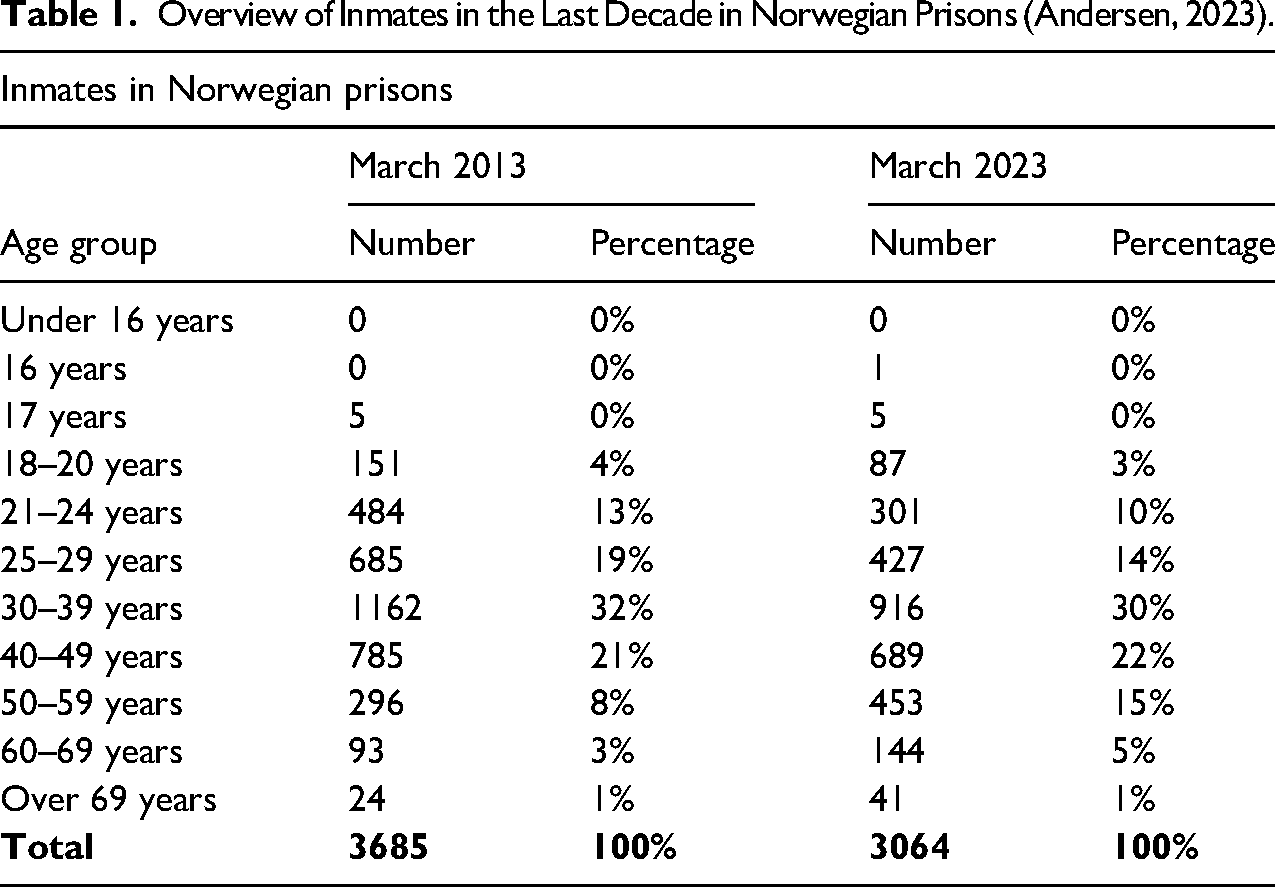
In Norway, inmates aged 50 to 69 increased by over 50%, and those over 69 by over 70%. In March 2013, there were 413 inmates aged 50 or older (12% of inmates), which rose to 638 (21%) by March 2023. Table 1 below illustrates these numbers.
Overview of Inmates in the Last Decade in Norwegian Prisons (Andersen, 2023).
The Norwegian Correctional Service (KDI) acknowledges this increase, attributing it to political priorities and changes in sentencing frameworks (Kriminalomsorgsdirektoratet, 2020). A 2022 survey on health and care needs among inmates highlighted the importance of improving conditions for senior inmates and emphasized that rehabilitation involves their return to society (Magnussen & Tingvold, 2022). Researchers stress the need for effective strategies to end criminal careers.
Rehabilitative Factors
In 2021, KDI introduced its business strategy for 2021 to 2026, focusing on visions, values, strategic areas, driving forces, challenges, and future perspectives. Central to the strategy is the vision of “sentence that changes,” which aims to help offenders desist from criminal behavior, leading to positive life changes (Kriminalomsorgen, 2021). Key factors such as dispositions, exposure to crime-promoting opportunities, and social control are crucial in understanding criminal choices. Justice-involved people typically have lower education levels, more health problems, and often face substance abuse and financial challenges, contributing to criminal behavior (Skardhamar, 2017). Andrews and Bonta (2016) stress addressing these criminogenic needs through the risk-need-responsivity (RNR) model, which categorizes needs as static (e.g., past criminal history) or dynamic (e.g., substance abuse, peer associations).
In Norway, the Norwegian Correctional Service uses BRIK, a tool emphasizing “What works,” “Desistance theory,” “Restorative justice,” and “Motivational interviewing” to support incarcerated individuals’ return to society (Hansen et al., 2014). This model focuses on the re-entering person's active role in their change process and the community's role in rehabilitation. Desistance, the process of ceasing criminal activity, is crucial for crime prevention. Many offenders start young, peak in their late teens or early adulthood, and typically stop by their 30s (Bjørgo, 2015). The Norwegian Correctional Service emphasizes strategies that encourage incarcerees to desist from crime and change their behavior patterns, leading to positive life changes (Virksomhetsstrategi for kriminalomsorgen, 2021).
Rehabilitative measures in prisons include schooling, leisure activities, work training, and collaborations with external stakeholders like NAV, health services, and voluntary organizations. The inmate holds primary responsibility for their rehabilitation, addressing both risk and protective factors (Justis- og beredskapsdepartementet, 2021). Interventions at different social levels, such as schools and leisure clubs, can foster coping experiences and protective factors, though certain groups often lack necessary support (Rundehovde & Skjevrak, 2018). This underscores the need for an inclusive approach recognizing each incarcerated person's unique circumstances and potential for change.
Research Context
Over recent decades, several countries have created special units for senior inmates to address the changing prison demographics. In 2014, the U.S. state of Kansas department of corrections established a separate unit for senior inmates at the El Dorado Correctional Facility. Opened in 2015, the unit features single-level accommodations with no stairs, large open spaces, and age-appropriate activities and job opportunities. The facility has reported lower incidences of violence and a safer, less stressful environment (Riggin & Redford, 2017).
Similarly, Germany opened Singen Prison in Baden-Württemberg in 1970, designed for males aged 62 and older, with a sentence of at least 15 months. This prison allows inmates to move freely within the facility and offers activities and work opportunities tailored to their age group, aiming to reduce loneliness and prepare them for release (Humblet, 2021).
In Norway, some prison units have created separate facilities for senior inmates. These units include health departments addressing age-related challenges and housing inmates with low risks of violence and escape. They have reported reduced costs due to specialized rehabilitation programs (Humblet, 2021).
These initiatives underscore the need for specialized interventions for senior offenders, integrating tailored health and care services into the prison system. However, specific measures for senior inmates remain limited. Voluntary organizations, such as the Salvation Army, play a crucial role. In England and Wales, the “Come and Meet Each Other” (CAMEO) program offers day center activities for senior inmates, organized by Salvation Army staff. Inspired by this, a similar pilot project was launched in Vestland County, Norway, on September 1, 2023, funded by the Salvation Army for two and a half years, and employing healthcare professionals to run the CAMEO activities.
These programs illustrate the importance of tailored interventions to promote the social and mental well-being of senior inmates and demonstrate how cooperation between state institutions and voluntary organizations can improve conditions for this group.
Problem Statement
In this article, the specific challenges senior male inmates face during their sentences in high-security prisons in Norway are explored. Senior inmates, according to the Norwegian Correctional Service (Kriminalomsorgsdirektoratet, 2020), are those who are 50 years of age or older, a definition is in line with the literature (Humblet, 2021; Omolade, 2014) and supported by the World Health Organization (WHO, 2014). Senior inmates face unique health and social challenges that can make serving a sentence especially difficult. In particular, this requires both structural changes and a wider range of activities and interdisciplinary cooperation to address their needs (Kriminalomsorgsdirektoratet, 2020). To that end, this article assesses whether and how programs such as the CAMEO project investigated in this study can contribute to ensuring that senior inmates’ lives in prison resemble as much as possible life on the outside by contributing to their rehabilitation (Maruna, 2016). The main question that has guided this study is: How does the CAMEO program affect senior inmates’ experience of the prison environment, and how can the program be further developed to better meet their needs and expectations?
Theory
This article examines the challenges faced by senior inmates through the lens of desistance theory, which centers on how individuals voluntarily stop engaging in criminal behavior (Laub & Sampson, 2006; Maruna, 2001). Desistance involves personal transformation and the adoption of a new self-image that does not align with past criminal identities. Age-related changes in capabilities and motivations can influence this process. Research shows criminal activity decreases with age (Bjørgo, 2015; Gottfredson & Hirschi, 1990; Laub & Sampson, 2006), but the prison environment can either support or hinder this natural inclination.
Programs offering meaningful activities and social engagement opportunities are crucial for fostering a sense of agency among senior inmates, enabling active participation in rehabilitation and reintegration. Such programs promote supportive relationships and positive social reinforcements, significant in desistance theory. The quality of relationships with prison staff, fellow inmates, and participation in rehabilitation programs can significantly influence desistance.
Desistance theory advocates for rehabilitative rather than punitive approaches, supporting identity transformation and reinforcing inmates’ decision to desist from crime, aligning with previous research findings. Understanding personal and situational factors influencing senior inmates’ crime cessation guides interventions suited to their life stage and circumstances. These interventions should be based on the principle of normality, meaning prison life should resemble life outside as much as possible, reflecting societal norms and values (Justis- og beredskapsdepartementet, 2021).
Integrating public services into the prison system is pivotal. This administrative cooperation ensures inmates access the same services available to society, such as healthcare, social security, education, library services, and religious services. This approach strengthens rehabilitation and integration, providing ideal conditions for inmates to desist from criminal behavior voluntarily.
The Norwegian Correctional Service uses the import model, where public services are provided to inmates by the same actors serving the general population, as mandated by § 4 of the Criminal Enforcement Act (Norway, 2001, § 4). Imported services include libraries, schools, religious assistance, and healthcare, provided by external agencies responsible for professional and financial aspects (Justis- og beredskapsdepartementet, 2021). Implemented in 1969, the import model is recognized for improving inmates’ rehabilitation and integration into society (Fridhov & Langelid, 2017). However, its implementation faces challenges, requiring a common understanding and coordination between the Correctional Service and public agencies, despite differing values, norms, and priorities (Nesheim et al., 2019). Technological needs from imported services can challenge prison security, necessitating extensive adaptations in infrastructure, officers’ roles, and work processes to ensure effective interdisciplinary collaboration (Fridhov & Langelid, 2017).
Method
Data Collection
The research question was explored through a mixed-methods approach that included an initial comprehensive literature review to inform the remainder of the data collection phase. This was followed with the design of a 10-question quantitative survey that utilized a 10-point Likert scale (ranging from 1 as Strongly Disagree to 10 as Strongly Agree) to gauge the inmates’ sentiments on CAMEO quantitatively. A third phase was comprised of semi-structured qualitative interviews with inmates. Finally, a focus group with CAMEO/prison personnel was carried out to obtain a more balanced perspective of the issue. Data collection was conducted in a prison in Vestland County, Norway, from May to June 2024.
To begin, a quantitative survey was administered to senior inmates participating in the CAMEO program. The survey aimed to gather broad insights into the participants’ perspectives and experiences. An invitation letter detailing the project information and a consent form were provided to ensure informed consent. Each participant was assured of their right to withdraw from the study at any time without any consequences. Of the 15 inmates in the CAMEO program, 11 responded (73% response rate). The reasons for non-participation included: one individual being occupied with work; one being unable to speak Norwegian or English; and two not having engaged in the program long enough to provide meaningful feedback.
Following the survey, individual semi-structured interviews were conducted to gain deeper insights into the survey findings and explore themes identified in the literature review. Prior to the interviews, participants were provided with detailed information about the interview process and their right to decline or withdraw. A total of six interviews were conducted: one with a Salvation Army employee involved in the program and five with senior inmates. Each interview lasted approximately 45minutes, and was held in a private setting within the prison to ensure confidentiality. This sample size, although seemingly small, represents nearly 50% of the inmates eligible to evaluate the program, thus providing a representative understanding of the program's impact. The interview schedule was carefully designed based on the initial survey results and pertinent themes identified in the literature review, ensuring the questions were relevant and comprehensive.
Finally, a focus group interview included two CAMEO employees and two prison staff officers. They were informed about the research objectives and their right to decline or withdraw. This focus group provided valuable insights into the perspectives of those involved in the administration and execution of the CAMEO program.
Data were collected and analyzed in Norwegian, and citations were translated into English for reporting purposes. The views expressed are those of the authors, not necessarily those of the funders or participants, who were not involved in study design, data collection, analysis, interpretation, report writing, or the decision to submit the article.
Data Analysis
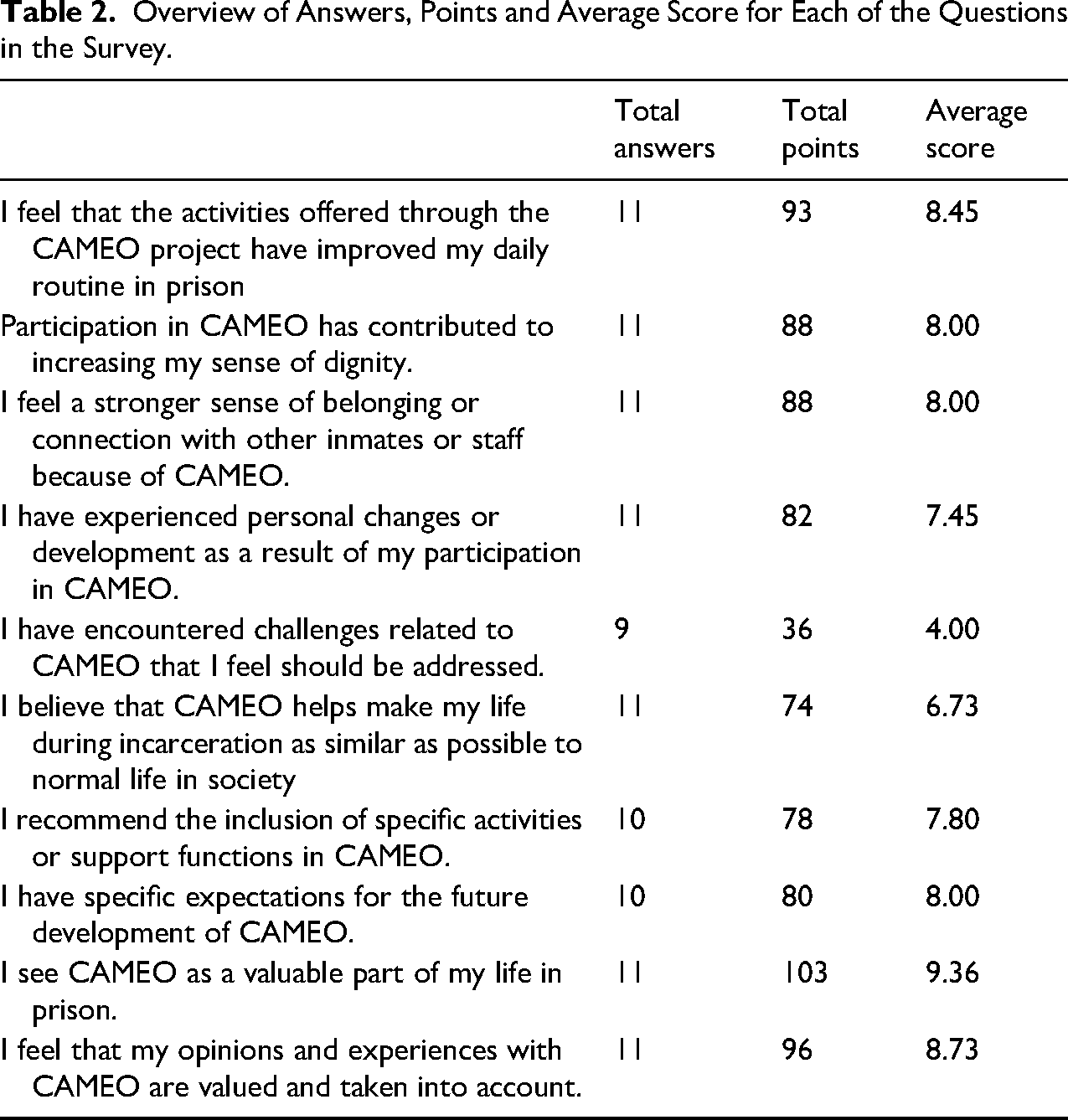
First, the quantitative data were collated and synthesized (see Table 2 below), providing the researchers with an overview of the perspective of CAMEO participants as well as informing the development of an interview guide for the qualitative semi-structured interviews carried out at a later point in the investigation. The interviews were audio recorded and transcribed verbatim. Data analysis followed a thematic approach in a piecemeal fashion (Braun & Clarke, 2006). The main concepts introduced by the research question were selected and used as themes from which categories were developed; coding was carried out in an inductive manner. Triangulation was employed by comparing findings from the quantitative survey, individual interviews, and focus group discussions, enhancing the study's validity and reliability.
Overview of Answers, Points and Average Score for Each of the Questions in the Survey.
This article explores the main themes that emerged from the analysis of data collected with senior inmates who participate in the CAMEO program. Data obtained through focus group reflecting the perspective of CAMEO and prison personnel are to be further explored elsewhere.
Results
The prison setting for this study was established in 1990, built with a humane approach to inmates in mind, and arranged for progression through sentencing. The facility covers an area of approximately 300 acres and is constructed as a village farm with groups of smaller buildings surrounded by a 7-meter-high wall. The operation of each housing unit is based on the inmates’ own efforts regarding cleaning and partly also cooking. The facility was the first Norwegian prison with such an architectural design, and includes an open ward outside the walls, its own church, school and workshop buildings, a gymnasium and a sports field.
In this setting, CAMEO is the first of program of its kind in Norway, although a somewhat similar set-up has been in operation in three different British prisons. It has 15 residents who have access to a day center with age-appropriate activities, as well as follow-up for psychological and physical needs. CAMEO is funded by the Salvation Army, and has a part-time nurse and a full-time occupational therapist in its team.
In the prison where CAMEO has been initiated, a department for senior inmates was already in place before the program began, but inmates claim to have noticed an improvement in life conditions since the program's introduction. Before, they observed that they only sat and played games and such, but now they feel more activated through meaningful activities and training opportunities. They believe they are now treated like “normal” people, which they appreciate - having the opportunity to sit together and talk to each other instead of just remaining in a cell. In CAMEO, they can freely utilize the common area until around three in the afternoon; an hour after that, they are returned to their locked cells.
On a normal day, they tend to sit and chat, play games and exercise, but CAMEO runs only on weekdays. CAMEO-personnel believe that the most important objective is to offer the seniors a reason to get up in the morning. Inmates have physical exercise several times a week in addition to games and activities that provide cognitive training (a sign of this are the several Lego sets inmates have painstakingly put together and that are now proudly on display in their common area).
Although CAMEO is primarily for senior inmates, there are also some younger residents with physical/cognitive impairments who benefit from the program. There is a great emphasis on the fact that none of those who participate in CAMEO struggle with drugs. This focus is highly appreciated by younger inmates, since controlling the wide use of illegal drugs in Norwegian prisons is a well-known challenge faced by the Norwegian Correctional Service (Solberg, 2023). In this sense, being granted a place in CAMEO helps younger inmates, who otherwise could be exposed to illegal drugs. However, participants have mentioned that lately some of the ward inmates are in drug-assisted rehabilitation (in Norwegian abbreviated as LAR), with addictions to heroin or morphine and receiving treatment with opioid-containing drugs in combination with other rehabilitation measures. Their concern is that those in treatment can facilitate access to such drugs to other inmates who do not have medical reasons for consumption. This can lead to great setbacks in their rehabilitation journeys. Yes, as I have a concern. We have people at LAR here […] and that opens the door for some abuse of the drug, and if someone comes from outside and into our group, there is a high chance that they will start to abuse, and I thinkideally, one will prefer not to have anyone at LAR here […] because they are sitting on a huge currency and a big temptation for many of us. That makes it difficult because you can come in as a first-time offender and have only smoked weed once in a while, and then you can come out addicted to Subutex and Methadone. Considering the way forward, it might mean a life in crime and an enormous burden on society.
Nevertheless, after approximately half a year of operation, it appears that well-being is quite high among those in the program, as illustrated in Table 2 below. On average, senior inmates agree that CAMEO has improved their daily routine in prison and has helped increase their sense of dignity, belonging, and togetherness. CAMEO is experienced as a valuable part of life in prison, as the program helps make their life during the execution of the sentence as similar as possible to normal life in society.
As well, the positive evaluations were confirmed by interview data. Respondents reported a good relationship with CAMEO staff, which, in turn, brings their in-prison experience much closer to life outside prison. They observe that CAMEO helps them to feel a greater sense of belonging and community with fellow inmates, as well as with staff: It works very well as a glue (…) There has been a bit of a gap between us and the Correctional Service. I feel CAMEO is somewhere in between, yes, they fight for us at meetings, they speak our case, and they want the best for us (“Ola”, senior male inmate, participant in CAMEO). You get a much better relationship with the [CAMEO] employees here than you had with prison officers. For example, and it is important to talk to people other than just one-off criminals […] and you feel like you can sort of drop your shoulders a little bit and yes…you do not have to be so careful about what you talk about or what you talk about with the CAMEO people, because they are very… Yes, very decent people, not so formal as officers, so to speak. (“Lars”, senior male inmate, participant in CAMEO)
Furthermore, there is an expectation that CAMEO can help with some structural and systemic challenges. For example, inmates have repeatedly reported that the design and implementation of rehabilitation and community reintegration strategies is inadequate, as public initiatives in these areas tends to be shouldered by civil society organizations. Another issue is the structural features of the old building, with many door thresholds and stairs, making it difficult for those who have ambulatory problems. When asked about how his daily life is affected by the facility's design, another senior inmate observed: There is no universal design here. I am mobility impaired, and I am visually impaired, and I have challenges with hearing. And there is nothing arranged for that, and it causes me to injure myself from time to time. And the prison staff are very aware of this, but they rely on the fact that it is not enough money. […] We just have to manage. […] The doors are sharp. Really. When you hit there, you cut yourself.” (“Erik”, senior male inmate, participant in CAMEO)
These are all valid points, especially in light of the Norwegian import model widely adopted in prison settings. Yet, it is unclear whether such responsibilities are within the scope of CAMEO's operations. Moreover, both CAMEO and prison staff have acknowledged that resources are sparse. An example is the fact that, due to lack of personnel, the ward for senior inmates is currently occupied by 15 individuals, even though it is capable of housing three times that number. In this sense, future investments in programs/activities focused specifically on the rehabilitation of senior inmates might be halted due to budgetary constraints.
Discussion
This study was set out to respond to the research question “How does the CAMEO program affect senior inmates’ experience of the prison environment, and how can the program be further developed to better meet their needs and expectations?”. This is addressed in the following sections.
How Does the CAMEO Program Affect Senior Inmates’ Experience of the Prison Environment?
In addressing the first part of the research question, the study team had to contend with the issue of whether the impact of the CAMEO program is measurable. This is a challenge in conducting assessments in the vast majority of rehabilitation programs.
Internationally, there is broad agreement that the execution of sentences for senior convicts is difficult, mainly due to their age-related health problems. This means that rehabilitation programming often has to be adapted from what is offered to younger incarcerated persons (Laub & Sampson, 2006; Maruna, 2001). This arrangement can be challenging for senior inmates, as it raises questions about what the individual can do and what the correctional service should facilitate.
To deal with these issues, the CAMEO program focuses on rehabilitative measures such as school, work, leisure activities, cultural offerings, and programs, all of which are essential for a successful return to society (Justis- og beredskapsdepartementet, 2021). Yet, motivating senior incarcerees presents unique challenges within the correctional system. One of the staff who participated in this study reported that few senior inmates seem interested in continuing their education while in prison. The reason is either they have already achieved a satisfactory level of education, or they lack motivation for further studies due to being retired or on disability benefits. In other words, the opportunities for traditional activities such as schooling or participation in the labor market in this age group are slimmer. Moreover, health issues such as mobility impairments that are quite common among senior inmates usually add to the list of obstacles hindering participation in rehabilitation programs. This is an observation that has been confirmed by both the personnel and the inmates who have participated in this study.
In this context and according to our analysis, the CAMEO program is innovative in offering age-appropriate activities that can address some of the above-mentioned challenges. The prison setting and staff also seem to be doing their best for the inmates. There is, nevertheless, still room for improvement as documented in the findings. In short, the program shows the potential to avoid a purely retention-oriented approach in correctional services. However, it remains to be determined whether the impact of programs such as CAMEO is measurable in relation to their actual effect on the rehabilitation process, given that these programs tend to deal with many inherited systemic and structural challenges that precede their existence. In any case, both this and previous studies point to the importance of continuously adapting and evaluating the offerings for senior inmates. It is essential that the correctional service does not function just as a detention institution, but actively works to rehabilitate and facilitate this unique group of inmates (Berenji et al., 2014).
Perhaps the main challenge of this study has been the need to develop a comprehensive evaluation framework that fully captures the impact of interventions on senior inmates and society. Give their unique physical, mental, and social needs, it is difficult to design and assess uniform senior inmate rehabilitation programs (Kerbs & Jolley, 2009). Health improvements can be a primary metric, including reduced incidence of chronic diseases, better mental health outcomes, and enhanced mobility. However, attributing these improvements solely to rehabilitative efforts such as CAMEO is complex due to pre-existing conditions and varying levels of care (Williams & Abraldes, 2007).
The metrics largely assessed in this investigation, such as increased participation in prison activities, improved social interactions, and self-reported life satisfaction, can be indicators of success. Drawing on the literature, it is possible to find tools like the SF-36 Health Survey that has quantified these variables (Ware & Sherbourne, 1992).The high levels of inmate engagement in CAMEO, which includes consistent attendance, active participation, and positive feedback can also be a sign of its success. Moreover, reduced incidences of violence, fewer disciplinary actions, and improved perceptions of safety provide observations that reflect effective interventions (Kerbs & Jolley, 2009).
However, measuring the success of in-prison programs must also consider post-release outcomes, such as continuity of medical care, housing stability, and employment. Metrics like reduced hospital readmissions and sustained engagement in community programs post-release are important (Aday & Krabill, 2011).While not the sole measure of success, reduced recidivism can indicate the long-term effectiveness of in-prison rehabilitation programs (Cohen, 2020). The challenge here is that recidivism has varied measures, such as rearrest, reconviction, or reincarceration. Each measure can yield different results, complicating comparisons across studies and interventions (Langan & Levin, 2002). Additionally, effective measurement requires long-term tracking of former inmates, which can be resource-intensive and logistically difficult, especially in the case of the elderly. Importantly, this tracking must account for different time frames and follow-up periods to capture true recidivism rates (Blumstein & Nakamura, 2009).
Another factor to take into consideration in measuring the success of in-prison programs based on post-release outcomes is the fact that offenders vary significantly in terms of their criminal history, socioeconomic background, and personal circumstances (Visher & Travis, 2011). These variations make it difficult to generalize findings and assess the impact of CAMEO across different groups. As well, factors such as community support, economic opportunities, and social networks play critical roles in an individual's likelihood to reoffend after leaving prison (Sampson & Laub, 1993). Equating CAMEO's impact (an in-prison intervention strategy) with an out-of-prison metric for success (recidivism rate) is inadequate unless all the external factors discussed here are considered. Thus, any assessment of CAMEO's impact on senior inmates cannot be extrapolated beyond the prison walls. Moreover, focusing solely on recidivism as a metric for evaluating the effectiveness of rehabilitative interventions overlooks other important outcomes, such as improved mental health, employment, and family stability. A comprehensive evaluation framework would have to consider these broader indicators of successful reintegration (Maruna, 2001).
Given these challenges, there is a growing recognition of the need for the development of a comprehensive evaluation framework. Such a framework would integrate various measures of success, reflect contextual factors, and account for the complex nature of criminal behavior and rehabilitation in both in-prison and post-release contexts. Only then, would one be able to assess the effectiveness of a rehabilitation program.
How Can CAMEO be Further Developed to Better Meet Their Needs and Expectations of Senior Inmates?
Within the correctional system, trust is a necessary social capital for cooperation between people that can be strengthened through employees’ developing positive relationships with inmates without resorting to legitimate power. That is, a balanced professional contact is necessary, where the relationship is neither too close, nor too distant (Nymo, 2021). Research by Liebling et al. (2011) has shown that strict enforcement of prison regulations often occurs when the relationship between officer and inmate is poor; this can undermine the dynamic security that helps deescalate potentially escalating situations (Nytrøen, 2021). It has also been illustrated that smaller prisons, with space for less than 50 inmates, often lead to better relationships and positive results due to closer interactions between staff and inmates (Lundeberg et al., 2018).
While the importance of interagency collaboration between the Correctional Service, health, and welfare services to meet the challenges related to inmates’ complex needs is widely acknowledged (Lahtinen et al., 2021; Rocha 2021; Rocha & Holmen, 2020),there is also a growing need for dedicated units that are designed for senior inmates and their specific health requirements (Kriminalomsorgsdirektoratet, 2020). Senior inmates experience structural barriers, such as difficulties with access for wheelchair users, problems with moving around the prison, and stairs as a challenge. This confirms that the elderly in prison populations have specific physical and health needs that are often not adequately met in today's carceral environments (Kriminalomsorgsdirektoratet, 2020). The need for adapted design and accessible aids is in line with international standards, which emphasize accessibility for people with disabilities (Convention on the Rights of Persons with Disabilities, 2006, art. 2). This highlights a significant challenge in the ability of Norwegian correctional services to offer humane and inclusive treatment, especially for inmates who require customized facilities to maintain a satisfactory quality of life. Facilitation and accessibility should be a continuous priority that addresses both older and new prison buildings to ensure that all incarcerated persons, regardless of age or physical capacity, can live a dignified and inclusive prison life (Johnsen et al., 2023).
However, the benefits of segregating inmates based on age groups have been disputed in the literature. Those who defend it claim that such wards for senior inmates can be beneficial by facilitating interaction and activities adapted to their age and needs (Mann, 2012). Conversely, those against it claim that integrating senior inmates into ordinary wards can be beneficial to younger prisoners, as senior inmates act as resources and advisers, which can, in turn, be an important factor also in their own rehabilitation (Wangmo et al., 2017).
The prison where this study was conducted has run a senior-focused ward even before the initiation of the CAMEO program. Consequently, inmates placed in it have been benefiting from focused programs aimed at improving their experience in prison, usually run in close collaboration with external stakeholders from health and welfare services. In this setup, the role of the Salvation Army (mostly through CAMEO) has been to assist with the purchase of furniture and adapting the department to be age appropriate (The Salvation Army, n.d.). The ward is strategically located near the health department and on the prison's first floor to facilitate accessibility. Despite the establishment of the senior ward, there are still challenges to address. For example, some of the outer areas are mostly graveled, which makes it poorly adapted for wheelchair users. Such architectural and structural solutions that take specific needs into account are crucial to accommodate inmates’ needs and ensure a fair and humane sentence (Fridhov & Grøning, 2018).
Moving the State of the Art Forward: Broader Implications for Policy and Practice
The present study's findings underscore the critical need for policy and practice adjustments to better cater to the unique needs of senior inmates. The broader implications of these findings draw attention to several areas where targeted interventions and reforms can significantly enhance the quality of life and rehabilitation outcomes for this demographic. Thus, while the following study-derived recommendations are primarily relevant to the CAMEO program, they can also be broadly applied. The prison environment here acts as a microcosm, illustrating the broader challenges that senior inmates encounter across a variety of correctional settings, as documented in the international research literature.
General recommendations on how CAMEO can be developed further include its continuation beyond the currently funded timeframe, expansion of the ongoing program to enable more senior inmates to benefit from the initiative, and, not the least, the concomitant launching of similar CAMEO programs in other Norwegian prisons across the country. Additionally, there are two suggestions emerging from the evidence gathered in this study that can be more broadly applied to policy and practice in this context.
First, policymakers as well as civil society organizations should concentrate efforts in collaborating with the Correctional Services to enhance prison facility architectural and physical conditions. This includes modifying infrastructure to incorporate ramps and wide doorways and potentially elevators to accommodate wheelchairs and mobility aids across all areas, including outdoor spaces, ensuring accessibility to inmates with physical disabilities. Establishing age-appropriate units with suitable furniture and facilities near health services, such as accessible cells, bathrooms, and common areas, will improve daily living conditions and social interactions. Moreover, addressing structural barriers like gravel pathways that hinder wheelchair mobility by implementing paved pathways and appropriate flooring will enhance mobility and safety for senior as well as physically impaired inmates. By focusing on these areas, the physical and mental well-being of senior inmates can be better supported, fostering a more humane and inclusive prison environment.
There are, however, challenges that extend beyond prison facility architectural and physical conditions. The role of officers in correctional services is critical if prisons are to function more as a place of detention or a rehabilitation institution for senior incarcerees. This issue is illuminated in a study conducted by Viglione et al. (2017), who examined the gap between evidence-based practice and daily execution in correctional services in the United States. The study found that employees’ attitudes and work ethic played a major role in the effectiveness of evidence-based practices (Viglione et al., 2017, p. 1661). This echoes previous research that claims that employees who are motivated and loyal to the organization have a greater chance of performing well in their work.
Furthermore, Snertingdal and Bakkeli (2013) point out that a stable and good relationship between the contact officer and the inmate is essential for effective after-care and reentry. This includes the preparation of individual progress plans that can help support inmates in their rehabilitation process (Snertingdal & Bakkeli, 2013). These findings are particularly relevant to senior inmates, who are often vulnerable and hesitant to ask for help, needing contact officers who can actively guide and support them.
The study's results emphasize that committed correctional personnel have a direct influence senior inmates’ opportunities for rehabilitation and progress. Especially in a context where prisons do not always offer adequate conditions for serving time, it is essential that staff can offer adequate support and facilitation. KDI has already recommended increasing staff's expertise in senior inmates’ specific needs and challenges to strengthen the quality of rehabilitation programming (Kriminalomsorgsdirektoratet, 2020). Such skills enhancement could also be advantageously included in prison officer training, with a stronger emphasis on health-related topics related to ageing. Our observations are that much of the work in correctional services is based on experience. It often turns out that routines are maintained according to the principle “this is how we have always done it”. This can be an obstacle to systematic development and innovations that are critical to the promotion of rehabilitative measures.
In order to promote more rehabilitative practices, correctional services need to embrace a more research-based approach as well as improve the coordination across different levels of administration in order to close loopholes that prevent effective rehabilitation. This is often challenged by a lack of resources and a higher prioritization of other tasks (Lipsky, 2010). It, therefore, requires a conscious effort by prison administrators to change established practices and promote a culture of continuous learning and collaboration among employees.
The authors have observed a well-functioning collaboration between the prison and external health and welfare services that have a daily presence in the institution. Nonetheless, challenges can arise when inmates require services that are not provided in prison settings. Such barriers to administrative cooperation stress the need for clear and effective agreements at directorate and municipal levels, ones that ensure that all inmates, not just the senior population, have access to necessary rehabilitation services. Without such agreements, there is the risk that incarcerated persons’ rehabilitation opportunities will be impacted negatively, reinforcing the perception of detention rather than promoting genuine rehabilitation.
Second, it is suggested that to further expand programs such as CAMEO to better meet the needs and expectations of senior inmates it is crucial to address the need for staff competence development. Civil society organizations specializing in geriatric and disability care can initiate prison staff education and training programs to address the challenges faced by senior and disabled inmates. This includes incorporating training modules on geriatric care, mental health, and age-related issues into prison officer training programs. Applied to this study, CAMEO can facilitate workshops, seminars, and continuous professional development sessions to equip prison staff with the necessary skills and knowledge. Additionally, CAMEO can act as a liaison to foster collaboration between correctional services and external health and welfare agencies, ensuring that all personnel are well-versed in the latest rehabilitative practices. This approach not only enhances the quality of care provided to elderly inmates but also fosters a culture of continuous learning and adaptation within the prison system. Above all, this is a transferable strategy that can also be adopted by other organizations that collaborate with correctional services.
Taken as a whole, it is important to acknowledge that implementing new practices and issuing new policies involve significant challenges due to resource constraints and systemic bureaucracy. Enhancing correctional institution architectural and physical conditions requires both substantial financial investment and coordinated efforts by Correctional Services, and developing comprehensive training programs for staff demands time, expertise, and ongoing support. Despite these challenges, prioritizing these initiatives is essential for creating a more humane and effective rehabilitation environment. Addressing both infrastructural and educational needs can profoundly improve the quality of life and rehabilitation outcomes for elderly inmates.
Conclusion
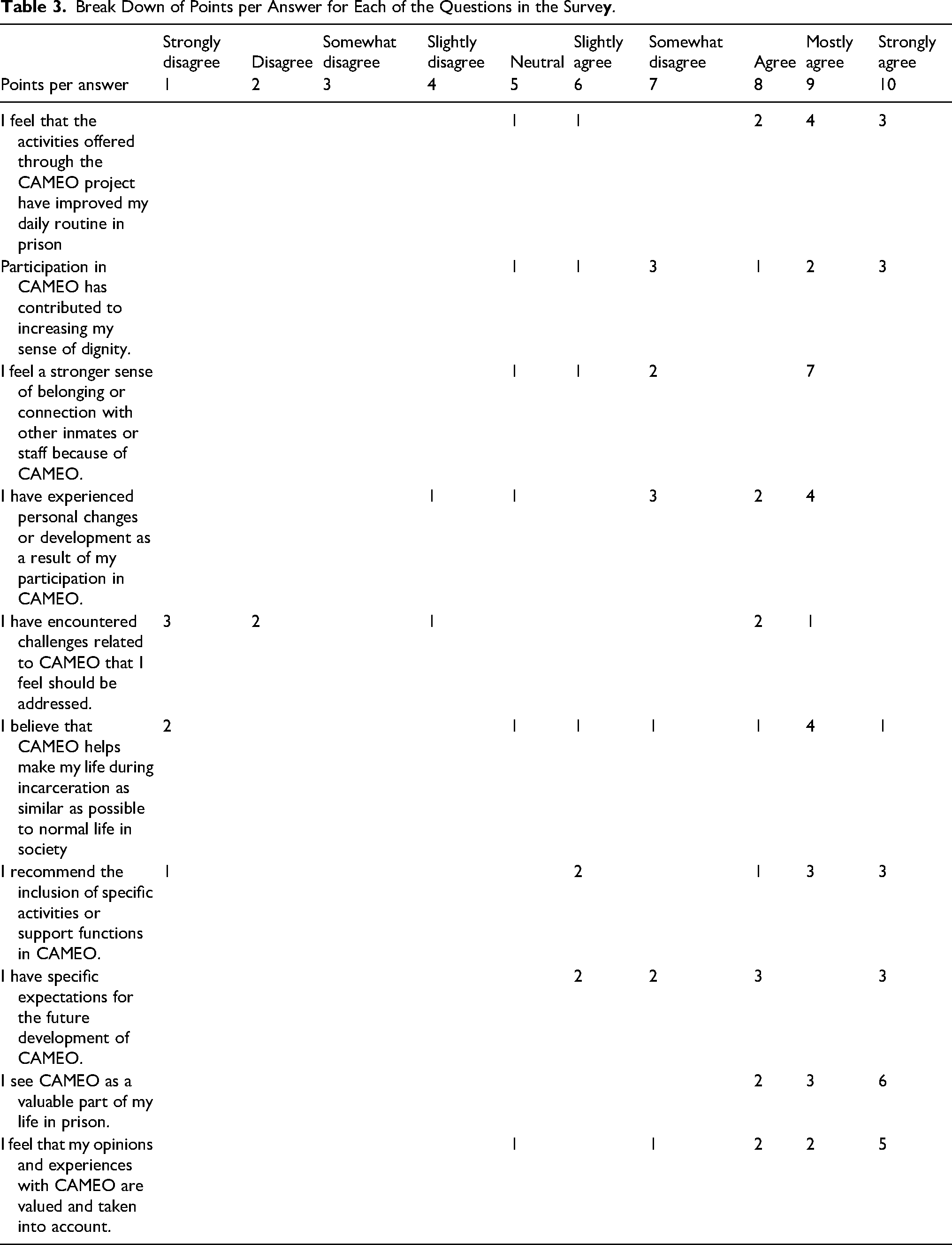
In this article, the research question “How does the CAMEO program affect senior inmates’ experience of the prison environment, and how can the program be further developed to better meet their needs and expectations?” was addressed. They findings indicate that inmates have an overall positive perception of the program. They report that CAMEO is a significant attempt to improve their quality of life through the provision of tailored activities, age-appropriate infrastructure, and enhanced support services. However, there is still room for improvement, especially the need for more recreational and physical activities, access to training equipment, and more visits to the culture department located in a different prison ward. Perhaps, above all, CAMEO can ensure that some of the structural (e.g., architectural shortcomings in the prison buildings design) and systemic challenges (e.g., limited access of LAR-inmates to the ward and the program) are prioritized (Table 3).
Break Down of Points per Answer for Each of the Questions in the Surve
Based on the evidence, we recommend that the CAMEO program continues to collaborate with the Norwegian Correctional Service to enhance prison infrastructure (e.g., by incorporating ramps, elevators, and wider doorways, as well as ensuring that all areas, including outdoor spaces, are accessible to inmates with physical disabilities). In addition to what has already been achieved, it is desirable to establish age-appropriate units with suitable furniture and facilities near health services. Moreover, the program should focus on developing prison staff competence by incorporating training modules on geriatric care, mental health, and age-related issues into their professional development. CAMEO can facilitate workshops, seminars, and continuous training sessions to equip prison staff with the necessary skills and knowledge to effectively support senior inmates.
Limitations
To address the limitations of this study, further research may usefully explore the long-term impacts of these infrastructural and educational interventions on recidivism rates and the overall well-being of senior inmates’ post-release. Specifically, research could examine how improved physical conditions and enhanced staff training in geriatric care affect the reintegration success of senior inmates into Norwegian society. As well, longitudinal studies tracking health outcomes, mental well-being, and social reintegration of senior inmates who have participated in the CAMEO program versus those who have not could provide valuable insights into the program's effectiveness. Exploring these aspects will help in refining the CAMEO program and informing policy decisions aimed at improving the prison experience for senior inmates.
Footnotes
Declaration of Conflicting Interests
The authors declared no potential conflicts of interest with respect to the research, authorship, and/or publication of this article.
Funding
The authors received no financial support for the research, authorship, and/or publication of this article.