



Abstract
Reintegration support by community-based professionals and volunteers (CBPs) is needed to prepare prisoners for release. Yet, the way in which CBPs are received, informed and accommodated, may hamper in-prison involvement. Therefore, the current study explores the visit facilitation and accessibility of prisons in the Netherlands as experienced by CBPs. A new instrument to measure facilitation and accessibility across institutions is introduced. The findings among 4,309 prisoners and 1,077 professionals across 24 Dutch prisons revealed that although institutions differ in facilitation and accessibility, this is unrelated to prison visits received from most CBPs, apart from the likelihood of receiving visits from parole officers. The study confirms the importance of considering facilitation and accessibility in relation to in-prison involvement of external agencies.
Yearly, around 30,000 people in the Netherlands enter prisons (Meijer et al., 2021). One major deprivation related to incarceration is the limited access to social ties and community resources, especially considering that staying connected to the outside world during imprisonment is beneficial for both prisoners and post-release outcomes for various reasons. First, prisoners can feel emotionally supported during visits, decreasing the strain of incarceration (Cochran & Mears, 2013; Duwe & Clark, 2013). Second, social ties can provide instrumental support regarding employment, housing, finances, healthcare, and valid identification documents (Bares & Mowen, 2020). Many prisoners struggle with these basic needs upon release, which in turn hampers social reintegration (Visher et al., 2017). Numerous studies have pointed out that employment issues, having no stable place to live, financial hardships, health issues, and having no valid identity document increase the chances of recidivism (e.g., Aaltonen et al., 2016; Boschman et al., 2020; Wallace & Wang, 2020). Instrumental support and access to re-entry services during imprisonment have the potential to reduce this risk (Maguire & Raynor, 2006; Mowen et al., 2019; Visher et al., 2017).
Although previous research has largely focused on friends and family as sources of social support, recent studies have also emphasized the potential role of community-based professionals (CBPs), such as parole officers, local authorities, and health or voluntary organizations, in providing both emotional and instrumental support during imprisonment (Bares & Mowen, 2020; Kjellstrand et al., 2021). Contact with CBPs can uniquely contribute to social support, considering that around 28–36% of the prisoners do not receive visits from friends and family, and visits from CBPs might be their only form of emotional and instrumental support (Bares & Mowen, 2020; Berghuis et al., 2021). Additionally, CBPs can provide access to resources and offer specialized help, such as psychological or medical care, financial help, or support in applying for jobs (Kjellstrand et al., 2021).
Despite the recognized additional value of CBPs as a source of in-prison social support, collaboration between prisons and CBPs appears challenging. According to offender management strategies, an interdisciplinary team of professionals is needed to prepare prisoners for release (Maguire & Raynor, 2006). Yet, previous research has identified that in-prison involvement of CBPs is often insufficient and pre-release planning inadequate (Lloyd et al., 2015; McCauley & Samples, 2017). In line with these often disappointing evaluations of offender management strategies, a previous study found that Dutch prisoners reported a limited amount of in-prison contact with CBPs; most prisoners reported no contact with a parole officer, a municipal officer, a health professional, or a volunteer within the past 6 months of imprisonment (Pasma et al., 2021).
Assuming that in-prison involvement of CBPs is valuable yet limited, makes it important to find out what factors hamper or facilitate professional visits from CBPs. Visitation barriers have been examined for friends and family (e.g., Berghuis et al., 2022; Cochran et al., 2017), but these results cannot be generalized to the experiences of CBPs. CBPs usually have other visitation goals than friends and family. Therefore, institutional factors are likely to impact their visits differently. For instance, CBPs have a (voluntary) responsibility to help their clients. Yet, in case of high caseloads in combination with limited time and resources, institutional factors may still hamper their in-prison involvement. Moreover, compared to friends and family, CBPs can run into unique barriers, such as poor work facilities inside or inadequate information sharing (e.g., Hancock et al., 2018).
There are two main ways in which institutional factors may hamper the in-prison involvement of CBPs. First, some factors can make it inherently difficult to visit. For instance, inflexible visiting hours or inaccessibility may form obvious barriers to visitation. Moreover, poor information sharing and communication can result in a lack of information on clients’ needs and the urgency to visit, and can obstruct the ability to make appointments. Second, some factors may hamper visits on a more subconscious level. Barriers may be higher to visit institutions that offer less friendly receptions and that do not properly accommodate the work of CBPs. Despite responsibilities, uninviting institutions may be last in line to visit in case of a high workload or other personal duties.
Previous research has in fact identified several institutional factors as potential barriers to full inclusion. For instance, CBPs often mention poor communication or information sharing (Hancock et al., 2018; Hean et al., 2018; Roberts et al., 2004), resistance among prison staff to cooperate (Hancock et al., 2018; Lasher & Stinson, 2020), and poor work facilities (Hancock et al., 2018; Hean et al., 2018; Saia et al., 2020). Moreover, geographic and accessibility issues also hinder full inclusion (Hean et al., 2018; Noga et al., 2016; Roberts et al., 2004; White et al., 2014).
The study of Hancock et al. (2018), in which interviews were conducted among 12 health professionals, mentioned multiple institutional barriers in providing care to prisoners. First, staff reported that communication pathways were not always clear and that information sharing was limited. It was hard to track down the right person for a request to talk to prisoners. Others stated that calls or emails were never answered, or that communication inside prisons was difficult if they did not have access to a mobile phone. Moreover, prison staff was often reluctant to share relevant information about prisoners’ need for support. Second, contacting prisoners was often difficult due to procedural or attitudinal barriers. Procedural barriers included getting access to the correctional facility. Some professionals mentioned that they were turned away multiple times when they arrived at the facility, even when they had a prearranged appointment. Once inside, attitudes of prison staff also formed barriers to contact with prisoners. Correctional staff did not always recognize the additional value of community-based health professionals in supporting prisoners, discouraging them to keep coming.
According to Hean et al. (2018), who held interviews with 12 leaders within health services and the criminal justice system (CJS), CJS professionals did recognize the skills and expertise of CBPs. Yet, interprofessional communication and information sharing about the individual plans for prisoners were challenging. Also, geographic issues between health services and prisons were mentioned as collaboration barriers. Finally, Saia et al. (2010) reported that specialists working in juvenile rehabilitation teams would prefer a more user-friendly environment, such as private counseling rooms that are well-equipped. Other studies confirmed the abovementioned barriers, in particular the inadequate information sharing aspect and the inaccessible and closed nature of correctional facilities (e.g., Lasher & Stinson, 2020; Noga et al., 2016; Roberts et al., 2004; White et al., 2014).
The existent literature is plagued by two important problems that are addressed in the current study. First, the literature is highly fragmented where it concerns collaborative issues between prisons and CBPs, and lacks a comprehensive assessment of institutional factors that facilitate or hamper in-prison involvement of CBPs. It can be deducted from the literature that factors falling under the visit facilitation and accessibility of a prison institution are relevant to consider as potential barriers to in-prison involvement of CBPs. With “visit facilitation,” we refer to the extent to which the prison facilitates an environment in which CBPs are welcomed and enabled to carry out their professional assignment. This might include interpersonal practices such as friendly reception, good communication, and information sharing, but also administrative practices such as providing proper work facilities inside, and allowing visitors to visit regularly. With “prison accessibility,” we refer to static factors that are not influenced by institutional policies, such as the travel time toward an institution, and its accessibility with public transport. This study therefore surveys the perspectives of CBPs on visit facilitation and accessibility across multiple prison settings. To do so, an instrument is developed and tested, measuring facilitation and accessibility as perceived by CBPs.
Second, in the literature, it is suggested but not actually tested whether such institutional factors influence professional visits. We therefore examine whether institutional scores on facilitation and accessibility are related to visits from parole officers, municipal officers, health professionals, and volunteers received by prisoners in the Netherlands. In sum, the research questions are as follows:
The Dutch Context
In the Netherlands, The Dutch Custodial Institutions Agency (DJI) is responsible for the placement and day-to-day care of offenders. According to the rehabilitation principle, a sentence should not only be served for justice, but should also focus on the reintegration of prisoners (Dienst Justitiёle Inrichtingen [DJI], 2019). To help prisoners prepare for release, a team of prison-based and community-based professionals is expected to support prisoners in employment, housing, finances, healthcare, and valid identity documents. Case managers and mentors keep track of the reintegration process of prisoners and can seek additional support from various CBPs. To better understand the goals, barriers, and agency in visitation, this section deals with the responsibilities of these various CBPs, how their support is organized, and the relevant institutional policies concerning professional visits.
Responsibilities of CBPs
First, CBPs have varying responsibilities in providing re-entry support during imprisonment. For instance, parole officers can arrange job or housing options and may refer prisoners to additional help from health institutions. Next to providing re-entry support, parole officers are criminal justice agents who are responsible for trial-related advisory and supervisory tasks (DJI, 2019). In turn, municipal officers, health professionals, and volunteers are non-criminal justice partners and have more singular re-entry tasks. Municipal officers can connect prisoners to health institutions, housing associations, homeless shelters, or the Employee Insurance Agency (UWV). They are also responsible for issuing valid identity documents (DJI, 2019). Moreover, health professionals are trained to provide psychological or medical care and can make discharge plans for release (DJI, 2019). Finally, voluntary organizations often have housing options available, and their volunteers are trained to offer additional support in a wide variety of life domains, such as in budgeting or in applying for jobs (e.g., Exodus, 2022; Humanitas, 2022).
Since 2013, efforts were made to include CBPs early on in the process of reintegration. Formal guidelines stated that CBPs should get more involved during imprisonment (DJI, 2013, 2019), emphasizing the physical presence of CBPs inside prisons. Yet, except for the explicit note that a parole officer and a municipal officer should sit together with prisoners within 4 weeks upon entry, it remains unclear what is expected from CBPs during imprisonment (DJI, 2019). There are no clear guidelines on who should visit whom, how often, and in what phase of imprisonment. Also, overlap in the life domains that these various CBPs can help prisoners with, makes their responsibilities hard to untangle.
How is Support from CBPs Organized?
Second, it differs how these CBPs organize their help. For instance, support from parole officers is organized regionally. Thus, parole officers may have clients in multiple institutions across multiple provinces within a particular region (Geenen et al., 2021). Concerning support from municipalities, the municipality of return is responsible for preparing the transition to free society. Prisoners are preferably placed regionally. However, this may not always be possible, in which case they are located further away from the responsible municipality. Municipalities in the Netherlands differ in their intent to visit prisoners. Some municipalities only visit institutions within reasonable distance or solely focus on aftercare (Geenen et al., 2021). Furthermore, larger municipalities often have multiple clients in one institution. Therefore, institutions closer to larger municipalities may receive more visits from a municipal officer or from health institutions connected to these municipalities. Finally, most voluntary organizations work regionally and volunteers can apply for a particular region (e.g., Exodus, 2022; Humanitas, 2022).
Institutional Policies
Third, despite national guidelines on how to provide care to prisoners, institutional policies may vary per prison setting. First, prison institutions are allowed to set their own rules on visiting hours and whether it is necessary to make an appointment beforehand (Inspection Ministry of Justice, 2013). The requirements for entering institutions (e.g., obtaining an access pass) are easier for criminal justice partners such as parole officers than for non-criminal justice partners such as volunteers (DJI, 2020). In addition, some institutions provide a work office inside for parole officers, municipal officers, or volunteers, whereas other institutions do not have such offices available. Moreover, in several institutions, experiments took place on increasing the cooperation between CBPs and the criminal justice system. In 2016, for instance, experiments on improving the communication between parole officers and prison-based professionals were implemented in two institutions (Lünnemann et al., 2016). In other institutions, there were try-outs with a new job position of a throughcare officer, who links community-based health professionals to prisoners for discussing discharge plans (Buysse et al., 2018). Institutions where such initiatives took place might be ahead of other institutions concerning communication and information sharing. Finally, institutions that are located in urban areas might have more resources and partnering institutions available nearby (Lasher & Stinson, 2020) and are likely to be better connected to public transport than those in rural areas.
Methods
Data
We used data from the Dutch Prison Visitation Study (DPVS), which is part of the Life in Custody Study. The Life in Custody Study started in 2017 and regularly measures prison climate in all Dutch prisons (Van Ginneken et al., 2018). In 2019, the DPVS added extra questionnaires on the visitation experiences of prisoners, friends and family, and professionals. For the purpose of the current study, we used the questionnaires from prisoners on their reintegration needs and received professional visits, and from professionals on their visiting experiences. Professionals were asked to rate several aspects related to the facilitation and accessibility of the prison they were visiting. All questionnaires were collected between February and May 2019. For prisoners who gave informed consent, we were able to link administrative data from the Dutch Custodial Institutions Agency (DJI) for background characteristics such as regime, time served, and criminal record. In addition, open data from Statistics Netherlands (CBS, Statline, 2021) and google maps were used for prison location (urban or rural) and accessibility by public transport. We further elaborate on the measurement of facilitation and accessibility in the results section.
Respondents
The respondents for this study were drawn from two groups: prisoners and community-based professionals and volunteers (CBPs). Questionnaires were distributed and collected by research assistants, who explained the study, gave the opportunity to ask questions, and obtained informed consent for the use of data for research and the linking with administrative data. The final sample of prisoners consists of 3,558 participants from the 4,309 original participants. 1 This group had completed the main questionnaire and separate questionnaire on professional visitation, gave permission to obtain administrative data, had no missing information on the dependent variable, and were incarcerated in 24 prisons with available data from professional visitors.
The final sample of CBPs consists of 1,077 CBPs across 24 prisons, which was 72% of professional visitors whom we approached at the entrance and were able to participate. Reasons for not being able to participate included language barriers, having no contact information available, or the visitor turned out not to be a CBP afterwards (e.g., a correctional officer). The 18% who were unwilling to participate had no time, no interest, or did not respond to contact attempts afterwards. CBPs who already participated in another institution were excluded. The professional visitors included lawyers (47%), parole officers (17%), municipal officers (3%), healthcare professionals (21%), and volunteers (12%). Although we focus on visits from CBPs who help prisoners in their re-entry needs, we included the opinions of lawyers on the institutional factors. Lawyers are equally capable to provide us with information on the accessibility, reception, information sharing, communication, work facilities, and visiting hours of a particular institution. Excluding the opinions of lawyers would have resulted in a substantial loss of valuable information.
However, professionals may have different experiences in the facilitation and accessibility of institutions, depending on their roles. A few differences between professionals were indeed found. Volunteers were more positive about reception, work facilities, and visiting hours, whereas lawyers were least positive about information sharing. Also, parole officers and volunteers reported lower travel times. 2 Yet, as we discuss in the results section, the various professionals visiting a particular institution showed sufficient agreement on their institutional experiences. Therefore, we consider their shared experiences to reflect institutional characteristics.
Moreover, we include volunteers, because applying for a voluntary job comes with responsibilities. Also, volunteers are often trained by the voluntary organization that they are affiliated with, and they are expected to be seriously involved (e.g., Exodus, 2022; Humanitas, 2022). We therefore anticipate that they feel similar responsibilities to visit prisoners as other CBPs who assist with reintegration preparation.
In nine institutions, we collected data among professionals for 3 weeks, and at the other institutions for 1 week, due to time considerations. Professionals were able to fill in a survey immediately on paper (69.6%), online (29.9%), or by telephone (0.5%) afterwards. We used the data from CBPs for two purposes: (1) to test the validity of our facilitation and accessibility measures, we included the individual-level data of 612 CBPs who had no missing data on relevant items 3 ; and (2) we calculated aggregated institutional scores on facilitation and accessibility. Since the number of CBP-respondents varied between 5 and 128, we ran sensitivity analyses including institutions with more than 20, 40, and 70 respondents (Schunck, 2016). 4
Analyses
In the following sections, we first elaborate on the measurement of facilitation and accessibility. To that end, we check for the validity of our measurement of facilitation and accessibility (RQ1). For RQ2, we aggregate the individual ratings per prison setting and rank the scores to explore differences in facilitation and accessibility across prison settings. For RQ3, we use a multilevel model to examine the relationship between the facilitation and accessibility of prisons and the visits received according to prisoners. Multilevel analyses were used to account for the fact that prisoners are clustered within a specific prison environment. 5
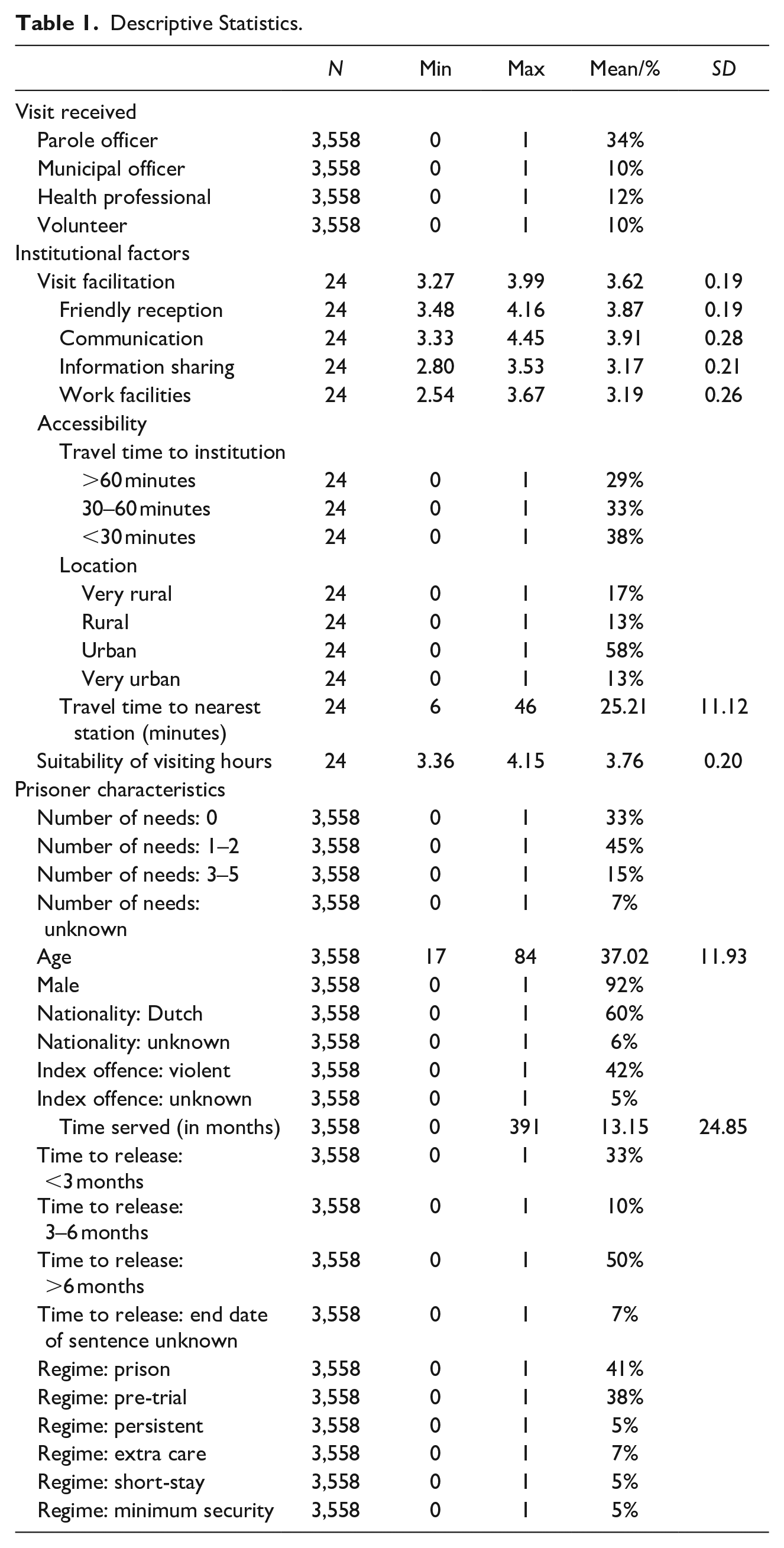
Prisoners were asked whether or not they received a visit from a parole officer, a municipal officer, a (health)care worker, or a volunteer during the past 6 months of imprisonment or up until the point of data collection. Table 1 shows that not many prisoners received a visit from a parole officer (33%), a municipal officer (10%), a health professional (12%), or a volunteer (10%) during the past 6 months of imprisonment. We conducted logistic multilevel regression analyses and split the results for receiving a visit from these specific types of professionals, controlling for prisoner characteristics. It may be that the number of reintegration needs is also related to receiving a visit, and that prisoners with many needs are clustered within a particular institution. The descriptive statistics of the prisoner characteristics are presented in Table 1.
Descriptive Statistics.
Results
Measurement of Visit Facilitation and Accessibility
We created a new instrument to measure facilitation and accessibility as experienced by CBPs. We first check whether we appear to measure these constructs in a valid way, before we continue with further analyses. While facilitation was based on respondents’ perceptions of their visiting experience, accessibility was based on respondents’ travel time, in addition to information obtained from other data (Google maps and open statistics).
Visit facilitation
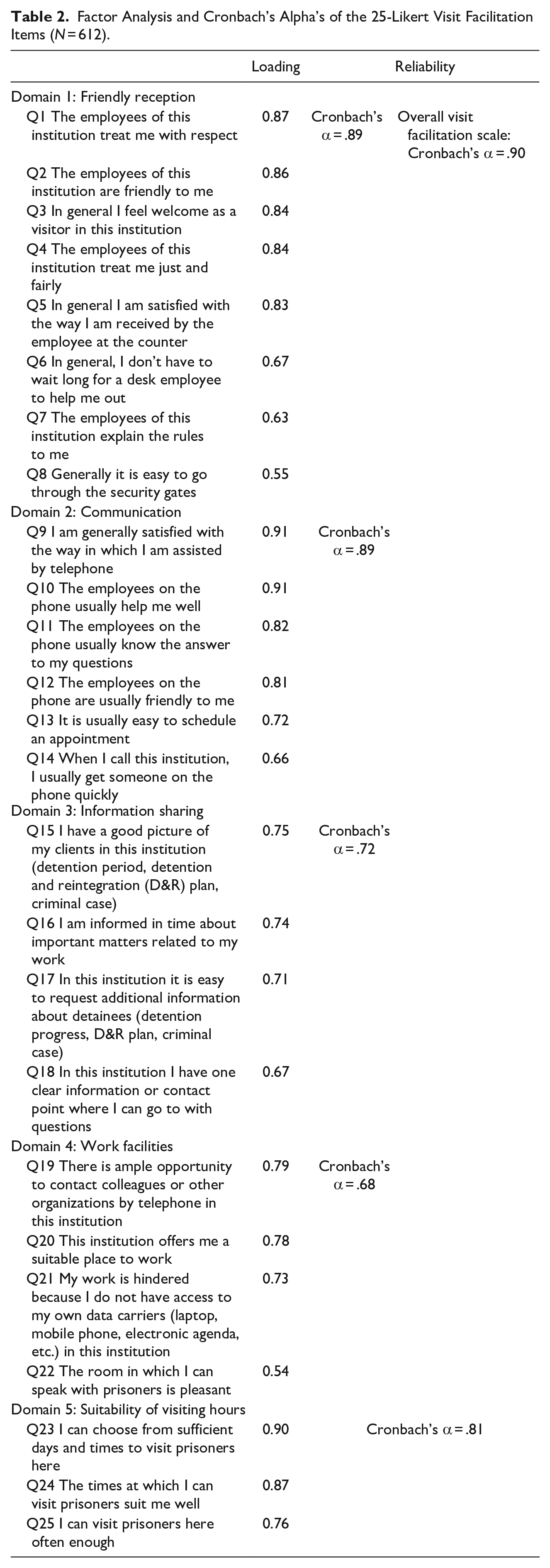
Facilitation was measured with 30 five-point Likert-scale items about topics such as friendly reception, communication, information sharing, the work facilities inside, and suitability of visiting hours. 6 We expected that the opinions of CBPs on these factors would represent the degree of facilitation in that institution, because they can be influenced by the prison. To test this assumption, we conducted a factor analysis, a reliability analysis of the constructed scales, and we checked the correlations between the scales.
The factor analysis 7 helped identify five conceptually meaningful domains: (1) friendly reception, (2) communication, (3) information sharing, (4) work facilities, and (5) suitability of visiting hours. The items that correspond to each of these domains and the reliability of the scales are presented in Table 2. The correlations between these domains on the aggregated 8 (prison) level suggests that—together—they are able to capture the concept “visit facilitation” (see Figure 1). The exception to this was suitability of visiting hours. 9 Therefore, we treat suitability of visiting hours as a separate prison policy dimension, which is theoretically (but not empirically) related to facilitation and accessibility. Concerning the four other domains, Figure 1 clearly shows that prisons scoring higher or lower on one of these domains, also scored higher or lower on other domains. For instance, prisons A, B, C, and D scored relatively high on friendly reception, communication, information sharing, and work facilities, respectively, whereas prisons W and X scored relatively low on all these domains.
Factor Analysis and Cronbach’s Alpha’s of the 25-Likert Visit Facilitation Items (N = 612).
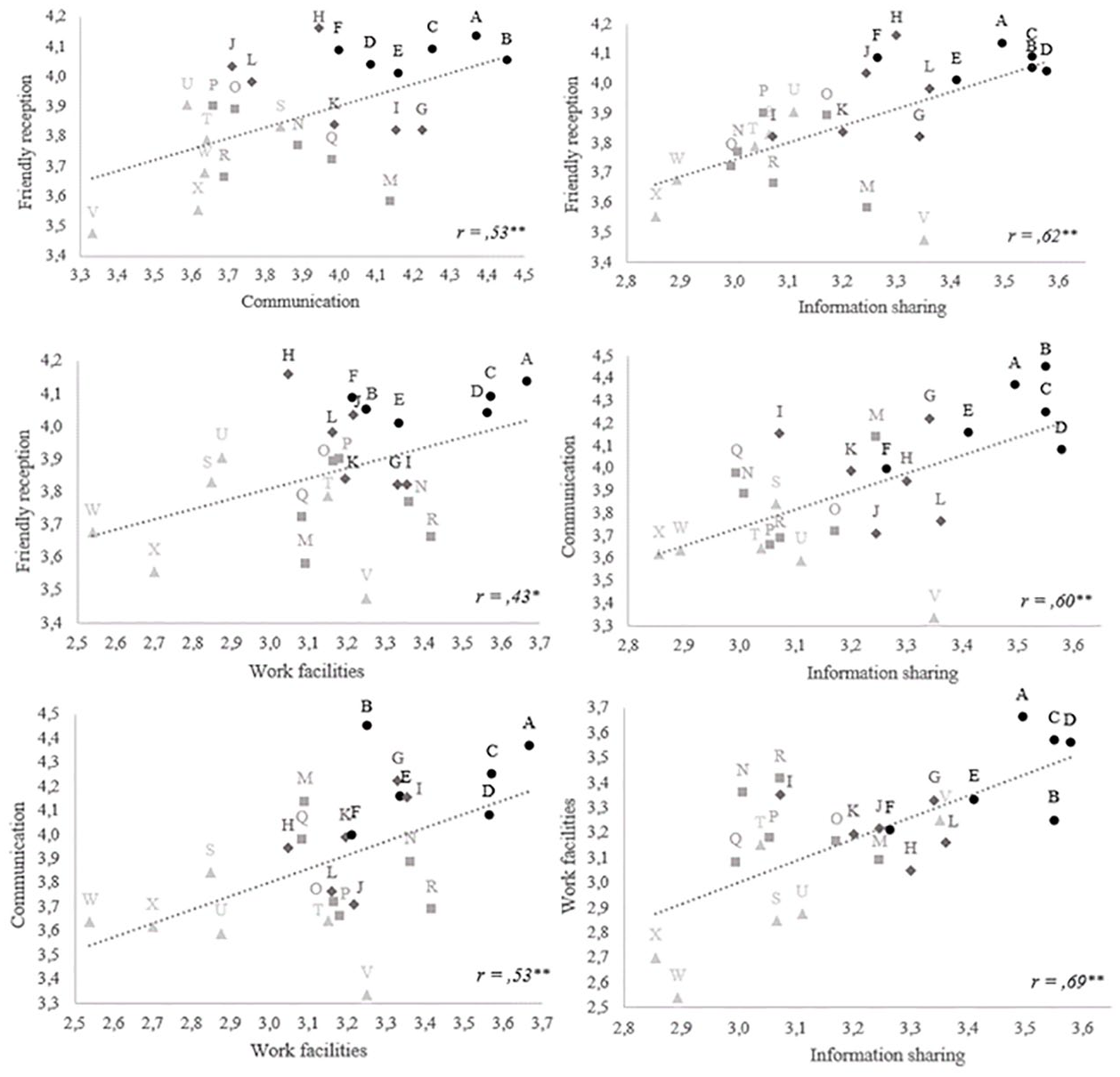
Scatterplots visit facilitation domains.
Subsequently, the mean score on the 22 items within these four correlated domains were used to measure the overall facilitation of an institution. The Cronbach’s alpha of this overall facilitation scale was .90. Table 1 shows that CBPs were generally satisfied about the overall facilitation, ranging from 3.27 to 3.99 across prison institutions, on a five-point Likert-scale. CBPs seemed most satisfied about friendly reception (3.48–4.16) and communication (3.33–4.45). Some institutions scored somewhat lower on information sharing (2.80–3.53) and work facilities (2.54–3.67).
Accessibility
In addition to the questions about facilitation, CBPs were asked about their travel time toward the institution. We also used open data to determine whether prisons were located in an urban or rural area and the travel time toward the nearest station. Table 1 shows that most CBPs reported a travel time of less than 30 minutes (38%). Moreover, most prisons were located in urban areas (58%), and the average time to the nearest station was 25 minutes. The items were reversed in a way that higher scores mean better accessibility.
To test the construct validity, we checked the correlations between the accessibility measures. It is expected that CBPs report lower travel times toward prisons in urban areas and prisons that are better accessible by public transport. It was indeed shown that urban prisons seem easier to access by public transport (r = .53, p < .01) and that CBPs reported lower travel time toward urban prisons and prisons more easily accessible by public transport (r = .73, p < .01 and r = .44, p < .05). The mean travel time reported by CBPs thus seems to match prison location and connectedness by public transport. Therefore, we created an overall accessibility scale—for the purpose of creating one aggregated score—of the standardized measures (z-scores) of prison location, travel time, and number of minutes to the nearest station.
Finally, to check whether the created facilitation, accessibility, and suitability of visiting hours scales measure separate constructs, we looked at the correlations between these three measures. It turned out that the scales do not correlate and thus seem to capture three different concepts (see Figure 2).
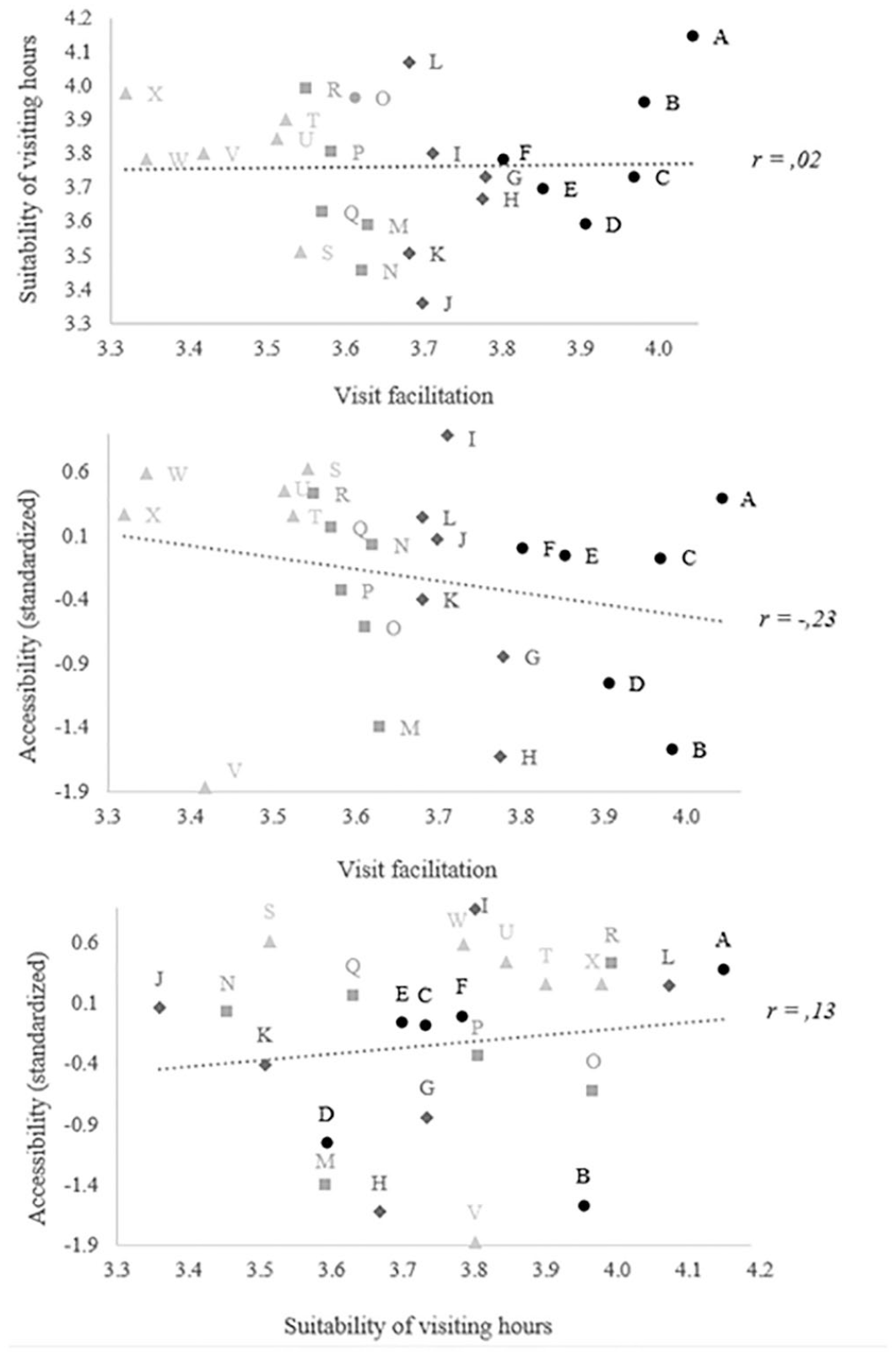
Scatterplots visit facilitation, accessibility, and suitability of visiting hours.
Visit Facilitation and Accessibility across Prison Institutions
To answer our second research question, we explored the differences in facilitation and accessibility across prison settings. First, substantial differences across institutions were found in terms of facilitation (F[23, 993] = 4.56, p < .01), accessibility (F[23, 1038] = 138.00, p < .01), and suitability of visiting hours (F[23, 980] = 3.60, p < .01). Moreover, the variances of the intercepts and ICCs indicated that a significant portion of variance in scores on overall facilitation (Var = .02, p < .05, ICC = .08) and suitability of visiting hours (Var = .03, p < .05, ICC = .05) was clustered per prison.
Second, as mentioned, the three dimensions were not necessarily correlated. Looking at the particular prisons, Figure 2 shows that prisons that scored high on one dimension sometimes scored low on another dimension. In fact, it was often the case that institutions with relatively poor accessibility had high facilitation ratings, and vice versa. For instance, Figure 2 shows that the lowest scoring prisons on facilitation (T to X) scored relatively high on accessibility, and higher scoring prisons on facilitation scored relatively low on accessibility (B and D).
Visit Facilitation and Accessibility Related to Professional Visits
To answer the third research question, we examined the extent to which differences in facilitation and accessibility were related to receiving a visit from a specific type of CBP. The results are presented in Table 3. It shows that the visit facilitation (B = .78, p < .05) and accessibility (B = .17, p < .05) of a prison were positively related to receiving a visit from a parole officer in the past six months of imprisonment. In other words, prisoners who were held in better facilitated and accessible institutions, more often reported a visit from a parole officer. There were no associations found for visits from the other types of CBPs.
Type of Professional Visitor Received Multilevel Regressed on Visit Facilitation, Accessibility, and Suitability of Visiting Hours (N = 3,558).
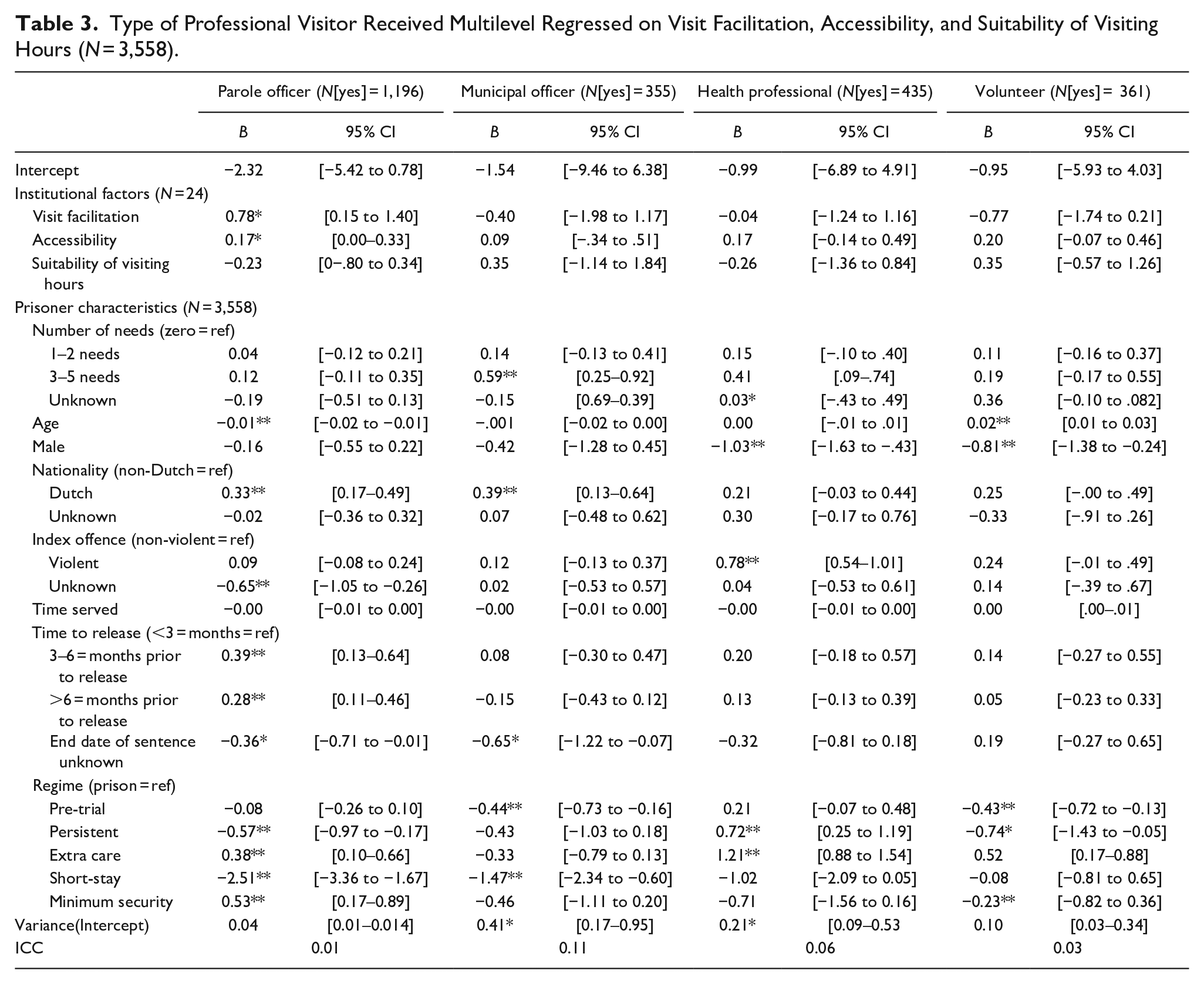
Moreover, Table 3 shows that a few individual characteristics of prisoners are related to receiving visits from CBPs. First, demographics appear related to receiving visits. For example, Dutch nationals were more likely to receive a visit from parole or municipal officers, and men were less likely to receive a visit from health professionals or volunteers. Second, other factors are likely related to the risks and needs of prisoners: prisoners with a high number of needs more often received a visit from municipal officers, those in extra care regimes more often from parole officers and health professionals, and those with a violent index offence more often from a health professional. One unexpected result is that prisoners who were further away from their release date more often received a visit from parole officers. Finally, prisoners in pre-trial detention received less visits from municipal officers and health professionals, while those in minimum security units, who can be granted furlough under supervision, received more visits from parole officers (see Table 3).
Finally, additional analyses, using only individual-level information as reported by CBPs, showed that CBPs reported a higher visiting frequency to institutions that they rated more positively on facilitation (B = .09, p < .01) and accessibility (B = .06, p < .05). For these analyses, however, we were not able to control for characteristics and needs of the prisoners they came to visit, nor for the number of clients that these CPBs had in these institutions.
Discussion
Our study makes an important contribution to the literature on interagency collaboration and professional visitation for purposes of offender management and supporting prisoners in preparing for release. In particular, we showed that two important constructs, visit facilitation and accessibility, can be reliably measured with a combination of data. Our questionnaire-measurement of facilitation consists of a newly developed 25-item questionnaire, which can be used to calculate separate scores on five domains (friendly reception, communication, information sharing, work facilities, and suitability of visiting hours), as well as an overall score on visit facilitation. While suitability of visiting hours was empirically distinct from facilitation, it was included as a separate measure due to its theoretical relevance. We also outlined how a prison score on accessibility can be calculated, using standardized measures of travel time, location (urban/rural), and ease of access with public transport. Although facilitation and accessibility appeared unrelated to receiving visits from most types of professionals, it was positively related to receiving a visit from a parole officer and community-based professionals’ self-reported visiting frequency.
The development of instruments to measure facilitation and accessibility can help with the identification of barriers to interagency collaboration and prisoner support. Previous (qualitative) research identified institutional factors that hindered external organizations in the effective provision of support to prisoners, including poor information sharing, communication, problems with accessibility, and a lack of appropriate facilities (Hancock et al., 2018; Hean et al., 2018; Saia et al., 2020). Our new instruments can assist in mapping problem areas and identifying good institutional practices on a large scale. Given our findings on the validity and reliability of these tools, they can be used in further research on reintegration support and service coordination in prisons, linking facilitation and accessibility to other outcomes. For example, a friendly and welcoming environment might contribute to job satisfaction, which in turn can lead to better job performances (Molleman & Van der Broek, 2014).
Our study identified that prisons differed in terms of facilitation and accessibility; the variable nature of visit facilitation reflects the fact that they are allowed to set their own rules on visiting hours and whether or not they provide a work office inside. This also means that facilitation is amenable to efforts to improve it; indeed, some prisons have reportedly implemented initiatives to improve the communication and information sharing between the criminal justice system and community-based professionals (CBPs) (Buysse et al., 2018; Lünnemann et al., 2016). The institutions where these initiatives were implemented did not necessarily do better on facilitation. However, it may take more time than 3 years to see a true cultural shift toward better collaboration. In any case, our findings suggest scope for improvement, particularly in the areas of information sharing and work facilities, which is congruent with previous research that mainly identified problems in information sharing. Since previous research identified problems in the area of facilitation, such as information sharing (e.g., Hancock et al., 2018; Hean et al., 2018), it is worthwhile to implement initiatives to improve these aspects and use our questionnaire on facilitation to evaluate them. Interestingly, some of the less accessible institutions were rated higher on facilitation. Perhaps, relatively inaccessible institutions compensate for long distances by proper information sharing and by providing a work office inside. Alternatively, there may be cultural differences in communication between prisons in rural (generally less accessible) and urban (generally more accessible) locations. Yet, higher facilitation was not found in all institutions that were less accessible. Thus, for relatively inaccessible institutions in particular, it is advised to pay more attention to facilitation.
A noteworthy finding is that facilitation and accessibility were associated with receiving a visit from a parole officer, but not with visits from municipal officers, health professionals, and volunteers. At first, this result may seem striking, given that parole officers were the only criminal justice partner included. Their duty to visit institutions is clearer and their entering requirements easier. Also, their work is regionally organized, and therefore, institutions should always be relatively accessible. Conversely, non-criminal justice professionals may experience more difficulties with access, their responsibilities during imprisonment may be less clear, and municipal officers may have longer travel times. However, it could be precisely because of their greater overall visiting frequency, that parole officers may be more influenced by facilitation and accessibility in deciding who to visit, when, and how often. Given the benefits of professional support from one’s parole officer (Bares & Mowen, 2020), prisons should certainly seek to facilitate their visits, for example by making sure they have access to appropriate rooms and can easily contact their clients.
Furthermore, it turned out that there were individual differences among prisoners in receiving visits. First, these findings give us valuable insights on groups that are at risk of remaining overlooked by CBPs, such as prisoners not born in the Netherlands. Moreover, prisoners who had multiple needs were more likely to report visits. It thus seems that CBPs prioritize in whom they visit, and that they are informed on who needs their support, at least to some extent. Yet, the low overall amount of reported visits means that many prisoners remain unsupported. Future research could investigate self-reported motivations of CBPs on whom they visit, when, and under what circumstances. Although our additional analyses began to investigate this, we were unable to control for crucial factors, such as the number of clients they had in a particular institution. More information on their visiting motivations may clarify why some prisoners are visited more often than others.
A few limitations of our study should be noted. First, we were unable to differentiate between responses of different types of professionals. Not all types of professionals were represented in all prisons. Although the various CBPs had shared experiences within the particular institutions, we also identified a few differences between their experiences. Therefore, if shared experiences were, for instance, mainly based on the responses of parole officers, this might have had an effect on the facilitation scores of that particular institution. Also, the experiences of volunteers were underrepresented in the sample and only a few municipal officers were involved. Future research should tap into the details of the varying experiences and how these relate to visitation. Moreover, the number of participating CBPs per prison institution varied between 5 and 128. Although the results remained unchanged when selecting institutions with more than 20, 40, or 70 participants, this decreased the number of included prisons to 17, 11, and 6, respectively. While low numbers may still yield unbiased level-2 estimates (Schunck, 2016), more clusters and higher cluster sizes with representative samples of prisoners and CBPs will enhance the external validity of the findings. A final issue to reflect on, is that prisoners who only recently entered prison had less time to receive visitors than prisoners who served at least 6 months. Therefore, in additional analyses, we checked the results for time served. No great differences in results were found, except that in the group that served less than 6 months, time served was positively related to the number of professional visitors received, whereas only for the group that served longer than 6 months, time to release was negatively related to the number of professional visitors.
It is very well possible that a replication of our study elsewhere may identify greater fluctuations in facilitation and accessibility, and as a result, find a stronger association with professional visits. There has been much debate, for instance, about quality differences between private and state-run prisons in the United States, the UK, and Australia (e.g., Harding, 2018). In the Netherlands, all prisons are run by the Dutch Custodial Institutions Agency, which is part of the Ministry of Justice and Security. This may also partly account for the finding that there appears to be a minimum standard regarding facilitation, even though prisons were allowed to set their own rules within these boundaries. Moreover, in other parts of the world, there are often complaints about poor infrastructure and little attention to rehabilitation (Villagra & Droppelmann, 2016). In such contexts, the facilitation of prisons might be evaluated more poorly, increasing the chances of a deterrent effect on professional visitation. Also, the Netherlands is a relatively small country where travel distances likely form smaller barriers to visitation than in larger countries. It would therefore be very interesting if similar studies are conducted in different contexts.
In conclusion, our study explored the facilitation and accessibility across prison settings and showed that, in the Netherlands, there are institutional differences in facilitation and accessibility. Although these institutional barriers do not appear to withhold most professionals and volunteers from visiting, there are indications that visit facilitation and accessibility may go some way in accommodating visits from CBPs. Considering the low amount of in-prison contact between prisoners and CBPs (Pasma et al., 2021), the pressing question what can be done to advance their in-prison involvement, remains. Our instrument can be used to relate facilitation and accessibility to other key outcomes, and it can be used in other settings where the results may be different. Finally, the finding that CBPs in the Netherlands seem relatively satisfied with visit facilitation and accessibility, and that most CBPs visit prisoners irrespective of such factors, is a positive finding considering the well-established problems with in-prison involvement of external organizations.
Footnotes
Acknowledgements
The Dutch Prison Visitation study, as part of the Life in Custody study, was funded by the Dutch Custodial Institutions Agency (DJI) and Leiden University. The opinions, findings, and conclusions expressed in this article are those of the authors and do not necessarily reflect those of the DJI. The authors wish to thank the DJI for their support with the administration of the survey.
Declaration of Conflicting Interests
The author(s) declared no potential conflicts of interest with respect to the research, authorship, and/or publication of this article.
Funding
The author(s) received no financial support for the research, authorship, and/or publication of this article.
