




Abstract
Internationally, incarcerated fathers and their children are often administratively invisible. The protective father–child relationship (FCR) is understudied. A secondary analysis was conducted to identify the number of all Dutch incarcerated legal fathers and their children; and several demographics and detention factors (e.g., prison length, offense type) were uncovered. Over 34% of incarcerated men were legal fathers, with approximately 12,000 children, mostly minors (64%), in each yearly count. Fathers differed from nonfathers by age, ethnic background, type of offense, and prison length. Follow-up research is needed to understand the interrelatedness of different demographics and detention factors and their impact on the FCR.
Introduction
Fatherhood in prison still receives too little attention in global policy, practice, and research. This is a concern, given that research has demonstrated that the incarceration of a father can negatively impact the father's and his children's well-being. Fathers in prison, for instance, have a heightened risk of recidivism if their father role is diminished (e.g., Bahr et al., 2005; Purvis, 2013; Visher, 2013). Murray and Farrington (2008a, 2008b) report that children may experience a wide range of problems, such as dropping out of school, and drug use. They also found that the likelihood of these children manifesting antisocial behavior and delinquent behavior is 3 times greater, and their chances of developing psychiatric problems are twice as high. When a father–child relationship (FCR) is maintained or restored during incarceration, these problems are less likely to occur (e.g., Davis & Shlafer, 2017; Kjellstrand, 2017; Song et al., 2018; Woodall & Kinsella, 2017). Furthermore, a restored or maintained FCR promotes desistance from crime (Warr, 2006), and fathers’ experiences in prison are improved (Reef & Nieuwbeerta, 2016). Contact with children led to a lower prevalence of depression and anxiety among incarcerated fathers.
So, focusing on fatherhood in prison can improve prison morale, prevent intergenerational crime, and make our society safer. The Council of Europe issued recommendations 1 to improve working with incarcerated parents and their children, including developing a registration system to identify families. The lack of such a system (Murray, 2007) makes it challenging to support the FCR systematically. Also, comparative research between EU countries and other nations is impossible. The one European study comparing father–child contact during incarceration across four countries found that country-level differences affect the FCR in various ways (Sharratt, 2014). Most scientific knowledge on incarcerated fathers and their children is based on research from the United States. Since there are distinct differences in geography (distance family-prison), the criminal justice system, the severity of sentences and the privatization of some prisons, this knowledge cannot easily be transferred to other countries (Murray et al., 2007; Verhagen et al., 2022; Wildeman & Andersen, 2015).
Aside from this, the FCR as a psychological construct, including father involvement, is understudied (Dyer et al., 2012; Verhagen et al., 2022). Most FCR research focuses primarily on father–child contact and, therefore, accessibility. Accessibility refers to physical and psychological availability and is a critical component of father involvement (Lamb, 2004; Lamb et al., 1987) that is restricted when the father is imprisoned. Multiple studies showed that the frequency and form of contact between the incarcerated father and his child correlate with the father's age, ethnic background, marital status, number of children, and number of mothers with whom he has children.
According to Galardi et al. (2017), the older an incarcerated father was, the less contact he had with his children, including fewer visits. Contact during and after incarceration is also predicted by living with children before imprisonment (Geller, 2013). Clarke et al. (2005) reported that incarcerated married fathers had a significantly higher chance of interacting with their children than incarcerated unmarried or divorced fathers. Also, the ethnic background of the incarcerated father correlated with father–child contact. Swisher and Waller (2008) found that White fathers received fewer visits from their children than Black or Hispanic fathers. The odds of receiving visits increased by 39-to-60% for Black fathers compared to White fathers (Galardi et al., 2017).
Also, fathers’ previous incarcerations, type of offense, and length of the current stay in prison are detention factors that impact father–child contact (Arditti et al., 2005; Clarke et al., 2005; Swanson et al., 2013). For example, Lee et al. (2012) noted that incarcerated fathers with multiple convictions were less likely to spend time with their children while incarcerated. For every additional previous incarceration, the father's number of received child visits decreased (Connor & Tewksbury, 2015). Additionally, as a father serves more time in prison, the relationship with his child's mother tends to dissolve (Turney, 2015). Due to the mother's role as a gatekeeper, divorce often results in less contact between the incarcerated father and his child (Geller, 2013). When a father is in prison for violent crimes, he is less likely to have any contact with his child (Geller, 2013). Connor and Tewksbury (2015) discovered that drug offense convictions, sex offense convictions, and violent, nonsex offense convictions were negatively correlated with the number of child visits.
Most international research on children whose fathers are incarcerated has focused on the potential adverse effects on their development (Verhagen et al., 2022). The development of the FCR during fathers’ incarceration and related child factors such as age and gender are rarely studied. McKay et al. (2018) noted that young children who lived with their father before his incarceration had the highest likelihood of visiting him in prison. In Poehlmann-Tynan et al.'s (2017) study, younger children experienced incarceration-related events differenty than older children, exhibiting anxiety and attachment issues as a result.. The visit of older children depends on their school schedule, and they are more aware of the stigma associated with prison (Kahya & Ekinci, 2018). The age of the child also influences the reciprocal experience of telephoning or emailing (Dennison et al., 2017; Oldrup, 2018). Children's gender may also affect the frequency and form of contact they have with their father in prison since general literature indicates that the FCR between father and son and father and daughter differs (Rouyer et al., 2007). Research on this topic, however, is lacking. We do know that boys and girls experience different difficulties when their father is incarcerated (e.g., Foster & Hagan, 2013; Haskins, 2015, 2016; McLeod & Bonsu, 2018; Murray & Farrington, 2008a, 2008b). Overall, the age and gender of the child involved can influence the FCR directly or indirectly.
The Dutch Situation
There are an estimated 25,000 children (Kinderombudsman, 2017) in the Netherlands whose parents are incarcerated, mostly fathers. Despite this estimated large number of children whose fathers are in prison, less than five Dutch studies have been conducted on fatherhood in prison (Appelman et al., 2021; Verhagen et al., 2022). Based on self-report data, Van Schellen et al. (2015) estimated that 41% of men in pretrial detention had children. They were likely to have more children with multiple women compared to the general population (1.3 vs 1.1). Also, fathers from this group were typically younger compared to fathers in the general population (31.3 vs 43.3). Reef and Dirkzwager (2020) found incarcerated fathers to be older than incarcerated nonfathers (36.5 vs 26.2). In addition, fathers in pretrial detention more often had an ethnic rather than a Dutch background (43% vs 27%), and were incarcerated more frequently than nonfathers (3.8 vs 2.2), but less for violent offenses and more for drug offenses.
Appelman et al. (2021) described most incarcerated men in Dutch prisons as being low-educated, in debt and dealing with mental illness, substance abuse, personality disorders, and intellectual disabilities. In this regard, it is not known whether fathers in prison differ from incarcerated nonfathers. There is evidence, however, that incarcerated fathers experience the severity of their imprisonment differently from incarcerated nonfathers (Reef & Dirkzwager, 2020). Fathers in prison have fewer adjustment issues, but missing their children can cause depression and anxiety. It was estimated that about half of the incarcerated fathers received prison visits from their children. Berghuis et al. (2021) reported that fathers who regularly saw their children before entering prison had more child visits during their incarceration. A first-time incarcerated father was also more likely to receive child visits than a father who had a repeated imprisonment history. More than 3 months of incarceration increased the likelihood of children's visits by 77%. Fathers who committed financial crimes received more visits than fathers who committed sexual offenses. Berghuis et al. (2021) did not find this difference between financial offenses and violent, drug, and other offenses. In general, we do not know much about the children involved. There is only one Dutch study on children of fathers in pretrial detention (Reef & Nieuwbeerta, 2016). Based on father-reported data, the children in the study had a higher incidence of behavioral problems, health issues, and education difficulties when compared to the general Dutch population. To summarize, incarcerated fathers, their children and their FCR are poorly understood in the Netherlands.
Method
In this study, the central research question is: What individual factors among incarcerated legal fathers and their children, known to have a significant impact on the FCR, are found at a national level in the Netherlands for the period 2010–2020?
Definitions
Incarcerated legal father: An incarcerated legal father of the child according to Dutch municipal records called BPR. Based on the Dutch Civil Code (DCC), it is the father who has had a child in marriage or registered partnership, the father who has acknowledged the child, the father whose paternity has been judicially established or the father who has adopted the child (Article 1:199 DCC).
Incarcerated nonfather: An incarcerated man without children, according to BPR. The incarcerated nonfather may have biological children or stepchildren, but those children were methodologically not visible in this study.
Incarcerated mother: An incarcerated legal mother of the child, according to BPR. It is the woman who gave birth to the child, the woman who has a child in marriage or registered partnership, the woman who has acknowledged the child, the woman whose maternity has been judicially established or the woman who has adopted the child (Article 1:198 sub-b-e DCC).
Incarceration: Pretrial detention or convicted.
Ethnic background: The country of origin of the incarcerated man and that of his parents, according to BPR. Following the definition of Statistics Netherlands, Western and non-Western ethnic backgrounds were distinguished.
Length of incarceration: The time a man was incarcerated on the reference date.
Most serious offense: The most serious offense for which a man was incarcerated on reference date that year.
Procedure
The Dutch Custodial Institutions Agency does not register fatherhood or children. For this reason, nationwide prison-based analyses were impossible. However, Statistics Netherlands regularly receives data from the Dutch Custodial Institutions Agency regarding all incarcerated persons for a specific period. Statistics Netherlands also collects nonpublic linkable microdata on the Dutch population. Under strict conditions, those microdata are available for researchers. This opportunity is unique, as the authors know of it only being offered in certain Scandinavian countries and Australia. Data were linked to determine which incarcerated men were legal fathers, their number of children, and their demographics and detention factors.
To do so, the following microdata which are only available in Dutch were selected: Gedetineerdentab, the GBApersoonstab, the KindOuderTab, and the Standgedetineerdentab. We used the original Dutch names in this article to enhance replication. Syntaxes were written to link the data. The Gedetineerdentab contains all persons who were incarcerated in a given year. Incarcerees in a specialized psychiatric prison and inmates in a prison for foreign national prisoners are not part of the Gedetineerdentab. The Gedetineerdentab is constructed annually from three types of files that the Dutch Custodial Institutions Agency submits to Statistics Netherlands, namely: (a) all persons entering prison in a given year; (b) all persons leaving prison in a given year; and (c) all persons incarcerated on 31 December of a given year. In the file edited by Statistics Netherlands, each person can appear only once. The Standgedetineerdentab includes all incarcerated persons (pretrial and convicted) in the Netherlands on 30 September of a given year. The GBApersoonstab contains all persons registered in the municipal records. In 2014, the GBA was replaced by the BPR. As the microdata go back further, it is still known as GBApersoonstab. These microdata includes demographics like date of birth, sex, country of birth, and country of birth of parents. The KindOudertab displays all persons registered in the municipal records and their legal parents. Comprehensive analyses were conducted for the years 2020, 2019, and 2018. Having examined 2014 and 2010 at random, a consistent trend was found. Therefore, there was no need to conduct extensive analyses in the intervening years. Calculations made by the authors led to the results described in the next section.
Results
Incarcerated Legal Fathers in Numbers
First, the Gedetineerdentab was analyzed and the number of incarcerated individuals in each year was determined. The Gedetineerdentab was linked to the GBApersoonstab to distinguish persons by gender. Next, the KindOudertab was analyzed to identify which incarcerated men were legal fathers. The total number is displayed in Table 1. Since the Dutch crime rate has decreased in recent years, so has the number of inmates. There were a number missing—those incarcerated men and women not listed in BPR. According to previous prison research, this group of inmates, most likely non-Dutch in origin, does not typically appear in municipal records (Dirkzwager et al., 2018). Those missing were excluded from the total prison population since it was not possible to determine whether they were men and/or fathers. The number of missing individuals was excluded from further analyses and calculations.
Total Number of BPR-Registered Prisoners in The Netherlands.
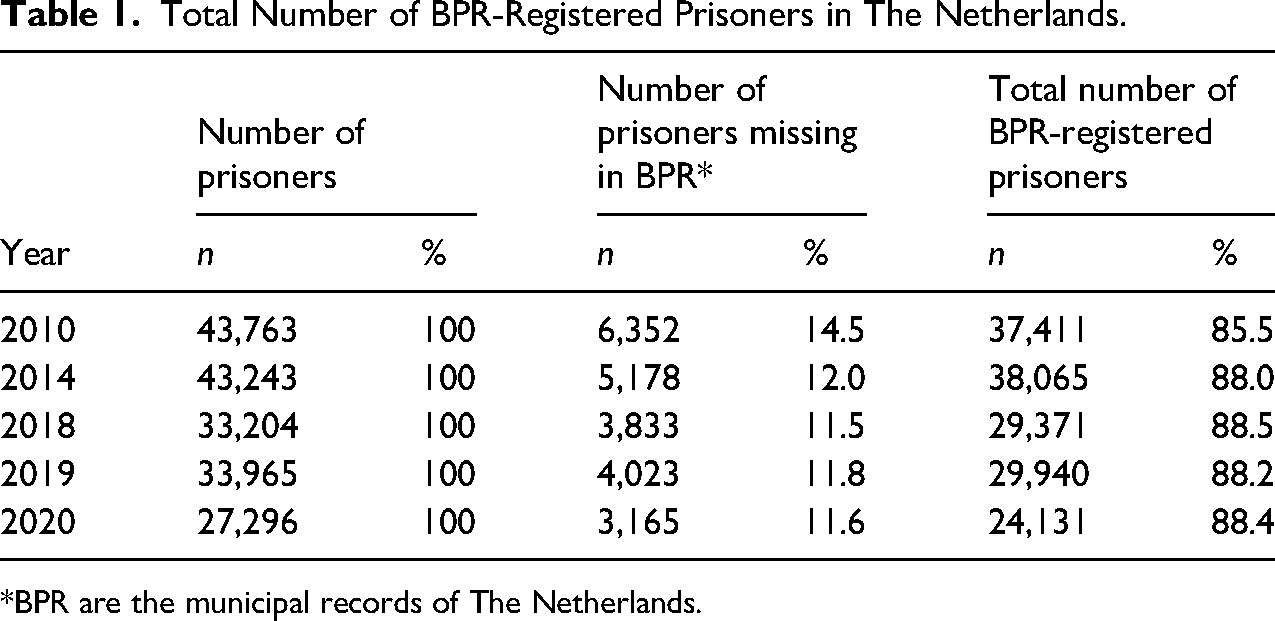
*BPR are the municipal records of The Netherlands.
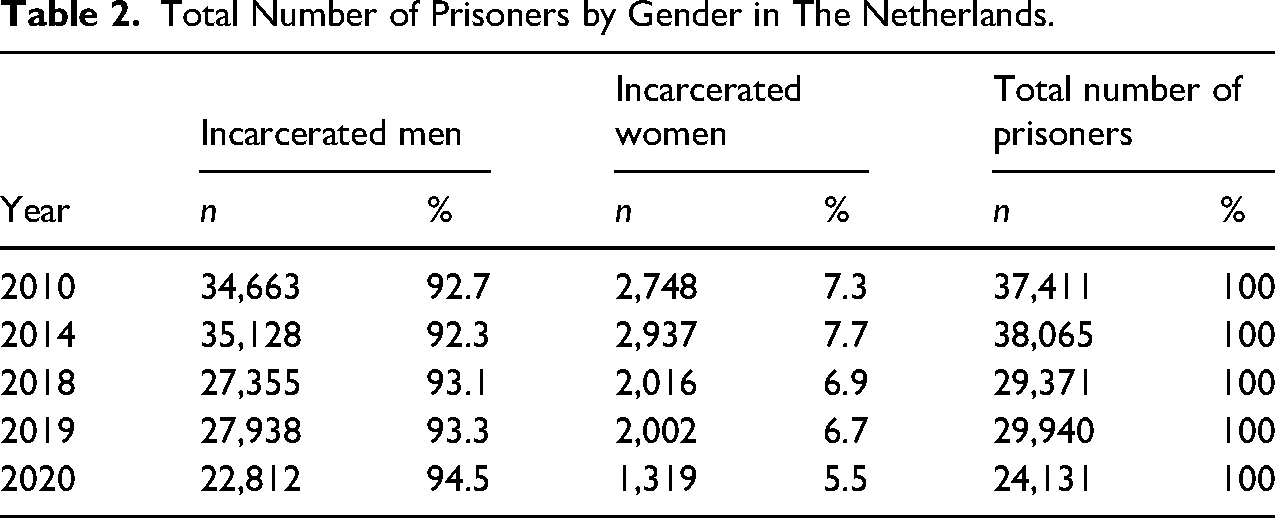
Prior to determining which inmates were legal fathers, men had to be identified. For this reason, Table 2 also lists female incarcerees. Inmates’ gender ratio remained relatively consistent over the years. Approximately 93% of the prison population was male; approximately 7% of the prison population was female. However, by 2020, this percentage had declined slightly. This decrease in crime and arrests in 2020 did not explain this difference. The Dutch Custodial Institutions Agency (Joost de Looff, personal communication, 9 February 2023) shared that fewer self-reporters (convicted people who enter prison on an agreed date) were called due to COVID-19, resulting in a sharp drop in prisoners. This may be especially true for incarcerated women, but no evidence supports this hypothesis.
Total Number of Prisoners by Gender in The Netherlands.
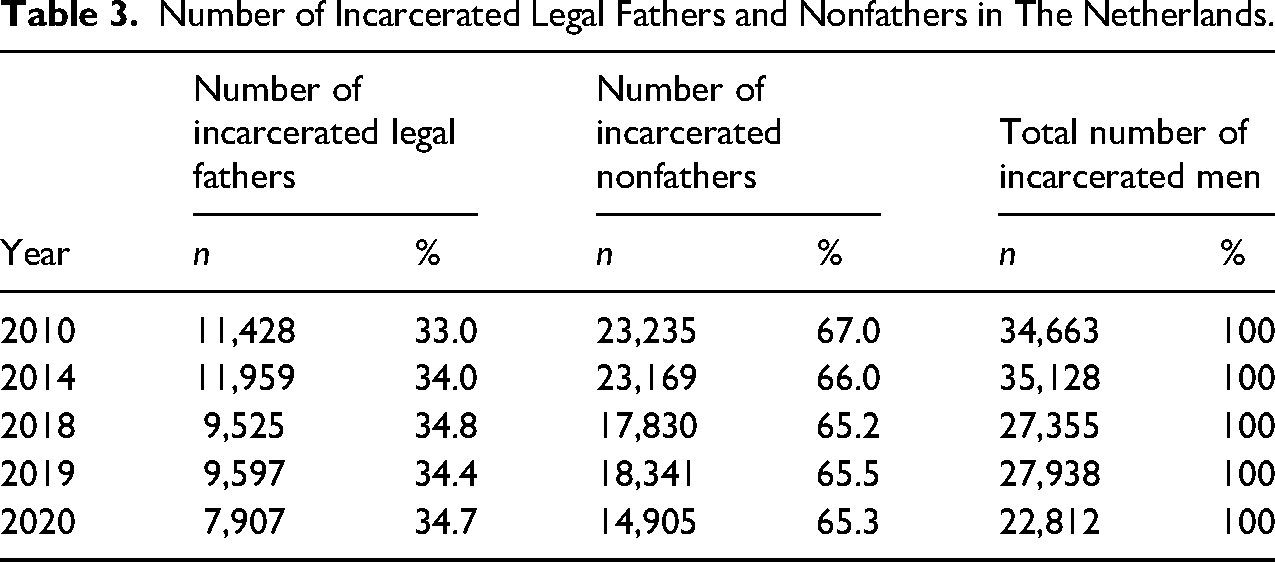
Next, it was determined which inmates were legal fathers or nonfathers (see Table 3). About 34% of incarcerated men were legal fathers, compared to about 66% of incarcerated nonfathers. The ratio remained consistent over the years.
Number of Incarcerated Legal Fathers and Nonfathers in The Netherlands.
Children of Incarcerated Fathers by Gender and Age
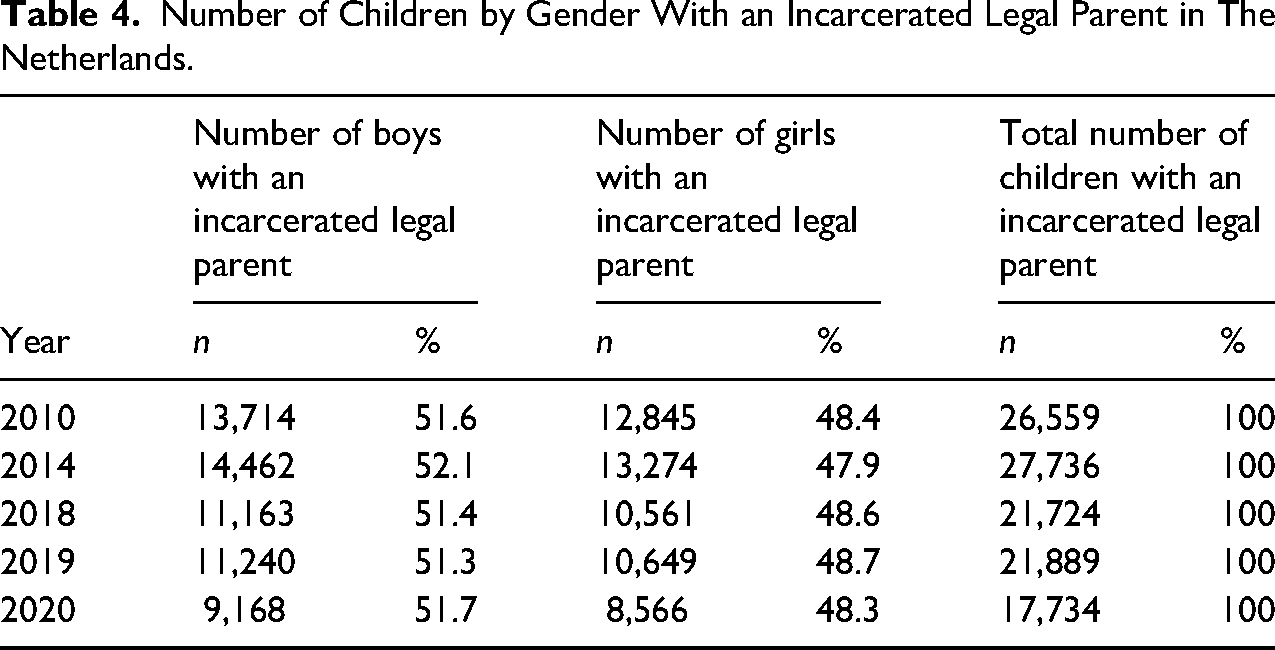
The Gedetineerdentab, GBApersoonstab, and KindOudertab were used to determine the number of children with legal parents in Dutch prisons (see Table 4). Since some children may have both legal parents in prison, the number of children with their legal mother incarcerated was also included as a first step. Next, it was determined how many children had incarcerated fathers. When the gender of the children was differentiated, it was found that each year, the number of children with a legal parent in prison decreased. This decline most likely can be attributed to the reduced number of total prisoners, with the steepest drop in 2020, probably due to fewer incarcerated women (as seen in Table 2). There appeared to be no significant change in the ratio of boys to girls with a legal parent in prison over the years. Most incarcerated legal parents were parents of boys (52% compared to 48%). The same results were found when distinguishing incarcerated legal fathers from incarcerated (legal) mothers. This ratio is in line with Dutch gender distribution.
Number of Children by Gender With an Incarcerated Legal Parent in The Netherlands.
In the subsequent analyses, only 2020, 2019, and 2018 were included. For those years, the age of children with a legal father in prison was examined. As expected, a small proportion of children had both their legal father and mother in prison. Most were minors (see Table 5). In recent years, the number of minor children with both legal parents in prison has decreased, again perhaps related to the stronger decline in incarcerated mothers than in incarcerated fathers. There is, however, no data to support this hypothesis.
Number of Children by Age With Both Legal Parents Incarcerated in The Netherlands.
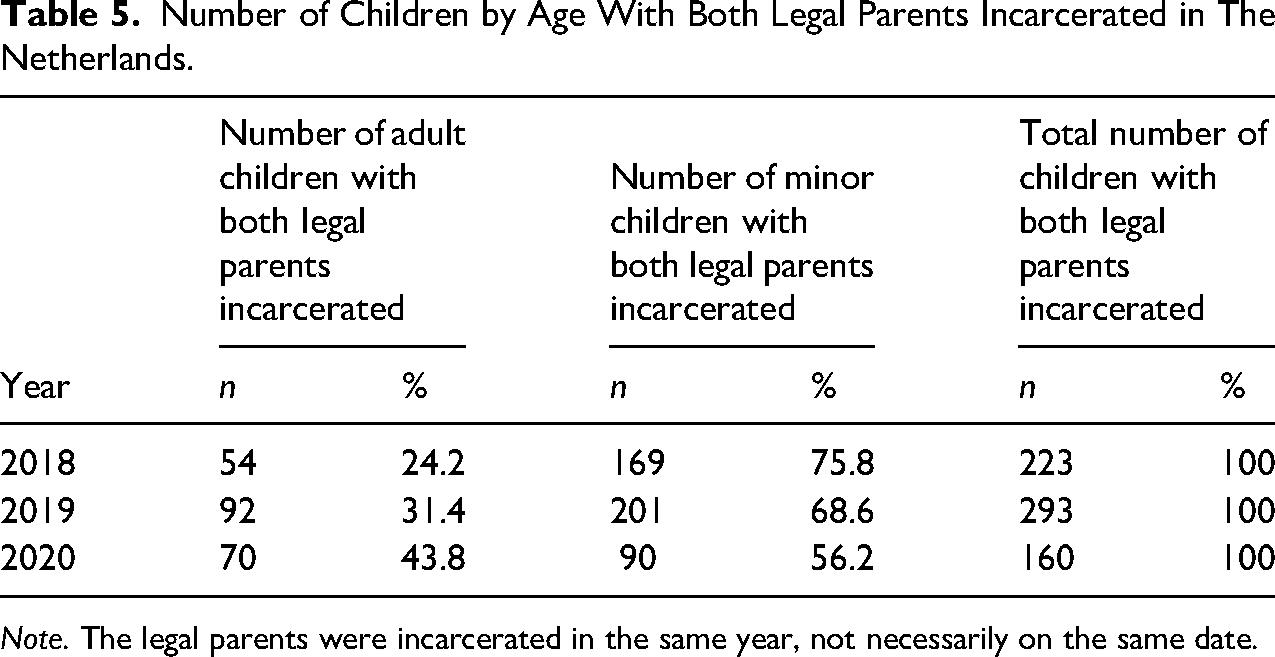
Note. The legal parents were incarcerated in the same year, not necessarily on the same date.
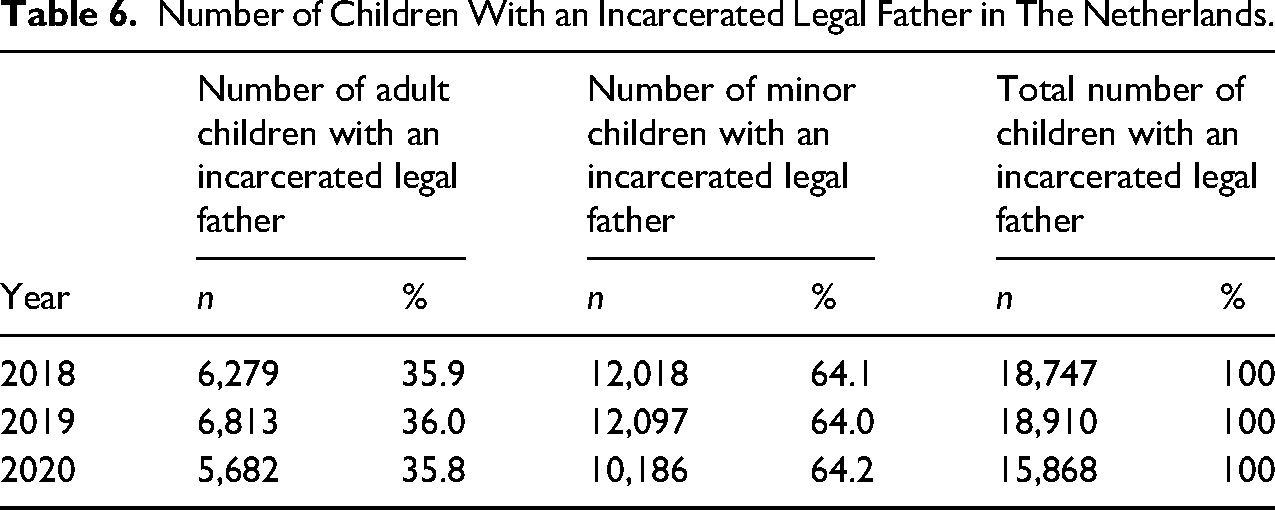
Most incarcerated legal fathers had at least one minor child (see Table 6). Approximately 64% of the children of incarcerated legal fathers were minors, while 36% were adults. The number of children declined sharply in 2020, but this can be explained by the overall decrease in prisoners.
Number of Children With an Incarcerated Legal Father in The Netherlands.
The average age of the incarcerated father's eldest minor child was calculated (see Table 7). Based on the StandGedetineerdentab, 30 September was used as the reference date. The incarcerated father's eldest minor child was on average 9 to 10 years old. This was regardless of the length of incarceration of the legal father.
Average Age of the Eldest Minor Child With an Incarcerated Legal Father in The Netherlands.
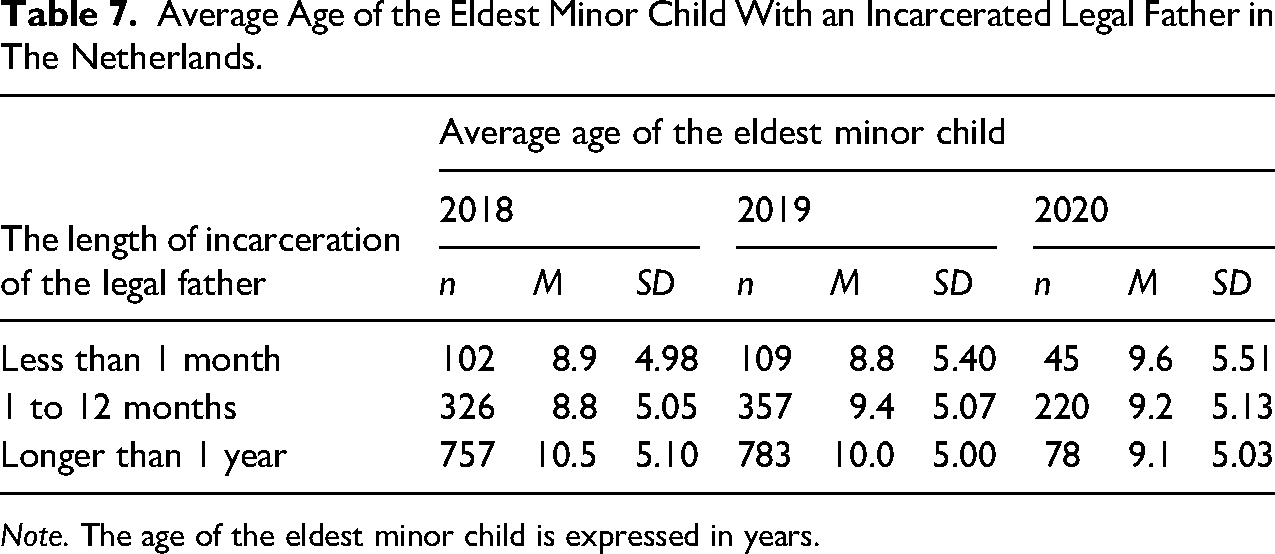
Note. The age of the eldest minor child is expressed in years.
The number of women with whom incarcerated legal fathers had children was also investigated. In all years, incarcerated legal fathers had two or more children with one woman, but this difference was negligible compared to incarcerated legal fathers who had one child with one woman (42% vs 41%). Significantly fewer incarcerated legal fathers (17%) had two or more children with at least two women. In the years studied, this result was consistent.
Incarcerated Legal Fathers Compared to Incarcerated Nonfathers
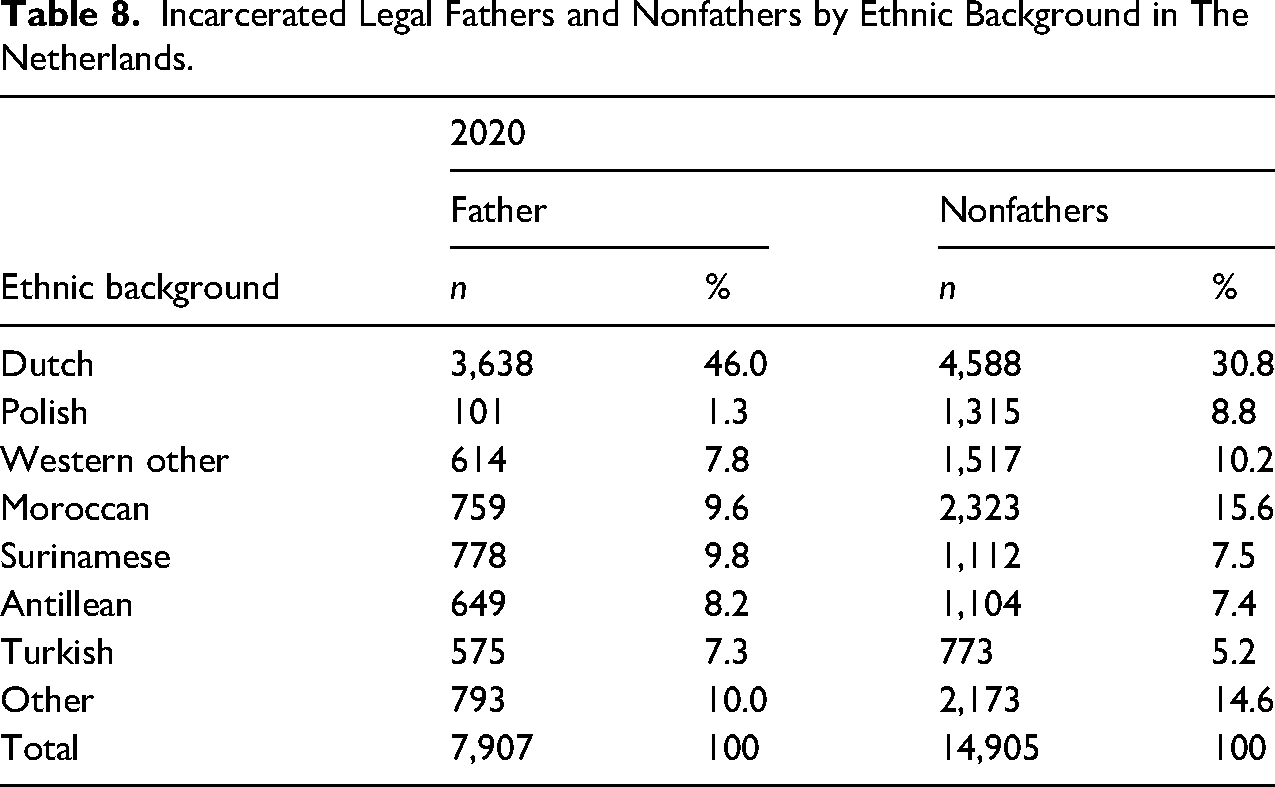
Incarcerated legal fathers were compared to nonfathers by age, ethnic background, offense type, and length of incarceration. For this analysis, the Gedetineerdentab, the GBApersoonstab, and the Kindoudertab were used as well as the Standgedetineerdentab. The years 2020, 2019, and 2018 were reviewed. A significant age difference (42.5 vs 33.3) was noted between incarcerated legal fathers and nonfathers. This was consistent over the years. Next, the ethnic background of incarcerated legal fathers and nonfathers was assessed by using the Gedetineerdentab (see Table 8). There were 177 countries of origin found. Based on the most prevalent origins of incarcerated fathers and nonfathers, the countries were reduced and coded into manageable groups. A dichotomy was created between the group of men with a Dutch background and the group of men with an ethnic background. According to the definitions of Statistics Netherlands, 2 ethnic backgrounds were divided into Western and Non-Western. As Poland was the most prevalent country of origin among incarcerated men with a Western ethnic background other than Dutch, a separate category for Polish prisoners was created. Other countries of origin were combined into one category: “other.” The categories totaled seven. Since the findings were consistent over the years, only 2020 was displayed. Incarcerated legal fathers were more often Dutch, Surinamese or Turkish compared to nonfathers.
Incarcerated Legal Fathers and Nonfathers by Ethnic Background in The Netherlands.
The type of offense for which legal fathers and nonfathers were incarcerated was also investigated (see Table 9). Since the findings were consistent over the years, only 2020 was displayed. The microdata showed the most serious offense for which the men were incarcerated. To reduce the risk of disclosure, the analysis was limited to 8 out of 9 categories of the Classification of Crimes System (CSM). Legal fathers in prison were compared to nonfathers based on a difference of at least one percentage point. Legal fathers incarcerated in any year were most likely to be incarcerated for violence/sexual offenses, traffic offenses, or drug offenses, compared to nonfathers. In comparison to nonfathers, legal fathers were less likely to be incarcerated for financial crimes, vandalism or public order crimes, other offenses under the Criminal Code, or offenses under other laws. The incarceration rate for legal fathers and nonfathers for firearms offenses was similar across all years.
The Number of Incarcerated Legal Fathers and Nonfathers by Offense in The Netherlands.
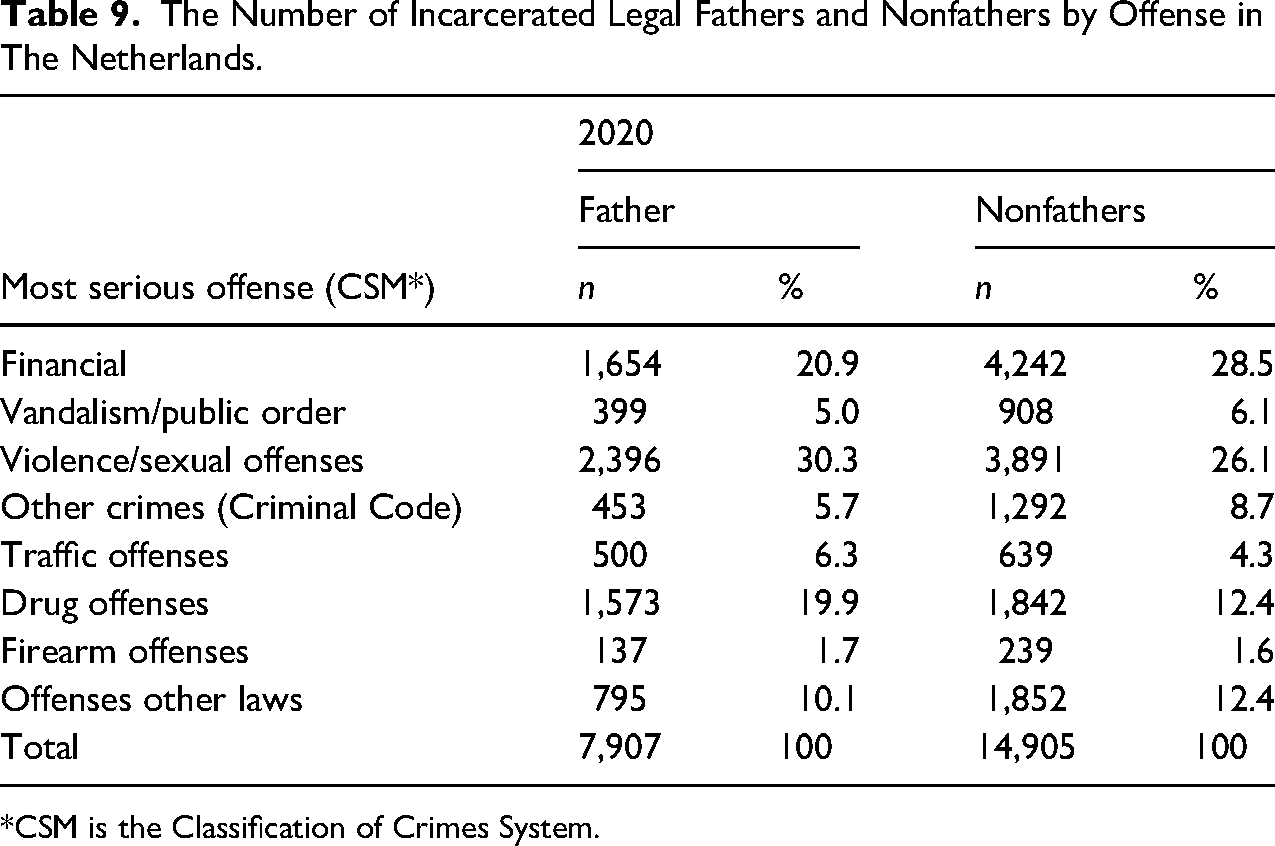
*CSM is the Classification of Crimes System.
Lastly, the length of time in prison of the legal fathers was compared to that of incarcerated nonfathers on 30 September in a given year using the Standgedetineerdentab (see Figure 1). To minimize bias, the length of incarceration was evaluated instead of paternity. So, first, the percentage distribution of the length of incarceration among fathers and nonfathers was calculated. Second, the percentage distribution was indexed to correct for the underrepresentation of short sentences. Figure 1 shows that incarcerated legal fathers were underrepresented for sentences up to 1 year but overrepresented for sentences over one year. For nonfathers, it was the other way around. The odds of receiving a sentence of 5 years or more were higher for legal fathers. Nonfathers were more likely to be convicted of sentences under 2 weeks.
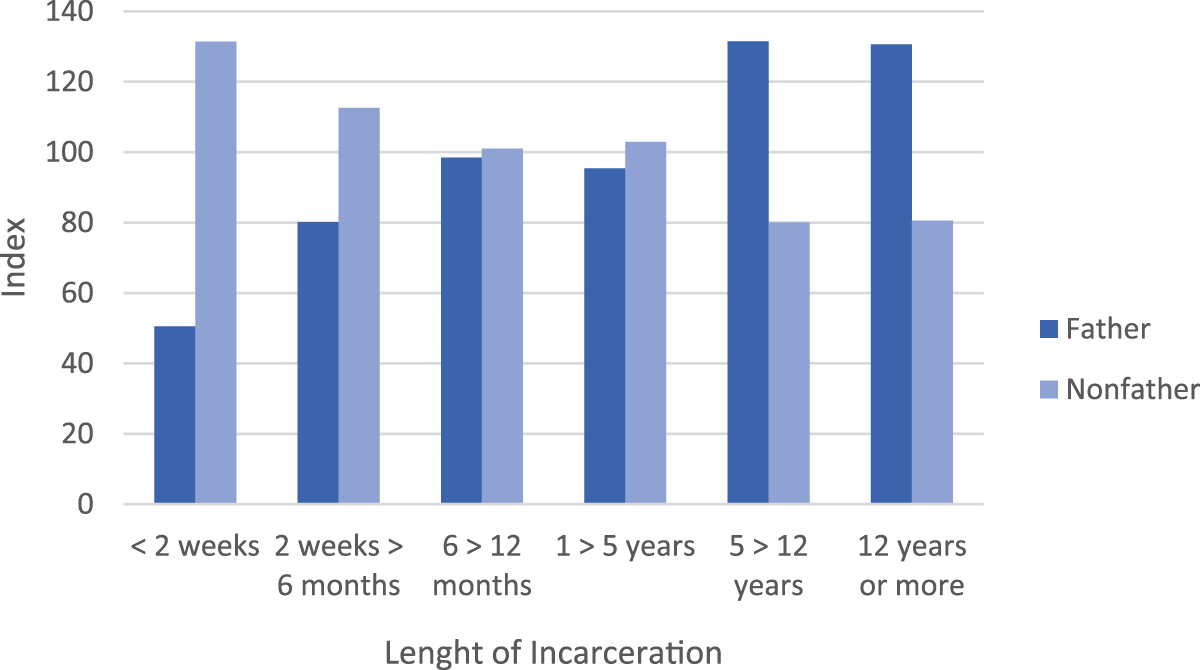
Length of incarceration of legal fathers and nonfathers in The Netherlands.
Discussion
Limitations and Future Directions
Our secondary analysis of Statistics Netherlands microdata from 2010 to 2020 yielded several findings. As a first step, the number of incarcerated fathers was revealed. About 34% of these were the legal fathers of at least one child. While we cannot generalize about all fathers in prison, our microdata on incarcerated legal fathers were presumably unbiased. Thus, we believe this study captured a substantial group of incarcerated fathers, complementing previous research that found that 41% of men in pretrial detention had children (Van Schellen et al., 2015). The methodology used probably explains the difference of 7%. In their study, Van Schellen et al. (2015) used self-report data, which likely included other types of fathers (biological-but-nonlegal fathers, stepfathers or other father figures). In general, Aquilino (2006) reports that legal paternity affects the FCR. It should, therefore, be a factor to consider in our future research. Interestingly, incarcerated men are less likely to have relationships such as marriage or registered partnerships (Murray, 2007; Van Schellen et al., 2015; Wildeman & Western, 2010), which makes legal paternity less likely to occur. Reef and Nieuwbeerta (2016) found that 47% of children of fathers in pretrial detention grew up in a two-parent family, compared to 89% of children in the general Dutch population. Furthermore, fathers in pretrial detention who had previous relationships had more children with multiple partners (Van Schellen et al., 2015), suggesting that legal paternity may not exist in this situation. These findings strongly imply that our percentage of incarcerated fathers is underreported.
Second, the number of children involved was identified, which matched the previous estimate of 25,000. This included children of incarcerated legal fathers and mothers. As this article centers on incarcerated legal fathers, there were almost 19,000 children. It is important to note that both adult and minor children were included in the data. While the incarceration of a parent is complex for all children regardless of their age, scientific and societal debate primarily focuses on the most vulnerable minors. Approximately 64% (n ≈ 12,000) of children with a legal father in prison were minors. The average age of the eldest child with a father in prison was 9 to 10 years. Minor children rely heavily on their gatekeepers (Geller, 2013). Therefore, it is crucial to consider the role of the gatekeeper when studying the FCR. Children with incarcerated legal fathers seem to have a similar gender distribution to children whose fathers are not in prison. Gender should be considered when studying the FCR for the reasons mentioned in the introduction.
Third, incarcerated legal fathers and incarcerated nonfathers differed in age, ethnic background, type of offense, and length of incarceration. Incarcerated legal fathers were older than incarcerated nonfathers, with an average age of about 42.5 years. This is inconsistent with previous research by Van Schellen et al. (2015) that found incarcerated fathers in pretrial detention to be on average 31.3 years old. Perhaps fathers in pretrial detention may differ in more ways from incarcerated legal fathers? In addition, what are the implications of those differences for the FCR? This study also concluded that most incarcerated legal fathers became first-time fathers between 33 and 35, based on the average age of their eldest minor children (9 to 10 years). The average age at which men have their first child in the general population is 32.9, suggesting that the non-fathers in our study were probably not fathers because of their young age. Surprisingly, most incarcerated legal fathers were over 40 years old. Typically, in life course criminological research, having children is associated with desistance from crime (Maruna, 2001; Sampson & Laub, 2003). However, they may have already served several years in prison by the time of our reference date.
Differences in ethnic background between incarcerated legal fathers and incarcerated nonfathers were also discovered, in line with the work of Van Schellen et al. (2015). The majority of incarcerated legal fathers were Dutch, Surinamese, or Turkish. Most of the incarcerated nonfathers were Polish, Moroccan, or of another ethnic background. It is possible that Polish and Moroccan male incarcerees were young and have not yet had children, but there is insufficient evidence to verify this hypothesis.
Furthermore, incarcerated legal fathers were more likely than nonfathers to be incarcerated for violent/sexual offenses, traffic offenses or drug offenses. Using the microdata, it was not possible to dissect the categories into subcategories (e.g., violent crimes from sexual crimes). Thus, only statements about the eight main CSM categories can be offered. Incarcerated legal fathers were most likely to serve long prison sentences which seemed to be in line with the severity of their offenses. Most incarcerated legal fathers served 6 months to 5 years in prison. In the case of long prison sentences, more changes are likely to occur in the families involved, which may affect the FCR. However, prior Dutch research focused solely on fathers in pretrial detention. So, more research on convicted fathers in Dutch prisons is essential. Additionally, the type of offense can influence a child's decision to maintain contact with their father (Berghuis et al., 2021). According to Western and Smith (2018), fathers who are addicted to drugs or alcohol were less likely to be involved with their children after they were released from prison. The majority of traffic offenses in the Netherlands were caused by alcohol/drugs (Rechtspraak.nl), which can be a sign of addiction. Having psychological problems like addiction can make it difficult to desist from crime, and this can lead to a vicious cycle, which might explain the longer sentences.
The data in the current study are unique, as it is the first Dutch population-based study on incarcerated fathers and their children. However, there are some limitations. First, analyzing microdata from Statistics Netherlands is a useful but not structurally feasible solution. Second, it is not possible to make statements about all incarcerated fathers and their children. Neither inmates who do not appear in BPR nor the group of incarcerated men who serve as biological-but-nonlegal fathers, stepfathers or other father figures were included. Moreover, we are still unable to identify the fathers and their families. In addition, the investigation reveals little or nothing about how demographic and detention factors impact the FCR within the Dutch context. As well, experiences and processes cannot be evaluated. That is, there are questions that cannot be answered: How do incarcerated fathers and their children evaluate the overall FRC? Does it change over time? What buffers or dissolves the FCR? Third, due to a lack of funds and the inaccessibility of additional microdata, all findings cannot be explained. Therefore this requires a cautious interpretation of study findings and conducting additional research to provide greater clarity. Lastly, we only the focus on specific variables is due to the factors able to be accessed in the microdata. Clearly, there are additional demographic factors and detention factors to consider. Therefore, follow-up research should focus on a broader range of factors that are known to impact the FCR.
Conclusion
It was challenging to determine both the number of incarcerated fathers and their number of children. The registration system of the Dutch Custodial Institutions Agency is outdated and will not be updated in the near future. However, microdata from Statistics Netherlands permitted identifying the group of incarcerated legal fathers and their children. As well as describe some of the demographic and detention factors known to impact the FCR. To understand the complex interrelatedness of different factors regarding the FCR, further detailed research is required—a holistic ecological perspective to study this process since individual and environmental factors are interrelated (Arditti, 2005; Dennison et al., 2017; Poehlmann et al., 2010). To study the FCR within the Dutch prison context, a model will be developed that will also provide a scientific framework for follow-up cross-national and cross-correctional research within Europe. For now, the current study hopefully raises awareness among stakeholders regarding the large number of incarcerated fathers separated from their children. This will potentially stimulate the development of more family-based approaches as the families involved need help and support (Claes & Verhagen, 2019; Kinderombudsman, 2017) as emphasized by the European Council (2018).
Footnotes
Declaration of Conflicting Interests
The authors declared no potential conflicts of interest with respect to the research, authorship, and/or publication of this article.
Funding
The authors disclosed receipt of the following financial support for the research, authorship, and/or publication of this article: This study is funded by the Dutch Research Council (NWO) with grant number 023.016.016.
Notes
Author Biographies
Note: The results in this study are based on our calculations (Open University) using nonpublic mircrodata from Statistics Netherlands. Under certain conditions, these microdata are accessible for statistical and scientific research. For further information: