




Abstract
Various survey measures have been developed to assess prison climate. Because these instruments have shortcomings, the Prison Climate Questionnaire (PCQ) was developed to measure prison climate and its related domains across a broad prison population. In this article, the instrument and its psychometric qualities are presented. Results show that the PCQ’s factor structure, reliability, and validity were in all aspects satisfactory. It was concluded that the PCQ is a promising instrument that can be used to measure and monitor individuals’ perceptions on the quality of prison life.
Introduction
Many countries face challenges in maintaining safe and stimulating prison environments, particularly under conditions of severe overcrowding and budget constraints. However, creating a positive environment is not an easy task. A prison is a complex system, made up by people of various psychological, social, and cultural backgrounds, who interact in a highly restricted and, to a certain extent, deprived environment (Wenk & Moos, 1972).
Although challenging, improving the quality of prison life may be beneficial in many ways. A large number of studies have emphasized the importance of prison climate in relation to staff and resident satisfaction (Rossberg & Friis, 2004), individuals’ adjustment to confinement, such as the incidence of physical and verbal misconduct (Camp et al., 2003; Long et al., 2011), mental health problems (Beijersbergen et al., 2014; Gover et al., 2000; Wooldredge, 1999), and suicide rates (Huey & McNulty, 2005; Liebling, 2011). Other research has documented that a stimulating prison environment can increase a person’s readiness and motivation to engage in rehabilitation efforts (Day et al., 2011; Long et al., 2011), and perhaps can even result in more positive postrelease outcomes (Beijersbergen et al., 2016; Schubert et al., 2012).
There are a number of existent survey measures to assess the subjective (or experienced) prison climate. A recent systematic review (Tonkin, 2016) revealed that 12 prison climate questionnaires have been developed. Examples of some well-known and frequently used prisoner surveys are the Correctional Institutions Environment Scale (CIES; Moos, 1974), the Measuring the Quality of Prison Life (MQPL; Liebling, 2004), and the Essen Climate Evaluation Scheme (EssenCES; Schalast et al., 2008)—for a complete overview, see Tonkin (2016).
Based on reviews of existing instruments (Boone et al., 2016; Tonkin, 2016), there are a number of issues that should be noted. First, research has indicated that most questionnaires were not of sufficient quality. For instance, the psychometric quality of the CIES is questionable, particularly in terms of reliability, internal consistency, and the proposed factor structure (Tonkin, 2016). In addition, there is little evidence of the psychometric properties of the MQPL (Hulley et al., 2012), which can partly be explained by the researchers’ intention to use it as a complement to qualitative research rather than a purely quantitative assessment of prison climate. Second, not all instruments can be applied to the general and broad prison population. For example, the EssenCES (Schalast et al., 2008), an instrument that stands out as the one that received consistent support regarding its psychometric qualities (Tonkin, 2016), was designed to measure social climate in forensic health care settings. Third, most instruments have a limited conceptualization of the construct prison climate and are not theory-driven. The aforementioned EssenCES, for example, consists of only 15 items, measuring a mere three subdomains of prison climate (therapeutic hold, residents’ cohesion and mutual support, and experienced safety).
To overcome these concerns and develop a comprehensive measure of prison climate and its correlates, a new survey instrument was developed, pilot-tested, and subsequently distributed among prisoners in the Netherlands: the Prison Climate Questionnaire (PCQ). The PCQ can be used for management purposes to monitor prison performance as well as research purposes to investigate the effects of differences in prison life quality on prisoners’ behavior, well-being, and postprison outcomes. This article aims to (a) present this instrument and (b) describe the psychometric quality of this instrument.
Measuring Prison Climate: The PCQ
The core of the PCQ was developed on the basis of two sources. The first source was an extensive literature research, which led to the identification of six primary domains of prison climate (Boone et al., 2016): relationships in prison, safety and order, contact with the outside world, facilities, meaningful activities, and autonomy. Some of these domains are related to the quality and quantity of available prison facilities and activities available; meaningful activities in prison can help individuals to cope with imprisonment by occupying their time and may provide opportunities for personal growth (Cheliotis, 2012; Stevens, 2012). Given that separation from loved ones is a painful aspect of imprisonment, contact opportunities (through visits or phone calls) are important for maintaining relationships with the outside world. Finally, the quality of facilities, such as access to sports, food quality, and general cell conditions can contribute to prison climate and prisoner well-being.
Other domains are associated primarily with the rules that govern conduct and the nature of relationships in prison. While imprisonment deprives people of their autonomy by definition, there is variation in the extent to which prisoners still have some freedom to make their own decisions and move around the prison. Previous research has identified that greater autonomy in prison can mitigate some of the harms of imprisonment and contributes to higher perceived quality of prison life (De Vos & Gilbert, 2017). Safety and order are closely related to other aspects of prison climate, such as autonomy and relationships in prison, and are dynamic in nature (e.g., Sparks et al., 1996). Experiences and fear of victimization are related to lower levels of well-being (Baidawi et al., 2016; Wooldredge, 1999). Relationships in prison consist of staff–prisoner relationships and those among prisoners themselves. Staff–prisoner relationships are key to understanding the moral quality of prison life as well as safety and order in prison (Crewe et al., 2015; Liebling, 2004; Molleman & Leeuw, 2012; Sparks et al., 1996; Sykes, 1958). It is important to note that these domains do not solely relate to the prison climate of adult prisoners, but rather reflect a general and universal concept of climate for various groups of people in a range of confined settings, such as juveniles, immigrants in administrative detention, and those held in forensic care facilities (Boone et al., 2016). The second source for the development of the PCQ was 14 existing prison climate surveys (see Beijersbergen, 2016, Table 1 on page 15, for an overview). These surveys were developed between 1974 and 2015 and were developed for adult, juvenile, and forensic care facility prisoners. The constructs/scales used in these existing surveys generally relate to the six identified prison climate domains by Boone and colleagues (2016).
Based on these two sources, the core of the PCQ entails the six prison climate domains which are measured using 14 constructs/scales. These constructs or scales are generally in line with the constructs/scales used in existing prison climate surveys. For each construct or scale, three to seven questions were formulated that capture the construct. Several items in the PCQ were based on examination of items in existing surveys, sometimes somewhat adjusted. An important starting point was to keep the questions as simple and straightforward as possible, due to the generally limited literacy skills of prisoners.
In addition to the 14 constructs/scales measuring prison climate, some other questions were included to the questionnaire, as the PCQ was explicitly developed for both research and management purposes. First, the PCQ includes questions related to specific policy measures currently implemented in Dutch correctional facilities, as was requested by the Dutch Prison Service. Second, the PCQ also contains questions related to prisoners’ background characteristics, institutional characteristics, and possible outcome measures, such as experienced severity of imprisonment, well-being, misconduct, and overall satisfaction with the correctional facility. This enables, for example, research into the relationship between experienced prison climate and prisoners’ misconduct.
An early version of the questionnaire was tested and validated with a pilot study among 1,380 prisoners (Beijersbergen, 2016). This led to small adjustments to refine the instrument. This article provides an assessment of the PCQ as an adequate instrument to measure prison climate and its underlying domains. To this end, we present tests of the survey’s factor structure, reliability, and validity among a large population-based sample.
Method
Participants and Procedure
The Life in Custody study was designed to measure the quality of life in Dutch prisons. To this end, the PCQ 1 was administered to the full population of prisoners (males and females, both pretrial and convicted, practically all regimes and populations 2 ), housed in the 28 prisons in the Netherlands, in the period January to April 2017. During data collection, a total number of 7,109 prisoners were held in pretrial detention and prison. Of those, 6,088 prisoners (86%) could be reached to participate in our project (548 could not be invited to participate, because of being released in the week of data collection, 473 because of language problems, severe psychological problems, or being placed in isolation in the week of the data collection). Of the 6,088 prisoners who were approached to participate, 4,938 (81%) took part (most frequently heard reasons for nonparticipation were “don’t want to” and a lack of trust in scientific research). All participants were informed about the purposes of the study and had to consent to taking part in line with current research ethics); they were asked permission to match their survey data with administrative data. Most participants did so; only 400 participants did not and participated anonymously. Therefore, both survey and registration data were available for a sample of 4,538 prisoners. Table 1 (prisoner characteristics) shows relevant sample characteristics for study participants (for more information regarding the representativeness of the Life in Custody (LIC) study sample, see Van Ginneken et al., 2018).
Descriptive Statistics (Total N = 4,538).
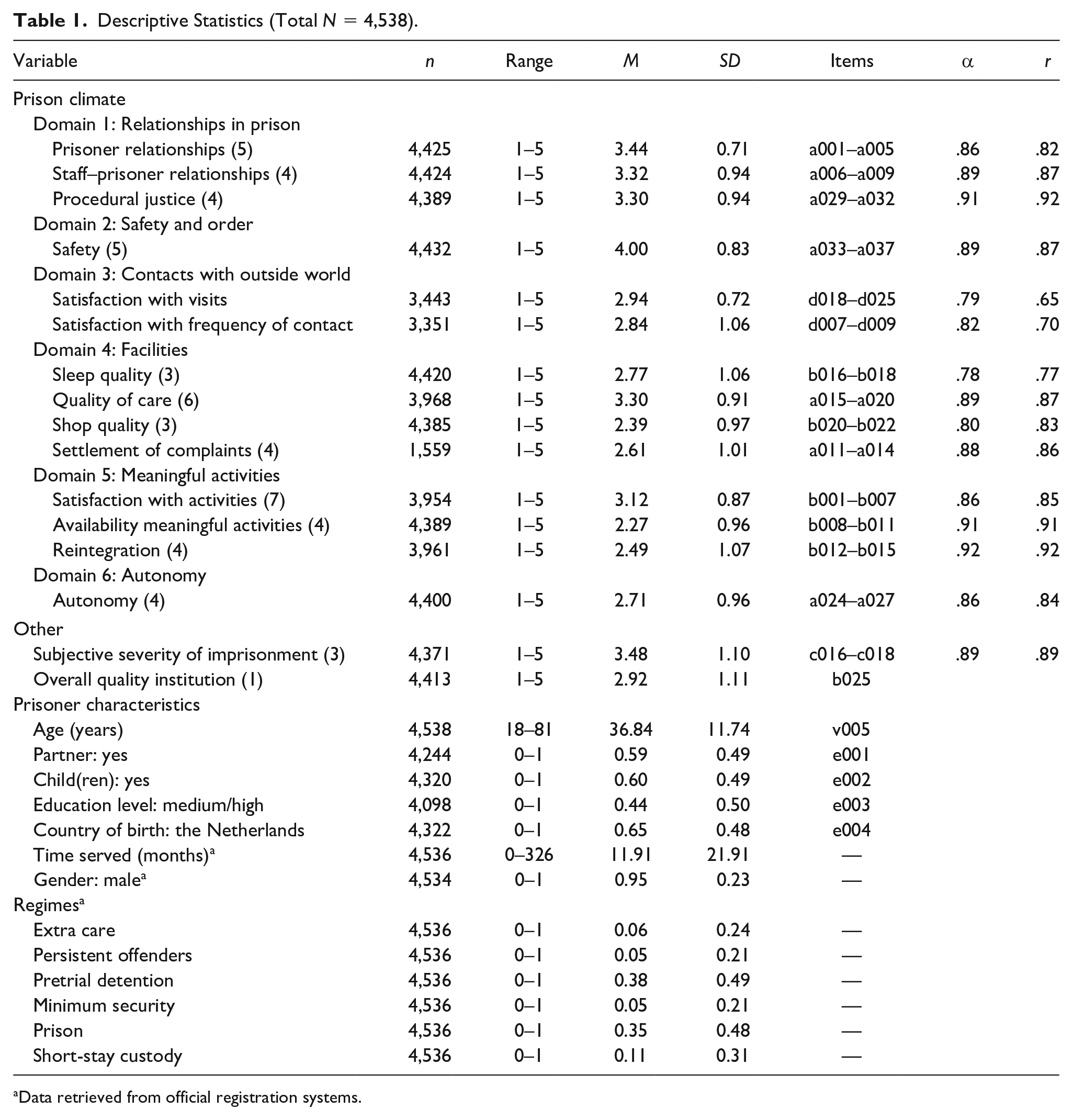
Data retrieved from official registration systems.
Before data collection began, an extensive preparation phase took place, in which site visits were held to inform staff members about the study details and in which an institute-specific planning of the data collection was made. In addition, we made contact with prisoner representatives, and distributed promotional material. During data collection, prisons were visited by research assistants, who individually approached each prisoner. As a conversation starter, researchers handed out a small incentive (such as a can of soda) to all prisoners (including nonparticipants).
When individuals gave their permission for participating in the study, they were handed a paper and pencil version of the questionnaire in their language of preference (Dutch, English, or Spanish). If they had trouble reading or problems concentrating, participants were given the opportunity to fill out the questionnaire with help of a research assistant. When collecting the questionnaires 1 or 2 days later, researchers were instructed to carefully check the questionnaires for forgotten parts, as the pilot project showed quite some missing data (Beijersbergen, 2016). (A more extensive overview of the Life in Custody Study can be found in Van Ginneken and colleagues, 2018.)
The PCQ
The PCQ is a newly developed 136-item questionnaire that measures 21 concepts. Of these concepts, 14 cover the six aforementioned domains of prison climate. Respondents rated all prison climate items on a 5-point scale, ranging from 1 (strongly disagree) to 5 (strongly agree), with higher scores reflecting a more positive experience.
The first prison climate domain involved relationships in prisons and was measured by three subscales: two subscales examining staff-prisoner relationships, and one subscale measuring relationships with fellow prisoners. Staff–prisoner relationships were measured by a four-item subscale on prisoners’ experiences with staff members (e.g., “If I have problems, the staff members in this unit help me”), and a four-item subscale on procedural justice (e.g., “Staff members in this unit treat me fairly”). The subscale on relationships with fellow prisoners contained five items on relationships between prisoners and group atmosphere (e.g., “Prisoners treat each other respectfully here and “New prisoners are quickly accepted into the group”). The second domain, safety, was measured by five items (e.g., “I feel unsafe in this institution”) that were recoded so that high scores reflected increased feelings of safety. Contact with the outside world formed the third domain of prison climate and was measured by two subscales: eight items on satisfaction with visits (e.g., “I have sufficient privacy during visitation hours”) which taps into the visitation experience, and three items on satisfaction with frequency of visitation (e.g., ‘I’m satisfied with how often I can see my family, friends or partner here’).
The fourth domain measured the respondent’s satisfaction with facilities and consisted of four subscales: sleep quality (three items; e.g., “My sleep is often disturbed in this institution”), quality of care (six items, e.g., “I can get medical care here if I want to”), shop quality (three items, e.g., “The products in the shop are affordable”), and settlement of complaints (four items, e.g., “I was satisfied with the way my complaint was handled”). Meaningful activities was the fifth domain of prison climate and was measured by three subscales: a seven-item scale of satisfaction with activities (e.g., “I’m satisfied with the recreation/sports, etc.”), a four-item scale of availability of meaningful activities (e.g., “This institute delivers an interesting and varied program”), and a four-item scale on reintegration (e.g., “In this institution, I can prepare well for my return into society”). The last prison climate domain—autonomy—consisted of five items (e.g., “I can decide for myself on matters that are important to me”) measuring the degree of independence or autonomy experienced by prisoners. Descriptive statistics on each of the prison climate scales can be found in Table 1.
Besides measuring prison climate, the PCQ consists of additional (but related) questions relating to background characteristics (e.g., demographics), health and health care, well-being, victimization and misconduct, subjective severity of imprisonment, and overall satisfaction with the institution. Finally, some opinions and experiences with some specific policy measures (such as the recently implemented system of promotion and demotion, which awards extra privileges to prisoners who are behaving well and are conforming to prison rules) are gathered. The questionnaire takes approximately 20 minutes to fill out. Given that prison climate is the central construct of the PCQ, this article focuses on examining the psychometric quality of the scales that are believed to represent the six aforementioned domains of prison climate.
Analyses
To measure the psychometric quality of the prison climate scales of the PCQ (i.e., relationships in prison, safety and order, contact with the outside world, prison facilities, meaningful activities and autonomy), the factor structure, reliability, and validity of these scales were tested.
First, exploratory factor analysis was conducted to assess the underlying structure of the items included in the data (Costello & Osborne, 2005; Fabrigar et al., 1999). Because it is expected that a certain correlation exists between the prison climate scales, direct OBLIMIN rotation was chosen as a method to simplify the interpretation of the factor structure (Costello & Osborne, 2005). Second, reliability was assessed to determine whether the items within a subscale that, given prior research and theory, are expected to measure the same construct, in fact, produce similar scores. Reliability was examined by means of internal consistency tests, using both Cronbach’s alpha and, as the survey was only administered once, split-half reliability (see Streiner, 2003).
Third, to test whether the PCQ was able to measure the underlying concepts of the prison climate domains, both construct validity (do the items and scales measure what they ought to be measuring? Cronbach & Meehl, 1955) and criterion (or concurrent) validity (are the items and scales related to certain, reasonable, outcomes?) were assessed. It was expected that the prison climate domains would be related to each other (as they altogether should measure prison climate). Therefore, the first method to examine construct validity was through an interscale correlation matrix. The second method was through one-way analysis of variance (ANOVA) comparisons between prison regimes, to determine whether group differences in prison climate over different prison regimes were theoretically and empirically sound.
Criterion validity was measured by means of linear regression analyses, to assess the extent to which prison climate domains and individual characteristics were related to specific outcomes, namely, overall quality of the institution and subjective severity of imprisonment. To maintain a sufficient number of cases, missing values were deleted from the analyses pairwise instead of listwise.
Results
Prison Climate: Factor Structure
Factor analysis was conducted to confirm the underlying dimensions in the data. First, the Kaiser–Meyer–Olkin statistic was 0.95. Values close to 1 indicate that the proportion of variance in the data for a large part can be attributed to underlying factors, and, therefore, the data are suitable for factor analysis (Kaiser, 1974). In addition, Bartlett’s test was significant, χ2(3741) = 46,884.280, p < .01, which means that the variables in the data were related and factor analysis was thus a useful next step (Bartlett, 1950).
Table 1 shows the preassumed structure of the prison climate data (under “prison climate”) and the variables that were supposed to group together into 14 scales, each representing a specific dimension of prison climate, as described above. The results of the factor analysis are presented in Table 2. Only sufficient factor loadings above 0.4 are displayed. To begin with, most items grouped together as expected. However, according to Kaisers Criterion (Eigenvalue > 1), 13 instead of 14 dimensions were detected in the data. As was the case in the pilot study (Beijersbergen, 2016), procedural justice and staff–prisoner relationships items loaded on the same factor. Consequently, to avoid problems of multicollinearity, these items should be combined in one scale (staff–prisoner relationships and procedural justice). The four reintegration and four availability of meaningful activities items also loaded on the same factor. The eight items on visitation (satisfaction with visits) leaned on two separate components: six items grouped together (e.g., “the visiting room is pleasant” and “the visiting hours in this institution are long enough”), where items d024 (“I enjoy receiving visits”) and d025 (“after receiving a visit, I feel good”) did not. To continue, all items loaded on one single component, indicating unidimensionality (Clark & Watson, 1995).
Factor Structure.
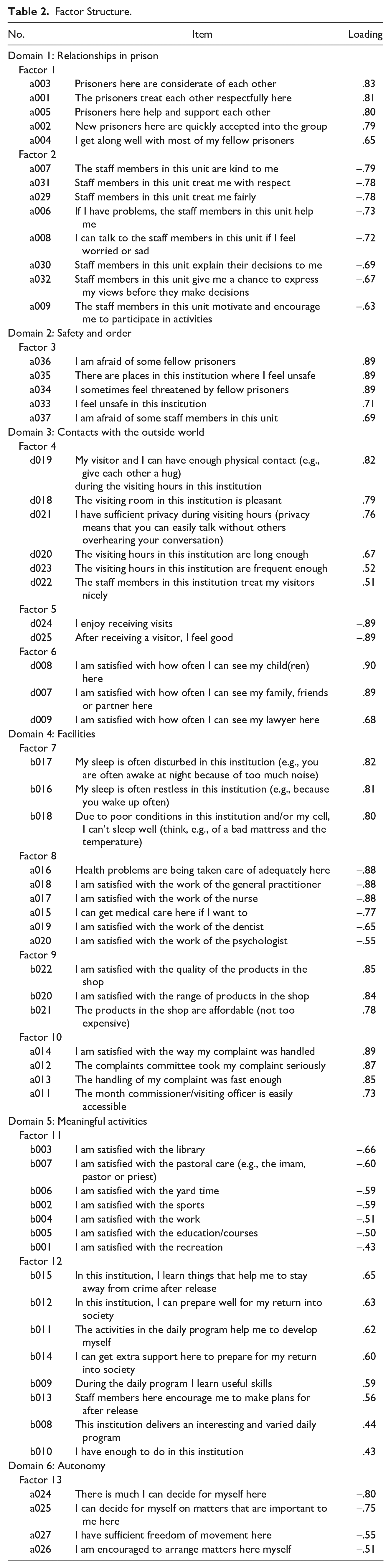
To conclude, factor analysis verified that the data were structured as expected and that the questionnaire scales behaved unidimensionally. It appears that the survey data measured the constructs that it was intended to measure.
Reliability
Reliability was studied by means of internal consistency tests, using the Cronbach’s alpha statistic. Higher scores point toward higher internal consistency, since higher across-item correlations are a sign of measuring the same construct. Reliability scores below .70 are considered moderate, scores between .70 and .80 are seen as sufficient, and scores above .80 represent good reliability (Evers et al., 2010). In Table 1, the Cronbach alpha’s of the scales are presented. As is shown, internal reliability, ranging from .78 to .92, was generally high (Tavakol & Dennick, 2011).
A second method used in this study to measure internal consistency was split-half reliability. The split-half method divides the items within a scale into two groups and inspects whether both parts equally contribute to what is being measured. To assess split-half reliability, the Spearman Brown statistic is used, which predicts the reliability of scales when subgroups of items are used (in this case split in half; De Vet et al., 2017). Again, a score above 0.70 is acceptable. As presented in Table 1, all scales scored within a range of 0.70 to 0.92, with most scores higher than .80. This again confirms that the internal reliability was high. By exception, the scale satisfaction with visits scored 0.65. Given that the factor analysis also pointed out that this scale leaned on two different components, items d024 (“I enjoy receiving visits”) and d025 (“after receiving a visit, I feel good”) should be deleted, in which case the Spearman Brown coefficient increases to .85.
Construct Validity—Correlation Matrix
In Table 3, the interscale correlation matrix of the six principle domains that combined ought to represent the construct prison climate is presented. Moderate to strong correlations (r > .50) are depicted in bold.
Correlation Matrix.
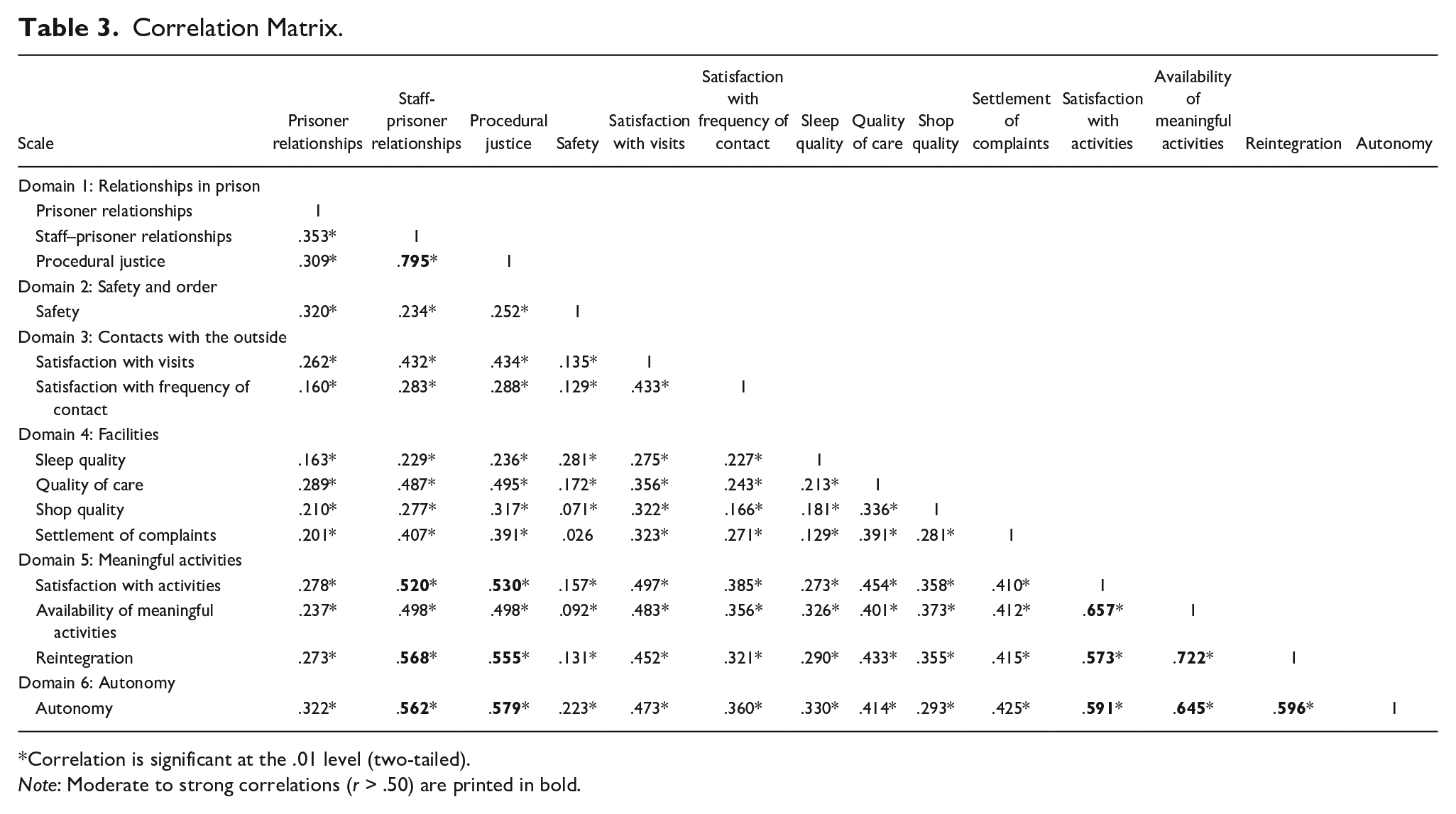
Correlation is significant at the .01 level (two-tailed).
Note: Moderate to strong correlations (r > .50) are printed in bold.
As shown, all scales within the six domains are positively correlated (p < .01), which is not surprising, since combined, these scales are supposed to measure the concept prison climate. Furthermore, three things stand out. First, Table 3 shows that the scales staff–prisoner relationships and procedural justice are both strongly correlated to all the other prison climate scales. This is not surprising, as it is believed that staff–prisoner relationships lie at the heart of prison life (e.g., Beijersbergen et al., 2016; Crewe et al., 2011; Liebling, 2011). Second, also consistent with previous research, autonomy is highly correlated with other prison climate scales, especially with the scales staff–prisoner relationships and procedural justice, but also the scales satisfaction with activities and availability of meaningful activities (Beijersbergen, 2016; Goodstein et al., 1984). And third, the scale reintegration correlated strongly with the scales satisfaction with activities and availability of meaningful activities. This is not unexpected, as these scales combined are believed to measure the domain meaningful activities.
Oppositely, it is worth mentioning that the scale safety was not strongly correlated to the other prison climate scales, which had also been concluded in the pilot study (Beijersbergen, 2016). Theoretically, the lack of correlation between safety and most other scales is understandable, because feelings of safety perhaps have little to do with prison climate domains such as shop quality, and the settlement of complaints. The scale safety did, however, (though relatively weakly) correlate with prisoner relationships (r = .32), which makes sense given that safety is likely experienced in relation to other people and was also found in previous work (Beijersbergen, 2016). Sleep quality also showed no strong correlation to the other prison climate scales. This may be surprising as a lack of sleep has been associated with prisoner relationships in terms of cell-sharing or overcrowding (e.g., Elger, 2008; Goudard et al., 2017) in other studies. However, partly caused by a steep decline in imprisonment rates (Dünkel, 2017), there is no problem of overcrowding in Dutch prisons, while cell-sharing, which is limited to a maximum of two-persons per cell, is applied in approximately 20% of cases (Dutch Prison Service, 2017). The lack of correlations between sleep quality and other domains is, therefore, not unexpected.
In sum, the prison climate domains correlated in a theoretically and empirically conceivable manner and it is thus credible that the scales measured one and the same central construct. This also indicates that although prison climate is a concept that leans on a subset of different constructs (see Boone et al., 2016), these separate constructs are interrelated, and combined measure one central construct: prison climate.
Construct Validity—Regimes
Another way to assess construct validity is to check the rationality behind group differences. From previous research, it is known that prison climate can vary between prison regimes (Molleman & Van Ginneken, 2015). Outcomes of a series of one-way ANOVA analyses showing the scores on the prison climate scales across different prison regimes were presented in another publication (Van Ginneken et al., 2018), and the full table of results can be accessed in that publication. Below, only a brief summary of the results presented in this article will therefore be given.
In general, participants in prison regimes reported somewhat higher scores compared with participants in pretrial detention and short-stay custody on most domains of prison climate (i.e., satisfaction with activities, availability of meaningful activities, reintegration, satisfaction with visitants and frequency of contact, sleep quality, shop quality, quality of care, and autonomy). This is as expected, as offenders in pretrial detention and short-stay custody have much less access to activities, possibilities for contact and visitation, and access to care and can exercise less autonomy.
Furthermore, participants in minimum-security regimes reported higher scores on all prison climate scales, compared with almost every other regime (but most prominently compared with pretrial detention, short-stay custody, and persistent offender regimes). This finding is also in line with what was anticipated as prisoners in minimum-security regimes have more freedom to, for example, move around, and keep in touch with friends and family. Finally, prisoners in extra-care regimes (prison units for vulnerable prisoners due to their mental health needs and/or index offense) reported more positively on staff–prisoner relationships and the quality of care. This is as expected, as they have more contact with staff members, and because these units are mostly occupied by more and better trained personnel. It was also shown that prisoners in extra-care regimes were more positive on other scales, such as those that belong to the meaningful activities domain, and autonomy. This is also congruent with expectations, as offenders in these units on average spend less time on their cells and have a bit more freedom to move around.
To conclude, the regime differences in perceived quality of life were coherent with expectations and previous findings, which is an indication of adequate construct validity.
Criterion Validity
Criterion validity was assessed by testing whether the prison climate domains were related to certain outcome measures, namely overall quality of the institution, and subjective severity of imprisonment. It was expected that higher scores on the various prison climate domains would be associated with increased subjective assessment of the overall quality of the institution and a lower assessment of subjective severity of imprisonment (see, e.g., Beijersbergen, 2016; Liebling, 2004; Molleman & Leeuw, 2012). The independent variable “overall quality of the institution” was measured in one item (“Generally speaking, I am satisfied with this institution”), with answer categories ranging from 1 (strongly disagree) to 5 (strongly agree). Higher scores indicated greater satisfaction. Subjective severity of imprisonment was measured using a three-item scale (e.g., “My time here feels a lot like punishment”), with answer categories ranging from 1 (strongly disagree) to 5 (strongly agree). In this case, higher scores reflect greater experienced severity. Descriptive statistics and (if applicable) reliability measures of these independent variables can be found in Table 1.
The outcomes of a series of linear regression analyses, including the prison climate scales, and control variables (individual characteristics and regime) as independent variables, and the overall quality of the institution and subjective severity of imprisonment as dependent variables, are shown in Table 4. As presented, 9 out of 14 prison climate domains turned out to be positively and significantly related to the overall subjective quality of the institution. Not surprisingly, a better prison climate means a more positive view on the institution in general. Prisoner relationships were not related to the overall quality of the institution, which perhaps made sense as fellow prisoners are not so much a direct feature of the institution as other scales, such as facilities and autonomy. Other scales that did not show a significant relation with the overall quality of the institution were satisfaction with the frequency of contact, quality of care, settlement of complaints, and reintegration.
Linear Regression Analyses.
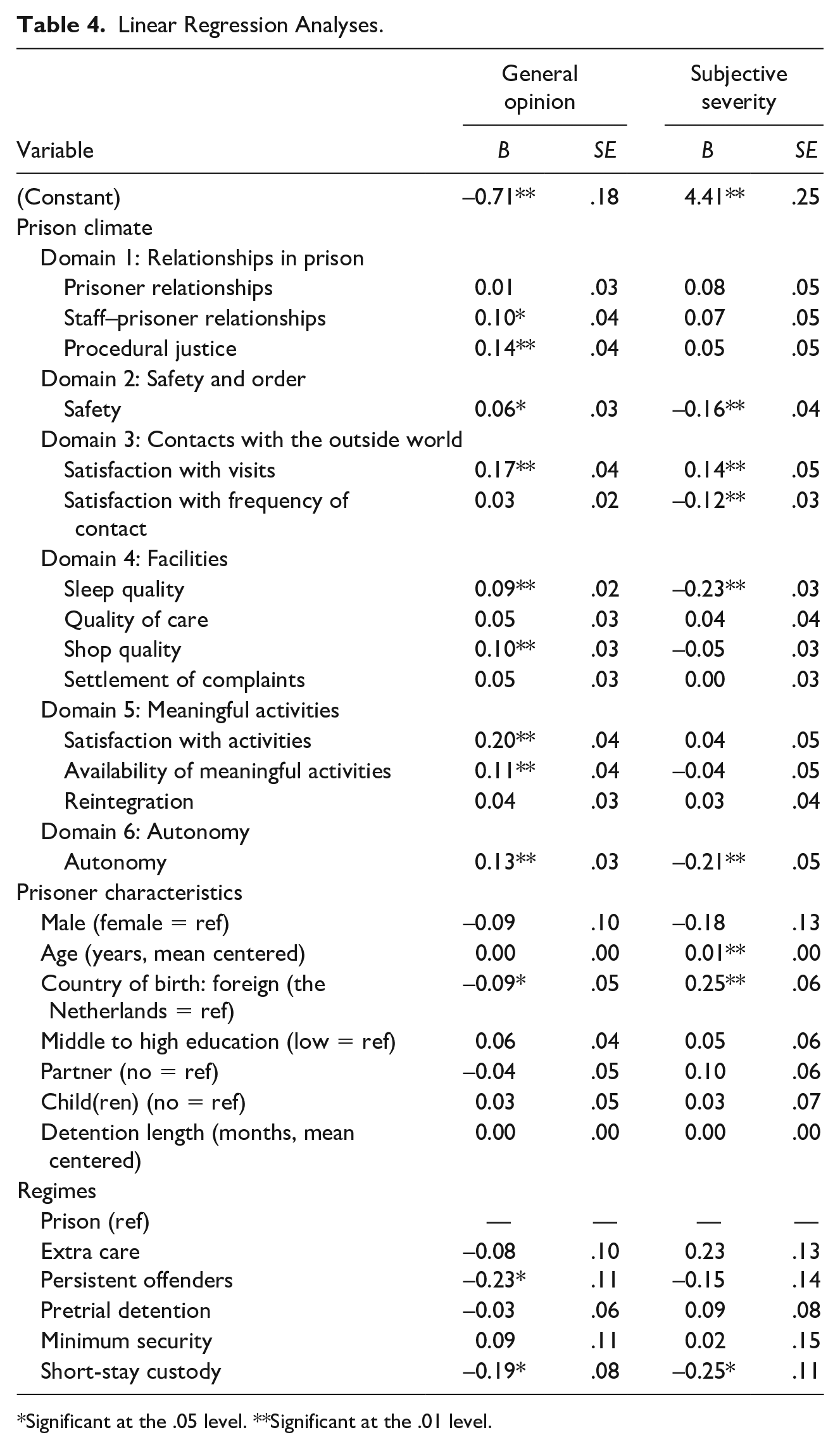
Significant at the .05 level. **Significant at the .01 level.
Turning to the model predicting subjective severity of imprisonment, Table 4 reveals that only 5 of the 14 subscales were significantly related. Most associations were coherent. For instance, higher scores on perceived safety, satisfaction with frequency of contact, sleep quality, and autonomy were related to lesser experienced severity of imprisonment. One (statistically significant) relationship perhaps seemed somewhat unexpected. Even though higher scores on the scale satisfaction with visits were related to a higher general opinion on the institution, and higher rates on the scale satisfaction with frequency of contact were linked to decreases in experiences of severity, higher scores on the scale satisfaction with visits related to an increased experienced severity of imprisonment. This might partly be explained by reversed relationships; you can enjoy a visit from family and friends, but at the same time find that visitation is also one of the most confrontational elements of your punishment (e.g., Cochran & Mears, 2013).
Turning to the total explained variance of the two models presented; the adjusted R squares of each of the models shown increased from .06 to .54 (overall quality), and .05 to 0.12 (severity of imprisonment) when the prison climate domains were added to the control variables. In other words, adding the prison climate domains improved the fit of the models, especially concerning the model explaining general opinion on the institution. In the final model, 54% of the variance in general opinion was explained by both the prison climate domains and control variables. The independent and control variables included were, however, not able to explain most of the variance reported concerning experienced severity of imprisonment. Perhaps this is due to the fact that subjective severity of imprisonment is a complex construct, too complex to be related directly to, or predicted by prison climate (see e.g., Crewe, 2011; Raaijmakers et al., 2017; Sexton, 2015, for research on subjective severity of imprisonment).
Overall, it appears that the prison climate domains measured with the PCQ were related to outcomes in a sensible and easy to understand manner. Most prison climate scales were significantly related to the general opinion of prisoners on the quality of the institution. And combined, the prison climate domains accounted for a large increase in explained variance in the assessment of overall quality. Even though the prison climate scales were less strongly related to experienced severity of imprisonment, we consider these findings a clear indication of criterion validity.
Discussion
The aim of the study presented in this article was to assess if the PCQ is an adequate instrument to measure prison climate and its underlying domains. To this end, the PCQ was administered nation-wide among both male and female prisoners, who were in various phases of imprisonment, and in regimes that varied in security level and target population. Response rates were high (81%). Consequently, the psychometric qualities of the PCQ could be assessed by using a large and representative research sample. Study results were used to assess the PCQ’s factor structure, reliability, and validity.
The Psychometric Qualities of the PCQ
Regarding the instrument’s factor structure, analyses verified that the data were for the most part structured as expected, with all scales behaving unidimensionally. This indicated that the items measured the constructs that they were supposed to measure and could additionally be seen as an indication of construct validity. Furthermore, the reliability of the scales was found to be high, evidenced by internal consistency statistics. In addition, the prison climate domains correlated in a theoretically conceivable manner and it is thus credible that the scales measured one and the same central construct, prison climate. Finally, it was shown that the prison climate domains were related to plausible outcomes, especially the assessment on the overall quality of the institution, by which it was concluded that the criterion validity also appeared sufficient. Overall, it was concluded that the psychometric qualities of the PCQ were in all aspects adequate, and most certainly exceeded minimum expectations.
Limitations, Implications, and Suggestions for Future Research
The current study has indicated that the PCQ, developed on the basis of an extensive literature study (Boone et al., 2016) as well as a large-scale pilot study involving almost 1,400 prisoners (Beijersbergen, 2016), appears to be a reliable and valid instrument to assess that prison climate in Dutch penal institutions, as experienced by prisoners. There are, however, some limitations worth mentioning and some suggestions for future research.
First, although the psychometric qualities of the PCQ were tested using a nation-wide population-based sample consisting of both male and female prisoners detained in a range of regimes, we cannot ignore the fact that the instrument was not tested among prisoners with, for example, severe psychiatric problems, or juveniles. It is likely, however, since the PCQ was developed based on a large international literature review (Boone et al., 2016), which identified the domains of prison climate for adult prisoners, juveniles, immigrants in administrative detention, as well as those in forensic care facilities, that the concept of prison climate captured by the PCQ is a universal concept. Nevertheless, it cannot be ruled out that the instrument is less suitable to measure prison climate among special populations. The PCQ is, however, very suitable for adaptation to different settings through the inclusion and exclusion of population-specific scales.
A second limitation is that the instrument was developed and tested in Dutch prisons. The Netherlands has quite a unique prison situation, with imprisonment rates that have been dropping in recent years (Dünkel, 2017), and with relatively good conditions of confinement (Subramanian & Shames, 2013). Although previous work has indicated that prison climate is a concept that transfers easily between geographic regions in Western society (Ross et al., 2008), we do not know if the PCQ will behave as well in prisons in other geographic regions. And finally, the instrument presented in this study represents a quantitative assessment of prison climate. Although the instrument is based on an extensive literature study, and a pilot study in which qualitative interviews were held (see Beijersbergen, 2016), no qualitative measures were used to substantiate our psychometric quality assessment. This could perhaps strengthen our assessment of the quality of the instrument in question, can deepen our understanding of some of the more complex issues involved, and can be a source of additional—valuable—data (Liebling, 1999).
While previous studies have indicated that most instruments measuring prison climate are either lacking in psychometric qualities, are limited in scope, and/or are directed at a specific (narrow) target population, the PCQ appears to be an adequate instrument to measure the perspective of prisoners regarding their perceptions of the quality of prison life. This advancement means that the PCQ may be of great use for policy makers, practitioners, and scientists. First, the instrument can be used to adequately assess and monitor living conditions (prison climate) in prisons, which provides information that can be used to maintain or improve safe and supportive prison environments. Second, the instrument can give an insight into the relationship between prison climate and the well-being and behavior of prisoners, both during and after imprisonment; knowledge that may be used to improve the situation of (ex-)prisoners and may be helpful in working toward the successful return of prisoners in society.
Footnotes
Declaration of Conflicting Interests
The author(s) declared no potential conflicts of interest with respect to the research, authorship, and/or publication of this article.
Funding
The author(s) disclosed receipt of the following financial support for the research, authorship, and/or publication of this article: This Life in Custody study is an independent research project of Leiden University. The Leiden University research team was fully responsible for data collection, data management, data analyses, and research reports from the project. The Dutch Prison Service (DJI) gave full support to the administration of the survey and collection of administrative data. The project was funded by Leiden University and the Dutch Prison Service.