




Abstract
Does variation in local economic environments help explain why some areas exhibit systematically higher support for radical-right parties? To address this question, I focus on two drivers related to the type of industry where individuals work and socially interact. First, in contrast to knowledge-based industries, labour-intensive industries are characterised by a clustering of individuals with high job vulnerability and low education. Second, when they coincide spatially, these two socioeconomic characteristics give rise to nativist preferences and exclusionary attitudes, which drive support for radical-right parties. I test these claims with two empirical strategies. In geographical municipal-level data from Spain, I confirm that support for radical-right parties is determined by exposure to labour-intensive activities such as certain sectors of agriculture and tourism. In addition, survey data from 17 European democracies confirm that working in labour-intensive industries boosts the roles of job vulnerability and education in developing and expressing exclusionary political behaviours.
Introduction
Why do some areas in industrialised democracies exhibit systematically higher support for radical-right parties (RRPs)?
The answer to this question lies in the socioeconomic environments where individuals live or work. In particular, this research argues that the localised success of RRPs is explained by territories’ exposure to specific economic conditions (Bolet, 2020; Cremaschi et al., 2025; Dal Bó et al., 2023; Magalhães and Cancela, 2025). Concretely, electoral units dominated by labour-intensive industries such as agriculture, hospitality and construction exhibit higher radical-right electoral support than areas dominated by knowledge-intensive industries like finance, information services or scientific occupations (Cremaschi et al., 2025; Cuccu and Pontarollo, 2024). Two facts support this claim.
First, labour-intensive industries 1 host large numbers of vulnerable workers, as occupations within them face higher automation risks than do knowledge-intensive occupations (Owen and Johnston, 2017). Economic vulnerability, in turn, facilitates support for protectionist and nativist preferences, which align with radical-right platforms (Kaihovaara and Im, 2020). This preference formation does not take place solely at the individual level but is also determined by contextual conditions. This article argues that in areas with a high concentration of vulnerable workers, political coordination costs decrease, facilitating the collective development and expression of preferences for exclusionary policies such as welfare protectionism to insure the affected individuals against potential economic decline (Brader et al., 2008; Davis et al., 2019; Naumann et al., 2018).
Second, labour-intensive industries are characterised by agglomerations of workers with low education. Given the demand for manual and routine occupations, these industries also attract unskilled immigrant labour (Cuccu and Pontarollo, 2024). I argue that the resulting socioeconomic composition of labour-intensive areas is likely to trigger cultural conflicts as localised concentrations of low-educated individuals not only facilitate the formation of exclusionary views 2 but also explain how intensively such views are expressed. Publicly aligning with radical-right narratives carries lower social costs in social environments where such perspectives are widespread than in more diverse or inclusive contexts (Suhay, 2015).
The effects of job vulnerability, culture and education on the success of radical-right parties is well documented (Dal Bó et al., 2023). However, moving the focus away from individuals to geographic socioeconomic conditions reveals new research avenues that add to our understanding on why RRPs succeed electorally. My main contribution is identifying such contextual conditions that – when they coincide with individual characteristics – boost radical-right support.
The core of this argument is that, in contrast to knowledge-intensive areas, labour-intensive economic environments catalyse the coordinated creation and expression of political preferences aligned with RRPs (Kitschelt and Rehm, 2014; Thewissen and Rueda, 2019). This explains why radical-right parties are particularly successful in areas dominated by agriculture or construction, but less electorally attractive in areas dominated by technology-driven industries. Put differently, I argue not that economic vulnerability per se drives support for RRPs, but rather that vulnerability shared locally among peers drives demand for nativism and, in turn, support for the radical-right parties that supply it. This same logic implies that radical-right electoral success depends not only on individual education but also on how concentrations of people with similar educational profiles foster the shared formation and expression of political views.
Testing these claims is, however, empirically challenging as the theoretical claims developed in this argument include testing macro-level regularities and micro-level behaviours. To overcome this hurdle, I present two analyses as suggested by Golder (2016) and as shown by Fetzer (2019), among others. I first examine the electoral rise of radical-right parties using Spanish municipal data on geographical and socioeconomic conditions. This analysis documents empirical regularities linking the electoral success of RRPs with agglomerations of labour-intensive activities such as certain extensive forms of agriculture or hospitality. The results of this analysis report a strong positive relationship between the electoral fortunes of radical-right parties and exposure to labour-intensive industries. This finding is also robust to several specifications.
The second analysis examines mechanisms that could explain these macro-level regularities. I use individual-level data from the European Social Survey (ESS) for 17 Western democracies. This analysis robustly shows how clustering in labour-intensive occupations boosts the development of exclusionary attitudes and increases support for RRPs, particularly among individuals characterised by labour-market vulnerabilities and low education.
Overall, I contribute to three debates. First, I expand understanding of the mechanisms driving preference formation. Rather than focusing on workplace interactions as Kitschelt and Rehm (2014) did, I argue that radical-right preferences are shaped and intensified by socioeconomic geographies.
Second, once geographical determinants are incorporated, new explanatory mechanisms linking support for RRPs and cultural/economic conditions emerge. The article demonstrates that RRPs outperform electorally not simply where education is low or vulnerability is high, but where these characteristics are geographically clustered, as typically observed in areas with agglomerations of labour-intensive industries. In doing so, it advances findings from comparative political economy (Bergman, 2022; Danieli et al., 2024; Gallego and Kurer, 2022; Iversen and Xu, 2026).
Finally, this work contributes to debates on the articulation of economic geography with exclusionary views and radical-right support. Its findings connect to the literature on low-wage environments (Cuccu and Pontarollo, 2024), the urban/rural divide (Magalhães and Cancela, 2025; Maxwell, 2019), historical legacies (Ziblatt et al., 2023) and the ‘geography of discontent’ (Cremaschi et al., 2025). It argues that support for RRPs extends beyond ‘left-behind’ geographies (Rodríguez-Pose et al., 2024) to affluent areas with distinct socioeconomic characteristics.
Theoretical Contribution
The electoral rise and success of RRPs is not a new subject of study but has recently received significant scholarly attention as such parties’ relevance in industrialised democracies has grown (Golder, 2016; Kitschelt, 1997). Contributions to this research stream have focused on how political institutions (Golder, 2003; Kitschelt, 2018), economic transformations (Bolet, 2020) and political attitudes (Davis et al., 2019; Grande et al., 2019) drive support for RRPs. Newer research has also emphasised the importance of economic geography. This new wave of studies links the rise of RRPs to regional inequalities ((Lenzi and Perucca, 2021; Schraff and Pontusson, 2024) and geographical institutional biases (McKay et al., 2024).
This article contributes to these debates in two ways. First, I propose a theoretical framework that incorporates culture, values and economic conditions as drivers of radical-right support (Danieli et al., 2024; Hainmueller et al., 2015; Iversen and Xu, 2026; Maxwell, 2019). Second, I add economic geography as a relevant determinant. Together, these elements clarify relevant, unaccounted dynamics that will contribute to better understand current debates centred on broad labels such as ‘left-behind’ places (Cremaschi et al., 2025; Dijkstra et al., 2020; Rodríguez-Pose et al., 2024) or ‘geographies of discontent’ (Cremaschi et al., 2025; Pike et al., 2024)).
The core of this theoretical contribution relates to how work occupations shape political preferences across workplaces. Kitschelt and Rehm (2014) show how individuals’ workplace interactions determine their attitudes towards polity membership, governance and redistribution. Their framework, however, overlooks the role of contextual factors in the preference formation process. While individuals’ interactions at the workplace shape societal views, the socioeconomic environment within which individuals interact may also condition the formation and expression of political preferences.
Consider associate professionals. According to Kitschelt and Rehm, preferences are determined by their task structure: Associate professionals handling organisational tasks ideologically align with the centre-right, while those performing interpersonal tasks align with the centre-left (Kitschelt and Rehm, 2014: 1681). By contrast, unskilled workers typically lack structured tasks in organisational, technical or interpersonal terms and, as a result, generally support redistribution but also favour authoritarian governance and exclusive group membership.
Now, compare an unskilled worker in a knowledge-intensive industry dominated by associate professionals to one in a labour-intensive sector with a high density of unskilled workers. Do the preferences of both develop independently of their economic environment? Might they evolve differently depending on the density of comparable workers in a given industry?
An unskilled worker’s preferences may form as described by Kitschelt and Rehm (2014), but working in labour-intensive industries, where unskilled workers dominate, may also shape the formation and expression of political preferences through peer interactions. This dynamic is, however, less likely if an unskilled worker is employed in an industry where her occupation is a minority and her preferences lack broad social reinforcement. Thus, to understand the geographical concentration of political preferences, one must consider not just individual factors such as skill levels but also the socioeconomic environments where these preferences develop. 3
This logic diverges from the ‘left-behind’ narratives in the literature on political preference formation in that it focuses not on a lack of economic provisions, but rather on how distinct socioeconomic environments increase uncertainty about economic insecurity (Owen and Johnston, 2017) and facilitate cultural conflict (Suhay, 2015), which both align with RRP narratives (Norris and Inglehart, 2019). This argument also deviates from the ‘geography of discontent’ explanations as some agglomerations of the labour-intensive industry appear in affluent areas with a good supply of services and infrastructure (Sciortino et al., 2025).
Two mechanisms explain why working and living in labour-intensive industry agglomerations boosts support for RRPs.
Labour-Market Dynamics by Economic Activity
An extensive literature shows how labour-market dynamics correlate with support for RRPs. Examining occupational transitions amid technological change, Kurer (2020) finds that voting for RRPs increases among workers in routine occupations who survive automation. Job insecurity and economic uncertainty are also key factors explaining support for these parties (Dal Bó et al., 2023; Dehdari, 2022). Kaihovaara and Im (2020) link occupations with high task routineness and offshorability risk to anti-immigrant attitudes, a predictor of radical-right support.
This literature, however, largely overlooks how working environments, beyond individual factors, shape political preferences. Andersson and Dehdari (2021) apply contact theory to show that support for anti-immigrant parties declines among workers in small businesses employing similarly skilled migrants. Yet, this study focuses on controlled settings, neglecting potential alternative explanations in broader employment dynamics in areas dominated by labour-intensive activities.
Figure 1 shows the distribution of job precariousness and vulnerability across labour-intensive (LIA) and knowledge-intensive (KIA) economic activities. Job precariousness refers to employment conditions, often measured by casualisation levels (Rueda, 2005), while job vulnerability captures occupational risks such as automation propensity (Owen and Johnston, 2017). As Figure 1 shows, precariousness and vulnerability are defining traits of LIA industries, which are also dominated by routine, as opposed to professional, workers.
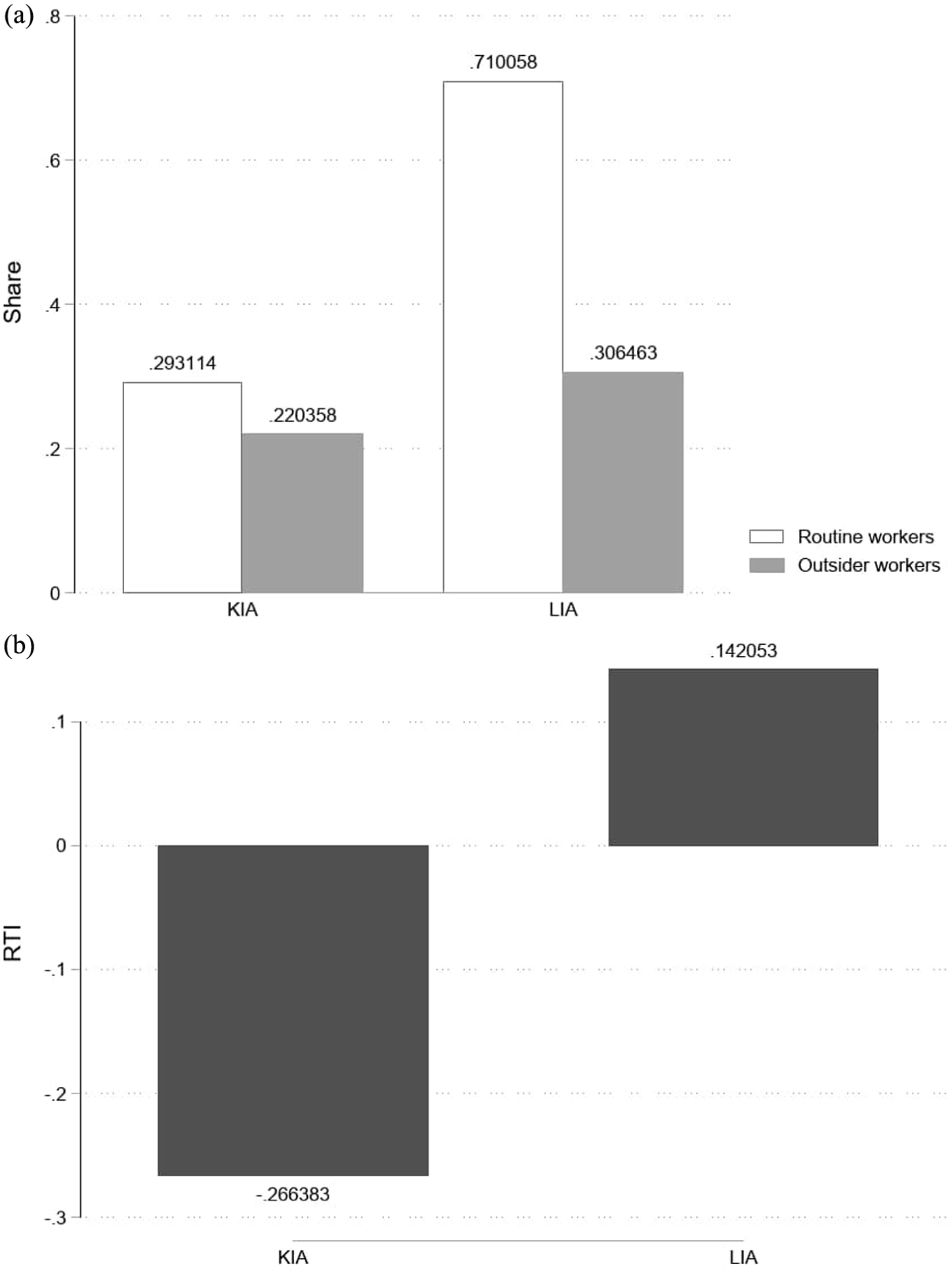
Labour-Market Dynamics Across Types of Industries.
Labour-intensive industries in which these unique characteristics coincide might offer an optimal space for the development of distinct political preferences. When geographically concentrated, job precariousness and vulnerability can amplify group-specific economic demands, facilitating coordination among workers facing shared uncertainties. Given the economic dynamics observed in labour-intensive industries, the development of nativist welfare preferences is plausible.
Nativist preferences may emerge as a consequence of prolonged exposure to job precariousness, particularly within labour-intensive activities, which tend to heighten the economic insecurities of casual workers more intensively than knowledge-intensive activities (Davis et al., 2019). Workers in LIA sectors frequently share their occupational environment with low-skilled migrant labour. Given the limited range of occupations within these sectors, competition for labour and resources between locals and foreign workers tends to be more intense than in knowledge-intensive industries (Bolet, 2020). Consequently, precarious local workers may develop nativist attitudes, as heightened job competition within a multiethnic context fosters greater identity polarisation (Naumann et al., 2018).
Moreover, LIA industries mostly include routine-task occupations, which are more susceptible to automation (Office for National Statistics (ONS), 2019). Workers performing routine tasks may feel vulnerable to technological disruptions that threaten the viability of their occupations. This may create economic anxieties if managerial decisions favour automation over human labour (Thewissen and Rueda, 2019). As a consequence, we observe vulnerable workers aligning with the anti-globalisation rhetoric and nativist employment protection policies endorsed by RRPs (Bergman, 2022; Röth et al., 2018). 4
Culture and Identity in Different Economic Environments
Given the large concentrations of routine workers in labour-intensive economic areas, average levels of education in these settings are lower than educational attainment levels observed in knowledge-intensive activities (Rodríguez-Pose and Ketterer, 2020; Zahl-Thanem and Rye, 2024). Education is a crucial factor when explaining support for RRPs as it strongly correlates with cultural and identity attitudes that align with the discourse endorsed by these political platforms (Grande et al., 2019; Lubbers and Coenders, 2017).
Moving away from individual factors, Maxwell (2019) identifies that citizens living in large cities are likelier to hold inclusive attitudes compared with their rural counterparts. Cuccu and Pontarollo (2024) convincingly demonstrate how working in logistic hubs where labour conditions are low, exacerbate cultural grievances. In both cases, holding nativist views or experiencing cultural backlash against globalisation increase the probability of voting for RRPs. These studies, however, do not deepen on the interaction between individual and contextual factors to identify how these political behaviours are developed.
There are at least two reasons to think that levels of education are key drivers explaining why areas dominated by labour-intensive economic activities show large support for RRPs.
First, clusters of low education attainment, like that of job vulnerability, facilitate the formation of exclusionary political attitudes (Davis et al., 2019). This process of preference formation is boosted in LIA environments as they attract significant unskilled foreign labour as mentioned earlier. This distinct setting – low levels of education and cultural heterogeneity – may intensify potential cultural conflicts driving the development of negative attitudes against migrants (Pardos-Prado, 2011).
Second, a large concentration of low education attainment as observed in LIA areas shapes not only the development of specific radical-right attitudes but also the likelihood of their open expression (Norris and Inglehart, 2019). This process takes places because social and occupational interactions in such settings may reduce the perceived individual cost of expressing views that, while potentially marginal in broader society, are widely shared within these specific socioeconomic contexts. This could explain why in labour-intensive regions, articulating anti-inmigrant views, for example, may incur lower social penalties, particularly when compared with knowledge-intensive areas where individuals are likelier to support inclusive values (Czaika and Lillo, 2018; Dražanová et al., 2024).
This theoretical discussion leads to the following hypotheses:
H1: The geographical concentration of labour-intensive economic activities boosts support for RRPs.
The claim made by H1 can be explained by the mechanisms included in H2:
H2a: The interactive observation of job precariousness, or vulnerability, and labour-intensive economic activities boosts support for RRPs.
H2b: The interactive observation of low levels of education and labour-intensive economic activities drives exclusionary attitudes.
H2c: The interactive observation of low levels of education and labour-intensive economic activities boosts support for RRPs.
Empirical Strategy
Testing H1 and H2 simultaneously is empirically challenging. Data aggregated at the level of small geographical units allow researchers to test empirical regularities across the units, but the level of aggregation makes it difficult to link those patterns to individual behaviours. Conversely, typical cross-country survey data enable the researcher to use individual characteristics to identify explanatory mechanisms; however, limitations in sample sizes often prevent these datasets from connecting those mechanisms with the environments in which individuals interact.
To address these challenges, this article relies on two separate but connected empirical analyses. Study #1 uses municipal data to show that, compared with units with different economic activities, RRPs excel electorally in municipalities dominated by labour-intensive activities. To document this relationship, Study #1 compares municipalities in Spain, an ideal setting as it features unique geographical units dominated by labour-intensive economic activities such as some forms of agriculture and hospitality. The use of these data aligns with the theoretical expectations outlined in H1.
Study #2 draws on individual-level data from multiple ESS waves across 17 Western democracies to identify the explanatory mechanisms formulated in H2a–H2c. These survey data make it possible to exploit individual characteristics to understand the channels connecting socioeconomic determinants to electoral support for RRPs. This micro-level analysis complements the empirical regularities observed in Study #1 by providing further evidence on why municipalities with strong exposure to labour-intensive economic activities are likelier to be areas of concentrated RRP support than those oriented towards other types of industries.
Considering the two analyses together alleviates concerns about their respective empirical limitations and helps us evaluate more holistically what drives electoral support for RRPs, as suggested by Golder (2016). Similar to the related literature (Fetzer, 2019), Study #1 provides macro-level empirical regularities that are difficult to observe in survey data, while Study #2 contextualises the trends identified in Study #1 by presenting micro-level explanatory mechanisms that are hard to identify using aggregated data.
Finally, Study #2 supports the external validity of Study #1. By extending the analysis to a broader set of European countries, it introduces a comparative cross-national dimension absent from Study #1, thereby strengthening the overall empirical contribution of this study.
Study #1 – Greenhouse Exposure and Support for RRPs in Spain
Data and Method
To test H1, this study analyses municipal-level data from Spain. This setting is relevant for several reasons. First, Vox, a Spanish RRP, has recently surged electorally (Alonso and Kaltwasser, 2015). 5 In the April 2019 elections, Vox won 10.26% and 24 seats; after the elections were repeated in November, its vote share dropped to 6.2%, but it gained 54 seats, becoming Spain’s third-largest parliamentary force. Moreover, Vox’s vote is not geographically homogeneous. 6 These electoral outcomes make Spain suitable for identifying contextual factors explaining the electoral variation across municipalities.
Second, given the particular economic development pattern, but also the geographical location of Spain, this country shows relevant municipal variation across industries and economic activities. In particular, one can identify municipalities with a strong presence of labour-intensive activities. The 2009 Spanish agricultural census shows that 21% of the municipalities use intensive-agriculture practices. 7 Similarly, the 2018 hotels occupation survey identifies high concentrations of hotels, particularly in coastal areas. Conversely, Spain also hosts technological parks with start-ups and high-tech firms.
The combination of uneven radical-right support and the presence of labour-intensive areas makes Spain an ideal case to confirm that labour-intensive economic areas foster support for RRPs. To do so, the empirical analysis in this section uses municipal electoral results from the period 2000–2019. 8 Electoral results correspond mainly to general elections; however, to maximise the number of observations per year, municipal and European elections are also used. 9 This electoral information is, then, matched with data from the 2009 agricultural census and the 2018 hotels occupation survey, 10 as well as with the 2011 general census. 11
Exposure to Labour-Intensive Activities: Greenhouses
To assess the link between labour-intensive work and radical-right support, the analysis uses greenhouse concentration per municipality. While mass tourism is considered as an alternative, greenhouse exposure offers a clearer and more parsimonious indicator of labour-intensive activity.
Greenhouses are used in about 10% of Spanish municipalities. Census data reveals that 185 municipalities – ca. 2.31% of the total – have at least 1% of agricultural land dedicated to greenhouses. This number drops to 26 when greenhouse coverage exceeds 20%. These municipalities tend to be modest in size, with average populations of about 30,000 (⩾10% coverage) and 40,000 inhabitants (⩾40% coverage). 12
Greenhouses are concentrated in the South-East, notably in the provinces of Granada, Almería 13 and Murcia, as well as some municipalities in South-West Huelva. Greenhouses produce a limited but highly demanded set of crops, making the sector highly profitable (Valera et al., 2016), implying that the usage of greenhouses represents a relevant component of the economic activity of these locations. This economic relevance distinguishes them from so-called geographies of discontent (Rodríguez-Pose et al., 2024). Owing to optimal weather, greenhouses here use minimal technology and high volumes of manual labour. Routine workers are employed not only to harvest crops but also to maintain and prepare the greenhouses throughout agricultural cycles (Aznar-Sánchez et al., 2020).
Municipalities with significant greenhouse use are thus characterised by relatively small populations and economic dependence on a distinct labour-intensive activity requiring high volumes of manual workers. 14
Furthermore, economies reliant on greenhouses exhibit defining economic and cultural traits relevant to explaining support for RRPs. First, labour-market duality is common in these sectors. Municipalities where ⩾50% of available land is used for greenhouses report twice the number of fixed-term agricultural contracts than areas without greenhouse exposure, exacerbating job precarity. 15
Second, municipalities dominated by greenhouse activity present distinct socioeconomic features linked to radical-right support. Figure 2 illustrates differences in education levels, occupations and nationalities between greenhouse-exposed municipalities and those without such economic reliance. Positive coefficients denote higher prevalence of the respective indicators in greenhouse areas.
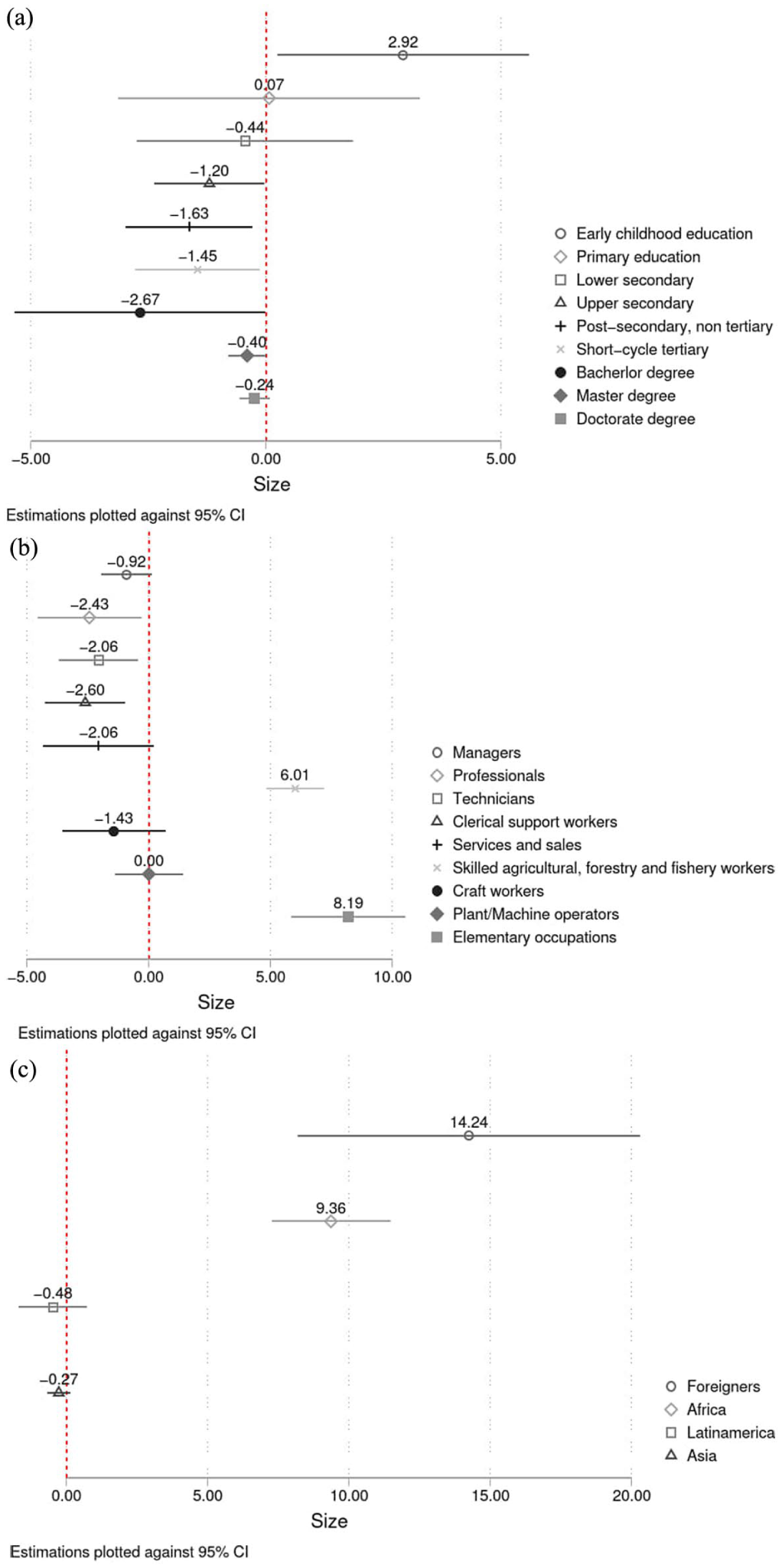
Comparison between Labour-Intensive and Knowledge-Intensive Municipalities.
Compared with other municipalities, urban settlements reliant on greenhouse activities show higher concentrations of people with early childhood education and lower densities of secondary, tertiary and postgraduate degrees. Occupationally, greenhouse economies host more skilled agricultural workers and individuals in elementary jobs – roles more susceptible to automation. Finally, these municipalities attract more foreign residents overall, especially migrants from Africa with lower skill levels. This distinct profile makes them ideal for comparison against municipalities lacking these attributes.
Greenhouses and Support for RRPs
To illustrate how exposure to greenhouses explains support for RRPs, the empirical analysis below is conducted using, as a benchmark, the electoral performance of Spain’s RRPs in the 2019 general elections. The bivariate choropleth map shown in Figure 3 provides descriptive evidence of a potential positive relationship between these variables.
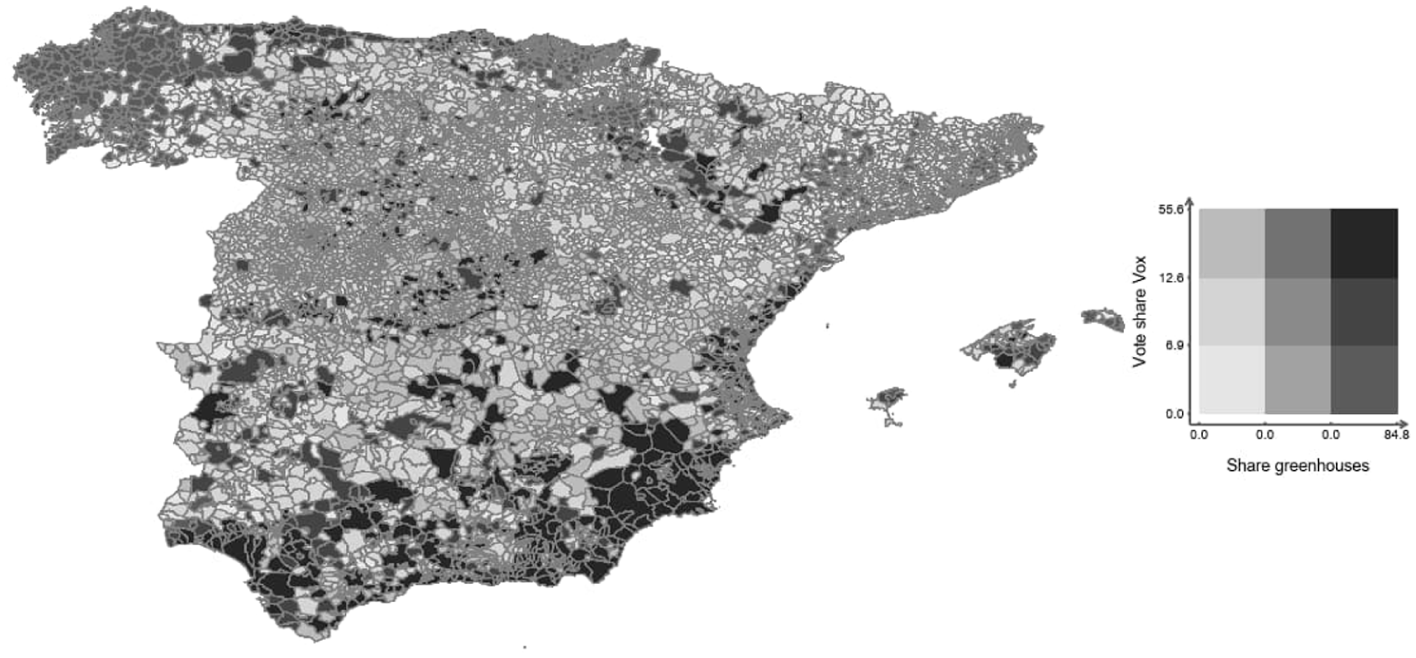
Greenhouse Activity and 2019 Vox Vote Share in Spain.
To test and quantify, however, how exposure to greenhouses accounts for support to Vox, the following equation is estimated:

The outcome variable, RRP, is the electoral support obtained by radical-right wing parties in Spain.
16
The main explanatory variable is a binary indicator, Greenhouse, which separates the sample between those municipalities with no exposure to greenhouse and municipalities where some share of the municipal land for agricultural purpose is used in greenhouse activities.
17
The model also includes parameter
A threat to the internal validity of equation 1 affects, however, the distribution of greenhouse municipalities. The location of this labour-intensive practice is not random as the type of greenhouses used in Spain needs certain geographical conditions to flourish, in particular, exposure to warm and dry weather conditions. Failure to correct this form of selection issue causes the model to show biased estimates (Guo and Fraser, 2014). Since observing the key explanatory variable is dependent on observing certain factors, a switching regression model, as operationalised by Maddala (1986), is a suitable correction mechanism. The estimation of equation 1 is, thus, corrected by using a selection equation to estimate a latent variable,
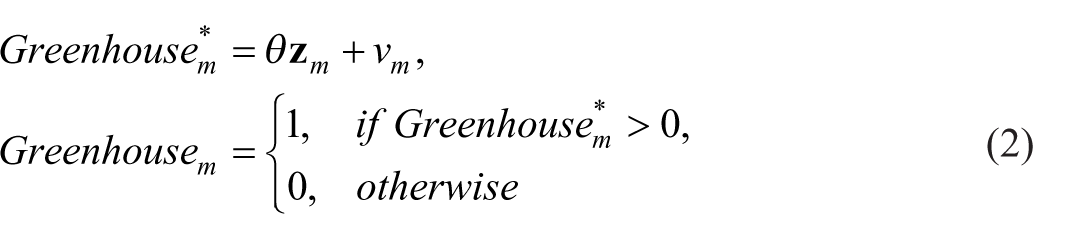
where the vector
Once the model is corrected, the value of
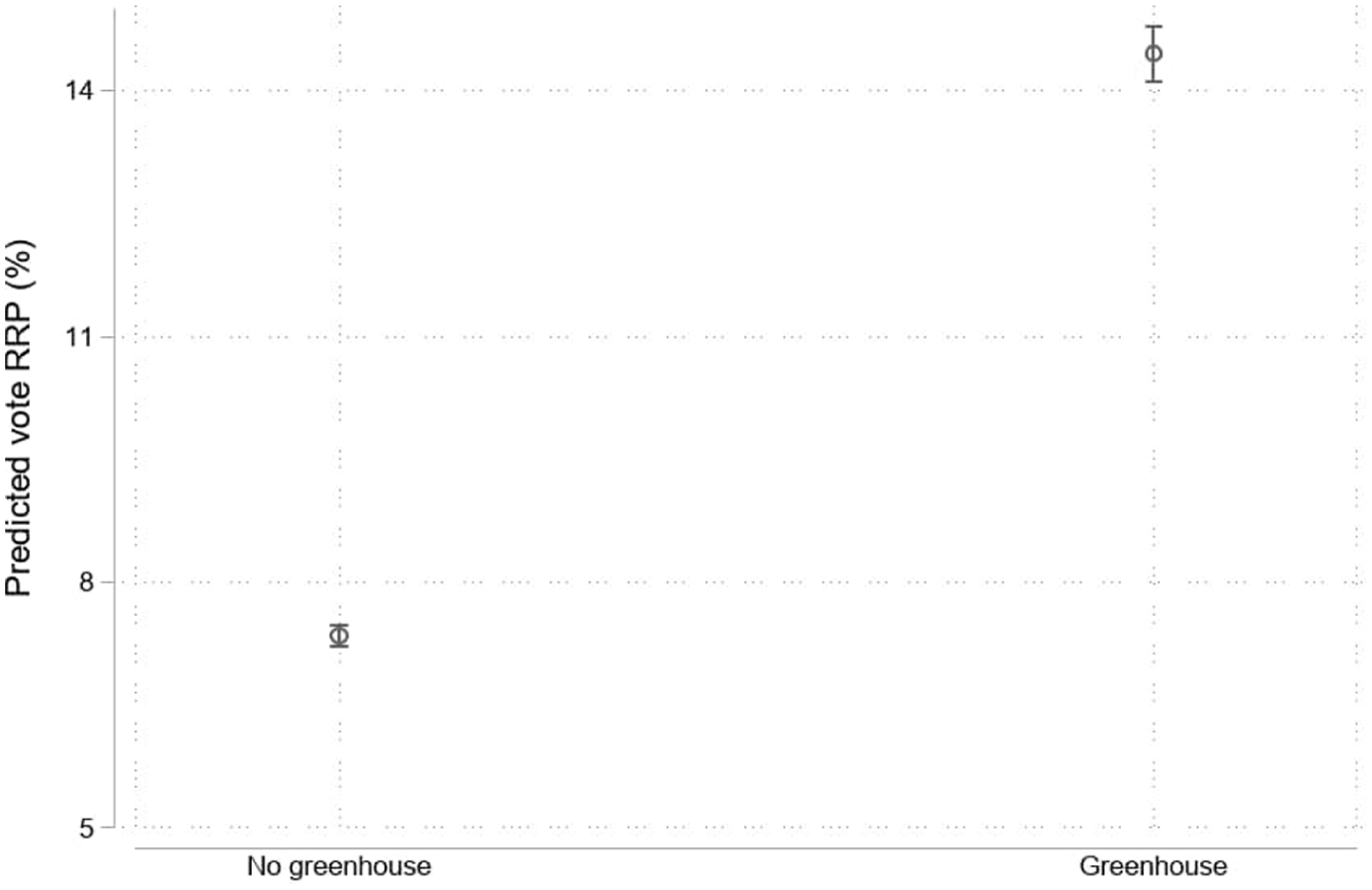
Effect of Intensity of Exposure to Greenhouse Agriculture.
A limitation of this model, however, is that it does not allow to test the intensity of exposure to greenhouses. The variable Greenhouse used in equation 1 includes municipalities where the level of exposure is below 1% of the total municipal land but also villages, like Roquetas de Mar in the province of Almería, where about 85% of the municipal agricultural land is used by greenhouses. According to the theoretical expectation developed here, one should expect a positive relationship between the dosage of the treatment and the level of support for RRPs. More concretely, locations with large areas occupied by greenhouses should host more support for radical-right wing parties than municipalities with little exposure to this labour-intensive economic activity.
To model this endogenous continuous treatment, a generalised propensity score (GPS) estimator is developed following Bia and Mattei (2008). 22 Figure 5 shows the result of this analysis and confirms the positive relationship between the intensity of the exposure to greenhouse activities and support for RRPs in Spain. As expected, support for RRPs is significantly large when the dosage is high. More concretely, the effect of exposure to greenhouses is clearly observed when at least 30% of the land is dedicated to this activity. When that is the case, support for RRPs is around 12% of the cast vote. However, electoral support increases to 15% when the surface occupied by greenhouse is up to 50% of the total land, and it reaches 20% in municipalities where greenhouses cover 80% of the available surface.
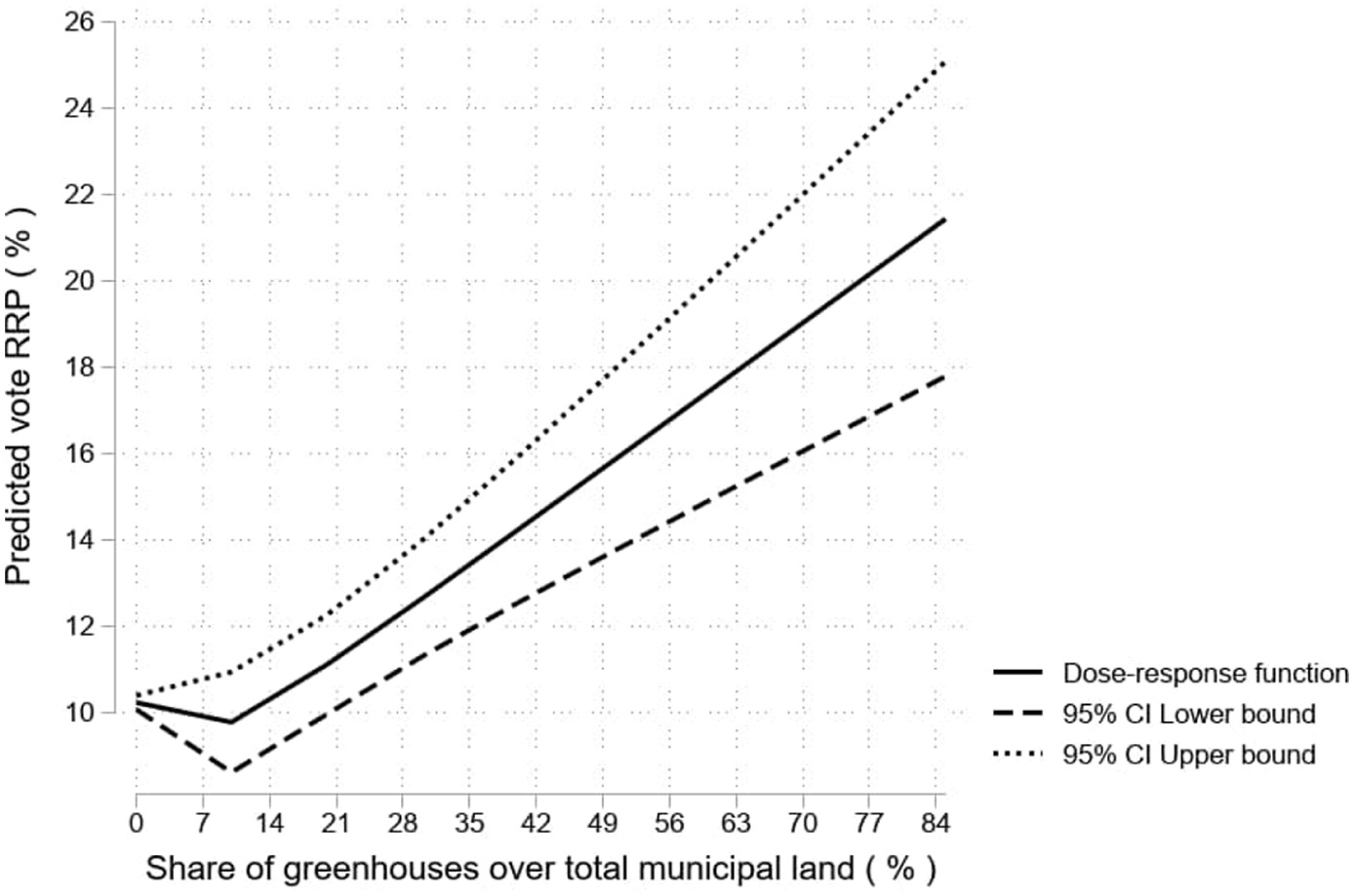
Effect of Intensity on Exposure to Greenhouse Agriculture.
Clustering Dynamics
The main theoretical claim developed above argues that labour-intensive activities cluster individuals with similar skills and education levels and it is that grouping what boosts preference formation and expression. One way to test this claim using municipal data is by assessing the role of population. If this theoretical claims is correct, one should be able to observe higher levels of support for the radical-right in municipalities that (a) have a strong presence of labour-intensive economic activities and (b) are not largely populated.
Figure 6 plots the moderating effect of population using municipalities with an exposure to greenhouse of at least 10%, 20%, 30% or 40%. All empirical analyses suggest that vote for radical-right is not only affected by the significant presence of greenhouses but, critically, by population size. More concretely, support for radical-right parties is above 20% in municipalities of up to 8000 inhabitants whose economy is heavily dependent on harvests from greenhouses. This is also in line with the findings obtained using individual data in Study #2 below.
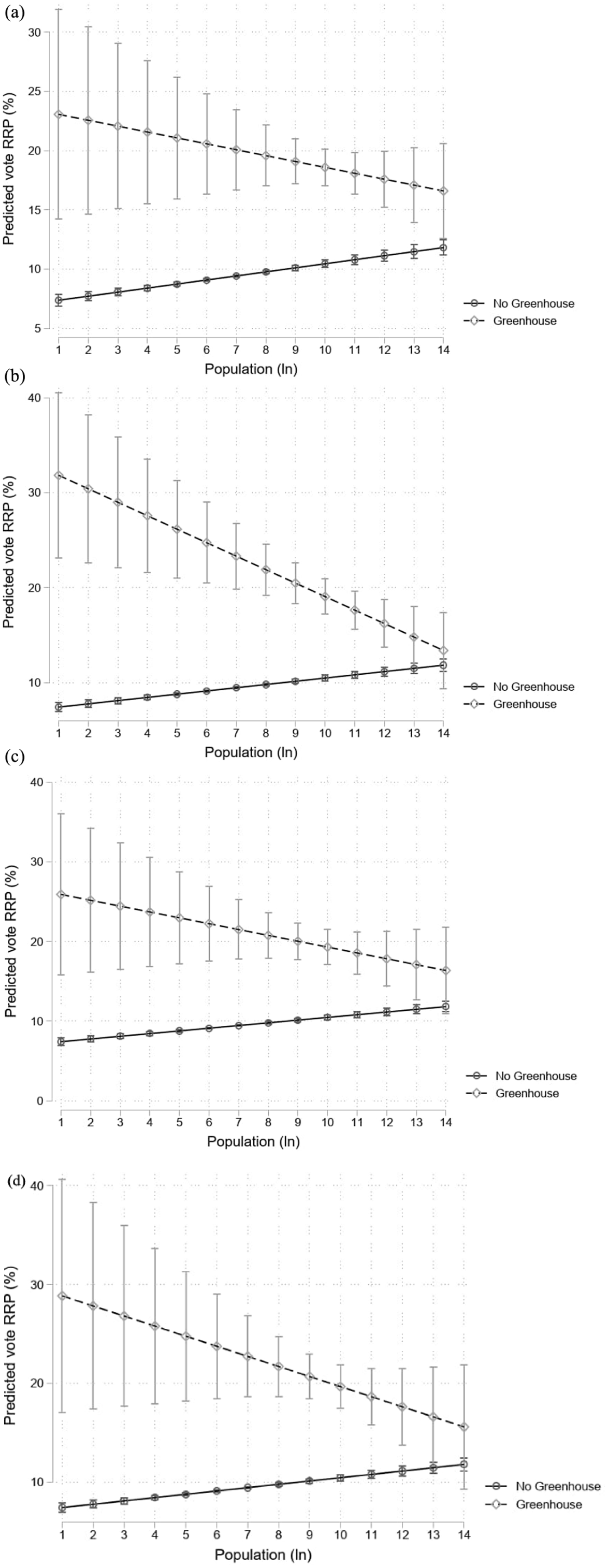
Greenhouse, Population Size and Vote for Vox.
Robustness Tests
Finally, a series of robustness tests are performed to determine the resilience of these findings. 23 These include alternative treatments, rival explanations, units of comparison, outcomes, time spans and samples.
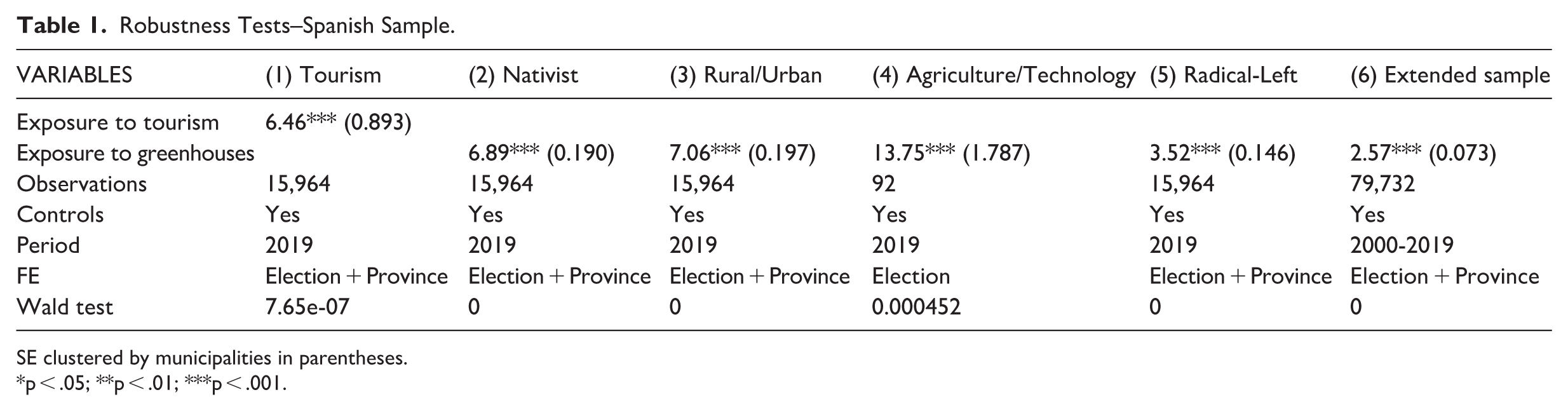
If the theoretical claims made in this article are true, similar political behaviour should be observed in areas characterised by different labour-intensive economic activities. To further test this claim, equation 1 is estimated using exposure to tourism, an industry based on hospitality which is also relevant in the Spanish economy. 24 Hospitality includes accommodation and food services which is, like agriculture, identified as a labour-intensive activity. 25 Exposure to tourism is identified by the total number of overnight stays in municipalities identified as tourist spots during 2018. 26 To correct for potential sample selection, the model uses climate variables and beach count per municipality. 27 The model also includes exposure to greenhouses to control for potential simultaneous effects. Model 1 in Table 1 shows that the coefficient is similar to that obtained for agricultural exposure.
Robustness Tests–Spanish Sample.
SE clustered by municipalities in parentheses.
p < .05; **p < .01; ***p < .001.
As discussed previously, support for RRPs is closely linked to nativist preferences (Mudde, 2007), immigration attitudes (Golder, 2003; Lucassen and Lubbers, 2012) and education levels (Arzheimer and Carter, 2006). To control for these explanations, a corrected model includes the size of the African, Asian and Latin American populations in each municipality as indicators of ethnic diversity as well as the share of residents with secondary, non-tertiary and tertiary education.
28
Model 2 in Table 1 shows the value of
A third explanation is based on potential contextual or compositional effects of the rural–urban divide (Maxwell, 2019). To test this, a categorical variable is implemented based on the UN-endorsed urbanisation index. 30 Model 3 in Table 1 again confirms that greenhouse exposure retains its effect even when accounting for urbanisation.
Model 4 in Table 1 uses a targeted comparison. The sample includes municipalities where greenhouses cover ⩾50% of agricultural land, contrasted with municipalities that host at least one technological park 31 and no greenhouse exposure. Model 4confirms higher radical-right support in labour-intensive areas relative to knowledge-intensive ones.
Model 5 tests whether observed effects reflect broader political changes since 2011 (Orriols and Cordero, 2016). The model specification in Model 2 is repeated using vote share for radical-left parties.
32
The value of
Finally, model 6 in Table 1 spans 2000–2019. Using municipal and temporal variation addresses sample selection concerns often flagged in cross-national studies (Kates, 2019). As in prior tests, δ confirms stronger support for RRPs in greenhouse-exposed municipalities.
Study #2–Unpacking Mechanisms
Data and Method
As discussed in the ‘Empirical strategy’ section above, H2 lists a series of mechanisms that are used to provide further contextualisation of the empirical patterns discussed in Study #1. These mechanisms are tested using individual data from ESS rounds 5–9 in 17 Western European democracies. 33 The country and time selection follows a research logic.
First, the analysis covers 2010–2018, a period when anti-establishment politics became electorally salient (Funke et al., 2016). Second, the focus on Western democracies is justified as political processes in this group of countries during this time were comparable – especially given the 2008 financial crisis, which intensely affected Eurozone countries and produced major electoral changes (Ruiz-Rufino, 2025). By contrast, the crisis had less consistent political effects in Central and Eastern Europe (Hernández and Kriesi, 2016).
The sample contains 140,309 observations, with respondent counts per country ranging from 752 to 3045. All selected countries participated in at least three of the five ESS rounds analysed, ensuring comparability across cases. 34
The empirical analysis in this study uses the following baseline model:

where RRP is a binary variable expressing voting for an RRP in the last election. 35 All models control for several individual-level control variables. 36 However, to also account for the hierarchical structure of the model, vector Context includes two suitable country-level contextual factors. 37 In addition, all models include country and ESS round fixed effects to account for time-invariant and time-variant unobserved heterogeneity. Equation 3 is estimated using ordinary Least Squares (OLS) and appropriate ESS weights and standard errors are clustered by country to account for the hierarchical structure of the data. 38
The parameter of interest is
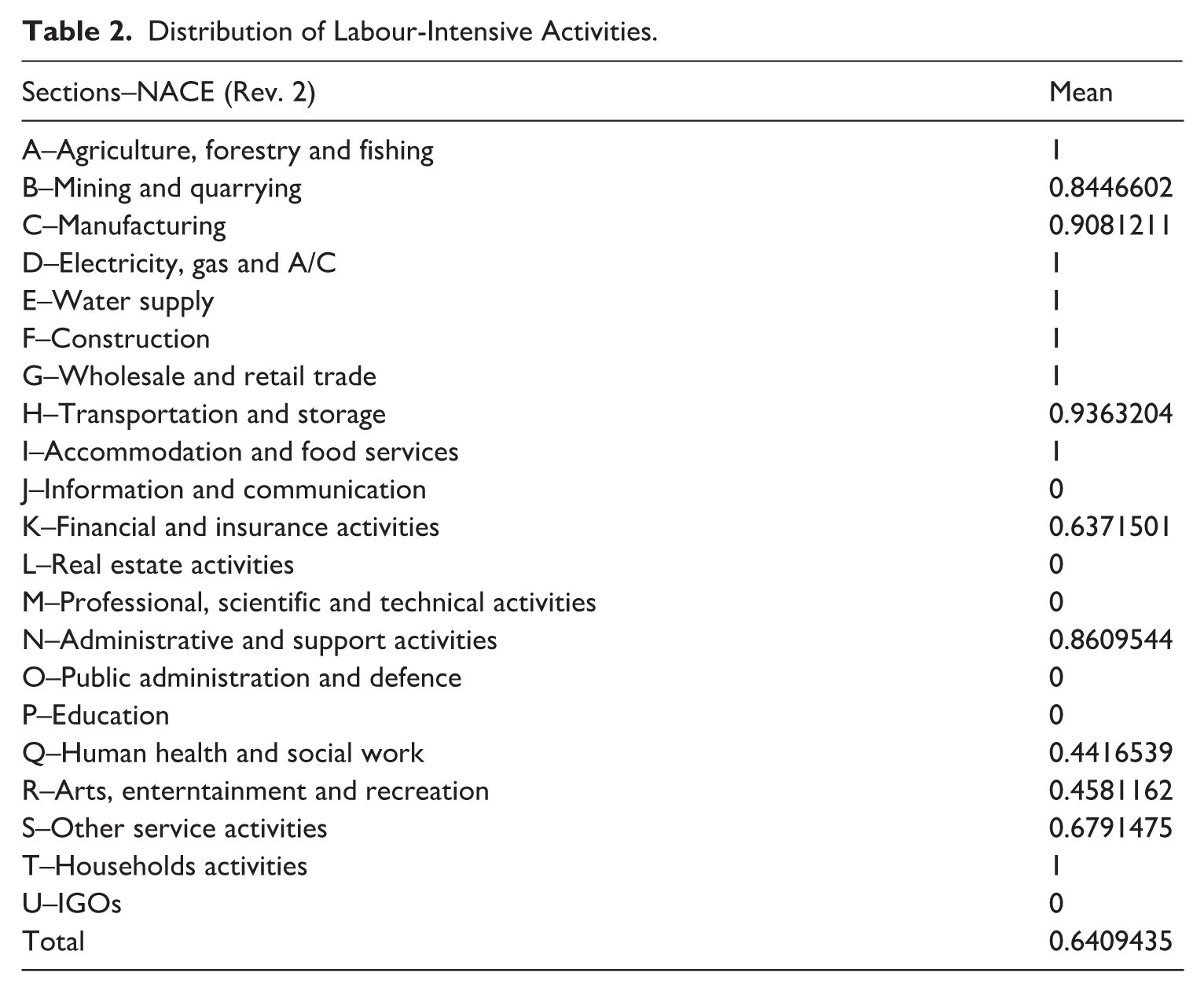
Given that ESS does not allow to geolocate individuals at the municipal level, the LIA variable included in equation 3 approximates exposure to labour-intensive activities by estimating the concentration of LIA occupations within broader industry occupation categories. To do so, the NACE Rev 2 is used. 39 This classification lists economic activities according to a hierarchical level of aggregation starting from broad sections and subclassifying activities on divisions, groups and classes. ESS questionnaires include data on where individuals can be located within those divisions, which in turn can be used to determine the section where individuals’ occupation can be placed. At the same time, Eurostat uses NACE Rev 2 divisions to identify those which are knowledge-intensive, leaving aside those which are labour-intensive. 40
Using these pieces of information, the LIA variable in equation 3 estimates the proportion of labour-intensive occupations within each NACE Rev 2 section for each individual’s occupation. This indicator ranges from 1 to 0, where 1 indicates that all occupations included in a NACE Rev 2 section are labour-intensive and 0, otherwise. Variable LIA, thus, should capture the socioeconomic environment where individuals interact. In other words, this variable should help to explain how, for example, an individual employed in a labour-intensive economic activity that is part of a NACE Rev 2 division dominated by LIA activities should behave, for the reasons discussed earlier, differently than an individual performing a labour-intensive job in a division that is dominated by knowledge-intensive occupations.
Table 2 shows the distribution of the LIA variable across the different NACE Rev.2 economic sections. This table reveals variation relevant for the analysis below. For example, about 64% of the occupations in NACE Rev 2 section K are labour-intensive, while that proportion is 1 in section A, and it has a value of 0 in section J.
Distribution of Labour-Intensive Activities.
Labour-Market Dynamics and Support for RRPs
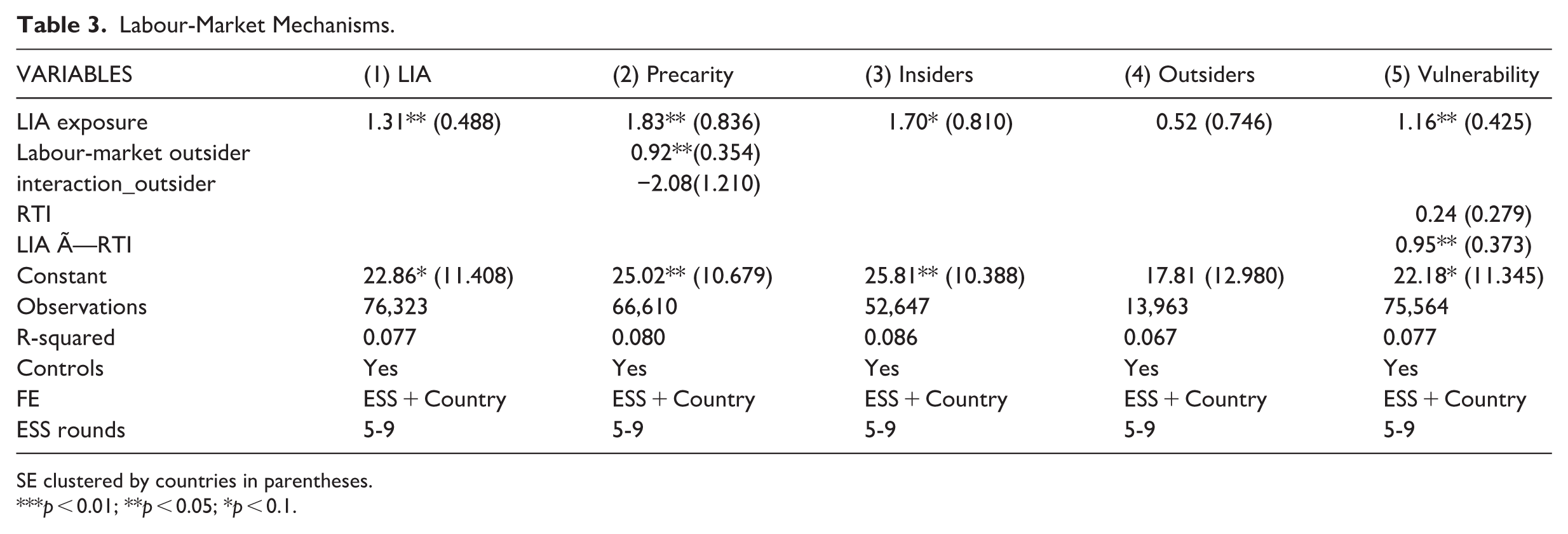
The empirical analysis begins by estimating equation 3, considering only exposure to labour-intensive economic activities. As shown in model 1 in Table 3, this relationship is positive and statistically significant. The coefficient indicates that, on average, full LIA exposure increases voting for RRPs by 1.3 percentage points. This result motivates testing H2a, which is estimated using economic indicators capturing job precariousness and vulnerability.
Labour-Market Mechanisms.
SE clustered by countries in parentheses.
p < 0.01; **p < 0.05; *p < 0.1.
Job precariousness is approximated by individuals’ contractual status. The model includes a binary indicator, Outsider, referring to individuals in employment without an indefinite contract, or unemployed but actively seeking work. Models 2–4 in Table 3 show a limited effect of this variable on support for RRPs. Model 2 finds no significant differences in radical-right voting between temporary workers employed in labour-intensive versus knowledge-intensive sectors. Model 3 reports a weak positive effect for insider workers exposed to LIA activities, significant only at the 10% level but no effect is observed when outsider workers are considered in Model 4. The results remain consistent when the sample is restricted to individuals in paid work or unemployed. 41
Model 5 in Table 3 looks at the effect of job vulnerability. As previously discussed, job vulnerability refers to external factors that increase levels of job insecurity. One of such factors is the risk of automation, which can be captured by the routine task intensity index (RTI). This indicator measures the extent to which an occupation is routine-task intensive. Occupations showing high levels of RTI refer to jobs with high volumes of routine tasks, regardless of whether they are cognitive or manual. To estimate the effect of varieties of job routines on support for RRPs, equation 3 uses values of RTI as reported by Owen and Johnston (2017).
The relevant estimated coefficients in this model reveal a significant joint effect of exposure to labour-intensive economic activities and levels of job vulnerability, which is plotted in Figure 7. Consistent with H2a, this figure shows that vulnerable workers are highly concentrated in LIA activities and that those individuals are likelier to support RRPs than individuals in other groups. More concretely, the proportion of individuals supporting these parties (6.3) is about 10% higher than the full sample average (5.7). Moreover, this proportion is 43% higher than the level of support for RRPs among individuals working in knowledge-intensive industries with low levels of job vulnerability (4.4).
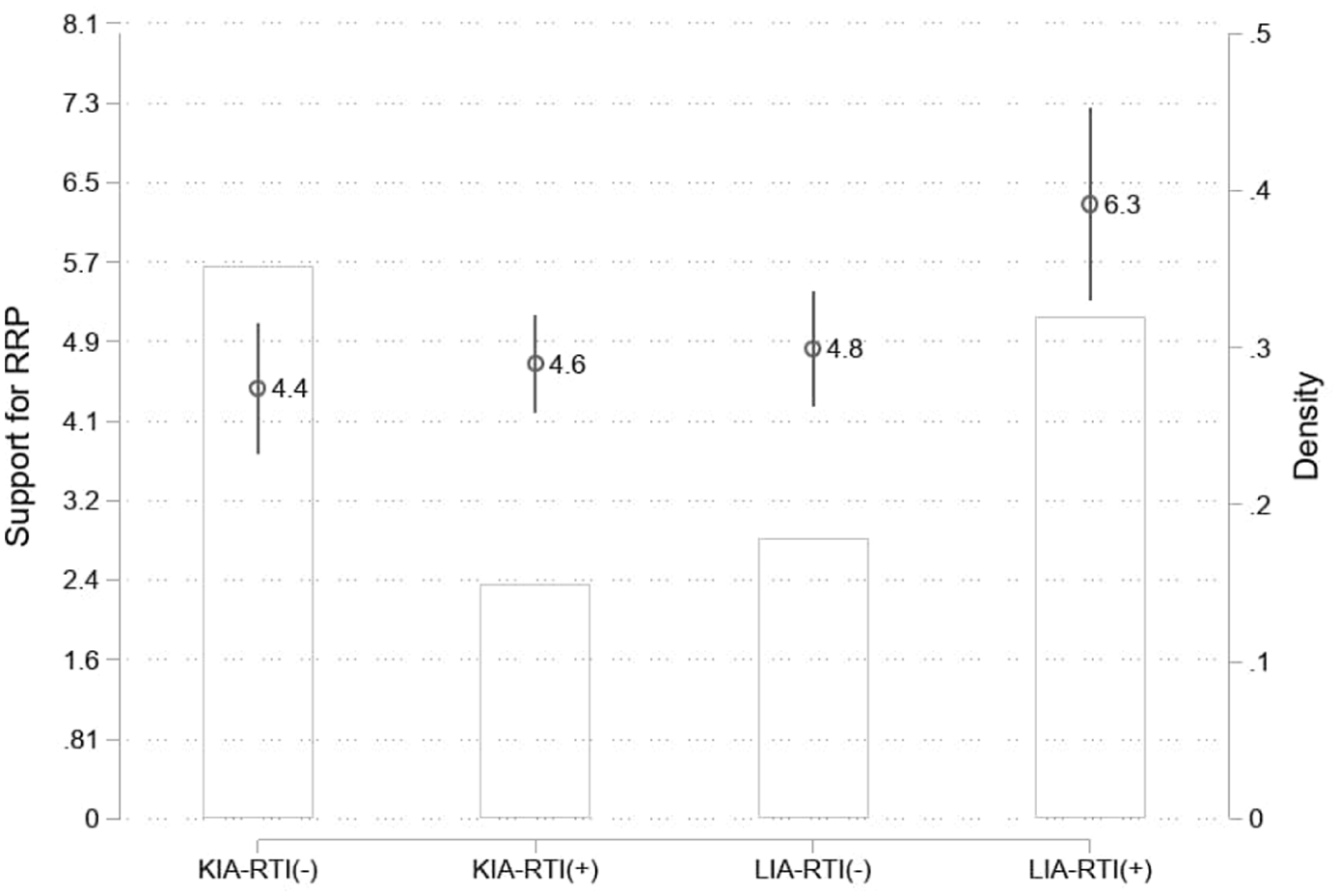
Labour-Intensive Activities, RTI and Support for RRPs.
These findings have relevant extensions. As developed in the theoretical section, exposure to LIA not only correlates with the probability of endorsing RRPs but also has a strong correlation about preferences for redistribution of welfare rights among migrants. This is empirically confirmed as individuals more exposed to LIA, or RTI, show more negative attitudes towards extending welfare rights than individuals working in knowledge-intensive industries or with lower levels of job vulnerability, 42 findings consistent with those observed in Study #1. Finally, the findings reported in Table 3 are robust to different explanatory variables such as skill levels. 43
Education, Inclusive Attitudes and Support for RRPs
H2b and H2c refer to how the distribution of levels of education in labour-intensive economic areas affects the observation of inclusive attitudes and support for RRPs. These related hypotheses seek to empirically confirm a mechanism explaining how the clustering of individuals with similar levels of education around concentrations of labour-intensive activities drives the development of preferences that are linked to expressing support for RRPs.
Starting with H2b, equation 3 is implemented using as outcome variable attitudes towards immigration 44 and attitudes towards migrants, 45 which can be considered as proxies for inclusive attitudes. As equation 3 indicates, these outcome variables are explained by an interaction between the variable LIA and a binary variable indicating whether an individual has attended higher education or not.
Figure 8 summarises this analysis, which confirms that inclusive attitudes are negatively affected by both level of education and exposure to labour-intensive economic activities. Both panels (a) and (b) reveal that the highest density of individuals holding negative attitudes towards immigrants are characterised by having low levels of education and perform labour-intensive economic activities.
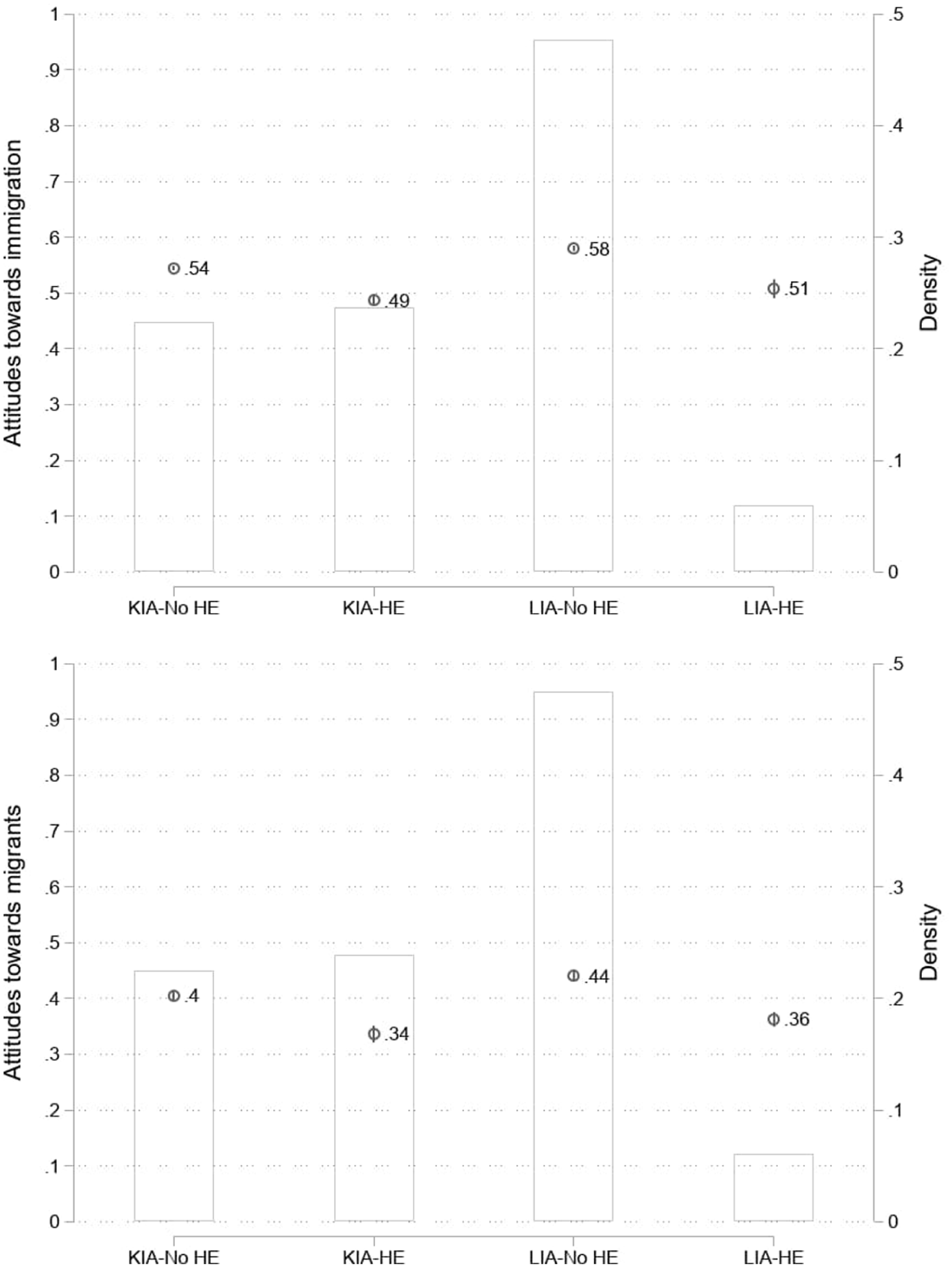
Education, Levels of Exposure to Labour-Intensive Activities and Inclusive Attitudes.
Empirical support for H2b leads us to examine two further questions linked to H2c. First, whether levels of education in labour-intensive activities correlate with support for RRPs, and second, whether exclusionary attitudes towards migrants and migration also correlate with support for these platforms.
To test the first of these claims, equation 3 is estimated using support for RRPs as the outcome variable. Figure 9(a) reveals a strong joint effect of education and exposure to labour-intensive activities on support for RRPs, controlling for time-variant and time-invariant factors.
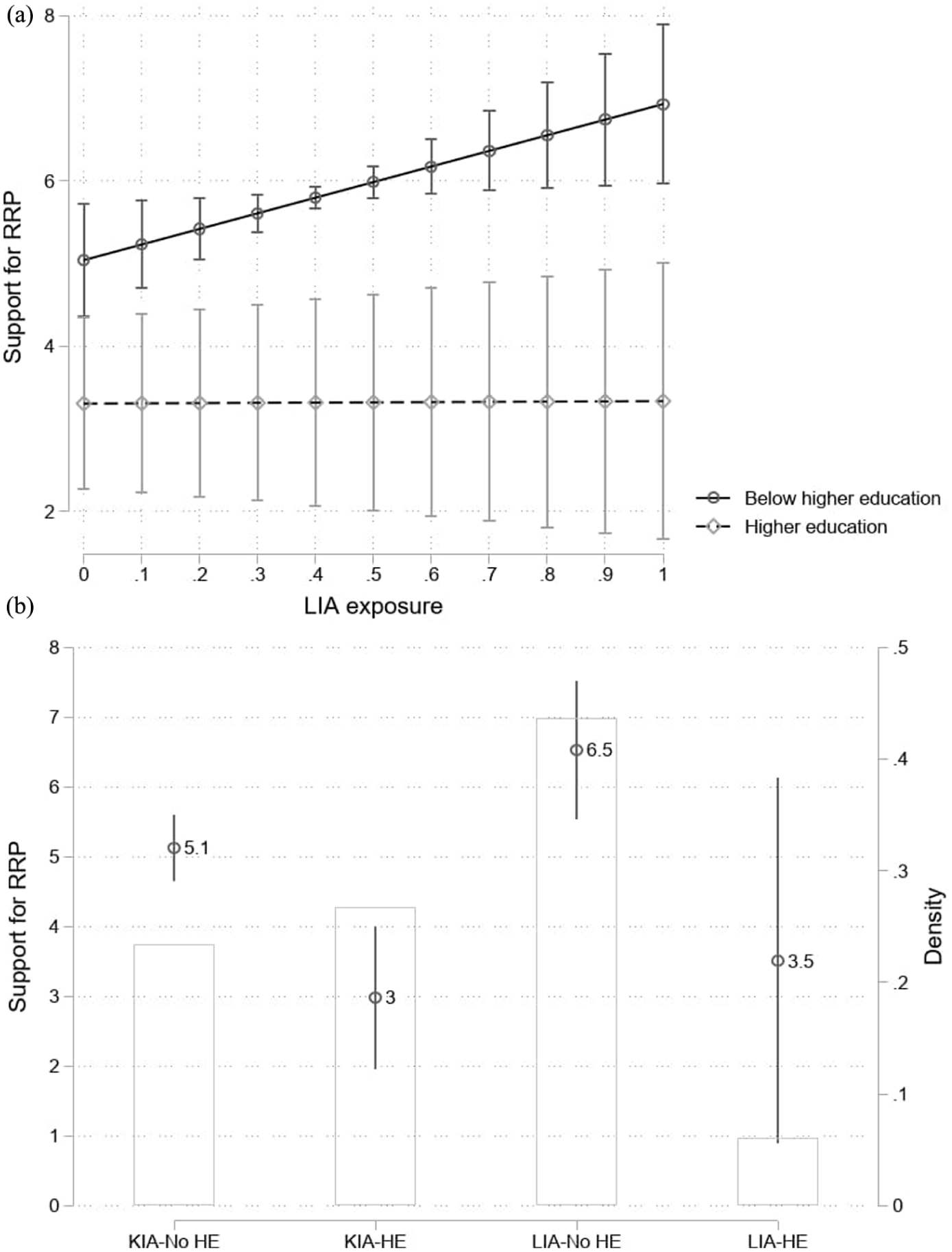
Education, Levels of Exposure to Labour-Intensive Activities and Support for RRP.
Figure 9(b) provides further supporting evidence. The graph plots the predicted values of individuals with occupations in labour/knowledge-intensive activities by education level, alongside group distributions. The figure reveals that the largest group corresponds to individuals with no higher education working in labour-intensive activities (0.44), which also shows the highest RRP support (6.5). This proportion is 14% higher than that in the full sample, 46 27% higher than among individuals in knowledge-intensive activities with no higher education, and 124% higher than among those working in knowledge-intensive activities with higher education.
Finally, if exclusionary attitudes towards migrants are prevalent among individuals working in labour-intensive occupations, and voting for RRPs is highest in these settings with low education levels, then a strong link between societal attitudes and partisan preference follows. Figure 10 confirms this claim and shows a strong correlation between exclusionary attitudes and support for RRPs. 47 However, this relationship is significant only when such attitudes are intensely expressed, which occurs primarily in labour-intensive occupations.
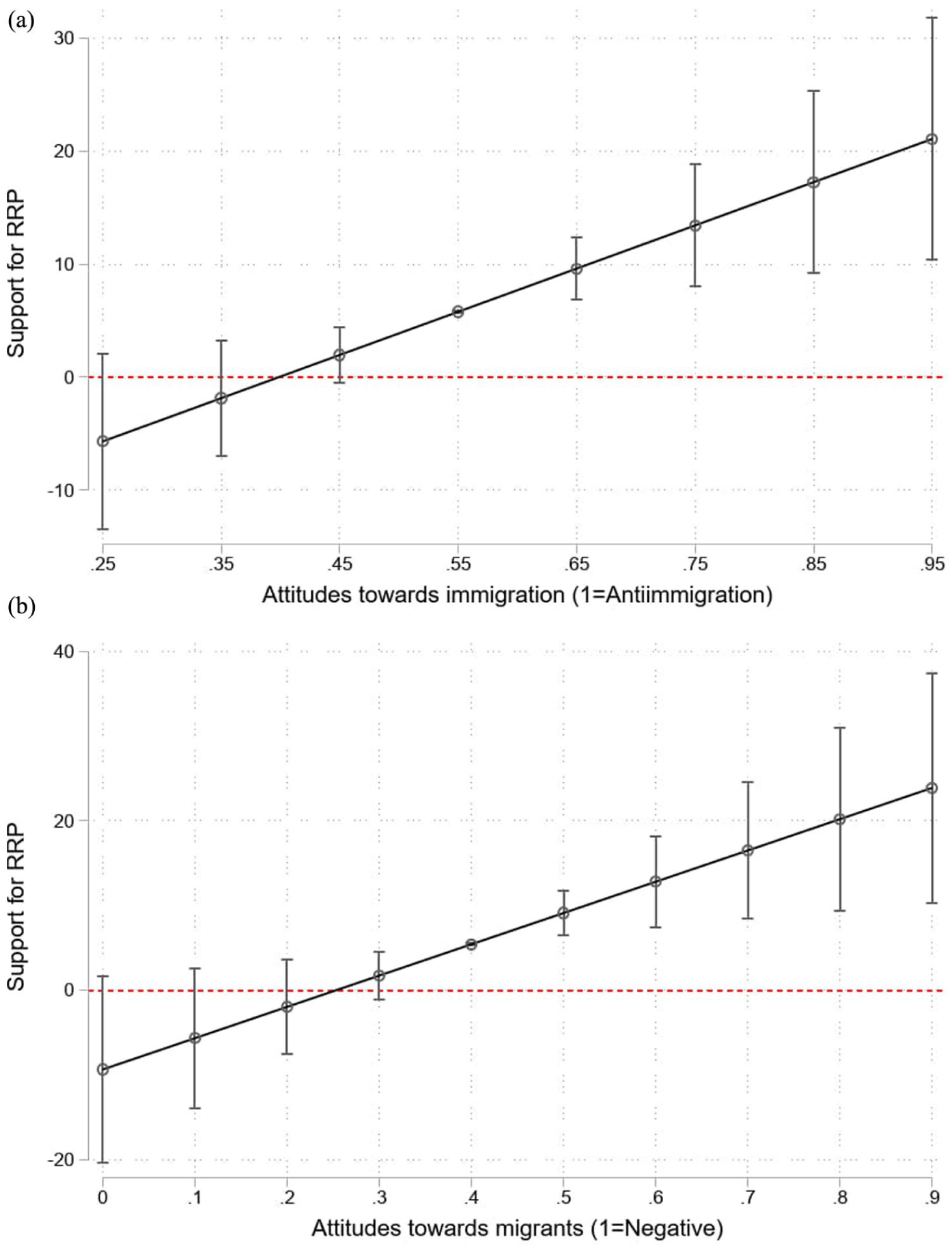
Inclusive Attitudes and Support for RRP.
Summary of Results and Concluding Remarks
Why are RRPs more successful in some places than in others? This article addresses these questions by focusing on the importance of the economic environments in which individuals socially interact.
The main finding of this study is that geographical concentration of labour-intensive industries strongly drives support for RRPs. Using intensive agricultural sectors as an example of labour-intensive industries, I find that the RRP vote share is approximately 7 percentage points higher in Spanish municipalities heavily exposed to these industries than in municipalities whose industrial composition is less labour-intensive.
This article also proposes mechanisms to explain what drives this relationship. Economic activities dominated by labour-intensive occupations are characterised by high economic vulnerability and low worker education. The coincidence of these socioeconomic characteristics helps explain the formation and expression of exclusionary attitudes, which align with the narratives promoted by RRPs.
These findings are relevant because they clarify debates about the conditions that drive the formation of preferences for RRPs (Kitschelt and Rehm, 2014; Thewissen and Rueda, 2019) and contribute to current discussions on the role of economic geography in their electoral success (Cremaschi et al., 2025; Magalhães and Cancela, 2025; Rodríguez-Pose et al., 2024)).
Beyond identifying how labour-intensive economic environments foster support for RRPs, the findings reported in this article also carry important policy implications. One such implication concerns the political consequences of development strategies: Economic plans that promote agglomeration of labour-intensive industries may inadvertently encourage demand for nativist and exclusionary narratives (Cuccu and Pontarollo, 2024).
A second policy implication concerns the relationship between job vulnerability and automation risks. As robotisation and artificial intelligence (AI) increasingly gain traction in labour markets, policymakers should consider that introducing these technologies into labour-intensive industries may inadvertently foster radical-right preferences (Cazzaniga et al., 2024).
The final policy implication concerns education and social cohesion. This study finds that individuals with low education tend to cluster in areas with labour-intensive industries. This characteristic facilitates the formation and expression of anti-immigrant views, which can threaten social stability. Policymakers should take these political consequences into account when designing targeted educational programmes in such areas.
To conclude, this article also suggests using large surveys that link individuals to small geographical locations to advance the research agenda it proposes.
Supplemental Material
sj-pdf-1-psx-10.1177_00323217261423322 – Supplemental material for Labour-Intensive Geographies and Support for Radical-Right Parties
Supplemental material, sj-pdf-1-psx-10.1177_00323217261423322 for Labour-Intensive Geographies and Support for Radical-Right Parties by Rubén Ruiz-Rufino in Political Studies
Footnotes
Acknowledgements
The author thanks Ignacio Lago, Ferran Martinez i Coma, Diane Bolet, Sonia Alonso, Sergi Pardos-Prado, David Rueda, Marco Giani, Damien Bol, Ignacio Jurado and Ignacio Sánchez-Cuenca for their constructive comments and suggestions in earlier version of this article. He is also grateful to the two anonymous reviewers who thoroughly engaged with this manuscript and generously provided fantastic feedback and suggestions for improvement.
Declaration of Conflicting Interests
The author declared no potential conflicts of interest with respect to the research, authorship and/or publication of this article.
Funding
The author received no financial support for the research, authorship and/or publication of this article.

Supplemental Material
Additional Supplementary Information may be found with the online version of this article.