




Abstract
This paper presents findings of a study highlighting police educators’ and student officers’ experiences of teaching and learning trauma-material in the classroom. Study participants included six police educators and eight student officers. Methodology included educator semi-structured interviews, student self-reporting surveys and deductive analysis. Comparable textual data coded as themes indicative of trauma-informed teaching included: (1) ensuring safety (2) maximising choice (3) encouraging collaboration (4) establishing trustworthiness (5) prioritising empowerment and (6) promoting resilience. Findings highlight variable trauma-informed teaching practices and how knowledge trauma risk in the classroom was embedded in pedagogical practice(s). Educators’ application of trauma-informed pedagogical principles to enhance students’ psychological safety in classroom settings is evidenced as ‘best practice’.
Keywords
Introduction
The importance of trauma-informed teaching is recognised within the field of social work with growing evidence regarding incidence of adverse childhood experience (ACE) and trauma existent among student cohorts, and consequently the need for educators presenting material on child abuse, domestic violence and other related subjects to deliver these in a trauma-informed way (e.g. Cavener and Lonbay, 2022; Didham et al., 2011; Sanders, 2021; Thomas, 2016). However, within the police education literature the focus on acknowledging the potential ACE of some student officers, and consequently the need to deliver potentially unsettling material in a trauma-informed way is much less pronounced. Although, within literature on policing it is recognised as an inherently stressful profession and potential risks of anxiety, depression, burn-out and posttraumatic stress disorder (PTSD) for officers exposed to traumatic experiences in the line of duty, and especially in relation to those working with suicide, child abuse, rape and domestic violence victims has been highlighted (Foley et al., 2023; Foley and Massey, 2021).
The trigger for PTSD is described in the American Psychiatric Association (2023) Diagnostic and Statistical Manual 5th Edition (DSM-5) on Trauma and Stress or Related Disorders as a result of direct exposure to a traumatic event as well as being witness to the trauma of others. Diagnostic criteria for PTSD highlights the phenomenon as primarily work-related and includes expose to actual or threatened death, serious injury or sexual violence. Although, while extreme and/or repeated lived experience of traumatic events is associated with PTSD, secondary trauma experienced in the context of the classroom through exposure to trauma-material remains an important consideration for police educators (Cavener and Lonbay, 2022). With a focus on policing Foley and Massey (2021) draw attention to the risk of secondary trauma caused by working with traumatised victims. The authors also highlight the general lack of research on secondary trauma and post-traumatic stress disorder (PTSD) in policing. Similarly, evidence-based literature on police education in the UK on how student officers who may have lived experienced of adversity in childhood and/or adulthood may be at risk of traumatisation via exposure to trauma-material in the classroom remains limited.
Vicarious trauma, secondary traumatic stress and professional burnout
The commonly used definition within UK literature describes trauma as ‘an event, series of events or set of circumstances…experienced…as physically or emotionally harmful or life threatening…that has lasting adverse effects on the individual’s functioning and mental, physical, social, emotional and spiritual well-being’ (SAMHSA, 2014: 11). Within literature on UK policing (e.g. Cartwright and Roach, 2020; Miller et al., 2022) ‘vicarious trauma’ and ‘secondary traumatic stress’ are often discussed synonymously as potential risks to officers who are exposed to traumatic events in public service. However, although similar, it is important to understand the essential differences between these two concepts and associated phenomenon including professional ‘burn-out’.
McCann and Pearlman (1990: 144) describe vicarious trauma as cognitive change occurring as a cumulative effect when one person is exposed to distress experienced by another. With vicarious trauma, Pearlman (1999: 52) describes the process of cognitive change occurring as a result of a person’s ‘[over]empathic engagement with trauma survivors’ experience(s). Jenkins and Baird likewise argue (2002: 424) experience of vicarious trauma can lead to disturbances in a recipient’s ‘cognitive frame of reference’ or way in which they view the world. Miller et al. (2022) highlight risk of vicarious trauma among police officers responding to serious crimes, for example, those perpetrated by men against women and children including domestic violence and/or physical and sexual abuse. Similarly, where students have ACE and/or lived experience of abuse in adulthood, vicarious trauma may occur following students’ (re)exposure to trauma-material around violence, abuse and other serious crimes in the classroom.
Secondary traumatic stress is defined by Figley (1983: 3) as emotional distress experienced by a person through contact with a ‘trauma survivor’ who may be a significant other and/or individual with whom they (over)empathise and/or otherwise share traumatic experience(s). Drawing on the work of Figley (1995), Foley et al., argue in policing secondary traumatic stress can be understood as a potential occupational hazard or the ‘cost of caring’ where officers are explored to traumatic events. Figley (1995) describes the adverse impact of secondary traumatic stress as where one person instantly feels stressed, anxious and/or otherwise unsettled on being exposed to another’s traumatic experience(s). Where psychological distress as a result of vicarious trauma and/or secondary traumatic stress may be enduring for police officers the College of Policing highlight how professional ‘burn-out’ can occur (College of Policing, 2018: 8).
As an occupational context related phenomenon professional ‘burn-out’ is included in the 11th Revision of the World Health Organisation (2019/2011) International Classification of Diseases (ICD-11). Within the ICD-11 burn-out is defined as a ‘syndrome’ which manifests as a result of chronic workplace stress which has been unsuccessfully managed. Among aspects of burn-out are personal experience of energy loss, exhaustion and ‘compassion fatigue’ in the form of feelings of cynicism and negativity towards and mental distancing from work-based activities as well as reduced professional efficacy (ICD-11). Although often associated with experience of vicarious trauma and/or secondary traumatic stress, professional burnout is the only clinically recognised diagnosis out of these concepts. Consequently, although not a medical condition professional burn-out can be viewed congruently with vicarious trauma and secondary traumatic stress as the potential ‘cost of caring’ for some police officers (Foley and Massey, 2021). Among those police officers who are mandated to respond to traumatic events, and consequently who may experience trauma as a result of the cumulative cost of caring, are those 20% who come to police education with childhood and adulthood adverse experience (Steel et al., 2021).
Adverse childhood experience (ACE) and trauma-informed policing
Many people in the general population have experienced trauma as a result of ACE (Cunningham, 2004). These include, for example, experience(s) of different types of abuse, mental illness, loss and/or or living with someone who has committed a crime. Several studies demonstrate a relationship between ACEs, health risks, and offending behaviours in adulthood. Seminal studies by Felitti et al. (1998) used an ‘ACE-Risk Indicator questionnaire’ to capture data on the impact of ACE with large adult populations. Felitti et al. (1998) found multiple risk factors associated with ACEs among participants including risk of suicide and domestic violence for some in adulthood. Consequently, on recognising high rates of ACE and/or experience of adult trauma prevalent among the population who commit crime, UK forces responded via ongoing development of a trauma-informed approach to policing practice (Goodall et al., 2022; Jones, 2020).
The premise for forces adopting a trauma-informed approach to policing is concerned with appreciating officers are ideally situated as initial response professionals to engage perpetrators and victims of crime in a trauma-informed way (see Goodall et al., 2022). However, while trained to practice in a trauma-informed way, Goodall (2022) argues a prevailing culture exists within the police force which encourages officers to remain impervious to potential impact of ACE and/or exposure to others’ traumatic experience(s) on mental health and emotional well-being. However, counter to this culture is an emerging appreciation of policing practice which encourages acknowledgement of the psychological threats faced by officers (see College of Policing, 2018), which inadvertently draw attention to the importance of trauma-informed teaching.
Trauma-informed teaching
Whilst undertaking education in the helping professions (including police, social work and nursing), students across these disciplines are often exposed to trauma-material as part of their study programme (Carello and Butler, 2014; Cavener and Lonbay, 2022). Consequently, to avoid ‘potentially perilous pedagogies’ which can lead to vicarious trauma and/or secondary traumatic stress, Carello and Butler (2014) suggest trauma-informed teaching principles should be explicitly applied by educators. Where educators adopt a trauma-informed approach to teaching, Carello and Butler (2014) indicate student officers will be better equipped to receive potentially distressing material in preparation for policing practice. Having evidenced ‘promoting resilience’ as an essential component to a trauma-informed approach, Cavener and Lonbay, 2022 highlights how this insight alongside key principles informing a trauma-informed approach to pedagogical practice found in the literature include educators’ explicit encouragement of: (1) safety (2) trust (3) choice (4) collaboration (5) empowerment and (6) resilience in the classroom.
Best practice strategies
Several authors propose ‘best practice’ strategies for embedding these principles on professional programmes. In social work education, Cunningham (2004) highlights how a starting point is to understand how some students who may have ACE are more at risk of vicarious trauma and/or secondary traumatic stress when exposed to trauma-material. For example, through reading academic literature about abuse and/or listening to others’ ‘real-life’ experience of adversity in the classroom. Where police educators and/or educators by experience as users of services may share explicit details of ACE and/or disturbing practice-based incidences, possible (re)traumatisation in the classroom may lead to shifts in some students’ views about human nature. Also, invoked stress and anxiety in the classroom can lead to students experiencing loss of trust in others and/or potentially harbouring real or perceived experiential concerns about their own and others’ safety (College of Policing, 2018).
Defined by Newall and McNeil (2010: 62) as the ‘utilisation of skills and strategies…to maintain [one’s] own personal, familial, emotional and spiritual needs while attending to…the needs and demands [of others]’, the importance of student and educator personal safety and self-care is underscored within trauma-informed teaching literature. Describing this as central to trauma-informed approaches, Carello and Butler (2015: 269) suggest the need to endorse a trauma-informed approach in the classroom. For example, the principle of ‘ensuring safety’ can be developed via a number of strategies including moderation of material using forewarnings, classroom and seating arrangements and within assignment guidance. Gilin and Kaufmann (2015) argue students should be taught sensitively about the impact of ACEs, vicarious trauma and secondary traumatic stress and associated risks to safeguard mental wellbeing via exposure to trauma-material. While presenting risk and therefore ethically challenging, Butler et al. (2017) suggest, while some trauma-material will need to be taught, adopting strategies in and outside of classrooms to mitigate risk of students’ and potential educators’ distress is essential. Importantly, educators should exercise self-care and be reflexively aware of how their own ACE, race, ethnicity, gender, sexual orientation, age, religion, values, beliefs, biases, stereotypes and other potential intersecting aspects of their lived experience and/or identities including personality traits (see Papazoglou et al., 2019) can influence their viewpoints.
Summary
Student police officers’ exposure to trauma-material in the classroom can present a risk of vicarious trauma and/or secondary traumatic stress, especially where they may have ACE and/or lived experience of adult adversity. Therefore, it is important educators develop and/or enhance knowledge of ‘best practice’ in relation to trauma-informed ways of teaching police apprentices and ‘in-service’ officers returning to higher education (see Hallenberg and Cockcroft, 2017). However, while there is reference to trauma-informed police responses in practice, there is limited evidence of how police educators teach student officers trauma-material. Also, limited within UK literature is how trauma-material is received by student officers. Consequently, to address this knowledge gap an exploratory study was designed.
The study
The study aims were to explore: (1) how educators present potentially distressing topics in the classroom and how trauma-material is received by students and (2) how trauma-informed principles are understood and embedded within police education and teaching environments across the study settings. The study objectives were to: (1) gather evidence to enhance insight and contribute to research in the subject area and (2) contribute to knowledge of ‘best practice’ in trauma-informed teaching in police education.
Ethical considerations
Ethical approval was granted by the researchers’ University Ethics Committee. Ethical considerations included use of a participant information sheet and informed consent form. All data captured was anonymised and extracts presented within this paper use pseudonyms to protect participants’ identities. The study created conditions for participants to feel safe while choosing to reflect on and share personal experience. Therefore, the researchers were alert to the risk of potential (di)stress and the study process presented. Consequently, trauma-informed practice principles were embedded within the research design and as researchers we continued to reflect critically and reflexively on our work and the ethical implications throughout the life of the study. These principles were applied alongside knowledge students and educators had access to staff support networks and student support services within their HEIs.
Participants and recruitment
Two purposeful participant groups were recruited to take part in the study. Sample one included police educators (n = 6) teaching trauma-related material at undergraduate and postgraduate levels across two HEIs. The HEIs were delivering a range of academic programmes to student police officers approved by the College of Policing including the: (1) Police Constable Degree Apprentices (PCDA) Programme (2) the Degree Holder Entry Programme (DHEP) and (3) the Pre-Join Degree (PJD) in Professional Policing Practice. Sample two included undergraduate and postgraduate student police officers (n = 8) enrolled on these programmes at the same two HEIs.
Staff recruitment was undertaken through researchers approaching educators via email and through police programme directors and/or staff at each HEIs. Invitation emails with information sheets attached were disseminated through police teaching teams and interested educators were invited to contact researchers. Students were recruited via senior staff including Programme Leaders and teaching staff with responsibility for overseeing and/or teaching on individual police education programmes. Programme staff acting as gatekeepers shared information about the study which was posted to students electronically via their HEI email addresses and via announcements on police programme academic sites.
Methods
Police educators were invited to undertake semi-structured interviews. Interviews were conducted via Microsoft Teams where educators were asked about their pedagogical practice(s) and how they managed teaching difficult and potentially distressing topics. Educators were asked to share: (1) their understanding of vicarious trauma and secondary traumatic stress (2) knowledge of ACEs and trauma-informed principles and (3) how their awareness of these might be embedded within their teaching. Student officers were invited to complete an online survey. The survey offered an opportunity for students to opt into the study and share views anonymously. Utilising an open-ended questioning approach, surveys were designed to predominantly capture qualitative data. Survey questions were focused on: (1) students’ exposure to trauma-material and learning about potentially distressing topics as part of their education (2) strategies educators used in preparation for teaching trauma-material in and outside of the classroom and (3) support students were offered or received during the course of their programme.
Data analysis
Informed by Crabtree and Miller (1999) a primarily deductive thematic approach to data analysis was adopted. Complementing study questions, analysis began using what Crabtree and Miller (1999: 165) describe as a ‘template organising style’. On conducting the analysis at stage-one of a four-stage process, the development of an a priori template utilised categorisation of trauma-informed principles found in literature as key themes including: (1) ensuring safety (2) establishing trustworthiness (3) maximising choice (4) encouraging collaboration (5) prioritising empowerment and (6) promoting resilience. Stage-two involved development of a written ‘description’ of each principle to complement each thematic category. Concerned with identifying ‘qualitatively rich’ descriptions of each principle as textual codes as presented by participants, stage-three involved a search for legitimising descriptive samples of text within the transcribed data. Within individual transcripts, legitimising samples representing participants’ descriptions of how, for example, they ‘ensured safety’ in the classroom were highlighted. At stage-four legitimising samples of participants’ descriptions of individual trauma-informed principles as highlighted were cross-referenced across transcripts and data extracts including those from student surveys offering comparative examples of each a priori theme were clustered together.
Findings
Findings revealed awareness of trauma at differing levels amongst participant groups and how educators utilised a range of strategies to mitigate against risk of vicarious and/or secondary traumatic stress in the classroom. Coded text as themes and representative examples of trauma-informed pedagogical practice principles which were deducted from the data are presented below.
Awareness and understanding of trauma
None of the educators shared having undertaken formal training in relation to trauma-informed teaching – However, all educators demonstrated levels of awareness of the potential impact of teaching trauma-material on students. Although, perspectives varied with some educators not viewing their material as “trauma-type material” while others acknowledged the need for trauma-informed teaching. Educators acknowledged limited understanding and training: “we haven’t been told about trauma-informed teaching” (Lucy - educator). Some educators mentioned difficulties in incorporating trauma-informed principles due to the curriculum being set by the College of Policing. Although, one participant commented on the “momentum gathering around trauma-informed [practice] for the curriculum” (Lucy – educator) within the College of Policing.
Other educators acknowledged content of material in the classroom could be potentially “triggering” for students stating the need to be “very careful [as] … there would be a risk of re-traumatisation…of triggering people” (Sasha - educator). Some students commented on the impact of learning about trauma-material: “sometimes having a full day back-to-back lectures constantly talking about distressing topics can build up emotionally and be taken back home” (Tom – student). However, some educators noted students needed to be able to deal with ‘trauma-material’ in order to function ‘on the job’: ”we have to be thinking about the course material […] and it can’t be diluted down and it has to be real. But at the end of the day […] they’re not going to be in a fit state to be able to deal with those victims if they are a victim themselves” (Carol - educator)
This was reflected in student responses: “it’s important to carry out our jobs” (Felicity - student) and “the staff tell us in advance what we are going to cover however [they] make no excuse this is the type of stuff we will face on the job so there’s no way around it, it has to be taught” (Suzy - student). Some educators commented on the “intense nature” of programmes and because the “curriculum is set by the College of Policing” there were limits to what they were able to do in terms of adopting a trauma-informed approach (Sally – educator). None of the educators discussed explicitly embedding trauma-informed principles into their teaching practice. However, there was evidence this was done, to some extent, implicitly.
Theme 1: Ensuring safety
Ensuring safety in educational settings involves various measures aimed at creating a “safe environment” for students (Cassandra - educator). Educators play a crucial role in this process by being sensitive to teaching content, providing pastoral care and debriefing students. As Carol (educator) emphasises “not re-triggering them, not re-traumatise them” is a key aspect of their approach. One way educators achieve this was by adapting their teaching methods based on their students’ experiences. For instance, Sally, an educator, explains how she had “adapt [ed] how we were going to deliver that” when she became aware of personal experiences related to the topic being taught. Furthermore, content warnings are used to prepare students for potentially distressing material. As Sally elaborates, “we told them the content beforehand so they could reflect on whether that would be something difficult for them to watch.” Suzy (student) also commented on this: “They pre-warn us in advance […] as well as allowing anyone to leave the room if they begin to feel distressed in any way”.
Personal tutor groups are vital support systems for students and staff contributing to safety of educational environments. Students appreciate the “open door policy” (Hannah – student) adopted by staff, where they can “turn to” (Felicity – student) university members for guidance and support. However, one student felt the support provided is inadequate and expressed frustration with the prevailing police attitude of “get on with it, it’s part of the job”. Although, importance of understanding university systems for student support was noted as an aspect of establishing safety.
Peer support also plays a significant role in fostering a sense of safety and managing the challenges of programmes. Helen (student) highlighted the importance of having a safe community within their cohort, where students can “open up and talk to each other”. Mutual support among educators is equally essential. Sally stressed the significance of “a supporting environment” for academics. Debriefing sessions after covering difficult content, a practice drawn from policing, further contributes to ensuring safety and as Lucy, an educator, pointed out: “we do debrief students as we would do within policing” (Lucy - educator). However, large classroom sizes made it “more difficult […] to kind of create that […] safe and comfortable environment” (Lucy – educator). Lucy remarked it becomes difficult to know all the students personally and monitor their well-being when class sizes are large. This limitation makes it more challenging for educators to identify students who might be struggling with the content or experiencing emotional distress.
Theme 2: Maximising choice
Maximizing student choice is a crucial aspect of minimising potential harmful effects of learning difficult material. Educators implemented various strategies to achieve this including allowing students to disengage from teaching if they felt the content might affect them negatively. Carol, an educator, advises students “if you feel this might affect you, don’t come.” Moreover, educators offer students the option to “leave the room” if they have “concerns” (Cassandra – educator) or “begin to feel distressed” (Suzy - student). However, Rob, another student, felt that this support is insufficient stating there was “no real support beyond ‘you can leave the room’”.
Maximising choice also linked to need to “deliver content” in ways addressing “different learning needs” (Sally - educator). Furthermore, educators prioritised students’ control over their disclosures. Cassandra, an educator, believed whatever students share “about themselves belonged to them” and “they need to feel they’ve got control” over how much they disclose with guidance and support from educators. Students valued the approachable and caring nature of educators: “We are lucky our training staff are approachable and caring as if this wasn’t the case then it would make opening up very hard and [we] may not cope as well on the course” (Suzy - student).
Theme 3: Encouraging collaboration
Encouraging collaboration involved supporting students in discussing trauma experiences and building rapport within the group. Understanding students’ backgrounds was crucial for fostering collaboration as Lucy, an educator, emphasised importance of: “understanding who you’ve got in your room”. In some cases, student experiences were used as learning opportunities, with one student being comfortable sharing her experiences in class. Educators believed utilising lived experiences for group discussions was invaluable for learning. However, educators acknowledged need to handle disclosures with sensitivity. Cassandra (educator) questioned how disclosures might impact her session, while Lucy (educator) stressed learning should be “sensitively handled and not at the expense of how the student feels”. Building rapport played a significant role in fostering collaboration, as Sally (educator) explained. When students know their educators on a personal level they are more likely to seek help when facing difficulties. Educators also found knowing students’ backgrounds strengthened collaboration, which resonated with students’ responses where importance of strong relationships with staff and peers in supporting them throughout the programme was evidenced.
Theme 4: Establishing trustworthiness
Establishing trustworthiness involves educators working diligently to gain students’ trust through “sensitive, honest delivery” (Lucy - educator). Lucy emphasised the importance of being “honest”, “consistent, calm and fair”, which helps build trust with students. Being truthful with students was seen as crucial as Sasha, another educator, pointed out. Educators agreed honesty should be a guiding principle in their interactions with students. Drawing from previous practice experiences, educators approached their work with students carefully, prioritising their well-being. For example, Cassandra, an educator, applied principles from her past experiences to ensure the well-being of students: “So for me, I’m applying those principles to victims, and I’ve always taken care of my students in the same way” (Cassandra - educator)
Preparation played a vital role in establishing trustworthiness. Educators recognised the need to thoroughly prepare teaching material and find nuanced examples to support their lessons. Carol, an educator, stressed the importance of avoiding throwaway comments that could upset students in the classroom and the need to “do your groundwork, you’ve got to know your stuff” (Carol - educator). Knowing university systems and how to support and guide students was also crucial in building trust. Responding appropriately to student disclosures was emphasised, with Carol noting “you’ve got to value them. You’ve got to give them time” (Carol - educator), especially when facing ongoing abuse. Educators also discussed establishing “ground rules” to help establish trust and support students in learning about difficult topics (Sasha – educator).
Theme 5: Prioritising empowerment
Prioritising empowerment included examples of how educators “allow students to an extent to explore their feelings around” difficult topics (Lucy - educator). Educators linked this to the learning environment which needed to be reflective for “students to feel comfortable, sort of sharing how they feel” (Sally - educator). This was linked to educators acknowledging the need for students to feel comfortable sharing when finding content difficult: “I mean today we watched a video and when it finished I said I don’t know about anybody else, but I found that really quite upsetting? What’s your thoughts on it? […] give them a platform to maybe offload a little bit more” (Cassandra - educator)
Most of the students felt it was okay to share when they found something difficult or upsetting, though one commented on a cultural “expectation of bravado” (Rob - student). Another stated they “do not generally share something distressing or emotionally upsetting […]. The course information needs to be learnt regardless of how I feel” (Tom - student). However, highlighted in survey responses was how educators sharing when they found something difficult enabled students to “feel more confident to speak” (Alice - student) and educators sharing their own emotional reactions normalised “these emotions” for them (Suzy - student).
Theme 6: Promoting resilience
Promoting resilience involves examples of how students were supported in their ability to cope with difficult topics and experiences. Educators recognised the importance of preparing students for the “difficult things that they are going to see in their job”, like witnessing “awful things” (Sally, educator). It is important for students to discuss and process such experiences “so when they become police officers they don’t make those same mistakes” (Sasha - educator). Drawing from their practice experiences, educators believed in sharing personal stories to help students learn from their mistakes and experiences. Carol, an educator, highlighted the value of sharing: “I want them to learn from my mistakes and I want them to learn from my experiences” (Carol - educator).
Despite acknowledging the significance of coping strategies, educators felt programmes lacked a comprehensive approach to teaching. Carol questioned whether they were “trained enough to be able to help them with coping strategies”. However, there was a recognition of the importance of promoting self-care and mental health for students as future practitioners and current learners. Educators also shared their own coping strategies including being “thick-skinned” or a “desensitised” approach. One emphasised compartmentalizing traumatic experiences to distance themselves emotionally: “That’s the coping strategy - It didn’t happen to me and it didn’t happen to my family […] You have to put it in a box” (Billy - educator)
Engaging in hobbies and exercise was another coping mechanism utilised by educators, and evidenced was how experience(s) in policing had shaped how they dealt with difficult content:
Students, too, employed a variety of coping strategies. Some turned to music, while others relied on physical activities like running, cycling or going to the gym. Students sought support from colleagues in the police force and their learning cohort, finding them to be valuable sources of support.
Police culture and trauma-informed teaching
Some educators as former officers discussed a historical lack of trauma awareness in police culture, where the approach to being exposed to trauma during training was often to “suck it up” and endure it as part of the job (Sally - educator). Cassandra, educator, admitted there was historically a [cultural] barrier to admitting one’s struggles as an officer due to fear of being deemed incapable of handling the work: “you didn’t want to admit that you couldn’t cope”. However, educators recognised this culture is changing with greater force-wide recognition of risk of vicarious trauma and burnout among officers. Although, it was reported some students might still feel pressured to hide emotions, due to concern about their employability within the police force (Carol - educator). Although, student responses indicated they generally felt comfortable sharing their feelings with staff. Educators also acknowledged existence of a “macho culture” within policing (Lucy - educator) and pondered whether gender played a role in how emotions were shared, dismissed and/or concealed within teaching.
Growing awareness of trauma within policing, was described as reflected in the curriculum updates from the College of Policing (Lucy - educator). Nevertheless, educators noted a trauma-informed teaching approach faced ongoing challenges due to lack of “space” in the curriculum and a divide between academics and police officers delivering content. Importance of a whole organisation approach was understood as shared by one participant, “although the trauma-informed teaching is absolutely integral, it has to be you know a part of police culture more generally” (Sally - educator). One educator felt due diligence was not always performed on the police side when students faced trauma-related difficulties, pointing out some materials exposed students to distress beyond the reality of the role for most officers (Carol - educator): “it was almost like a test, you know, go out if you’re a soft arse”. This was reflected by Rob (student) who expressed concern about the need to show distressing content beyond the typical experiences of police officers, emphasizing the importance of balance in teaching difficult topics: “is it needed to be shown?”. Billy, another educator, highlighted the significance of striking a balance between sharing personal trauma experiences and conveying practicalities. Overall educators felt the delivery of trauma-material was essential to officers’ training and were concerned the students needed to be safely exposed to this to be fully prepared to face what they would be “dealing with in their real work … in the real world” (Lucy, educator).
Discussion
A literature review highlighted the importance of police educators enhancing their knowledge and understanding of risks associated with ACE, vicarious trauma, and secondary traumatic stress. A key area of development for police educators is an understanding of how these phenomena can manifest due to exposure to trauma-material in the classroom. The existing evidence indicated trauma-related material may be more distressing for students who have faced similar ACEs or adversities in adulthood (Newell and McNeil, 2010). However, it is crucial for students to be safely exposed to this material as part of their professional development. Several educators emphasised need for mutual understanding regarding potential emotional impact and stressed importance of safe and empowering teaching methods, something noted in the literature (Carello and Butler, 2015).
The present study revealed varying levels of knowledge and awareness among educators concerning trauma and the principles of trauma informed pedagogical practice. Consequently, as Cavener and Lonbay, 2022 found in a previous study with social work educators, police educators were identified as not always working to an explicit trauma-informed teaching approach. However, they primarily employed teaching strategies aligned with trauma-informed pedagogical practice principles. Educators displayed awareness of the potential distress caused by trauma-related material and interviews revealed their efforts to address and deliver such content sensitively. Students acknowledged the importance of learning about difficult topics and valued the diverse approaches used by educators.
Trauma-informed principles and application.
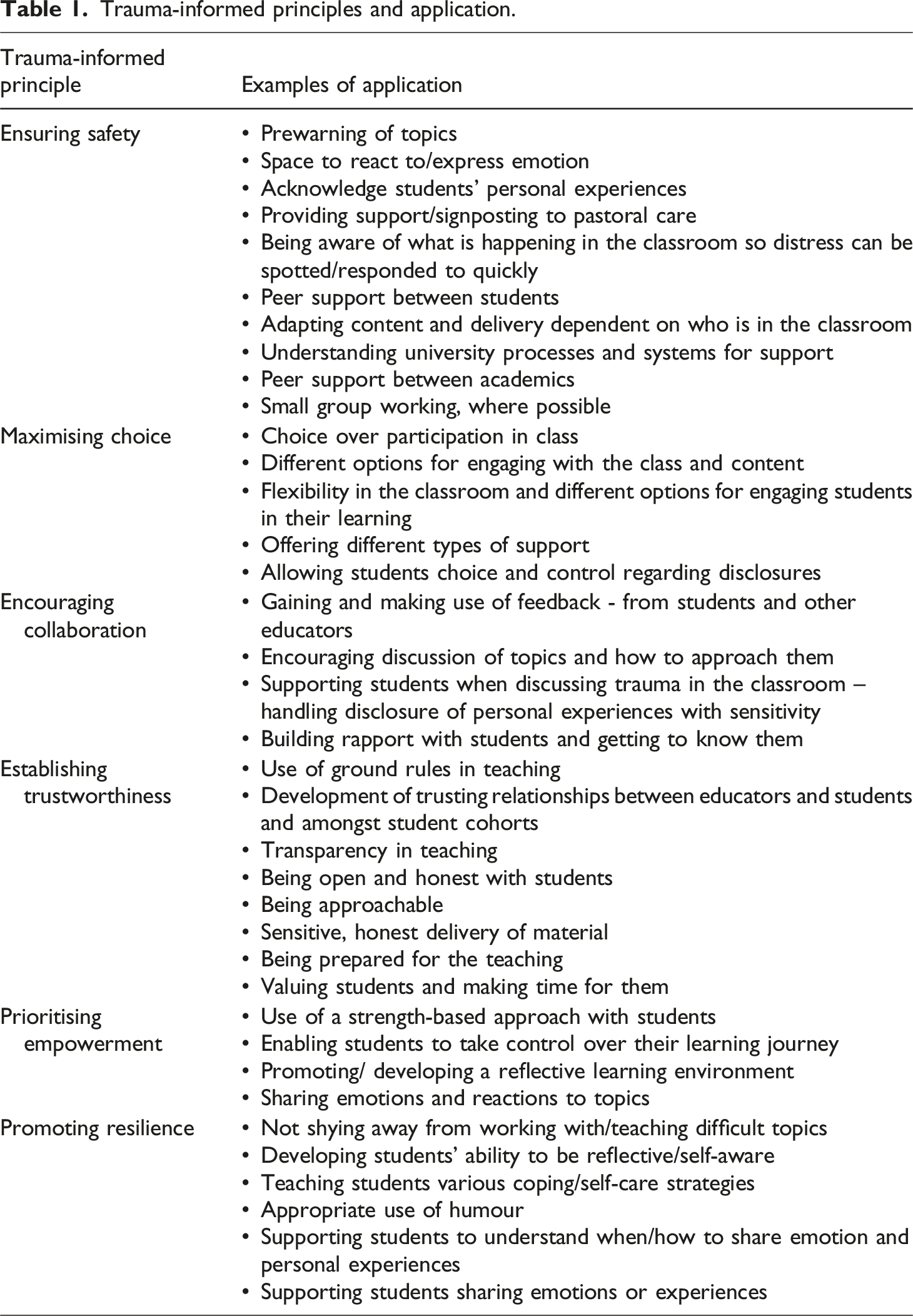
Some examples presented in Table: 1 have been proposed by other advocates of a trauma-informed approach to pedagogical practice. For example, in line with the literature (e.g. Carello and Butler, 2015; Gilin and Kauffman, 1995), samples presented here highlight how educators should gauge students’ emotional well-being before and after teaching and educate them on self-care while providing options for engaging with trauma-related material. Carello and Butler (2015) propose using knowledge of individual students’ ACE to identify potential triggers to enhance safety and trust. Although, with the present study, educators found it challenging to ascertain individual students’ adverse experiences, for example, due to large cohort sizes. Additionally, some students were found to hesitate and/or be reticent to share personal information about ACE or emotional distress, fearing it might affect their perceived competence as police officers. This was highlighted in previous work where social work students felt they could not be honest about their reaction to trauma-material for fear of being labelled as lacking resilience (Cavener and Lonbay, 2022). Nonetheless, student officers stressed the importance of building relationships with peers who acknowledged the emotional impact of their training. Noteworthy was how some students felt secure discussing their thoughts and feelings with peers, while others appreciated educators who offered supportive relational responses to potential discomfort.
The study found relationship-based strategies fostering trust and choice helped buffer potential stress from exposure to trauma-material contributing to students feeling able to speak to tutors openly. These strategies, along with promoting self-care and relational openness, enable students to process and manage powerful emotions in a safe, respected, and supported environment (Cunningham, 2004; Carello and Butler, 2015; Sanders, 2021). Although, despite this insight, some police educators did not necessarily see themselves as a relational resource for supporting students directly should they experience distress due to exposure to trauma-material. Present study findings indicate becoming accustomed to and/or managing unsettling experiences is integral to police training. Similar trends were observed in the police practice literature (Goodall, 2022), providing tentative evidence of an existent culture where educators, based on their professional backgrounds, might downplay the impact of traumatic experiences on students’ mental health and well-being. This was manifest in some educators’ and students’ conflicting views on exposure to graphic trauma-material, with some considering it necessary and others unnecessary learning for practice.
Resilience can be defined as ‘the ability to adapt to stress and adversity’ and as ‘a trajectory of coping that defies expectation of negative outcomes’ (Liu et al., 2017: 111). In the present study, resilience development was consequently recognised as crucial to navigating the potential trauma-provoking practice of policing. Grant and Kinman (2014) argue emotional intelligence and/or otherwise self-mediation and expression of emotions is an important predictor of resilience. However, with the findings here some students were found to supress feelings of distress, carrying the emotional burden of exposure to trauma-material over time. This was in opposition to being encouraged to share feelings, which was felt by some students to then present the risk of being seen to be weak or lacking resilience. Nevertheless, sharing feelings and/or emotions in the classroom regarding trauma-related material emerged as an important aspect of the study findings.
Study strengths and limitations
Participants were recruited via Police Education Programme Leads (PLs). However, any potential selection bias was avoided as all student officers were informed of the study by PLs via an electronically posted announcement. The announcement offered information about the study and invited student officers to complete an electronic link to the survey anonymously. The study employed small participant samples. Therefore, generalisability of findings is limited. Data collection was confined to semi-structured interviews and self-reporting surveys. It is acknowledged participants’ responses in semi-structured interviews may not exclusively reflect their professional practice and student self-reporting surveys may be biased. Biases may include ‘social desirability bias’ (SDB) as described by Weijters et al. (2009). SDB can lead interview participants to provide favourable answers or positive responses to surveys, especially where participants are required to share personal attitudes towards a specific problem or issue. However, despite these limitations the study offers valuable insights into ‘best practice’ in trauma-informed teaching contributing to existing literature.
Conclusion
This paper explores trauma-informed police education highlighting links between ACE, vicarious trauma and secondary traumatic stress where student officers may be exposed to trauma-material in the classroom. The findings presented provide valuable insights into trauma-informed teaching practices in police education and how, while some may not explicitly adhere to a trauma-informed framework, educators apply trauma-informed teaching techniques. The paper highlights the influence of persisting police practice culture on education, emphasising the need for resilience-building, relationship-based support and safe pedagogical practices for students. As a key aspect of a trauma-informed approach to police education, this study offers insight into the significance of educators and students acknowledging emotions as these may emerge in the classroom.
While presenting the challenge of open expression, emotions that emerge through safe exposure to trauma-material need to be navigated positively and without respondents being concerned about being perceived as weak and/or lacking resilience. Sharing insights into ‘best practice’ this paper consequently underscores the importance of a trauma-informed organisational approach to police education. Where a trauma-informed approach becomes embedded within the curriculum, for example, through being further reinforced by the College of Policing, all police educators and student officers will be encouraged to deliver and receive trauma-material in a safe, ethical and resilience-building way.
Footnotes
Declaration of conflicting interests
The author(s) declared no potential conflicts of interest with respect to the research, authorship, and/or publication of this article.
Funding
The author(s) received no financial support for the research, authorship, and/or publication of this article.
