




Abstract
Across Europe, police are expected to maintain productive human rights-based relationships with the public. This scoping review focuses on how police achieve this aim with Roma and Traveller communities. Review questions consider the way that policing practices, behaviours and actions with Roma and Traveller communities are described in the existing literature. Additionally, they identify gaps in knowledge within this area of study. Applying qualitative content analysis, this review advances a comprehensive illustration of racism and discrimination. It shows how current relationships, determined by experiences of police brutality and abuse, can limit the ability of Roma and Traveller people to request and accept help from the police when they are victims of crime. Drawing on current scholarship, implications for a human rights-based approach to policing are considered and a four-step framework for community policing is introduced. The study concludes that co-produced and participatory research initiatives are urgently needed to cultivate innovative community engagement strategies that can begin to develop productive relationships between police and Roma and Traveller communities.
Introduction
According to Murdoch and Roche (2013), the authority and legitimacy of the police in Europe stem from their ability to maintain the trust, confidence and cooperation of the public. To maintain this position, police are required to uphold the highest possible professional standards in their day-to-day practices, behaviour and actions while upholding principles of fairness, justice, and accountability at all times (College of Policing, 2014; Reiner, 2010; Tyler, 2003). Contemporary research demonstrates that when policing can achieve these aims, it is more likely to employ fairer procedures and strategies that further the public perception of a police service that is procedurally just (Jackson and Bradford, 2010). With public trust in place, police are then able to create opportunities for enhanced cooperation (Hough et al., 2016), shared responsibility for maintaining law and order (Mastrofski et al., 1996) and an approach to policing that respects the fundamental nature of a democratic society (Dai et al., 2011; McCluskey et al., 1999).
To help promote democracy and the rule of law, the Council of Europe explains that the ability of the police to maintain productive relationships with the public can only be upheld through a close commitment to human rights (Murdoch and Roche, 2013). Although there is great diversity in national police arrangements and domestic criminal justice systems, the Council of Europe (2022) expects that all police will practice, behave and act in a way that is human rights compliant. By promoting human rights, police can maintain productive police-community relationships (Hough et al., 2016).
While Murdoch and Roche (2013) explain that the ambition of the Council of Europe serves to ensure a standardised approach to policing, the European Roma Rights Centre (ERRC, 2022), a Roma-led international public interest law organisation working to combat racism, argues that insufficient attention has been given to Roma and Traveller people, Europe’s largest and most marginalised ethnic minority group. The Council of Europe’s latest Strategic Action Plan on Roma and Traveller Inclusion (2020a), for instance, emphasises the need for targeted support for equality, democratic participation, public trust and accountability. Although the focus for social action centres on four pillars of education, employment, health and housing, minimal attention has been given to the practices, behaviours and actions of the police or the opportunity to improve their authority, legitimacy and relationships with Roma and Traveller communities (Amnesty International, 2022). As a result, the way that police are expected to achieve contemporary civil targets of equality, democratic participation, public trust and accountability with Roma and Traveller people, as required by the Council of Europe (2020a), is unclear.
Following the murder of George Floyd by police officers in the United States (Wright et al., 2023) and other high-profile cases of police brutality across Europe (see Casey, 2023; Nägel and Lutter, 2021; Nägel and Nivette, 2023), a growing number of policies have shown the challenges and opportunities for the development of policing within communities that experience institutional racism, social injustice and sustained economic deprivation (see College of Policing, 2022). However, the lack of attention given to the role of policing with Roma and Traveller communities means that there has been no equivalent synthesis of police practice, behaviour and action with these communities (Hera, 2017). For the ERRC (2022), police legitimacy, linked to their ability to maintain productive human rights-based relationships, where all forms of discrimination in the realisation of rights are prohibited, prevented and eliminated (Council of Europe, 2020a), has been largely ignored. In a policy context, this lack of knowledge hampers the development of the research field. In a policing context, it limits the opportunity for police to promote equality and democratic participation and secure public trust in line with Council of Europe (2022) standards. The primary objective of the scoping review is to identify and synthesise studies regarding policing within Roma and Traveller communities. The review questions are: 1. How are policing practices, behaviours and actions with Roma and Traveller communities described in the literature? 2. What are the knowledge gaps that exist?
Before moving on, it is important to clarify the term ‘Roma and Traveller’. Consistent with the recommendations of the Council of Europe (2020b), ‘Roma and Traveller’ is intended to include ‘Roma’, ‘Romani’, ‘Sinti/Manush’, ‘Calé’, ‘Kaale’, ‘Romanichals’, ‘Boyash/Rudari’, ‘Balkan Egyptians’, Eastern groups, ‘Travellers’, ‘Yenish’, ‘Gens du voyage’, as well as persons who identify themselves as Gypsies. While a more in-depth exploration of the distinctions among these ethnic minority groups could be valuable, such details are beyond the scope of this article. We therefore recommend the Council of Europe’s (2020b) publication ‘Roma and Traveller Inclusion’ for readers seeking a comprehensive introduction to this topic. This accessible foundation text provides insights into the unique cultures and challenges faced by Roma and Traveller people living in Europe.
Method
A scoping review provides a robust methodological opportunity to identify the nature and extent of research evidence and pinpoint areas for further investigation (Grant and Booth, 2009). A scoping review methodology was deemed most appropriate to answer the review questions. To help ensure a systematic and transparent approach to the review process, the scoping review followed the methodology for scoping reviews outlined by the Joanna Briggs Institute (JBI) (Peters et al., 2021). It adhered to the Preferred Reporting Items for Scoping Reviews (PRISMA-ScR) guidelines (Page et al., 2021). The protocol was submitted to the Open Science Framework (https://osf.io/dhtcu).
Search strategy
The development of the search strategy involved an iterative approach. The project team identified search terms through both their expertise and an exploratory search of key articles indexed in the ProQuest Central database. Following the advice of Arksey and O’Malley (2005), a comprehensive and systematic search was then conducted to identify relevant studies and literature related to the review question. An extensive search of four electronic databases (JSTOR, ProQuest Central, Criminal Justice Abstracts and ScienceDirect) was undertaken. These databases were selected as they were deemed to be most likely to reflect the area of policing and contain the largest variety of journals. Targeted website searches were also undertaken in Google Scholar, The Traveller Movement, the European Commission, the European Union Agency for Fundamental Rights, and the Council of Europe. Keywords searched included: ‘police’ OR ‘policing’ AND ‘Gypsy’ OR ‘Romani’ OR ‘Roma’ OR ‘Traveller’. Primary Boolean operators “AND” and “OR” were applied to enhance the precision and relevance of search results. Citation searches and screening of the reference lists of included studies were also undertaken.
Study selection
The titles and abstracts of retrieved papers were screened by two independent reviewers (LC and DA) and assessed against inclusion criteria utilising the Rayyan.ai platform, a web and mobile application designed for systematic reviews (Ouzzani et al., 2016). To be included, papers were required to meet the following criteria: (1) published in the English language between 2010 and 2023; (2) empirical studies reporting findings on policing practices, behaviours and actions with Roma and Traveller communities. We limited our search to studies published from 2010 onward based on JBI methodological guidance (Peters et al., 2021), ensuring the timeframe was appropriate for exploring contemporary issues in police practices with Roma and Traveller communities while maintaining a manageable and relevant scope.
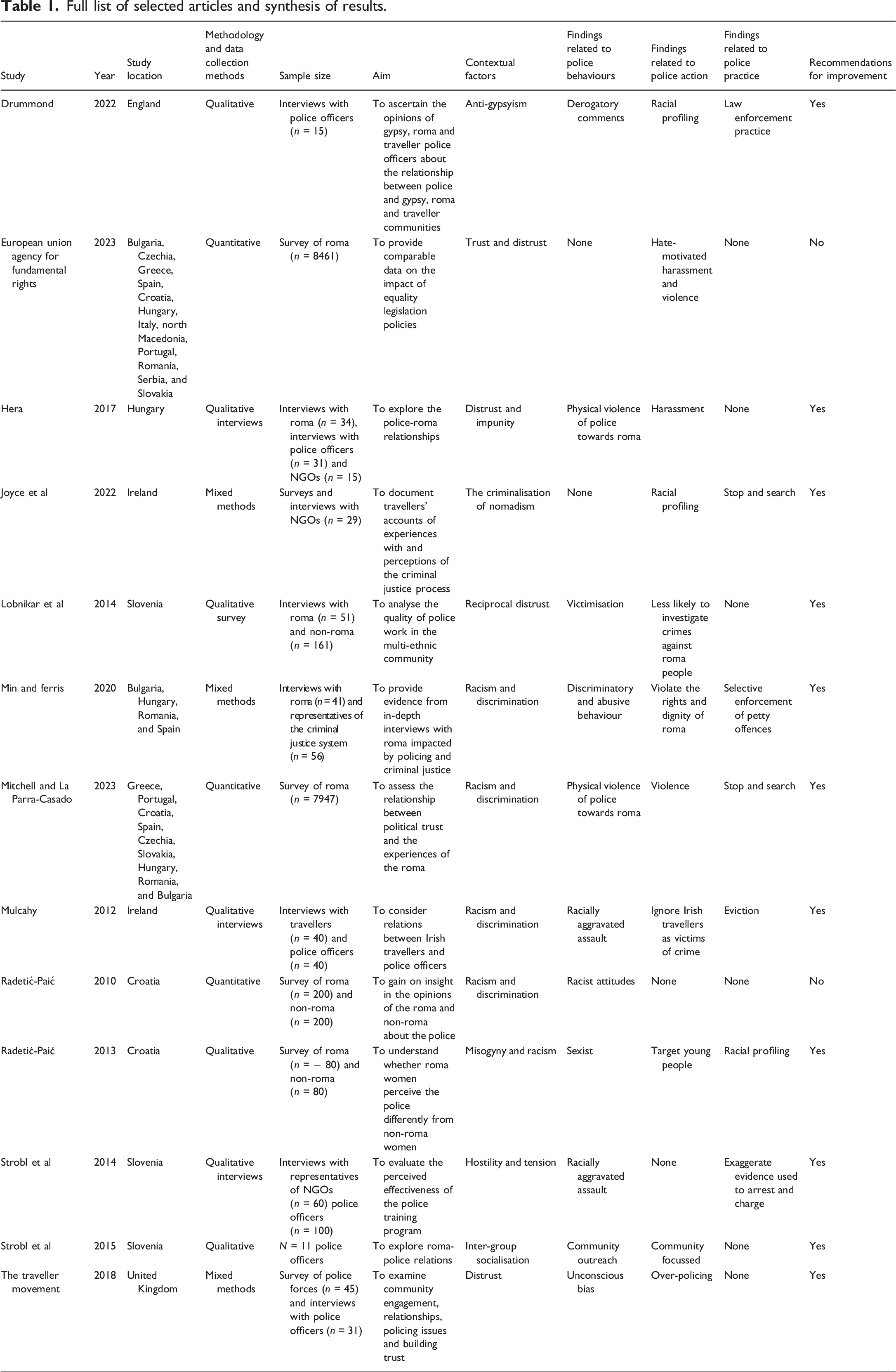
Full list of selected articles and synthesis of results.
Search results
The search of electronic databases identified a total of 15,554 citations. 15,503 citations were excluded at this stage based on the inclusion of keywords in the title only (n = 15,484) and the removal of duplicate records (n = 19). Fifty-one papers were screened at the title and abstract stage. In total, 37 papers were excluded as they did not meet the inclusion criteria. A targeted website search of key websites identified an additional four reports. The full-text papers for 18 articles (n = 13) and reports (n = 4) were assessed for eligibility. Five of these papers were excluded as they did not meet the inclusion criteria. An additional hand search was performed of the reference lists of key articles but resulted in no new relevant material being identified. Overall, the search resulted in 13 papers for inclusion in the review. See Figure 1 for the flow of studies through the scoping review, adapted from Page et al. (2021). PRISMA 2020 flow diagram for systematic reviews.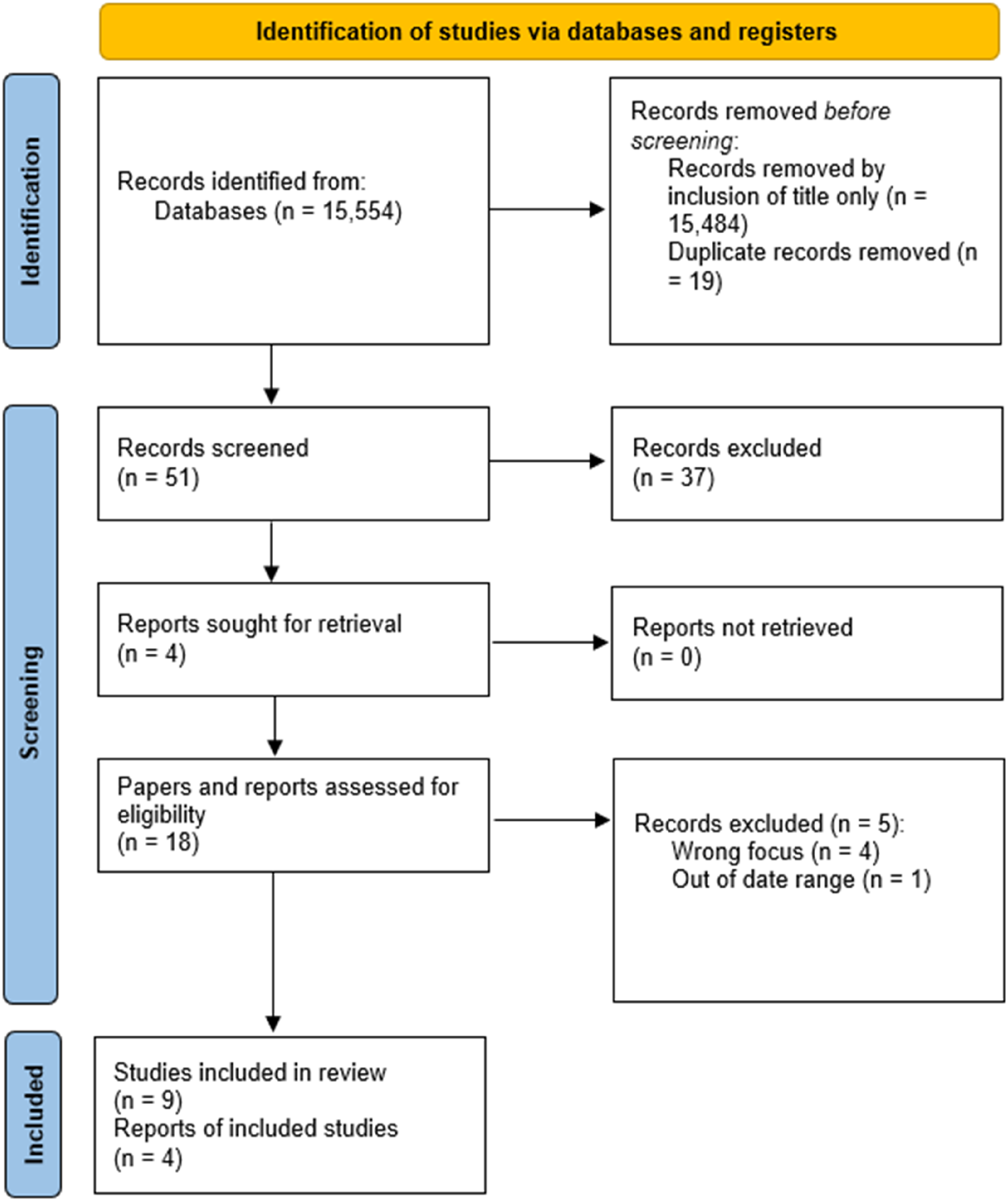
Data extraction and analysis
Consistent with the advice of Peters et al., (2021) the research team developed a draft data extraction table that could reflect the two research questions. Data extraction was piloted at a stage with the research team independently extracting data from a random sample of five papers (Peters et al., 2021). Following ongoing discussion, the data extraction table was refined. Data extraction included details about the publication, study aims, study population and sample size, study design and methods, historical and contemporary factors and findings related to police practice, behaviour and actions.
Through the data extraction phase, the research team met and refined definitions for the charting categories to ensure the definitions were clear and encompassed different dimensions of the concepts used in the studies. This discussion was important to achieve validity and rigour in the extraction of data relating to police practice, behaviour and actions specifically minimising variability in meaning. It was therefore agreed that: 1. Data related to ‘policing practice’ should refer to the type of policing, that is stop and search, investigation, public protection, and so on; 2. Data related to ‘police behaviour’ should refer to the way that police officers conduct themselves when engaged in ‘practice’ (including ethics); and, 3. Data related to ‘police actions’ should refer to pragmatic steps and processes taken while doing ‘practice'.
We used Excel software to chart data from the articles included in our review. We conducted a qualitative content analysis of the selected articles and charted data from each article included in the review.
Results
The 13 studies included in this review were published between 2010 and 2023. Most of the studies were conducted in Slovenia (n = 3) with others in Ireland (n = 2), England (n = 2), Croatia (n = 2) and Hungary (n = 1). Three studies presented data from more than one European country. Qualitative approaches were most used (n = 7, 54%) followed by quantitative methods (n = 4, 31%) and mixed methods (n = 2, 15%). Six studies examined policing practice, behaviours and actions from the Roma, Traveller and police perspective (46%), three studies examined only the police perspective (22%) and three studies examined only the Roma and Traveller perspective (22%). One study examined data derived from the European Minorities and Discrimination Survey (EU-MIDIS II). The combined total of participants in the selected studies was 17,091. Of this number, 16,688 were Central Eastern European Roma who took part in large-scale cross-national qualitative studies. 194 Roma and Traveller people and 194 police officers participated in qualitative interviews. 15 interviews were undertaken with advocates from non-government organisations (NGOs). A synthesis of the selected studies is presented in Table 1.
Findings
The 13 studies reported on police practices, behaviours and actions with Roma and Traveller communities. Following the detailed process of data extraction described above, studies were thematically grouped in response to the research questions. These themes are ‘Contextual Factors’, ‘Police Practice’, ‘Police Behaviour’, ‘Police Action’, and ‘Impact on Community.’
Contextual factors
Roma and Traveller people are diverse in their social histories, identities, and traditions. Yet, they remain the largest, most marginalised, and most disadvantaged ethnic minority groups in European society (Bancroft, 2005; McFadden et al., 2018). They have the poorest health outcomes and experience elevated rates of suicide (Hajioff and McKee, 2000). They have been subjected to persecution and misrepresentation throughout their history, often facing intense racism, socio-economic hardship, and forced displacement (Bancroft, 2005). Discrimination against Roma in employment, education, social situations, and healthcare is highly prevalent (O’Nions, 2011), and they are often unseen and unheard in policy discussions (Clark and Cemlyn, 2005).
In each of the 13 articles included in this review, police practices, behaviours and actions with Roma and Traveller communities reflected this marginalisation, framed within the context of harassment and brutality, racism and reciprocated feelings of fear and distrust. In each article, there were numerous examples of discrimination, strained relationships, harassment, mistrust, legislative assaults on nomadism, violence and institutional discrimination, tension and the limited success of community policing, a philosophy and strategy in law enforcement that emphasises building human rights-based relationships and partnerships between the police and the communities they serve (Mulcahy, 2012; Hera, 2017; The Traveller Movement, 2018; Min and Ferris, 2020; Joyce et al., 2022). The following sections will advance our understanding of why.
Police practice
Police practices studied in Bulgaria, Hungary, Romania, Slovenia, and Spain suggest the targeting of Roma people through the selective enforcement of petty offences (Mulcahy, 2012; The European Union Agency for Fundamental Rights, 2023; Mitchell and La Parra-Casado, 2023). In these studies, it was also found that police practices were not focussed on securing a conviction, but instead were intended to harass Roma and Traveller people.
Three articles found various forms of discrimination in police practice, including the disproportionate use of stop and search tactics (Hera, 2017; Joyce et al., 2022; Mitchell and La Parra-Casado, 2023), further shaping a perception of policing as an oppressive act (Strobl et al., 2015). There are also reported examples of Roma people living with chronic socio-economic deprivation being heavily fined for offences and then imprisoned because they are unable to pay the fine, a point emphasised by Min and Ferris (2020: 22)
‘One Roma interviewee from Vécs, northern Hungary, described being fined HUF 10,000 (EUR 27) for crossing the road away from a pedestrian crossing. The interviewee asked the police for a warning instead of a fine, due to his low income and four dependent children, but the officer responded with racial slurs. While this took place, a non-Roma couple crossed the road at the same spot without being stopped.’
The discrimination against Roma and Traveller people described above was a particular theme in Radetić-Paić’s (2013) study that found that Roma women were more likely to experience unfair discriminatory police practices compared to non-Roma women. This finding supports the work of Radetić-Paić (2010) who explains that 50% (n = 40) of the Roma people surveyed believed that police practice was often used to exceed their authority when compared to other ethnic minority groups. In contrast, Mulcahy (2012) found that Irish Travellers were under-protected by the police when they were victims of crime. While much of the research highlighted overt discrimination toward Roma communities, Mulcahy (2012) describes a general tendency for the police to ignore complaints of crime within Irish Traveller communities.
Police behaviour
Examples of police behaviour reported in the current scholarship include racism, and discriminatory, disrespectful and degrading conduct (Drummond, 2022; Hera, 2017; Traveller Movement, 2018), hate crimes (Min and Ferris, 2020), physical violence (Mitchell & La Parra-Casado, 2023), and the active undermining of a Roma and Traveller culture (Joyce et al., 2022). Each of the thirteen articles included in this review also presents police behaviour in the context of prejudice and discrimination that can contribute to the mistreatment and stereotyping of Roma and Traveller people within the criminal justice system.
Combining data supplied by 45 territorial police forces in England, Scotland, and Wales with in-depth qualitative interviews with 17 police officers and 13 Roma and Traveller people, the Traveller Movement (2018), report that the prejudicial behaviour of police is the result of unconscious bias, racism, and discrimination. Specific examples included the use of racist language, unfair treatment, and racial profiling motivated by a perception of the communities as criminogenic, a community of people causing or likely to cause criminal behaviour: ‘When asked about the last time they were stopped by [the police] in the five years... 59% stated that they believed they were stopped because they are a Traveller’ (Joyce et al., 2022:9).
The prevalence of racist police behaviour described above extends through each study included in this review. Mulcahy (2012) and Joyce et al., (2022), both explain how racism is used by police as a deliberate strategy to criminalise the Roma and Traveller people.
Considering police behaviour from the police perspective, Drummond (2022) conducted fifteen semi-structured interviews with members of the UK-based Gypsy, Roma and Traveller Police Association, an organisation established to facilitate the peer support and mentorship of Roma and Traveller police officers and staff. The author explains how police officers who share their ethnicity as Roma or Traveller experience racially motivated discrimination and institutional racial abuse from within their profession. For this reason, Drummond (2022) explains that many Roma and Traveller police officers choose to conceal their ethnic identity to protect themselves from bullying and harassment.
To heal community relations affected by racism, and discriminatory, disrespectful and degrading conduct, Strobl et al., (2015) report on a project that aimed to bring the police together with the Roma community in the creation of a major motion picture production, Shanghai Gypsy (2012), a historical account of the Roma-police violence that occurred in 2003 and 2005 in the Roma village of Pušča in north-eastern Slovenia. While the study provided no evidence that the Roma community was able to work together with the police to resolve historical conflict, it did suggest that the experience of sensitive community police practice could provide an opportunity to bridge divides to build connections for community-focused relationships in the future.
Police action
11 articles reported on police action as examples of over-policing (Drummond, 2022; The Traveller Movement, 2018), violation of rights (Min and Ferris, 2020), discrimination (European Union Agency for Fundamental Rights, 2023; Joyce et al., 2022), heavy-handed policing (Mulcahy, 2012), and a lack of trust in the police (Mitchell & La Parra-Casado, 2023).
Exploring the way that Roma people perceive and describe their relationship with police, Mulcahy (2012) and Hera (2017) found numerous examples of over-policing, a term used to describe the way that organisational power is used to unfairly punish Roma people, including allegations of police misconduct and physical assaults while in police custody, as shown in the words of a Roma person below: ‘The problem is that [Roma] people tend to swallow the bitter pill. They swallow the fact of being taken to jail and beaten up. They don’t take action because they don’t want to start a conflict.’ (Hera, 2017: 399)
Reporting on discriminatory police actions in the criminal justice systems in Europe, Min and Ferris (2020) and Mitchell and La Parra-Casado (2023) conclude that police actions not only violate the rights and dignity of Roma and Traveller people but they are also significantly responsible for the disproportionate representation of these communities within the criminal justice system.
Further examples of over-policing were identified by Drummond (2022). Police action included reports of one incident during which over 100 hundred officers, wearing full body-armour, a helicopter, and dogs were deployed to investigate fraud on a small encampment where Irish Travellers were living. Consistent with the findings of Mulcahy (2012) and the specific report of routine forms of police harassment, the Traveller Movement (2018), a UK-based charity, also found that individual police officers who reported having low or no confidence to approach or speak to Roma and Traveller people were more likely to use their power to unfairly punish and arrest. Mulcahy (2012) and the Traveller Movement (2018) also report inconsistent approaches to policing encampments, with some police actions being variably described as hostile or heavy-handed, leading to an increase in the number of arrests being made. In these examples, hostile police actions were justified by police against a belief that Roma and Traveller people are irresponsible, reckless, intrinsically criminal, and violent. In the European Union Agency for Fundamental Rights (2023) article, a hostile and stereotypical view of Roma and Traveller people was reported to influence aggressive police actions toward this community of people.
Beyond the general descriptions provided above, verifying reports of over-policing is problematic. Where criminal justice systems do collect ethnicity-based data (see Ministry of Justice, 2024), it is typically categorised broadly as ‘Black’, ‘Asian’, ‘White’, or ‘White Other’. Although there may be a requirement to use aggregated ethnic categories for consistency and comparison purposes (James, 2007), this approach falls short of allowing the detailed disaggregation of ethnic groups, such as Roma and Traveller, across all data sources, restricting the ability to verify the reported incidents of discrimination presented herein.
Impact on community
The current scholarship shows that police practice, behaviour and action can have a considerable impact on police-community relations and the trust of Roma and Traveller people in the police. While human rights-based practices can begin to foster positive community relations (Strobl et al., 2015), racist behaviour and actions can undermine the authority and legitimacy of the police. Where there is distrust, Lobnikar et al., (2014) and the Traveller Movement (2018) argue that Roma and Traveller people may be less likely to report a crime committed against them compared to other ethnic groups. ‘I wouldn’t tell the police nothing and I wouldn’t ask the police for nothing, if I was getting murdered in the street I wouldn’t go to the police for help because I know I would be wasting my time and energy’ (Male, Irish Traveller, cited in the Traveller Movement report, 2018: 38)
In support of the above excerpt, Strobl et al. (2015), Mitchell and La Parra-Casado (2023) and Drummond (2022), explain that Roma and Traveller people who perceive the police or judicial system as corrupt, unfair, or ineffective, are less likely to engage with the police. As a result, Radetić-Paić (2010); Radetić-Paić (2013); Lobnikar et al., (2014) and Min and Ferris (2020) suggest that police should focus on changing the way that they are perceived as a first step toward community development. Particular examples of projects designed to support a more positive perception of police practices, behaviours and actions were described by Mulcahy (2012), however, the experiences of Roma and Traveller people documented in the current scholarship suggest that the police have yet to achieve a system of community policing that can be used to maintain productive human rights-based relationships across Europe.
Discussion
The articles included in this review have provided an opportunity to advance a more comprehensive summary and synthesis of the way that police practice, behaviours and actions with Roma and Traveller communities are being reported in the literature. In this section, the knowledge gaps that exist as well as the possibility of promoting policing within a broad remit of partnership working will be considered.
Much of the literature presented in this study highlights the damaging effect of institutional and individual racism on Roma and Traveller people. It also shows how current relationships, determined by historical and contemporary experiences of police brutality and abuse, can limit the ability of Roma and Traveller people to request and accept help from the police when they are victims of crime. Although five papers consider elements of community policing (Drummond 2022; Hera, 2017; Lobnikar et al., 2014; Radetić-Paić, 2010; Mulcahy, 2012; The Traveller Movement, 2018; ), as a strategy of policing that aims to improve police relationships with Roma and Traveller communities, the limited theoretical conceptualisation of such an approach highlights one of the biggest knowledge gaps observed in the existing scholarship.
Within each of the thirteen articles included in this review, police describe Roma and Traveller people as a suspect community. At the same time, Roma and Traveller people describe police and policing as oppressive. Together, there is reciprocated tension, fear and mistrust between Roma and Traveller communities and the police. Whilst there is a considerable amount of literature on how to address this tension through community policing, (Mulcahy, 2012; Hera, 2017), most of the studies included in this review overlook the way that police can work in partnership with Roma and Traveller people to begin to build a productive human rights-based relationship.
For the last four decades, community policing has been reported as the central mechanism to maintain the trust, confidence and cooperation of the public (Council of Europe, 2022). According to Goldstein (1987) and Hall (2012), the ultimate potential of community policing is the development of policing practices, behaviours, and actions that can greatly increase the capacity of police officers to deal with problems without resorting to criminal processes or coercive force. Although community policing with Roma and Traveller communities is recognised as an important philosophy in several articles included in this study (Drummond 2022; Lobnikar et al., 2014; Radetić-Paić, 2010), it is a difficult concept to concretely define.
In this review, community policing has various definitions depending on the context in which it is used. Some scholars define it as posting police officers to neighbourhoods where Roma and Traveller people live so that they can build a working relationship with the residents (Mulcahy, 2011), while others consider it as part of a strategy to build partnerships with Roma and Traveller people in high-crime areas (The Traveller Movement, 2018). What is missing from the current scholarship is a perspective on the mechanisms and pragmatic conditions needed to effectively reduce prejudice and discrimination between the police and Roma and Traveller people. It is for this reason that community policing, implicitly considered in the articles by Mulcahy (2012), Strobl (2015) and Hera (2017) offers useful insight into the problems being reported.
Community policing
Throughout history, Roma communities have been victimised by structural inequality and social injustice (Liégeois, 2005). Today their relationship with the police and other state organisations, including education, health and child welfare services, is characterised by reciprocated feelings of fear, mistrust and hostility (Hera, 2017). Across Europe, racism and discrimination toward Roma people are systemic. So pervasive is the prevalence of racism toward Roma that the Council of Europe (2015: 14) have labelled this phenomenon ‘anti-Gypsyism’, a term that they define as:
“...a specific form of racism, an ideology founded on racial superiority, a form of dehumanization and institutional racism nurtured by historical discrimination, which is expressed, among others, by violence, hate speech, exploitation, stigmatization and the most blatant kind of discrimination.”
For Murdoch and Roche (2013: 6), the presence of ‘anti-Gypsyism’ across Europe emboldens police officers to give full reign to their racist prejudices and engage in ‘excessive, arbitrary, and sometimes lethal violence’ against Roma people. Rather than maintaining trust, confidence and cooperation, the police continue to use excessive, arbitrary, and sometimes lethal violence against Roma communities (ERRC, 2022).
Although community policing is not consistently established in the current scholarship as a means to address and mitigate ‘anti-Gypsyism’ per se, the premise of the concept does suggest that positive interactions between Roma and Traveller people and the police can help break down the stereotypes that are reported, reduce prejudice, and foster greater social cohesion. Applied to the phenomenon of ‘anti-Gypsyism’ the core tenets of community policing assume that if police can establish equal status with Roma and Traveller communities, fostering collaboration instead of an adversarial relationship, identifying common goals and working together to achieve shared aims with the support of community networks and institutional authorities, the reciprocal fear and mistrust described in this study can be reduced (Allport, 1954).
The application of community policing in this context suggests that positive intergroup contact, facilitated through community policing, can lead to improved relations, reduced prejudice, and more harmonious coexistence between the police and the Roma and Traveller communities (Strobl et al., 2015). For this reason, community policing aligns with the broader principles of the Council of Europe (2022), emphasising collaboration, problem-solving, and partnership between law enforcement and the community to enhance public safety and trust (Mulcahy, 2012).
The primary challenge to any recommendation for the development of positive contact as a foundation of community policing rests on enduring concerns about the variable and problematic conceptualisations of police practice, behaviours and actions (Drummond, 2022). However, in those locations where policing is seeking out ways to develop new and innovative ways to engage communities that experience institutional racism, social injustice and sustained economic deprivation (Reny et al., 2021), it is possible to use the data summarised above to develop an original four-step framework for community policing specifically with Roma and Traveller people.
A four-step framework for community policing
As shown by Mulcahy (2012), Strobl et al., (2015) and Hera (2017), community policing is a strategy that aims to build human rights-based relationships and collaboration between law enforcement agencies and the communities they serve. The key principles of community policing involve fostering communication, trust, positive contact, defined by Allport (1954), and cooperation to address public safety issues (Council of Europe, 2022). Viewing the findings presented above alongside these key assumptions, a four-step framework for community policing with Roma and Traveller communities emerges.
First, it is essential that police practices, behaviours and actions facilitate positive interactions, cultural understanding, and trust-building with Roma and Traveller people. As historical tensions and discrimination will exist between police and these communities, incorporating concepts of community policing into training, education and operational strategies can help create an inclusive and collaborative approach that respects the unique cultural contexts and needs of Roma and Traveller people by promoting positive interactions, dialogue, and collaborative problem-solving (Dai et al., 2011). In times of crisis or conflict, a pre-existing relationship can aid in effective de-escalation efforts (Strobl et al., 2015). Community policing supports the engagement of Roma and Traveller communities in the development and implementation of community policing initiatives. Diversifying leadership in this way also ensures culturally sensitive responsiveness to community priorities as required by the Council of Europe (2022).
The second step involves a formal community engagement strategy used to promote community policing and foster positive relationships, trust, and collaboration between police, key stakeholders, and the communities they serve. By implementing a robust community engagement strategy that includes mediators, community activists, schools, institutions of the social care and health systems and others (Hera, 2017), police can build on the Council of Europe’s latest Strategic Action Plan on Roma and Traveller Inclusion (2020a) to enhance collaboration, and create a sense of shared responsibility for public safety, all of which are central tenets of effective community policing (Goldstein, 1987; Hall, 2012).
Third, an equality and diversity strategy is crucial to ensure that policing efforts are inclusive and respectful of this diversity. By embracing and respecting diversity, current scholarships show that police practices, behaviours and actions can strengthen the relationship with the community, enhance public safety, and contribute to the overall well-being of Roma and Traveller communities (Council of Europe, 2022).
Finally, effective data monitoring is essential in community policing for several reasons. An accurate understanding of the representation of Roma and Traveller communities within the criminal justice system can provide law enforcement agencies with valuable insights and information that can inform strategies and enhance decision-making (Joyce et al., 2022). Effective data collection can also improve overall effectiveness, authority and legitimacy by providing police with the information needed to make informed decisions to challenge ‘anti-Gypsyism’, allocate resources effectively, and engage the Roma and Traveller community transparently and responsively (European Union Agency for Fundamental Rights, 2023).
Recommendations for future research
Although the four-step model presented above might have important positive effects on improved intergroup relations between police and Roma and Traveller communities, more research is needed to examine its ability to affect societal change, anti-Gypsyism and crime prevention within national police arrangements and domestic criminal justice systems. Future research on police practices with Roma and Traveller people should, therefore, utilise participatory and action-oriented methodologies. Given the prevalent discrimination, marginalisation and disregard for their voices and needs by authorities, it is imperative to engage Roma and Traveller people directly as active partners and co-researchers (Lobnikar et al., 2014; Min and Ferris, 2020). This approach not only empowers communities but also ensures that research findings are reflective of lived experiences (Hera, 2017).
Several articles included in this review suggested the need for more comparative research on Roma and Traveller communities’ experiences of police and policing (Lobnikar et al., 2014; Radetić-Paić, 2013). Roma and Traveller communities are diverse and heterogeneous, and their experiences and challenges vary depending on the historical, cultural, and political context of each country and region (Lobnikar et al., 2014). Future research should therefore aim to understand the similarities and differences between Roma and Traveller people and their interactions with the police (Radetić-Paić, 2013).
The experiences and perspectives of women from Roma and Traveller communities are particularly lacking in the empirical evidence base (Radetić-Paić, 2013; Strobl et al., 2014). Future research should explore how ethnicity, culture, education, socioeconomic status, and victimisation experience, influence the way Roma and Traveller people perceive and evaluate police practices (Radetić-Paić, 2013).
Limitations
This scoping review has several limitations. In undertaking the literature search a pragmatic decision was taken to search for titles only and not full abstracts. This method enabled the research team to efficiently gather a broader selection of papers that could potentially be relevant to the review. We recognise that this is a limitation in terms of precision and comprehensiveness in identifying relevant studies for inclusion in the review. We also recognise that the specific aims and objectives do not allow a comparison of police practice, behaviour and action with other marginalised communities. This is seen as a matter for future systematic enquiry.
The 13 studies included in this review had relatively small sample sizes that may reduce the generalisability of findings to the wider Roma and Traveller population. Several studies commented on their use of unrepresentative samples as a key limitation (Mulcahy, 2012; Lobnikar et al., 2014; Hera, 2017; The Traveller Movement, 2018; Drummond, 2022; Mitchell & La Parra-Casado, 2023) causing potential bias, limited generalisability and difficulty in replication. Several studies focused on communities living in specific regions or countries (Lobnikar et al., 2014; Radetić-Paić, 2013; Strobl et al., 2014, 2015). Findings are limited in their scope and may not be reflective of the experiences of Roma and Traveller people residing in countries with different dynamics between police and minority communities (Strobl et al., 2014). A further limitation of this review relates to the design of included studies and a lack of comparative data (Mulcahy, 2012; Lobnikar et al., 2014; Mitchell and la Parra-Casado, 2023). This limits the generalisability, validity, and applicability of study findings in the context of this review.
Conclusions
This scoping review reached its aim of exploring the current research regarding police practices, behaviours, and actions with Roma and Traveller communities and has identified essential research gaps. This review also provided a comprehensive understanding of the thematic groups (Contextual Factors; Police Practice; Police Behaviour; Police Actions; and Impact on Community) advancing our understanding of harassment, brutality, racism, mistrust, stigmatisation, and strained relationships between Roma and Traveller communities and the police, much of which is entrenched within a long history of prejudice and discrimination. Whilst the findings presented in this study enable a four-step model for community policing to be advanced, more research is needed to understand the representation and experience of Roma and Traveller people within the criminal justice system.
Footnotes
Declaration of conflicting interests
The author(s) declared no potential conflicts of interest with respect to the research, authorship, and/or publication of this article.
Funding
The author(s) received no financial support for the research, authorship, and/or publication of this article.
