




Abstract
This study explores roadside collision risks among Canadian police officers, investigating concerns, contributing factors, training, and technology adoption. A survey of 59 officers on traffic-related assignments reveals that 19 officers experienced at least one real collision (30 real collisions in total), and all of them experienced at least one near-miss collision (136 near miss collisions in total) during their services. In 86% of all collisions, cars approached from behind. While 81% of officers received minimal collision prevention training, 87% acknowledged the benefits of a collision warning device, emphasizing the need for comprehensive training and technology implementation to enhance officer safety.
Introduction
Police officers have several traffic-related responsibilities such as assisting or investigating vehicle crashes, assisting motorists, deploying/providing equipment, overseeing work zones, and patrolling vehicle pullovers (Federal Bureau of Investigation (FBI), 2018). These activities exposed officers to the risk of being hit by a passing vehicle. Traffic-related collisions represent the second-largest hazard to police officers’ lives in the US (FBI, 2017; FBI 2018). Traffic-related collisions are classified into two main categories: vehicle-to-vehicle collisions (e.g., police pursuits) and roadside collisions (e.g., ticketing a vehicle). The focus of this study is specifically on roadside collisions where police officers usually are on foot, as their vulnerability to passing vehicles increases due to the absence of any protective barrier, such as a vehicle.
According to FBI’s Law Enforcement Officers Killed and Assaulted (LEOKA) which is the most popular data source on assaults against officers in the US, between 2015 and 2020, 62 police officers were struck and killed in the US as a result of roadside collisions (FBI, 2020). In only 2021, 19 police officers were struck by a passing vehicle on roadsides in the US. Assisting/investigating vehicle collisions accounted for 42% of the deaths and performing traffic control for 26 % (FBI, 2021). Although there are statistics addressing police officer deaths in pursuits and traffic-related collisions in Canada, however, most Canadian provinces do not clearly track police officer death in roadside collisions and it is unclear whether such deaths are higher or lower than what would be expected (MacAlister, 2012; Whitehead, 2023). Therefore, the first objective that this study will address is to investigate the level of concern around roadside collisions involving police officers in Canada.
On the other hand, reducing this type of collisions requires identifying contributing factors. Contributing factors for collisions are divided into (i) environmental factors, (ii) human behavior, and (iii) vehicular technology/characteristics (Canadian Association of, 2022). Environmental factors may include road type, weather condition, and time of day. Human behavior in our problem represents as driver behavior (e.g., driver impairment) or police behavior (e.g., the position of police on the road). Vehicular technology/characteristics include advanced vehicle technologies which may reduce the risk of collision.
There are many studies which investigated the contributing factors for a collision (Corsaro et al., 2012; Rolison, 2020; Rolison et al., 2018; Watson et al., 2015). For example, Rolison et al. (2018) investigated the main causes of road collisions using multiple sources: police officers, the driving public, and historical road collision records. Factors contributing to collisions vary by age and gender. Risk-taking, drugs/alcohol, and speeding are often associated with young drivers, while inexperience and distraction are common for both young and older drivers. Police officers exhibit better awareness of certain factors, such as drugs/alcohol and inexperience. In another study, Rolison (2020) addressed concerns about the reliability of police-reported data on road traffic collisions. The study recruited 162 police officers’ perceptions, and the research explores the discord between contributory factors’ classification in crash reports and officers’ categorical perceptions. The study employs hierarchical clustering analysis, revealing an optimal classification system with seven or eleven categories, aligning with officers’ perceptions. These findings offer valuable insights into officers’ views on collision factors and highlight the potential for improving the design of road traffic collision report forms using statistical techniques.
Few studies have addressed the contributing factors to police officers’ deaths in traffic-related collisions (including vehicle-to-vehicle and roadside collisions). For example, Tiesman et al. (2015) surveyed among US police officers to evaluate and compare the perception of risk associated with traffic-related collisions and intentional violence (assault). They analyzed the impact of several factors, including years of law enforcement experience, weekly driving hours, and prior motor-vehicle collisions, on collision risk perception. Although roadside collisions were included in this study, the primary focus was to emphasize the importance of traffic-related collisions by comparing them with intentional violence.
In another study, Woods (2021) investigated the risk perception of police officers during motor vehicle stops in Florida, US, focusing on cases where vehicles were used as weapons against officers. This included fleeing drivers, drivers without a valid license, and intoxicated drivers. While this study might include cases of collisions involving officers on foot, the cases were primarily concerned with intentional assaults on officers, meaning the contributing factors could significantly differ from non-intentional collisions.
Ricciardelli et al. (2020) addressed traffic-related deaths related to rural policing in Canada, examining the impact of different factors common to rural environments (lengthy drives on narrow, even unpaved roads, and other factors [e.g., ice, fog, moose, deer, and so on]). However, the focus of this study was not roadside collisions involving officers.
Based on our literature review, there is an explicit need for a study that answers the following questions: (i) Whether roadside collisions involving officers in Canada are concerning? (ii) What are the important contributing factors in roadside collisions involving officers in Canada?
In addition to these two questions, this study also addresses two other questions: (iii) Do police officers have proper training programs to prevent roadside collisions? (iv) What is the willingness of police officers for using police vehicular technology to provide early warning?
Questions (i) and (ii) are related to finding the seriousness and contributing factors in roadside collisions. Questions (iii) and (iv) are related to finding what solutions (measures) exist or can be proposed to solve the problem.
Therefore, we can regard the four above questions as objectives of this study.
The rest of the paper is organized as follows: Next section describes the materials and methods, including survey design, data collection, and study population. Then we present our findings, covering demographics, participants’ experiences with near-miss and real collisions, six collision scenarios, training experiences, and police vehicular technology. After discussing these findings, we outline the study’s limitations and offer recommendations.
Materials and methods
Here, we firstly explain about the common process for conducting traffic-related assignments including pulling over vehicles, traffic stops, roadside speed enforcement, and ride checks in Canada. In Canada, police officers usually approach to the stopped car and ask the car driver about required documents (e.g., driver license). The driver usually does not need to leave the car. Then, the police officer returns to the police car and checks the documents in the system. The police officer makes a decision based on information, returns the documents, and informs the driver about the decision (Calgary Police Service, 2023). This process might be different in other countries around the world. Regardless of the process, officers need to walk on roadside, and this will increase the chance of being hit by approaching cars.
To investigate this risk, an anonymous internet-based questionnaire was conducted using ArcGIS Survey123 hosted in York University’s ArcGIS Online Organizational account (https://survey123.arcgis.com/). You can see the survey questionnaire in Appendix A. Participants were recruited via police officers from the Royal Canadian Mounted Police (RCMP), provincial, and municipal Canada who have had experience in traffic-related responsibilities. The difference between RCMP, provincial, and municipal Canada is the area where police officers operate. RCMP operates at the Federal level; however, they also operate at the provincial and the municipal level. The provincial police officers operate across provincial and municipal police officers operate at the municipal level.
The questionnaire included five sections: (i) demographics, (ii) participants’ experience in near-miss and real collisions, (iii) six collision scenarios, (iv) training experiences and best practices, and (v) police vehicular technology.
The survey started with a consent form including the study name, researchers, the purpose of research, type of voluntary participation, ethics, and confidentiality of data gathered. Participants were informed that there is no direct personal benefit to them by participating in this study. Then it followed by asking basic demographic questions including years of being a police officer, years of experience in traffic-related assignments, types of police officers, prime operation zone, traffic enforcement stops per week, and policing degree or certificate (educational degree).
The survey contains questions about participants’ experience in near-miss and real collisions. Officers were asked to recall all non-intentional near-miss and real collisions during their policing careers and answer the related questions accordingly.
Then, it also included questions about six collision scenarios. At the end of the survey, we also asked police officers about the need for police vehicular technology (e.g., early warning technologies). The time for completing the survey was 20–30 min. Data were collected between 20 February, 2020 and 31 December, 2021. After several outreach attempts, 66 respondents completed the survey.
Anonymous answers to the survey questions were used for analysis. Descriptive statistics were used to evaluate the demographics and experience of respondents. The narrative responses for the collision experiences or scenario-based questions are summarized.
This research has received ethics review and approval by the Human Participants Review Sub-Committee, York University’s Ethics Review Board, and conforms to the standards of the Canadian Tri-Council Research Ethics guidelines.
Findings
Demographics
From 66 respondents, 7 responses were removed from the questionnaire due to incomplete and vague responses. The remaining 59 responses represented three types of police officers with experiences between 1 year and 34 years. They primarily belonged to the RCMP (49%—29 officers), municipal (2%—1 officer), and provincial (49%—29 officers) police forces with traffic-related assignments including pulling over vehicles, traffic stops, roadside speed enforcement, and ride checks. Forty-nine percent of them had experiences of more than 10 years. Their prime operation zone was urban (42%—25 officers), rural (14%—8 officers), and both urban and rural (44%—26 officers) roads. The majority (86%—49 officers) were conducting less than 50 traffic enforcement stops per week which included pulling over vehicles, check stops, and setting up speed checks each week. The minority (14%—8 officers) had a college/university certificate, (19%—11 officers) had a university degree, (20%—12 officers) had a college degree, and (47%—28 officers) had other degrees or certificates. Figure 1 shows the distribution of responses to the demographic inquiries. Summary of demographic responses, (a) years of work experience as a police officer; (b) years of experience on traffic-related assignment; (c) type of police force; (d) prime operation zone; (e) average count of traffic enforcement stops per week; and (f) degree or certificate.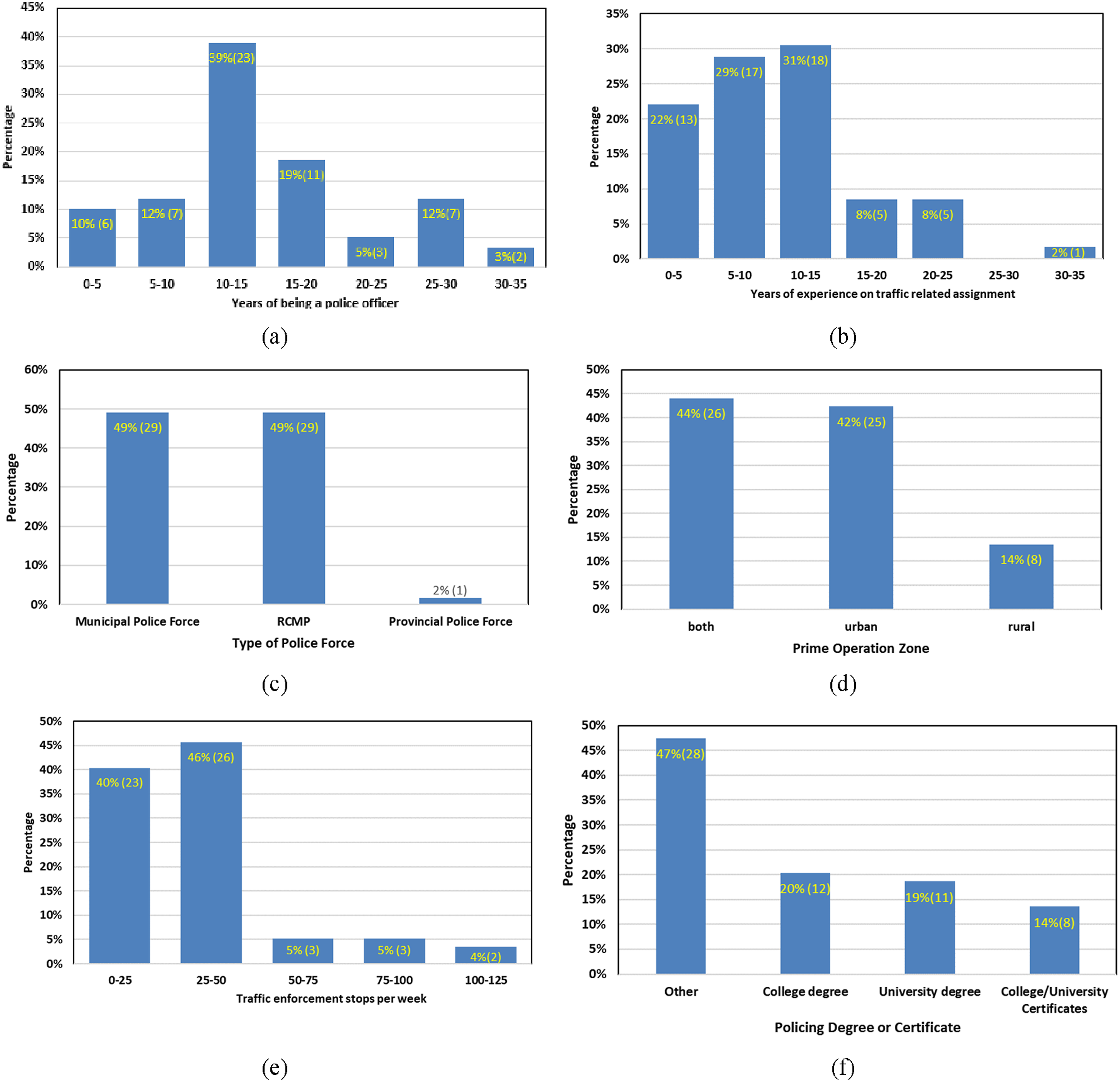
Participants’ experience in near-miss and real collisions
In this part, the experiences of the police officers in near-miss and real collisions during the traffic enforcement duties are presented. We asked them to select contributing factors in their near-miss and real collisions including (i) environmental factors (e.g., road type including primary street, rural road, freeway, major highway [major arterial roads], minor highway [arterial roads], and Trans-Canada highway) and (ii) human behavior (e.g., police behavior including the position of the police officer in the situation of a collision, the reaction to that collision, and the way they have been noticed in the near-miss or real collision). We defined major highways, also known as primary highways, which are larger and designed to accommodate a high volume of traffic. Major highways often connect large cities and provinces. Access to major highways is typically controlled via ramps and interchanges to maintain the flow of traffic. On the other hand, minor highways, also known as secondary highways, are smaller and carry less traffic. These roads may connect smaller towns, suburbs, or rural areas. Minor highways often provide more direct access to residential areas, businesses, and other local destinations.
Among the 59 participants, 19 officers experienced at least one real collision (30 real collisions in total) and all of them experienced at least one near-miss collisions (136 near-miss collisions in total) during their services. Fortunately, none of the responders was severely injured. Police officer could select multiple choices; therefore, the percentage and total number in Figure 2 represent the total number of near-miss and real collisions. Most of the reported real collisions (60%) were related to when the police officer was located inside police vehicles. Here, we have provided details for two real collision cases: In the first case, the police officer saw and noticed the approaching car in advance. The officer was in the driver’s position and attempted to drive forward and get to the shoulder but the collision from the rear occurred. In the second case, the officer was in the driver’s position and did not observe the approaching car before the collision. This officer was writing a ticket with his/her head down and the seatbelt was off as his/her normal practice. The police vehicle was struck from behind by a high-speed approaching car. The officer noted, “All I remember is hitting the car in front of me because a high-speed car collided from back.” This shows the importance of wearing the seatbelt when officers are inside their vehicles. Road type and collision experience, (a) near-miss collision; (b) real collision.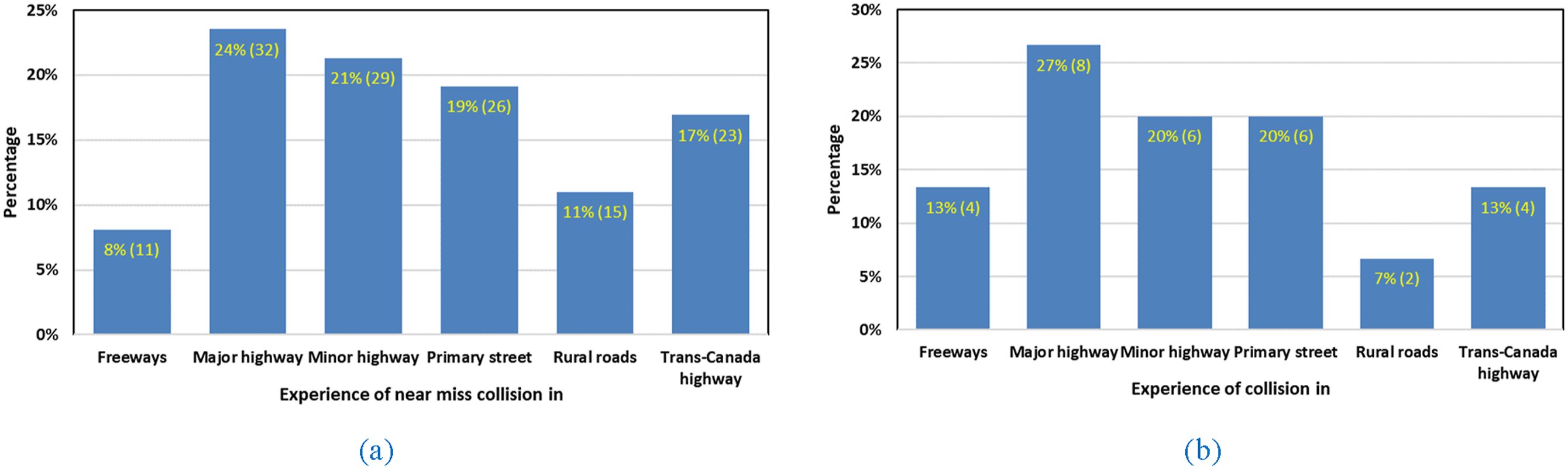
Based on the responses, the distribution of near-miss and real collisions has almost the same pattern in any type of road except for the freeways and rural roads (Figure 2). In freeways, the percentage of real collisions was higher (13% [4 out of 30]) than the percentage of near-miss collisions (11% [11 out of 136]). In rural roads, the percentage of real collisions (7% [2 out of 30]) was lower than the percentage of near-miss collisions (11% [15 out of 136]).
Referring to all the near-miss collisions that the police officers have remembered and experienced, 40% of them happened when they were inside the vehicle and 60% occurred once they were outside the vehicle. For the real collision, these values are 60% and 40%, respectively. Figure 3 displays more details regarding the position of the police officers. Among all the near-miss collisions when the police officers were outside the vehicle, the majority (83.5%) have occurred when they were in the front or the driver’s side of the vehicle (Figure 3(c)). Position of the police officer in (a) near-miss collision, (b) real collision, and (c) near-miss collisions when outside the vehicle.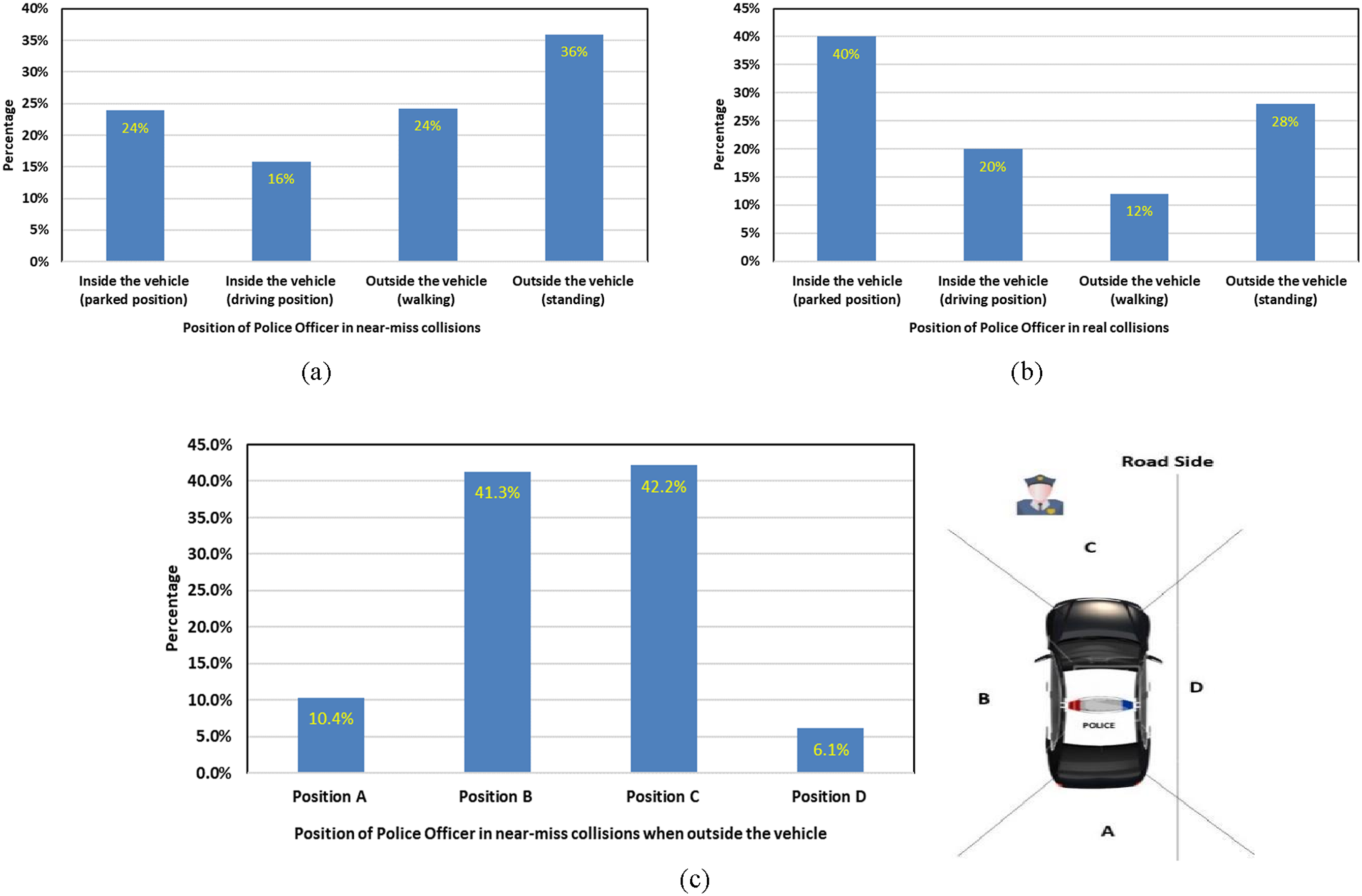
Figure 4(a) shows that 60% of near-miss collisions were noticed in advance and proper actions were taken, while 15% of them occurred very quickly (late notice) and the reaction was impossible. According to the findings, 25% of near-miss collisions were not noticed. Referring to all the noticed near-miss collisions, the majority (78.1%) were observed before the approaching vehicle reached the police officer (Figure 4(b)). Other ways of sensing potential collisions such as sound, impact, and third-person notice had less contribution in advance notice. Among all the near-miss and real collisions during the traffic enforcement duties, the threat cases related to the police officer’s vehicle were from behind (86%), opposite direction (5%), and sides (9%). The rear left collision is the major (64%) direction when the threat is from behind (Figure 4(c) and (d)). Notice, sense, and direction of near-miss collisions: (a) noticing or acting; (b) sensing the collision; (c) main source of threat related to the police officer’s vehicle; and (d) direction of threat cases when they are from behind.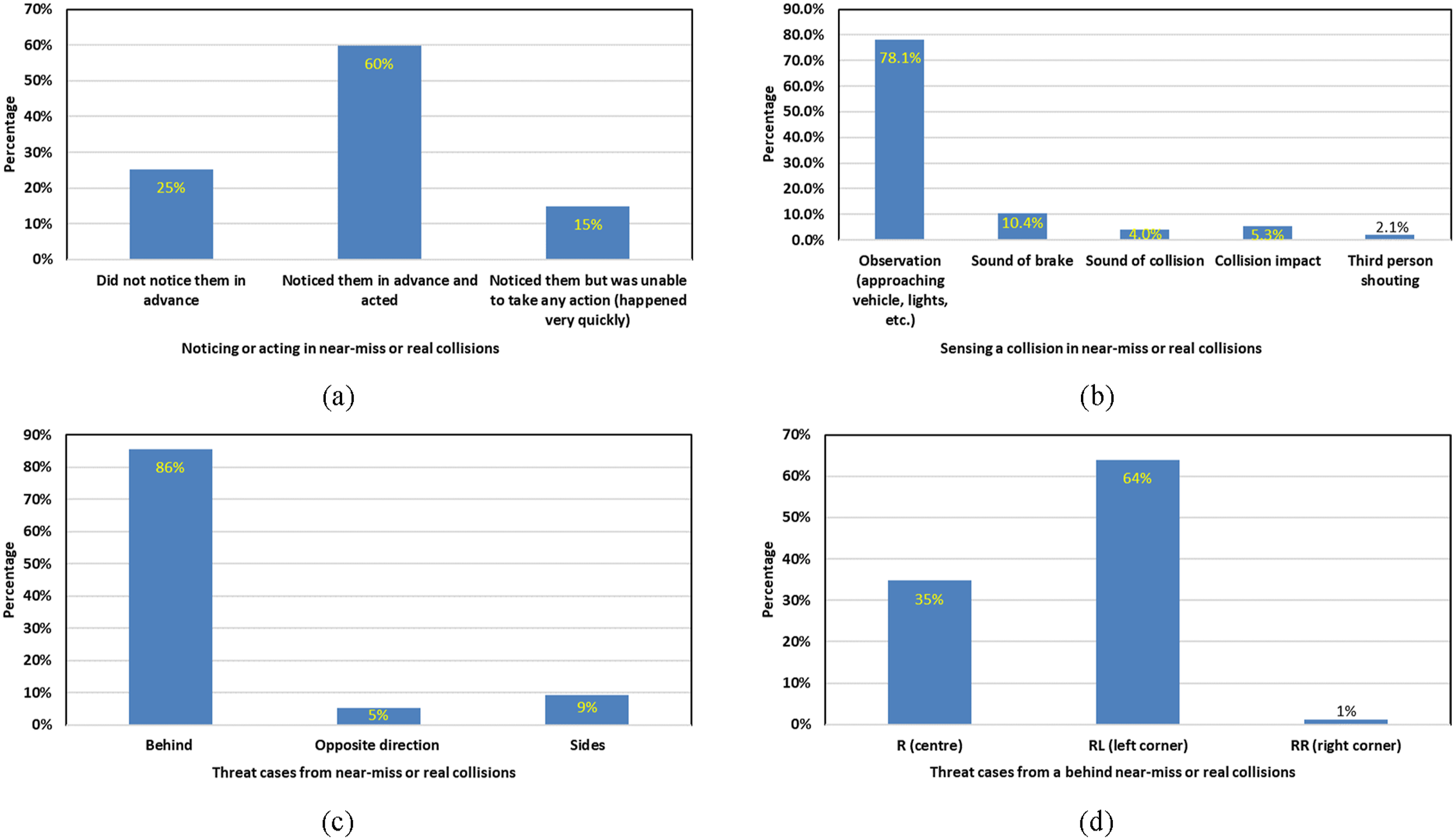
Importance of condition factors on near-miss and real collisions.
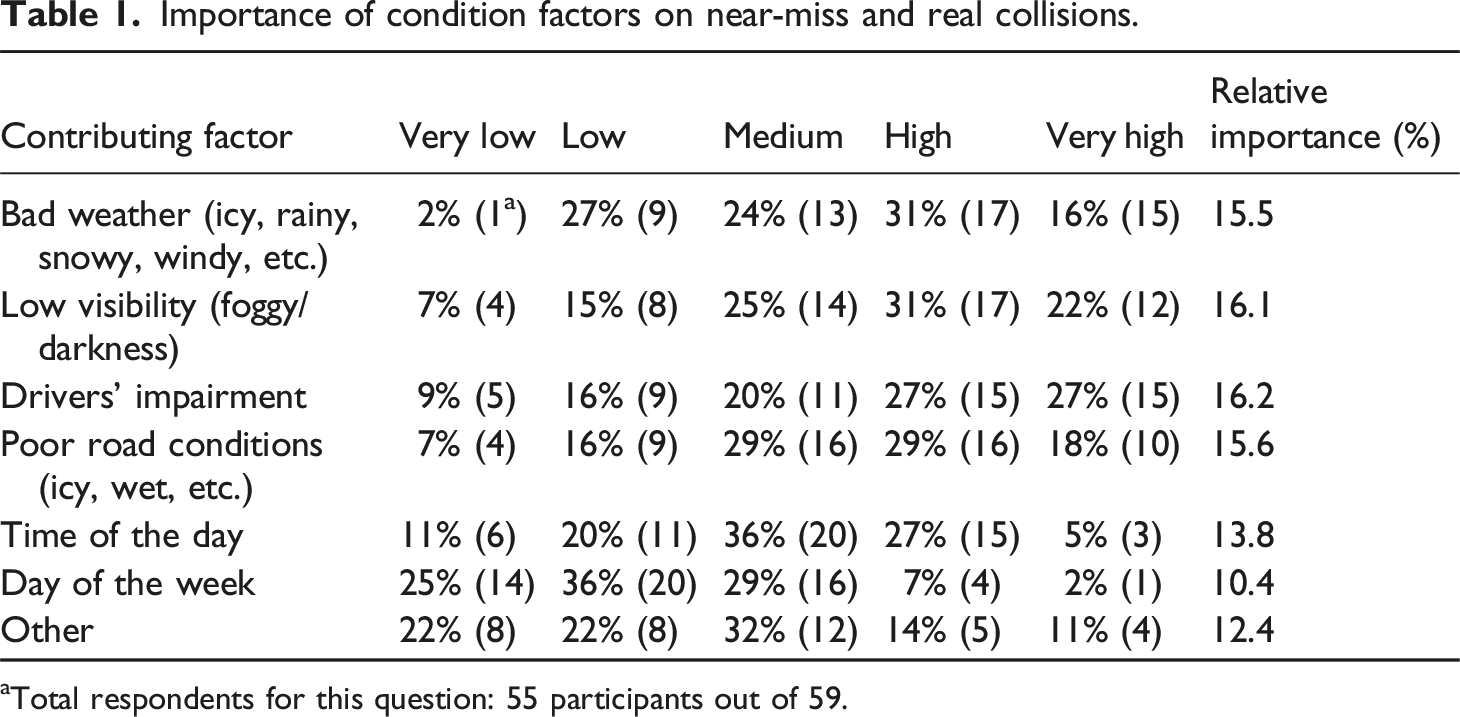
aTotal respondents for this question: 55 participants out of 59.
Based on the participants’ experiences, contributing factors including bad weather (15.5%), low visibility (16.1%), and driver impairment (16.2%) have approximately the same importance on the near-miss and real collisions. Based on police officers’ opinions, time of the day, day of the week, and other factors play a less important role in collisions. The highlights from narrative stories from the near-miss collisions that sample police officers experienced are summarized below.
Police officers in the shoulder or different lanes on the right or left of a road have experienced a near-miss collision while they stood outside their vehicles, stayed in the passenger or the driver position of their vehicle, or walked around their vehicles or the car under investigation. However, a position near the driver or passenger window of the under-investigation vehicles was reported more in the responses. Most of the responders reported that their vehicles were positioned far enough to create a safety lane. A few of them said that they blocked one driving lane when performing their assignments.
The source of most near-miss collisions was the vehicles that were in line with the traffic which could lead to a rear collision. The drivers did not pay attention even when the location of the police vehicle was fully marked with lights flashing and police officers wore reflective equipment. Based on the responses, the driver’s inattention or sufficient eye lead was listed as the reasons for collisions.
Finally, respondents mentioned that direct observation, the force of the wind of a vehicle motion, and panic braking were the sense for realizing the near-miss collisions. If police officers realized the collision, they would jump back off the roadway and save themselves.
Six collision scenarios
In addition to understanding different contributing factors, understanding the reactions of police officers in different near-miss or real collision scenarios will also help to know what practices are currently done in the field. This also helps to know what police officers are currently doing to prevent near-miss or real collisions. In total, 58 police officers responded to this question.
In this section, firstly, we examine the current practices of police officers in traffic-related assignments. Figure 5 summarizes the main findings. Accordingly, when police officers conduct traffic-related assignments (i.e., pulling over a vehicle, traffic stop, roadside speed enforcement, and ride check), they position their vehicle in either angled (59%—34 officers) or parallel (41%—24 officers) direction. Then, they walk toward the stopped vehicle from the driver’s side (79.3%—46 officers), passenger side (10.3%—6 officers), and both sides (10.3%—6 officers). Most of the time (88%—50 officers), traffic-related assignments take less than 10 min. Participants believed that the major highways are the most dangerous type among different types of roads. Condition in conducting traffic enforcement: (a) usual position of police vehicle; (b) side of approach the stopped vehicle; (c) average spending time; (d) the most dangerous type of roads.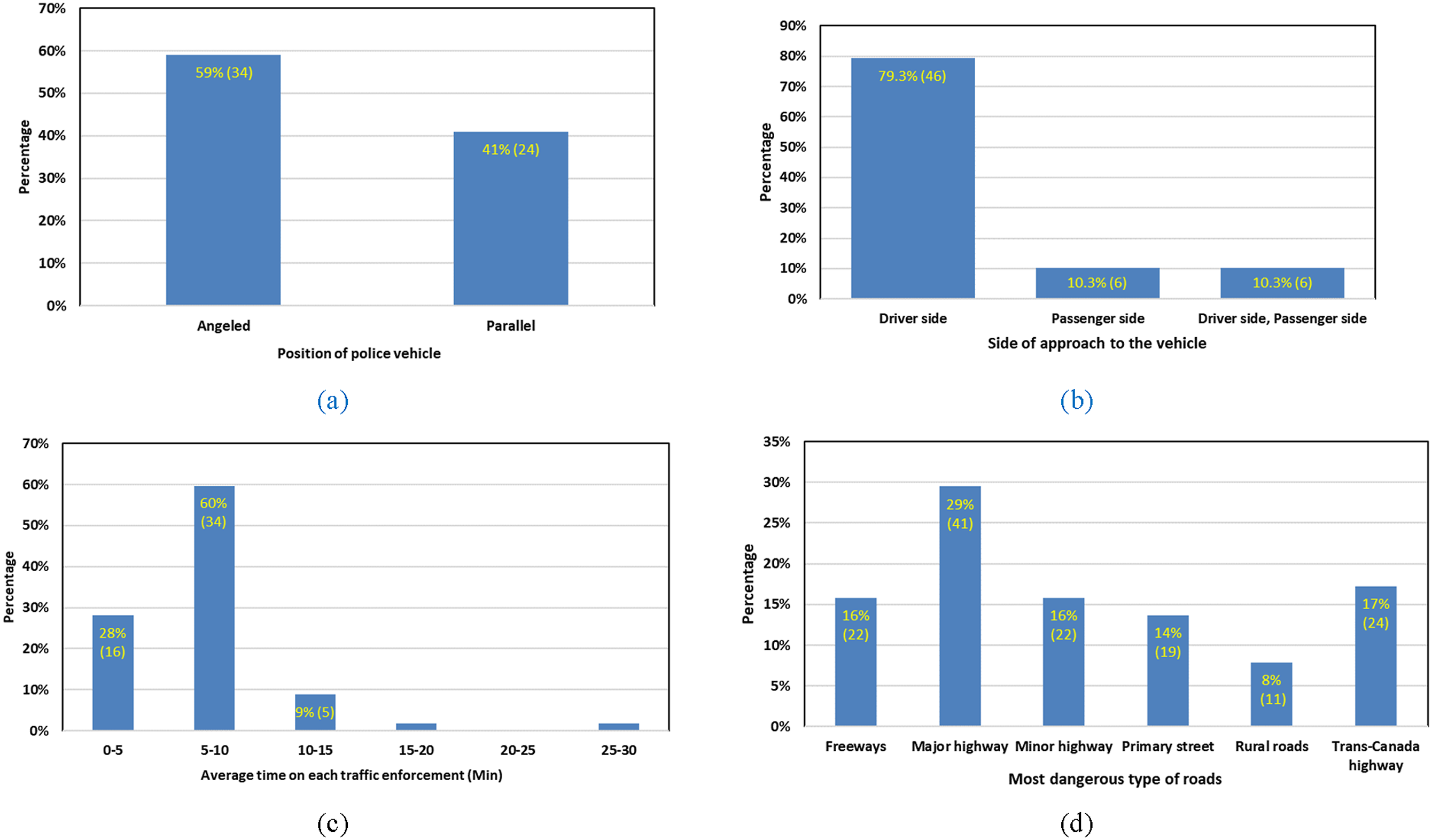
Now, we developed six scenarios for near-miss or real collisions and provided respondents to receive their opinion on preventing or reducing possible collision impacts. For developing these six scenarios, we reviewed about 40 near-miss or real collisions recorded by police car dashcam on YouTube. Participants revealed their thought in short narrative writing. The scenarios and a summary of responses are presented here.
Scenario 1: noticing in advance
Question
You are inside the vehicle in stationary mode. What would be your actions if suddenly you noticed a collision from behind by an approaching car in 5 s or less (see Figure 6)? Noticing in advance.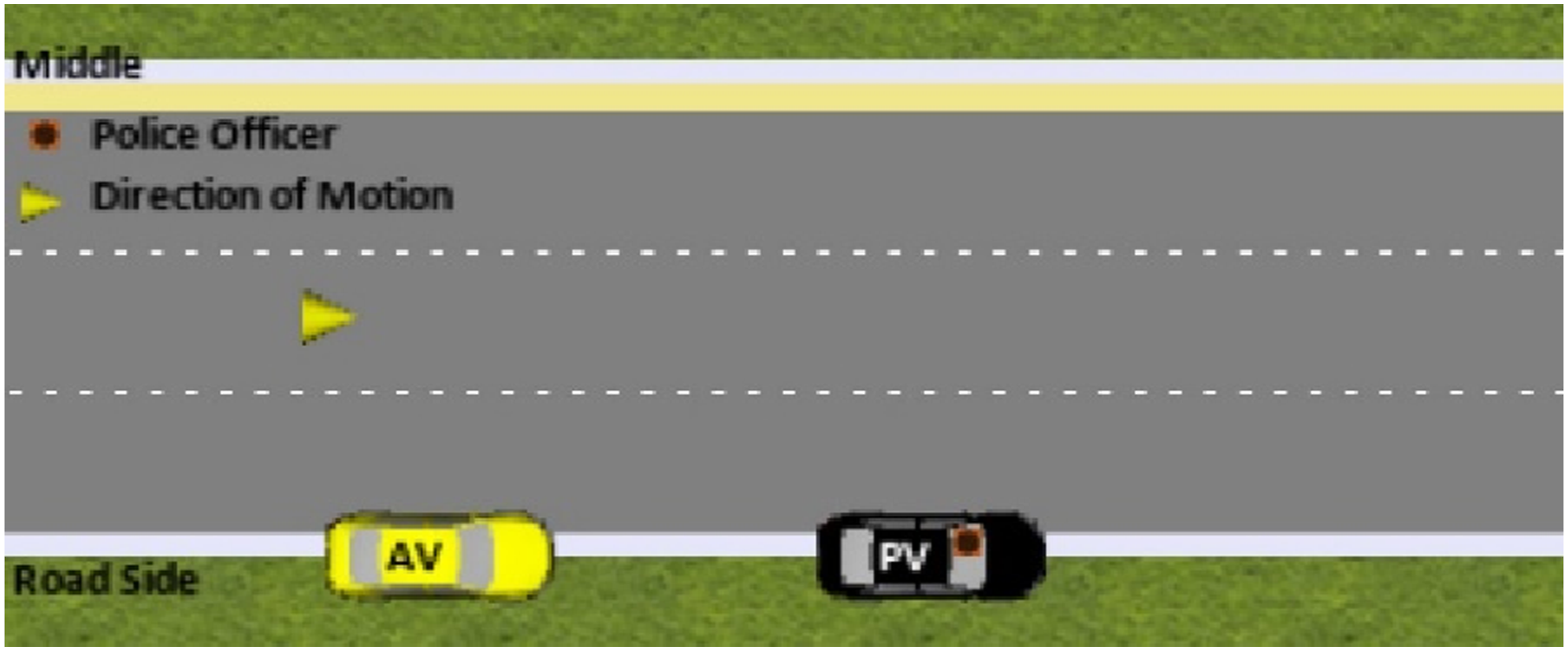
Various responses were received for this scenario. A majority of participants believed that getting out of the vehicle in that time frame has no benefit for anyone. Some participants believed that 5 s of advance notice is greater than the person’s reaction time of 0–2.5 s and would be great. Few responders believed that under this scenario the officer does not have much escape route to allow for any maneuvering. Few of them believed that there were not likely any viable options in such situations. The specific numbers for responders’ actions in this situation are further elaborated upon below.
Suggestions for dealing with this situation can be summarized in terms of warnings and actions. The driver of the approaching vehicle can be warned by honking, hitting the air horn or sirens, tapping the brake, and activating the flash brakes or flashlights or emergency lights. Actions such as staying in the same position, fastening the seatbelt, and bracing for an impact (e.g., holding head against the headrest and crossing the arms across one’s chest); activating the rear radar to obtain a speed on the target; putting the vehicle into neutral or reverse and brace for impact; putting the vehicle into drive and moving onto the ditch to the right of the roadway; and turning the wheels towards the side of the road or roadway to lessen the impact on the front vehicle were recommended.
According to qualitative responses to Scenario 1, most officers have elaborated on steps to be taken to circumvent the situation. Most of the steps described involved admitting the gravity of the circumstances and the need for certain assumptions so the best decisions can be made (“Assuming my emergency is already on. Will sound siren to catch the attention of the approaching vehicle”/“If there is insufficient time, ensure the seat belt is utilized”/“reposition the PC, if possible, to limit collision damages”). Almost one-third of officers who described steps to be taken such as the ones presented above also included “brace for impact” on their accounts, a mention that suggests the collision is almost inevitable. Four described that bracing for impact would be the first or only thing to do, while five said that not doing anything is the only possibility under those circumstances (“There is not much that could be done”/“Stay in the same position”). Thirteen responders mentioned that emitting some sort of signal to communicate with the surroundings is a step to do (“Use Audio Horn”/“honk horn”/“Activate siren”), some of them proposing communication in combination with avoidance steps such as hitting the brake or turning the wheels (“Try and alert the other car ahead of me and try to pull off to the right out of the path of the approaching car”/“Hit the air-horn, change the sirens to attract attention, turn my wheel to the passenger-side”).
Scenario 2: noticing a rear collision when standing on the side
Question
You are outside your vehicle talking to a stopped driver. What would be your actions if suddenly noticed a possible collision from behind by an approaching car (see Figure 7)? Noticing a rear collision when standing on the side.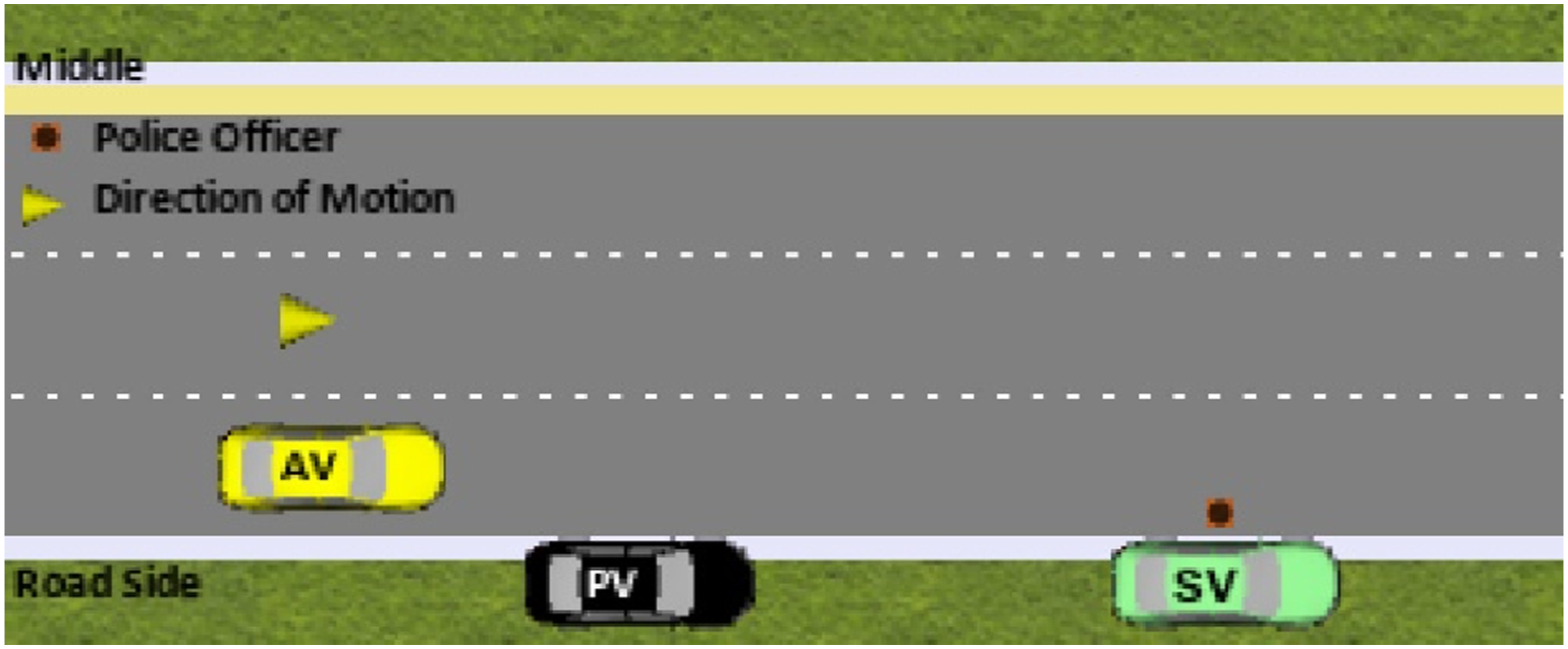
None of the responders mentioned they had an experience like this scenario. However, some of them believed that poor tactics for this type of highway can be done due to little room to maneuver. They recommended approaching the vehicle from the passenger side in this circumstance to avoid the risk and/or staggered parking the police vehicle to create a safety pocket. The suggested life-saving reaction was stepping backward to not get pinned; getting out of the path of the approaching vehicle by running forward and to the right, utilizing the hood or roof of the stopped vehicle and jumping on them; continuing to look back into traffic to assess and respond to threats, and getting in the safe location.
Qualitative responses to the Scenario 2 question revealed that more than half of the respondents mentioned that trying to avoid a collision was the only way to proceed (“Find some way to avoid being hit”/“Move out of the way”). The remainder mentioned cautionary steps that could be taken to minimize consequences, but more than 60% of those acknowledge avoidance can be an alternative as well (“No win situation. Running toward roadway would be into traffic, possibly depending on volume”/“Advise the driver to pull ahead and get to a safe location. Move to the safest location away from the vehicles/PC outside the traffic lanes”).
Scenario 3: noticing a rear collision when staying
Question
You are outside your vehicle staying behind a stopped vehicle. What would be your actions if you suddenly noticed a possible collision from behind by an approaching car (see Figure 8)? Noticing a rear collision when staying.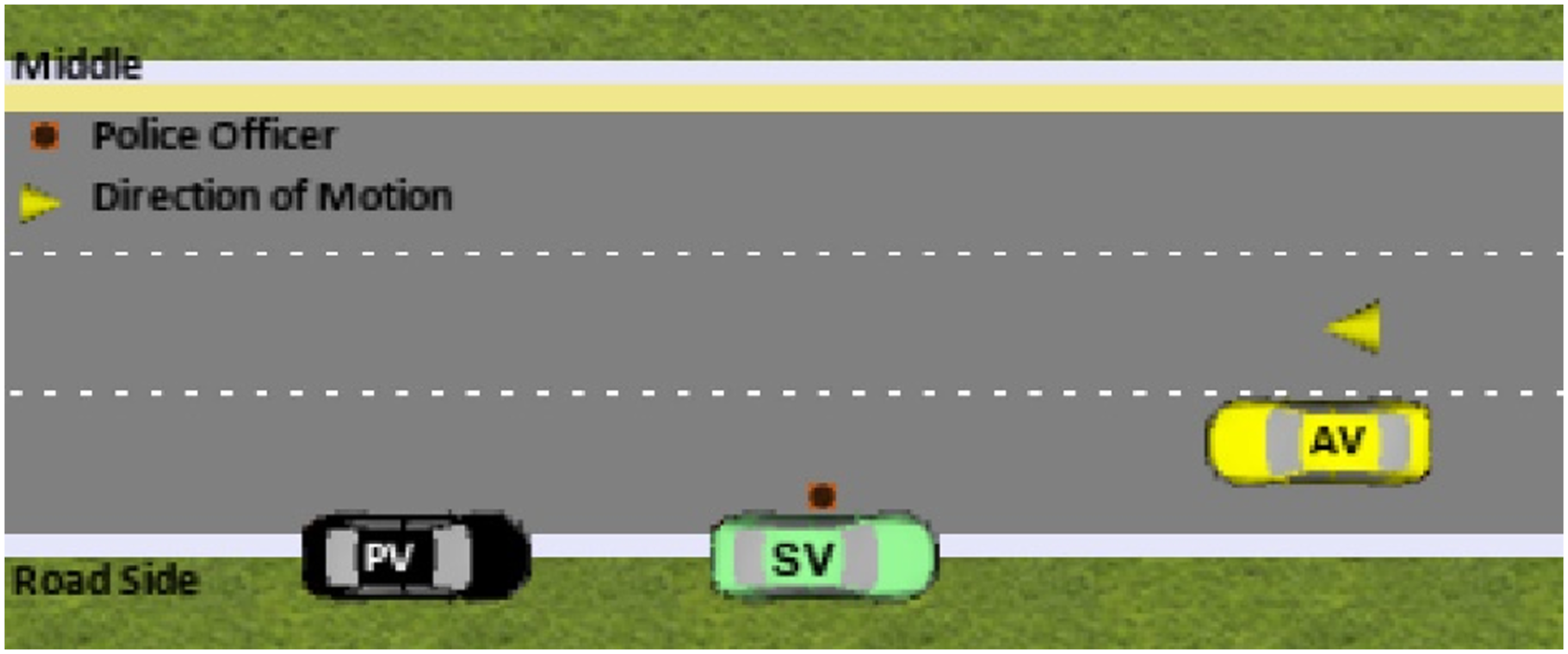
Some of the participants believed that the police vehicle had not been parked in a proper position and have been within approximately five-car length distance of the parked vehicle to cover it. Also, the standing position of passengers and police was not correct, and they should not be in a position that might be pinned. For this scenario, the suggested actions were warning the drivers by yelling at them to be prepared and braced for the impact and running up the hill or ditch. According to the text responses to this question, respondents were divided between avoidance take steps, with some highlighting the importance of signaling as a means of mitigating the potential consequences.
Scenario 4: noticing a rear collision when walking
Question
You are outside your vehicle walking. What would be your actions if you suddenly noticed a possible collision from behind by an approaching car (see Figure 9)? Noticing a rear collision when walking.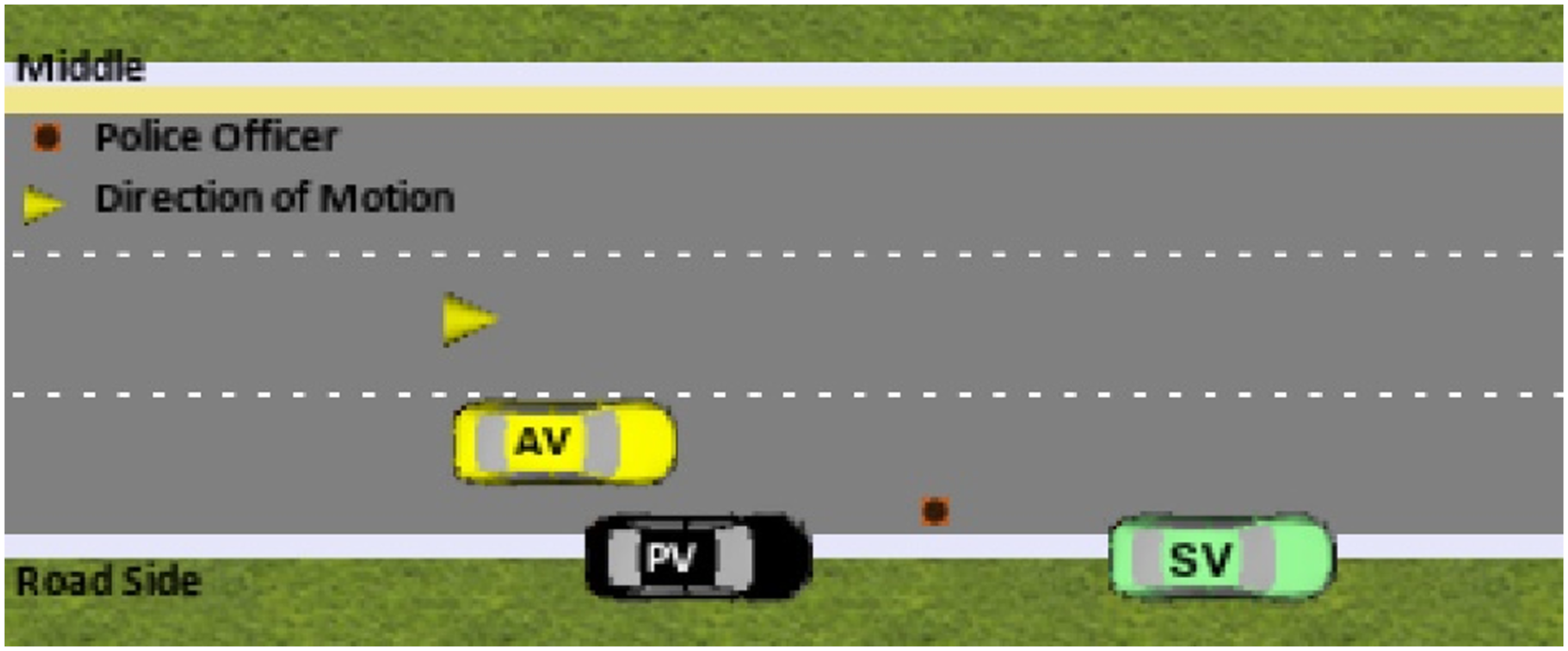
One of the participants said that she or he has had a circumstance like this scenario and was able to run between the police vehicle and the stopped vehicle to avoid the collision. Some of the responders warned that “Do not walk in the gap between the vehicles” as a rule and the need for equal attention to the stopped vehicle and threats from approaching traffic to the stopped vehicle and the approaching car. Suggested actions for this scenario were bracing for impact and getting out of the path by running or jumping on the trunk. Again, warning the other people such as the driver of a stopped car to brace themselves had been mentioned.
Scenario 5: noticing a rear collision when staying midway
Question
You are outside your vehicle near the midway of the road. What would be your actions if you suddenly noticed a possible collision from behind by an approaching car (see Figure 10)? Noticing a rear collision when staying midway.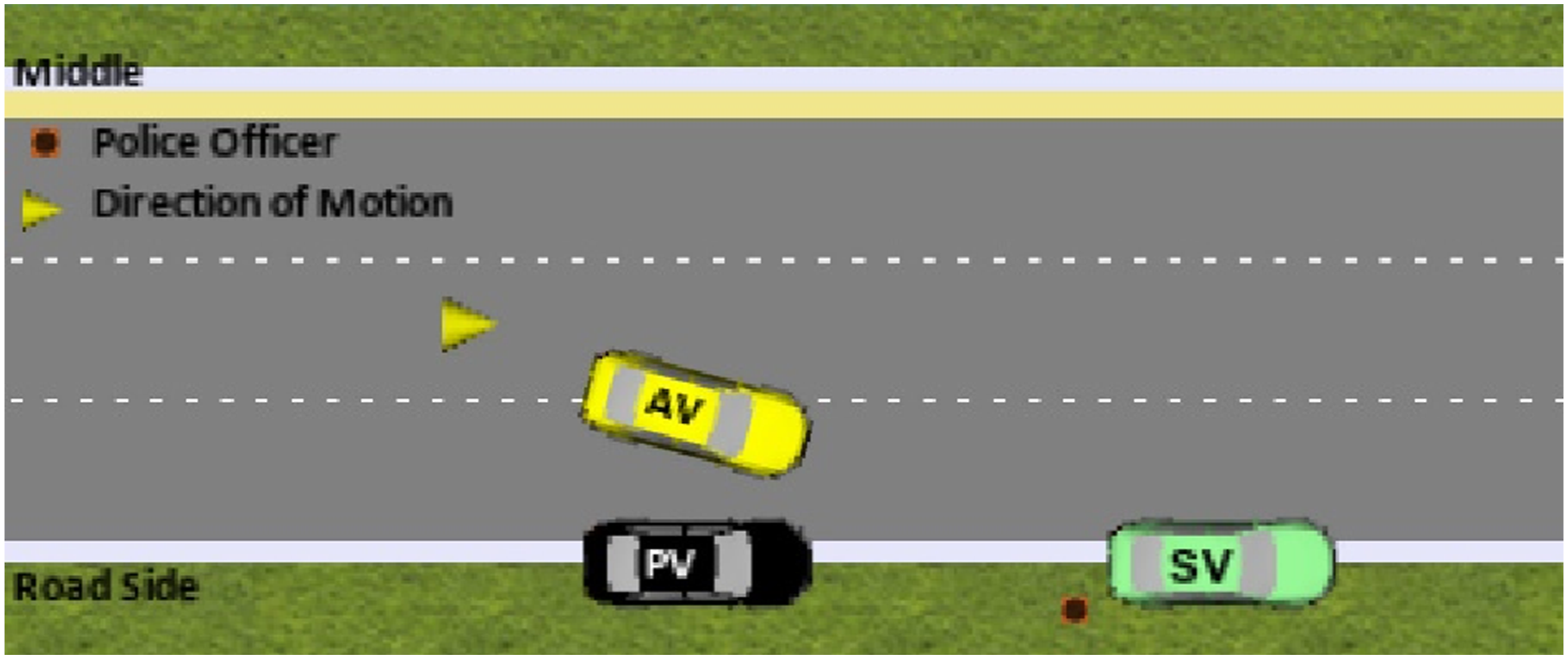
For this scenario, most of the respondents suggested that they would try to jump over the barrier. Some of the participants suggested checking live traffic for escape options and using the police vehicle as a barrier. Nobody mentioned that they experienced such a situation in the past.
For Scenarios 4 and 5, most answers brought a mix of avoidance and steps. Respondents, nonetheless, appeared to be more analytical and prescriptive, which may suggest more reactive options which include “Run off to the shoulder, clearing the zone if possible, staying around the passenger side front quarter of the PC if I can’t distance the crash zone in time”/“Attempt jumping out of the way of the vehicle towards the ditch. If the vehicle is coming at you straight from behind”.
Scenario 6: noticing a front collision
Question
You are outside your vehicle talking to a stopped driver. What would be your actions if you suddenly noticed a possible collision from the front by an approaching car (see Figure 11)? Noticing a front collision.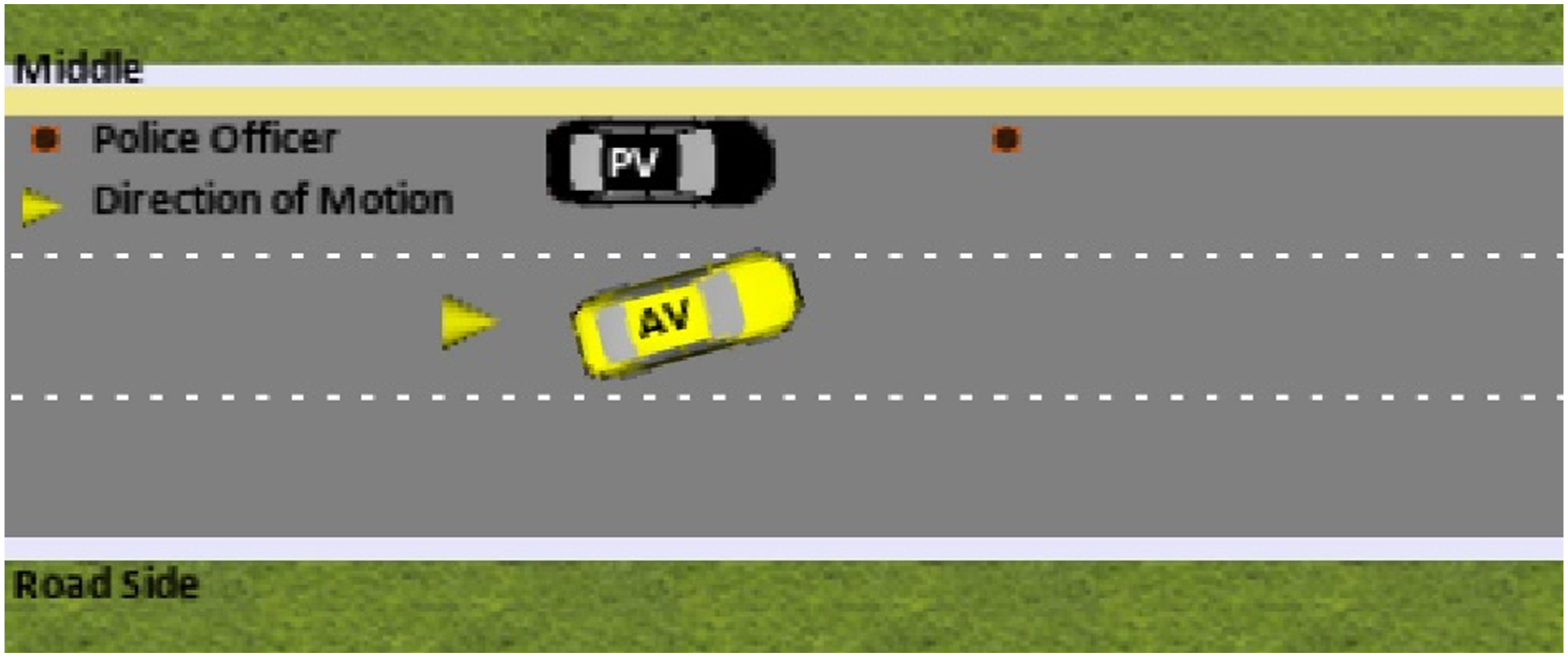
Respondents suggested that they would try to get out of the path by running backward between the stopped suspect vehicle and the police vehicle, jumping over the top or trunk of the stopped vehicle, warning the driver to be prepared for impact, and using the horn and flashing light to grab the attention of the driver of approaching vehicle. Another recommendation was to use the passenger side to avoid this kind of collision.
Training experiences and best practices
In the next section of the questionnaire, respondents were asked to answer some questions regarding the number of training experiences for roadside collisions and the best practice they had for these scenarios. A total of 56 police officers responded to this question. The majority 81% of participants revealed that they had little or very little training for roadside collisions (Figure 12). They were also asked to share any information and experiences about the best practices that could prevent officers from being struck by vehicles. About 54% (30 officers) had no awareness of any best practice guide and the rest expressed their knowledge and experience. Some of the suggested guidelines and resources were as follows: “Move over law,” “Street Survival courses of the Calibre Press,” “Ontario Police College, Police vehicle operations instructors,” “OH&S and Agency Training,” “Basic traffic stop training. Policy manual,” “Edmonton Police Service EVOC training and Traffic Training,” “Police Driving Unit in Depot Division,” “Police vehicle stop training,” and “Creating a safety pocket which is taught by RCMP.” And other general recommendations such as using common sense, job training and increasing the experiences, effective use of emergency lighting, being vigilant, keeping an eye on your surroundings and not only focusing on what is in front, staggered parking, using the passenger side for approaching a vehicle, and turning the wheels of police vehicles were mentioned by the participants. Best practices for the collisions’ scenarios: (a) the number of trainings for scenarios; (b) the suggested location of the police officer when conducting road traffic assignments.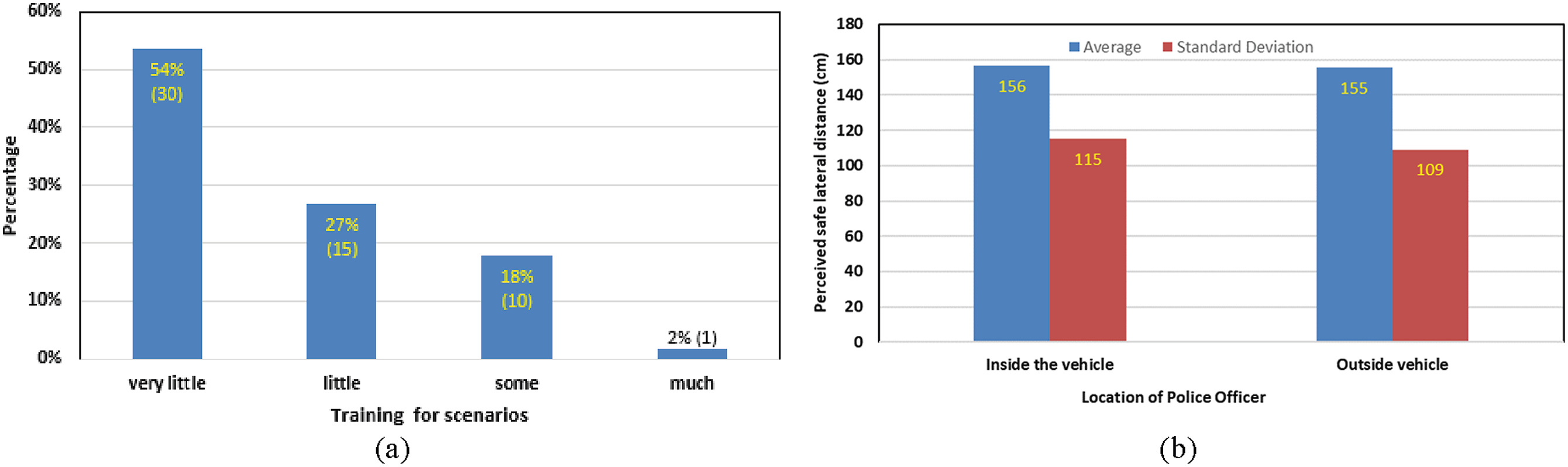
Respondents were also asked about the safe lateral distance from traffic when conducting road traffic assignments when stationary inside the vehicle and when standing or moving outside the vehicle. The average response was 155 cm. This value has a large standard deviation of about 110 cm (Figure 12) which may illustrate the lack of training for these situations.
Finally, when asked where and how best practices on response to collision could be found, almost half of respondents explicitly referred to training as a means of learning (“Police vehicle operations instructors”/“Basic traffic stop training. Policy manual”/“Basic training”). The other half mentioned experience or knowledge (“experience over years include”/“common sense”), with some detailing steps that could be taken in those situations (“Turn your police car wheels to force the vehicle to the direction away from the front”).
Those observations suggest that officers may have very little latitude to react, both from a reaction time perspective and from a resource availability perspective. The number of accounts referring to straightforward avoidance as an approach suggest that opportunities to elaborate on tactics/actions may be limited. At the same time, several respondents provided detailed accounts followed by prescriptive steps, a finding that suggests that subjects received proper training and would use relevant knowledge in those kinds of situations.
Police vehicular technology
This part of the questionnaire was related to equipping police vehicles with new warning technologies (e.g., early warning systems). A total of 58 police officers responded to this question. A majority (91%) of participants stated that they do not have access to any device or technology that detects and warns them about collisions a few seconds before they occur. Figure 13 displays other details of the results. About 65% (48 officers) of them believed that a safety device that can detect a collision threat and warn the police officer a few seconds in advance is useful and very useful. Regardless of several devices which police officers currently carry (e.g., spare clips of ammunition, handcuffs, a portable radio, pepper spray, and a collapsible baton), still about 75% (44 officers) of the participants would consider carrying an additional system that can warn them about oncoming dangerous traffic. In terms of the way warning devices warn, participants preferred sound (54%), vibration (28%), flashlight (14%), and others (4%). Wristwatch (38%), belt (23%), add-ons to existing devices (15%), badge (12%), handheld (9%), and headset (3%) are the preferred types of warning devices when the police officer is outside the vehicle. Figure 13(c) and (d) are multiple choice questions; therefore, the total number does not necessarily equal to 58. Collision detection and warning technology: (a) usefulness of a safety device; (b) considering using a warning system; (c) preferred warning device; (d) wearable warning device.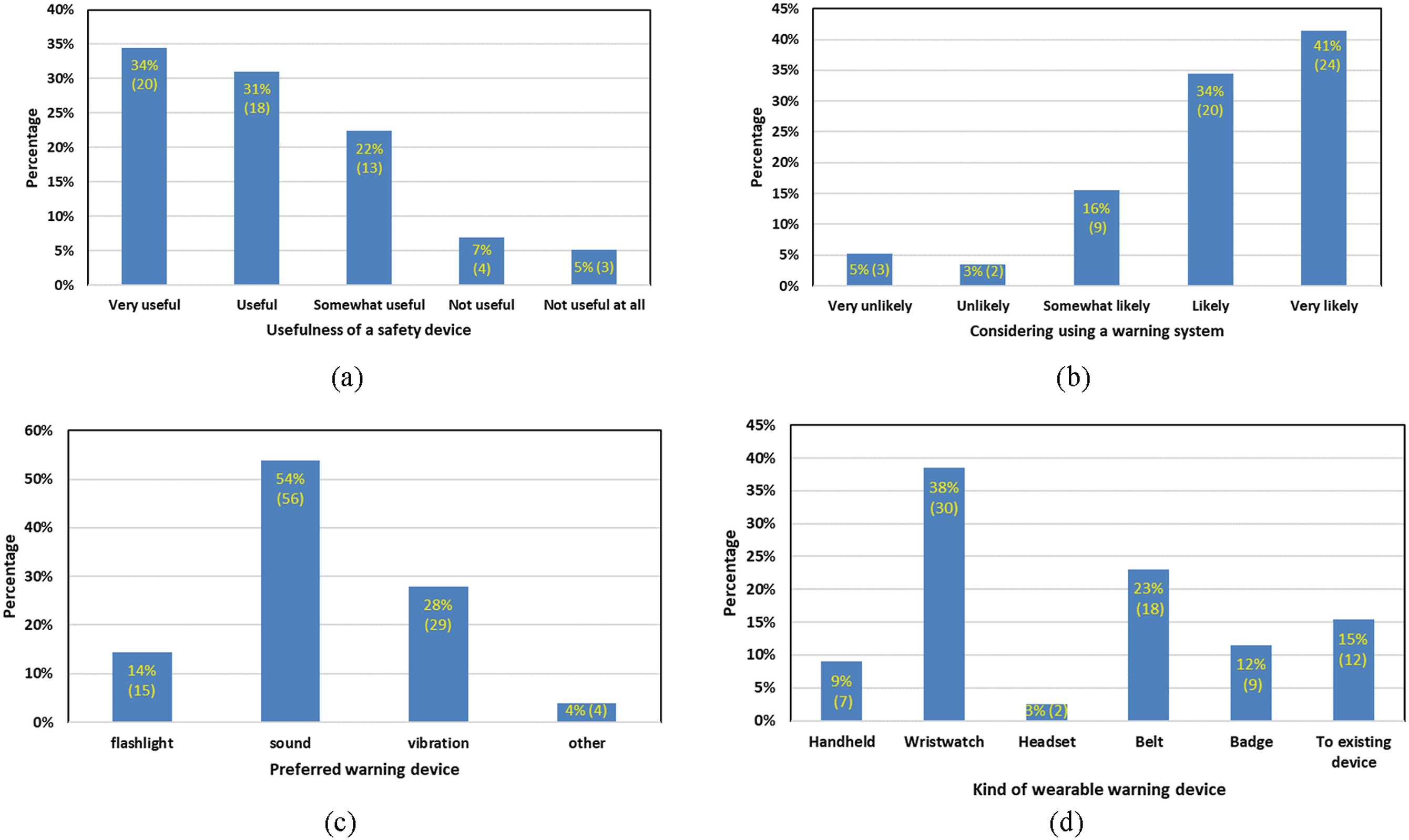
Based on the survey results, potential warning devices could be added to the wristwatch (38%), belt (23%), to existing devices (15%), badge (12%), handheld (9%), and headset (3%). One of the participants explained how too many false alarms can contribute to an unhealthy emotional state. The individual emphasized the need for improving safety protocols in police vehicles and expressed the belief that the combination of police radios, cell phones, and safety “awareness” during a traffic stop is overwhelming.
Discussion, limitations, and recommendations
Based on our findings, we can now safely argue that roadside collisions involving police officers in Canada are a serious concern. A total of 19 police officers in our study experienced a real collision on different types of roads in Canada. Our findings provided new lessons from analyzing contributing factors. For example, 73% of real collisions (out of 30) and 70% of all near-miss collisions (out of 130) happened where police officer was serving in high-speed roadway type (i.e., freeways, major or minor highways, and Trans-Canada Highway). This intensifies the severity of roadside collisions.
An interesting finding is that 60 % of all near-miss collisions occurred where the police officer was located outside of vehicle. Among all this 60%, 41% of them occurred where the police officer is in Position B (i.e., the driver’s side of the vehicle) where there is not any protective barrier.
Our study findings showed that 81% of participants have little or very little training programs to response in different collision scenarios. This highlights designing proper educational and training programs for roadside collisions. Police officers usually carry multiple devices including firearm, handcuffs, radio, pepper spray, and flashlight. Adding an additional device may add complexity to their performance. Our study findings showed that about 75% of the participants would consider carrying an additional device that can warn them about oncoming dangerous traffic. This may imply the seriousness of roadside collisions in Canada.
An interesting note here is that one of the most common and effective regulations in Canada to reduce risk of roadside collision is “Move Over Rule” which requires drivers to slow down and move over when approaching a stopped police car. However, our findings show that police officers still feel unsafe while performing on roadside. Therefore, additional treatment including training programs and vehicular warning technology is recommended based on our findings.
“While this study focused on roadside collisions for police officers, the findings of this study can apply to other pedestrians whose work involves working on roadway segments including construction work zone workers and maintenance workers.”
In overall, the development of a collision warning system seems a demanding need. The system may contain a radar installed in the rear window (the majority of real/near-miss collisions [86%] happen from behind) of a police car and can detect risky approaching vehicle and warn police officers in time. The warning device can be a wristwatch as a majority of police officers prefer it. We believe that this or similar warning systems can improve the safety of officers on the road.
Deploying one or two police officers in a police car depends on several factors including time of day (with increased use of one officer during daylight hours) and population density (more densely populated districts required use of two officers in the police car) (Anderson and Dossetor, 2012; Del Carmen and Guevara, 2003). This study did not consider the impact of number of police officers in the police car or in the scene on the risk of being hit by an approaching car. We suggest future studies to further investigate this impact.
This study also did not investigate the experience of police officers regarding the impact of the number of passengers in the stopped vehicle on police officer’s risk of being hit by approaching cars. We suggest future studies to further investigate this impact.
One of the major limitations of this study was the small sample size (59 participants) of our study. Although our aim was to achieve more than two hundred participants, however, after several outreachs, sixty-six participants responded (seven removed after data processing). We recommend a future study to include a large sample size from a wide range of participants including police officers (and other first responders), construction work zone workers, and maintenance workers and identify/compare the concerns and challenges.
Another limitation of this study was that we asked police officers to remember their past historical near-miss or real collisions and respond to the questions. While the past studies also used similar approach (e.g., Tiesman et al., 2015), police officers may recall some of the contributing factors and may forget other contributing factors to that event. We encourage a future study designs a unified system (it can be a mobile application) where police officers can report their experienced near-miss or real collisions. Here, we provided an example of developing a mobile application for collision reports. UTAH state in the US developed a wildlife collision mobile application where passenger vehicles who see a collision with an animal (or see an animal’s dead body on the roadside) can report it through the mobile application.
The lack of a proper training program to prepare police officers for roadside activities is another identified gap that this study found. However, designing a proper training program was out of the scope of this study. We recommend a future study to use the findings of this study and develop a proper training program for police officers. Virtual Reality can be an effective and safe educational tool for this purpose where a future study can design scenarios with training materials and educates police officers in a virtual environment.
The explicit need of police officers for police vehicular technology was another finding of this study. We encourage future studies to conduct a comprehensive literature review on existing early collision warning technologies and try to design a proper early warning for police officers to reduce the risk of roadside collisions.
Supplemental Material
Supplemental Material - Lessons learnt from roadside collisions: A Canadian police perspective
Supplemental Material for Lessons learnt from roadside collisions: A Canadian police perspective by Mohammad Ali Tofighi, Ali Asgary, Ahmad Mohammadi, Felippe Cronemberger, Brady Podloski, Peter Y Park, Xia Liu, and Abir Mukherjee in The Police Journal.
Footnotes
Author contributions
Conceptualization: Mohammadali Tofighi, Ali Asgary, Ahmad Mohammadi, Felippe Cronemberger, Brady Podloski, Peter Park, Xia Liu, and Abir Mukherjee; funding acquisition: Ali Asgary; investigation: Felippe Cronemberger and Brady Podloski; methodology: Mohammadali Tofighi, Ali Asgary, Felippe Cronemberger, and Brady Podloski; supervision: Ali Asgary; visualization: Mohammadali Tofighi; writing—original draft: Mohammadali Tofighi; writing—review and editing: Ali Asgary, Ahmad Mohammadi, and Felippe Cronemberger.
Declaration of conflicting interests
The author(s) declared no potential conflicts of interest with respect to the research, authorship, and/or publication of this article.
Funding
The author(s) disclosed receipt of the following financial support for the research, authorship, and/or publication of this article: Defense Research Development Canada; CFP/AD 0549.

Supplemental Material
Supplemental material for this article is available online.
References
Supplementary Material
Please find the following supplemental material available below.
For Open Access articles published under a Creative Commons License, all supplemental material carries the same license as the article it is associated with.
For non-Open Access articles published, all supplemental material carries a non-exclusive license, and permission requests for re-use of supplemental material or any part of supplemental material shall be sent directly to the copyright owner as specified in the copyright notice associated with the article.
