



Abstract
Research indicating the impact of police academy training on officer safety outcomes post-graduation is limited, creating a significant gap in policing literature. To address this, this study combines data from police academies across the United States using the 2018 Census of Law Enforcement Training Academies (CLETA) (n = 761) along with agency-level injury data (n = 25,345) from the FBI’s Law Enforcement Officers Killed and Assaulted (LEOKA) and Uniform Crime Reporting (UCR) databases from 2018 to 2022. Data cleaning and linking techniques successfully matched 322 academies to officer injury data in their corresponding agencies and jurisdictions. Preliminary analyses revealed significant differences in safety outcomes and force-based teaching emphasis based on institutions (e.g., traditional, college, other) overseeing police academies. Negative binomial regression models were used to assess the relationships between academy structures and instruction to officer incident and injury outcomes. The results indicated that academy structures—college-affiliated academies associating with lower injury rates, and those using scenario-based training showing higher incident counts—are significant correlates of officer safety. As for elements of academy instruction, higher numbers of sworn instructors were associated with better safety outcomes. These findings highlight the complex, context-dependent influence academy characteristics have on officer safety and provide valuable insights for evidence-based academy reform. Nevertheless, limitations such as the use of fuzzy matching, the cross-sectional nature of the data, and the exclusion of unmatched academies must be considered. Future research should expand on these findings to better understand the relationship between police academy training and safety outcomes after graduation.
Introduction
Police academies play a crucial role in imparting procedural knowledge and discipline to aspiring officers. Equally important, they are tasked with preparing them for the unpredictable and dangerous nature of their future law enforcement roles. Extensive empirical research on cadet training and officer readiness covers topics such as cadets’ procedural effectiveness (Caro, 2011), physical performance (Crawley et al., 2016), ethical tendencies (Blumberg et al., 2016), socialization processes (Conti, 2006), and other scholarly works. Likewise, studies have examined how academy structures and overall philosophies influence officer training, whether through the curriculum (Chappell, 2008), training environments (Simon, 2023), or instructional methods (Vander Kooi & Palmer, 2014).
While these studies offer valuable insights into training efforts and their impact on cadets’ likelihood of success in future roles, significant gaps remain in the literature concerning academies’ broader roles in officer safety after employment, which is considered a key part of academy training. Therefore, this study fills that research gap by examining the relationships between academy characteristics and officer injury outcomes across the United States, providing a detailed analysis of the specific training elements that influence overall officer safety outcomes post-graduation. This research makes a significant contribution to shaping future police academy training methods in the US and globally.
Officer Safety
As of 2020, about 708,000 full-time sworn officers worked for state and local law enforcement agencies across the United States (Goodison, 2022), while federal law agencies employed over 130,000 full-time officers (Brooks, 2022). According to the FBI’s Uniform Crime Reporting database (UCR), there were 237,658 reported offenses to law enforcement in 2022 (including violent, property, and non-violent crimes), with 35,821 of these being cleared through arrest or other means by law enforcement. In 2022, 331 officers were shot in the line of duty across 267 incidents nationwide, highlighting the ongoing risks faced by police (Office of Community Oriented Policing Services, 2023). 1 Beyond gunfire, assaults on police officers have increased over the past decade. The FBI reported over 43,000 officers assaulted in 2021—an 11% rise from 2020—and about 35% of these assaults resulted in injuries to officers (Federal Bureau of Investigation (FBI), 2021).
Officer injuries happen in many duty situations, including violent confrontations and accidents. Many of these injuries come from altercations with suspects during routine calls and arrests (Federal Bureau of Investigation, 2021). For example, in 2021, about 28.6% of assaults on officers occurred while responding to disturbance calls (e.g., domestic disputes), and 18.4% happened during “other arrests”. Traffic stops and investigative encounters also pose risks, but one especially dangerous situation is the ambush attack—events where officers are suddenly assaulted. National injury data show that roughly 11% of nonfatal police injuries treated in emergency rooms resulted from vehicular incidents (like crashes), and another 11% from falls (such as foot chases, emergency responses, etc.) (Tiesman, 2021). The body parts most often injured during resistance activities include fingers and hands (25%), upper extremities (22%), and lower extremities (20%). The most common diagnosis for resistance injuries is contusions or abrasions (35%), followed by strains or sprains at 24% (Tiesman, 2021). As shown, officer injuries happen in both dangerous street encounters and routine patrols. This highlights why careful preparation is essential for managing various incidents and underscores the challenges police training programs face in readying officers for the broad spectrum of potential injuries they may encounter in their lines of duty.
Police Academies
In the United States, police training saw a major expansion after World War II, marked by the creation of formal training councils and programs in the 1940s and 1950s (Lankes, 1970). Considered a vital part of preparation, police academies have served as the main institutions training future law enforcement officers, requiring trainees to undergo intensive physical and mental preparation to handle the challenges of policing. However, police training in the US is far from uniform, with significant differences across states and counties in approaches to policing training (Chappell, 2008). These differences primarily focus on academies’ methods of training (e.g., training length, facilities, stress-resilience strategies, etc.) and curriculum designs (e.g., traditional versus modern learning components) (Simon, 2023). To fully understand these aspects and how they relate to officer safety, a careful review of the literature on both elements of academy training is needed.
Institutional Structures and Organization
A critical part of officers’ duties is their ability to meet the physical and psychological demands of their role, which is heavily emphasized during academy training (Berg, 1990). Literature extensively documents the psychological and physiological tolls these aspects have on individuals, which is why academies almost universally incorporate stress resilience and physical training into their programs (Baldwin et al., 2019). These programs often aim to improve cadets’ situational awareness, procedural decision-making, and their capacity to manage situational stress commonly experienced during encounters (Huhta et al., 2023). However, the extent to which academies reinforce these elements can vary greatly (Sloan & Paoline, 2022).
Considered one of the pillars associated with police training institutions, stress resilience and physical preparedness are often central to the methods used by traditional police academies (Crawley et al., 2016; James et al., 2006). Massuça and colleagues (2023) emphasized the essential role that police academy training plays for cadets, confirming that physical readiness not only prepares them for the demands of their future duties but also provides the necessary physical resilience to protect them throughout their careers (see Barbosa et al., 2022). Regarding stress environments in police academies, literature highlights the importance of increasing stress resilience during cadets’ training to prepare them for the uncertainties of police work (Giessing et al., 2019). For example, recruits who undergo stressful, realistic training scenarios tend to show improved shooting performance under pressure (Page et al., 2016). Similarly, studies like AlSabah et al.’s (2025) found longer training time to not only coincide with better situational performance among police cadets, but also lowers the neurophysiological demands associated with decision-making during stressful circumstances.
However, it should be noted that highly stressful academy training can negatively affect future job performance as well. Simon (2023) found that stress-heavy programs aimed at fostering “warrior” mindsets in trainees often undermine communication-based conflict resolution in the field, leading officers into situations where they are more likely to get hurt. This is supported by Chappell and Lanza-Kaduce (2010), who argue that such training approaches cultivate combative mentalities, increasing injury risks. Research by Queirós and colleagues (2020) identified a link between perceived stress during academy training and subsequent job performance, especially burnout and reduced ability to perform police duties. This aligns with other studies calling for less stressful police academy training, emphasizing that supportive training environments produce better policing outcomes (Miles-Johnson, 2023).
Recent efforts have highlighted the importance of partnerships between police agencies and universities (Rudes et al., 2014). These collaborations not only generate valuable scientific knowledge but also help address urgent challenges in policing, such as mental health needs and the development of community policing initiatives (Patterson & Swan, 2019). This collaborative approach also applies to police academy training, where research demonstrates that integrating academic expertise into planning and program development can promote critical thinking, ethical decision-making, and problem-solving skills within policing contexts (Strudwick, 2019; Williams et al., 2019). These studies provide a detailed understanding of how the structures and philosophies of police academies can greatly influence officers after training, especially regarding their performance and safety on the job. This will be thoroughly analyzed and discussed in this research.
Academy Instruction
Heading into the 21st century, officer training experienced a substantial shift, with training programs emphasizing community policing tactics that focus on problem-solving, community engagement, and a decentralized approach to law enforcement (Maguire, 1997). Initially seen as a vocational skill and conducted through on-the-job training (Brereton, 1935), police training in the US quickly gained recognition as an academic discipline requiring proper academic programs to adequately equip future officers for the complex social dynamics influencing society (see Hoover, 2005). This approach to training considers knowledge as the key factor for effective performance, providing officers with information that can determine success when dealing with complex and varied issues that demand multi-faceted responses (Blumberg et al., 2019; Sloan et al., 2024). Discussions about academies’ curricula have sparked scholarly investigation, with literature highlighting significant shortcomings in the materials currently taught in police academies in the US, and calling for more transformative, community-based approaches instead of force-focused methods of law enforcement (Sloan et al., 2024).
Literature on programs emphasizing classroom learning strongly highlights their benefits in preparing cadets for on-the-job challenges, especially in improving trainees’ effectiveness in problem-solving, de-escalation, and community policing initiatives (Wood & Sereni-Massinger, 2016). Dulin and colleagues (2020) studied the role of Field Training Officers (FTOs) in bridging the gap between academy training and real-world applications, often called ‘The Streets’ by police members. Their findings emphasized the essential role that instructors at academies play in transferring knowledge, suggesting that supportive learning environments boost motivation and help cadets apply what they have learned, which in turn improves police performance and community safety.
Additionally, studies have highlighted that different instructional topics can vary in their effectiveness in impacting police performance and safety. Wolfe and colleagues (2020) focused on social interaction skills rather than de-escalation training and their impact on use-of-force incidents. Through randomized control trials (RCT) at two police agencies, they discovered that social interaction skills help officers interpret social cues, communicate effectively, and decide whether to de-escalate or escalate, thereby protecting officers from potentially dangerous situations. It should be noted, however, that no significant difference between traditional training methods and community-based programs was examined during the empirical analysis. Chappell (2008) researched two police training curricula: a conventional model and one focused on community policing (COPS). Although both cover essential topics like ethics and procedures, COPS employs more interactive techniques, such as simulations and collaborative activities. Interestingly, trainees in the COPS program did not achieve better results than those who underwent traditional training. This suggests that performance outcomes may be influenced by factors beyond classroom design, prompting a reevaluation of the ongoing relevance of conventional methods for some trainees.
Current Study
Although the literature on police training is extensive, significant gaps remain in understanding how specific academy characteristics and instructional focuses impact positive or negative outcomes in police work post-graduation. The current study focuses on a single overarching question: what aspects of police academy training most influence graduating officers’ safety? Consequently, this quantitative study aims to fill this gap by examining academy-related factors associated with officer safety and their potential links to injury outcomes. Given the novel and exploratory nature of this research, the first of its kind to our knowledge, broad research questions based on existing literature will guide future analysis and discussion.
The first concerns structures related to academy training and their potential impact on the preparedness of graduating officers. As discussed in this article’s literature review, institutional dynamics and the philosophies adopted by police academies. However, little literature examines specific elements within these institutional dynamics and their impact on graduates’ safety outcomes. As such, the following research question is posed:
RQ1 (Academy Structures): To what extent do structural and organizational characteristics of police academies—such as the nature of institutions overseeing them or training philosophies adopted by them (e.g., number of training hours required, stress levels of training, availability of specific facilities, etc.)—correlate with officer incident or injury rates?
Answering this question offers valuable insights into key components of academy training, especially those related to the philosophies adopted by various academies. These institutional approaches play a critical role in preparing future officers for their roles and may reveal which aspects of training are most influential.
Our second research question seeks to examine the academic priorities and key instructional areas at academies, as well as their possible connection to officer safety outcomes in their respective jurisdictions. Existing literature highlights how varying approaches to instruction can affect officer effectiveness, with different academies prioritizing instruction on specific areas. As such, our second research question is as follows:
RQ2 (Academy Instruction): Do different instructional priorities or philosophies in police academies—based on topics of training (e.g., force-based, community-based, etc.)—correlate to officer safety outcomes post-graduation?
Results would inform the discussion on what police academies should focus on during training instruction. Although a large number of academies across the US have shifted towards adopting more community-based approaches to training, others have stayed true to traditional forms of instruction, which focus on crime-fighting. Hence, potential findings could significantly inform police academies on which topics best prepare officers for the rigors of law enforcement, equipping them with the necessary knowledge to carry out their roles in the safest manner.
The findings of the current study address gaps in the literature regarding specific aspects of police academy training, including the organizational framework and focus of instruction, as well as their link to officer safety in real-world situations. Ultimately, we aim provide evidence-based recommendations for changing academy practices to better prepare officers for the dangers of law enforcement.
Methods
Data
To answer questions posed in this research article, publicly available datasets were used. This includes data from the 2018 Census of Law Enforcement Training Academies (CLETA) (BJS, 2021) and the Federal Bureau of Investigation’s (FBI) Law Enforcement Officers Killed and Assaulted (LEOKA) database (FBI, 2015b), covering the period from 2018 to 2022. Additionally, data from the FBI’s (2015a) Uniform Crime Reporting program was included to enhance the analysis and consider external factors that influence officer injuries.
The CLETA 2018 dataset provides a cross-sectional overview of all state and local law enforcement academies in the United States that offered basic training as of 2018. It includes detailed institutional data, such as academy type (e.g., department-led, college-organized, multi-agency academies), curriculum details (e.g., hours dedicated to each topic), accreditation status (e.g., Commission on Accreditation for Law Enforcement), and many other academy characteristics.
LEOKA Police Employee Data (2018–2022) is the source for officer safety outcomes. Collected by the FBI, LEOKA includes monthly reports on felonious and accidental killings and assaults against law enforcement officers. The variables include types of incidents (e.g., injury/non-injury), the kind of weapon used (e.g., knife, firearm, other), patrol context, shift timing, and other factors related to officer injuries.
A subsection of this dataset, Offenses Known and Clearances by Arrest, from the FBI’s Uniform Crime Reporting (UCR), was used, providing annual summaries of reported crimes (e.g., homicide, robbery, aggravated assault) and corresponding clearance numbers, whether by arrest or exceptional means. This information will serve a crucial role in supporting analysis, particularly in controlling for external factors that influence the outcomes explored.
Data Preparation
To effectively investigate research questions, this study developed a dataset that combines various variables from the datasets above, enabling a detailed analysis of police academy training environments across the United States and the critical incident outcomes faced by graduates in their respective agencies.
CLETA data was initially supplemented with officer injury statistics from the FBI’s LEOKA dataset to link academy training data with real-world injury outcomes. Since LEOKA data are reported at the agency level and not directly connected to training academies (such as through ORI numbers), this research chose to use fuzzy string-matching, a validated method of data linking that compares textual similarity between names to find likely matches. 2 This data matching technique has recently been widely used in criminal justice research literature (Davis et al., 2025; Kloo et al., 2019; Peterson et al., 2024; Wallace et al., 2023).
Fuzzy matching was done using the Jaro-Winkler distance metric with a maximum distance threshold of 0.25 to ensure close string similarity. Matches were limited by state and chosen based on the smallest string distance. This process connected each academy to agencies and injuries encountered by officers trained there. Out of the full academy sample, 761 academies—about 70% (n = 530)—were successfully linked to LEOKA injury data. Since agency ORIs were now assigned to each academy, UCR data could be easily matched to academies. However, significant cleaning of this matched dataset was necessary to ensure the data’s reliability across the three merged datasets. Informed data cleaning (e.g., removing observations with zero incidents, matching agencies with fewer than 5 officers, etc.) resulted in the removal of 206 unreliable observations.
To handle missing data, we used multivariate imputation by chained equations (MICE). Throughout the full dataset, the missingness among variables targeted for imputation ranged from about 16% to 33%, with no variable exceeding a level that would threaten the stability of the imputation model. Since the overall rate and pattern of missingness aligned with the assumption of missing at random (MAR), and missingness was neither excessive nor systematically patterned, multiple imputation was considered a suitable and reliable approach. Variables with missing data included a mix of continuous variables (e.g., training hours, staffing counts, budget measures), binary indicators (e.g., training content indicators), and categorical variables (e.g., agency type, training environment). Separate imputation models were created for each type: linear regression for continuous variables, logistic regression for binary variables, and multinomial logistic regression for categorical variables. A total of 20 imputations were performed. The process was carried out in two steps to allow for the imputation of different blocks of variables with minimal overlap. Imputed values were then used to create derived variables and included in subsequent multivariate analyses following standard procedures. Results from statistical analysis used in this study will consist of pooled results across all imputations.
Analytical Approach
Three areas served as platforms for data selection. The first two relate to this study’s research goals: The first covers aspects associated with academy structures, such as the overall training environment of academies—including instructor composition, training facilities, and resilience focus; the second pertains to academy instruction, concentrating on the educational topics taught to police academy cadets. A third area, outside of academy characteristics, is also included, covering agency-level elements that could influence officer safety across the U.S. (e.g., staffing and violent crime), which allows this research to control for external factors associated with outcomes used.
Regarding academy structures, variables were easily accessible in the CLETA database, with many needing only simple recoding to include in the analysis. Examples included converting training durations from different units (weeks, months, semesters) into hours based on 7-h workdays. Additionally, academies were broadly classified as “traditional” (municipal, county, sheriff, state police, POST agencies), “college-based” (two-year or four-year institutions), or “other” (technical schools, special jurisdictions, multi-agency, and other state agencies). Other variables, such as academies’ equipment budgets or whether they had specific facilities (e.g., firing range, obstacle courses, etc.), were more straightforward.
Given the extensive number of instructional topics in CLETA (>30), confirmatory factor analysis (CFA) was used to reduce dimensionality and mitigate overfitting in multivariate models. This approach allowed for broader inclusion of training variables while concentrating on instruction relevant to officer safety during critical incidents. Topics unrelated to such scenarios (e.g., report writing, investigation, etc.) were excluded. Three theoretically derived factors were tested and confirmed based on acceptable model fit indices, resulting in three distinct instructional domains: force-based instruction, modern policing instruction, and special topics study. It should be noted that two loadings, non-lethal weapons and cultural diversity, were below usual loading thresholds (>.40); however, exceptions were made due to their strengthening of models and borderline nature of acceptability.
The force-based instruction factor included emergency vehicle maneuvers (λ = 0.533), defensive tactics (λ = 0.685), firearms skills (λ = 0.699), and non-lethal weapons (λ = 0.373). The model demonstrated excellent fit: χ2(2) = 1.28, p = .608, CFI = 0.998, TLI = 1.014, RMSEA = 0.009, SRMR = 0.013. The special topics factor comprised juvenile justice law (λ = 0.611), traffic law (λ = 0.768), domestic violence (λ = 0.404), and victim response (λ = 0.448), with good fit: χ2(2) = 4.83, p = .197, CFI = 0.980, TLI = 0.942, RMSEA = 0.055, SRMR = 0.026. The modern policing instruction factor included communication (λ = 0.898), ethics (λ = 0.854), professionalism (λ = 0.954), and cultural diversity (λ = 0.368), with acceptable fit: χ2(2) = 4.88, p = .146, CFI = 0.996, TLI = 0.989, RMSEA = 0.060, SRMR = 0.014. Complete results are presented in Supplemental Table 3.
Lastly, control variables related to broader crime trends and staffing were included. These variables consisted of the average number of officers (across the years up to 2022) assigned to each jurisdiction, matched with the academies. Also included were confirmed cases of violent crimes (e.g., totals of murders, assaults, robberies, etc.) and incidents where officers responded and resolved them through arrest or exceptional circumstances. These metrics also enabled the coding and use of a clearance rate variable, which reflects the frequency at which law enforcement cleared violent crimes. A visual representation of the variables and their respective research areas is shown in Figure 1 below. Visualization of Analytical Framework the Following figure illustrates the Three Areas Included in This Research’s Examination of Correlates to Officer Safety Outcomes. (1) Academy Structures (e.g., Basic Training Hours, Types of Instructors Employed, Field Training Requirements, etc.); (2) Academy Curricula, Key Learning Topics Designated by Academies or Training Regiments (e.g., Scenario Training); (3) Controls, Agency-Level Statistics (e.g., Crime Rates and Staffing Numbers) Controlling for Influences Detached From Academy Training. Variables Linked to Research Questions are Labeled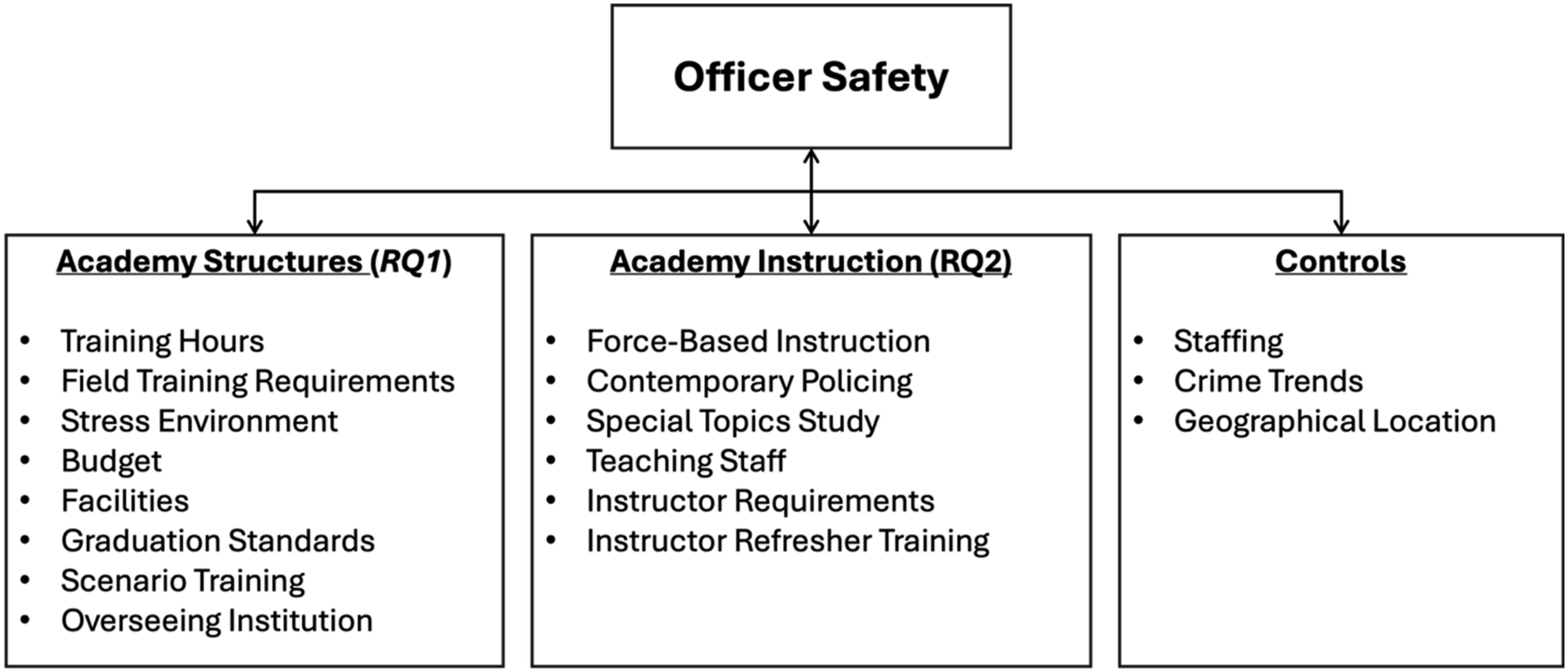
Summary Statistics
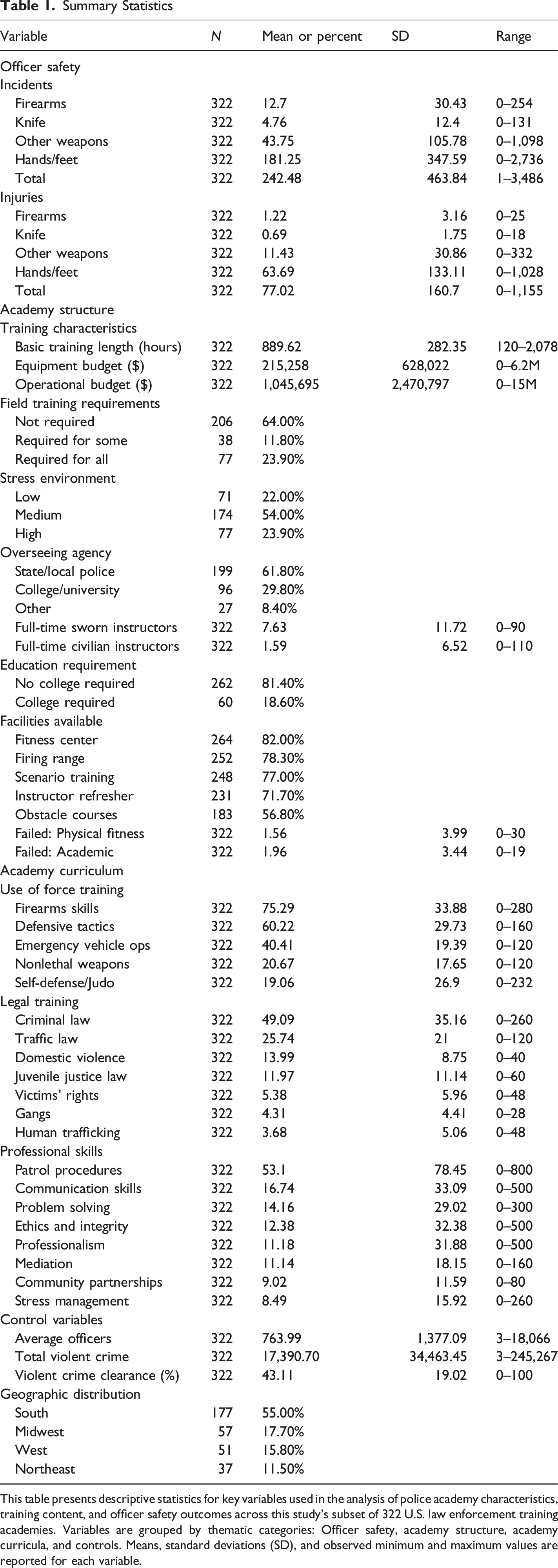
This table presents descriptive statistics for key variables used in the analysis of police academy characteristics, training content, and officer safety outcomes across this study’s subset of 322 U.S. law enforcement training academies. Variables are grouped by thematic categories: Officer safety, academy structure, academy curricula, and controls. Means, standard deviations (SD), and observed minimum and maximum values are reported for each variable.
To examine differences across academy types in training and outcomes, Kruskal-Wallis tests with Bonferroni-adjusted Dunn post-hoc tests were used. Multivariate analyses mainly employed negative binomial models due to the sparse, zero-heavy nature of injury data. It should be noted that, due to high standard errors for the overseeing agency predictor in our firearm injury model, the other category was collapsed into ‘traditional academies’. Finally, influential outliers were identified through Cook’s D and removed from the final models. Data cleaning, statistical analyses, and data visualization were primarily conducted using STATA (Release 17, StataCorp LLC) and R (Core Team 2024, R Foundation for Statistical Computing). All code related to data cleaning and analysis is openly accessible in the data repository; a link is provided at the end of this article. The significance level for all statistical tests was set at p < .05.
Results
Differences Between Agency Types
Regarding differences in academy instruction based on the overseeing institutions, a Kruskal–Wallis test revealed a statistically significant difference in force-based instruction factor scores across academy types, χ2(2) = 16.99, p < .001. Post hoc Dunn’s tests with Bonferroni correction revealed that Regular academies scored significantly higher on force-based training than College academies (Z = 4.00, p = .0001). No other pairwise comparisons reached significance. Contemporary policing and special topics instruction showed no significant differences across academy types (χ
2
(2) = 0.84, p = .658 and χ
2
(2) = 2.91, p = .233, respectively) (Figure 2). In-Between Differences in Training Types This Figure Displays Three Boxplots Comparing Police Academy Instruction Emphasis—Force-Based Instruction (Left Panel), Contemporary Policing (Middle Panel) and Special Topics (Right Panel)—Across Three Academy Types: Traditional, College, and Other. In-Between Analysis for Each Group is Illustrated With Bars Indicating Significance or Non-Significance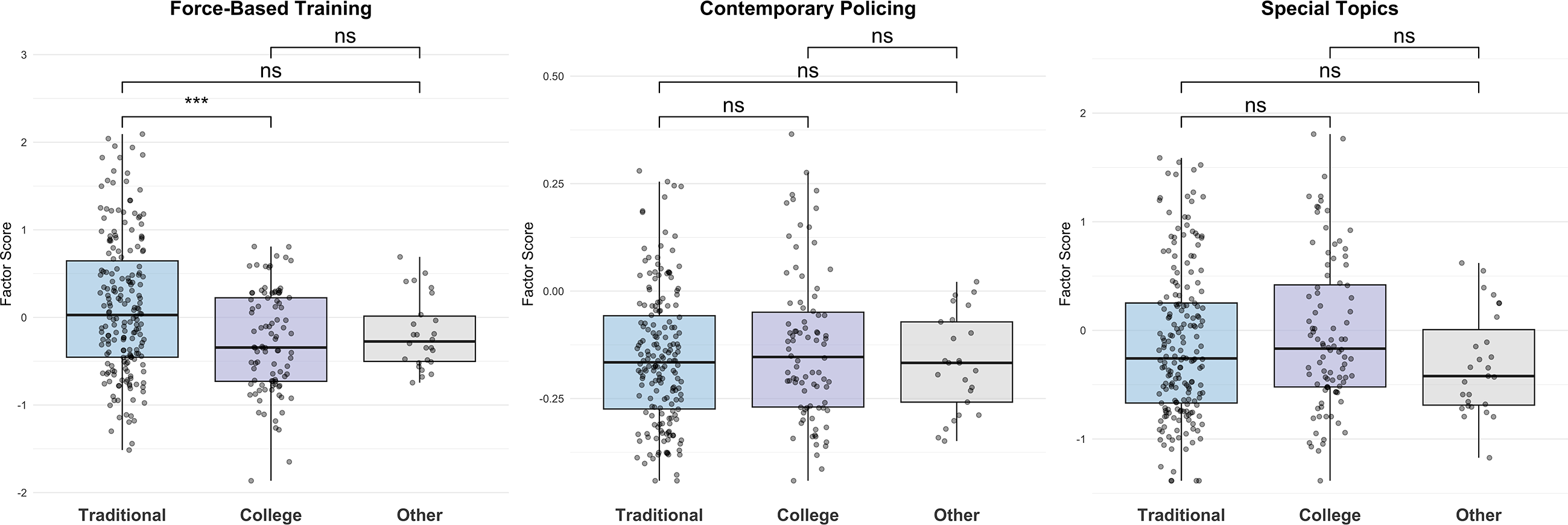
Injury outcomes revealed stark differences. Results identified a highly significant difference in total injuries by academy type, χ 2 (2) = 66.71, p < .001. Dunn’s post hoc tests showed that Regular academies’ corresponding agencies reported significantly more injuries than both College-overseen (Z = 6.96, p < .0001) and Other academies (Z = 5.53, p < .0001), while the difference between College and Other academies remained non-significant (p = .277).
Total incident counts followed the same pattern. Results suggest a significant difference across academy types, χ
2
(2) = 71.80, p < .001. Dunn’s test revealed that Regular academies’ agencies reported significantly more incidents than both College-led (Z = 7.29, p < .0001) and Other academies (Z = 5.69, p < .0001), with no significant difference between College and Other academies (p = .405). Visual distributions for these outcomes are presented in Figure 3. In-Between Differences in Injury and Incident Outcomes This Figure Presents Two Boxplots Comparing Policing Outcomes—Total Officer Injuries (Left Panel) and Total Reported Incidents (Right Panel)—Across Jurisdictions Belonging to Three Types of Police Academies: Traditional, College, and Other. In-Between Analysis for Each Group is Illustrated With Bars Indicating Significance or Non-Significance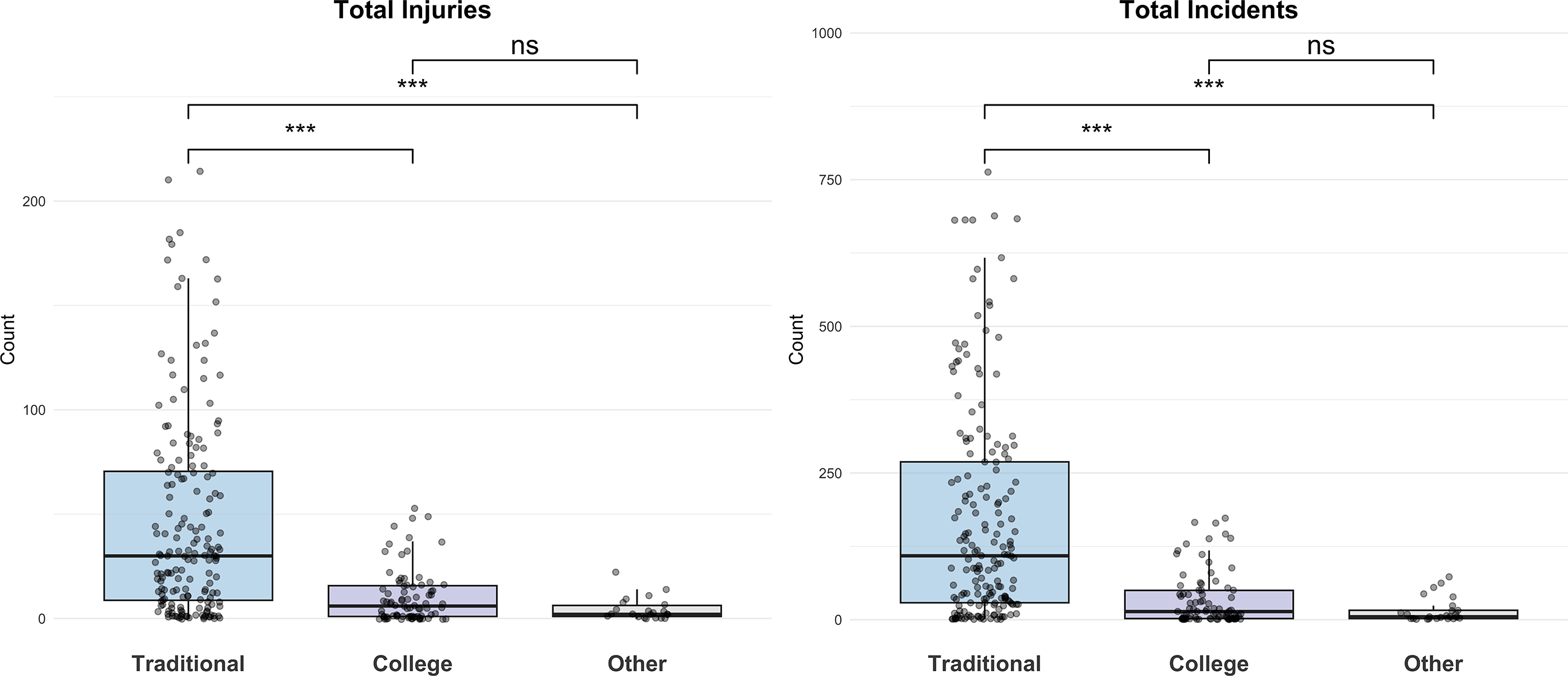
Academy Characteristics as Predictors of Officer Safety Outcomes
Officer Incident Models
Multivariate models predicting officer-related incidents varied in fit, with notable significance across predictors. For hand-related incidents, model fit was modest (McFadden R 2 = 0.065). College-led (IRR = 0.394, p < .001) and other-led (IRR = 0.404, p < .01) academies were associated with significantly fewer incidents. Simulation training (IRR = 1.575, p < .05), full-time sworn instructors (IRR = 0.707, p < .05), officer staffing (IRR = 3.252, p < .001), and violent crime levels (IRR = 2.201, p < .001) were all significant predictors. Regional effects were significant, with fewer incidents in the Midwest (IRR = 0.615, p < .05) and more in the West (IRR = 1.697, p < .05), compared to the South.
The knife-related incident model demonstrated better fit (R 2 = 0.155). College-led academies were associated with fewer incidents (IRR = 0.475, p < .01). Simulation training (IRR = 1.897, p < .05), refresher training (IRR = 1.658, p < .05), and full-time sworn instructors (IRR = 0.650, p < .01) were all significant. Higher staffing (IRR = 2.459, p < .001) and violent crime (IRR = 2.219, p < .001) also predicted increased incidents. The Northeast (IRR = 0.492, p < .05) and Midwest (IRR = 0.419, p < .01) had fewer knife-related incidents than the South.
For firearm-related incidents, model fit was moderate (R 2 = 0.137). College-led academies (IRR = 0.516, p < .05), officer staffing (IRR = 2.493, p < .001), and violent crime totals (IRR = 5.620, p < .001) were significant predictors. Regional effects included significantly fewer incidents in the Northeast (IRR = 0.401, p < .01) and Midwest (IRR = 0.485, p < .01).
The other weapon incident model had modest fit (R 2 = 0.106). College-led (IRR = 0.306, p < .001) and other-led academies (IRR = 0.305, p < .001) were associated with fewer incidents. Full-time sworn instructors (IRR = 0.686, p < .01), higher physical training failure rates (IRR = 0.760, p < .01), staffing (IRR = 2.610, p < .001), and violent crime (IRR = 1.911, p < .001) were also significant. The Northeast (IRR = 0.596, p < .05) and West (IRR = 1.763, p < .05) showed significant regional variation.
Multivariate Models Predicting Officer Incidents
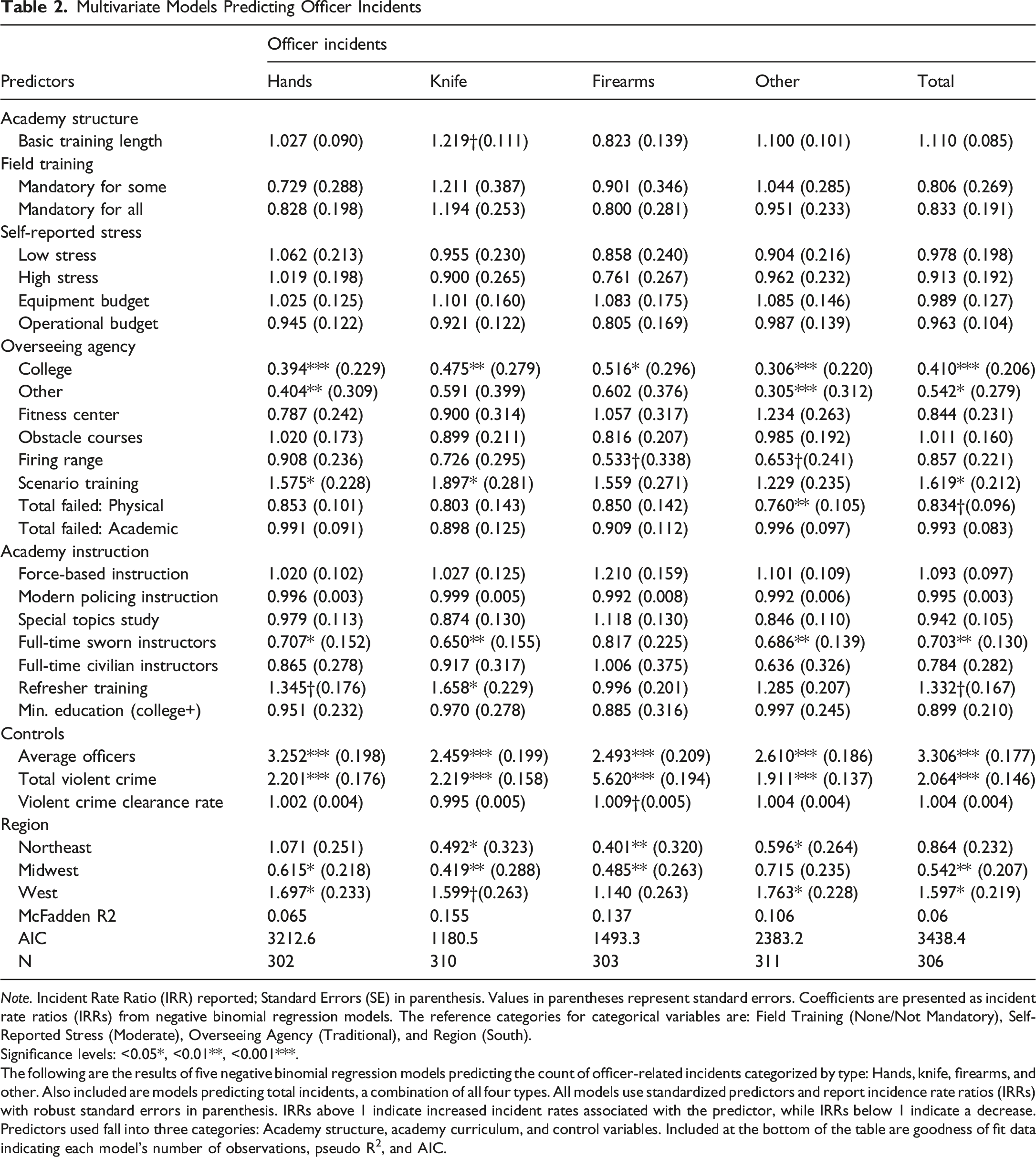
Note. Incident Rate Ratio (IRR) reported; Standard Errors (SE) in parenthesis. Values in parentheses represent standard errors. Coefficients are presented as incident rate ratios (IRRs) from negative binomial regression models. The reference categories for categorical variables are: Field Training (None/Not Mandatory), Self-Reported Stress (Moderate), Overseeing Agency (Traditional), and Region (South).
Significance levels: <0.05*, <0.01**, <0.001***.
The following are the results of five negative binomial regression models predicting the count of officer-related incidents categorized by type: Hands, knife, firearms, and other. Also included are models predicting total incidents, a combination of all four types. All models use standardized predictors and report incidence rate ratios (IRRs) with robust standard errors in parenthesis. IRRs above 1 indicate increased incident rates associated with the predictor, while IRRs below 1 indicate a decrease. Predictors used fall into three categories: Academy structure, academy curriculum, and control variables. Included at the bottom of the table are goodness of fit data indicating each model’s number of observations, pseudo R2, and AIC.
Officer Injury Models
For hand-related injuries, model fit was modest (R 2 = 0.062). College-led academies were associated with significantly fewer injuries (IRR = 0.453, p < .001). Officer staffing (IRR = 3.291, p < .001) and total violent crime (IRR = 1.890, p < .001) were strong positive predictors. Regional patterns showed lower injuries in the Midwest (IRR = 0.599, p < .05) and higher in the West (IRR = 1.690, p < .05).
The knife-related injury model showed stronger fit (R 2 = 0.188). Refresher training (IRR = 1.959, p < .05) was a significant predictor. Officer staffing (IRR = 2.091, p < .01) and violent crime totals (IRR = 1.499, p < .01) remained strong positive predictors.
For firearm-related injuries, the model showed strong fit (R 2 = 0.184). Officer staffing (IRR = 2.421, p < .001) and violent crime (IRR = 2.056, p < .001) were strong positive predictors. The Midwest had fewer injuries (IRR = 0.318, p < .05).
The other weapon injury model demonstrated modest fit (R 2 = 0.111). College-led (IRR = 0.414, p < .001) and other-led (IRR = 0.458, p < .05) academies were associated with lower injuries. Full-time sworn instructors (IRR = 0.739, p < .05) were also significant. Staffing (IRR = 2.718, p < .001) and violent crime (IRR = 1.865, p < .001) remained strong positive predictors.
Multivariate Models Predicting Officer Injuries
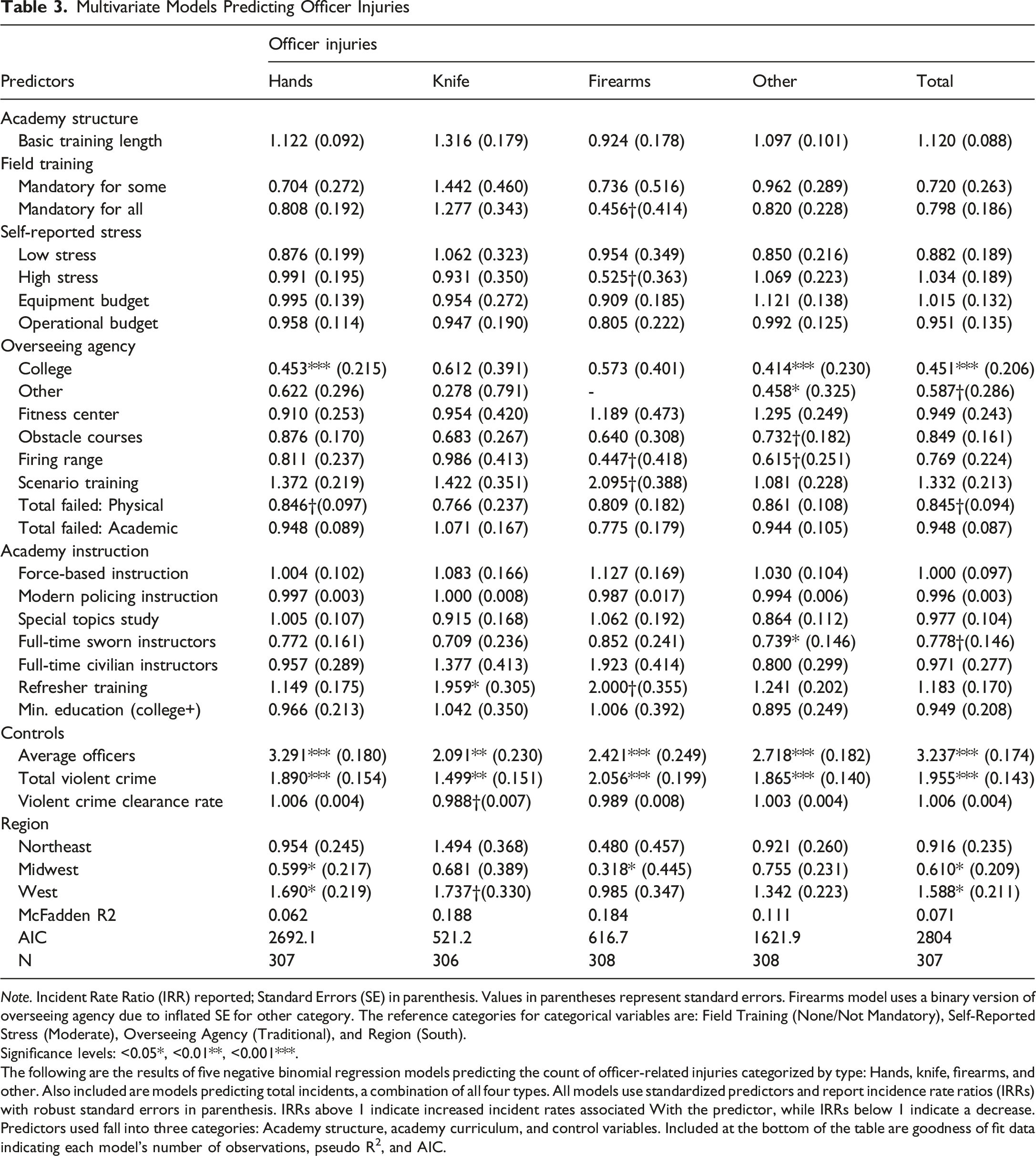
Note. Incident Rate Ratio (IRR) reported; Standard Errors (SE) in parenthesis. Values in parentheses represent standard errors. Firearms model uses a binary version of overseeing agency due to inflated SE for other category. The reference categories for categorical variables are: Field Training (None/Not Mandatory), Self-Reported Stress (Moderate), Overseeing Agency (Traditional), and Region (South).
Significance levels: <0.05*, <0.01**, <0.001***.
The following are the results of five negative binomial regression models predicting the count of officer-related injuries categorized by type: Hands, knife, firearms, and other. Also included are models predicting total incidents, a combination of all four types. All models use standardized predictors and report incidence rate ratios (IRRs) with robust standard errors in parenthesis. IRRs above 1 indicate increased incident rates associated With the predictor, while IRRs below 1 indicate a decrease. Predictors used fall into three categories: Academy structure, academy curriculum, and control variables. Included at the bottom of the table are goodness of fit data indicating each model’s number of observations, pseudo R2, and AIC.
Discussion
This study aimed to identify potential predictors of officer safety outcomes by examining the structures and instructional methods of police academies across the US. The statistical analysis revealed significant results, some of which directly supported our hypotheses, including both expected and unexpected findings. The following sections review the findings and provide a discussion on potential explanations for them in accordance with previous literature.
Academy Structures
Regarding the first research question (RQ1) about the relationship between training structures and injury/incident outcomes, three significant aspects emerged from multivariate analysis. It should be noted that one element consistently showed strong significance across both outcome sections and their subsequent types, overseeing agency. Academies overseen by colleges and other non-traditional institutions (e.g., federal or specialized ones) are associated with lower rates of incidents and injuries among officers in their respective agencies and jurisdictions. While both relationships warrant discussion, this section will primarily focus on the relationship between colleges and police academies, as this issue has been consistently discussed in the literature.
For college-led academies, the findings support research calling for the integration of college institutions into officer training, with scholarly work emphasizing the role colleges and universities can play in effectively shaping or assisting police agencies. This comes in responses to shifts in social issues intertwined with the criminal justice system (Patterson & Swan, 2019; Strudwick, 2019). Arguments can also be made that academic institutions, such as universities, are more likely to apply evidence-based approaches to instruction (Miles-Johnson, 2023), significantly assisting officer performance and safety (Blumberg et al., 2019). Additionally, potential issues raised in our literature review—particularly Simon’s (2023) observations on trainees’ ‘warrior mindsets’ leading to a higher risk of injury—may be mitigated by universities organizing programs that replace tendencies toward conflict with those advocating effective resolution. This approach not only influences officers’ general attitudes toward their roles but can also counteract previously identified factors that inhibit officer performance, such as occupational stress and a lack of mindfulness or emotional intelligence (Irpan et al., 2022). Traditional academies, by contrast, tend to neglect integrating such topics and often cling to outdated methods of instruction, which have been heavily examined and criticized by leading scholars in police training (Blumberg et al., 2019; Sloan et al., 2024).
Moreover, these findings challenge arguments claiming universities are too ‘soft’ in preparing officers—an assertion that contrasts with traditional ‘warrior policing’ ideas (Rice & Rahr, 2015), especially given the inclusion of controls related to violent crime clearance rates. This evidence significantly adds to the body of literature advocating for the integration of academic institutions in officer preparation, demonstrating—at a national level—their crucial role in enhancing officers’ safety on duty and making this the first study to highlight this impact. Furthermore, the effect size is practically meaningful, with IRRs of approximately 0.30 to 0.56, corresponding to a 44% to 70% reduction in incidents and injuries—evidence that, beyond statistical significance, college-led academies produce a substantial real-world impact.
Regarding scenario training, a surprisingly positive correlation was observed between high rates of officer incidents and injuries. This contrasts with extensive research supporting scenario training as a way to improve officer performance and preparedness during critical incidents (Di Nota et al., 2021; Kleygrewe et al., 2024; Stenshol et al., 2024). The observed positive relationship is moderate in size (IRRs∼1.58–1.90), indicating a 58%–90% increase in incidents and injuries. One possible explanation is that scenario training may condition cadets to engage physically in incidents rather than using less physical enforcement methods, a potential catalyst to a crime-fighting ethos. However, there is insufficient information about the variable, especially whether the scenario training included de-escalation or mediation simulations, to draw firm conclusions. Future research should explore how different types of scenario training might contribute to higher officer injury rates.
One other predictor belonging to this section showed significance, although sparingly. Academies’ failure rate associated with cadets’ physical preparedness appeared to have a protective effect on “other weapon” incidents (IRR = 0.760), but this was only marginally significant in other models, raising questions about whether physical fitness standards influence different types of encounters in different ways.
Training duration and budget variables (for equipment and operations) did not show consistent significance, despite expectations that longer training and better resources would improve safety outcomes. These null results challenge common assumptions about academy reform and suggest that simply increasing training hours or funding may not directly enhance officer safety without proper resource allocation. Field training requirements and self-reported stress levels also showed no consistent effects on safety outcomes, challenging age-old assumptions that ‘harder’ academy training and more dedicated field training prepared officers better. Future research should explore whether these variables interact with other academic factors or if more detailed measurements could reveal hidden relationships.
Academy Learning
Our second research question (RQ2) examines the effects of academy instruction and learning environments at police academies. A single predictor proved to be the only consistent one across models: instructors at academies, especially sworn officers, are significantly connected to lower rates of potential injury among law enforcement officers. This protective effect is modest in size (IRRs∼0.65–0.78), indicating about a 22%–35% reduction in injuries. This result aligns with literature showing that experienced law enforcement officers have a deeper understanding of the profession’s dangers compared to less experienced officers (Paoline & Terrill, 2007; Somers & Terrill, 2022). Their knowledge is shaped not only by their lived experiences but also by the knowledge accumulated during their careers. Research indicates that more experienced officers tend to be more aware of potential hazards in the field (Brandl & Stroshine, 2003), and they develop better interpersonal skills that help them handle confrontational situations more effectively (Hickman et al., 2020). Additionally, seasoned officers are more likely to recognize the inherent stresses of police work and employ coping strategies vital for maintaining their mental and physical wellbeing (Fekedulegn et al., 2017). Therefore, empirically informed assumptions offer a more accurate portrayal of the profession and its risks, illustrating how experience-based instruction can equip officers with proven tools to handle danger.
Albeit less consistently, one element associated with academy instruction showed significance. Refresher training for instructors was significantly linked to increased knife-related incidents (IRR = 1.658) and injuries (IRR = 1.959), suggesting a potentially counterintuitive relationship that warrants more analysis. This is an unexpected result, given the strong evidence supporting ongoing instructor development in policing, especially for adapting to changing field demands and applying evidence-based practices. Several explanations might explain this pattern. First, refresher trainings may focus on idealistic goals or abstract topics that lack immediate practical relevance, reducing their usefulness in urgent situations. Second, these trainings might unintentionally lower instructor confidence or interfere with effective heuristics learned through experience by introducing conflicting or overly rigid protocols. Future research should investigate the content, delivery methods, and situational triggers of these courses to better understand these possibilities.
The three instructional factors identified through CFA—force-based instruction, contemporary policing instruction, and special topics study—showed no significant links to officer safety outcomes, contrary to what past literature has found or concluded. These null findings are especially notable given ongoing debates about whether academies should focus more on traditional force-based training or community-oriented approaches. Similarly, civilian instructors showed no consistent effects despite theoretical claims arguing that they might offer valuable non-law enforcement perspectives during training. The college education requirement for instructors was also not significant across all models, challenging assumptions about the importance of formal education for instructor effectiveness. Future research should aim to corroborate these findings to better understand how training methods and philosophies deployed at police academies affect officer preparedness.
Limitations
Like most studies, this research has limitations in its ability to answer the research questions. First, in its effort to find new insights, it attempted to link academy and injury data by using methods like fuzzy matching to connect academies with areas where officer injuries happened. Though a valid method, fuzzy matching introduces a margin of error because it depends on approximate rather than exact matches, which can lead to misclassifications or incorrect links between academies and injury data. Efforts were made to validate these matches, but some limitations still remain that could cause errors. Additionally, only about 50% of all CLETA academies were successfully matched, raising concerns about the representativeness of the results. This mainly happened because fuzzy matching relied heavily on academies with city or country names in their titles (e.g., ‘Mesa’ Police Academy, ‘Alameda’ County Sheriff’s Department). As a result, it became nearly impossible to match academies without such names (e.g., Century College, Law Enforcement Training Institute, etc.). The same issue applied to academies named after larger regions, such as Western Arizona Law Enforcement Training Academy, which lacked specific city or county identifiers. Compared to those excluded, academies included in the analysis tended to be larger, had longer basic training programs, more sworn instructors, and more resources like firing ranges. They were also more often overseen by state or local police, required higher minimum instructor education, and were mainly located in the South. Therefore, the findings might be less applicable to smaller academies, those affiliated with colleges or other agencies, or those in different geographic regions.
Another significant limitation relates to misclassification bias. The methods used in this research assume that officers trained at a particular academy will remain in the same geographic area analyzed in the dataset. Although it is common for graduates to be assigned to or employed in the areas where they received their training, this is not guaranteed. Officers might transfer to other jurisdictions or relocate for various personal or professional reasons. This creates the potential for misclassification bias, as some results linked to the graduates of an academy may involve officers who were trained elsewhere.
Additionally, endogeneity may arise if academies affiliated with more progressive or better-funded departments are both more likely to adopt specific training curricula and promote safer field tactics, which could confound the observed relationships. Although this study acknowledges these potential issues, the methods used do not explicitly address them. To improve this, we recommend that future research aim to better isolate the effect of academy-level practices by including department-level covariates (such as measures of organizational culture, community policing orientation) when available, or by incorporating instrumental variables or leveraging external variation in POST funding formulas to determine the causal impact of training structures more accurately. This also applies to self-reported elements, such as program stress, which may contain bias or underreporting—factors this research cannot account for.
Furthermore, it should be noted that issues related to measurement validity arose during this study’s CFA. Aiming to establish latent constructs pertaining to different areas of police instruction, topics typically associated with constructs were found not to load sufficiently. For instance, measures commonly linked to modern policing instruction, such as community partnership building and conflict mediation, showed weak loadings and were therefore excluded. This raises concerns about whether CLETA items fully capture the key concepts highlighted in the broader policing literature or if the organizational reality of academy curricula differs from theoretical expectations.
Additionally, this study did not include agency-level factors previously linked to officer injury outcomes, such as vehicle pursuits and shift length. LEOKA and CLETA lack consistent data on these aspects, limiting our understanding of academy-level influences. Consequently, there is significant potential for improving models’ explanatory power, as evidenced by the modest pseudo R2’s exhibited in multivariate models reported. Future research should include information not covered here, such as deployment conditions, to better explore the multidimensional factors influencing officer injuries.
Finally, there is a potential for omitted variable bias because important unmeasured factors may influence both academy characteristics and outcomes. Two plausible sources are, first, recruit-level differences (e.g., backgrounds, skills, or motivations) that may vary systematically across academy types, and second, post-academy agency factors (e.g., safety climate, procedural tendencies, and supervision practices) that could either amplify or diminish the effects of training characteristics. Future research including these measures would improve the validity of inferences made from academy-level analyses.
Conclusion
This study empirically demonstrates that police academy structures and teaching methods have a significant impact on the safety outcomes of graduating officers. Notably, collaborating with academic institutions (e.g., colleges and universities) strongly correlates with safer law enforcement results. Additionally, experience-based teaching is associated with improved safety outcomes. Conversely, scenario-based training is linked to less favorable policing outcomes, raising concerns about how changes in instructional content and the embeddedness of fixed responses might impact officer safety. The study also challenges common assumptions about police training, suggesting that more prolonged or intense training, traditionally led instruction, and increased funding serve as significant determinants of academy efficacy. Similarly, current calls for reforms in police academy training—focusing on more academically rigorous and community-based responses—do not necessarily produce safer officers in the field. These findings highlight the importance of prioritizing evidence-based evaluations of academy training, shifting focus from anecdotal beliefs to empirical data. Future research should explore officer-level outcomes using longitudinal data to better determine causality and develop more effective policies.
Supplemental Material
Supplemental Material - Police Academies and Officer Safety: Linking Training Structures and Instruction to Post-Employment Injury Outcomes in Law Enforcement
Supplemental Material for Police Academies and Officer Safety: Linking Training Structures and Instruction to Post-Employment Injury Outcomes in Law Enforcement by Nasser AlSabah, Kevin T. Wolff in Police Quarterly
Footnotes

Ethical Considerations
All data used in this study came from open-access secondary sources and thus does not represent human subjects research. These sources are listed in the study’s Data section.
Author Contributions
NS: Conceptualization, Formal Analysis, Visualization, Writing – Original Draft. NS and KW: Methodology and Writing– Review & Editing.
Funding
The authors received no financial support for the research, authorship, and/or publication of this article.
Declaration of Conflicting Interests
The authors declared no potential conflicts of interest with respect to the research, authorship, and/or publication of this article.
Data Availability Statement
Supplemental Material
Supplemental material for this article is available online.
Notes
Author Biographies
References
Supplementary Material
Please find the following supplemental material available below.
For Open Access articles published under a Creative Commons License, all supplemental material carries the same license as the article it is associated with.
For non-Open Access articles published, all supplemental material carries a non-exclusive license, and permission requests for re-use of supplemental material or any part of supplemental material shall be sent directly to the copyright owner as specified in the copyright notice associated with the article.
