




Abstract
Responsibility for responding to missing children belongs to multiple agencies, including police, children’s homes and social services, but evidence highlights issues with collaboration. The following scoping review seeks to identify what is currently known about mechanisms that enhance collaboration in responding to missing. Findings highlight the value of (i) information-sharing techniques; (ii) cross-agency technology; (iii) single points of contact; (iv) regular multi-agency meetings; (v) shared understanding of terminology; (vi) clarifying roles and responsibilities; and (vii) joint training. However, research is needed that empirically tests the effectiveness of strategies and interventions for improving inter-agency working in this risky and uncertain context.
Introduction
In the UK, ‘missing’ refers to ‘anyone whose whereabouts cannot be established’, who ‘will be considered as missing until located, and their well-being or otherwise confirmed’ (College of Policing [CoP], 2021). Over 61% of the missing 350,000 reports made to UK police each year concern children aged between 12 and 17 (National Crime Agency [NCA], 2022), many of whom are under the care of local authorities (‘looked after’ children). Looked after children are three times more likely to go missing than those living in domestic dwellings and are more likely to go repeatedly missing (Babuta and Sidebottom, 2020; Bezeczky and Wilkins, 2022; Biehal and Wade, 2000). Responsibility for preventing and responding to children missing from local authority care belongs to multiple agencies, including police, care homes, social services, local authorities, health and education. Poor inter-agency working can have a significant negative effect on the response to missing children, affecting risk assessment, resource allocation and response outcomes (All-Party Parliamentary Groups [APPG], 2021; Department of Education, 2014; Home Office, 2011). However, little research focus has been directed toward identifying what works to improve inter-agency working within this context. The research that has been conducted is published across a diverse array of sources, making it difficult to consolidate findings. Accordingly, the following scoping review seeks to synthesise existing research to provide a balanced assessment of what is currently known about mechanisms that improve inter-agency working in the response to missing children, and identify gaps in knowledge.
Inter-agency responses to missing children investigations
Evidence highlights the importance of inter-agency collaboration within the context of responding to missing children (Hayden and Goodship, 2013; Hayden and Shalev-Greene, 2016). Collaborative efforts have been associated with improved information sharing, enhanced inter-agency relationships, and the pooling of knowledge, expertise, and resources (Hayden and Goodship, 2013; Hayden and Shalev-Greene, 2016; Sloper, 2004; Waring et al., 2023). Such mechanisms result in a comprehensive and coordinated response that can lead to a range of positive outcomes, including reducing the number of missing and repeat missing reports, and locating children quicker (Walker, 2008). For example, UK police forces are implementing the ‘Right Care, Right Person’ (RCRP) approach, which enables individuals to receive the most appropriate care and support during a reported incident (CoP, 2023). RCRP involves police and partner agencies working together to identify who may be best to handle the situation, especially those not of a criminal nature (such as mental health or missing episodes). Results have seen a reduction in incidents and over 1000 policing hours being reallocated (Met Police, 2023). Given that police may not always be the best placed agency for all missing child episodes the RCRP approach signifies a progressive step in cross-agency collaboration within missing person investigations. With children in care at increased risk of criminalisation as a result of being frequently reported missing, reductions in missing reports as a result of improved multi-agency working, with a RCRP approach, can also reduce criminalisation (Hayden, 2010; Shalev Greene, 2011). Accordingly, evidence highlights the importance of effective inter-agency working for both safeguarding children, improving relationships and reducing demand on finite resources.
Nevertheless, serious case reviews and public inquiries continue to highlight issues with inter-agency working within the context of missing children (Coffey, 2014; Munro, 2011). Rather than working together, police perceive themselves to be shouldering the responsibility (Hayden and Shalev-Greene, 2016), placing significant demand on finite resources (Biehal et al., 2003; Fyfe et al., 2014). Investment of police resources is determined by risk classification, with higher-risk cases receiving greater resource investment (no apparent, low, medium or high risk). For low-risk cases, partner agencies are expected to accept responsibility for searching (NCA, 2022; Shalev-Greene and Pakes, 2013). However, evidence suggests that partner agencies are shifting responsibility to police, reporting children as missing before they have taken steps to try to locate them, both to evade liability and because they lack the resources to search (Murphy, 2022; Waring et al., 2023). This can place police in a position where they are unable to allocate appropriate resources (Eales, 2017; Phoenix and Francis, 2022). With up to 75% of missing child reports relating to repeat incidents (Sidebottom et al., 2019), evidence highlights that both safeguarding and demand on resources could be improved through better inter-agency working that focuses on prevention.
In an attempt to improve resource allocation and to reduce the number of missing child reports, police have introduced various interventions, including employing dedicated missing teams (South Wales Police, 2022; Staffordshire Police, 2019) and roles (Bayliss and Quinton, 2013). However, reviews by Her Majesty’s Inspectorate of Constabulary (HMIC, 2016) and Her Majesty’s Inspectorate of Constabulary and Fire and Rescue Services (HMICFRS, 2018, 2019) highlight persistent shortcomings in investigations, including discrepancies in risk assessment, investigation management and support provision. These reviews indicate that implementing interventions that are driven by a single agency (typically police) in an attempt to reduce the number of missing child reports is proving to be inefficient. Instead, focus is needed to identify and address underlying causes of issues with inter-agency working. However, little focus has been directed to understanding what mechanisms affect inter-agency working within the context of missing child incidents. The limited research that has been conducted focuses on identifying barriers such as inadequate information sharing and misunderstanding of roles (Allsop et al., 2020; Henderson et al., 2000; Shalev Greene et al., 2019; Sloper, 2004; Waring et al., 2023). Less is known about what mechanisms can improve inter-agency working (Lyne et al., 2001).
In contrast, greater focus has been directed to understanding what mechanisms both underpin inter-agency working in other risky and uncertain environments such as disaster response (Abdeen et al., 2021; Waring et al., 2018), terrorism (Brown et al., 2021; Ogbu et al., 2023; Waring et al., 2020), social care (Sloper, 2004) and offender management (Waring et al., 2022b). Similar to the missing child context, evidence highlights challenges with information sharing (both sharing too little or too much), leading to inaccurate or outdated situational assessments, and decision errors and delays (Bharosa et al., 2010; Waring et al., 2018, 2020). However, this body of work focuses on identifying the underlying causes of such problems, including limited understanding of roles and responsibilities, which make it difficult to know what information to share with who and when (Jones, 2023; Waring et al., 2018, 2022a), and inconsistencies in terminology across agencies which create difficulties for making sense of the information that is shared (Harvey et al., 2015; Miller and Ahmad, 2000; Waring et al., 2018). In addition, such research has started to focus on identifying strategies for improving inter-agency collaboration within these risky and uncertain contexts, such as joint-agreement on working procedures (Guerrero et al., 2023) and table-top training (Sultan et al., 2023). Although parallels exist between the issues identified in other risky and uncertain contexts and those beginning to be identified in missing child contexts, lack of focus on underlying causes makes it difficult to translate findings. Thus, policymakers and practitioners seeking to enhance inter-agency working in missing child investigations face challenges in knowing how to do so.
Current study
While research highlights the importance of effective inter-agency working within missing child investigations, research consistently highlight challenges. Little focus has been directed toward understanding the underlying causes of such challenges and what facilitates inter-agency working. The research that has been conducted is predominantly problem focused and is published across a range of sources, making it difficult to consolidate knowledge that can inform practice to promote effective inter-agency working. Accordingly, the following scoping review focuses on addressing the following question: What approaches can be or have been applied to missing children investigations to improve the working practise between police and partner agencies to reduce harm, and/or demand? We seek to consolidate existing evidence to map what is currently known, identify gaps in knowledge, and highlight overarching patterns and themes within the body of literature. Findings pose important implications for (i) researchers by providing a knowledge framework that identifies where further research is required and (ii) practitioners from across police and partner agencies in identifying mechanisms that can improve inter-agency working in the context of responding to missing children.
Method
The scoping review follows the six stages of the Joanna Briggs Institute (JBI) methodological framework for scoping reviews: (1) identifying the research question; (2) identifying relevant studies; (3) study selection; (4) data extraction; (5) collating, summarising and reporting results; and (6) consultation with stakeholders (Peters et al., 2015).
Step 1: Identifying the research question
The scoping review aimed to address the research question: What approaches can be or have been applied to missing children investigations to improve the working practise between police and partner agencies to reduce harm, and/or demand?
Step 2: Identifying relevant studies
Search terms.
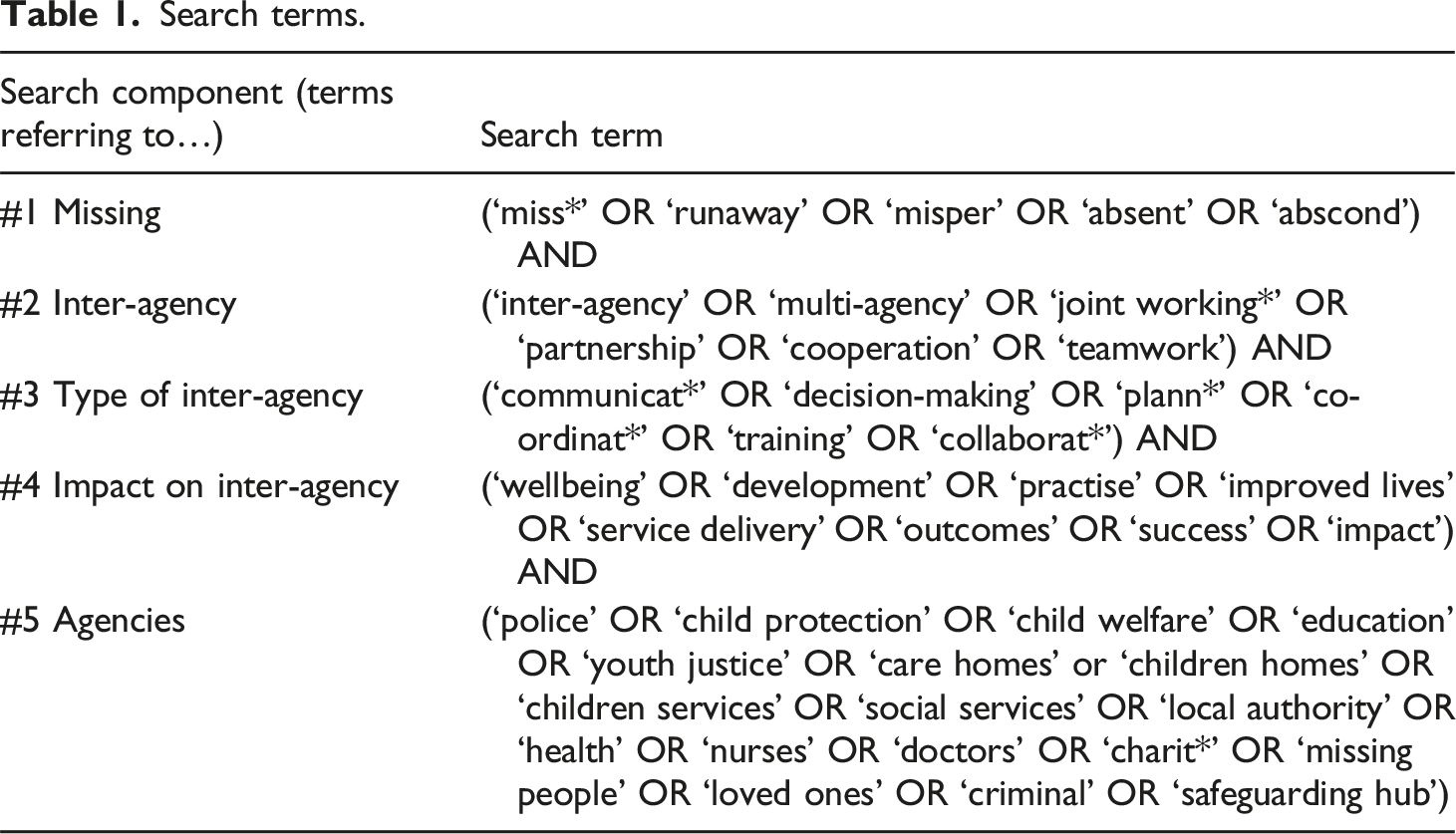
Searches were conducted between December 2022 and July 2023 across the following electronic databases: APA PsycInfo, Cochrane Library, Scopus, PubMed, Emerald Insight, ScienceDirect, Social Care Online, Google Scholar and ESBCO. Reference lists of articles progressing to the full-text review phase were examined for additional articles (Horsley et al., 2011). Grey literature sources were explored on relevant websites [See Supplemental File 1]. FOI requests were sent to 43 police constabularies within England and Wales to identify real-world strategies being implemented that were relevant to the research question (Savage and Hyde, 2014). Using FOI requests to assist in research is debatable, arguing that it has the potential to reduce quality, reliability and reflexivity (Bryman, 2004). However, due to the limited articles and research done on multi-agency responses to missing children investigations as well as the real-world implication this question has, FOI requests is particularly useful to provide significant data (Savage and Hyde, 2014) [See Supplemental File 2 for the FOI request that was sent]. Lastly, experts in the field of missing children were consulted to identify relevant literature, enhance transparency and rigour, and facilitate the dissemination of findings (Cottrell et al., 2014).
Step 3 and 6: Study selection and consultation
Eligibility criteria for scoping review.
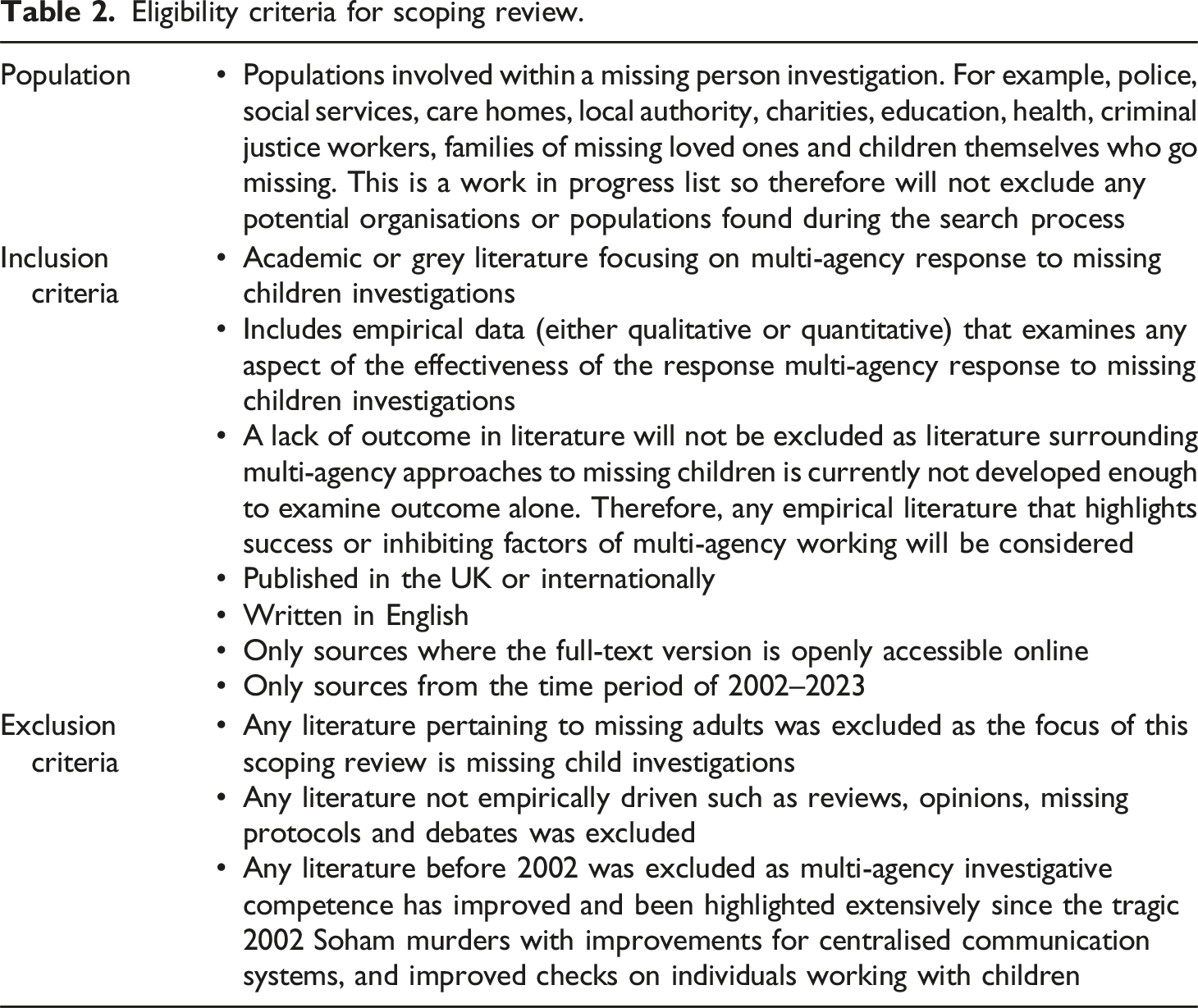
To ensure the included studies were relevant to the question being asked, an inter-rater reliability check was conducted with an independent researcher conducting a second review of all retrieved publications against the eligibility criteria. Cohen’s Kappa test indicated an almost perfect level of agreement (κ = 0.845, p < .001) (McHugh, 2012). Disparities were reconciled through deliberations with the authors, achieving complete consensus.
Although the JBI suggests consulting experts at stage 6, they were consulted in the selection process to maintain consistency and as best practise (Voller et al., 2022). Three police officers from South Wales Police Forces Public Protection Unit and an employee from the UK charity, Missing People were also consulted to interpret data and offer feedback to shape analysis (Peters et al., 2015; Pollock et al., 2022). Figure 1 presents the PRISMA flow diagram, illustrating the review process (Page et al., 2021). PRISMA flow diagram illustrating the review process. *As the researchers were conducting database searches, Social Care Online announced its website closure. This led to certain resources becoming inaccessible, accounting for the unusually high number of unavailable full texts.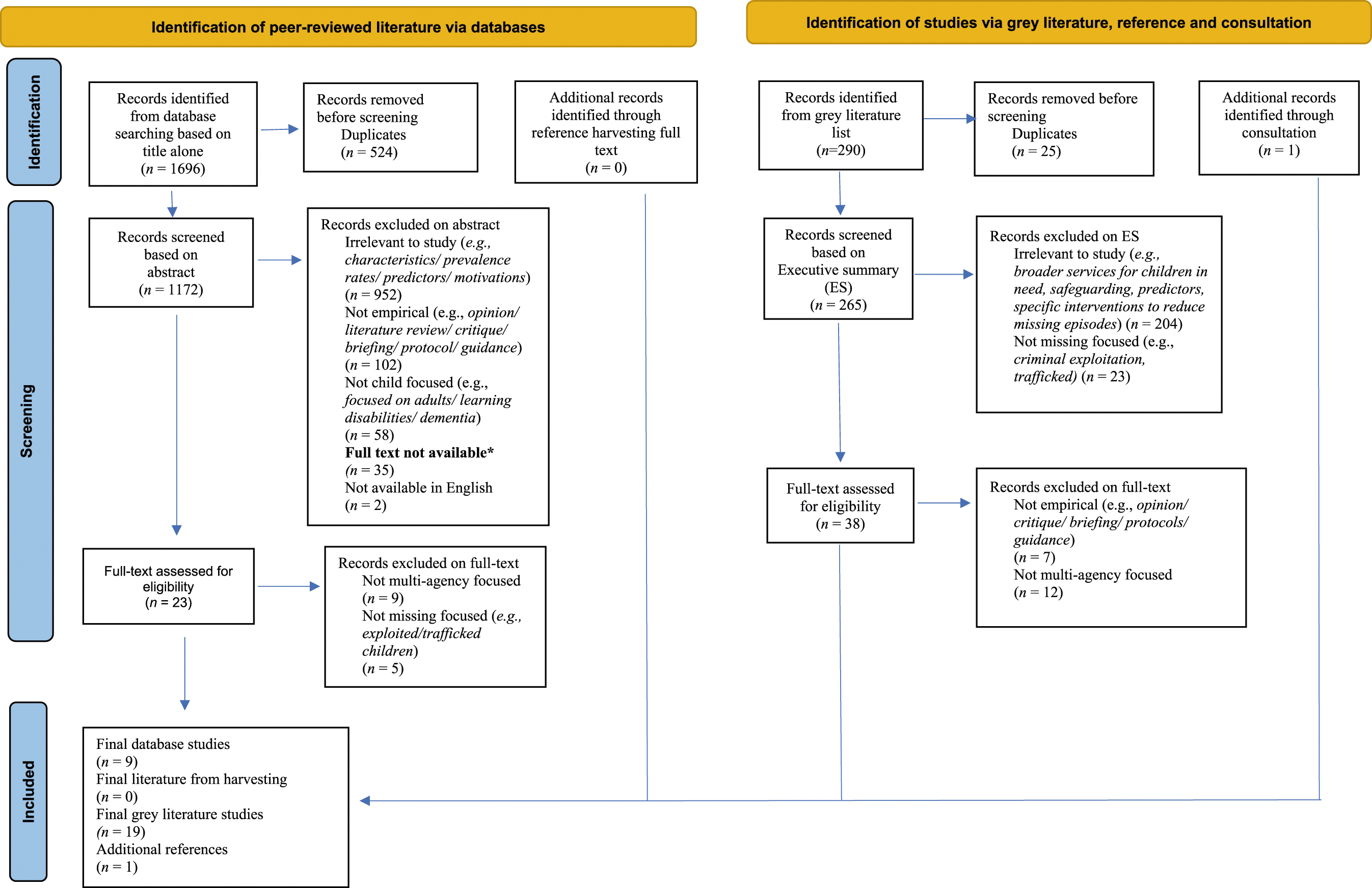
Stage 4: Data extraction
The data was extracted using a template charting table which was reviewed by all authors (Peters et al., 2022). Supplemental File 3 shows the literature included within this scoping review.
Stage 5: Collating, summarising and reporting results
During the protocol phase, a narrative synthesis approach was suggested to outline effective strategies (Monaghan et al., 2023). However, upon reviewing the literature, shared themes emerged across studies. Consequently, a thematic analysis approach was adopted (Braun and Clarke, 2006). This allows scoping reviews, particularly those dedicated to child protection, to identify commonalities among studies, detect research gaps, and provide a comprehensive summary of existing knowledge to inform practice (Cohen and Katz, 2023; Ness, 2023; Stabler et al., 2021).
Results
Thirty-five sources (29 from database, grey and consultation, and 6 from FOI) met the inclusion criteria for this scoping review (see Figure 1). Study designs included mixed method (n = 14), qualitative (n = 12), case studies (n = 2) or quantitative (n = 1). Research was conducted in the UK (n = 25), South Korea (n = 1), Romania (n = 1), Turkey (n = 1) and one multinational study.
Most studies focused solely on missing children (n = 16). A smaller number also examined criminal and/or sexual exploitation (n = 11), child abuse (n = 1) and trafficking (n = 1). Studies focused on various different agencies, including police (n = 18), local authorities (n = 7), social services (n = 11), health professionals (n = 7), residential workers (n = 9), education (n = 5), charities (n = 6), third-sector organisations (n = 4), youth justice/probation (n = 1), children who go missing (n = 8) and parents/carers of children who go missing (n = 7). However, in 11 studies, not all partner agencies were explicitly labelled, and were often noted as, ‘professionals’, ‘agents’, ‘representatives’, ‘relevant agencies’ or ‘other’. This may lead to limitations in accurately reflecting the diversity of partner agencies involved.
Forty-three responses were received from FOI requests (100% response rate). These differed in terms of information provided and communication methods used (i.e. e-mail, phone or teams meetings) which illustrates the unique nature of FOI requests as a method for data collection (Savage and Hyde, 2014). Among the responses, 21 constabularies could not provide information due to security concerns or demand restrictions (requests perceived to necessitate more than 18 h of work can be declined under the FOI Act). Additionally, 10 constabularies indicated that they did not possess any information pertinent to the request. Of those that did provide information, 12 supplied documents; six of these were relevant to the scoping review, with only one containing outcome data pertinent to reducing both harm and demand on service users and services (see Supplementary File 4 for a full list of FOI literature received).
Themes
Seven themes were present across studies: (i) information sharing techniques; (ii) cross-agency technology; (iii) designation of a single point of contact (SPOC); (iv) regular participation in meetings attended by all relevant parties; (v) shared understanding of terminology; (vi) clarifying roles and responsibilities; and (vii) joint training. While most literature discussed individual interventions (see Supplemental File 5 for the full list of interventions), these were often inconsistent across articles. Hence, behavioural mechanisms rather than specific interventions were more consistently noted.
Information sharing techniques
Providing consolidated, timely information was highlighted as a mechanism for maintaining effective police-partner working relationships during a missing child investigation in 28 sources. However, information sharing processes varied across sources to include, unrestricted access to case-related information (Hayden and Goodship, 2013; Stefan, 2014; Wade, 2015), attendance at coordinated multi-agency meetings (McDonald, 2016; McIver and Welch, 2018; Missing Children Europe, 2016), having a SPOC (Children in Scotland and Scottish Institute for Policing Research [CSSIPR], 2015; Hughes and Thomas, 2016; Kirby and Middleham, 2005; Smeaton, 2013) and utilising technology for information access (Chetwynd and Pona, 2017; Gönültaş and Hedges, 2021; Stefan, 2014).
Twelve sources highlighted the positive impact effective information sharing had on working relationships, including improving case response time, minimising task duplication (Joint Inspection of Child Protection Arrangements [JICPA], 2020; Waring et al., 2023) and facilitating standardised risk assessments (Hayden and Goodship, 2013; McIver and Welch, 2018). This fostered shared understanding of risks across agencies and enhanced trust, leading to more efficient professional responses (CSSIPR, McDonald, 2016; Missing People, 2022; Ofsted, 2013; Simon et al., 2016; Smeaton, 2013; Stefan, 2014).
Conversely, 19 sources identified poor information sharing as a barrier to effective multi-agency working. Many organisations hold valuable information, but it is not routinely shared in a consistent or consolidated manner (Chetwynd and Pona, 2017; Gönültaş and Hedges, 2021; Hayden and Goodship, 2013; HMIC, 2016; JICPA, 2020; Kim, 2017; McDonald, 2016; Missing Children Europe, 2016; Ofsted, 2013; Simon et al., 2016; Smeaton, 2013; South Wales Police and CSSIW, 2017; Stefan, 2014; The Scottish Government, 2016; Wade, 2015). Eight sources highlighted that a reluctance to share information was associated with fear of breaching data protection laws (Chetwynd and Pona, 2017; Hughes and Thomas, 2016; Kim, 2017; McIver and Welch, 2018; South Wales Police and CSSIW, 2017; Wade, 2015; Waring et al., 2023). Six studies identified intelligence gathering documents (e.g. public protection notices, missing reports and return home interviews) as incomplete/inconsistent, impacting the overall quality of information exchanged (Chetwynd and Pona, 2017; Harris, 2019; JIPCA, 2020; McDonald, 2016; Simon et al., 2016; Wade, 2015). Eight articles provided recommendations, including improving data recording and reporting to facilitate relevant information sharing (e.g. providing access to shared e-mail systems and computer drives for all staff to view, limiting single-person access) (McDonald, 2016; Missing Children Europe, 2016; South Wales Police and CSSIW, 2017). Six articles also noted the need to address inter-agency data protection worries through utilising clear, uniform data-sharing protocols (Harris, 2019; Hayden and Goodship, 2013; Kim, 2017; Kirby and Middleham, 2005; Missing Children Europe, 2016; South Wales Police and CSSIW, 2017).
Cross-agency technology
Fifteen sources identified effective technology as a key factor in improving the working relationship between police and partners. Seven sources reported integrated technology facilitated information sharing (Chetwynd and Pona, 2017; JIPCA, 2020; Kim, 2017; McDonald, 2016; Missing Children Europe, 2016; Stefan, 2014; Waring et al., 2023). Agencies employing effective technology were more likely to maintain up-to-date information, which was reported to facilitate quicker risk assessments and support timely recoveries (Chetwynd and Pona, 2017; Davies, 2017; Hayden and Goodship, 2013; McDonald, 2016; Missing Children Europe, 2016; South Wales Police and CSSIW, 2017; Stefan, 2014; Waring et al., 2023). However, three sources reported that the use of multiple IT systems and databases by police and partner agencies was cited as an obstacle to effective collaboration (Chetwynd and Pona, 2017; Gönültaş and Hedges, 2021; Waring et al., 2023). Multiple systems often held disorganised and duplicated information, making data filtering and retrieval challenging which could result in loss of information (HMIC, 2016; JIPCA, 2020; Missing Children Europe, 2016; Shalev-Greene and Pakes, 2013; Stefan, 2014; Waring et al., 2023).
Self-reported recommendations from 12 sources focused on improving IT systems by advocating for the integration of multiple systems into a central joint database to enhance sharing and accessing information (Chetwynd and Pona, 2017; HMIC, 2016; Kim, 2017; Missing Children Europe, 2016; Ofsted, 2013; Stefan, 2014). Another recommendation included allowing agencies read-only access to each other’s databases to promote live information sharing (Chetwynd and Pona, 2017; Davies, 2017; JIPCA, 2020; Ofsted, 2013). Several real-world scenarios demonstrate early adoption of this strategy, with Dorset Police sharing their missing person database with social services (HMIC, 2016). Similarly, FOI results show personnel at Merseyside Police have read-only access to a local authority recording system. Additionally, a return home interview service provider was given permission to input data into a police forces reporting system for intelligence purposes (Chetwynd and Pona, 2017). However, no evaluations assessing the effectiveness of this have been done.
Designation of a SPOC
The implementation of a SPOC from another agency (e.g. ‘Missing/Safeguarding Champion’, JIPCA, 2020; ‘Designated Worker’, Hughes and Thomas, 2016, Smeaton, 2013), and/or within the police force (e.g. ‘Missing Person Coordinator’, Bayliss and Quinton, 2013; McIver and Welch, 2018; Stefan, 2014) was highlighted as a best practice approach for enhancing police-partner relationships in 18 sources. Three sources highlighted negative implications of not having a SPOC, resulting in dissemination of incorrect information. In the absence of a SPOC, standard procedure requires partner agencies to use the non-emergency police service (101) to relay information, which was self-reported to be time-consuming, resulting in miscommunication and/or delays that could obstruct an investigation (Gönültaş and Hedges, 2021; Missing People, 2022; Waring et al., 2023).
Nine studies highlighted that having a SPOC could eliminate these obstacles as agencies could share information directly, reducing repetition and duplication (Hayden and Shalev-Greene, 2016; Waring et al., 2023), at both operational (CSSIPR, 2015; Hayden and Goodship, 2013; Ofsted, 2013) and strategic levels (Waring et al., 2023). Streamlining communication through a SPOC enabled a quick response, (Moodie and Vaswani, 2016; Waring et al., 2023), encouraged openness and information sharing between all agencies, and built trust and rapport (Harris, 2019). Moreover, a SPOC allowed agencies to become familiar with one another, promoting a better understanding of each other’s roles and responsibilities, and fostering positive working relationships (Kim, 2017; Waring et al., 2023).
Real-world examples from FOI requests highlight the importance of a SPOC with Cambridgeshire implementing a Vulnerability Focus Desk, which provided a SPOC between frontline resources and specialist advice from the Protecting Vulnerable People department. Results highlighted a decrease in repeat missing episodes, with the average missing time reduced from 27 h to 9 h. FOI results from Merseyside Police also highlighted having designated Missing Person Co-ordinators based with partners in a local authority building to improve SPOCs; however, there was no available evaluation on the impact of this intervention on outcomes.
Regular and broad multi-agency meetings
Within 17 sources, multi-agency meetings emerged as a crucial process for maintaining good police-partner working relationships. Eleven sources self-reported improved working relationships following the implementation of multi-agency meetings, asserting that they promoted communication between services (CSSIPR, 2015; Hughes and Thomas, 2016; McDonald, 2016; McIver and Welch, 2018; Simon et al., 2016). They also fostered a mutual understanding of each other’s roles, outlining clear outcomes and responsibilities for each agency (HMIC, 2016; Hughes and Thomas, 2016; Missing Children Europe, 2016; Missing People, 2022; Moodie and Vaswani, 2016; Ofsted, 2013). They offered opportunities for broader discussions, enabling agencies to address instances where a situation had not been managed effectively, thus alleviating tensions (Kim, 2017; McIver and Welch, 2018; Ofsted, 2013).
However, nine sources highlighted significant obstacles associated with multi-agency meetings. Internal meetings and demands of agencies made attendance at meetings challenging, leading to delays/absences that could leave children exposed to ongoing risks (Hughes and Thomas, 2016; JIPCA, 2020; McDonald, 2016). Third-sector organisations also reported not being routinely invited, despite having valuable information to share (Hayden and Goodship, 2013; JIPCA, 2020; McDonald, 2016; McIver and Welch, 2018; Missing Children Europe, 2016; Shalev Greene and Pakes, 2013; Wade, 2015). Delays in circulating meeting notes with wider partners were also reported (Hughes and Thomas, 2016) which was reported to both increase the risk of miscommunication regarding identified risks (JIPCA, 2020) and impede the establishment of good working relationships (Chetwynd and Pona, 2017; South Wales Police and CSSIW, 2017).
Key representation from agencies was reported to be imperative, as detailed child protection plans are formulated and reviewed in these meetings (JIPCA, 2020). Self-reported recommendations include a wide range of stakeholders and third-party organisations should be included to ensure vital information about missing children is shared (Chetwynd and Pona, 2017; Davies, 2017; Hughes and Thomas, 2016; Wade, 2015). The Missing from Home Service in Oldham reported a reduction in missing persons incidents when police were integrated into the monthly missing from home meetings attended by key partners (Davies, 2017).
Shared understanding of terminology
Sixteen sources identified the importance of having a shared understanding of the term ‘missing’ to enhance inter-agency working. When agencies shared a similar understanding in policy and practice, organisational consistency improved, facilitating better communication (South Wales Police and CSSIW, 2017; Waring et al., 2023). Additionally, clear definitions helped standardise risk assessment procedures, aiding in appropriate responses to missing child cases (McDonald, 2016).
Conversely, a lack of consistent understanding of the term ‘missing’ posed a clear obstacle to inter-team coordination (The Scottish Government, 2016). Both police officers (Shalev Greene et al., 2019) and partner agencies (Waring et al., 2023) deemed the current definition provided by the College of Policing (2021) unsuitable, citing varying interpretations that lead to disparities in discerning when a child should be classified as missing and subsequent actions (Allsop et al., 2020; Hughes and Thomas, 2016; South Wales Police and CSSIW, 2017; Wade, 2015; Waring et al., 2023). This means police and partner agencies have an element of interpretation in practise, leading to differing approaches across sectors (Harris, 2019; Shalev Greene et al., 2019; Waring et al., 2023).
Three sources also noted variation in how ‘repeat missing’ is defined and implemented across agencies (CSSIPR, 2015; Shalev Greene et al., 2019; The Scottish Government, 2016), with some defining it as more than one missing episode, whereas others require several (e.g. FOI sources highlighted Merseyside Police view ‘repeats’ as three times in 30 days, whereas Essex Police view it as three times in 90 days and Durham view it as three times in 60 days).
To enhance inter-agency response, self-reported approaches include advocating for a policy-level intervention to alter the current definition (Shalev Greene et al., 2019; Smeaton, 2013; Waring et al., 2023), and establishing a shared agenda (Bayliss and Quinton, 2013). This involves interpretation protocols, such as setting clear age guidelines, an agreed time limit before ‘absent/no apparent risk’ becomes ‘missing’, and defining what ‘locating’ means (HMIC, 2016). It also involves self-reported recommendations such as facilitating inter-agency visits to develop awareness and understanding (Waring et al., 2023).
Roles and responsibility clarification
An in-depth understanding of roles and responsibilities is crucial for effective partnership working (Missing People, 2022). When agencies have clear cognisance of their roles, they can respond suitably to missing child reports, prevent misunderstandings and enhance coordination (Waring et al., 2023).
However, 11 sources noted a lack of understanding of roles and responsibilities obstructed partnership functioning (Allsop et al., 2020; Chetwynd and Pona, 2017; Harris, 2019; McIver and Welch, 2018; Missing People, 2022; Smeaton, 2013; South Wales Police and CSSIW, 2017; Stefan, 2014; The Scottish Government, 2016; Waring et al., 2023). This misunderstanding led agencies to view others as neglecting their duties in responding to missing children (Hayden and Goodship, 2013; Hayden and Shalev Greene, 2018; Kim, 2017; Missing People, 2022). Kim (2017) found 51% of participants from police and partner agencies held negative perceptions of inter-agency collaboration due to role and responsibility misunderstandings, hindering a sense of shared goals.
Seven sources called for clearer delineation of roles and responsibilities in missing child investigations (HMIC, 2016; Kim, 2017; Missing Children Europe, 2016; Shalev Greene and Pakes, 2013; Waring et al., 2023). Self-reported suggestions include increase training to comprehend the roles, responsibilities and limitations of different agencies thereby enhancing awareness (McDonald, 2016; Missing Children Europe, 2016; South Wales Police and CSSIW, 2017). Furthermore, they recommended mapping and allocation of roles (Waring et al., 2023), promoting mutual understanding and respect for each other’s roles, responsibilities and limitations.
Joint training
Twenty sources highlighted the significance of inter-agency training to support effective responses. The training mentioned related to either administrative training (e.g. how to fill out forms and better elicit information that is useful) (Chetwynd and Pona, 2017; Missing Children Europe, 2016; Smeaton, 2013) or awareness training (e.g. how to improve knowledge of what it means to be missing and subsequent harms involved) (Hughes and Thomas, 2016; JIPCA, 2020; Missing Children Europe, 2016; Shalev Greene and Pakes, 2013; Smeaton, 2013; Wade, 2015). Both forms of training were reported to enhance police-partner relationships, leading to improved information sharing and consistent understandings (Harris, 2019; McDonald, 2016; Smeaton, 2013). Two sources reported collating and sharing more information readily as a result of joint training (Missing Children Europe, 2016; Moodie and Vaswani, 2016). Additionally, agencies reported feeling more informed and confident concerning missing children and related issues, such as criminal exploitation (CSSIPR, 2015; Hughes and Thomas, 2016; Moodie and Vaswani, 2016; South Wales Police and CSSIW, 2017).
However, most sources emphasised a lack of cross-agency training in missing children investigations (Davies, 2017; Harris, 2019; Hughes and Thomas, 2016; McDonald, 2016; McIver and Welch, 2018; Ofsted, 2013; Shalev Greene and Pakes, 2013; Simon et al., 2016; Smeaton, 2013; The Scottish Government, 2016). In two sources, reliance on single-agency e-learning was seen as a hindrance to training consistency, resulting in varying levels of awareness and understanding (HMIC, 2016; McIver and Welch, 2018). Furthermore, partner agencies self-reported disparate intelligence gathering methods as a result of a lack of training on what information to gather to effectively serve as police intelligence (Chetwynd and Pona, 2017; Smeaton, 2013). Three sources noted that implementing multi-agency training aimed at developing cross-agency competencies in identifying and gathering critical intelligence beneficial to police would lead to shared ownership, accountability and clarity of roles (Chetwynd and Pona, 2017; McIver and Welch, 2018; Simon et al., 2016).
Discussion
This scoping review provided a comprehensive overview of approaches to enhance the working relationship between police and partner agencies to better support missing children. Findings indicate that effective inter-agency working during missing child incidents can be fostered through mechanisms such as (i) providing access to shared e-mail systems for all staff to view rather than limiting access to a single person; (ii) implementing cross-agency data-sharing protocols; (iii) the use of a single joint database; (iv) allowing agencies read-only access to each other’s databases; (v) setting up dedicated single points of contact; (vi) conducting inclusive multi-agency meetings; (vii) establishing a cross-agency shared agenda of what it means to be ‘missing’; (vii) facilitating inter-agency visits; (ix) mapping roles and responsibilities across agencies; and, x) facilitating cross-agency training.
There was consensus across all sources regarding the importance of effective inter-agency working in responding to missing children. Noted benefits included a broader holistic approach to problem-solving, effective information exchange, improving risk assessments and policy cohesion. Effective inter-agency working was also noted as being important for fostering mutual trust between agencies, deepening understanding of other roles, and standardising terminologies, such as ‘missing’. Consequently, these benefits lead to improved care satisfaction and enhanced service outcomes. These findings align with previous research on inter-team coordination in high-risk and uncertain contexts, such as social care, disaster response and offender management (Conway and Waring, 2021; Sloper, 2004; Waring et al., 2020a). This suggests a common set of mechanisms are important for enhancing inter-agency working across risky and uncertain environments. Current findings support the cross-validation of inter-team theories across various sectors, offering valuable insights into improving operational efficiency and outcomes in challenging environments (Waring et al., 2023).
However, it is important to note that many of the sources included in this scoping review focused on identifying the problems and barriers to collaborative practice rather than identifying successful practises (essentially what does not work over what does work). Similarly, the focus of many of the sources was on processes over measuring outcomes, making it difficult to evidence that multi-agency approaches were effective in improving responses to missing children (Lyne et al., 2001; Sloper, 2004). There was also a noticeable void in empirical and evidence-base evaluations designed to improve the safeguarding of children (Giles, 2017). The following section discusses these points in more detail, suggesting recommendations for developing research, policy and practice in this area.
Overcoming barriers
The findings of this scoping review highlighted common barriers to effective inter-agency working, which included differences in the use of terminology. The term ‘missing' was noted as being unsuitable for improving working practice as agencies reported different perspectives on what constitutes a ‘missing’ and/or a ‘repeat missing’ person. These inconsistencies in understanding what ‘missing’ is were noted to trigger conflicting actions from different agencies. Evidence suggests the need for policy development that focuses on clarifying the definition of ‘missing’ provided by the CoP (2021) to facilitate better understanding and coordination across agencies. Self-reported recommendations include developing a shared definition protocol, facilitating cross-agency visits and advocating for the definition to be updated (Bayliss and Quinton, 2013; Shalev Greene et al., 2019; Waring et al., 2023).
Results also emphasised the importance of having a comprehensive understanding of one another’s roles and responsibilities, in line with research from other risky and uncertain contexts (Hammad et al., 2011; Kahn and Barondess, 2008). This shared understanding is pivotal for aligning expectations in inter-agency working and promoting trust (Curnin et al., 2015). Previous research also suggests implementing joint training that focuses on enhancing clarity on responsibilities within a missing investigation (Malloch and Burgess, 2011). Whilst the scoping review revealed a lack of robust evaluations to demonstrate the efficacy of joint training for improving inter-agency working and the response to missing children, evidence from other risky and uncertain environments highlights the value of improving information sharing and coordination as a result of understanding roles (Bhandari et al., 2020).
Findings of the scoping review also identified that ineffective information sharing was another barrier to inter-agency working. Previous literature in other risky and uncertain contexts indicates that agencies either share too little information, resulting in poor situation awareness, or share too much information, delaying decisions (Bellamy et al., 2008; Steigenberger, 2016). However, within the context of missing children, findings suggest a tendency to share too little information, which is mainly driven by apprehension about breaching data protection. The CoP (2021) advises, ‘information gaps should be identified to facilitate comprehensive data gathering’, however, uncertainties related to the protection of children’s data frequently impede information sharing, making the CoP (2021) recommendations difficult to implement in practice. While the RCRP approach is one way agencies could be better working together and sharing information, apprehension over ‘daring to share’ information across agencies due to fear of breaching General Data Protection Regulations echoes previous findings in other risky and uncertain contexts (Murphy, 2022; Waring et al., 2022b). In line with previous research emphasising advantages of data-sharing protocols for improving inter-agency information sharing (Herbert et al., 2021), and standardising data sharing between agencies to enhance child protection (Coffey, 2014), results of this scoping review advocate for establishing data-sharing protocols between agencies to better mitigate information sharing issues. Similar recommendations have also been proposed in missing literature surrounding return home interviews emphasising the need for a ‘bench marking system’ to standardise information collected by agencies to improve multi-agency responses (Boulton et al., 2023; Missing People, 2019; Pona et al., 2019).
In addition, findings from the current scoping review also highlighted consistencies in sources calling for the use of SPOCs, and increasing inter-agency meetings, ensuring all relevant agencies were included and attended meetings. Sources suggested that implementation of these processes could mitigate issues with sharing too little information and would also provide a platform for addressing discrepancies in information quality. Similar recommendations have also been proposed in other risky and uncertain contexts such as disaster response (Abdeen et al., 2021; Waring et al., 2018). Such evidence highlights that when key agencies are absent, this creates barriers to accessing the timely information needed to inform situation awareness and risk assessments, leading to delayed action (Brown et al., 2021; Waring et al., 2020). Though the evidence base in relation to inter-agency working in missing child contests is still in its infancy, the findings that are developing align with those from more well-developed domains; thus, lessons from more extensively researched areas provide corroborative insights for improving multi-agency responses.
Also, in line with research from other risky and uncertain contexts (Peel and Rowley, 2010), findings of this scoping review highlight the role of technology in the effectiveness of inter-agency information sharing. In particular, use of multiple platforms can create inefficiencies in accessing and sharing information to inform risk assessment and response to missing children (Waring et al., 2023). While several sources advocated for the creation of a shared national database, the feasibility of funding this is questionable given existing austerity measures affecting the public sector (Boulton et al., 2017; Millie and Bullock, 2012). An alternative and more immediately achievable solution suggested is to grant read-only access to databases of other agencies to facilitate real-time information retrieval, enhancing risk assessment procedures. However, achieving this would require addressing concerns with data protection and the development of data-sharing protocols.
Across sources, the focus was predominantly on barriers to inter-agency working, which overshadowed the identification of effective strategies. This bias may be attributed to the psychological phenomenon known as ‘bad is stronger than good’, which suggests it is easier to identify problems than to propose solutions (Baumeister et al., 2001). However, the emphasis on problem-finding rather than problem-solving within inter-agency responses to missing children investigations neglects the importance of preventive measures. There is a pressing need to shift the academic focus from a what does not work to a what does work-oriented approach in inter-agency research.
Limitations
This scoping review highlighted the dearth of data on how to enhance inter-agency responses within this context. Responses from FOI requests directed at police forces indicated that the majority of the queries could not be addressed. Of the few that were answered, only one presented outcome data (a FOI request to Cambridgeshire). These findings underscore the absence of real-world evaluative studies that focus on evidencing the impact of different inter-agency mechanisms, interventions, policies or initiatives on the response to missing children. This includes being able to evidence improvements in information sharing, coordination of decisions and actions, and outcomes for missing children (for example, going missing and repeatedly missing less frequently, assessing risks accurately, appropriate allocation of resources, finding missing children quicker, reduced harm).
A number of reviews advise against appraising the literature found in scoping studies as the goal is to ‘map’ what is known; therefore, quality assessment is not a priority (Pham et al., 2014). While the objective of our scoping review is not to assess or judge the quality of evidence, given the lack of empirical outcomes found from the study, it is important to understand the landscape of literature being put out into the domain of missing people, to provide practitioners and policymakers guidance on how this framework was developed, and to provide academics guidance on where further research is required. Most studies were qualitative, drawing on perspectives of police, practitioners and young people to consider inter-agency working. Similarly, most studies did not specifically seek to identify ‘what works in improving inter-agency response to missing children’. Instead, many were focusing on other issues relating to the wider missing context (such as causes for going missing), with content relating to inter-agency working coming up as a secondary issue. Accordingly, the bulk of recommendations are derived from self-reported interviews, many of which were not directly focused on the scoping review question. Further focus is needed on developing rigorous empirical research to examine what mechanisms improve inter-agency working, evidencing their impact on key outcomes, and the cost-effectiveness of such approaches. It should be noted, however, that the observation that the evidence base is weak indicated by the studies included in this review is reflective of research on missing people as a whole (Giles, 2017). It is important to move beyond assumed rhetoric that inter-agency working is a best practice approach by systematically reviewing evidence to understand the impact and outcomes of inter-agency collaboration within a missing child setting.
Finally, it is also important to note that whilst the scoping review was based on available sources, there may be other sources of relevance that were not available and so could not be included. For example, two non-English language sources and the full-text version of 35 sources could not be retrieved. This was primarily due to the interruption in updates to the Social Care Online database during our search, resulting in numerous resources ceasing to function. Further, given the current authors are all UK-based, grey literature and FOI requests reviewed were primarily UK-focused. Findings may therefore be more representative of the UK context.
Conclusion
Overall, most of the literature emphasised the need for practitioners to collaborate effectively in missing children investigations. However, they often fall short of explaining how this could be achieved. Whilst the need for effective information sharing and role clarity is not a new revelation in improving cross-agency collaboration, this study is the first to present a consolidated evidence base to offer recommendations to policymakers and practitioners wishing to improve inter-agency responses to missing children investigations. Mechanisms that may be effective in improving inter-team working in the response to missing children include (i) information sharing techniques; (ii) cross-agency technology; (iii) designation of a SPOC; (iv) regular participation in meetings attended by all relevant parties; (v) shared understanding of terminology; (vi) clarifying roles and responsibilities; and (vii) joint training. These findings parallel those in other risky and uncertain contexts such as disaster response, counterterrorism and offender management indicating common underlying mechanisms for enhancing collaborative practices.
While inter-agency working remains a best practice approach, barriers revealed in this review raise important questions about implementation and research focus. As most inter-agency literature centres on challenges, the scope of discerning what works has been confined to what does not work. Future research needs to shift to a solution-oriented perspective to better support collaboration between agencies. Furthermore, there is a significant gap in empirical evaluations and mechanisms research dedicated to improving multi-agency responses to missing child cases. A concerted effort is needed to cultivate empirical, evidence-base strategies amplifying inter-agency response efficacy.
Supplemental Material
Supplemental Material - What works in improving inter-agency responses to missing children investigations: A scoping review
Supplemental Material for What works in improving inter-agency responses to missing children investigations: A scoping review by Paige Monaghan, Sara Waring Susan Giles and Freya O’Brien in The Police Journal.
Footnotes
Acknowledgements
The authors express sincere gratitude to South Wales Police Force for their invaluable time and insight in reviewing this paper. Special appreciation is extended to Dr Nikki Reeves and the charity, Missing People for their expert feedback and perspective, which were instrumental in interpreting the data. We would also like to thank the reviewers, the thoughtful contributions of all involved have significantly enhanced the quality and depth of this work.
Declaration of conflicting interests
The author(s) declared no potential conflicts of interest with respect to the research, authorship, and/or publication of this article.
Funding
The author(s) disclosed receipt of the following financial support for the research, authorship, and/or publication of this article: This scoping review is contributing towards a PhD in Psychology from the University of Liverpool for PM who is supervised by SW, SG and FO. PM is a doctoral student funded by the North West Social Science Doctoral Training Partnership, grant number ES/P000665/1.
Geolocation information
Liverpool, UK.
Open access
For the purpose of open access, the author has applied a Creative Commons Attribution (CC-BY) licence to any Author Accepted Manuscript version arising.

Data availability statement
Supplemental Material
Supplemental material for this article is available online.
References
Supplementary Material
Please find the following supplemental material available below.
For Open Access articles published under a Creative Commons License, all supplemental material carries the same license as the article it is associated with.
For non-Open Access articles published, all supplemental material carries a non-exclusive license, and permission requests for re-use of supplemental material or any part of supplemental material shall be sent directly to the copyright owner as specified in the copyright notice associated with the article.
