




Abstract
Detecting informant deception is a key concern for law enforcement officers, with implications for resource-management, operational decision-making and protecting officers from risk of harm. However, the situational dilemma of a police informant, otherwise known as a Covert Human Intelligence Source (CHIS), is unique. Informants are tasked to obtain information about the transgressive actions or intentions of their associates, knowing they will later disclose this information to a handler. Thus, techniques for detecting deception in other forensic scenarios may not be transferrable to an informant interview. Utilising truthful and deceptive transcripts from a unique mock-informant role play paradigm, Smallest Space Analysis was used to map the co-occurrence of content themes. Results found that deceptive content frequently co-occurred with emotive and low-potency content themes. This provides support for the future analysis of verbal content when seeking to detect informant deception.
In February 2003, the United States (U.S) Secretary of State stood before the United Nations Security Council and argued America’s case for going to war with Iraq based on the Iraqi regime’s apparent development of mobile biological weapon factories (Drogin, 2007; Lewis, 2013). During his speech, delegates were assured that their conclusions were, ‘…based on solid intelligence … from human sources’ (Drogin, 2007: 157). The ‘human source’ in question was an Iraqi asylum seeker codenamed Curveball, and the ‘solid intelligence’ later proved to be a complete fabrication (Drogin, 2007; Jervis, 2006).
The Curveball case provides an extreme example of the kind of damage a deceptive human source can cause. However, rather than urging caution regarding the use of human sources, a review of the case for the war in Iraq concluded that the intelligence failure was not the result of an over-reliance on human sources of information, rather, it was due to an under-reliance on them, resulting in information from a single source being given too much credence (Secretary of State, 2005). The review recommended a greater use of human sources, coupled with an increased effort to detect deception (Secretary of State, 2005). The requirement to detect deception in domestic human source cases has also been acknowledged in a recent survey of law enforcement officers responsible for handling human sources (hereafter referred to as ‘handlers’). The survey found that detecting deception was rated by handlers as their most important consideration, and the one which most required further research (Moffett et al., 2021). The current study therefore seeks to address the topic of detecting informant deception by examining the verbal content of accounts provided by truthful and deceptive participants in a mock-informant study.
Defining a human source
Broadly, a human source could be any person who provides information to another organisation or agency (Coulam, 2006). Researchers have attempted to narrow this definition by distinguishing between intelligence interviews (designed to elicit information that can assist operational decision-making) and investigative interviews (which seek to obtain evidence for a criminal prosecution; Borum, 2006; Evans et al., 2010). This distinction places an emphasis on the interviewer’s situational dilemma. An alternative distinction is to differentiate between an ‘active’ and ‘passive’ human source (see Moffett et al., 2021). A passive source obtains the information of interest passively and in the normal course of their existence of which Curveball is an example. Curveball was de-briefed by German authorities regarding his past experiences living and working in Iraq (Drogin, 2007). In such a situation, the passive source is not aware that they will be de-briefed about target information at the time they obtain it. This is not the case with an active human source (such as a tasked informant) who adopts an active role in both the collection and disclosure of target information. Moffett et al. (2021) recognise that the UK Government’s legal definition of a Covert Human Intelligence Source (CHIS) applies to active sources of information, encompassing tasked informants (Home Office, 2018). The definition of CHIS also highlights that target information will relate to the actions or intentions of another person, as opposed to the informant’s own behaviour or experiences. This is distinct from most other law enforcement interviews, which would usually be autobiographical in nature (Fisher et al., 1989), especially those concerning suspects of crime, who expect to be interviewed about their own transgressive behaviour (Pearse, 2009).
Consequently, the situational dilemma of an informant, as someone who is tasked to actively obtain and disclose information about the actions or intentions of someone other than themselves, is very different to that of a variety of other human sources of information. The survey conducted by Moffett et al. (2021) targeted handlers of active informants. It was they who rated detecting deception as their most important consideration and the one requiring further research; therefore, it is the situational dilemma of this type of informant that the current study considers.
Detecting informant deception
There has been a growing body of psychological research over the last decade which could inform and assist informant handlers, including studies aimed at detecting deception (see Vrij and Granhag, 2014, for a review). However, much of this research has been fuelled by the experiences in the U.S. and the interrogation methods employed at military bases such as Guantanamo Bay and Abu Ghraib (Alison and Alison, 2017; Brandon, 2014; Intelligence Science Board, 2006). Consequently, much of the current detecting deception research relevant to this area simulates the situational dilemma of a resistant detainee (Evans et al., 2013; Jundi et al., 2013; Shaw et al., 2014). In many of these studies, the human source is interviewed about their own involvement in potentially criminal or terrorist related activity, albeit preparatory to the intended event, with researchers examining the efficacy of techniques designed to increase cognitive load.
The cognitive approach is predicated on the theoretical assumption that maintaining a lie is more cognitively demanding than telling the truth, and that the increased cognitive effort involved in maintaining deceit will elicit verbal or non-verbal cues to deception (Vrij et al., 2017). Research examining the cognitive approach in other forensic situations, such as interviews with criminal suspects, indicates that there may be benefits to adopting this strategy. Vrij et al. (2017) conducted a meta-analysis of the cognitive approach and found that in all but one of 14 studies it resulted in greater accuracy for detecting both truths and lies. It is perhaps unsurprising, therefore, that researchers examining deception in intelligence interview contexts have, thus far, focussed their efforts on increasing cognitive load on the interviewee. However, DePaulo et al. (2003) found that different situations produce different cues to deceit, and lies that do not concern a personal transgression, ‘…leave almost no discernible cues’ (p. 104). Given that a deceitful informant will be providing an account about the transgressions of someone other than themselves, employing cognitive load techniques designed to elicit observable cues may not be the most successful strategy.
It is also worth considering the unique relationship between a handler and their informant. Dabney and Tewksbury (2016) conducted an observational study of interactions between police officers and informants and noted that despite the handler working for a governmental agency, the informant is in a relative position of power by virtue of the information they possess. Additionally, unlike many custodial settings, the interaction between handler and informant is both voluntary and confidential (Association of Chief Police Officers [now National Police Chiefs Council], 2007; Dabney and Tewksbury, 2016; Home Office, 2018). Consequently, the handler is not in a position to compel the source to disclose any information they wish to withhold (Kleinman, 2006). Therefore, handlers need to build and maintain lasting, long-term, rapport in order to elicit cooperation and information (Nunan et al., 2020a; Stanier and Nunan, 2021) – something which results in a relatively informal interaction (Schirman, 2014; Storm et al., 2015; Yousef and Brackin, 2010). Considering the unique situational dilemma of an informant, the informal setting of meetings, and the need to balance other requirements, such as maintaining rapport and obtaining information (Moffett et al., 2021), the techniques espoused by the cognitive approach may, again, be inappropriate.
There are other theories though, such as Self-Presentational Perspective (SPP; DePaulo et al., 2003) and Interpersonal Deception Theory (IDT; Burgoon and Buller, 1994) which specifically consider the social and interpersonal aspects of deception. The SPP recognises that all deceit, regardless of whether it be a high stakes deception or a minor lie, involves the deceiver presenting a false version of themselves: ‘The realm of lying … is one in which identities are claimed and impressions are managed’ (DePaulo et al., 2003: 76). Interpersonal deception theory also acknowledges that deceivers will attempt to manage the impression they leave on their listeners, but additionally highlights their strategic awareness arguing that, ‘virtually all social interaction episodes can be characterised as purposive and goal-directed’ (Burgoon et al., 2000: 108). Within IDT, deception is a motivated and strategic act; however, whilst deceivers may be conscious of their strategic aims, they may not be aware of their tactical or linguistic approach to deceit (Dilman, 2009). Consequently, rather than focusing on supposed cues to deceit, interviewers should attend to the verbal content of communication, an approach endorsed within the human source domain (Hazlett, 2006).
Taylor et al. (2013) conducted a study that may provide some insight into how truthful and deceptive informants might present themselves through the verbal content of their communications. Taylor et al. examined the effect of deception within a corporate espionage role-play with the goal of comparing written reports provided by both loyal and disloyal employees. They discovered that disloyal participants used more words associated with increased self-focus and a lack of social connectivity when compared to loyal participants. Because they were providing information to an outside organisation or agency, the disloyal participants were deemed to be insider threats and (from the employers’ perspective) were practicing a form of deceit. However, the situational dilemma of an informant is the reverse of this scenario – they are, in effect, the insider reporting on their associates to an outside agency (Coulam, 2006). Consequently, it is likely that greater self-focus and a lack of social connectivity would be representative of a truthful informant account (from the handlers’ perspective), and the opposite situation would represent a deceptive informant. Concepts of self-focus and social connectivity are similar to the two psychological constructs of potency and intimacy, which have successfully been used to determine narrative identity when profiling offenders (see Youngs and Canter, 2012). When interpreted along these two facets, Taylor et al.’s (2013) findings would indicate that the narrative account of a loyal informant would contain high levels of potency and low levels of intimacy, whereas a disloyal informant would express the opposite combination of low potency and high intimacy. Consequently, an examination of varying levels of potency and intimacy may be useful when attempting to detect informant deception.
Narrative identity
Youngs and Canter (2012) have used the concepts of potency and intimacy to explore an offender’s narrative identity in conjunction with Smallest Space Analysis (SSA; Youngs, 2013; Youngs and Canter, 2012). Potency refers to an individual’s sense of power, control and mastery of their environment, whilst intimacy refers to their relations with others, the significance of these relations and the impact these relationships have on their actions and behaviour. The interaction between these two facets results in the enactment of one of four narrative roles: (i) a hero’s quest is one where the narrator expresses high levels of both potency and intimacy; (ii) a professional’s adventure has high levels of potency but low levels of intimacy; (iii) a tragic hero’s account is one with low levels of potency but high levels of intimacy, and; (iv) a victim’s irony expresses low levels of both potency and intimacy (Youngs, 2013; Youngs and Canter, 2009). Youngs and Canter (2009) refer to this as the Narrative Action System Model and argue that an insight into various narrative roles can assist in the interpretation of an SSA (Youngs, 2013).
Whilst SSA has been used extensively in offender profiling (Youngs, 2013) and is most commonly employed to categorise offenders on the basis of crime scene behaviours (i.e. Canter and Fritzon, 1998; Fritzon et al., 2014; Goodwill et al., 2013; Hakkanen et al., 2004; Mokros and Alison, 2002), SSA has also been used to successfully distinguish genuine suicide notes from simulated ones. For example, Ioannou and Debowska (2014) conducted content analysis on both genuine and false suicide notes and found that content themes are, ‘…reflective of the psychological state of the writer’ and are used to, ‘…construct … narratives’ (Ioannou and Debowska, 2014: 157). Importantly, when subjected to SSA, there was an observable difference in content data between genuine and simulated notes (Ioannou and Debowska, 2014), indicating that SSA may be an appropriate form of analysis when attempting to identify deceptive narrative accounts.
Smallest space analysis
SSA is a multi-dimensional scaling technique which can be used for visualising the distance between content data based on their (dis)similarity to each other (Ioannou and Debowska, 2014; Shye, 2014). Specifically, SSA is used to compute association coefficients between entered variables. These coefficients are then translated into a spatial ‘map’, with variables represented as points on the map. Points that appear closer on the map indicate variables that are more closely associated, they co-occur more frequently in the data set and are therefore ‘similar’. Alternatively, points that are further apart indicate variables that are less associated to each other (Ciesla et al., 2019; Ioannou et al., 2018). Consequently, interpretation of the SSA output is inductive, with the mapped space being partitioned into regions based upon the relationships between the content components (Shye, 2014). The faceted approach to interpreting an SSA is based on the assumption that the content data entered for analysis includes only a limited sample of data which could be representative of a particular facet, and that the space between data points still makes up part of the facet content. When using SSA in conjunction with the Narrative Action System Model, the two facets of potency and intimacy would be expected to be evident in the data map, and the facet-content would be partitioned into regions representative of a quest, adventure, tragedy or irony narrative.
Current study
The authors conducted an SSA on accounts provided by both truthful and deceptive participants within a mock-informant paradigm to explore: (i) whether the two facets of potency and intimacy would be evident in mock-informant accounts, and; (ii) to establish whether narrative identity would be affected by deception. We hypothesised that: (i) content data from a mock-informant account would reflect their narrative identity (represented by combinations of potency and intimacy); (ii) that this would be influenced by deceit, and; (iii) this would be observable through SSA.
Method
Design
A between-groups design was used with participants being randomly allocated to one of four conditions: (i) truthful-suspect, (ii) truthful-informant, (iii) deceptive-suspect and (iv) deceptive-informant. Participants were allocated to the suspect/informant condition prior to the first experimental phase (mock-conspiracy) and were then further allocated to the second condition (truthful/deceptive) prior to the mock-interview phase. Only the informant condition (truthful and deceptive) has been analysed as part of the current study.
Participants
In total, N = 44 participants took part in the study divided into 11 groups of four, with the mock-informant condition comprising N = 22 participants (males n = 12; females n = 10) with a mean age of 47.23 years (SD = 16.33), range 19–84 years. The remaining participants (N = 22) performed the role of mock-suspects. Participants were recruited from the community, via email campaigns at universities, gyms and recreational clubs with the consent of department heads/senior managers.
Materials
A fictional case study 1 was used to stimulate a role play scenario. Participants were informed that they were to attend a meeting with a group of animal rights activists to plan an ‘action’ at a pharmaceutical company warehouse. Mock-suspects were instructed to take a leading role in planning an act of minor criminal damage (graffiti), whilst mock-informants were instructed to show sufficient enthusiasm for the plan to maintain their cover without taking a leading role. Images and a map of the target warehouse (obtained from open-source searches) were provided to assist with the planning. Additionally, mock-informants were informed that they would be reporting the proposed plan to their handler following the meeting.
Procedure
Participants took part in groups of four and all provided informed consent before being shown into the laboratory. The room contained a table with four identical card folders and participants were asked to select one of these folders at random – each folder contained the role play stimulus outlining individual participant roles (mock-suspect or mock-informant). There was nothing to distinguish these folders in any way and the experimenter was blind to individual roles. Participants were instructed not to discuss their role with any of the other group members and were given 15 min to conduct the mock-conspiracy phase of the experiment.
After 15-min, the mock-conspiracy was brought to an end and participants were given 5 minutes to prepare for an interview; mock-suspects were informed that they had been arrested and mock-informants were informed that they would be de-briefed by a mock-handler. One participant in each condition was instructed to tell the truth about the mock-conspiracy, the other was told to lie, specifically, mock-informants were told to inform their handler that the group was planning a terrorist attack. Mock-interviews were conducted in alphabetical order (by participant’s first name) to ensure that the sequencing did not correspond in any way to the roles that had been allocated at random.
Mock-interviews were conducted using a script designed to reflect the PEACE model of interviewing (College of Policing, 2019). PEACE is a mnemonic of the five stages of the investigative interview model used in England and Wales (and many other countries) –
Analysis
Mock-interviews were transcribed by the lead author, with an average number of words = 671.05 (SD = 372.25). As analysis progressed, it became clear that one particular transcript (#4) was unsuitable for analysis as the participant did not understand the role play instructions and interacted with the interviewer out of role. Thus, the final analysis was conducted on 21 transcripts, with 10 truthful and 11 deceptive accounts.
Following the procedure utilised by Ioannou and Debowska (2014), we began with a Thematic Analysis (TA; Braun and Clarke, 2006) of the transcripts. TA is a method of organising qualitative data into thematic categories and is conducted over a series of six phases: (i) data familiarisation, (ii) generation of codes, (iii) searching for themes, (iv) reviewing themes, (v) defining themes and (vi) producing the report (Braun and Clarke, 2006). The lead author re-familiarised themselves with the data and organised it into segments of speech. An inclusive data-driven approach to coding was adopted (Braun and Clarke, 2006) with each segment of speech being coded in accordance with the idea(s) being expressed. Consequently, a constructivist approach to coding was adopted, whereby the development of categories was based on the accounts of participants, rather than experimental preconceptions (Yin, 2014).
Having conducted thematic coding, a tally chart was created for each individual transcript recording the presence or absence of each coded category within that transcript. This was then transposed onto a matrix, where the co-occurrence of each category was scored on a dichotomous scale (1 = both categories are present; 0 = no co-occurrence of categories). A master matrix was produced for the entire dataset whereby a higher score represented more occasions of co-occurrence and a lower score represented fewer occasions of co-occurrence (see Figure 1). Matrix showing frequency score for co-occurrence of thematic categories across the entire dataset.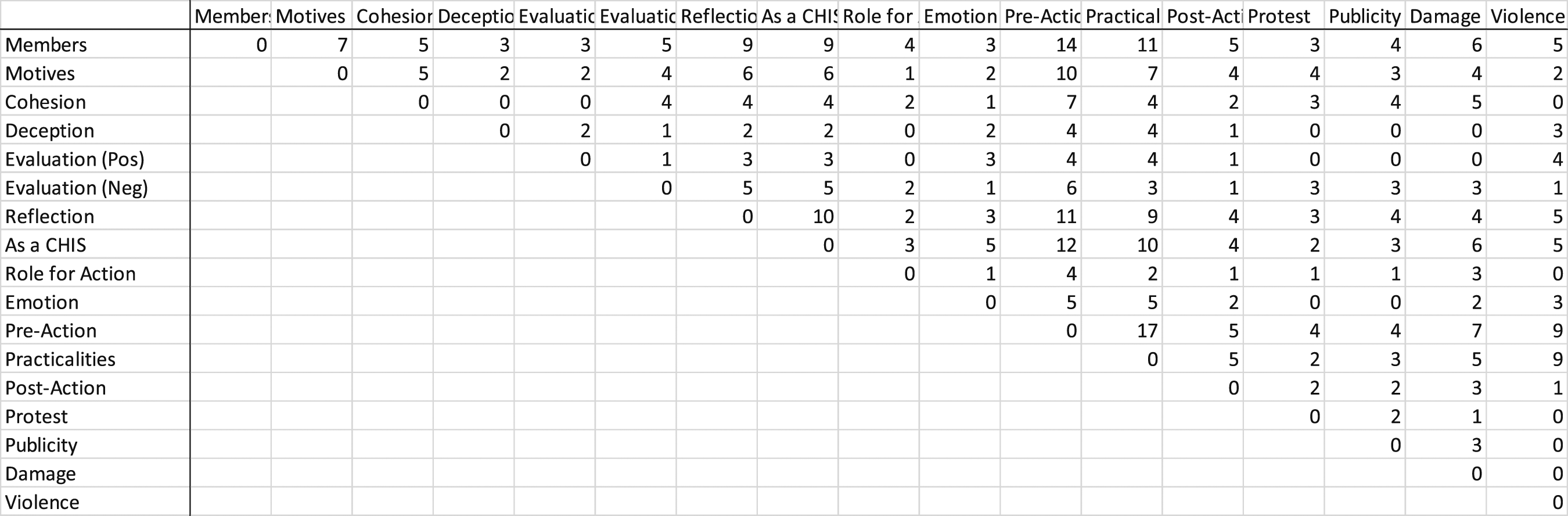
This matrix was subjected to multi-dimensional scaling analysis using SPSS software ensuring that proximities were shown as similarities. A two-faceted approach was adopted for the interpretation of the SSA output, examining groups of categories in light of supposed levels of potency and intimacy.
Results
Thematic content analysis
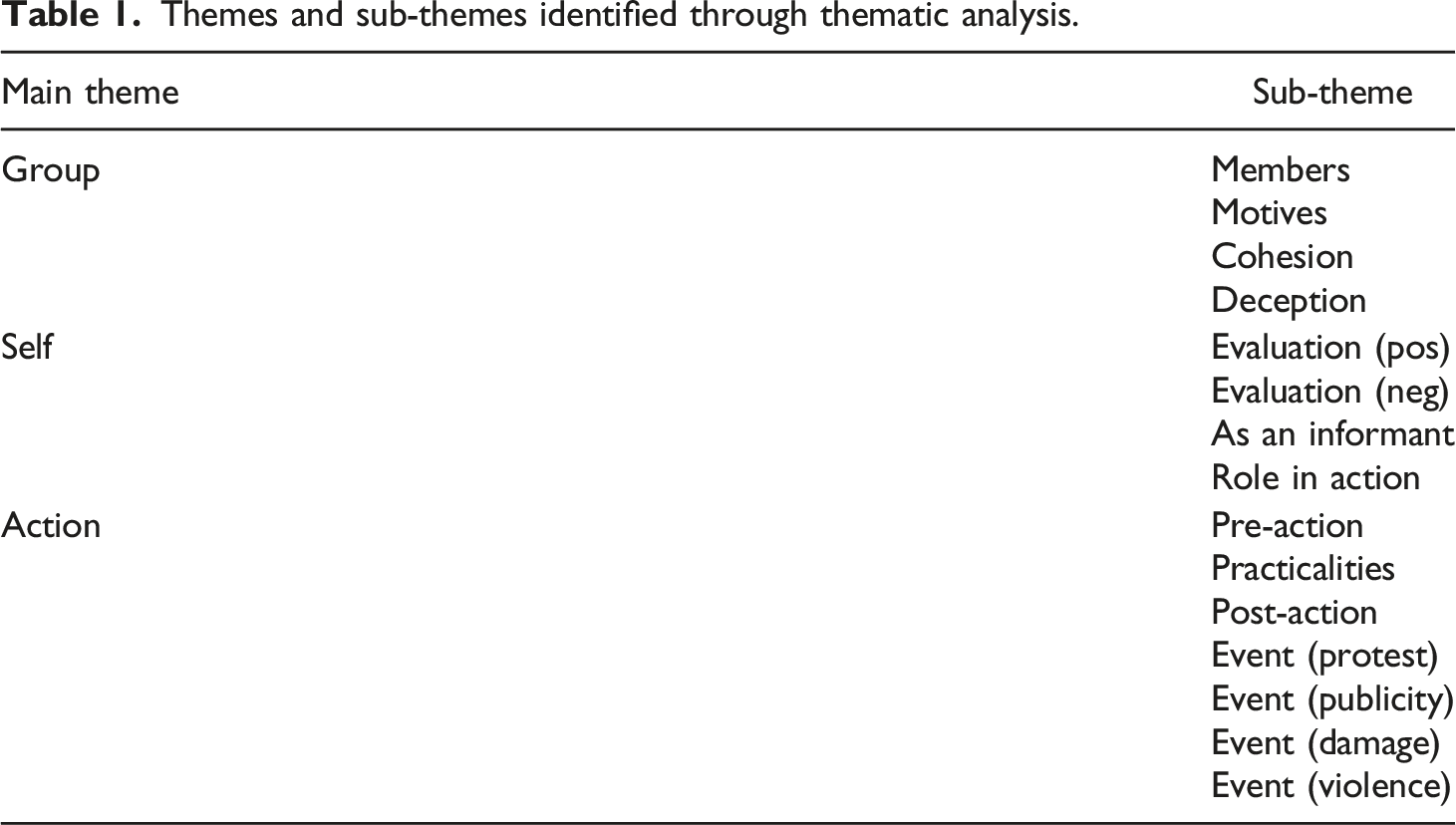
Themes and sub-themes identified through thematic analysis.
Main theme 1 – group
This theme included any reference to the group, and included sub-themes of members, motives, cohesion and deception.
Sub-theme 1a – members
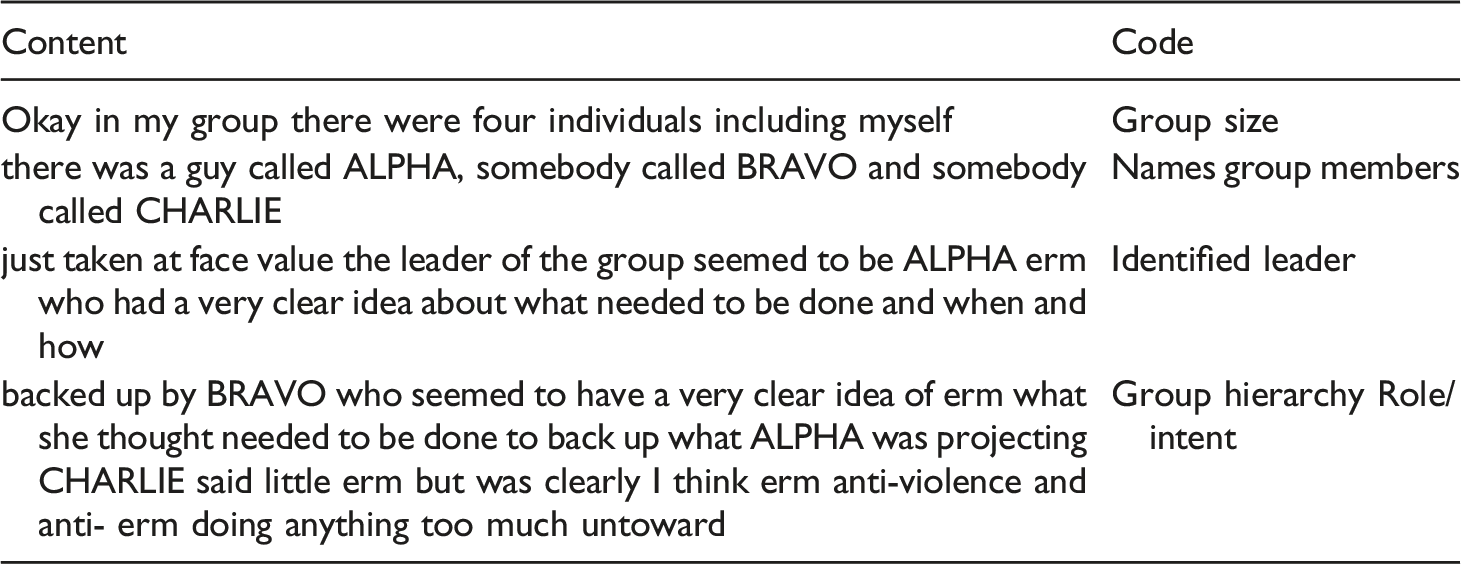
Sub-theme 1b – motives
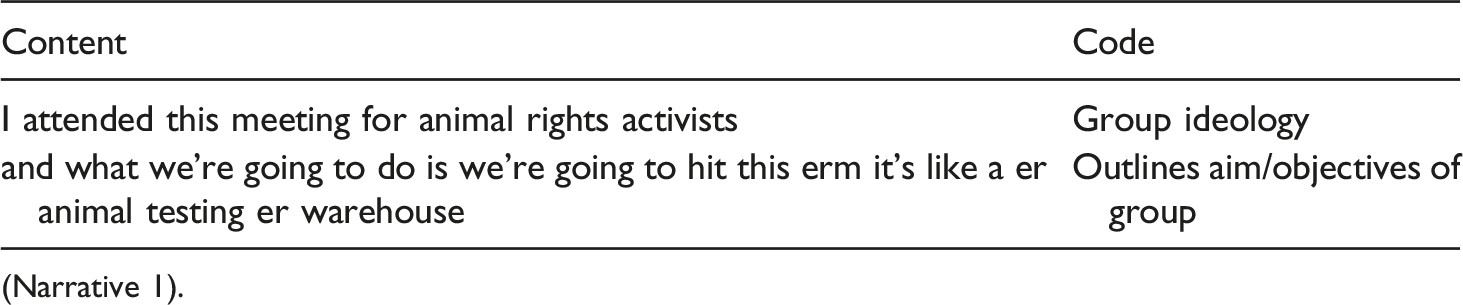
(Narrative 1).
Sub-theme 1c – cohesion

(Narrative 6).
Sub-theme 1d – deception

(Narrative 12).
Main theme 2 – self
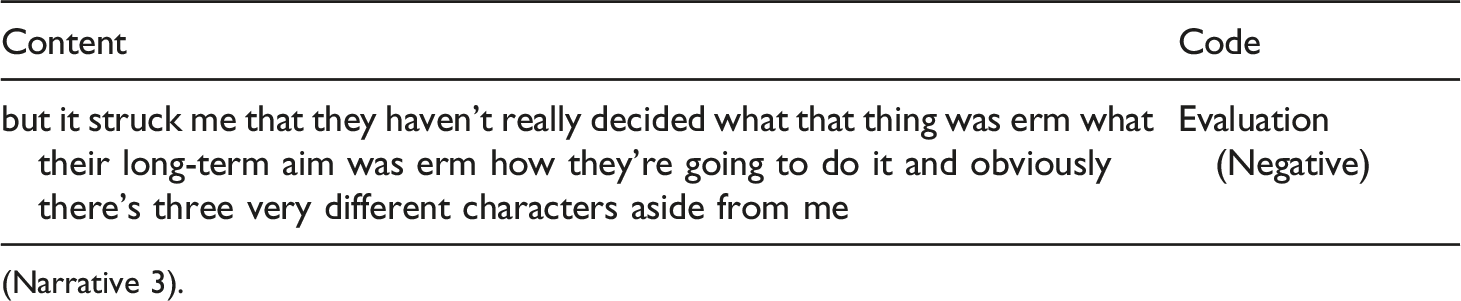
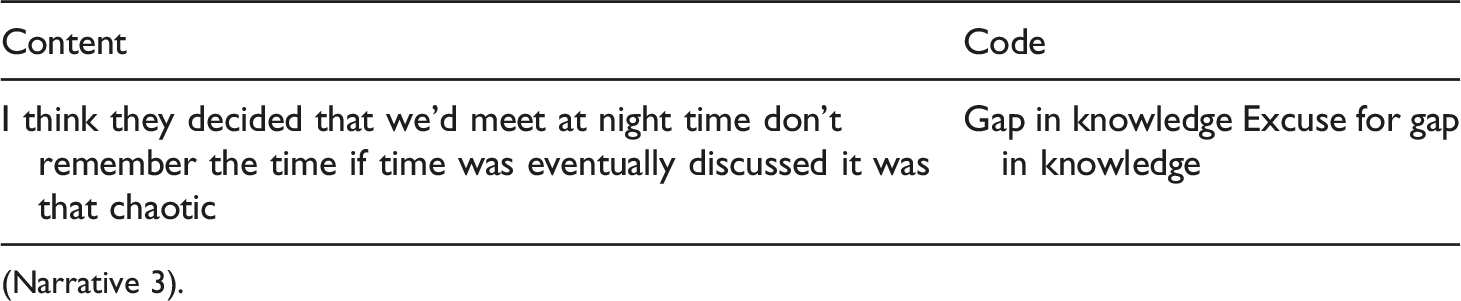
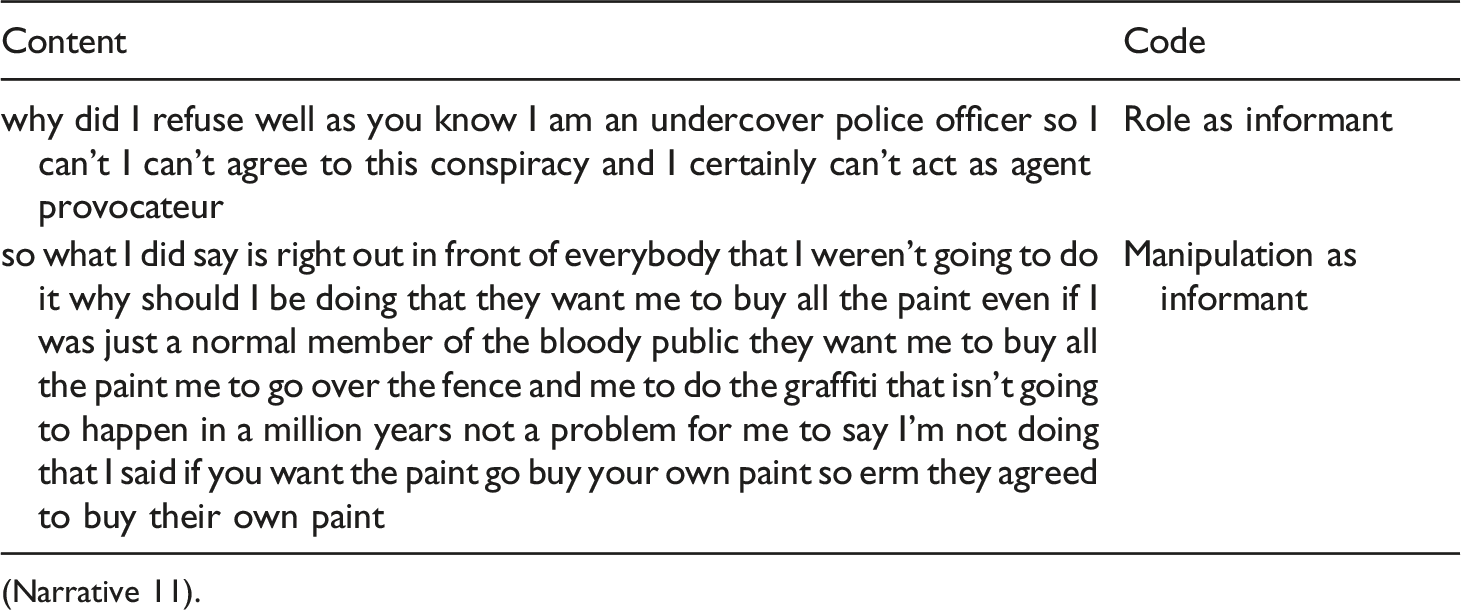
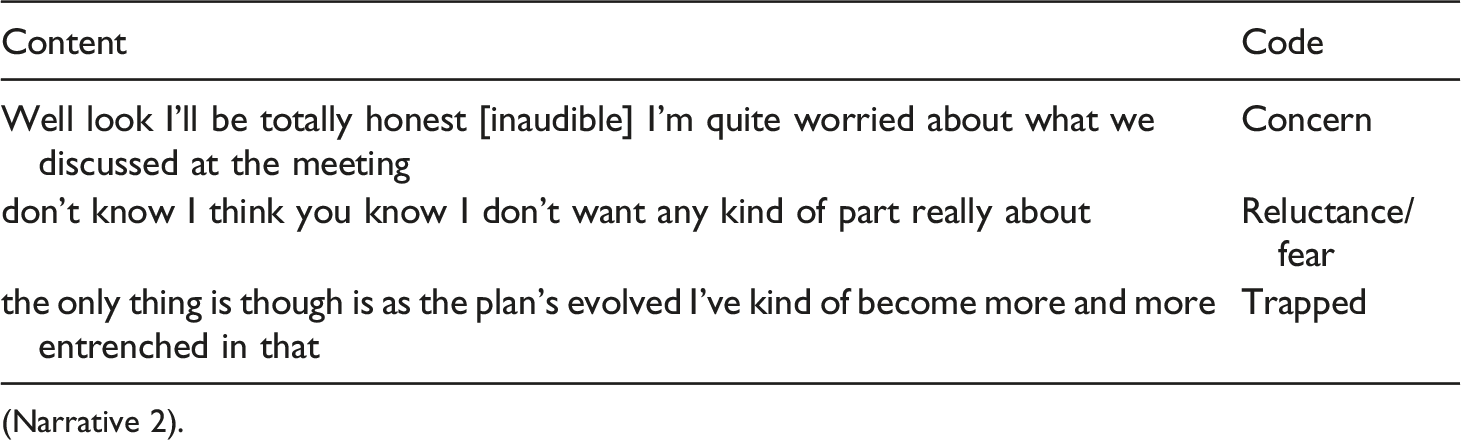
This theme covered any topics where the mock-informant referred to themselves. Sub-themes include evaluation, self-reflection, as an informant, role for action and emotional response.
Sub-theme 2a – evaluation
(Narrative 3).
Sub-theme 2b – self-reflection
(Narrative 3).
Sub-theme 2c – as an informant
(Narrative 11).
Sub-theme 2d – role for action

(Narrative 5).
Sub-theme 2e – emotional response
(Narrative 2).
Main theme 3 – action
This refers to any reference to the planned or proposed action which was discussed during the meeting. Sub-themes include pre-action, practicalities, post-action and event.
Sub-theme 3a – pre-action

(Narrative 8).
Sub-theme 3b – practicalities
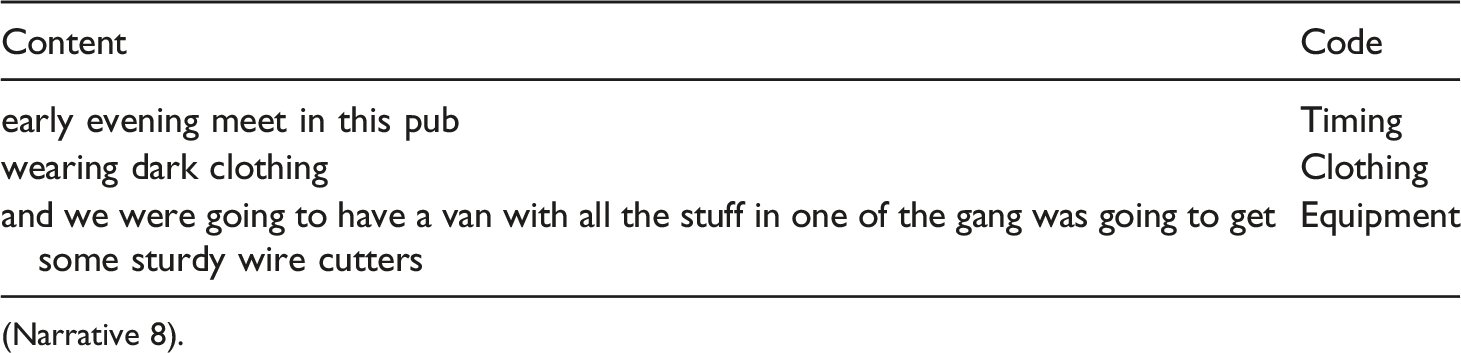
(Narrative 8).
Sub-theme 3c – event
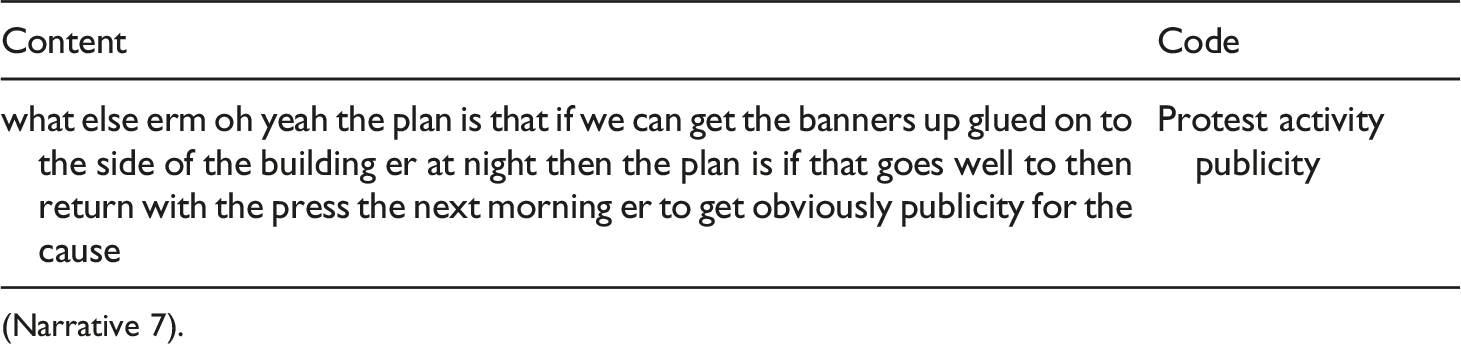
(Narrative 7).

(Narrative 9).

(Narrative 14).
Smallest Space Analysis
The themes and sub-themes were subjected to two factor multi-dimensional scaling. This accounted for 92.45% of the dispersion and returned a measure of Tucker’s coefficient of congruence of 0.96. Lorenzo-Seva and ten Berge (2006) report that a Tucker’s coefficient value between 0.85–0.94 represents a fair degree of similarity, whilst anything above 0.95 represents a good degree of similarity. Thus, our measure was deemed acceptable. The distribution of thematic content can be seen in Figure 2. Two-faceted common space map of thematic codes.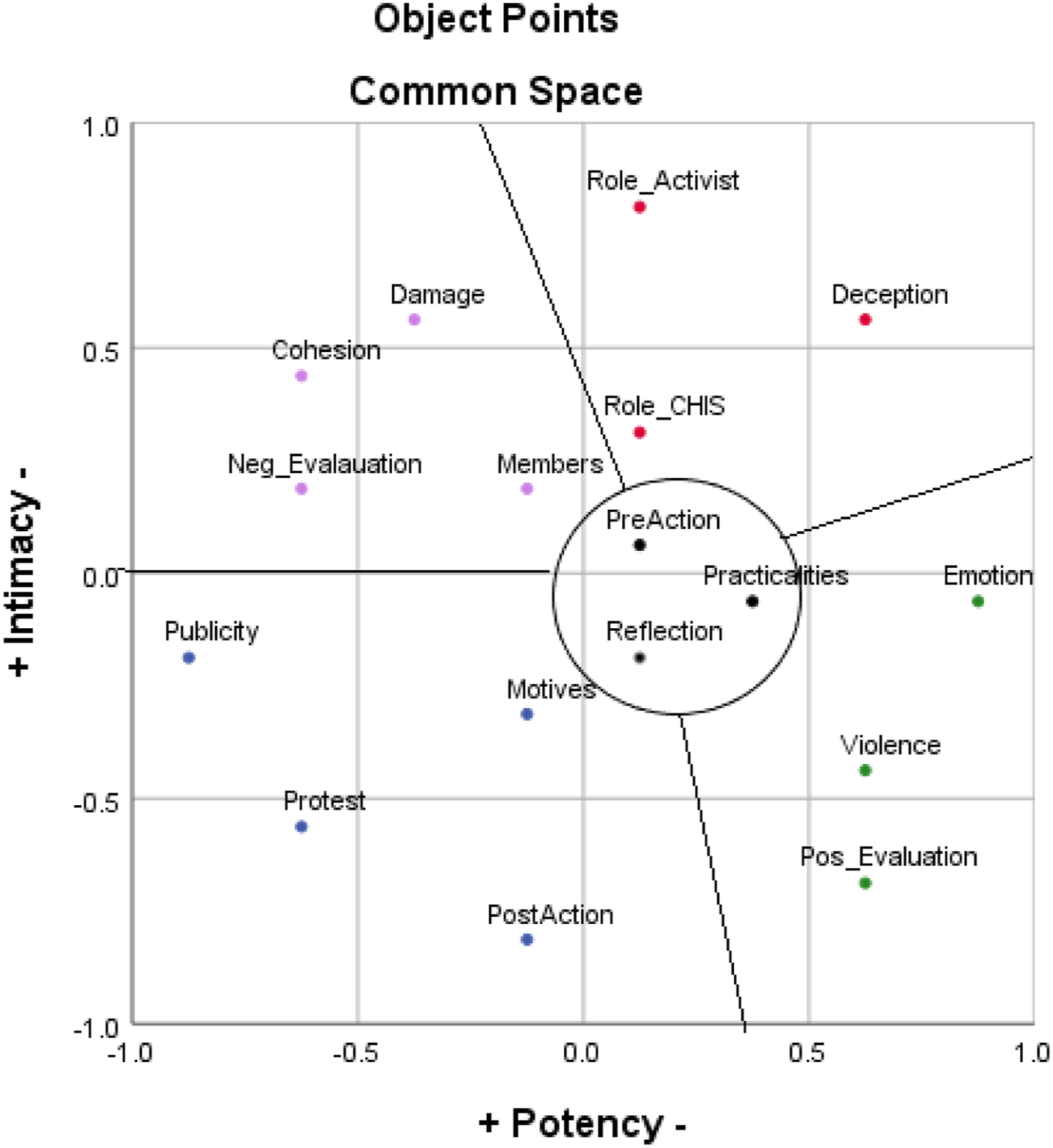
Adopting a two-faceted regional hypothesis, the interaction of high to low potency and high to low intimacy ought to result in four distinct regions, representing the four narrative identities of hero’s quest, professional’s adventure, tragic hero and victim’s irony (Youngs and Canter, 2012). A visual analysis of the SSA reveals that the x-axis can be interpreted as levels of potency, moving from high (left) to low (right), whereas the y-axis can be interpreted as intimacy moving from high (top) to low (bottom). This interpretation reveals a core of content themes which co-occur most frequently across all mock-informant narratives, namely, pre-action, practicalities and reflection. The combination of high potency and low intimacy results in the narrative identity of a professional. According to the SSA, this narrative identity would result in a co-occurrence of content relating to motives, publicity, protest and post-action. The hero’s identity, of high potency and high intimacy, would be expressed through the co-occurrence of members, cohesion, negative evaluation and damage. The combination of low potency and low intimacy would be a tragic hero’s account, and would contain content referring to violence, emotion and a positive evaluation. Finally, the victim’s low potency and high intimacy narrative would contain the co-occurrence of content about their role in the action and their role as an informant as well as referring to group deception.
Discussion
The aim of this exploratory research was to examine whether the two facets of potency and intimacy would be present in mock-informant accounts, and whether narrative identity would be affected by deception. Taylor et al. (2013) found that disloyal employees (i.e. informants) expressed more self-focus (high potency) and less social connectivity (low intimacy), and results of the SSA provide some support for these findings, indicating that mock-informants express a narrative role in accordance with the two facets of potency and intimacy.
There are also clear benefits to producing a visual common space map to distinguish between truthful and deceptive mock-informant accounts. Significantly, on immediate visual inspection, it can be seen that the themes of violence and deception both occur on the right half of the map (low potency) and are almost completely opposite the themes of damage and protest. This is highly indicative of the truthful/deceptive dichotomy. Not a single truthful mock-informant account contained content referring to violence or deception, and not a single deceptive one referred to protest. Only one (#19) referred to damage. Given Taylor et al.’s (2013) results, a deceptive account might be expected to be low in potency and high in intimacy, and the current study provides partial support for this. Whilst deceptive content co-occurs in low potency narratives, deceptive content occurred in both high and low regions of intimacy. These findings also lend support to theories of deception that predict deceivers will engage in impression management, in particular IDT, which posits that the particular objective of the deceiver will influence how they interact with, and present themselves to, the listener. This strategic approach is perhaps best evidenced by the fact that deceptive mock-informants did not embellish or exaggerate their own performance or ability (which would result in a high potency role), but that they presented themselves as powerless victims or tragic heroes, perhaps seeking to gain the sympathy of their listeners.
This may be further evidenced by the theme of emotion, which occurs to the right extremity of the map, and sits almost equidistant between both violence and deception, indicating the high levels of co-occurrence between deceptive content and emotional content. Previous research has also found more emotive content in deceptive accounts (i.e. Peace and Sinclair, 2012; ten Brinke and Porter, 2012; ten Brinke et al., 2012) and Peace and Sinclair (2012) postulate that deceivers use emotional content to distract the listener and to engage their sympathies. Also noteworthy is that content referring to motive was on the high potency half of the map, indicating frequent co-occurrence with truthful content. In their study of mock-bomb hoaxers (vs. actualisers), Geurts et al. (2016) found that those who actually intended to carry out the threat included more why (or motive) details in their accounts. Findings from the current study therefore provide further indication that content referring to motive may be indicative of truth.
Strengths and limitations of study
The current study represents exploratory research in an under-studied area and, like all such studies, there are caveats. We utilised a relatively small sample obtained in a laboratory environment, and it could be argued that the SSA is of limited value to practitioners as several of the content categories were specific to the mock-informant role-play. Whilst references to violence may be a very specific indicator of deceit in the particular scenario employed, the use of emotional content is not. Likewise, a focus on the subjects’ motives is likely to be representative of a genuine, professional account regardless of the specific situation. Additionally, there is a danger that the SSA may represent an oversimplification of mock-informant narrative accounts. For example, not a single narrative contained all the content elements identified on the SSA as being indicative of a victim’s account (deception, role for action, role as an informant), whilst one narrative (#8) contained all the elements of both a hero’s account (damage, cohesion, negative evaluation and members) and a professional account (motives, protest, publicity and post-action). Consequently, in a ‘real world’ situation, it would prove difficult for a handler to examine thematic content of an informant’s account and to accurately determine veracity. However, what the SSA does demonstrate is the importance of the two facets of potency and intimacy, and a qualitative analysis of narrative identity, examining overall expressions of these two facets, could be used to provide an indication of potential deceit, with low potency accounts being particularly indicative of possible deception.
A particular strength of this research is that it provides practitioners with a non-interventionary technique for detecting possible deception. Unlike the cognitive approach, the interviewer did not need to impose cognitive load on the informant, nor did they need to re-direct their own resources towards observable cues of deception. Given the unique relationship between handler and informant, it is foreseeable that this is especially beneficial within a handler-informant interaction. Additionally, findings tenuously suggest a link between deception, narrative role and verbal content. DePaulo et al. (2003) argue that all deception involves a misrepresentation of self, however, individuals are generally assumed to be motivated to present a positive image of themselves (DePaulo, et al., 2003; Hargie and Dickson, 2004). This assumption is not supported by the current study, with deceptive content occurring in low potency regions of the common space map, indicating that situational factors dictate how deception is practised (Burgoon and Buller, 1994). Therefore, it is a further strength of this research that a unique informant specific paradigm was employed, with participants being active not only in the dissemination of information (i.e. interview phase) but also in the collection of information (i.e. conspiracy phase). Consequently, this study provides a unique contribution to an under-researched area, with applicable implications for current practitioners.
Implications for practice
Practitioners have highlighted the importance of detecting informant deception (see Moffett et al., 2021; Secretary of State, 2005) and, to our knowledge, the current study is the first to manipulate deception within an informant-specific paradigm (i.e. whereby participants have been tasked to obtain information through the use of a personal relationship). Whilst further research is undoubtedly needed, practitioners should be advised to attend to both the content of the account and the narrative identity expressed by the informant, with highly emotive content and low potency accounts being potential indicators of deceit. Conversely, high potency accounts describing the subject’s motives may be indicative of truth.
Future research
This is the first known study to use an active mock-informant role-play scenario to examine the effects of deception, and the first to examine the potential benefits of a narrative analysis approach. Future research should replicate mock-informant paradigms that are consistent with the legislative and operational context under examination, and should explicitly identify which operational situations their research seeks to replicate. This will serve to minimise practitioner confusion. Given the unique situational dilemma of an informant as an individual providing information about their associates in a relatively informal interview (compared to an investigative interview) researchers should consider the social aspects of an informant interaction, and how these are likely to impact deception. Findings from the current study highlight narrative identity and content analysis as potential areas of future research that might be able to inform practitioners handling active community-based informants, such as CHIS.
Conclusion
This study directly addresses the concerns of informant handlers by devising a unique mock-informant paradigm to examine the effect of deception on informant accounts. This is the first known study to use an SSA to analyse the verbal content of mock-informant accounts, and we adopted a faceted approach to interpret the resulting common space map. Our approach was informed by impression management theories of deception (i.e. SPP and IDT) and previous similar research (i.e. Ioannou and Debowska, 2014; Taylor et al., 2013). Results of the current study can be used to provide practitioners with new insights into the communication strategies of their informants, and to provide academics with a new impetus to investigate this emerging area of research.
Footnotes
Declaration of conflicting interests
The author(s) declared no potential conflicts of interest with respect to the research, authorship, and/or publication of this article.
Funding
The author(s) received no financial support for the research, authorship, and/or publication of this article.
